

Balayage is the hand-painted color technique that delivers a soft, sun-kissed blend from root to tip. Right now, the trend is shifting toward lived-in color with softer face-framing highlights and a glossier natural texture.
This collection of 31 Balayage Hair Ideas covers every length, from chin-grazing bobs to mid-back waves, and every shade, from honey blonde to rich caramel. Whether your hair is fine and falls flat or you need a color that grows out without a harsh line, there is a look here that works. Expect a range of upkeep levels, from low-maintenance brunette blends to high-contrast blonde transformations.
Shoulder Length Curly Hair With Honey Blonde Balayage
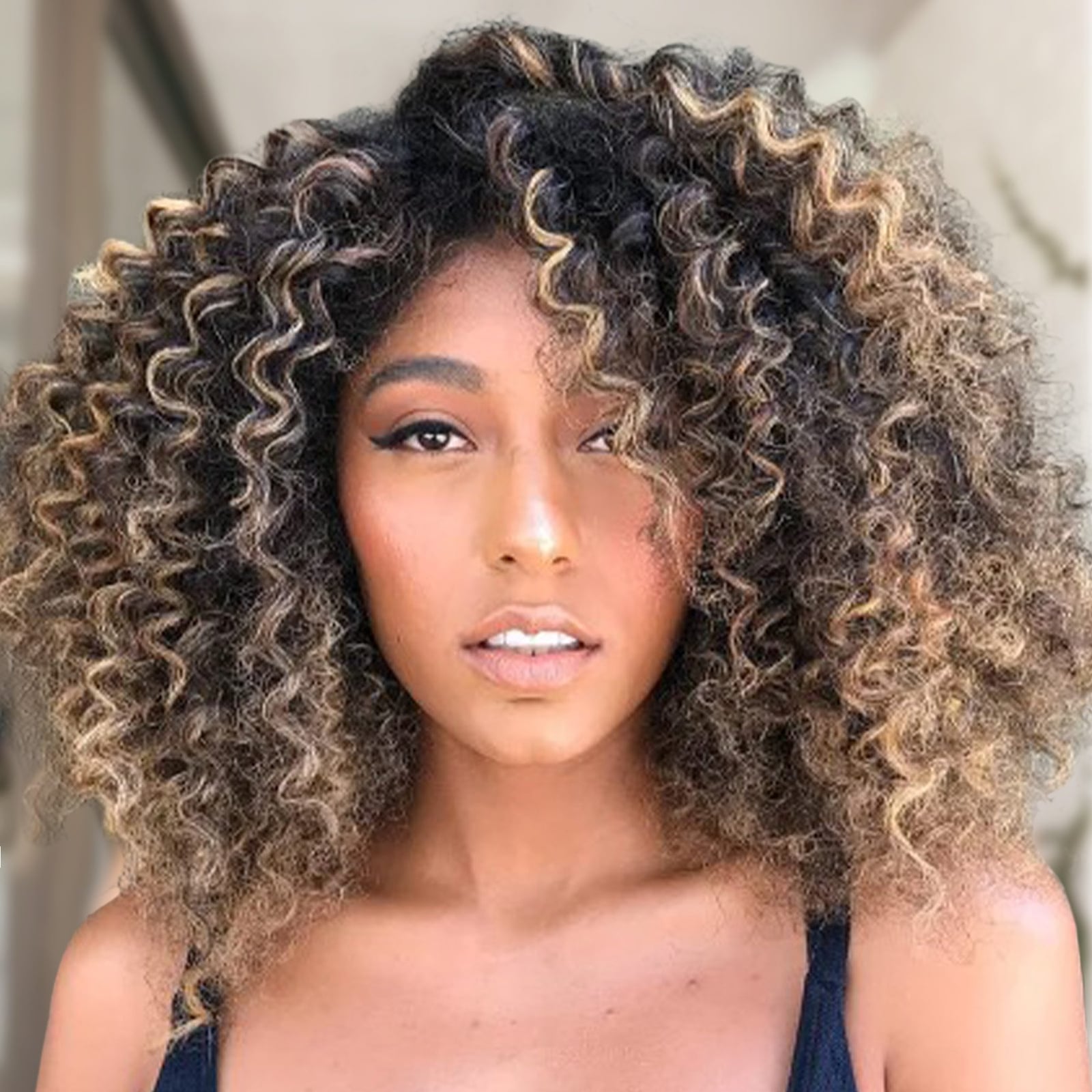
Balayage on curly hair does not have to mean a heavy, stripey result. This version uses a dark brown base with honey blonde highlights woven through, so the curls catch the light in sections rather than all at once. The shoulder length and middle parting let the pattern read clearly, and the thick texture holds the lift without flattening. Thick, naturally curly hair of at least shoulder length benefits most here; oval and square faces handle the volume around the jaw well. Ask your colorist for: dark brown base with honey blonde balayage on shoulder length curly hair. Apply curl cream to damp strands and air dry or diffuse for the best definition, then plan a trim every eight to ten weeks to keep the shape springy.
Mid-Back Length Wavy Hair With Honey Blonde Balayage
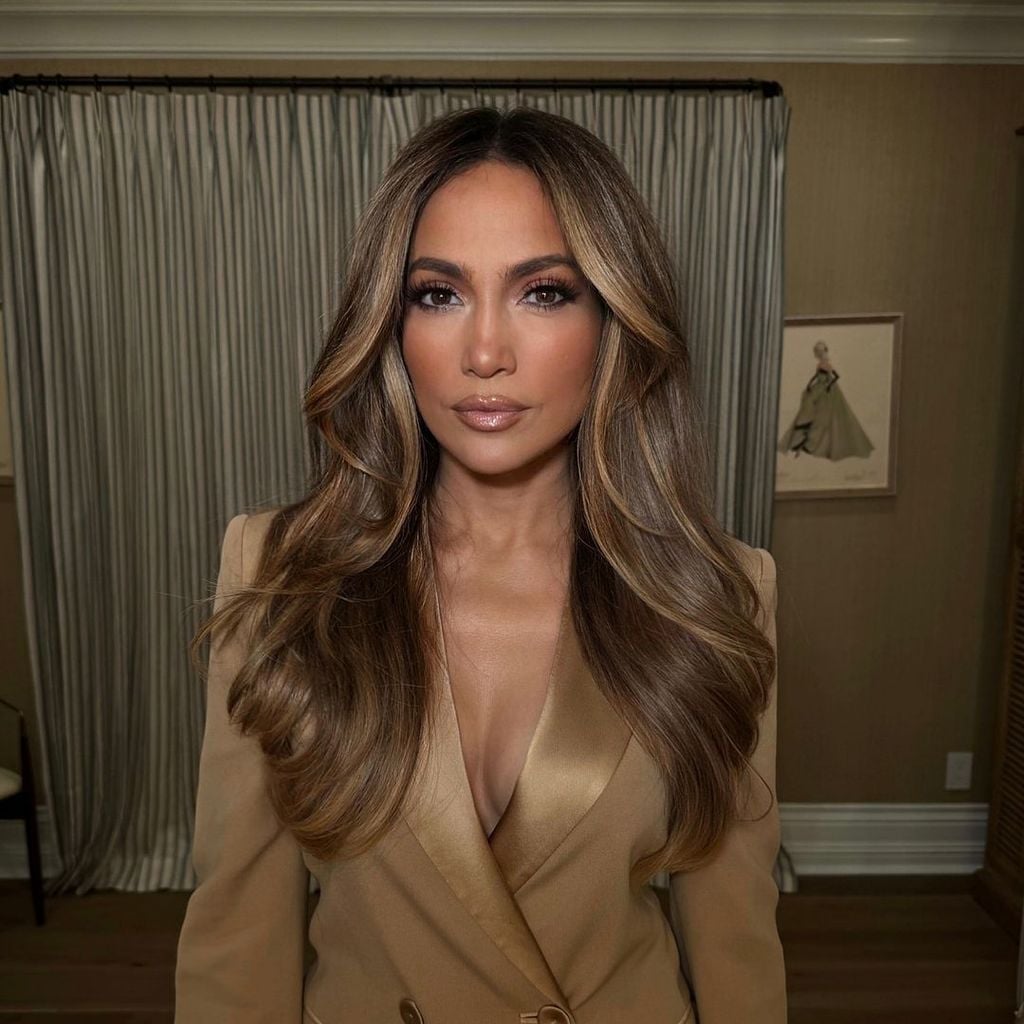
The balayage application here starts higher than the root line, sweeping honey blonde through the mid-lengths and ends of a dark blonde base. That placement creates a graduated brightness: darker at the crown, lighter toward the tips, which reads as a natural sun fade rather than a solid block of color. The mid-back length gives the technique enough canvas to stretch the gradient, and the thick, wavy texture diffuses the line so it never looks painted on.
This look works for workdays and evenings because the base is low-contrast enough to pass for natural. Thick, wavy hair that reaches mid-back suits many face shapes, and the middle part elongates rounder ones without needing bangs. Ask your colorist for: dark blonde base with honey blonde balayage, mid-back length wavy. A blowout with a large round brush is the fastest route to the polished finish shown here.
Collarbone Ash Blonde Balayage With Face-Framing Pieces
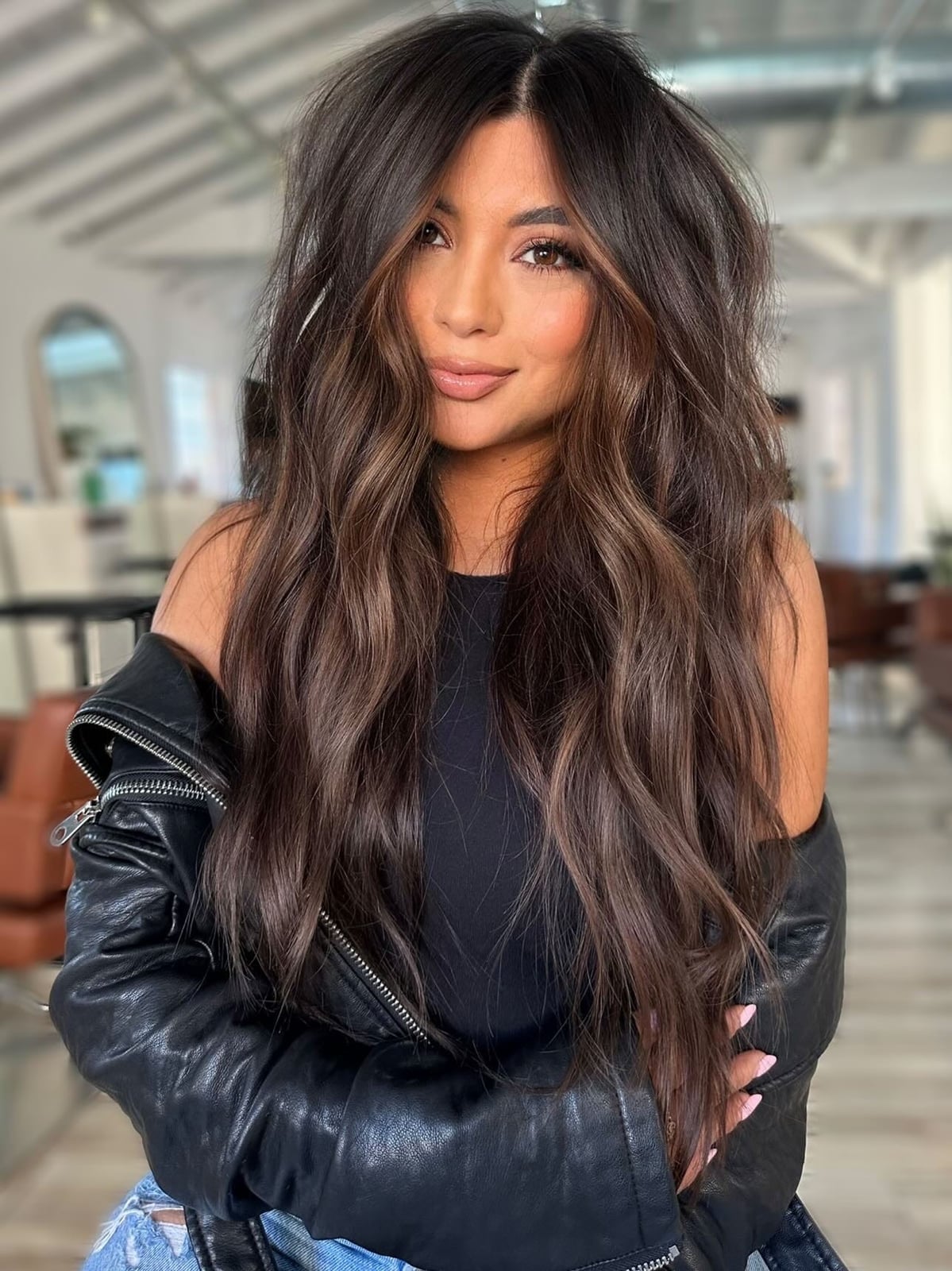
Ask for an ash blonde balayage on a collarbone-length cut, with darker roots and the lightest pieces concentrated near the front. The curtain bangs catch that lighter tone first, so the brightness frames the face. Thick, wavy texture at this length holds the wave pattern without losing the color contrast. Curtain bangs and face-framing pieces soften a square or angular jawline, which makes this a reliable choice for sharper bone structures. Ask your colorist for: collarbone ash blonde balayage with darker roots and face-framing pieces. A texturizing spray on the waves adds separation; trim the baseline every six to eight weeks.
Mid-Back Wavy Hair With Golden Blonde Balayage
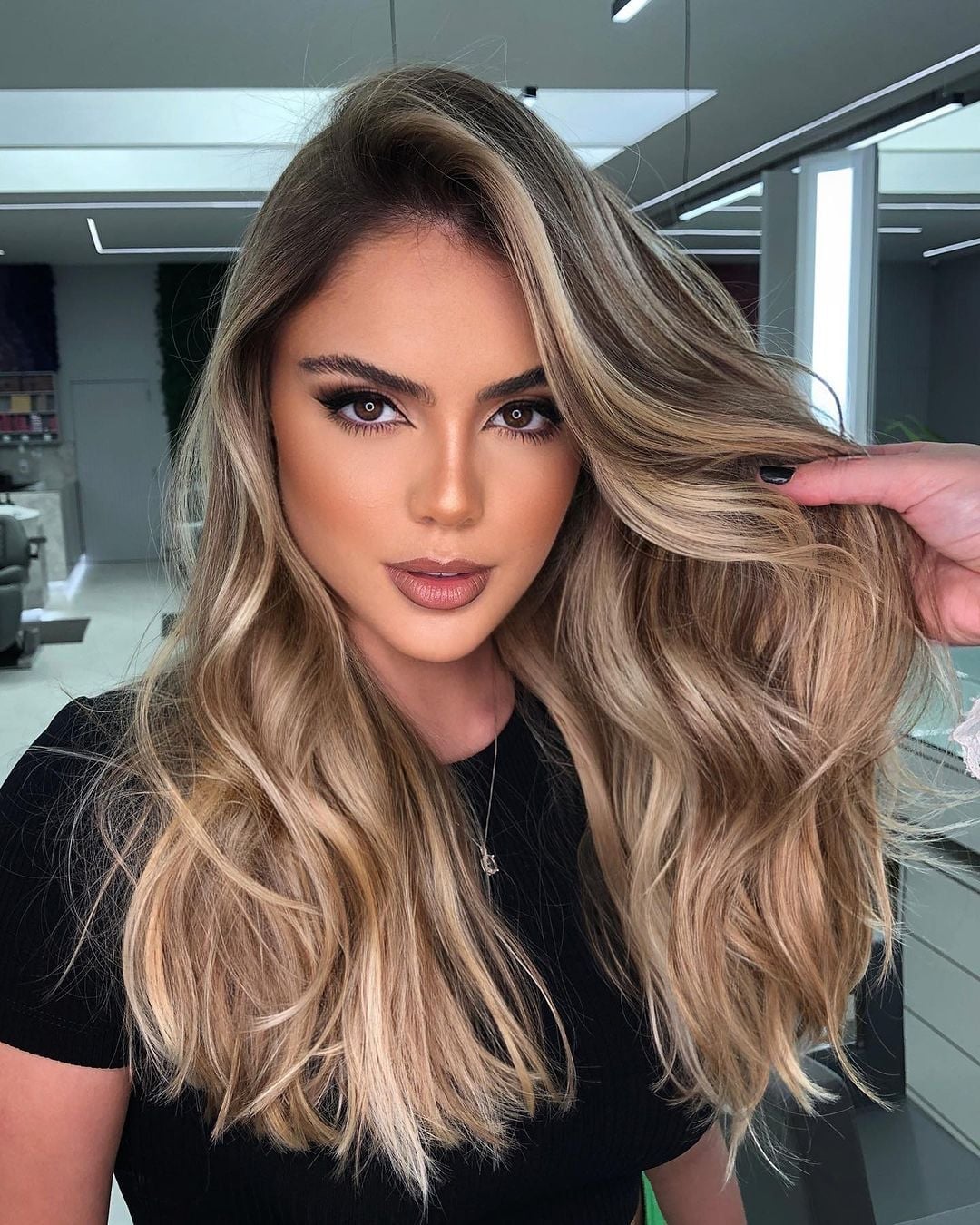
Cool-toned balayage gets most of the attention, but golden blonde on a dark blonde base does something ash tones cannot. It looks genuinely sun-lightened. The warmth sits in the ends, while the darker root keeps the contrast natural and the grow-out soft. Thick, wavy hair at mid-back length is the ideal canvas because the waves catch the golden sections from different angles. This tone pairs well with warm complexions and the middle part elongates round faces without needing bangs. Ask your colorist for: dark blonde base with golden blonde balayage, mid-back length wavy. A volumizing mousse before a blowout builds fullness, and a toning appointment every three months prevents the warmth from tipping into brassiness.
Mid-Back Dark Brown With Caramel Ash Blonde Balayage
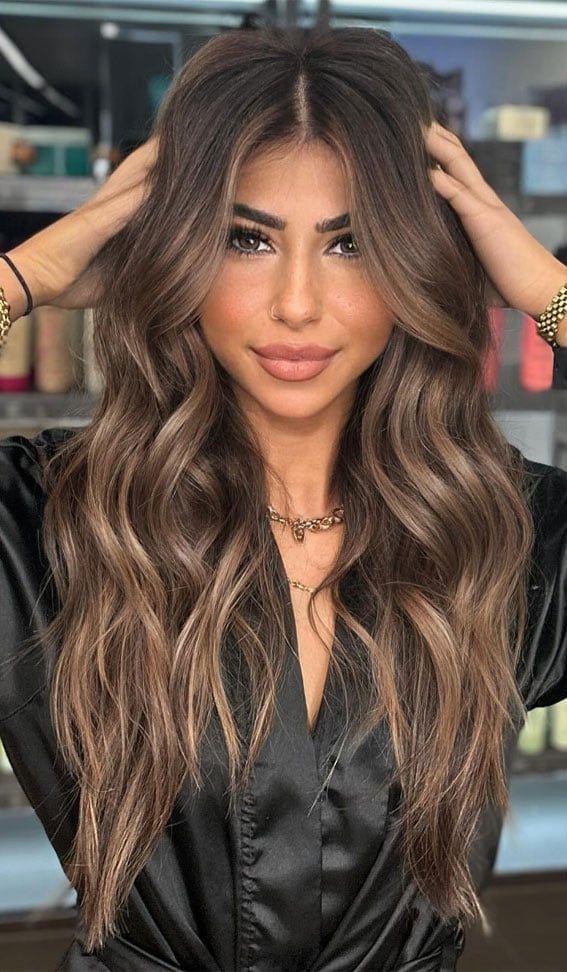
Balayage on a dark brown base often leans either too warm or too ashy, but this version splits the difference with caramel and ash blonde highlights. The caramel gives the lift some warmth, the ash tones keep it from reading orange, and the two shades together create a layered transition that does not stop at one note. The curtain bangs catch both tones, which frames the face without a single heavy stripe. Thick, wavy hair at mid-back length supports the gradual lift, and the middle parting keeps the distribution even. Ask your colorist for: dark brown base with caramel and ash blonde balayage, curtain bangs. The honest drawback: the ash elements can pull greenish on very warm dark brown bases, so a toning gloss every six to eight weeks is standard. A smoothing serum keeps the waves glossy between trims.
Mid-Back Ash Blonde With Beige Balayage
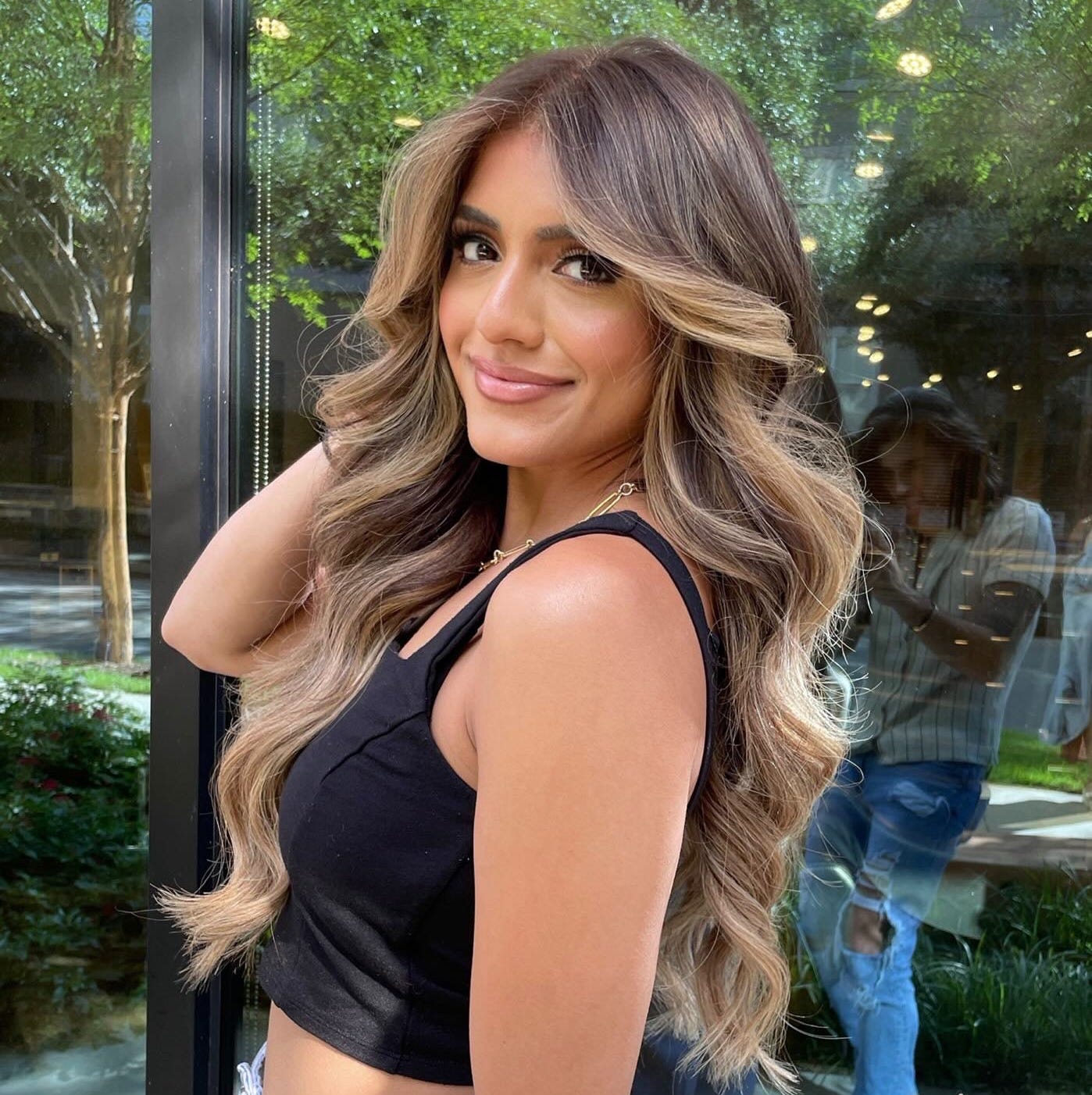
The thick, wavy texture and curtain bangs make this mid-back length feel deliberate rather than accidental. Ask your colorist for: ash blonde base with beige balayage, curtain bangs. This is a salon-only job. The beige tone requires precise application to avoid looking muddy. A texturizing spray can enhance the lived-in effect, and the curtain bangs will need a trim every six to eight weeks.
Mid-Back Ash Blonde With Dimensional Blonde Balayage, Wavy
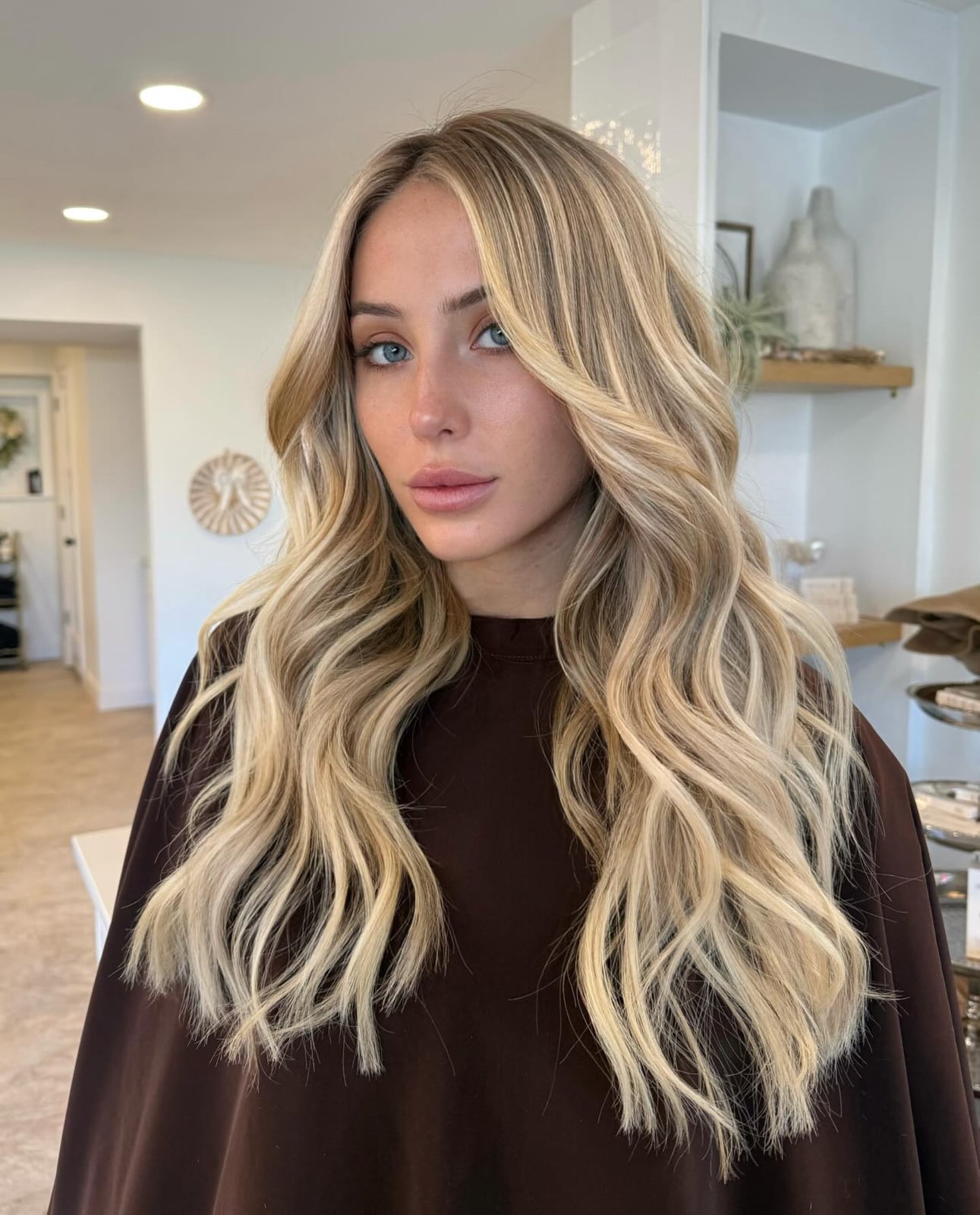
The dimensional blonde balayage on this ash blonde base is built for thick, wavy hair at mid-back length. The long layers let the lighter pieces move without getting lost, and the loose waves give the contrast room to breathe. Ask your colorist for: ash blonde base with dimensional blonde balayage, mid-back length. This design suits dense hair that can hold a wave without deflating by noon. Use a sea salt spray to encourage the texture, and plan a toning appointment every eight to ten weeks to keep the blonde from veering brassy.
Collarbone Ash Blonde Balayage With Face-Framing, Close-Up Take
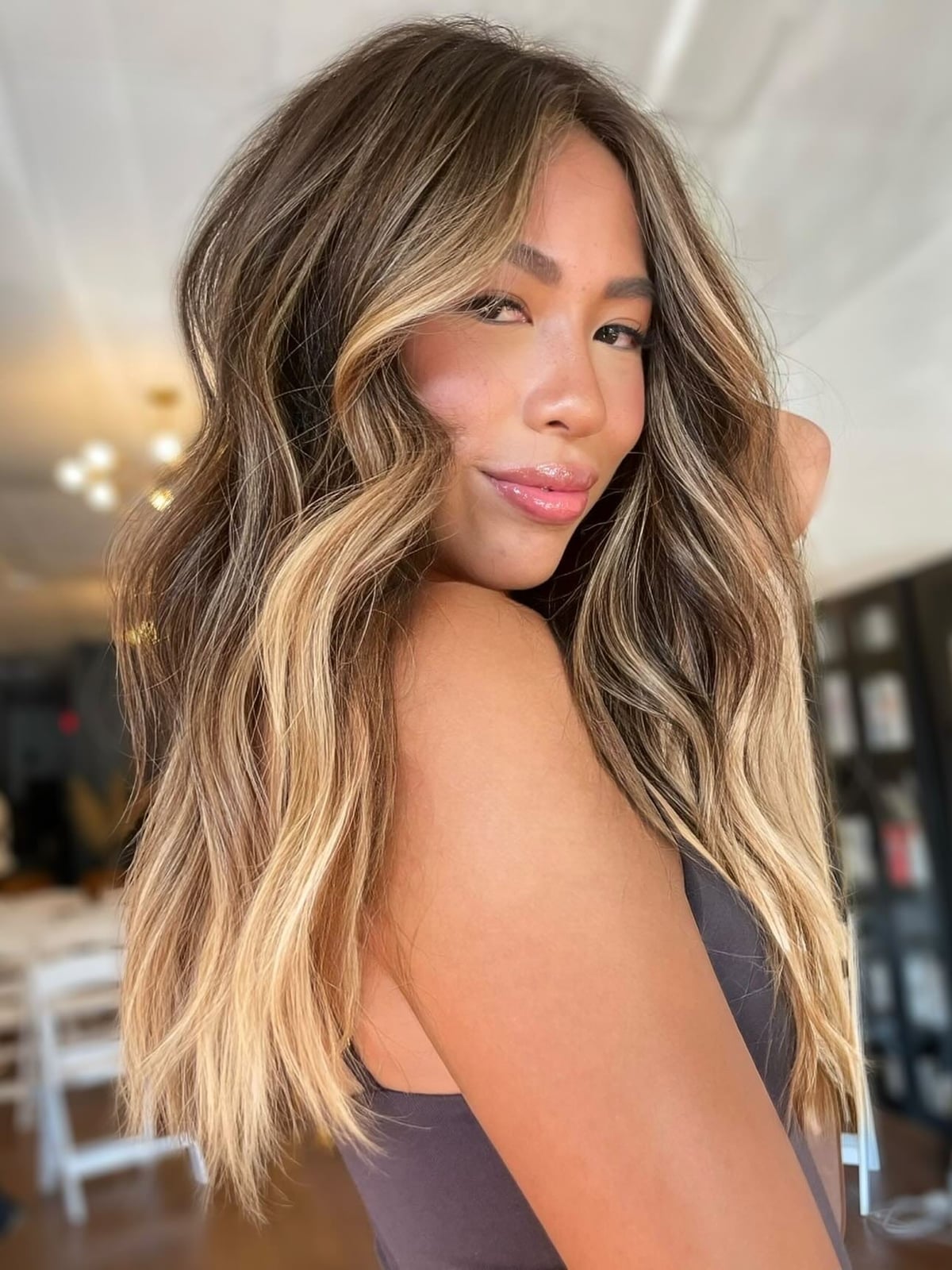
The face-framing pieces here are visibly lighter than the ash blonde balayage, which keeps the design from reading as one flat wash of color. The darker roots and collarbone length give it a grown-out feel that is entirely intentional. Ask your colorist for: collarbone ash blonde balayage with darker roots and face-framing pieces. Those bright pieces will need a gloss sooner than the rest, plan for a toner refresh around week six.
Mid-Back Rich Brown With Caramel Balayage
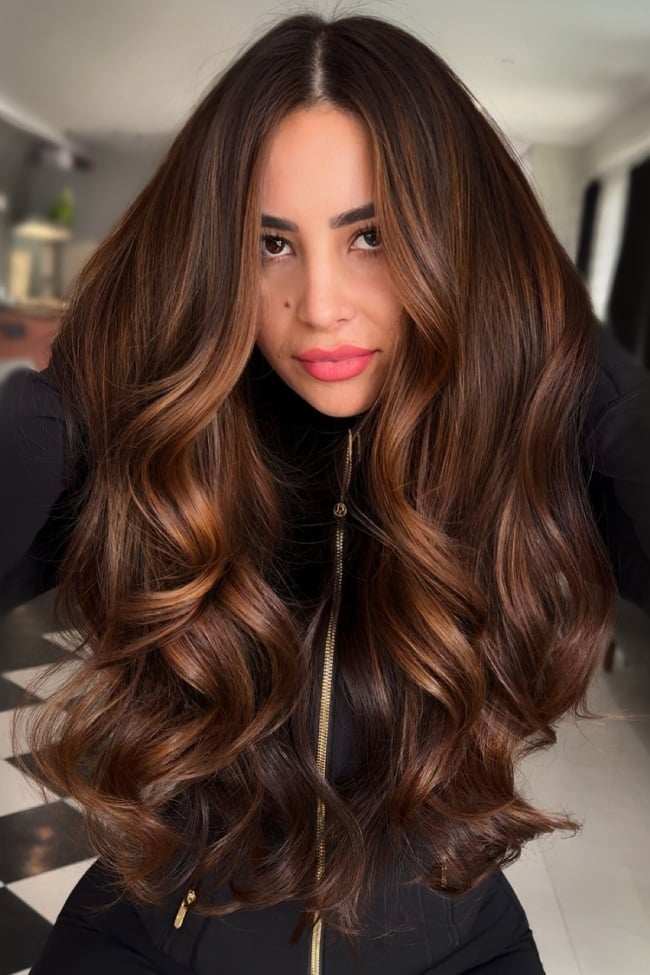
How do you get a caramel balayage that reads warm but not orange? Start with a rich brown base and keep the caramel pieces soft and blended, as seen here on thick, wavy mid-back length hair. The glossy wavy blowout seals the deal. Ask your colorist for: rich brown base with caramel balayage, mid-back length. Bring a reference photo that shows the exact caramel depth you want. For the stylist, the key points are:
- Keep the caramel pieces subtle near the root for a natural grow-out.
- Use a gloss finish to add shine without extra weight.
Mid-Back Dark Brown With Ash Blonde Balayage, Close-Up Take
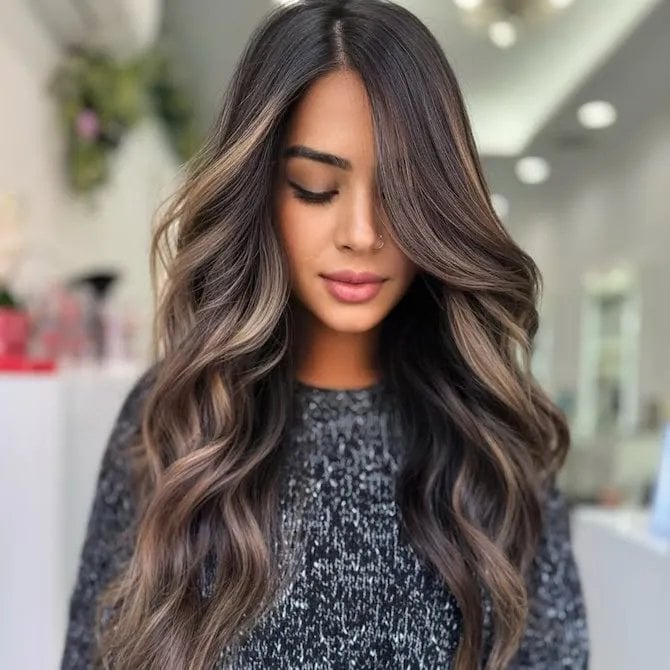
The technique here relies on a dark brown base that transitions into ash blonde balayage, with the lighter pieces placed higher around the face for dimension. The thick, wavy texture and middle parting let the contrast show without needing tight curls. Ask your colorist for: dark brown base with ash blonde balayage, mid-back length. A root smudge at the part line can stretch the grow-out window by a few weeks. A trim every eight to ten weeks keeps the ends healthy and the color looking intentional.
Mid-Back Dark Brown With Lighter Brown Balayage
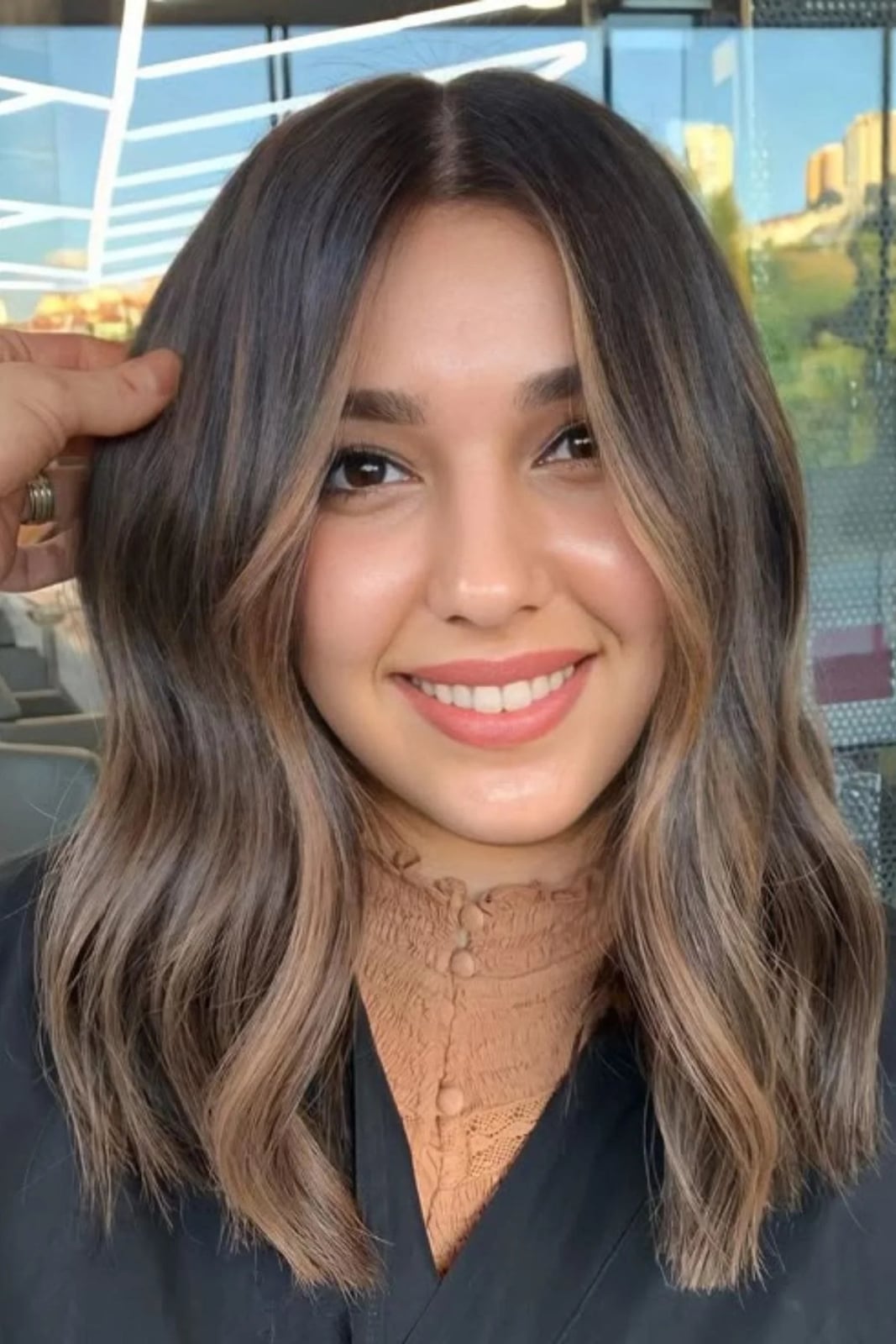
The genius of this balayage is how it uses a lighter brown instead of blonde to add dimension. The dark brown base stays rich at the roots, then softens into a warm, lighter brown through the ends, all on medium wavy hair with long layers and a middle parting.
Medium-density hair benefits most here: the lighter brown adds depth, not streakiness. Ask your colorist for a dark brown base with lighter brown balayage at mid-back length. Fine hair can lose the contrast, so this works best when there is enough weight to hold the wave and separate the tones.
Mid-Back Warm Blonde With Honey Tone Balayage
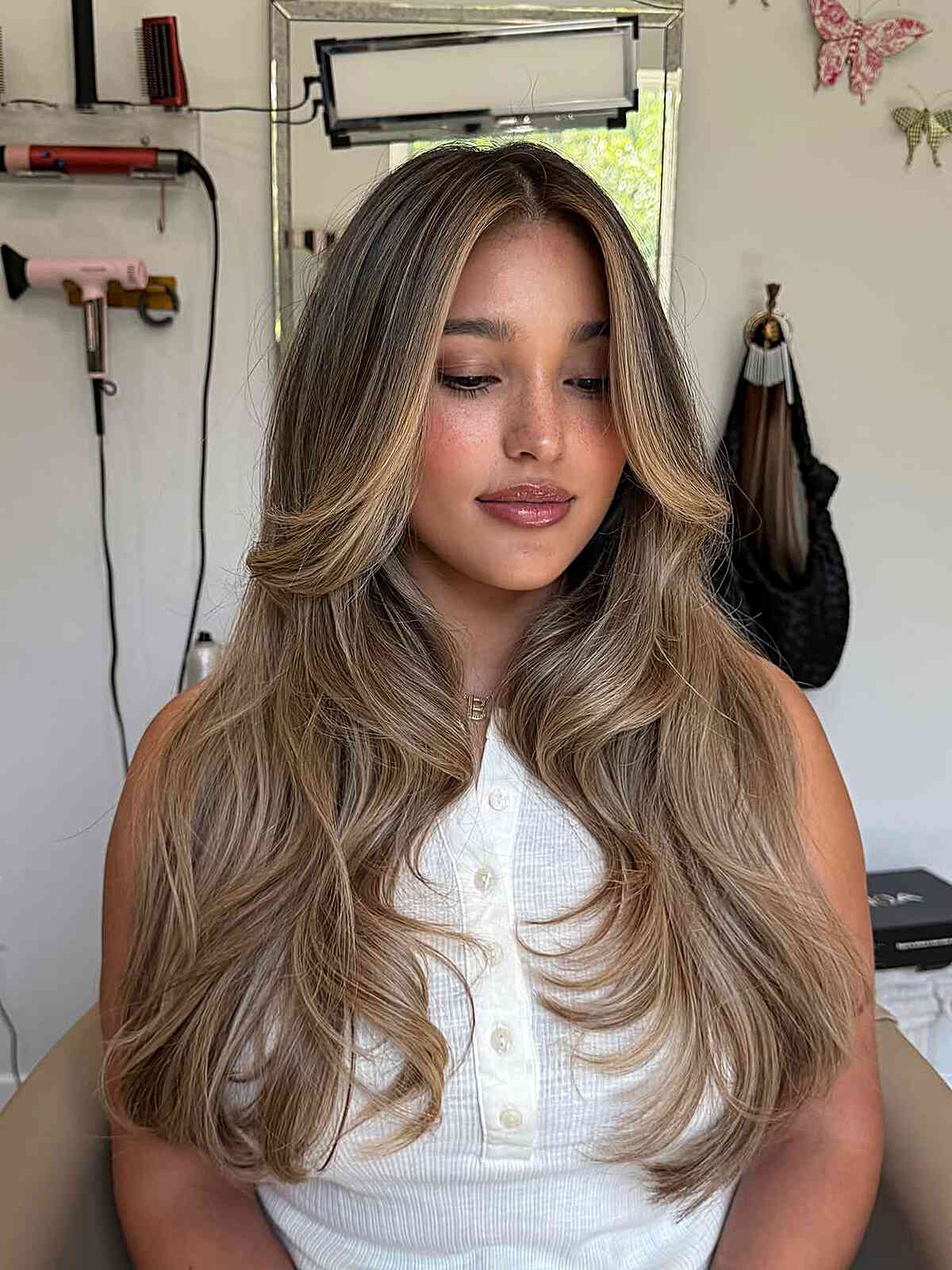
Where a cool platinum balayage reads as frosty, this warm blonde with honey tones runs in the opposite direction entirely. The base is a warm blonde, and the balayage lifts sections to a rich honey that lands somewhere between caramel and gold. Thick, wavy hair at mid-back length carries the gloss well. Ask your colorist for a warm blonde base with honey tone balayage at mid-back length. A color-depositing conditioner keeps the honey from fading to yellow between toning sessions.
Mid-Back Dark Brown With Caramel Blonde Balayage, Office-Safe Version
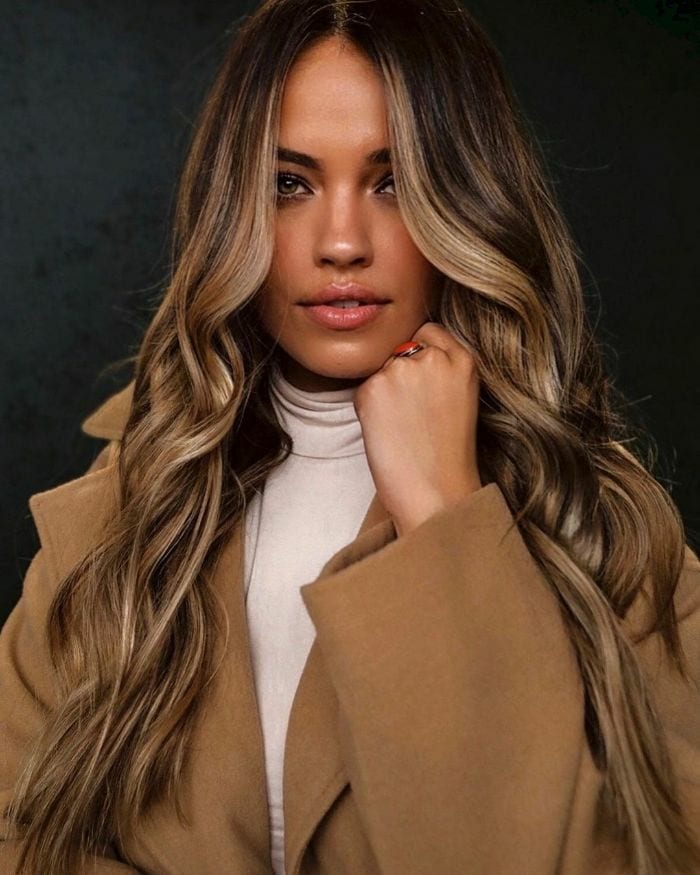
The face-framing money piece is what makes this balayage look deliberate. On a dark brown base, the caramel and blonde balayage is concentrated around the face and through the mid-lengths, leaving the roots intact. Thick, wavy hair at mid-back length has enough surface area for the lighter pieces to sit without looking sparse.
This is a solid choice for professional settings because the money piece adds brightness without requiring full highlights. Ask your colorist for a dark brown base with caramel and blonde balayage and a face-framing money piece. The season matters less than the setting: it works for fall through spring, and a trim every six to eight weeks keeps the ends healthy.
Mid-Back Dark Brown With Blonde Balayage, Low-Key Version
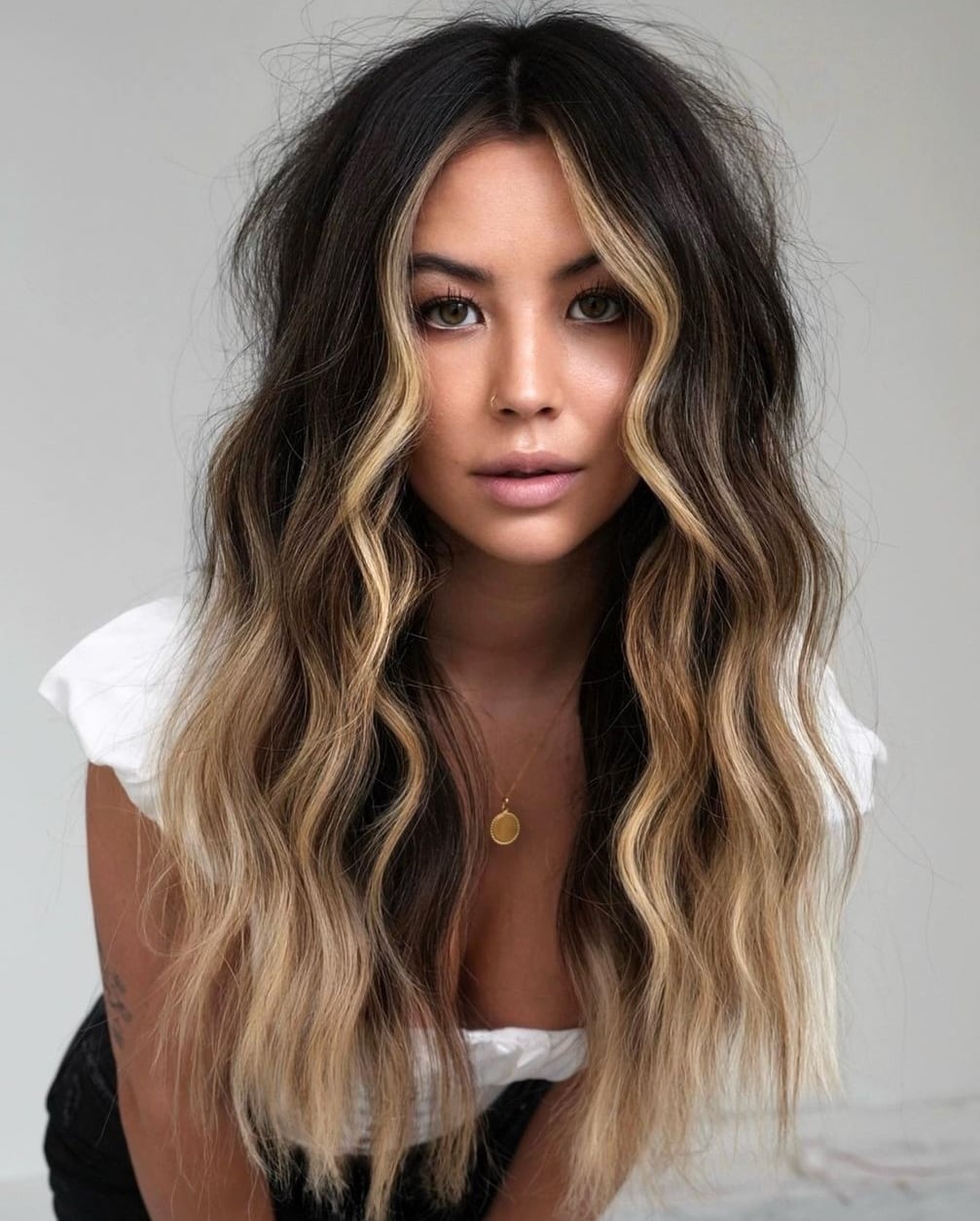
This is a balayage designed to be seen from across a room. The dark brown base anchors the hair, while the blonde balayage runs through the lengths and concentrates at the front with face-framing pieces and curtain bangs. Thick, wavy hair at mid-back length gives the waves enough body to separate the tones naturally.
The one real drawback is that curtain bangs need a trim every three to four weeks to keep the shape, and the lighter pieces around the face will show regrowth faster than the rest. Ask your colorist for a dark brown base with blonde balayage, face-framing pieces, and curtain bangs. A texturizing spray on the waves keeps the curtain bangs from falling flat by midday.
Mid-Back Ash Brown With Ash Blonde Balayage, Low-Key, Softer Variation
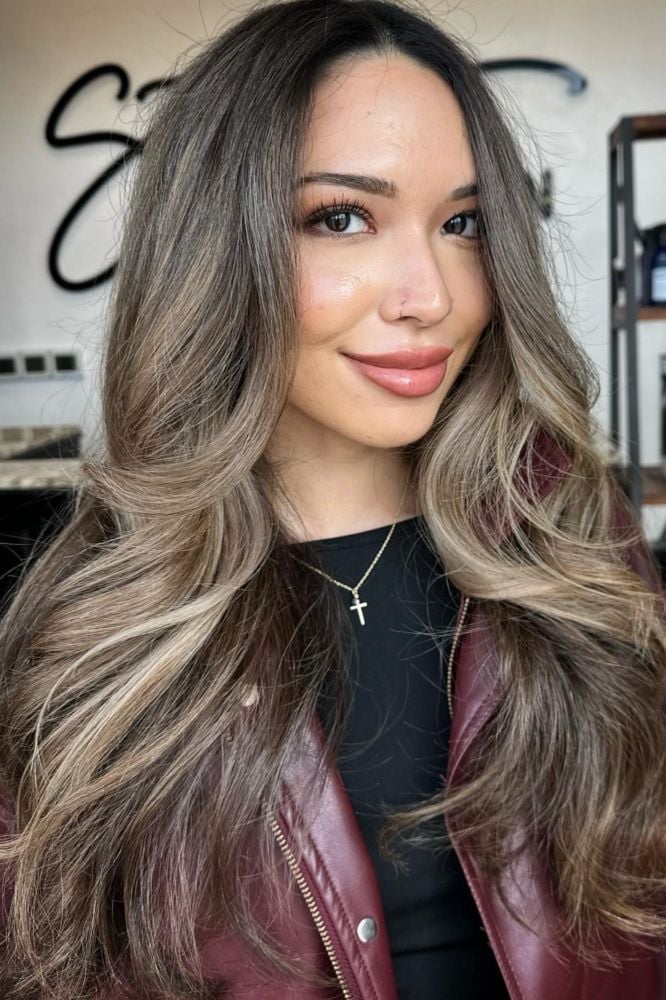
How do you ask for a balayage that is visible but not loud? Start with an ash brown base and add an ash blonde balayage that sits a few shades lighter. The result is a cool-toned blend that reads as subtle dimension, not a dramatic lift. Thick, wavy hair at mid-back length with curtain bangs and a middle parting carries the ash tones without turning muddy. Ask your colorist for an ash brown base with ash blonde balayage and curtain bangs. Bring a photo of a soft, lived-in balayage as a reference, and specify you want the lighter pieces to stay within two shades of the base for a low-key effect.
Mid-Back Warm Light Brown With Honey Blonde Balayage, Wavy
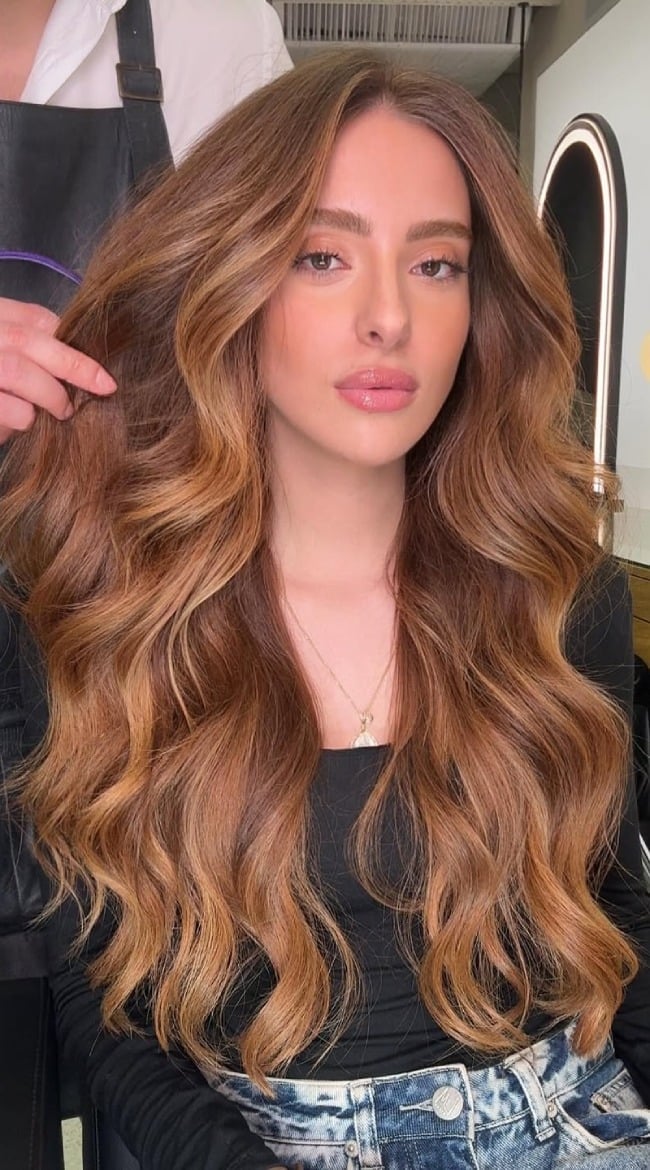
The trick with a honey blonde balayage on a warm light brown base is that the lighter pieces are painted in a soft, sweeping motion starting below the crown, not at the root. This creates a gradient that keeps the base rich near the scalp and lets the honey tones glow through the ends. On thick, wavy hair, the loose curls catch the lighter strands at different angles, so the color has dimension. A middle part helps the balayage feel balanced on both sides.
Ask your colorist for: warm light brown base with honey blonde balayage, mid-back length. This works well for anyone with medium to thick density and a natural wave pattern. A curl-enhancing mousse and scrunching while air-drying will encourage the existing texture. Expect a trim every eight to ten weeks to keep the ends healthy and the color looking fresh.
Mid-Back Platinum Blonde With Icy Blonde Balayage
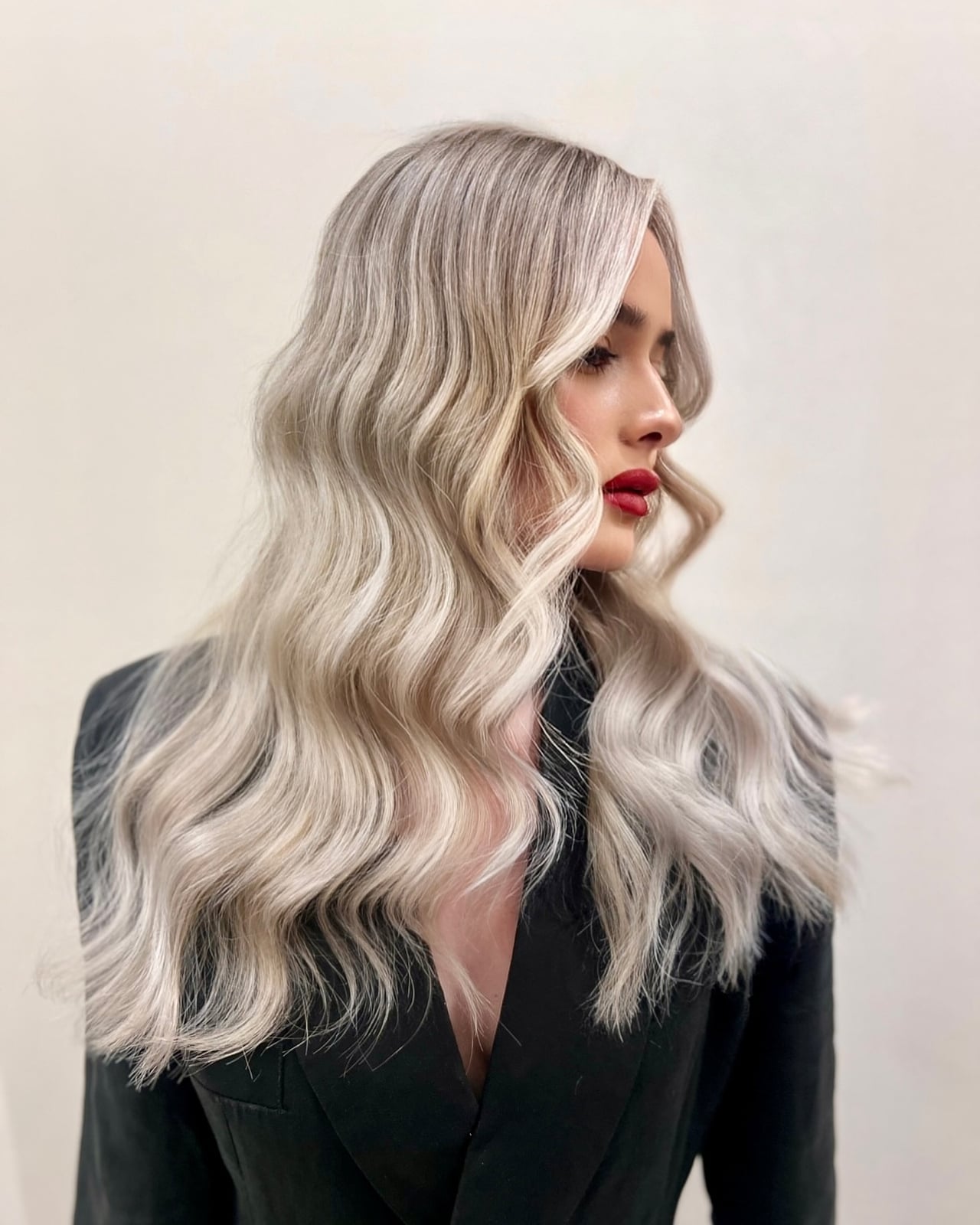
A platinum blonde base with icy blonde balayage is a high-contrast look that demands precision. On fine, wavy hair, the lighter strands can appear sparse if not applied tightly through the mid-lengths. The cool tones reflect light, which can make fine hair look fuller with proper placement.
Ask your colorist for: platinum blonde base with icy blonde balayage, mid-back length. This is a salon-only process: the base requires lifting to platinum first, then the icy pieces are painted in a separate session to avoid overlap damage. Fine hair can become brittle under repeated lightening, so expect to space out touch-ups to eight weeks or more. This shade works best on cool undertones and fair complexions.
Mid-Back Ash Blonde With Platinum Blonde Balayage, Layers
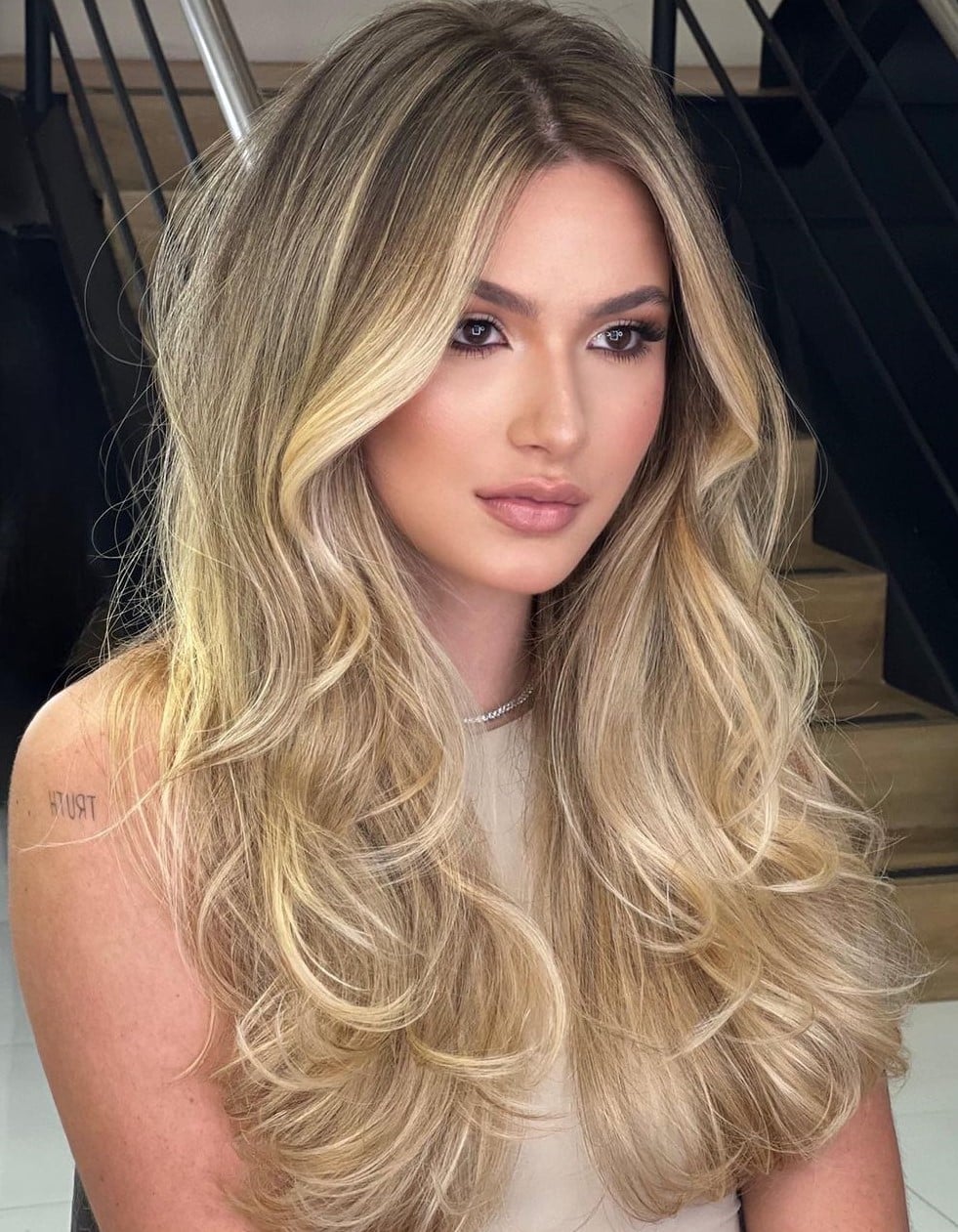
Where a warm base with platinum highlights can feel brash, an ash blonde base with platinum balayage stays cool and refined. The face-framing pieces here pull the brighter strands forward, which adds lightness around the face without washing out the overall tone. Thick, wavy hair carries the contrast well because the wave pattern breaks up the lighter sections naturally.
Ask your colorist for: ash blonde base with platinum blonde balayage, face-framing pieces. A root shadow at the part can soften the grow-out by about six weeks. A trim every eight to ten weeks keeps the layers from looking shaggy.
Collarbone Ash Bronde Balayage With Curtain Bangs
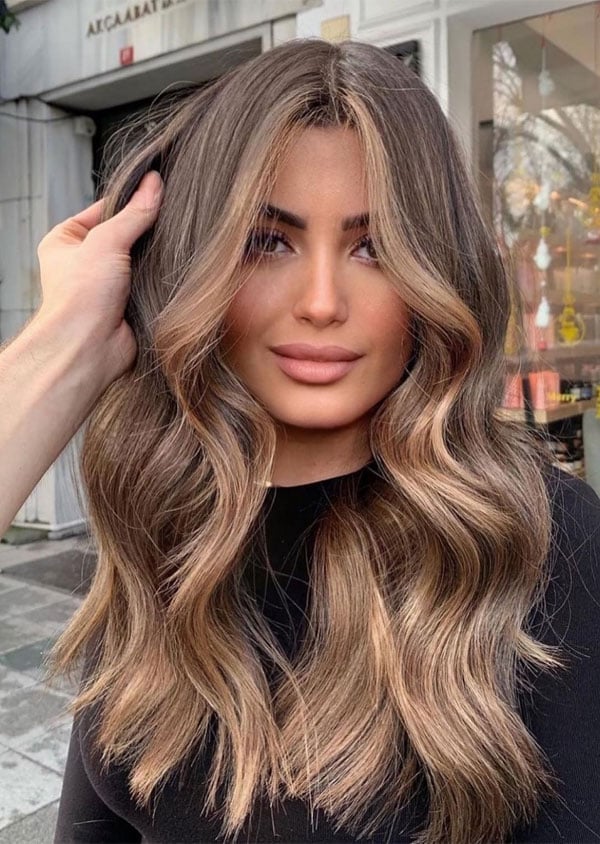
An ash bronde balayage on a collarbone cut with curtain bangs is essentially a grow-out-friendly design from day one. The darker base near the roots and the lighter ash tones through the ends mean there is no harsh line of demarcation as the color shifts. The curtain bangs soften the transition because they frame the lighter pieces around the face without requiring a full highlight refresh.
Ask your colorist for: collarbone ash bronde balayage with curtain bangs. The ash tone can pull slightly green on some base colors, so a weekly purple shampoo is required. The cut itself needs a trim every six to eight weeks to keep the bangs from losing their shape.
Mid-Back Light Blonde With Platinum Balayage, Wavy
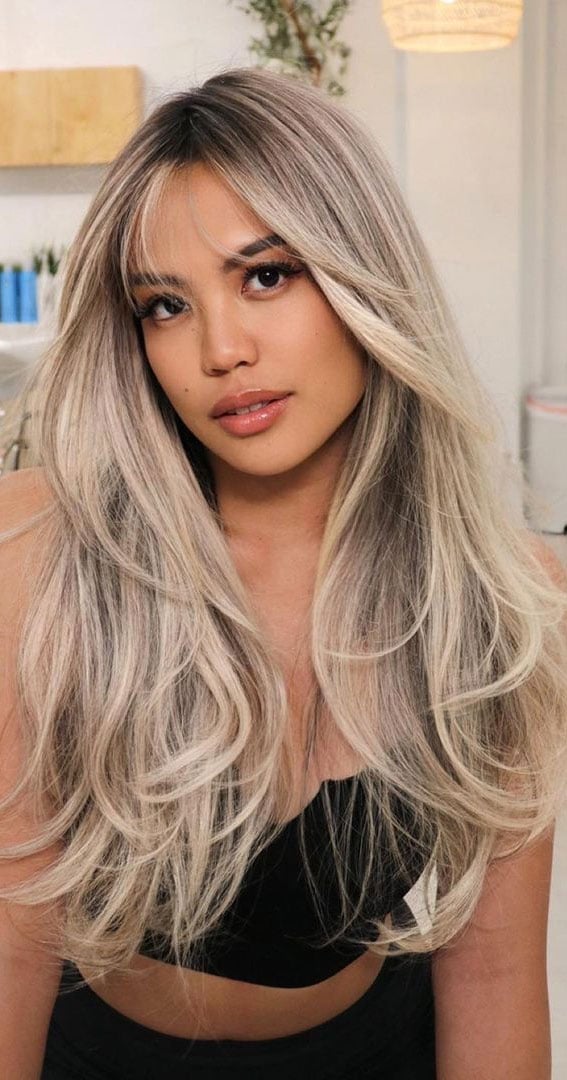
Platinum balayage on a light blonde base reads as a single, seamless shade from a distance, but the loose waves reveal the subtle separation between the base and the brighter strands. On fine, wavy hair, the key is to keep the lighter pieces fine and dispersed so they add dimension without creating a striped effect. The middle part helps the color fall evenly on both sides.
Ask your colorist for: light blonde base with platinum blonde balayage, mid-back length. The fine texture means the hair can show damage faster under high-lift color, so a bond-building treatment every few washes is a practical habit. A toning appointment every four to six weeks will keep the platinum from warming up.
Collarbone Creamy Beige Balayage With Curtain Bangs
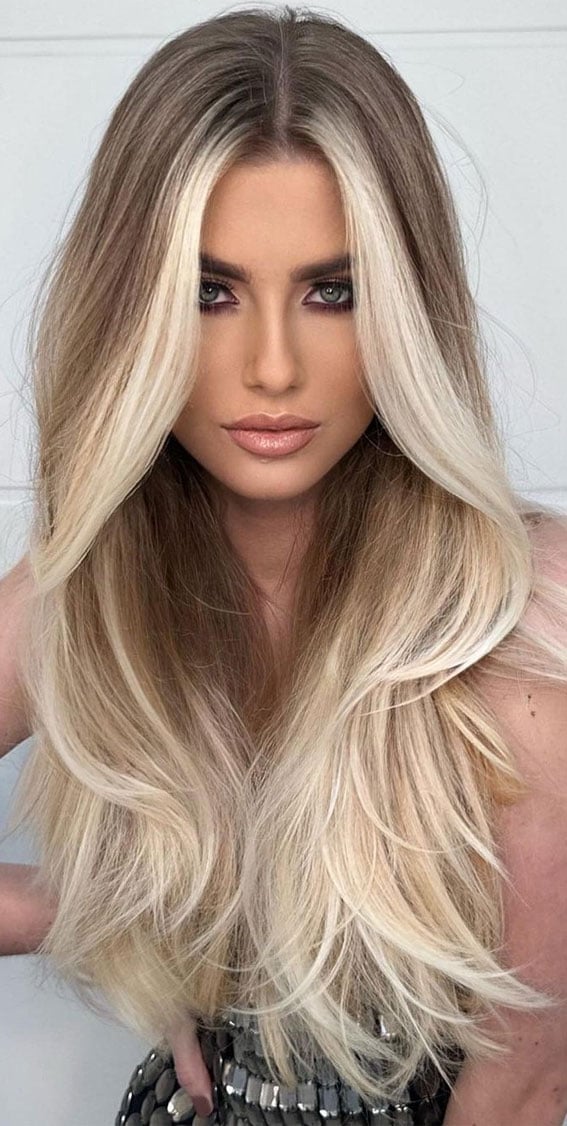
How do you ask for a shade that looks warm without turning brassy? A creamy beige balayage on collarbone-length hair with curtain bangs is the answer. The tone sits between beige and blonde, with face-framing highlights that catch light around the cheekbones. Ask your colorist for: collarbone creamy beige balayage with curtain bangs. This works best on thick, wavy hair, and the curtain bangs help soften angular features. A volumizing spray at the roots keeps the blowout from falling flat, and trimming the baseline every six to eight weeks maintains the shape.
Mid-Back Fine Hair With Platinum Blonde Balayage, Middle
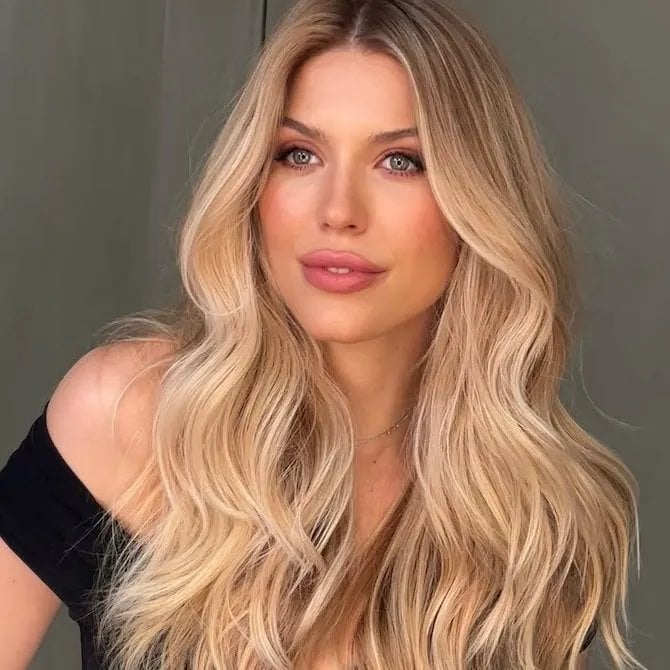
A bright platinum blonde balayage on fine, wavy hair is a design that relies on placement, not density. The color is concentrated through the mid-lengths and ends, so the lighter sections add dimension and the illusion of volume without heavy product buildup. Fine hair processes faster, so the technique uses gentler lightening to avoid over-processing. Ask your colorist for: platinum blonde balayage on fine wavy hair, mid-back length. Toning every four to six weeks is essential to keep the platinum from shifting yellow. Skip heavy creams and stick to a lightweight leave-in conditioner to maintain the wave pattern.
Mid-Back Wavy Hair With Lived-In Balayage
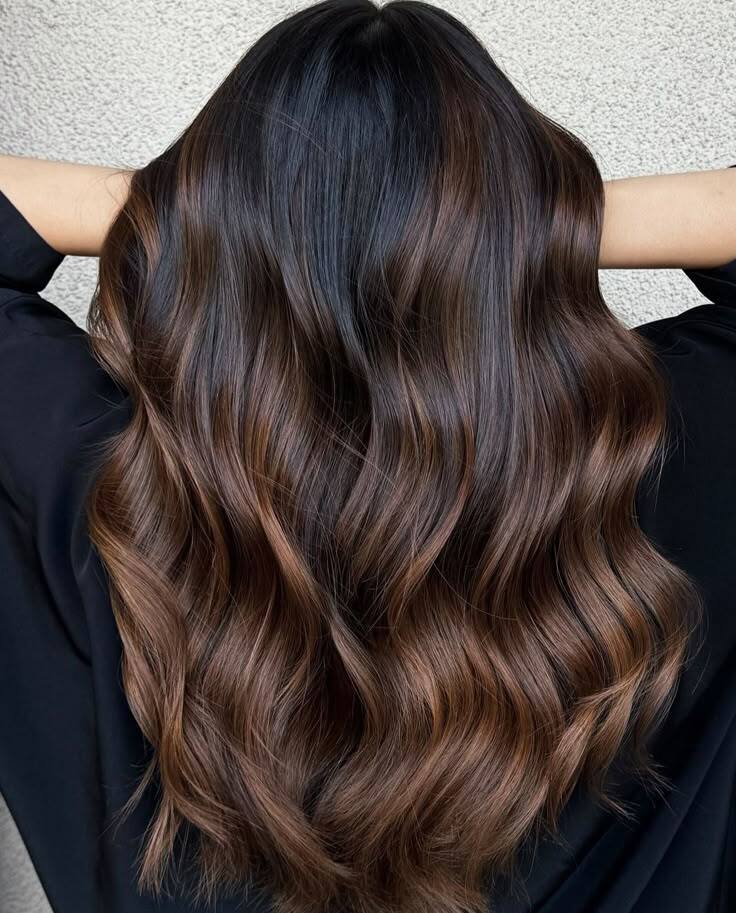
The lived-in balayage on mid-back wavy hair is designed to mimic the way sun naturally lightens hair, with a seamless blend of tones that start darker at the roots and soften toward the ends. This approach suits thick, wavy hair best because the texture helps diffuse the color transitions naturally. Ask your colorist for: mid-back length lived-in balayage, natural wavy texture. The subtlety can appear too understated if you prefer noticeable contrast. The back view matters here, so confirm the colorist feathering the lightener through the interior sections for depth.
Mid-Back Ash Blonde Balayage With Face-Framing Layers, Middle
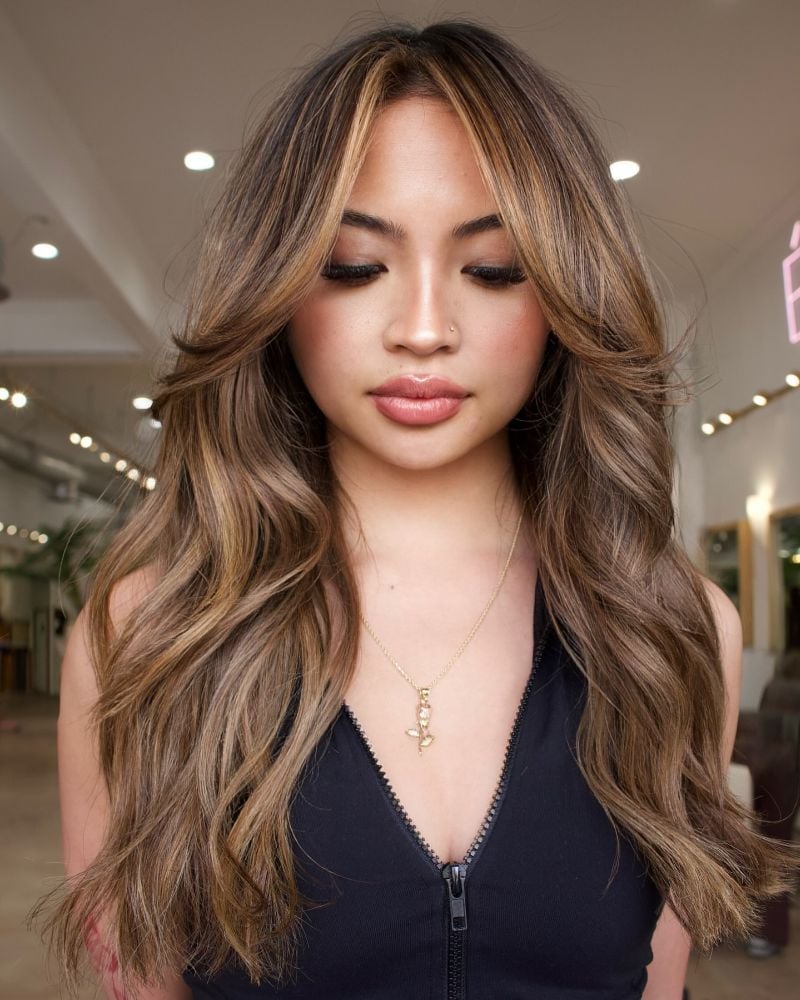
Solid ash blonde can look flat, but adding face-framing layers and curtain bangs to an ash blonde balayage creates movement that the single-tone version lacks. The darker roots keep the grow-out soft, while the lighter pieces around the face brighten the overall effect. Ask your colorist for: mid-back ash blonde balayage with face-framing layers and curtain bangs. A volumizing mousse before blow-drying helps lift the roots, and the curtain bangs need a quick trim every four weeks to stay in shape. This is the version to choose if you want ash tones without the helmet effect.
Mid-Back Dark Red With Bright Red Balayage
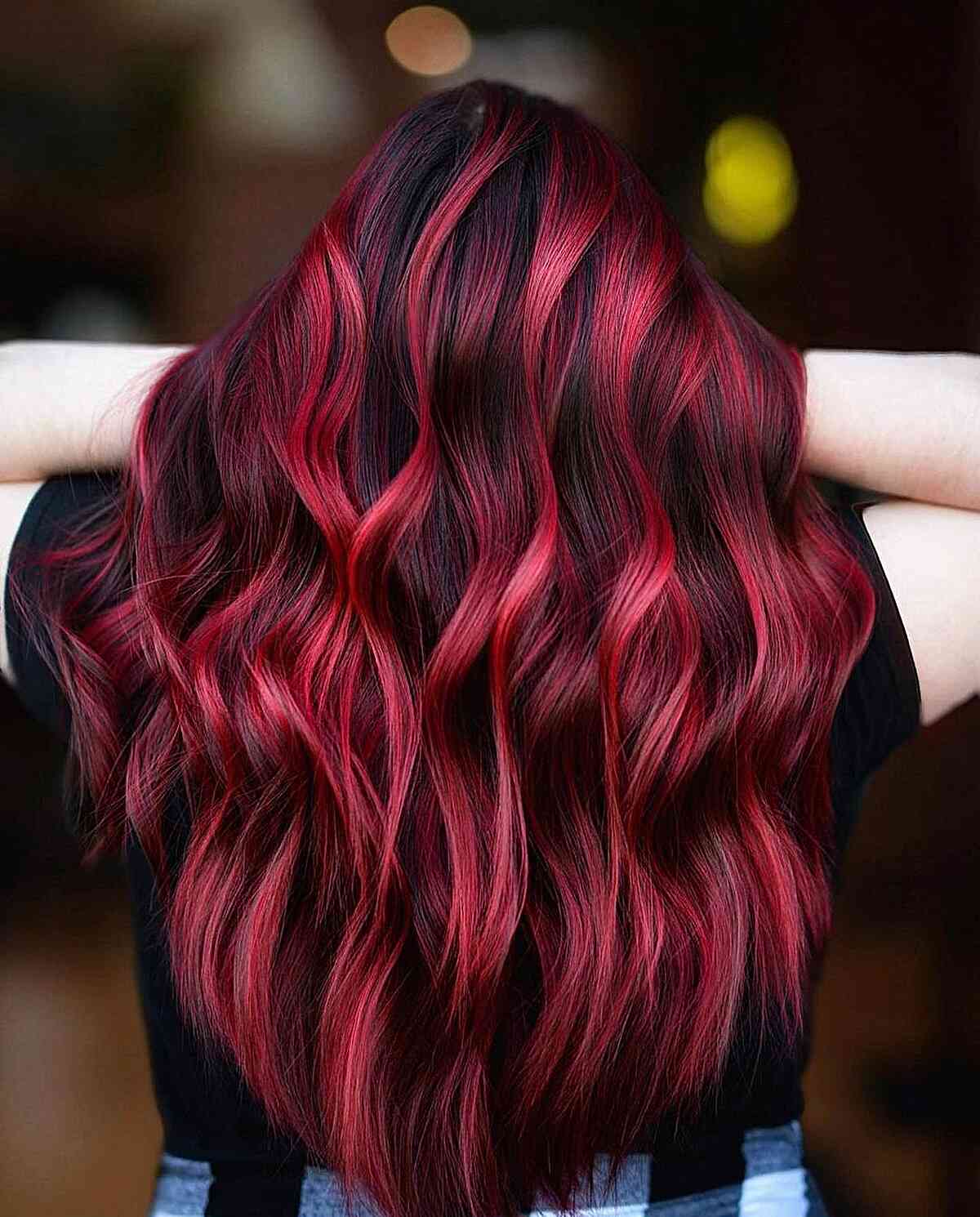
A dark red base with bright red balayage is a high-contrast design that relies on the vibrancy of the lighter pieces against a deeper foundation. The bright red sections are painted onto thick, wavy hair at mid-back length, creating a layered effect that shifts in different lighting. Ask your colorist for: dark red base with bright red balayage, mid-back length. The real drawback is that red pigments fade faster than any other color, especially in the bright sections. Expect to refresh the tone every four weeks with a color-depositing conditioner, and avoid washing in hot water to slow the fade.
Mid-Back Dark Brown To Blonde Balayage With Face-Framing, Wavy
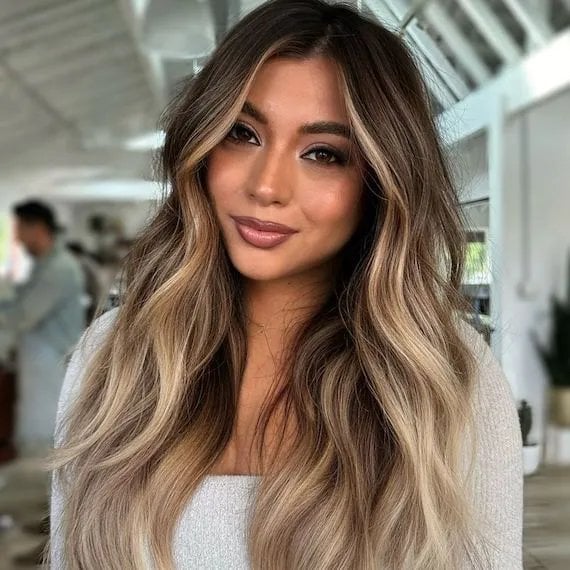
This balayage moves from a dark brown root to a blonde end, and the face-framing pieces make sure nobody misses the transition. It suits medium-density wavy hair at mid-back length, where the loose waves can show off both the depth and the lift. Ask your colorist for: dark brown to blonde balayage with face-framing pieces. A root smudge at the base keeps the grow-out softer for a few extra weeks, so you can stretch the time between appointments to eight or ten weeks.
The real trick here is that the lighter pieces around the face catch the light first, creating a natural highlight effect without needing a full head of blonde. It is a straightforward way to brighten the front without committing to an all-over lift.
Mid-Back Golden Wheat Balayage
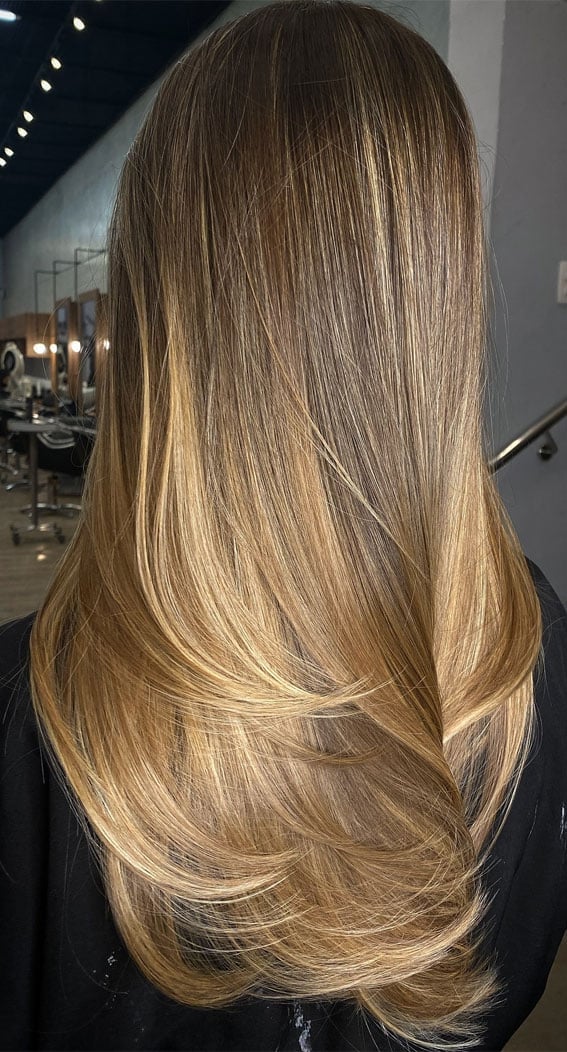
Want a blonde that does not look like it came from a bottle? The golden wheat balayage starts darker at the root and graduates into a soft, sun-lightened end. Ask your colorist for: mid-back length golden wheat balayage. Thick, wavy hair at mid-back length is the ideal canvas here, since the layers and the texture help the color blend naturally. The back view of this style shows exactly how the gradual transition works: no harsh lines, just a warm glow from root to tip.
Collarbone Brunette With Caramel Balayage
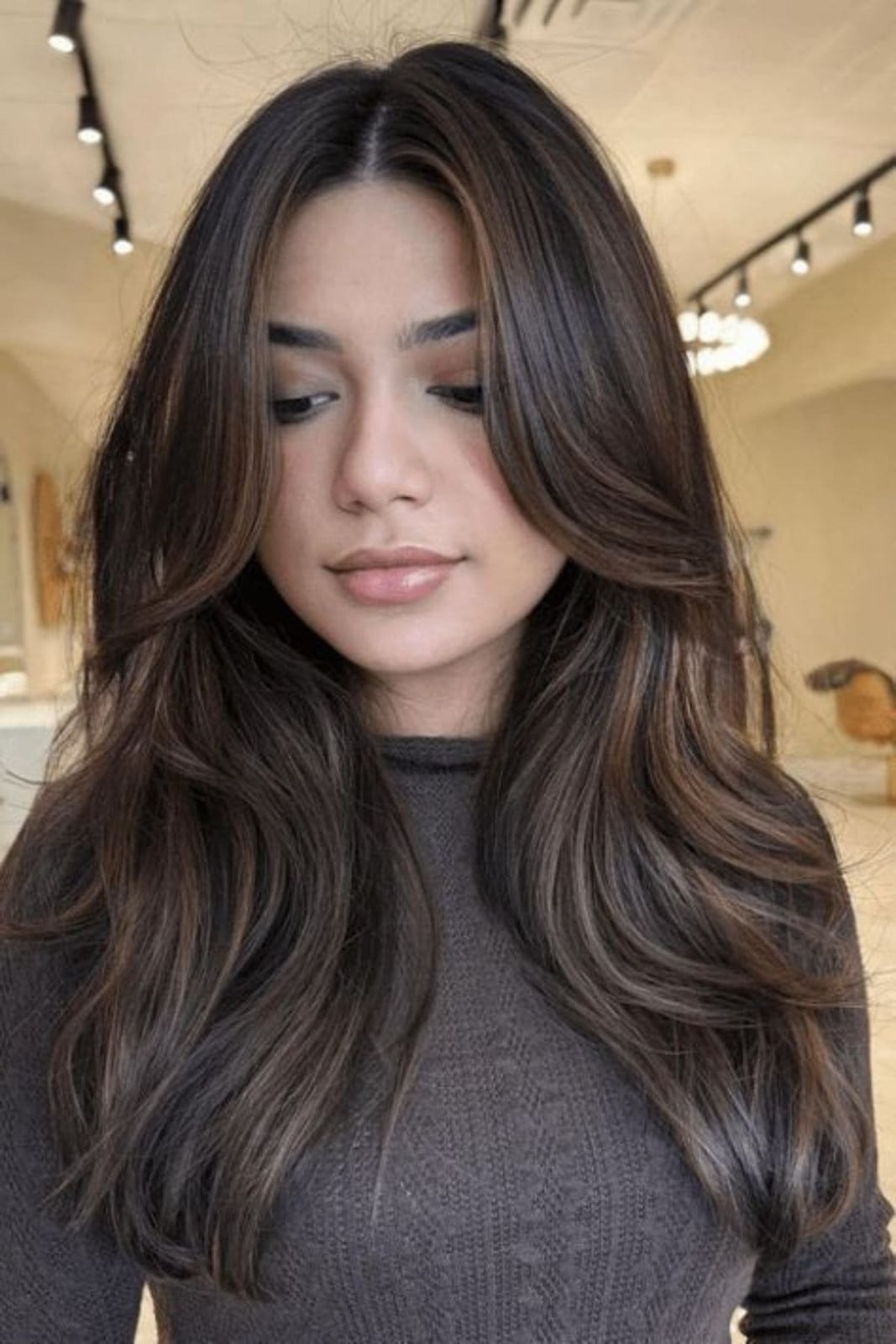
Caramel ribbons are woven through a brunette base here, and they land at collarbone length with curtain bangs that soften the whole frame. The technique uses a hand-painted application on medium-density wavy hair, which keeps the ribbons from looking stripey. Ask your colorist for: collarbone brunette with caramel balayage and curtain bangs. A texturizing spray on the waves adds separation, and the baseline needs a trim every six to eight weeks to keep the collarbone line clean. The curtain bangs will need a refresh more often, but that is the trade-off for the soft front.
Mid-Back Dark Brown With Caramel Ash Blonde Balayage and Curtain Bangs
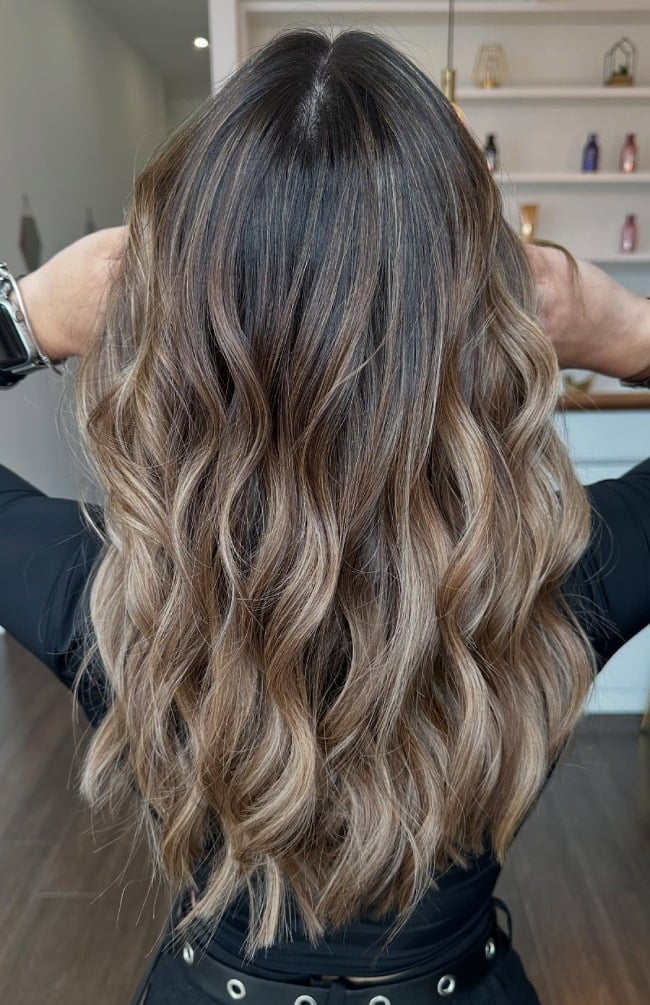
The dark brown base here gets lifted with both caramel and ash blonde tones, which is a more complex blend than a single warm balayage. Thick, wavy hair at mid-back length allows the two tones to separate and create dimension. Ask your colorist for: dark brown base with caramel and ash blonde balayage, curtain bangs. Maintaining two tones means more salon time: the ash blonde can pull cool while the caramel warms up, so a toning appointment every six weeks is standard. Skip this if you want a one-and-done color, because the blend needs regular attention to stay balanced.
Mid-Back Dark Brown With Blonde Money Pieces and Long Layers
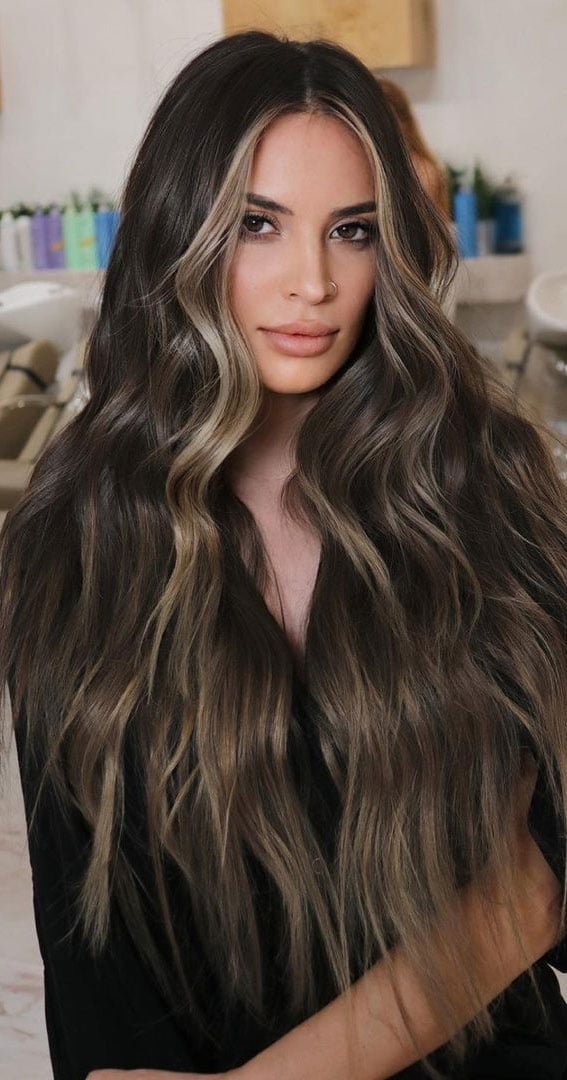
Where a full balayage spreads the lightness everywhere, this version keeps it concentrated at the front with blonde money pieces. The rest stays a subtle balayage, so the contrast looks planned. It suits thick, wavy hair at mid-back length, and the long layers give the waves enough room to move without losing shape. Ask your colorist for: dark brown base with blonde money pieces and subtle balayage. Use a flat iron on the money pieces for a polished finish, and trim the ends every eight to ten weeks. The face-framing pieces create the main contrast, so the color stays low-key.
Chin Length Blunt Bob With Ash Blonde Balayage
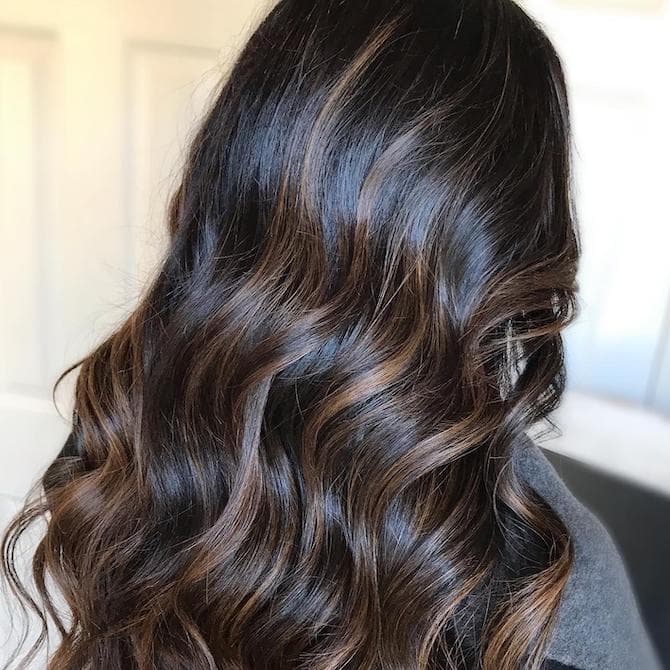
This one starts with a dark brown root and moves into ash blonde balayage that lands mostly on the ends, keeping the top half deep and the bottom half cool. The fine, straight texture and middle part let the color do the talking. Ask your colorist for: chin length blunt bob with ash blonde balayage. The drawback is the blunt baseline shows every split end, so plan on a trim every six to eight weeks to keep that line crisp.
Final Thoughts
When choosing your balayage, start with your natural base color and be honest about how often you want to visit the salon. Darker bases with caramel or lighter brown highlights grow out the most gracefully, while platinum and icy tones need a gloss every six weeks to stay cool. Fine hair benefits from a softer contrast that does not overwhelm the cut, and curly textures shine with ribbons of color placed through the mid-lengths and ends.
- Maintain balayage with toning glosses every 6-8 weeks to preserve shade vibrancy.
- Use sulfate-free shampoos and conditioners to protect color-treated hair.
- Incorporate a deep conditioning treatment weekly to combat dryness.
- Minimize heat styling; when necessary, use a heat protectant spray.
Find the blend that speaks to your style.
