

Viking braids are built from sections, not tricks, and that is what makes them hold. This season the look is trending with lived-in color underneath and a glossier finish on top, so the braids read as deliberate texture rather than something you slept on.
These 36 styles span from salon-level braided mohawks to two-strand twists you can manage yourself, which means they work for fine hair that needs grip, thick hair that needs taming, and any length past the chin. If your braids tend to loosen by lunch, this collection shows you exactly where to anchor them so they stay.
Intricate Braided Mohawk with Ponytail
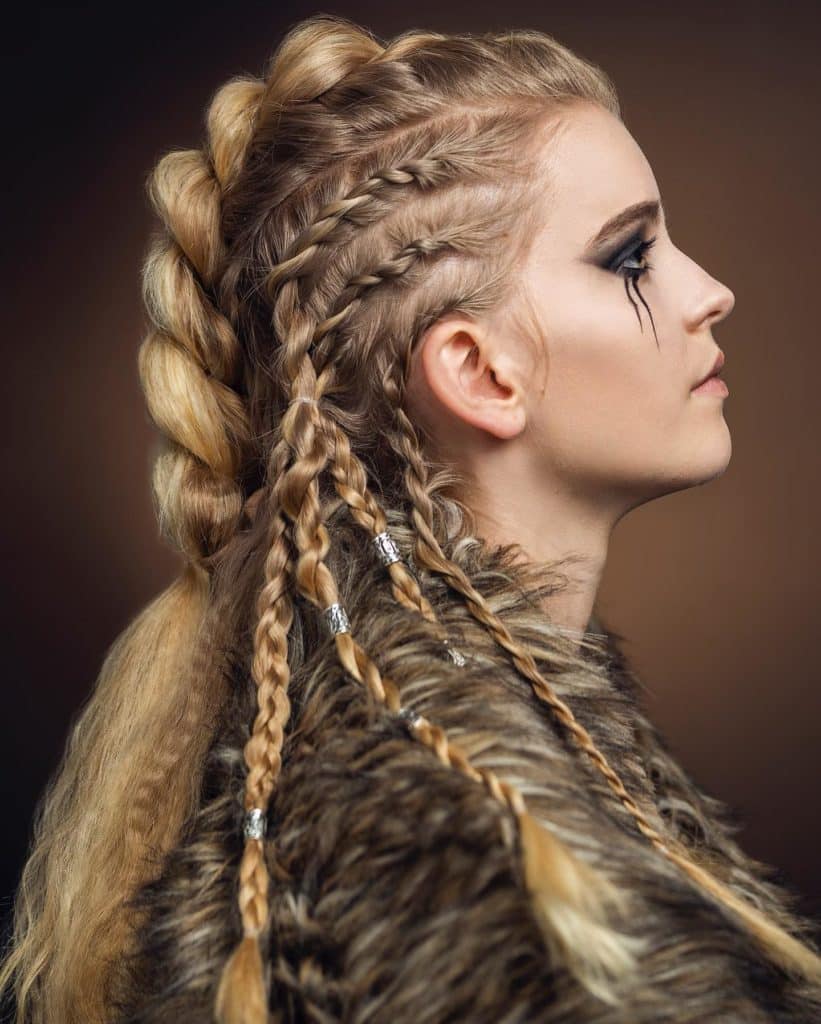
The braided mohawk here doesn’t just sit on top; it flows into a ponytail, with extra braids woven through the thick, wavy mid-back length. It’s a construction project, not a quick style. The blonde base with lighter highlights adds depth so each twist reads clearly, and the middle part keeps the whole thing symmetrical.
Ask your stylist for: braided mohawk into ponytail, intricate side braids. This one suits thick, wavy hair that’s mid-back or longer, since the weight of the braids needs something substantial to anchor to. It’s a salon-level undertaking, so set aside a chunk of time and come in with clean, dry hair. A strong-hold hairspray is your friend here; it keeps the smaller braids from frizzing and the ponytail from drooping.
Ash Blonde Braided Mohawk
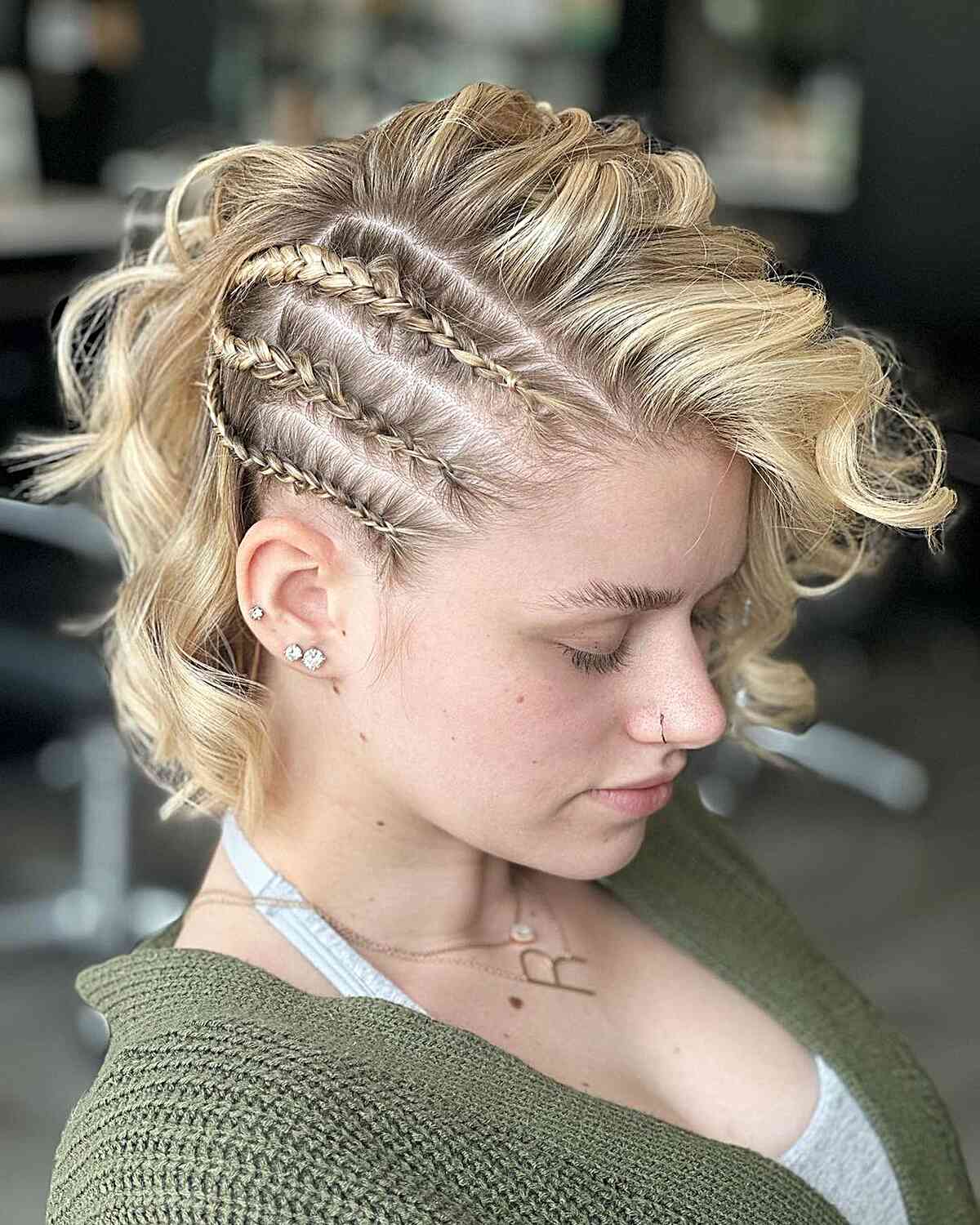
Wondering if a braided mohawk works on your hair? This ash blonde version is for you if your hair is thick and wavy, since that texture gives the top section the volume it needs to stand up instead of lying flat. The shoulder length keeps it from feeling heavy, while the middle part and intricate side braids frame the face without needing bangs. Ask your stylist for: ash blonde braided mohawk, braided sides, textured top. To keep the shape, a dry texturizing spray on the top section adds grip and hold, and you will want the sides trimmed every four to six weeks so the mohawk stays crisp rather than growing out into a fuzzy halo.
Curly Mohawk with Braids and Beads
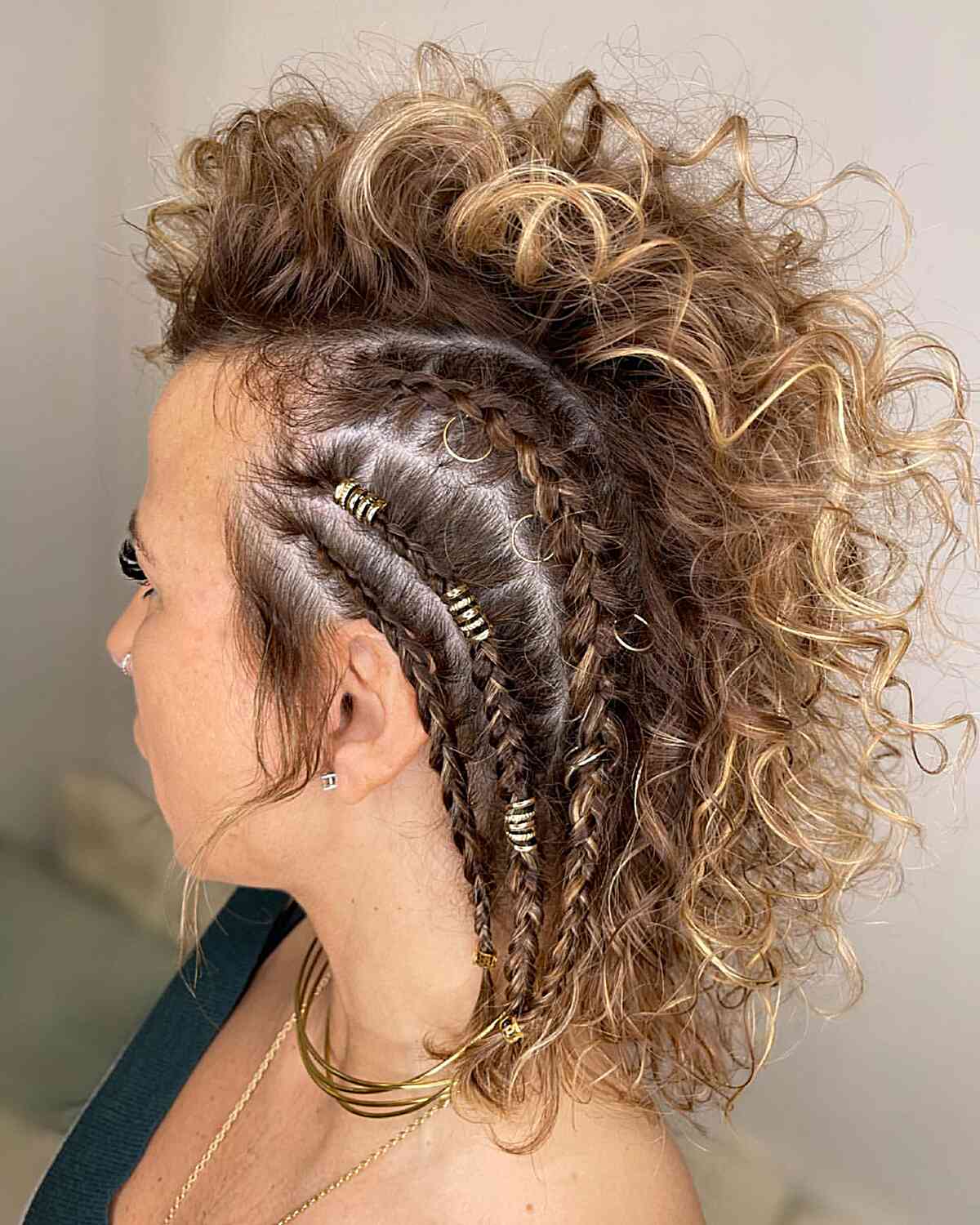
Compared to a sleek braided style, this curly mohawk with braids leans into texture instead of fighting it. The thick, curly top stays loose and voluminous, while the side braids pull the hair back tight, and the small gold beads add a little jingle that a plain braid just doesn’t have. It’s a festival or creative event look, one that turns heads without trying too hard. Ask your stylist for: curly mohawk, braided sides with beads, voluminous top. The side parting is key here, it lets the contrast between tight braids and curly volume really show.
Short Blonde Mohawk with Braided Sides
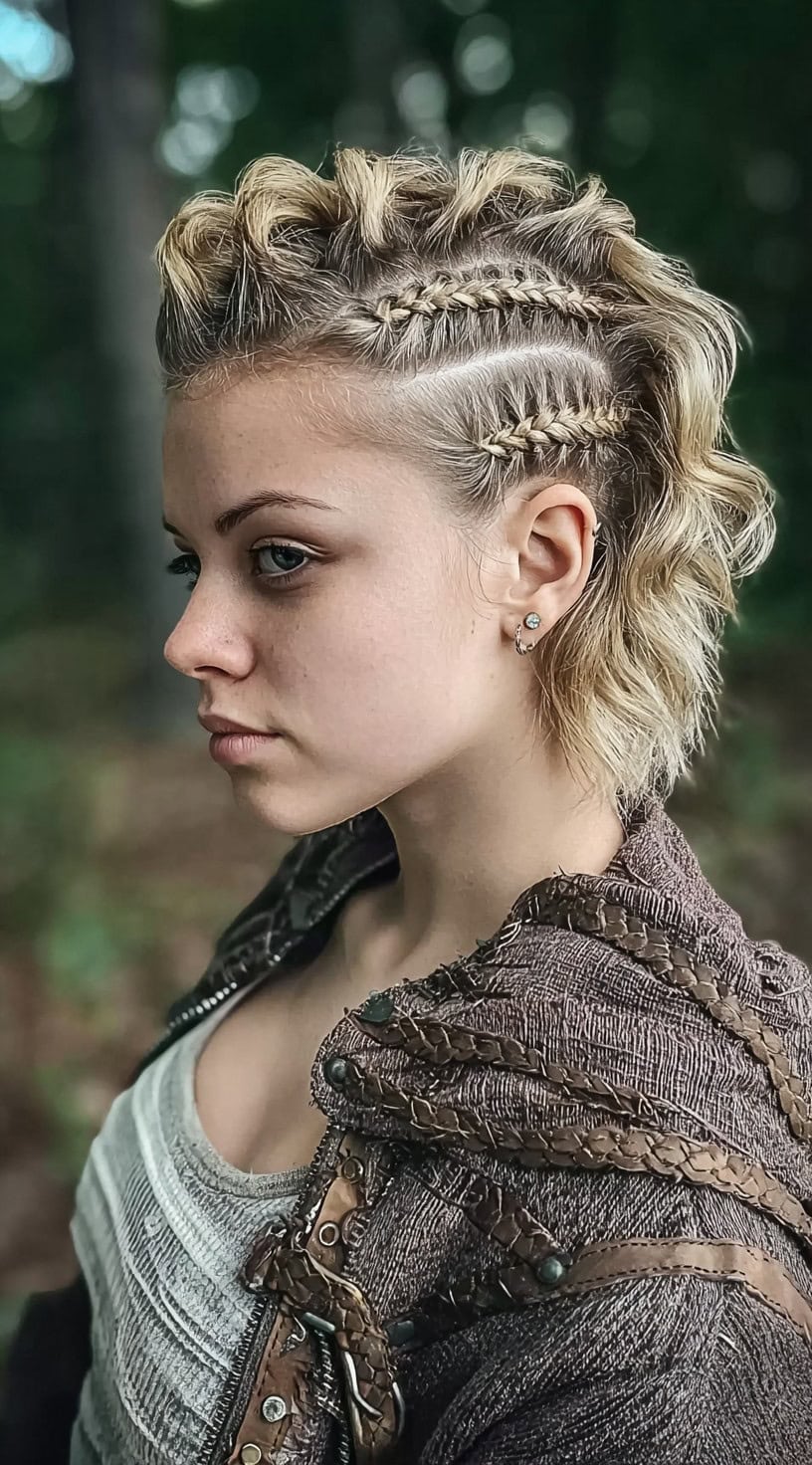
The shaved sides are the backbone of this style, with tight braids running back from the hairline to keep everything neat. On top, the short wavy blonde hair is styled upward with a textured, almost spiky finish, and the short, textured bangs add a soft edge that balances the severity of the undercut. This is a salon-only cut, but once it’s done, you can maintain the top yourself with a strong pomade or wax. Ask your stylist for: short mohawk, tight braids on shaved sides, textured top. The fine, wavy texture works well here because it doesn’t weigh down the top section, keeping the style light and easy to manage.
Blue and Gray Ombre Braids and Buns
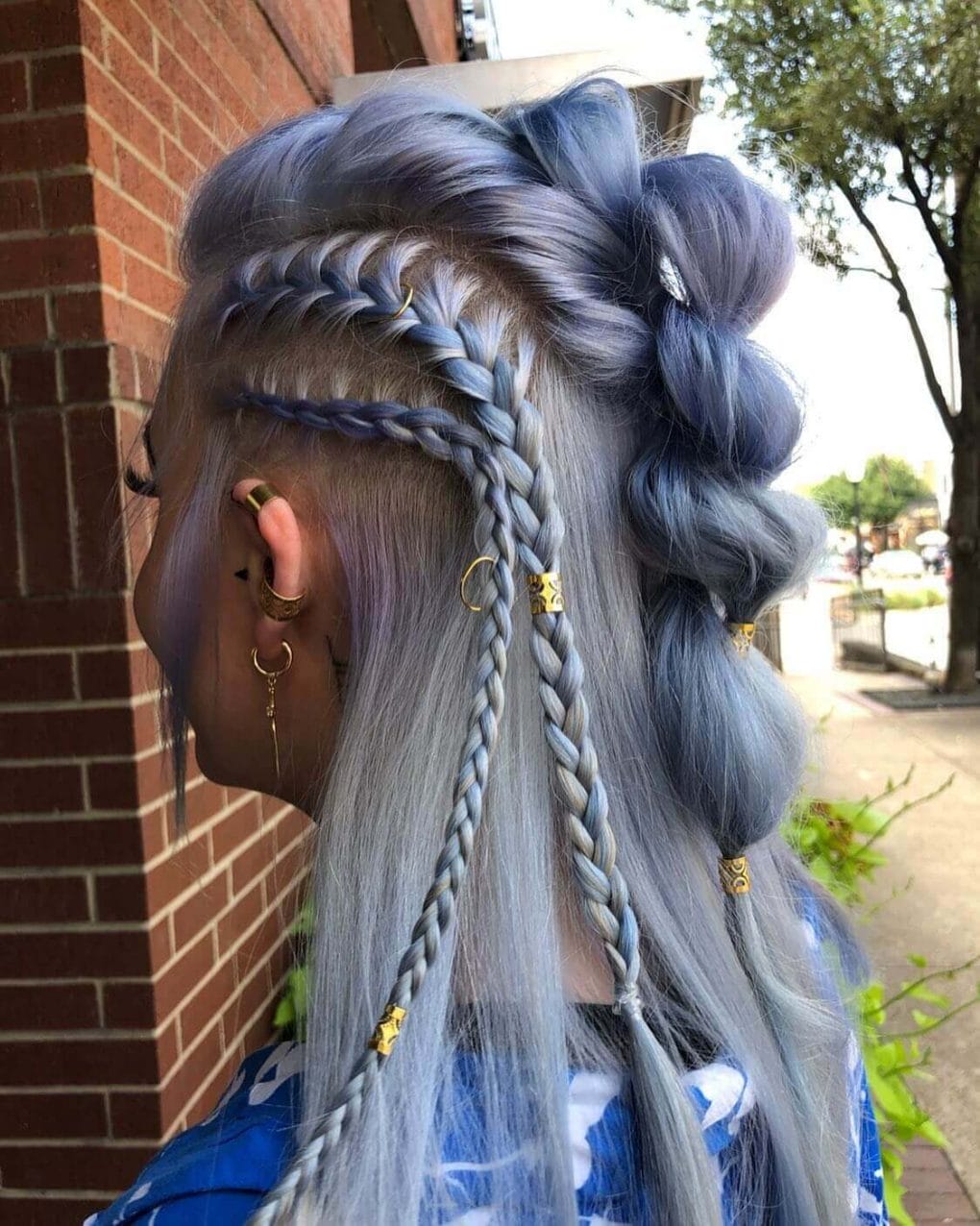
This blue and gray ombre is a commitment, but it’s one that pays off for a bold, alternative look, especially in the cooler months when the icy tones feel right at home. The undercut on one side is braided intricately with gold beads, while the rest of the thick, wavy hair is pulled into large, textured buns and braids that extend down the mid-back. It’s a complex style that needs a skilled hand, so it’s best saved for a special event or a festival where you want the hair to be the centerpiece.
Ask your colorist for: blue and gray ombre braids and buns, braided undercut with beads. Because the color is bold, you’ll need to protect it; washing in cool water and using a color-safe shampoo will keep the blue from fading too quickly. Between washes, a dry shampoo refreshes the buns and braids, so you can stretch the style out for a few days.
Brown Fishtail Braid with Undercut
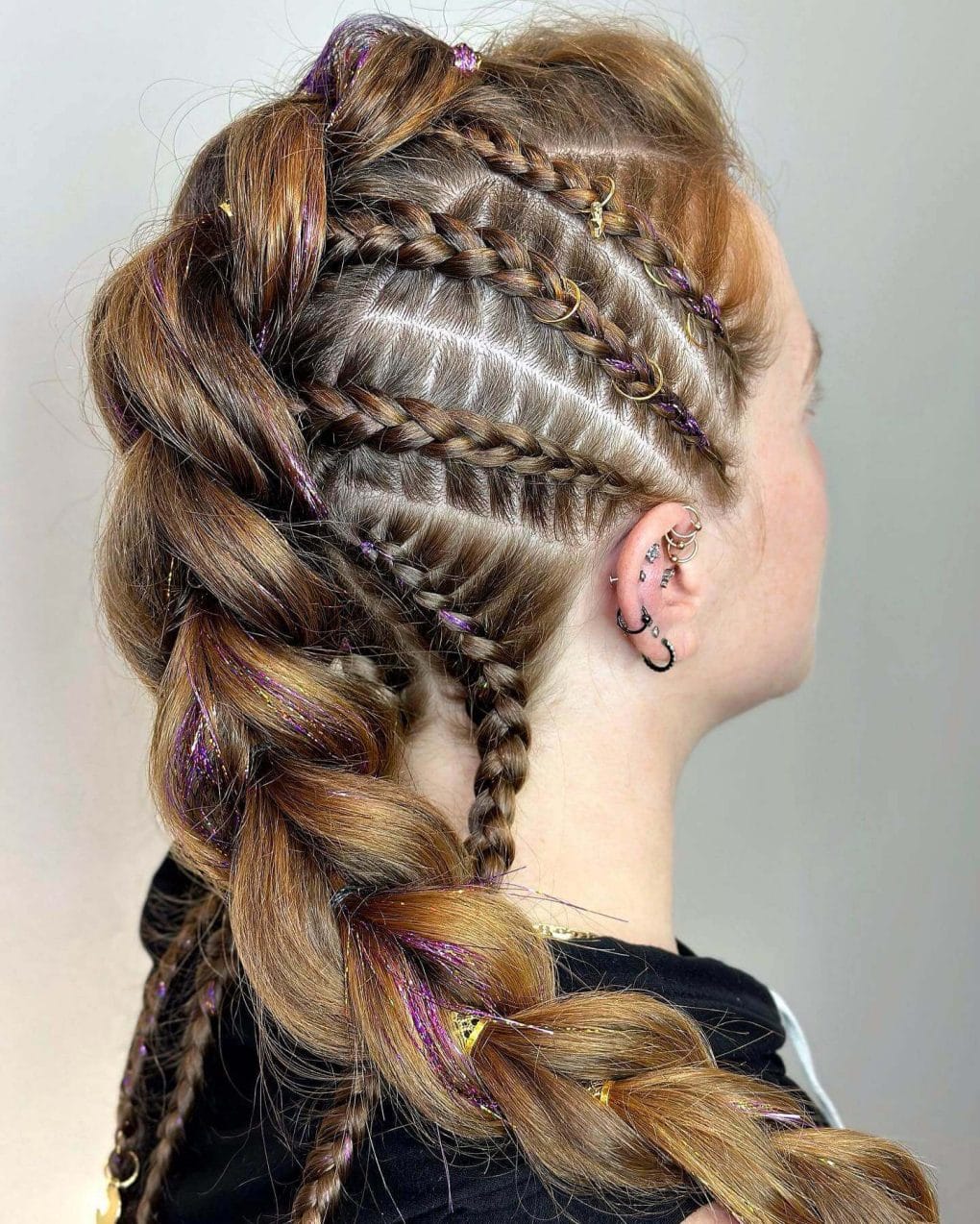
A large fishtail braid with subtle purple streaks and glitter detail sits over an undercut section braided into smaller pieces with beads. It suits thick, wavy hair of mid-back length and requires a salon visit for the precision work. Ask your stylist for: brown hair fishtail braid, glitter detail, beaded undercut braids.
The fishtail holds well for a full day if you apply a texturizing spray before braiding. Glitter applied with hairspray stays put longer than you expect, though you will find sparkle on your pillowcase the next morning. That is the trade-off for a head-turning evening look.
Dark Brown Braids and Bubble Ponytail
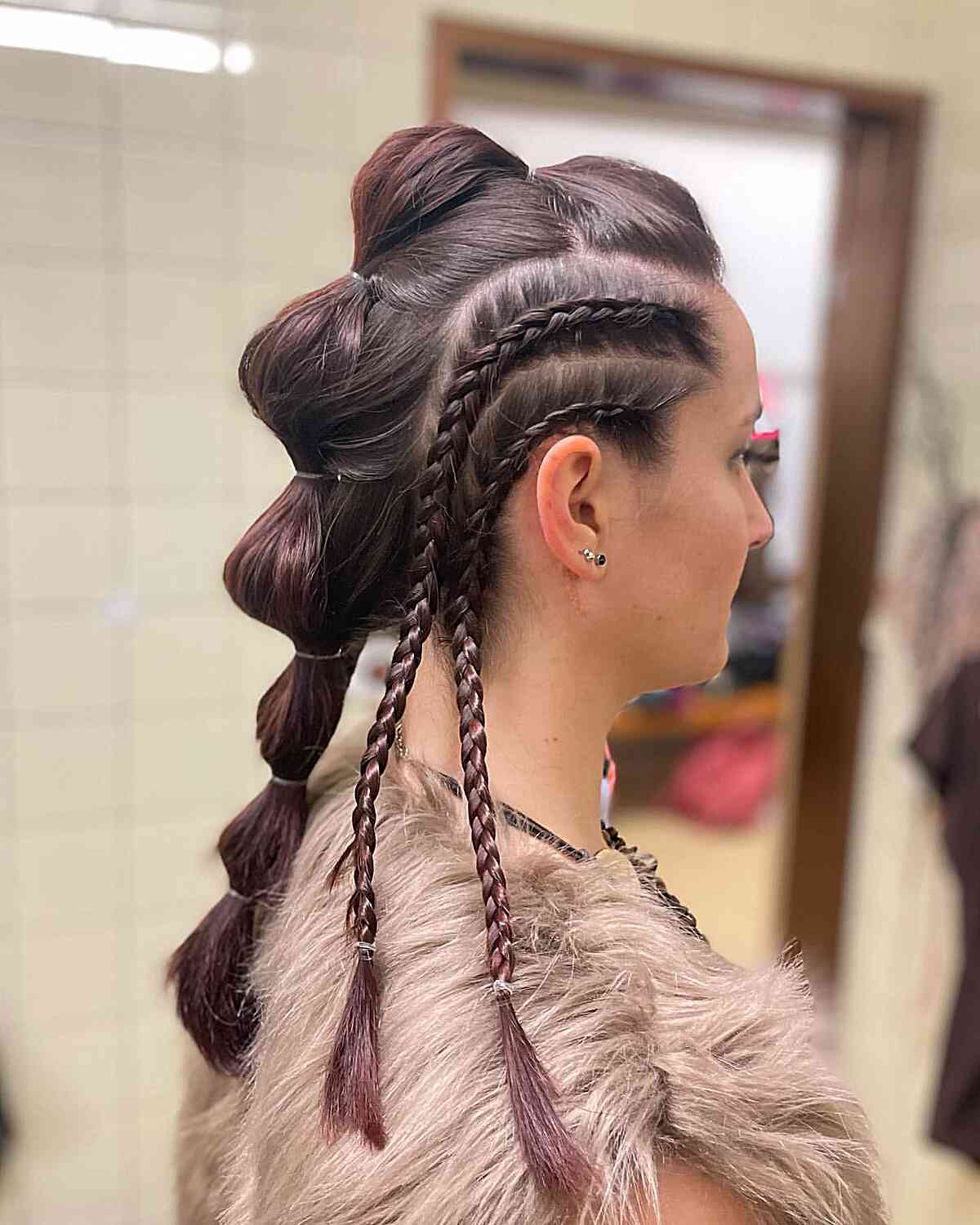
Ever wonder why your bubble ponytail looks more deflated balloon than voluminous Viking style? The mistake is skipping a texturizing spray before sectioning the bubbles. This dark brown, wavy, thick style with intricate side braids and a mid-back bubble ponytail needs that grit to hold its shape. Ask your stylist for: braids along sides, mid-back bubble ponytail. Use clear elastics to keep the focus on the volume rather than the hardware.
Blonde and Brown Bubble Braid
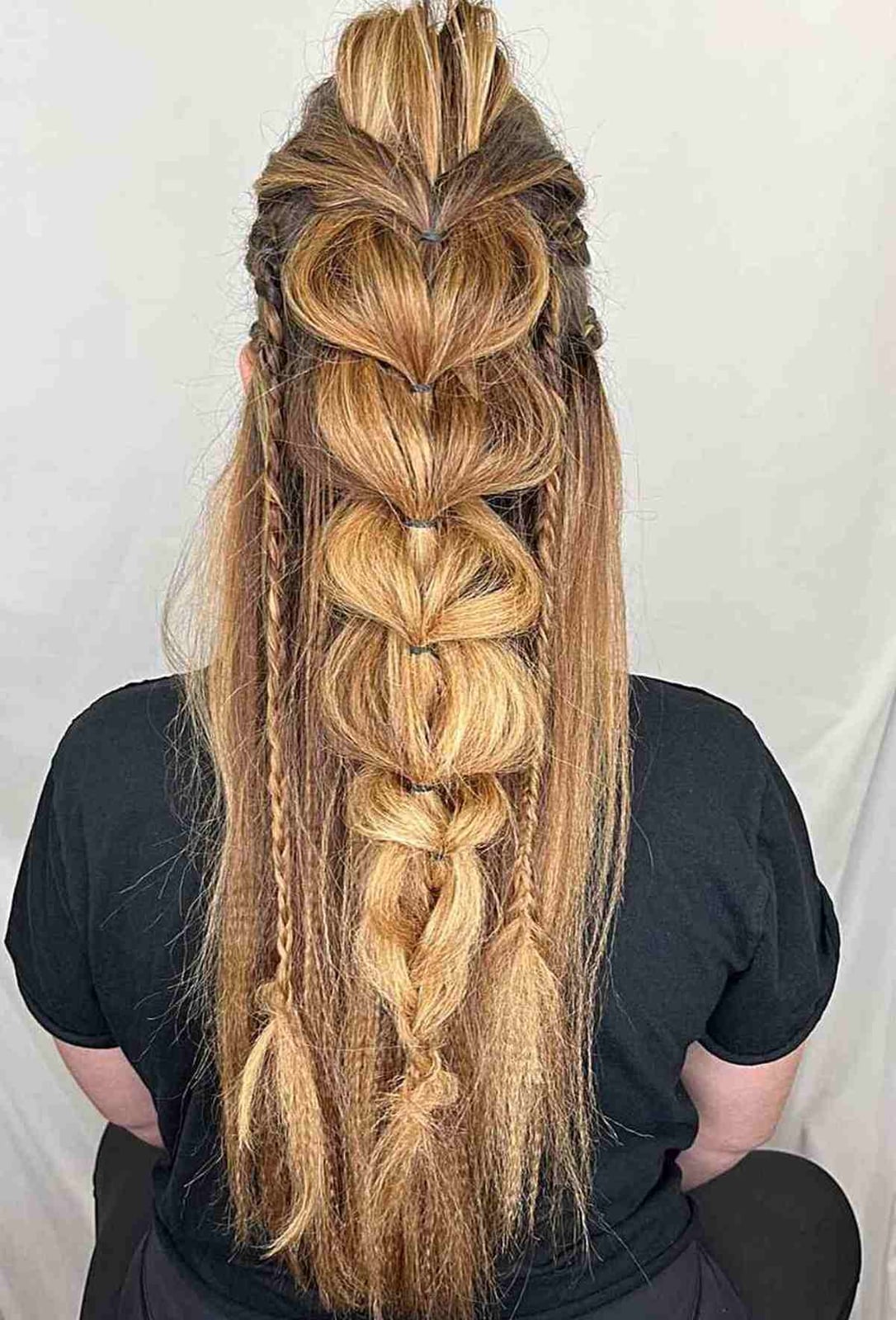
A central bubble ponytail interspersed with braids works best on thick, straight hair of mid-back length. The blonde and brown highlights become more visible with each sectioned bubble, so the color contrast does real work here. Ask your stylist for: central bubble ponytail with braids, side braids.
If your hair is fine or shoulder-length, this design can look sparse rather than intentional. The structure needs density to puff each bubble properly, and straight texture keeps the braids crisp without frizz fighting the shape. A light serum on the lengths adds polish without weighing down the bubbles.
Blonde Undercut with Slicked Top
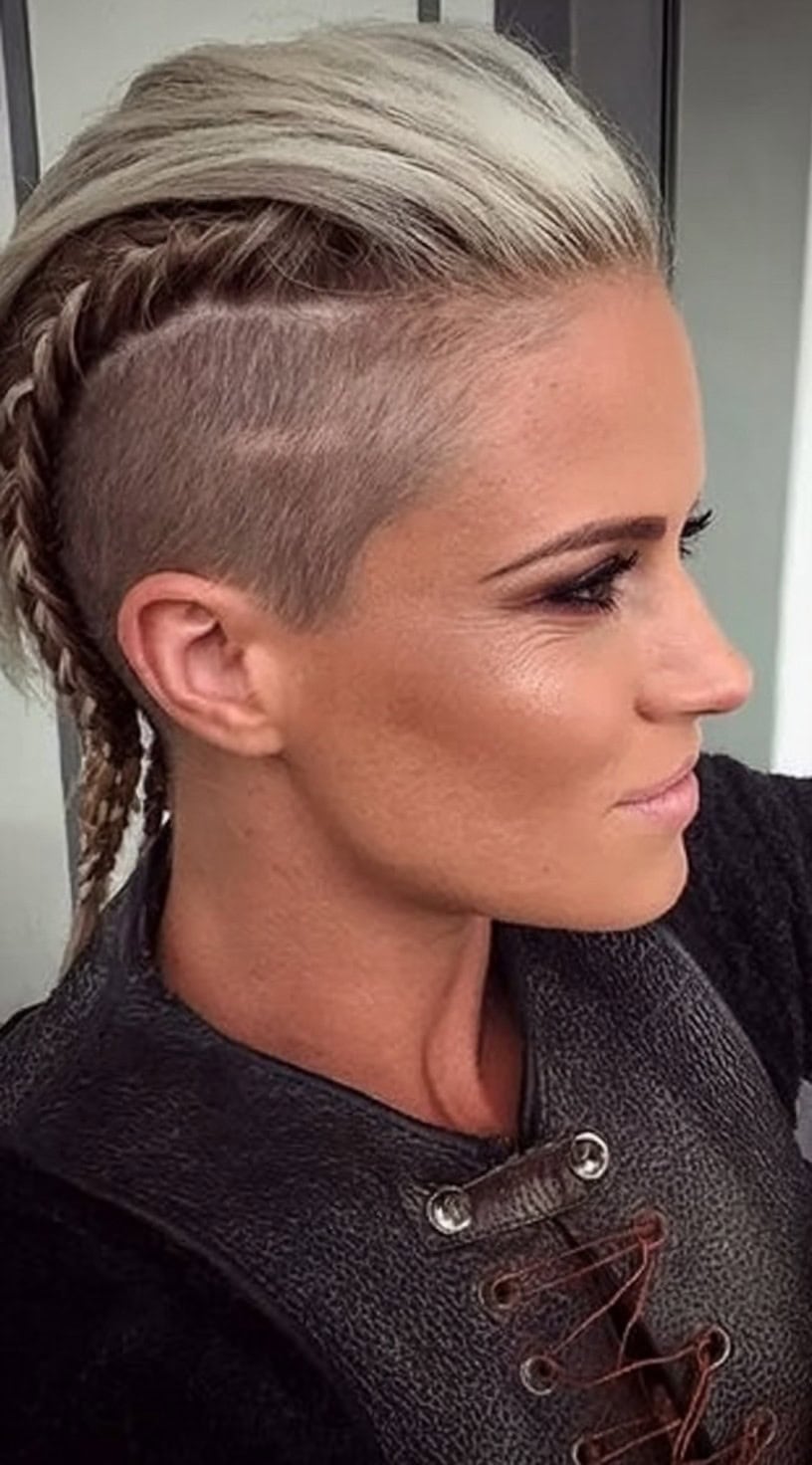
The technique here is all about contrast: a prominent braid running along the shaved side against a slicked back blonde top. Fine, straight hair on medium length works best for the slicked portion, while the undercut side needs regular trims to keep the line sharp. Ask your stylist for: undercut with a prominent braid, slicked back top.
This is a salon-only build. The braid requires sectioning precision, and the slicked back top demands a strong hold gel or pomade applied while hair is damp. Expect about ninety minutes in the chair for the undercut shaping and braiding.
Dark Brown Undercut with Braids
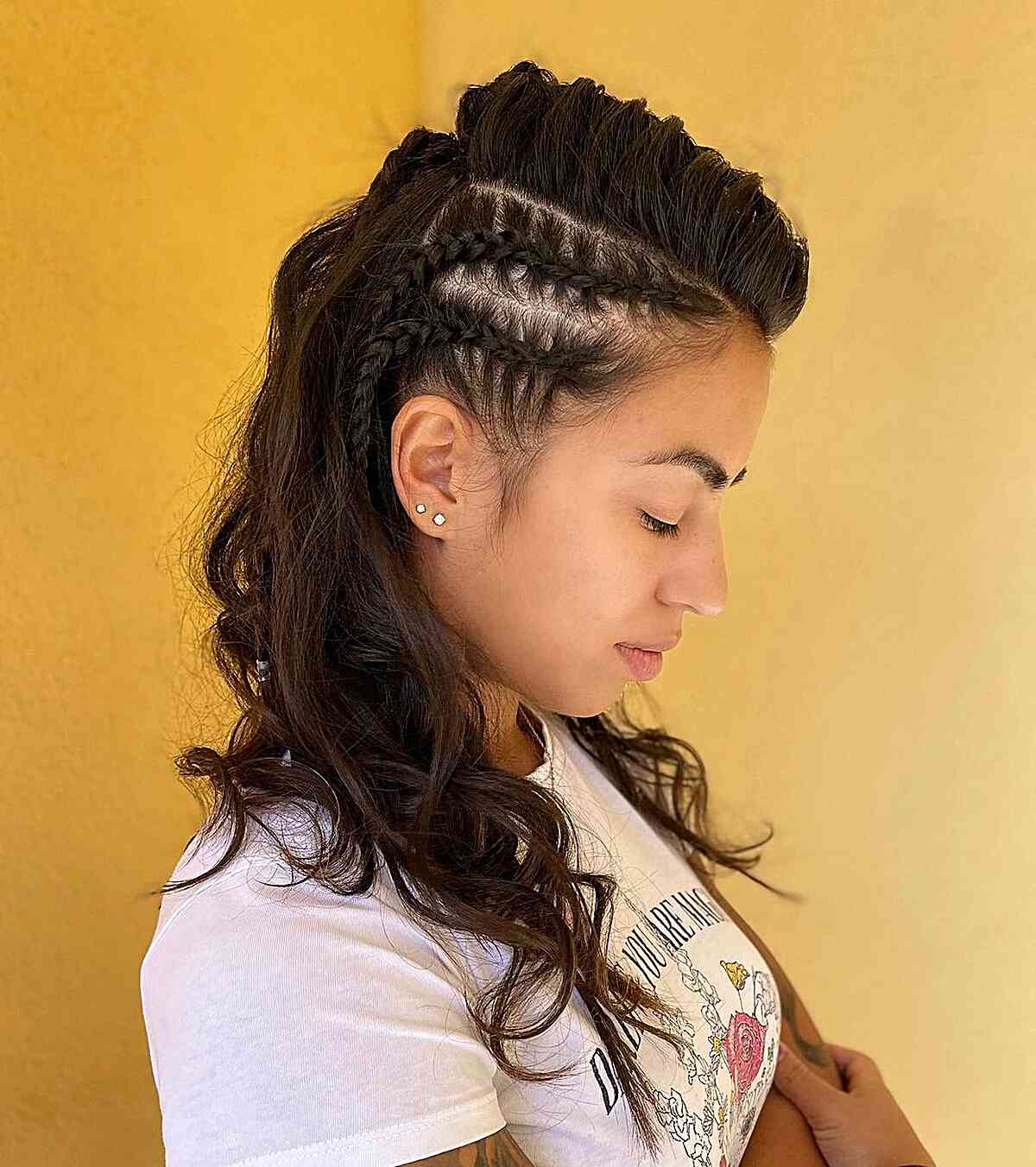
Tightly braided sections along the side of an undercut stay neat for about two days before the wavy top texture starts to soften the contrast. Thick, wavy dark brown hair at shoulder length has enough weight to keep the braids from loosening prematurely. Ask your stylist for: dark brown undercut, tightly braided side sections.
A smoothing serum on the top section controls frizz between washes. The real drawback: the braided side can feel tight against the scalp for the first few hours. That pressure fades, but if you have a sensitive scalp, plan the braids slightly looser than you think you need.
Dirty Blonde Braids with Beads
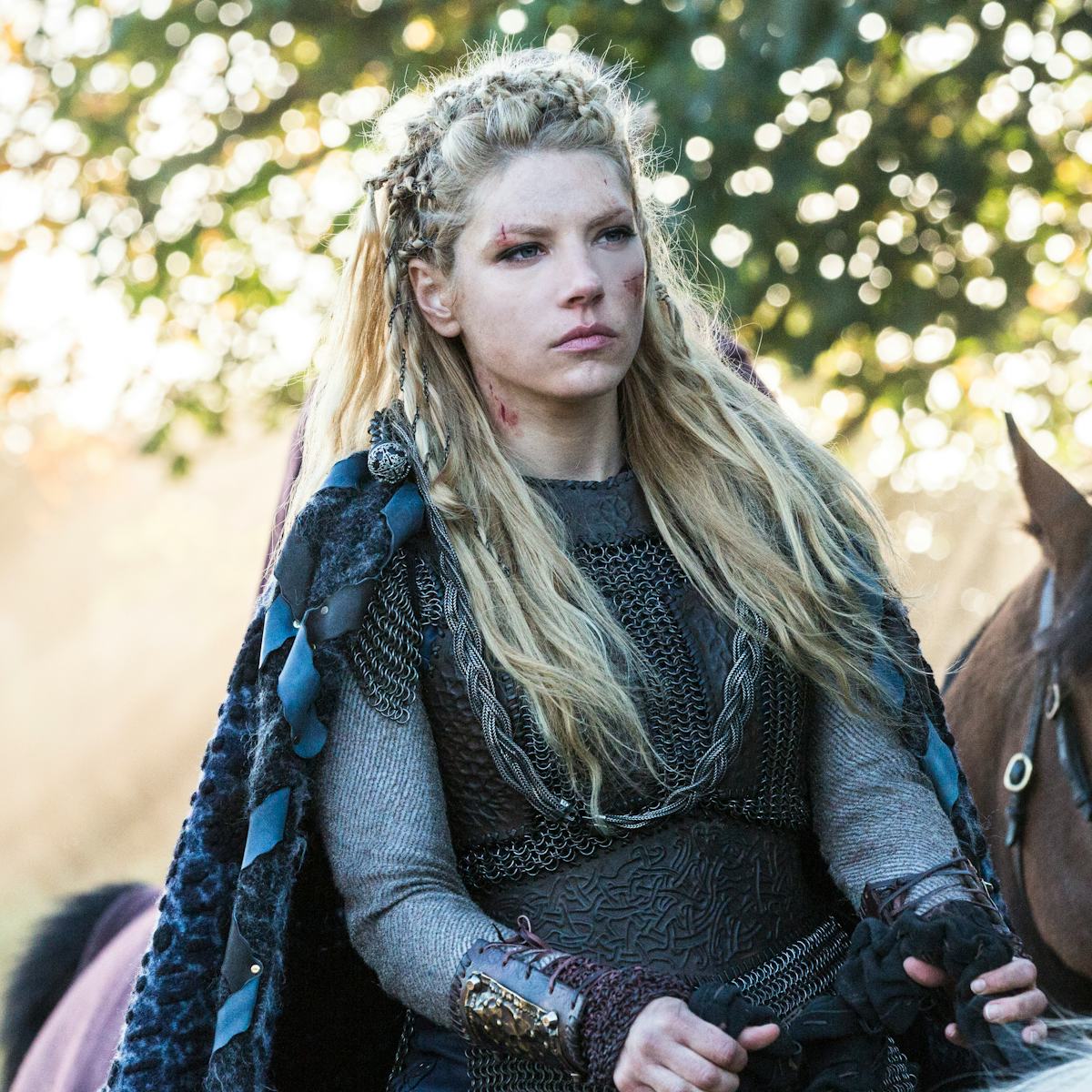
This mid-back length dirty blonde hair with lighter streaks weaves multiple small braids, some adorned with beads, through loose, wavy layers, finished with wispy bangs that soften the whole effect. The braids add texture without taking over, and the beads provide a subtle metallic accent.
Ask your stylist for: dirty blonde hair, multiple small braids with beads, wispy bangs. This suits medium to thick wavy hair of mid-back length, especially if you like braided accents that stay out of the way. The beads need secure attachment, so confirm they are fastened before leaving the salon. Wispy bangs require a trim every four to six weeks to prevent them from growing out into regular bangs.
Dark Blonde Braids with Silver Beads
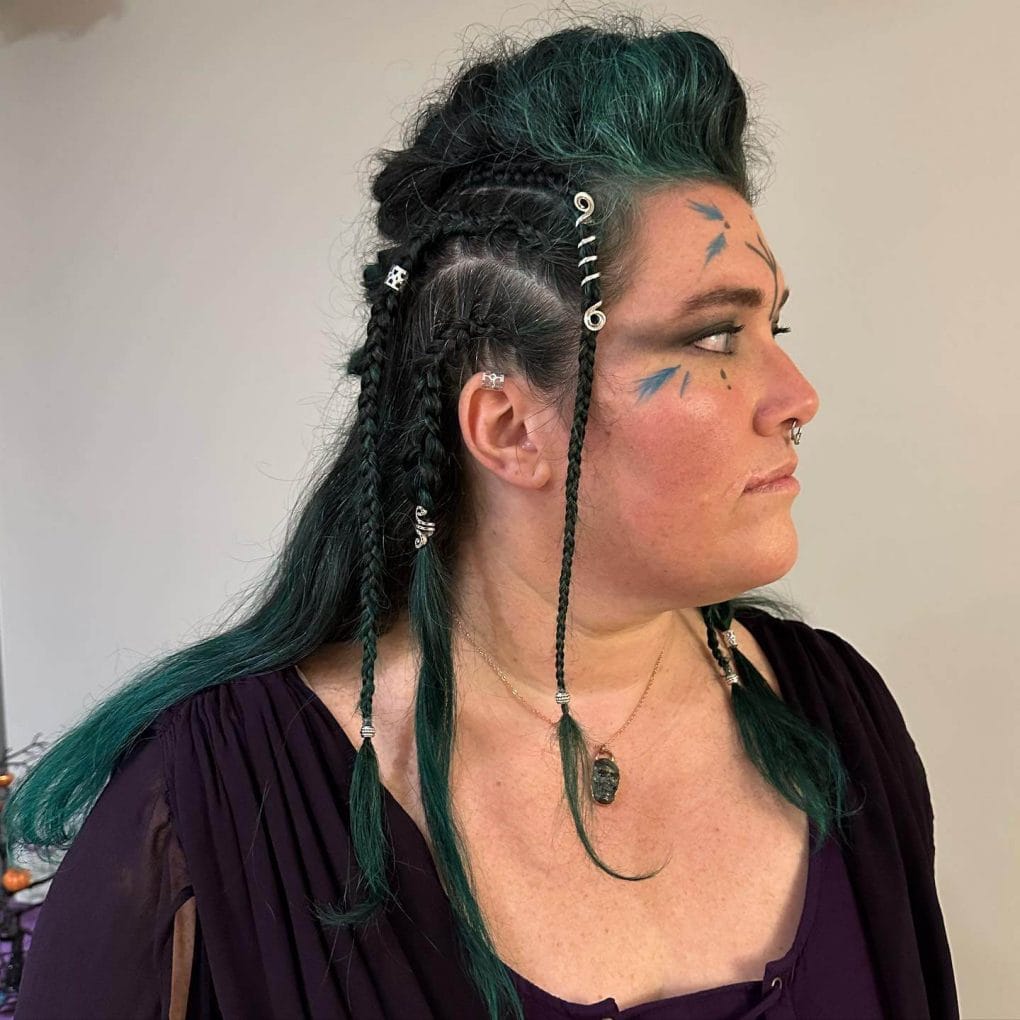
Where the previous style scatters beads sparsely, these viking-inspired braids with beads commit. Small silver beads line intricate scalp braids that transition into larger braids, all set on dark blonde hair with highlights, wavy and thick, falling to mid-back. The braids are visible from every angle.
Ask your colorist for: dark blonde hair, intricate braids with silver beads. This is for thick, wavy hair of mid-back length; anyone with finer hair might find the scalp braids pull a bit much. The beads add a sophisticated element, which makes this a favorite for special occasions and festivals. A light-hold gel keeps the scalp braids smooth, and the side-swept bangs keep the whole thing from feeling too severe. It is not a quick morning style, but it is worth the time in the chair.
Honey Blonde Balayage with Side Braids
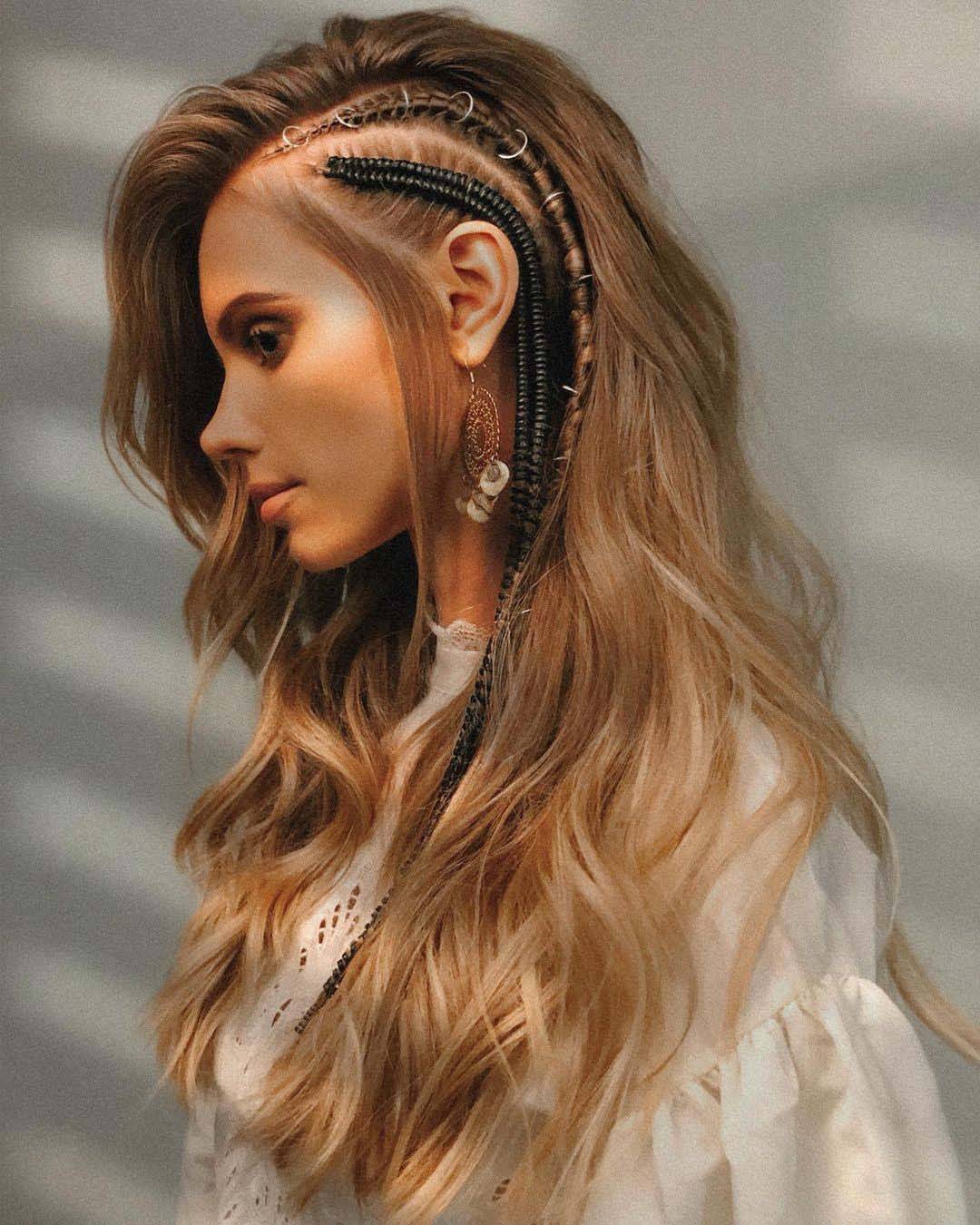
The technique here is all about contrast: several thin braids along the side parting, each threaded with small metal rings, while the honey blonde balayage hair falls in loose waves to mid-back. The braids are subtle, but they add a bit of edge to an otherwise soft, wavy style.
Ask your colorist for: honey blonde balayage, thin side braids with rings. This works best on thick, wavy hair of mid-back length, and it’s a great way to show off balayage dimension without committing to all-over braids. The rings can snag, so make sure they’re smooth and well-attached. This is a salon-leaning look, but you can refresh the braids at home in about fifteen minutes. Balayage color stays fresh with a gloss treatment every six to eight weeks.
Red-Brown Braids with Viking Beads
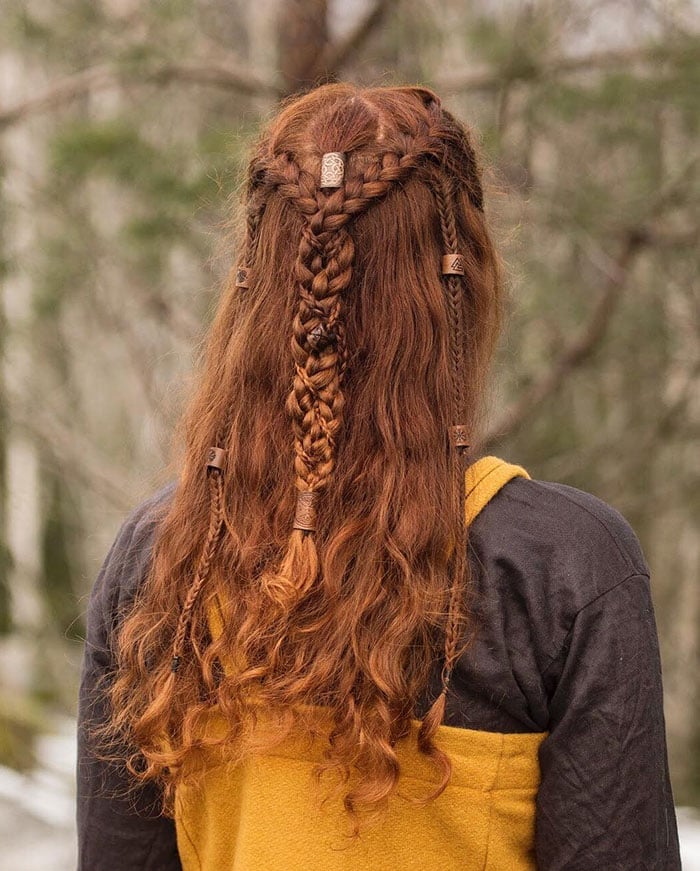
Is your hair thick and wavy enough to handle a full-on braided crown? This red-brown style with lighter strands features a prominent central braid running down the back, flanked by smaller braids, all adorned with viking-themed beads and metal accents. It’s a lot of hair, and it needs the density to carry the look.
Ask your stylist for: red-brown hair, multiple braids with viking beads, central braid. This style suits thick, wavy hair of mid-back length; anyone with finer hair might find the braids too heavy. The beads are the star, so make sure they’re securely fastened to avoid losing one mid-festival. To keep the waves defined, apply a texturizing spray to damp hair before braiding. This style lasts a full day, but expect to spend a good hour in the chair getting it done.
Red Central Braid with Side Braids
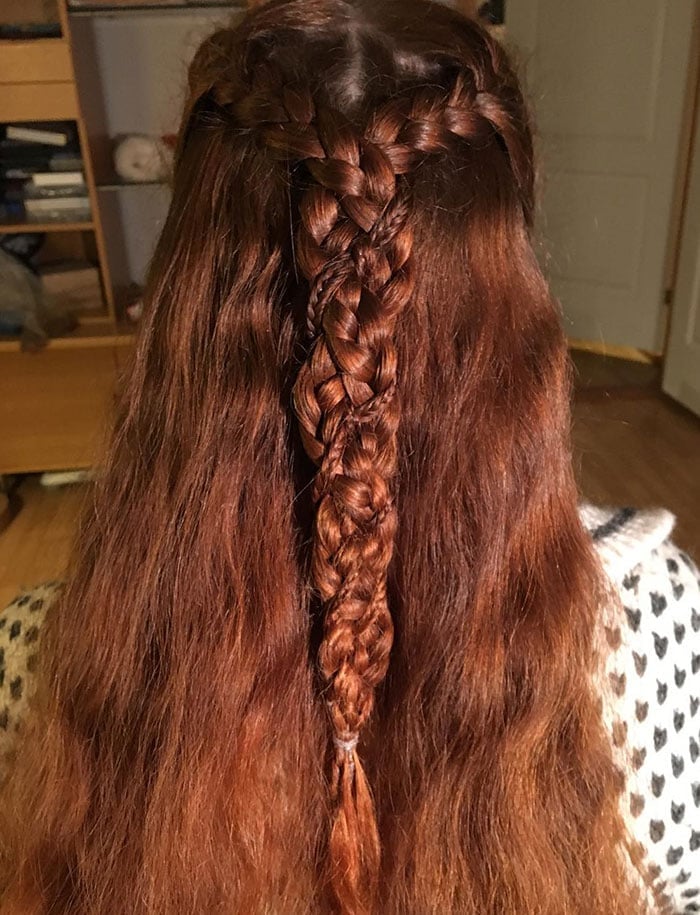
A practical rule: a central braid only works if it has enough hair to bulk up. This red, wavy, thick style proves the point, with a central thick braid extending to mid-back, joined by two smaller braids that start at the front hairline and flow backward. It’s a strong central element that stays put.
Ask your stylist for: red hair, central thick braid with side braids. This suits thick, wavy hair of mid-back length, and the side braids help keep shorter face-framing pieces out of your way. The style holds well with minimal styling after braiding, though a touch of serum tames flyaways. The one real drawback? The central braid can feel heavy by the end of a long day, especially if you’re not used to the weight. It’s a salon-leaning style, but the effect is worth the effort.
Red Fishtail Braid with Crown Braid
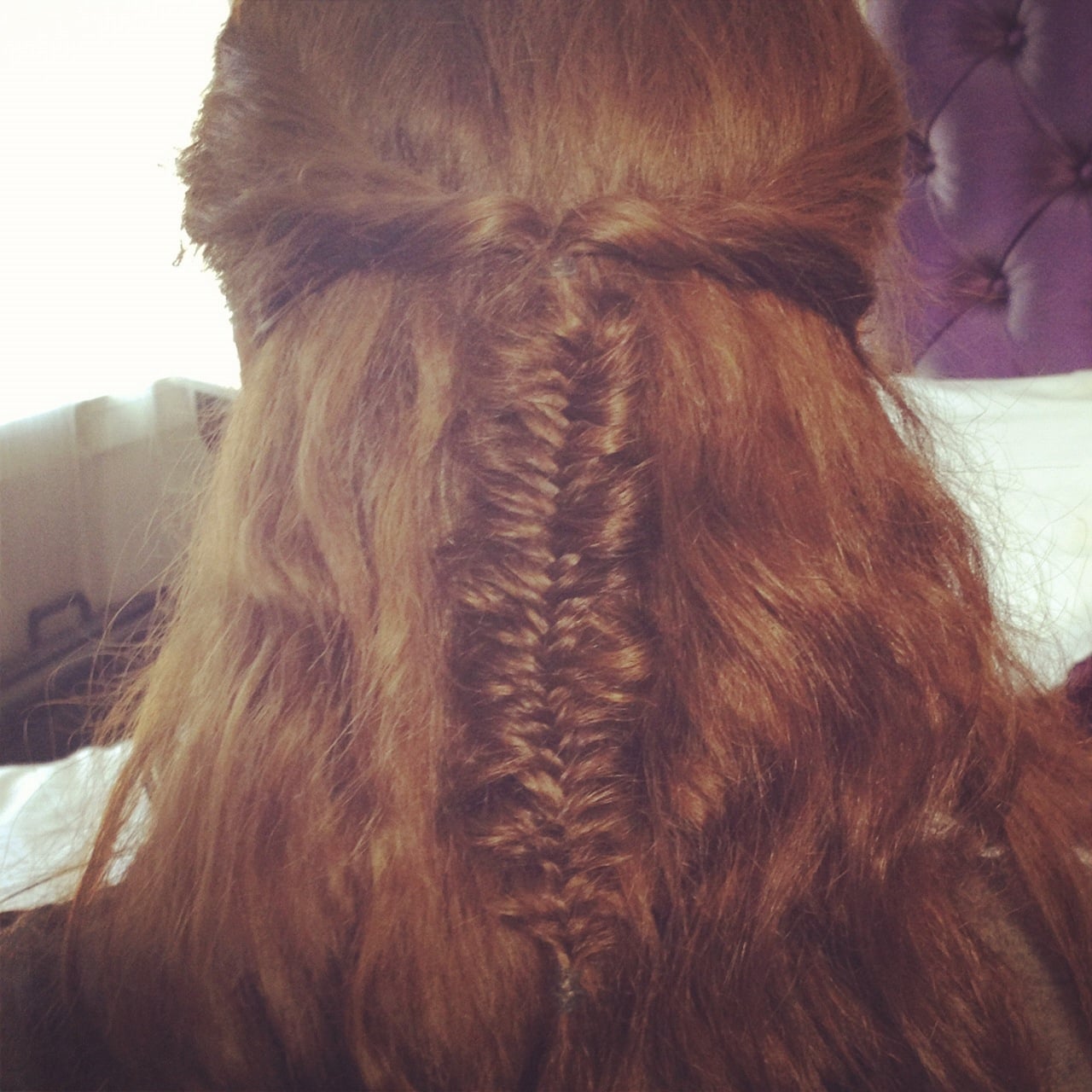
The fishtail braid runs straight down the center, and the smaller crown braid ties into it, so the whole structure reads as one continuous piece rather than two separate ideas. On warm red hair with subtle tonal shifts, the braid catches the light in a way that suits the cooler months, when rich color and texture carry a look. This red fishtail braid with crown braid works for a festival or a holiday gathering, anywhere a bit of ceremony feels right. Thick, wavy hair at mid-back length gives the fishtail enough body to show its woven pattern, and the crown braid stays put without pins slipping. Ask your stylist for: red hair, fishtail braid, crown braid. A light mist of sea salt spray on the loose sections keeps the waves from going flat.
Blonde Braided Mohawk into Ponytail
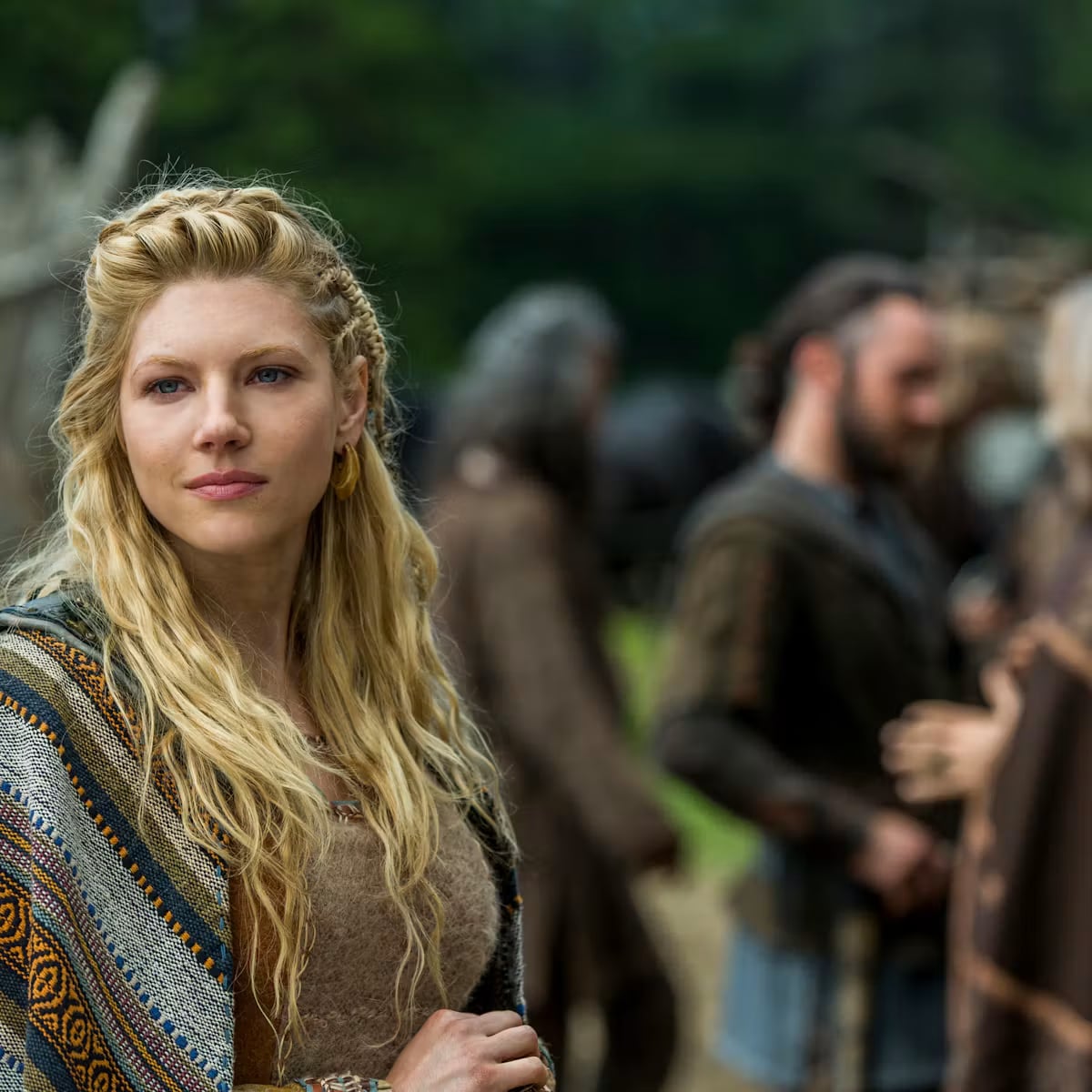
The braided mohawk starts at the hairline and runs back into a ponytail, with two intricate braids framing the face and the rest of the hair falling in loose waves. That face-framing detail is what lifts this from a simple ponytail to a statement, and it is not a quick DIY. Ask your stylist for: braided mohawk into ponytail, intricate side braids. The blonde base with lighter highlights gives each braid definition, so the pattern reads clearly even from a distance. This works on fine, wavy hair at mid-back length, because the texture holds the braids without them looking thin. A salon is the honest answer here: the sectioning alone takes time, and the ponytail needs a secure anchor. Once set, strong-hold hairspray keeps the whole construction in place for a full day.
Medium Brown Multiple Braids
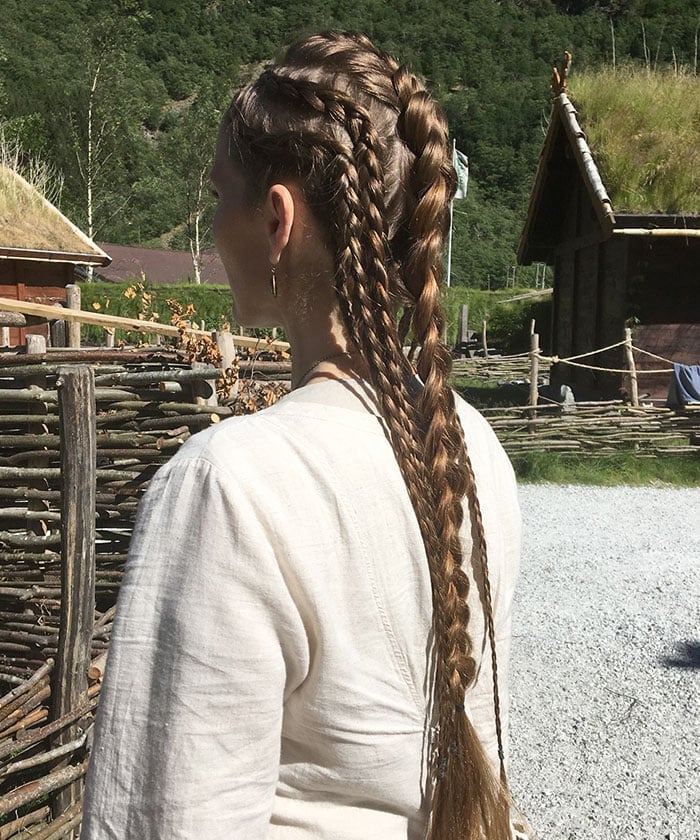
Why do multiple braids on thick, wavy hair end up looking like a tangled mess instead of a style? The usual mistake is asking for braids without specifying how they should connect. This back view shows several intricate braids woven into two larger ones that extend down the back, and the transition is the whole trick. Ask your stylist for: medium brown hair, multiple intricate braids. The medium brown color lets the pattern show without competing with highlights, and the thick texture keeps each braid plump. A middle parting gives the arrangement symmetry, which makes the braids look deliberate rather than thrown together. This style typically lasts two to three days if you sleep on a silk pillowcase, and a moisturizing product keeps the braids from drying out.
Ash Blonde Central Braid
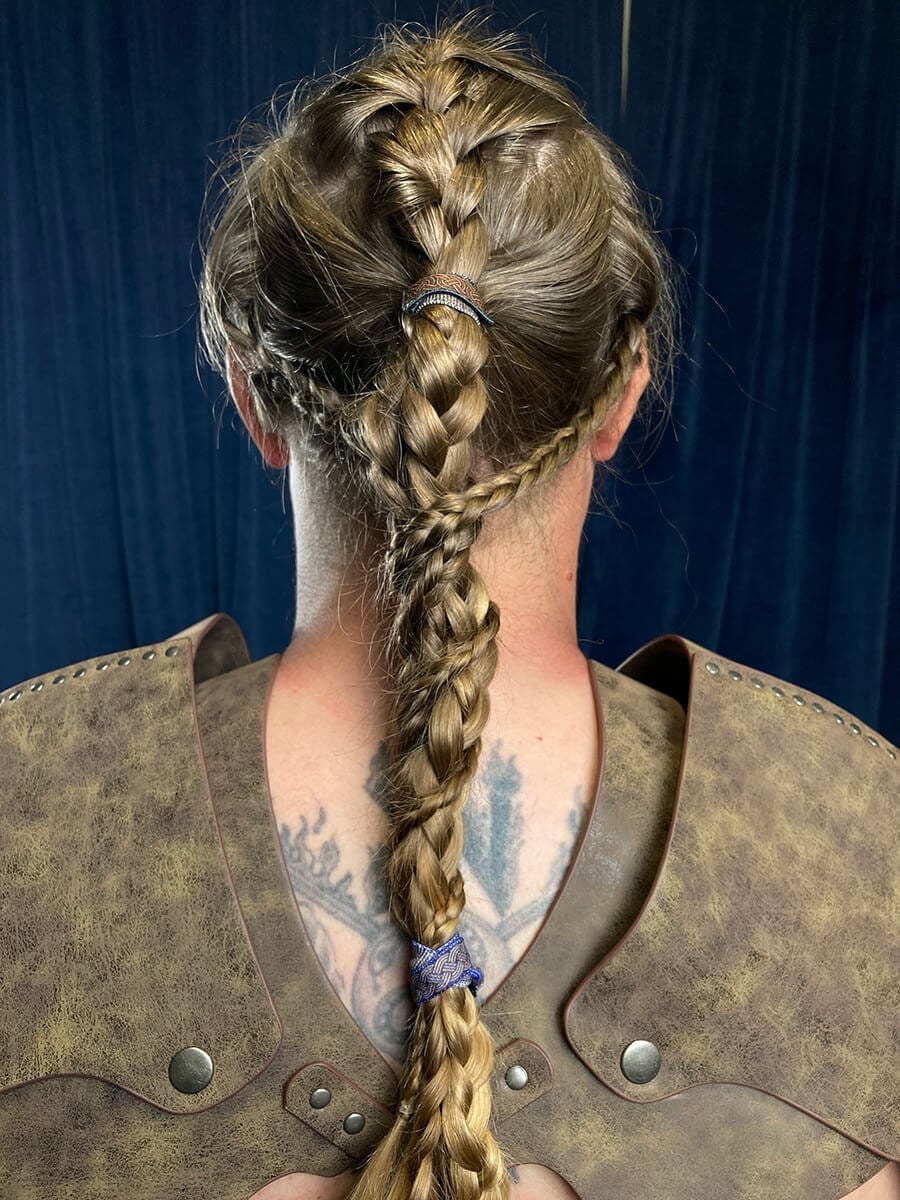
A central thick braid flanked by smaller accent braids is a style that rewards medium density, wavy hair, because the braid has enough body to sit proud without being heavy. The ash blonde color with darker roots adds a natural contrast that makes the braid pattern visible, and it means the grow-out line becomes a feature rather than a problem. Ask your stylist for: ash blonde hair with dark roots, central thick braid, accent braids. If you want to stretch the root contrast, a root concealing spray in a matching tone buys a few extra weeks between touch-ups. The braid ends will fray after about six weeks, so a trim keeps the line clean. This is a salon-level braid, but once it is set, it holds through a full day with no pinning.
Dark Brown Braids with Loose Waves
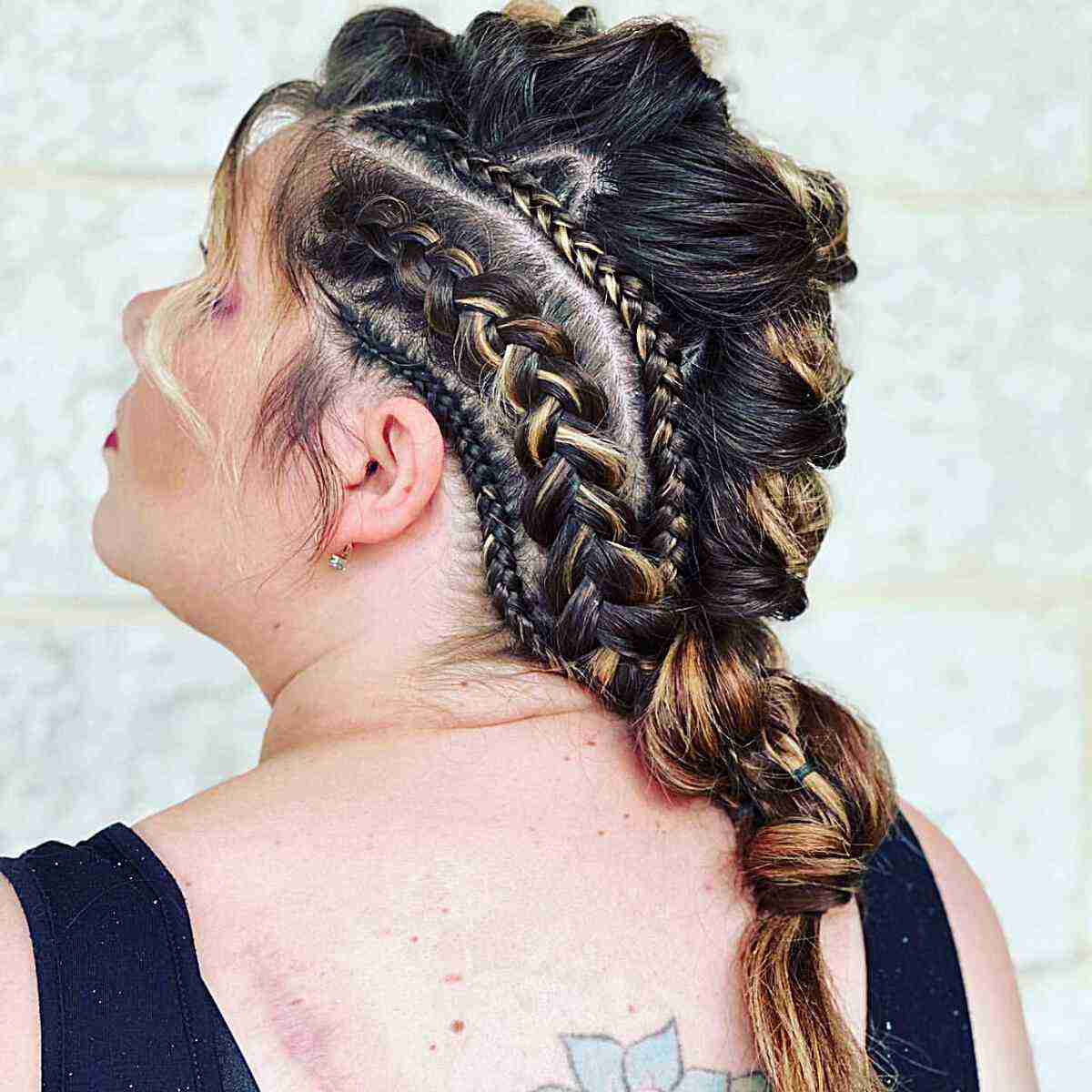
A practical rule for a central braid with loose hair: the braid needs to start at the forehead and run to the nape, with smaller side braids feeding into it, so the structure anchors the whole style. Here, dark brown hair with blonde highlights gives the central braid dimension, and the loose waves that cascade down the back soften the severity. Ask your stylist for: dark brown hair with blonde highlights, central braid, loose waves. The technique is about tension: the braid is woven tight enough to hold, while the waves stay loose and separate. Thick, wavy hair at mid-back length carries this best, because the braid needs weight and the waves need volume. This is a salon-leaning style, but the result is a mix of intricate structure and soft texture that works for festivals or a day out.
Blonde Dutch Braid
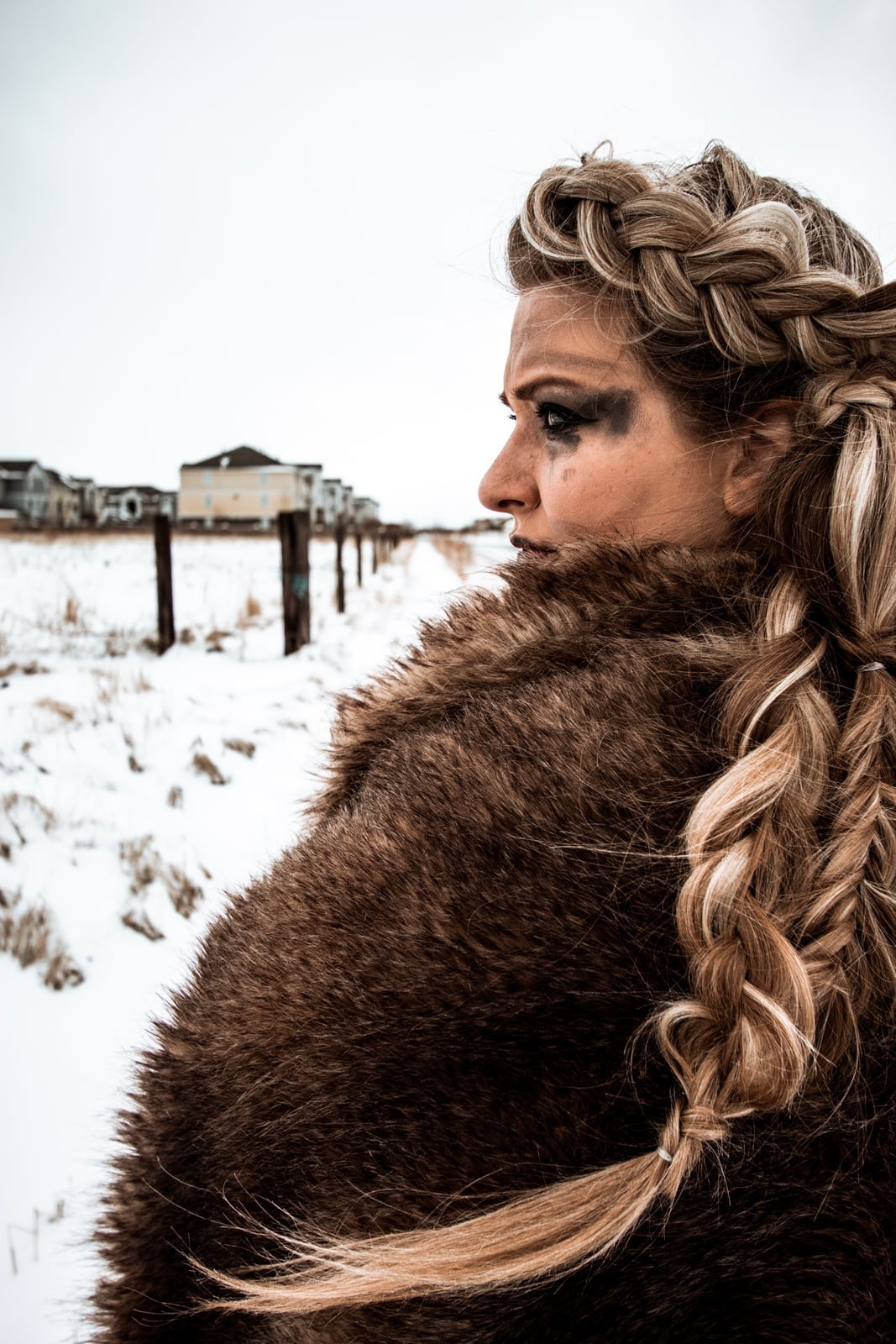
This is a salon-level style, and the braid will stay put for a couple of days if you sleep on a silk pillowcase. To keep it from looking too severe, pull the edges of the braid apart slightly for a fuller, more textured finish. Adding product at the roots and along the braid adds volume and helps it hold its shape. A braid this large takes time to create and time to take down, so it is not a five-minute morning option. But for a day when you want your hair to do the talking, it delivers.
Dark Brown Geometric Braids
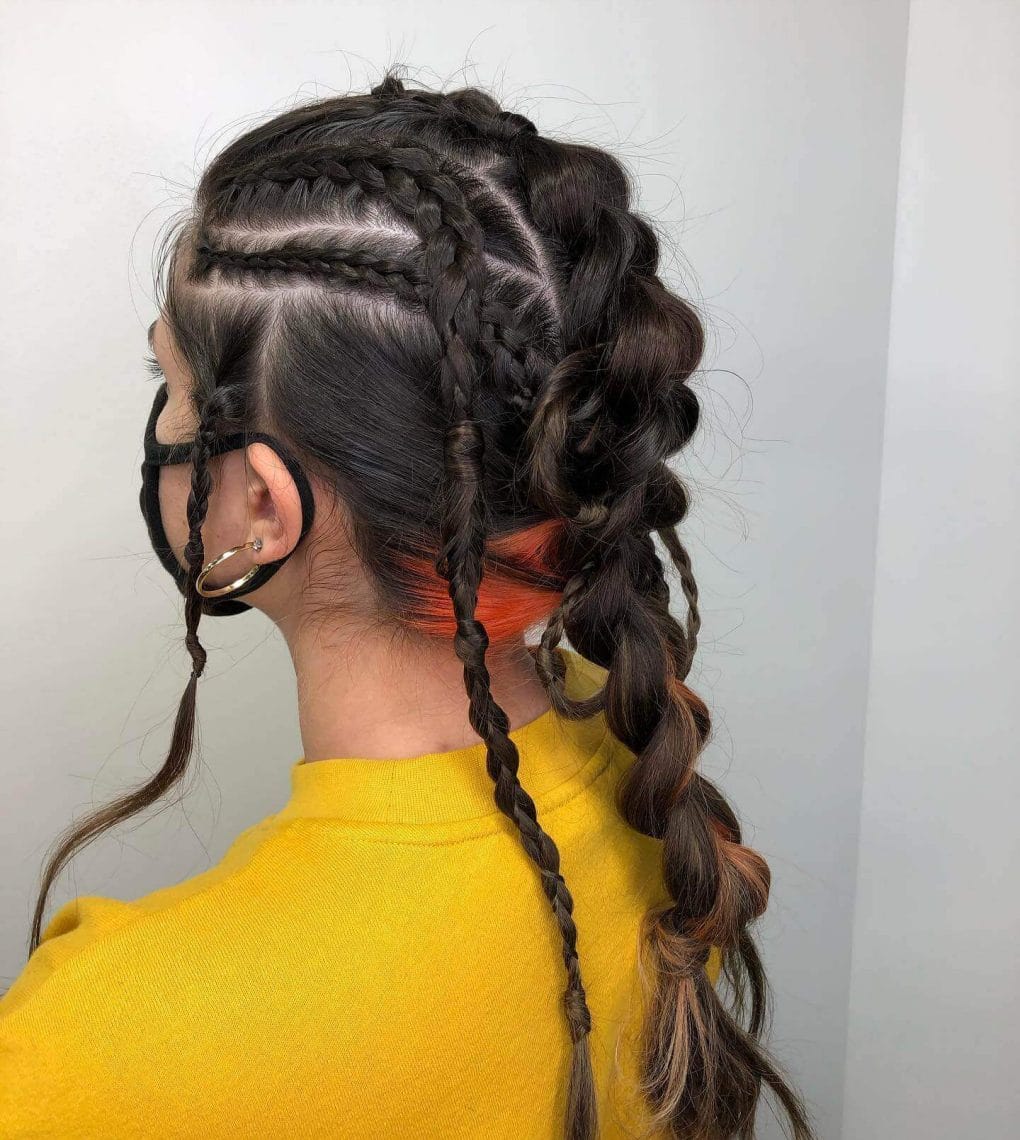
How do you ask for braids that look like they were plotted on graph paper? Start with the pattern, not the braid. This style uses multiple distinct braids that form geometric shapes along the scalp, then transition into thicker, wavy braids that fall to mid-back. The dark brown base with subtle orange and red undertones adds warmth, so the pattern reads clearly without needing high-contrast color. Ask your stylist for: dark brown hair, geometric braided sections.
This works best on thick, wavy hair, because the texture gives the scalp braids enough grip to stay sharp. It is a salon-level commitment, and the precision requires a stylist who is comfortable with detailed sectioning. A middle parting keeps the geometry symmetrical, which is the whole point. If your hair is on the finer side, the pattern may blur, so consider whether your density can support the design before you commit.
Dark Brown with Purple Blue Highlights Ponytail
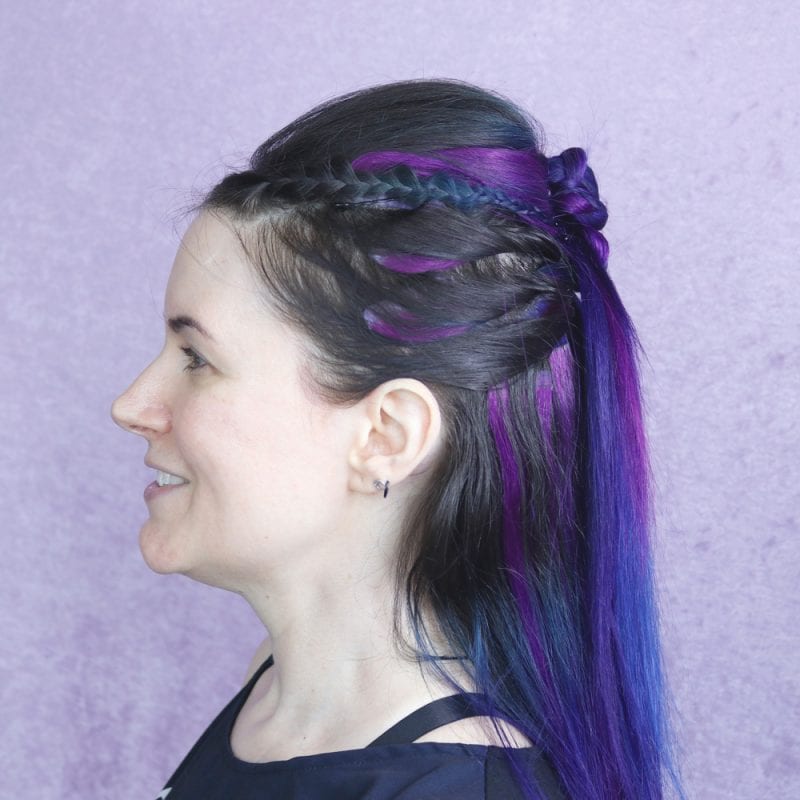
Purple and blue streaks against dark brown are a bold choice, and this style leans into the drama by weaving them through small braids along the crown before gathering everything into a ponytail. The thick, straight, mid-back length hair gives the color a smooth surface to travel down, so the highlights read as intentional streaks, not accidental dye jobs. Ask your colorist for: dark brown hair with purple blue highlights, braided crown and ponytail.
Compared to a solid color, this is the version that turns heads at parties and creative events. The braids at the crown add texture and keep the style from being just another ponytail, while the straight texture means the color stays glossy and defined. Vibrant shades need a color-safe shampoo to keep the purple and blue from fading into murky tones, and a heat protectant before you style the ponytail keeps the lengths from drying out. This is a salon-level color and styling job, so plan for a longer appointment.
Dark Brown Side Braids and Loose Hair, Mid-Back
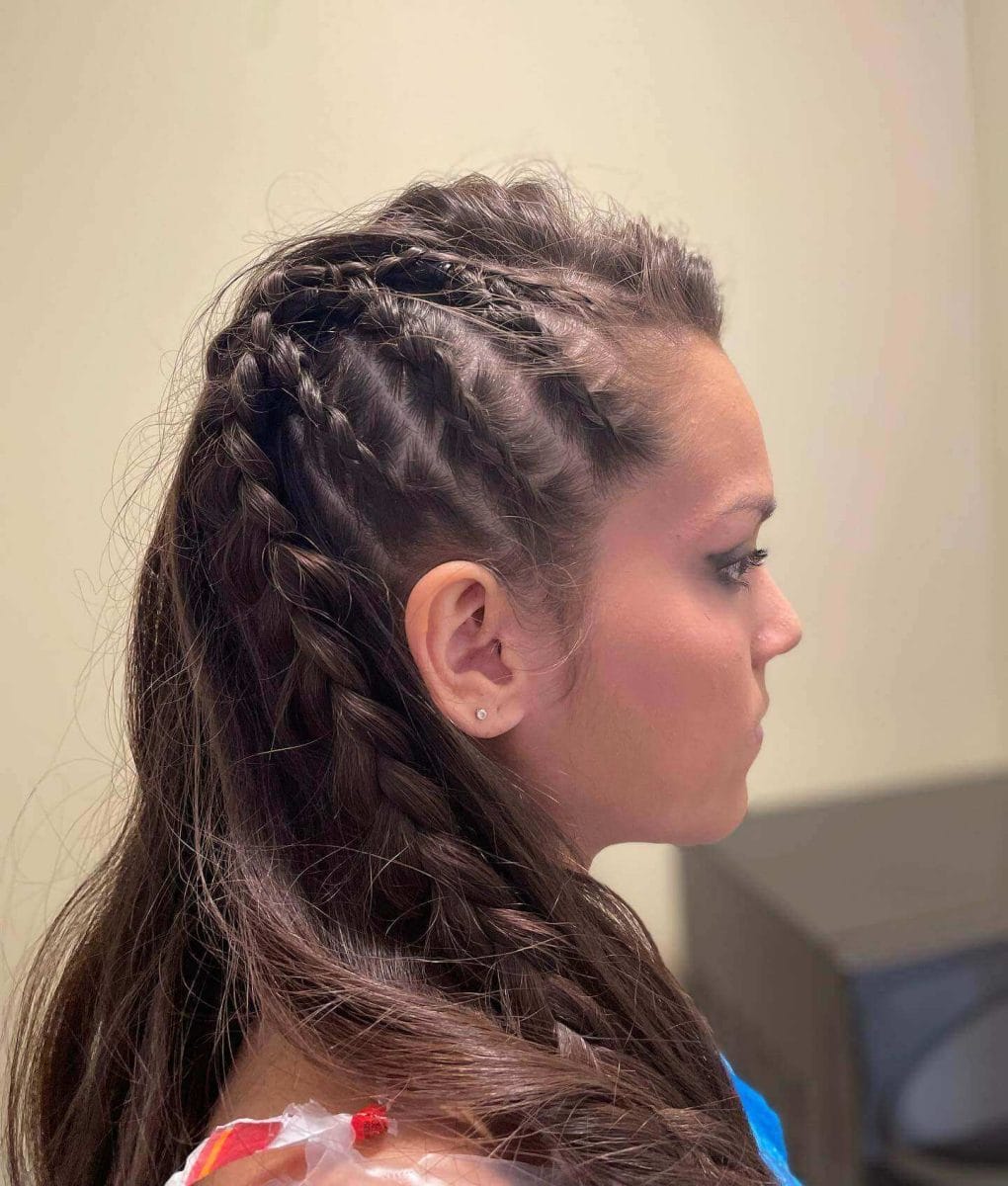
Side braids that start at the hairline and travel toward the back are a classic way to add detail without committing to an all-over braided look. The rest of the hair stays loose in soft waves, which gives the style a balance between structure and ease. This works on thick, wavy, mid-back length hair, where the braids have enough texture to grip and the loose waves have enough body to hold their shape. Ask your stylist for: dark brown hair, intricate side braids with loose waves.
The technique is straightforward: section off the hair along each temple, braid it tightly toward the back, and leave the rest free. At home, this is doable if you have basic braiding skills, but for that polished finish, a salon visit is worth it. The side braids keep the face clear, while the loose waves soften the overall effect. A smoothing serum on the waves keeps them defined, and keeping the side braids tight ensures they last through the day. This is an everyday-friendly style that works for casual outings.
Auburn Braided Panel
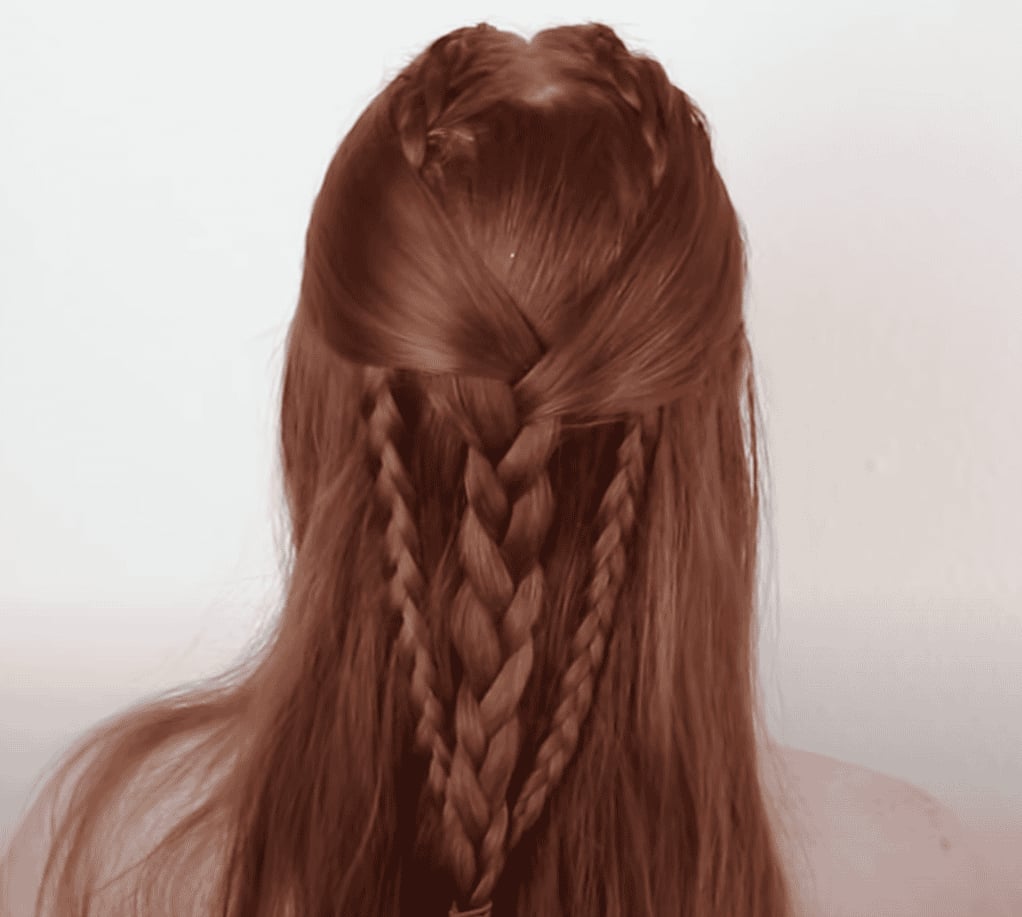
Is this the style for you if you want braids but not a full head of them? A central panel of intricate braids that merges into loose strands gives you the best of both, and the auburn color adds warmth that makes the braided detail pop. This suits thick, straight, mid-back length hair, where the straight texture lets the braided section lie flat and the density keeps the panel from looking sparse. Ask your stylist for: auburn hair, central braided panel.
The middle parting keeps the panel symmetrical, and the braids create a distinct pattern before transitioning into looser hair. A texturizing product on the loose strands adds volume, while a light-hold product on the braided panel keeps it neat. This is a salon-level style that holds for a day, and the upkeep is simple: re-braid the panel if it loosens, and refresh the texture product as needed. It is a versatile choice for everyday wear, offering detail without the commitment of an all-over braided look.
Blonde Braids Framing Face
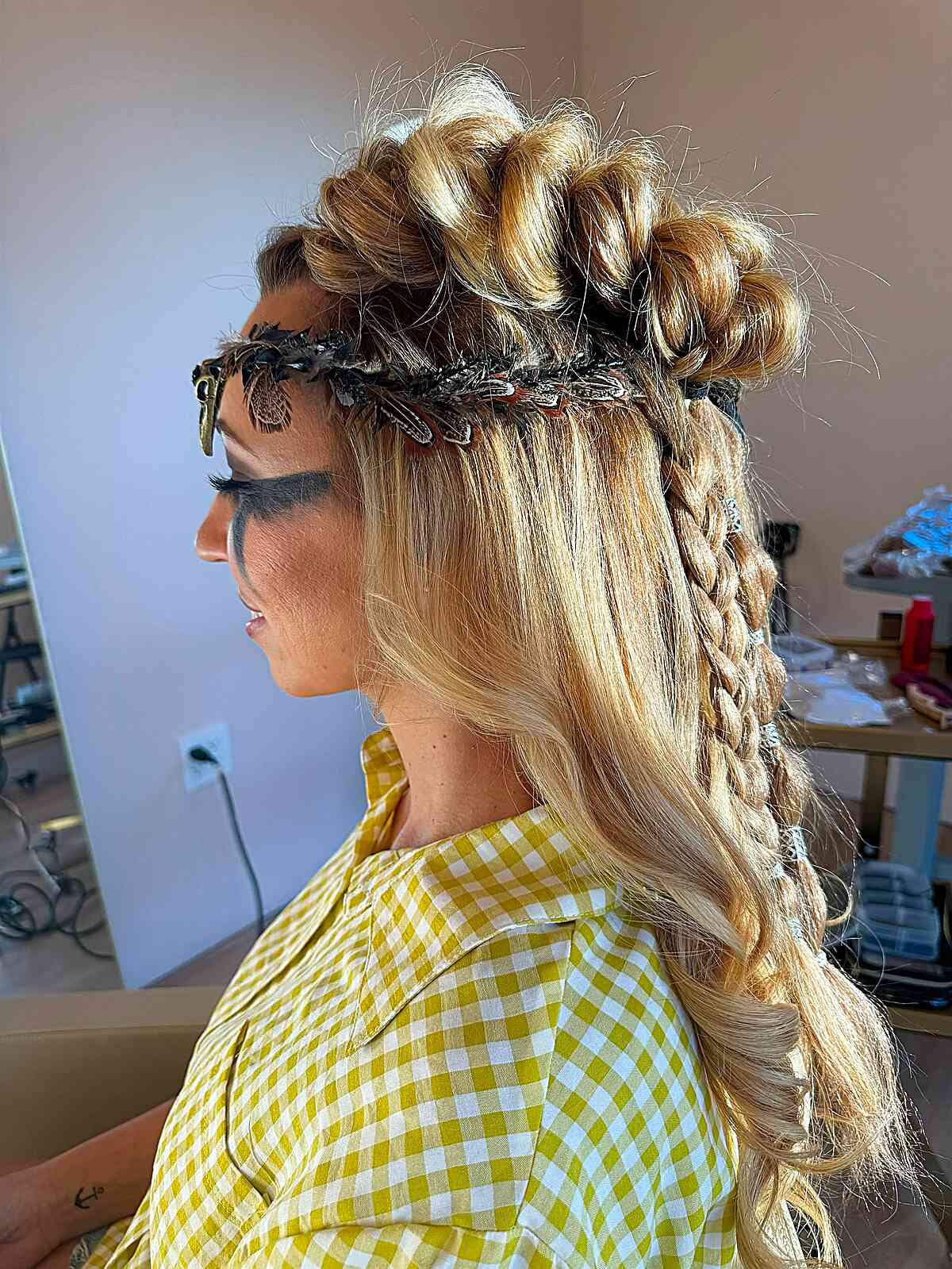
A braided crown updo holds best when the braids are woven close to the scalp, which is exactly what this style does. The two face-framing braids tuck behind the ears and meet the rest of the loose waves, so the whole arrangement stays put for a full day without constant pinning. Fine, wavy, shoulder-length hair suits this design because the braids add structure to strands that might otherwise fall flat.
Ask your stylist for: blonde hair, two face-framing braids woven into a crown updo. The side-swept bangs keep the look soft, but they can frizz by evening. A light hairspray on the braids and a dab of serum on the waves will keep everything polished through a long event.
Blonde Collarbone Braids
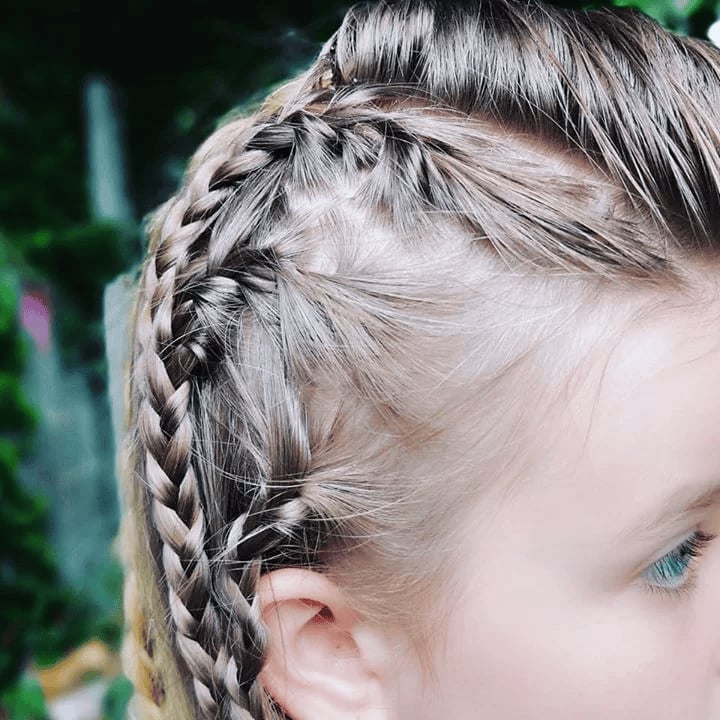
Multiple intricate braids running along the side of the head give collarbone-length blonde hair a detailed, almost architectural feel. The rest falls in loose waves, so the style stays soft and balanced. Ask your stylist for: blonde hair, intricate side braids to collarbone. This is a salon-level design, not a DIY project; the braids need to be tensioned evenly to stay neat. Fine, wavy textures work well here because the braids hold their shape without weighing down the rest of the hair.
Blonde Collarbone Braids with Waves
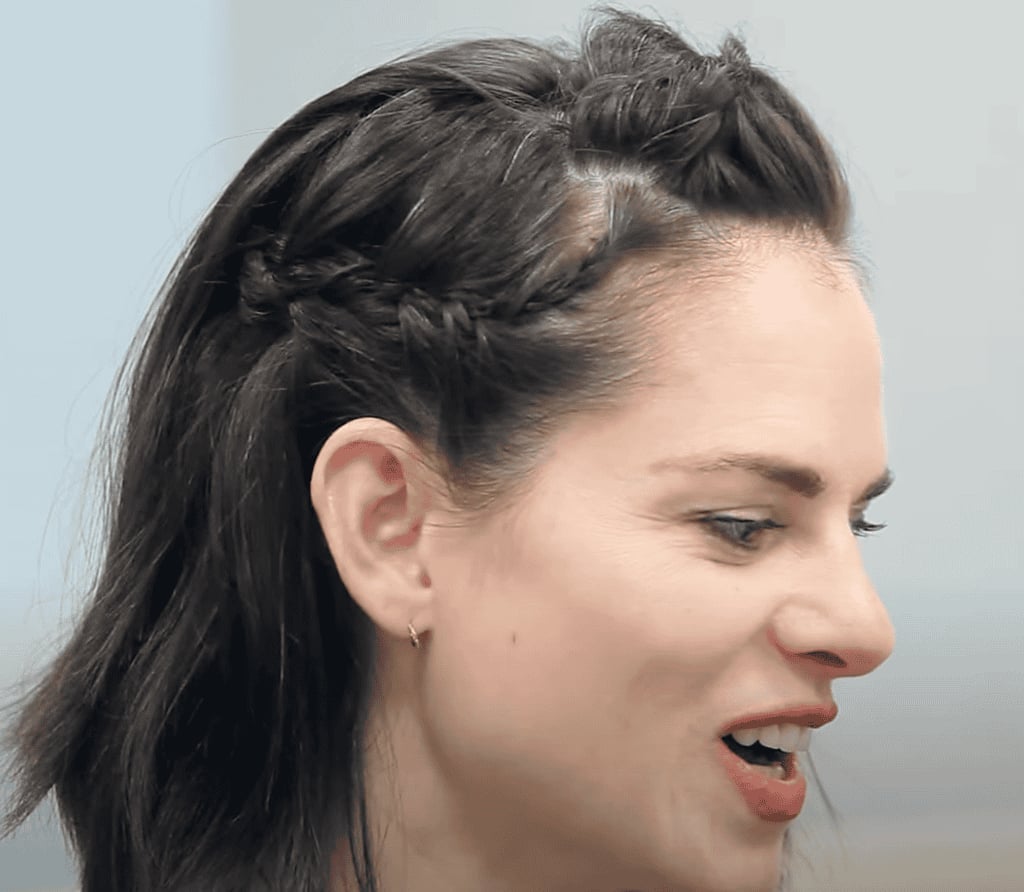
What separates these collarbone braids from a tighter, more structured style is the contrast between the intricate side braids and the loose waves that fill the rest. The blonde with lighter highlights adds dimension so the braided sections read clearly against the waves. This finish suits fine, wavy hair because the braids give the texture enough grip to hold without product, while the waves keep the overall shape from feeling stiff. Ask your stylist for: blonde hair, intricate side braids with loose waves to collarbone. A lightweight spray on the waves before braiding prevents the fine strands from slipping.
Platinum Blonde Fishtail Braid
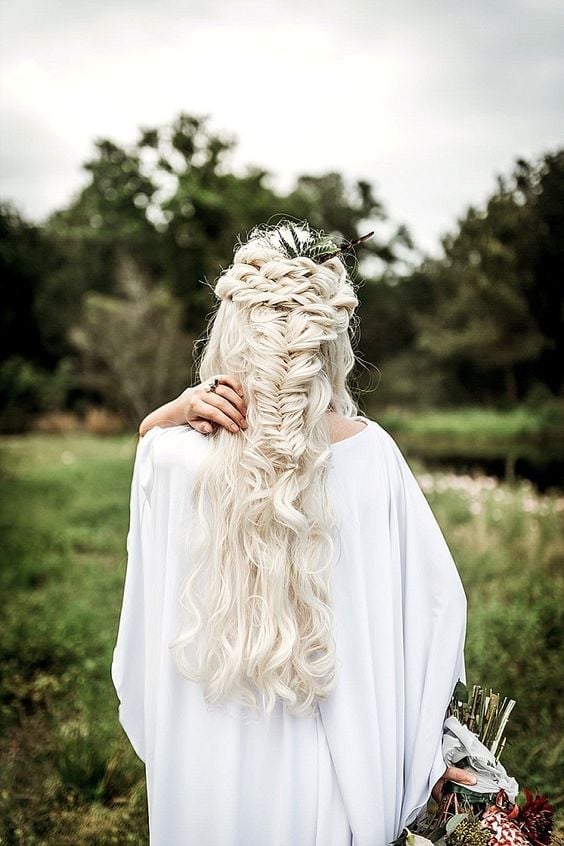
How does a fishtail braid go from simple to ornate? It starts with sectioning the hair into two halves, then crossing thin strips from the outside edges over each other. The technique builds a braid that looks woven rather than plaited, and it holds better on fine, wavy hair because the small sections grip each other. This platinum blonde version runs from the crown down the mid-back, with loose waves left at the end for contrast.
Ask your colorist for: platinum blonde hair, an intricate fishtail braid. This is a salon-level style that requires precision. The loose waves are best done with a wide-barrel wand, and the braid itself needs bobby pins at the nape to keep it from sliding. It is a style you wear for an occasion, not a commute.
Ash Blonde Braided Crown with Waves
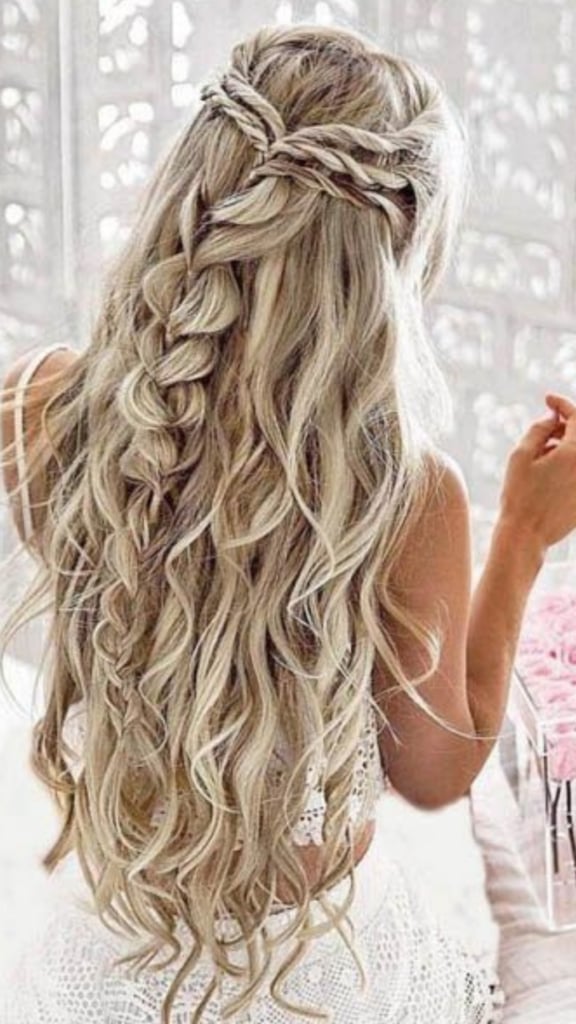
A braided crown works best on thick, wavy hair, because the braid needs enough weight and texture to sit flat against the head. This ash blonde version wraps a crown braid around the front, with a side braid cascading down and loose waves filling the rest. The curtain bangs soften the forehead, which balances the structure of the crown. Ask your stylist for: ash blonde hair, braided crown with side braid and waves.
For upkeep, the crown braid will hold for a full day if it is pinned close to the scalp, but it can loosen at the back. A curling wand will refresh the waves, and a light hairspray will keep flyaways down without stiffening the braid. The middle part keeps the look symmetrical, which suits most face shapes.
Blonde Braided Crown Updo
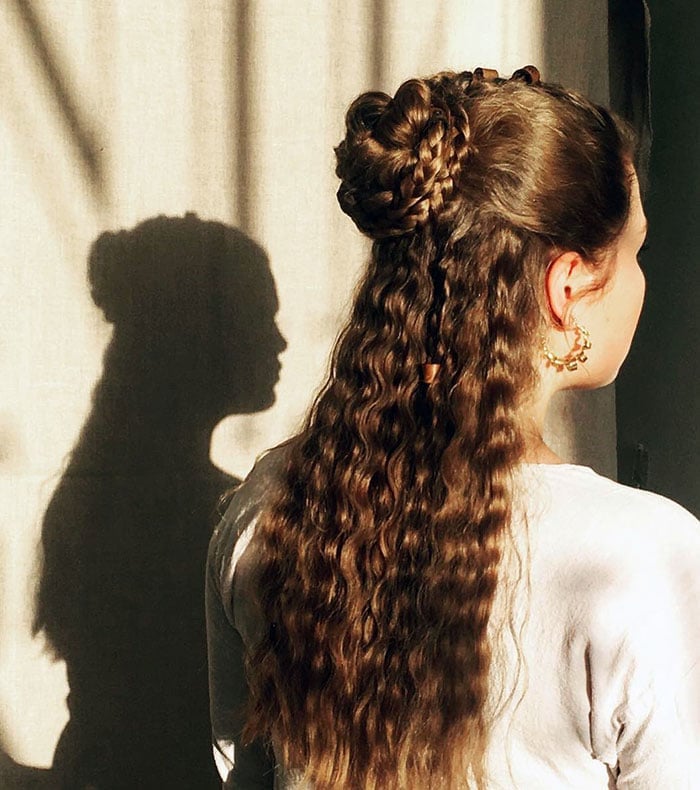
A braided crown updo is one of those styles that looks like it took hours but holds like armor. Thick, wavy hair at mid-back length works best, especially if the texture has enough grip to keep the braids from slipping. Ask your stylist for: blonde hair, braided crown updo, side swept bangs. The real drawback is the weight: all that hair pinned into one spot can pull on the scalp by hour four. Plan on a salon visit for the initial build, then bobby pins for touch-ups.
Side-swept bangs soften the overall silhouette and can be refreshed with a flat iron before the event. The bun sits at the crown, so the braid detail stays visible rather than getting lost in the back. This is a style that lasts through a full evening, but don’t expect to nap in it.
Honey Blonde Side Braid, Shoulder
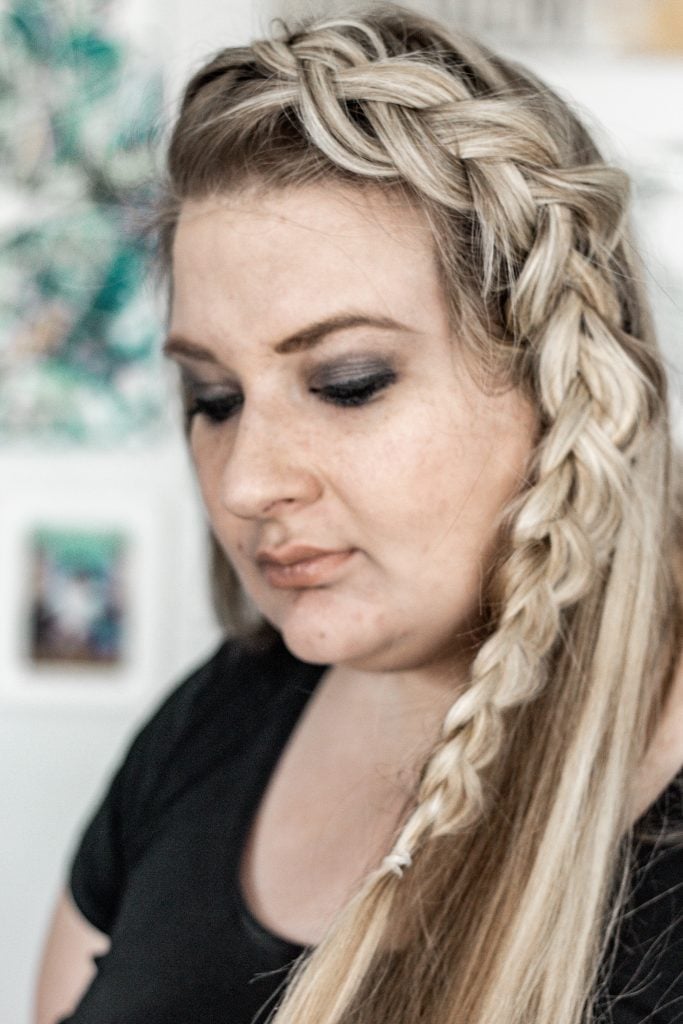
A prominent side braid on shoulder-length hair is more about placement than complexity. Honey blonde with lighter highlights adds dimension so the braid reads clearly without blending into a single block of color. Ask your stylist for: honey blonde hair, prominent side braid, loose waves. Medium, wavy hair holds the braid without fighting it, and the loose face-framing strands keep it from looking too strict. For a DIY version, part the hair on the side, braid from the ear down, and pull out a few pieces around the face. The wavy sections provide the contrast that makes the braid pop.
Blonde Thick Braid to Collarbone
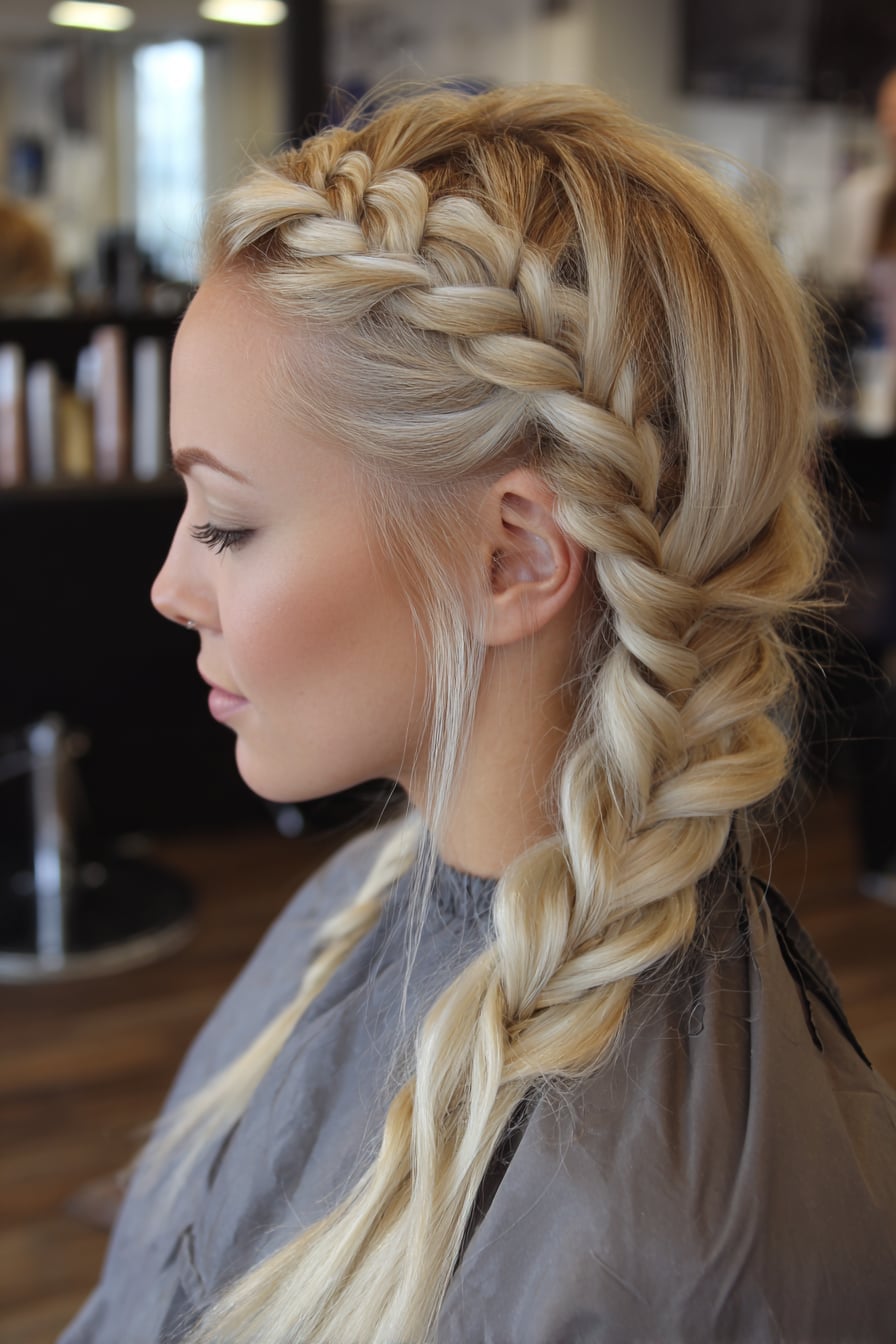
Blonde, wavy, medium-texture hair at collarbone length gives enough weight for the braid to feel substantial without being heavy. Ask your stylist for: blonde hair, thick braid to collarbone. The difference between this and a thinner braid is all in the sectioning: a stylist divides the hair into three equal parts rather than grabbing random sections. A salon visit is worth it for the clean finish, though the braid itself is simple enough to replicate once you see the technique. Wavy texture is an advantage here, it adds volume that a straight braid would lack.
Dark Brown Side Braids and Loose Hair, Straight
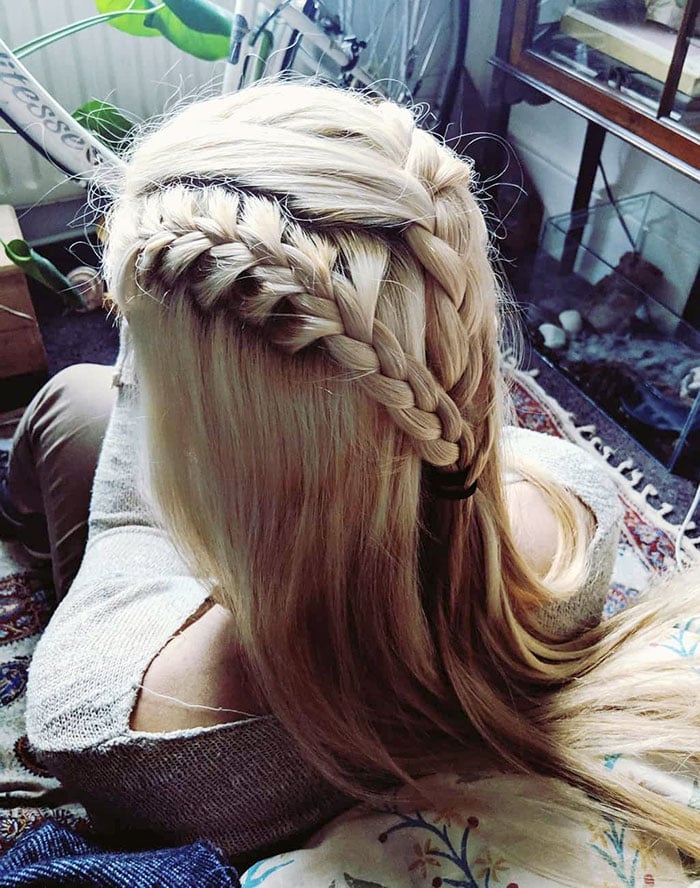
How do you get a braided crown to stay on straight, fine hair without it looking like a string? The answer is tension and direction. Light blonde, straight, fine hair at shoulder length is braided in sections that wrap from the front hairline and meet at the back crown, creating a continuous band of texture. Ask your stylist for: light blonde hair, prominent braided crown. The technique relies on small, tight sections that are pinned as you go, which prevents the braids from loosening through the day. Fine hair actually works in your favor here, the braids lie flat against the scalp rather than bulking up. The loose length falls to shoulder level, keeping the overall look balanced.
Blonde Collarbone Braids with Waves and Braided Mohawk
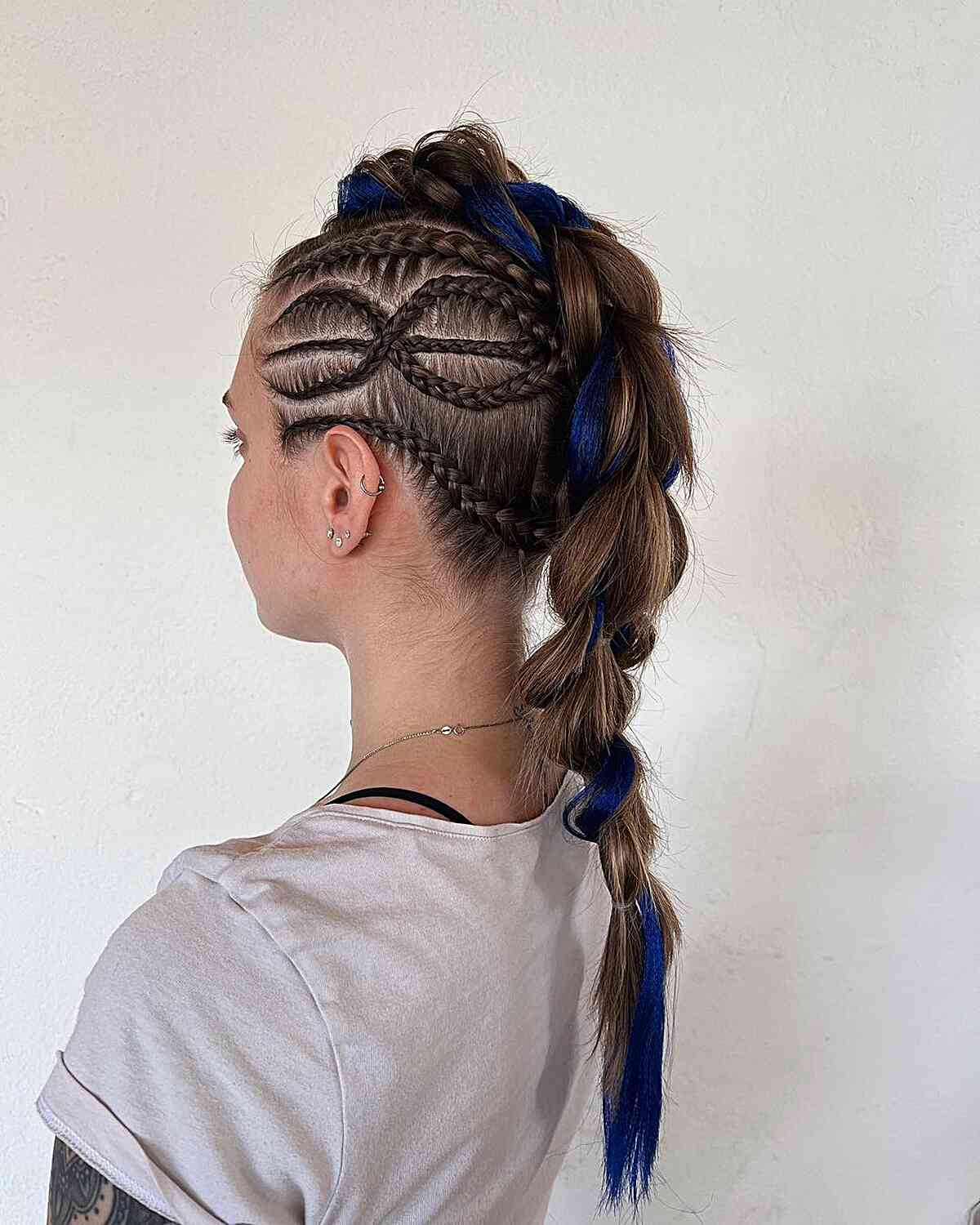
Ask your stylist for: platinum blonde hair, massive side braid, swept-up top. The top section is swept upward and secured, which creates the contrast between volume at the crown and the dense braid below. Thick texture is non-negotiable here: fine hair would struggle to support the weight of the braid without pins showing. A middle parting keeps the shape symmetrical, and the braid itself holds without product, though a strong-hold hairspray on the crown section prevents the swept-up top from deflating. This is a salon-level structure that needs a stylist’s hand for the foundation, but once set, it lasts through a full day.
Dark Brown Braided Headband
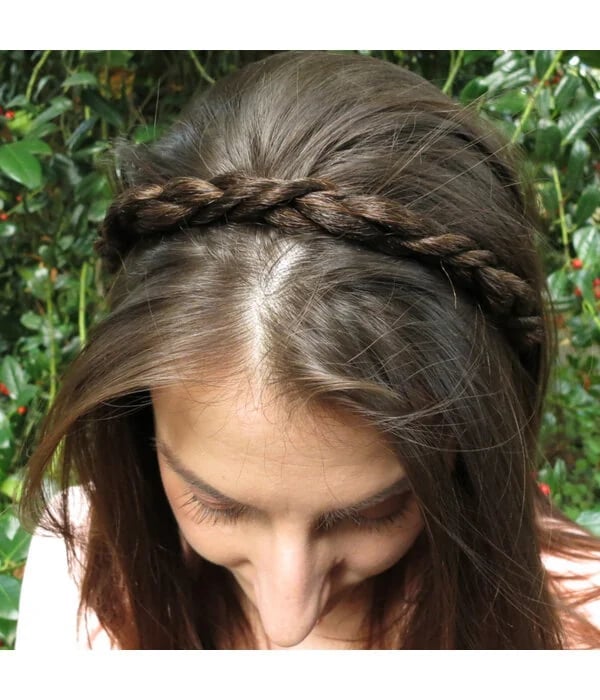
A practical rule for a single braid used as a headband: it will loosen within a few hours unless you anchor the ends securely. This dark brown, straight, shoulder-length style with a middle parting uses a single braid that wraps around the head like a crown, but the drawback is that medium-density hair may not have enough weight to keep the braid from shifting forward. You can DIY this in about ten minutes by sectioning off a two-inch piece from behind the ear, braiding it, and pinning the end behind the opposite ear. Ask your stylist for: dark brown hair, braided headband style. The braid holds better if the hair is slightly dirty for grip.
Final Thoughts
For low-maintenance Viking braids, opt for styles with fewer, larger braids rather than many tiny ones. Consider braids that can be easily incorporated into updos or ponytails for versatility.
- Deep condition hair weekly to maintain elasticity for braiding.
- Use a silk or satin pillowcase to reduce friction and frizz overnight.
- Apply a light-hold hairspray or serum to tame flyaways before styling.
- Trim split ends every 8-10 weeks to keep braided styles neat.
- For colored braids, use color-safe shampoos and consider a weekly toner.
Channel your inner warrior with these braid styles.
