

Two-tone hair is having a moment, and it’s not just about subtle highlights anymore. This season, it’s all about bold contrasts and playful color placements, from face-framing streaks to full split-dye statements, all while keeping that lived-in, glossy texture that feels current.
This collection of 32 Two Tone Hair Ideas covers everything from low-maintenance caramel melts to high-impact color blocking, across every length from pixies to mid-back layers. Whether your hair is fine, thick, curly, or straight, you’ll find a look that fits your routine and your risk tolerance. We’ve also solved the eternal struggle of making bold color work with a fringe and keeping the grow-out line looking intentional, not accidental.
Chin Length Bob With Pink Streaks
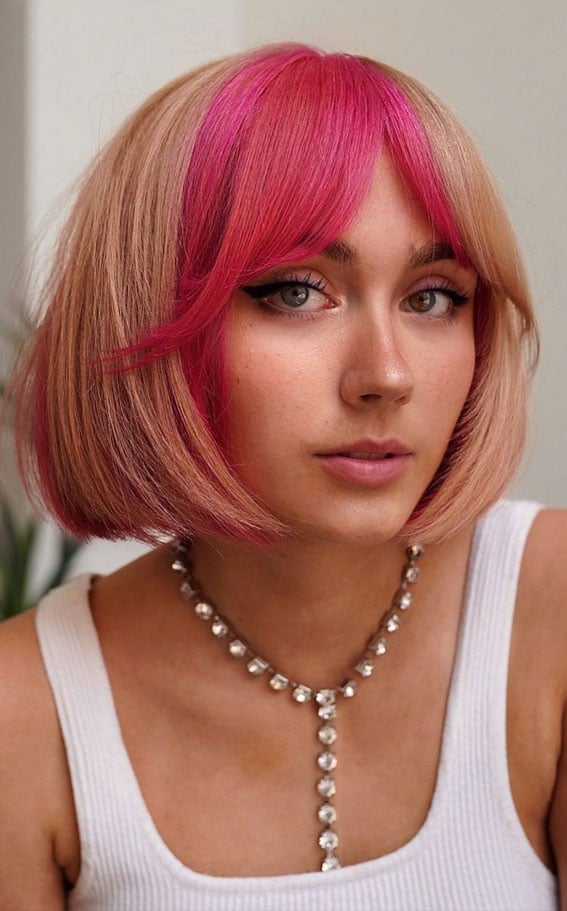
A straight, fine chin-length bob with blunt bangs and a middle parting relies on precision geometry when half the hair is bright pink. The contrast works best on fine textures that hold a crisp line without puffing at the ends. Ask your stylist for: chin length bob, blunt bangs, blonde with pink sections. Blunt bangs need trims every four to six weeks; a flat iron seals the sleek finish.
Graphic Bob With Color Stripes
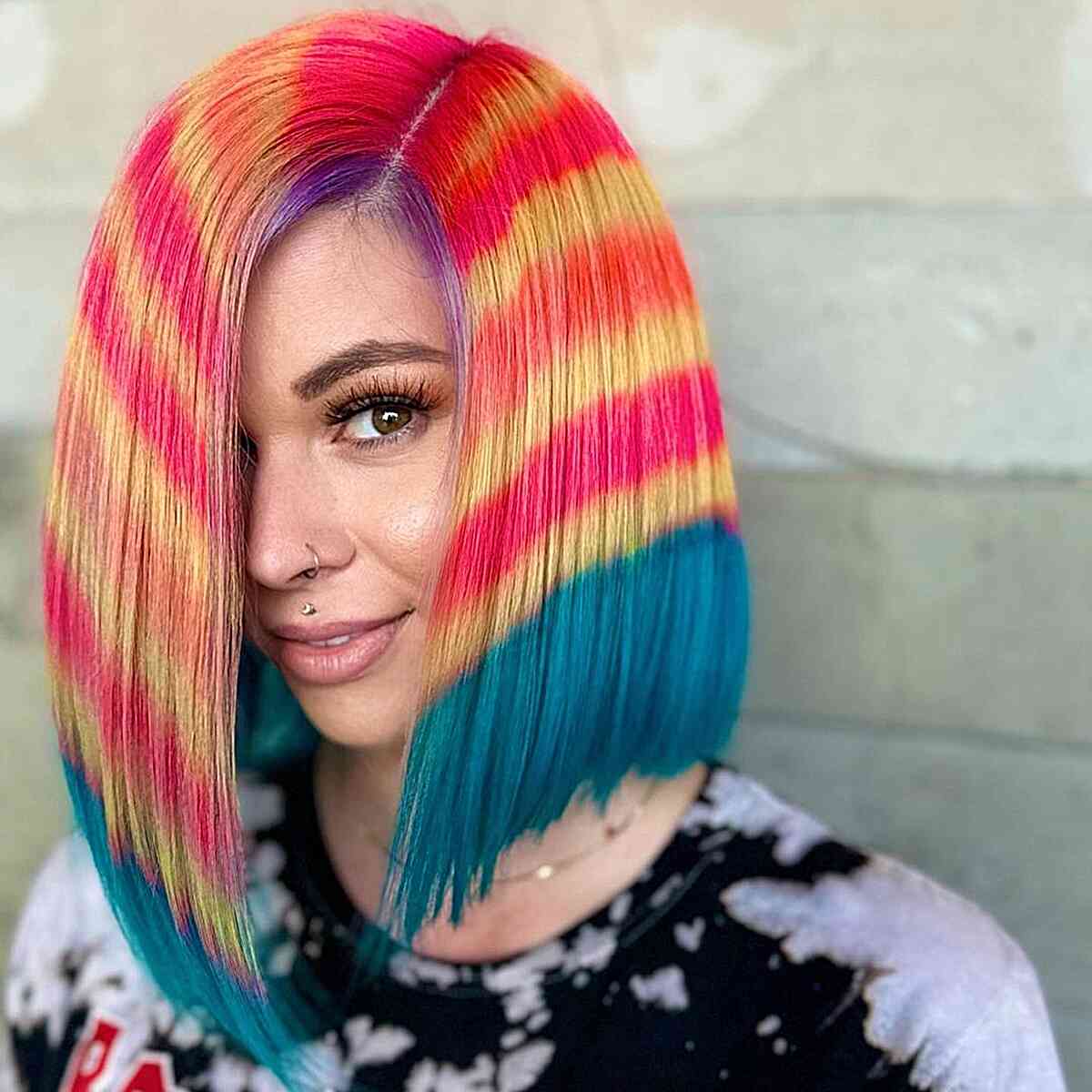
Where a pastel rainbow reads soft, a chin-length bob with blunt bangs and red, yellow, blue and purple stripes reads graphic, think pop art, not fairy floss. The straight fine texture keeps each stripe distinct rather than bleeding into the next. Ask your stylist for: chin length bob, blunt bangs, bold color stripes. Oval and rectangular faces carry the blunt fringe best; everyone else should expect to style it forward.
Wavy Bob With Side Color Split

Can one haircut look like two different people? A chin-length bob with a side-swept fringe splits dark brown on one side and blonde on the other, so the answer is yes. The medium density wavy texture gives the color boundary a softer edge than a straight bob would. Ask your stylist for: chin length bob, side swept fringe, dark brown and blonde split color. A spritz of sea salt spray encourages the waves; a trim every six to eight weeks keeps the bob from growing lopsided.
Blonde Bob With Coral Pink Ends
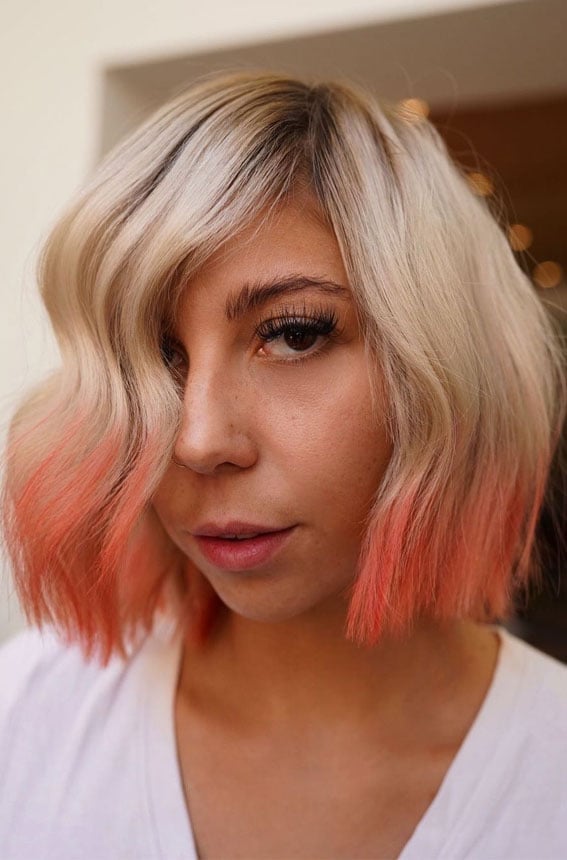
The fine wavy texture lets the color gradient read as dip-dye rather than an accident. Ask your colorist for: chin length bob, side swept bangs, blonde with coral pink ends. This is a salon-only project. The blonde base needs lifting before the coral can land true, and DIY tends to skip the proper pre-lighten step.
Dark Brown Bob With Caramel Highlights
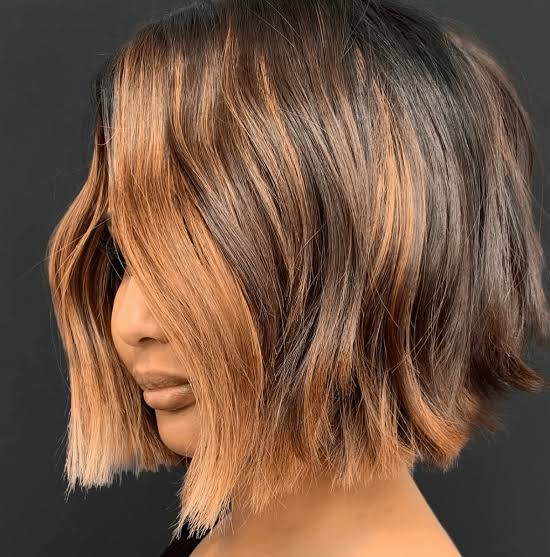
A chin-length bob with a middle parting and loose waves gets dimension from warm caramel highlights woven through a dark brown base. The medium density wavy texture diffuses the highlights so they read as natural depth, not stripy streaks. Ask your colorist for: chin length bob, dark brown with caramel highlights. The lack of bangs makes this a low-commitment entry into two-tone hair for anyone who prefers their forehead free. Low heat from a diffuser defines the waves without frizz.
Chin Length Bob With Pink And Blue Split
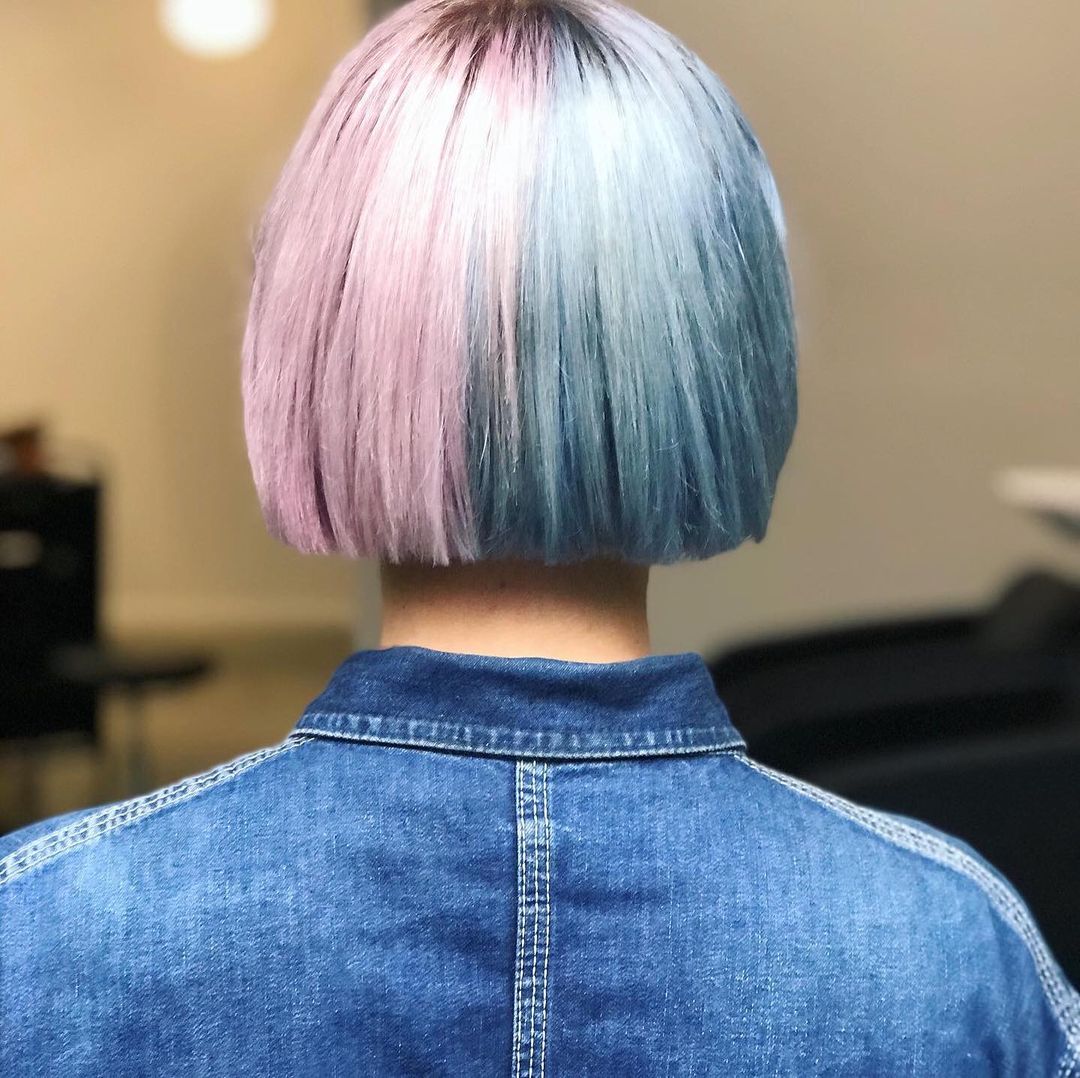
A middle parting is the backbone of a split dye: it draws a clean line straight down the crown, so the pink left and blue right stay distinct. The bob shape at chin length keeps the color blocks compact and graphic, which works best on medium-density straight hair that won’t blur the seam. Ask your colorist for: chin length bob, pink and blue split dye. The flat iron is your friend here; any wave softens the division you paid for. The drawback is that root growth shows fast on a straight, light shade, so plan for a touch-up every four weeks.
Textured Shag Bob With Blonde Balayage
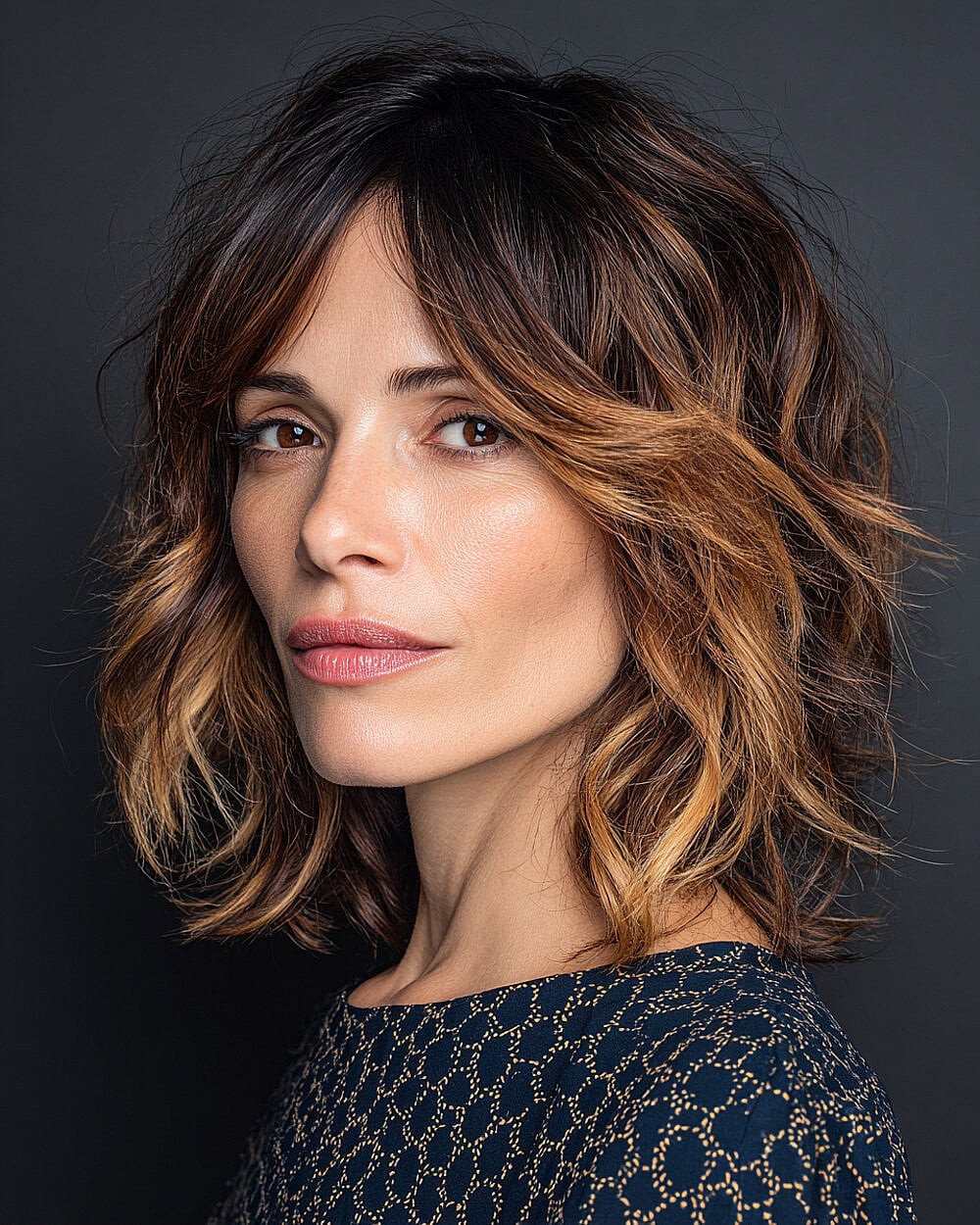
The dark brown base anchors the shape, while warm blonde balayage highlights land on the top layers and around the face for contrast. Ask your stylist for: chin length shag bob, choppy bangs, dark brown with blonde balayage. The bangs are cut short and uneven, which means you can’t just brush them to one side. Work in a texturizing paste for definition, and book a trim every six to eight weeks to keep the shag shape from turning into a shapeless blob.
Collarbone Bob With Root Shadow
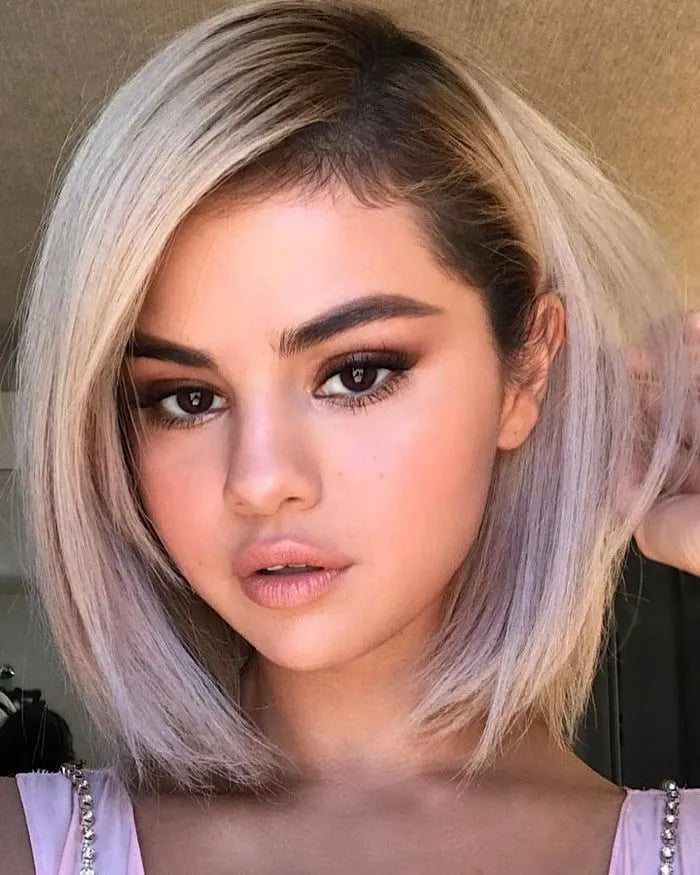
A collarbone-length bob on fine, straight hair needs weight to hold its shape. That is where the root shadow earns its keep: a darker base at the roots transitions into lighter blonde ends, giving the illusion of density without bulk. The side part and smooth blowout keep the surface sleek, with strands tucked behind the ears to show the face-framing line. Ask your colorist for: collarbone length bob, dark root shadow to blonde. A round brush during blow-drying adds the bend at the ends that a blunt bob sometimes lacks. The root shadow buys you about six weeks before the dark section starts to feel like grown-out color, which is longer than a full blonde bob would give you.
Collarbone Lob With Teal And Green
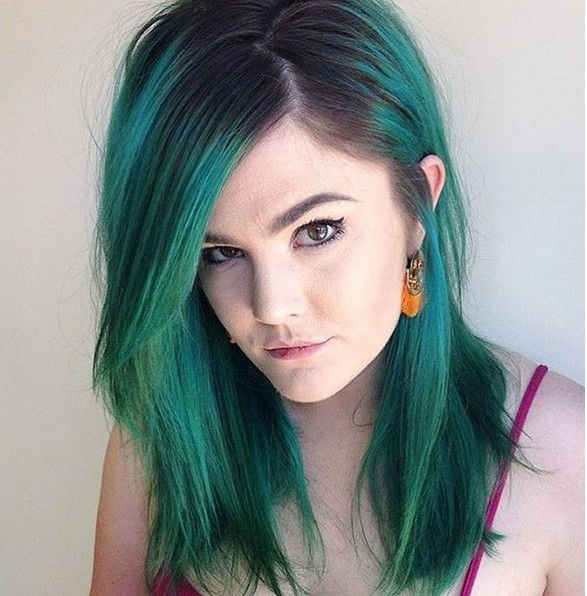
A lob at collarbone length gives vivid colors like teal and green enough surface area to read clearly without overwhelming the shape. The dark brown base keeps the root grounded, while the highlights land in sections around the face and through the side-swept bangs. Ask your colorist for: collarbone lob, side swept bangs, dark brown with teal and green highlights. The fine, straight texture here means the color sits on top of the hair rather than sinking in, which is great for brightness but lousy for longevity. Expect to refresh the tone every three to four weeks or the teal shifts toward moss and the green fades to a pastel you may not have asked for.
Dark Brown Bob With Blonde Highlights, Collarbone
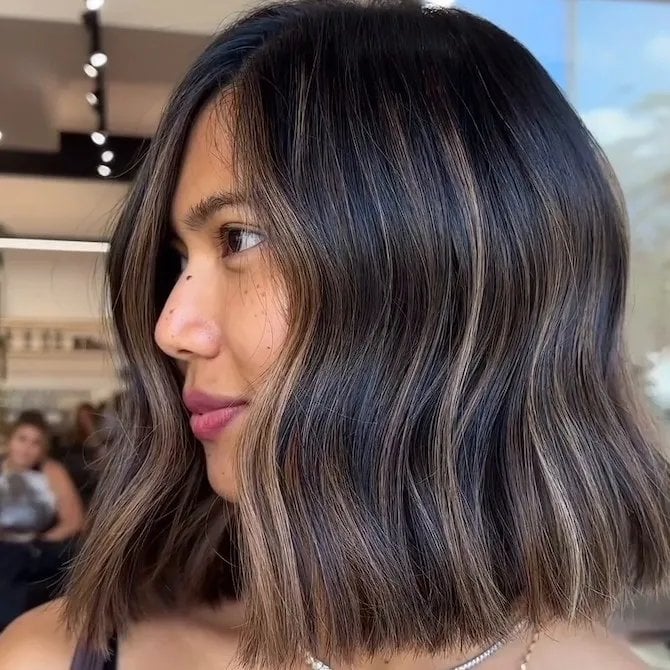
Wondering if curtain bangs work with a collarbone bob? They do, provided the bob has enough length to frame the jaw without flipping outward. Here, the dark brown base is broken up by subtle blonde highlights that stay close to the natural wave pattern, so the two-tone effect shows when the hair moves rather than sitting in obvious stripes. Ask your stylist for: collarbone bob, curtain bangs, dark brown with blonde highlights. A side part and loose waves give medium-density hair the grip it needs to hold the shape. Curtain bangs on this length soften round and heart face shapes, and they grow out gracefully if you decide to skip the fringe next time.
Collarbone Length Black And Red
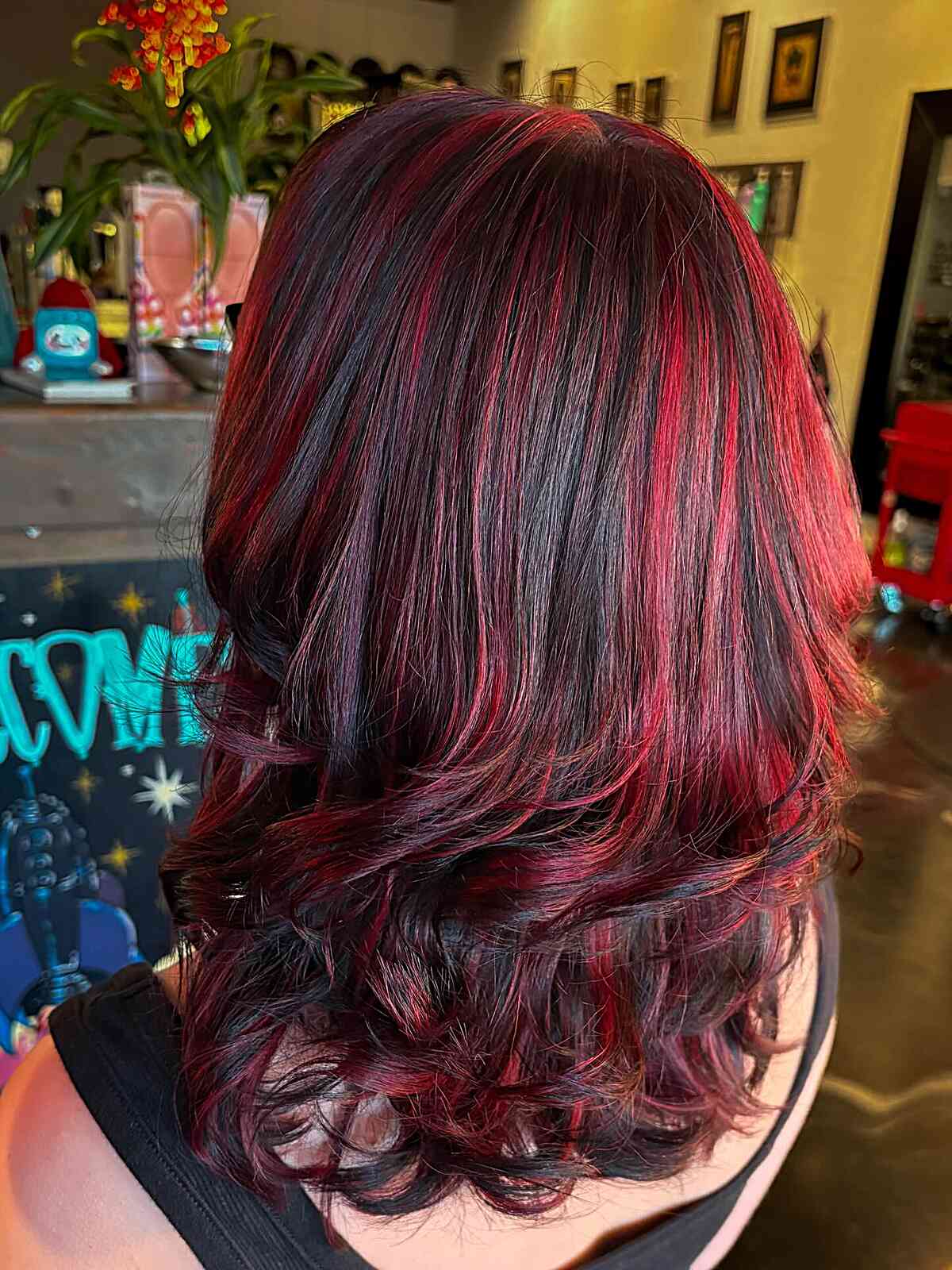
This is the color pairing that skips subtlety entirely, a deep black base sliced through with vibrant red streaks on thick, wavy hair that stops at the collarbone. If a softer two-tone like caramel on brown feels too polite, black and red is the louder cousin that actually delivers. Long layers give the waves room to move without losing shape, and the side parting lets the red peek out on top. Ask your stylist for: collarbone length, black with red streaks. Thick hair carries the contrast best, since the red has enough surface to show off. A sea salt spray adds texture and keeps the waves from falling flat, but the color needs a sulfate-free shampoo to stay sharp.
Wavy Lob With Pink To Orange Ombre
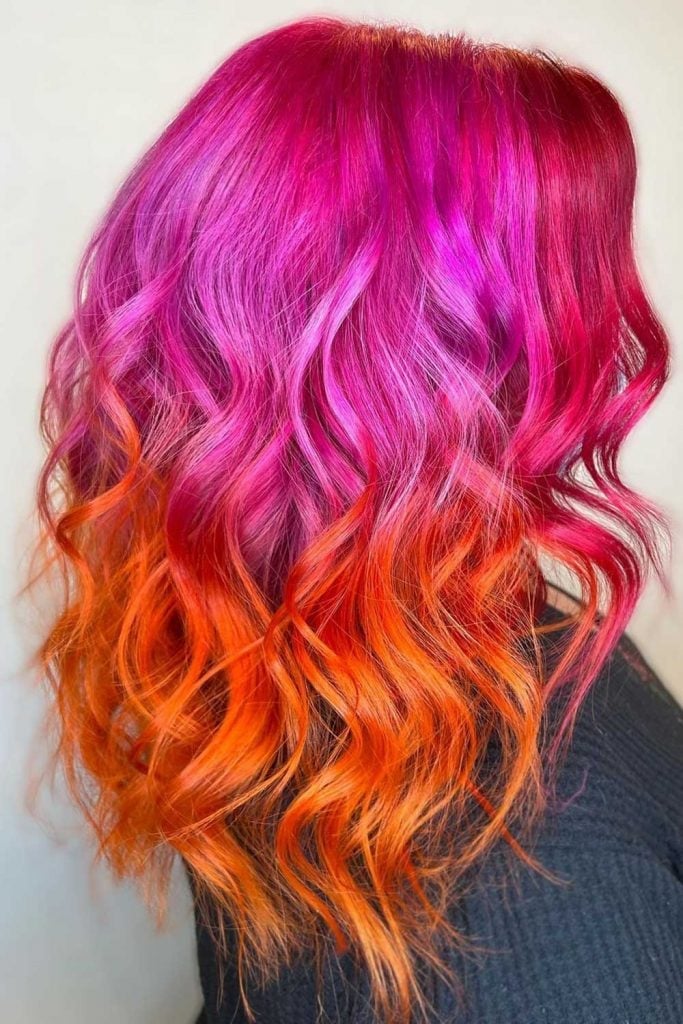
The ombre here is built like a sunset, pink at the roots melting into bright orange at the ends, and the trick is in the blend. A lob that grazes the collarbone gives the gradient enough length to read clearly, while loose waves push the color transition so it never lands as a hard line. Ask your colorist for: collarbone lob, pink to orange ombre. Medium-density wavy hair keeps the fade soft, and a side parting lets the darker root section sit naturally. To keep the pink from turning muddy, use a sulfate-free shampoo and book a trim every eight to ten weeks so the ends stay healthy enough to hold the orange.
Wavy Lob With Pink And Teal Split
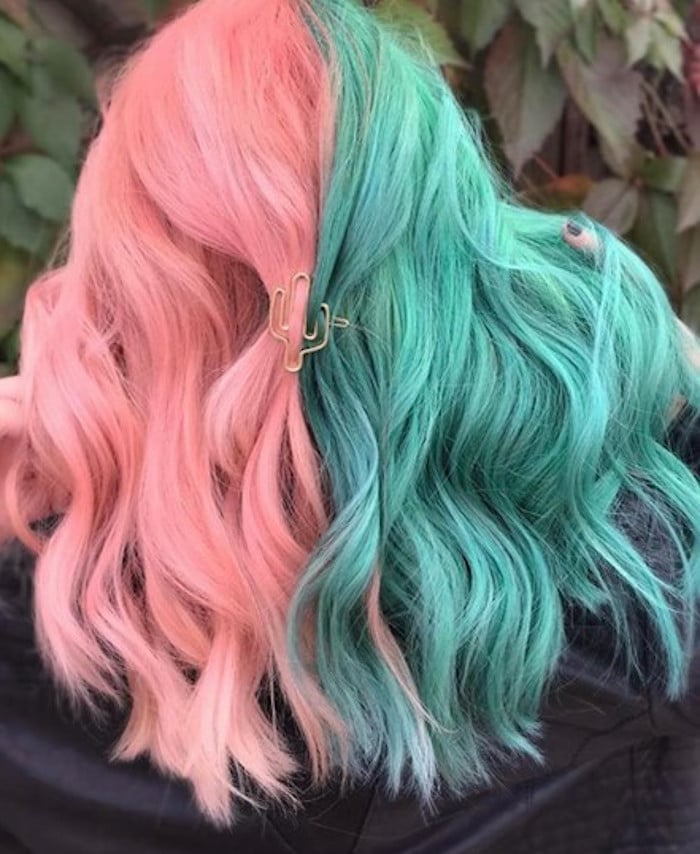
To get a half-and-half color split without it looking like a costume, start with the right words. Ask your colorist for: collarbone wavy lob, wispy bangs, pink and teal half-and-half. The lob ends at the collarbone, and the wispy bangs soften what could be a jarring line across the forehead. A middle parting keeps both sides visible, and the loose waves let the pink and teal blend slightly at the edges instead of sitting as two flat blocks. This is a salon-only job, since the sectioning has to be precise to keep each half from bleeding into the other. Medium-density wavy hair holds the wave pattern well, and the bangs help frame round or heart faces without committing to a full fringe.
Angled Bob With Orange And Blonde Face-Framing
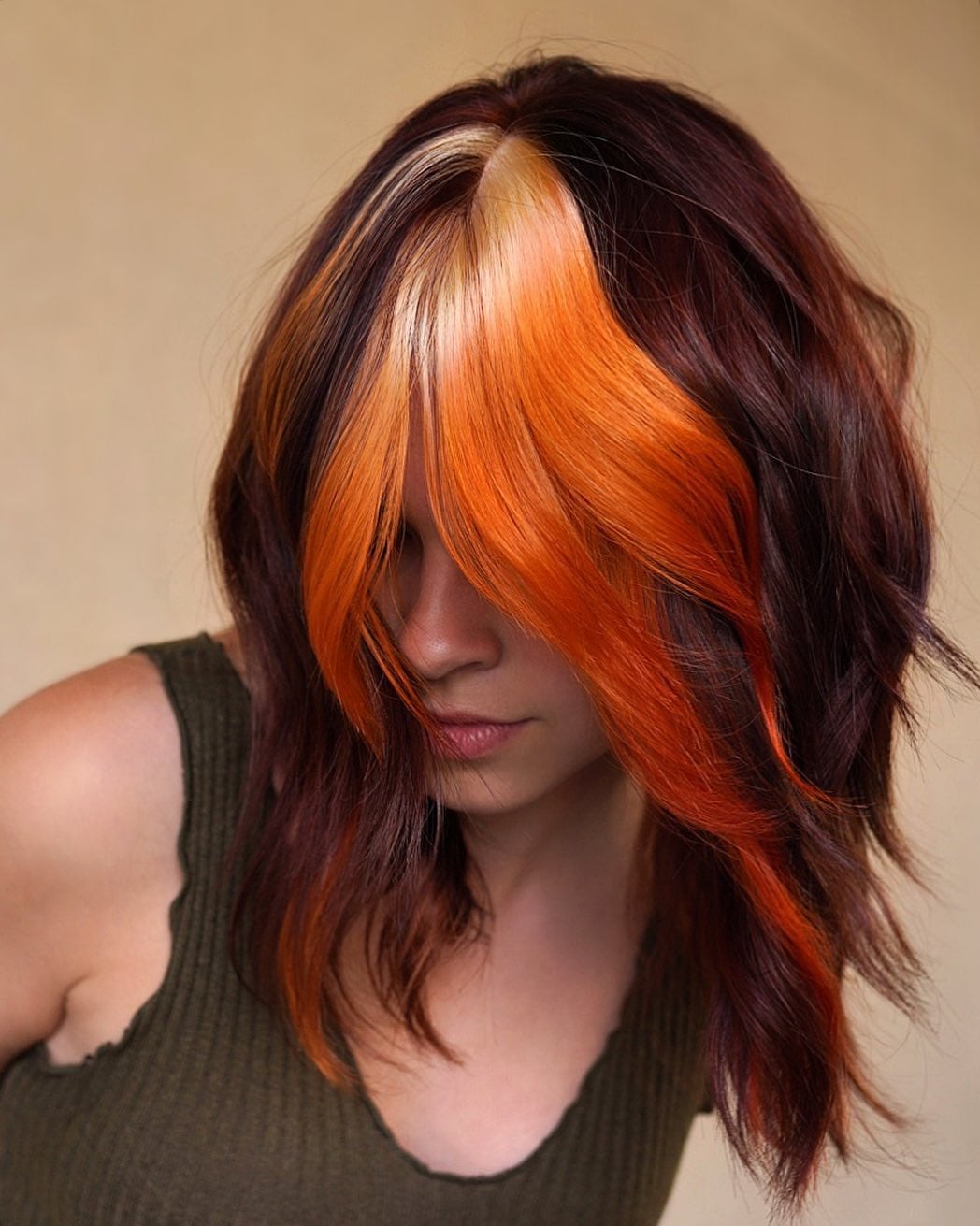
A dark brown base with bright orange and blonde pieces at the front is the kind of detail that changes the whole read of a bob. The angled cut drops to the collarbone at the front and sits shorter in the back, so the vivid face-framing sections get all the attention. Curtain bangs soften the transition and keep the look from feeling like a costume, and the wavy blowout makes the orange and blonde look intentional rather than accidental.
Ask your stylist for: collarbone angled bob, curtain bangs, dark brown with orange and blonde face-framing. Medium-density wavy hair holds the blowout shape without needing much help, but the face-framing pieces will need a touch-up every six to eight weeks to keep the orange from fading to peach. A diffuser on low enhances the waves and keeps the front pieces from drooping.
Collarbone Lob With Thick Blonde Face-Framing
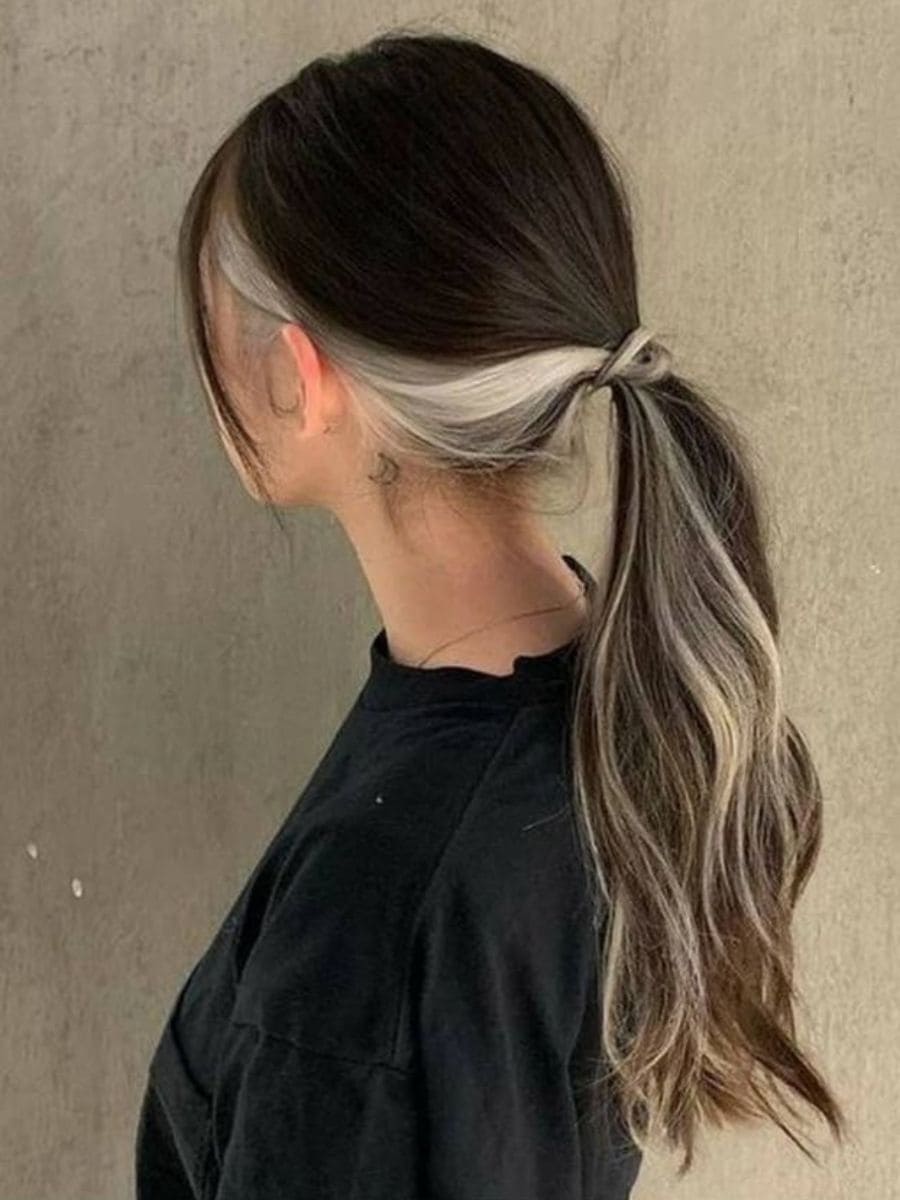
Thick blonde pieces at the front on a dark brown base is a high-contrast move that works best on wavy, medium-density hair. The collarbone length keeps the lob easy to pull back, and the side parting lets the blonde sit where it catches the eye. It reads as bold, but the trade-off is that the blonde will need attention: roots show within about six weeks, and the lighter pieces can turn brassy without a toning shampoo. Ask your colorist for: collarbone length, dark brown with thick blonde face-framing highlights, styled in ponytail. This is a salon job, since placing the blonde too high or too low changes the whole effect. If you are not ready for a root touch-up every couple of months, this one is not for you.
Shoulder Length Curls With Caramel And Blonde
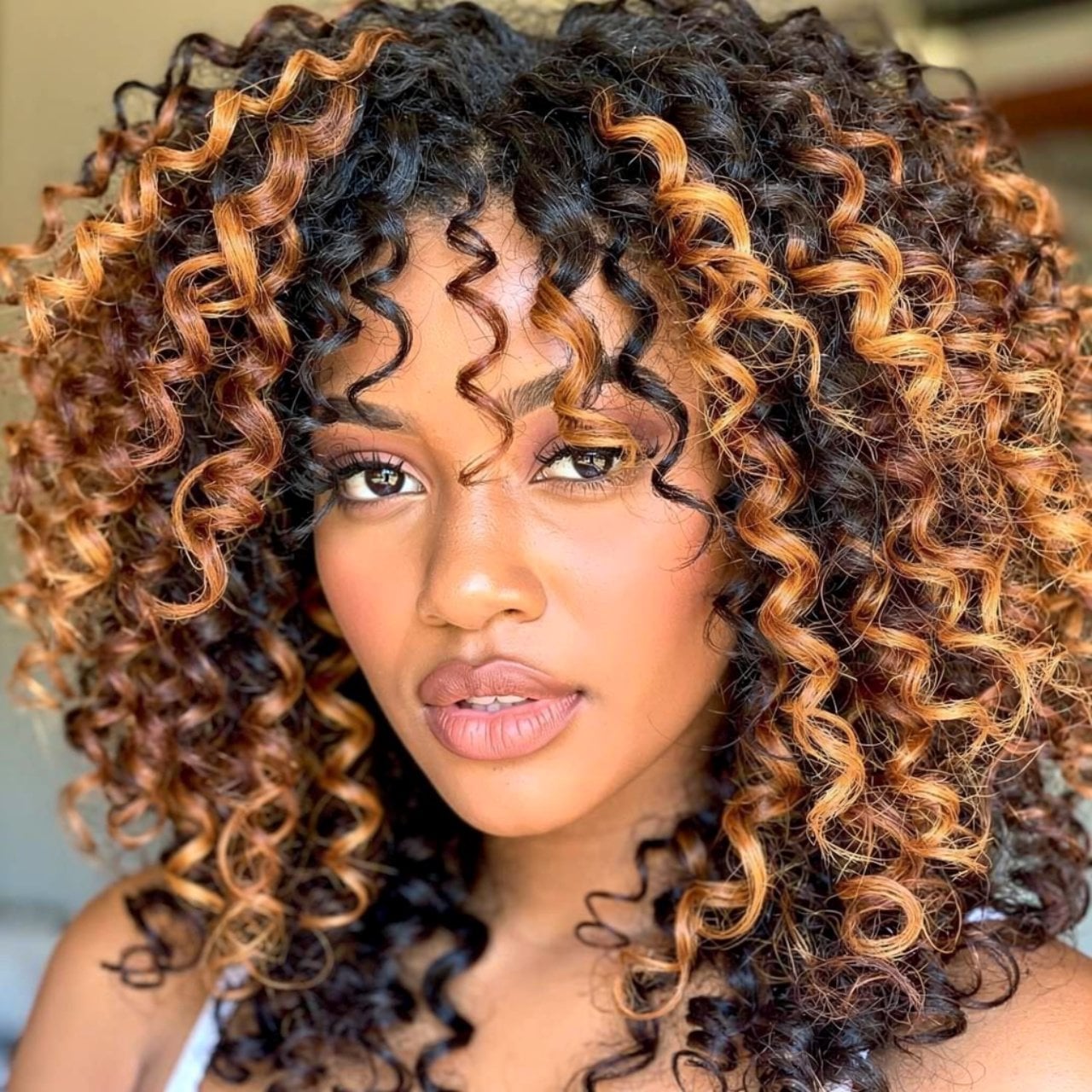
On thick, defined curls, caramel and blonde highlights do more than add color. They make each curl visible as its own shape instead of a solid dark mass. A middle parting and shoulder length cut let the curls fall evenly on both sides, which keeps the volume balanced. Ask your colorist for: shoulder length defined curls, dark brown with caramel and blonde highlights. A curl defining cream and low heat diffuser provide the styling; a trim every eight to ten weeks maintains the shape.
Pixie Cut With Blonde And Brunette Contrast
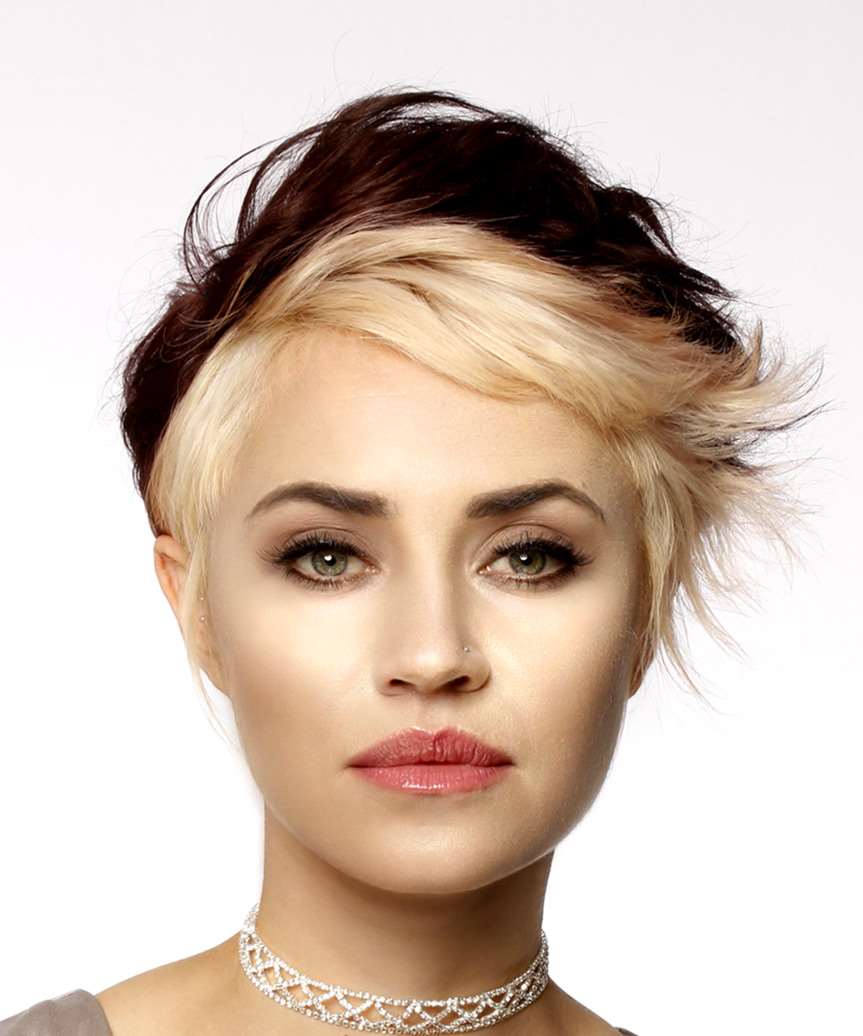
A pixie with a single all-over color is a safe bet. A pixie with light blonde and dark brunette sections is a bet that actually pays off. The contrast works best on fine, straight hair where the two colors sit flat against each other rather than getting lost in texture. Short, side-swept bangs pull the eye across the color line. Ask your stylist for: pixie cut, short side-swept bangs, light blonde and dark brunette contrast. A texturizing paste gives the separation this cut needs to read as deliberate.
Curly Black Pixie With Blonde Highlights
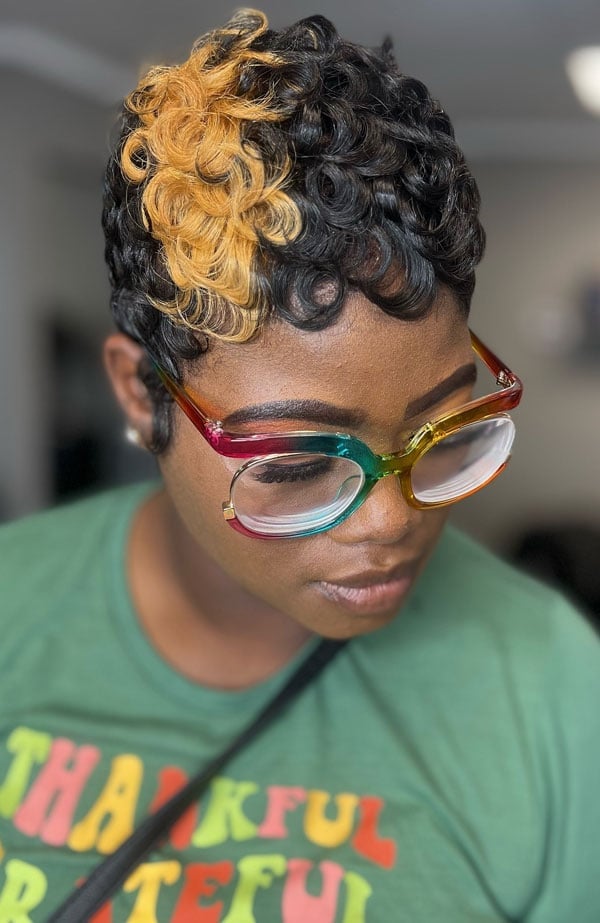
Finger waves on thick, curly hair take patience, but the payoff is a two-tone effect that moves with the wave pattern rather than against it. Blonde highlights concentrated on the top and front catch the light when the head turns, while the black base stays deep and reflective. Short bangs swept to the side soften the transition. Ask your stylist for: curly pixie cut, short bangs, black with blonde highlights. A curl-defining cream sets the waves; expect a trim every three to four weeks to maintain the crisp outline.
Pixie With Platinum Blonde And Dark Brown
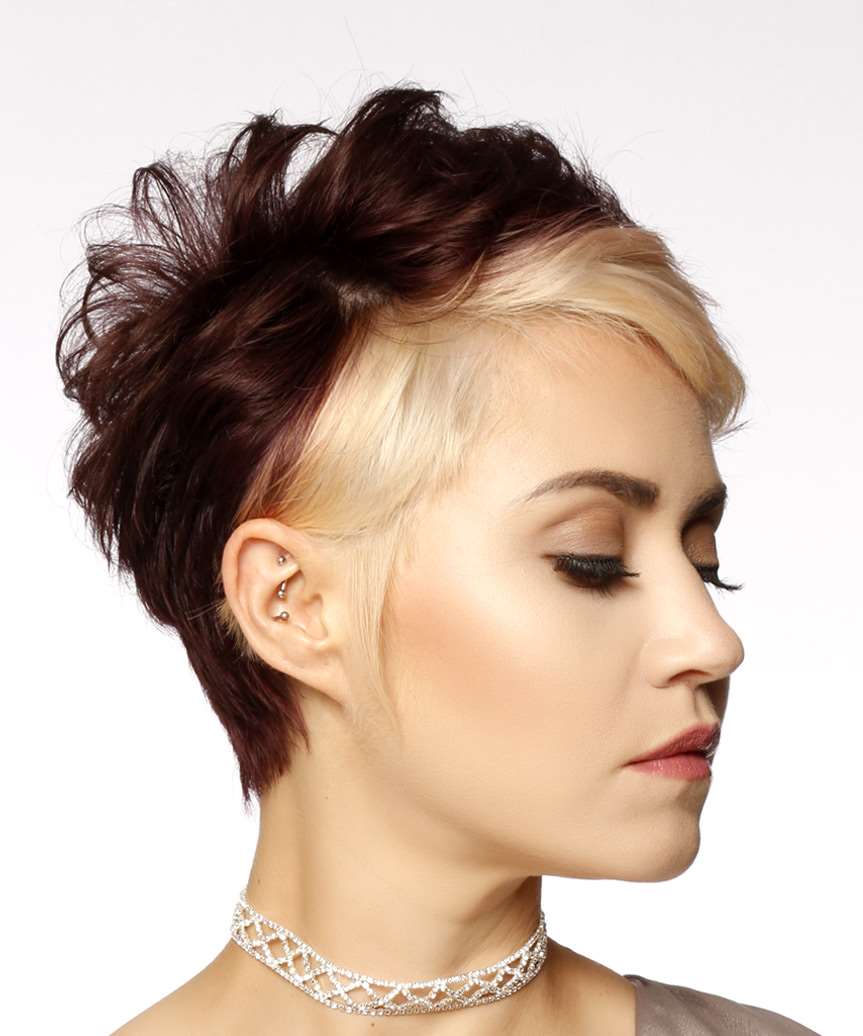
A dark brown and platinum blonde split can look like a grow-out emergency if the cut is not precise. A clean, choppy pixie cut with a side part plants the dark section on one side and the platinum on the other. Short, choppy bangs bridge the two colors without blending them. Ask your stylist for: pixie cut, short choppy bangs, dark brown and platinum blonde. This finish requires a salon visit, since the lightener needs to lift fine hair carefully. At home, a texturizing spray is all you need to style it.
Pixie Cut With Color Blocking
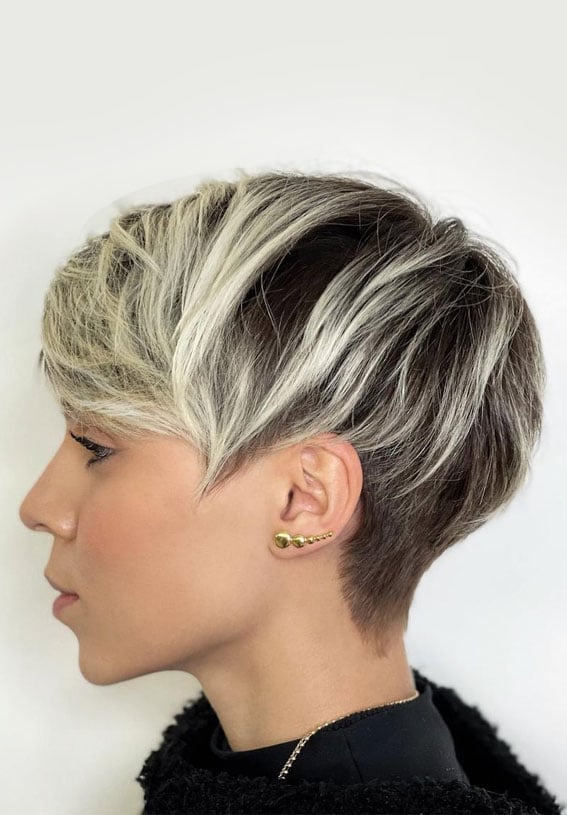
A blonde pixie with dark brown roots and thick color-blocked sections is a graphic design approach to hair. The fine, straight texture lets the two tones sit as flat panels rather than blending into each other, which is the whole point. Short side-swept bangs keep the front from looking too severe. Ask your stylist for: pixie cut, short side-swept bangs, blonde with dark brown color blocking. A texturizing paste adds grip to the layers, and a trim every three to four weeks keeps the blocking sharp.
Mid-Back Hair With Black And Blonde Streaks
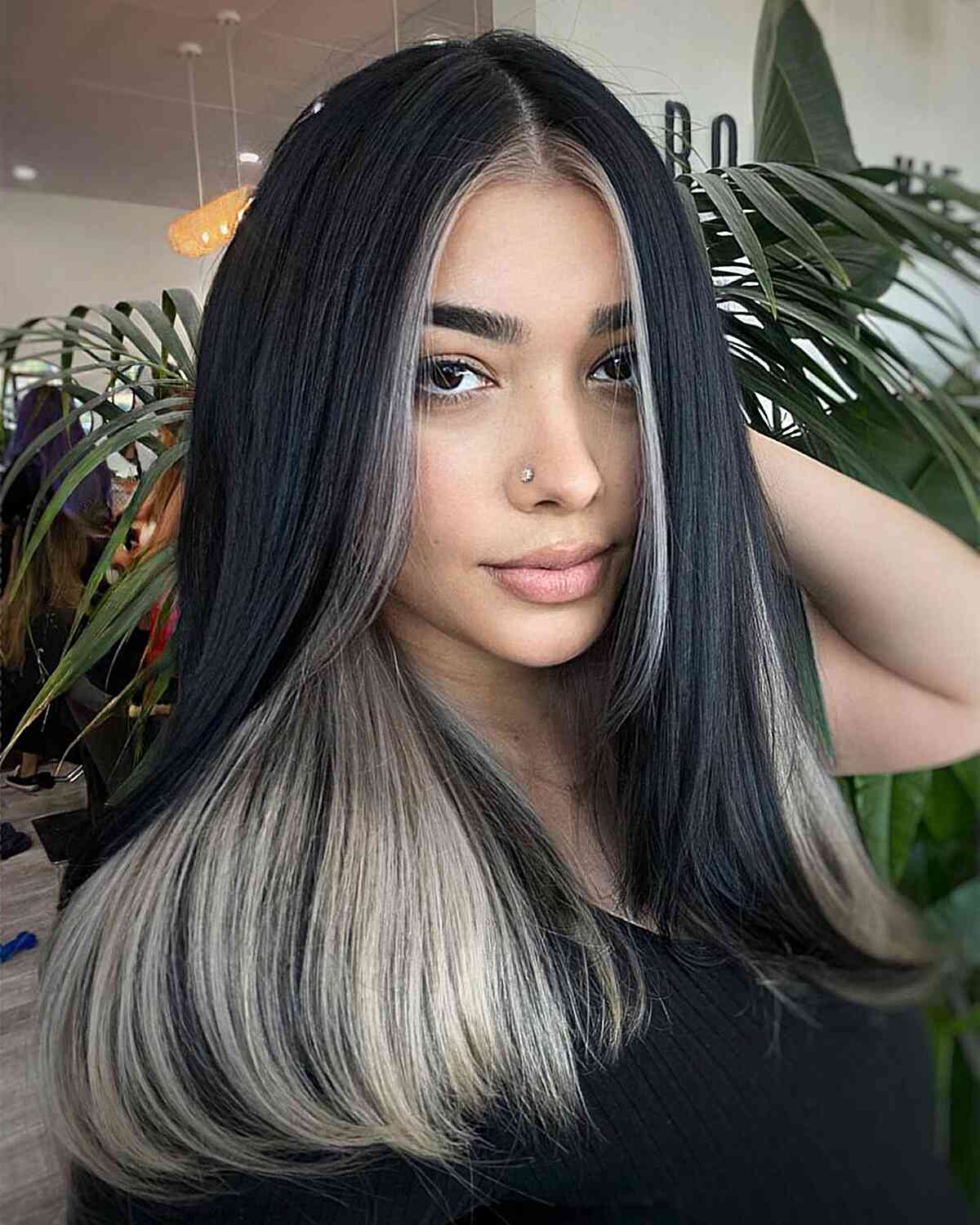
A black base with blonde streaks that start at the root and run the full length, concentrated around the face for maximum contrast. Thick straight hair at mid-back length is the ideal starting point because the blonde sections have enough surface area to read clearly. Ask your colorist for: mid-back length, black with blonde streaks and face-framing. A smoothing serum keeps the sleek finish intact, and trims every eight to ten weeks prevent the ends from thinning out.
The contrast on thick straight hair requires maintenance. Those highlights can lean brassy within four to six weeks without a purple shampoo in rotation. This is a salon-only commitment. The sectioning and bleach application for clean streaks requires professional skill. If you wash your hair daily or tend to skip toning appointments, the contrast will blur fast.
Mid-Back Layers With Blonde Face-Framing
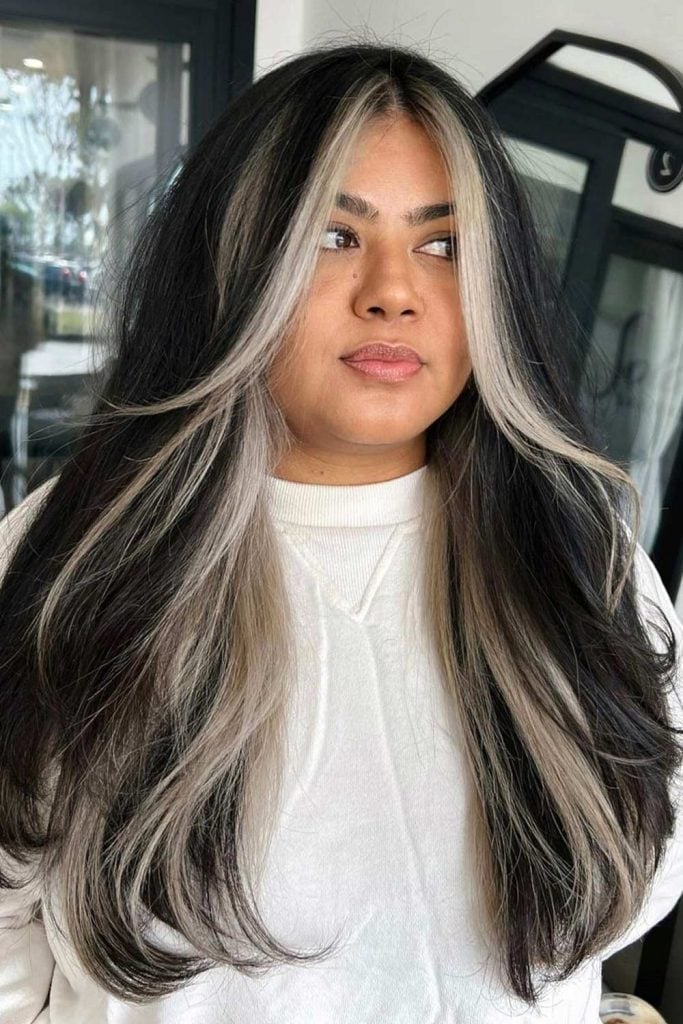
Wondering if two-tone color can work without feeling like a costume? This version keeps the drama at the front. Long layers in dark hair meet curtain bangs and chunky blonde pieces that start near the cheekbone and fade into the lengths, so the color does the talking without overtaking the cut. Thick wavy hair at mid-back length is what makes the technique land, the waves catch the lighter sections at different angles, and curtain bangs soften round and heart faces naturally. Ask your colorist for: mid-back length layers, curtain bangs, dark with blonde face-framing. A texturizing spray enhances the wave pattern, and trims every eight to ten weeks keep the layers from losing shape.
If your hair is fine or your natural texture is stick-straight, the face-framing pieces can look sparse rather than intentional. The cut relies on density to support the color weight, so wavy or thick types get the most mileage.
Mid-Back Curls With Blonde Highlights
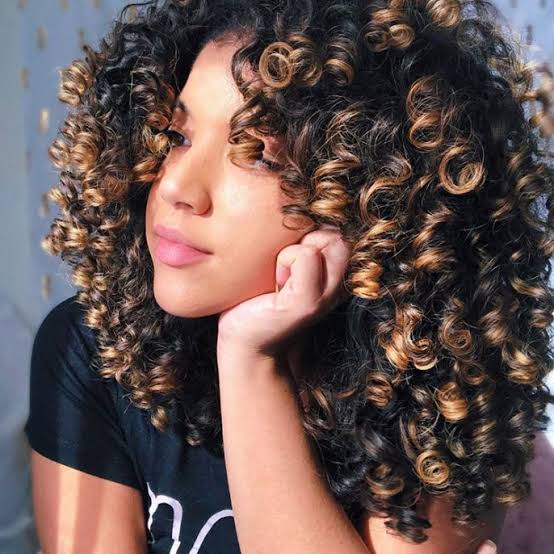
This is not the same as adding highlights to straightened hair and then curling it. The blonde is woven into the curl pattern itself, so the color moves with the coil instead of sitting on top of it. Thick curly hair at mid-back length with no bangs lets the dimensional effect spread evenly across the full head. Ask your colorist for: mid-back length curls, dark brown with blonde highlights. A curl-defining cream and air-drying or diffusing on low heat preserve the shape without crushing the volume; trims every eight to ten weeks prevent split ends from clouding the color clarity.
Compared to chunky highlights that sit on the surface of curls, this approach uses finer sections so the blonde looks like a natural lightening, not a stripe. The highlights need to be placed with the curl clump in mind, which is a skill not every colorist has.
Mid-Back Black With Purple Streaks, Wavy
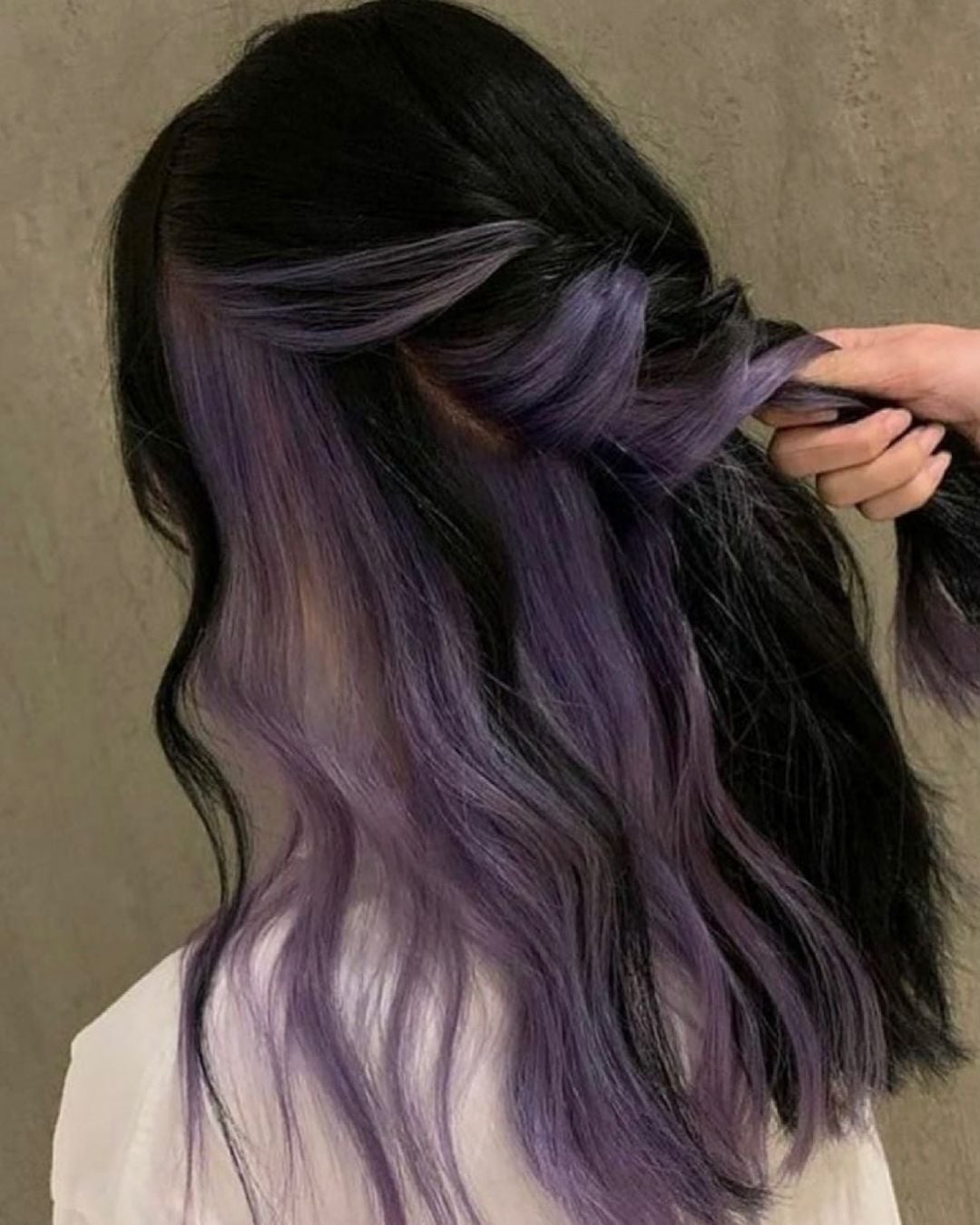
The purple streaks here are not scattered randomly. They are placed in distinct sections that follow the layering, so each wave reveals a new flash of color. Medium density wavy hair at mid-back length with long layers and a side parting gives the streaks room to breathe without overwhelming the black base. Ask your colorist for: mid-back length, black with purple streaks. A color-safe shampoo extends the vibrancy, and braiding a few sections before bed adds texture variation without heat. Trims every eight to ten weeks keep the layers defined.
Mid-Back With Vertical Blonde And Red Streaks
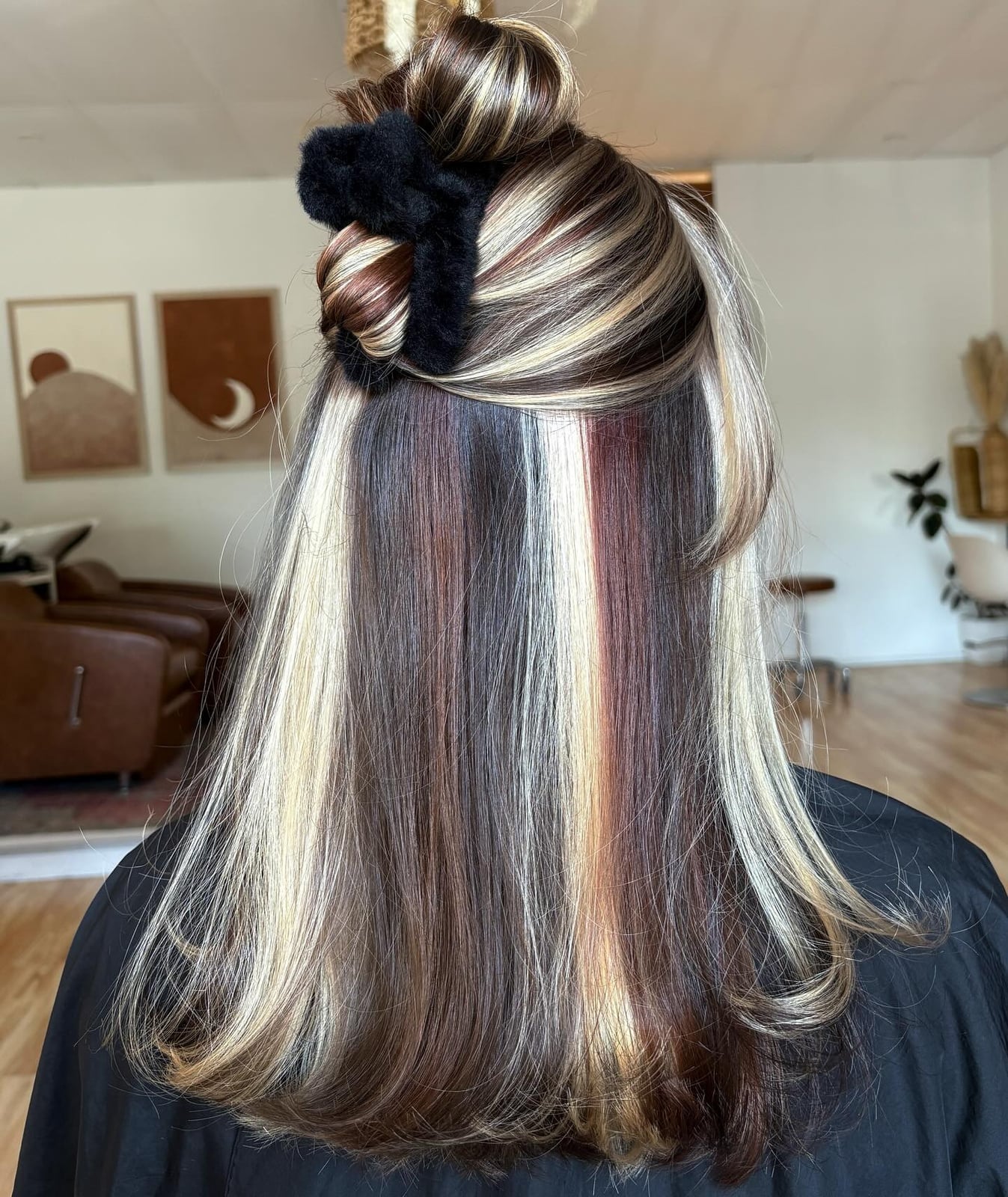
Thick vertical streaks in blonde and red cut through a dark brown base from root to tip, creating a bold stripe pattern. Thick straight hair at mid-back length with long layers and no bangs is the canvas. The straight texture keeps the streaks crisp and separate. Ask your colorist for: mid-back length, dark brown with thick blonde and red vertical streaks. This is a salon-only job because the sectioning for vertical color blocking requires a steady hand and bleach precision; attempting it at home usually results in muddy overlap. A flat iron keeps the finish sleek, and color maintenance appointments every four to six weeks keep the red from fading into orange.
Mid-Back Braids With Teal And Orange Split
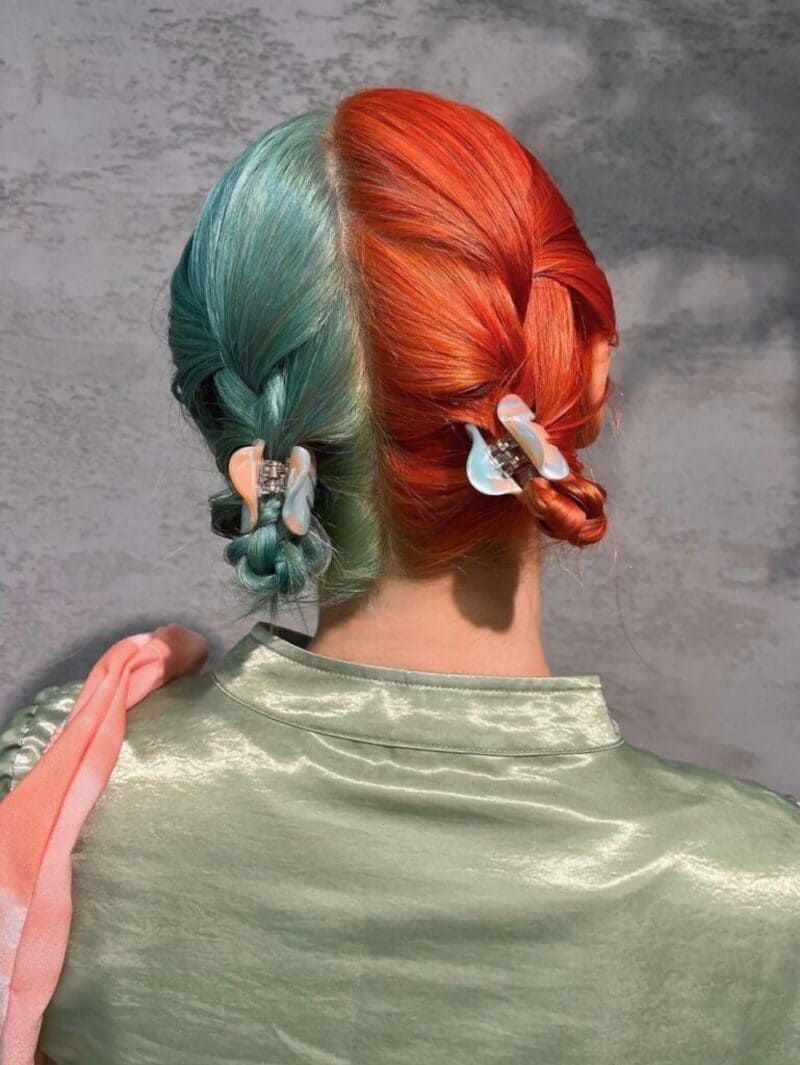
Two braids gathered into low buns make the teal and orange split dye look like a deliberate choice. The middle parting keeps each half of the color on its own side, so the contrast stays crisp from root to tip. Thick, straight hair at mid-back length is an ideal canvas, since the weight helps the braids lie smoothly and the color stays put.
Ask your colorist for: mid-back length, braids with teal and orange split dye. This is a salon-leaning project; the precise color application takes hours, but the result is worth the chair time. Secure the buns with decorative clips for festival season, and plan on a toning appointment every four to six weeks to keep the orange from shifting and the teal from fading. Touch-ups on the roots are the real commitment, roughly every six weeks depending on your growth.
Mid-Back Ombre With Blonde Ends
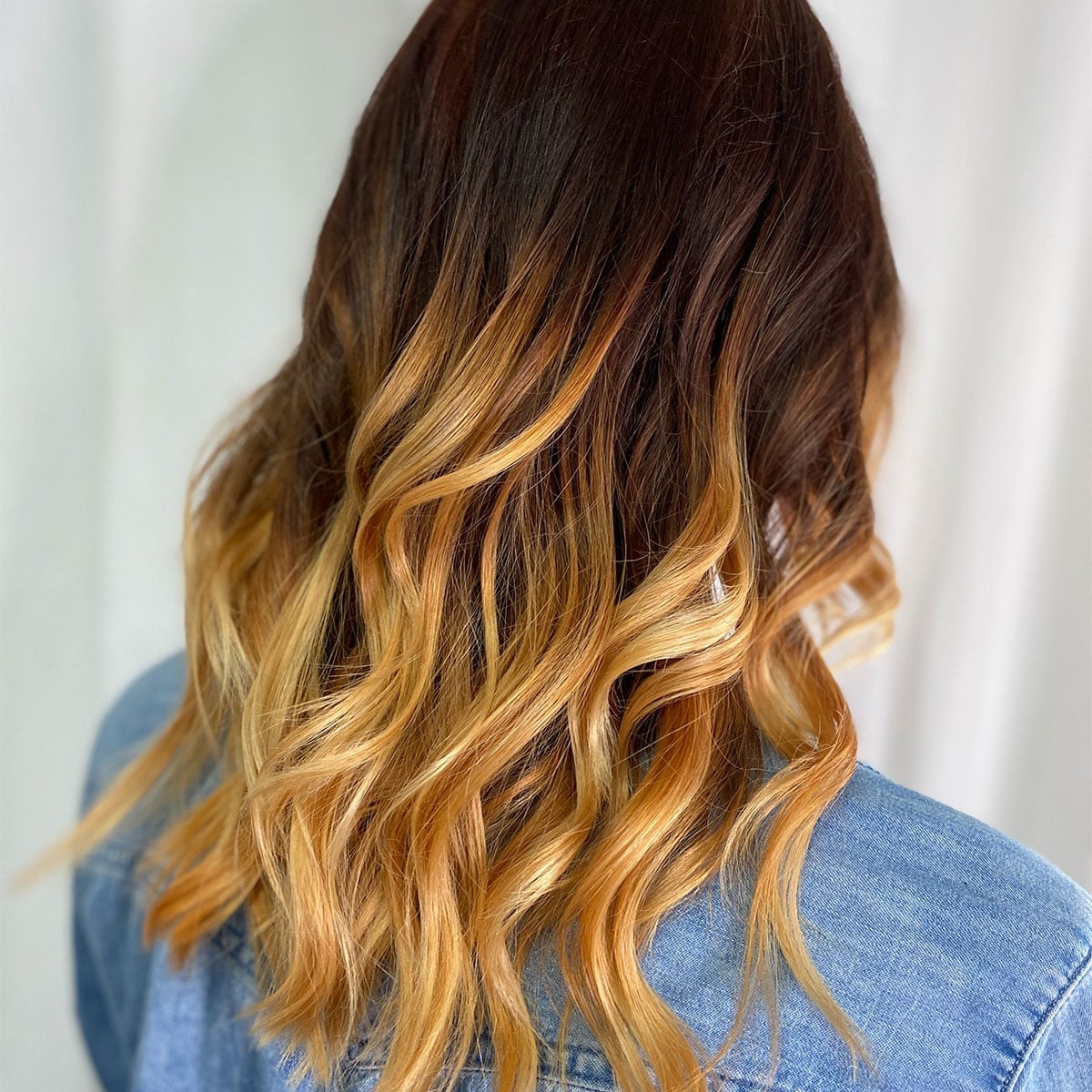
The dark brown base fading into bright blonde ends is a straightforward ombre, but the loose waves and middle parting give it a lived-in finish that a flat-ironed version would miss. Thick wavy hair at mid-back length shows the color transition best, since the texture catches the light at different points along the shaft. Ask your colorist for: mid-back length, dark brown with bright blonde ombre ends. This is a salon-only job, the lightener needs careful placement to avoid a harsh line. The real drawback is brassiness on wavy hair, so plan on a purple shampoo once a week and a toning appointment every six to eight weeks. Skip it if you cannot commit to the upkeep, the bright ends will look muddy fast.
Mid-Back Layers With Pastel Rainbow
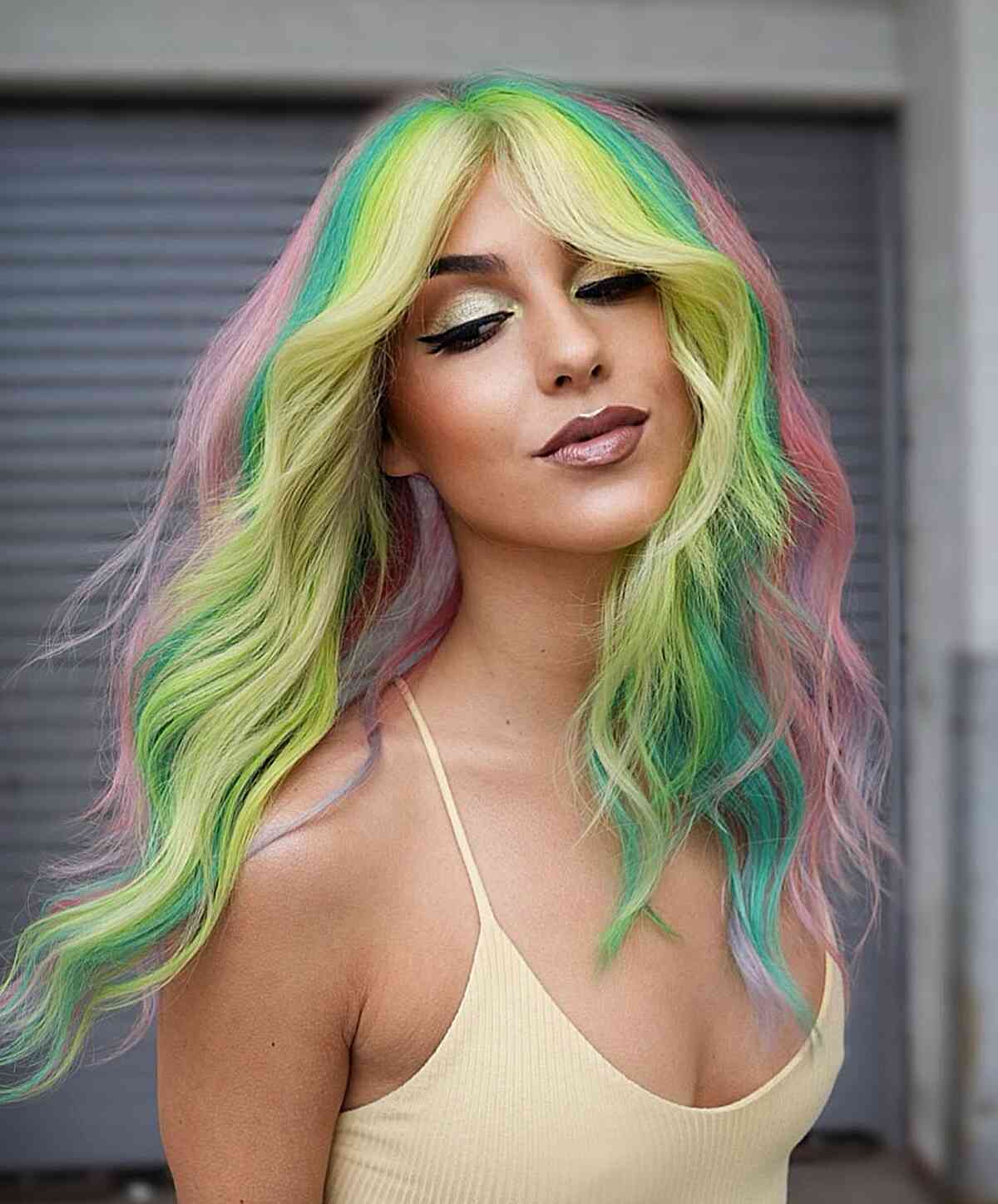
Can full bangs actually work with a pastel rainbow palette, or is that a recipe for a costume? It works, provided the bangs are cut to sit softly against the forehead and the loose waves carry the color through the lengths. Medium-density wavy hair at mid-back length is the sweet spot here, enough body to show the distinct green, yellow, pink, and purple sections without the waves swallowing them.
Ask your colorist for: mid-back length layers, full bangs, pastel rainbow colors. The full bangs suit oval and heart-shaped faces, and they anchor the playful palette so the colors look balanced. Use color-safe products because pastels fade faster than saturated shades. Schedule a toning appointment every four weeks to keep the pink from going peachy. Trims every eight to ten weeks keep the layers moving and the ends healthy.
Mid-Back Layers With Neon Ends
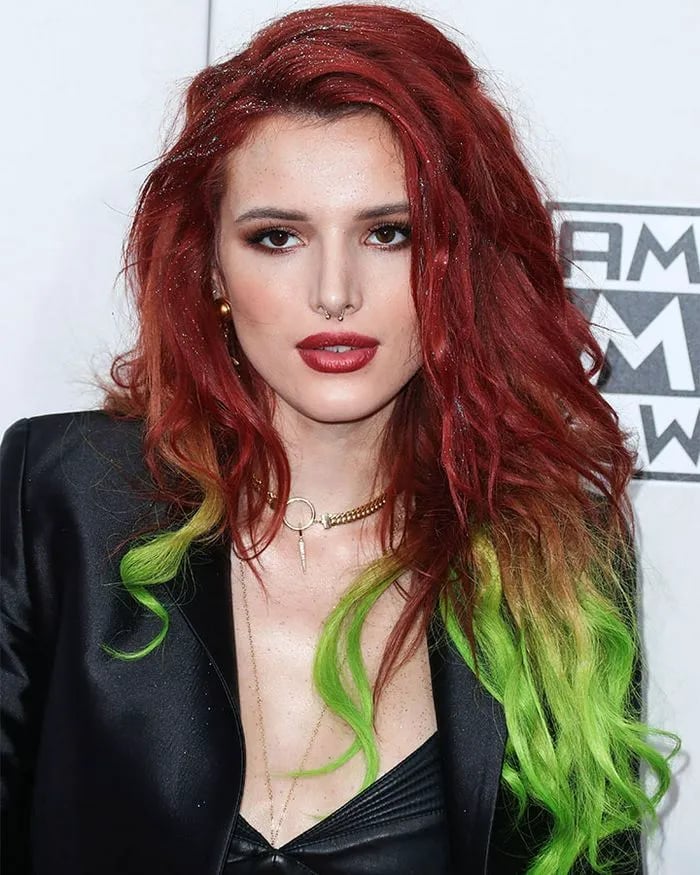
Where a subtle balayage whispers, this red base with neon green and yellow ends announces itself from across the room. The middle parting and loose waves give the bright ends room to move, which is exactly what thick wavy hair needs to show off a two-tone effect. Ask your colorist for: mid-back length layers, red with neon green and yellow ends. This is the bolder sibling of a lived-in color, so skip it if you want something that blends into an office dress code. The red base keeps the roots grounded while the neon tips do the talking, and a color-depositing conditioner every other wash keeps the green and yellow from turning murky. Trims every eight to ten weeks are essential, since the bright ends look best when the cut is fresh.
If you are torn between this and a more subtle option, consider how often you are willing to refresh the color. The neon ends need more attention than a natural brunette-to-blonde grow-out, but they also deliver a payoff that subtle highlights cannot touch.
Mid-Back Layers With Blonde Balayage
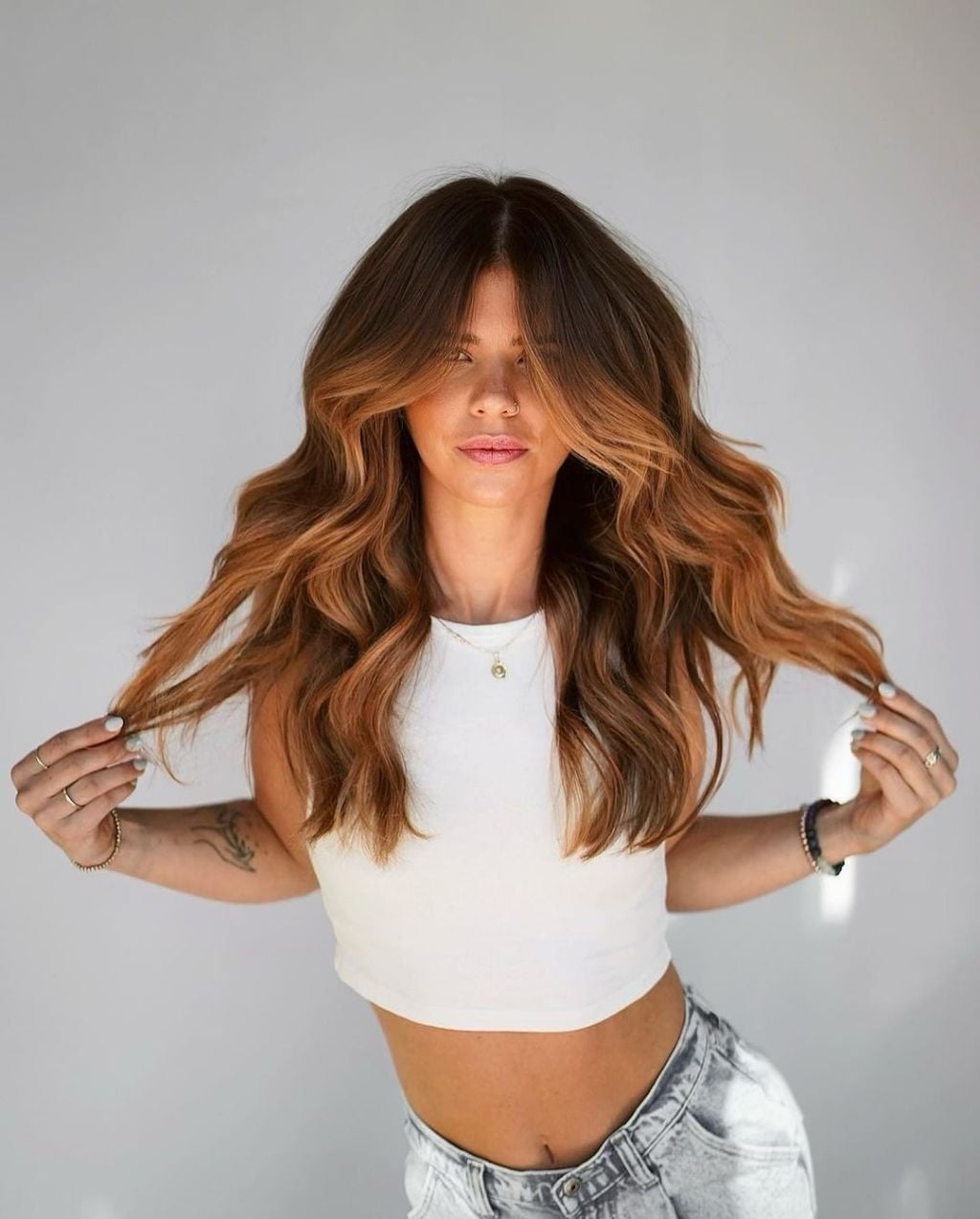
The balayage technique here is what separates a natural two-tone effect from a stripe-y highlight job. The dark brown base stays rich at the roots while warm blonde is painted onto the mid-lengths and ends, so the color transition follows the movement of the waves rather than fighting it. Thick wavy hair at mid-back length shows off the dimension best, and the curtain bangs soften the face while blending into the layers. Ask your colorist for: mid-back length layers, curtain bangs, dark brown with warm blonde balayage. A volumizing mousse and a round brush blow-dry give the waves body, and trims every eight to ten weeks keep the curtain bangs from growing past their prime. The grow-out is forgiving, which is the quiet genius of a balayage root line.
For everyday wear, this is the rare two-tone look that needs almost no styling effort beyond the initial blowout. The curtain bangs work with round and heart-shaped faces, and the warm blonde keeps the overall finish glossy rather than brassy.
Mid-Back Half Up With Color Blocks
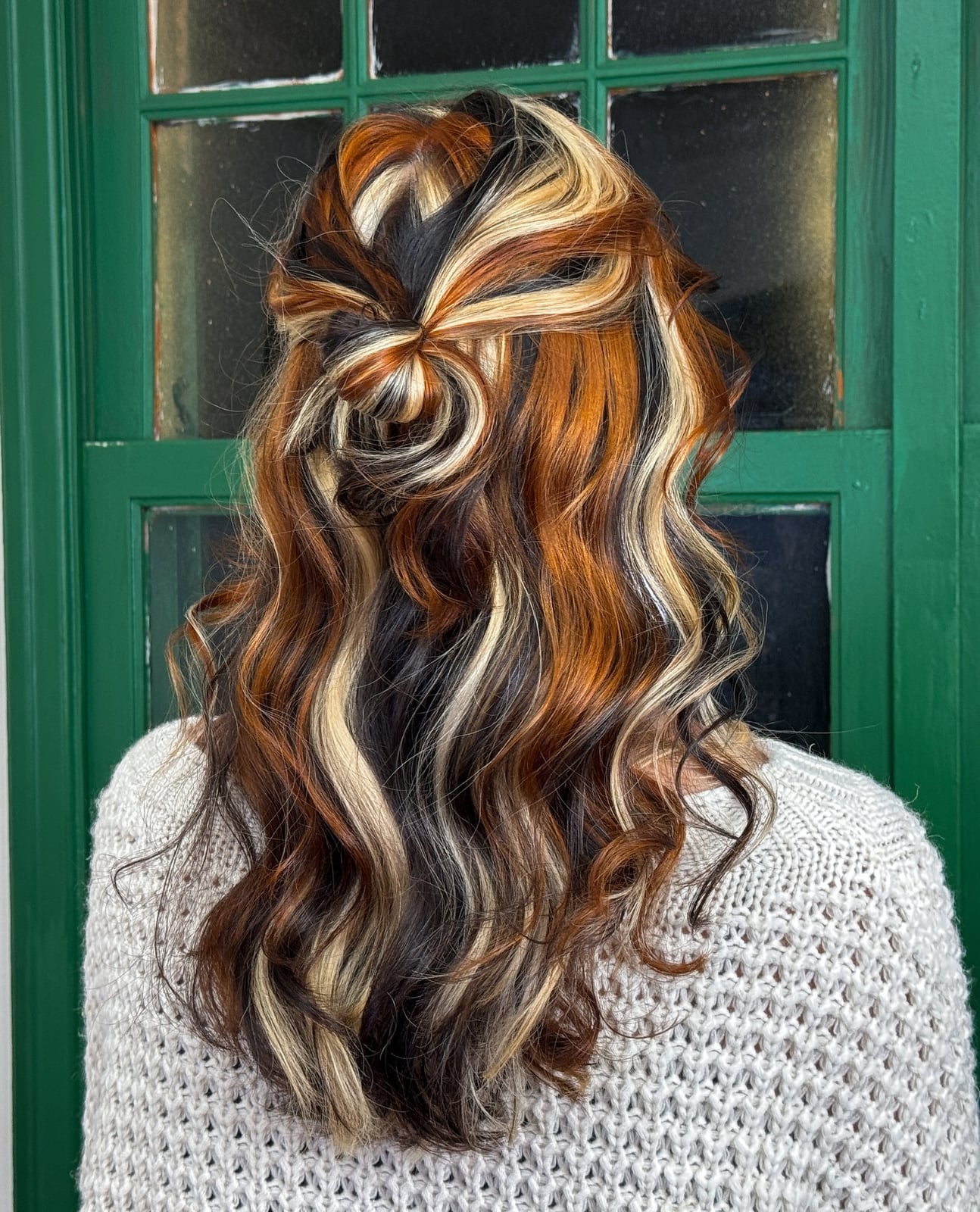
Can you get color blocking without going full split dye? From the back, this mid-back length cut shows a half-up knot with bold blocks of black, blonde and copper woven through loose waves. Thick wavy hair starting at mid-back length carries the contrast best, since each color section has enough density to stand out as a distinct stripe. Ask your colorist for: mid-back length, black blonde copper color blocking, half up style. The sections need to be mapped out and foiled separately, and the half-up knot is styled afterward to show off the color blocks.
At home, recreate the waves with a large-barrel curling iron, then gather the top section into a neat knot at the crown. The color itself requires maintenance: the blonde and copper tones need a toning appointment every six weeks, and the black base may need a gloss to stay rich. Skipping touch-ups turns the contrast into something closer to grown-out highlights, which is not the intended effect.
Long Hair With Dimensional Blonde Balayage
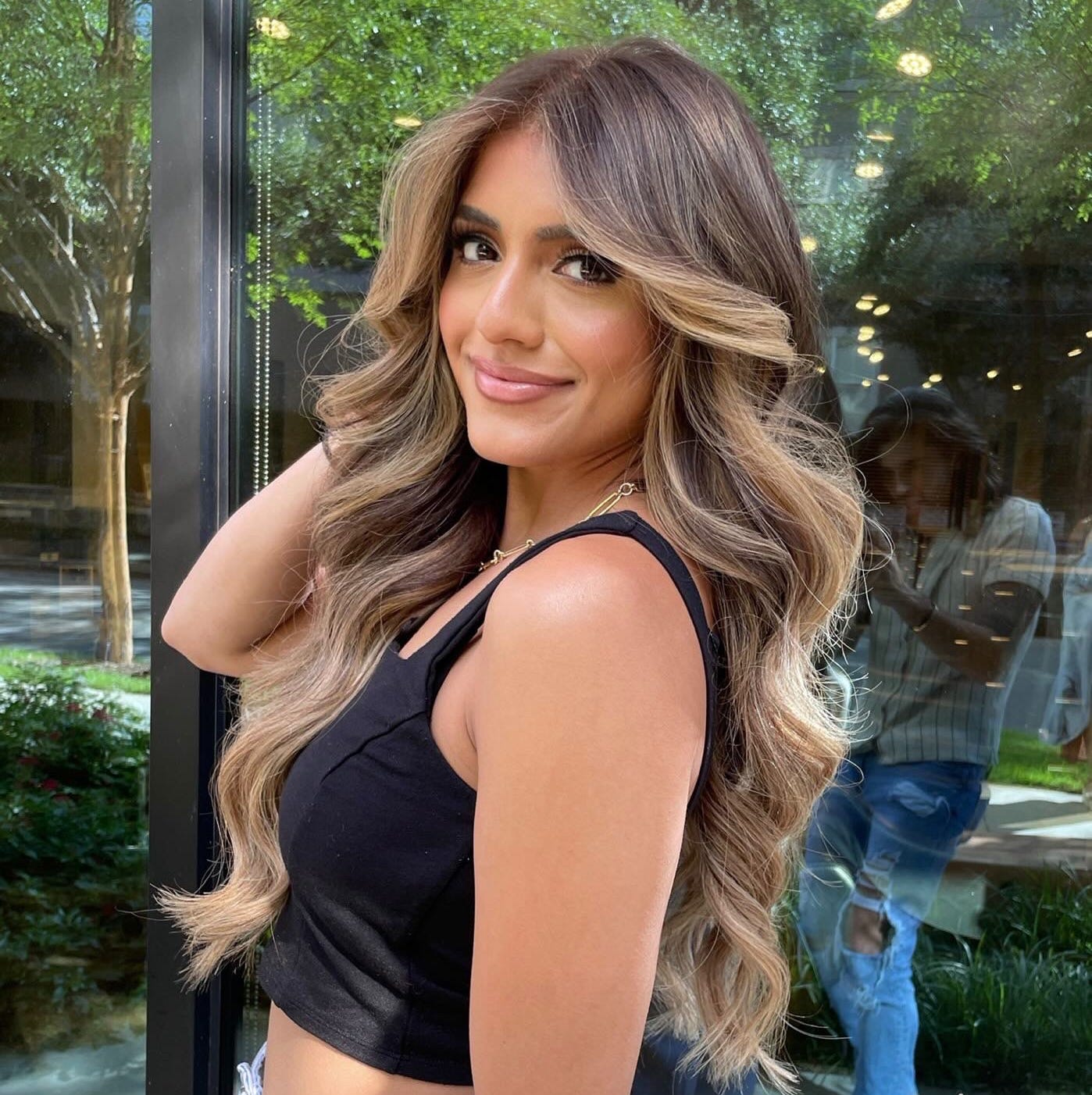
A dark brown base keeps the blonde balayage from reading as all-over bleach. This long length cut has long layers and face-framing pieces, styled in voluminous waves with a middle parting. The dark base running through the mid-lengths and ends gives the blonde highlights a depth that flat one-process color lacks. Thick wavy hair starting at long length works well, and the face-framing pieces help soften round and heart face shapes. Ask your stylist for: long hair layers, dark brown with dimensional blonde balayage and face-framing.
To get the voluminous waves, apply a volumizing mousse to damp hair and blow-dry with a round brush, then use a large curling iron on the mid-lengths. A trim every ten to twelve weeks keeps the long layers from looking straggly. The balayage grows out softly, so you can stretch the salon visits to three or four months before the contrast between the dark base and the lighter pieces starts to feel heavy rather than dimensional.
Final Thoughts
If you’re after low upkeep, stick with balayage or face-framing highlights that melt into your base color; they grow out softly and need fewer salon visits. For high-contrast or split-dye looks, book a touch-up every six to eight weeks to keep the lines crisp. And if you’re torn, start with a root shadow or a subtle streak before committing to full-on color blocking.
- Use sulfate-free shampoo and conditioner to protect color.
- Refresh tones weekly with a color-depositing conditioner.
- Always use a heat protectant before styling.
- Deep condition every week to keep processed hair healthy.
- Schedule color touch-ups every 6 to 10 weeks.
Embrace the contrast and make your hair a canvas for color.
