

Straight hair works best when the cut does the talking. This year, soft face-framing layers and curtain bangs are replacing the flat-ironed look, giving straight styles more shape and movement without losing their polished finish.
22 Trendy Straight Hair Haircuts prove that a clean line and a little internal texture can solve common struggles: fine hair that falls flat, a grow-out line that shows too soon, or a fringe that refuses to sit. The range covers longer, softer cuts through shorter, sharper ones, so there is something for every density and face shape.
Mid-Back Length Shag With Curtain Bangs
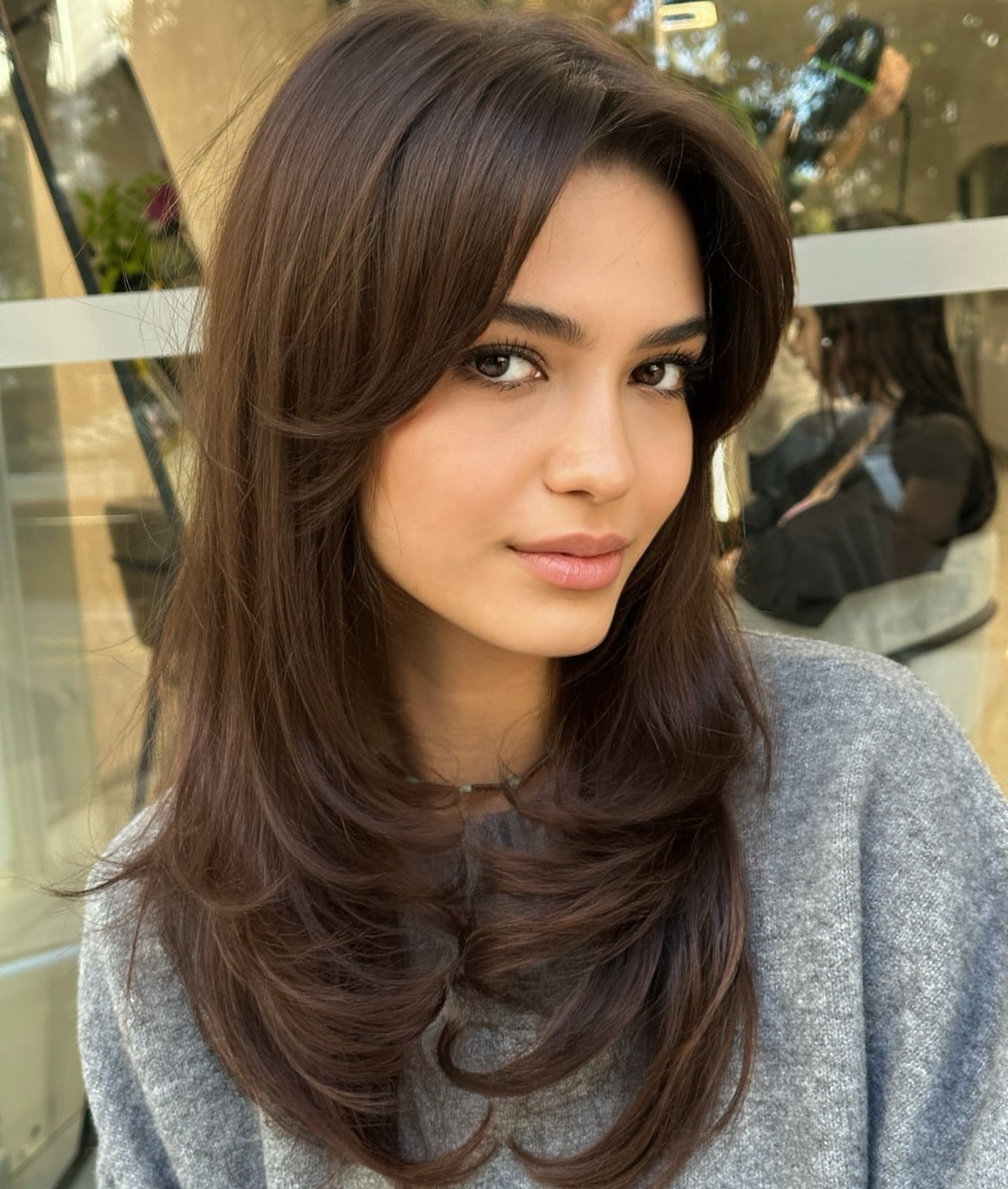
The shag influence here is subtle: the layers are long and face-framing, which keeps the straight texture from turning into a triangle. The curtain bangs sweep out and blend into the cut, so there is no harsh line where bangs meet length. Thick hair that reaches mid-back benefits from layers that remove weight without sacrificing density. Square and oval faces soften noticeably with this shape. Ask your stylist for: mid-back shag with face-framing layers and curtain bangs.
The air-dried texture is the point. Damp hair encourages the slight wave, and a quick blast with a diffuser sets the bangs. No round brush required. Trim the bangs every four weeks to keep them grazing the brows.
Mid-Back Straight Hair With Feathered Layers
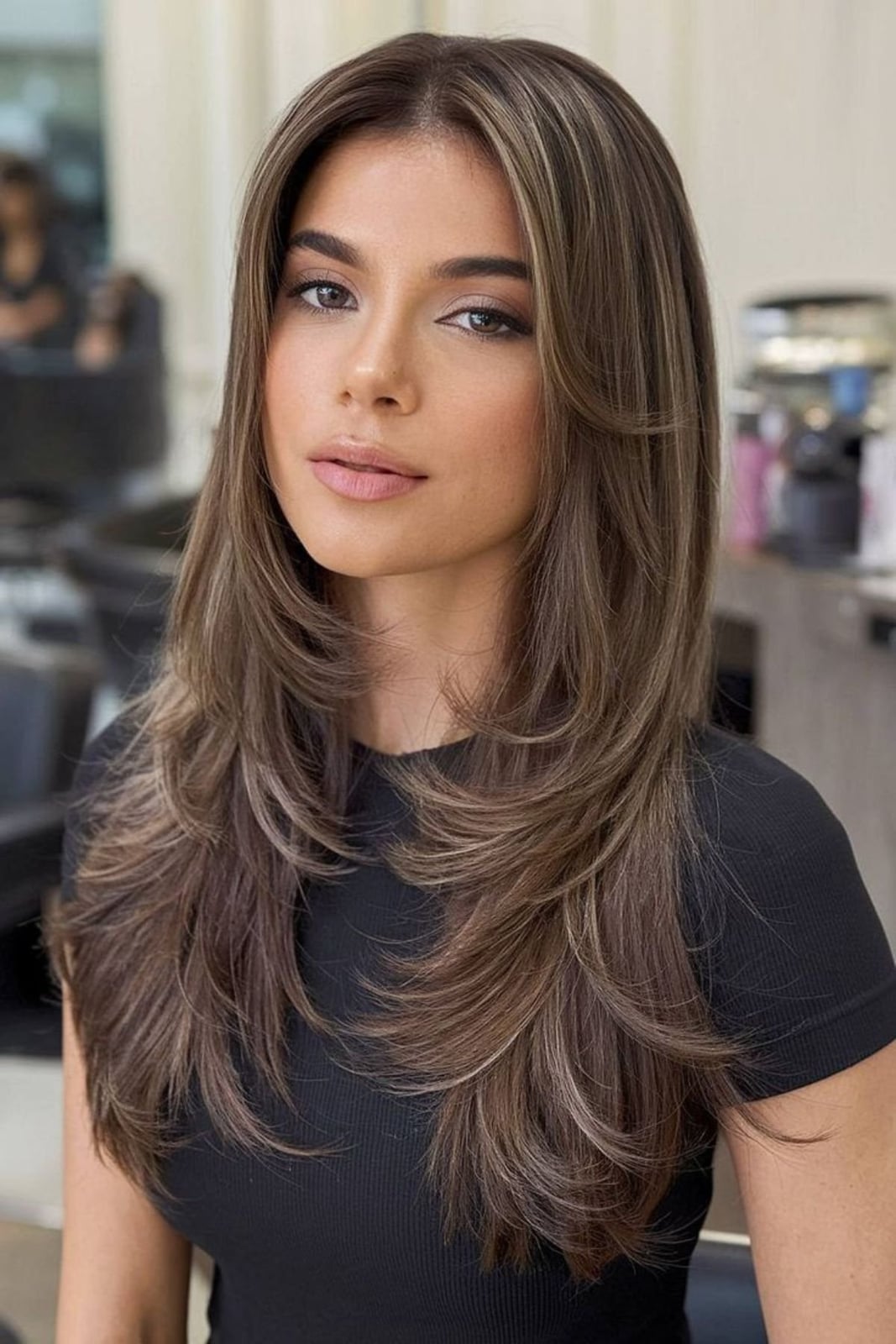
The feathering technique here is what stops thick hair from sitting like a solid block. Each long layer is cut at an angle so the ends taper and overlap, creating movement even when the hair is still. The curtain bangs follow the same logic: they feather out from a middle parting rather than sitting heavy on the forehead. This cut starts at mid-back length and works best on naturally straight or slightly wavy hair. Ask your stylist for: mid-back length with long feathered layers and curtain bangs.
To get the blowout volume in the photo, ask for a large round brush and a heat protectant. The layers catch the air easily, so the lift comes from technique rather than product. A texturizing spray on the mid-lengths keeps the ends from looking too uniform.
Mid-Back Length With Voluminous Blowout Layers
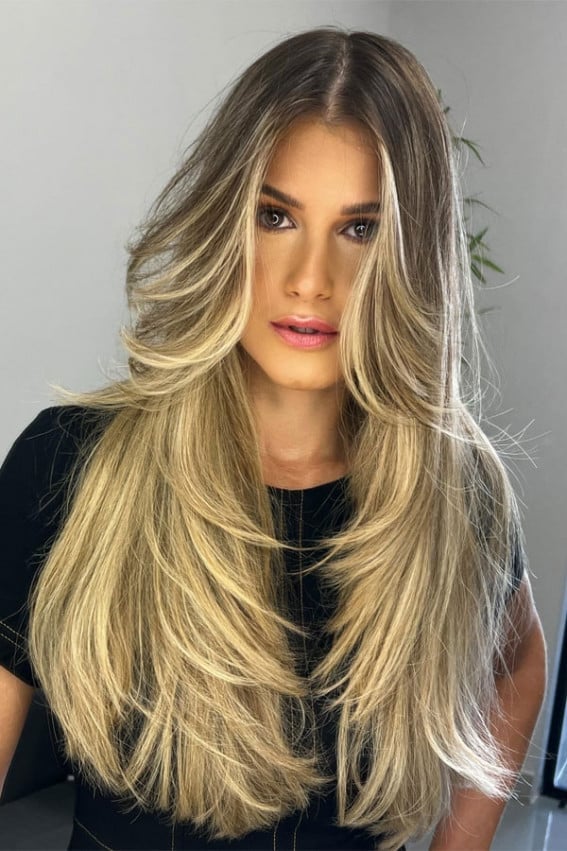
Where curtain bangs and face-framing pieces add softness, this cut skips both for a clean, unbroken silhouette. The long layers start below the shoulders and blend into the mid-back length, so the hair retains its weight but gains movement through the ends. The voluminous blowout and blonde balayage over a darker base add dimension that a single-length cut would lack. Thick straight hair benefits most from this approach. Ask your stylist for: mid-back length with long layers and a voluminous blowout. A volumizing mousse applied to damp roots before drying gives the lift visible here.
Collarbone Lob With Soft Waves and Curtain Bangs
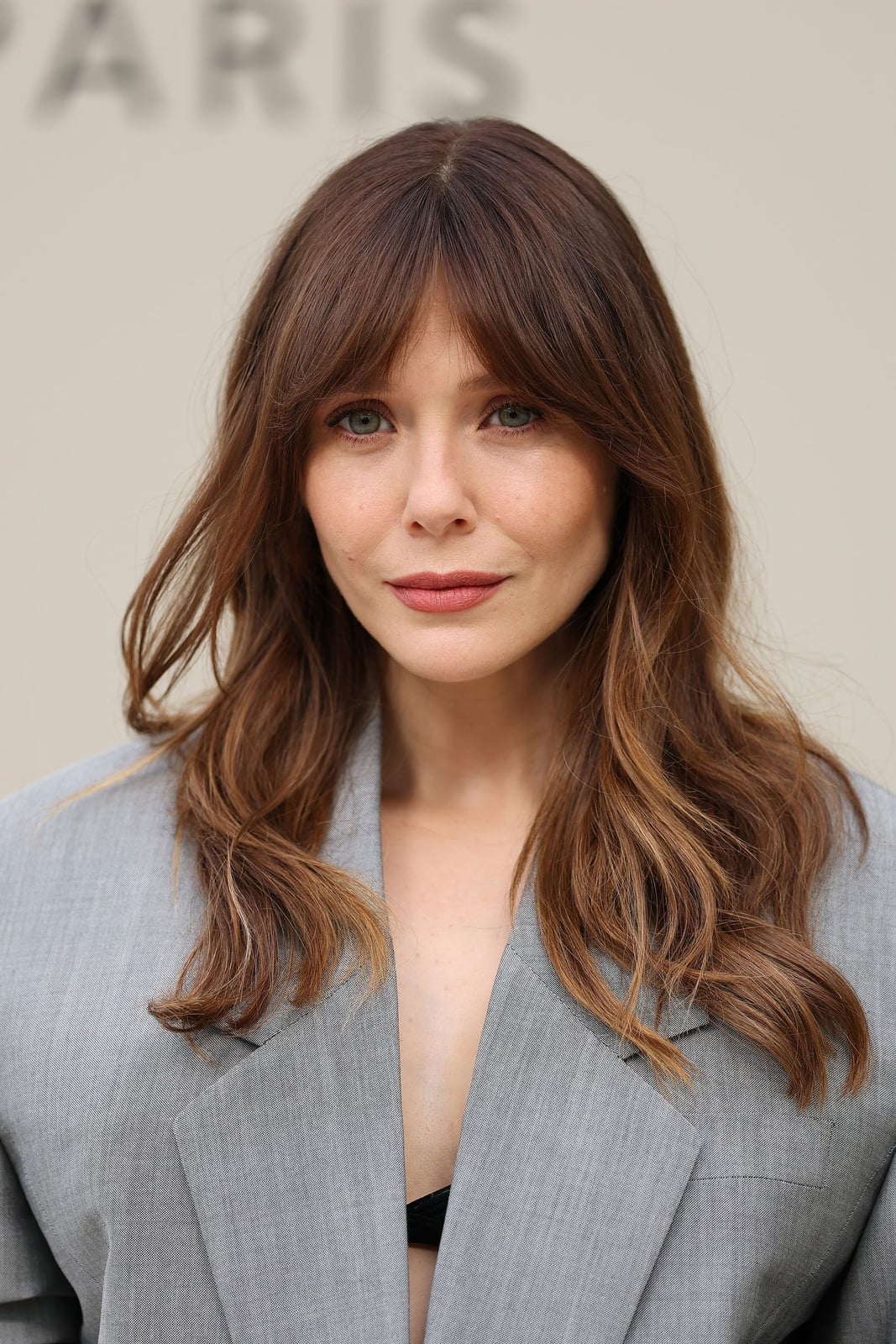
Can a lob still feel current? Yes, when the curtain bangs are cut to graze the cheekbones and the soft waves are built into the cut, not curled in afterward. The collarbone length keeps the hair from dragging the face down, and the brown base with balayage highlights adds depth that straight-wavy textures reflect well. This works on medium-texture hair that is already at collarbone length. Ask your stylist for: collarbone length lob with soft layers and curtain bangs. A sea salt spray on damp hair, then a scrunch and air dry, gives the lived-in wave without heat damage. Trim the bangs every four weeks to maintain the shape.
Ash Blonde Mid-Back Layers With Curtain Bangs
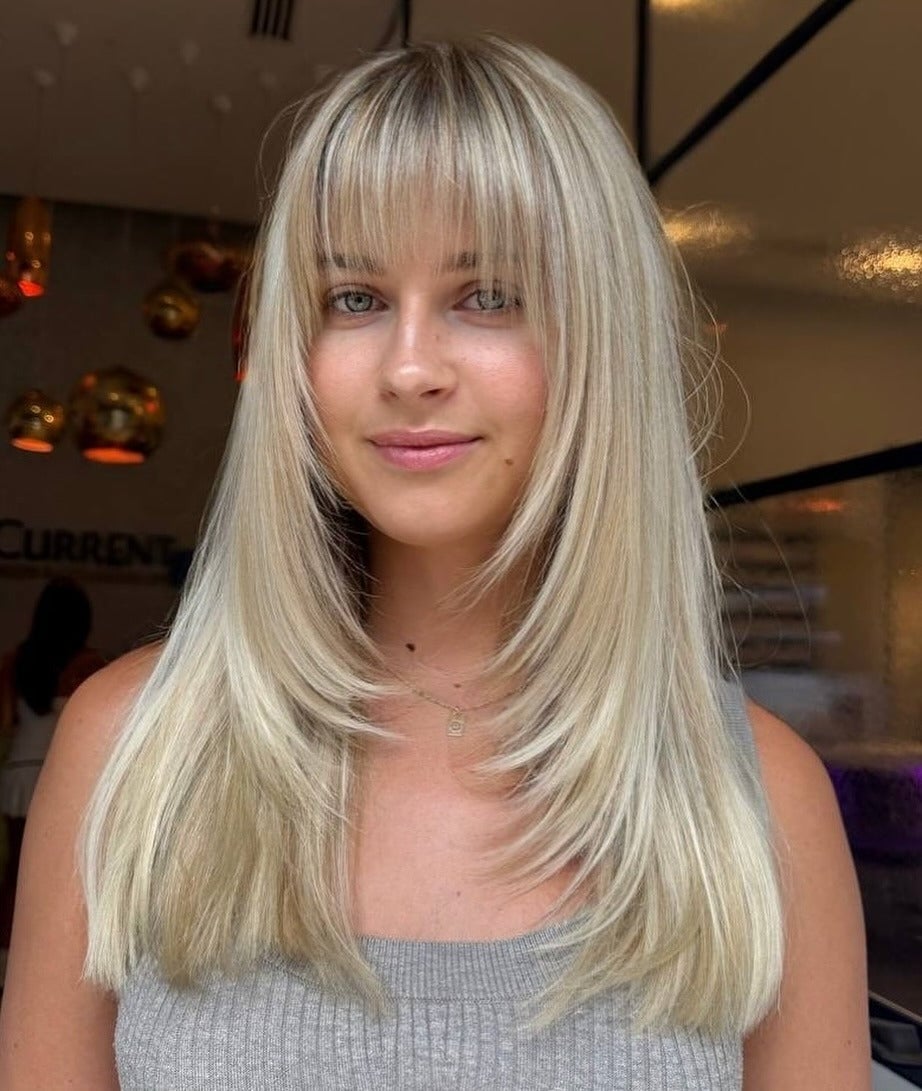
Ash blonde has a reputation for fading fast, but the cool, modern tone is worth the maintenance. The long layers hit mid-back and the curtain bangs frame the face from a middle parting, all styled in a smooth blowout that shows off the lighter highlights against the ash base. Thick straight hair carries the layers well without losing density. Ask your colorist for: mid-back length with long layers, curtain bangs, ash blonde. The upkeep is honest: a purple shampoo once a week keeps the tone cool, and a gloss treatment every six to eight weeks refreshes the color. This is a look for fall and winter, when cooler tones feel right.
Shoulder Length With Soft Layers and Curtain Bangs
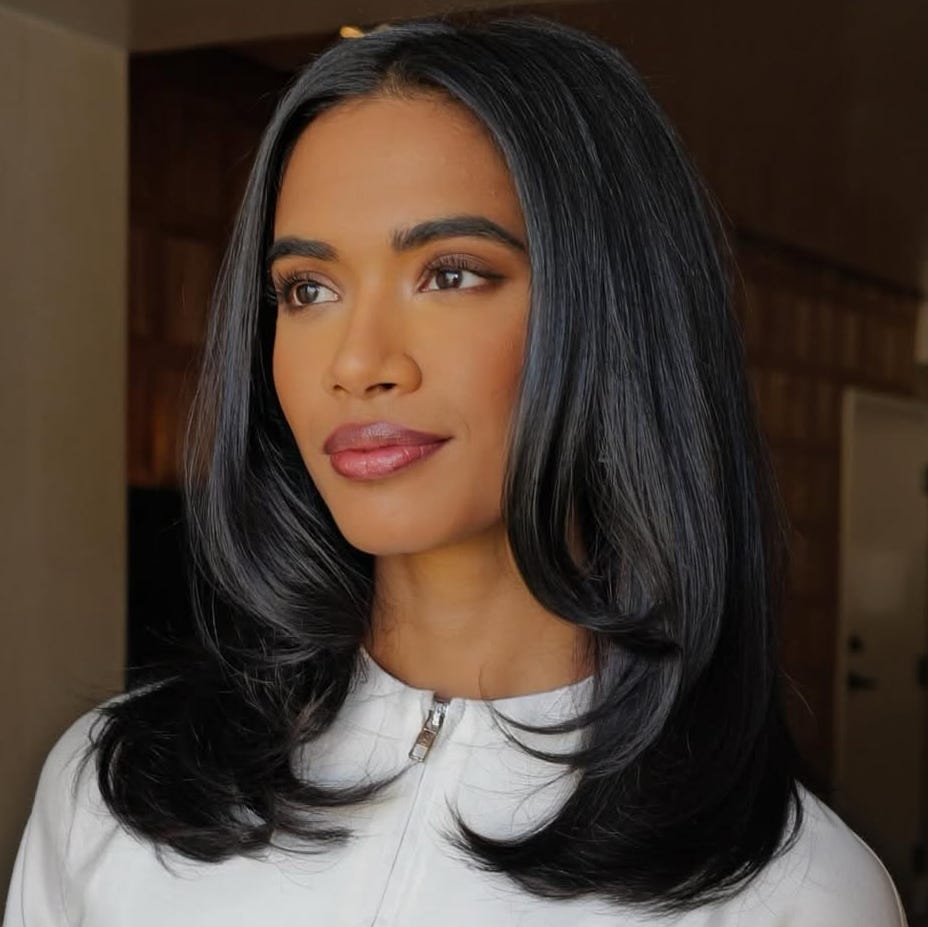
The general rule with face-framing layers is that shorter is not better. A shoulder-length cut with long layers and soft curtain bangs keeps the movement without sacrificing density, but let the scissors get too close to the chin and the whole thing looks choppy. Ask your stylist for: shoulder length with long layers and curtain bangs. The dark brown base with subtle highlights adds dimension to the straight, thick texture, and the middle parting lets the face-framing pieces fall where they should. The drawback: if your hair is fine, those long layers can thin out the ends faster than you expect, so plan a trim every eight weeks.
Shoulder Length Shag With Curtain Bangs

Is there a cut that actually works for fine hair without looking flat? The shoulder-length shag with curtain bangs is the closest you get. The ash blonde highlights break up the density, and the shag cut adds texture where straight, fine strands usually lack it. Ask your stylist for: shoulder length shag with face-framing layers and curtain bangs. The air-dried finish gives this style its relaxed look. No round brush required, just a light-hold texturizing spray and a middle parting. It lands especially well when humidity rises, because the lived-in texture looks deliberate and not defeated.
Collarbone Length Layers With Curtain Bangs
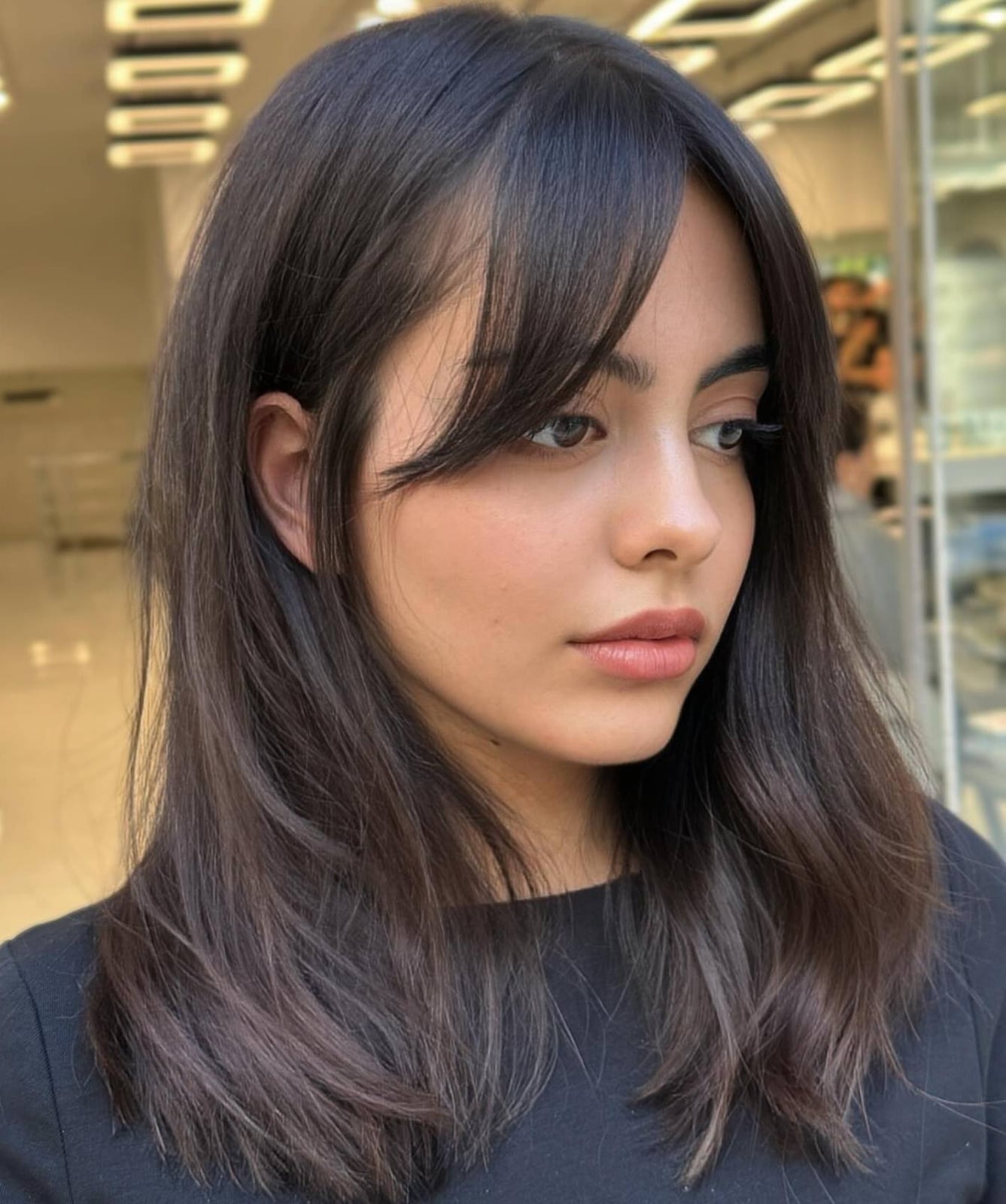
Curtain bangs are a geometry problem: the angle of the cut determines whether they sweep softly or fall flat. For a collarbone-length cut with soft face-framing layers, the fringe needs to be cut long enough to blend into the longer hair, not sit as a separate piece. Ask your stylist for: collarbone length with soft layers and curtain bangs. The dark brown base with subtle lighter pieces adds depth, and a side parting helps the layers fall forward. This is a salon-only request because the precision of the curtain bangs and the graduation of the layers are not something you replicate at home.
Shoulder Length Cut With Face-Framing Layers
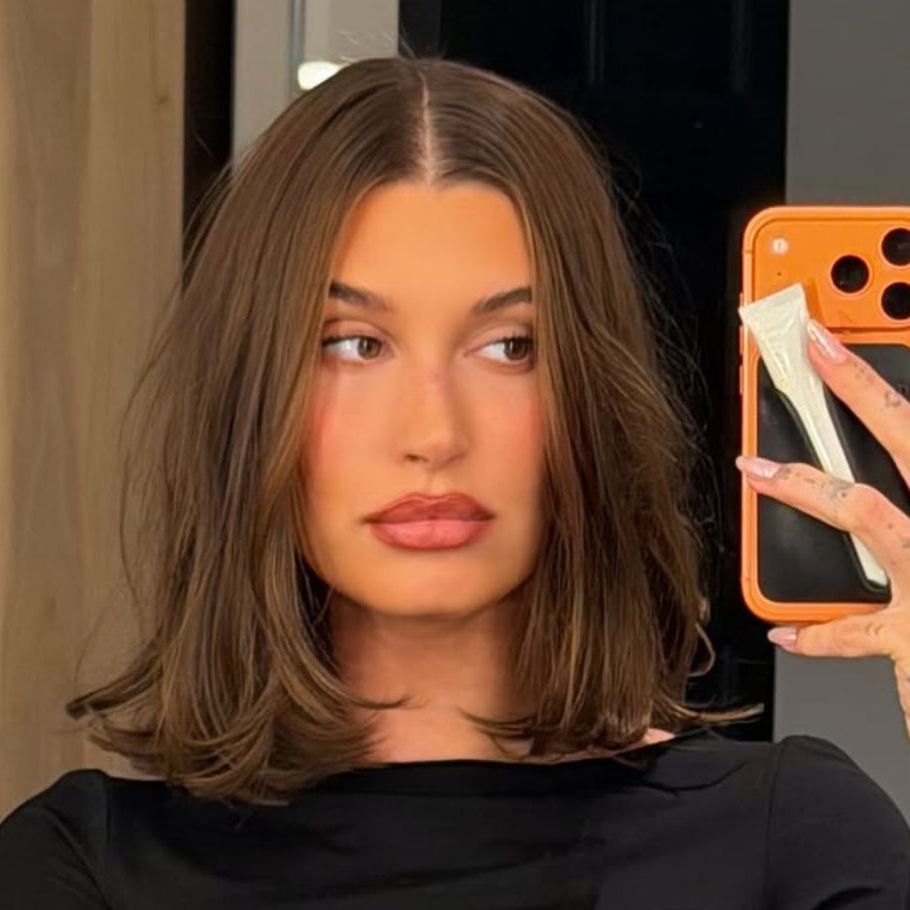
The thing about face-framing layers without bangs is that they need daily attention to hold their shape. The shoulder-length cut with soft layers and a side parting creates a smooth, polished line, but those front pieces will drift toward a flat, blended look if you skip the blow-dry. Ask your stylist for: shoulder length with soft face-framing layers. The light brown base with blonde highlights gives the medium texture some contrast, and a smoothing serum before the blowout keeps the ends from frizzing. The honest trade-off: the layers require a trim every six to eight weeks, and without it, they lose their definition.
Collarbone Length Blunt Cut With Side Part
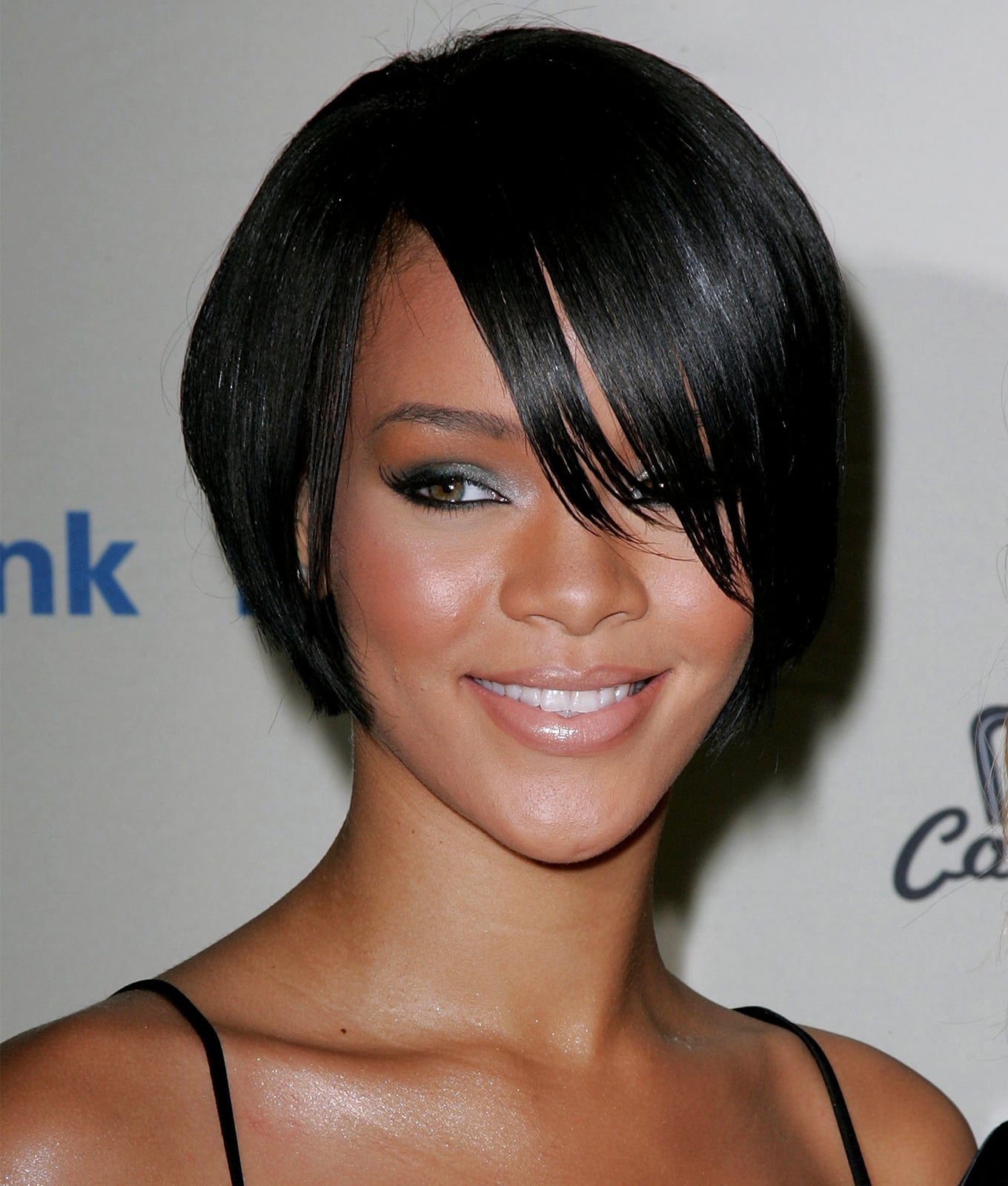
Where a layered cut softens, a blunt cut declares. The collarbone-length blunt cut with a side parting is the opposite of fussy, one clean line, one direction. Ask your stylist for: collarbone length blunt cut with a side part. The dark brown color and medium texture let the sharp ends speak for themselves, and the side view makes the silhouette obvious. This is a cut for medium to thick hair; fine hair may find the blunt edge too heavy at the bottom. Oval and longer face shapes get the most out of the strong horizontal line, while round faces might prefer softer corners.
Collarbone Bob With Ash Blonde Root Shadow
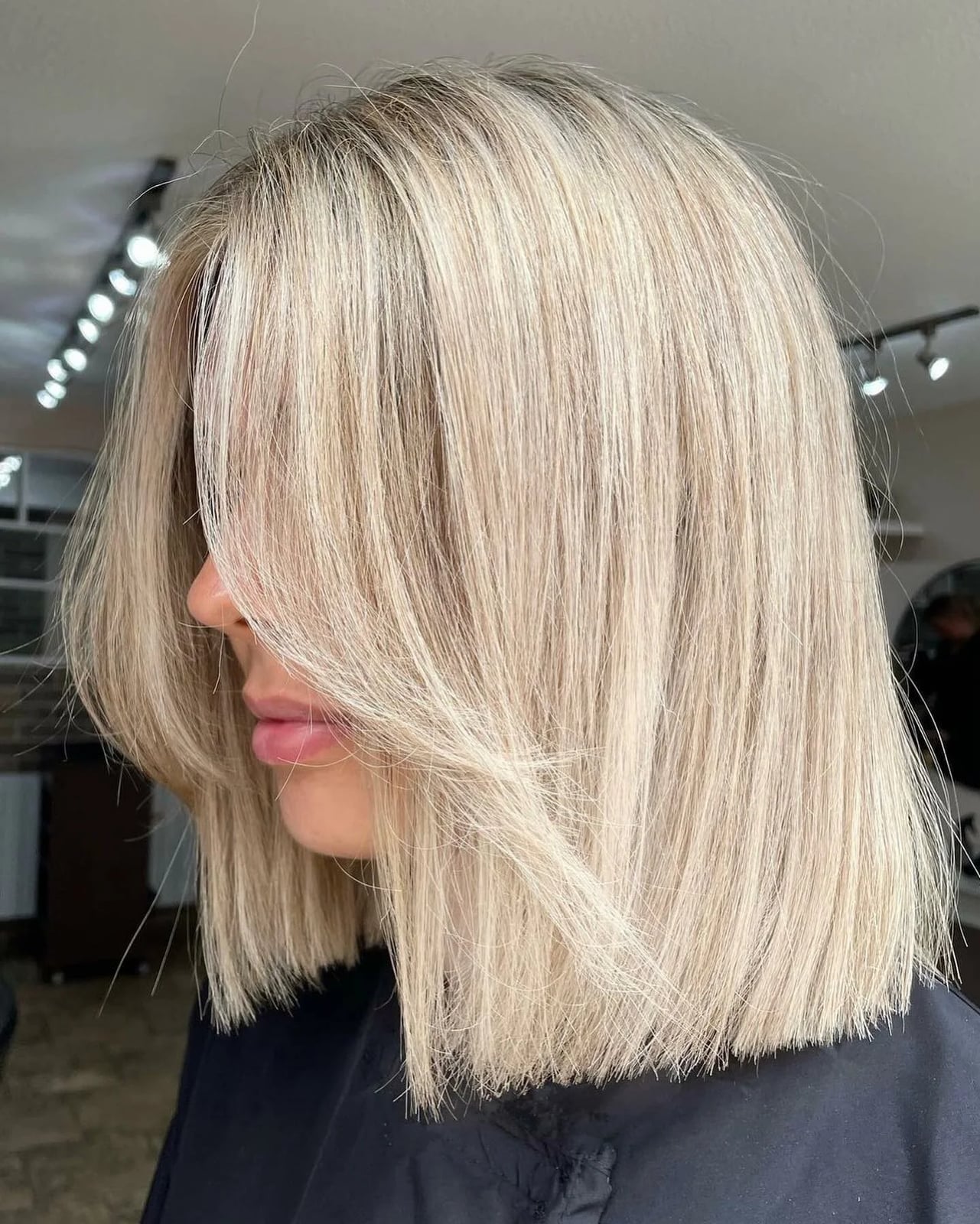
The ash blonde here leans cool, not brassy, which is exactly what the root shadow is designed to protect. That darker base at the parting creates depth so the lighter lengths don’t wash out fine, straight hair. It works well on a collarbone blunt bob with subtle internal layers and face-framing pieces, all split with a middle part.
Ask your colorist for: ash blonde root shadow with a collarbone blunt bob. A color-depositing conditioner in a cool blonde tone keeps the ash from pulling yellow between toning appointments. Expect about four to six weeks before the root shadow feels like a true grown-out line, which is the whole point.
Collarbone Lob With Honey Blonde Gloss
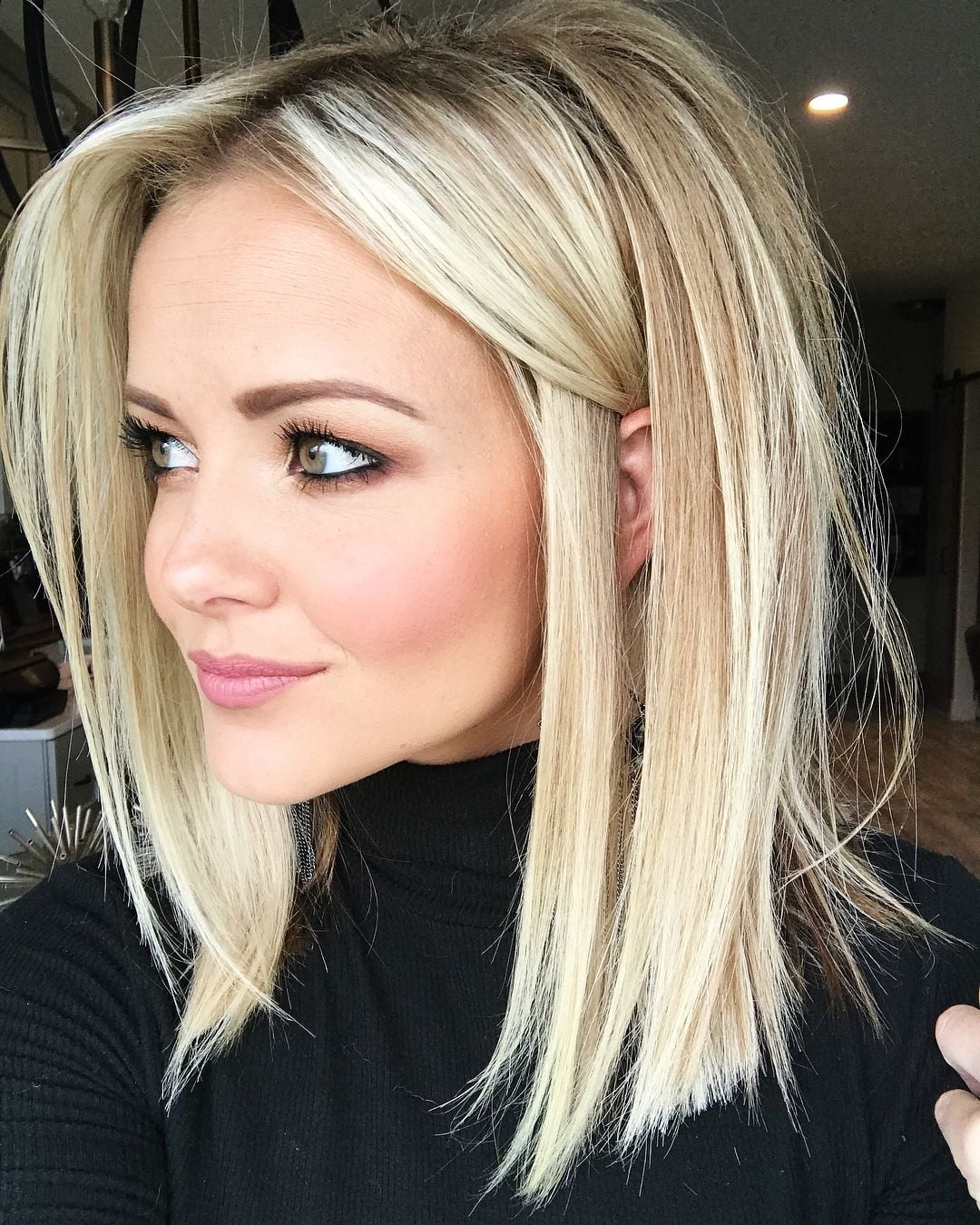
How does a collarbone lob stay looking like it just left the chair? That glossy finish is the payoff of a honey blonde shade that gets a clear gloss every few weeks. The side-part and voluminous blowout add lift at the crown, while the medium texture holds the shape without frizzing. A shine serum on the ends after styling is the main upkeep, plus a toning gloss appointment every six to eight weeks to keep the honey from turning dull.
Shoulder Length Thick Hair With Subtle Layers

A heavily layered cut on thick hair can create too much volume at the wrong spots. This shoulder length option uses minimal, subtle layers throughout, which removes enough weight to let the natural texture move without fluffing out. The middle part and dark brown color keep it grounded. It is the difference between a shape that sits neatly and one that fights itself. For thick straight hair, that restraint is the whole trick.
Mid-Back Length With Long Layers
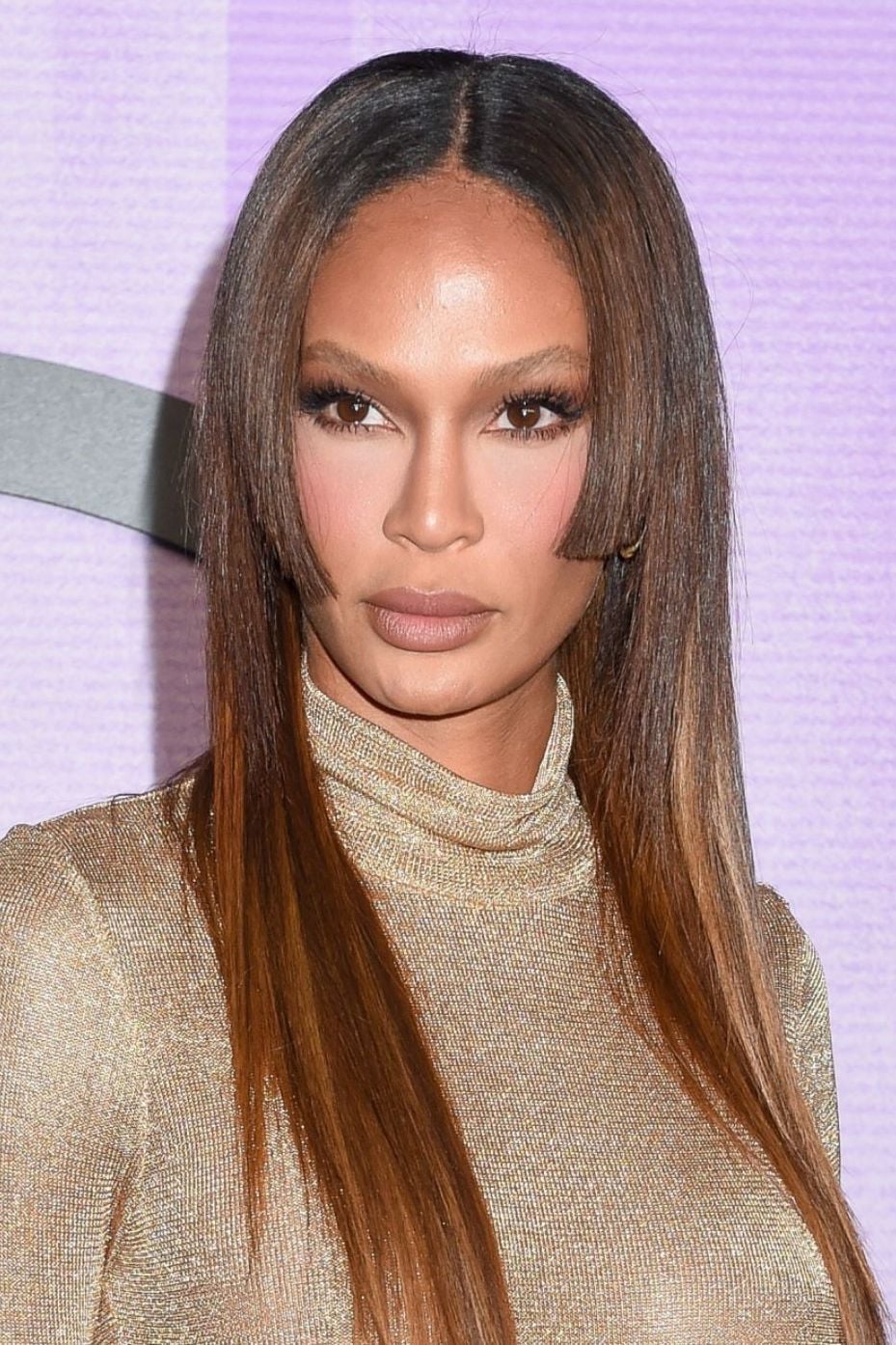
The key to long layers at mid-back length is where they start. Ask your stylist for long layers that begin below the shoulder, not at the ear, so the hair keeps its weight through the top and releases movement only toward the ends. The side part and smooth blowout on medium thick straight hair let the subtle lighter highlights show without obvious chunkiness. A smoothing cream applied before drying helps the ends lie flat and not flip out. The result is length with shape, not a triangle.
Mid-Back Half-Up Ponytail With Twist Detail
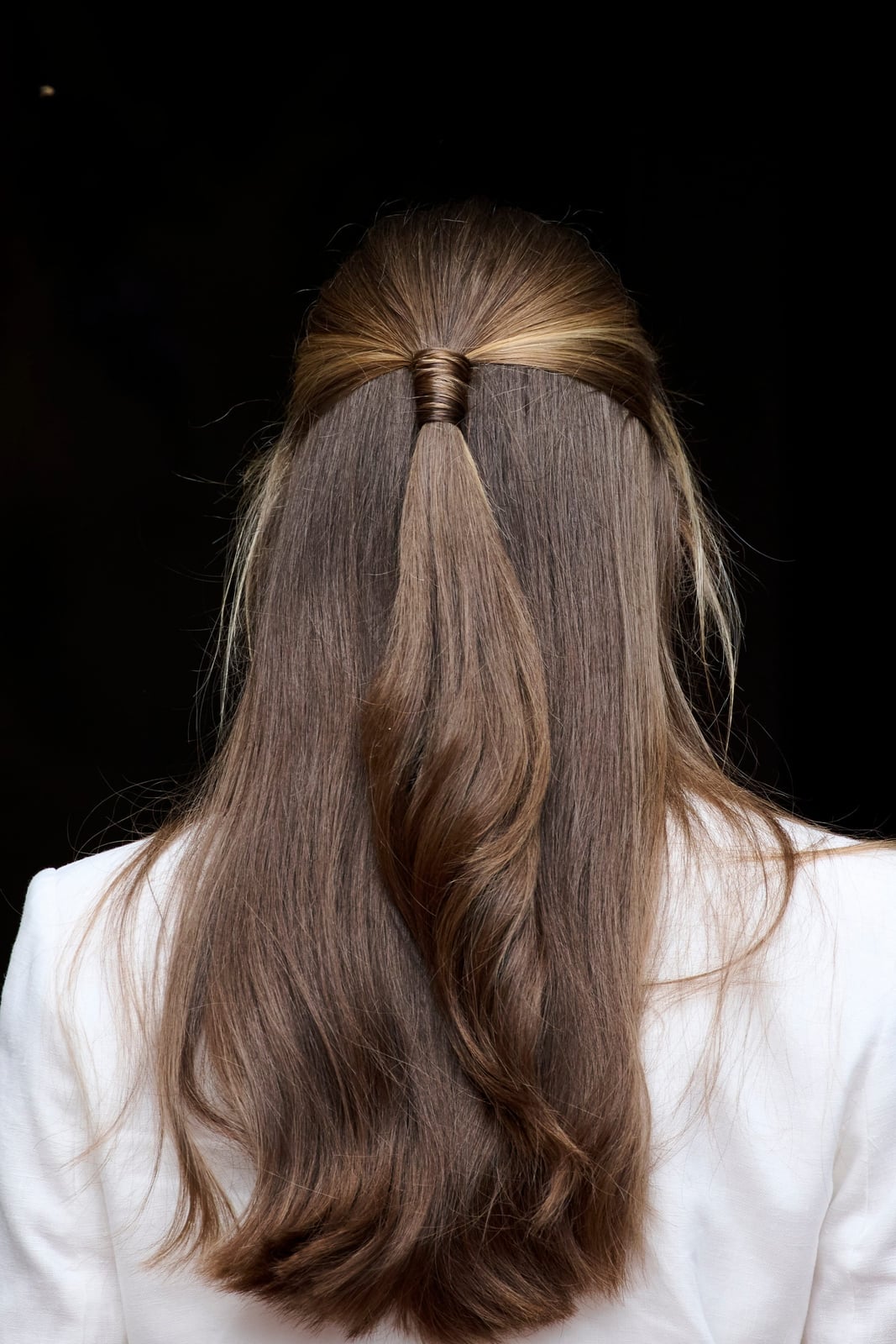
What does a half-up style do that a full ponytail cannot? It leaves the bottom half down so thick straight hair still shows its length and subtle highlights. The top section here is twisted and secured into a small ponytail at the back, which is a practical way to keep hair off the face without a full pull-back. It works for casual days or a semi-formal event where you want the hair present but not the main effort. A fine-tooth comb to smooth the crown before twisting gives the polished finish.
Collarbone Length With Blunt Bangs and Layers, Light Pinkish Blonde
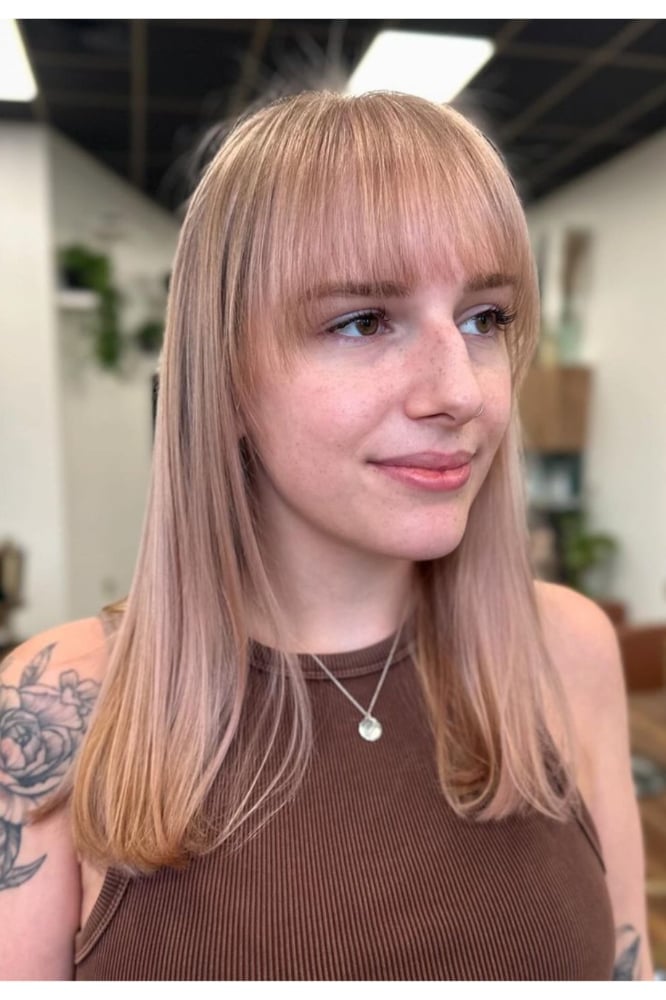
The rule with blunt bangs on fine straight hair is to keep them light, because a heavy fringe can end up looking sparse instead of graphic. This collarbone length cut keeps the bangs blunt but not dense, with subtle layers through the hair to carry the eye down. The middle parting and smooth blowout add a polished finish. Ask your stylist for: collarbone length with blunt bangs and subtle layers. Fine hair shows every split end faster, so a trim every six to eight weeks keeps the blunt line honest.
Mid-Back Blunt Cut In Platinum Blonde
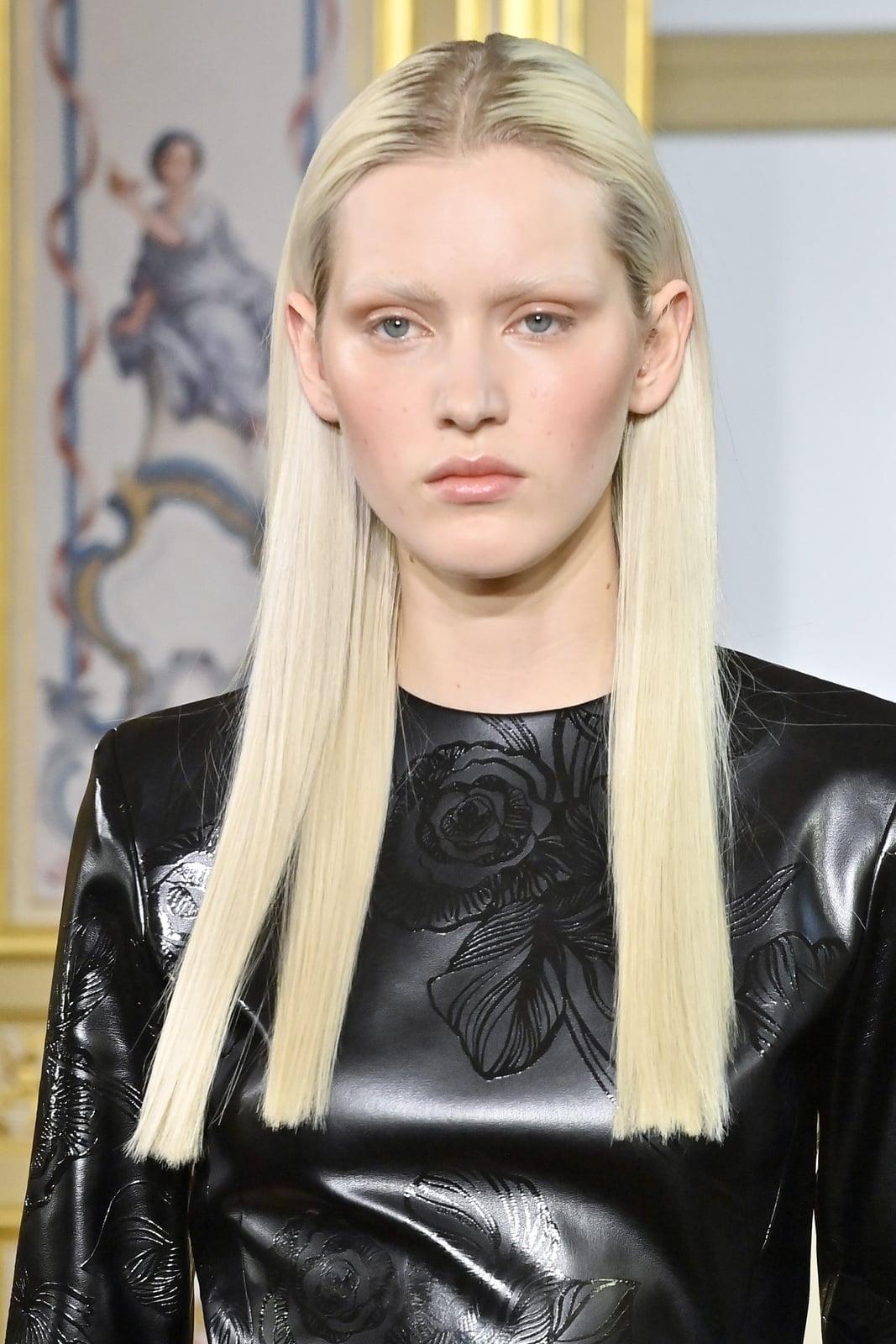
A blunt cut at mid-back length does something clever with fine straight hair: it makes the ends look dense and the whole silhouette feel heavier, even when the strands are fine. The platinum blonde color is the real commitment here, because it needs a toning appointment every four to six weeks to stop it drifting brassy, and the light shade makes any new growth obvious at the roots. Ask your colorist for: mid-back length blunt cut, platinum blonde. Sleek styling with a middle parting shows off the clean line, and a silk pillowcase overnight helps keep fine straight hair from creasing.
This is a high-maintenance look, so skip it if you want low-maintenance color. The result is a sharp, graphic shape that holds its own without layers or bangs to soften it.
Chin Length Blunt Bob With Side Part

This chin length blunt bob sits one step sharper than a lob, and the side part gives it a different attitude than a middle-parted bob. The blunt cut ends add structure to fine straight hair, making it look thicker than it is, while the subtle ombre toward the ends adds depth without breaking the clean line. Ask your stylist for: chin length blunt bob with a side part. It suits most face shapes, though round faces might prefer a bit more length to elongate the silhouette. Tuck one side behind the ear to show off the sharp jawline of the cut.
Chin Length Bob With Blunt Bangs

Built on a chin length bob with a middle parting, this cut pairs a clean, straight line with blunt bangs that sit just above the brow. The black base color makes the graphic shape pop, and the air-dried texture keeps it from feeling too done. Ask your stylist for: chin length bob with blunt bangs. The bangs are the focal point, so they need a trim every three to four weeks to hold their precise line. Fine straight hair takes to this shape well because the blunt edges give it weight and definition.
Chin Length Blunt Bob With Silver Gray Color
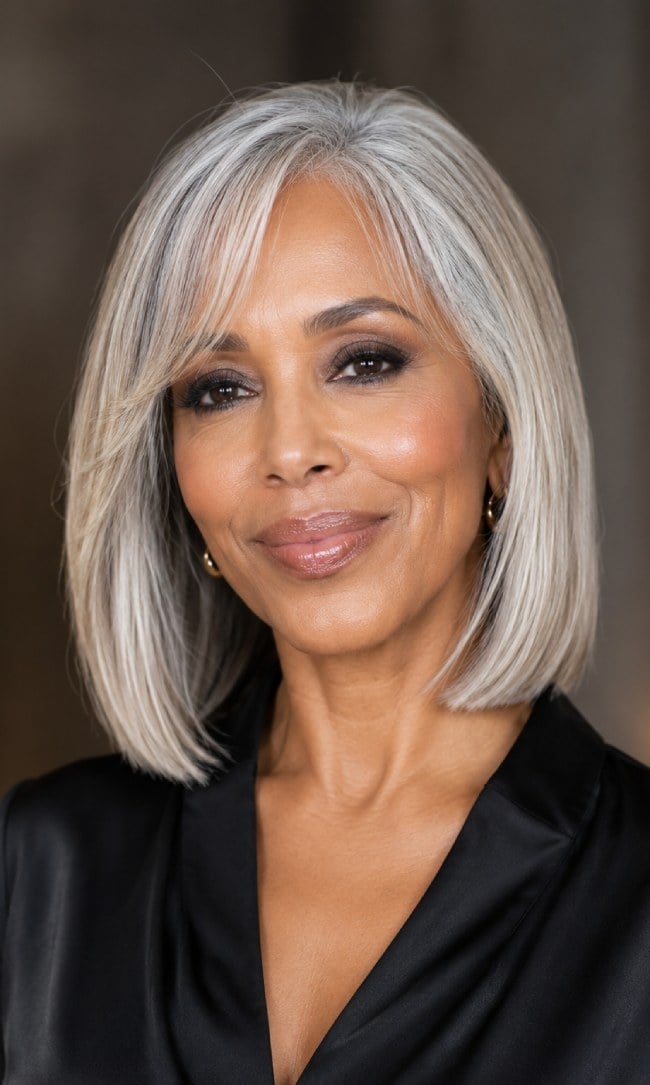
Can you get this silver-gray at home? Technically yes, but the honest answer is that it takes time and patience, because silver-gray requires lifting the hair to a very pale base before depositing the color. This chin length blunt bob with side-swept bangs is a salon-level statement, since the color needs an even canvas and the cut needs a steady hand. Ask your colorist for: chin length blunt bob with side-swept bangs in silver gray. The upkeep is the real cost: a toning appointment every three to four weeks keeps the silver from turning muddy, and a color-safe shampoo and conditioner at home will stretch that window.
Ear Length Bob With Blunt Bangs, Light Blonde
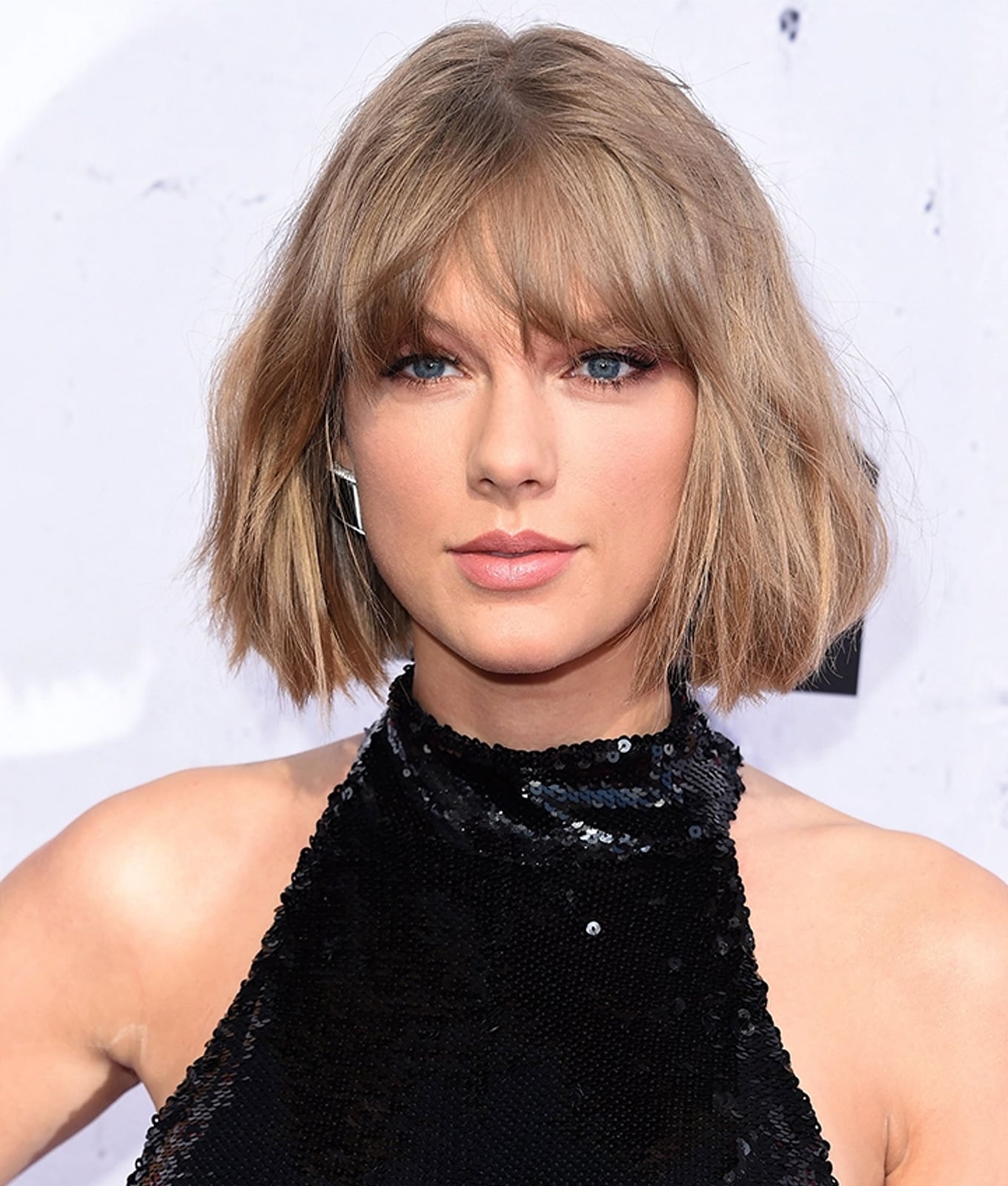
A bob this short does not hide behind volume, so the blunt bangs carry the whole graphic weight of the shape. Fine straight hair at ear length is the ideal starting point, any wave would fight the sharp line. Ask your stylist for: ear length bob with blunt bangs. Those bangs need a trim every three weeks to keep the edge crisp, or they will look unkempt.
Ear Length Pixie Cut In Silver Gray
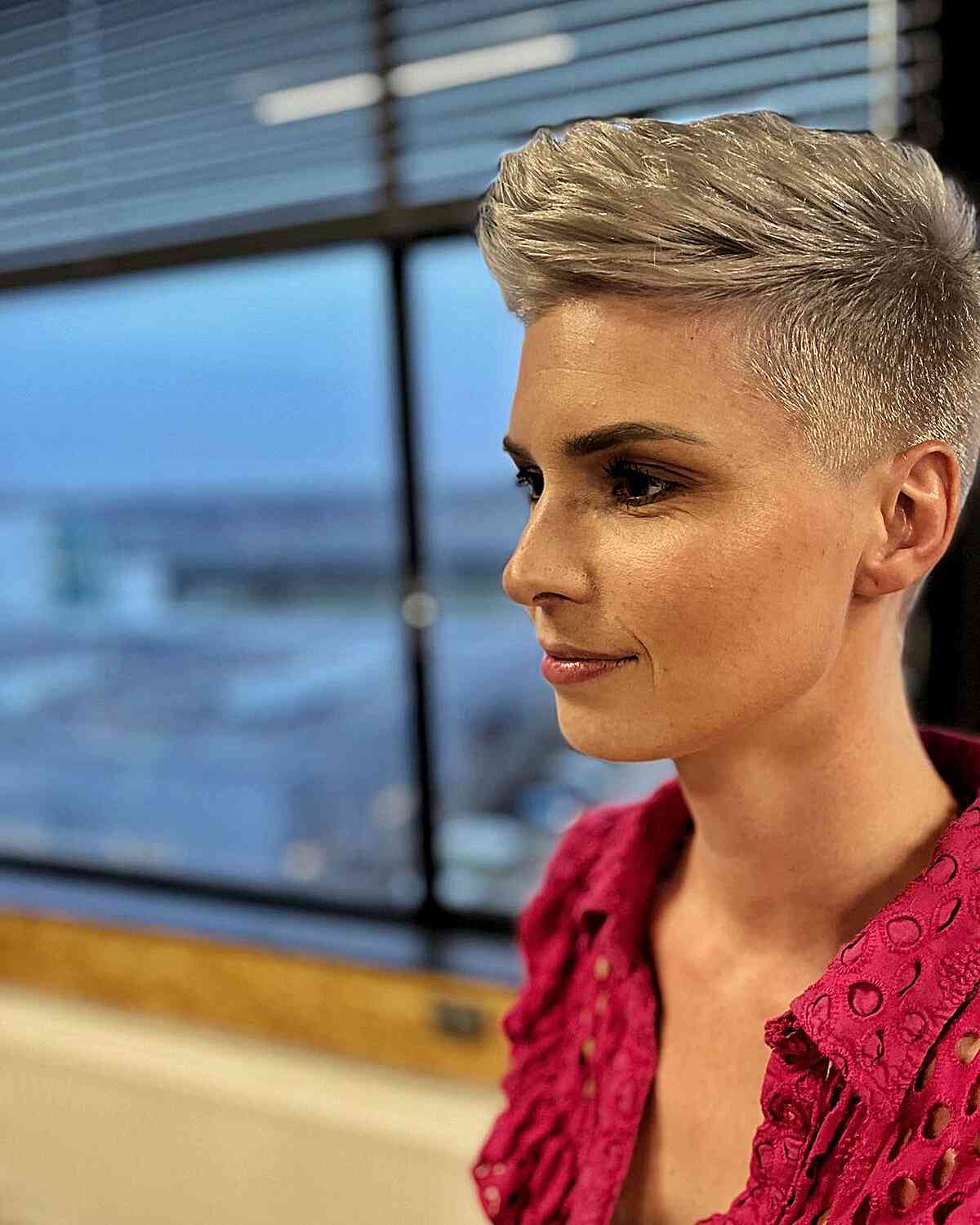
A pixie cut this short relies on texture to keep it from looking like a helmet, so the silver-gray shade and short bangs need daily styling to look polished. Fine straight hair at ear length works well here, but only if you are willing to spend five minutes with a matte paste or wax to define the top. Ask your stylist for: ear length textured pixie cut with short bangs. Expect a trim every four weeks to maintain the shape.
Final Thoughts
For fine straight hair, keep a blunt baseline and skip heavy layers to preserve density. For thicker straight hair, longer internal layers remove bulk while keeping the shape smooth. Either way, straight cuts reward precision and regular upkeep.
- Schedule trims every 6-10 weeks depending on the cut’s sharpness.
- Use a heat protectant spray before any heat styling.
- Deep condition weekly to maintain shine and smoothness.
- Consider a color-safe shampoo and conditioner for highlighted styles.
Embrace the clean lines and polished finish of straight hair.
