

Layers are having a proper moment, and the current crop is all about movement, texture, and shape rather than heavy, one-length cuts. The shift is toward long shag layers, face-framing pieces, and choppy ends that give hair a lived-in, modern feel.
This collection of 26 Trendy Layers Hairstyles covers the full spectrum: from low-maintenance, collarbone-length waves to high-impact, mid-back shags. Whether your hair is fine and needs a volume boost or thick and wants weight removed, there’s a layered cut here that works. It solves the classic struggle of fine hair that falls flat by midday and the grow-out line that announces itself at week six.
Long Shag With Choppy Layers and Curtain Bangs

The long shag with choppy layers and curtain bangs is designed for thick, wavy hair. The choppy layers cut through the bulk, so your hair moves instead of sitting there like a curtain. Start at collarbone length or longer, and ask your stylist for a long shag with choppy layers and curtain bangs. The middle part and the face-framing pieces soften a round or square jaw. A texturizing spray on dry hair will keep the choppy ends from blending into one solid shape. Plan on a trim every six to eight weeks to keep the layers from growing out into a shapeless mass.
Mid-Back Length Defined Curls With Caramel Highlights

The layers in this mid-back length cut are what give each curl somewhere to land. Without them, thick curly hair tends to form one triangular blob. Here, the layers start around the chin and continue down, so the volume distributes evenly and the shape stays round instead of bottom-heavy. Ask your colorist for caramel highlights on a dark brown base, placed through the mid-lengths and ends so the curls have dimension. The defined, air-dried curls mean you can skip the heat. Work a curl-defining cream through damp hair, then let it dry naturally. To refresh on day two, spritz with water and scrunch, or use low heat to bring the curl pattern back. A trim every eight to ten weeks keeps the ends from splitting and the layers from losing their rhythm.
Collarbone Layers With Soft Waves and Dark Brown Color

You want volume but you don’t want to lose your thickness. The trick is to ask for layers that start around the cheekbones and graduate down to the collarbone, so the interior weight stays put while the outer pieces move. With a middle part and curtain bangs, this collarbone length cut elongates a round face and gives a square jaw some softness. Ask your stylist for collarbone layers with curtain bangs and soft waves. The dark brown color is a single process, so there is no toner to maintain. To get the waves at home, use a large barrel curling iron, wrap sections away from your face, and brush them out once they cool. The style holds for a full workday, and a trim every six to eight weeks keeps the ends from looking stringy.
Mid-Back Butterfly Cut With Balayage
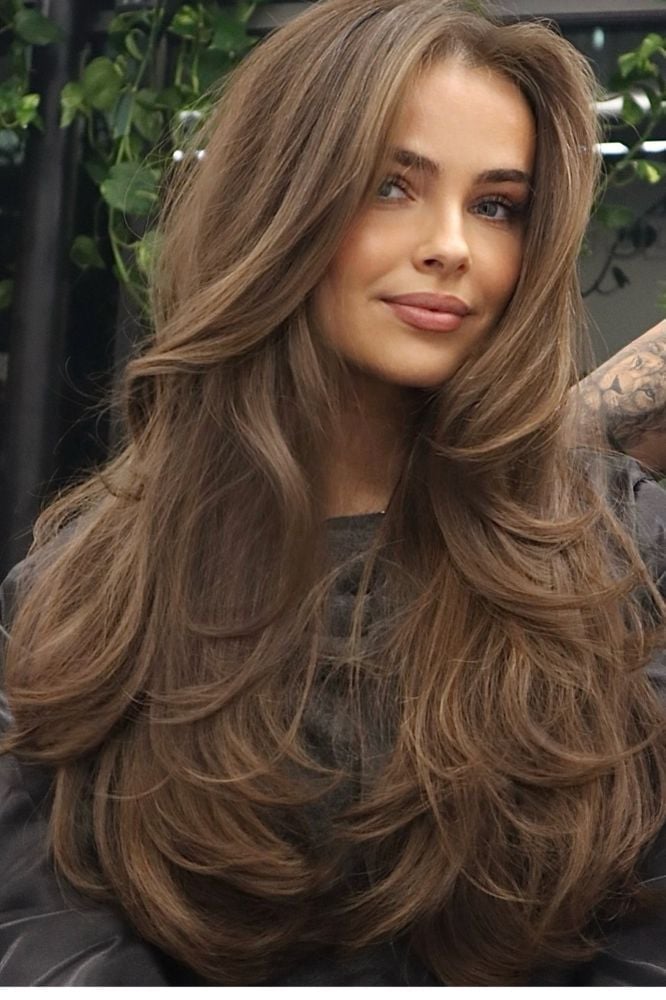
The butterfly cut is what happens when you take a long layered cut and turn the face-framing up to eleven. Unlike a classic long layer that sits evenly around the head, the butterfly cut concentrates the shortest layers at the front, so they swing forward and create a built-in frame. The rest of the length stays mid-back, which makes it a good option if you want drama without committing to a big chop. Ask your colorist for a mid-back butterfly cut with face-framing layers and balayage. The balayage on a medium brown base adds dimension through the lengths, so the layers read even when your hair is flat. This is a special occasion cut that also works for everyday, because the layers give volume at the crown. Blow-dry with a round brush, lifting at the roots, and you are done. Balayage touch-ups land every three to four months, depending on how fast your hair grows.
Mid-Back Shag With Face-Framing Layers
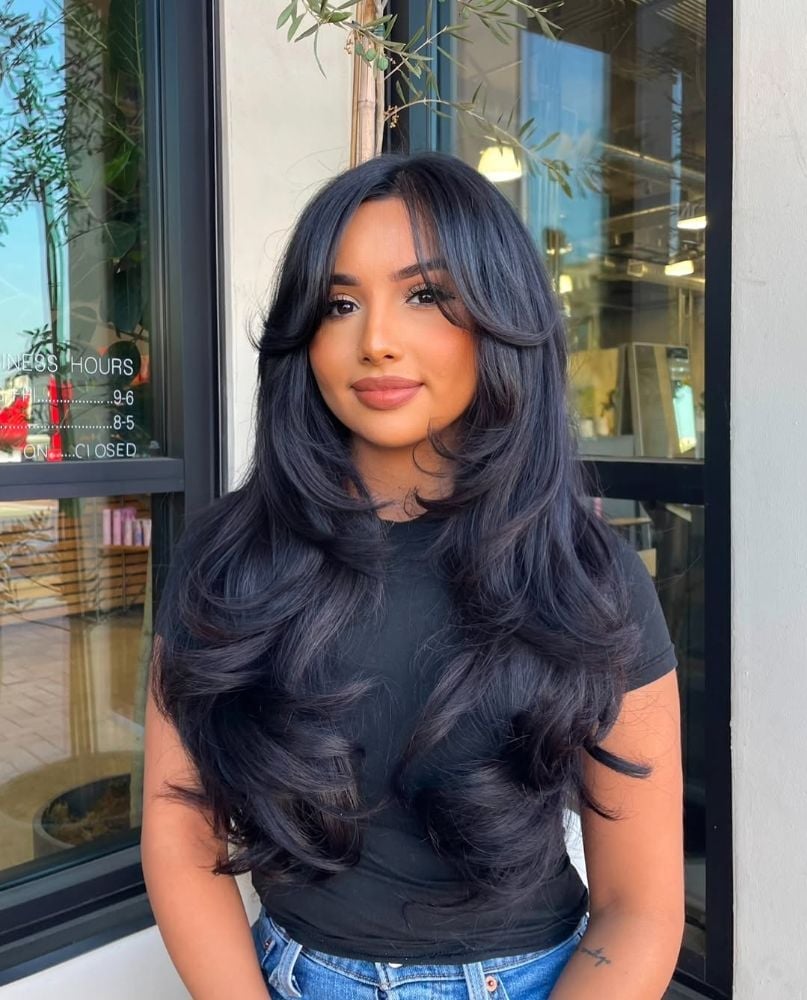
The face-framing layers in this mid-back shag are the whole point, but they are also the part that needs the most attention. They start around the cheekbones and blend into the cut, so they soften angular features and give the hair a lived-in shape. Ask your stylist for a mid-back shag with face-framing layers and curtain bangs. The dark brown color is low maintenance, but the cut is not. You will need to style it every day to keep the layers from falling flat, especially if your hair is thick and wavy. A texturizing paste worked through the ends will emphasize the shag effect and help the pieces hold their shape. The curtain bangs need a trim every four to six weeks, and the layers every six to eight, to keep the face-framing from becoming a shapeless curtain.
Shoulder-Length Shag With Choppy Layers

This shoulder-length shag is built on choppy layers that end right around the collarbone, with curtain bangs and a middle parting doing the framing work. The choppy texture is what makes it work for medium density hair: it adds movement without stripping weight, so fine-to-medium strands get volume instead of stringiness. The dark brown base with subtle highlights gives the layers enough contrast to read clearly. Ask your stylist for a shoulder-length shag with choppy layers and curtain bangs. Style it with a blowout and soft waves, and plan on a trim every six to eight weeks to keep the choppy ends from turning into one vague blob.
Mid-Back Layers With Honey Blonde Highlights

How do you get a voluminous blowout that actually shows off face-framing layers? Start with the right foundation: thick, wavy hair at mid-back length, cut with long layers and curtain bangs. The honey blonde base with lighter highlights does the rest, giving each layer its own line so the shape reads even when the hair is moving. Ask your colorist for mid-back layers with curtain bangs and honey blonde highlights. For the blowout, apply a volumizing mousse at the roots before drying and use a round brush to lift each section. Tone the highlights every six to eight weeks to keep the honey from drifting brassy.
Mid-Back Butterfly Cut With Warm Brown Balayage and Curtain Bangs

The butterfly cut earns its name from the way the top layers are cut shorter and rounder, so they fan out around the face while the rest falls to mid-back. Here the warm brown base and blonde balayage make those inner layers visible, and the curtain bangs blend into the front section instead of stopping abruptly. Ask your stylist for a mid-back butterfly cut with curtain bangs and warm brown balayage, and be specific about wanting the layers soft rather than sharp. It suits thick, wavy hair best, since the rounded shape needs bulk to hold. For special events, a full blowout with the ends curled under gives the most polished version. Balayage touch-ups land around every three to four months.
Mid-Back Layers With Dark Brown and Blonde Balayage

Compared with a shag that keeps its bangs, this version skips the fringe entirely and lets the face-framing layers carry the whole effect. The dark brown base with blonde balayage adds dimension through contrast, which gives finer hair the illusion of more body. It suits thick, wavy mid-back lengths that can handle the shag-like texture without turning frizzy. Ask your colorist for mid-back layers with dark brown and blonde balayage. The mid-lengths benefit from a texturizing spray to enhance the shag effect, and since balayage grows out softer than foils, you can stretch maintenance to every three to four months.
Mid-Back Shag With Side Part and Volume
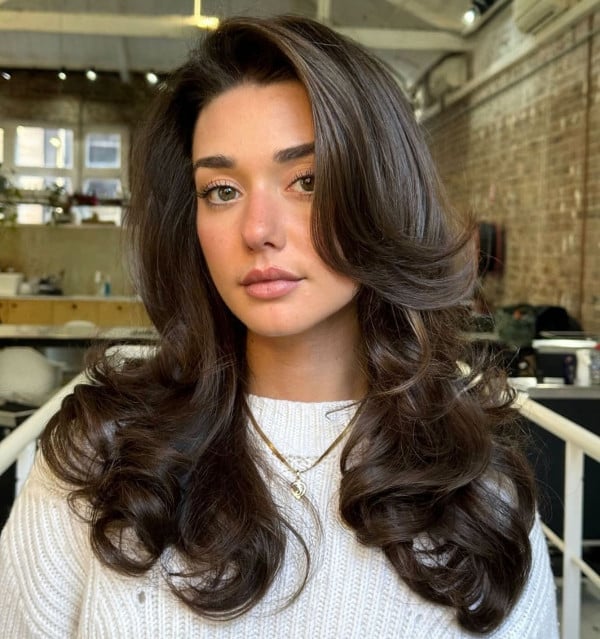
Does a side part change how shag layers behave? Yes, and mostly in your favor. Pushing long shag layers to one side lifts the crown, which adds volume where a middle part tends to flatten it. The dark brown base with subtle lighter pieces keeps the face-framing layers from blending into one another. Ask your stylist for a mid-back shag with face-framing layers and side part. For hold, apply a volumizing mousse to the roots and direct the front pieces to the side while blow drying. Large curls set with a barrel iron give the voluminous finish, and a trim every six to eight weeks keeps the layers from losing their shape.
Mid-Back Layers With Dark Brown and Blonde Highlights, Close-Up Take

The design here uses a dark brown base with blonde highlights that trace through the long face-framing layers rather than sitting on top. That placement gives the smooth blowout its depth. The middle parting lets each highlighted piece fall forward, so the dimension reads clearly even when the hair is not moving.
This is a salon-dependent style. Recreating those long face-framing layers at home tends to go sideways, since the exact angle and weight distribution matter more than the length itself. Ask your stylist for: mid-back layers with dark brown and blonde highlights. The highlights will need refreshing every two to three months, and a flat iron is your best tool for keeping the wavy, thick texture smooth and the blonde pieces visible. It is not a grow-out you can ignore, but the cut looks deliberately shaped.
Collarbone Long Layers With Curtain Bangs
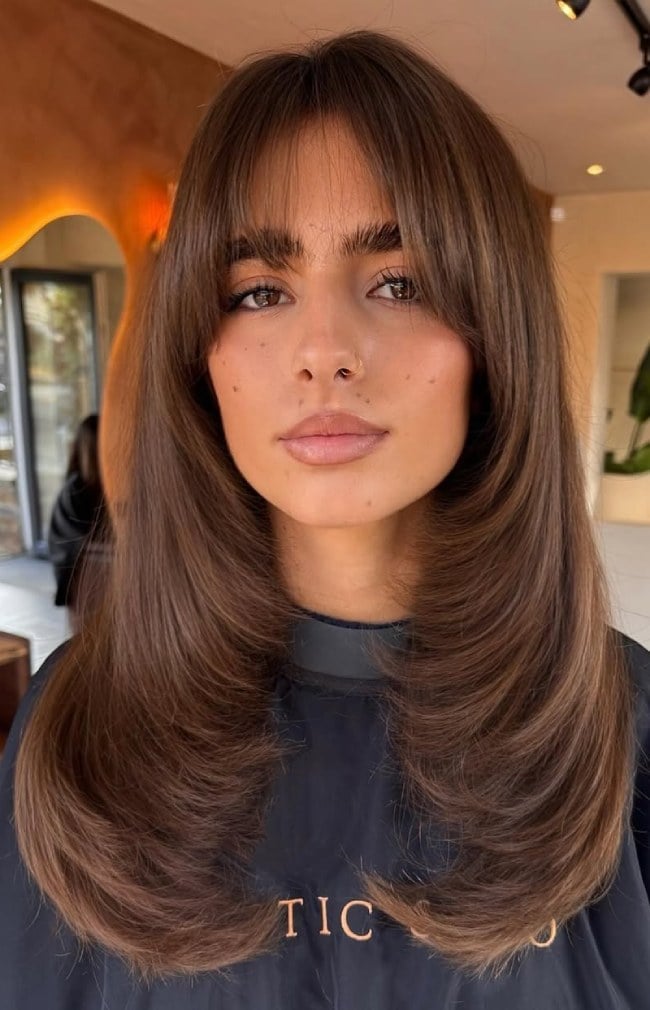
Thick, straight hair often sits like a curtain, so the collarbone long layers here are doing the work of adding shape and movement to what would otherwise be a heavy block. The curtain bangs break up the forehead line and pull the eye outward, which suits round and oval faces well. Ask your stylist for: collarbone long layers with curtain bangs. A smoothing serum and a round brush during blow-drying will keep the straight texture sleek and the bangs sweeping to the sides. Plan on a trim every six to eight weeks, since the collarbone length will start to lose its line once the ends split.
Mid-Back Layers For Thick Straight Hair
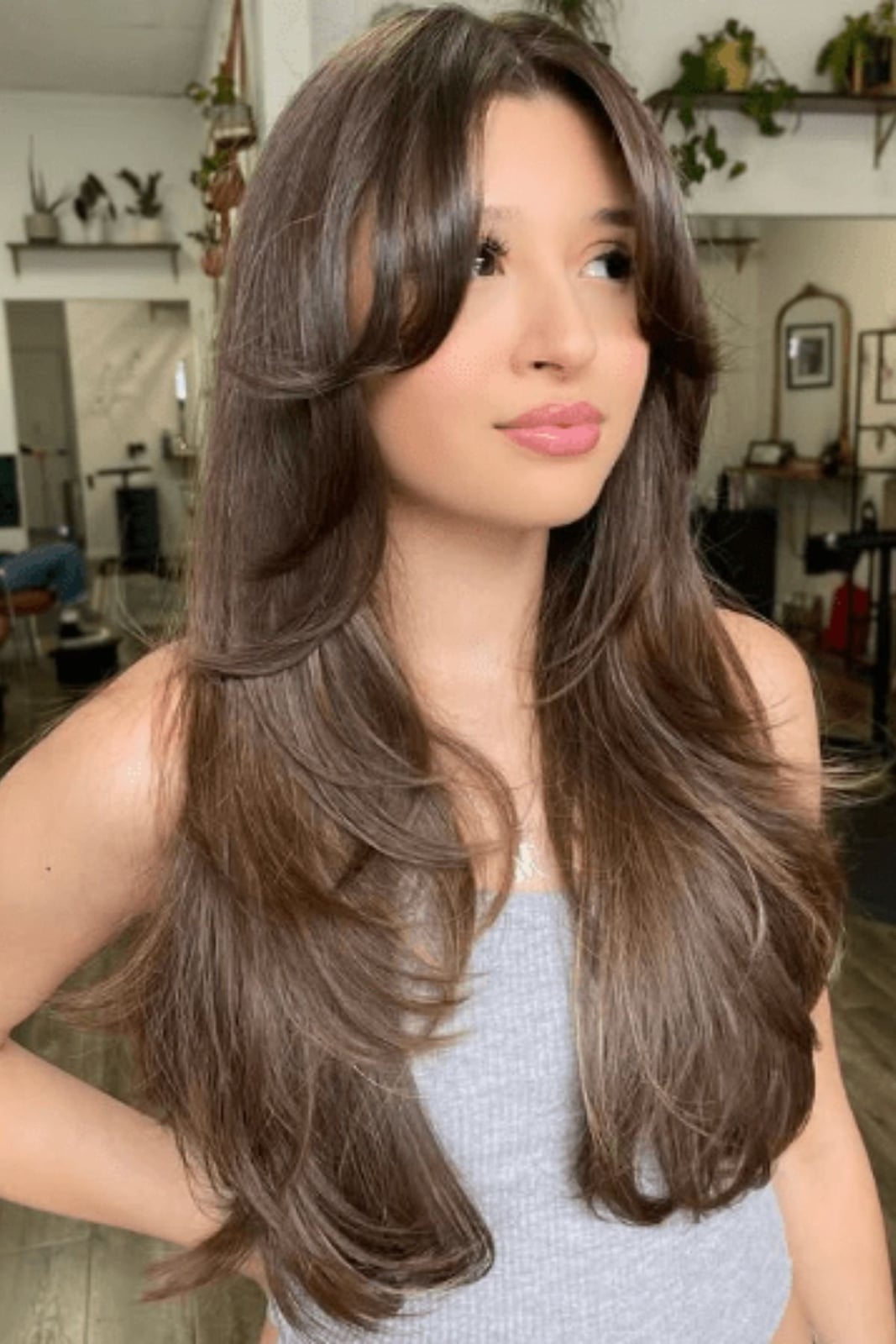
What actually gives thick, straight hair volume at mid-back length? The layers are cut to remove weight, not to add texture, so the hair moves instead of hanging flat. The technique is in the blowout: lift the roots with a round brush while drying, directing each section away from the scalp. A lightweight texturizing spray will hold the shape without weighing it down. Ask your stylist for: mid-back layers to add volume to thick straight hair. You will want a trim every eight to ten weeks to keep the ends from looking ragged. The hold is decent for a day, but expect to refresh the blowout to maintain volume into a second day.
Mid-Back Layers With Sculpted Face-Framing, Dark Brown
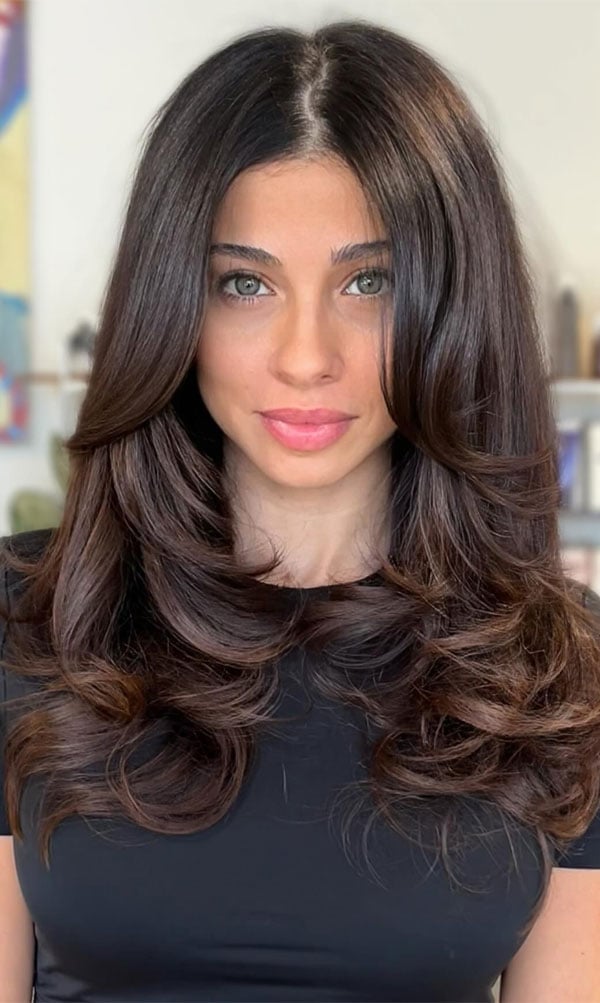
The sculpted face-framing layers here are cut to angle toward the jaw, which softens square and round face shapes by adding a diagonal line. The mid-back length keeps the overall weight low, but the layers around the face are what give the blowout its volume. When you ask for this, be specific about the angle and where the shortest piece should hit. Ask your stylist for: mid-back layers with sculpted face-framing. A large round brush during blow-drying will shape those pieces inward, and the wavy, thick texture holds the curve well. It is a cut that looks polished for an evening out, but the volume does settle over the course of a long day, so plan to touch up the front pieces if you need the shape to last.
Collarbone Layers With Wispy Bangs and Waves

Compared with fuller bangs, wispy bangs are the lower-maintenance sibling: they soften the face without demanding daily styling. On collarbone-length layers with medium density, wavy texture, the loose waves add movement without overwhelming the cut. The face-framing layers blend into the wispy bangs, so the whole style reads as one continuous shape. Ask your stylist for: collarbone layers with wispy bangs and face-framing layers. A wave-enhancing spray and a gentle scrunch will set the texture, and you will be trimming those bangs every three to four weeks to keep them from growing into your eyes. It is a casual, everyday style that holds its shape through the day, though bangs will need a quick re-scrunch if you want them to keep their lift.
Mid-Back Shag With Soft Face-Framing Layers and Curtain Bangs
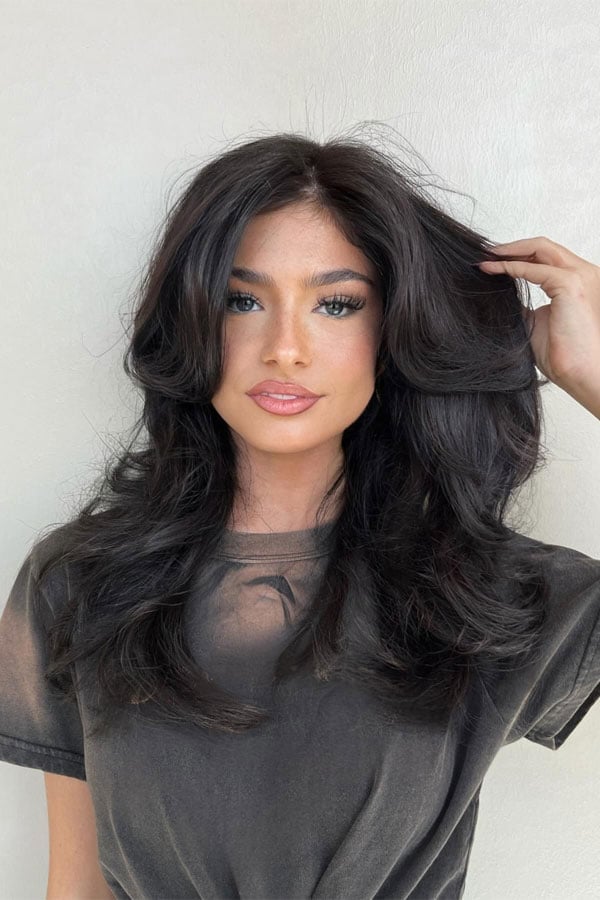
A voluminous blowout is the backbone of this mid-back shag, and the soft, blended face-framing layers are what keep it from looking like a simple long cut. The curtain bangs soften the middle part, while the thick, wavy texture holds the shape. Ask your stylist for: mid-back shag with soft face-framing layers and curtain bangs. This cut suits thick, wavy hair best, as the layers need weight to blend smoothly.
Maintaining the volume means a round brush and a smoothing serum are your daily tools, since air-drying will leave the layers falling flat. The blowout takes about fifteen minutes, and the payoff is movement that lasts through the day. A trim every six to eight weeks keeps the face-framing pieces from losing their shape.
Mid-Back Wavy Layers in Natural Gray
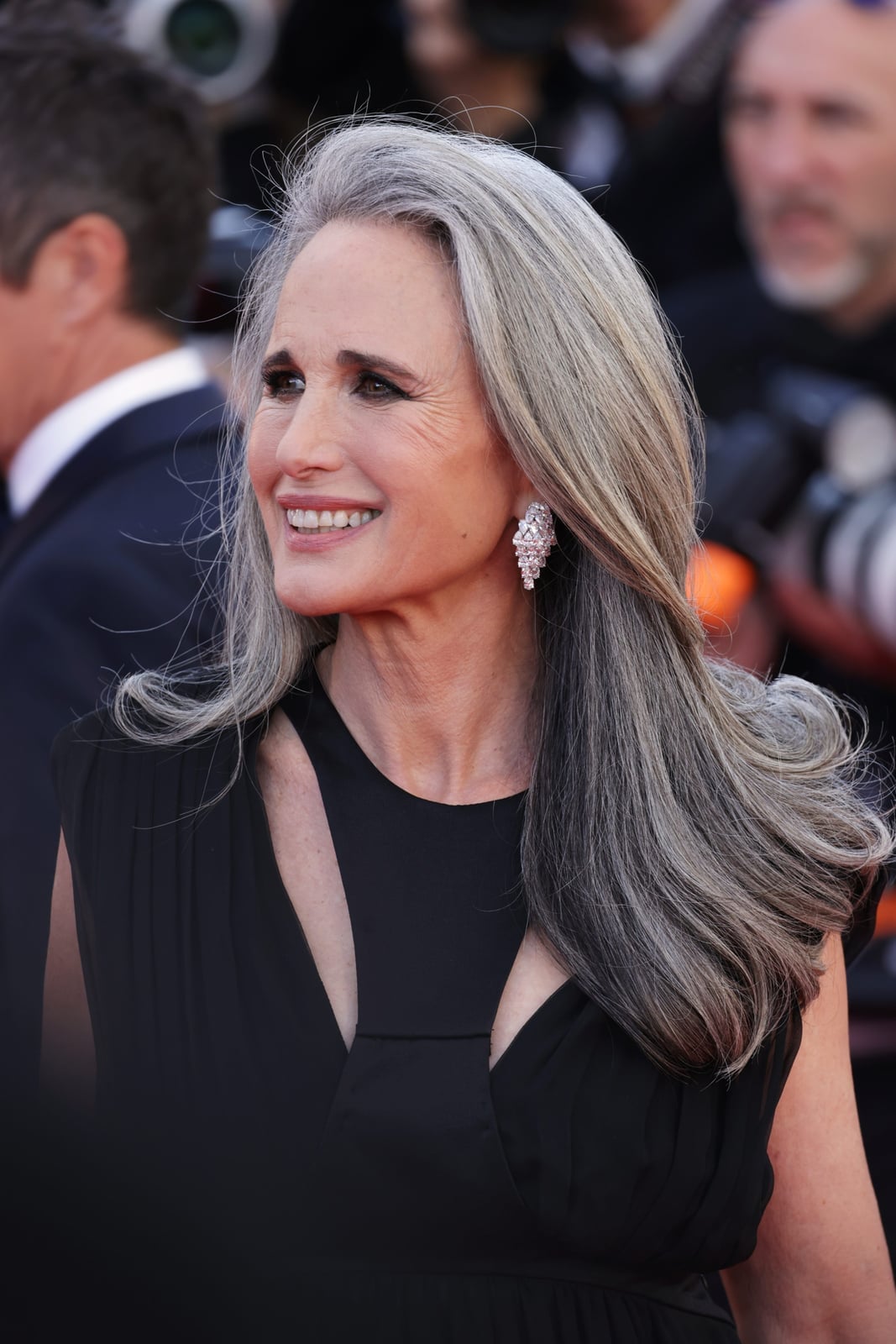
Fine, wavy hair in natural gray can read as flat without the right cut, but soft layers at mid-back add body without sacrificing length. The side part gives a lift at the root, and the smooth blowout keeps the waves defined and frizz-free. Ask your stylist for: mid-back layers with a side part in natural gray. This is a salon cut, since the layering needs precision to add volume where fine texture lacks it.
Volume doesn’t come free: a round brush and some heat are necessary to get the blowout to hold, and even then, the lift may soften by evening. Sea salt spray can help, but it won’t replace the blowout. A trim every eight to ten weeks maintains the shape, and skipping it means the layers grow out into a shapeless curtain.
Mid-Back Layers With Brown and Blonde Highlights and Curtain Bangs
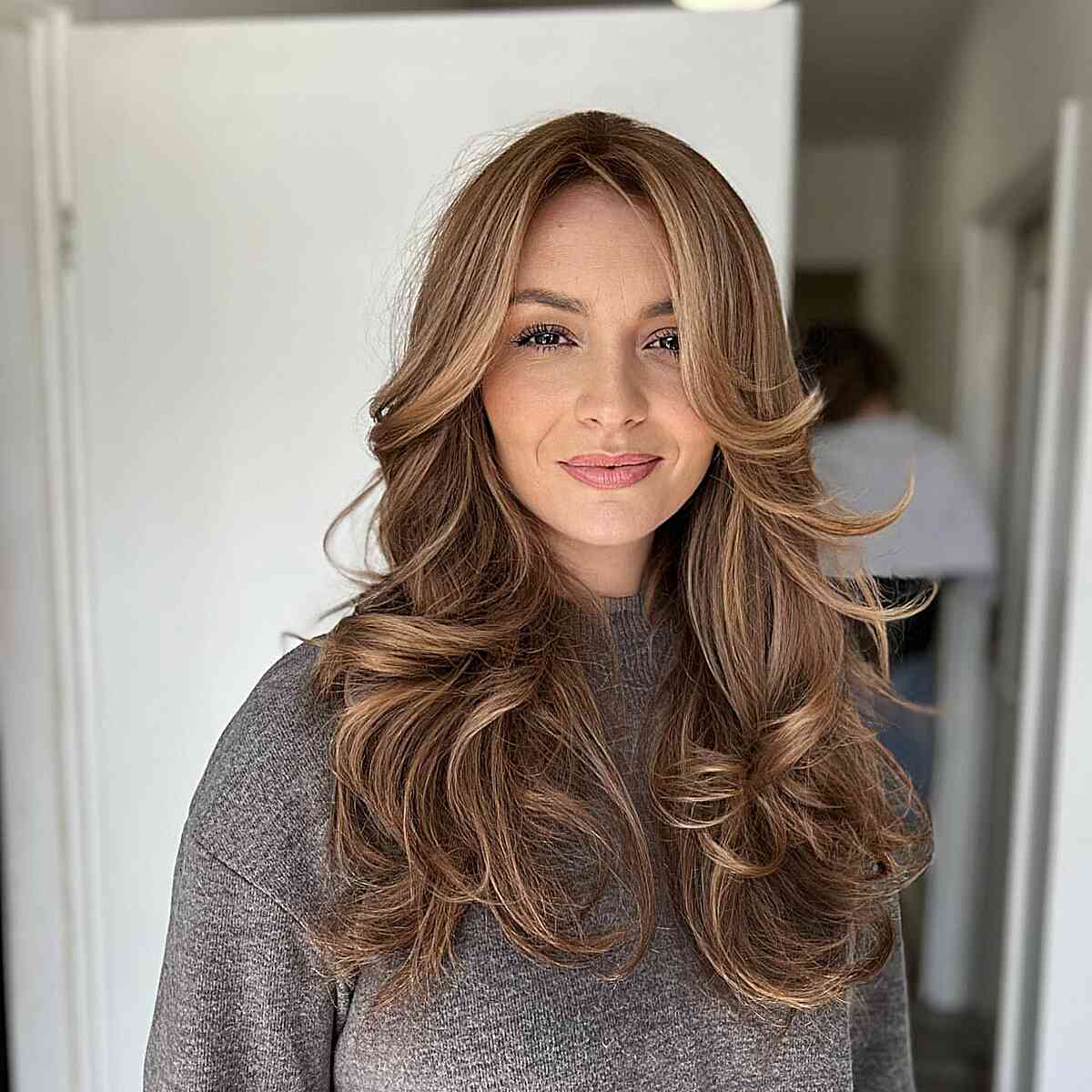
Wondering if highlights will make your long layers look busy? The contrast between brown and blonde in this mid-back cut actually accentuates the movement, drawing the eye along each layer. The curtain bangs frame the face, and the thick, wavy texture holds the blowout with soft waves. Ask your colorist for: mid-back layers with curtain bangs and brown blonde highlights. This combination suits thick, wavy hair, as the lighter pieces need enough weight to blend. If your hair is fine, the blonde may overpower the brown. Highlight maintenance lands every two to three months, and a texturizing spray keeps the layers defined.
Mid-Back Layers With Warm Balayage Effect
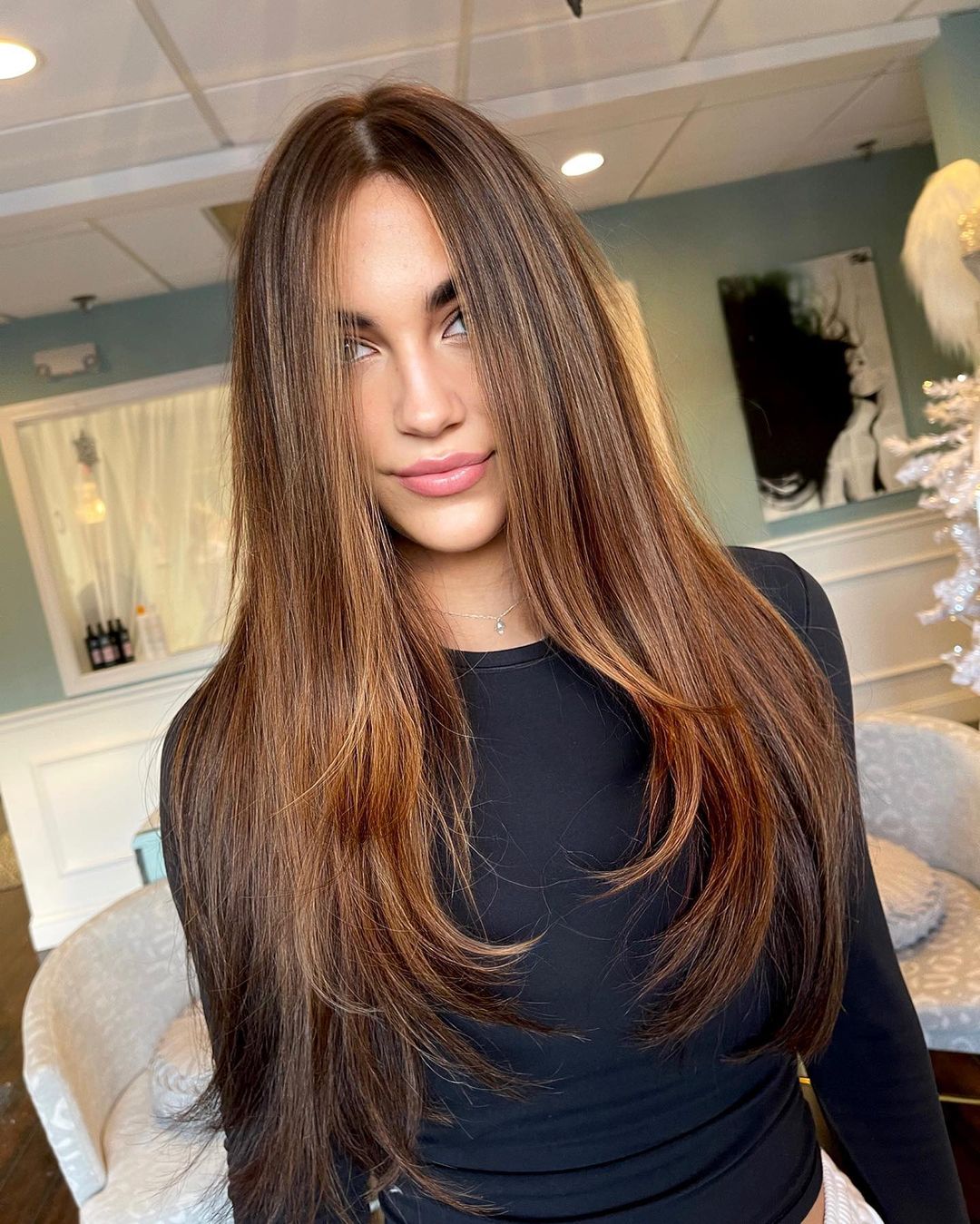
Balayage on dark brown hair creates a sun-kissed effect that grows out without a harsh line, which is exactly what the long face-framing layers in this cut show off. The warm lighter tones are painted on freehand, so they have a natural, dimensional look as the wavy, thick texture moves. Ask your colorist for: mid-back layers with long face-framing pieces and warm balayage. The layers start around the cheekbones, softening the face without shortening the overall length. This is a salon technique, and the smooth blowout with a round brush is what makes the waves look polished. The balayage requires a touch-up every three to four months, but the grow-out is forgiving enough that you can stretch it.
Short Choppy Shag With Curtain Bangs, Chin
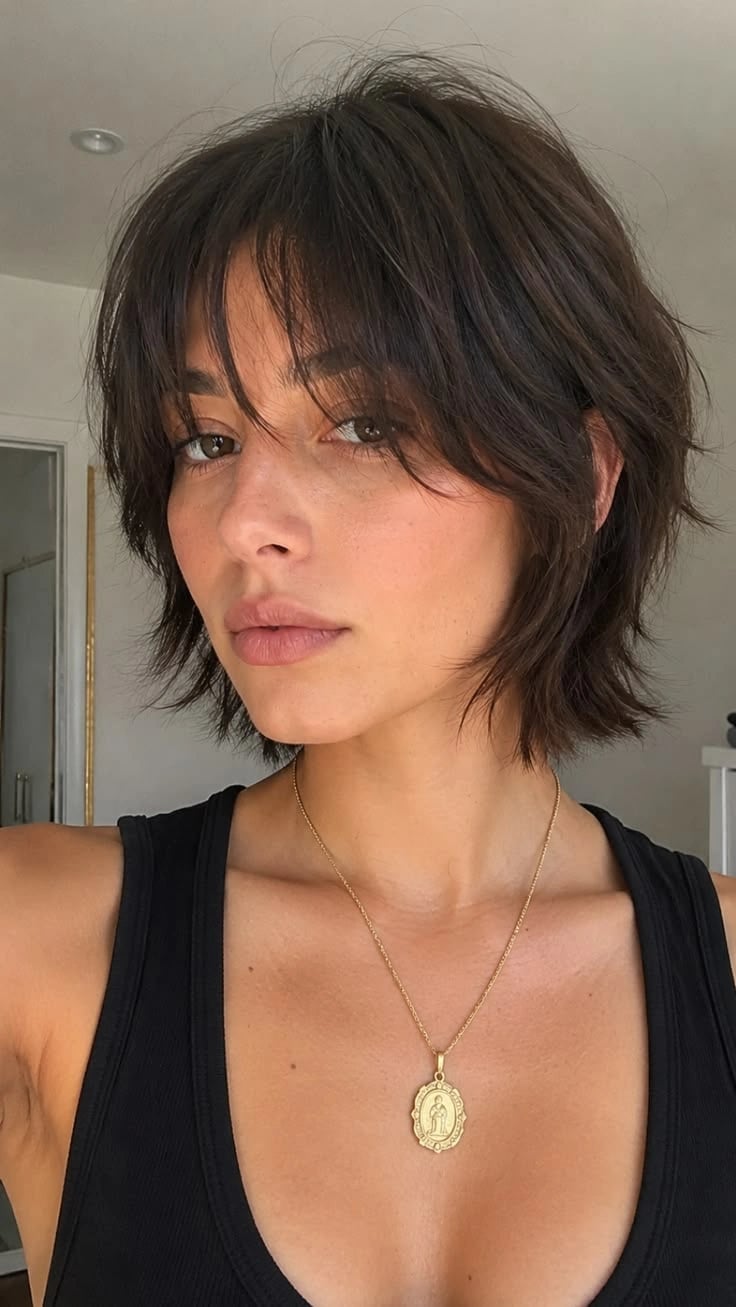
A chin-length shag with choppy texture practically styles itself, since the air-dried finish is the point. The dark brown hair has a fine, wavy texture that the choppy layers enhance, and the soft curtain bangs frame the face without needing a round brush. Ask your stylist for: short choppy shag with curtain bangs, air-dried. This is a DIY-friendly cut: apply a texturizing paste or sea salt spray to damp hair and let it dry. It suits fine, wavy hair best, as the choppy layers add volume that a blunt cut would flatten. A trim every six to eight weeks keeps the shag from turning into a bob, and the middle part is the only styling decision you’ll make.
Shoulder-Length Layers With Light Blonde Highlights

On fine, wavy hair, light blonde highlights appear as delicate shimmer; on thicker textures they can get lost. This shoulder-length cut with face-framing layers and curtain bangs keeps the blonde noticeable by letting the layers reflect light. Ask your stylist for: shoulder-length layers with curtain bangs and light blonde highlights. Style it with a volumizing spray at the roots and a round brush, blowing the waves away from your face. The highlight placement creates contrast, so a trim every six to eight weeks keeps the shape honest.
Mid-Back Layers With Textured Bangs and Waves
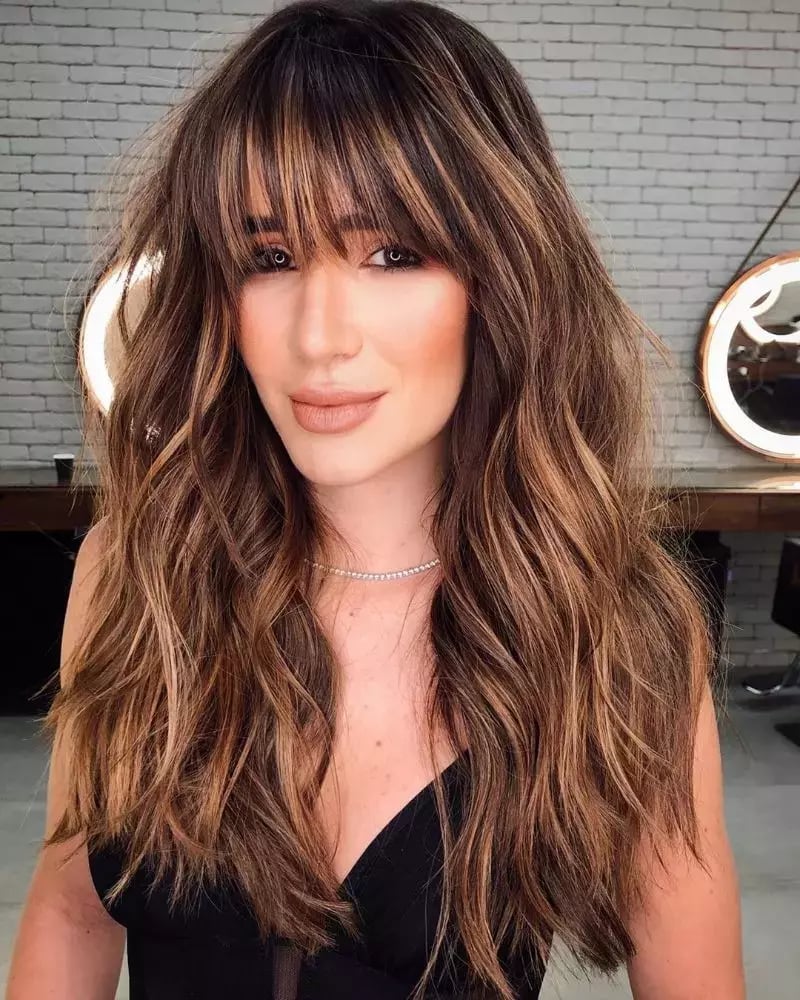
How do you keep textured bangs looking undone instead of unwashed? It takes a deliberate hand. This mid-back cut with long layers and prominent curtain bangs works with medium-density wavy hair, giving it movement without losing length. Ask your stylist for: mid-back layers with prominent curtain bangs and loose waves. Finish with a texturizing spray, scrunching the ends for definition. The bangs need a trim every six to eight weeks, and a quick dry with a round brush keeps them feathering the right way.
The brown base with lighter highlights woven through adds dimension, so the layers don’t disappear into one flat block. It’s a cut that rewards a little daily attention but never demands perfection.
Collarbone Layers With Blunt Bangs

Blunt bangs are a commitment with a sharp payoff. On thick, wavy hair at collarbone length, they create a clean line that contrasts with the softer face-framing layers behind them. Ask your stylist for: collarbone layers with blunt bangs and face-framing sides. The dark brown color lets the shape do the talking, and a flat iron smooths both bangs and ends into a polished blowout. The drawback is maintenance: blunt bangs need a trim every three to four weeks to hold their edge. Skip this one if you can’t keep that rhythm, because grown-out bangs read as a different haircut entirely.
Mid-Back Shag With Side Part and Curtain Bangs, Wavy
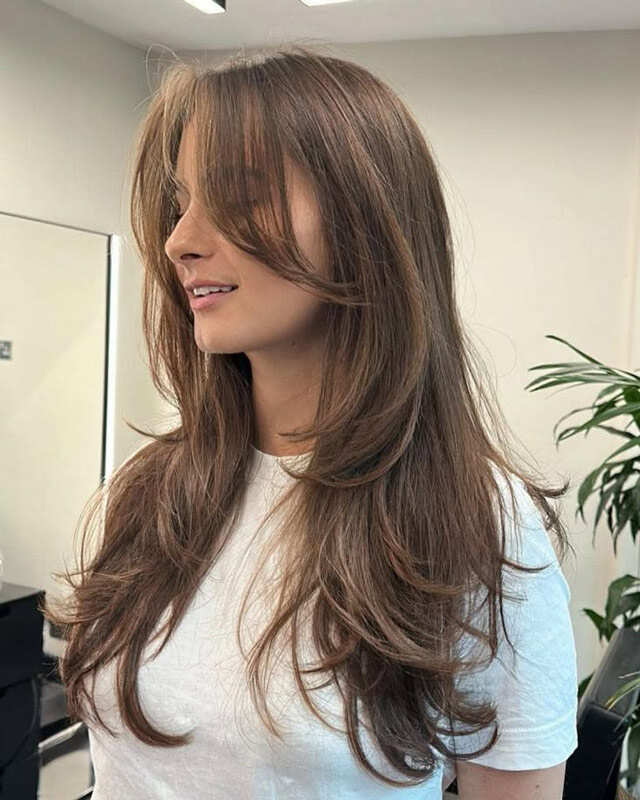
Side parts are having a moment, and this mid-back shag makes the case for them. The long shag layers and curtain bangs frame the face from a side view, which suits oval and heart-shaped faces by balancing width at the cheekbones. Thick, wavy hair takes the volume well, and the light brown base with lighter highlights adds depth through the layers. Ask your stylist for: mid-back shag with long layers and curtain bangs, side part. Direct hair away from the part during styling to keep the shape lifted. A trim every six to eight weeks maintains the shag’s movement without letting it grow shapeless.
This cut works for those who want length but not monotony. The side part gives it a different silhouette than the usual middle-parted shag, and the curtain bangs soften the transition.
Layered Bob With Choppy Layers and Side Bangs
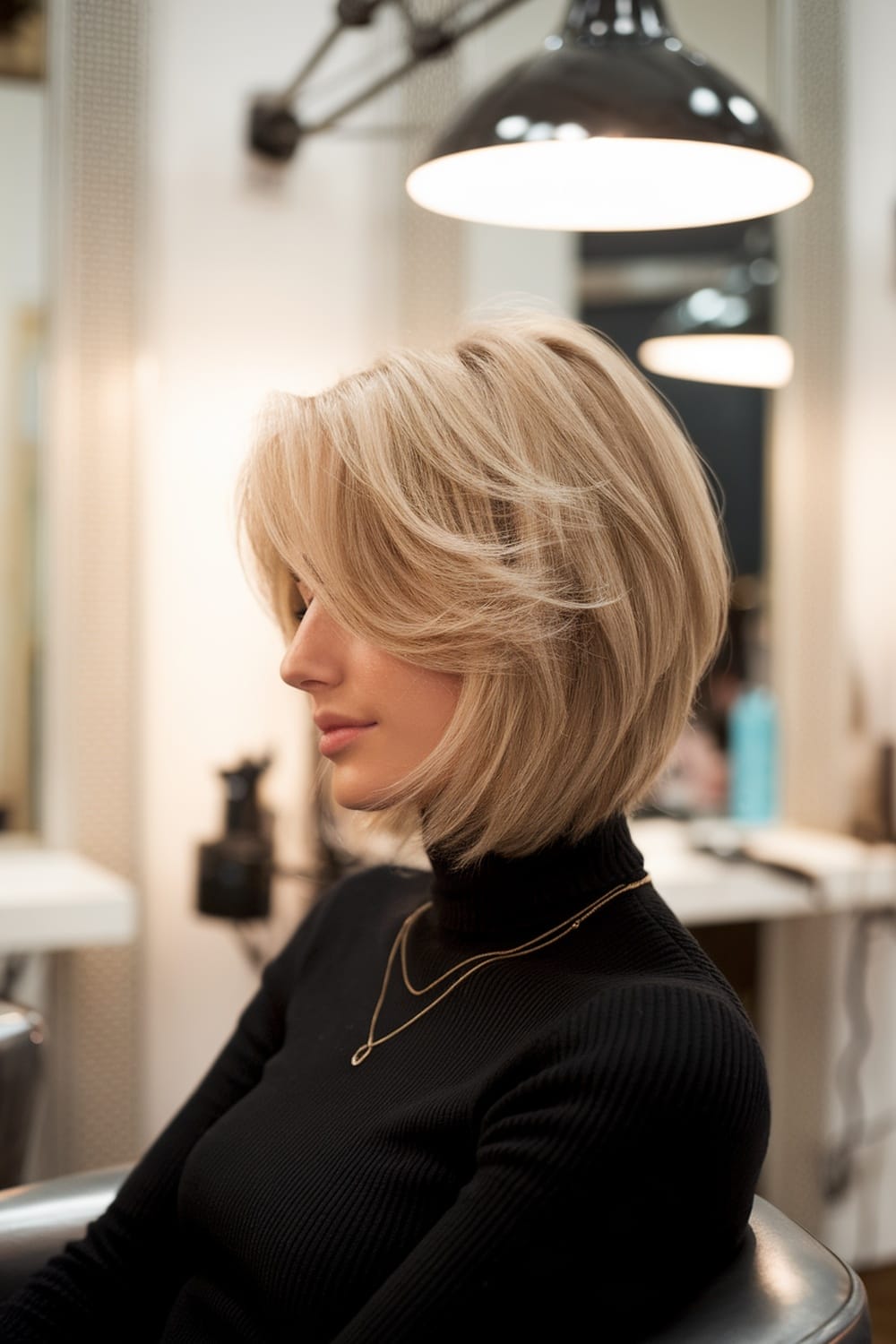
How do you add texture to fine, straight hair without weighing it down? Choppy layers, cut into a chin-length bob. The technique involves slicing through the ends at varied angles, creating pieces that sit separately rather than blending into one smooth line. Ask your stylist for: chin length layered bob with choppy layers and side-swept bangs. The ash blonde color keeps it cool-toned, and a smooth blowout with a texturizing spray gives it a lived-in finish. The layers hold their shape for about four to six weeks before the choppiness softens, so plan trims accordingly.
Mid-Back Cascading Layers With Soft Waves

The design here hinges on the word cascading: each layer falls just a fraction shorter than the one above, so the whole shape moves like a curtain opening. The medium brown base with subtle highlights keeps the depth visible without competing with the cut. Thick, wavy hair of mid-back length holds this structure best; the layers prevent the weight from pulling the wave out.
Ask your stylist for: mid-back cascading layers with face-framing pieces. A smoothing serum and a round brush blowout set the soft waves without frizz, and a trim every six to eight weeks keeps the layers from collapsing into one block. The middle part and face-framing pieces do the work of shaping the front, so you are not fighting the rest of the hair into submission.
Final Thoughts
When in doubt, let your hair type call the shots. Fine hair benefits from face-framing layers and a subtle blend to keep weight off the ends, while thick hair can handle choppier, more defined layers to reduce bulk and encourage movement.
- Schedule trims every 6-10 weeks to maintain layer shape and prevent split ends.
- Use texturizing sprays or sea salt sprays to enhance natural waves and layer definition.
- Apply heat protectant before blow-drying or styling to preserve hair health.
- Consider a gloss or toner every 8-12 weeks to maintain color vibrancy and dimension.
Layers offer endless possibilities for revitalizing your hairstyle.
