

Pale skin is a neutral backdrop that lets hair color do the talking, whether you lean icy cool or warm. Right now, lived-in color with soft face-framing layers and curtain bangs is replacing flat, one-dimensional dye jobs, making grow-out a feature rather than a flaw.
This collection of 33 Trendy Hair Color for Pale Skin ideas spans cool blondes, warm coppers, and dimensional browns, from low-upkeep root shadows to high-impact platinum. It solves the fine-hair flatness problem with strategic highlights and the visible grow-out issue with balayage and root smudges, all while keeping texture glossy and natural.
Bright Platinum Blonde Blowout
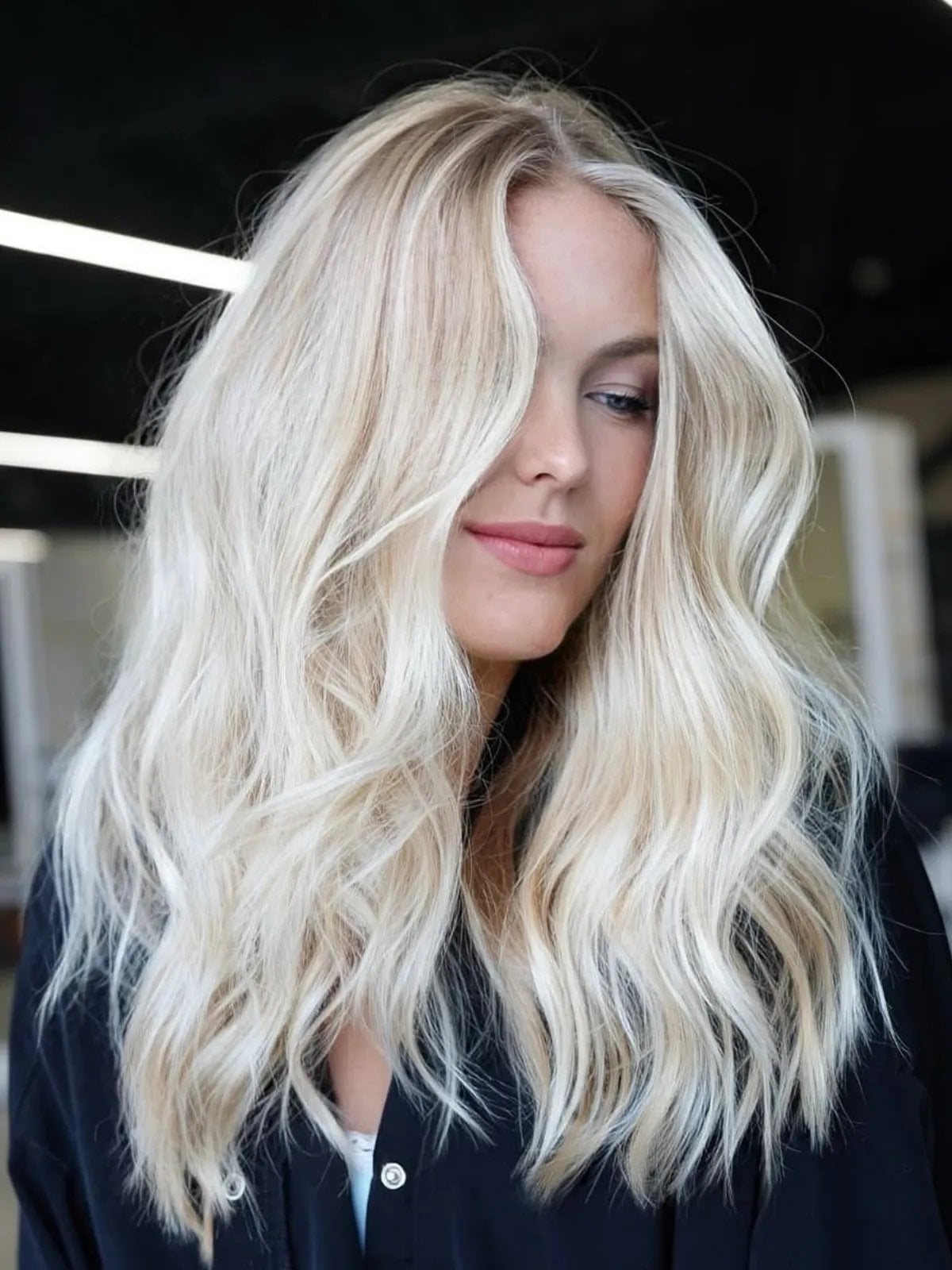
The middle part and voluminous blowout show every inch of it, so the cut needs to be clean and the tone needs to be true. Thick, wavy hair of mid-back length carries the lift naturally, while the cool, almost white base reads as deliberate rather than faded. Ask your colorist for: bright platinum blonde all over, middle part. This is a salon-only color; the lightener alone takes about three hours, and the tone needs a purple shampoo at every wash to stay silver rather than yellow.
Ash Blonde With Root Shadow
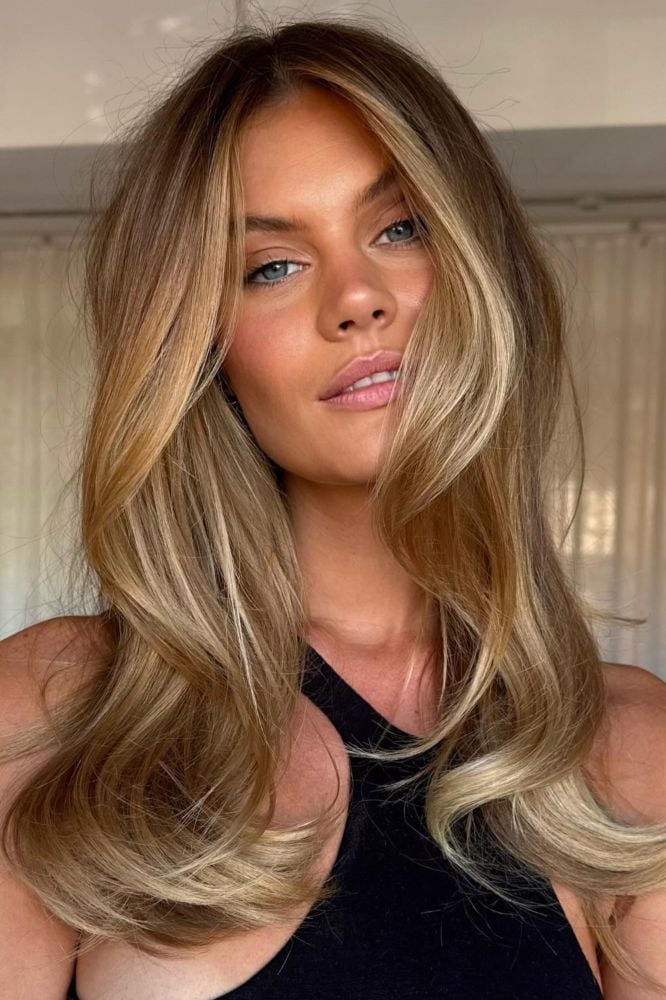
A root shadow does exactly what it sounds like: a slightly darker shade blended into the first inch of growth so the line between your natural color and the ash blonde disappears. Here the base is a cool, matte ash blonde, and the root shadow is about half a shade darker, painted in a soft gradient rather than a hard band. The face-framing layers and middle part let the transition show on both sides, which gives the color depth without needing highlights.
Ask your colorist for: ash blonde with a natural root shadow, face-framing layers. The payoff is a grow-out that looks intentional for about six weeks rather than three. A smoothing serum on damp hair keeps the wave pattern defined and the ash tone glossy.
Collarbone Ash Blonde With Heavy Balayage
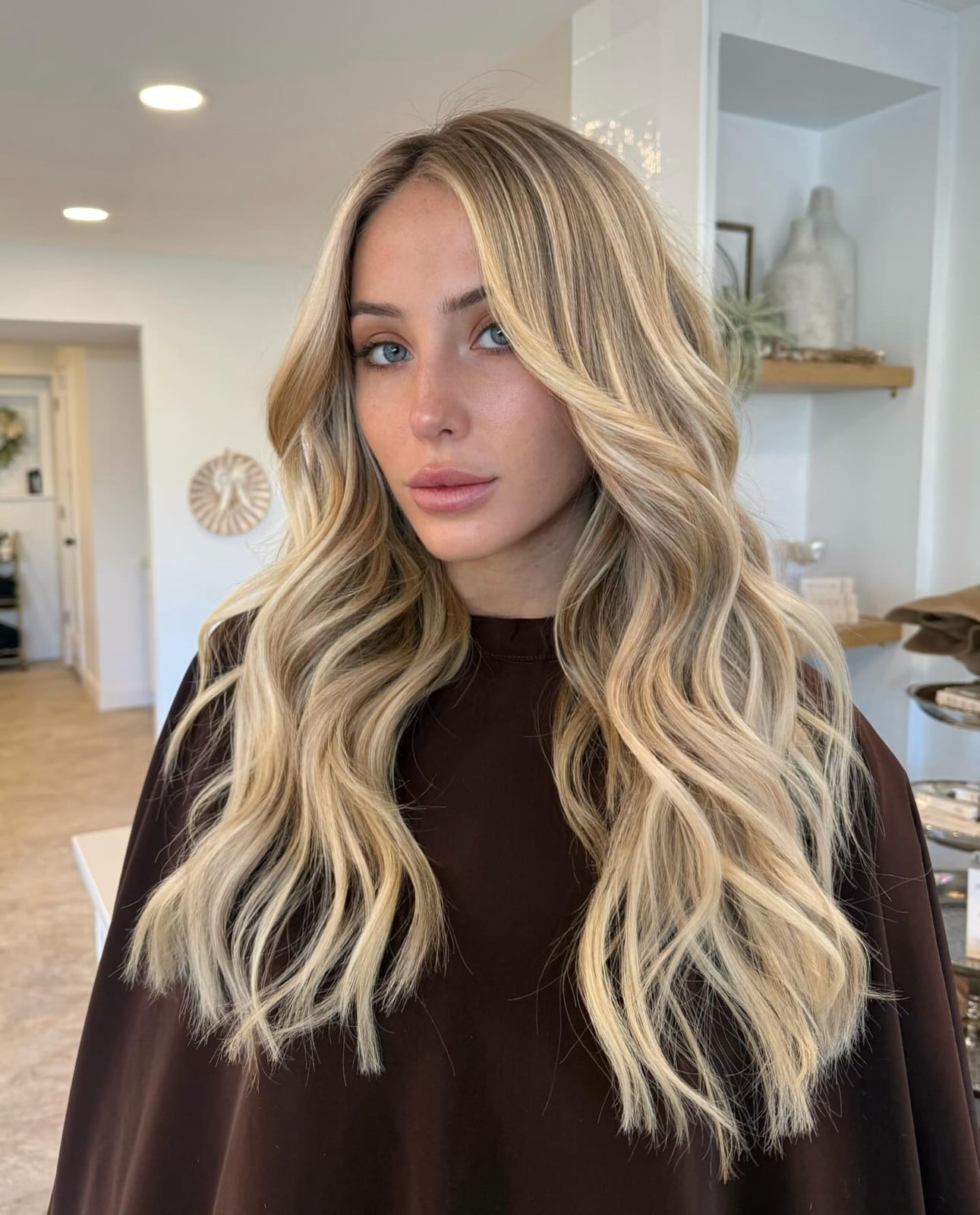
Heavy balayage sits in the space between a full highlight and a lived-in color: the lighter pieces are dense enough to shift the overall tone but painted freehand, so there is no repeating pattern. Compare it to a foil highlight, which creates a more uniform lift. This version starts with an ash blonde base and adds thick, seamless balayage sections that land mostly around the face and ends, keeping the root area darker. Ask your colorist for: ash blonde base with heavy balayage, collarbone length. The collarbone length keeps the heavy placement from feeling weighty, and the middle part shows the contrast on both sides evenly.
Mid-Back Dark Blonde With Ash Highlights
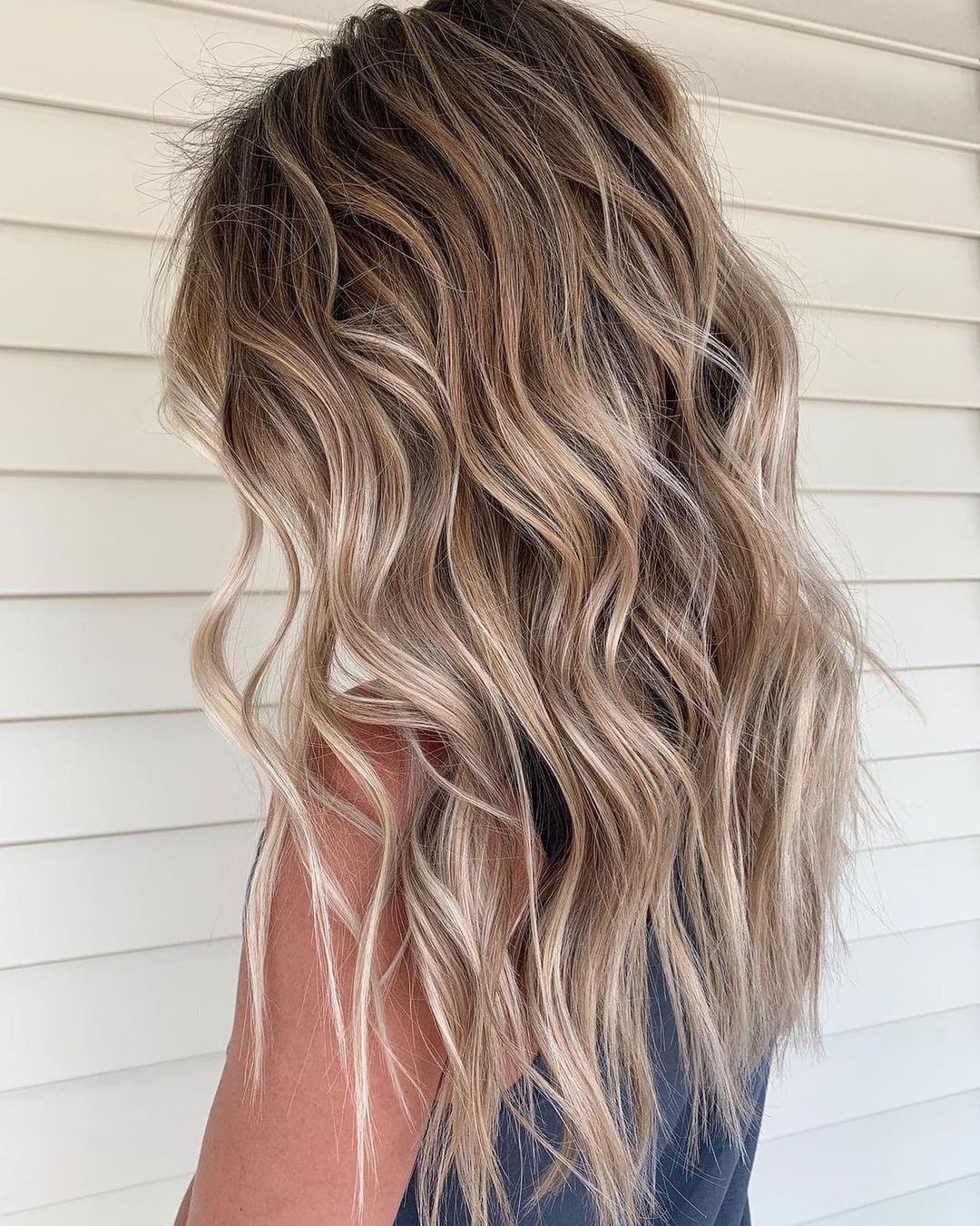
How do you get dimension without going full blonde? The answer is in the placement: a dark blonde base keeps the overall depth, while ash blonde highlights are woven through the mid-lengths and ends, not the root. The curtain bangs here catch a few of those lighter pieces, so the face gets brightness without a solid stripe. Ask your colorist for: dark blonde with ash blonde curtain bangs and highlights. The curtain bangs need a trim every eight to ten weeks to keep the shape soft, and the ash tone needs a cool shampoo every third wash to stop the highlights from warming up.
Mid-Back Straight Platinum Blonde, Close-Up Take
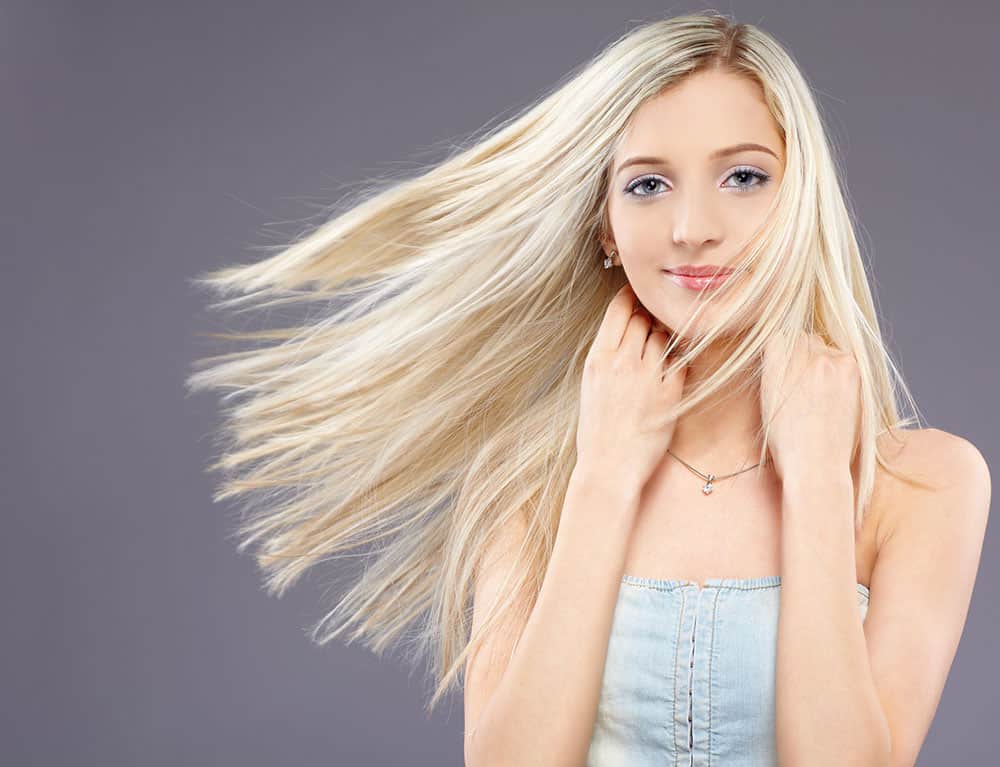
The extreme lightness here is the whole point, and it works because the hair is straight and fine. A blowout lets the color sit in one smooth, reflective sheet, which is the only way this shade behaves. Thick or wavy hair bends the light differently, but this texture keeps the platinum looking deliberate, like it was meant to be that pale.
Straight platinum blonde at mid-back length is a look that owns its upkeep, and there is no negotiating with it. The color lifts to a near-white base, so a toning appointment every three to four weeks is what keeps it from drifting into yellow, and a purple shampoo at home buys you a little extra time between visits. The straight styling means heat protection is required before any blowout or flat iron, and deep conditioning should be a weekly habit given how porous lightened hair gets. Ask your colorist for: mid-back length, straight, platinum blonde. This is not a one-session service; getting fine hair this light safely takes multiple appointments, so plan for the salon chair, not a box from the drugstore.
Shoulder Ash Blonde With Highlights
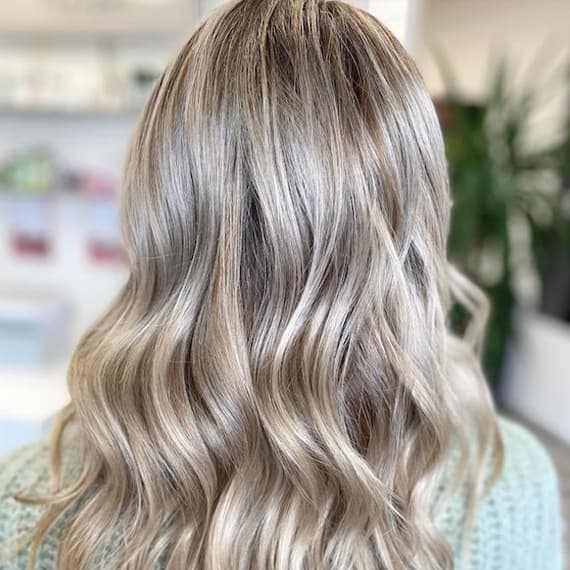
Ash blonde with subtle highlights reads as a cooler, more muted take on blonde, and it fits the shoulder-length wavy cut precisely because the tone softens the natural wave instead of fighting it. Medium density hair at this length holds a middle part well, and the lived-in effect means the color grows out without a harsh line. Ask your colorist for: shoulder length ash blonde with subtle highlights. This is a salon-leaning color, and while it suits a casual everyday setting, it also holds its own at a fall wedding or a holiday party, where the cool tone picks up the seasonal light.
Mid-Back Ash Blonde With Face-Framing Layers
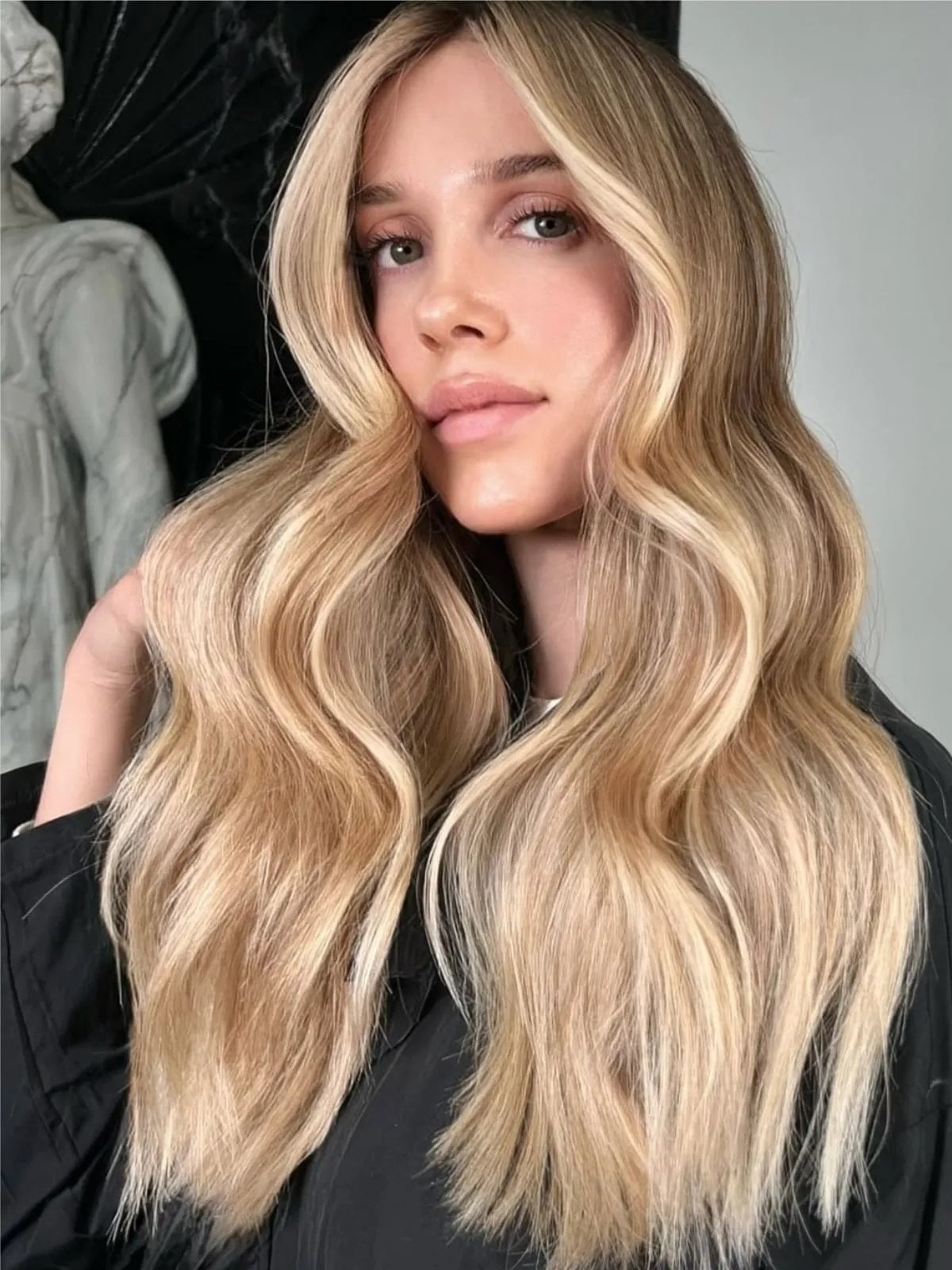
Who actually suits ash blonde with face-framing layers? Thick, wavy hair at mid-back length, for starters, because the weight of the hair keeps the layers from vanishing into the texture. The cool ash tone needs enough density to carry the color without looking washed out, and a middle parting works best when the face-framing pieces start below the cheekbone to soften a square jaw. This shade suits a professional setting, but it is not a set-and-forget color. Ask your colorist for: ash blonde with face-framing layers, middle part. Blow-dry with a round brush to define the layers, and keep a cool-toned shampoo in rotation; the ash pigment fades faster than warm tones, so plan on a toner refresh around week six.
Mid-Back Light Brown With Subtle Blonde Highlights
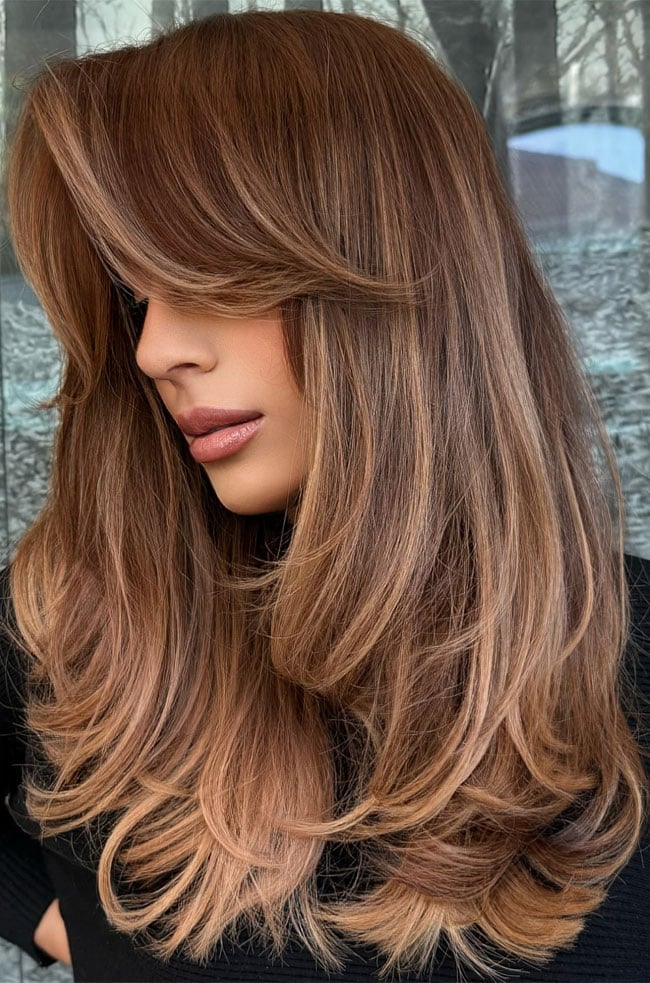
The design here is a natural light brown base with blonde highlights that sit close to the base color, so the effect is more lived-in than dramatic. On thick, wavy hair at mid-back length with a side parting, those subtle highlights add dimension without obvious stripes. Subtle means low contrast, and low contrast means the color can skew brassy after a few weeks, especially on a lighter base. Ask your colorist for: light brown with subtle blonde curtain bangs and highlights. A conditioner keeps the waves defined, and because the highlights are fine, they grow out gently; a trim every eight weeks keeps the curtain bangs from turning into a curtain wall.
Mid-Back Light Brown With Subtle Highlights And Curtain Bangs, Wavy
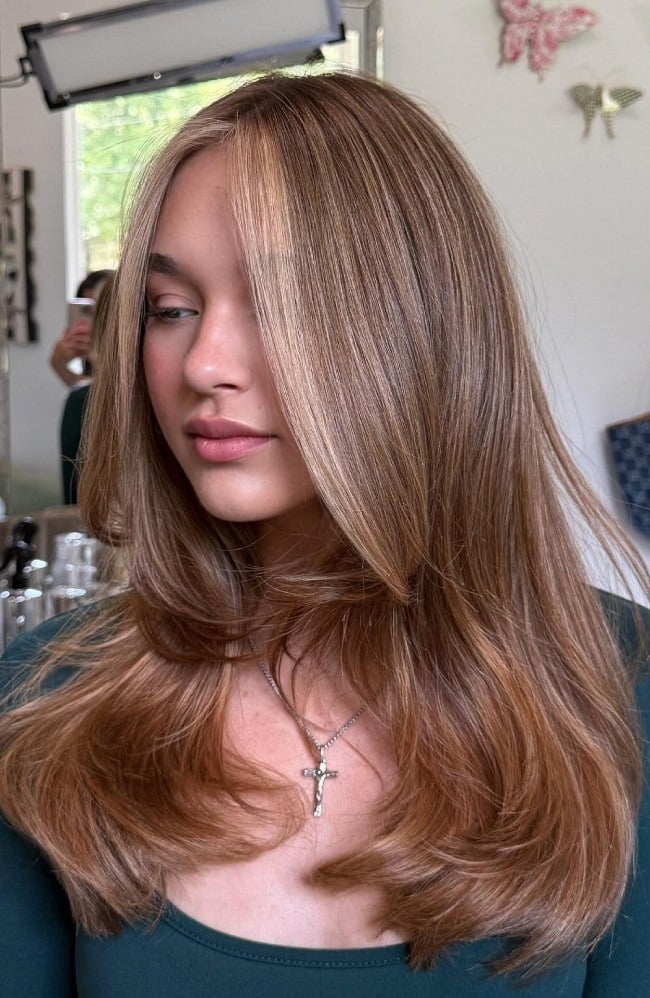
This is a light brown base with fine blonde highlights and curtain bangs, all on thick, wavy hair at mid-back length with a middle parting. The technique is what makes it work: highlights are painted so fine they melt into the base, and the curtain bangs are cut to frame the face without a hard line. Achieving that natural-looking blend is why this is a salon-only job. Ask your colorist for: light brown with subtle blonde curtain bangs and highlights. A DIY kit tends to produce chunkier sections, and the curtain bangs need a precise cut to fall correctly. Budget about three hours in the chair for the color and a separate trim appointment to keep the bangs in shape.
Mid-Back Medium Brown With Caramel Highlights
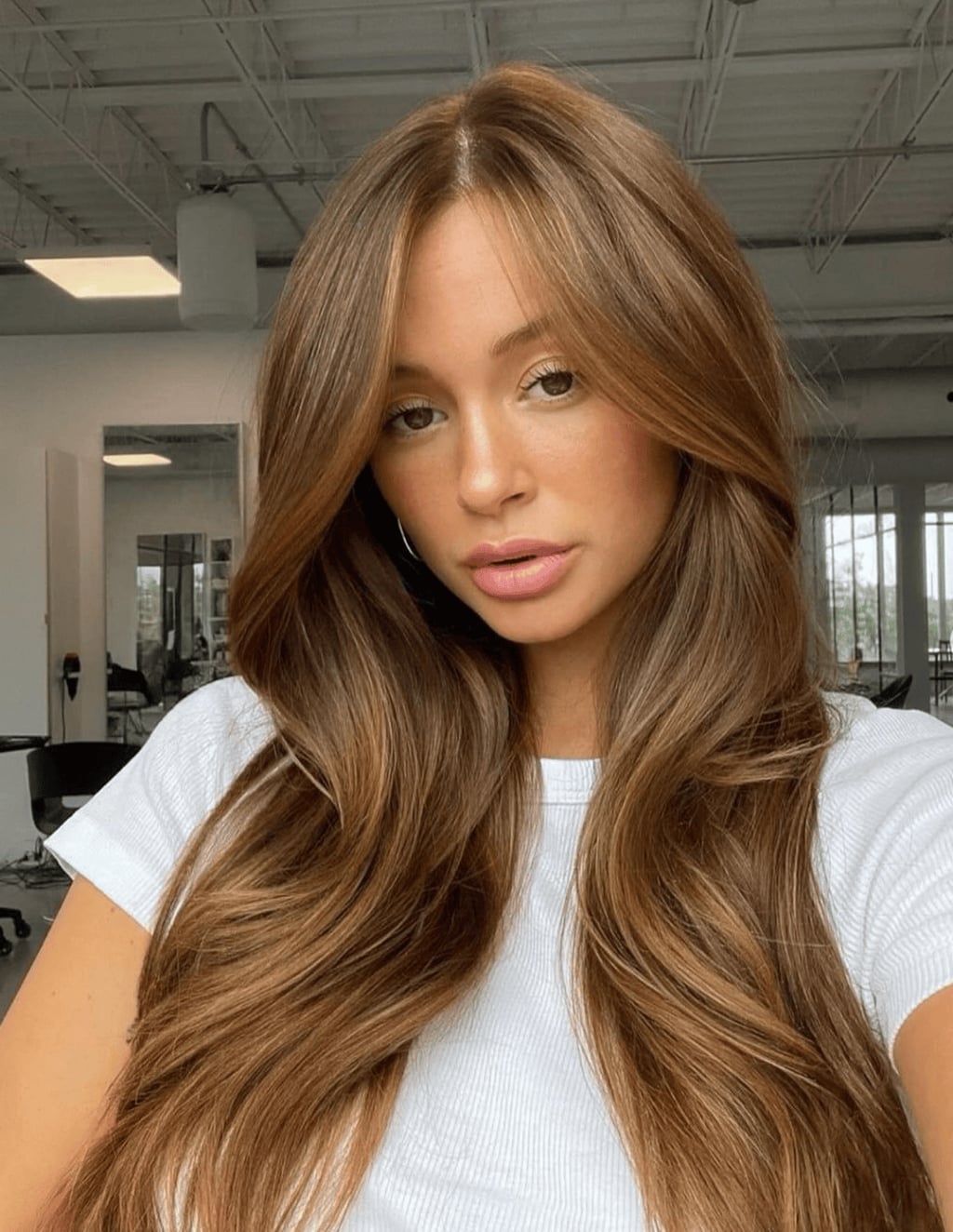
Is caramel on medium brown just a warmer version of the same old highlight? Not quite. The caramel is placed in face-framing layers and through the mid-lengths, so it adds dimension without turning the whole head golden. On thick, wavy hair at mid-back length, the loose waves catch the caramel pieces and create a glossy, dimensional finish. Caramel is a warm tone, and on a medium brown base it needs upkeep to stay bright; it can pull orange if left too long. Ask your colorist for: medium brown with caramel highlights and face-framing layers. Plan on a toner every six to eight weeks and a trim on the layers every eight to ten to keep the shape from growing heavy.
Mid-Back Medium Brown With Blonde Balayage
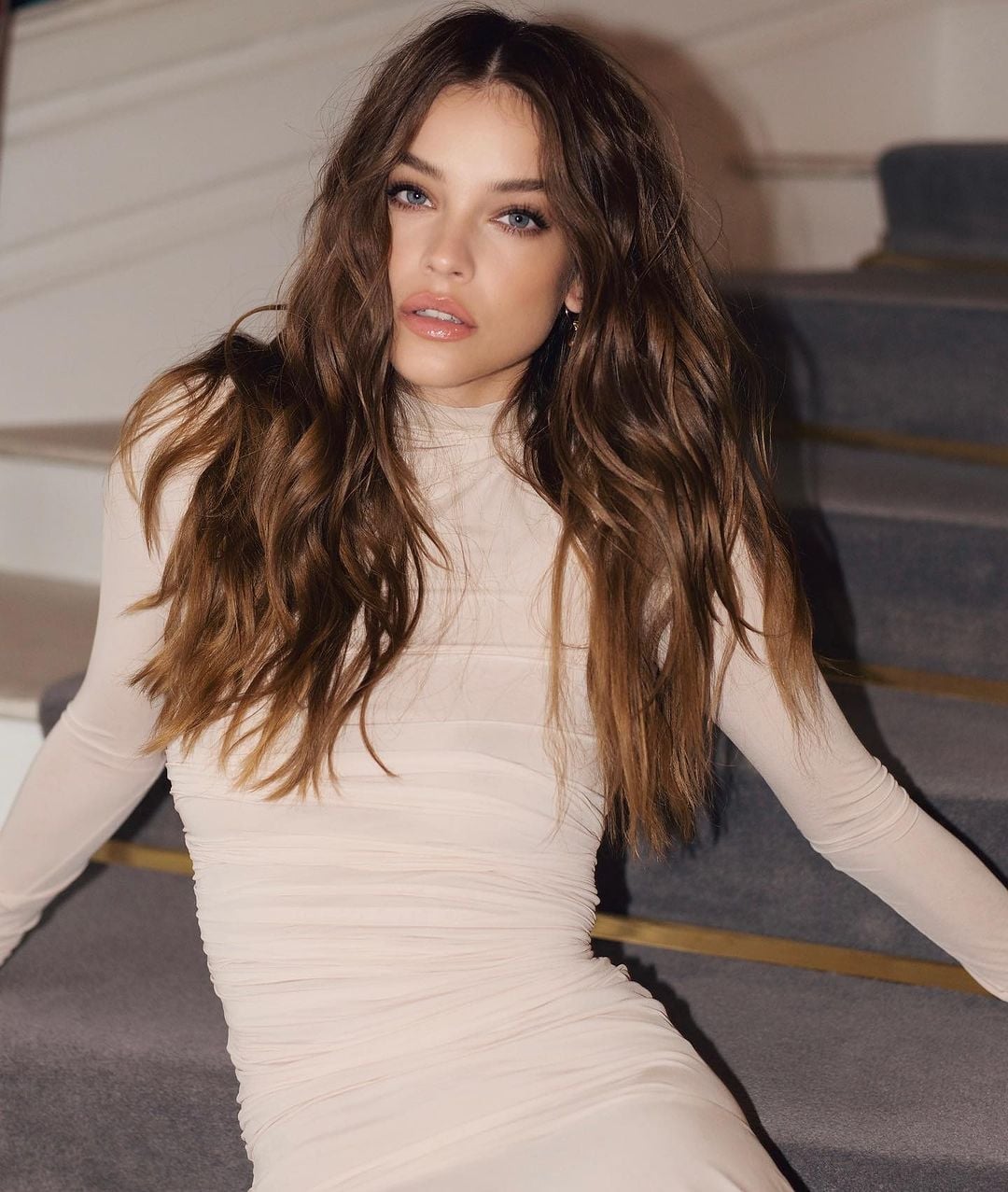
The glossy finish is the first thing you notice, and it is not an accident. A medium brown base with subtle blonde balayage is worked through the mid-lengths and ends, leaving the root area deeper and shinier. The curtain bangs and middle parting keep the front view soft, while the thick, wavy texture gives the blowout something to hold onto.
Ask your colorist for: medium brown with blonde balayage and curtain bangs. Balayage grows out softly, so you will not see a hard line at the root for a while. The gloss is the part that fades first, so a glossing treatment every eight to ten weeks keeps the finish from turning into a flat brown. A high-shine blowout on thick, mid-back length hair takes a solid chunk of your morning, even with a round brush and a good heat protectant.
Mid-Back Light Brown With Blonde Balayage and Curtain Bangs
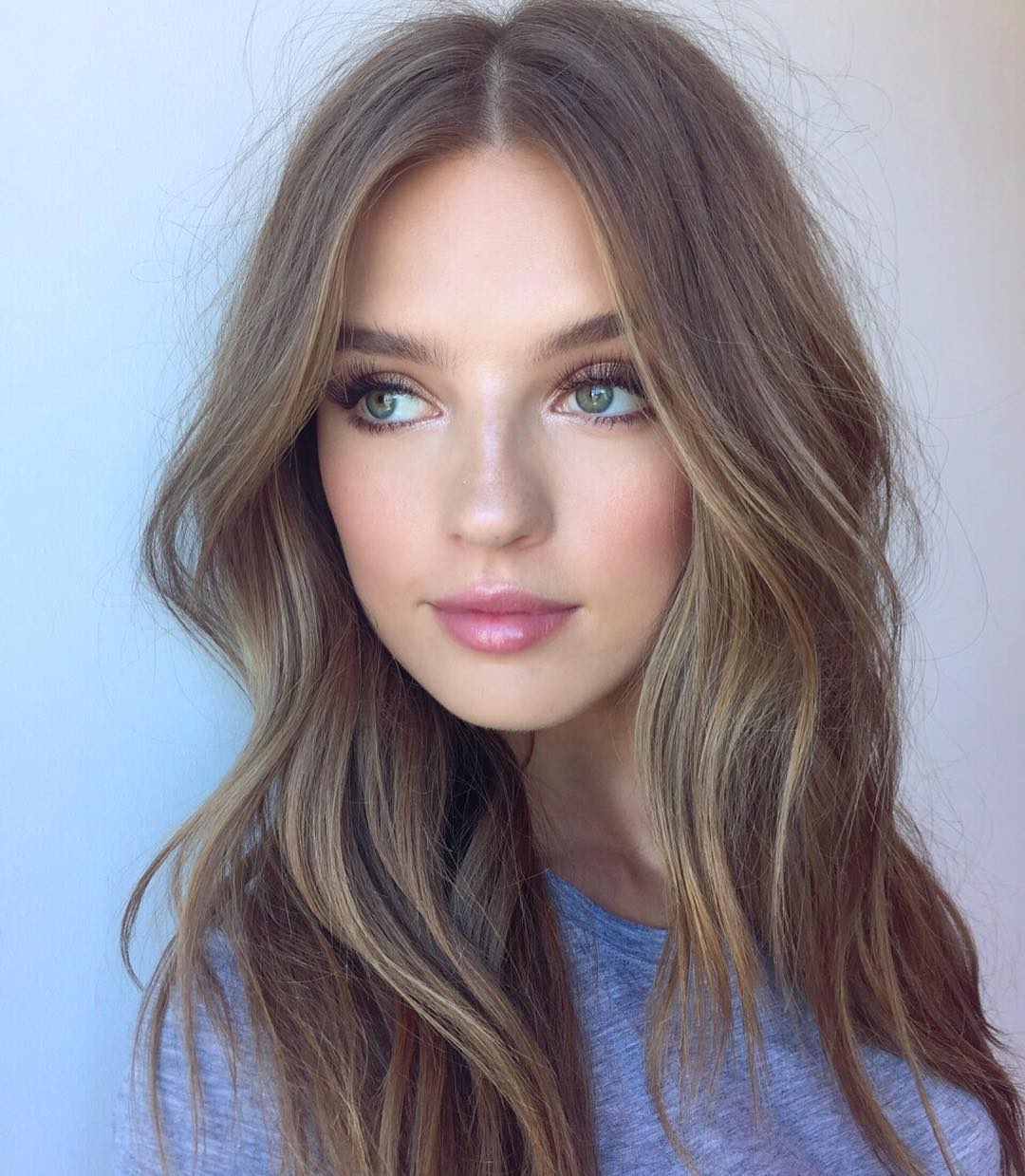
How do you ask for a color that looks like the sun did the work instead of a stylist? Request a light brown base with blonde balayage, and let the colorist paint the lighter pieces so they concentrate around your face and the ends. The curtain bangs catch the lightest bits, which is what sells the sun-kissed effect. Ask your colorist for: light brown with blonde balayage and curtain bangs. On thick, wavy hair at mid-back length, this is a low-maintenance color because the grow-out blends into the base. A loose blowout with a texturizing spray gives you the beachy waves without a curling iron.
Mid-Back Warm Brown With Blonde Balayage, Close-Up Take
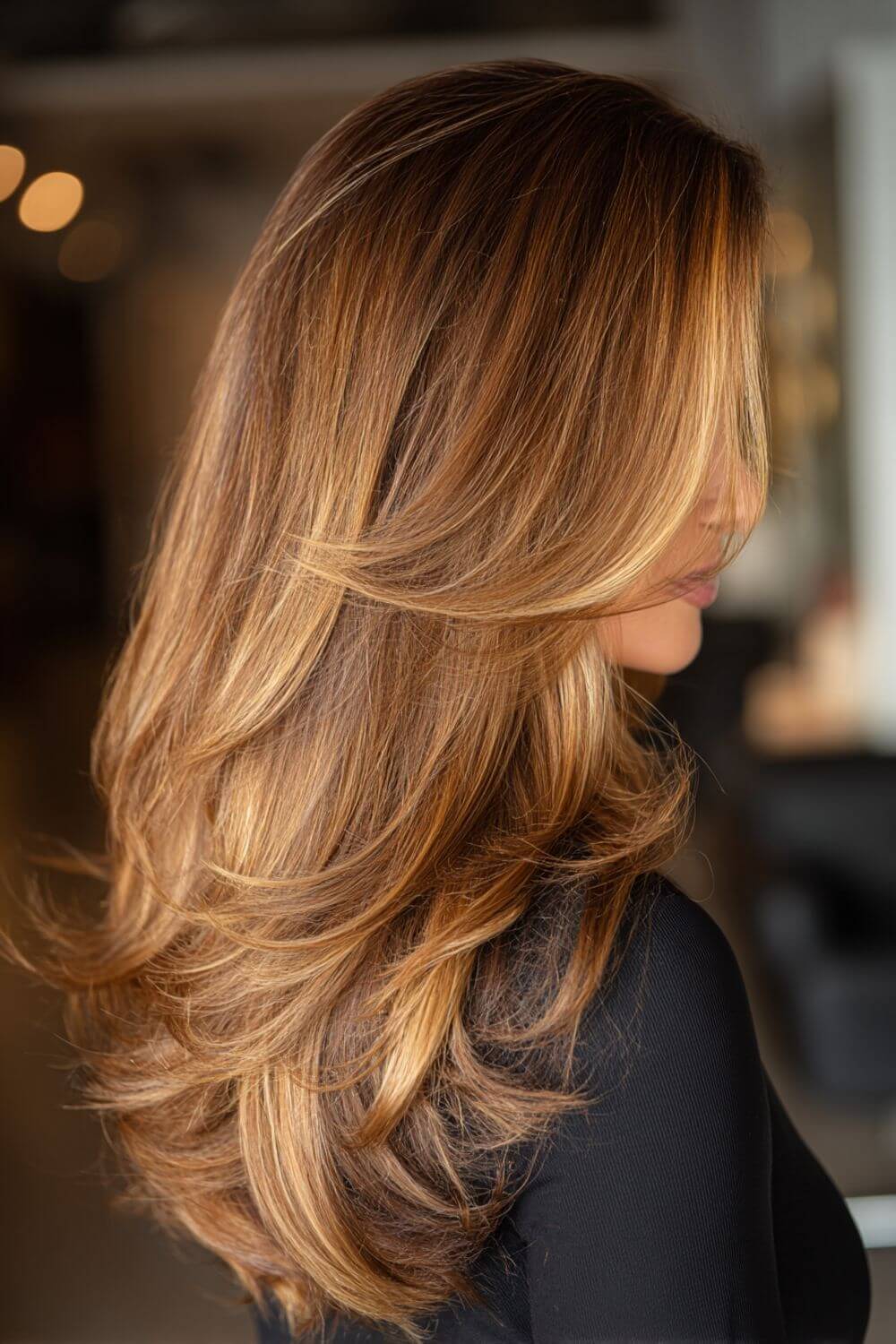
The balayage technique here is what makes the warm brown base worth a second look. Lighter blonde pieces are painted freehand, starting lower than the roots and sweeping through the mid-lengths, so the color builds depth instead of sitting flat on top. The layered cut and curtain bangs give the lighter sections somewhere to land, and the voluminous blowout keeps the whole thing moving.
Ask your colorist for: warm brown with blonde balayage and curtain bangs. The key is asking for the balayage to be placed to catch the movement of wavy, thick hair, not just painted in straight lines. Because the color is concentrated away from the root, the grow-out is forgiving, and you can stretch touch-ups past the usual eight-week mark. Blow-drying with a round brush adds volume and smooths the cuticle, which helps the blonde stay shiny.
Collarbone Layers With Ash Blonde Highlights
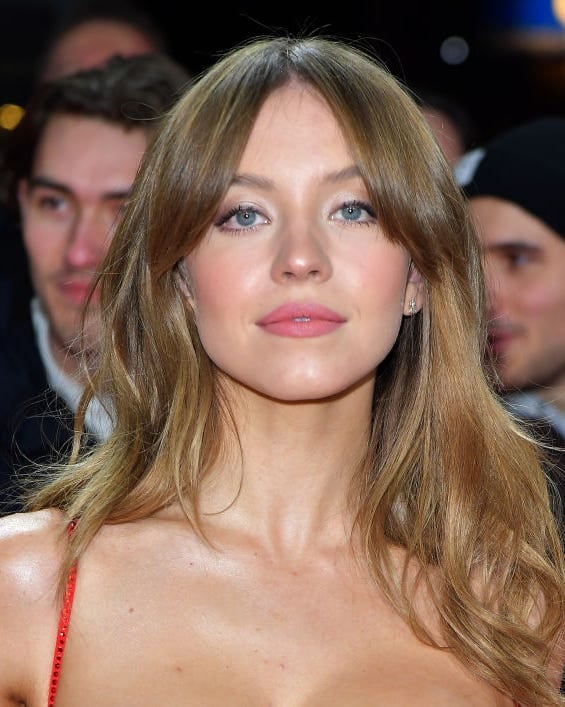
Who should book this? Anyone with medium density, wavy hair at collarbone length who wants dimension without a full color commitment. The light brown base keeps things grounded while the ash blonde highlights add a lived-in, slightly cool effect. The curtain bangs are the real draw here, they soften the front and balance a round or square face shape. Ask your colorist for: collarbone length with ash blonde highlights and curtain bangs. The loose waves give the cut movement, and the curtain bangs will need a trim every six to eight weeks to keep their shape, otherwise they start grazing your cheekbones in a way you did not plan.
Collarbone Bob With Dark Brown And Blonde Balayage
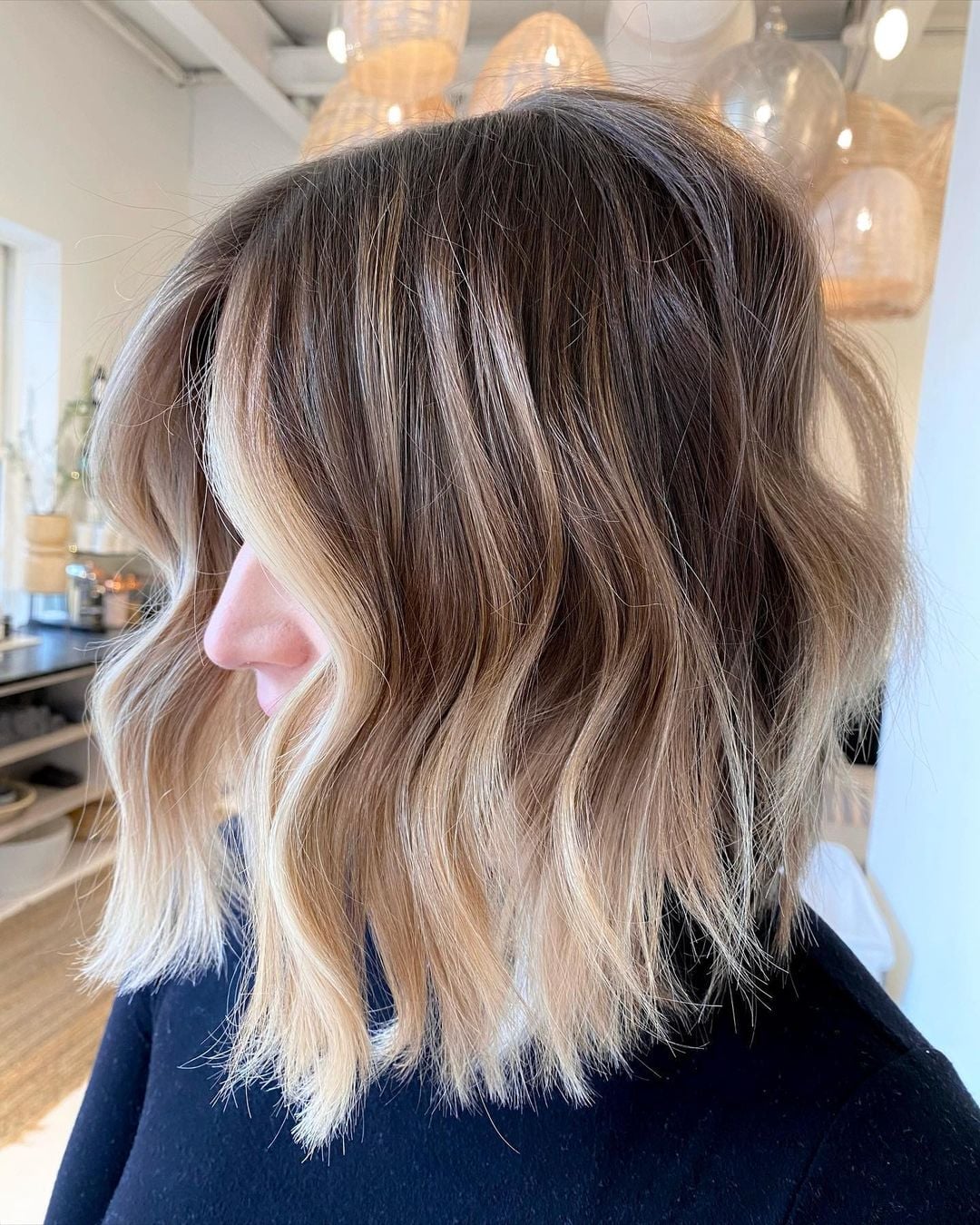
Compared to a solid dark bob, this one has a lot more going on. The dark brown base gives it weight, but the blonde balayage lifts the ends and the pieces around the face, so the cut looks dimensional without being heavy. The collarbone length suits a bob that is not quite short enough to be a true chin-length cut, and the side parting adds volume on top, which helps if your hair is on the finer side of medium. Ask your colorist for: collarbone bob with dark brown and blonde balayage. The lived-in color effect means the grow-out is soft, and you can let the bob go a little longer between trims without it looking unkempt.
Collarbone Lob With Dark Blonde And Honey Highlights
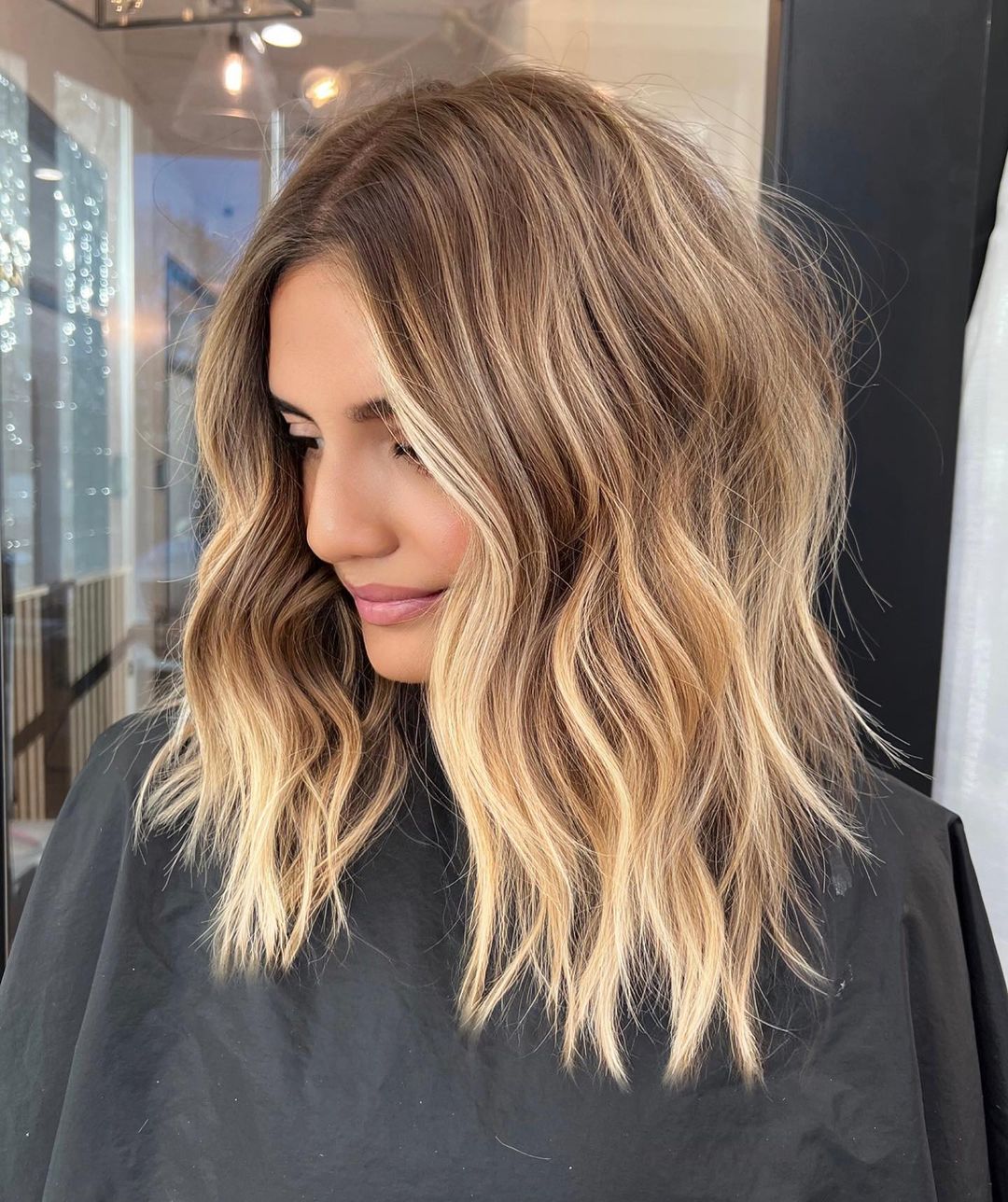
A collarbone lob with a side part and loose waves uses a dark blonde base as the anchor, then lets warm honey highlights do the heavy lifting. The honey tones catch light in a way that reads as naturally sun-kissed, which is exactly the point for warmer months. Ask your colorist for: collarbone lob with dark blonde and honey highlights, side part. Thick, wavy hair at collarbone length takes the dimensional color well, and the side part creates instant volume at the root for finer textures.
Collarbone Bronde With Seamless Balayage
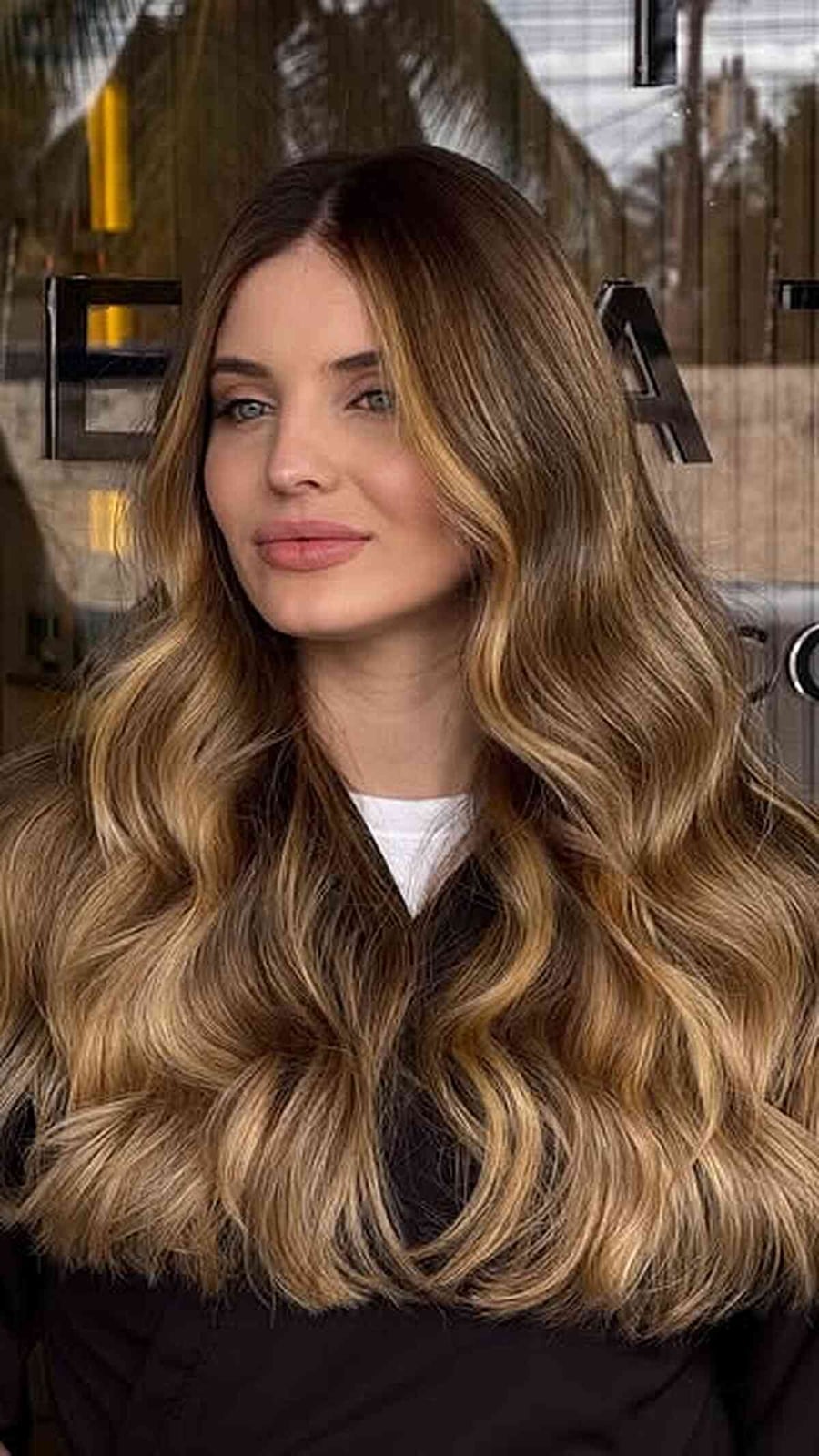
A middle parting and soft waves let the seamless balayage do the talking here. The bronde base starts warm brown and lightens gradually through the lengths, so there is no harsh line where color meets color. Ask your colorist for: collarbone length bronde with seamless balayage. Thick, wavy hair at collarbone length shows off the gradient best, and the lack of bangs keeps the focus on the dimensional blend from root to tip.
Collarbone Layers With Blonde Balayage
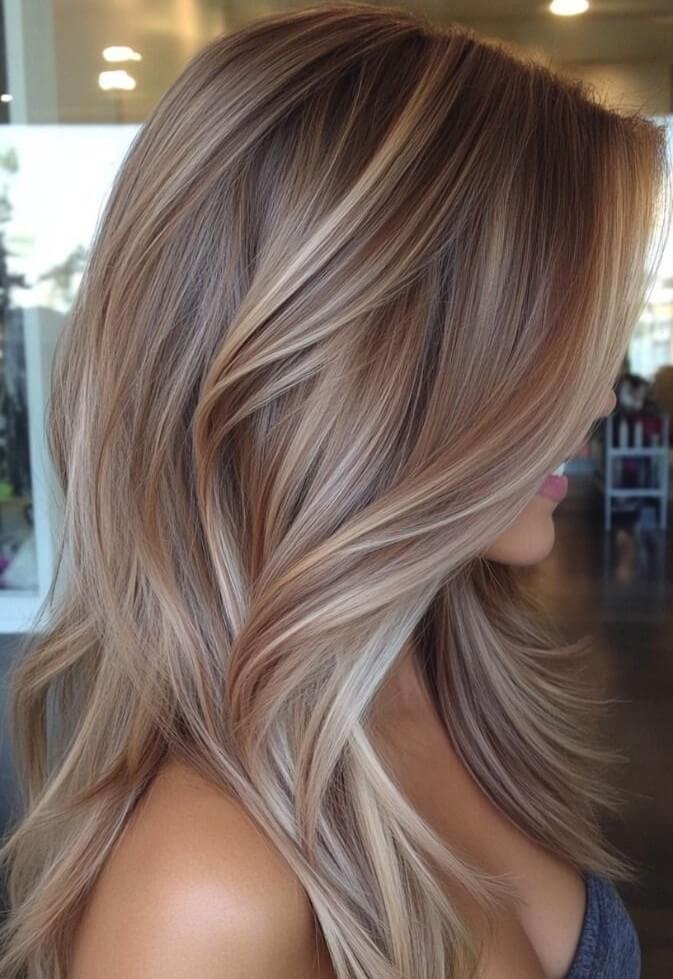
Blonde balayage on collarbone-length layers is the definition of low-risk, high-reward color. The lighter strands are painted freehand, so the grow-out line is soft rather than stripey, and the middle parting splits the brightness evenly on both sides. Ask your colorist for: collarbone length with blonde balayage. A purple shampoo every other wash keeps brassiness away, and the layers mean a trim every eight weeks is plenty to maintain the shape.
Collarbone Light Brown With Subtle Balayage
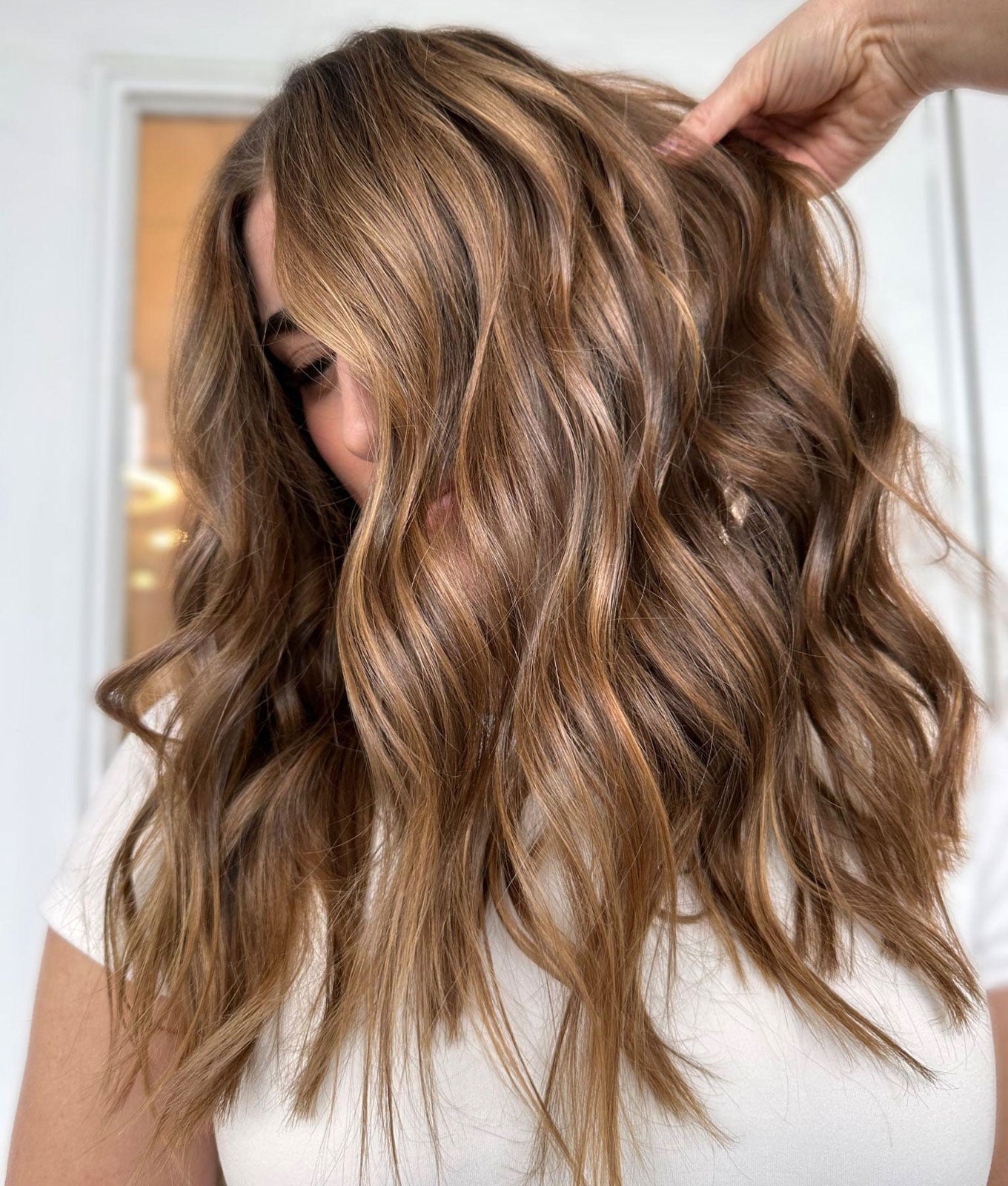
How do you ask for a natural balayage that does not look like you tried? Start with a light brown base and request subtle, face-framing lightness rather than all-over lift. The side part and soft blowout here keep the blend soft and the overall effect low-key. Ask your colorist for: collarbone length light brown with subtle balayage. Thick, wavy hair at collarbone length lets the subtle dimension read as texture rather than color, which is the whole point.
Collarbone Bob With Rose Gold And Blonde Highlights
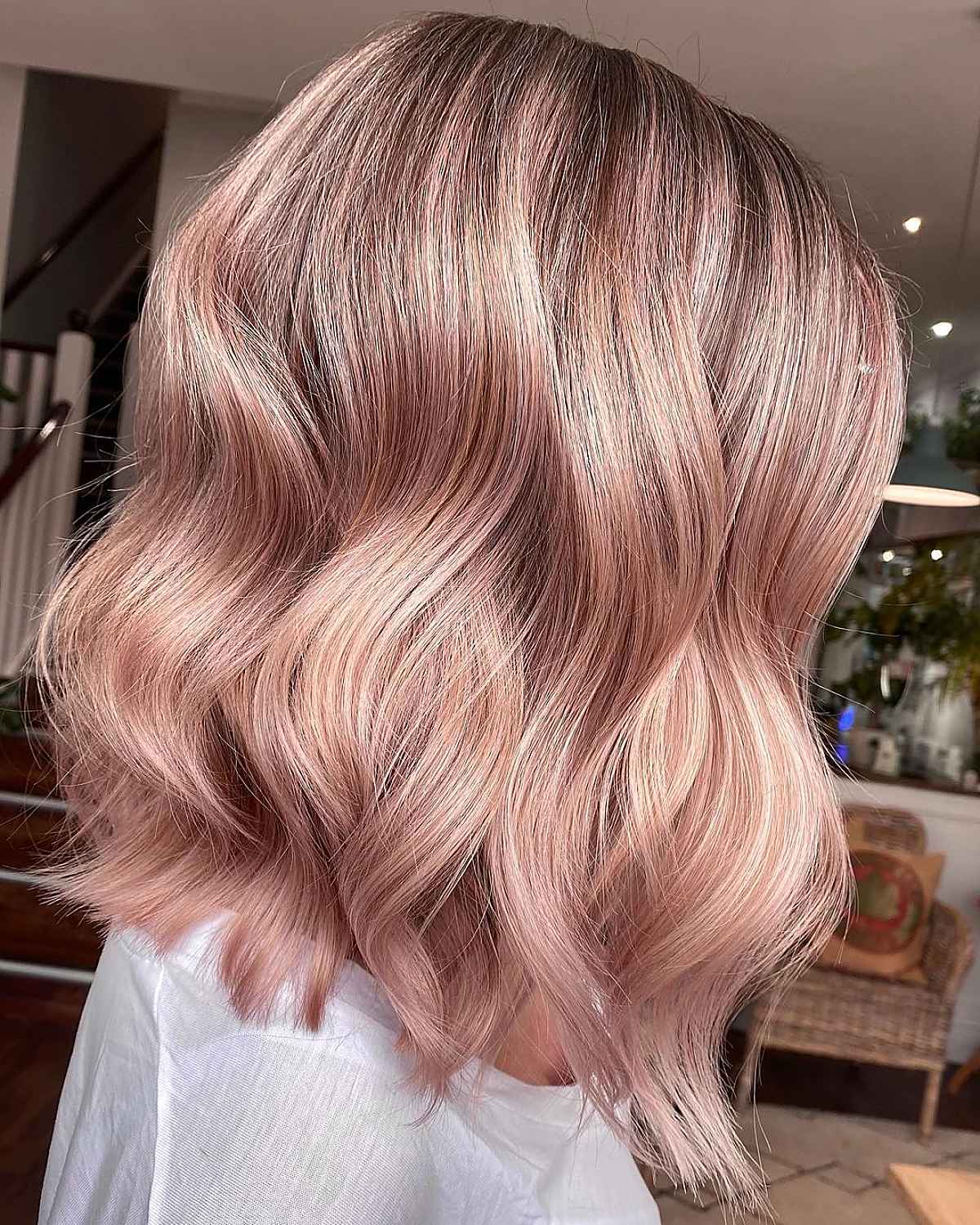
A rose gold base with blonde highlights is a spring or summer color through and through, trading neutral beige tones for something with actual warmth. The collarbone bob keeps the shape clean, while the wavy blowout and middle parting let the pinkish shimmer catch light from both sides. Ask your colorist for: collarbone bob with rose gold and blonde highlights. Medium-density wavy hair holds the soft wave pattern without falling flat, and the shade needs regular toning to stay rosy rather than peachy.
Collarbone Copper Base With Blonde Balayage
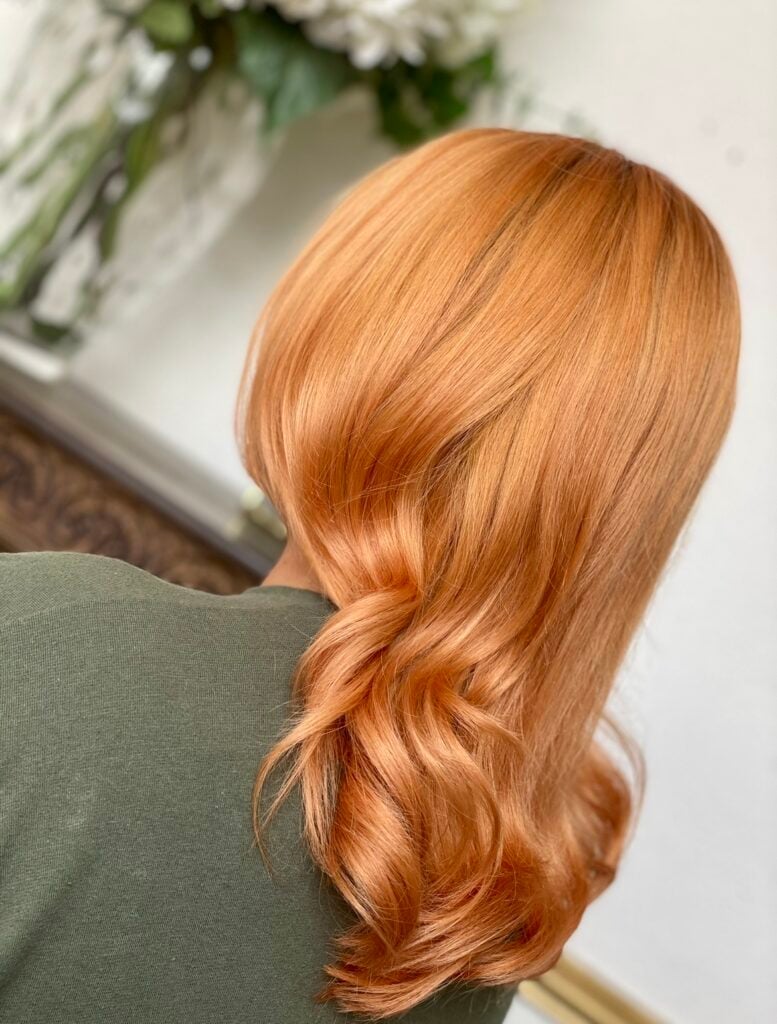
The trick to a vibrant copper base that still catches light is layering a blonde balayage over it, not through it. The colorist paints the lighter pieces on the surface, so the copper stays rich underneath while the blonde adds dimension at the ends. Ask your colorist for: collarbone length copper with blonde balayage and curtain bangs. This works best on thick, wavy hair, where the soft waves let the two tones alternate instead of competing. The middle parting and curtain bangs keep the face open, and the blowout gives it that glossy finish. Copper fades faster than most shades, so plan on a color-depositing conditioner between salon visits.
Shoulder Copper With Auburn Highlights
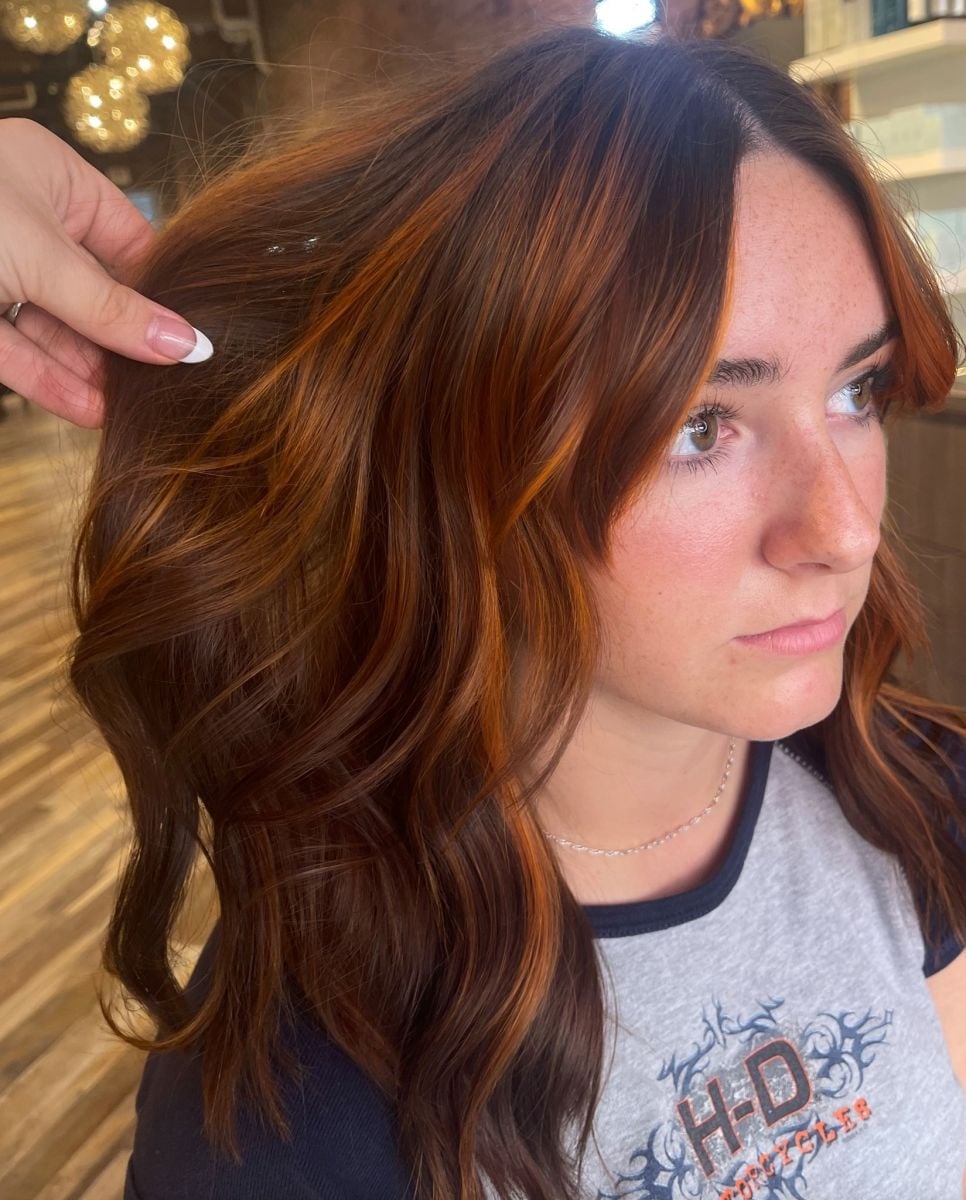
Wondering if copper with auburn highlights will wash you out? It won’t, as long as the tone leans warm rather than brassy. The rich copper base carries the depth, while the subtle auburn highlights add dimension without turning orange. Ask your colorist for: shoulder length copper with auburn highlights and face-framing layers. This suits medium-density hair with natural wave, because the layers give the loose waves something to grip. The middle parting and face-framing layers soften the jaw, and the warm tones work well for pale skin with warm undertones. A trim every six to eight weeks keeps the shape clean, and the color holds its warmth for about four weeks before the red starts to mellow.
Shoulder Vibrant Ginger Shag With Full Bangs
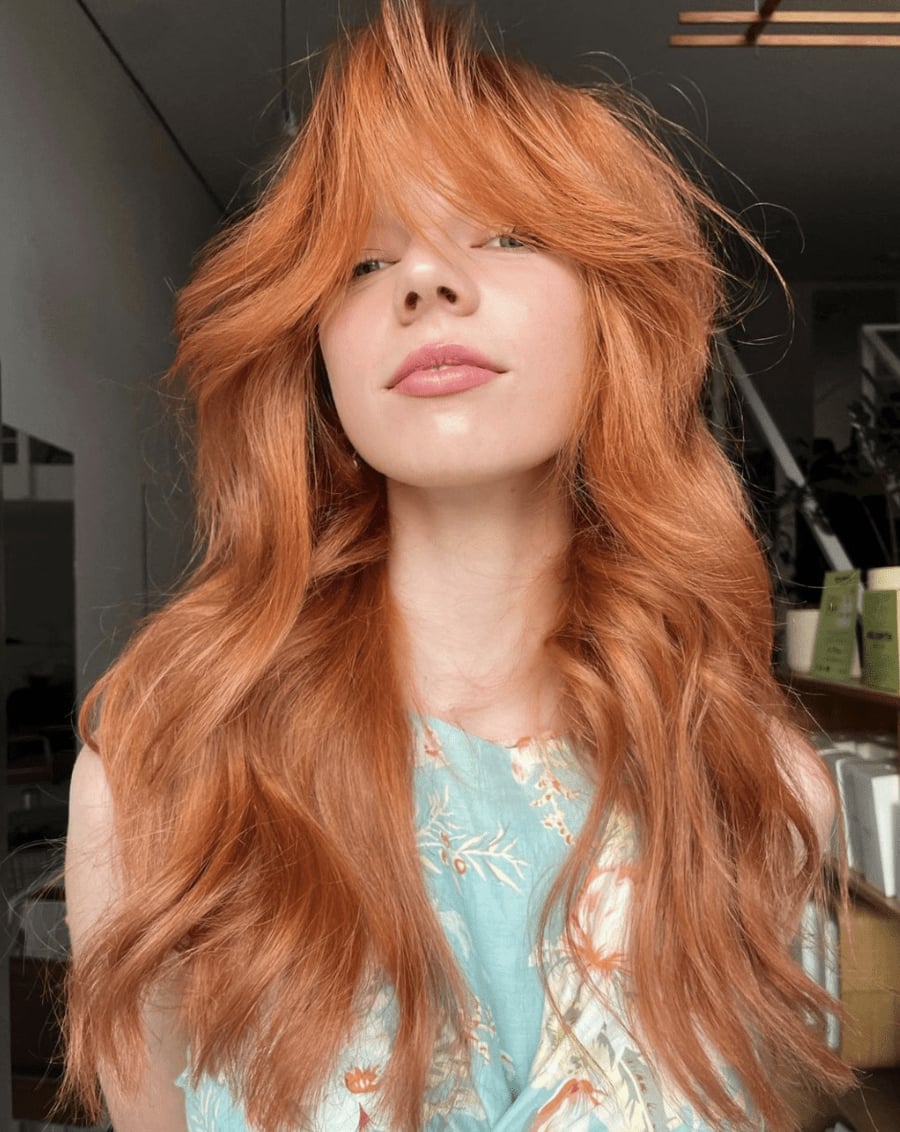
A vibrant ginger shag is a commitment, and the full bangs are the first thing you’ll notice. The cut relies on layers to build that thick, wavy texture, so the color sits on top of movement rather than flat sections. Ask your stylist for: shoulder length vibrant ginger shag with full bangs. The upkeep is real: full bangs need a trim every three to four weeks to stay out of your eyes, and the ginger tone fades fast, so you’ll be back for a gloss every six weeks or so. The payoff is a bold, fashion-forward color that doesn’t need much styling, just a bit of texture spray to keep the waves from falling flat.
Shoulder Platinum Blonde With Face-Framing Bangs
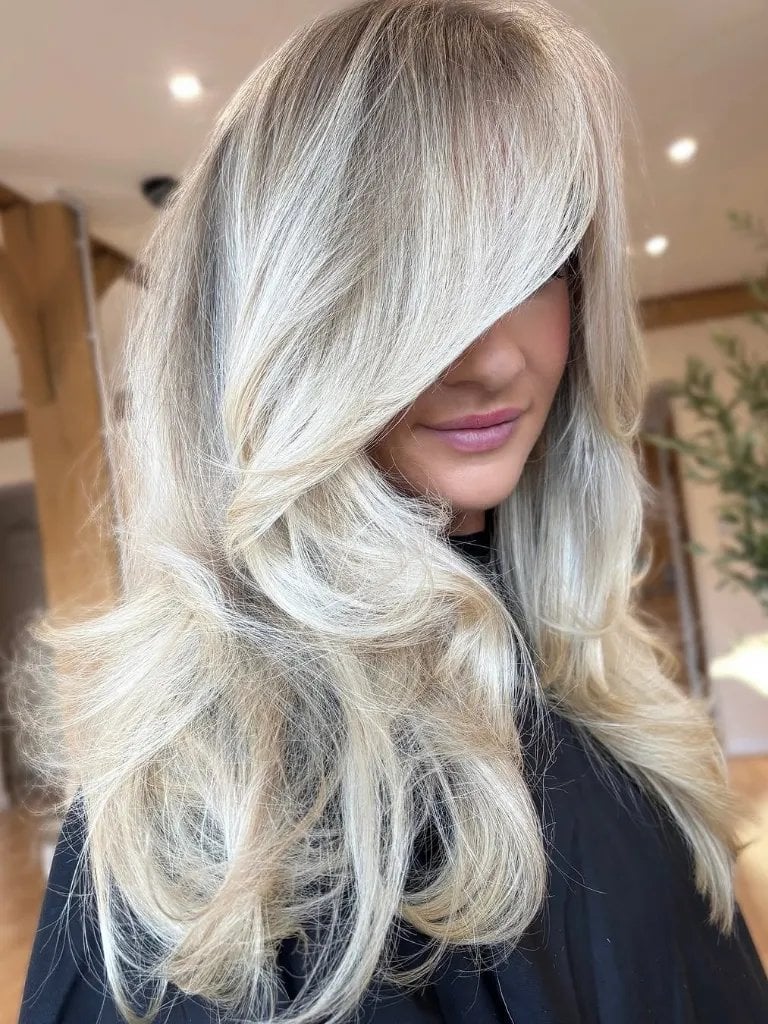
How do you ask for platinum without ending up with a yellow helmet? You name the exact details: shoulder length, bright platinum, face-framing bangs. The color is a cool, bright platinum with subtle ash undertones, and the side parting keeps the bangs from reading as a solid curtain. Ask your colorist for: shoulder length platinum blonde with face-framing bangs. This works well on fine, wavy hair because the layers add volume without weight. The bangs soften the face, and the ash undertone counters any brassiness. Platinum requires a toning appointment every four to six weeks, and a purple shampoo at home keeps the yellow away between visits.
Shoulder Light Brown With Blonde Balayage Curls
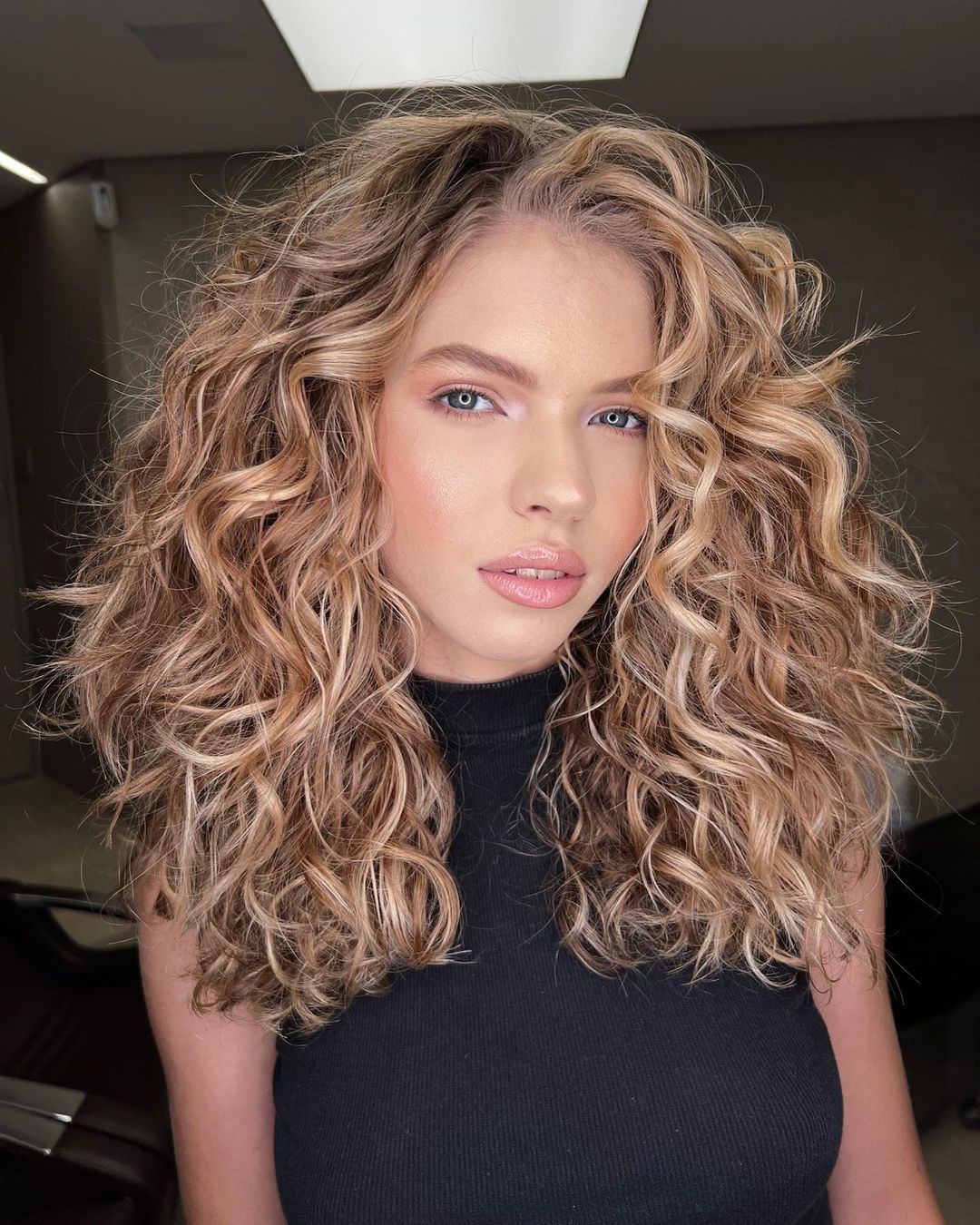
Balayage on curly hair is a different game than on straight hair, because the curls hide the transition. The colorist paints the blonde on the surface of each curl, so the light brown base stays underneath and the bright pieces peek through as the hair moves. Ask your colorist for: shoulder length light brown with blonde balayage, curtain bangs. This technique suits thick, curly hair best, since the defined curls show off the dimension. The curtain bangs frame the face without fighting the curl pattern, and the middle parting keeps the volume balanced. To get those voluminous curls, use a curl cream and a diffuser, then let them set before you touch them.
Shoulder Medium Brown With Golden Blonde Highlights
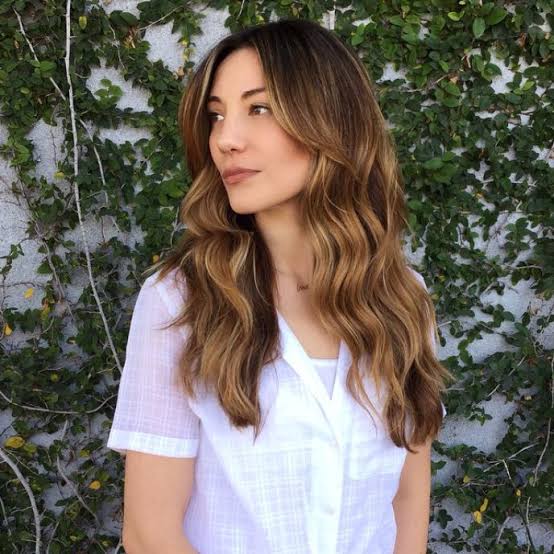
Golden blonde highlights on medium brown hit different than ash or beige versions, warmer, more sun-bleached than salon-crafted. The side part and loose blowout waves let the curtain bangs feather outward, and the shoulder length keeps everything from feeling heavy. This is a medium density, wavy texture situation; straight fine hair would need a little curl help to show the dimension. Ask your colorist for: shoulder length medium brown with golden blonde highlights and curtain bangs. Golden highlights add warmth, and a trim every six to eight weeks keeps the shape from turning shaggy.
Mid-Back Vibrant Copper Red
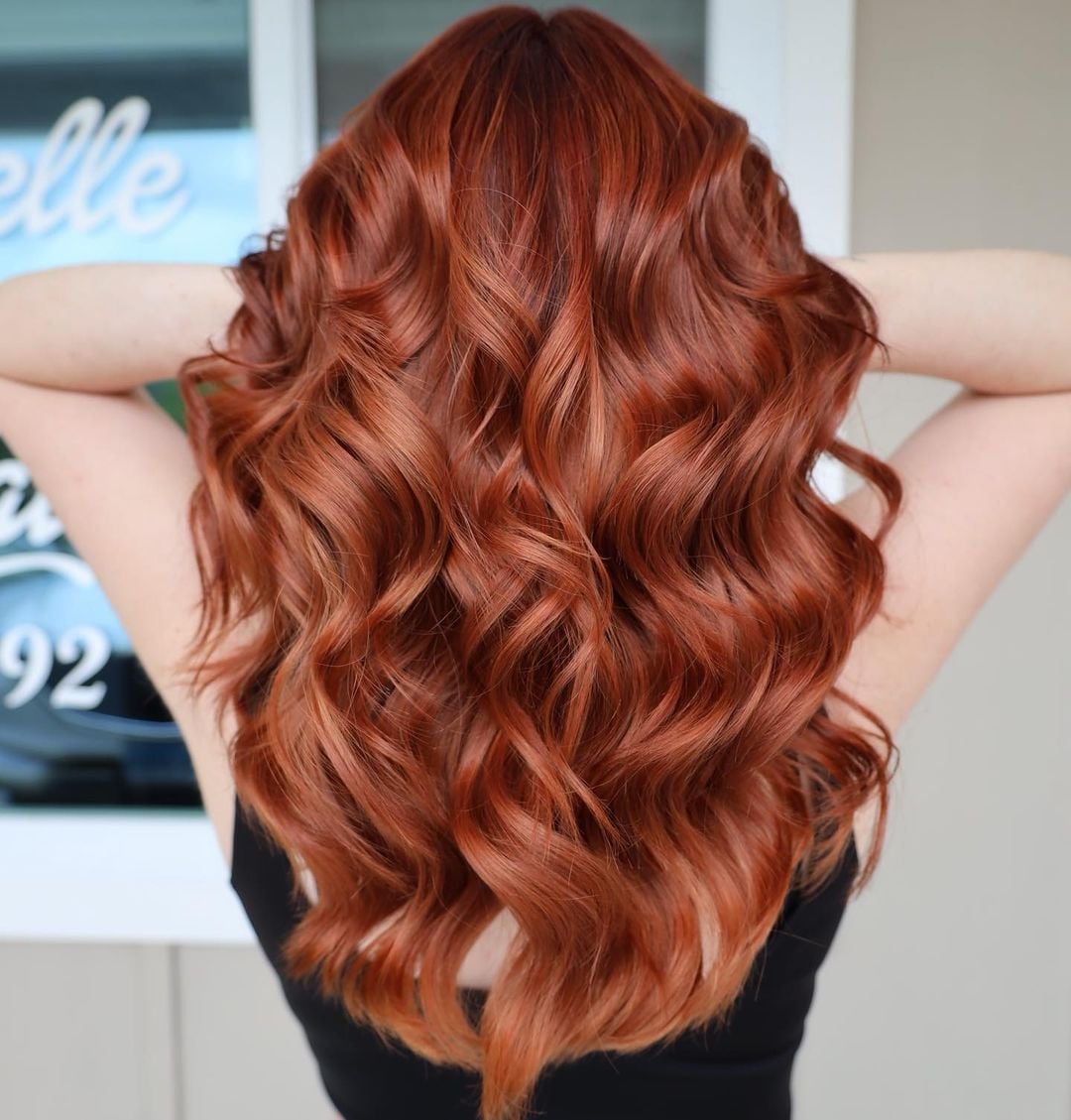
Vibrant copper red lands somewhere between a pumpkin and a new penny, and on mid-back thick waves it shows up as a bold, deliberate choice. The back-view photo shows the full weight of it: loose, voluminous curls that fall in layers instead of one flat block. This is a cold-weather color in the sense that it pairs naturally with sweaters and low sun, but it works year-round if you are committed to the upkeep.
Thick, wavy hair can hold that much pigment without looking flat; finer textures might need a gloss to get the same saturation. Ask your colorist for: vibrant copper red all over, mid-back length. Reds fade fast, so a color-depositing shampoo and conditioner are essential between appointments. This is a statement, not a subtle shift, know that going in.
Mid-Back Vibrant Red With Tonal Variations
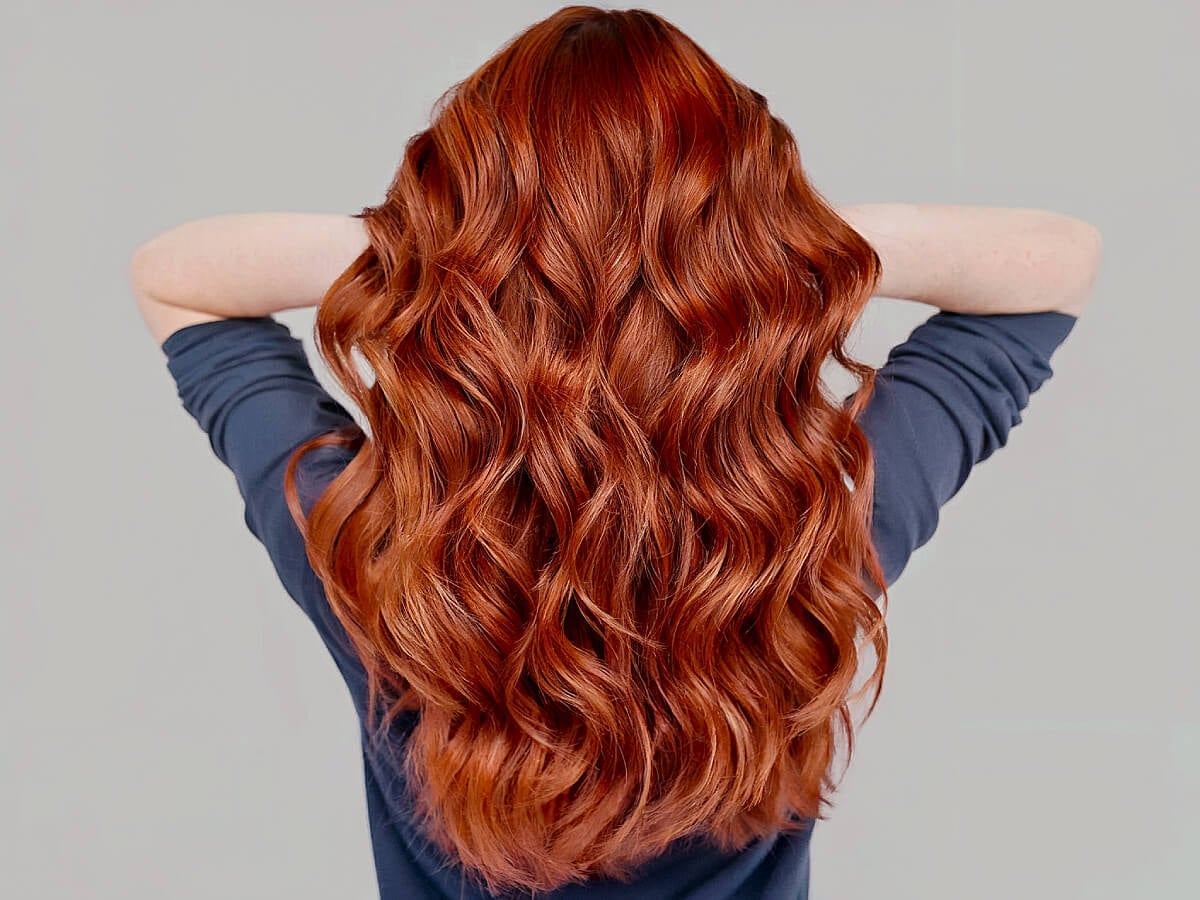
Vibrant red with tonal variations means it is not one uniform shout of color: the back-view blowout shows deeper shadows near the roots and brighter ends, which gives thick, wavy hair a sense of movement even when it is still. The middle part lets the color fall symmetrically, and the mid-back length provides enough canvas for those subtle shifts to register.
Here is the honest drawback: vibrant red fades faster than any other shade in the spectrum. Within three to four weeks, that jewel tone can shift toward pink or rust if you are not using a color-depositing shampoo. A glossing treatment every four to six weeks helps the tonal variations stay distinct rather than blurring into one muddy note. Ask your colorist for: vibrant red all over, mid-back length. It is a high-maintenance relationship, but the payoff is a red that actually looks dimensional.
Mid-Back Spiced Cherry Red With Balayage
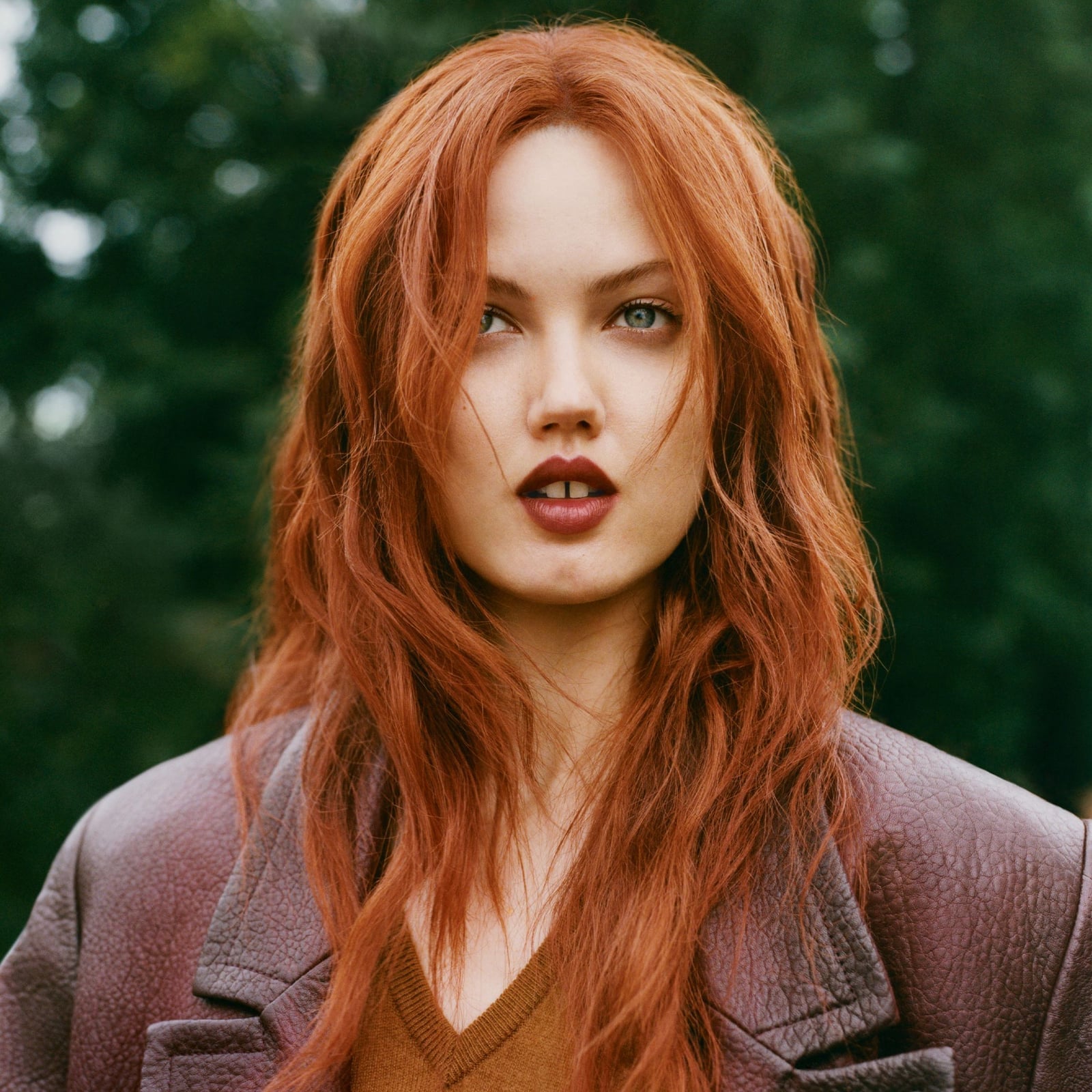
How do you ask for a red that is not just red but spiced cherry red with balayage? Start with the base: spiced cherry reads as a cool-leaning burgundy with a brown undertone, not a straight fire-engine. The balayage on thick, wavy mid-back hair lifts sections around the face and ends into a slightly lighter, brighter cherry, while the curtain bangs frame everything in the deeper base hue.
The middle part and blowout styling show the transition from root to tip clearly, which is the whole point of balayage, no harsh lines, just a gradient. Thick, wavy texture helps the lighter pieces sit visibly on top of the darker base. Ask your colorist for: spiced cherry red with balayage and curtain bangs. This is not a color you explain in vague terms; bring a reference photo and be specific about the depth you want at the root versus the ends.
Mid-Back Warm Blonde With Subtle Highlights and Air Dried
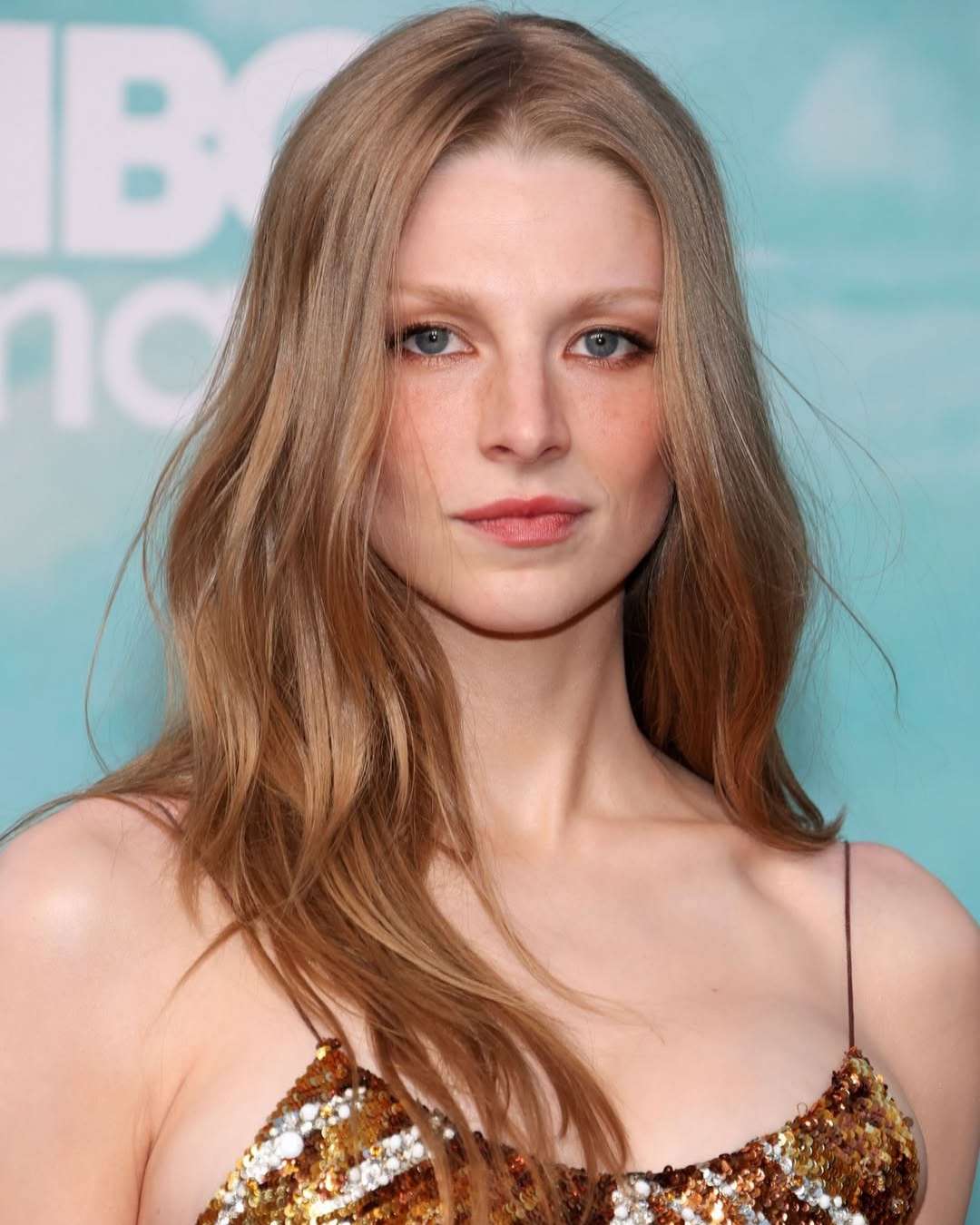
Warm blonde with subtle, blended highlights and an air-dried finish is the color equivalent of a good pair of jeans. It does not try hard, but it looks right. The mid-back length falls in loose waves from a middle part, and the highlights are so seamlessly integrated that they read as natural lightening rather than salon work. Thick, wavy hair is ideal here because the texture adds the movement that the subtle color alone cannot provide. Ask your colorist for: warm blonde with subtle, blended highlights. A sea salt spray encourages the air-dried wave pattern, and the low-styling approach means this works for everyday wear without a blowout commitment.
Mid-Back Mocha Brown With Straight Finish
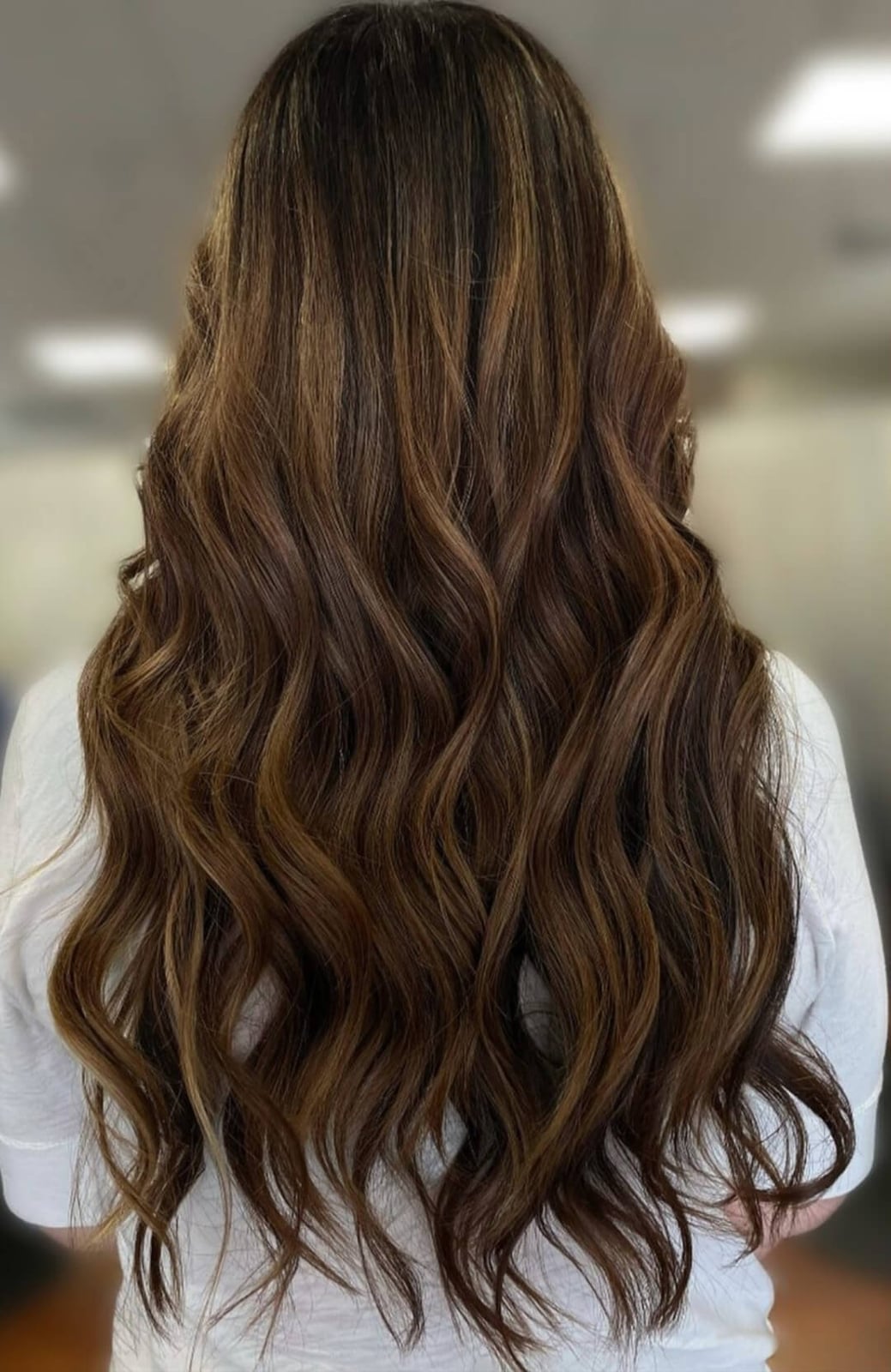
Is mocha brown the rare shade that looks better the longer it grows? When it lands on thick, straight hair at mid-back length with long layers, the answer is a confident yes. The uniform tone forms a solid block of rich color, which is exactly why it rewards hair that already has weight and movement. Fine or thin textures tend to let a single-tone mocha fall flat; the density of thick hair keeps the glossy finish looking polished.
This is a no-bangs, middle-part situation that works well on oval and longer face shapes, since the straight fall elongates the face instead of widening it. Ask your colorist for: mid-back length, mocha brown, poker straight. The sleekness depends on regular trims, so plan on a maintenance appointment every six to eight weeks to keep the ends from splitting and the line from looking ragged.
Mid-Back Dark Ash Gray With Lavender Tones
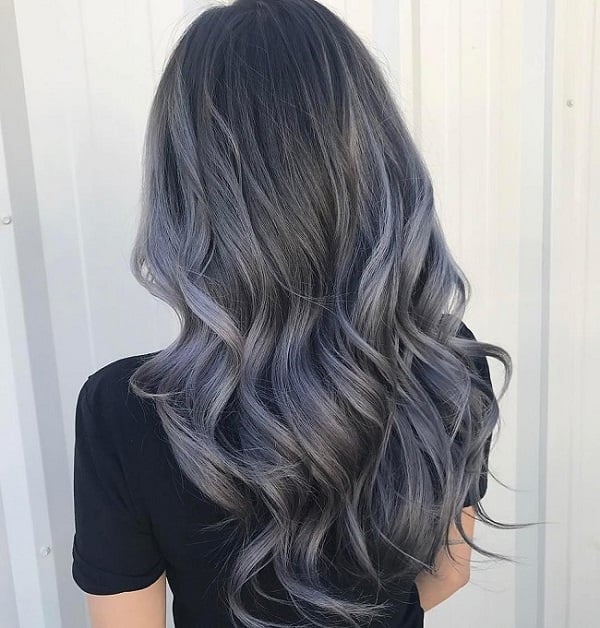
The clever part of this design is the tonal range: a dark ash gray base with lighter ash gray and subtle lavender tones gives thick, wavy mid-back hair dimension without a single warm note. Loose waves and a middle part let the lighter pieces catch the eye, so the color shifts as the hair moves. Cool gray is high-maintenance. Brassiness shows up as a yellow or green cast, and it will appear within a few washes if you skip the toning.
Ask your colorist for: dark ash gray with lavender tones, mid-back length. A purple shampoo used weekly helps keep the cool tone honest, and a toning appointment every four to six weeks is the standard rhythm. Anyone who cannot commit to that schedule should pass; this is a salon-only service that fades fast without upkeep.
Collarbone Platinum Blonde With Root Shadow
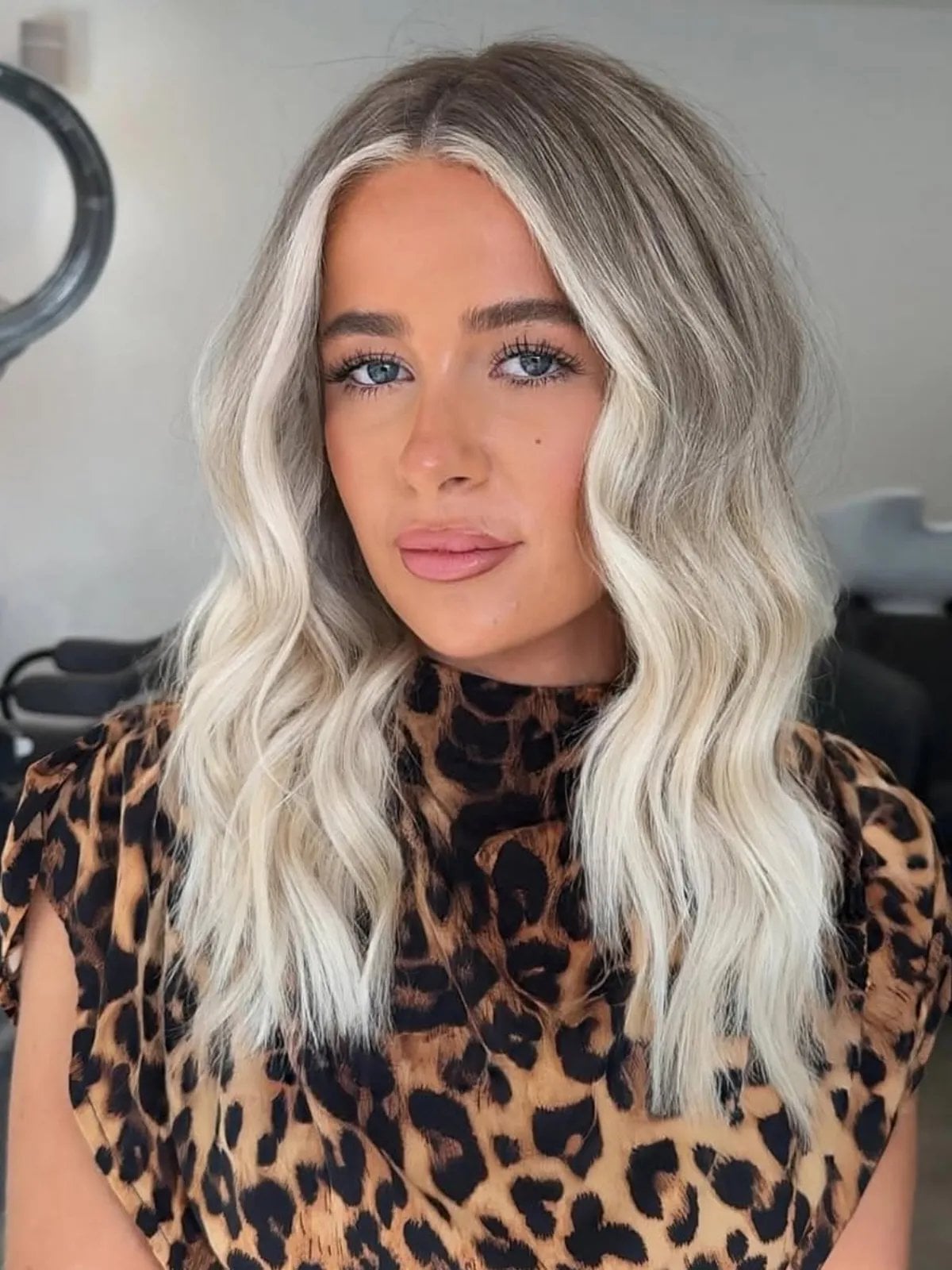
Platinum blonde with a darker root shadow is a two-step process that belongs in a salon chair. The collarbone length with loose waves and a middle part shows off the contrast between the bright lengths and the lived-in root, which is the whole point of the design. Lifting thick hair to platinum takes multiple sessions to avoid breakage, and the root shadow is painted on afterward to soften the grow-out line. Ask your colorist for: collarbone length platinum blonde with root shadow. This is not a weekend DIY project; the bleach alone demands a professional hand.
Final Thoughts
For pale skin, the decision rule is simple: cool undertones pair best with ash, platinum, and cool reds, while warm undertones shine with golden blonde, caramel, and warm copper. The shade that makes your complexion glow is the one you will actually maintain.
- Schedule toning glosses every 4-6 weeks to maintain cool blonde and ash tones.
- Deep condition color-treated hair weekly to preserve vibrancy and combat dryness.
- Use color-safe shampoos and conditioners to prevent premature fading.
- Allow 6-8 weeks between significant color services for hair health.
- Protect colored hair from heat styling with a heat protectant spray.
Find the shade that makes your complexion glow.
