

Red balayage is a hand-painted color technique that melts a lighter red tone through your base shade, skipping the harsh line of a full bleach-and-tone. This season, the shift is toward soft face-framing layers and lived-in color that grows out without a hard border.
With 27 ways to wear Red Balayage, you can go from a low-maintenance copper that fades gracefully to a high-impact magenta that demands a gloss every six weeks. Whether your hair is fine and falls flat by midday, or you are dodging a visible grow-out line, there is a version here that fits your texture, length, and schedule.
Vibrant Red Base With Lighter Red Balayage
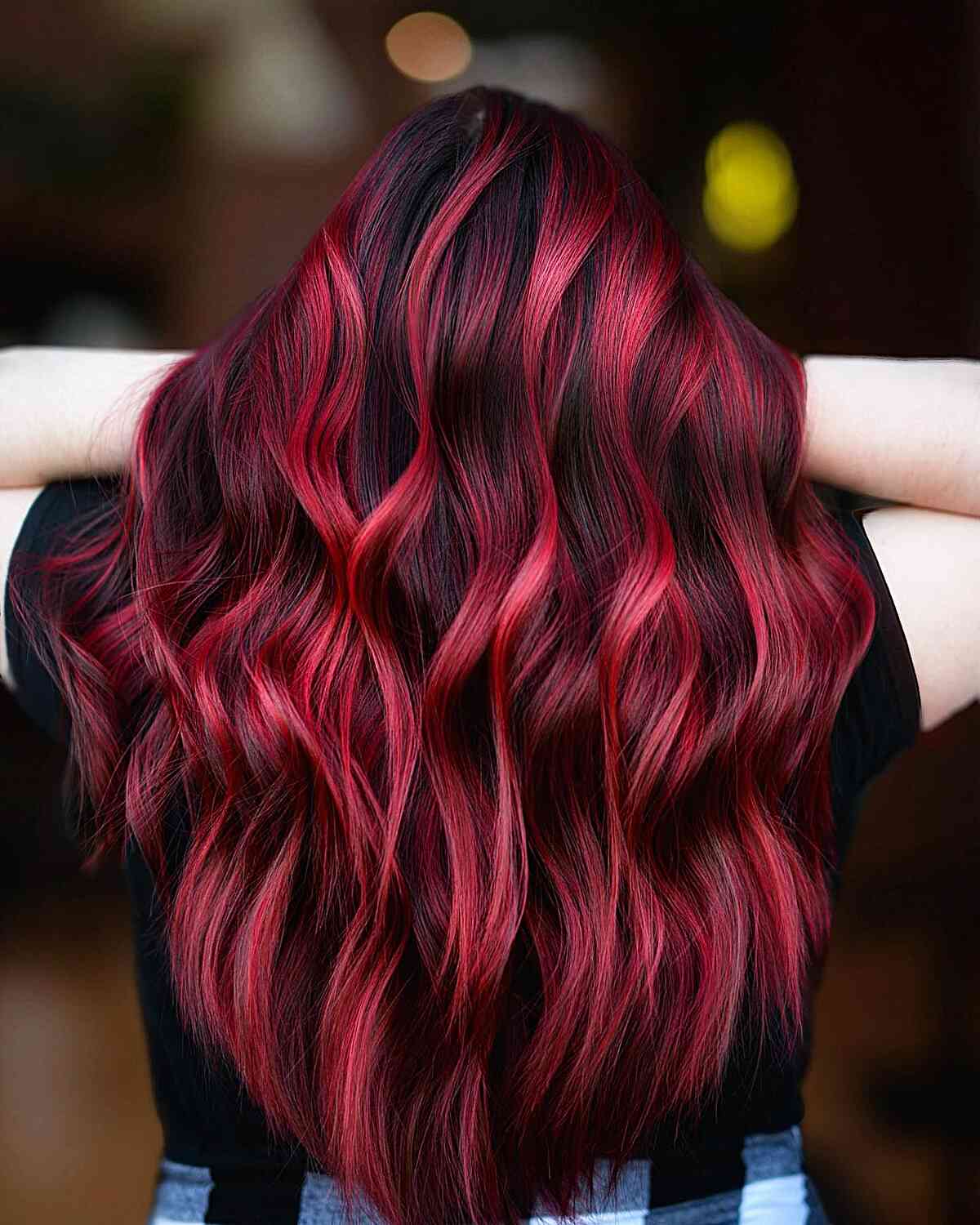
The balayage here is the architectural trick: a vibrant red base carries lighter red pieces that are painted on freehand, so the transition reads as a gradient rather than a stripe. Because the lighter tones sit mostly through the mid-lengths and ends, the color gains a depth that a single flat red never manages. The middle parting and wavy blowout let the lighter sections catch the eye from behind, which is exactly where the dimension lives. Thick, wavy hair at mid-back length has enough surface area to show off the contrast without the lighter red disappearing into the texture. Ask your colorist for: vibrant red base with lighter red balayage, mid-back layers. A wavy blowout adds volume, and this vibrant red balayage needs a refresh every six to eight weeks to stay saturated.
Intense Red Base With Lighter Red Dimension
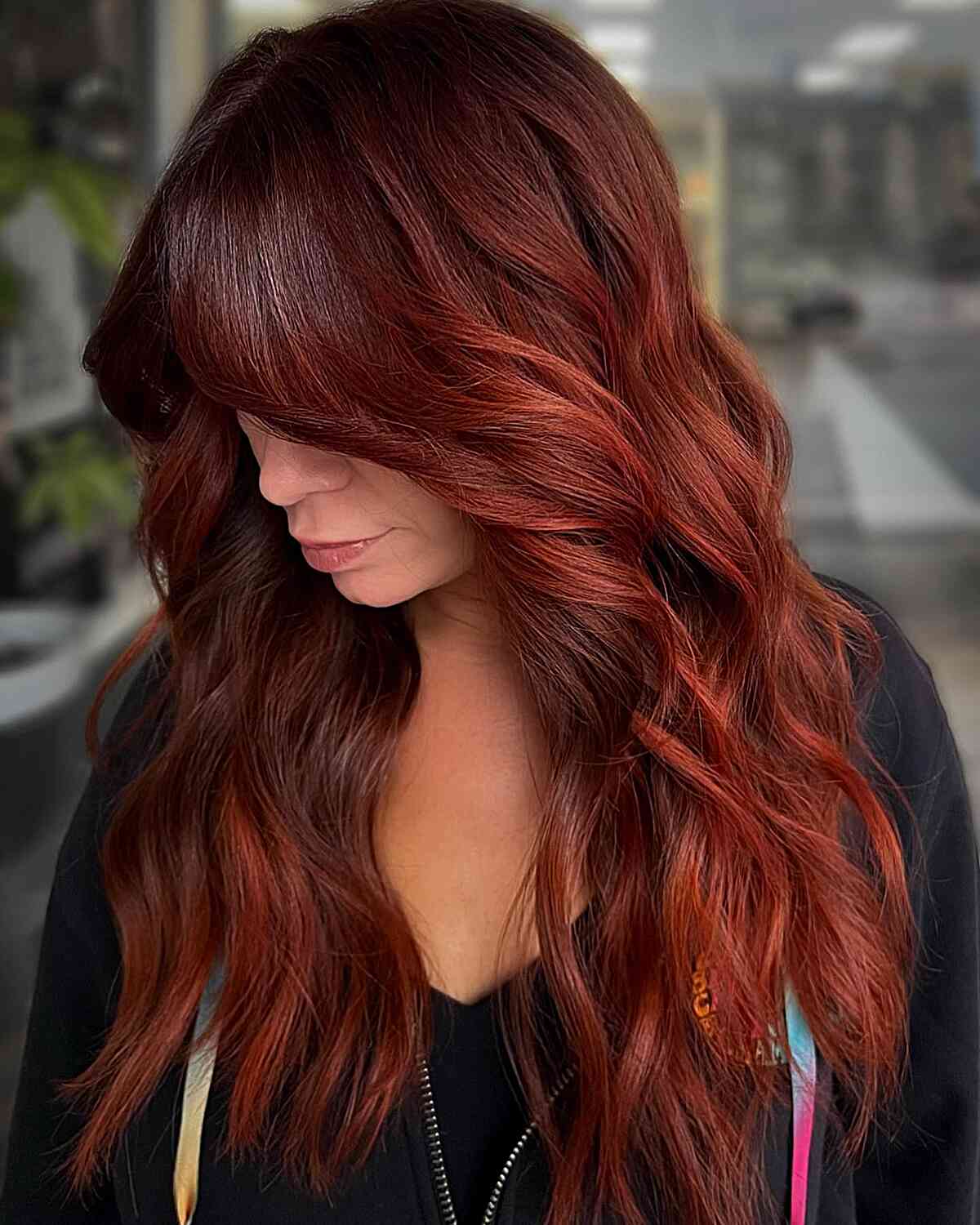
If a vibrant red is a stop sign, an intense red is a fire alarm: deeper, more saturated, with less orange and more pigment packed into the base. The balayage then lifts sections of that base to a lighter red, which gives the color a layered feel instead of a flat block. On thick, wavy hair at mid-back length, the lighter red pieces follow the waves, so the dimension shifts as the hair moves. This intense red balayage suits anyone who wants a high-impact red that still has movement and depth rather than a single uniform tone. Ask your colorist for: intense vibrant red base with lighter red balayage. A color-depositing shampoo keeps the vibrant red from turning brassy between salon visits.
Deep Red With Auburn Balayage Highlights
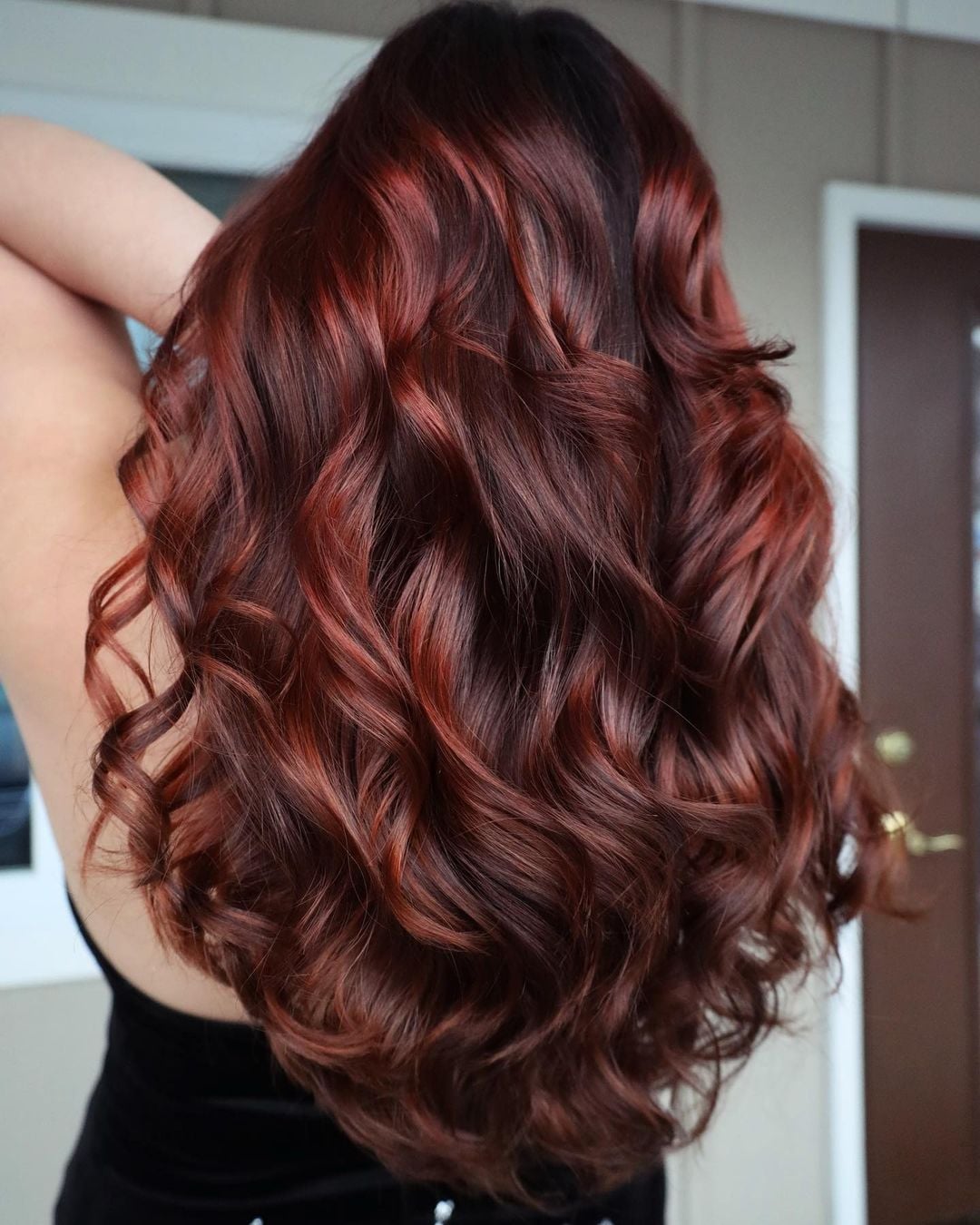
Wondering if a red can look rich without being loud? A deep red base with auburn balayage highlights answers that. The auburn pieces are lighter and warmer than the base, so they add a subtle glow instead of a stark stripe. On long, thick, wavy hair at mid-back length, the loose waves catch those highlights and give the color a soft, sun-warmed quality that a flat deep red lacks. The middle parting keeps the distribution even, so the warmth shows from both sides. This combination works for anyone who prefers a darker, more understated red with just enough lift to keep it from looking dull. Ask your colorist for: deep red base with auburn balayage. A voluminous blowout enhances the waves, and a heat protectant is essential before styling.
Rich Deep Red With Brighter Red Balayage
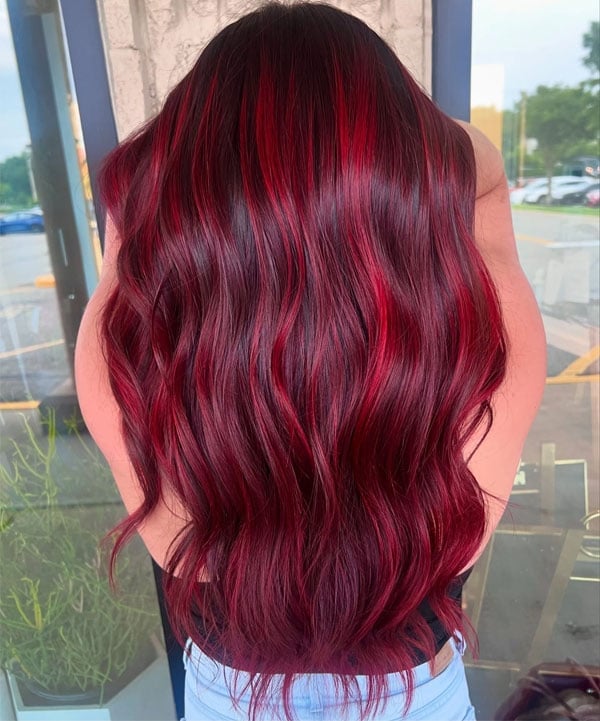
The design here is a study in contrast: a rich, deep red base with brighter red balayage strands that are noticeably lighter, creating a striking separation between the two tones. The loose waves on thick, mid-back length hair give those brighter strands room to move, so the color shifts from dark to light as the hair curls. The glossy finish makes the brighter red pieces reflect light instead of sinking into the base. Brighter red balayage fades faster than the deep base, and the lighter pieces can pull brassy within a few weeks without a toning shampoo. Ask your colorist for: rich deep red base with brighter red balayage. A shine serum after styling keeps the contrast crisp.
Deep Red Balayage With Darker Roots
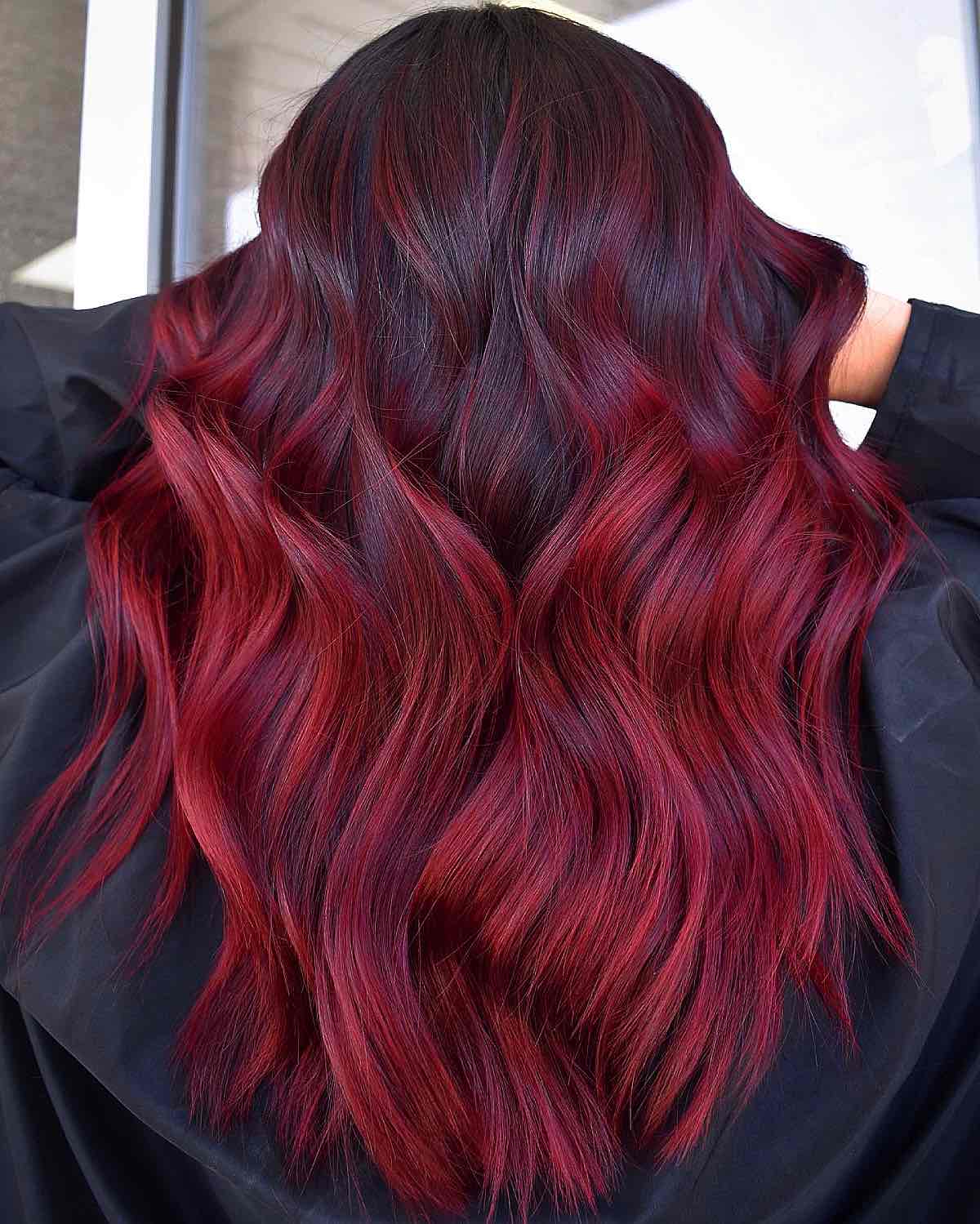
Darker roots are the low-maintenance cheat code of red balayage, and this version blends them seamlessly into vibrant red strands at the ends. The deep red base at the root melts into the brighter red below it, so there is no harsh line to worry about as the hair grows. On thick, wavy, mid-back length hair, the soft waves help the darker root blend disappear into the color, making the whole thing look intentional. The upkeep is forgiving: a trim every eight to ten weeks keeps the layers sharp, and the root shadow means you can stretch the color appointment. Ask your colorist for: deep red balayage with darker root blend. Soft waves enhance the blended color, and that is about it.
Dark Red Base With Lighter Red Balayage
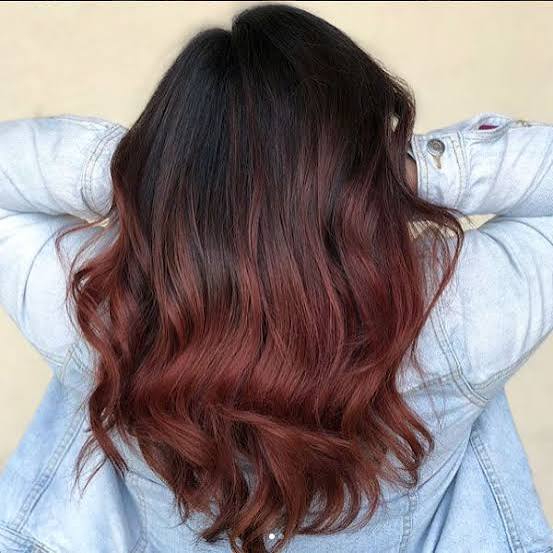
Wondering how to get that precise dark-to-light red gradient without a harsh line? A dark red base with lighter red balayage creates a seamless transition that keeps the roots deep while the ends appear brighter. The color shift shows best on thick, wavy hair at mid-back length with layers. Ask your colorist for: dark red base transitioning to lighter red balayage. A glossy finish makes the gradient pop.
Dark Red With Bright Red Copper Balayage
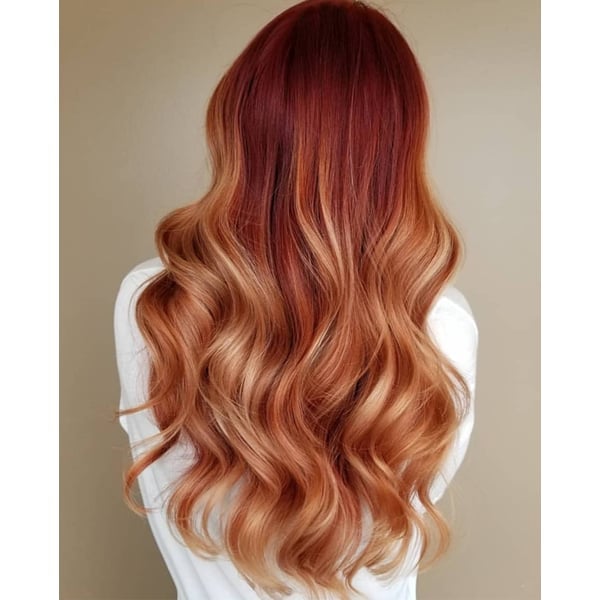
The design here is a deliberate study in contrast: a dark red base with bright red and copper balayage. The colorist weaves bright red and copper tones through the mid-lengths and ends, letting the dark base anchor the whole thing. This technique lands best on thick, wavy hair at mid-back length with visible layers, so each tone has room to breathe. A middle parting keeps the application even on both sides. The result is a vibrant gradient that reads as warm rather than flat.
Dark Red Base With Lighter Red Gradient, Mid-Back
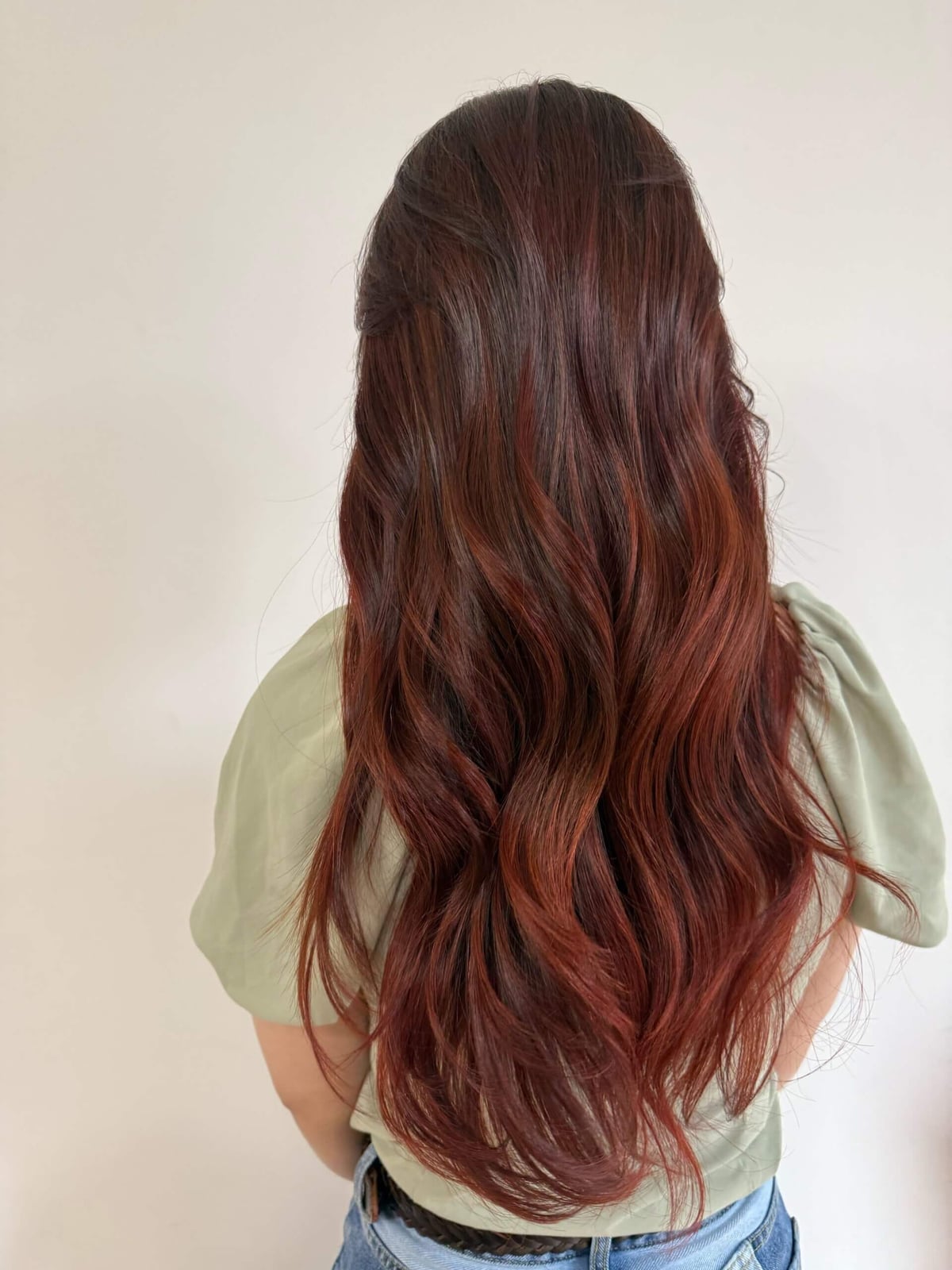
An all-over red is one thing; a dark red base with lighter red balayage gradient is another. This is the version that works for fall through spring, when you want depth at the root and brightness that moves. The gradient lands best on thick, wavy hair at mid-back length with layers, styled in a wavy blowout that shows the color transition. It is a solid choice for the office or a weekend dinner, because the darker roots keep it low-maintenance between appointments.
Dark Brown With Copper Red Balayage
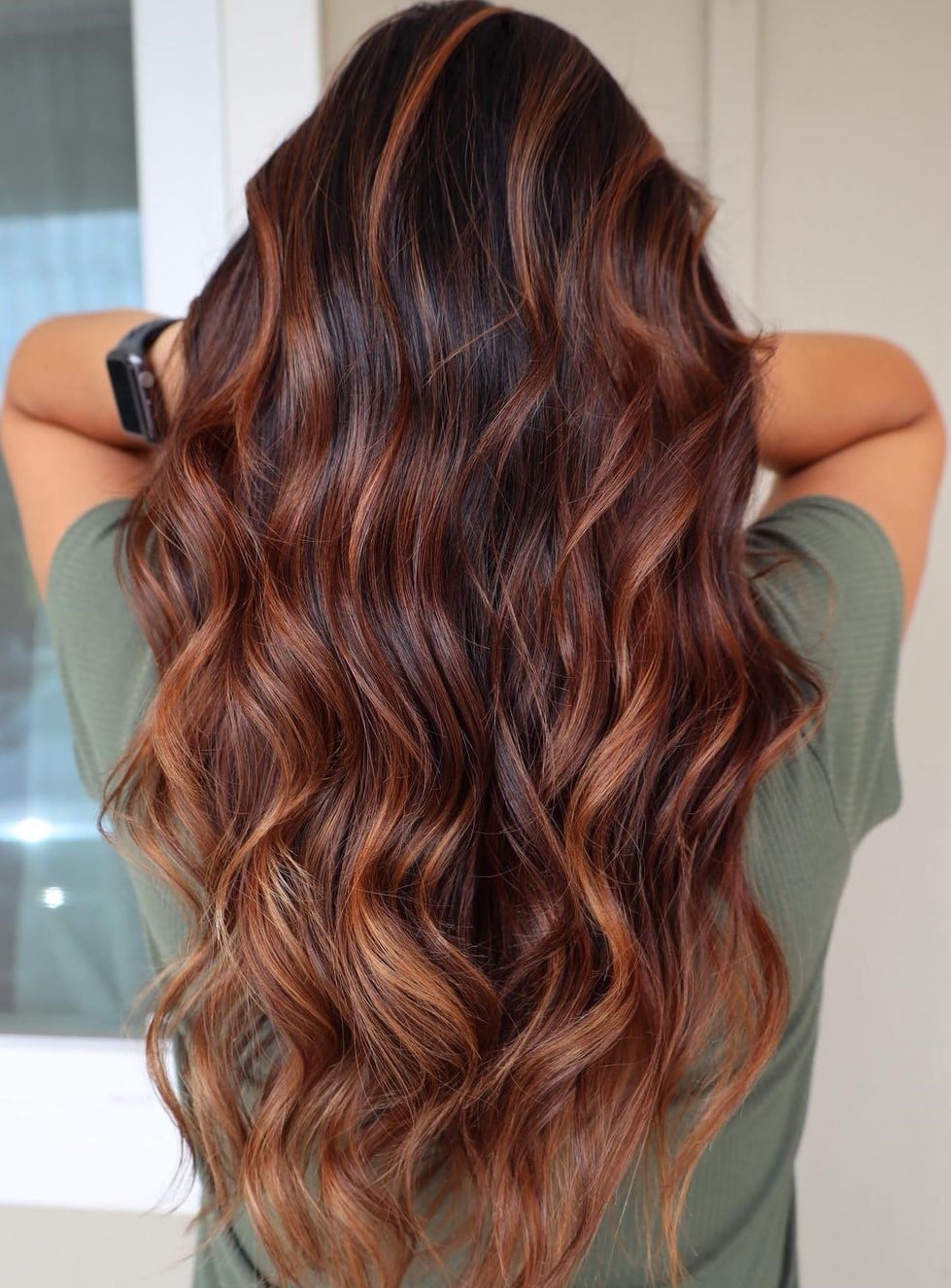
Getting a dark brown base with copper and red balayage to look this blended takes a skilled colorist. The colorist lifts the brown selectively before applying copper and red tones, which is why it is a salon-only job. Thick, wavy hair at mid-back length with layers gives the blend enough movement to look dimensional. Ask your colorist for: dark brown base with copper and red balayage. This warm, lived-in red grows out gracefully.
Dark Brown Base With Copper Red Balayage Waves
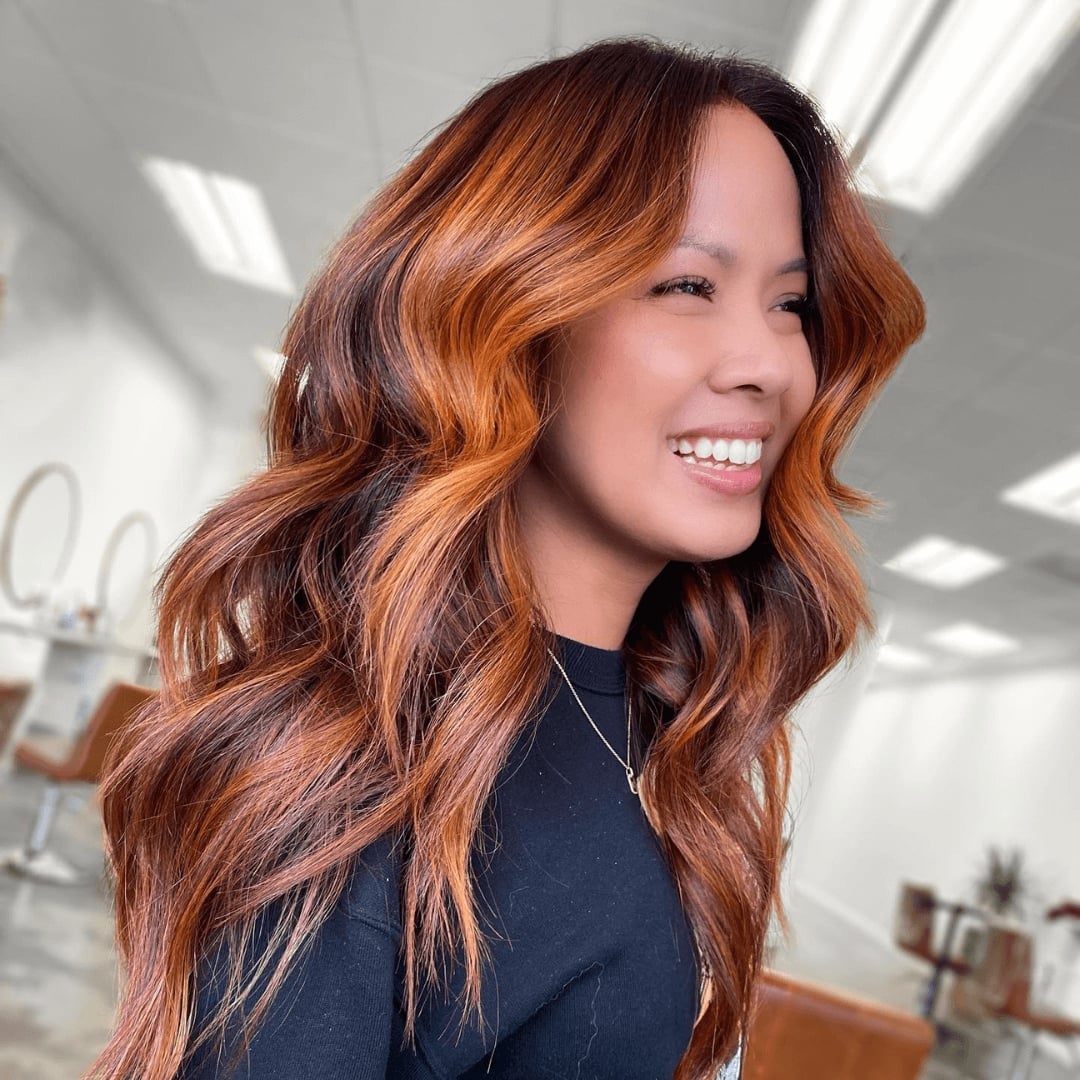
A dark brown base with vibrant copper red balayage is a high-contrast design that fades faster than subtler blends. The copper tones are the first to wash out, usually shifting toward a warmer orange within six weeks. Loose, glossy waves help the dimensional effect hold longer, and a color-safe shampoo is your best bet for keeping the red from turning brassy. Ask your colorist for: dark brown base with vibrant copper red balayage. A toning appointment every six to eight weeks keeps the copper alive.
Dark Brown With Deep Red Balayage Ends
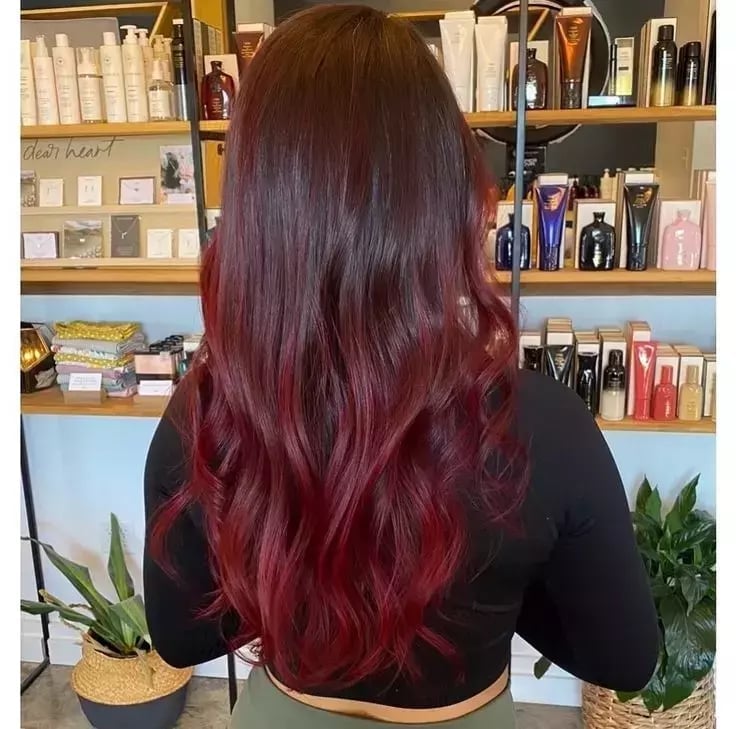
Wondering if you can get a red balayage without a full red head? This one keeps the dark brown base at the roots and drops the deep red only toward the ends, so the payoff is concentrated instead of overwhelming. Thick, wavy hair at mid-back length holds the loose waves that show off the color movement best, and the middle part lets the blend read evenly on both sides. Ask your colorist for: dark brown base with deep red balayage concentrated on ends. Red pigments can bleed into the brown over time, especially with regular heat styling, which can blur that crisp line. Plan on a color-safe shampoo and cooler water to keep the boundary where you put it.
Dark Brown Base With Deep Red Balayage Blend
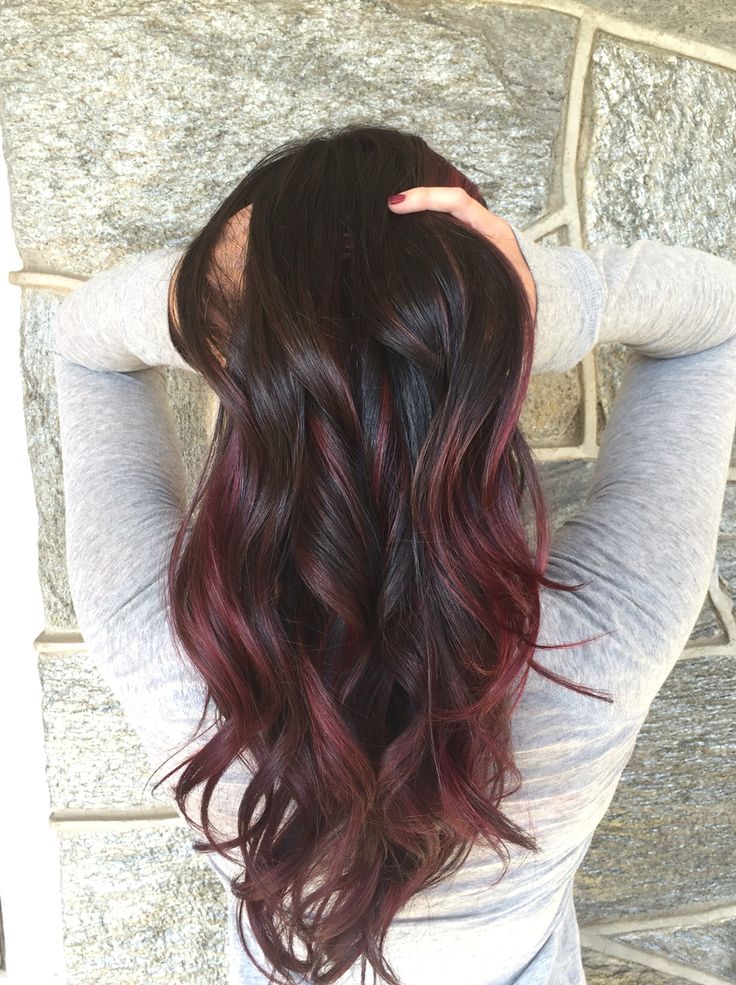
The seamless blend here is the whole trick: the deep red starts subtly around the mid-lengths and builds in intensity toward the ends, so there is no hard line between the dark brown base and the color. On thick, wavy hair at mid-back length, the loose waves catch the transition from every angle, making the dimension look baked in rather than painted on. Ask your colorist for: dark brown base with deep red balayage blend towards ends. This approach grows out gracefully and buys you a few extra weeks between touch-ups. A styling cream keeps the waves defined so the blend stays visible.
Dark Base With Red Auburn Balayage
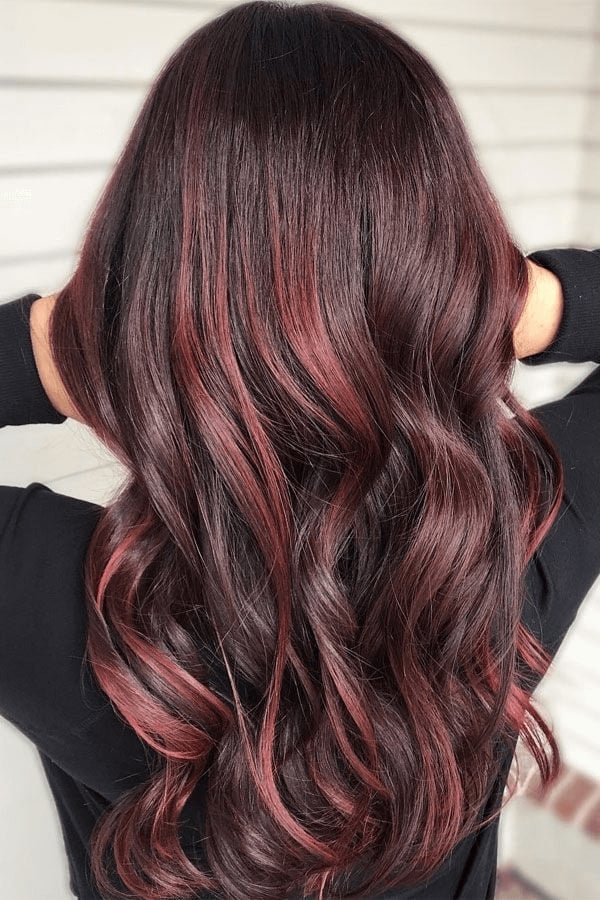
Red and auburn together give you warmth that a single tone cannot manage, and on a dark base those two colors lift the hair without going brassy. Thick, wavy hair at mid-back length is the ideal canvas, since the loose waves and middle parting let both shades catch the light separately instead of merging into one muddy tone. Ask your colorist for: dark base with red and auburn balayage. The auburn skews brown, so this suits anyone who wants red dimension but flinches at a full-on fire truck situation. It also plays nicely with medium density, because the multiple tones add the illusion of volume. Keep the layers trimmed every 8-10 weeks so the blend does not get heavy at the ends.
Red Balayage With Orange Pink Tones
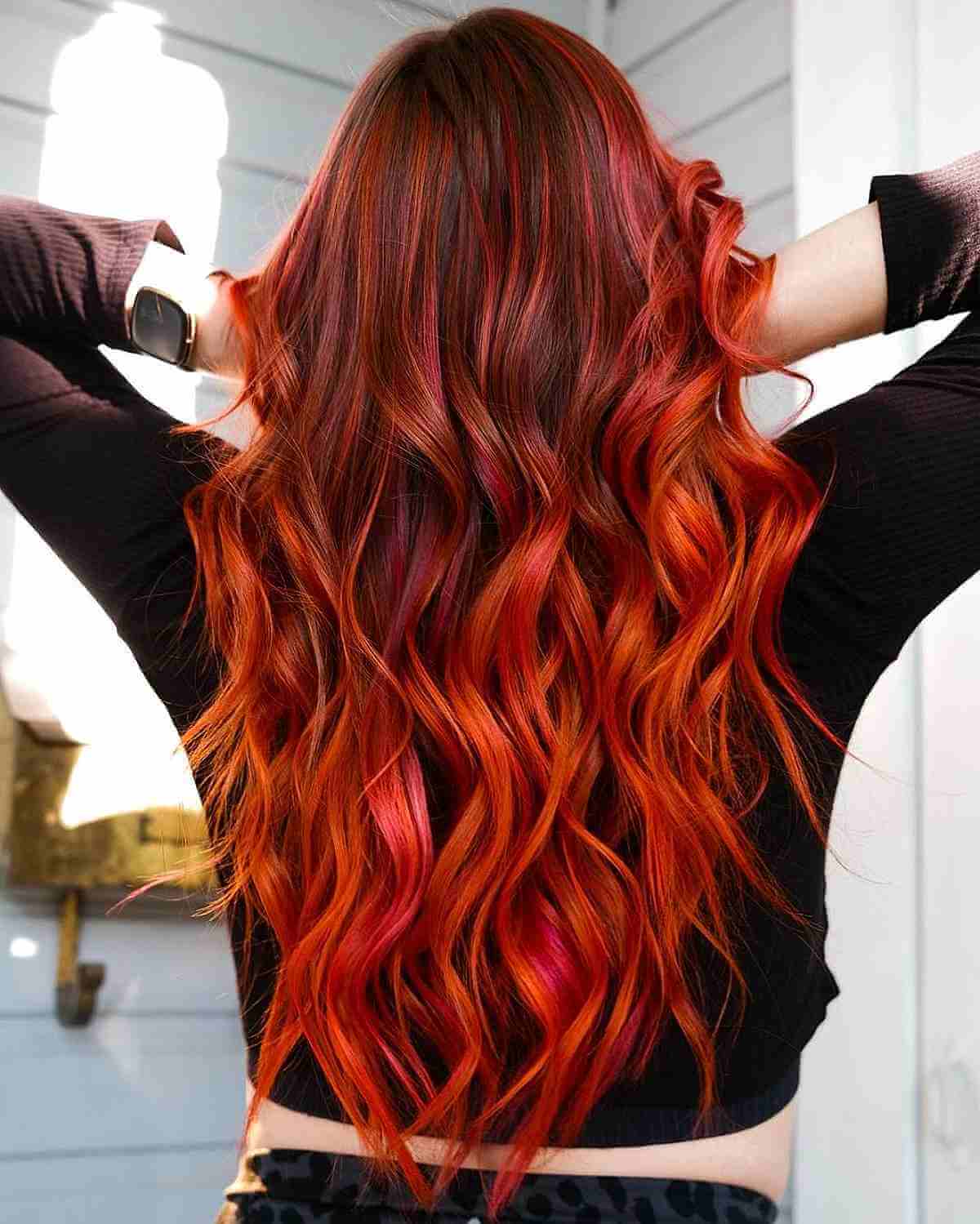
The color placement is doing something specific here: dark red roots give the color weight, then orange and pink tones take over toward the ends for a gradient that feels almost sunset-adjacent. On thick, wavy hair at mid-back length, the wavy blowout spreads those brighter tones so they never sit in one heavy block. Ask your colorist for: red balayage with orange and pink tones. This is a high-maintenance mix, since orange and pink fade faster than deeper reds, and the contrast between root and end means regrowth shows sooner. Expect to refresh the tone every four to six weeks with a color-depositing conditioner, and keep heat styling moderate to slow the fade. If you want a red that stays put, this is not the one.
Vibrant Copper Red Balayage
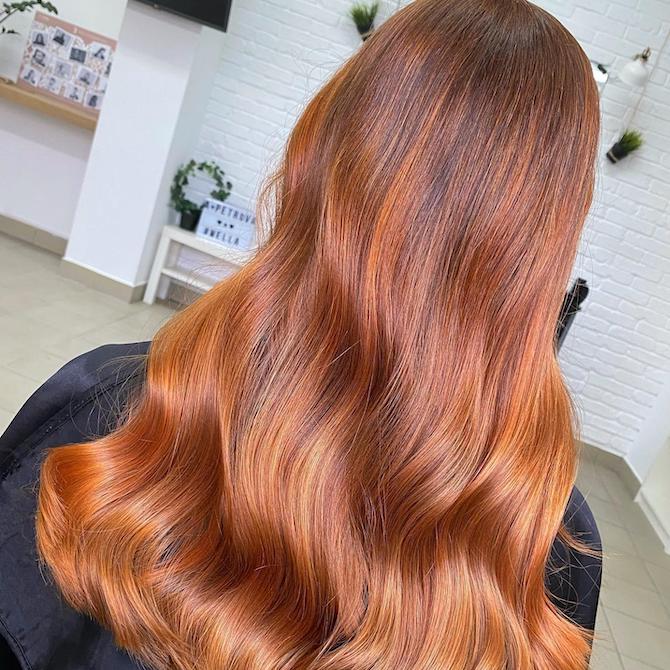
Compared to a deeper red balayage, this copper red version trades the drama for warmth, letting lighter copper tones catch the light while a deeper red base keeps the roots anchored. It is the difference between a color that glows and one that glowers. Thick, wavy hair at mid-back length carries the flowing waves that make the multidimensional blend obvious, and the wavy blowout adds movement without needing styling effort. Ask your colorist for: vibrant copper red balayage with lighter copper tones. This suits anyone who wants red dimension but prefers a tone that leans golden rather than berry. The copper will fade to a softer peach over time, so plan on a gloss every six weeks to keep it fired up.
Copper Red Balayage With Copper Highlights
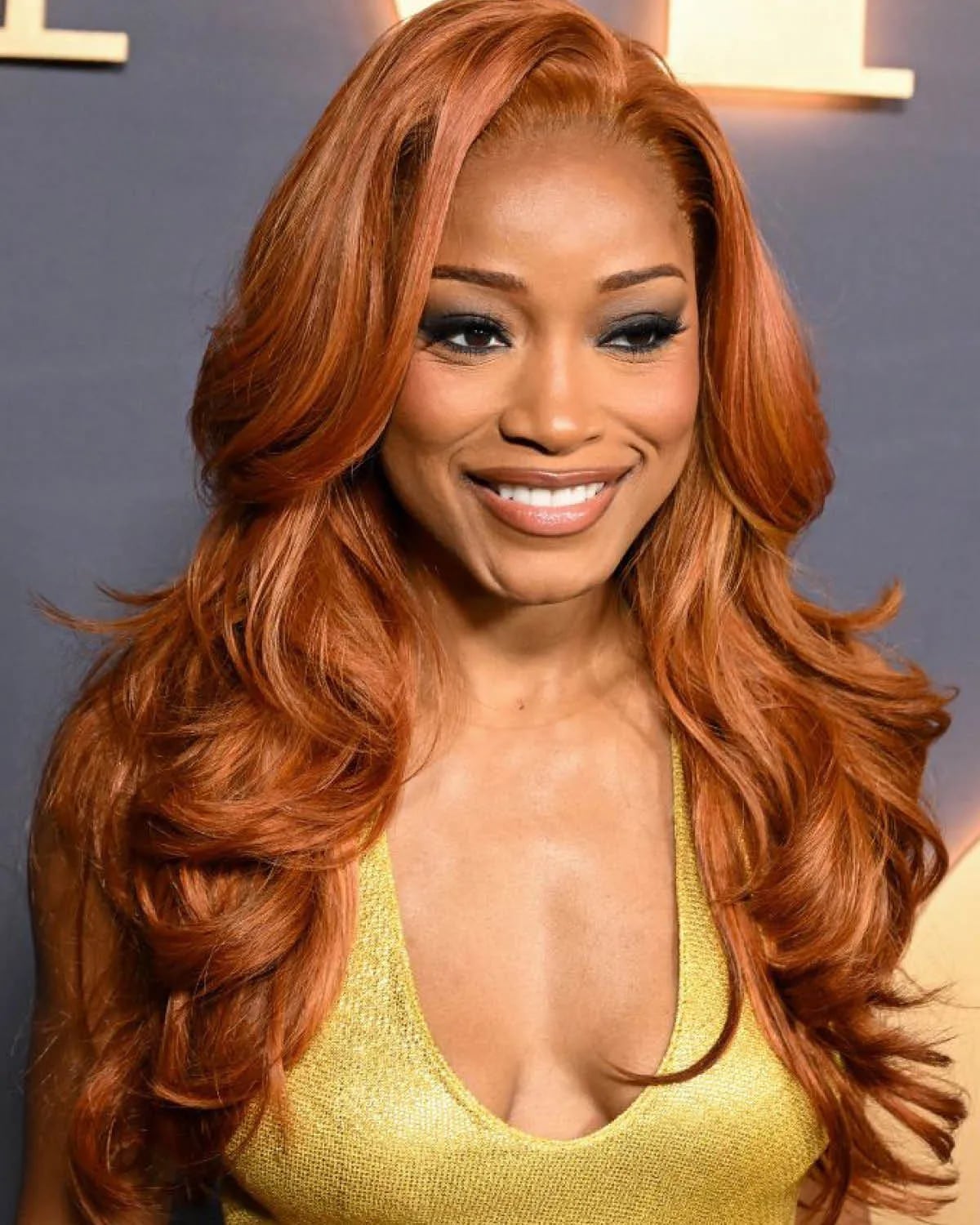
A vibrant copper red balayage sets the stage, but the lighter copper highlights are the ones doing the heavy lifting here. This works best on thick, wavy hair at mid-back length, where the contrast has room to read. Ask your colorist for: copper red balayage with lighter copper highlights. The trade-off for all that brightness is upkeep: those lighter pieces tend to fade faster than the base, so plan on a gloss or toning appointment every four to six weeks to keep them from going brassy.
Maroon Red With Copper Red Balayage
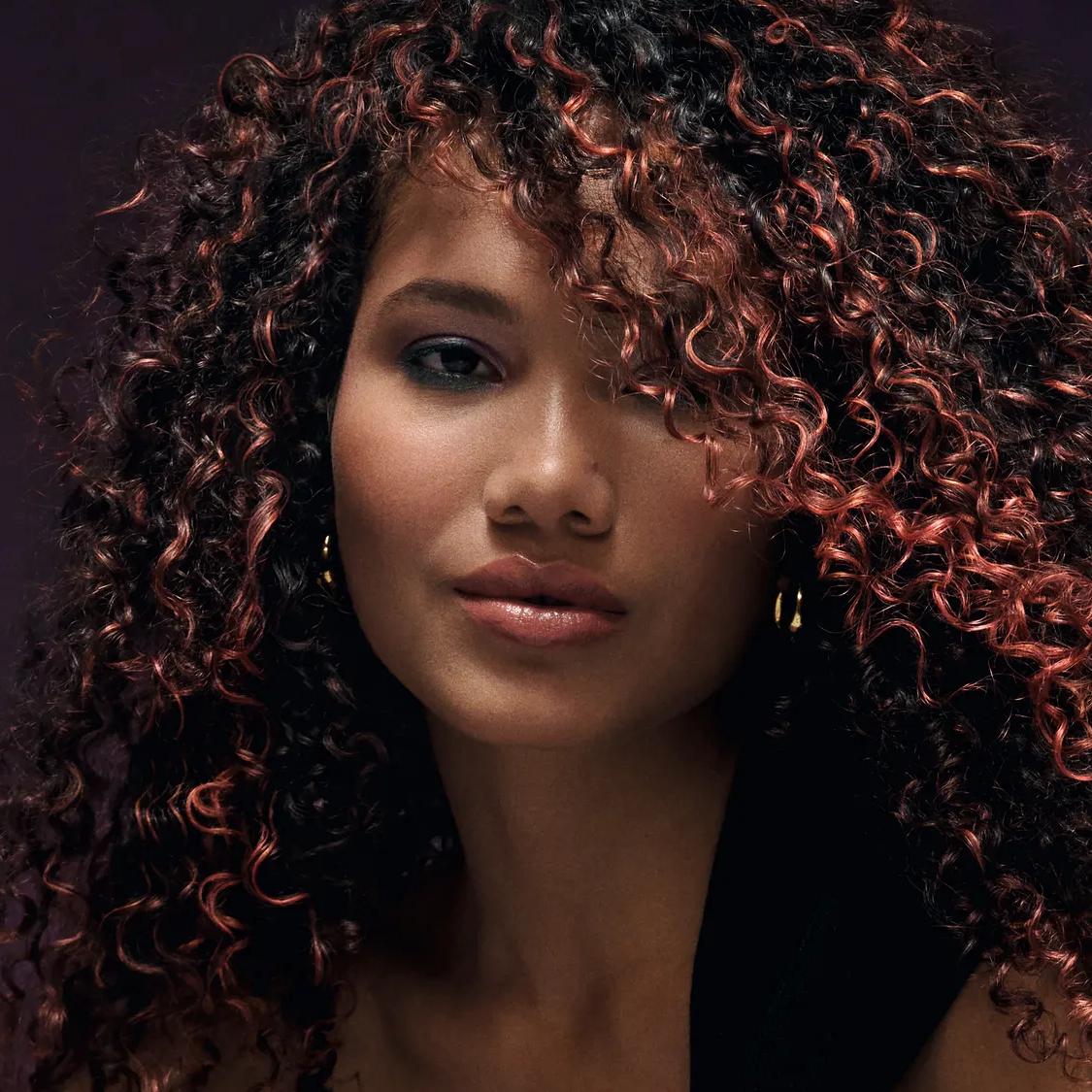
The deep maroon red base gives this color its gravity, but the lighter copper-red balayage is what stops it from feeling flat. Wavy, thick hair at mid-back length catches both tones at once, especially when the ends are left loose. Ask your colorist for: maroon red base with copper red balayage highlights. A middle part lets the two shades play off each other evenly, so no one side hogs the spotlight.
Shoulder Length Cinnamon Copper Balayage
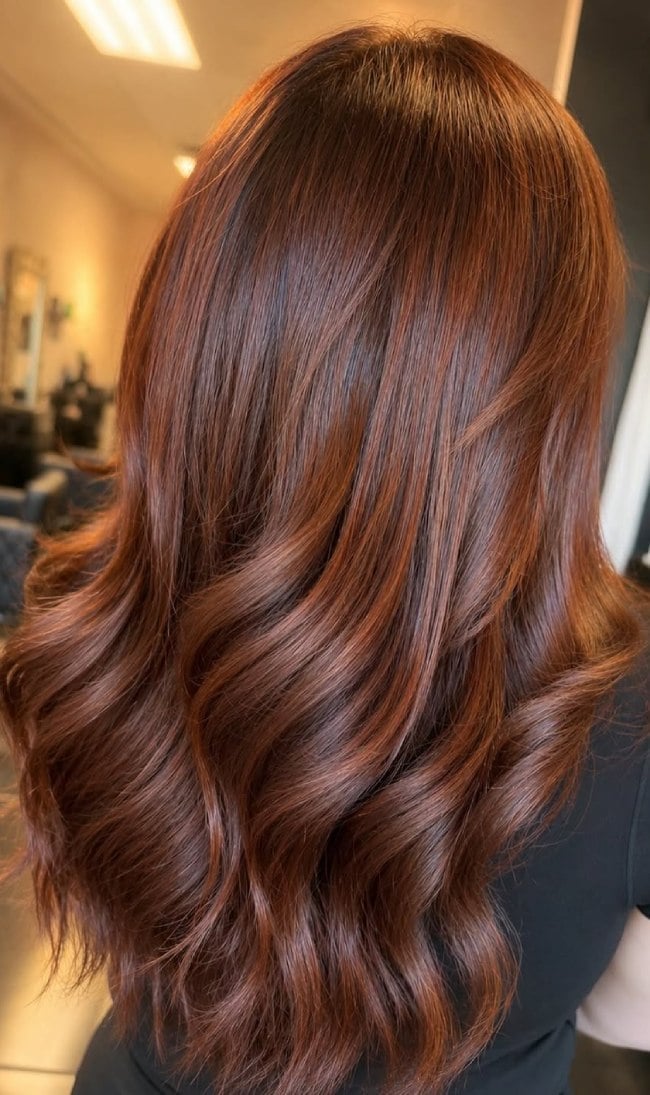
Wondering how to describe that warm, not-too-orange red you keep seeing? It is a cinnamon copper balayage, and it relies on subtle lighter tones blended through the mid-lengths and ends. Shoulder-length, medium-textured hair is an ideal canvas: the waves hit the lighter sections just enough to show movement. Ask your colorist for: cinnamon copper balayage, shoulder length. A middle part keeps the blend even and natural-looking from root to tip.
Collarbone Cinnamon Red With Balayage And Curtain Bangs
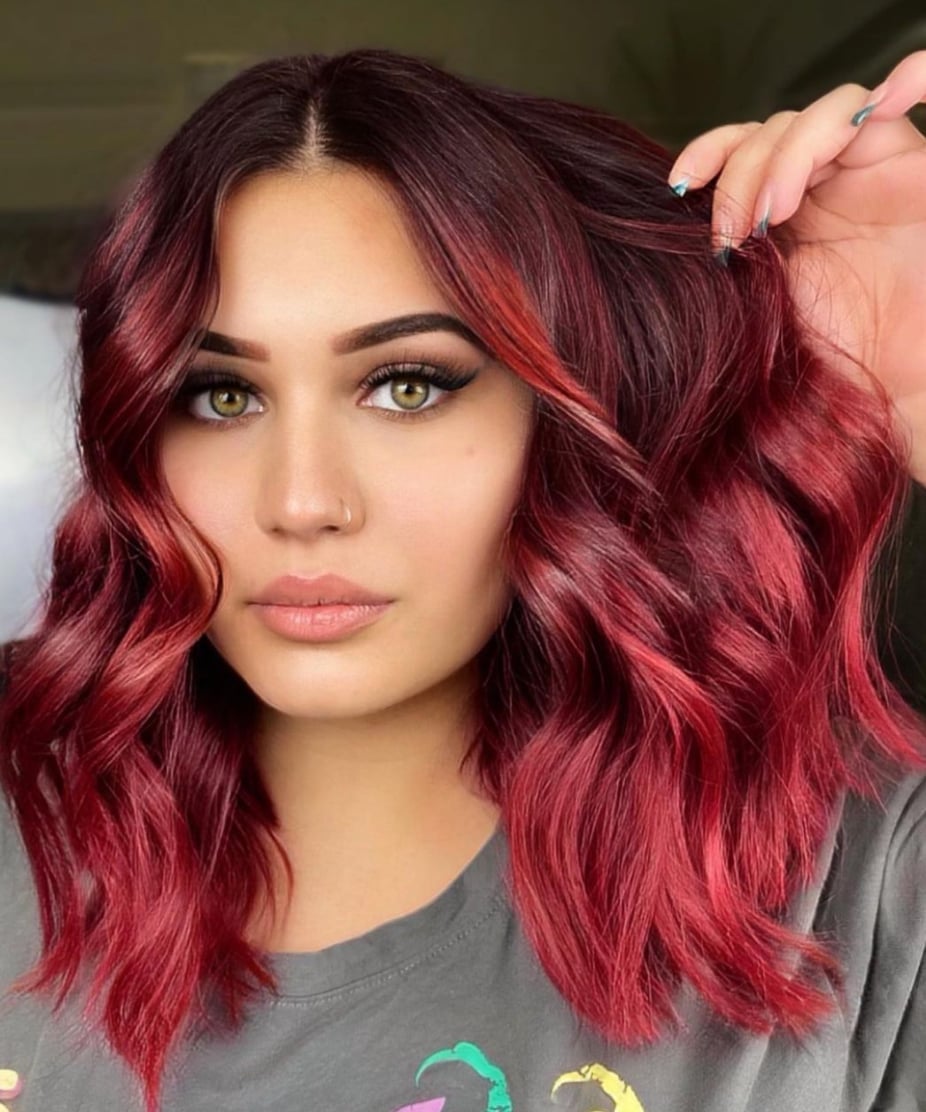
This is not a full commitment to red, which is exactly why it works for a transitional season. A cinnamon red base with a lighter cinnamon balayage keeps the color soft enough to work with autumn sweaters but still reads as warm. Collarbone length with curtain bangs is the cut, and the side parting lets the fringe sweep across without overwhelming. Ask your colorist for: collarbone cinnamon red balayage, soft curtain bangs. It is a low-risk way to test a red tone before going deeper.
Cinnamon Red Base With Lighter Balayage
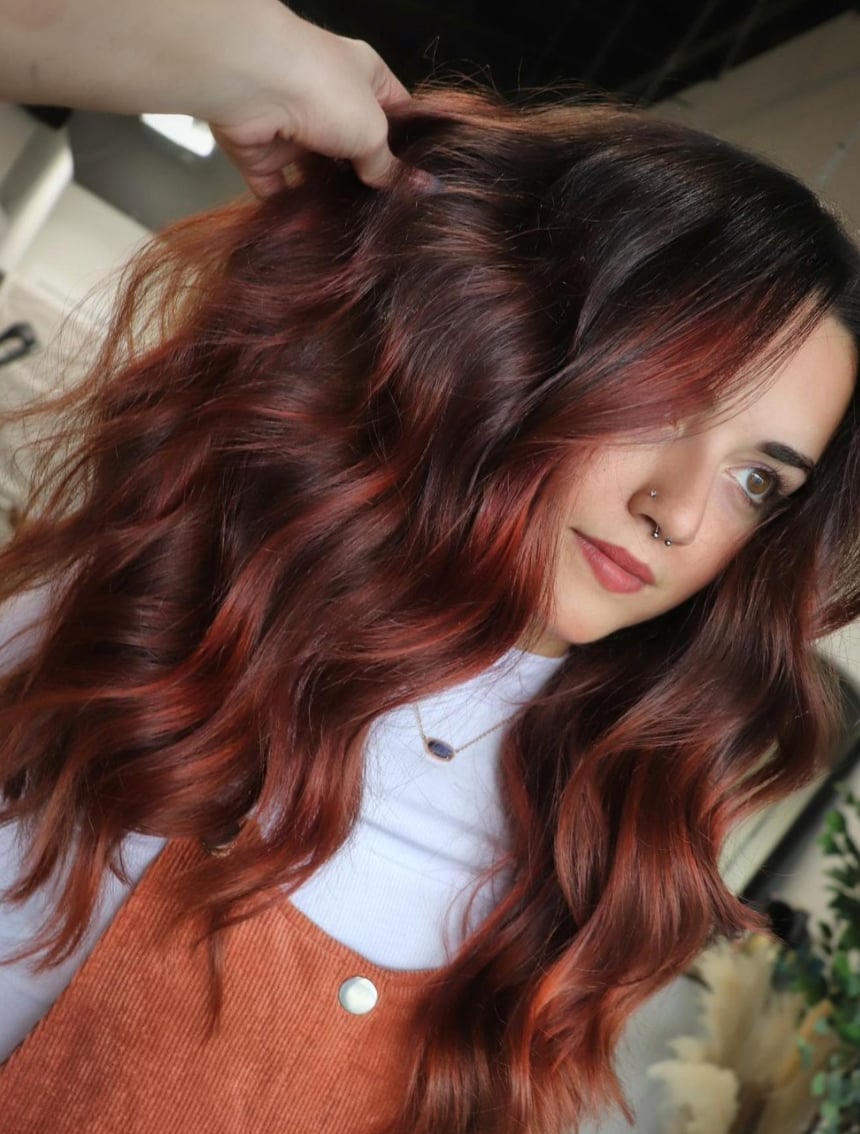
A cinnamon red base with lighter cinnamon balayage is a color that looks deliberate without trying to prove anything. The curtain bangs frame the face, and the collarbone length keeps the whole thing wearable for medium-density, wavy hair.
Ask your colorist for: collarbone cinnamon red base with lighter cinnamon balayage. The lighter sections are painted through the ends, so grow-out is gradual, not stark. Plan on a trim every eight to ten weeks to keep the shape from looking top-heavy.
Deep Burgundy Red With Subtle Lighter Balayage
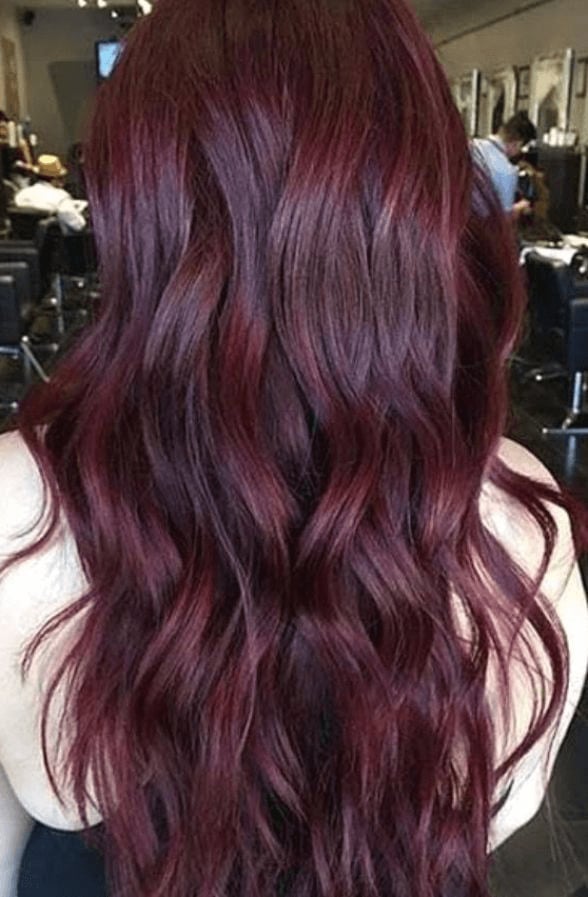
Can a subtle balayage actually hold its own against a deep burgundy base? The lighter red pieces need to be placed carefully, or they vanish into the richness of the burgundy. On this mid-back length with long layers and loose waves, the result is a warm, dimensional depth that looks sophisticated. Ask your colorist for: deep burgundy red base with subtle lighter red balayage. It suits medium-density wavy hair best, where the movement lets the lighter strands show. Using a color-safe conditioner helps keep that depth from turning muddy.
Burgundy Red Base With Subtle Balayage
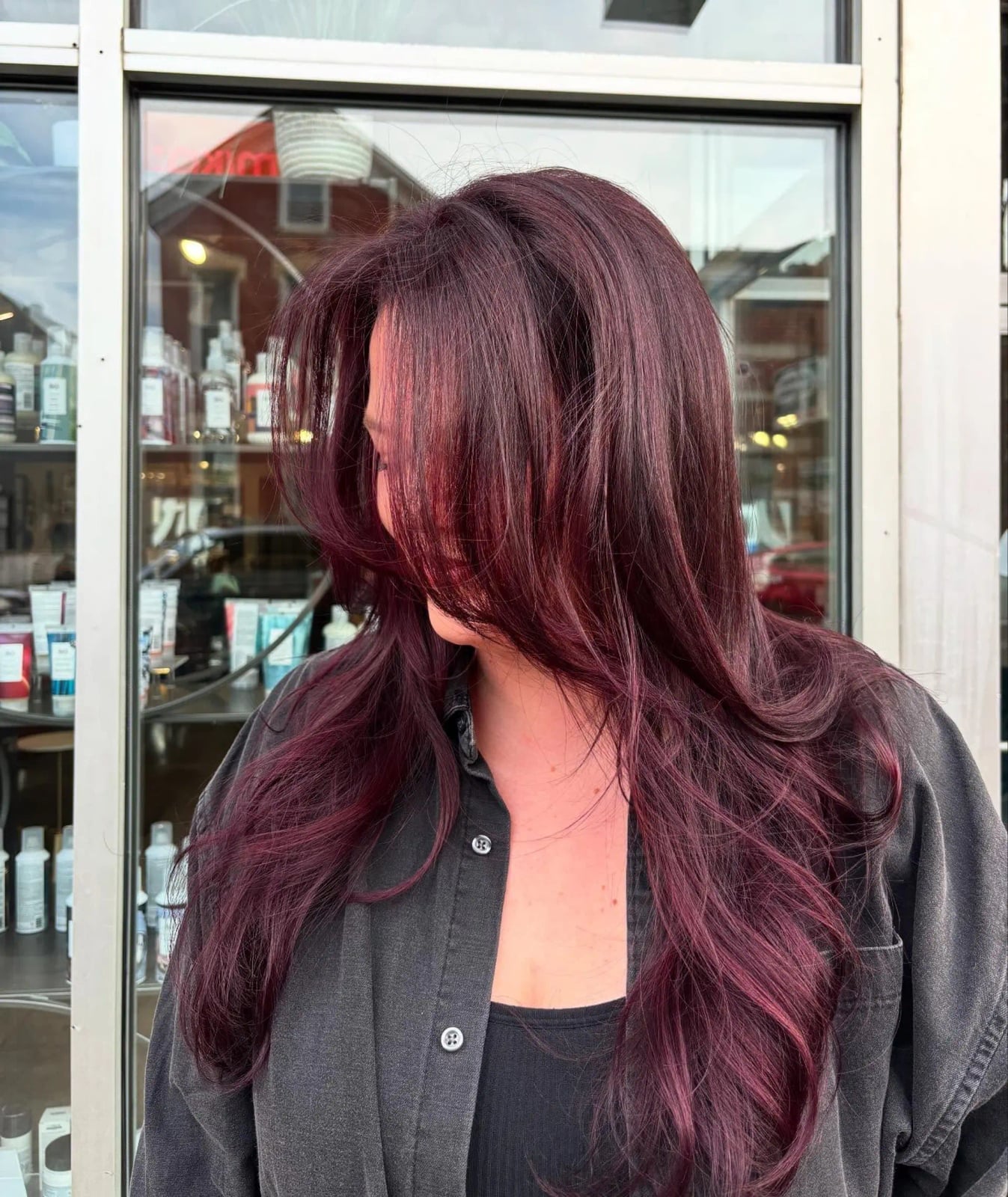
The technique here is all about restraint: the colorist paints lighter burgundy sections sparingly through the ends, leaving the root area deep and rich. That contrast gives the color its depth, while the soft wavy texture and middle parting let the blend look seamless. This burgundy red balayage works best on thick, wavy hair at mid-back length, where the weight of the hair helps the tones melt together. Ask your colorist for: deep burgundy red base with subtle balayage highlights. Color typically needs refreshing every 8 to 10 weeks to keep the richness from fading.
Shoulder Length Burgundy With Lighter Balayage
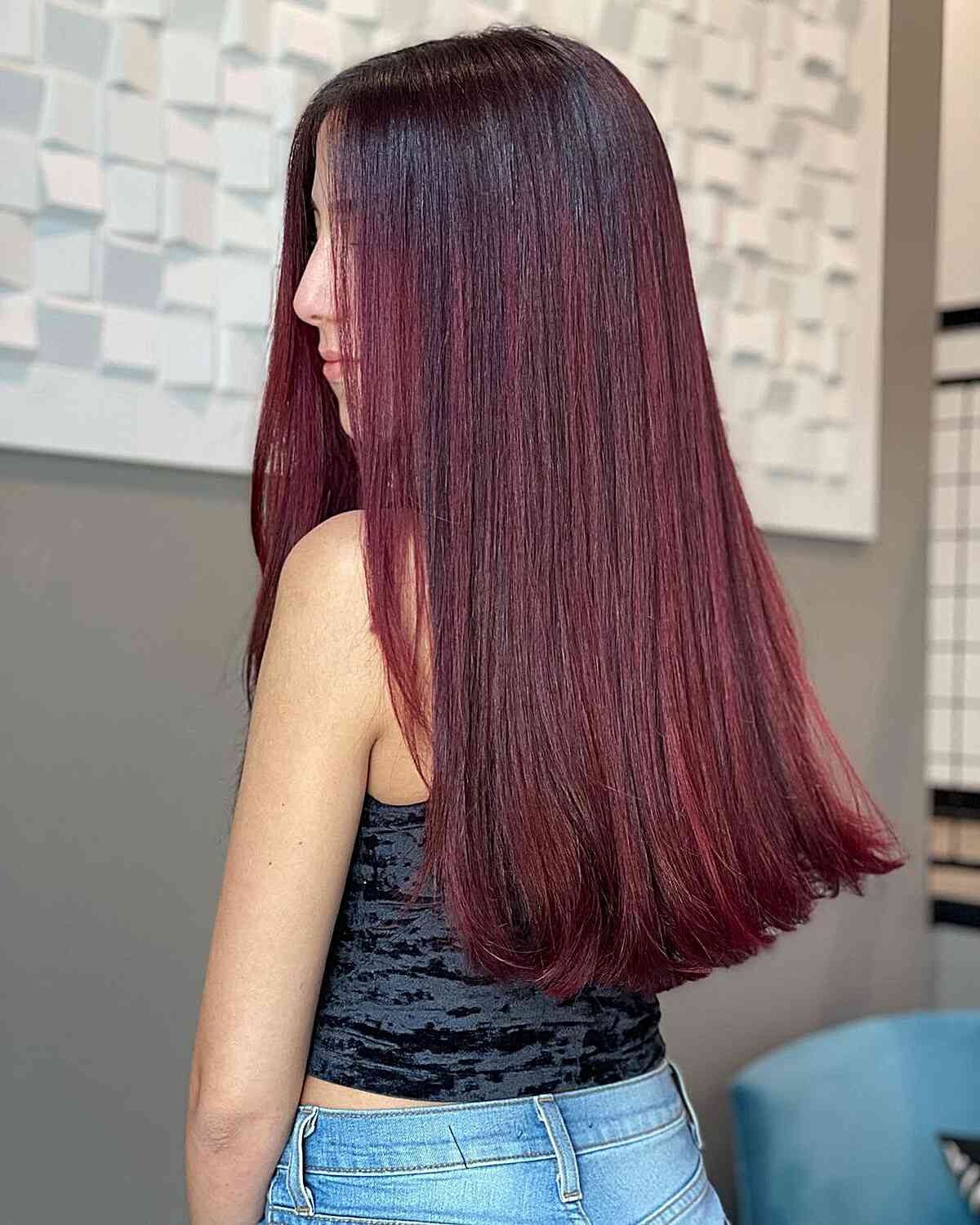
This sits apart from a full-on burgundy: the lighter tones are woven through the layers, so the color moves as the hair does. On a shoulder-length cut with a straight blowout and a middle part, the lighter burgundy balayage reads as a soft glow rather than a harsh stripe. It suits thick hair that can show off that dimension without looking weighed down. Ask your colorist for: shoulder length deep burgundy with lighter burgundy balayage. The straight styling is what makes the contrast visible, so skip the curling iron if you want the full effect.
Shoulder Length Deep Red With Purple-Red Balayage
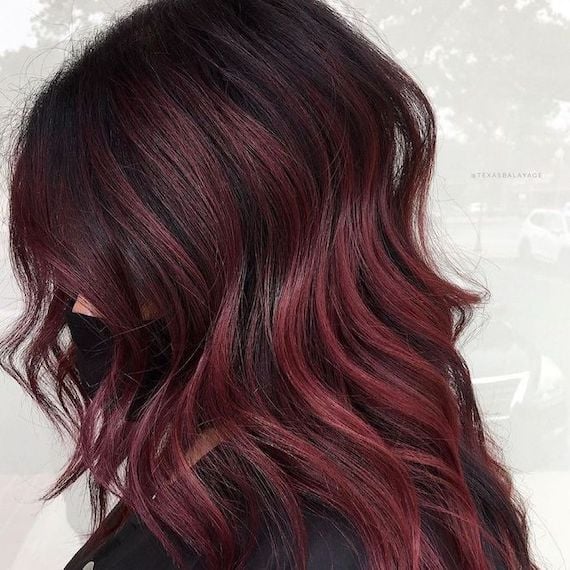
Is a purple-red balayage too much for a shoulder-length cut? Not when the deep red base anchors it. The purple-red highlights are painted through the curls, so the violet tones peek out instead of shouting. This works best on thick, curly hair, where the texture gives the color depth and movement. Ask your colorist for: shoulder length deep red with purple-red balayage. The natural curls do the styling work, but a curl-defining cream keeps the shape from falling flat. For anyone who prefers a more understated red, the purple tint might feel like a step too far.
Mid-Back Red Balayage With Lighter Tones
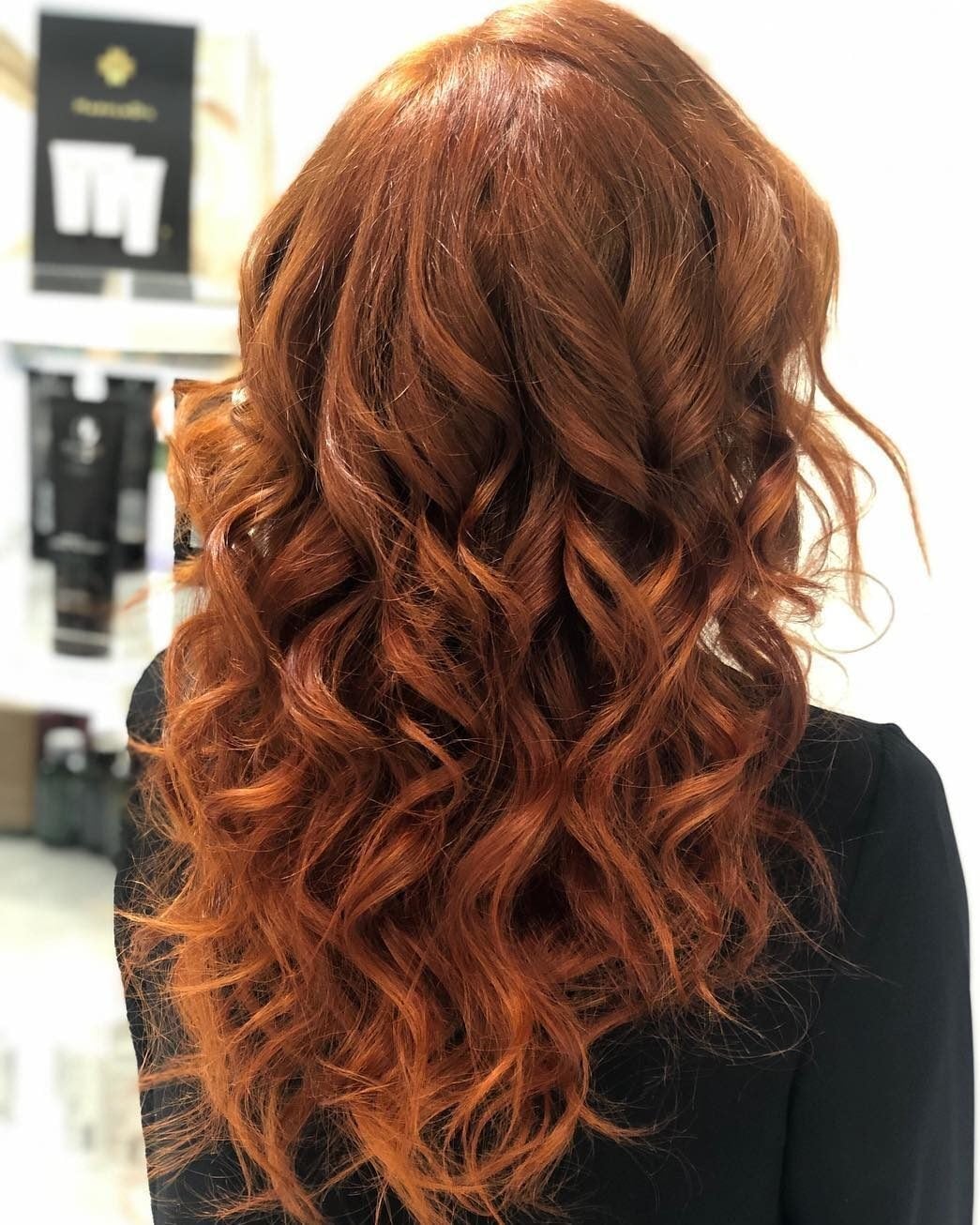
This vibrant red with lighter tones woven through thick, wavy hair styled in loose curls makes the gradient visible from the back. The mid-back length gives the color room to transition smoothly. Ask your colorist for: vibrant red balayage with lighter tones, mid-back length. Red balayage typically needs a color refresh every 6 to 8 weeks to prevent brassiness.
Mid-Back Magenta Balayage With Face-Framing Layers
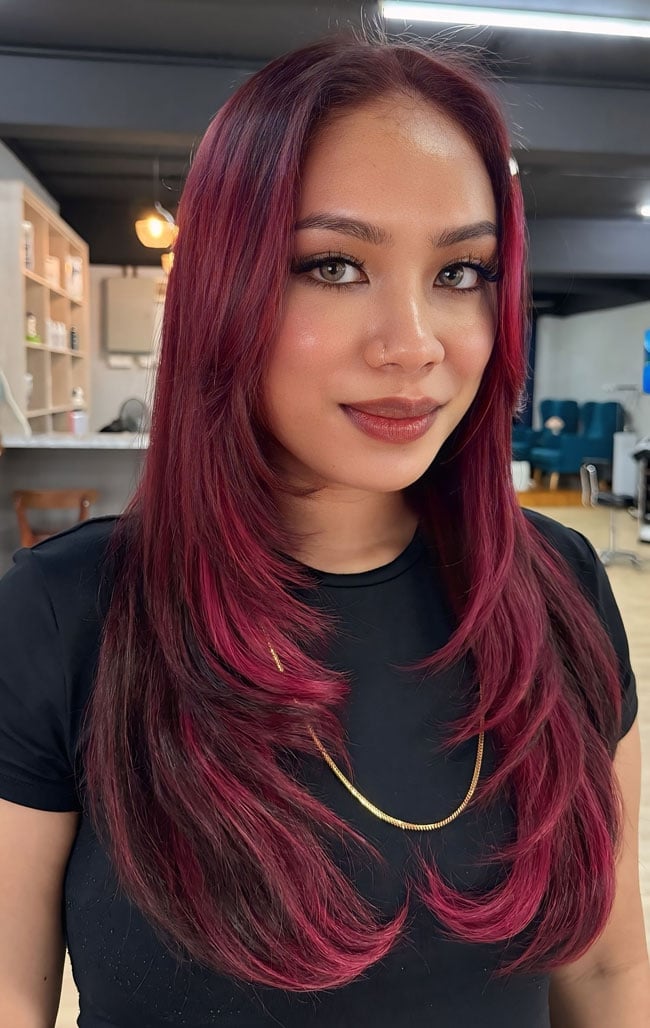
A vibrant magenta balayage like this one is a two-part commitment: the darker base stays put near your scalp while the lighter, brighter magenta pieces take over from the mid-lengths down. The contrast lands right around your jaw. This design suits thick, wavy hair at mid-back length, where the layers have enough weight to move without flopping. Ask your colorist for: mid-back magenta balayage with face-framing layers. A DIY version is a gamble, since magenta is a stubborn tone to lift evenly through thick hair. A salon appointment buys you a clean root line and a blend that actually looks like a gradient, not a patch job.
Collarbone Lob With Blonde Auburn Highlights
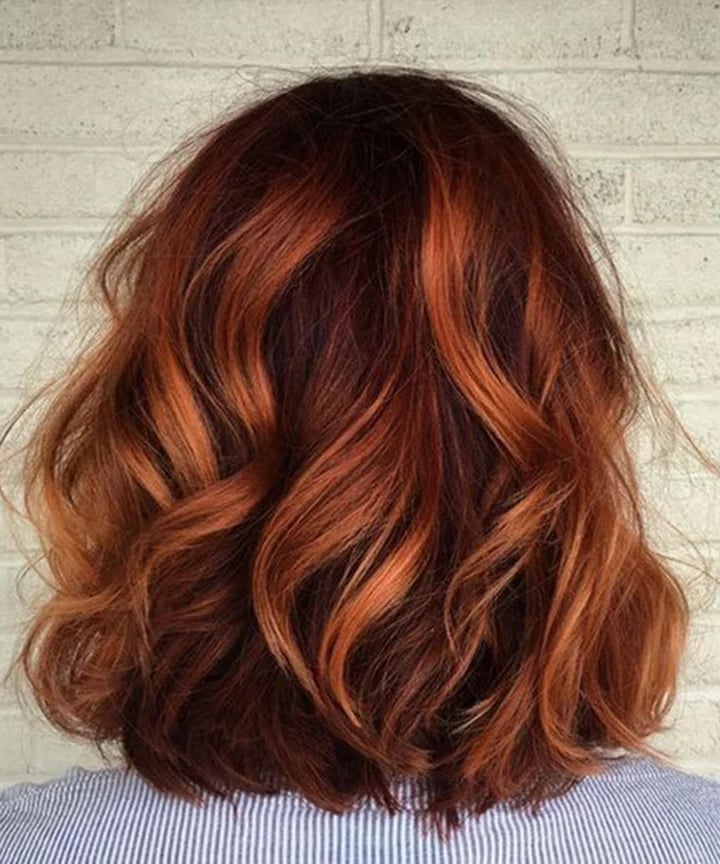
A collarbone lob with a brown base gets its depth from the auburn pieces and its brightness from the blonde ones, and the loose waves are what let both tones catch the light instead of sitting flat. The curtain bangs soften the front, while the middle parting keeps the whole thing balanced on medium density hair. Ask your colorist for: collarbone lob with blonde and auburn highlights, curtain bangs. The blend works because the highlights are woven, not chunky, so the brown base stays visible underneath. Plan a trim every six to eight weeks to keep the lob shape and the bangs from creeping past your chin.
Final Thoughts
Pick your red by how much upkeep you want. Vibrant shades need a color-depositing conditioner every few washes, while deeper burgundies let you stretch toning to eight weeks. For fine hair, keep the base darker and the balayage subtle so the ends look fuller, not stringy.
- Use a color-depositing conditioner every 2-3 washes.
- Schedule salon toning sessions every 6-8 weeks.
- Wash with sulfate-free shampoo to slow fading.
- Spray on a thermal protectant before heat styling.
Red balayage offers endless possibilities for a striking, dimensional color.
