

Pink hair has grown up. It’s no longer just a bold statement for the brave; it’s a spectrum of sophisticated shades, from soft rose gold to vivid fuchsia, and the trend now leans toward lived-in color with soft face-framing layers and curtain bangs that move with your natural texture.
These 34 Pink Hair Dye Ideas cover the full range, from low-maintenance pastel washes to bold, high-impact color that demands a salon chair. Whether you have fine hair that tends to fall flat, a visible grow-out line you want to disguise, or a fringe that never seems to sit right, there’s a pink here that works with your hair’s natural density and texture.
Vibrant Pink With Lighter Blonde Roots
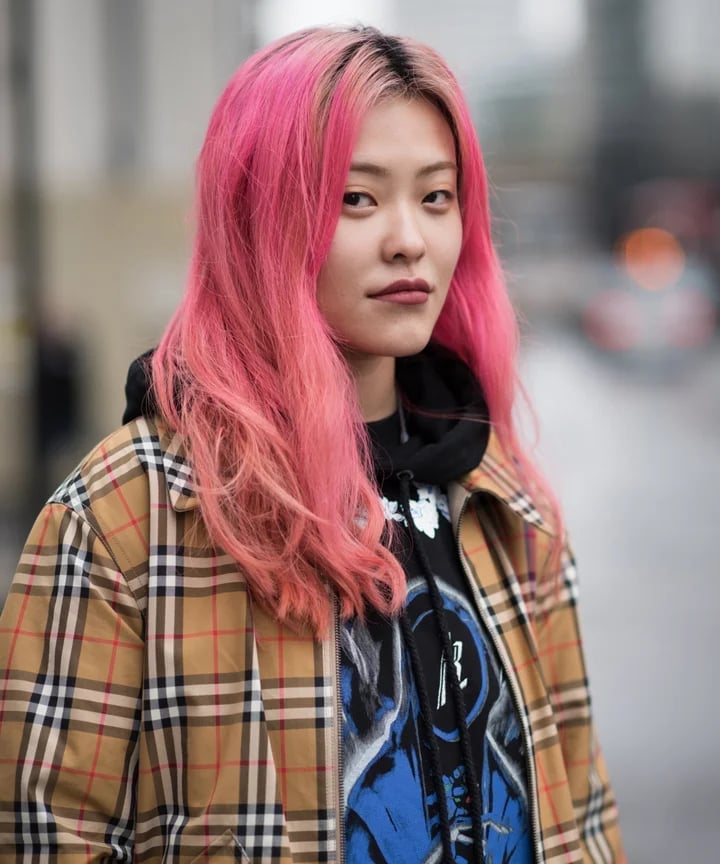
The design here works on a deliberate gradient: instead of hiding regrowth, the lighter blonde roots act as a built-in shadow root that transitions into a saturated vibrant pink. This approach buys you extra weeks between touch-ups because the root line is part of the plan from day one. Medium density wavy hair at collarbone length handles the contrast best, as the texture keeps the two tones from looking flat. Ask your colorist for: vibrant pink with visible blonde roots, collarbone length layers. A root cover-up spray in a matching blonde tone refreshes the parting between salon visits without a full appointment.
Shoulder Length Blunt Cut In Hot Pink
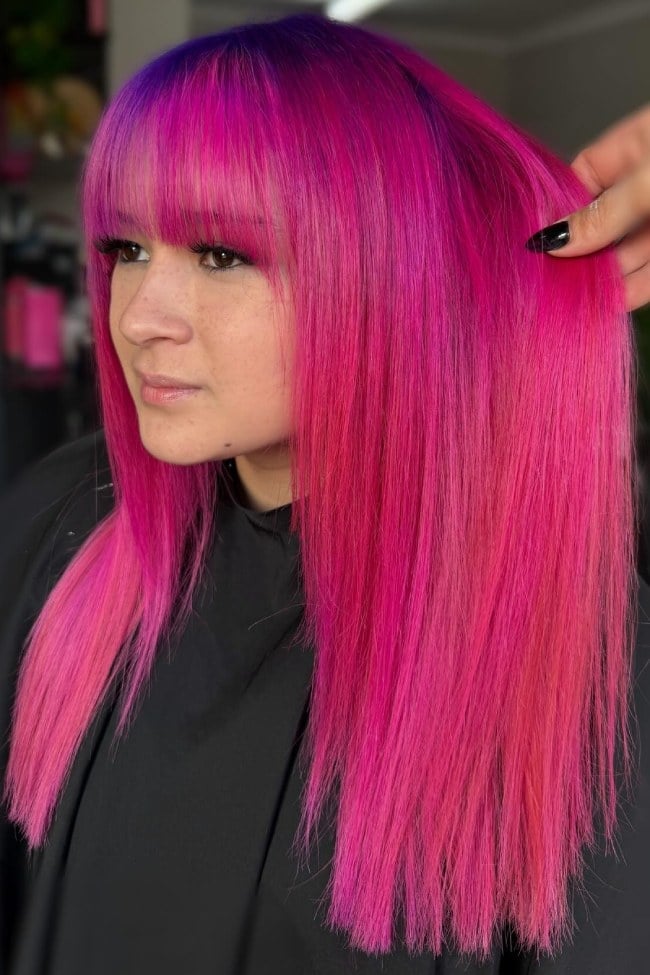
A hot pink that looks graphic and intentional starts with a shoulder length blunt cut and a full fringe, both cut on a straight horizontal line. Poker-straight styling makes the hot pink color look like a print rather than a dye job. Thick, straight hair holds the blunt edge without flipping, and the full fringe suits oval and long face shapes by shortening the vertical line of the face. Ask your colorist for: shoulder length blunt cut, full fringe, hot pink color. A flat iron is your daily tool here, and the blunt baseline needs a trim every six weeks to keep the sharp line.
Vibrant Coral Pink Shag With Full Fringe
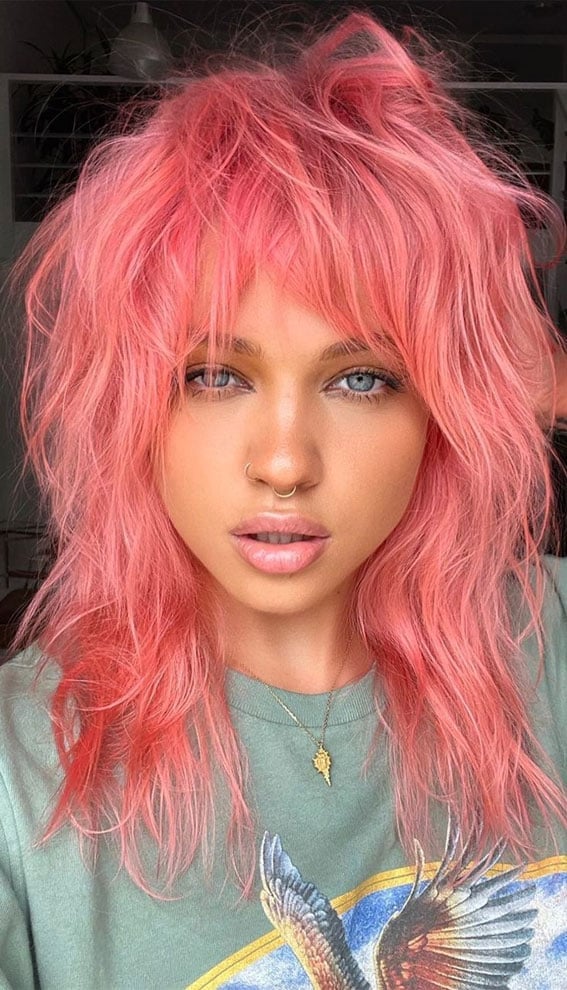
A shag cut ending at the collarbone with a full fringe gets its character from texture, not tension. The vibrant coral pink shade lands somewhere between peach and neon, and the air-dried finish lets the wavy, thick layers do the talking. A middle parting and a full fringe add balance to round faces by covering width at the forehead. Ask your colorist for: collarbone length shag, full fringe, coral pink color. A texturizing spray on damp hair enhances the shaggy layers without a blow dryer.
Hot Pink Shag With Curtain Bangs
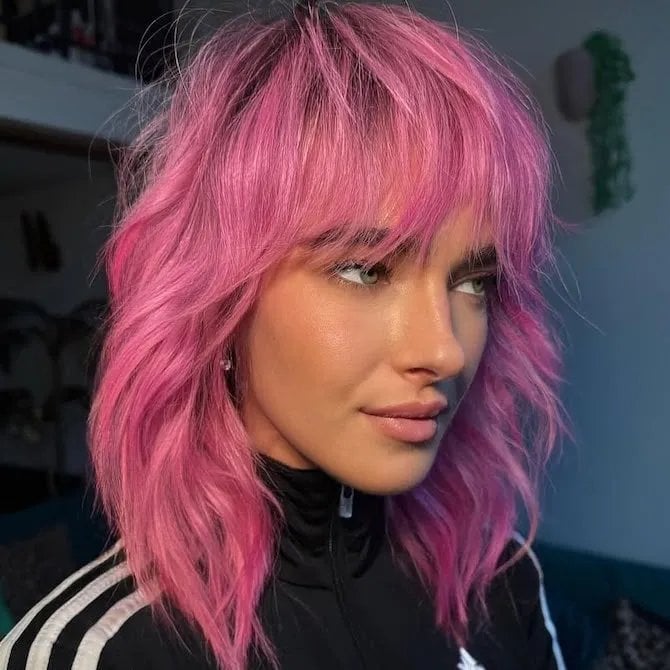
Where a full fringe on a shag reads as bold and closed off, curtain bangs open up the face while keeping the same choppy layers. This shoulder length shag in hot pink uses the middle parting to let the curtain bangs frame the cheekbones, which softens square and angular jawlines. The wavy texture and medium density keep the hot pink from looking heavy. Ask your colorist for: shoulder length shag, curtain bangs, hot pink color. A texturizing paste worked into the ends defines the layers without weighing down the waves.
Soft Pink With Lighter Highlights Natural Curls
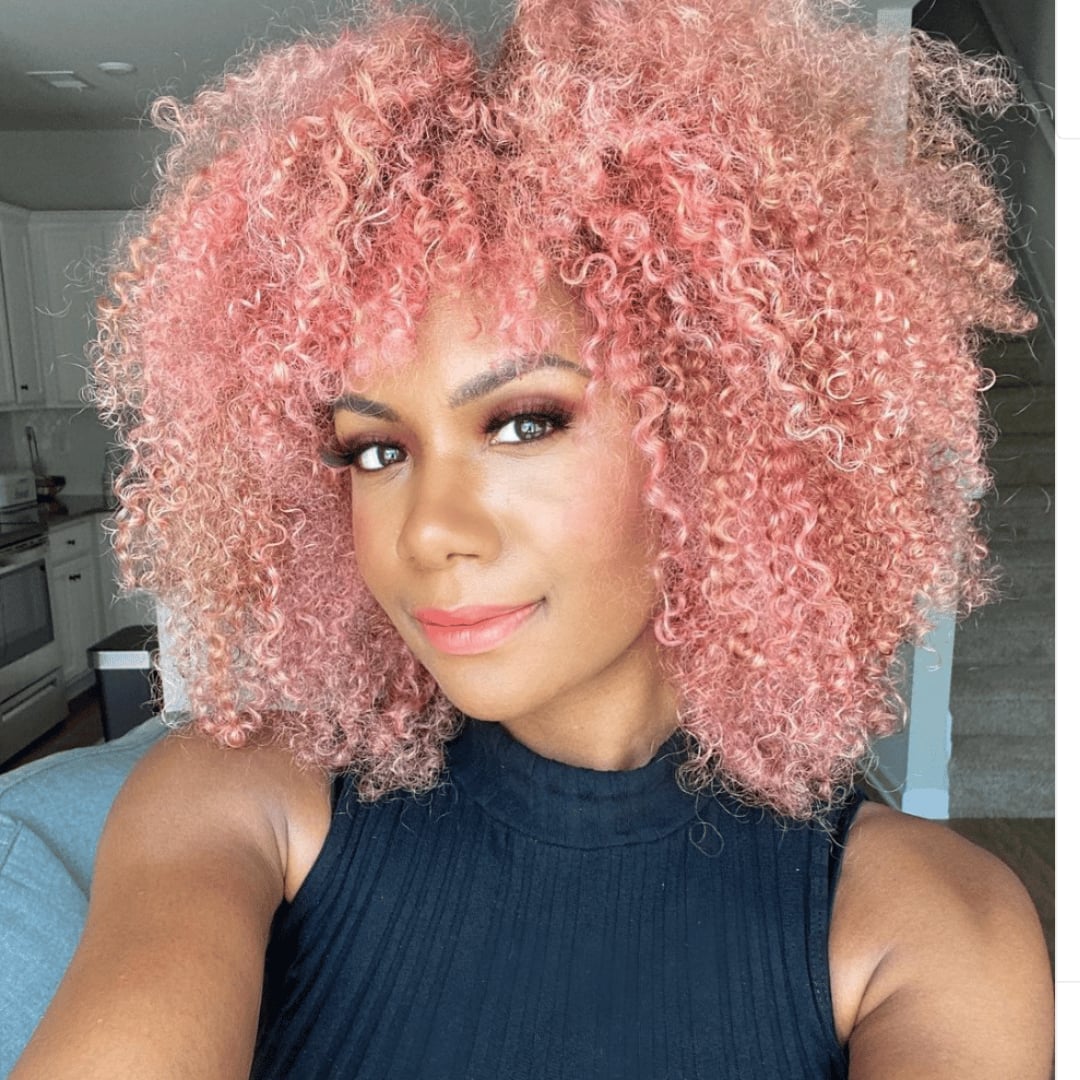
Soft pink on natural curls works because the lighter pink highlights follow the curl pattern. The shoulder length layers give the thick, curly texture room to spring without losing shape, and the side parting adds asymmetry. This is one of the few pink applications that reads as subtle. Ask your colorist for: shoulder length soft pink with highlights, natural curls. A curl-defining cream on damp hair and air drying preserves the natural texture; a toning gloss every six to eight weeks keeps the soft pink from warming too yellow.
Soft Pink On Fine Wavy Hair
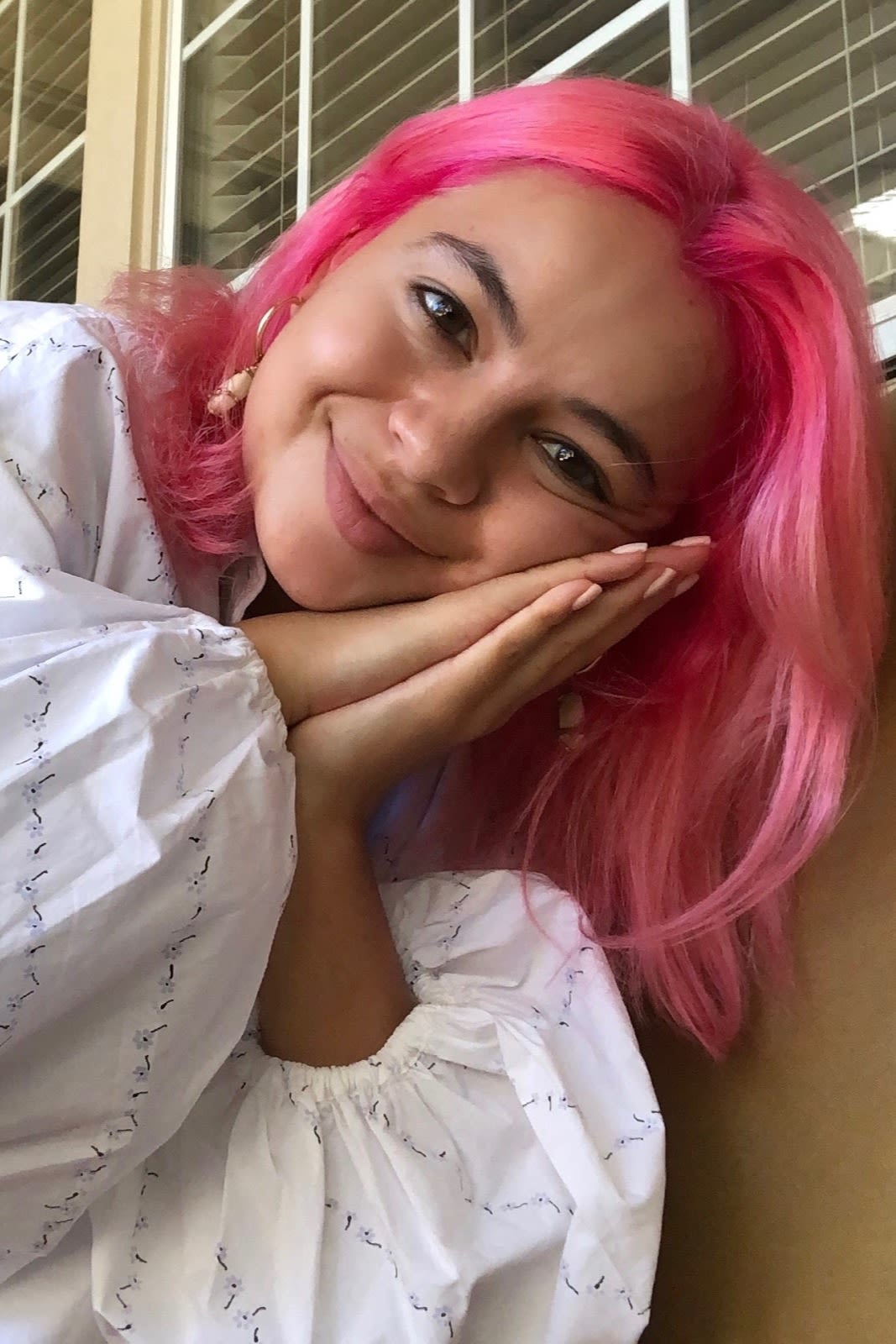
The air-dried finish on shoulder-length fine wavy hair in a soft pink hue is the point: low-heat styling preserves the delicate color and natural wave pattern. A middle parting keeps the weight evenly distributed so the ends don’t fall flat. Ask your colorist for: shoulder length soft pink, natural air-dried waves. This is a solid DIY option if you start from pre-lightened hair, but the trade-off is that soft pink on fine strands fades faster than a deeper shade, so expect to refresh the tone every three to four weeks.
Pastel Pink Bob With Loose Waves
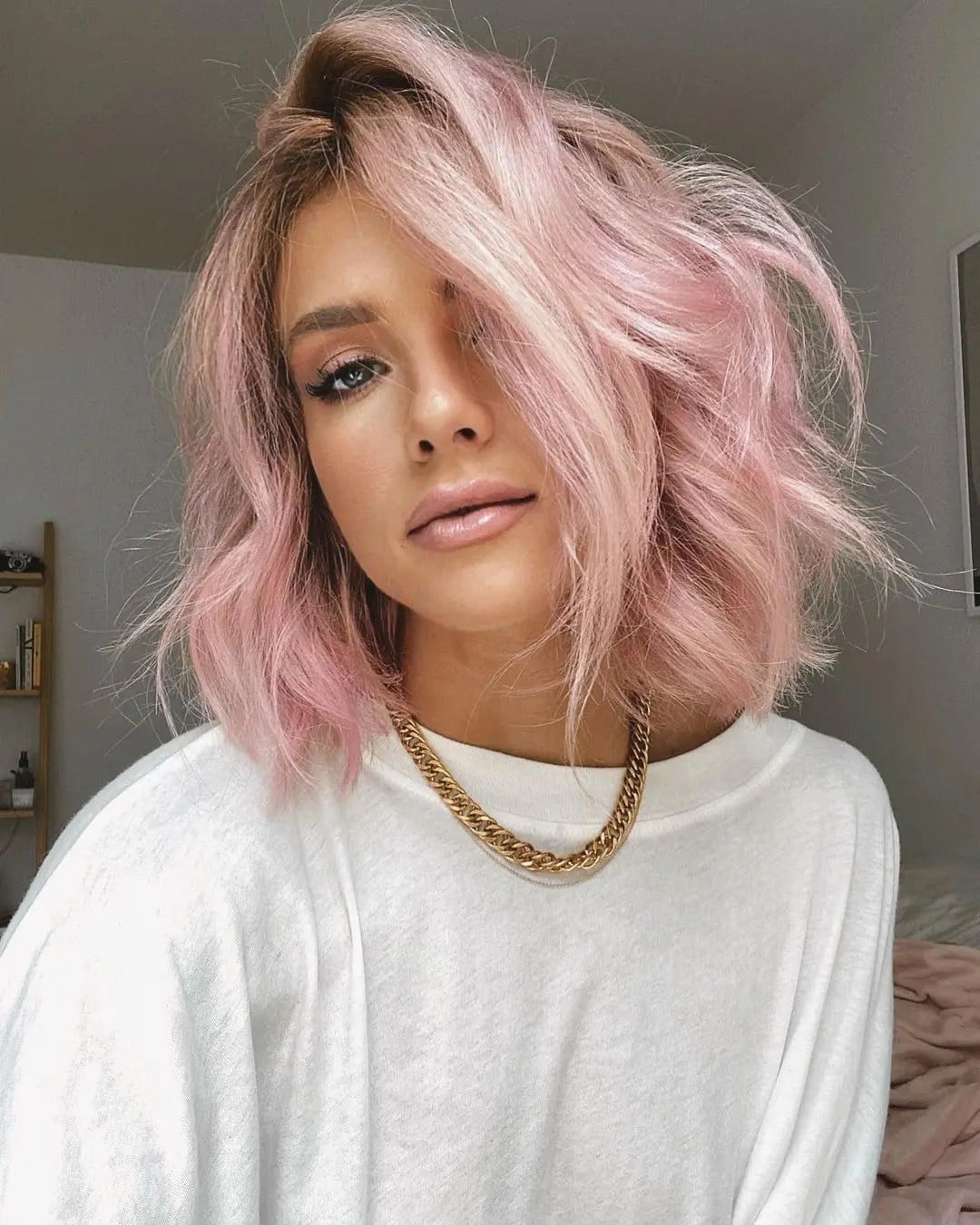
Can a pastel pink bob feel seasonal rather than costume? Yes, when the tone leans icy rather than candy. The chin-length cut with a side parting and loose waves keeps the pastel pink from reading as too sweet, more cool than childish. Ask your colorist for: chin length pastel pink bob, loose waves. Fine wavy hair holds a scrunched wave best with a texture spray applied to damp lengths before air-drying. This is an ideal late-winter through early-spring look, when light is bright but the temperature still calls for a bob.
Rose Gold Bob With Subtle Highlights
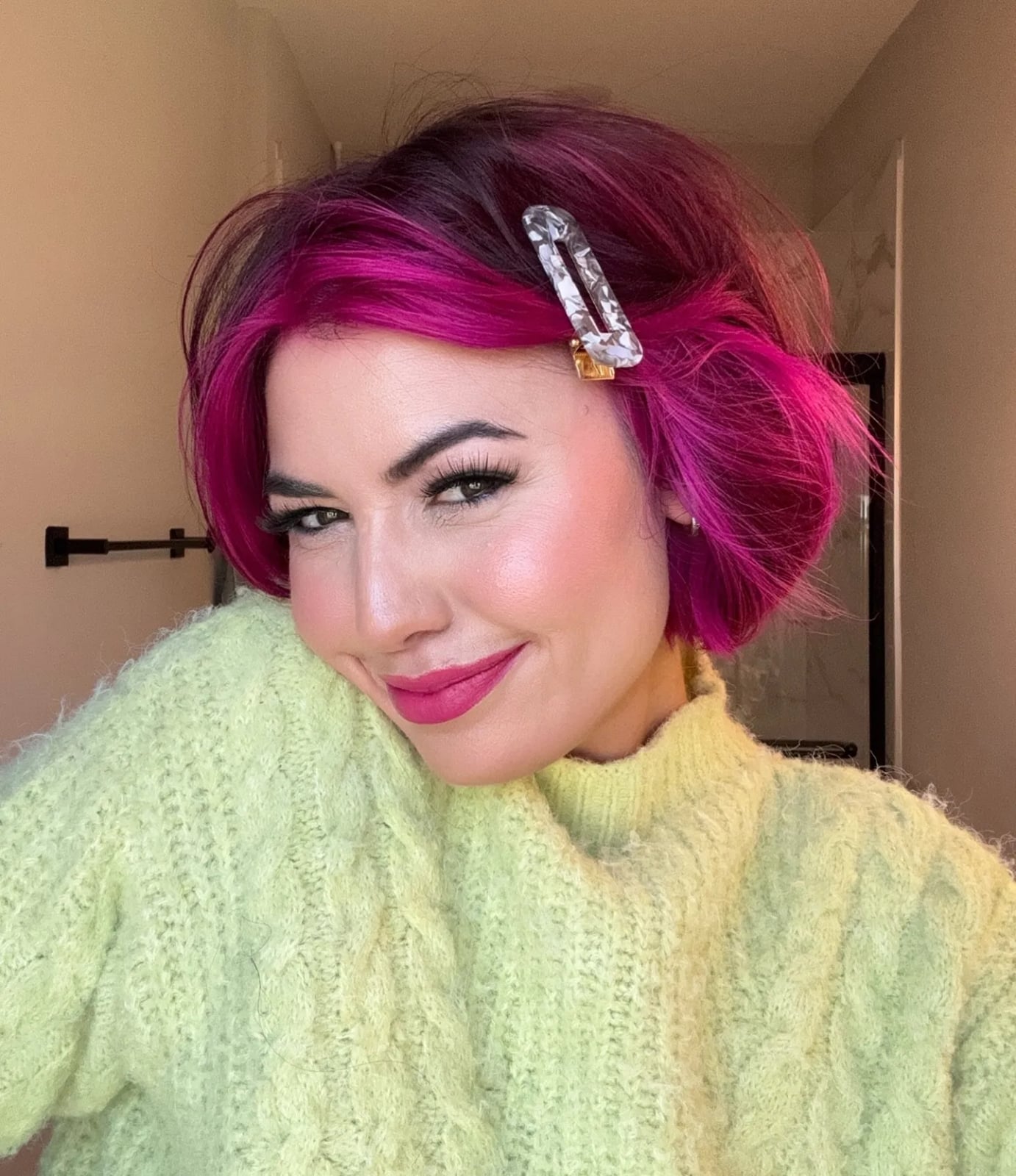
The rose gold effect here depends on a soft wave blowout and finely woven highlights that are only a shade or two lighter than the base. The side parting lets the highlights catch light along the curve of the chin-length bob. Ask your colorist for: chin length rose gold bob, subtle highlights, soft waves. A shine serum on dry hair keeps the metallic quality of rose gold visible. Fine hair benefits from the dimension the highlights create, though the technique requires a salon visit to get the placement precise.
Vivid Pink Bob With Blue Streaks
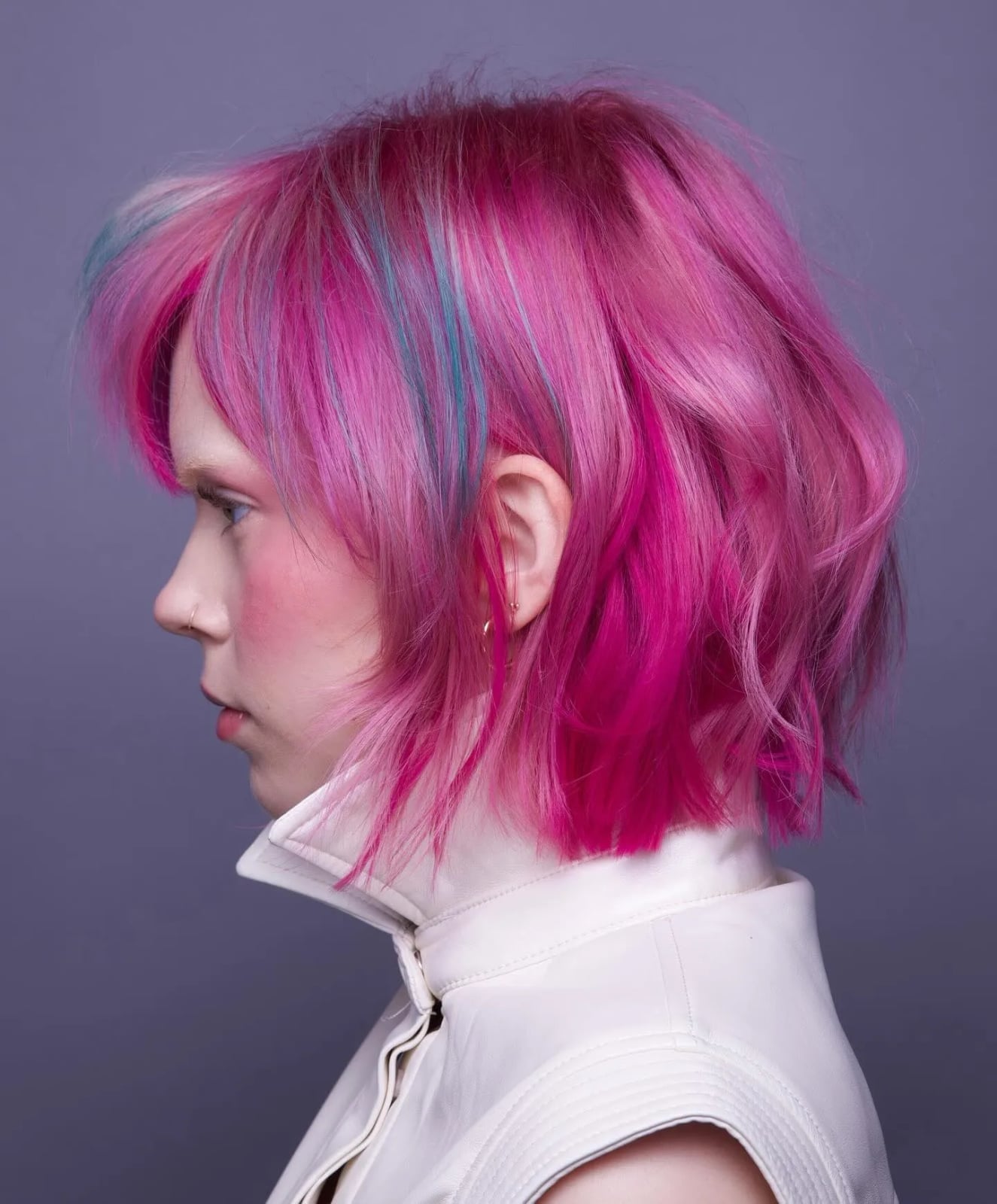
A solid vivid pink bob is bold. A vivid pink bob with scattered blue streaks is even bolder. The difference is the contrast: cool blue against warm pink creates a visual stop that looks planned. Ask your colorist for: chin length bob, vivid pink with blue streaks. Wavy medium-density hair at chin length shows both colors clearly without the strands blending into mud. This is for someone who wants the impact of a rainbow color without covering the whole head in blue.
Platinum Blonde Bob With Pink Face-Framing
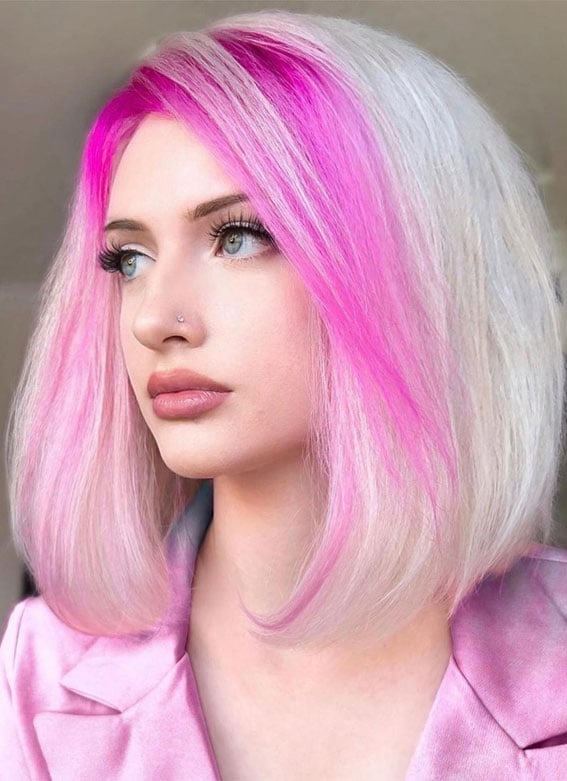
How do you get maximum pink mileage without dyeing your whole head? Restrict it to the face-framing sections. This chin-length bob with blunt bangs keeps a platinum blonde base as the main event, then adds vivid pink on the front sections only. Ask your colorist for: chin length bob, platinum blonde with pink face-framing, blunt bangs. The middle part and straight styling let the pink sections sit symmetrically at the jawline. Fine straight hair holds the blunt line well, though blunt bangs need a trim every three weeks to stay precise.
Shoulder Length Layers With Curtain Bangs
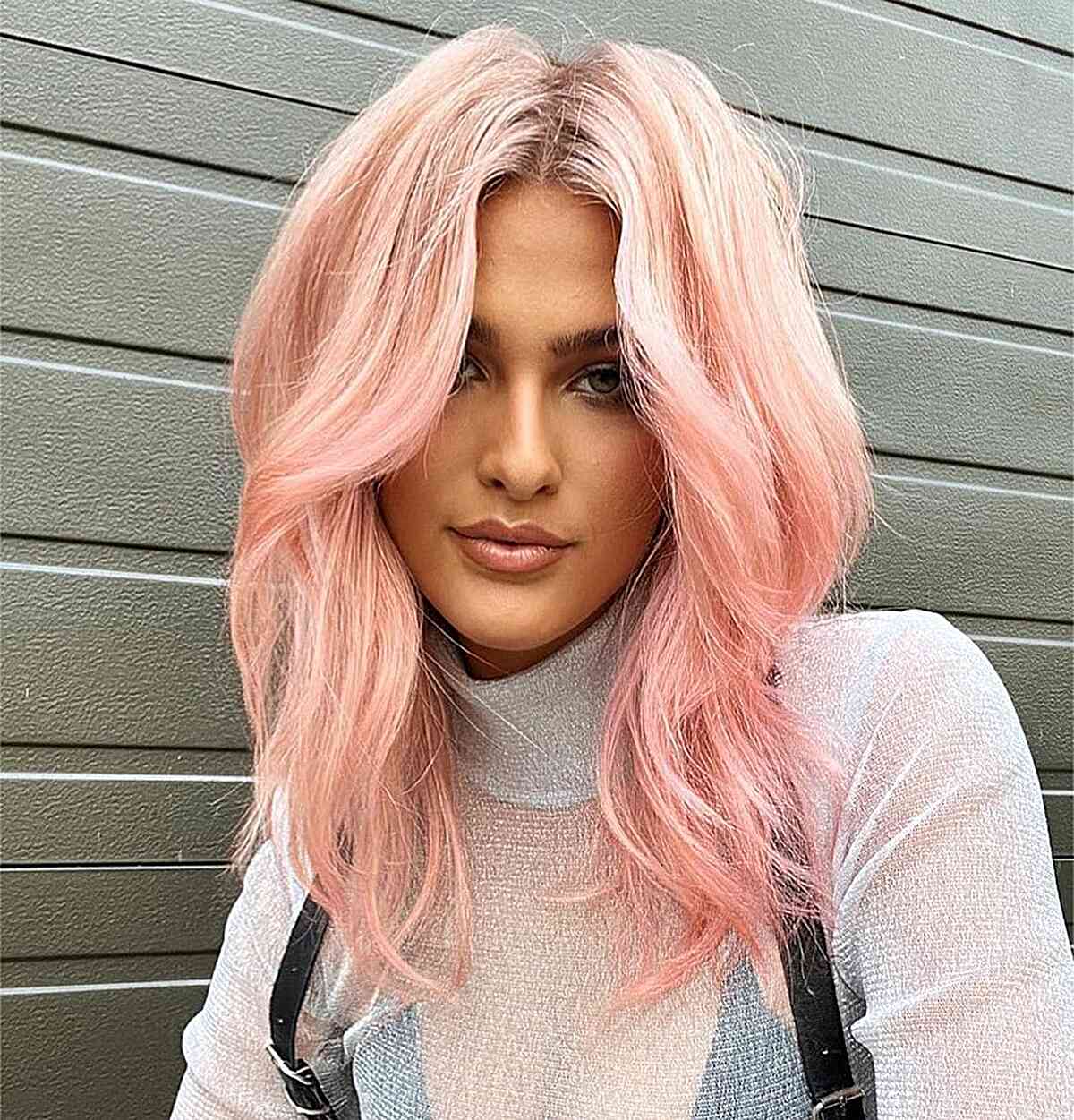
This is the rare pink hair dye idea that does double duty: the curtain bangs soften the face while the layers keep thick, wavy hair from turning into a heavy triangle. The light pink base with lighter pink highlights gives the texture something to catch, and the middle parting works with the waves rather than against them. Curtain bangs flatter round and heart shapes especially well. Ask your colorist for: shoulder length layers, curtain bangs, light pink with highlights. Use a round brush to blow-dry the bangs away from the face, and expect to refresh the cut every eight weeks. The pink itself fades gently, so the grow-out stays soft.
Collarbone Lob With Pastel Pink Color Melt
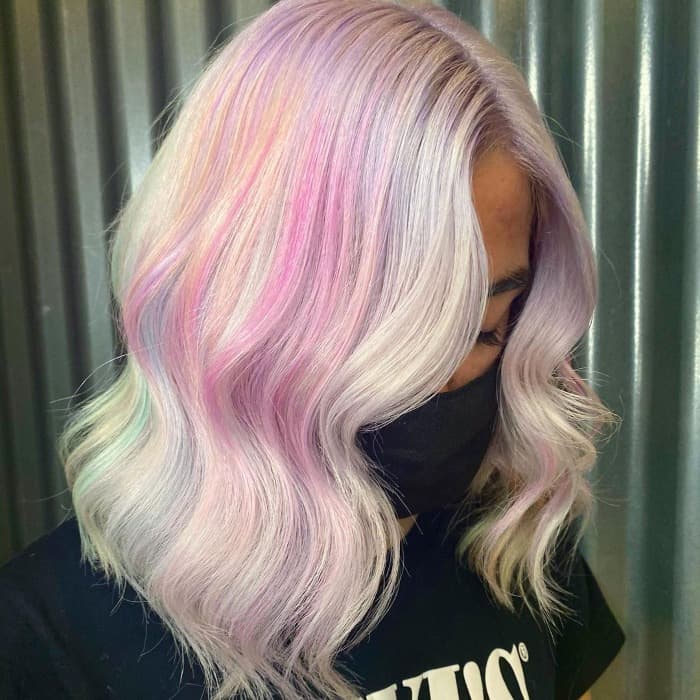
A color melt is built to blur, so the pastel pink and blonde blend here does not announce where one shade ends and the other begins. On a collarbone lob with curtain bangs and soft waves, the delicate wash of color blends seamlessly. The middle parting lets the blend fall symmetrically around the face. Ask your colorist for: collarbone lob, curtain bangs, pastel pink and blonde color melt. Because the melt starts darker at the roots, the grow-out line stays invisible for weeks. Medium density wavy hair holds the soft shape without needing much coaxing, just alternate between air-drying and a gentle blowout.
Pastel Pink Lob With Lighter Highlights
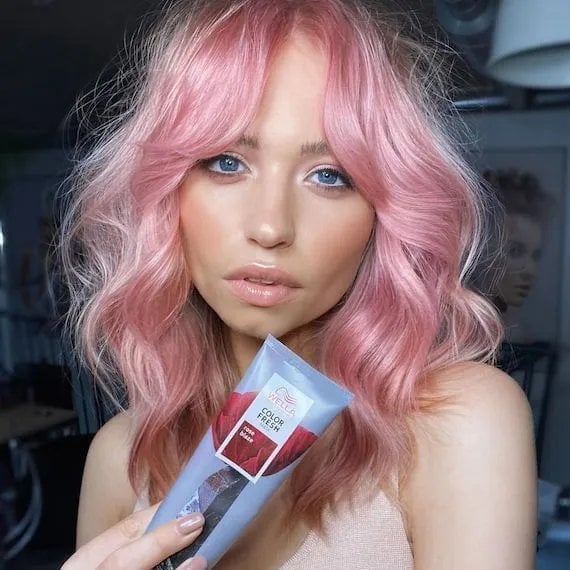
The technique here is a pastel pink base with lighter pink highlights painted through the mid-lengths and ends, which keeps the collarbone lob from looking flat. Curtain bangs and a middle parting frame the face, while the soft blowout waves give the lighter pieces dimension. If you have medium density hair, this pink adds dimension without needing a full bleach and tone ordeal. Ask your colorist for: collarbone lob, curtain bangs, pastel pink with lighter highlights. The ends will enhance the soft waves after styling. Curtain bangs suit round and heart shapes, and the lob itself needs a trim every eight weeks to hold its line.
Collarbone Waves With Pastel Pink And Blonde
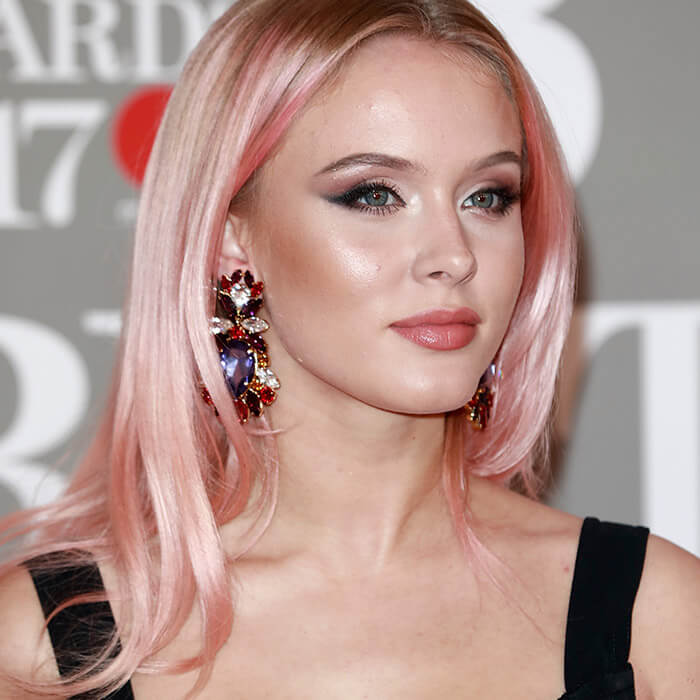
Is there a better season for pastel pink over a blonde base than spring? Probably not, but the shade works year-round if you keep the waves loose and the face-framing layers light. The collarbone length with curtain bangs softens angular jawlines, and the fine, wavy texture takes the pink in a way that feels romantic rather than costume-y. The middle parting keeps everything balanced. Ask your colorist for: collarbone length waves, curtain bangs, pastel pink over blonde. Apply a volumizing mousse to the roots before blow-drying to add lift where fine hair needs it. This is the pink for someone who wants the color without the commitment of a bold all-over statement.
Pink And Purple Blend With Highlights
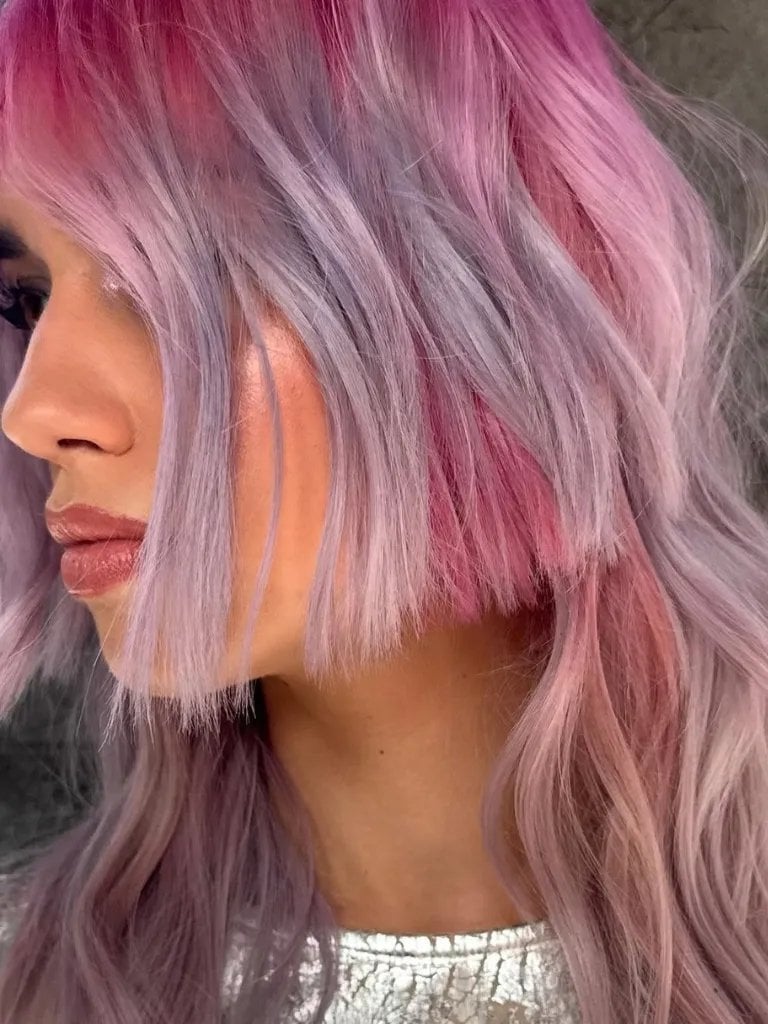
The blend of pastel pink and lavender purple with lighter pink highlights is a multi-tonal look that needs precise placement. The pink should sit at the front and the purple weave through the back, with the lighter highlights painted thinly so they read as dimension, not stripes. On collarbone-length layers with curtain bangs and a middle parting, the effect is artistic without tipping into costume. Ask your colorist for: collarbone length layers, curtain bangs, pink and purple blend with highlights. Fine, wavy hair carries the blend well because the lighter pieces add movement. A color-safe leave-in conditioner keeps the pastel tones from looking chalky between toning appointments.
Mid-Back Pink And Purple Balayage
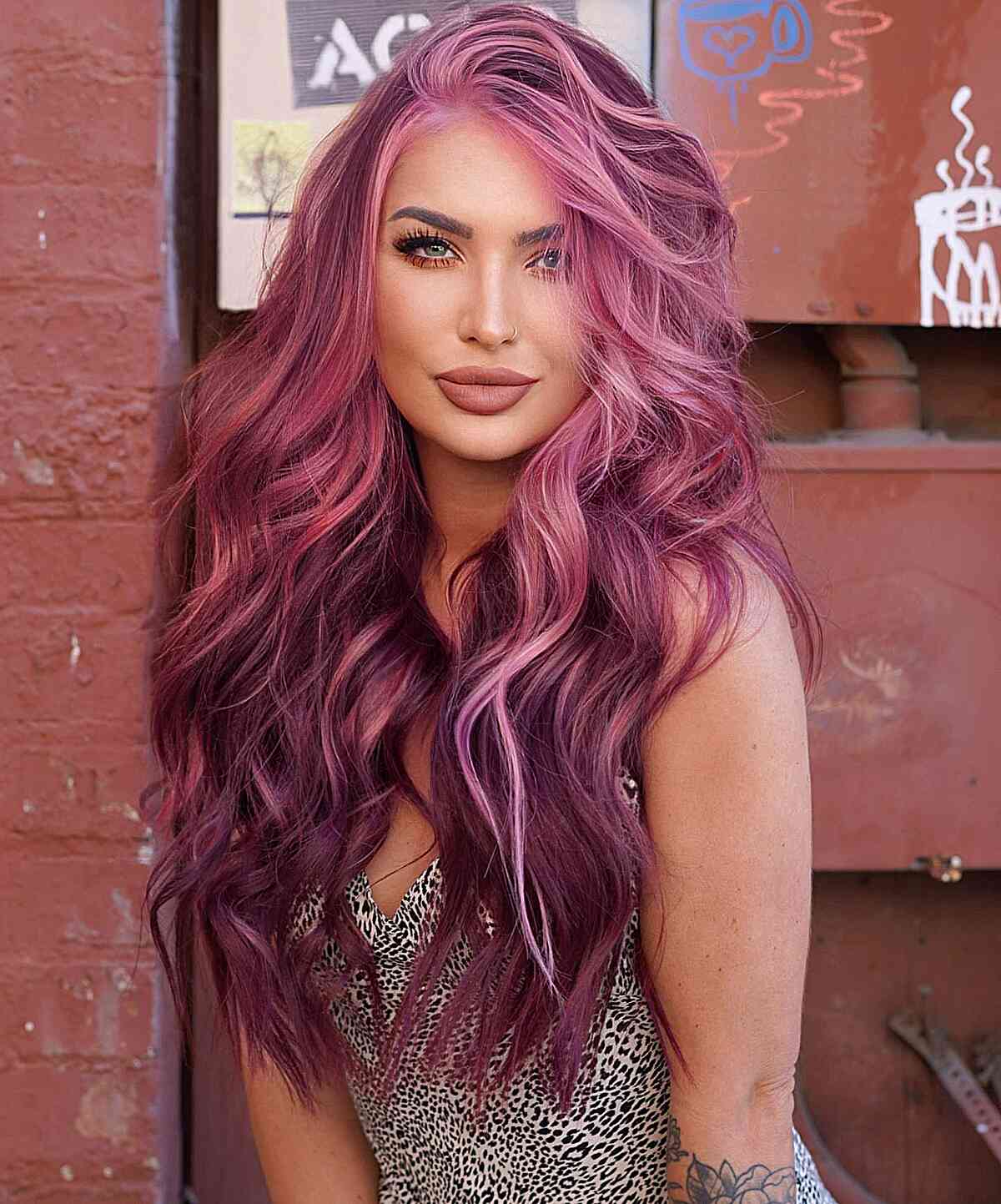
Layering two vivid tones on thick, wavy mid-back length hair requires a technique that keeps each shade distinct without muddying the middle. A balayage hand-paints pink and purple sections separately, so the contrast stays sharp even as the loose waves and curtain bangs shift in motion. The middle parting helps the two colors appear deliberate. Thick, wavy hair at mid-back length holds this kind of saturation well; curtain bangs also soften angular faces by breaking up a strong jawline. Ask your colorist for: mid-back layers, curtain bangs, vivid pink and purple balayage.
The glossy finish comes from a high-shine glaze applied after the color is set. That glaze seals the cuticle and keeps the pink from pulling too warm or the purple from turning ashy, which is the usual complaint with this combo. A heat protectant before blow-drying helps preserve both the wave pattern and the vibrancy.
Mid-Back Pastel Sorbet Blend With Blunt Bangs
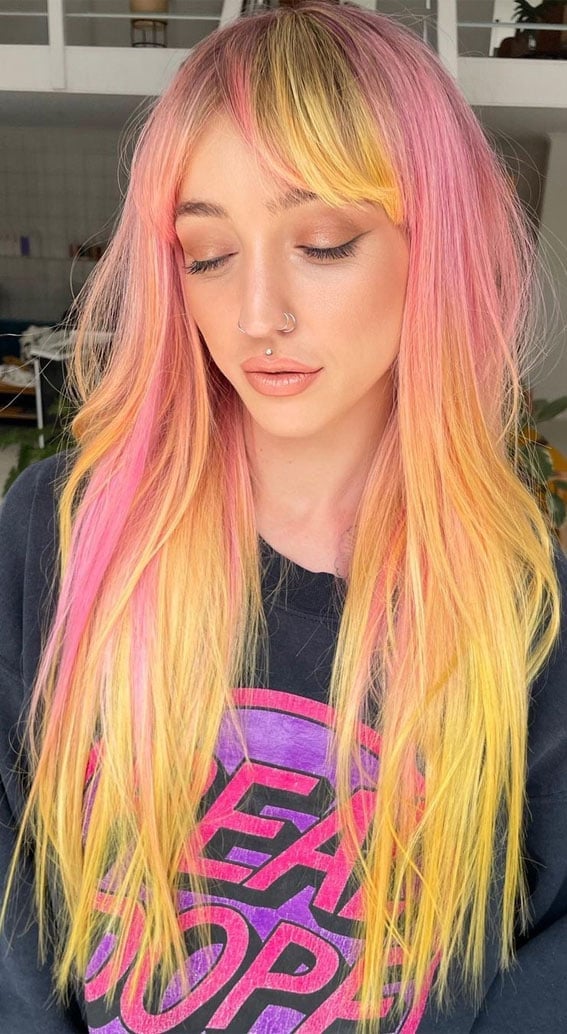
Three pastel shades on one head means each one fades on its own schedule, and that is the reality of a sorbet blend. Pink, yellow, and orange were chosen here because they share a similar lightness level, so no single color dominates as the others wash out. The blunt bangs keep the fine, wavy texture from looking too wispy, giving the mid-back length a clear front line. Fine, wavy hair at mid-back length works best when the cut has a strong structural element like these bangs; they also suit oval and long faces by shortening the visual length. Ask your colorist for: mid-back length, blunt bangs, pastel pink yellow orange blend.
Pastel blends need a toning appointment every four to six weeks to keep the yellow from drifting into butter and the pink from turning peachy. A silk pillowcase overnight reduces friction, which helps the fine texture hold its wave pattern longer between washes.
Medium Length Soft Baby Pink
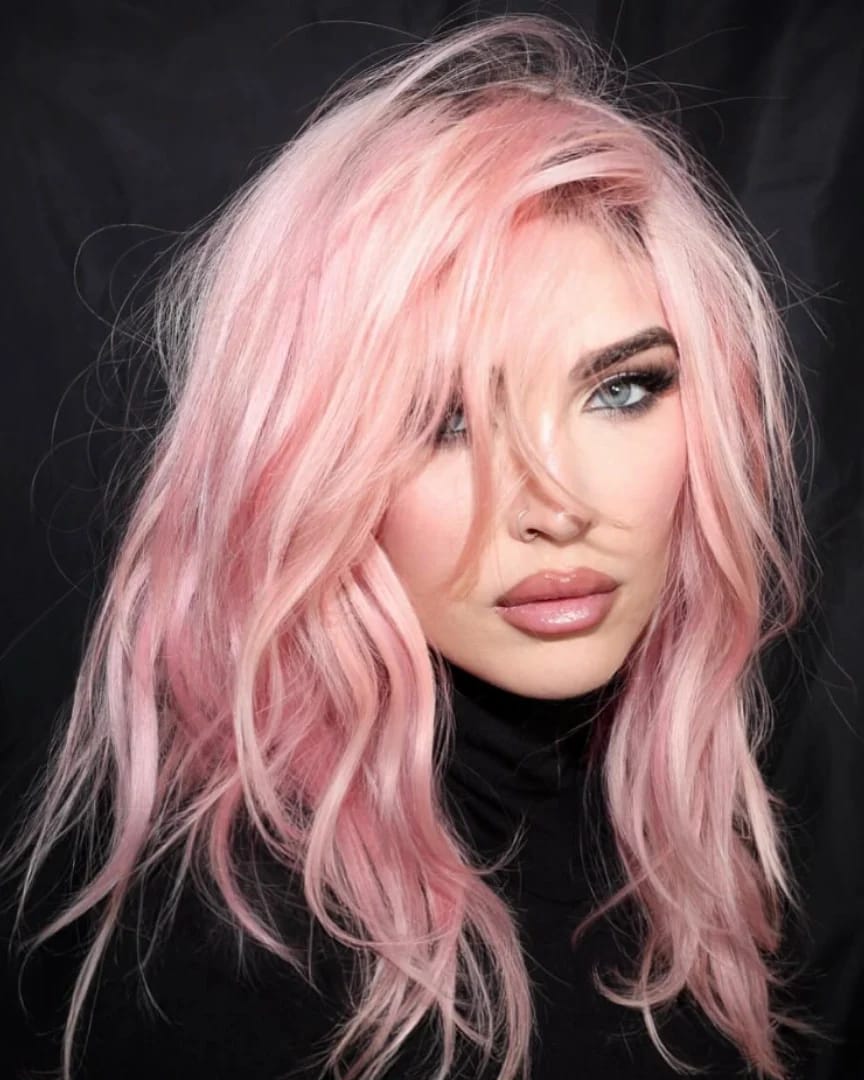
Soft baby pink works as a tinted neutral, making it a pink that suits wavy, medium-density hair at collarbone length without a full commitment. The soft layers and middle parting prevent the color from looking flat, as the lighter edges reflect light differently than the denser mid-lengths. Wavy hair of medium density at collarbone length benefits from the air-dried finish, since the wave pattern adds dimension that a solid pastel needs to avoid appearing like a single wash of color. Ask your colorist for: collarbone length soft baby pink, natural waves. A styling product helps the wave pattern hold its shape and keeps the pink from looking dusty by lunch.
Shoulder Length Curls In Medium Pink
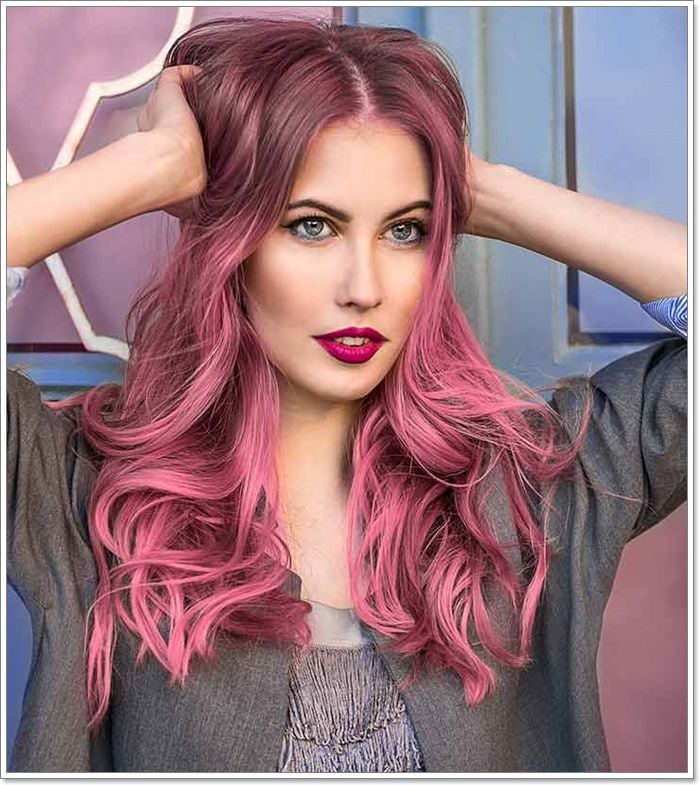
Medium pink on shoulder-length wavy hair looks straightforward, but the honest trade-off is that this shade lands warmer than it appears in the bowl, especially if your starting base is darker than a level eight. The loose curls and middle parting distribute the color evenly, so there is no heavy patch at the ends where pigment tends to pool. Medium density wavy hair at shoulder length carries this saturation well, and the curls add volume to finer textures that might otherwise look flat. Ask your colorist for: shoulder length medium pink, loose curls. The main drawback: medium pink pulls brassy on un-lifted natural bases, so expect a purple shampoo to be a permanent counter fixture.
Collarbone Rose Gold Pink With Darker Streaks
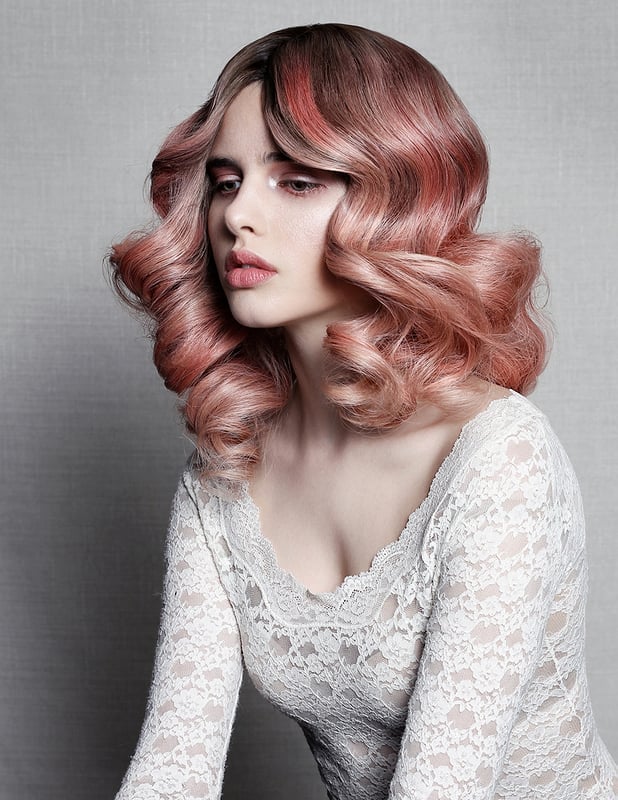
When does rose gold stop being a wedding-season favorite and start earning its keep in fall? When darker pink streaks break up the uniformity. This collarbone-length cut uses a rose gold pink base with deeper streaks woven through the mid-lengths and ends, so the color reads dimensional rather than flat. The voluminous curls and blowout style benefit from the thick, wavy texture, which holds the curl pattern without needing a can of hairspray. Thick, wavy hair at collarbone length suits this treatment because the darker streaks sit deep enough to peek through the curls without dominating. Ask your colorist for: collarbone length rose gold pink with darker streaks, voluminous curls. This is an evening or holiday-party color, since the metallic undertone catches artificial light better than a flat matte pink would.
Mid-Back Light Pastel Pink Blowout
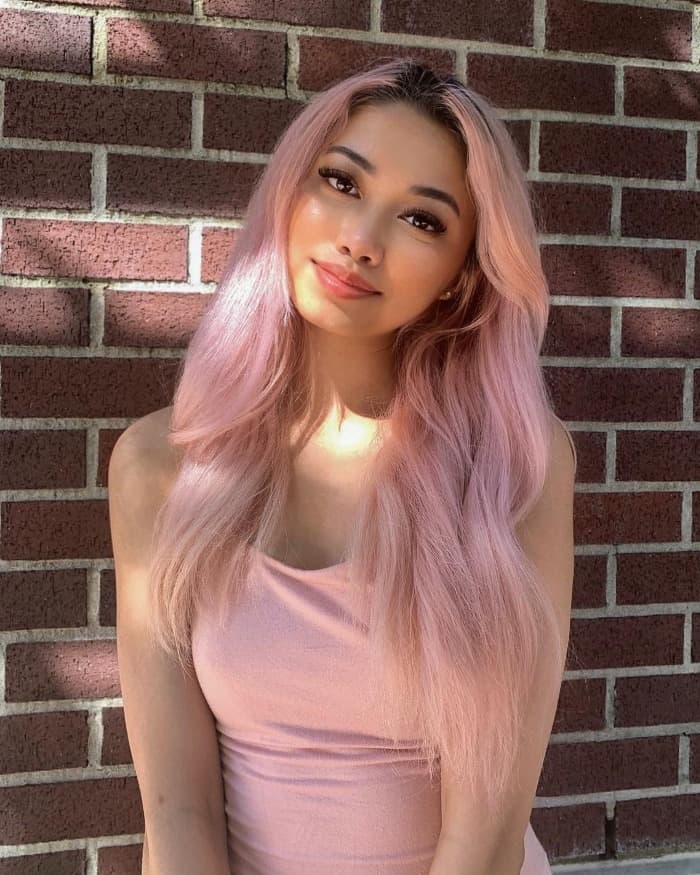
Ask your colorist for: mid-back length, curtain bangs, light pastel pink blowout. To keep the color from fading into a washed-out cream, use a color-depositing shampoo every other wash. A smoothing serum on the ends enhances the glossy finish, but keep it light to avoid weighing down fine texture.
Collarbone Multi-Tonal Pink With Side Swept Bangs
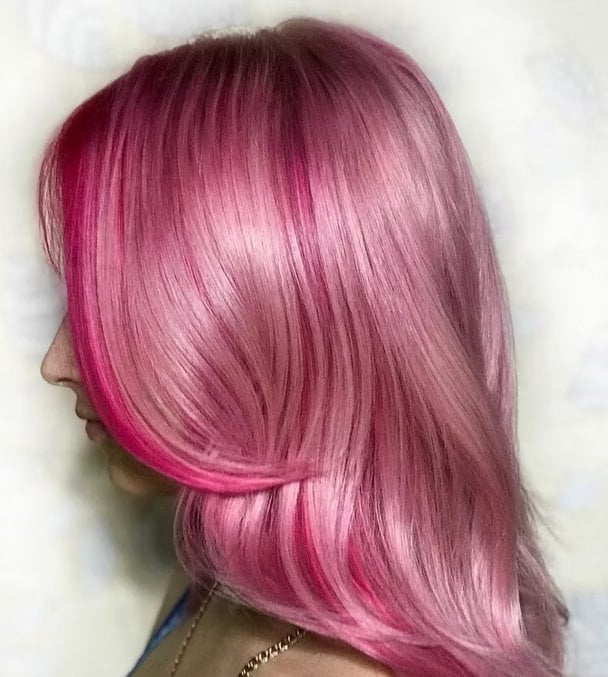
Where a single pink can read as flat, this multi-tonal version layers several pink shades into a metallic sheen that shifts with movement. The collarbone length and side-swept bangs suit fine, straight hair that needs volume at the front, flattering oval and square faces. Ask your colorist for: collarbone length, side swept bangs, multi-tonal pink. A texturizing spray gives the bangs hold and definition, so they sweep rather than flop. This is a salon color that needs a toner refresh every four to six weeks to keep the metallic quality from turning muddy.
Collarbone Blunt Bob In Pastel Pink
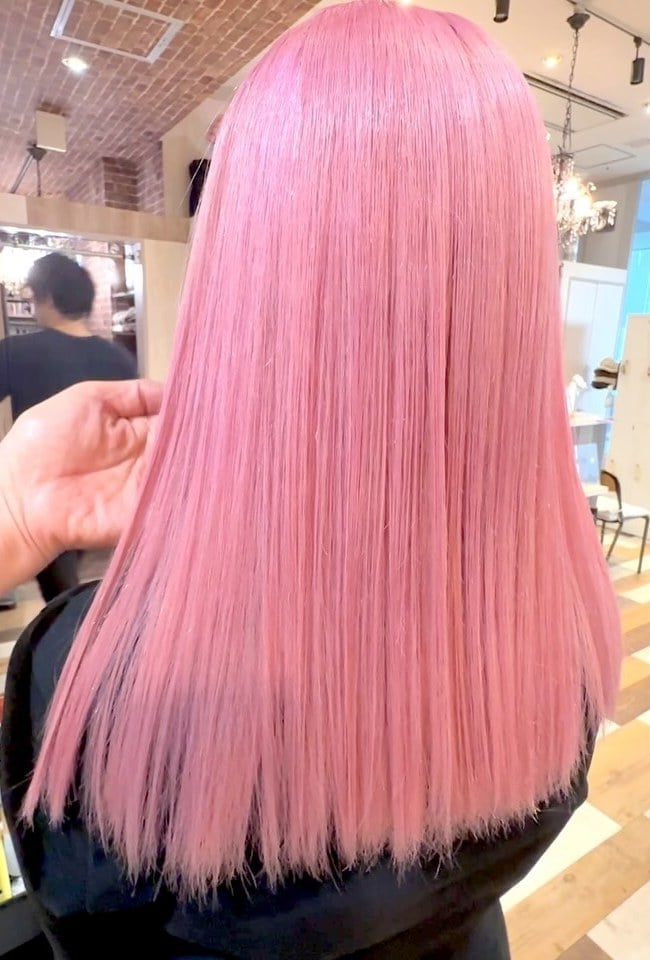
Ask your colorist for: collarbone length pastel pink blunt bob. The key is the cut: a clean, blunt line at the collarbone that makes the color feel deliberate. This works best on fine, straight hair, as the bob keeps the ends from flipping. A smooth blowout completes the look, and a flat iron ensures the ends are perfectly blunt. This is a salon-only job, both for the pastel color and the precision cut. Expect the pink to fade to a lighter pastel within six weeks, so book a gloss to revive it.
Collarbone Blend Of Pastel Pink And Lavender
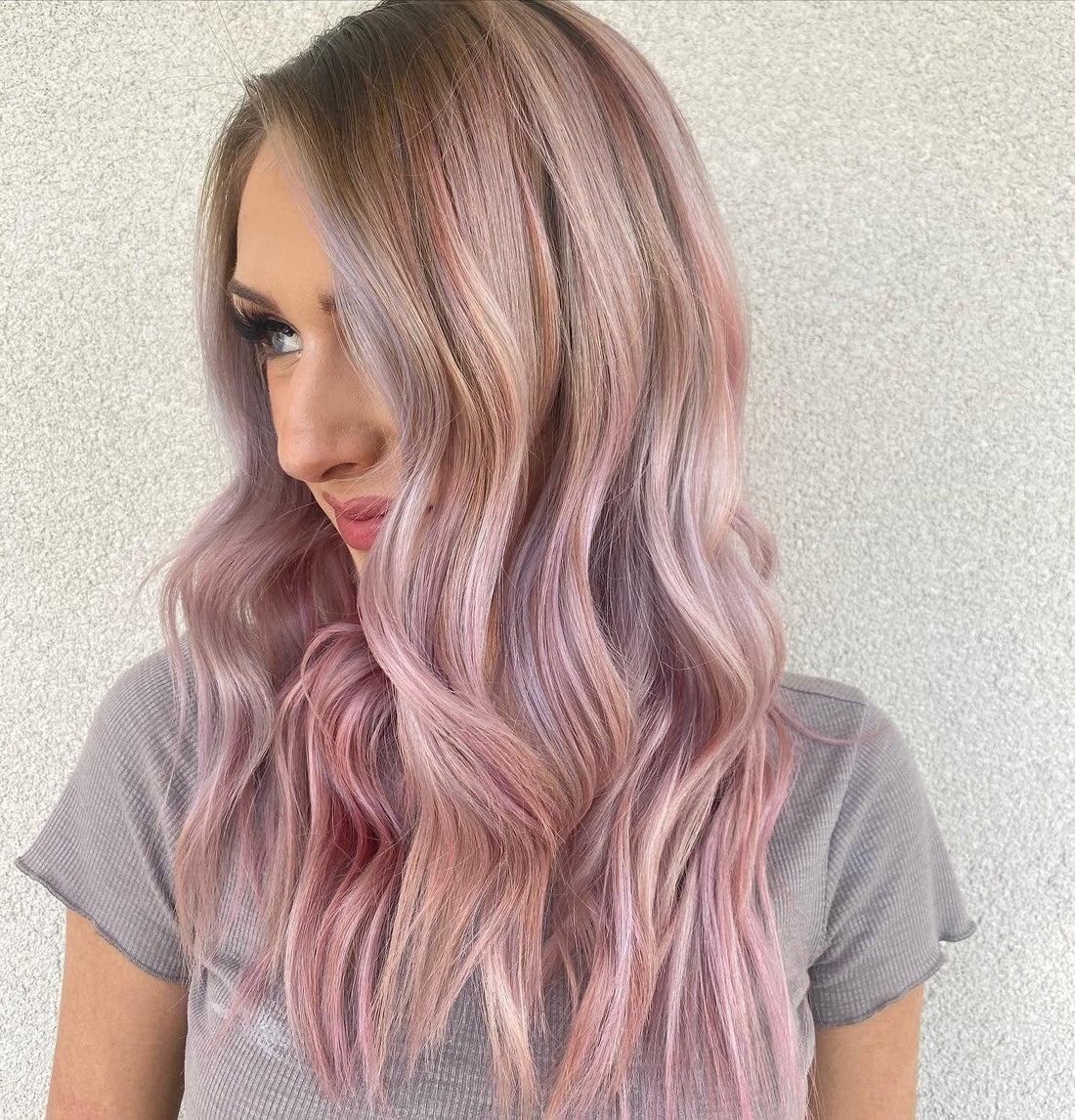
The blend of pastel pink and lavender creates a dreamy, multi-tonal effect that softens the face when paired with soft waves. This suits medium density wavy hair, as the layers add movement and prevent the pastel colors from looking flat. Ask your colorist for: collarbone length pastel pink and lavender blend. To maintain the color separation, use a color-safe shampoo and a texturizing spray to enhance the waves. The pastel tones fade quickly, so a toning appointment every three to four weeks is realistic.
Mid-Back Vivid Pink With Natural Styling
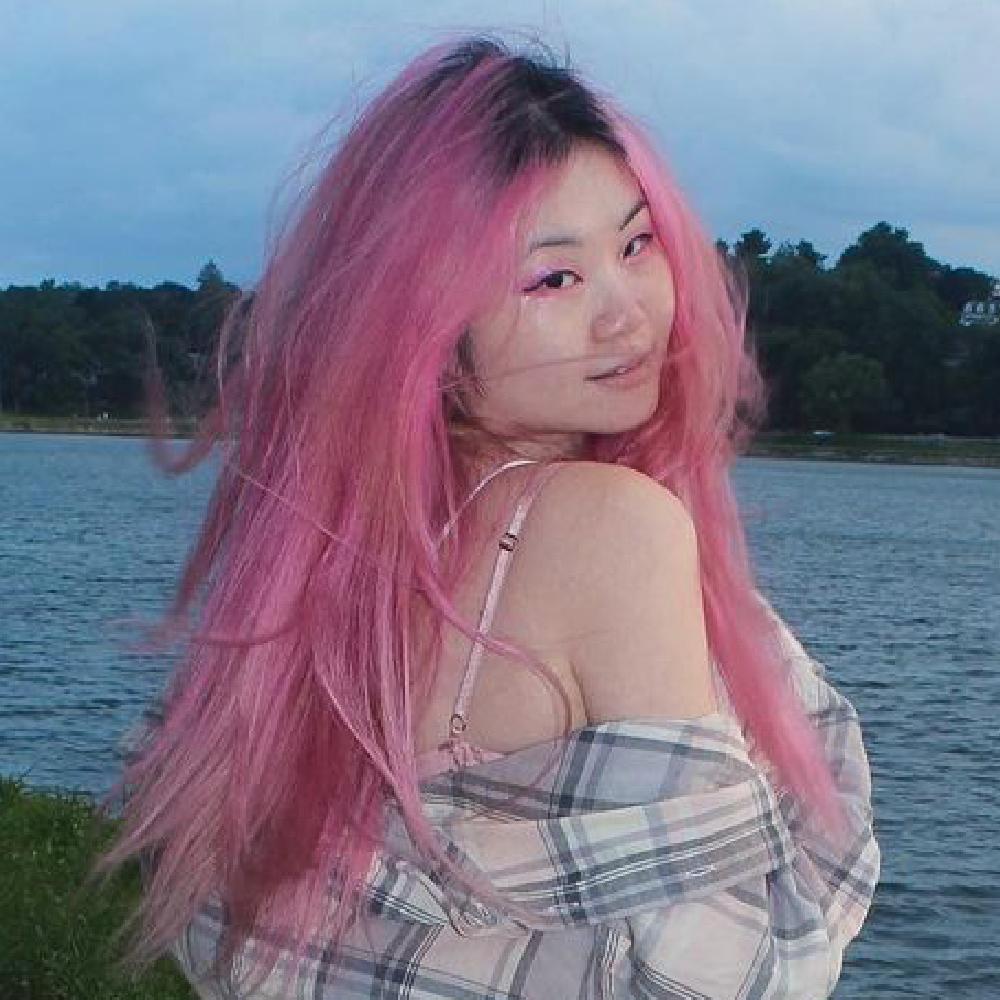
The layers help manage the density, preventing the hair from looking like a solid block of color. Ask your colorist for: mid-back length vivid pink, natural air-dried waves. This is a salon-leaning color that requires bleaching to a light base, and the vivid hue will need a color-depositing shampoo to keep it from dulling. A leave-in conditioner keeps the thick waves soft and defined, and a trim every eight weeks maintains the shape.
Mid-Back Vibrant Pink With Lighter Highlights
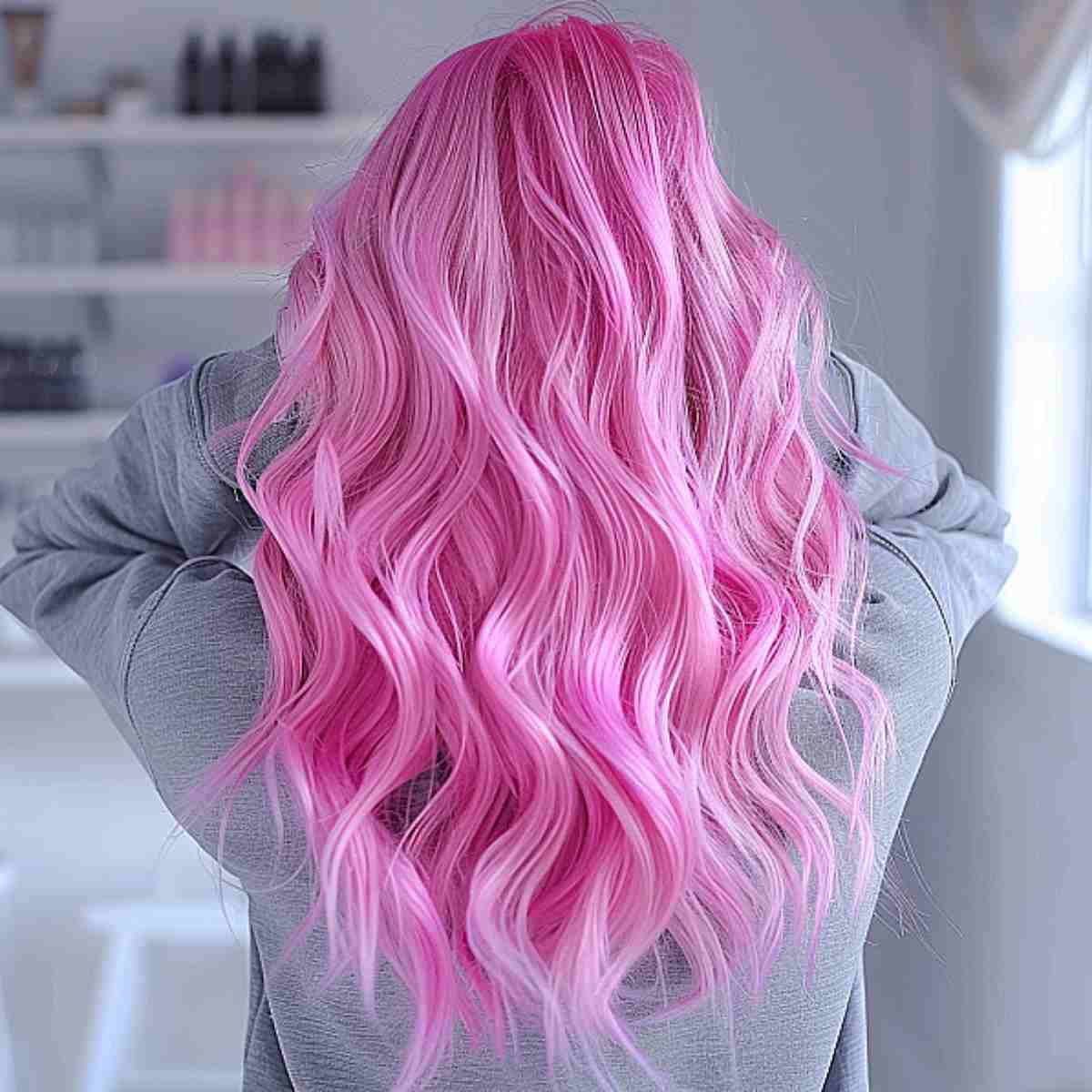
Vibrant pink is a statement, but it can read as flat without a little something extra. Here, lighter pink highlights are woven through mid-back layered hair to create dimension that moves with every wave. The technique is a partial foil or hand-painted section that lifts select strands a shade or two lighter than the base. Thick, wavy hair at mid-back length is the ideal canvas, as the texture helps the highlights catch the light from different angles.
Ask your colorist for: mid-back vibrant pink with lighter highlights, loose waves. The payoff is a rich, dimensional color that avoids looking like a single solid block. A wide-tooth comb is your best tool for detangling after washing, since wet color-treated hair is more prone to stretching.
Mid-Back Vibrant Pink With Purple Undertones
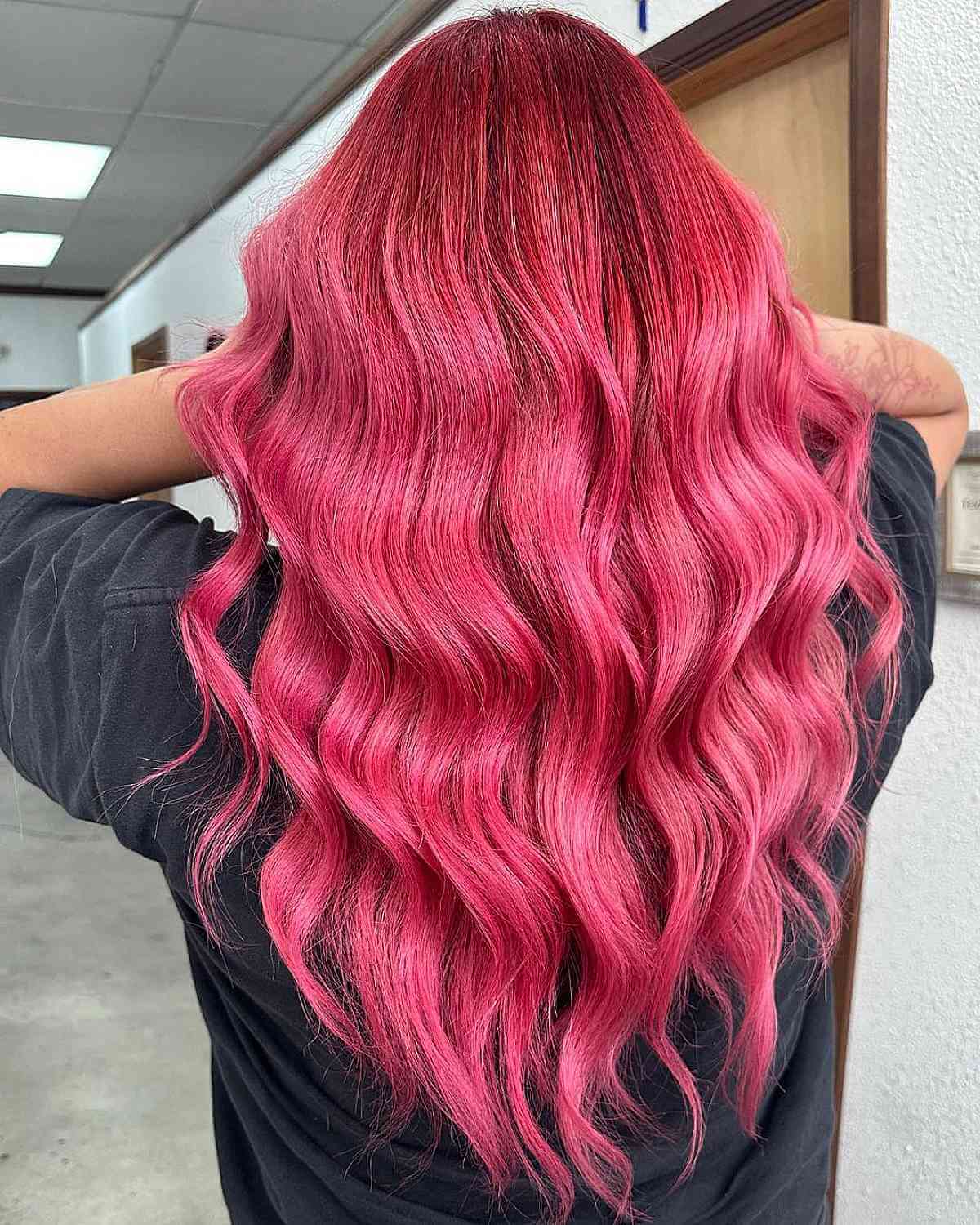
A pure vibrant pink is a bold, straightforward choice. This version adds subtle purple undertones throughout the length, which shifts the color into a cooler, slightly moodier territory. The difference is subtle in bright light but becomes more apparent in shadow, where the purple reads as a deeper dimension. Thick, wavy mid-back hair with layers lets the undertones peek through in the movement of a loose blowout. Ask your colorist for: mid-back vibrant pink with purple undertones, wavy blowout. If you want a pink that changes character depending on the light, this is the one. A color-safe heat protectant is non-negotiable before blow-drying.
Mid-Back Vibrant Pink With Purple Undertones, Close-Up Take
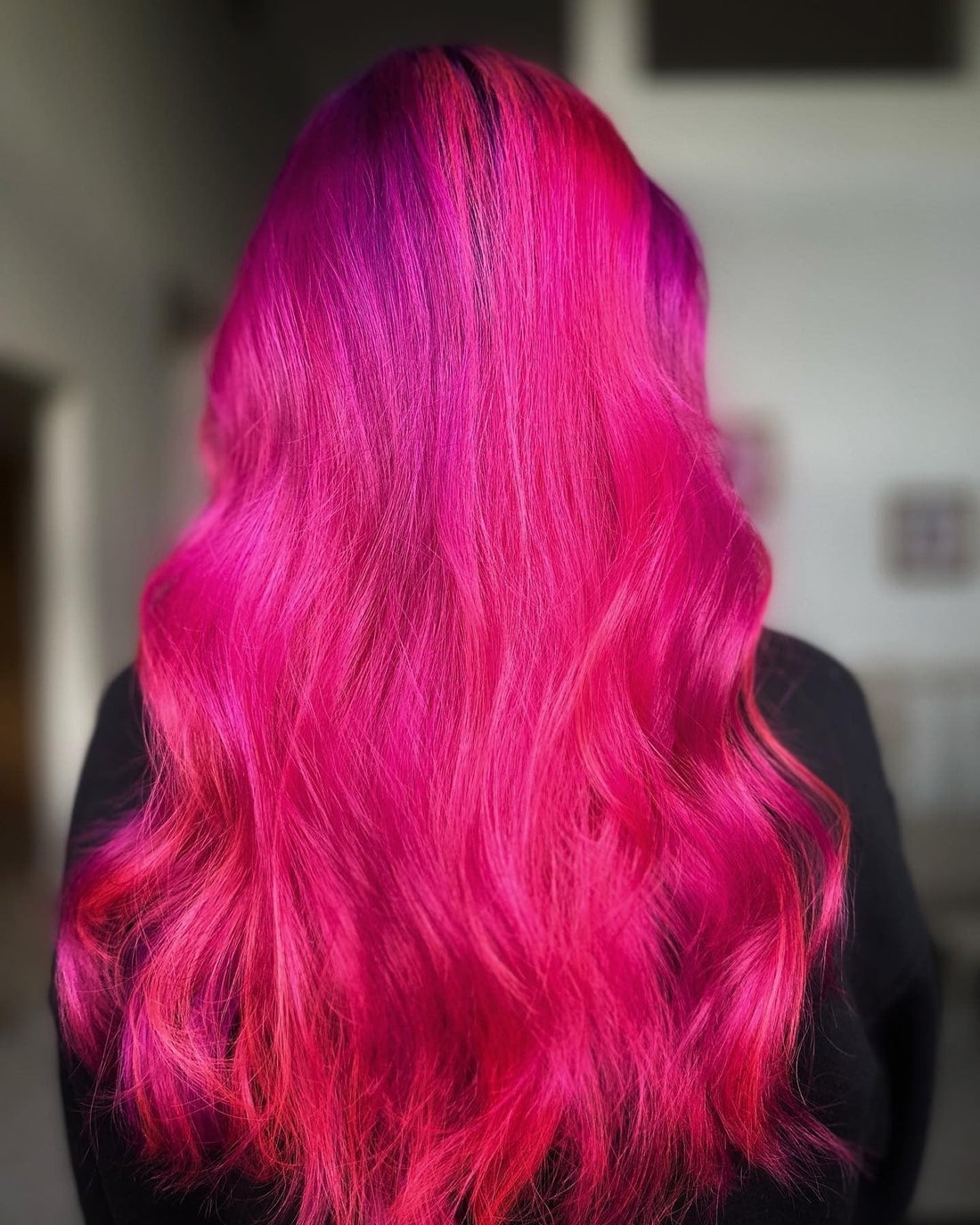
Layers in thick, wavy mid-back hair do more than add shape. They create pockets where the vibrant pink and its purple undertones can separate and appear distinct instead of blending into a single murky shade. The design relies on the contrast between the two tones, so upkeep is key. Purple undertones can fade toward a warmer pink faster than expected, especially if you wash in hot water or skip a sulfate-free shampoo.
Ask your colorist for: mid-back vibrant pink with purple undertones, loose waves. A silk scarf or bonnet at night protects both the wave pattern and the color integrity. The trade-off for that multi-dimensional depth is a toning appointment every four to six weeks to keep the purple from drifting. If you cannot commit to that rhythm, a straight vibrant pink might be the more practical choice.
Mid-Back Bright Pink With Purple And Blue Tones
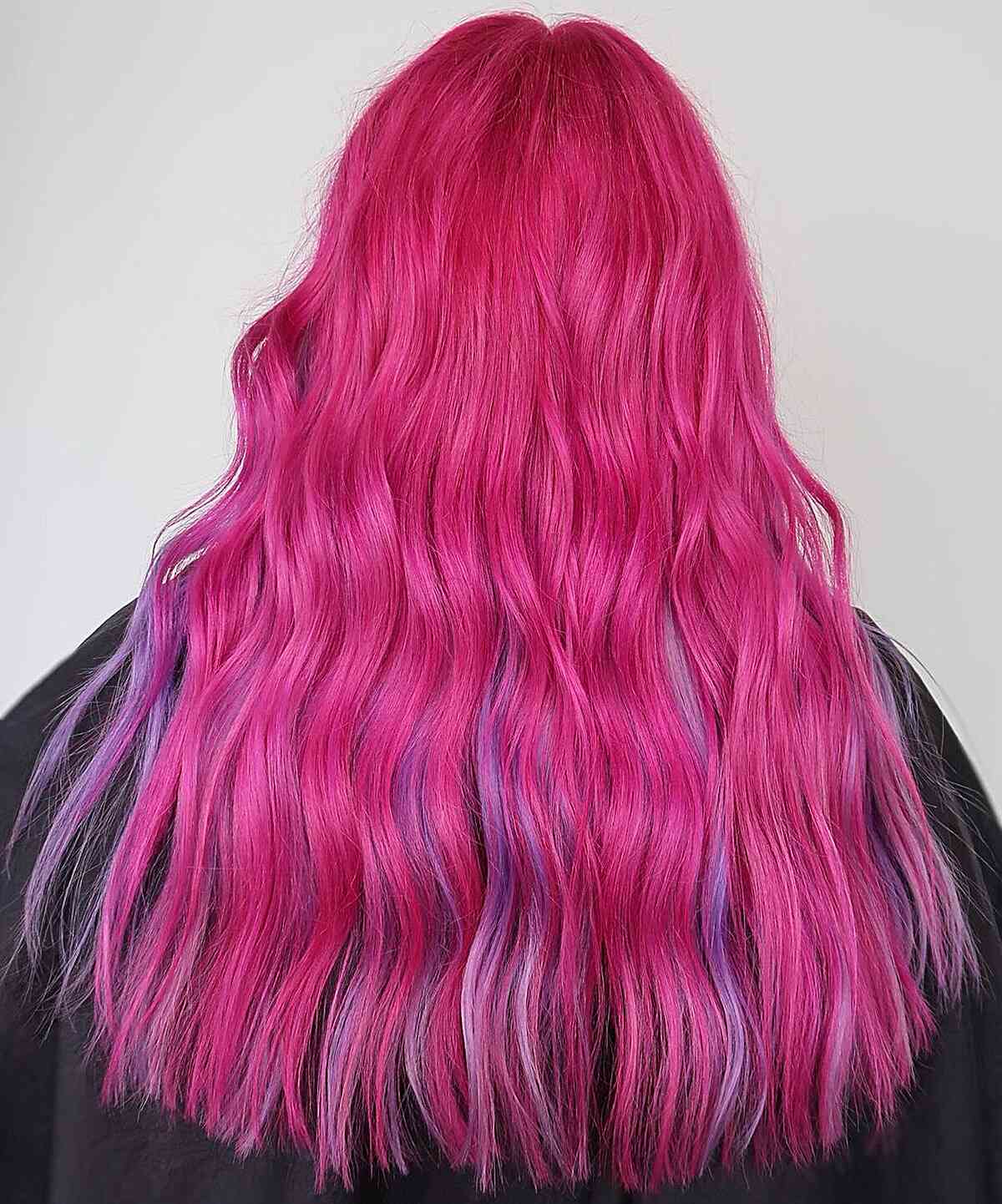
A bright pink that carries both purple and blue undertones sits in a cooler part of the color wheel than a warm fuchsia. The two cooler accents keep the pink from skewing too coral or peachy, which matters if you prefer a jewel-toned effect over a pastel one. Thick, wavy mid-back hair with layers is the right home for this multi-tonal formula, as the movement lets each undertone show separately. Ask your colorist for: mid-back bright pink with purple and blue undertones. Styling is a loose blowout with a middle parting, and the upkeep involves a color-depositing conditioner used weekly to reinforce the blue and purple notes before they fade to a warmer pink. That weekly refresh maintains the multi-tonal look.
Mid-Back Black Base With Pink Balayage
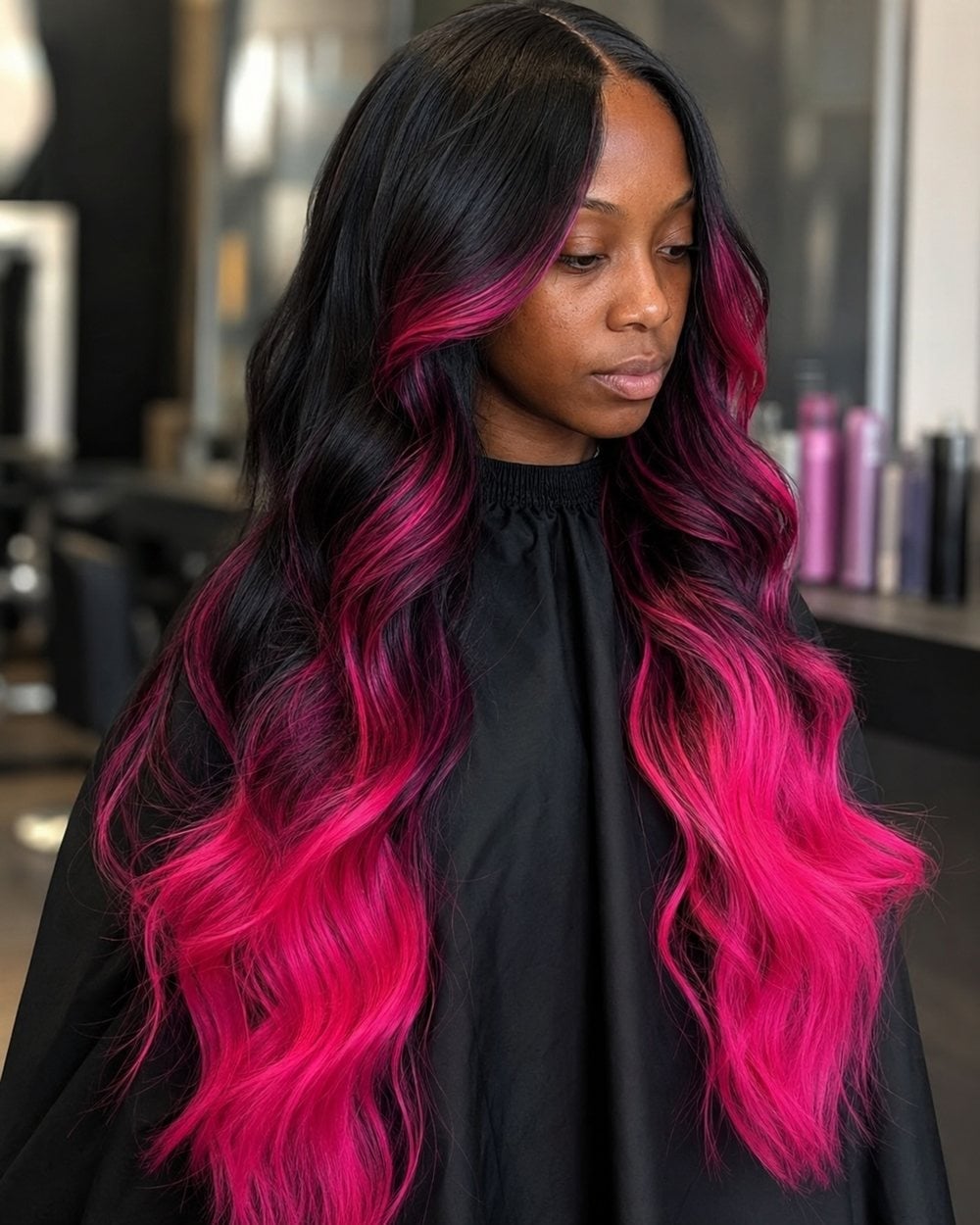
When is a pink hair color not an all-over commitment? When the base stays black and the pink arrives as a balayage. The dark root and length anchor the look, while the bright pink is painted onto the ends, creating contrast that reads as intentional. Thick, wavy hair at mid-back handles the transition gracefully, since the loose waves blur the line between the two colors. Ask your colorist for: mid-back black hair with bright pink balayage. This color works well for fall and winter, when darker bases feel seasonally appropriate but you still want a flash of brightness. A purple toning shampoo used occasionally keeps the pink from yellowing against the black.
Mid-Back Hot Pink With Pastel Highlights
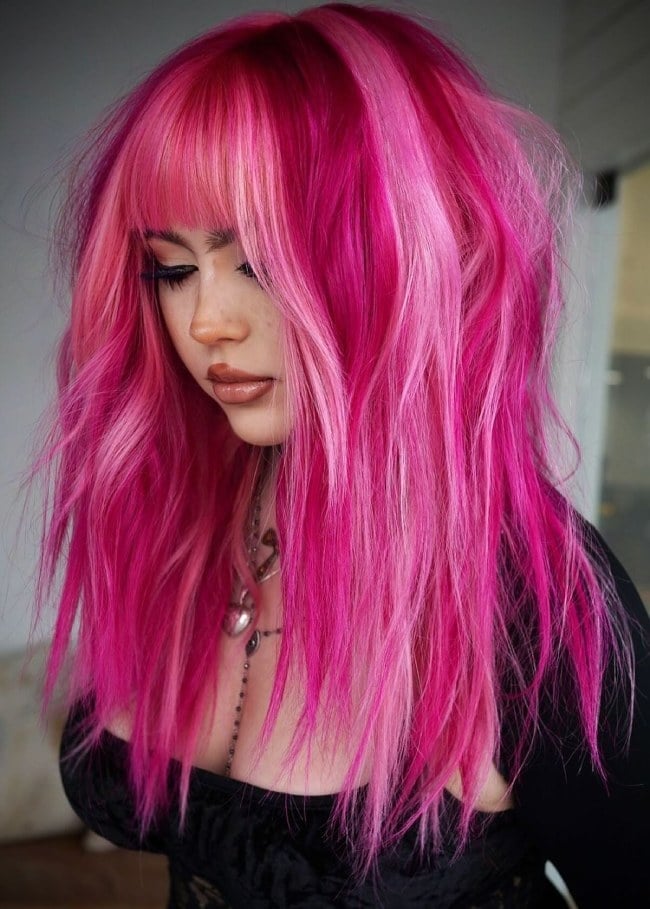
Hot pink can read as a single flat block of color, but here the pastel highlights break it up into something with actual depth. The mid-back length layers catch the contrast, and the loose waves from a blowout let each shade show its own angle. Thick, wavy hair is the ideal canvas because the highlights have room to move without getting lost.
Ask your colorist for: mid-back hot pink with pastel pink highlights. Specify that you want the pastel pieces woven through the mid-lengths and ends, not just at the crown, so the contrast reads from every direction. The placement matters more than the exact shade ratio. A heat protectant before blow-drying keeps the color from dulling, and a gloss appointment every six to eight weeks will keep the hot pink from drifting too far toward coral.
Mid-Back Pink Highlights On Blonde Base
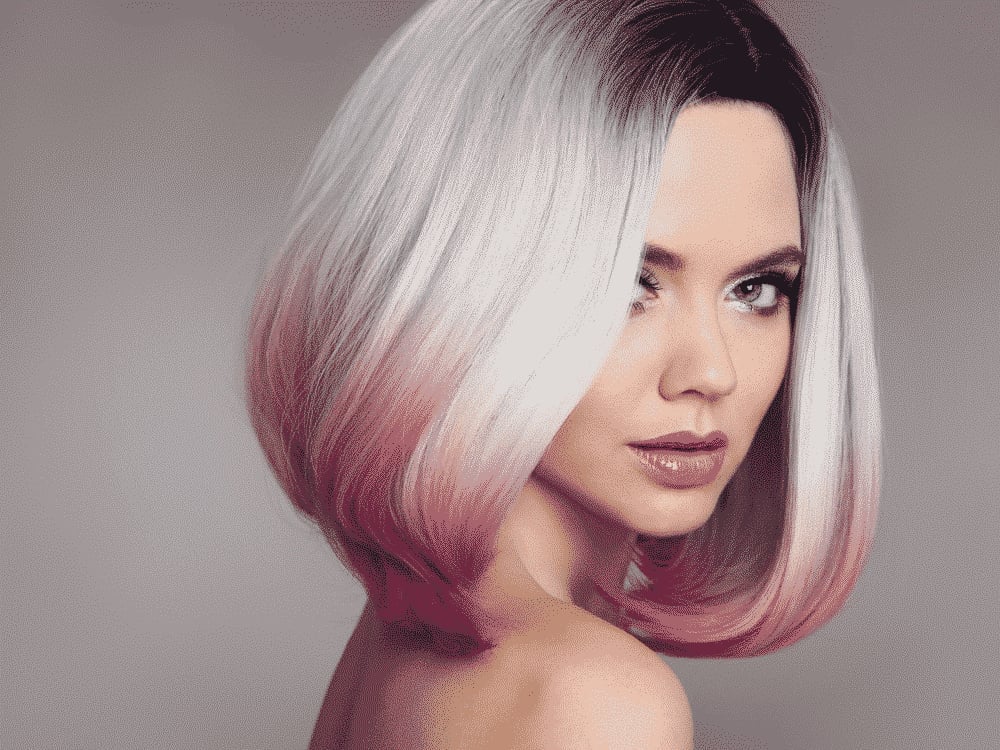
The genius of pink highlights on a blonde base is that they read as lived-in rather than applied. The mid-back length, middle parting and air-dried waves all point to a color that grew into place, even though it took a salon visit to get there. Thick, wavy hair holds the highlight placement visible without needing constant styling.
Ask your colorist for: mid-back blonde with pink highlights, natural air-dried waves. The technique is foils placed sparingly, so the pink surfaces only when the hair moves. A purple shampoo once a week keeps the blonde base from turning brassy, and the pink will fade softer than the blonde, so the contrast actually mellows over time. That is the look working in your favor.
Collarbone Multi-Dimensional Pink Tones
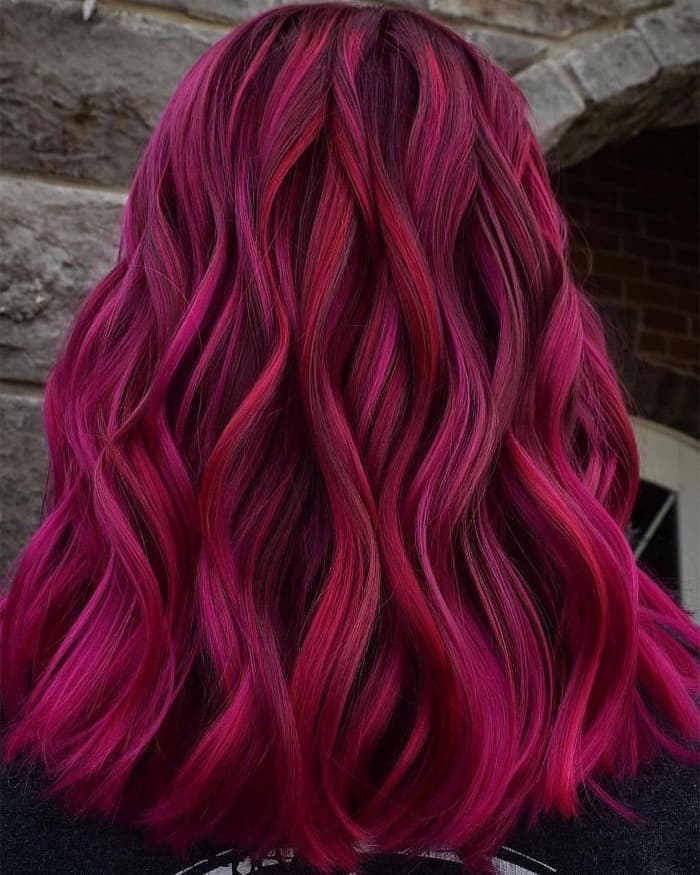
A multi-dimensional pink like this one, with magenta, darker lowlights and lighter rose pieces, depends on how the shades fade at different rates. The collarbone length and soft waves keep the layers visible, so the lowlights anchor the color while the highlights lift it. Medium density hair carries the depth without the tones competing for space. Ask your colorist for: collarbone length multi-dimensional pink tones. Expect the lighter pink to wash out first, leaving the magenta and lowlights to carry the richness, which means a toning appointment around week six keeps everything from going flat. A color-safe texturizing spray at the roots adds the movement that shows off the layers.
Collarbone Lob With Pink And Purple Root Shadow
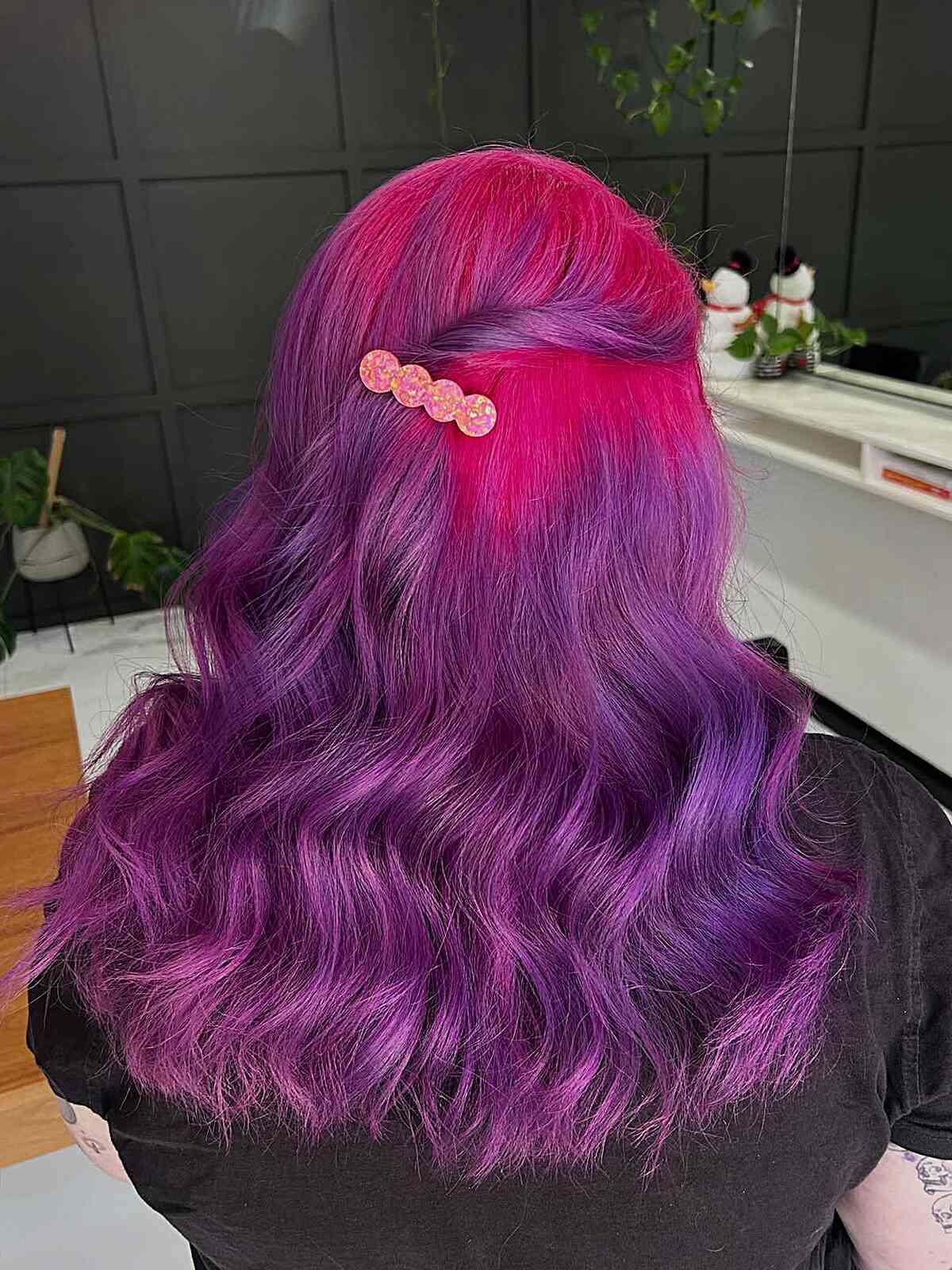
Where a traditional root melt blends one shade into another, this pink and purple root shadow keeps the roots vivid and lets the ends go darker, a reverse of the usual fade. The collarbone lob with a side parting gives the color a clean canvas, and the wavy texture keeps the transition from looking harsh. Medium density hair holds the wave pattern without weighing the lob down. Ask your colorist for: collarbone lob, pink and purple root shadow. It works better than an ombré if you want the drama at the top, not the ends. Let the hair air dry halfway before diffusing to keep the wave pattern defined, and plan a tone refresh every six weeks to stop the purple from turning gray.
Final Thoughts
For a low-maintenance pink, ask for semi-permanent color or a balayage over a lighter base, so regrowth stays soft. For a bold, lasting shade, a professional direct dye with proper toning will hold up far longer than a box job.
- Use color-depositing conditioner every one to two weeks.
- Wash with cool water and sulfate-free shampoo.
- Limit heat styling and always use a heat protectant.
- Refresh roots or tone every four to eight weeks.
Embrace your ideal pink, from subtle whispers to vibrant declarations.
