

The long pixie keeps the short hair convenience but adds enough length for options. In 2027, the trend leans toward soft face-framing layers and curtain bangs, moving away from flat-ironed straight looks.
This collection of 30 ideas covers the range, from low-maintenance cuts to those needing a trim every six weeks. It works for fine hair that needs volume or thick hair that needs weight removed, and for anyone whose current pixie hits that awkward in-between phase. The Long Pixie solves the problem of a fringe that won’t sit or a shape that falls flat by lunch.
Platinum Blonde Pixie With Wavy Texture
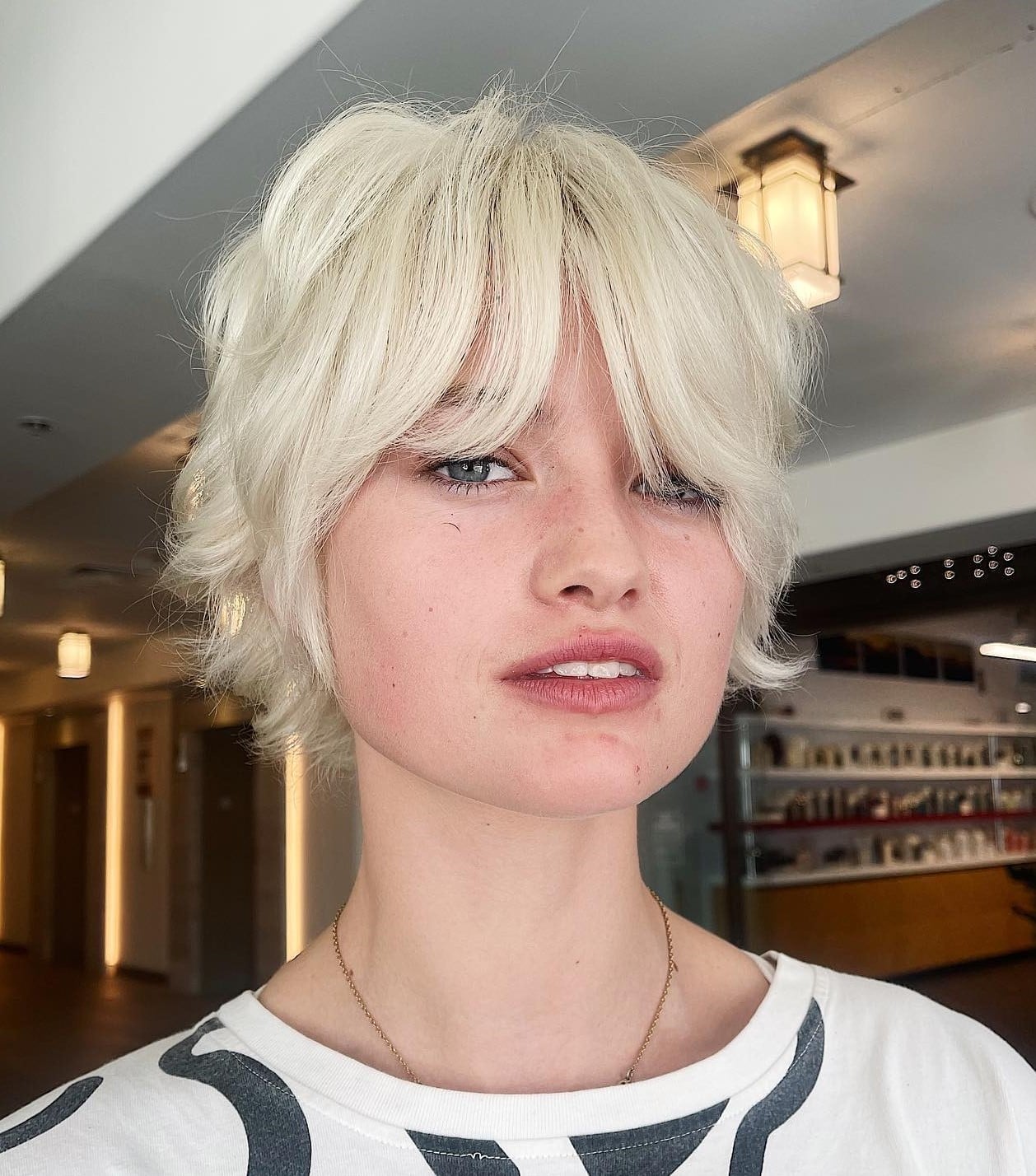
The side parting and wispy bangs do the real work here, softening the transition from short back to longer cheekbone length without losing the pixie edge. Ask your stylist for: platinum blonde pixie, cheekbone length, wispy bangs, natural waves. Fine to medium hair that can hold a wave benefits most, and the soft, face-framing shape takes the edge off round and heart faces. Air drying with a diffuser keeps the texture intact, though those wispy bangs will need a trim every four to six weeks to stay intentional rather than accidental.
Honey Blonde Layered Pixie To Collarbone
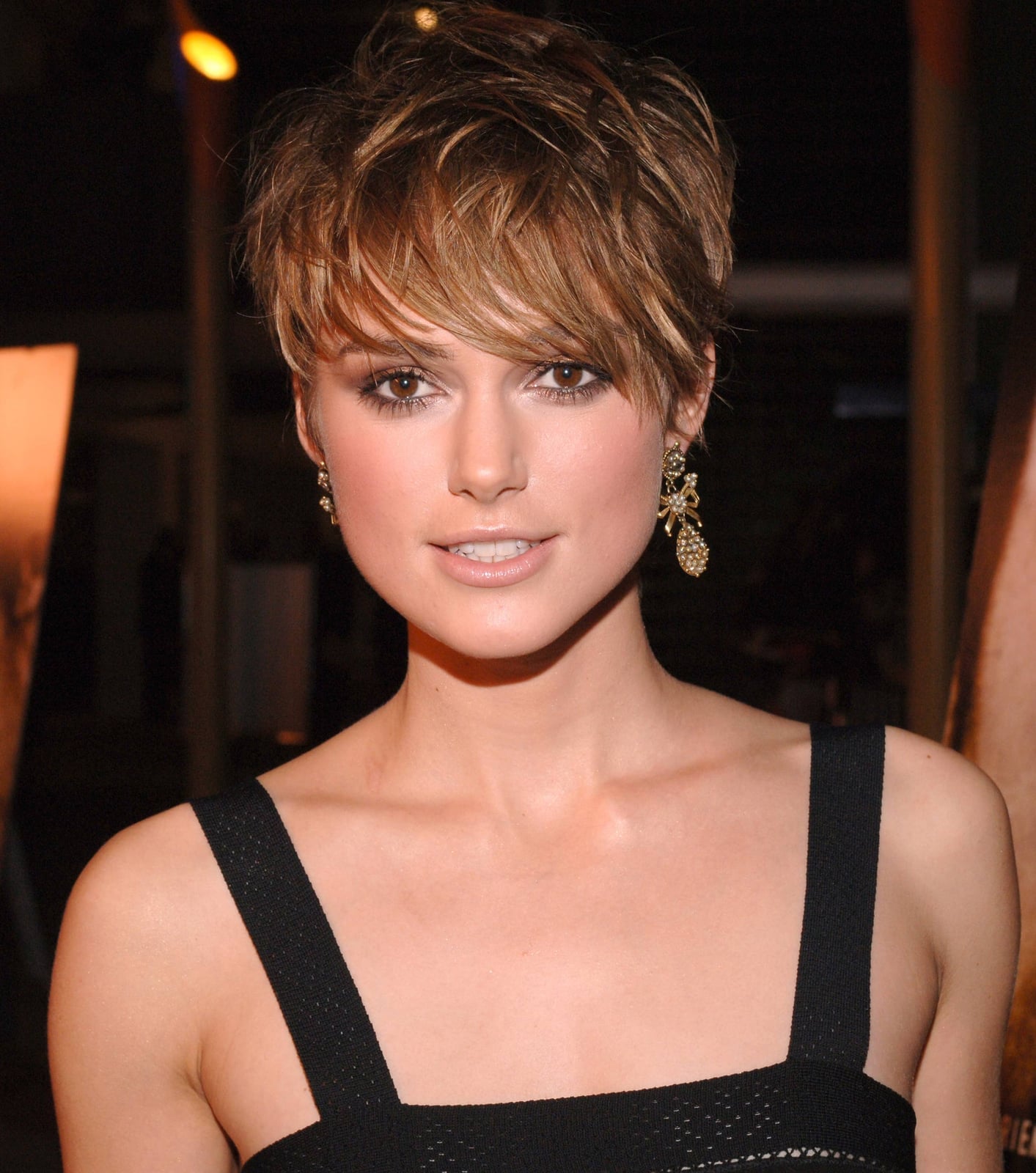
The collarbone length is the long pixie’s sweet spot, long enough to pull into a tiny ponytail but short enough to keep the cut’s shape. Layering through the crown builds the volume here, while side-swept bangs break up the length on thicker, wavy hair. Ask your stylist for: collarbone length layered pixie, honey blonde highlights, side-swept bangs. A round brush at the roots during blow-drying gives the lift, and a trim every six to eight weeks maintains the silhouette without losing the grown-out feel.
Tousled Blonde Pixie With Face-Framing Bangs
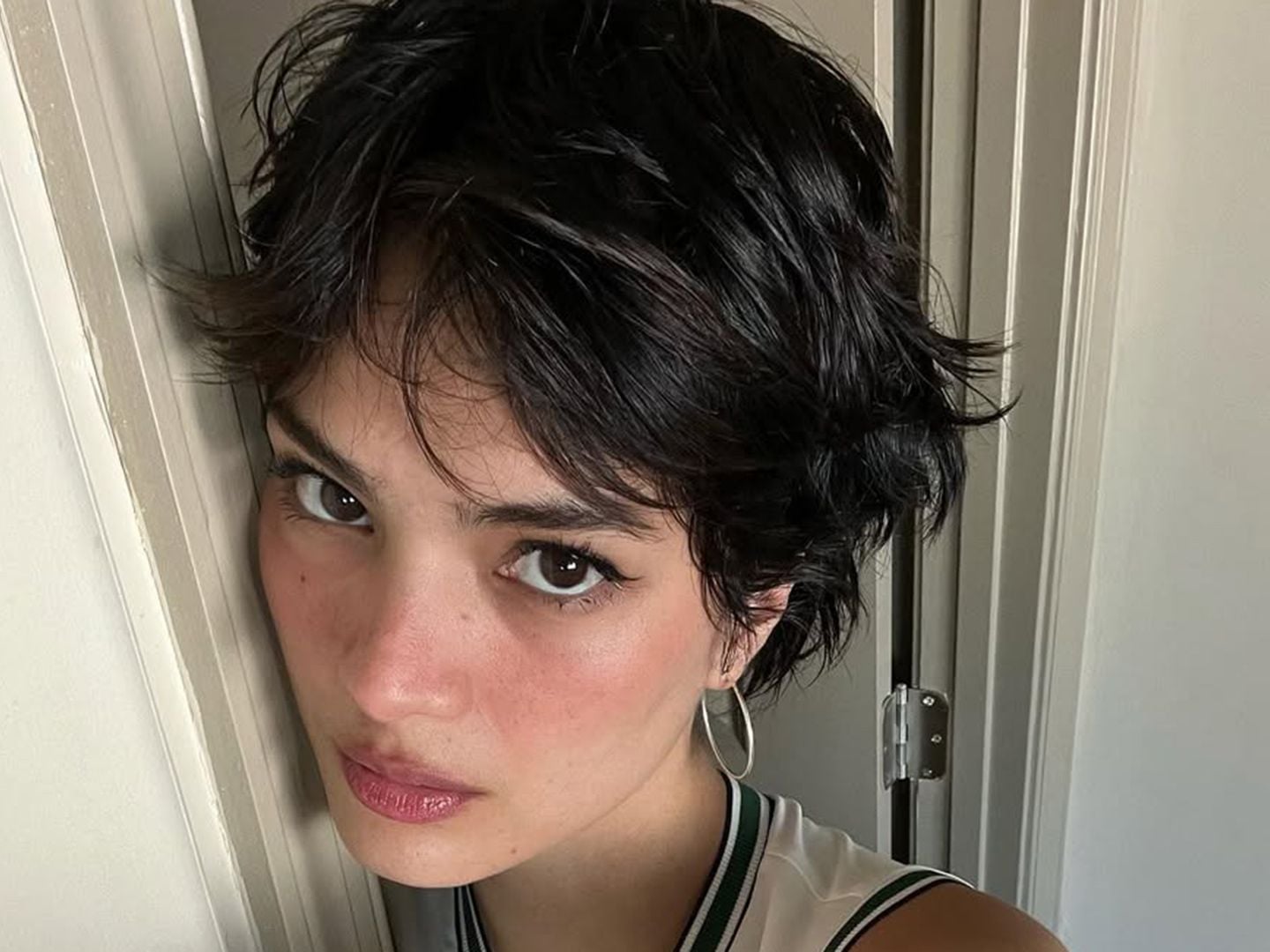
Does the lived-in look require more work than it saves? On fine, wavy hair, yes, at least for the first week. The textured, tousled finish and chin-length face-framing bangs rely on product, not luck, to hold that undone shape. Ask your stylist for: chin length textured pixie, face-framing bangs, blonde highlights. A texturizing paste worked through the ends gives the grip, but the bangs need a trim every four weeks. The drawback: skip the product, and the whole thing reads as messy rather than deliberate.
Copper Pixie With Blunt Chin Fringe
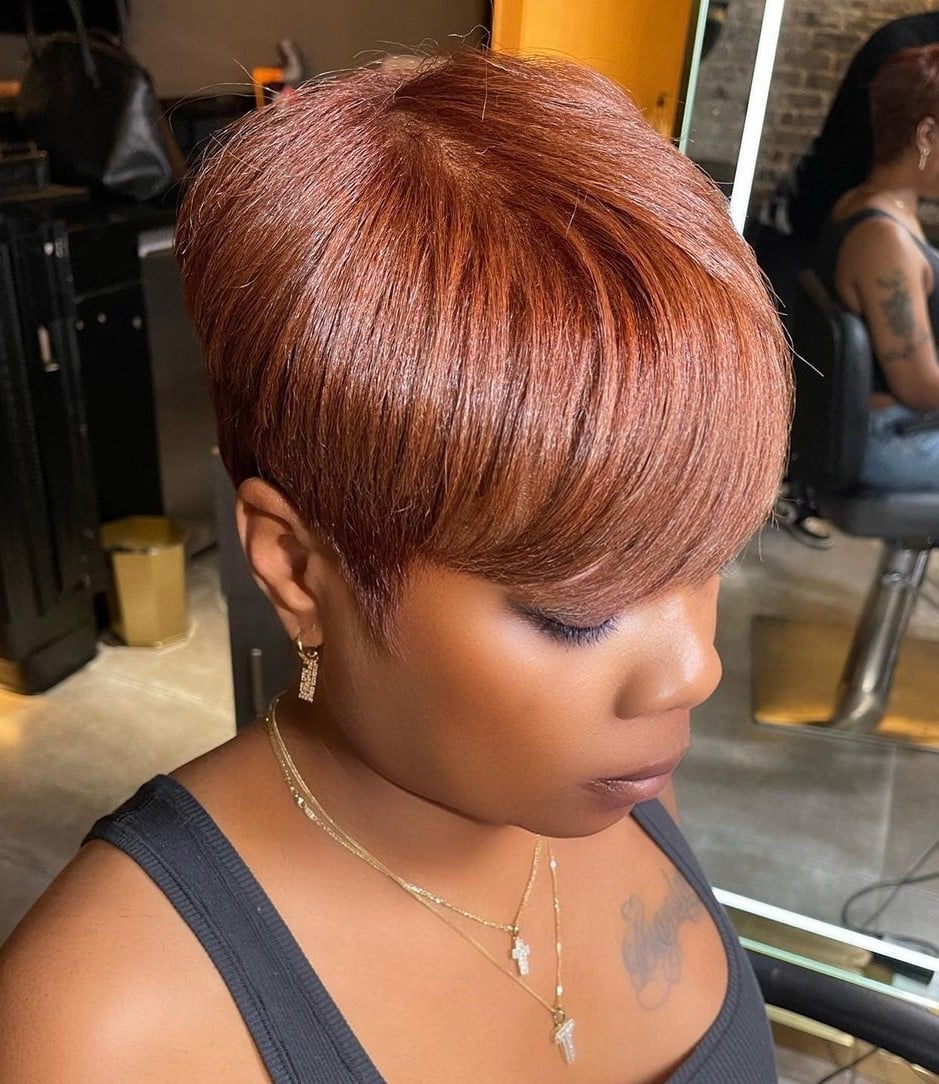
A blunt fringe is a different animal from wispy or curtain bangs, more graphic, less forgiving. Here the copper pixie keeps the shape clean with a smooth, straight finish and a side parting, the blunt chin-length fringe acting as the focal point. Ask your stylist for: copper pixie, blunt fringe above chin, smooth styling. Thick straight hair handles the precision best, and oval or long faces carry the strong horizontal line well. A flat iron seals the sleekness, and the fringe needs a precise trim every four to six weeks.
Dark Brown Pixie With Soft Curtain Bangs
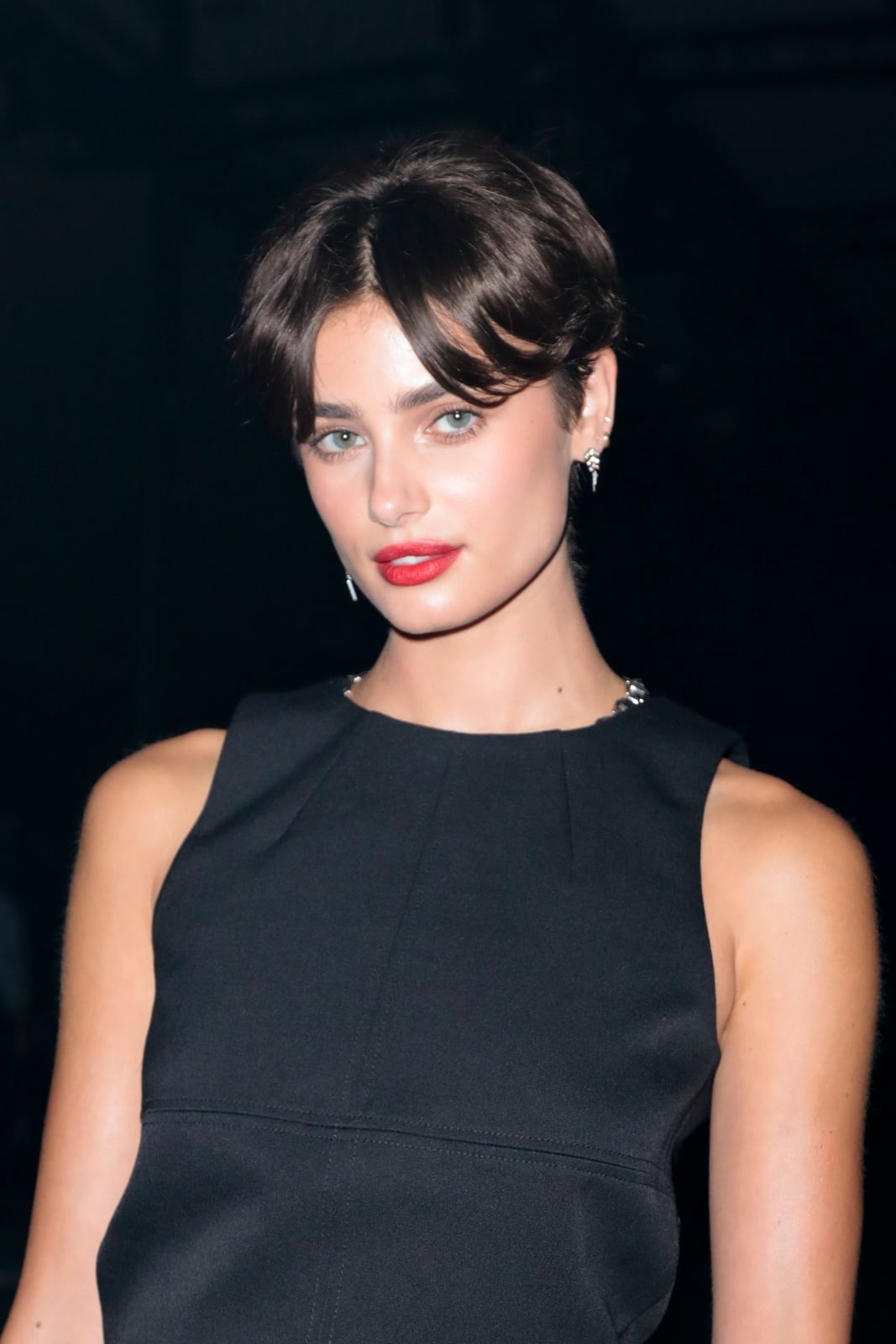
The curtain bang is the gateway bang, low commitment, high payoff. On this dark brown pixie, the middle part lets the soft curtain bangs frame the face without a hard line, while the chin length keeps the shape from reading as a bob. Ask your stylist for: dark brown pixie, chin length, soft curtain bangs, middle part. Fine straight hair benefits from the gentle movement, and the parted bangs soften square and round faces naturally. A round brush during blow-drying gives the bangs their curve, and a trim every six weeks keeps the length in check.
Medium Brown Pixie Shag With Curtain Bangs

A pixie shag with curtain bangs is a low-maintenance summer haircut that still looks polished. The ear-length cut is medium brown with subtle highlights, and the fine wavy texture is styled air dried. The shag layers add texture without requiring volume from a round brush. Ask your stylist for: pixie shag, ear length, textured curtain bangs, medium brown. A spritz of sea salt spray enhances the wave, and those curtain bangs need a trim every four to six weeks to keep their shape.
Vibrant Purple Pixie With Wavy Texture

Vibrant purple makes a statement, but the real design trick here is the lighter ends on thick wavy hair. The ear-length pixie uses a side-swept parting and soft waves to create movement, so the color transitions from a deeper root to a brighter tip without looking accidental. This suits wavy thick hair starting at ear length, where the natural wave helps diffuse the color gradient. Ask your stylist for: vibrant purple pixie, ear length, wavy texture, lighter ends. A color-safe shampoo is required, and the tone needs refreshing every six to eight weeks to keep the purple from fading to a muddy violet.
Dark Brown Curly Pixie With Fringe
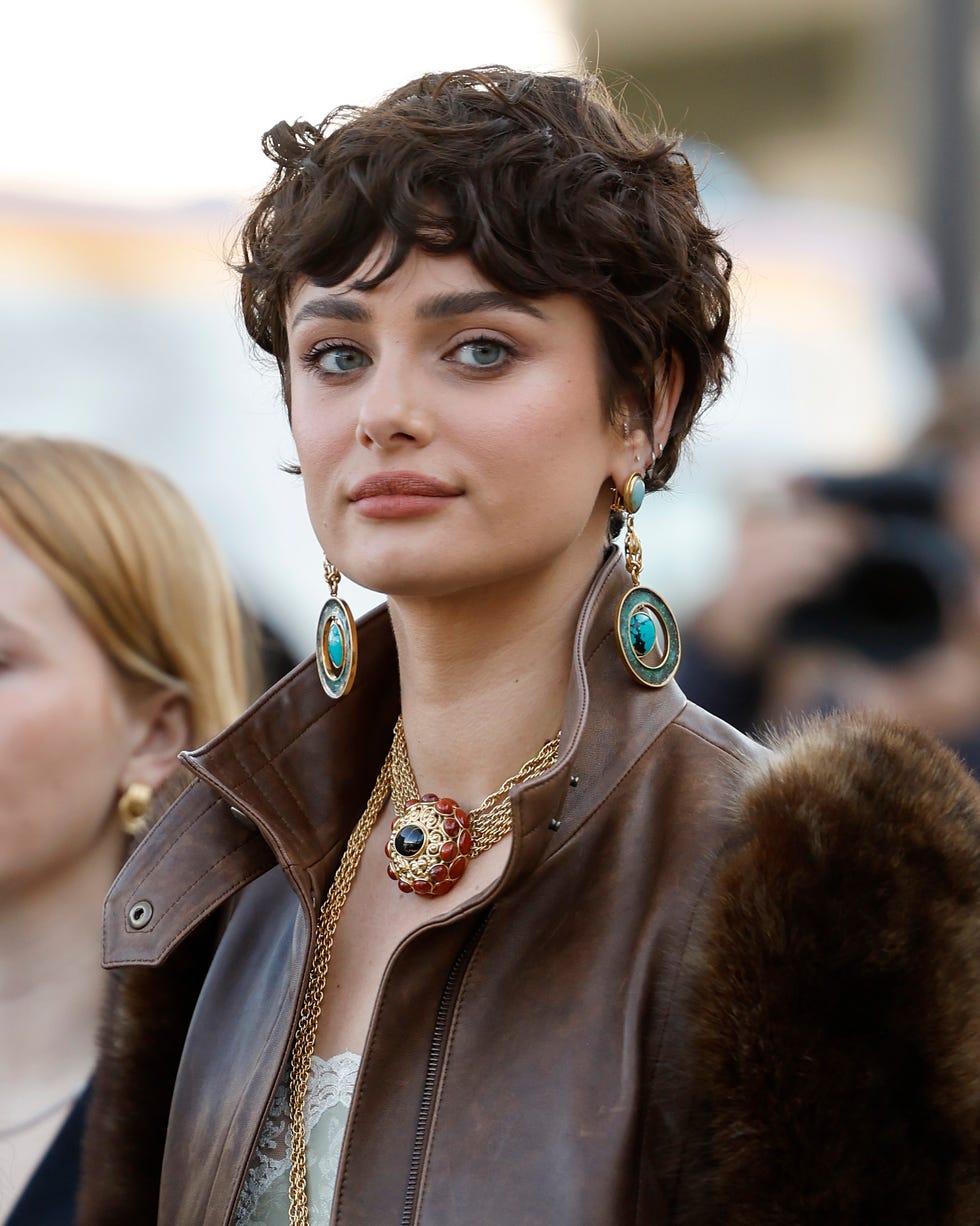
Does a curly fringe actually work on a short cut, or does it just turn into a triangle? It works, provided the cut is built for curl shrinkage. This dark brown pixie stops at ear length when dry, with voluminous curly layers and a curly fringe that frames the face from a middle parting. The key is that the fringe is cut to sit at the brows when wet, so it lands above the eyes once the curl pattern snaps back. This genuinely suits naturally curly thick hair that starts at ear length, since the shorter layers prevent the dreaded pyramid shape. Ask your stylist for: dark brown curly pixie, ear length, curly fringe. A curl-defining cream applied to soaking wet hair and diffused on low heat locks in the shape without crunch.
Gray Pixie With Blonde Highlights
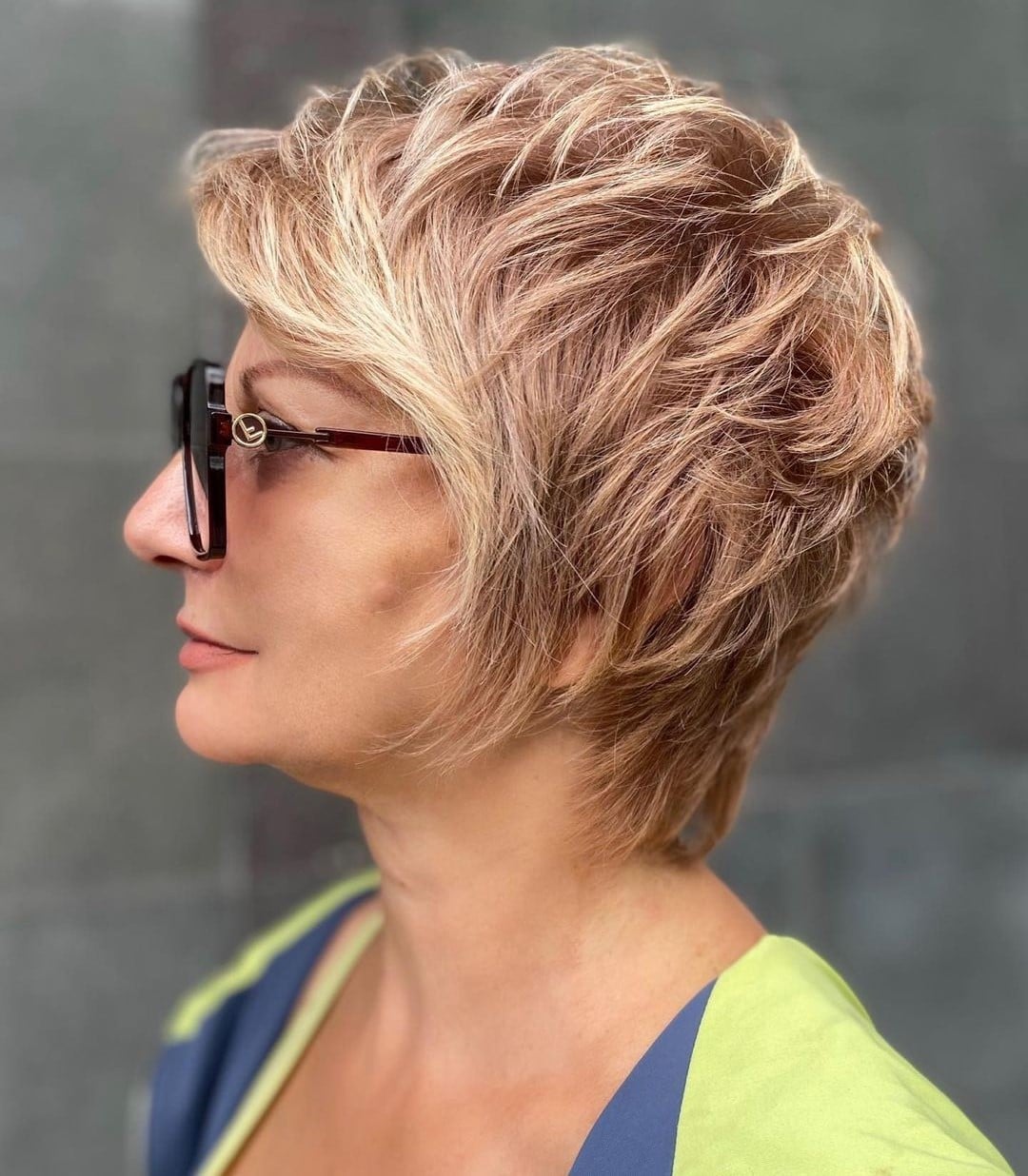
A gray pixie with blonde highlights is a low-contrast look that relies on texture to keep it interesting. The ear-length cut uses textured, layered side-swept bangs that break up the fine straight hair, so the blonde highlights add dimension instead of looking like simple streaks. This works on fine straight hair starting at ear length, where the layers create the illusion of density. Ask your stylist for: gray pixie, blonde highlights, ear length, textured side-swept bangs. A purple shampoo keeps the gray from turning brassy, and the cut needs a trim every six to eight weeks to maintain the layered shape.
Black Pixie With Wispy Bangs
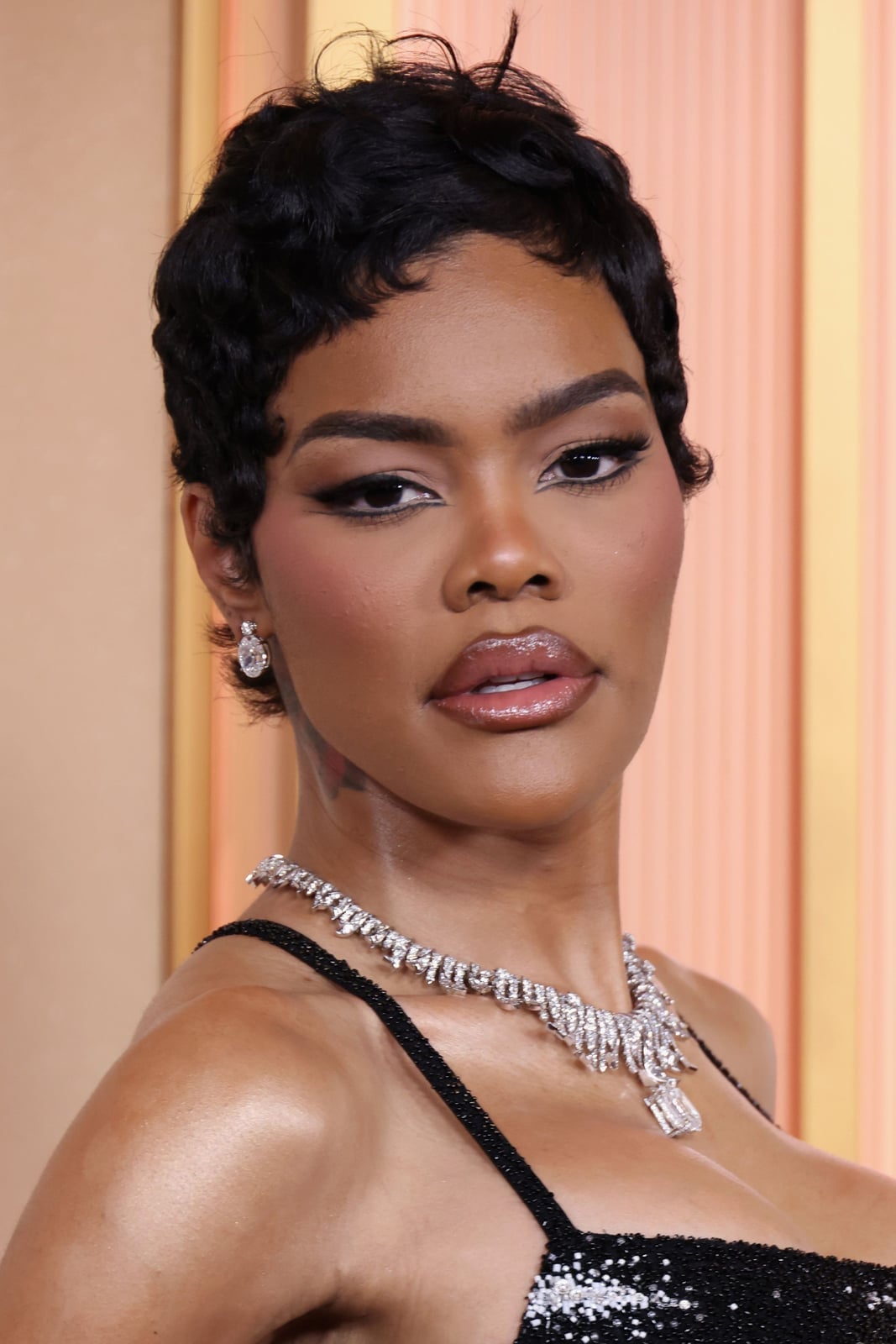
The black pixie with short wispy bangs is proof that fine wavy hair can still hold its own in a short cut. The ear-length cut is textured and wavy, with the bangs swept to the side so they soften the hairline rather than sitting as a solid block. This works on fine wavy hair starting at ear length, where the wispy ends prevent the cut from looking too severe. Ask your stylist for: black pixie, ear length, textured wavy hair, short wispy bangs. A texturizing spray applied to damp hair and left to air-dry gives it that lived-in finish, and the bangs need a trim every four to six weeks to stay wispy rather than heavy.
Burgundy Pixie With Undercut
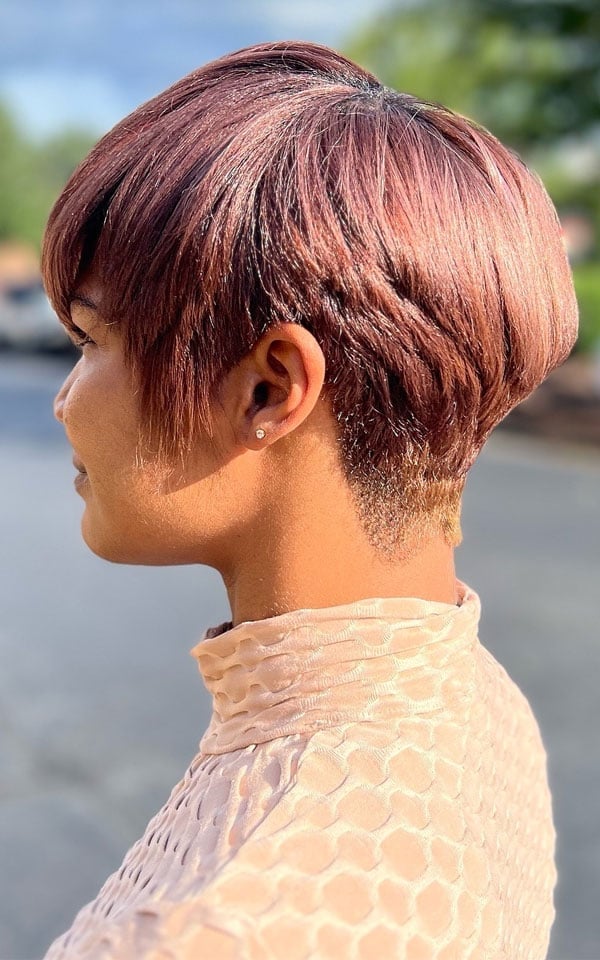
An undercut pixie trades the full-coverage commitment of a solid burgundy color for a high-contrast alternative. The sides and nape are shaved close, leaving the ear-length top with short side-swept bangs to carry the rich pigment. This works best on fine straight hair that can handle a stark line between color and skin. Ask your stylist for: burgundy pixie, undercut sides, short side-swept bangs. The undercut needs a shaver run over it every three to four weeks to stay crisp, while the burgundy section demands a color refresh every four to six weeks. It is a salon-only setup: the fade is not something you can eyeball in a bathroom mirror, and the bleach under the blonde undercut section is best left to a pro.
Dark Brown Pixie With Choppy Layers
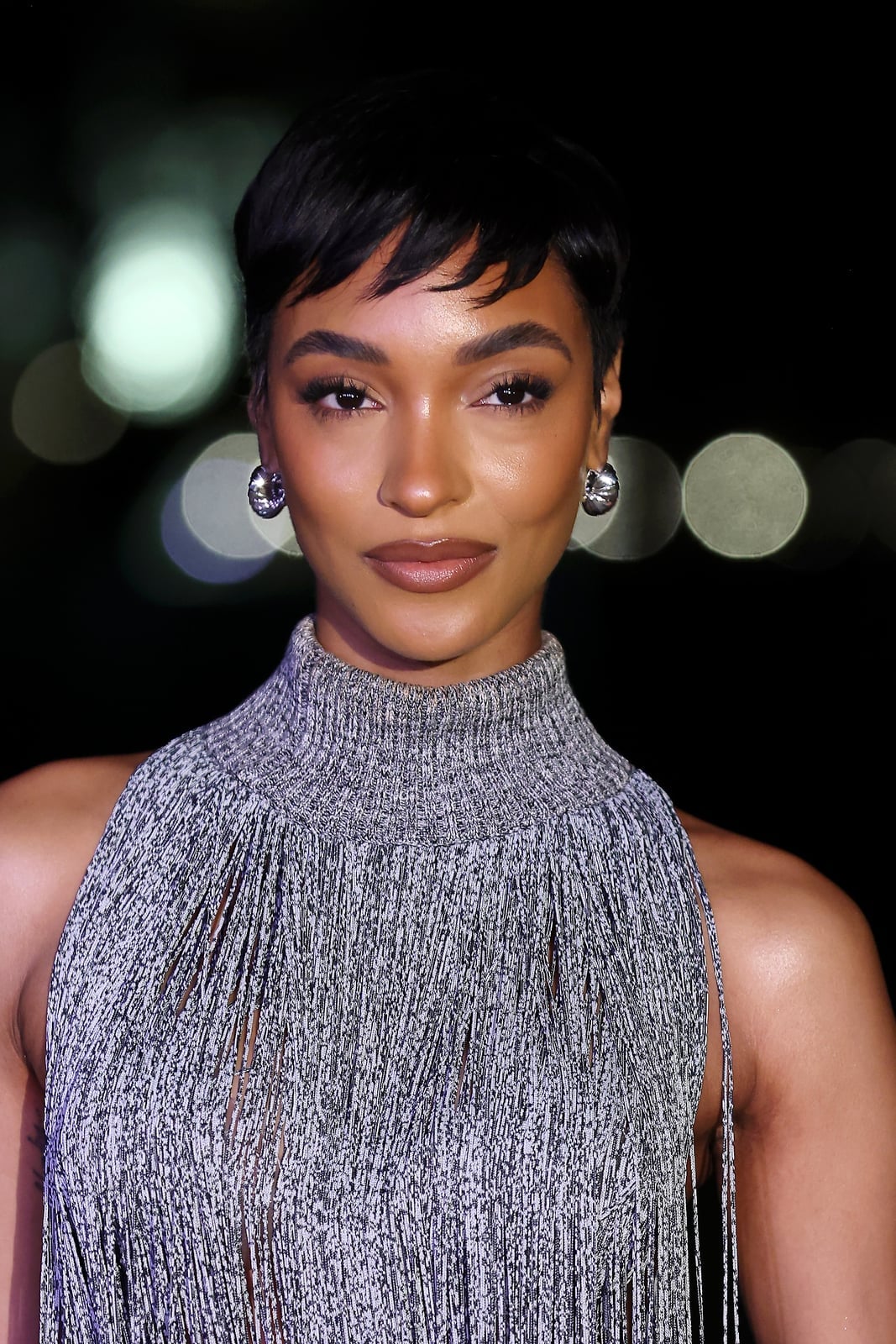
Can fine straight hair hold a shape with actual movement? Yes, if the layers are cut short and choppy. This ear-length pixie uses short side-swept bangs, with the internal layers cut at uneven lengths so each piece has its own direction. The dark brown base keeps it subtle, but the texture does the work. Ask your stylist for: dark brown pixie, ear length, choppy layers, short side-swept bangs. A trim every six to eight weeks keeps the choppiness from growing into a shapeless blob.
Silver Gray Pixie With Smooth Blowout

A smooth blowout on a silver gray pixie requires a round brush and a heat protectant, plus about fifteen minutes of directed effort every morning. The ear-length cut with short swept bangs and a side parting relies on that polished surface to reflect light. On fine straight hair, the volume at the crown is the payoff. Ask your stylist for: silver gray pixie, ear length, short swept bangs, smooth. The drawback: one humid day or a skipped toning appointment every six weeks, and the silver turns brassy.
Dark Brown Pixie With Middle Part
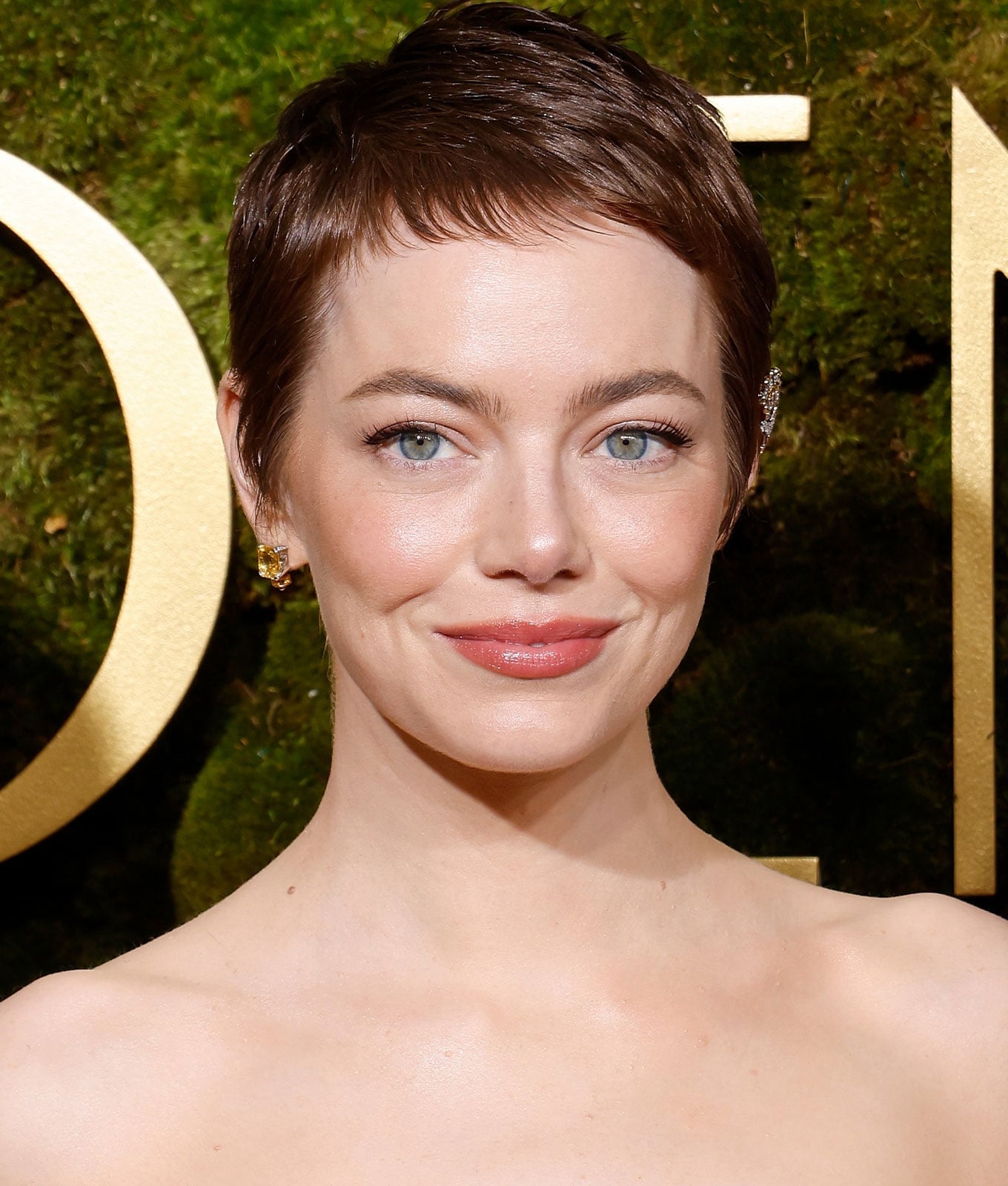
A middle part on a short cut is a precise ask: the fringe has to be short enough to clear the eyes without looking like it was trimmed with garden shears. This dark brown pixie ends at the ear and uses a short fringe that is cut straight across, then softened slightly so it does not sit like a helmet. The middle parting draws the eye vertically, which helps balance rounder face shapes. Ask your stylist for: dark brown pixie, ear length, short fringe, middle part. The styling is straightforward: a smoothing serum and a comb through, and you are done. The fringe will need a trim every four to six weeks to keep it out of your line of sight.
Dark Brown Pixie With Textured Layers, ухо

The technique here relies on point-cutting the layers so each strand ends at a slightly different length, creating airy volume on top without adding bulk. The dark brown pixie ends around the ears with a central parting and a slightly longer fringe brushed forward. Fine straight hair gains the illusion of density from that broken surface. Ask your stylist for: dark brown pixie, ear length, textured layers, forward fringe. A texturizing product worked through damp hair keeps the tousled shape from collapsing by midday.
Choppy Dark Brown Pixie With Middle Part, Ear
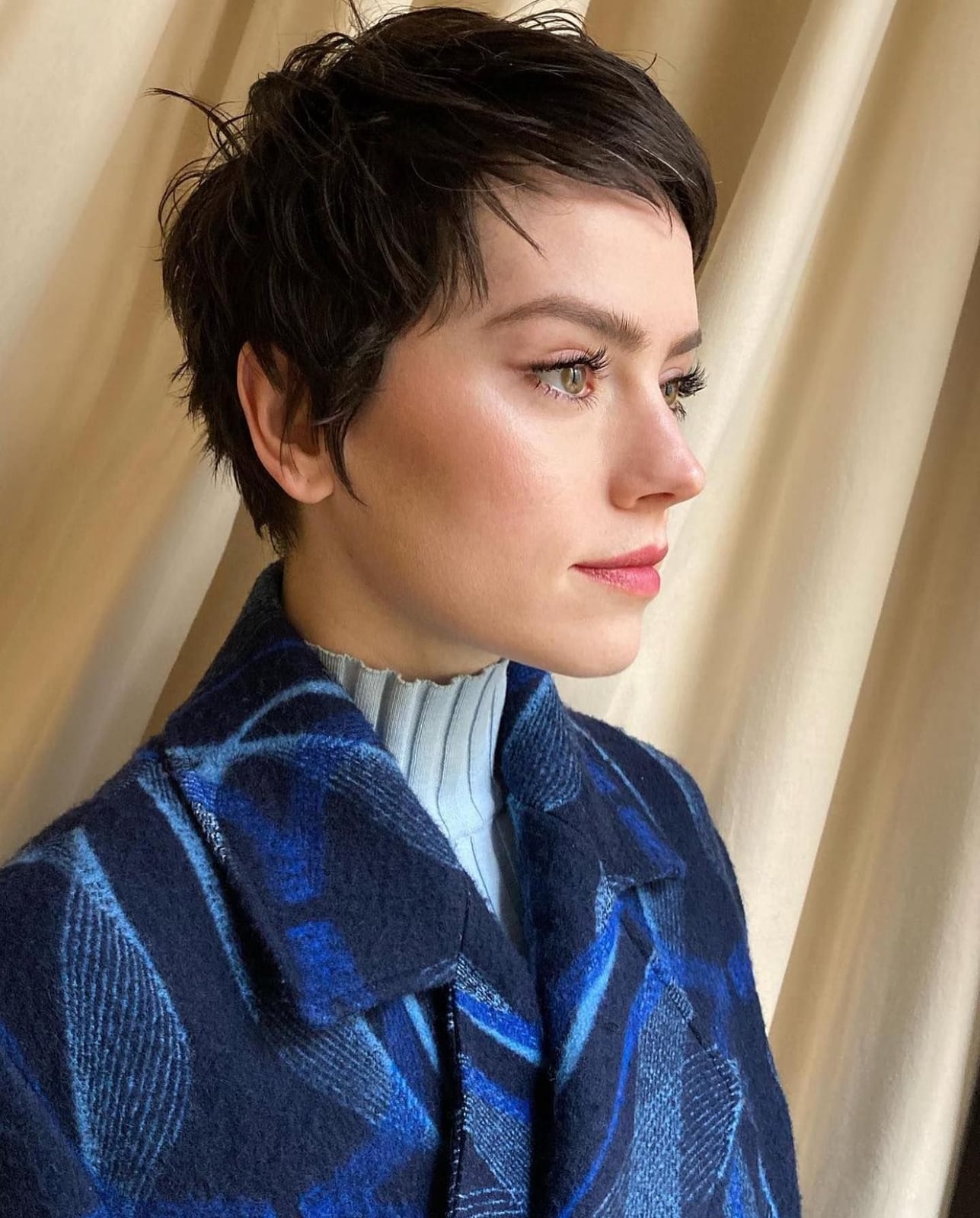
A smoother, blended pixie is one thing. This one is the opposite: a dark brown ear-length cut with short, choppy bangs and a middle part that puts the texture on display. The choppy finish works best on fine, straight hair starting at ear length, where it adds edge without weighing things down. Ask your stylist for a dark brown pixie, ear length, choppy bangs, middle part. Work a texturizing paste through the bangs and layers to keep the separation visible. Plan on a trim every four to six weeks, because choppy lines lose their shape fast.
Fine Straight Pixie With Textured Bangs

Can fine, straight hair pull off a pixie without looking flat? It can, provided the cut does the work for you. This dark brown ear-length pixie relies on short, wispy bangs brushed to the side and a deliberately messy top to create volume where there is none naturally. The textured finish adds movement, so the hair never sits still or lifeless. Ask your stylist for a dark brown pixie, ear length, textured wispy bangs, messy styling. A matte texturizing product helps maintain the undone look. The bangs need trimming every four weeks to keep the wispy effect from turning into a solid fringe.
Dark Brown Pixie With Choppy Layers and Textured Blowout
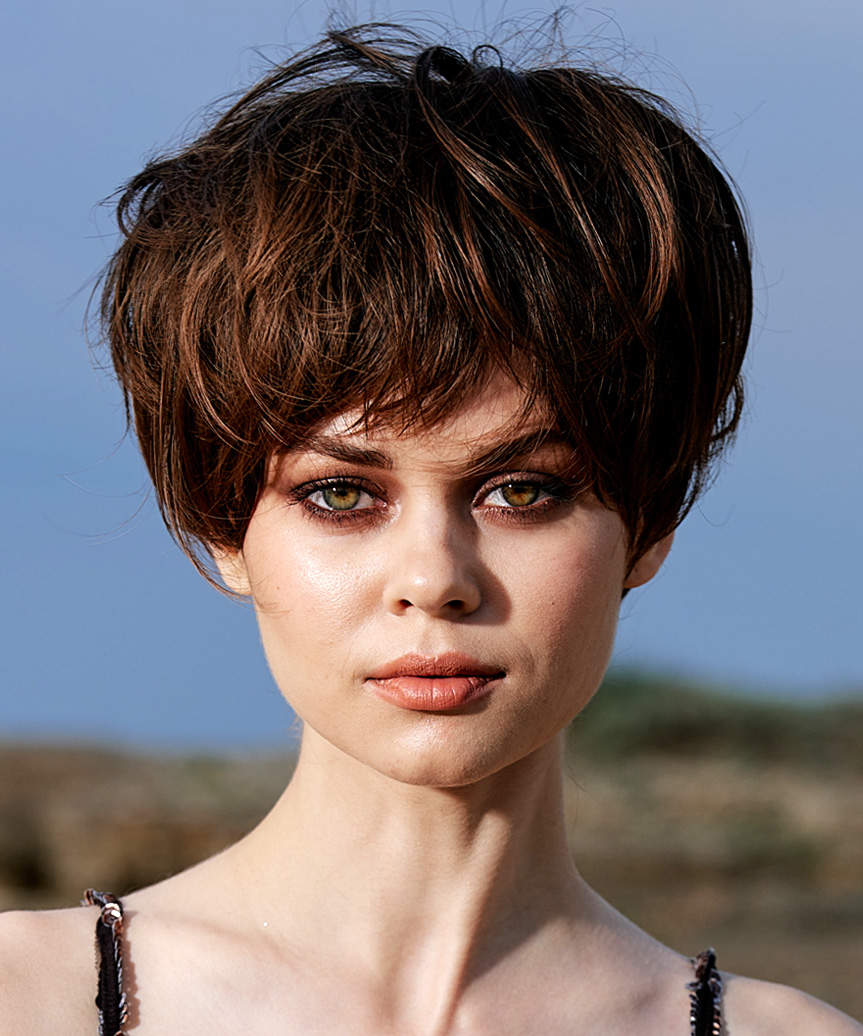
The design starts with a dark brown base and subtle lighter highlights woven through the layers. The choppy layers are cut to fall around the ear and are styled with a side part. On fine, straight hair, a textured blowout requires a blow-dryer and a round brush, plus a texture spray or a wax to hold the definition. The daily styling time is the drawback: this finish does not survive sleep. Ask your stylist for a dark brown pixie, ear length, choppy textured layers, subtle highlights. A trim every six to eight weeks keeps the layers sharp.
Platinum Blonde Pixie With Wispy Bangs

Platinum blonde makes a strong seasonal argument for summer, when lighter hair catches the sun. This ear-length pixie keeps the color front and center with short, wispy bangs styled to the side and a textured, piecey finish throughout. The fine, straight texture lets the platinum tone stay clean without getting muddy. Ask your colorist for: platinum blonde pixie, ear length, short wispy bangs, piecey texture. A light hold wax defines the pieces without flattening them. The bangs need a trim every four to six weeks, and the color requires a toning appointment every four weeks to stay silver without turning yellow.
Asymmetrical Platinum Pixie
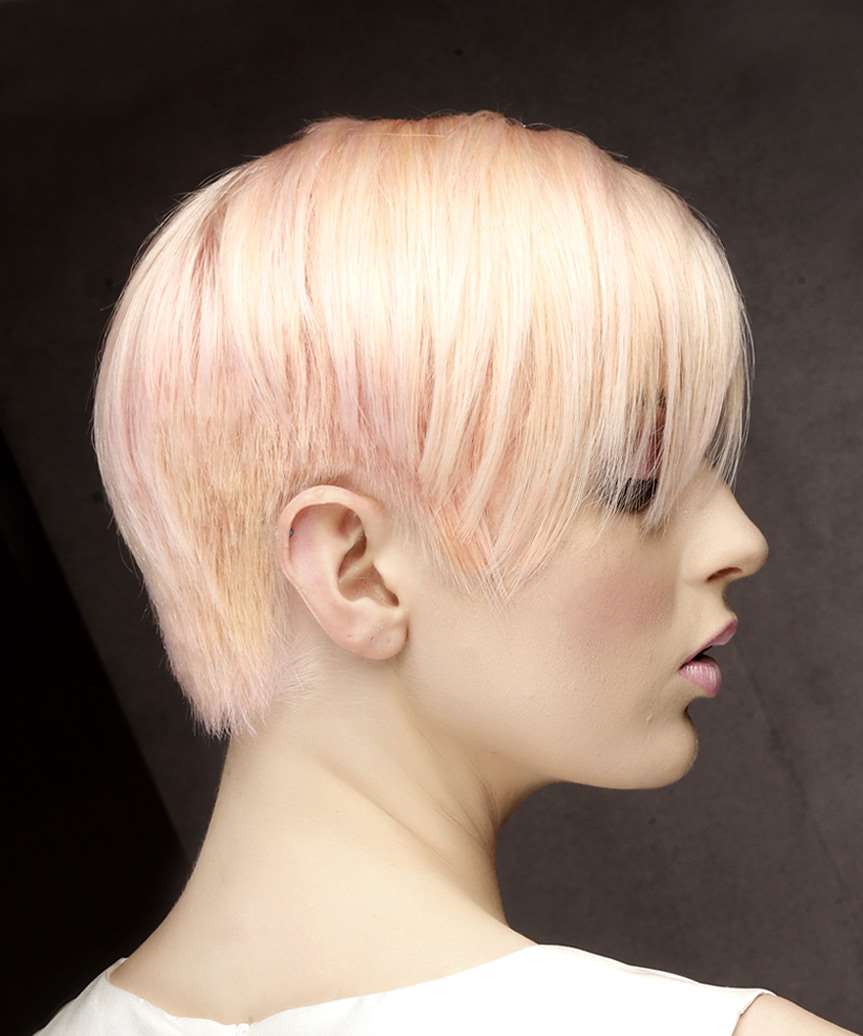
The asymmetrical cut is built by keeping one side longer than the other, with the longer side reaching the cheekbone and the shorter side sitting above the ear. Textured, side-swept bangs emphasize the imbalance. On fine, wavy hair, the asymmetry adds visual weight where the hair is naturally lighter. Ask your stylist for: a platinum blonde asymmetrical pixie, cheekbone length, textured side-swept bangs. A texturizing spray enhances the difference between the two sides. The cut holds its shape for six to eight weeks before the asymmetry softens too much to look deliberate.
Dark Brown Pixie With Natural Curls
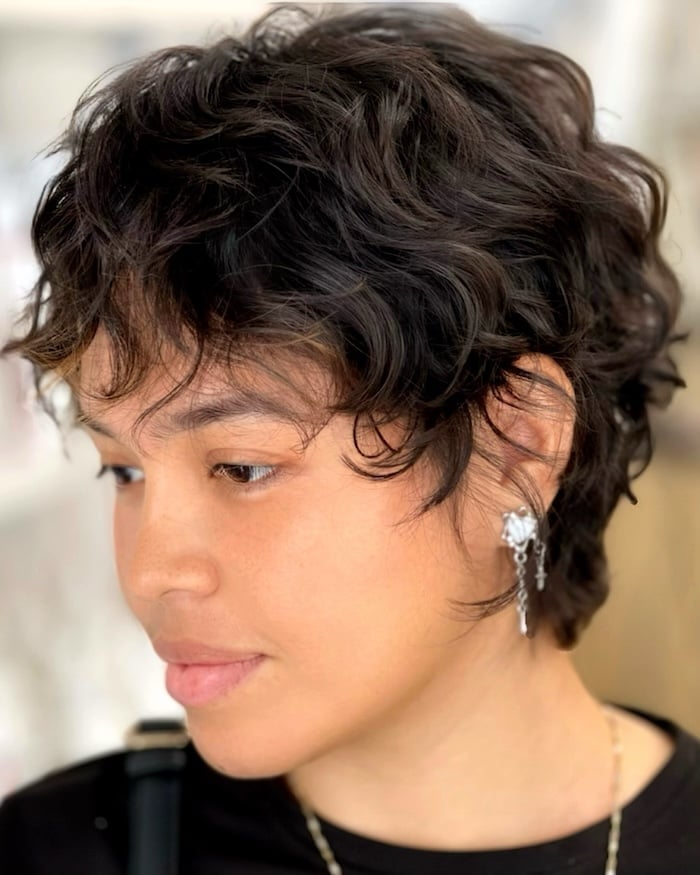
Does your hair air-dry into waves without you lifting a finger? A dark brown long pixie with natural curls plays to that advantage, keeping length at the ear so the pattern stays visible. Short wispy bangs soften the forehead, and a side parting breaks up the roundness. Ask your stylist for: dark brown pixie, ear length, natural curls, short wispy bangs. This cut suits fine wavy hair that starts at ear length, letting the texture do the work instead of fighting it. Styling is a curl cream and either air drying or a diffuser, then a trim every eight to ten weeks keeps the shape honest.
Sleek Dark Brown Pixie With Asymmetric Bangs
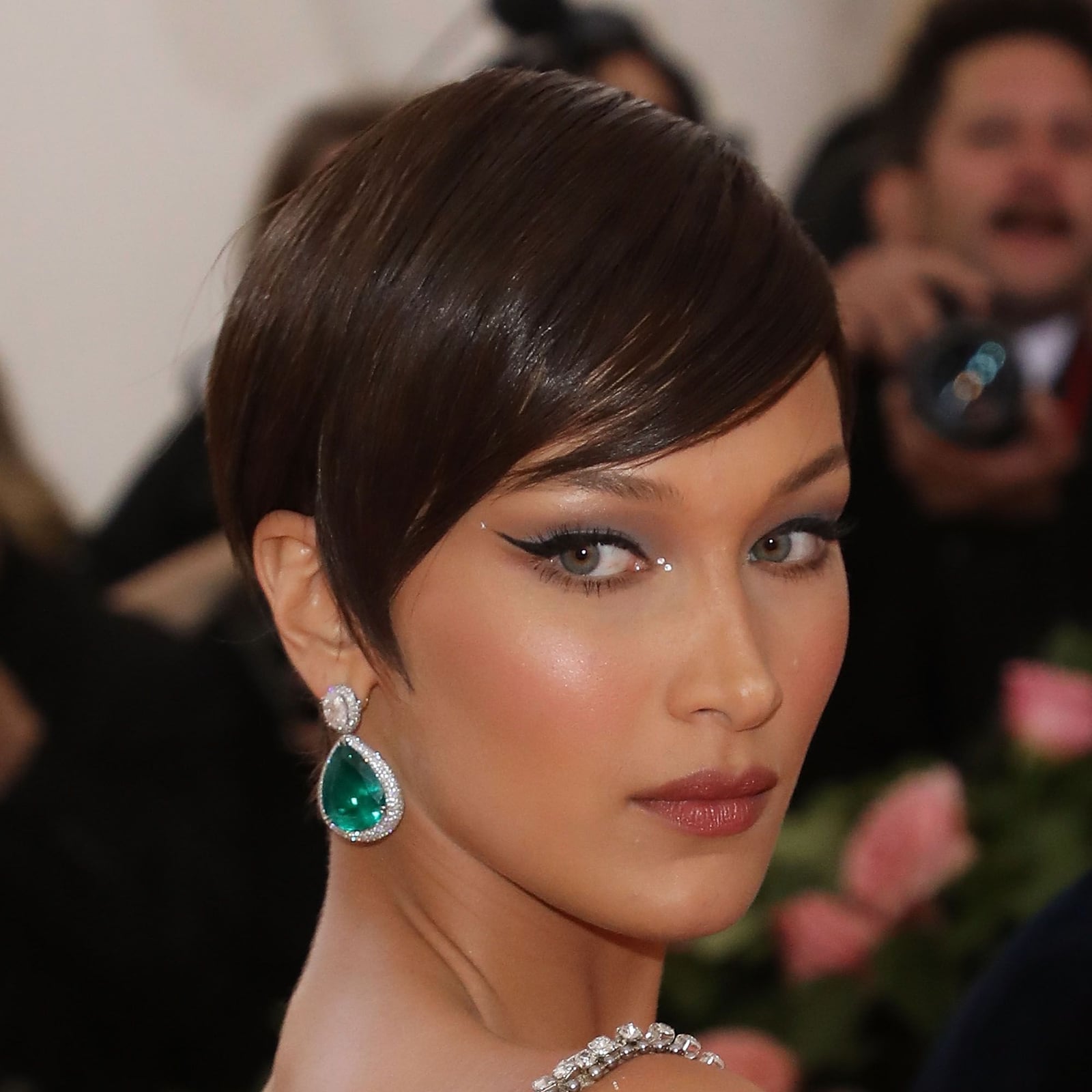
An asymmetric bang needs a sharp edge to land, and this dark brown pixie delivers exactly that. Cut to the ear with a side parting, the short asymmetric fringe sweeps across and demands a clean line around the ears. Ask your stylist for: dark brown pixie, ear length, sleek, sharp, asymmetric bangs. Straight fine hair starting at ear length gets a polished, modern shape, but the precision is the catch. A smoothing serum and flat iron get the sleek finish, and the bangs need a trim every four to six weeks to keep the asymmetry from looking accidental.
Blonde Pixie With Shaved Sides
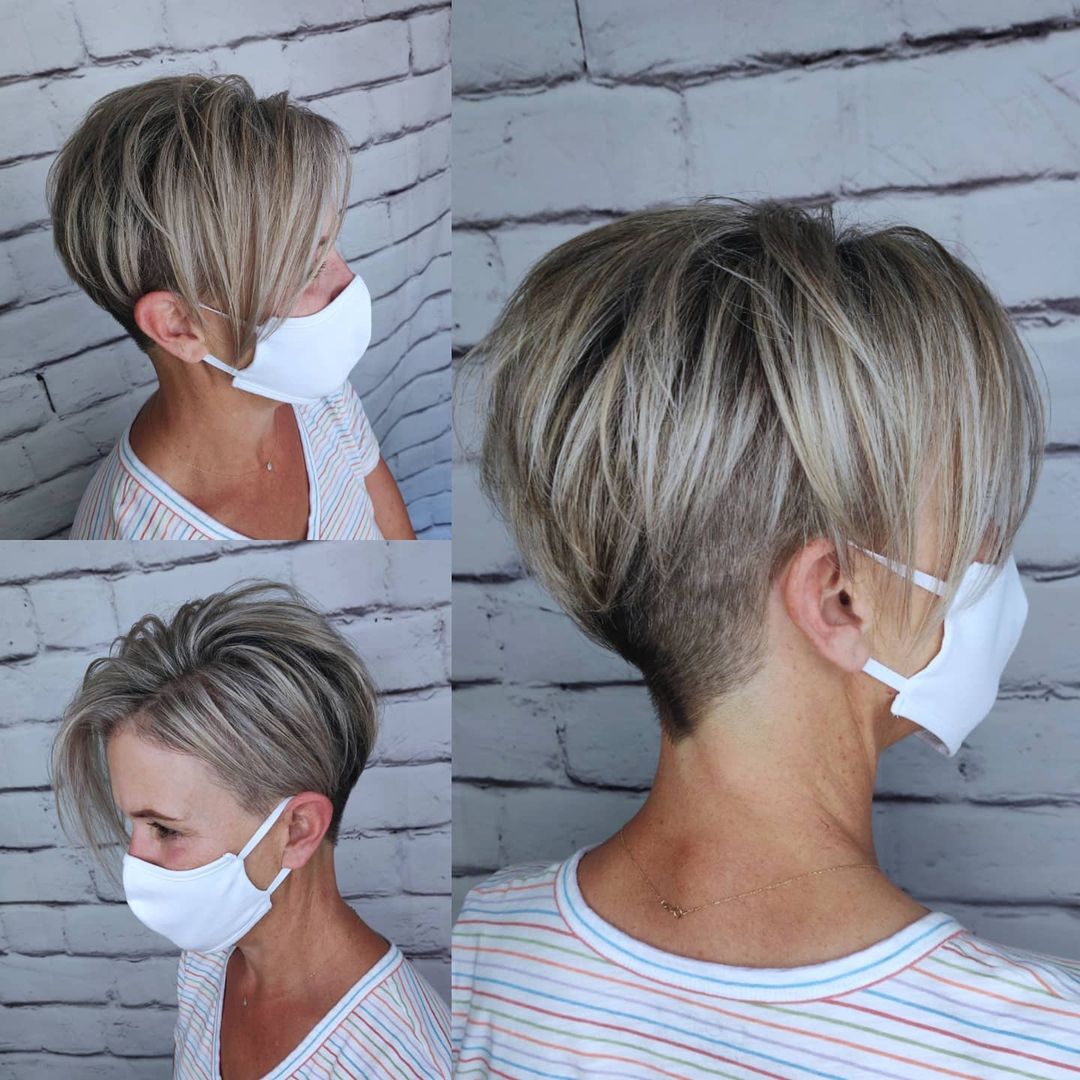
The contrast between a textured top and shaved sides defines this blonde pixie. Light blonde with highlights, the cut keeps length at the ear while the sides are buzzed, and an asymmetrical fringe sweeps across the forehead on a side parting. Ask your stylist for: blonde pixie, shaved sides, asymmetrical fringe. Wavy medium-density hair starting at ear length carries the contrast well, giving the style a bold, modern edge. The shaved sides need a touch-up every two to three weeks to stay crisp, while a texturizing product on the top keeps the waves from collapsing into flatness.
Black Pixie With Voluminous Fringe
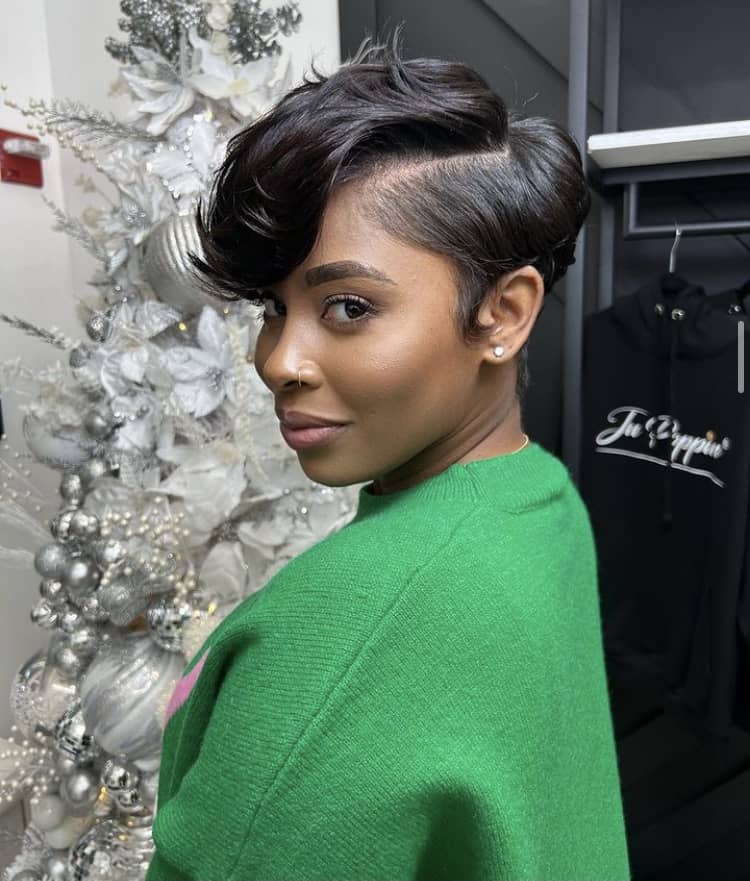
Compared to a minimal pixie that hugs the head, this black cut goes big on top. A dramatic side part feeds a voluminous fringe that sweeps over, while the rest stays at ear length with a smooth, glossy finish. Ask your stylist for: black pixie, ear length, dramatic side part, voluminous fringe. Straight thick hair starting at ear length gives the volume something to hold, creating a bold, asymmetrical shape. A strong hold hairspray keeps the fringe where you put it, and a trim every six weeks prevents the weight from dragging the sweep down.
Dark Brown Pixie With Textured Layers, Close-Up Take
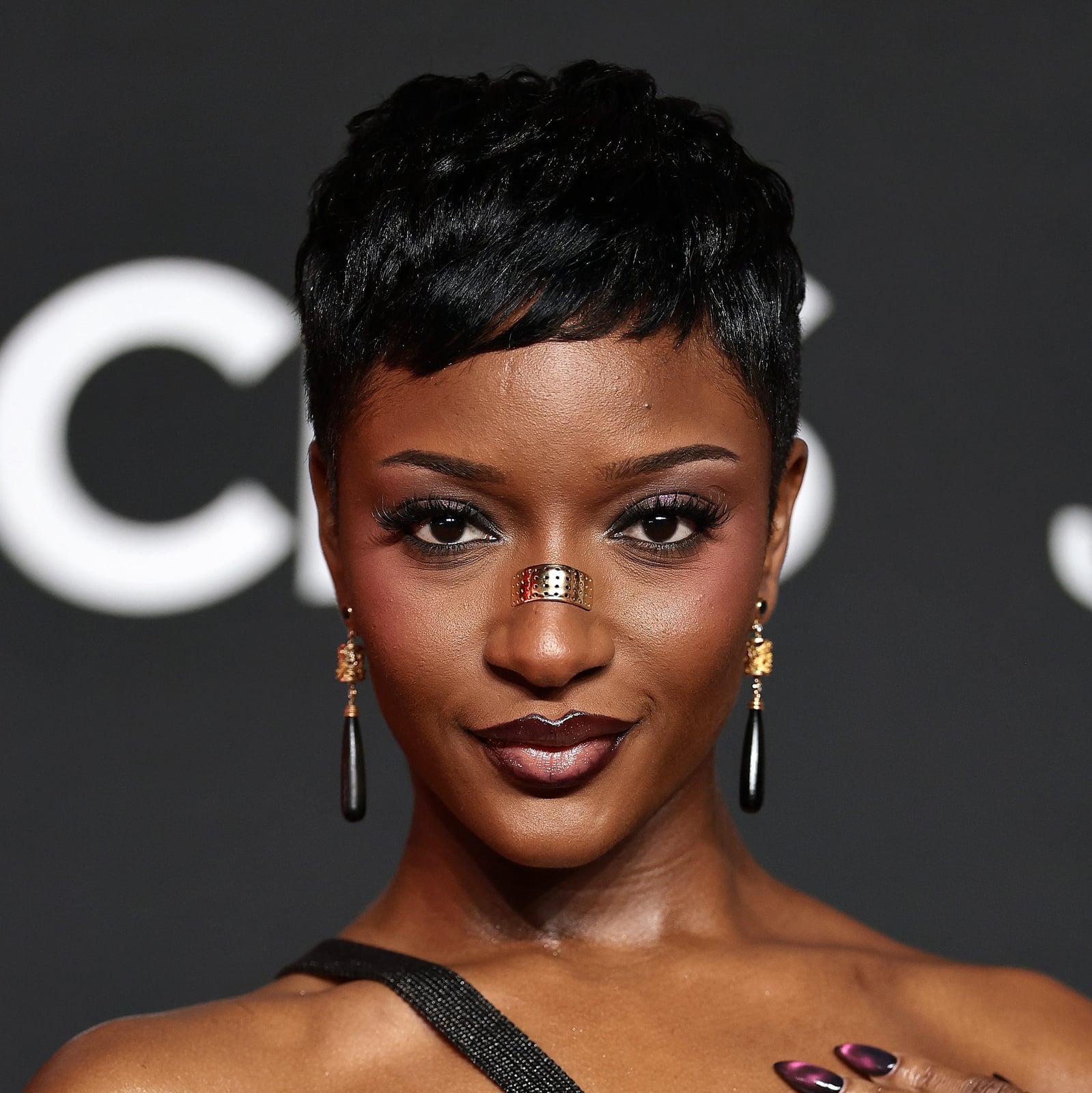
Textured layers on a dark brown pixie turn thick straight hair into something with movement. The cut ends around the ear, uses a middle parting, and skips bangs entirely, letting the choppy layers define the shape. Subtle highlights add depth without shouting. Ask your stylist for: dark brown pixie, ear length, textured layers, no bangs. This suits thick straight hair starting at ear length, where the layering removes bulk and adds definition. A texturizing spray or wax enhances the choppy ends, and a trim every six to eight weeks keeps the layers from blending into one solid block.
Copper Pixie With Tapered Neckline
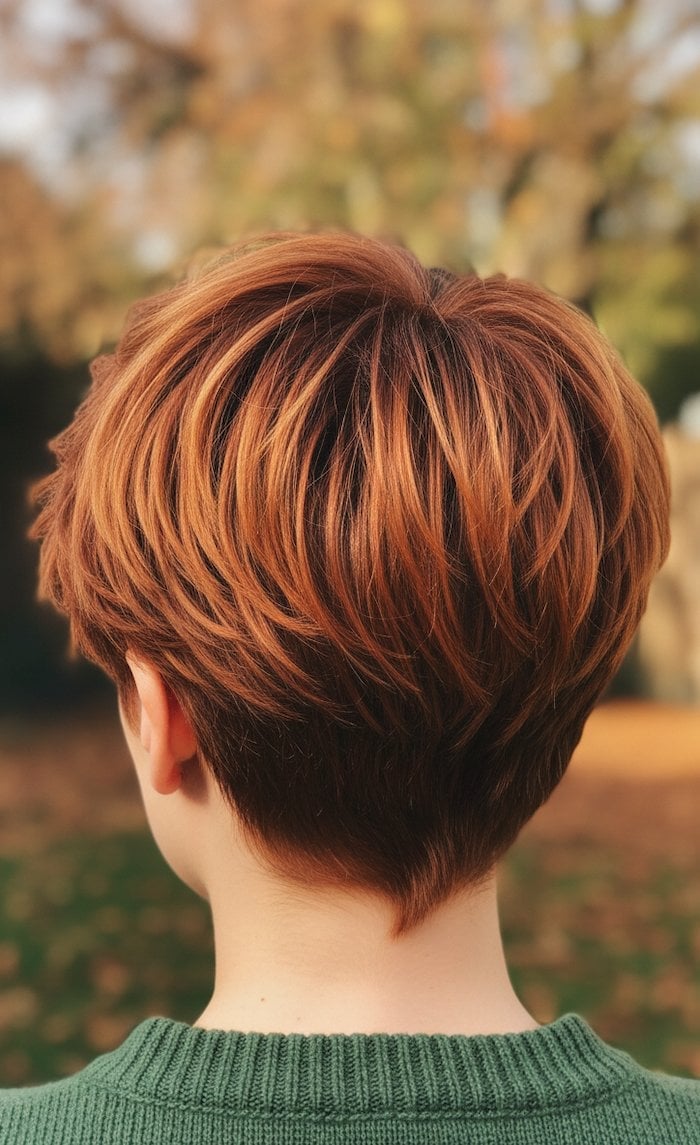
Ever looked at the back of your head in a salon mirror and thought, “That’s it”? A tapered neckline is that payoff. This copper pixie lands at ear length with no bangs, letting the graduated nape do the talking. The cut works best on thick, wavy hair that can hold the shape without collapsing. Ask your stylist for: copper pixie, ear length, tapered neckline, textured layers. Keep the nape clean with a trim every four weeks; a texturizing product at the crown keeps the volume from going flat by noon.
If your hair is fine or stick-straight, the taper can look too severe. Wavy thickness gives it the softness it needs.
Dark Brown Pixie With Graduated Nape
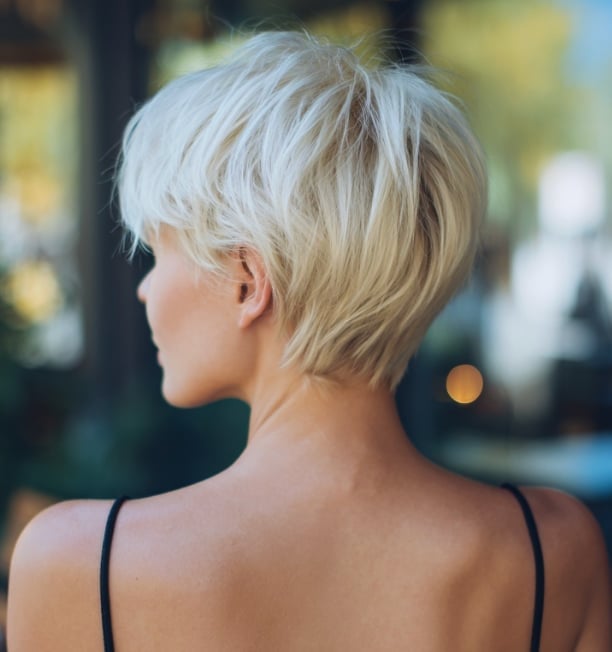
A graduated nape creates stacked volume at the back that a blunt cut cannot match. This dark brown pixie with choppy tousled layers ends at the neckline. The grow-out requires attention: as the nape gets heavier, the graduation loses its crisp line. Plan a trim every four to six weeks, and style the top with a texture spray to keep the volume balanced with the shorter back.
Dark Brown Pixie With Layered Back
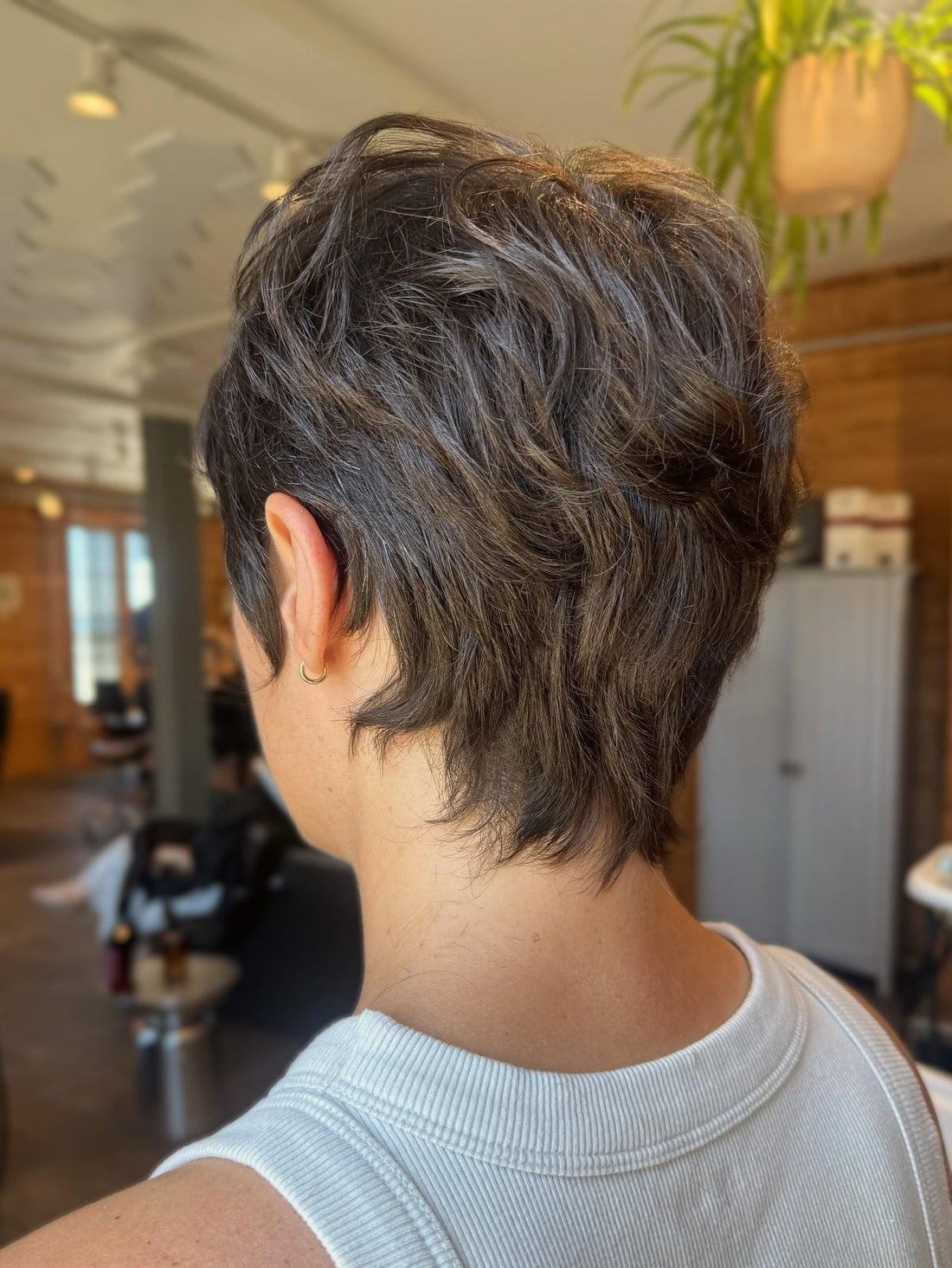
Notice how the back of this dark brown pixie is built with textured, layered pieces rather than one solid block. The subtle highlights add depth, and the nape-length cut keeps the shape soft. Ask your stylist for: dark brown pixie, nape length, textured layered back. The layers create movement that a blunt cut cannot, so the hair falls naturally without needing a round brush every morning.
Dark Brown Pixie With Undercut Nape, Straight
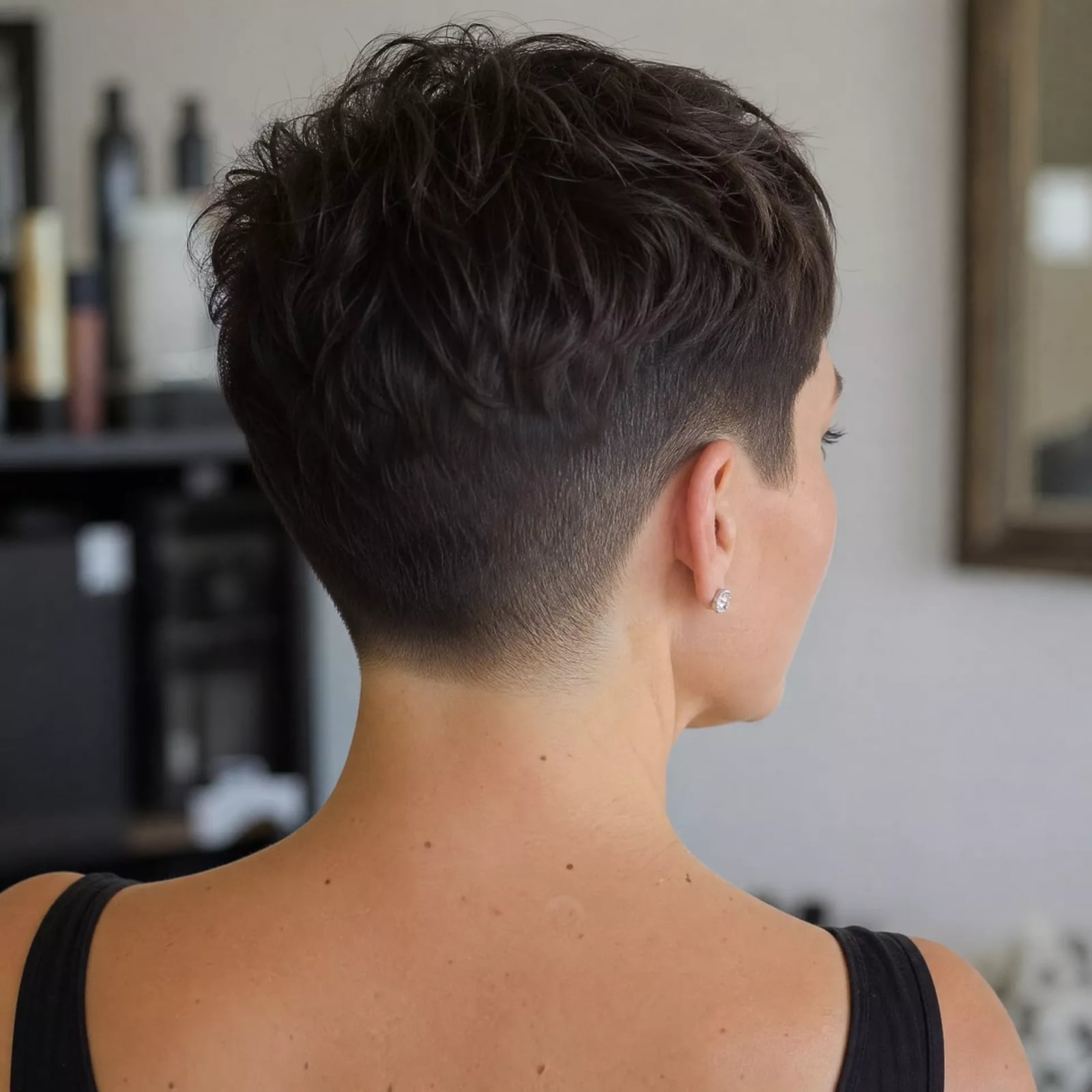
An undercut nape is not the same as a fully graduated back. This dark brown pixie keeps the top textured and longer while the nape is shaved clean, creating a sharp contrast. It suits fine, straight hair because the clean line looks deliberate, not sparse. The undercut requires a salon visit every three to four weeks to maintain the edge. If you prefer a softer grow-out, a blended cut is the safer bet.
Copper Pixie With Textured Layers
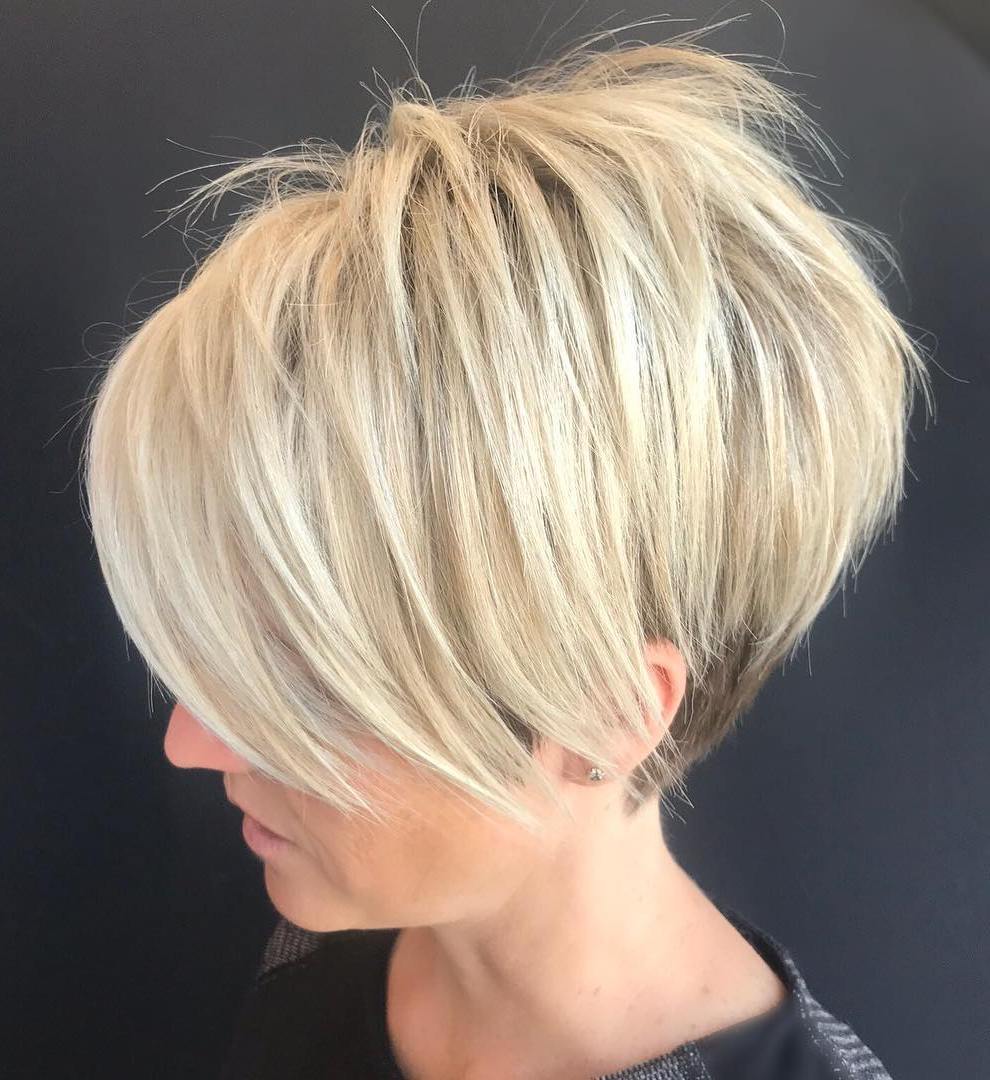
Textured curtain bangs on fine, straight hair require point-cutting rather than a blunt snip. This copper pixie uses a side parting and ear-length layers to keep the fringe soft and movable. Ask your stylist for: copper pixie, ear length, textured layers, tapered neckline. The technique removes weight from the ends so the bangs sweep rather than sit flat. A trim every six to eight weeks keeps the shape from looking stringy.
Final Thoughts
Fine hair needs a blunt baseline and minimal layers to keep density. Thick hair can take more texture and internal layering to remove weight. Round faces benefit from length below the chin, while square faces soften with wispy ends around the jaw. The long pixie is your canvas for modern style.
- Trim every 6-8 weeks to maintain shape and length.
- Use a texturizing spray for lived-in styles.
- Apply heat protectant before blow-drying or styling.
- Wash hair as needed, typically every 2-3 days for pixie cuts.
