

Dyed locs turn a protective style into a living canvas, and the color work in this collection runs from a single bold shade to a full spectrum of ombré. The current shift leans lived-in: root shadows, dimensional highlights, and glossy natural texture over flat, all-over color.
Here are 30 ways to wear them, from low-upkeep root shadows to high-commitment rainbow hues, and from shoulder-length bobs to mid-back lengths. Whether your locs are fine or thick, short or long, this range covers the grow-out line, the frizz that will not sit, and the color that fades too fast. Dyed Locs, done right, start with a plan.
Geometric Updo With Vibrant Red Locs
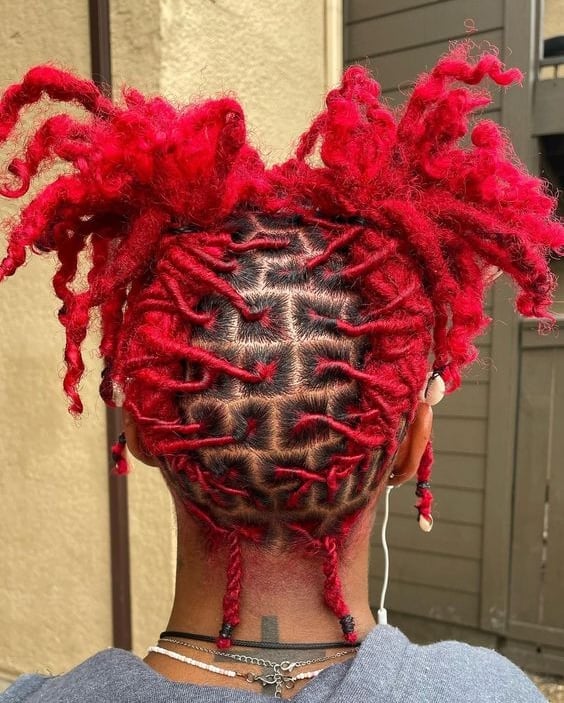
The grid-like parting is the first clue that this look was planned on a head, not improvised in a mirror. Each loc is saturated to the same vibrant red, so the color reads as one solid statement rather than a collection of highlights. The braided ends tuck into the updo, which keeps the geometric scalp pattern visible from every angle. Thick, wavy locs at mid-back length have the density to hold this kind of architectural styling without slipping. Ask your colorist for: vibrant red locs, geometric scalp pattern, braided ends. The updo itself is the styling: secure it firmly, and trim those braided tips every 10-12 weeks once they start to soften.
Shoulder Length Wavy Red Locs
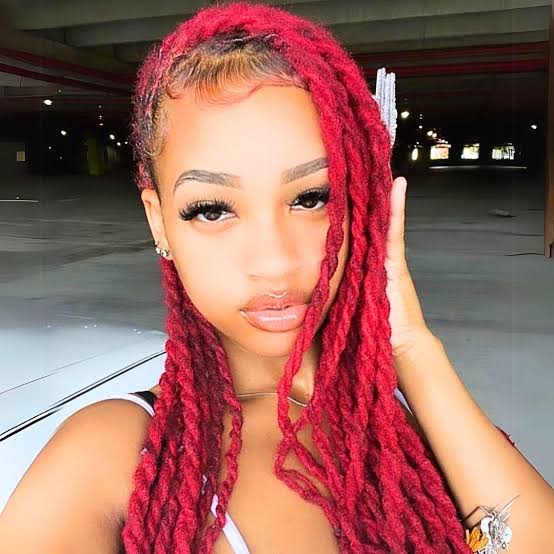
Can a single shade feel this complete without highlights or dimension? When the red is this saturated, yes. The middle part lets the color hit evenly on both sides, and the shoulder length keeps the locs from weighing down into a solid block of pigment. Air-dried waves give the vibrant red a soft, matte finish rather than a glossy one. Thick locs at this length hold the curl pattern for days with minimal effort. Ask your colorist for: vibrant red shoulder length locs, middle part. The real maintenance is the color itself: plan a refresh every 6-8 weeks to stop the red from pulling orange at the roots.
Mid-Back Locs With Honey Blonde Highlights
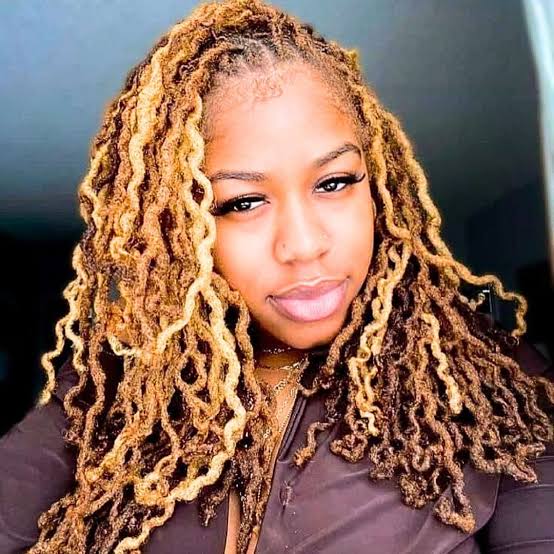
All-over color on locs is a commitment. Highlights, by contrast, let you keep a darker base while adding warmth only where the light hits. Honey blonde and light brown strands weave through the mid-back length, creating depth without a harsh line between shades. The middle part shows off the blend evenly on both sides. Thick, wavy locs benefit from this technique because the texture catches each highlight differently, so no two sections look identical. Ask your colorist for: honey blonde and light brown highlights on mid-back locs. It is dimension versus saturation, and this one leans into the first option.
Magenta Pink Locs With Dark Root Shadow
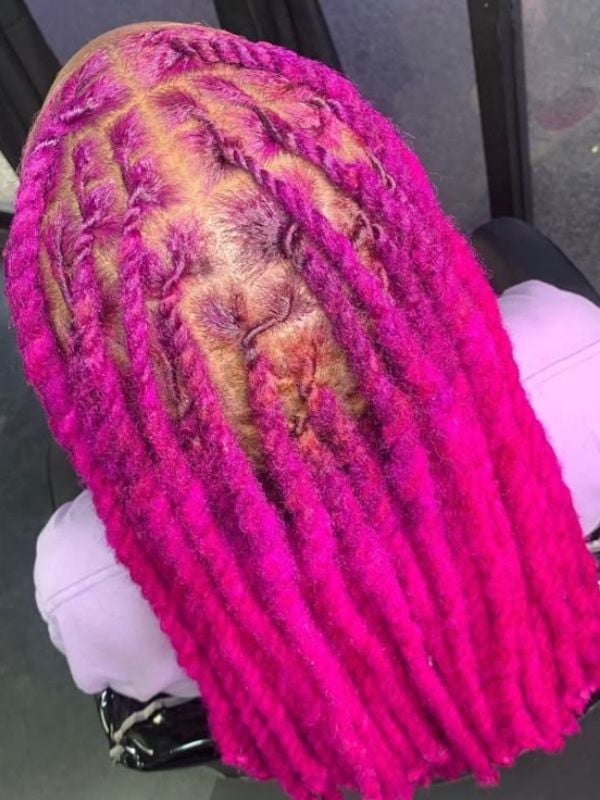
The grid pattern here is not just decorative: it separates each section so the magenta pink stays contained and the darker root shadow adds depth. Twisted and partially braided locs at mid-back length show off the saturated color without tangling. The bold pink demands a strong base, so thick, wavy locs are ideal for holding the pigment evenly. Ask your colorist for: magenta pink locs, dark root shadow, grid part. Pink fades faster than red, so expect a toning appointment every 4-6 weeks to keep it from washing out to a dusty rose.
Black Base Locs With Rainbow Hues
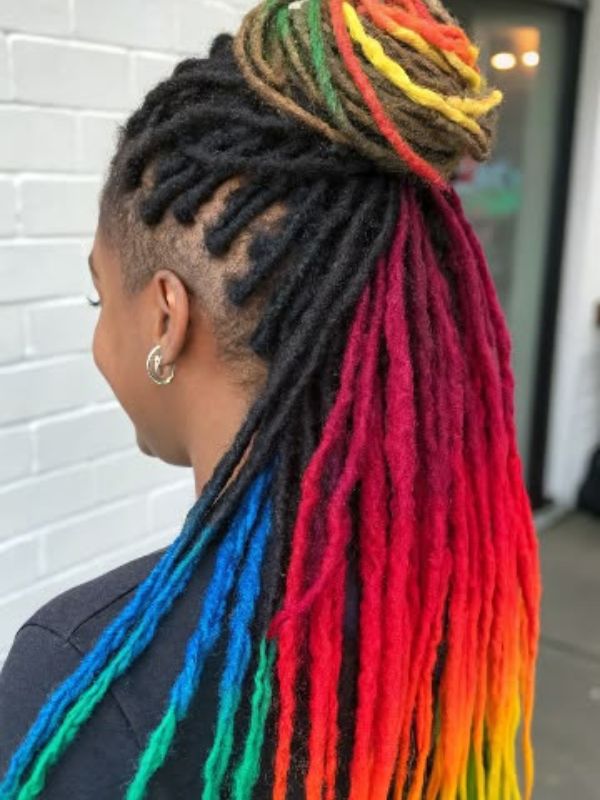
thirty separate colors on one head of locs is a technical challenge: each shade has to be applied section by section so the red, orange, yellow, green and blue do not bleed into each other. The black base anchors the rainbow lengths, keeping the look grounded rather than chaotic. An updo hides the root grow-out and lets the colored strands cascade as loose accents. Thick, wavy locs at mid-back length provide enough surface area per loc for the color to read clearly. Ask your colorist for: black base locs with rainbow colors on the lengths. Upkeep means color-safe shampoo and a refresh every 8-10 weeks to keep the hues distinct rather than muddy.
Shoulder Length Brown Locs With Undercut
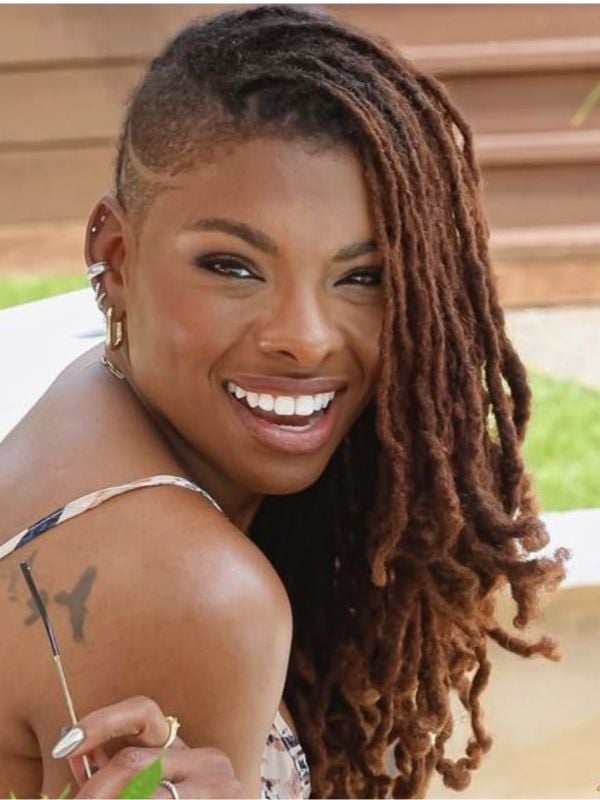
Wondering if an undercut will fight with your color instead of complementing it? This rich medium brown base with lighter brown highlights settles that debate, because the shaved side lets the dimensional color take center stage without competing for attention. The wavy, thick texture and side part keep the look grounded, while the undercut adds an edge that is clearly intentional. Brown locs with undercut work best on those who want a modern update without a full color commitment. Ask your colorist for: medium brown locs with lighter brown highlights, side undercut. Keep the shaved side crisp with trims every three to four weeks.
Lime Green Shoulder Length Locs
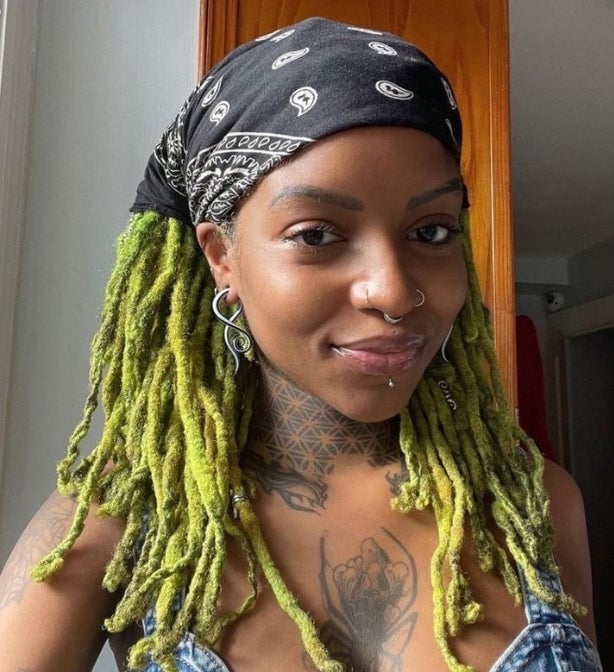
There is no subtle way to wear lime green, and that is exactly the point. This shoulder length shade lands somewhere between a festival statement and a daily dare, with the middle part and air-dried wavy texture keeping it from feeling costumed. The thick locs carry the color evenly, so the brightness reads as a choice rather than an experiment gone bold. Ask your colorist for: shoulder length lime green locs, middle part. If you plan to spend summer near a pool, know that chlorine is the fastest way to turn this neon into something closer to moss, so keep that in mind before you dive in.
Collarbone Length Rainbow Ombré Locs Updo
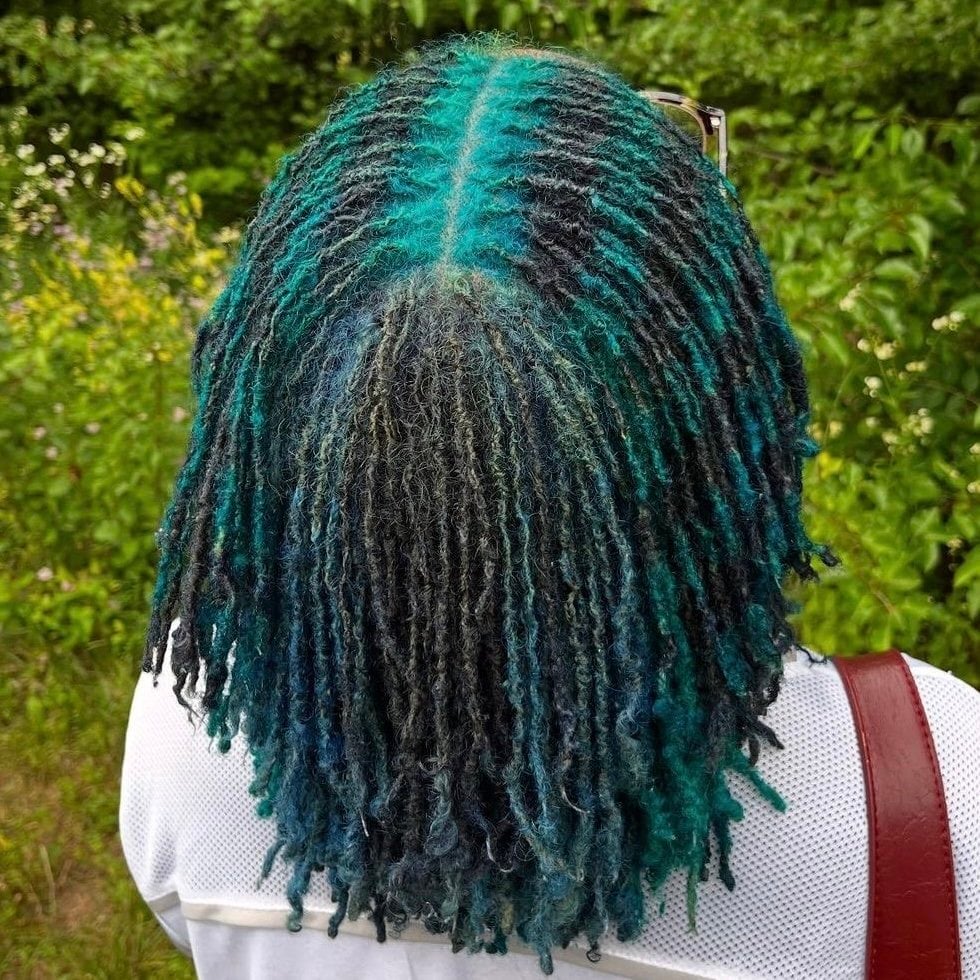
How do you ask for a rainbow without ending up with a mess? Start with the placement: this collarbone length style transitions through red, orange, yellow, green, and blue, with the color concentrated toward the ends so the geometric scalp pattern stays visible. The updo with braided ends shows off the ombré from behind, which is where the gradient does its best work. The wavy, thick density gives the braids enough weight to hold the style. Ask your colorist for: collarbone length rainbow ombré locs updo with braided ends. For styling, secure the updo with pins at the base, then smooth the braided ends with a light oil for definition.
Contrasting Purple and Golden Brown Locs
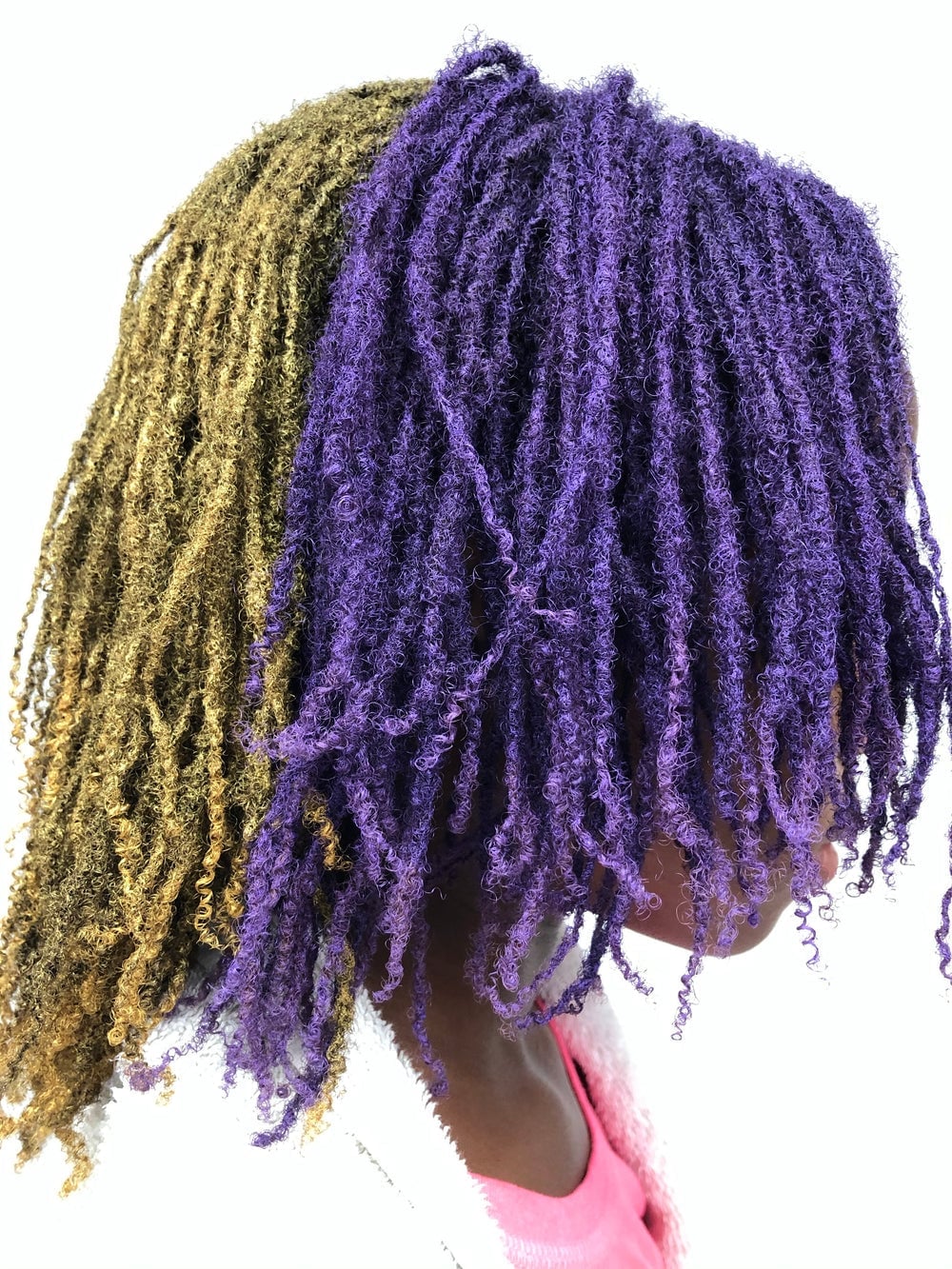
Before you commit to a single all-over shade, consider what two colors can do side by side. The vibrant purple brings the drama, while the golden brown keeps the pairing wearable, and their contrasting tones make each look more deliberate than they would alone. The slightly fuzzy, textured surface of these shoulder length locs softens the boundary between the two colors, so the contrast feels curated instead of clashing. Ask your colorist for: shoulder length purple locs and golden brown locs. This setup suits anyone who wants the option to switch between bold and neutral, depending on how the hair is styled that day.
Shoulder Length Split Dye Blue and Red Locs
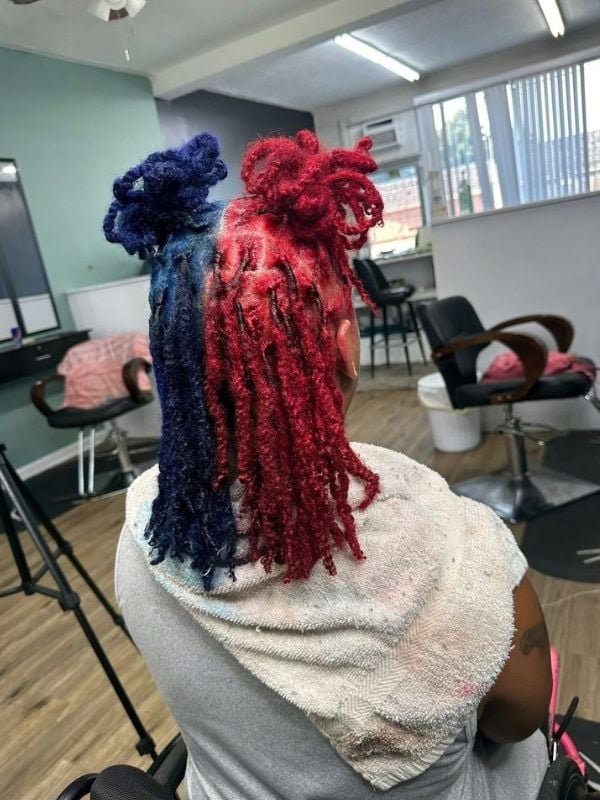
Split dye is a commitment to precision, since vibrant blue on one side and bold red on the other leaves zero room for blending errors. The two buns make the divide even more obvious, which is the whole appeal: the shoulder length wavy, thick locs display the contrast from every angle. This is a salon-only job, because getting the sections straight and keeping the colors from bleeding into each other requires a steady hand and separate bowls. Ask your colorist for: shoulder length split dye blue and red locs, styled in two buns. Skip this one if you are not ready for the upkeep, because each side needs its own color-safe shampoo to stay that saturated.
Collarbone Length Deep Red Locs With Grid Parting
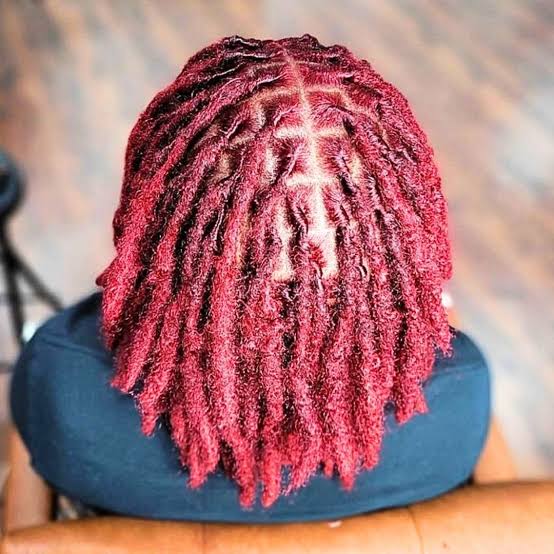
The back view reveals the real work here: thick, wavy locs dyed a uniform deep red are sectioned into a precise grid parting, with each loc braided neatly from root to collarbone. This design suits those with naturally thick, wavy locs who want a rich, saturated color and an architectural silhouette. Ask your stylist for: collarbone length deep red locs with grid parting. Maintaining the deep red tone calls for a color-depositing conditioner every few washes, and the grid pattern needs a refresh appointment roughly every four to six weeks to keep the partings crisp.
Faux Locs Black to Blonde Ombré
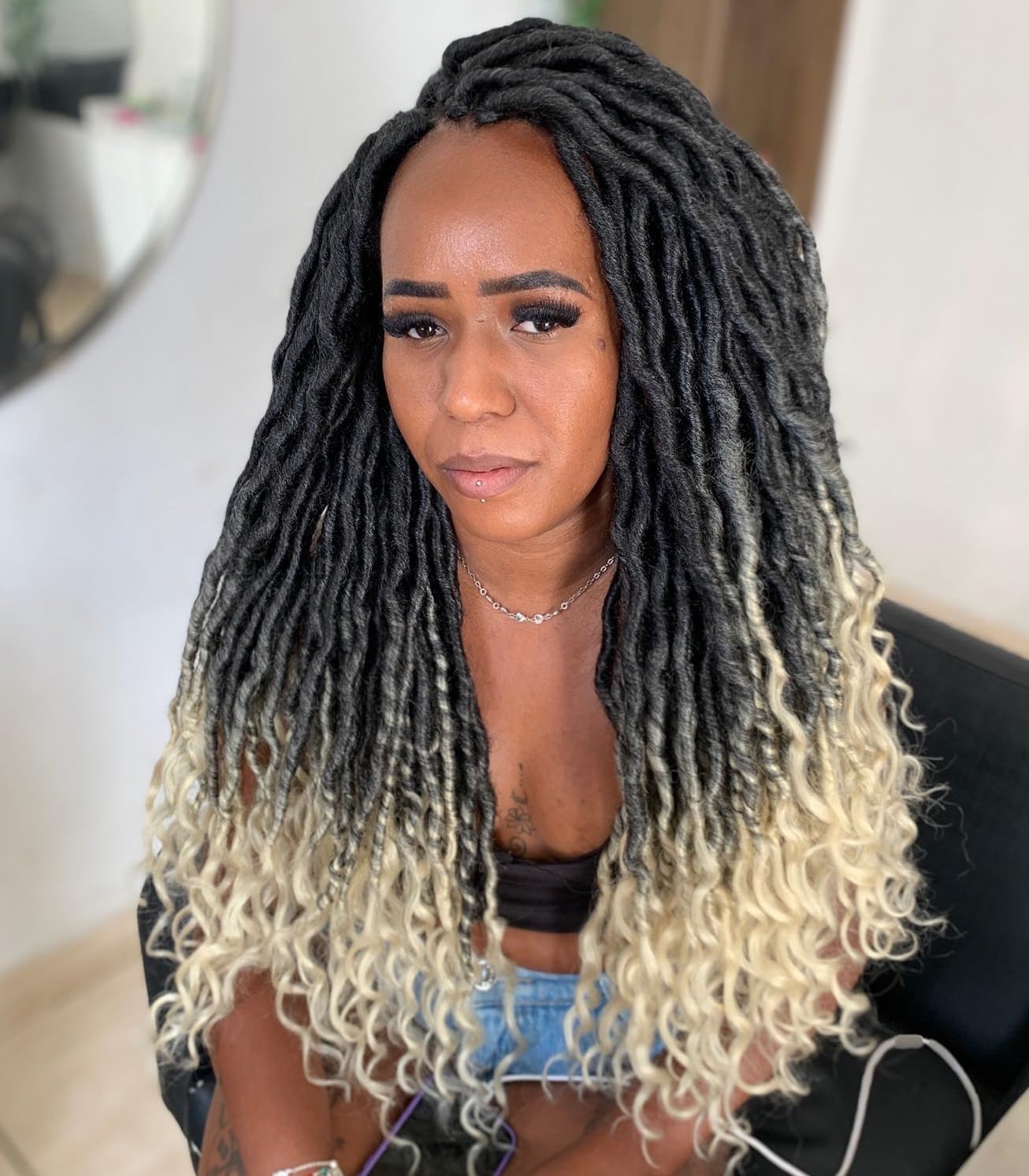
Wondering how a two-tone ombré holds up on faux locs over time? This style answers that: a black base at the roots transitions into blonde at the mid-back length tips, with the wavy texture and loose fall softening the gradient. The grow-out phase is the real advantage here. Dark roots growing in blend into the black base, so the ombré effect stays intentional for weeks. Ask your colorist for: mid-back faux locs with black to blonde ombré. The blonde ends benefit from a toning shampoo every three to four weeks to keep them bright rather than brassy.
Short Blonde Locs With Dark Roots
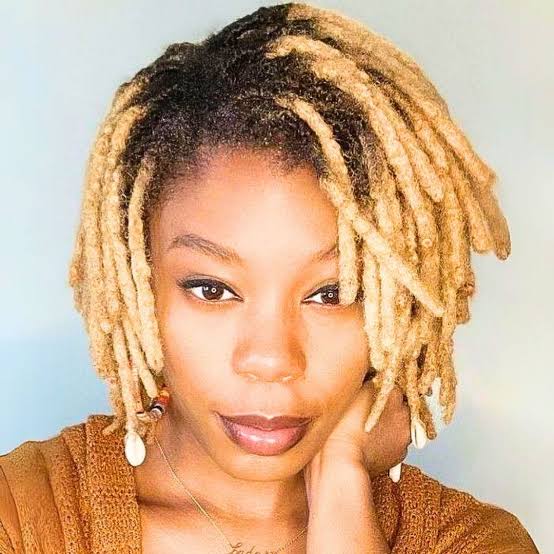
Short locs at ear length with dark roots that soften into blonde, styled air-dried with a middle part and a curly texture. This combination works best for those with medium density, curly locs who want a bright color without the constant upkeep of a full bleach. Ask your colorist for: short curly locs, dark roots to blonde. The dark root shadow means you can stretch toning appointments to every six or eight weeks. The air-dried finish also saves time: no heat needed, just a good leave-in to define the curl pattern.
Undercut Locs With Vibrant Red Bun
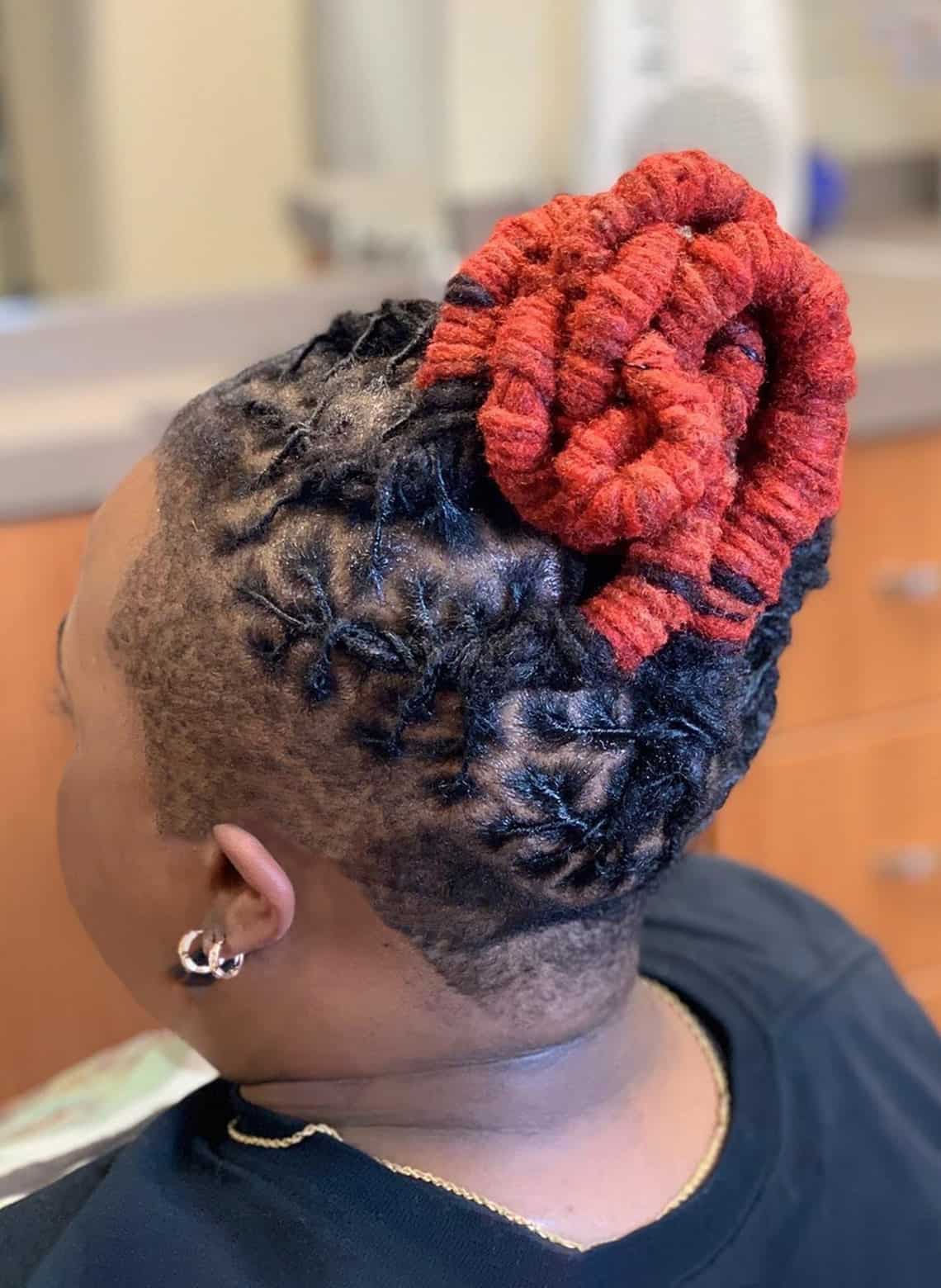
A large bun sits on top of the head, built from black locs with a few strands replaced by vibrant red ones, while the sides are shaved clean. The contrast lands especially well in autumn, when deep red tends to feel natural rather than costume-y. Ask your colorist for: black locs with vibrant red accents, shaved sides. The undercut demands a barber visit every two to three weeks to keep the lines sharp. The bun itself is a practical updo that works for work or weekend events.
Shoulder Length Vibrant Red Locs With Beads
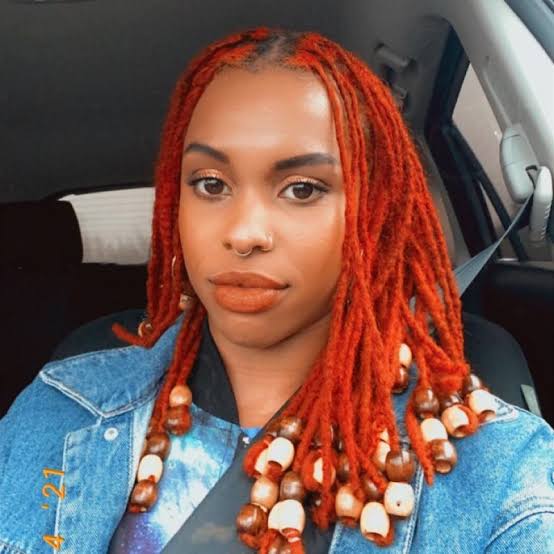
How do you get a true, uniform vibrant red on locs at shoulder length? This style shows the result: a single, saturated red tone applied from root to tip, with wooden beads threaded onto a few locs for texture. Ask your colorist for: shoulder length vibrant red locs with wooden beads. The red needs a color-safe shampoo to hold its saturation, and the beads are best added after the color is set to avoid staining. A middle part keeps the line clean and the color even across both sides.
Shoulder Length Copper Orange Locs
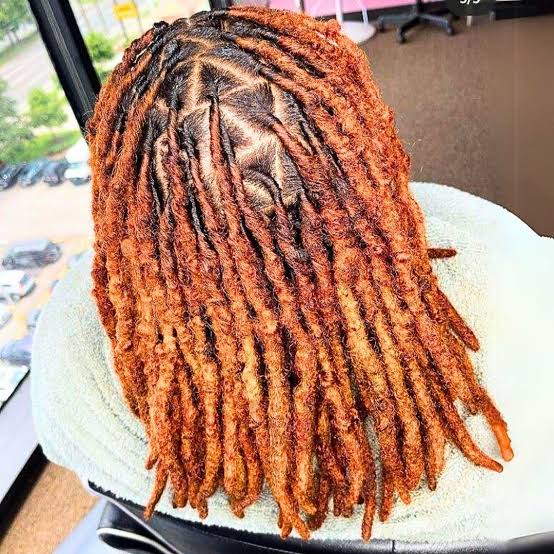
The retwist pattern is the quiet hero here, giving each loc a defined root that makes the vibrant copper orange read as a deliberate choice. Getting to this shade on locs takes two steps: a lift to a light brown base, then a copper orange gloss laid over it. That base matters, because a dark under-layer would swallow the warmth and leave you with a muddy brown instead of a true copper. Thick, wavy locs hold the color well, and the middle part keeps the sections looking clean as the retwist sets. Ask your colorist for: shoulder length vibrant copper orange locs, retwisted style. Plan on a retwist every four to six weeks to keep those parts crisp and the color sitting on fresh growth.
Collarbone Copper Red Locs With Grid Parting
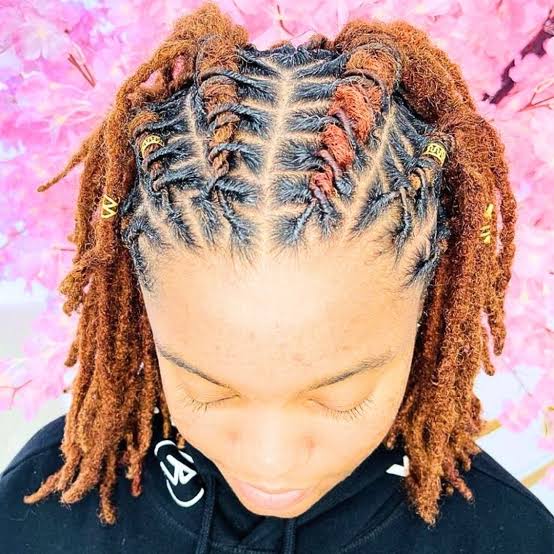
Copper orange and copper red are siblings, but they are not twins. The orange leans bright and playful, while the red adds depth and a touch of seriousness, which suits locs that are styled with precision. This version pairs a rich copper red with a grid parting and braided locs, so the color works with the geometry rather than competing against it. Thick, wavy locs at collarbone length give the grid enough surface to show off, and the braids add texture without hiding the shade. Ask your colorist for: collarbone length copper red locs with grid parting and braids. If you want a color that feels grounded and a style that holds its shape, this is the one. The red will fade slower than orange, but a gloss every six to eight weeks keeps it from dulling.
Mid-Back Orange Locs High Ponytail
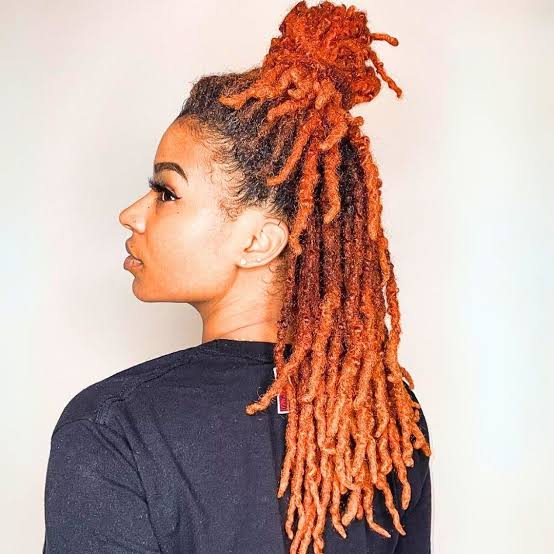
A high ponytail does more than keep hair out of the way, it puts the color on display. With dark roots and vibrant orange locs extending to mid-back, the contrast does the styling for you. The dark roots mean you are not chasing regrowth every few weeks, which is the practical upside of this look. Medium, wavy locs with a middle part pull back cleanly, and the ponytail gives the orange a chance to swing and catch attention. Ask your colorist for: mid-back orange locs with dark roots, high ponytail. Use a strong hair tie that will not snag the locs, and refresh the orange every six to eight weeks. The roots will stay low-maintenance, but the orange needs a color-safe shampoo to hold its brightness.
Shoulder Length Ombré Locs Orange Yellow Red
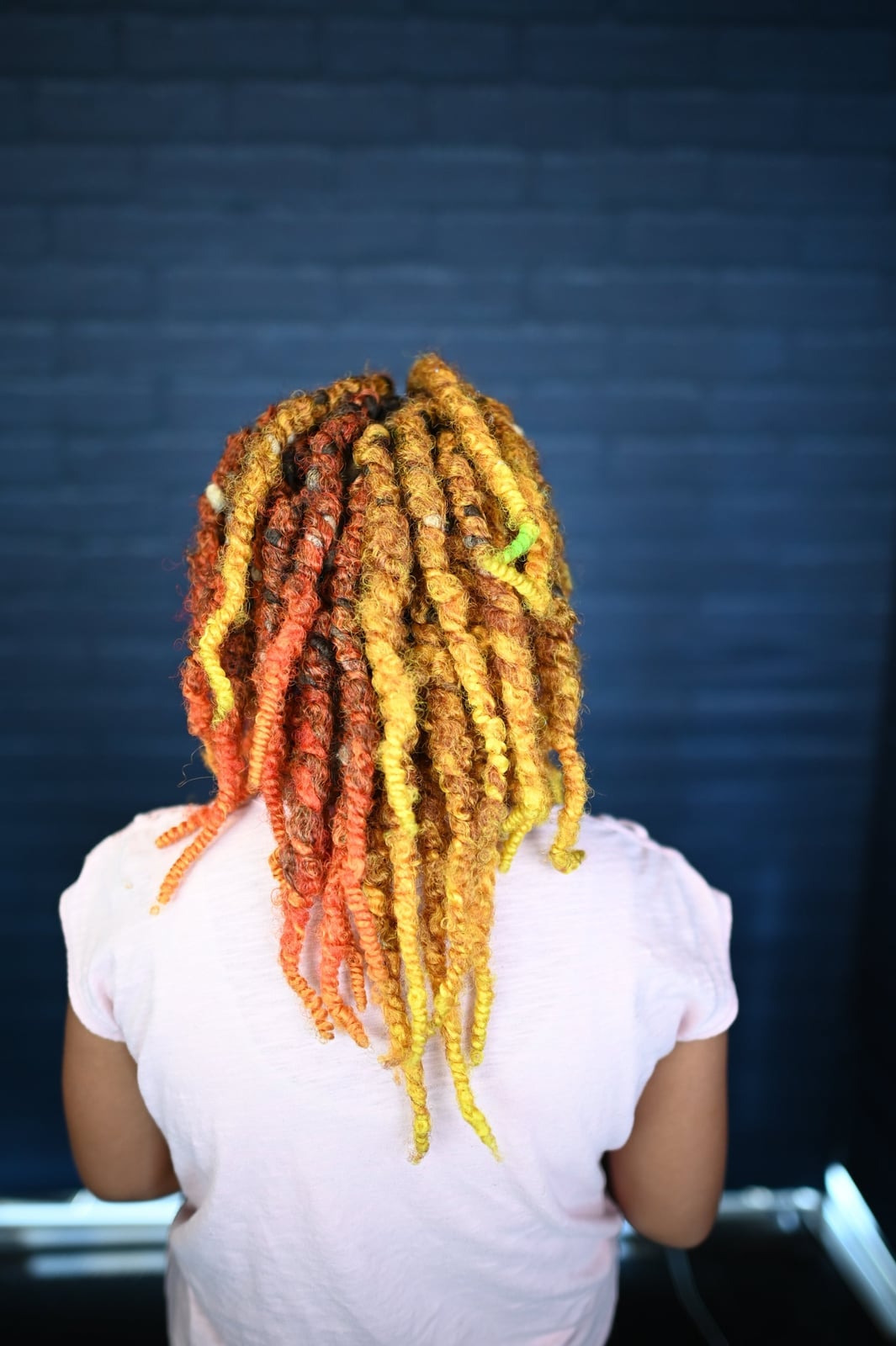
The transition from deep orange at the roots to bright yellow and red at the tips is a fire hazard in the best way. Ombré on locs works because the color moves down the length, so you get a gradient that feels almost painted on. The loose styling lets each loc show off its individual color blend, and the shoulder length keeps the effect from becoming overwhelming. Ask your colorist for: shoulder length locs with orange, yellow, and red ombré. The real drawback is the upkeep: the yellow and red tips will fade faster than the orange roots, so expect a refresh every four to six weeks and a color-safe shampoo in between. If you cannot commit to that rhythm, skip this one, the faded version is not a good look.
Vibrant Orange Locs Two Buns With Braided Tail
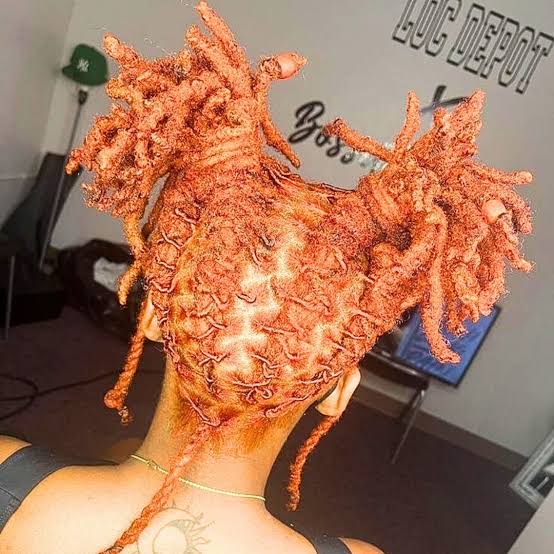
Two high buns with a braided tail down the back is a style that demands attention, and the vibrant orange color makes sure it gets it. The geometric parting at the scalp adds structure, so the look is playful without being messy. Thick, coily locs hold the buns shape well, and the braided tail gives the eye a line to follow from the crown down. Ask your colorist for: vibrant orange locs, two buns with braided tail, geometric parting. The buns need to sit securely, so use a strong hold and check them throughout the day. The orange will need a refresh every six to eight weeks, especially if you spend time in the sun, which pulls the warmth out of the color faster.
Mid-Back Vibrant Copper Locs
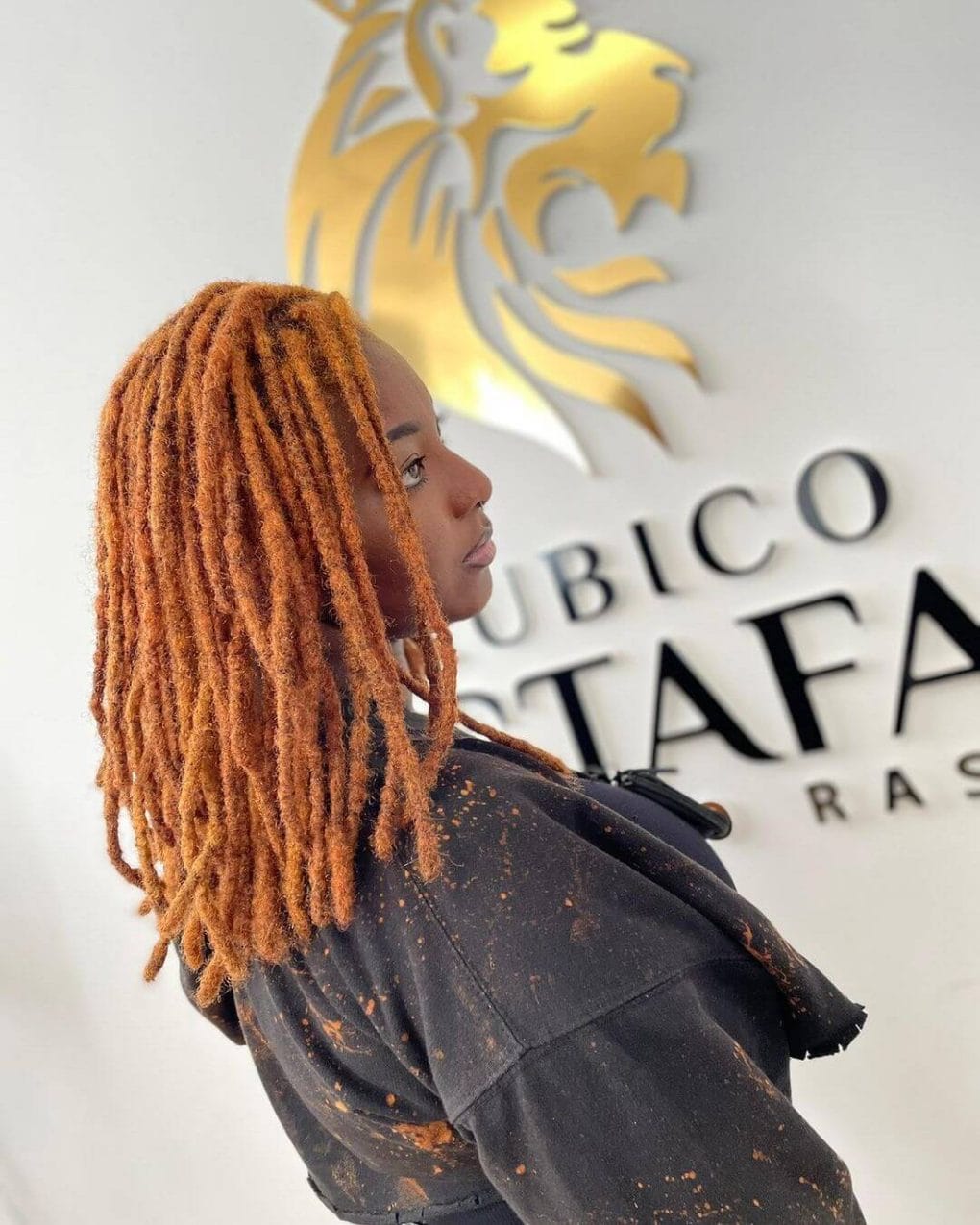
Wondering if vibrant copper will hold its own on locs? This mid-back length set, with wavy texture and medium density, proves the shade works as a full commitment, not just an accent. The uniform color gives the locs a polished, almost metallic glow. Ask your colorist for: mid-back vibrant copper locs, loose natural style. Medium density is ideal here, since the solid shade can overwhelm finer locs and get lost on very thick ones. The middle part keeps the look grounded, letting the color do the talking. Copper leans warm, so it pairs well with a range of complexions without needing a specific undertone to succeed.
Shoulder Length Black to Blonde Ombré Locs
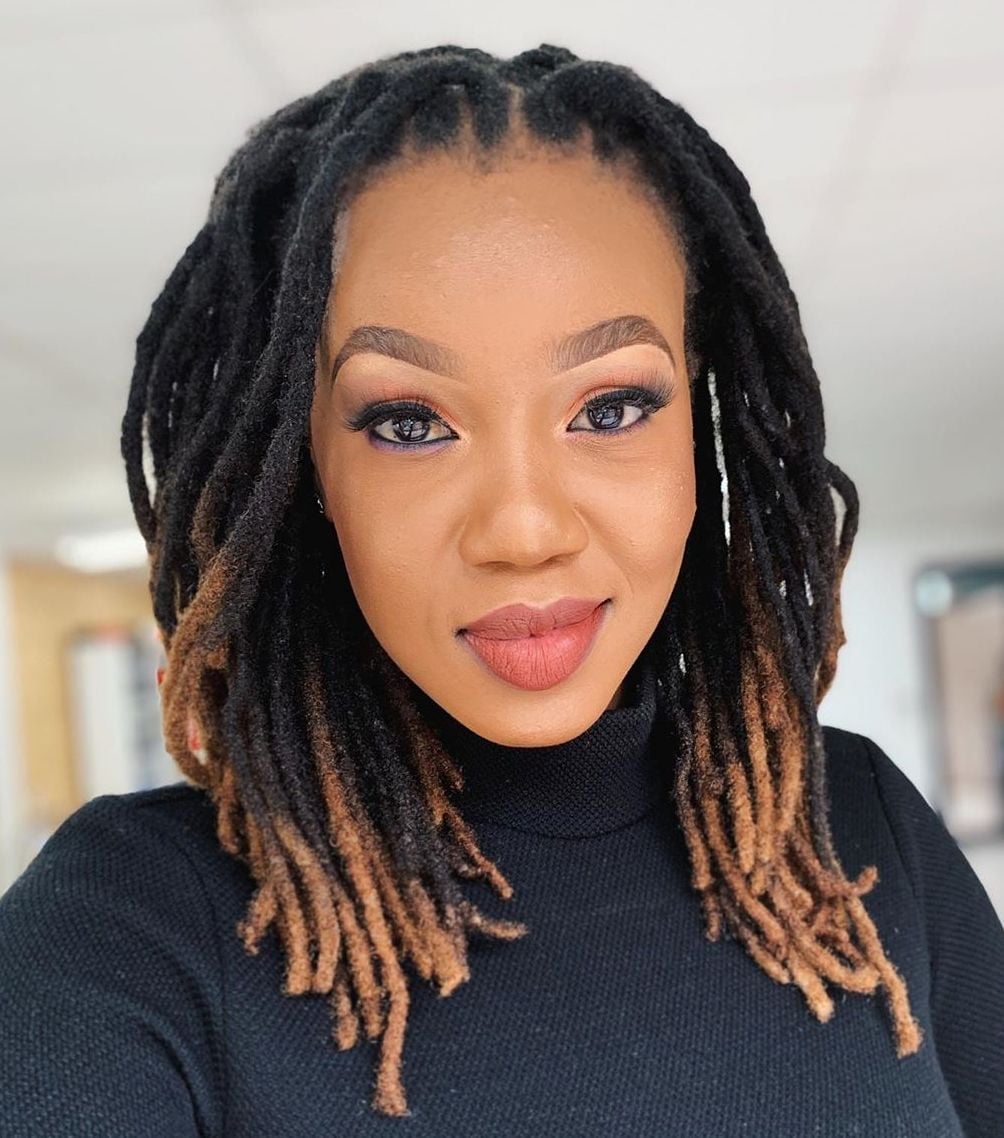
If you are torn between a subtle highlight and a full ombré, this shoulder length style settles it: the black base melting into honey blonde ends delivers more contrast than highlights ever could. The blowout styling with a middle part adds volume to these thick, wavy locs, making the color transition feel like a deliberate design choice. Ask your colorist for: shoulder length locs, black base with honey blonde ombré ends, blowout style. The dark roots keep grow-out low-maintenance for a few months, but the blonde ends will need a toning appointment every six to eight weeks to stay bright. Thick texture carries the gradient best, as finer locs can make the color change look muddy.
Mid-Back Fire Ombré Locs
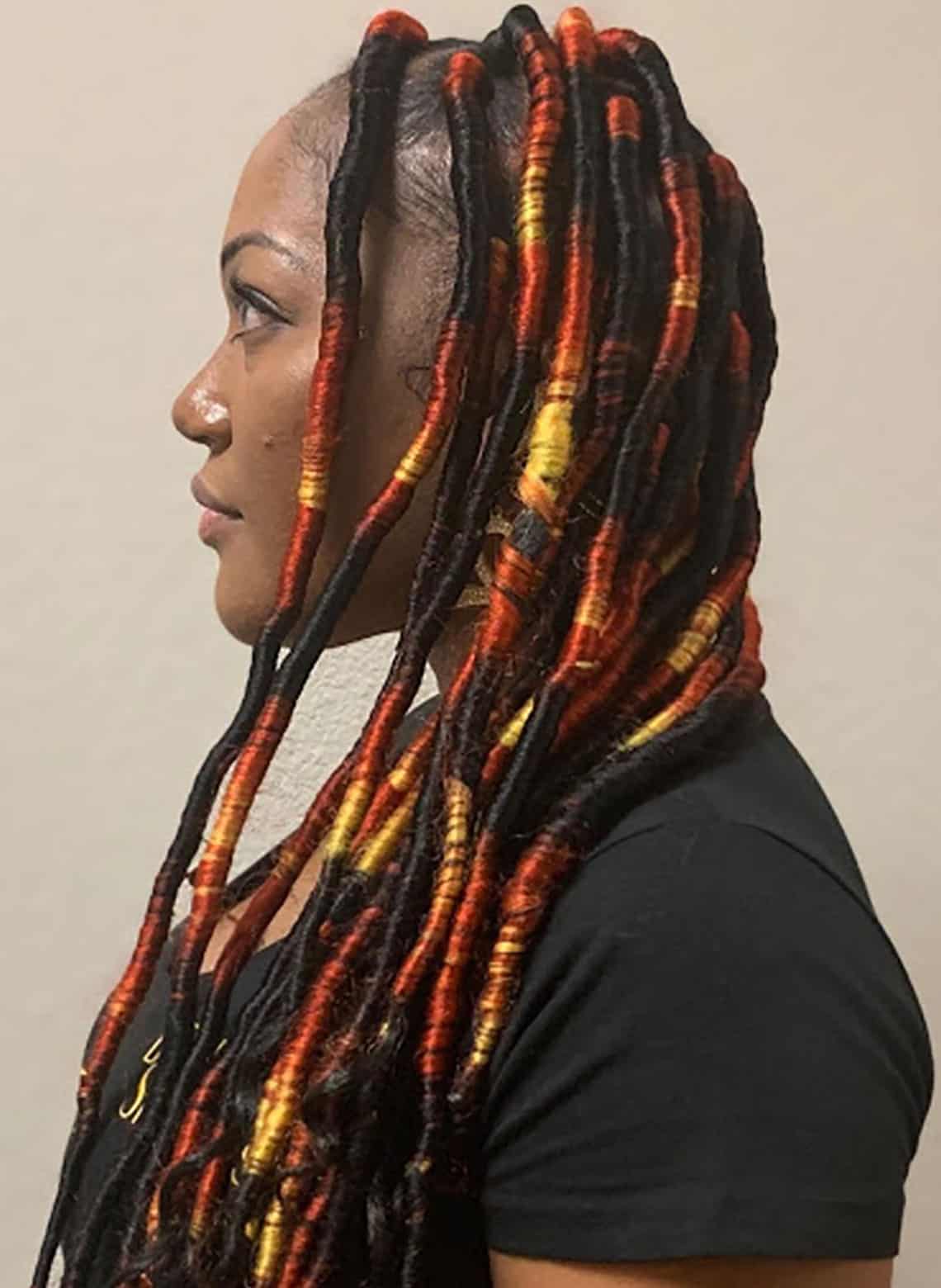
The color blend here moves from black at the roots through red and orange into yellow at the tips, and the effect is less a gradient and more a controlled burn. These mid-back locs hang loose, and the fire ombré makes a strong statement in any setting. Ask your colorist for: mid-back locs with black, red, orange, and yellow ombré. This is a salon job, and it will take a few hours because each color needs its own processing time. Autumn is the natural season for it, but the look works year round if you are comfortable with attention. The multiple tones mean each loc catches light differently, so the color stays interesting even when styled simply.
Maintenance is the real commitment here. You will need color-safe shampoo every wash, and the red and orange sections will fade faster than the black, so expect a refresh every four to six weeks to keep the fire bright.
Faux Locs Bubble Ponytail With Blonde Highlights
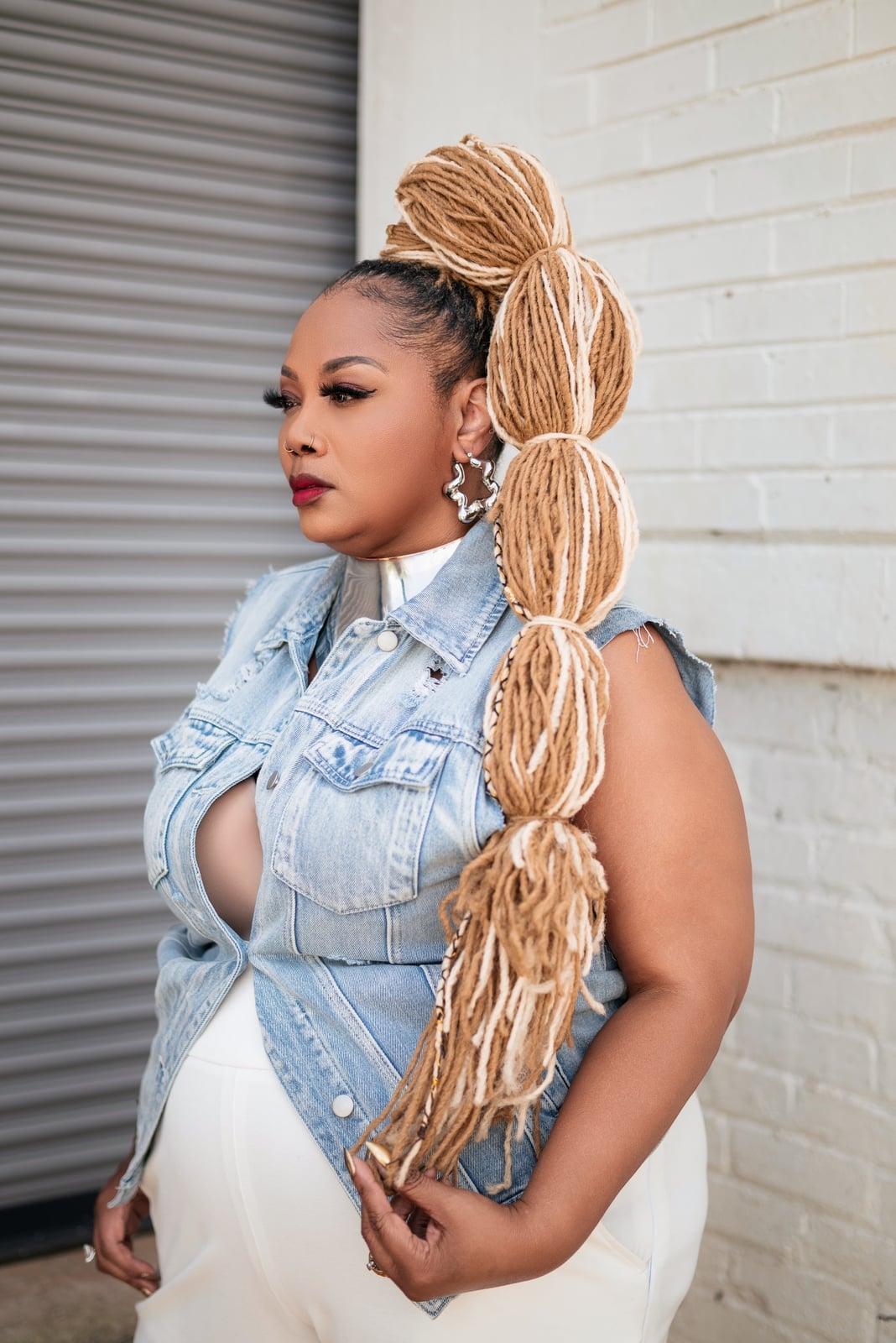
How do you make blonde highlights feel playful instead of predictable? Put them on faux locs and pull everything into a high bubble ponytail. The dark brown base is broken up by blonde strands that run through the wavy texture, and the multiple bubble sections give the style a sculpted, almost architectural feel. Ask your colorist for: mid-back faux locs, dark brown with blonde highlights, bubble ponytail. The styling comes down to securing each section with an elastic, then fluffing the locs above it to create the bubble shape. Loose locs at the end keep it from looking too rigid. This is a salon install, but the ponytail itself takes about ten minutes once the locs are in.
Mid-Back Multi-Tonal Brown and Copper Locs
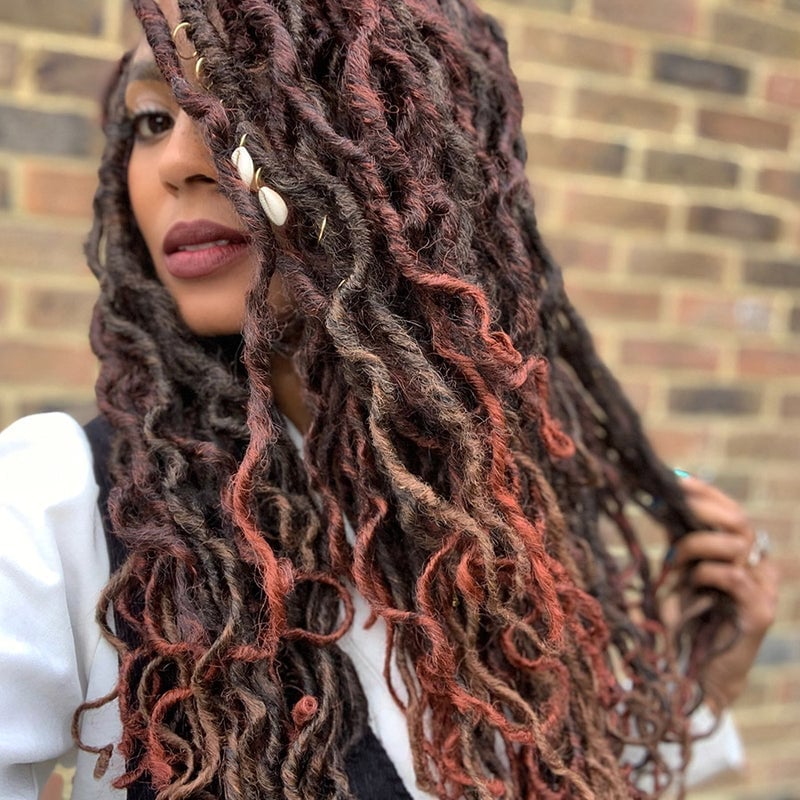
This color treatment starts with a dark brown base and weaves in copper and lighter brown streaks, so the locs read as dimensional rather than flat. The wavy texture and thick density carry the multi-tonal blend well, and the side parting lets some of the face-framing locs show off the lighter pieces. Ask your colorist for: mid-back locs with dark brown, copper, and lighter brown highlights. The blend hides grow-out better than a solid color, but the copper tones will fade first, so a gloss or toner every eight weeks keeps the warmth alive. Use color-safe products and condition regularly to keep the locs soft, since the lighter sections can dry out faster than the dark base.
This is a good option if you want color without the upkeep of a full vibrant shade. The darker base means less root maintenance, and the copper streaks add just enough personality to skip the boring.
Shoulder Length Reddish-Brown Locs Two Pigtails
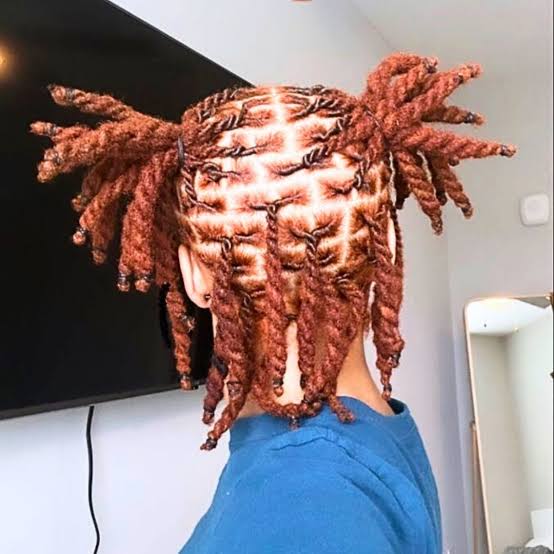
The geometric parting on the scalp is the quiet genius here, giving the two high pigtails a structure that keeps the playful style from reading as purely casual. The vibrant reddish-brown color carries the whole look, but it is also the part that will test your commitment. That shade is not known for staying put, and the intensity tends to fade faster than you would like, especially on coily, thick locs that get washed on a regular schedule.
This style suits those with shoulder length locs who want a bold color and a youthful silhouette without sacrificing neatness. Ask your colorist for: shoulder length vibrant reddish-brown locs, two pigtails, geometric parting. Plan on refreshing the reddish-brown every six to eight weeks, because the regrowth will show against that saturated tone sooner than subtler colors would. The real drawback is the upkeep, since a shade this vivid demands consistent toning to avoid drifting into a muddy, dull orange.
Shoulder Length Dark Base Red Ombré Locs
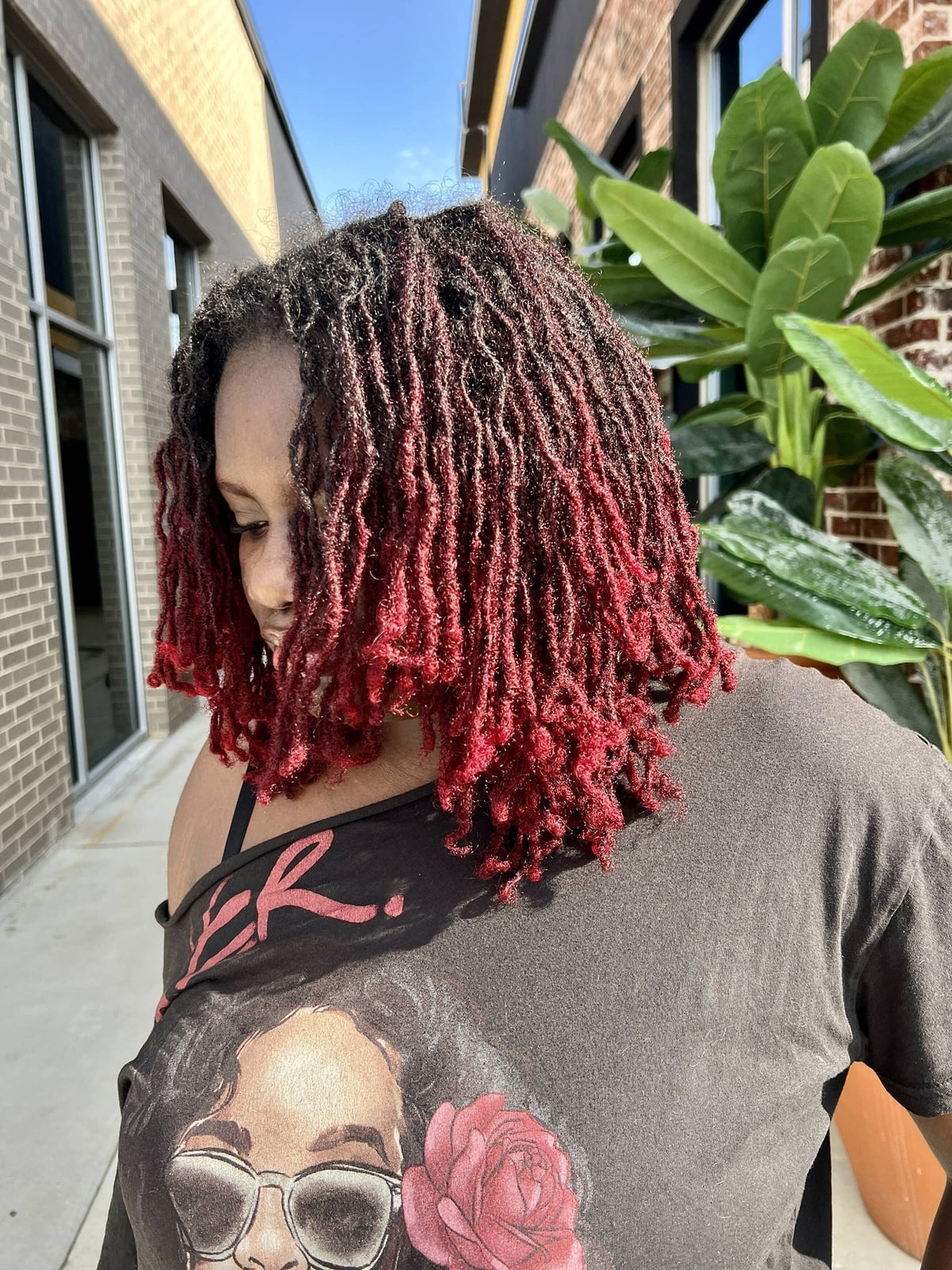
The technique here is a gradient that starts with a dark base at the roots and builds into a vibrant red ombré toward the ends, which gives the color depth without requiring constant root maintenance. On medium density locs at shoulder length, the transition reads as deliberate and dimensional, especially when the hair is air-dried so each loc keeps its natural texture and definition. Ask your colorist for: shoulder length locs, dark base with vibrant red ombré. This approach works well for anyone who wants a noticeable color shift but is not ready to commit to an all-over bright shade, since the dark root line hides regrowth for a longer stretch. The ombré placement means the vivid red sits where it moves most, catching attention with every turn of the head.
Shoulder Length Copper Highlight Locs Updo
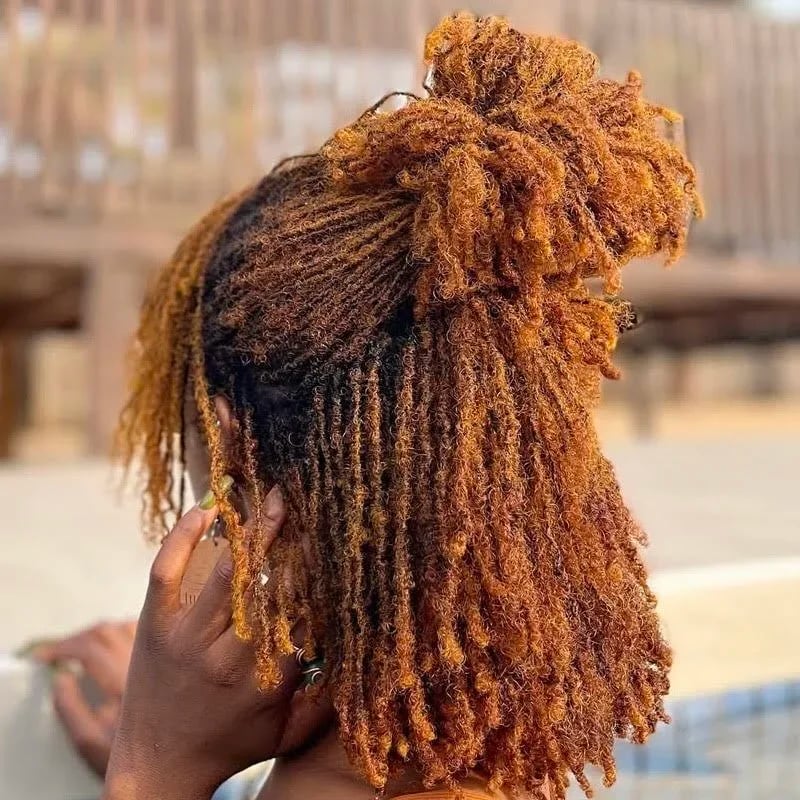
Wondering whether copper highlights will actually show up on dark brown locs? They do, provided the colorist weaves them through the upper layers where the light can catch them. On thick, wavy locs styled into a high updo, the copper strands break up the dark brown base and add a warm, dimensional glow that flat color cannot match. Ask your colorist for: shoulder length dark brown locs with copper highlights, high updo. The voluminous crown shape gives the style an elegant lift, and the highlights do the work of making the texture look richer. This blend suits those with thicker locs who want a sophisticated color update that stays subtle enough for the office but shows up nicely in evening light.
Long Deep Burgundy Locs With Red Copper Highlights
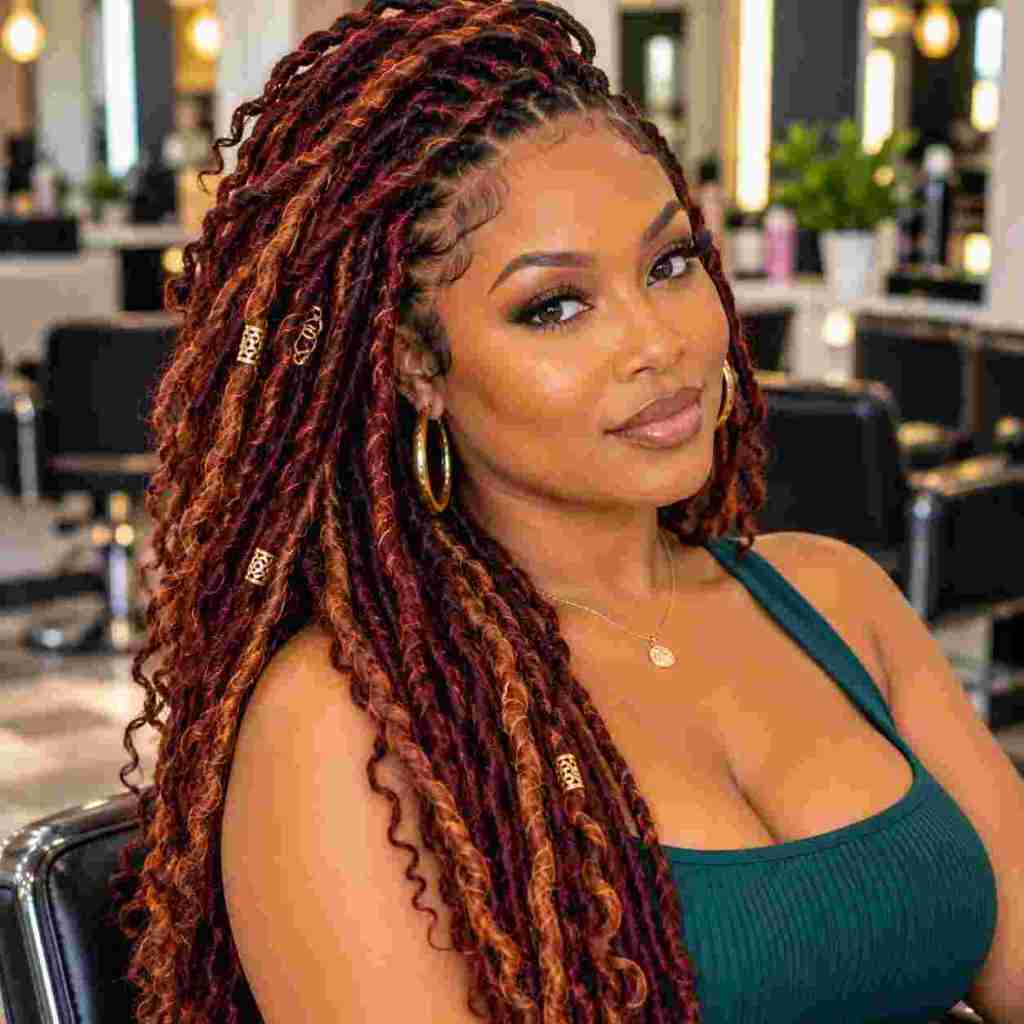
Set a deep burgundy base next to a vibrant red and copper highlight and you get the difference between a shade that sits flat and one that has somewhere to go. The burgundy gives the long, wavy locs a weighty, luxurious depth, while the lighter red and copper strands catch light and add movement through the length. The decorative gold beads interspersed throughout are not just ornament, they also help break up the color so the multi-tonal effect reads clearly from the front. Ask your colorist for: long locs with deep burgundy, red, and copper highlights, with beads.
This is the choice for thick, wavy locs that can carry a rich, layered color without looking busy. The middle parting keeps the face open and lets the highlights frame the hair evenly on both sides. If you want the depth of a dark wine shade but worry it will look flat, the copper and red accents solve that problem by adding brightness at regular intervals.
Shoulder Length Copper Orange Locs With Geometric Parting
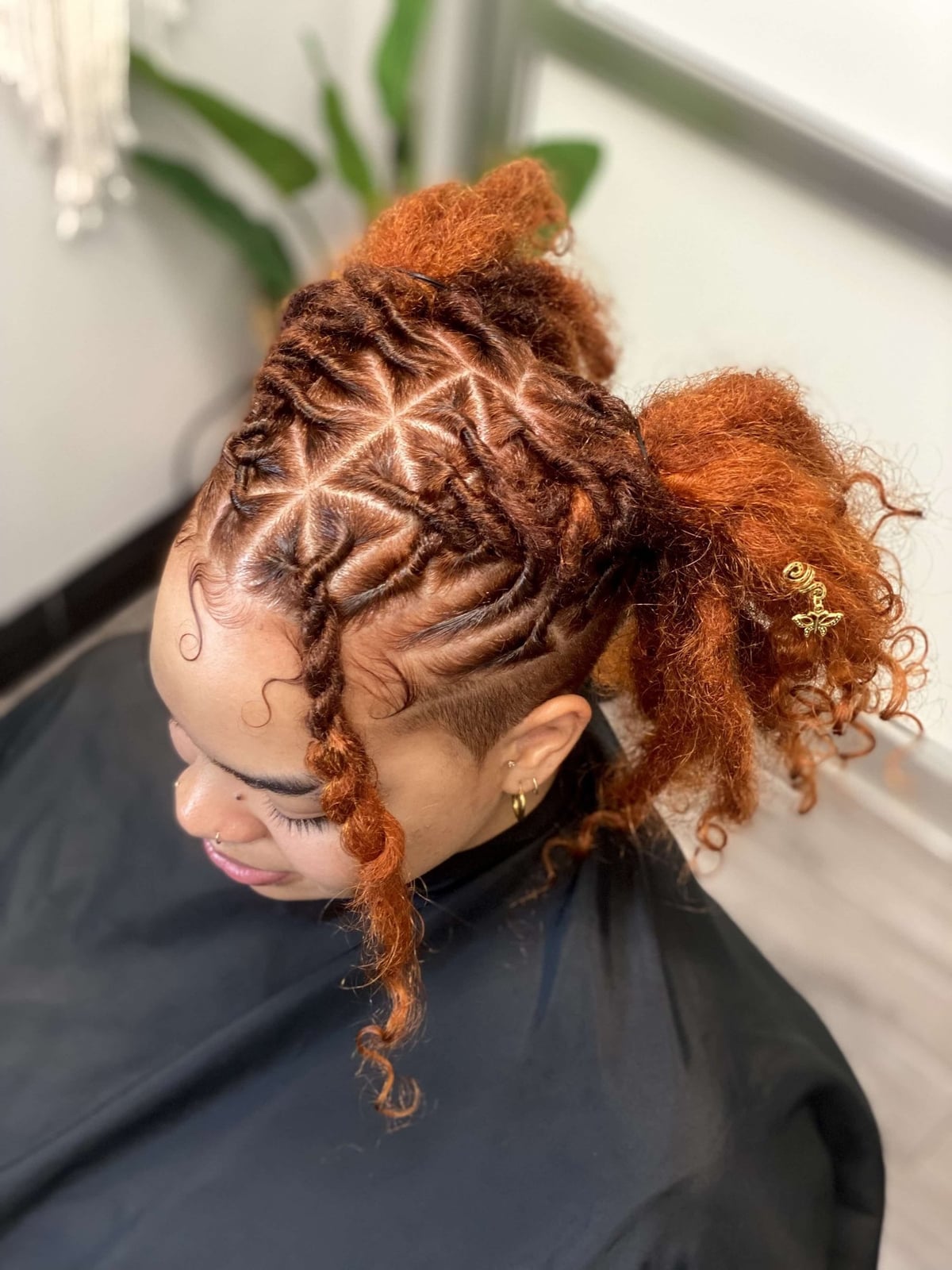
A geometric parting is a commitment that shows every time you wash, because the precise lines will blur and soften as the hair settles and the scalp shifts. The copper orange color on these shoulder length locs is bold enough to hold its own, but the shaved sides and the intricate parting patterns are what make the style feel architectural. Ask your colorist for: shoulder length copper orange locs, geometric parting, pigtails, shaved sides.
This look needs regular salon visits to keep the parting crisp and the shaved sides clean, usually every three to four weeks. The loose curls at the ends add a softer finish that balances the sharp lines at the root. It is a high-maintenance style in the best sense, since the payoff is a color and pattern combination that looks intentional from every angle.
Final Thoughts
For vibrant, all-over color, stick to color-safe, sulfate-free shampoos and wash only when necessary to keep the hue from fading. If your locs are ombré or highlighted, a periodic toning session will refresh the lighter shades and keep them from turning brassy.
- Use color-safe shampoos, washing only when needed.
- Deep condition every two weeks to combat dryness.
- Limit sun exposure and heat styling to prevent fading.
- Plan root touch-ups or color refreshes every 6-8 weeks.
Bold color on locs is an art form. Choose a shade that speaks to you.
