

Braids have a way of looking intentional without trying too hard, which is probably why they keep showing up in every texture and length you can imagine. Right now, the shift is toward softer finishes: wavy ends, curtain bangs, and lived-in color that reads as natural rather than freshly installed.
This collection of 32 Braids Styles covers the range from quick DIY-friendly cornrows to full-head knotless installations that take an afternoon. Whether your hair is fine and needs volume at the roots or thick and wants a lighter feel, there is a braid here that holds its shape without a fight. No more wrestling with a fringe that won’t sit or a style that looks flat by midday.
Long Knotless Braids With Wavy Ends
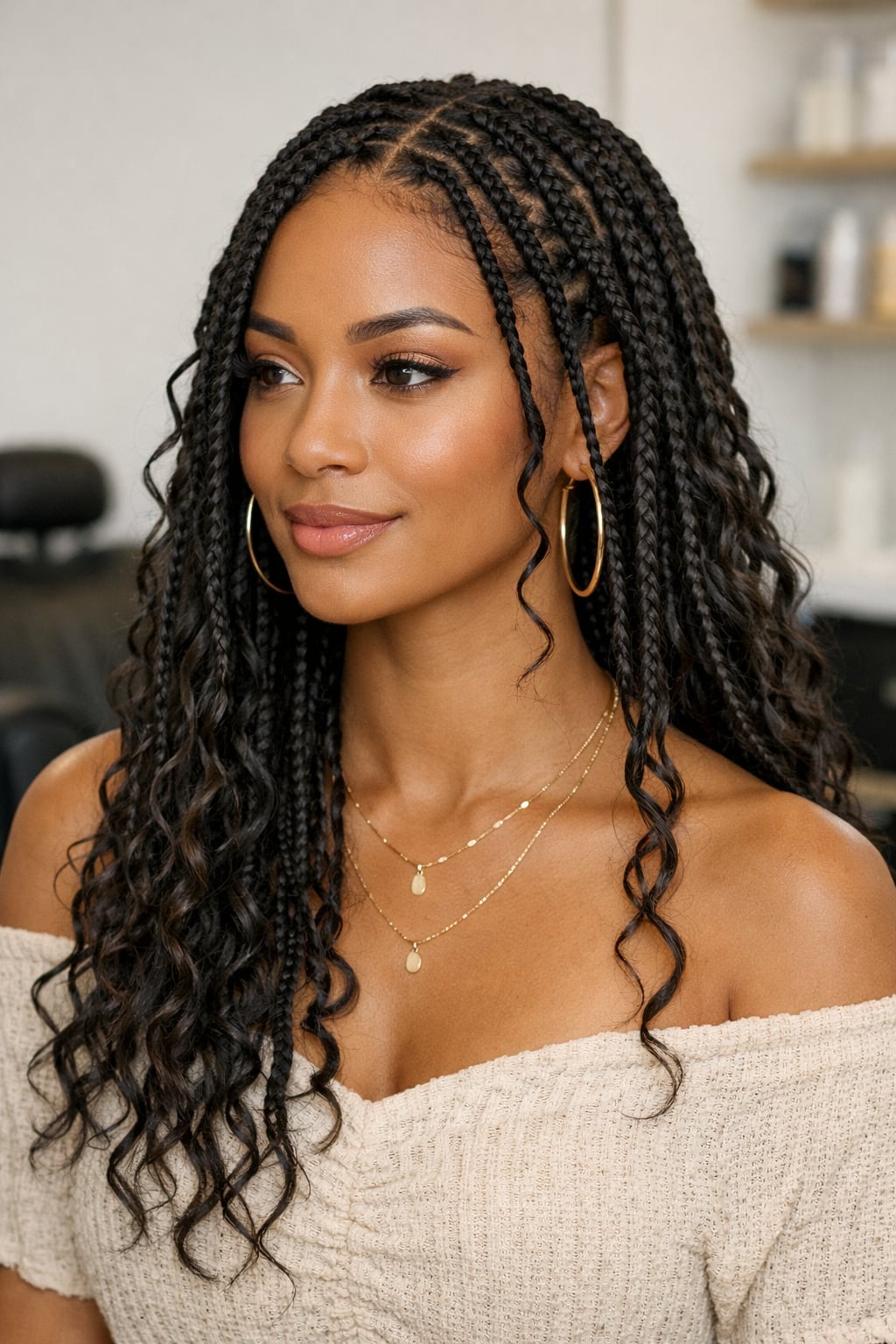
The knotless technique starts each braid with your own hair, so there is no bulky knot at the root and the braid lies flat against the scalp from the start. At mid-back length, the black braids taper into loose, wavy ends that move like they are not even braided. A clean middle part keeps the whole thing balanced rather than chaotic.
This style suits most face shapes because the part is neutral and the length does the work. Anyone with shoulder-length or longer hair can wear it as a protective style that still has movement. Ask your stylist for: long knotless braids, wavy loose ends, middle part. The wavy ends need a light serum to stay defined and frizz-free, and a trim every six weeks keeps them from looking ragged.
Sharp Chin-Length Box Braids Bob
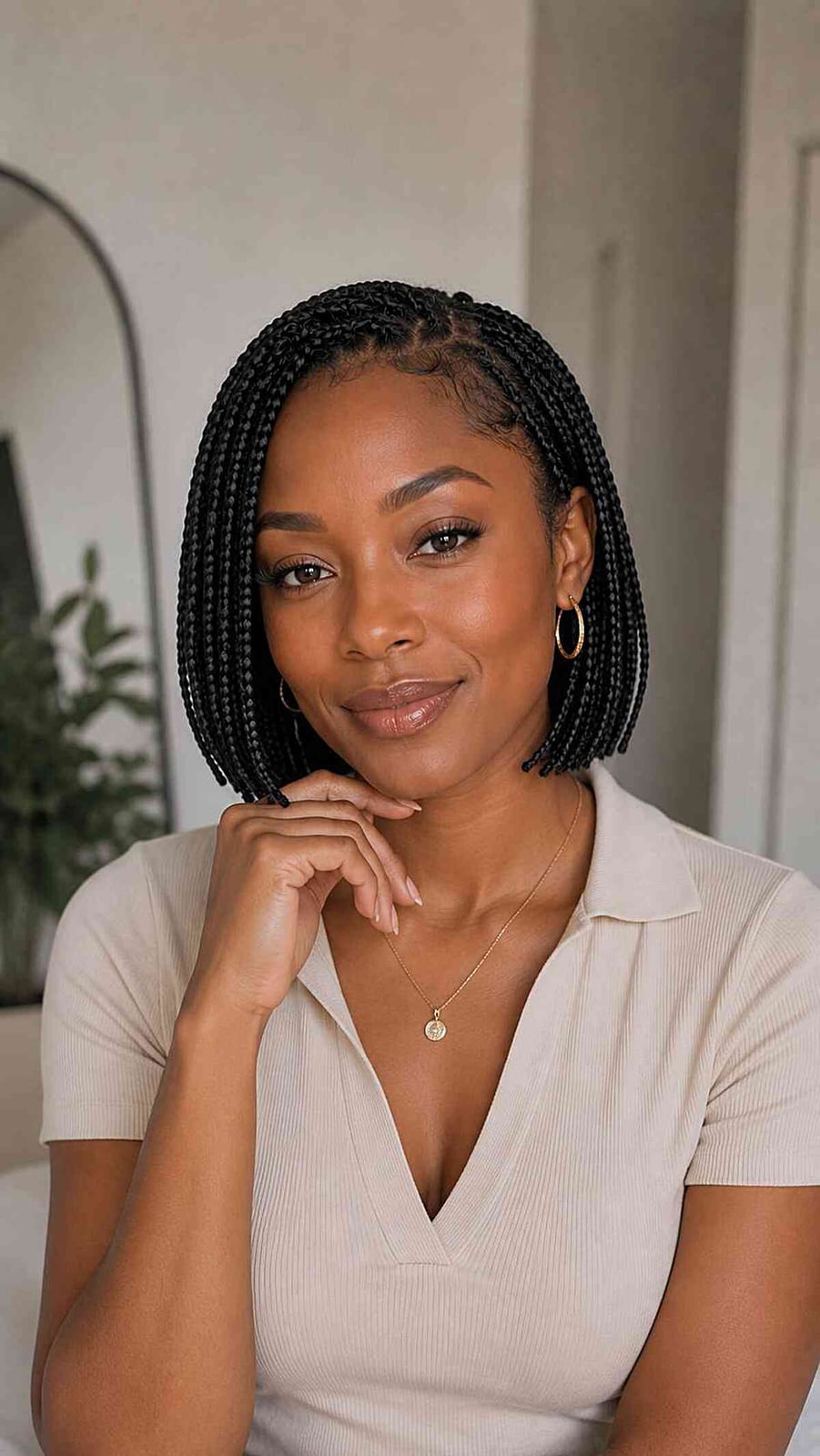
Wondering if a bob works with box braids? It does, but only if you commit to the geometry. This version lands exactly at chin length with a sharp, straight-across line and a middle part that doubles down on the precision. The uniform black braids are medium density, so the bob reads as sleek rather than heavy. Fine to medium hair density handles this shape best, and oval or heart face shapes get the most out of the clean perimeter. Ask your stylist for: chin-length box braids bob, sharp line. A trim every four to six weeks is the only way to keep that line from softening into something less deliberate.
Blonde Braids High Ponytail With Curly Framing
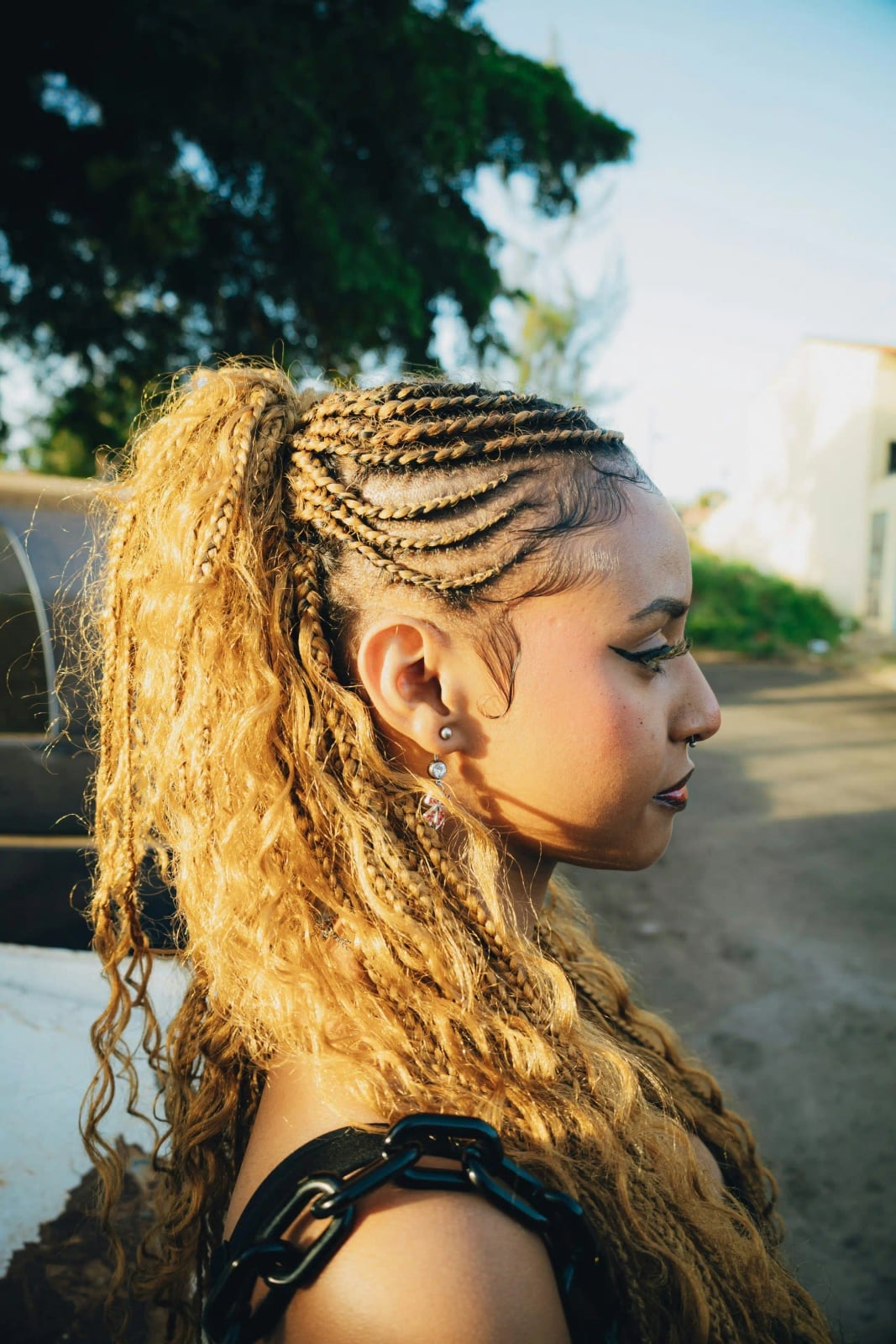
The blonde braids are gathered into a high ponytail that lands around mid-back, but the real detail is the loose curly pieces left out to frame the face. Those face-framing strands break up the solid weight of the ponytail and add a softer texture around the hairline. The base color is blonde with lighter highlights woven through, which gives the braids depth without looking stripey.
Ask your stylist for: blonde braids, high ponytail, face-framing curly pieces. A flexible hold hairspray keeps those framing curls in place without making them stiff, and the ponytail needs a tight elastic to hold the weight. This one works for events or casual days when you want the braids off your neck but still want some movement around your face.
Cornrows With Side-Swept Bangs
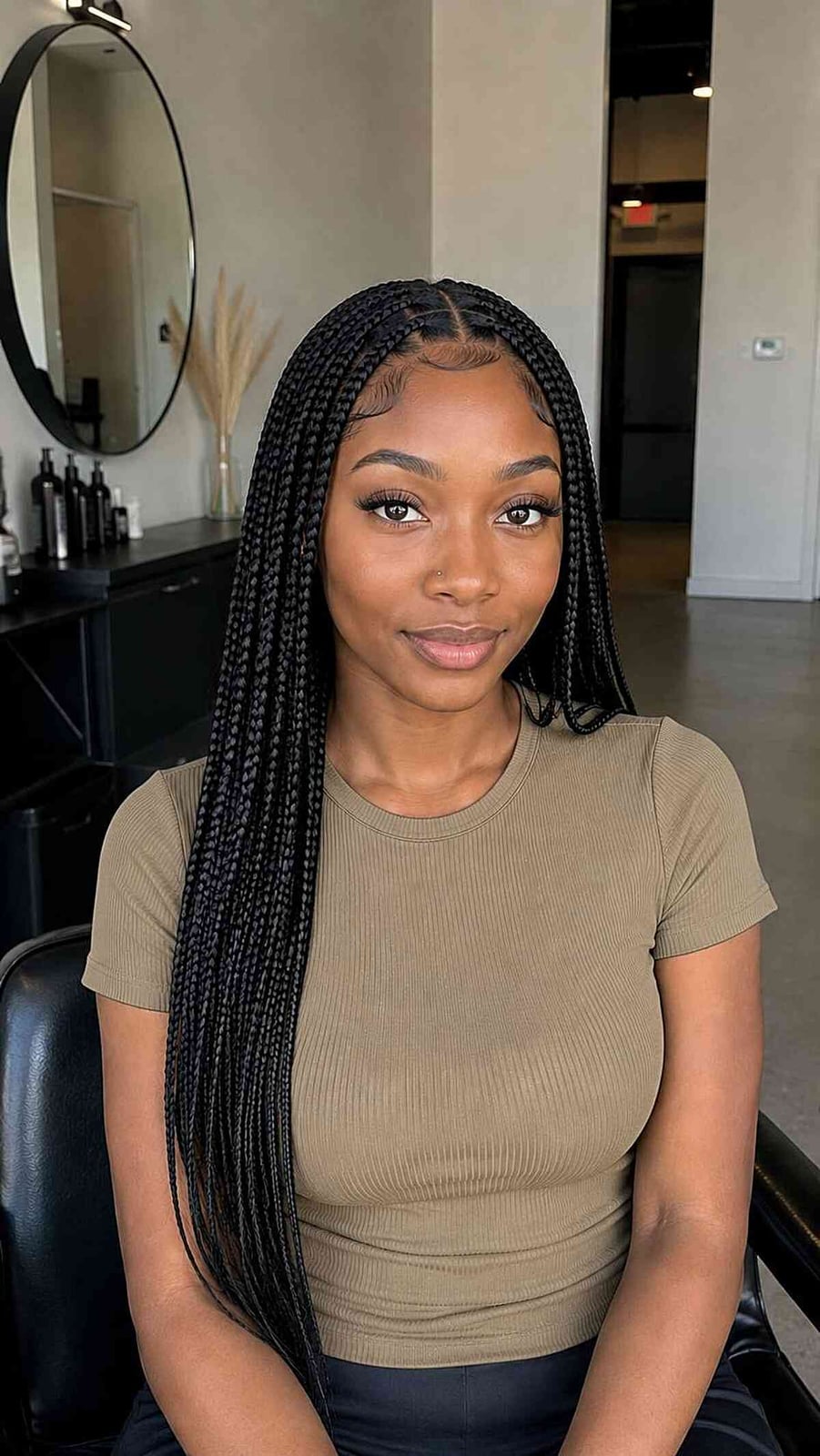
Cornrows usually mean everything pulled back tight, but this version keeps a side-swept bang loose to frame the face. The cornrows start at the hairline and extend into long, straight braids that reach mid-back, while the side part and the bang add softness to an otherwise structured design. Compare this to cornrows without bangs, which can feel severe on round or square face shapes. The side-swept bang softens those angles without sacrificing the neatness of the rows. Ask your stylist for: long cornrows with braids, side part, side-swept bang. A light pomade on the bang keeps it smooth, and the cornrows should not be pulled too tight at the hairline to avoid tension.
Thick French Braid Down the Back
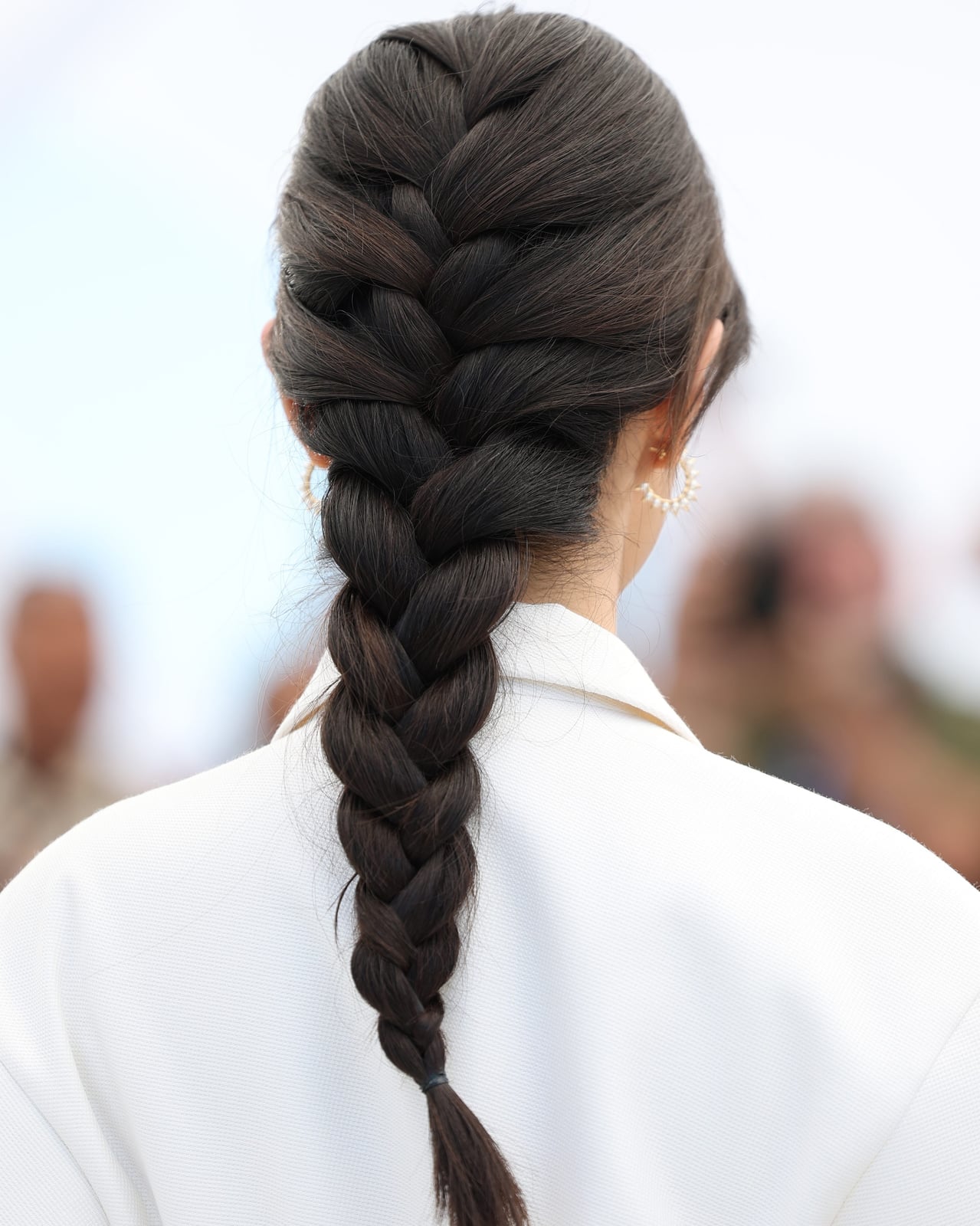
A French braid this thick is a test of tension control. The braid starts at the top of the head and travels straight down the back to mid-back length, with each section pulled evenly so the braid stays uniform from top to bottom. The hair is dense and straight, dark brown, and the braid holds its shape without needing pins or product. Thick hair of mid-back length or longer works best, and straight texture makes the sections easiest to keep clean.
Ask your stylist for: thick French braid, mid-back length. A shine serum brushed over the finished braid cuts down on flyaways. The braid will loosen slightly over a day of movement, so retightening it in the morning takes about five minutes. A trim every eight weeks keeps the ends from looking thin against the dense body.
Voluminous Platinum Pull-Through Braid
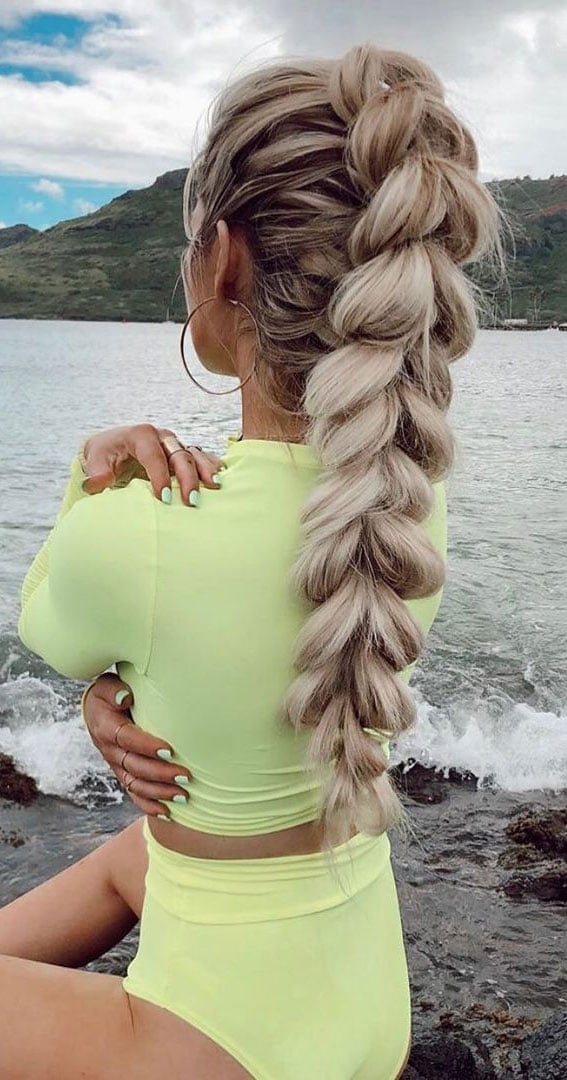
A pull-through braid builds volume without the weight of a traditional Dutch or French plait, and this one takes it to mid-back in platinum blonde with ash undertones. The wavy texture is key: it hides the seams and gives the whole structure a soft, blurred edge. Ask your stylist for a voluminous platinum pull-through braid with ash undertones. The trade-off is real: the technique requires layers cut in advance, and the finished style can frizz in humidity, so plan for a dry day or a generous spritz of anti-humidity spray.
Braids and Curls with Curtain Bangs
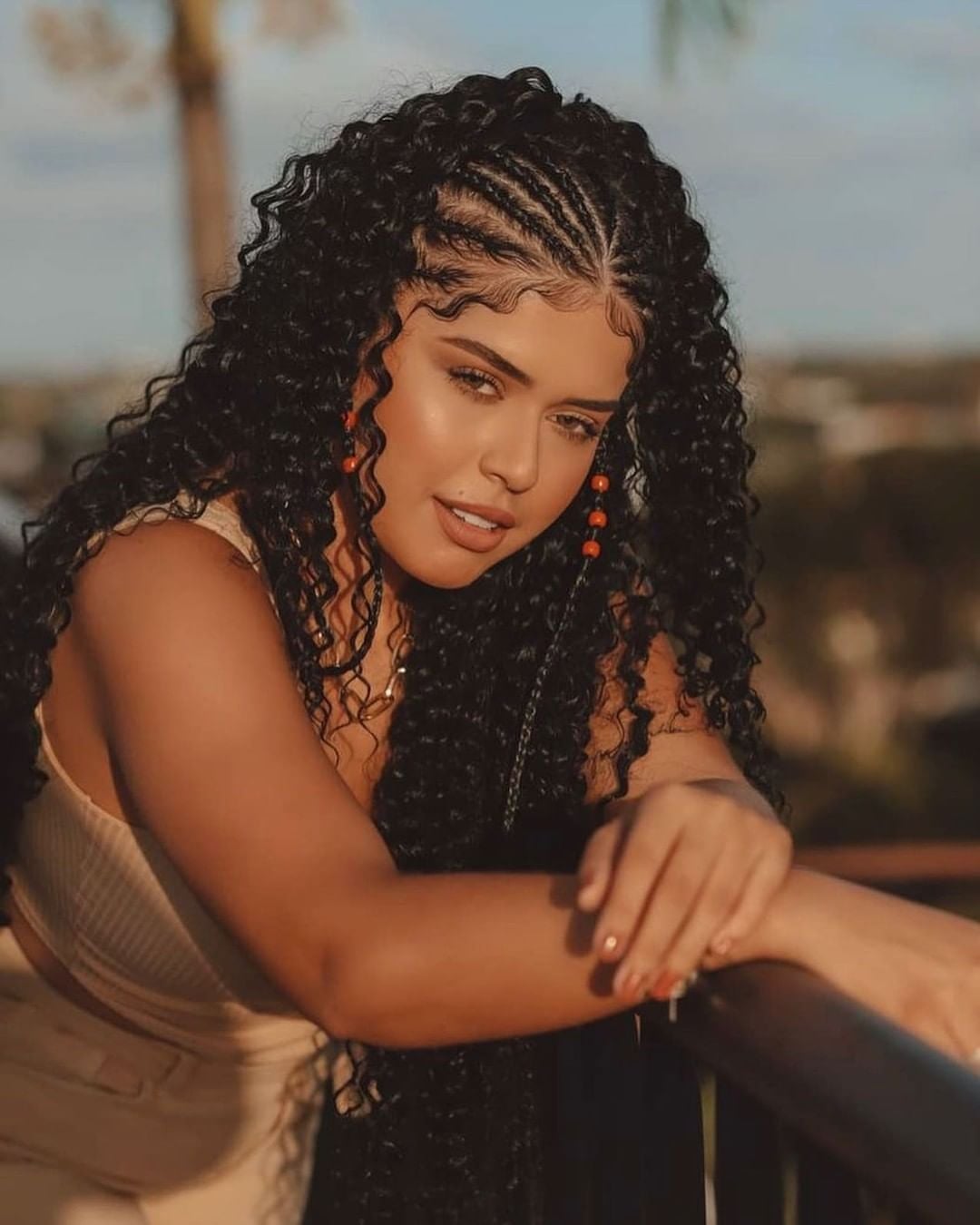
Can a braided style still read as soft and undone? This one answers yes, thanks to curtain bangs that sweep away from the face and a side parting that lets the blonde highlights catch the light. The braids run along the hairline, then give way to long, voluminous curls in black and blonde, creating a contrast that works for both casual weekends and dressier occasions. Ask your stylist for braids with loose curls, curtain bangs, and black and blonde highlights.
Who it genuinely flatters: anyone with thick, curly hair at mid-back length or longer. The curtain bangs soften a square jaw or a round cheek, while the braids keep the hair off the face without pulling everything back tight. If your hair is fine or shoulder-length, the volume at the ends can look top-heavy, so pass on this one unless you have the density to match.
Shoulder-Length Box Braids
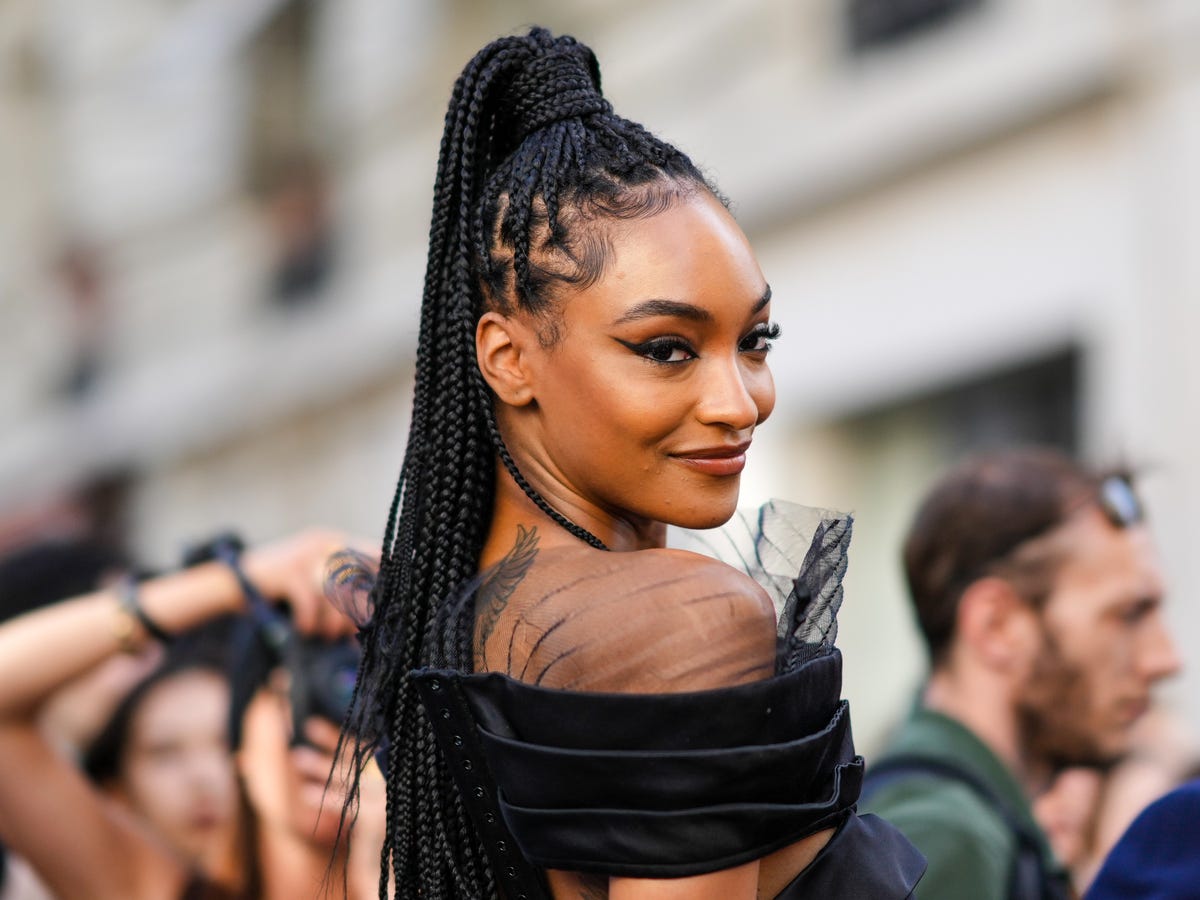
A shoulder-length box braid with a middle part and a blunt cut lands somewhere between practical and polished. The thick, wavy texture keeps each braid from looking too skinny, and the uniform ends mean no stray pieces poking out after a week. Ask your stylist for shoulder-length box braids with a wavy texture. Upkeep is straightforward: apply a light braid balm to the scalp every few days, and expect to refresh the ends with a trim every six to eight weeks as the hair grows and the blunt line softens.
Honey Blonde Box Braids With Curly Ends
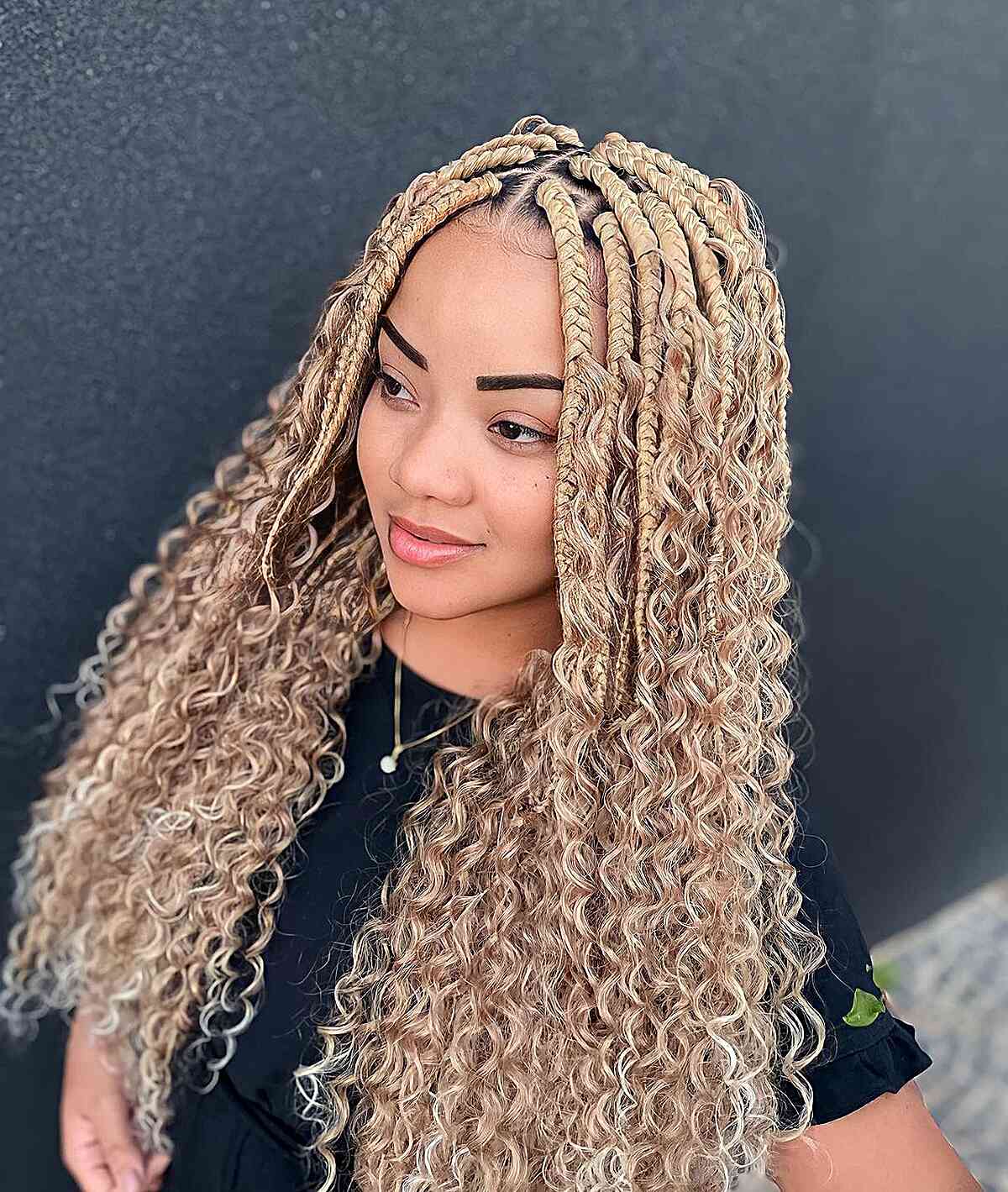
Honey blonde is a warm, dimensional shade that looks natural even on long box braids, and the trick is in the application: a gloss or semi-permanent color over pre-stretched hair, not a heavy bleach that risks damage. The curly ends are added separately, either by dipping the last few inches in hot water or wrapping them around a small rod. Ask your stylist for long honey blonde box braids with voluminous curly ends.
To build the look at the salon, the stylist sections the hair into squares, braids each one from root to mid-length, then curls the remaining strand with a perm rod and steam. The contrast between the sleek braid and the bouncy end is sharp. DIY is not realistic for the full head, but a skilled friend could handle the curling step if the braids are already in place. Expect about three to four hours in the chair for the full install.
Braids and Curls With Baby Hairs
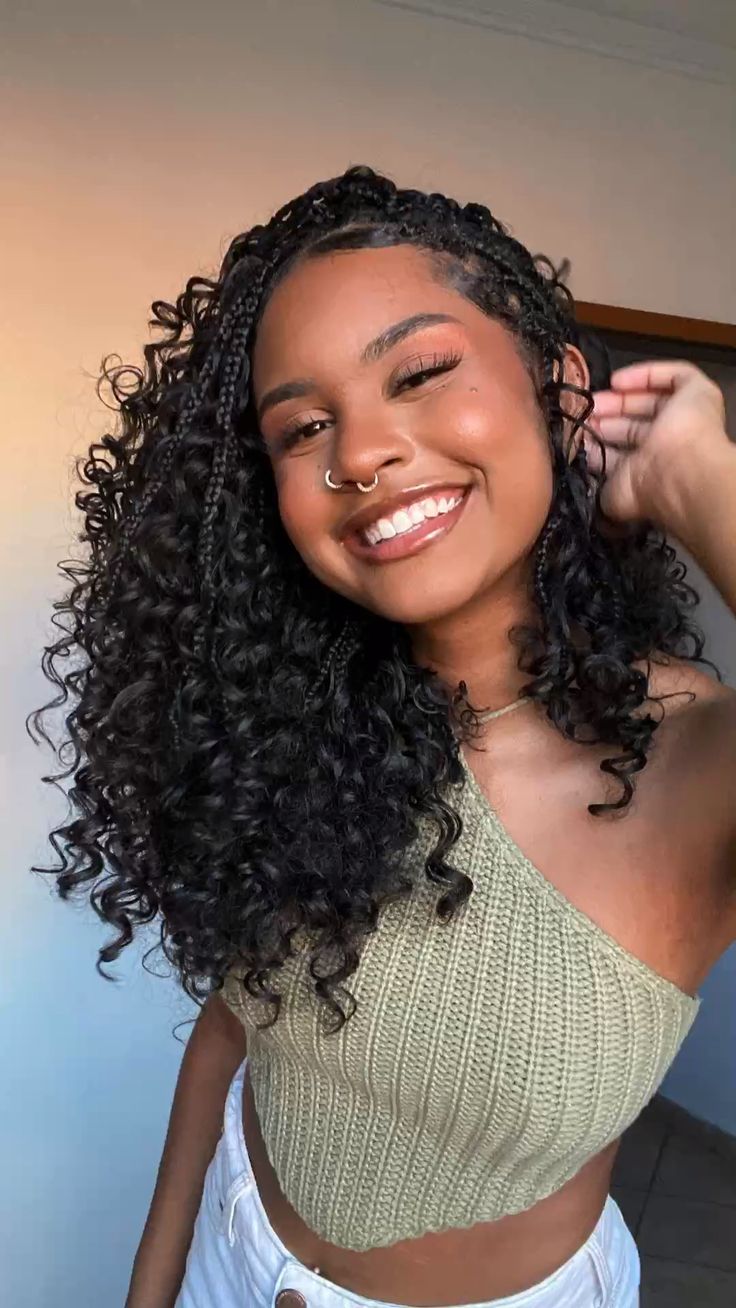
How do you ask for a style that mixes small crown braids with loose, voluminous curls and still looks intentional? Start with the words: braids at the crown with loose curls and baby hairs. The baby hairs are the key detail, brushed forward and curved with a soft gel for a romantic, not rigid, finish. Ask your stylist for braids at the crown with loose curls and baby hairs. The baby hairs need re-styling daily if you want them to stay swooped, and the curls at the shoulder can lose definition after two days without a refresh.
Bohemian Braids With Voluminous Curls
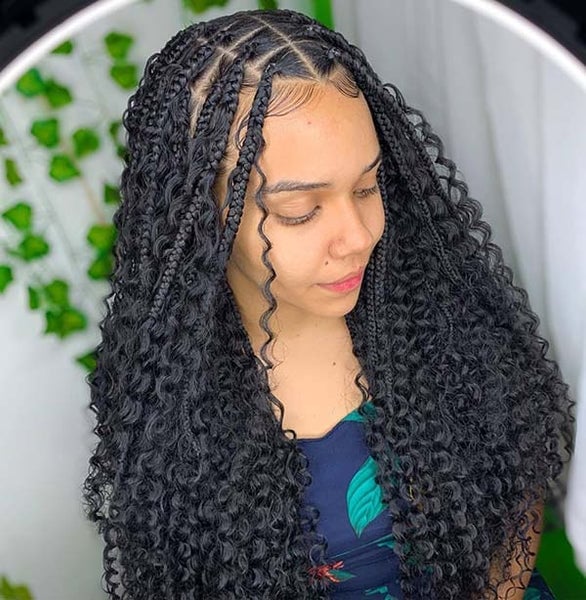
These aren’t your standard, uniform box braids. The voluminous curly ends and loose, side-swept strands give this style a lived-in, free-spirited feel that reads as more undone than a sleek, straight braid. The side parting and thick, black texture work for most face shapes, though the volume at the sides is especially good for balancing a long face.
Ask your stylist for: long bohemian braids, voluminous curly ends, side-swept framing pieces. The look relies on a generous amount of extension hair at the ends to create that bouncy curl. A curl-enhancing mousse applied to the ends after installation keeps the definition from dropping. This is a salon-only job, given the technique required for the bohemian braiding pattern and the loose curls.
Goddess Braids With Dark Brown and Blonde Highlights
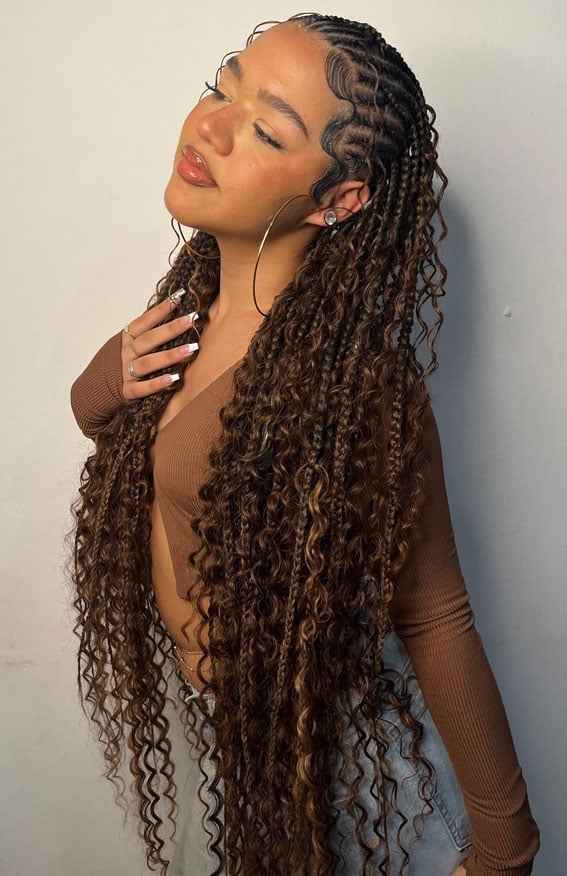
Ask your stylist for: long goddess braids, dark brown base with blonde highlights, wavy and curly texture. The upkeep is moderate: you will want to use a light-hold styling cream to keep the curly ends defined and the scalp braids neat. Plan for a toner refresh on the blonde highlights every six to eight weeks to keep the brassiness at bay. The length means this style holds its shape well for several weeks with proper care.
Mid-Back Wavy Braids
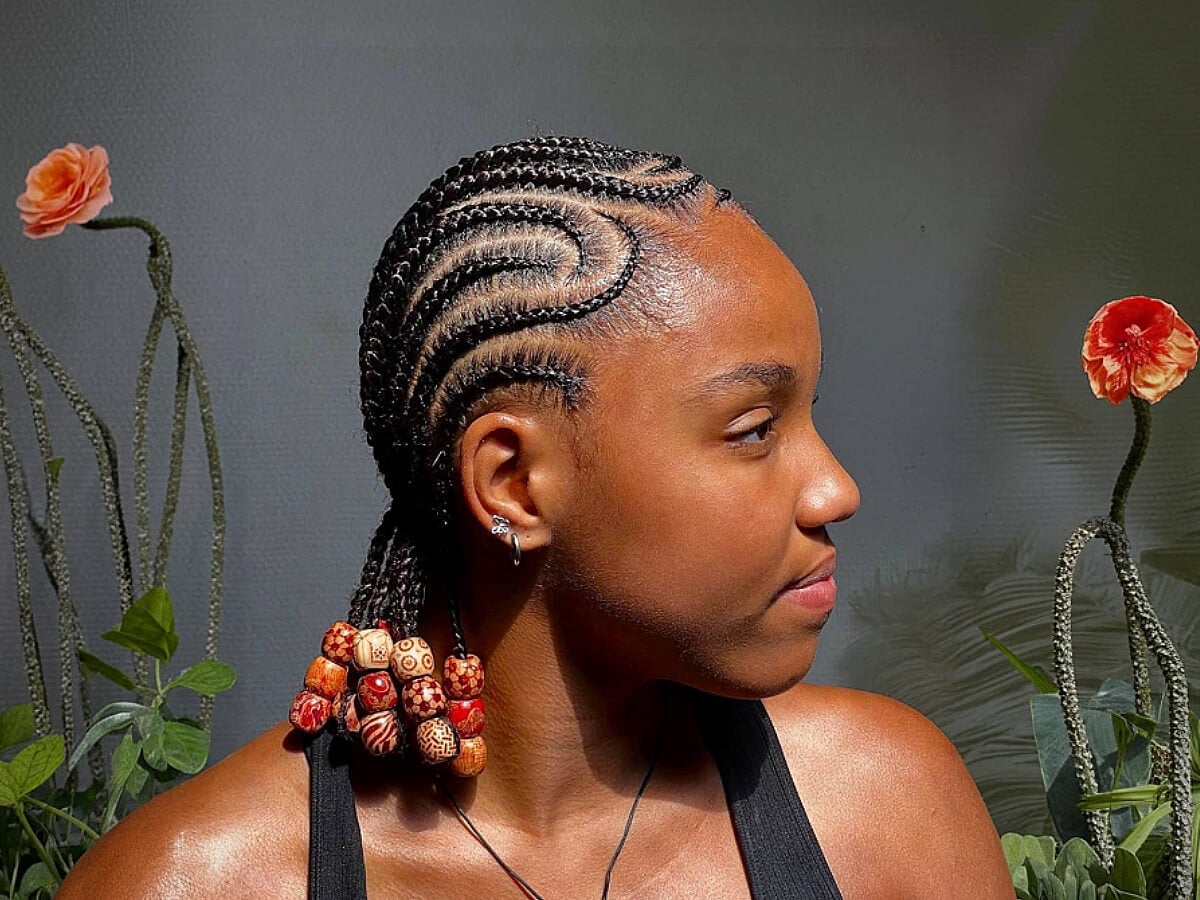
A clean middle parting sets the foundation for these thick, mid-back length braids. The wavy texture is achieved by braiding the hair with a slight twist or using a specific wrapping technique during installation. This creates a uniform, wave-like pattern that runs the full length of each braid.
Ask your stylist for: mid-back length wavy braids, thick texture. The side view in the photo shows how the braids maintain their shape without frizz. A braid sheen spray applied lightly will enhance the wave pattern and add a polished gloss. This is a salon-only style, and the technique requires a steady hand to keep the wave consistent from root to tip.
Large Box Braids With Coily Curly Ends
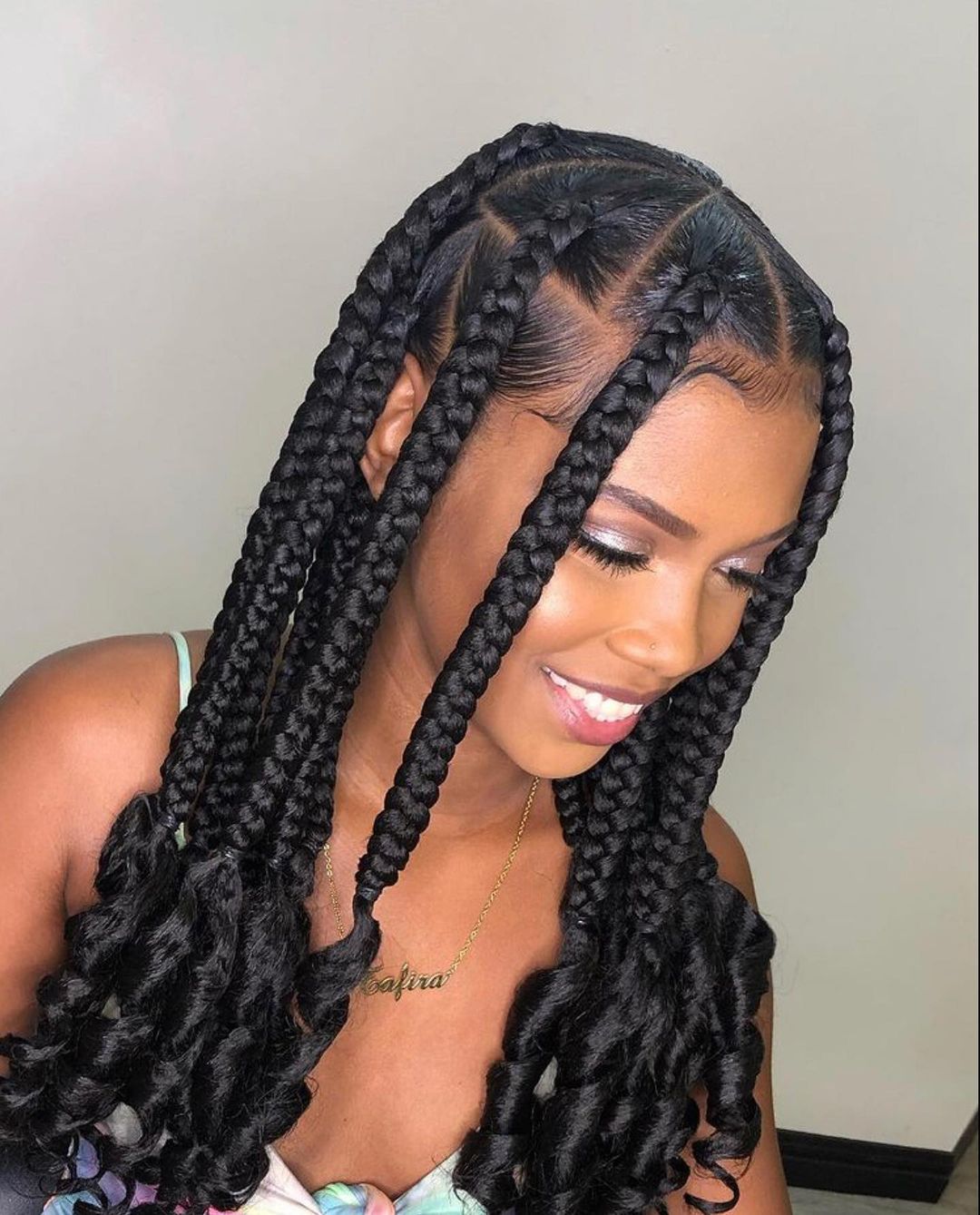
Who should consider this style? Anyone with medium to thick hair who wants a bold, textured look that makes a statement without requiring daily effort. The large box braids with a middle parting are substantial, and the coily curly ends add volume and movement that a straight end cannot. The black color and glossy finish give it a polished feel. Ask your stylist for: large box braids, mid-back length, coily curly ends. A curl-defining cream on the ends will keep the coil defined and the bounce intact. The middle part is a safe bet for most face shapes, as it draws the eye vertically.
Large Box Braids With Wavy Ends
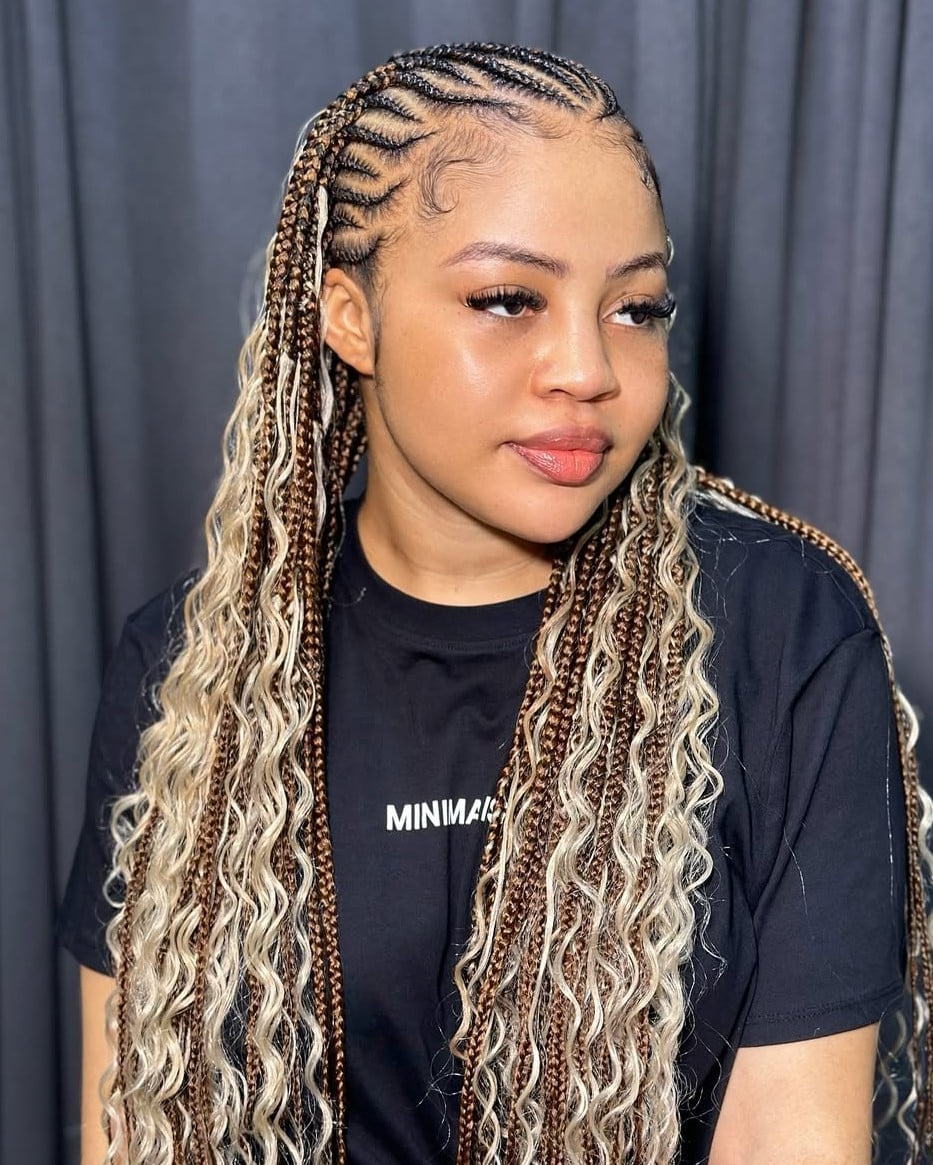
The large box braids here are defined by their thick, wavy texture that extends from root to the loose, wavy ends. Ask your stylist for: large box braids, mid-back length, wavy curly ends. Be specific about wanting the wavy pattern to be uniform, not just a few curls at the bottom. This style requires a salon visit; the braiding technique for large sections needs even tension to keep the braids from looking lumpy. A light mist on the wavy ends will enhance the definition without weighing them down.
Chin-Length Box Braids Bob With Auburn Highlights
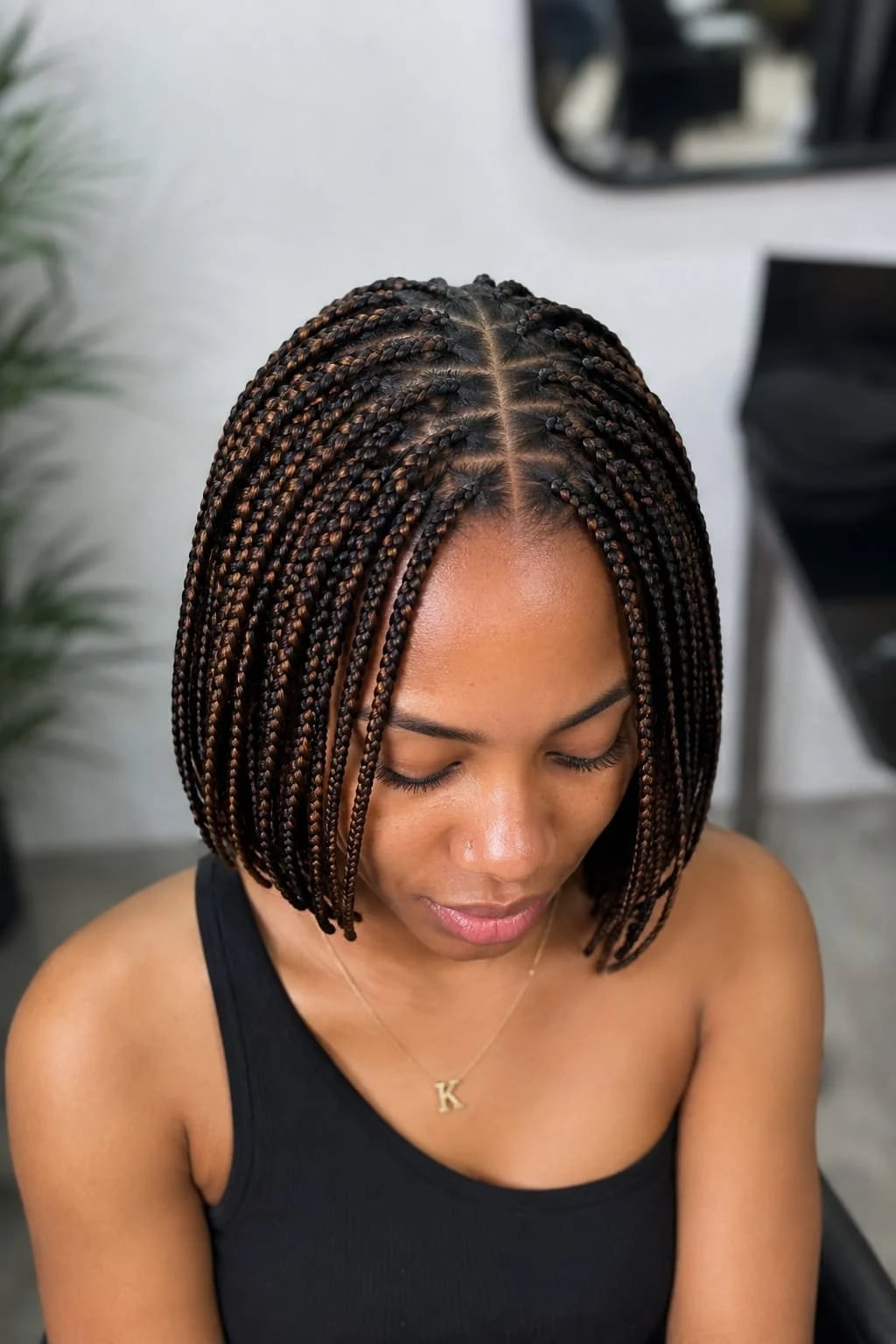
A chin-length box braids bob in dark brown gets a subtle lift from auburn highlights woven through the strands. The middle part keeps it symmetrical, while the shorter length makes it a practical choice for fine to medium density hair that wants a protective style without the weight. Ask your stylist for a chin-length box braids bob with subtle auburn highlights. A color-safe shampoo keeps those warm tones from turning brassy, and a trim every six to eight weeks maintains the bob’s clean line.
Long Box Braids With Loose Voluminous Curls
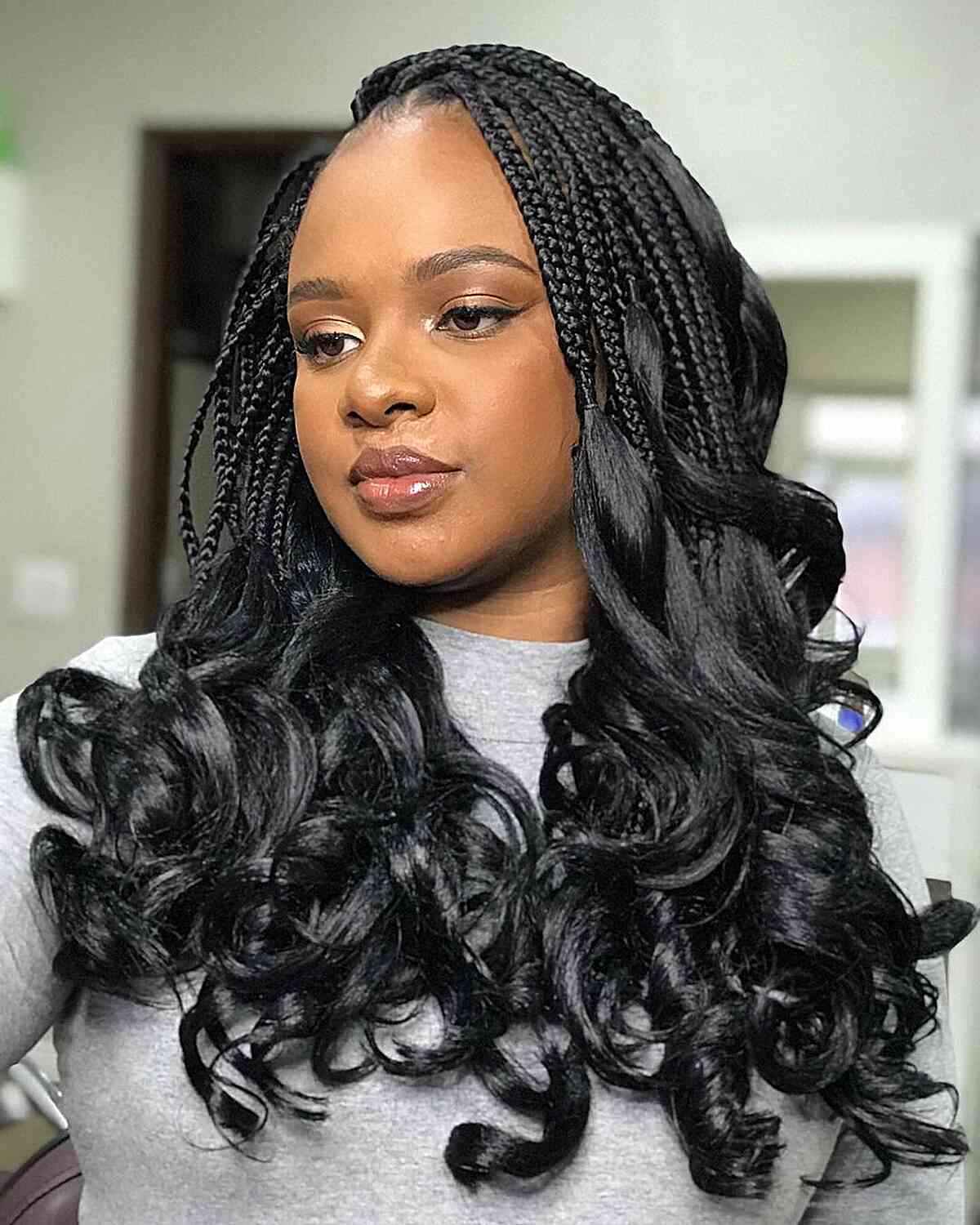
Long black box braids that drop to mid-back are only half the story. The other half is the loose, voluminous curls at the ends. That transition from structured braid to free-flowing curl creates a full silhouette that works best on medium to thick hair of long length. Ask your stylist for long box braids with loose voluminous curls. The hold depends on how you treat those curls: a curl-defining cream applied to the ends and scrunched gently keeps them bouncy, while a satin scarf at night prevents the curls from flattening. Expect to refresh the curl pattern every few days with a light mist of water.
Fulani Braids With Decorative Cornrows
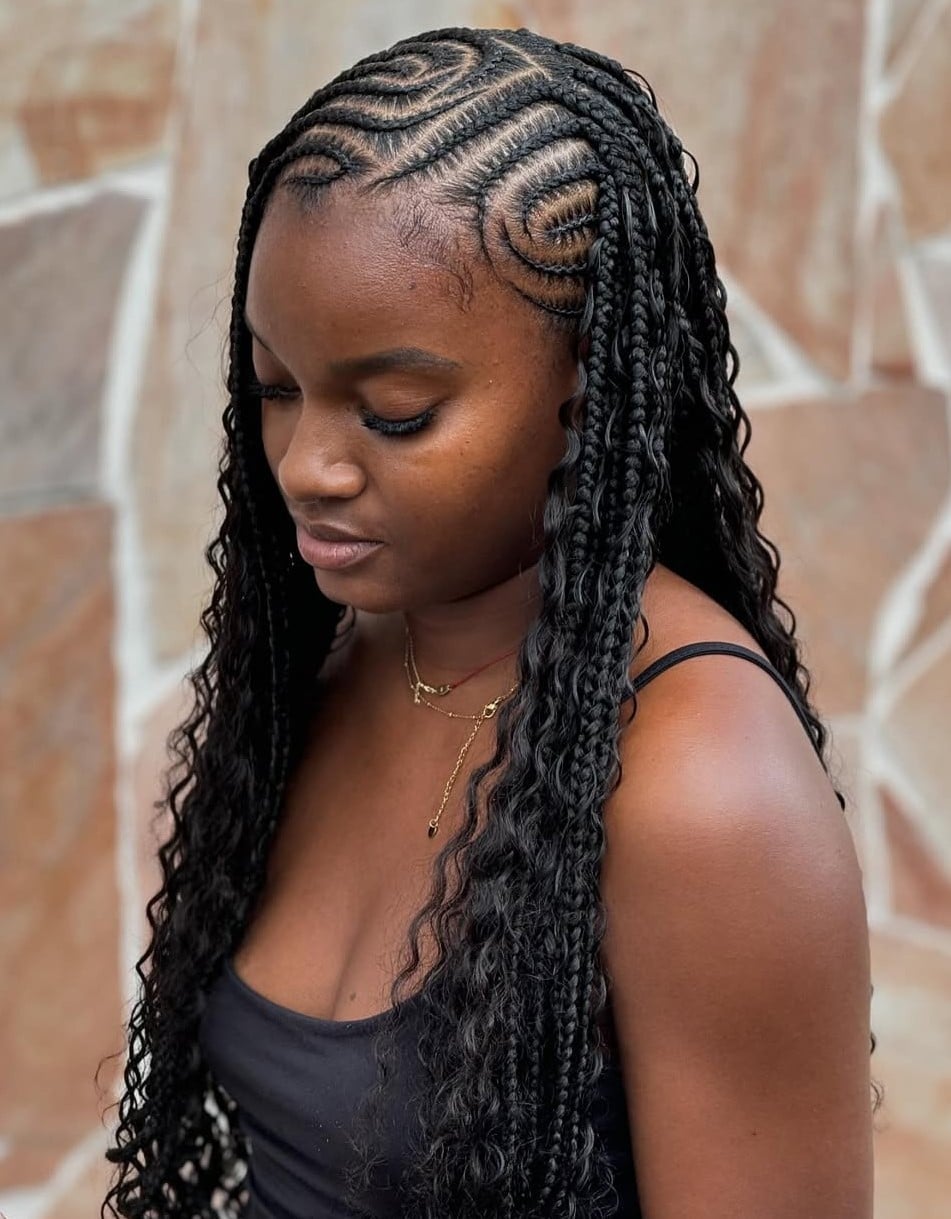
The defining detail of Fulani braids is the central parting, but the real technique is in the decorative cornrows that trace along the hairline. Those cornrows are braided flat against the scalp, while the hair falls in long braids with a wavy and curly finish. Ask your stylist for Fulani braids with decorative cornrows and wavy curly ends. The subtle highlights add depth to the black base, and the pattern draws the eye without needing any extra accessories. This style requires a steady hand and a clear reference photo.
Chin-Length Box Braids With Curly Ends
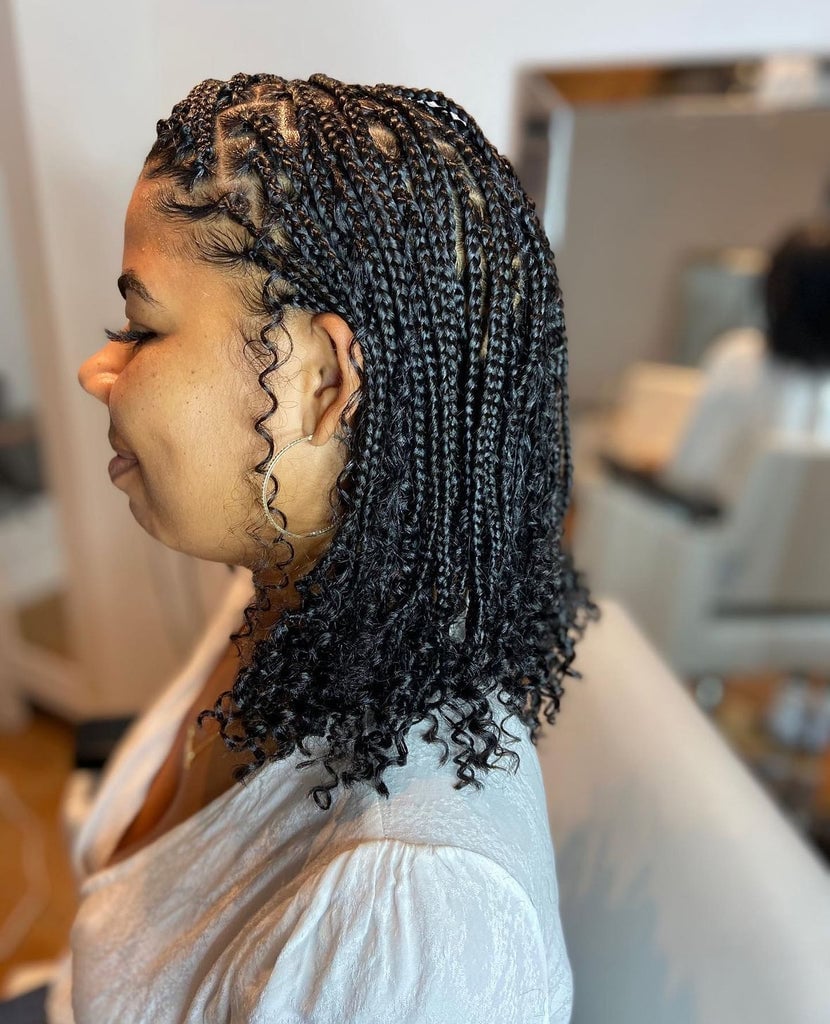
Can a short box braid still feel playful? Yes, when the ends are curled. This chin-length style in uniform black uses a side part to add volume on one side, and the curly tips keep it from reading as too severe. Ask your stylist for chin-length box braids with curly ends and a side parting. It suits fine to medium hair that wants a neat, low-maintenance shape, but the trade-off is that the shorter length means less styling flexibility once it’s done.
Short Box Braids With Curtain Bangs
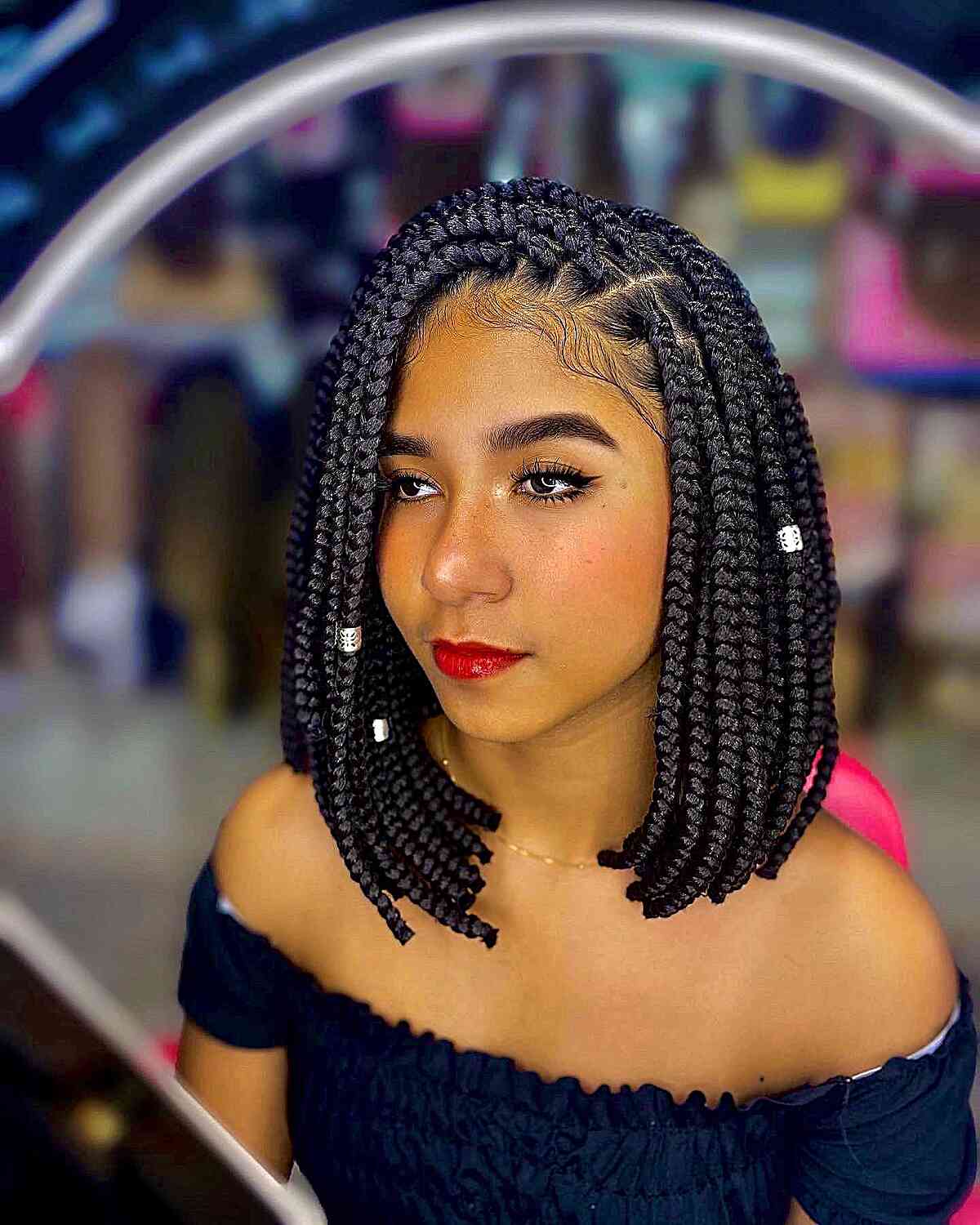
Short box braids at shoulder length meet curtain bangs, and the combination softens the whole silhouette. The bangs sweep away from the face, which makes the style feel lighter than a straight-across fringe. Ask your stylist for short box braids at shoulder length with curtain bangs. This style requires a salon visit. The bangs need to be braided at the correct angle, and a DIY attempt risks uneven lengths. The straight texture keeps the look polished without extra effort.
Collarbone Box Braids With Caramel Highlights
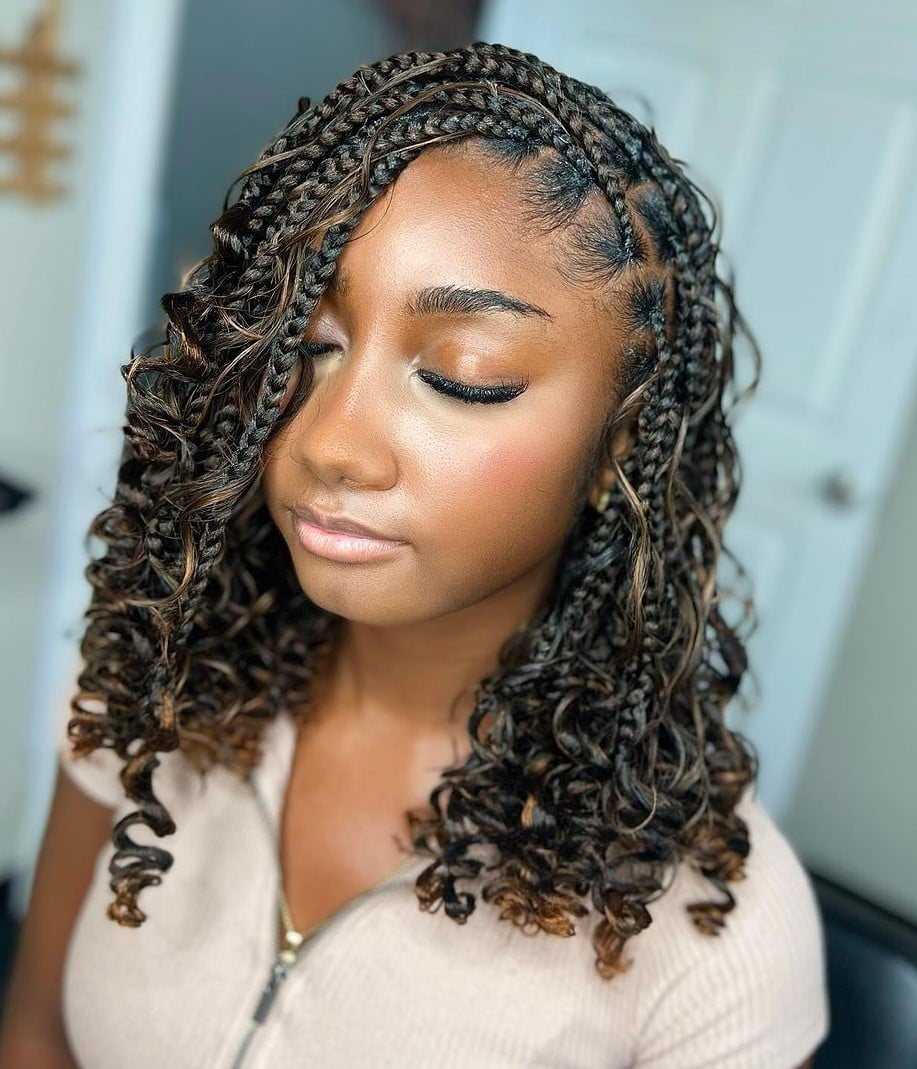
The caramel against the dark brown creates contrast that a single flat shade cannot. These collarbone-length braids mix wavy and curly textures, so the ends move separately instead of clumping into one solid block. The side parting lets those face-framing curls land where they soften the hairline, and the dimension works best on hair that can carry the extra visual weight. Ask your stylist for collarbone length box braids, dark brown with caramel highlights, face-framing curls. A gloss treatment every six weeks refreshes the highlight’s warmth.
Braids and Twists With Long Curly Extensions
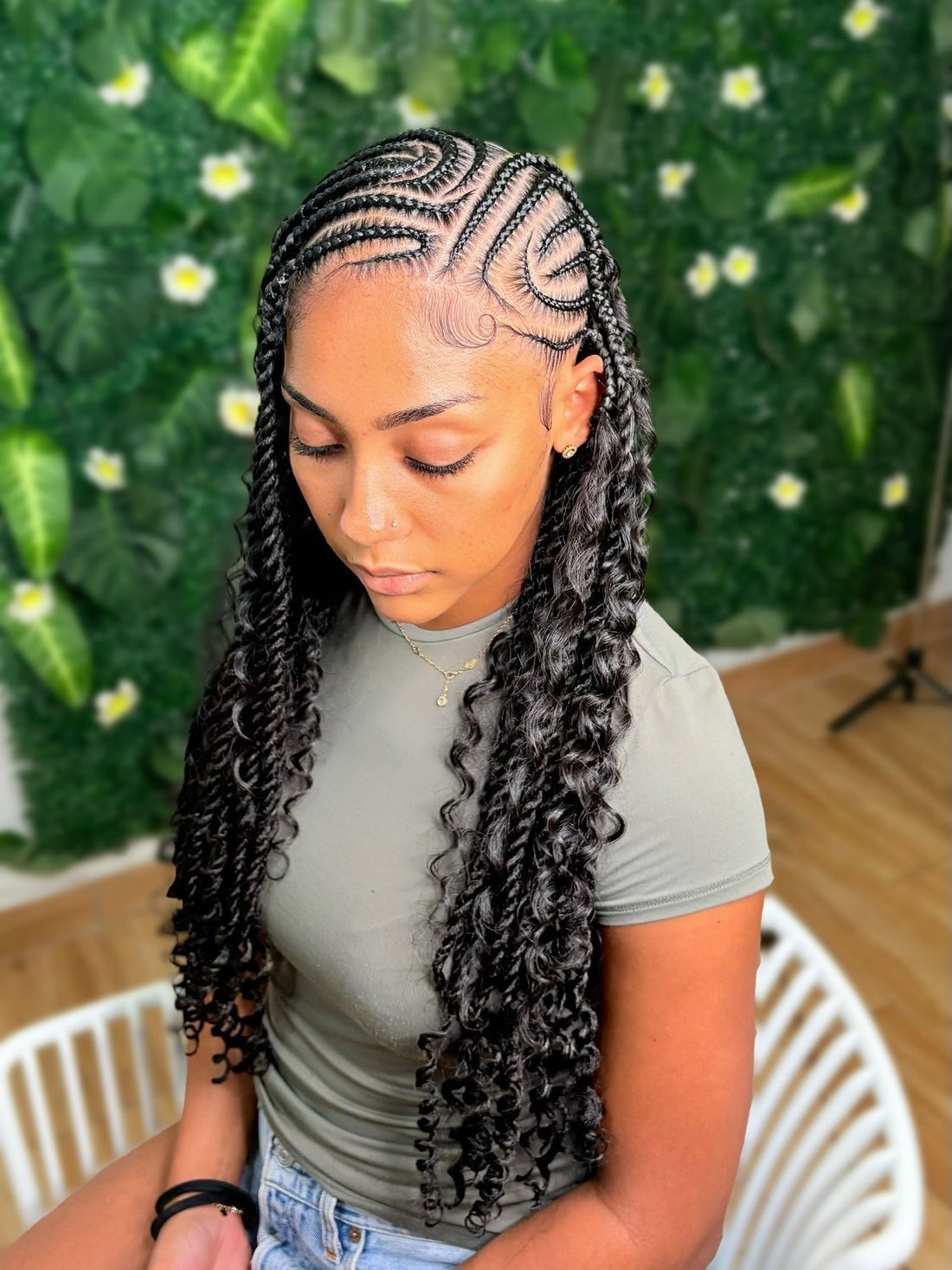
The crown switches between braids and twists, then the whole thing spills into long, black curly extensions that move like they have somewhere to be. It is a lot of technique in one style, and the intricate front patterns give it a ceremonial quality. The baby hairs soften the hairline so the density does not feel severe.
This one is built to hold, but it needs attention. The extensions will stay curly and voluminous for weeks if you apply a curl cream to them and keep the roots moisturized. A light-hold hairspray on the front patterns keeps them crisp, and sleeping on a silk scarf keeps the whole construction intact by week two. Give yourself a full salon day for this one, because the combination of techniques takes time.
Shoulder-Length Tribal Braids
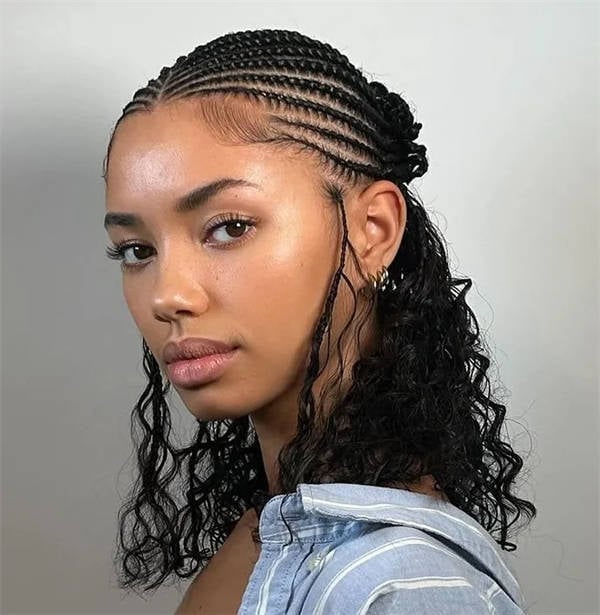
The pattern is the point here, and it is laid out with a precision that makes the scalp look like a map. These tribal braids sit close to the head in thick, black sections, then drop into a shoulder-length curtain of uniform texture. The clear middle parting keeps the geometry honest, and the straight, thick braids hold their shape without any coaxing. Ask your stylist for shoulder-length tribal braids, neat pattern. Medium to thick hair takes the scalp tension best, and the shoulder length keeps it practical for everyday wear. A scalp oil along the parts prevents the tightness from turning into dryness.
Dense Box Braids With Blonde and Brown Highlights
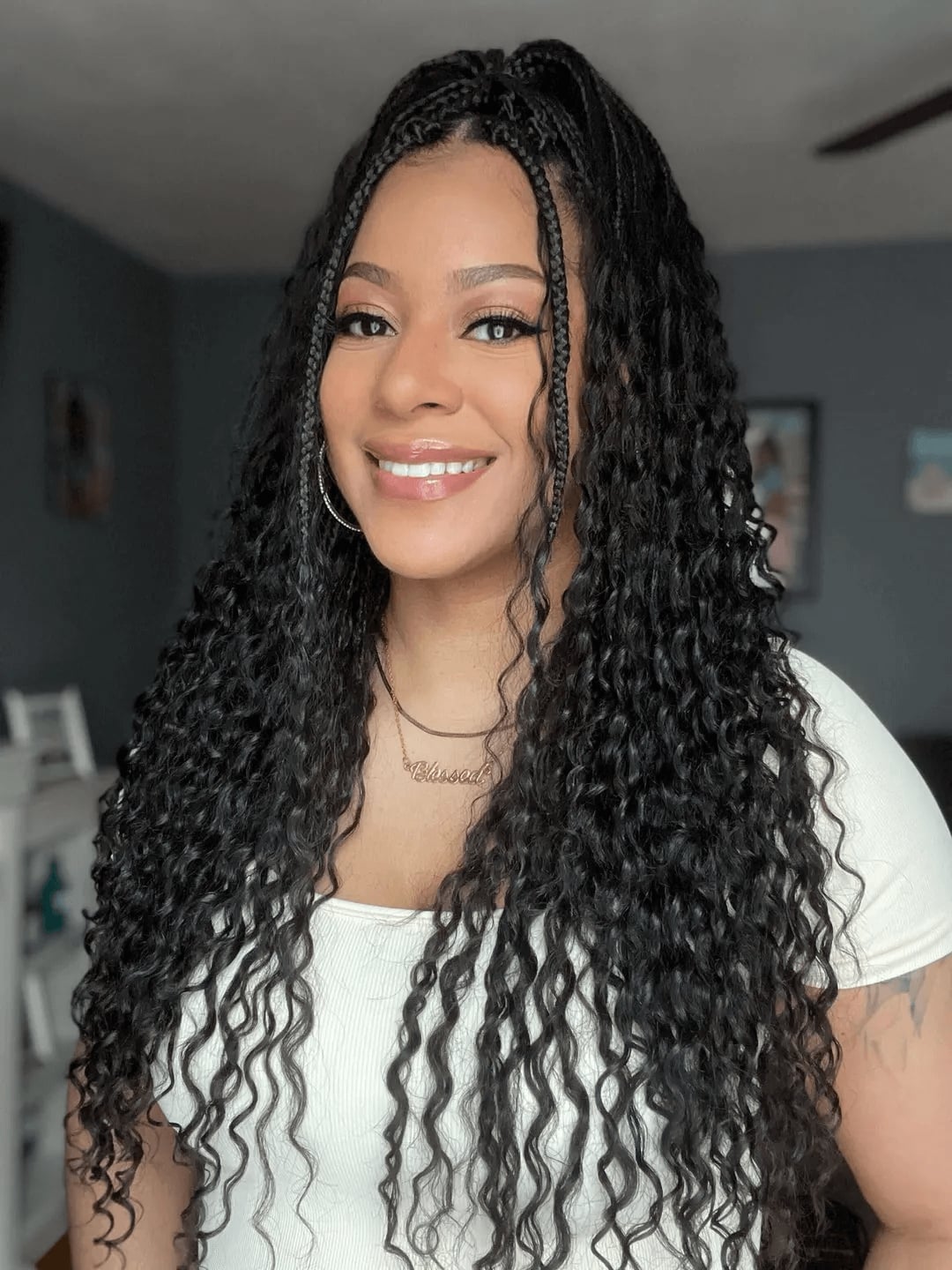
Can dense braids still have movement? Yes, when the ends go wavy and the color has somewhere to catch. These mid-back box braids are packed tight at the root, which gives them real weight, but the blonde and brown highlights break up the mass so it does not look like one solid curtain. The middle parting lets the color contrast show evenly on both sides.
This style suits fine, wavy hair because the density creates volume that natural texture might lack, and the highlights add the dimension that a single dark shade would not. Ask your stylist for dense box braids, mid-back length, blonde and brown highlights, wavy ends. The honest drawback is the weight: dense braids at this length pull on the scalp, so if your hair is fine at the root, you might feel it by the end of the day. A lightweight serum on the ends keeps the wave defined without greasing the braids.
Long Flowing Knotless Braids
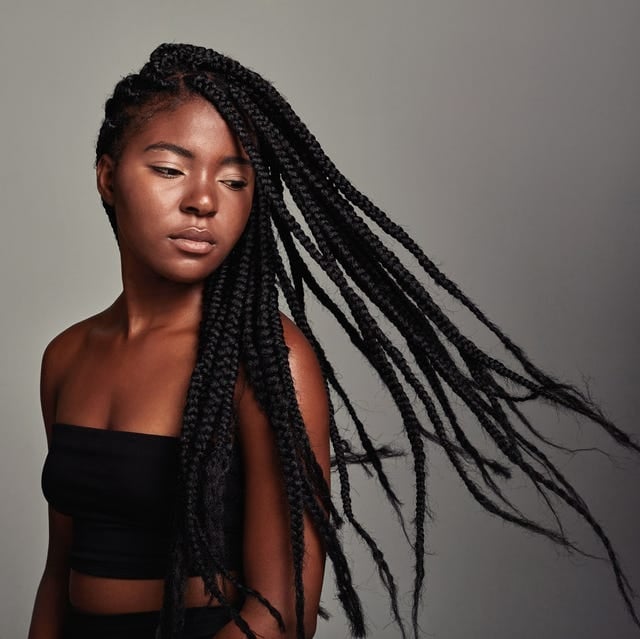
The knotless technique starts each braid with your own hair, so there is no bulky knot at the root. These black braids are uniformly thick and extend well past the shoulders, and the clean middle parting keeps the whole thing looking deliberate. Ask your stylist for long knotless braids, flowing style, clean middle part.
This is a salon-only build, because the knotless method takes longer than traditional box braids and requires a steady hand to keep the thickness even. The style feels lighter at the root and drapes instead of sticking straight out. Medium to thick hair of long length gets the best movement, and a lightweight sheen spray keeps the black color glossy. If you want the flow, ask for braids that are not pulled too tight at the scalp.
Fulani Braids With Intricate Patterns
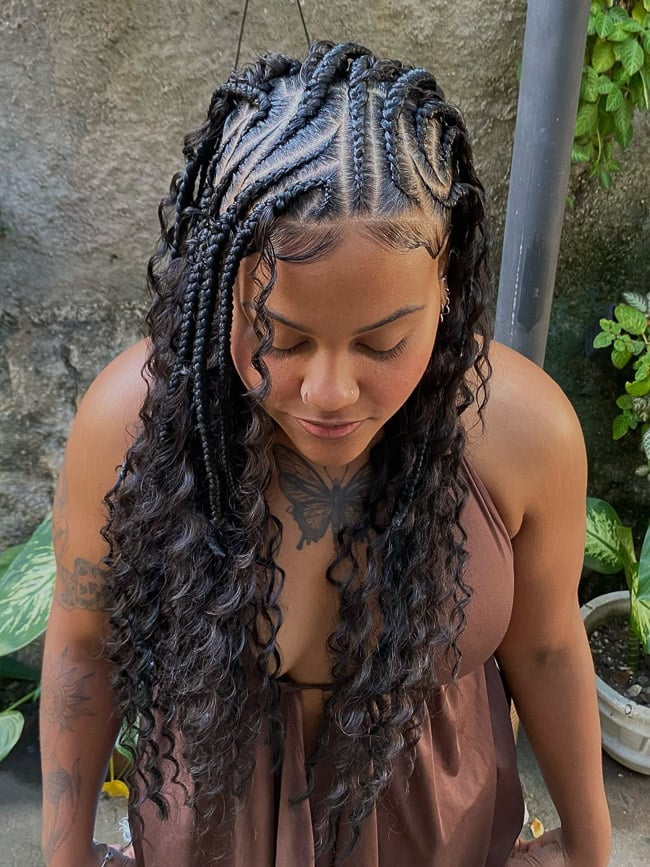
Fulani braids are the opposite of a one-and-done style, with intricate scalp patterns that demand a second look. The mid-back length braids transition into loose, voluminous curly ends, and a middle parting keeps the design symmetrical. Thick, curly hair takes the pattern best, since the dense texture holds the lines sharp. Ask your stylist for: Fulani braids, intricate scalp patterns, mid-back length, curly ends. A braiding balm smooths the scalp sections; a curl-defining cream on the loose ends keeps them from frizzing before the day is half over.
The real difference between Fulani braids and a simpler cornrow style is the level of detail. This is not a quick in-and-out install, but the intricate pattern requires careful sectioning and a steady hand. If you want a protective style that looks carefully planned, this is the one.
Geometric Braided Shoulder Length Style
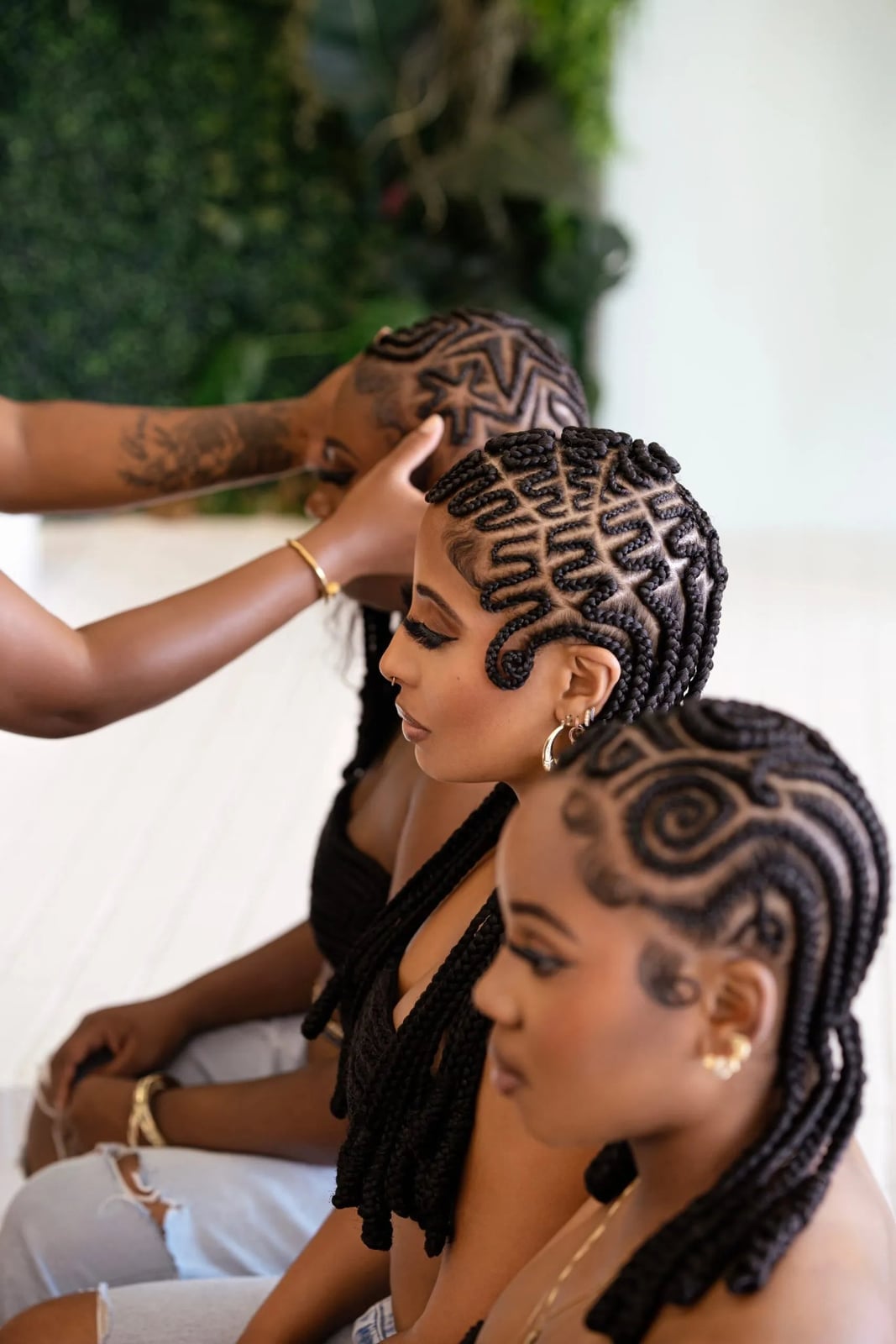
A side parting and a side-swept bang add a soft counterpoint to all those straight lines. Medium to thick hair holds the geometric patterns best, since fine hair can blur the edges. Ask your stylist for: geometric braids, shoulder length, side parting, side-swept bang. The side-swept bang needs a light-hold gel to stay smooth, and the geometric sections will loosen slightly after a few weeks, so plan a touch-up if you want the lines crisp for longer.
Heart-Shaped Cornrow Bun
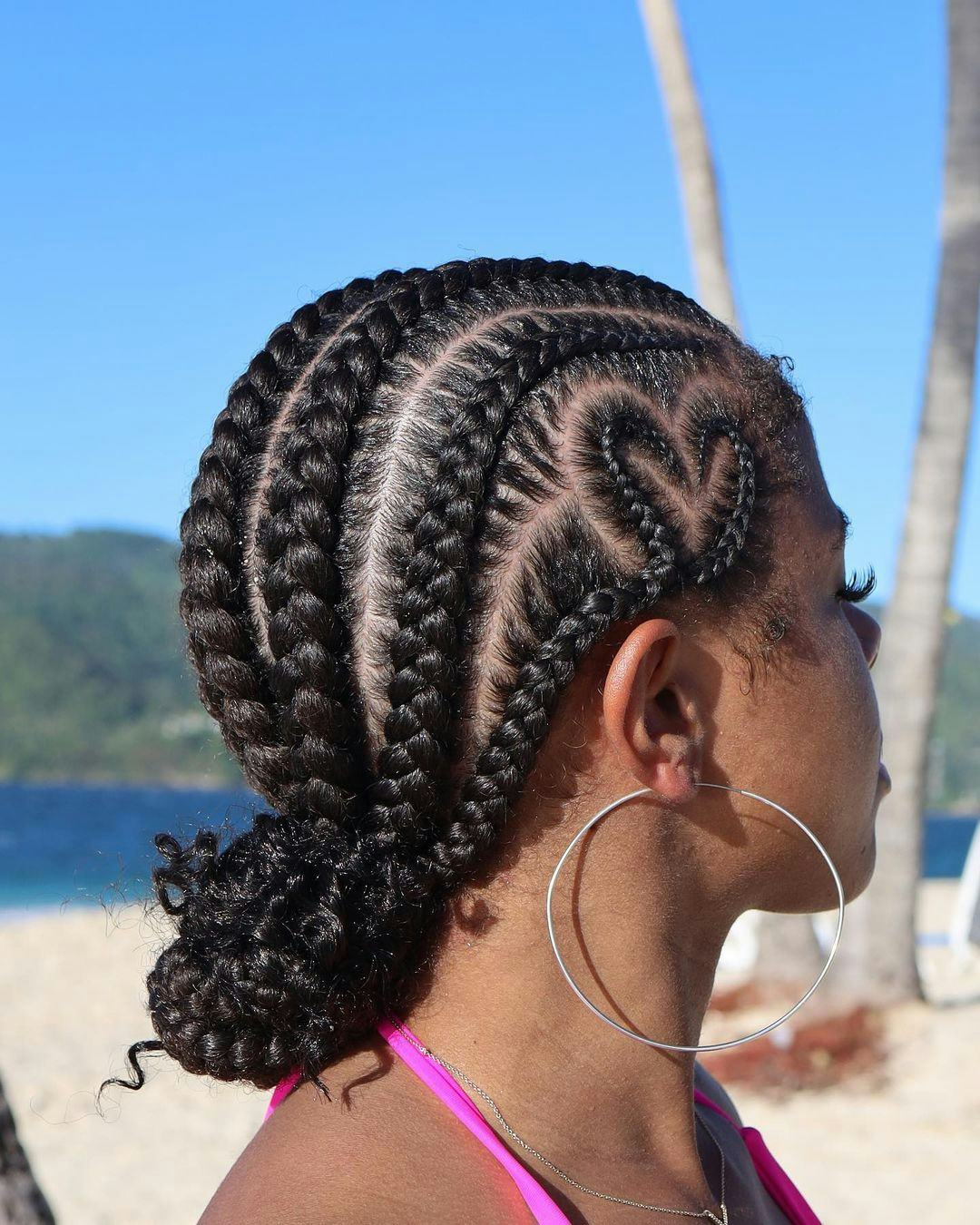
A heart-shaped cornrow pattern on the scalp is not a happy accident, it is a deliberate piece of technical work. The cornrows start at the hairline, curve inward to form the heart, and feed into a neat braided bun at the nape. Thick, coily hair is the ideal canvas here, since the texture grips the cornrows and keeps the shape from shifting. Ask your stylist for: heart-shaped cornrows, braided bun at nape. The stylist parts the hair into the heart outline first, then cornrows each section toward the center, gathering everything into the bun. Edge control smooths the baby hairs around the heart, and the bun is secured tightly to hold the whole structure in place.
This is a style that works best for an event where people will actually see the back of your head. The heart shape is the kind of detail that gets noticed, and it stays put all day.
Cornrows to Loose Curly Braids
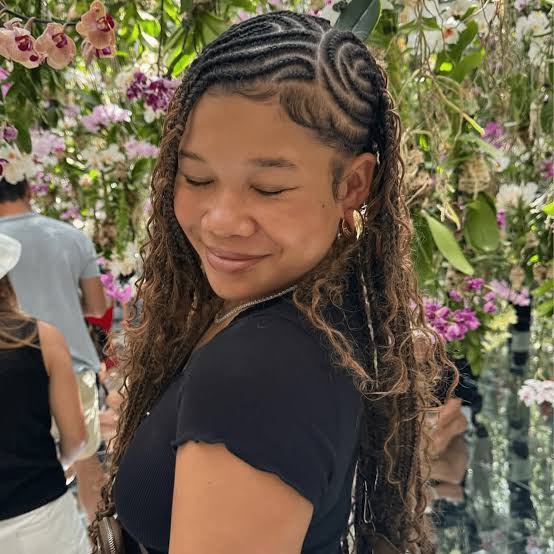
Can you get the protection of cornrows without sacrificing texture? Yes, if you let them transition into loose curly braids. The cornrows stay neat at the scalp, and the shoulder-length braids below are left loose and curly, adding volume and movement. Medium to thick curly hair is the natural fit here, since the loose braids need weight to hold their shape and not turn into a puff. Ask your stylist for: cornrows transitioning to loose curly braids, shoulder length. A middle parting keeps the transition balanced, and a curl-defining cream on the loose sections keeps the texture defined without crunch.
Long Box Braids With Square Parting
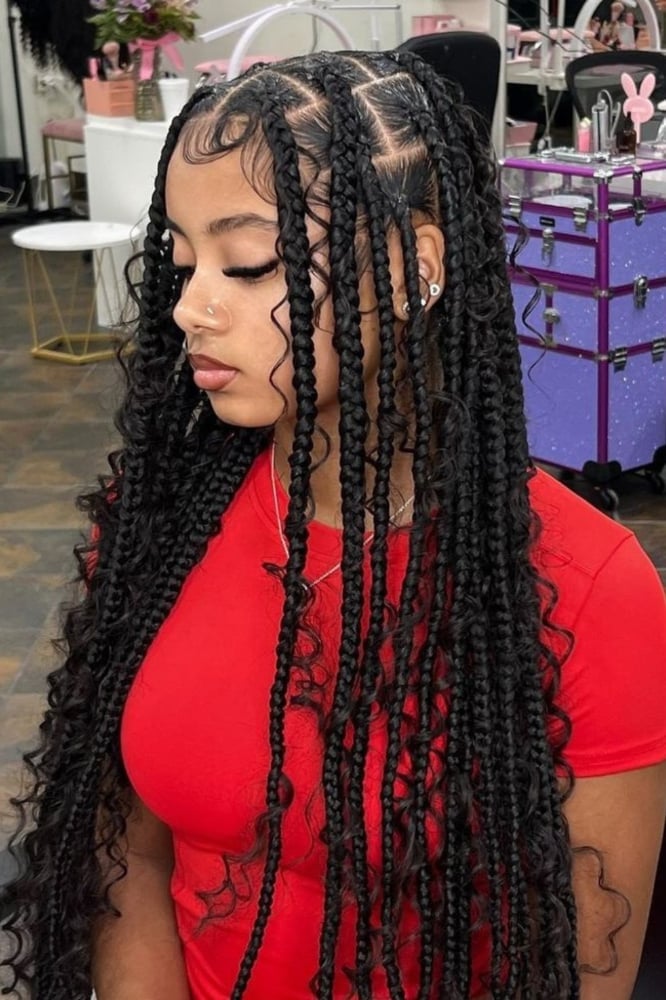
A square parting turns a standard box braid install into something with actual structure. The partings are clean, geometric squares across the scalp, and the long braids fall with a curly texture and loose curly ends that keep the look from feeling too rigid. Medium to thick hair takes the square parting best, since the sections need enough density to stay defined. Ask your stylist for: long box braids, distinct square parting, curly ends. This is a salon-only request, because the parting requires precision that is hard to replicate on yourself. A curl cream on the ends maintains the texture, and the square parting stays sharp for a few weeks before the new growth softens the lines.
Cornrows and Twists Mid-Back Length
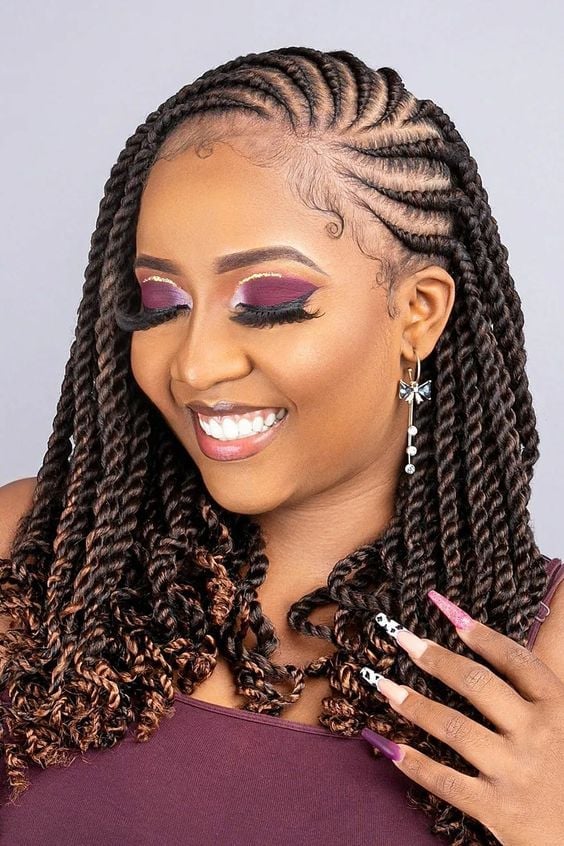
Intricate cornrows hug the scalp before transitioning into long, twisted braids that fall to mid-back. This design suits medium to thick hair that can support the blend of precise scalp work and looser, flowing texture. Ask your stylist for: cornrows and twists, mid-back length, dark brown with highlights. A braiding balm keeps the scalp cornrows smooth and frizz-free, while a texturizing spray on the twists adds definition without weighing them down. Compared to all-over knotless braids, the scalp cornrows here demand more time in the chair but deliver a sharper, more graphic look that holds its shape for weeks.
Braids With Beads and Wavy Ends
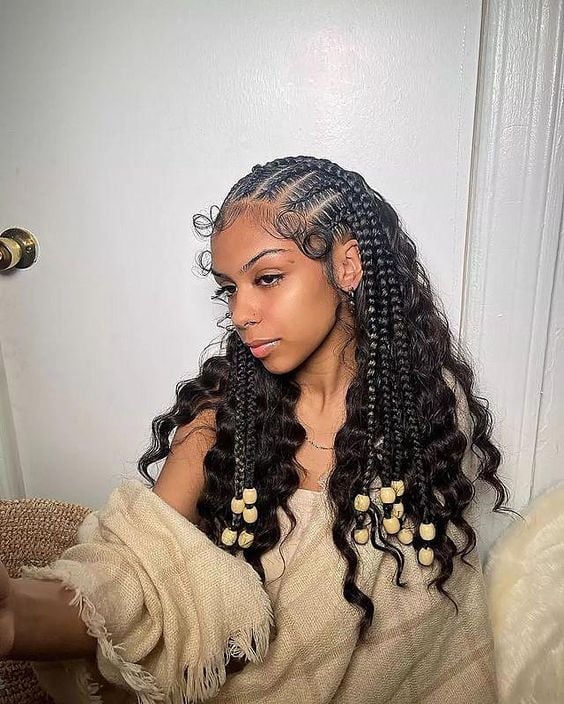
Black hair with subtle blonde highlights is sectioned into medium-sized braids that end in loose, wavy curls, each adorned with wooden beads. This style works well on medium to thick hair where the beads have enough grip to stay put. Ask your stylist for: braids with beads, mid-back length, wavy ends. The beads add a tactile element, but they do require checking regularly for secure attachment. A light serum on the wavy ends prevents frizz and keeps the curl pattern defined. Expect to refresh the baby hairs at the hairline every few days with a soft-edge brush to maintain that face-framing finish. The honest drawback: the beads can clink against each other, so quiet settings are not this style’s natural habitat.
Final Thoughts
For a low-maintenance but polished look, stick with uniform box braids or knotless braids. If you prefer intricate patterns or loose ends, plan for a touch-up every few weeks to keep the shape sharp and frizz at bay.
- Trim loose ends every 4-6 weeks to maintain shape.
- Apply a light-hold mousse or braiding spray daily for shine and control.
- Sleep with a silk or satin bonnet to protect braids from friction.
- Moisturize scalp with a light oil or serum every few days.
Braids offer a canvas for creativity, from simple to complex.
