

Blonde highlights on dark hair create a contrast that is hard to ignore, and the 2027 version leans into lived-in color and soft, face-framing placement. Expect a shift away from heavy, chunky stripes toward pieces that move with your natural texture.
This collection of 37 ideas covers the spectrum, from bold, high-contrast money pieces to barely-there baby lights that grow out gracefully. It is for anyone with a dark base who wants dimension without a harsh re-growth line, or for fine hair that needs a visual lift. Blonde Highlights on Dark Hair work across lengths and densities, as long as you are honest about the upkeep.
Black Base With Bold Blonde Highlights
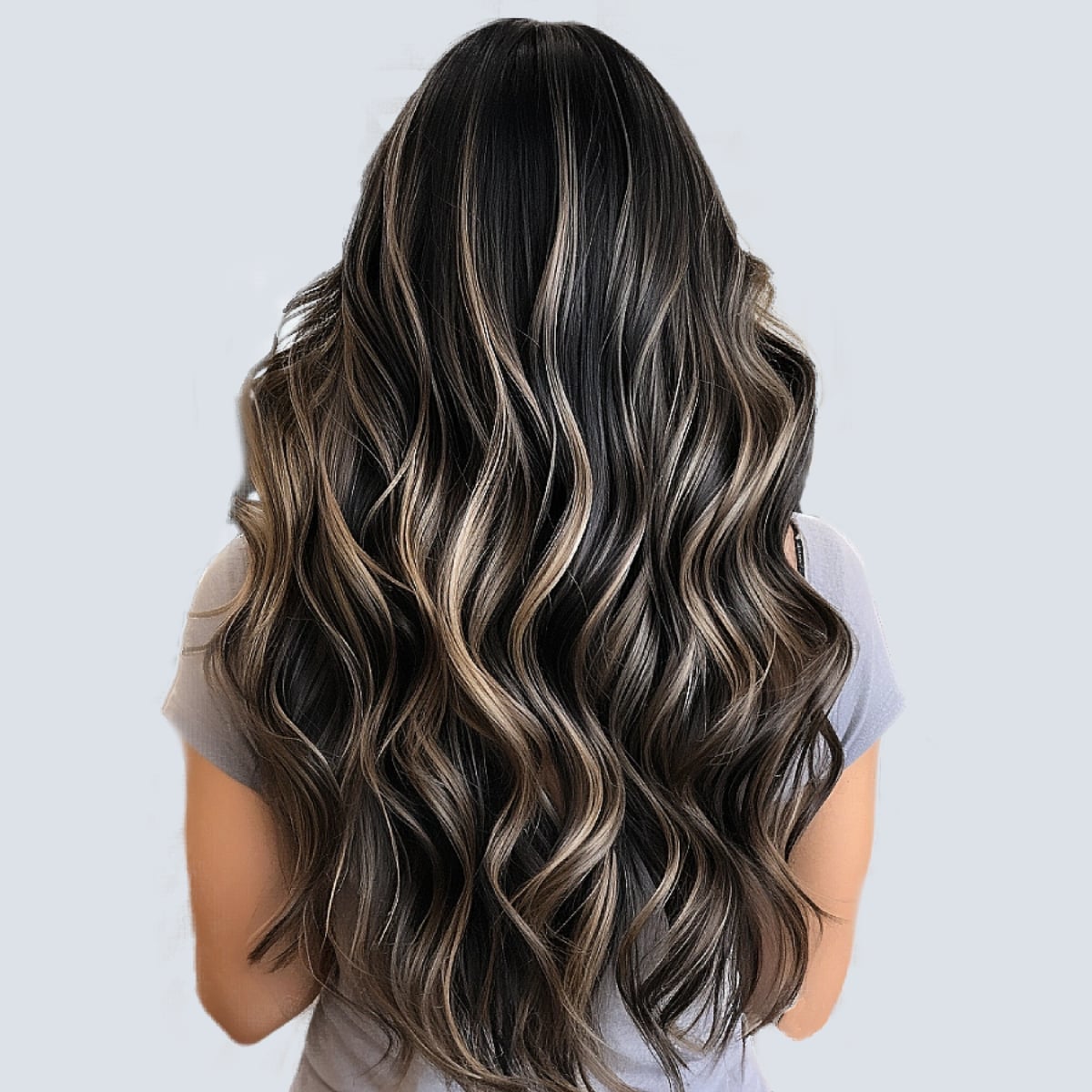
A black base with bold blonde highlights is less a color choice and more a declaration of intent. The back view of this mid-back length cut shows the full density of thick, wavy hair, where each blonde piece reads as a deliberate, high-contrast statement against the deep black. This works best on hair that is naturally thick enough to carry the weight of the contrast without looking sparse.
Ask your colorist for: bold blonde highlights on a black base. The layers in the cut give the waves structure, so the highlights have somewhere to land and catch light. A texturizing spray helps keep the definition between the dark and light sections, rather than letting them blur together by midday.
Dark Base With Chunky Ash Blonde Highlights
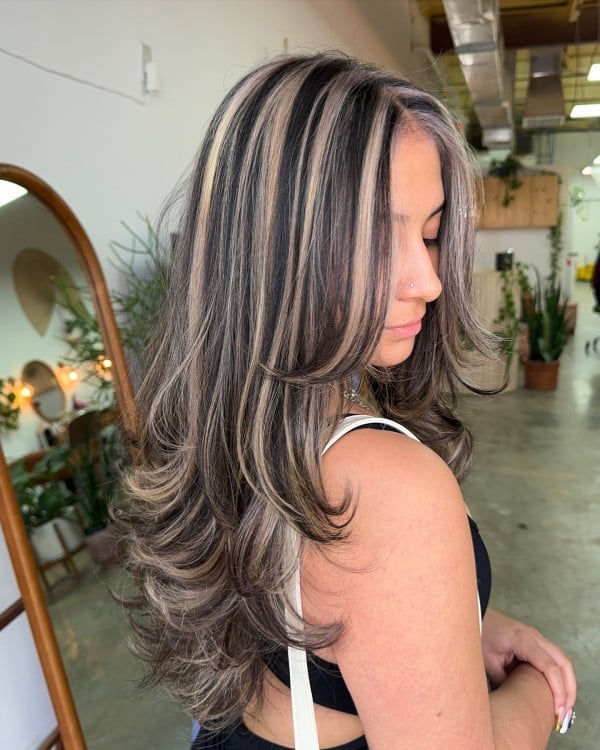
Who actually pulls off chunky ash blonde highlights on a dark base without it reading as a throwback? Thick, wavy hair at collarbone length, with enough density for the curtain bangs to frame the face. The layered blowout keeps the chunky sections defined, and the ash tone prevents the contrast from turning brassy. Ask your colorist for: chunky ash blonde highlights, collarbone length layers, curtain bangs. Medium-density hair will find the chunky sections too sparse, so this one is for the naturally full heads of hair.
Dark Brown With Bold Blonde Money Piece
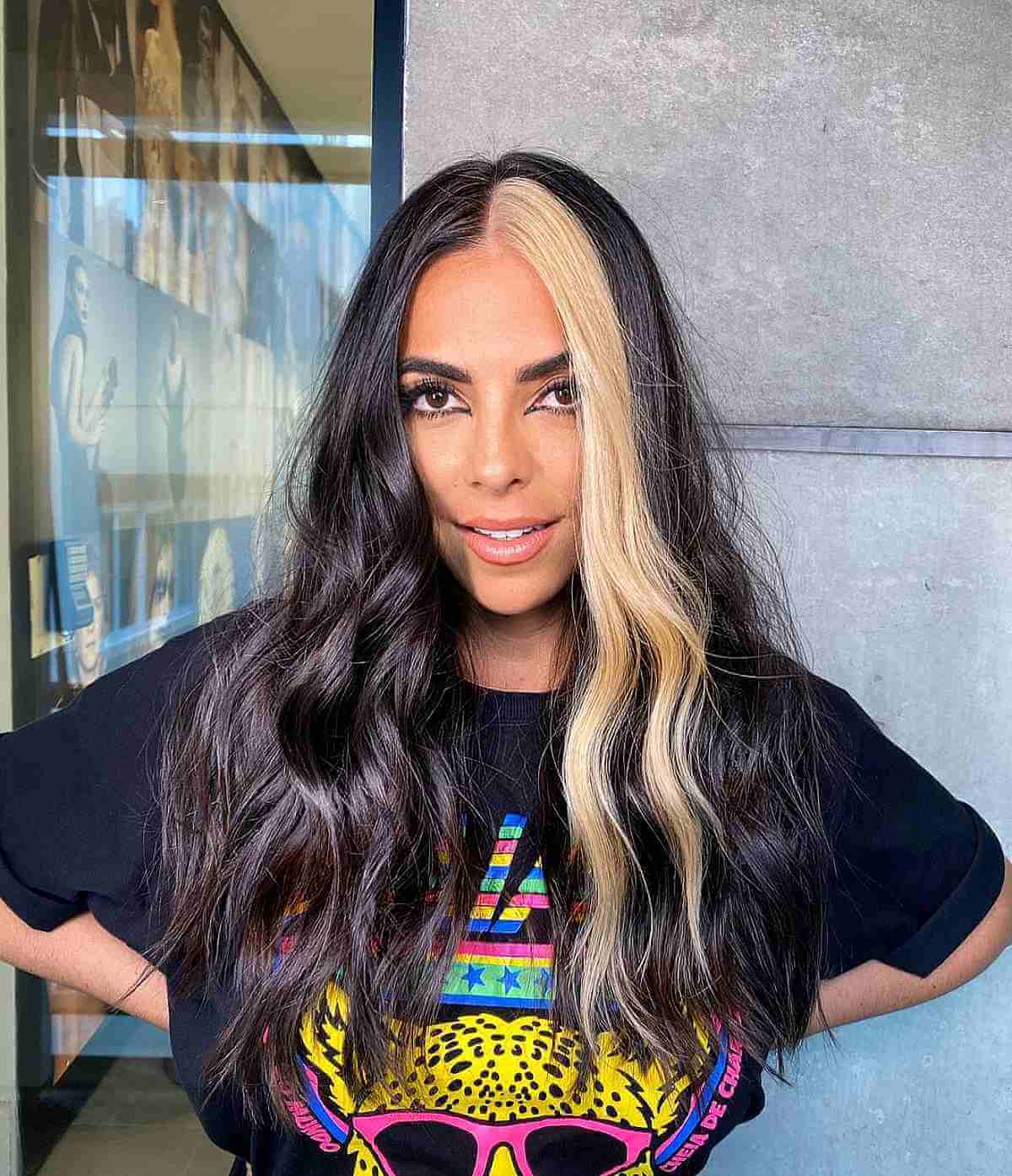
A bold blonde money piece on a dark brown base is a shortcut to a focal point without committing to all-over highlights. The front view shows thick, wavy mid-back length hair with a middle parting, where the bright blonde sections at the front do all the work. The contrast is sharp and immediate, which is exactly the point.
Ask your colorist for: bold blonde money piece, mid-back length waves. The long layers in the cut keep the rest of the hair from competing with the money piece, so the face-framing effect stays clear. When you ask for this, specify that you want the blonde to start close to the root for maximum impact, not a soft fade. The rest of the hair stays untouched dark brown, which also means fewer toning appointments overall.
Long Dark Brown With Face-Framing Highlights
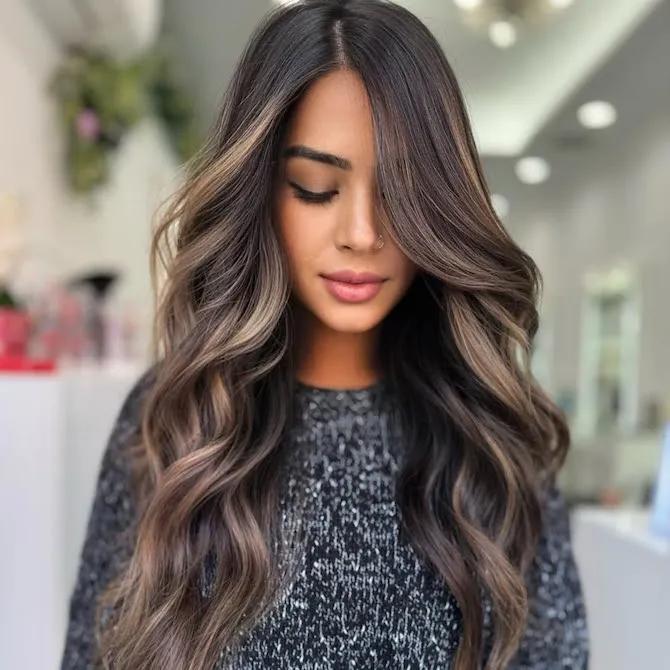
Face-framing highlights on long dark brown hair add warmth and dimension without pulling the whole head into blonde territory. The side parting and loose curls in this front view show how the blonde and caramel pieces concentrate around the face, leaving the rest of the length deep brown. The long layers give the curls somewhere to sit, so the highlights move with the hair instead of sitting on top of it.
Ask your colorist for: face-framing blonde and caramel highlights, long layers, side parting. The upkeep on this is manageable: the highlights grow out as soft ribbons, not a harsh root line, so a toning appointment every eight to ten weeks keeps the caramel from turning too warm. A gloss treatment at the same appointment keeps the dark base rich and the blonde pieces bright.
Dark Brown With Face-Framing Blonde Pieces, Collarbone
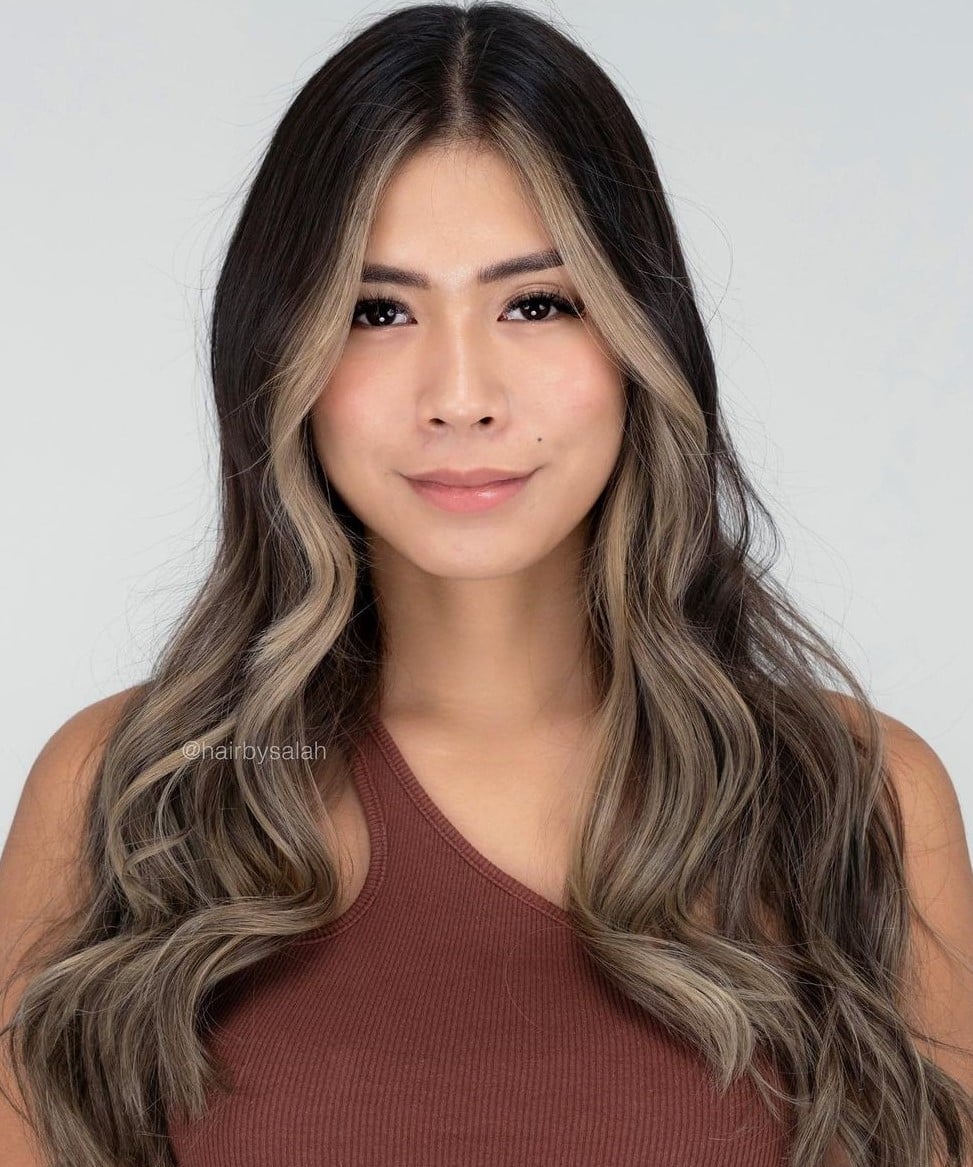
Where an all-over highlight spread can feel diffuse on a collarbone-length cut, face-framing blonde pieces concentrate the brightness exactly where it matters. The middle parting and soft layers in this front view keep the dark brown base dominant, with the blonde working as a frame rather than a full wash. This is a direct alternative to chunky highlights: the placement is more targeted, which means less brassiness over time because fewer strands are lifted.
Ask your colorist for: face-framing blonde highlights, collarbone length layers, middle parting. The wavy texture helps the blonde pieces blend into the dark base naturally. If you prefer a more diffused look, ask for the highlights to be woven finer. For a sharper contrast, keep them thicker and closer to the part.
Chestnut Bob With Champagne Blonde Highlights
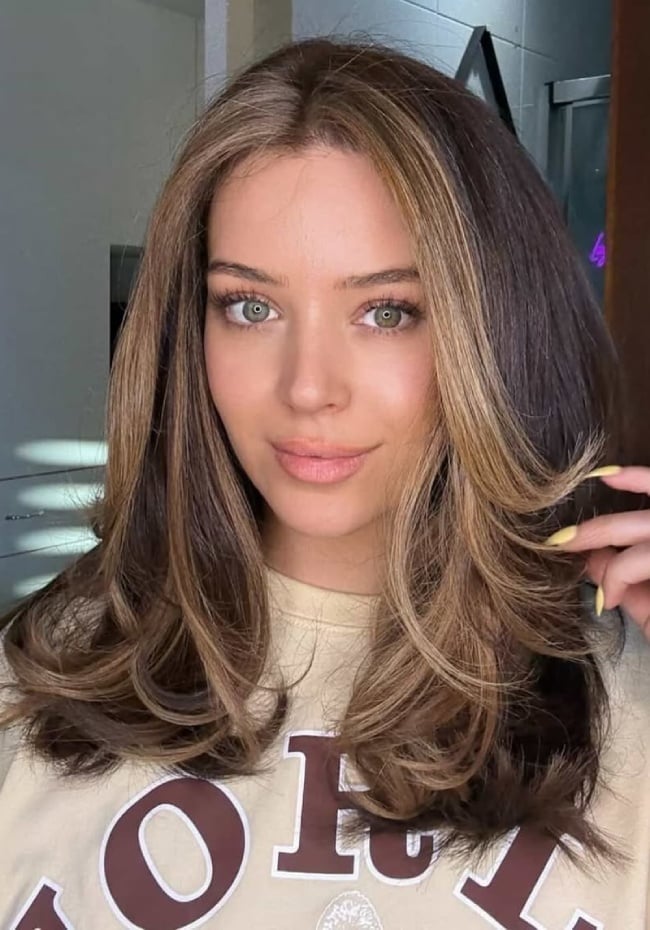
Can a bob actually feel soft? The trick is in the tone and placement. A chestnut brown base gets a brighter mood with champagne blonde highlights concentrated around the face, so the cut avoids looking one-note. The collarbone length and curtain bangs keep the shape from feeling boxy. Ask your colorist for: champagne blonde highlights on a chestnut bob, face-framing, curtain bangs. Fine to medium, wavy hair that can hold a blowout shape suits this style. A round brush and a heat protectant are enough to build the volume, and a toning appointment every six weeks keeps the champagne from turning brassy.
Dark Base With Face-Framing Curtain Bangs
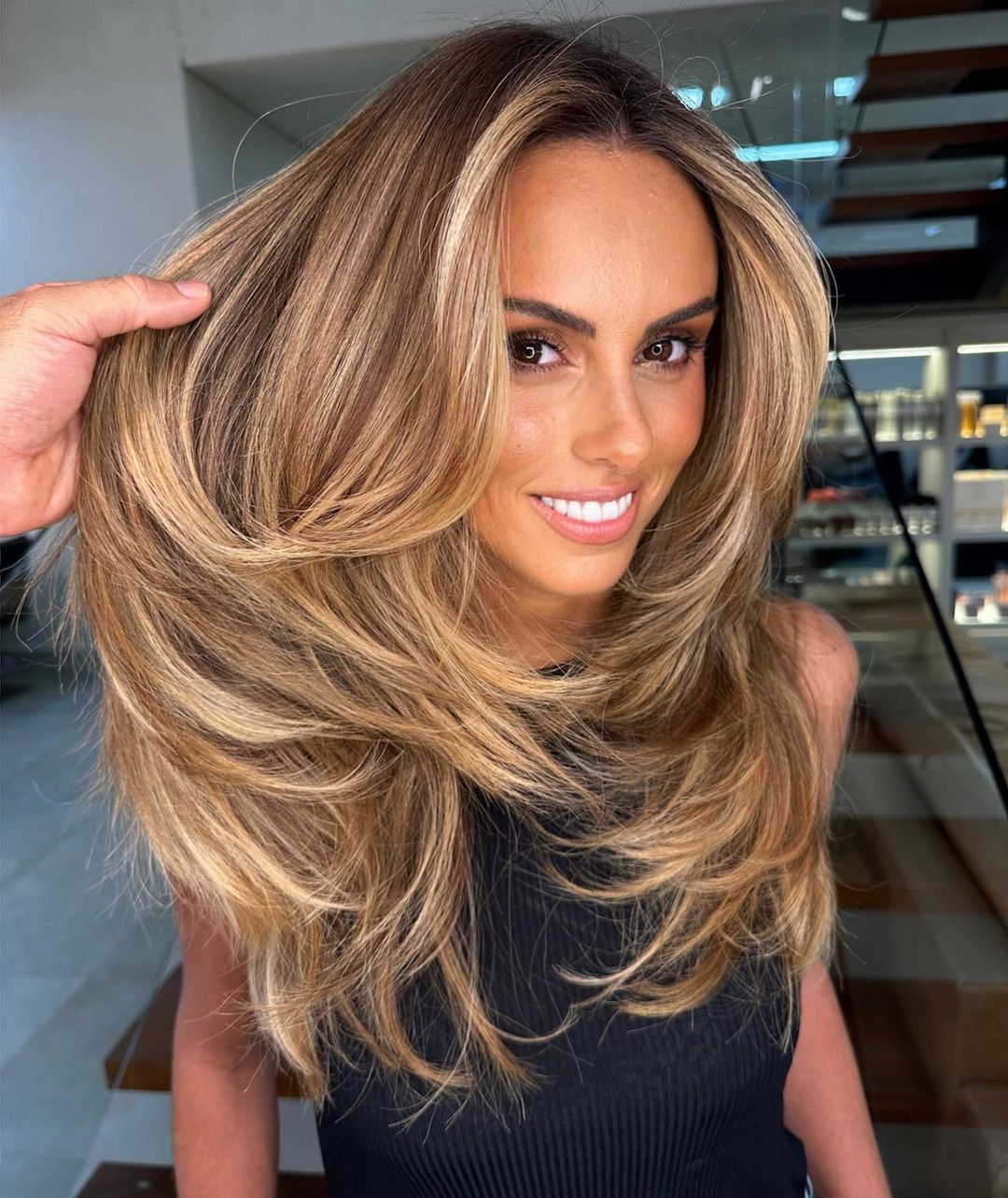
The technique here relies on keeping the base dark while lifting the highlights to a golden blonde, and volume is the real standout. The hair is cut with layers that start below the shoulder, with curtain bangs sweeping forward from a side parting. The golden pieces are woven thickly through the mid-lengths, creating a strong contrast that moves as you turn your head. Ask your colorist for: golden blonde highlights on a dark base, voluminous layers. The density matters: thicker hair holds the wave pattern longer. Blow-dry the bangs with a round brush to set the sweep, and plan for a toner refresh every seven to eight weeks to keep the gold from pulling too yellow.
Dark Blonde With Subtle Blonde Highlights
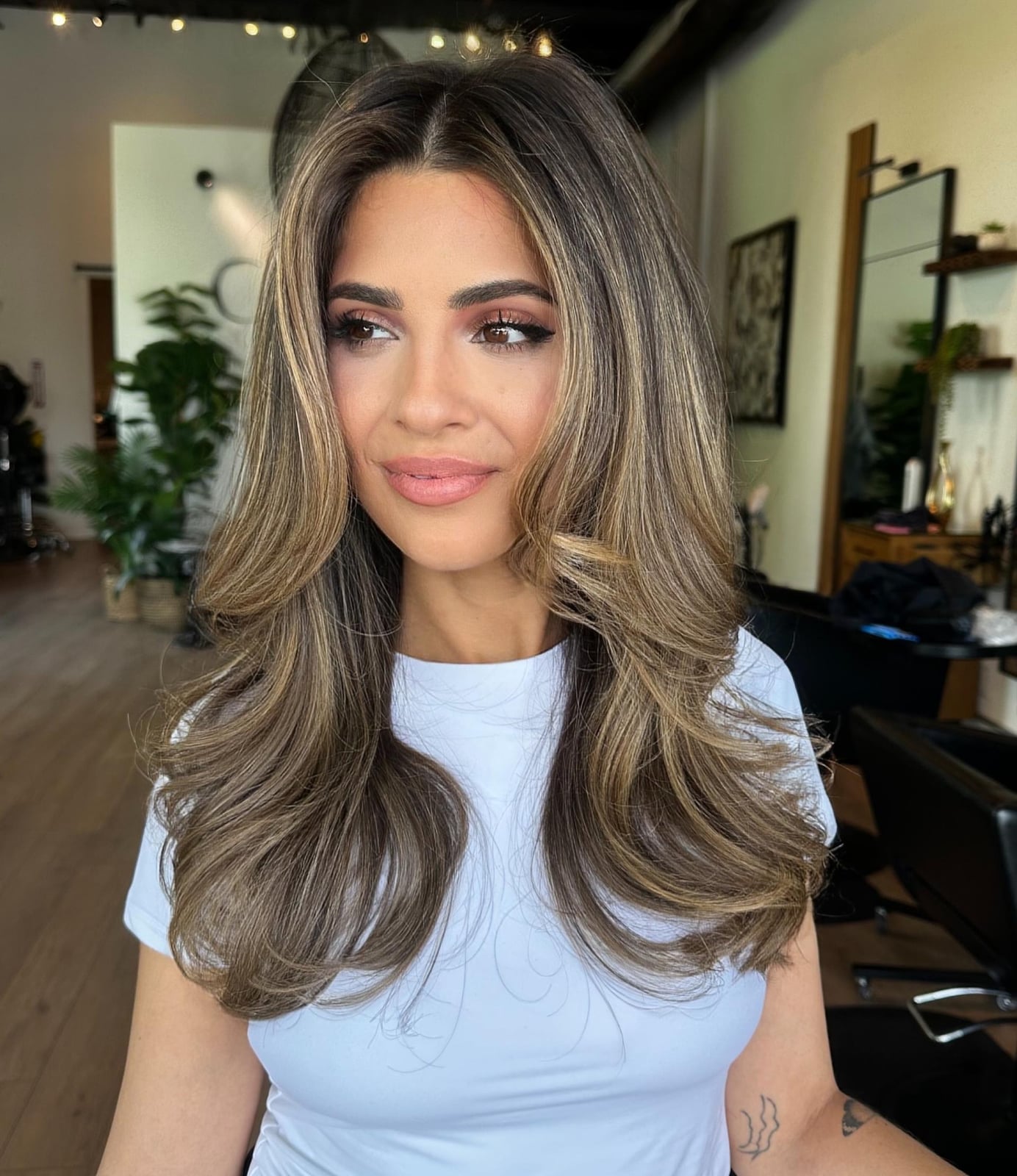
Subtle blonde highlights on a dark blonde base look natural until they catch the right light, then they show deliberate dimension. The collarbone length is cut with curtain bangs and a middle part, and the waves are soft enough that the color blends without striping. On a dark blonde base, subtle highlights can pull warm faster than you expect. Ask your colorist for: subtle blonde highlights, collarbone length, curtain bangs. A purple shampoo once a week helps keep the base from muddying. Medium density, wavy hair holds this texture best with just a volumizing spray at the roots.
Dark Blonde With Face-Framing Layers
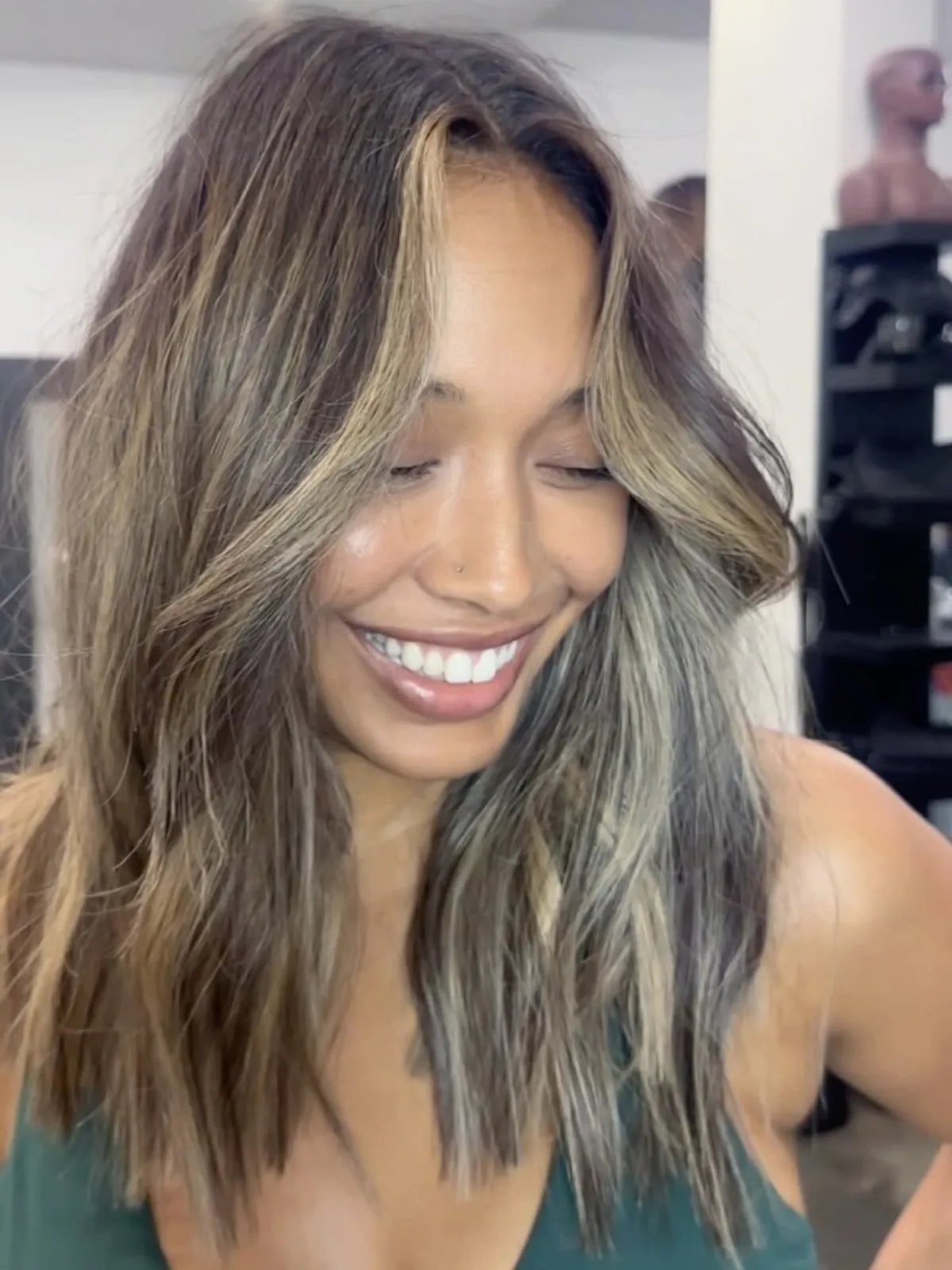
Is this a color you can fake at home? No, and here is why. The lighter blonde highlights are woven through the face-framing layers, and the contrast against the dark blonde base needs a colorist to control the lift and placement. The collarbone length and curtain bangs frame the jaw without cutting into the weight of the hair. Ask your colorist for: face-framing layers, subtle blonde highlights, collarbone length. The cut is the real work: the layers are cut to land exactly where the lightest pieces sit, so the highlight catches the front without looking painted on. A light-hold hairspray keeps the layers in place during the day, and a trim every eight weeks keeps the shape sharp.
Dark Blonde With Wavy Face-Framing Layers, Collarbone
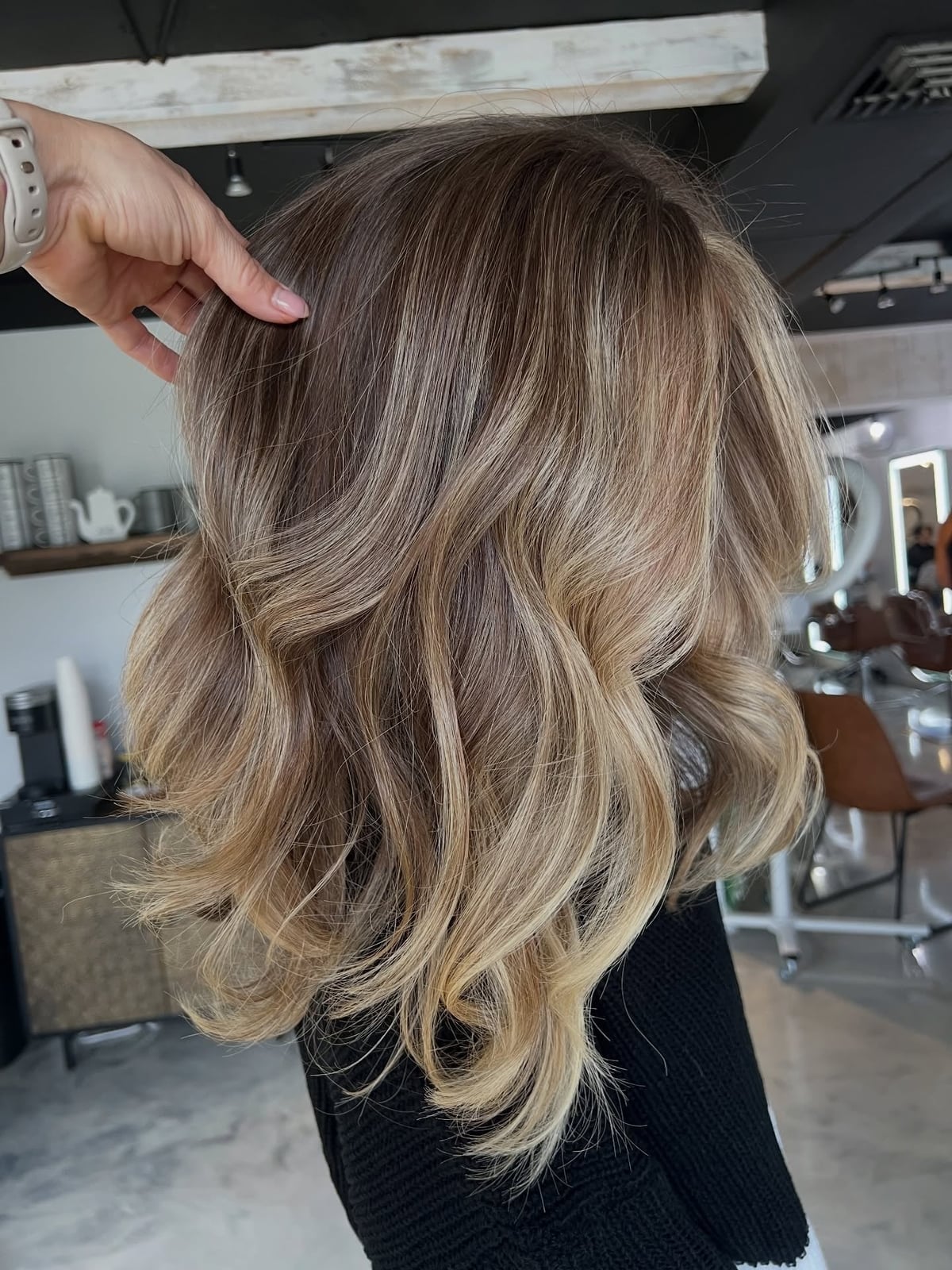
Wavy, thick hair at collarbone length tends to widen as it dries, which is why the face-framing layers here are cut to take the weight off the sides. The dark blonde base has subtle blonde highlights woven through, and the curtain bangs break up the line of the middle part. Ask your colorist for: wavy dark blonde hair with face-framing layers. The upkeep is manageable: a smoothing serum on damp hair tames the frizz, and the waves hold their shape without curling irons if you air-dry with a light mousse. A toning appointment every six weeks handles the warmth. A trim every eight weeks stops the layers from growing past the collarbone and losing their frame.
Dark Blonde With Face-Framing Layers, Ending At The Collarbone
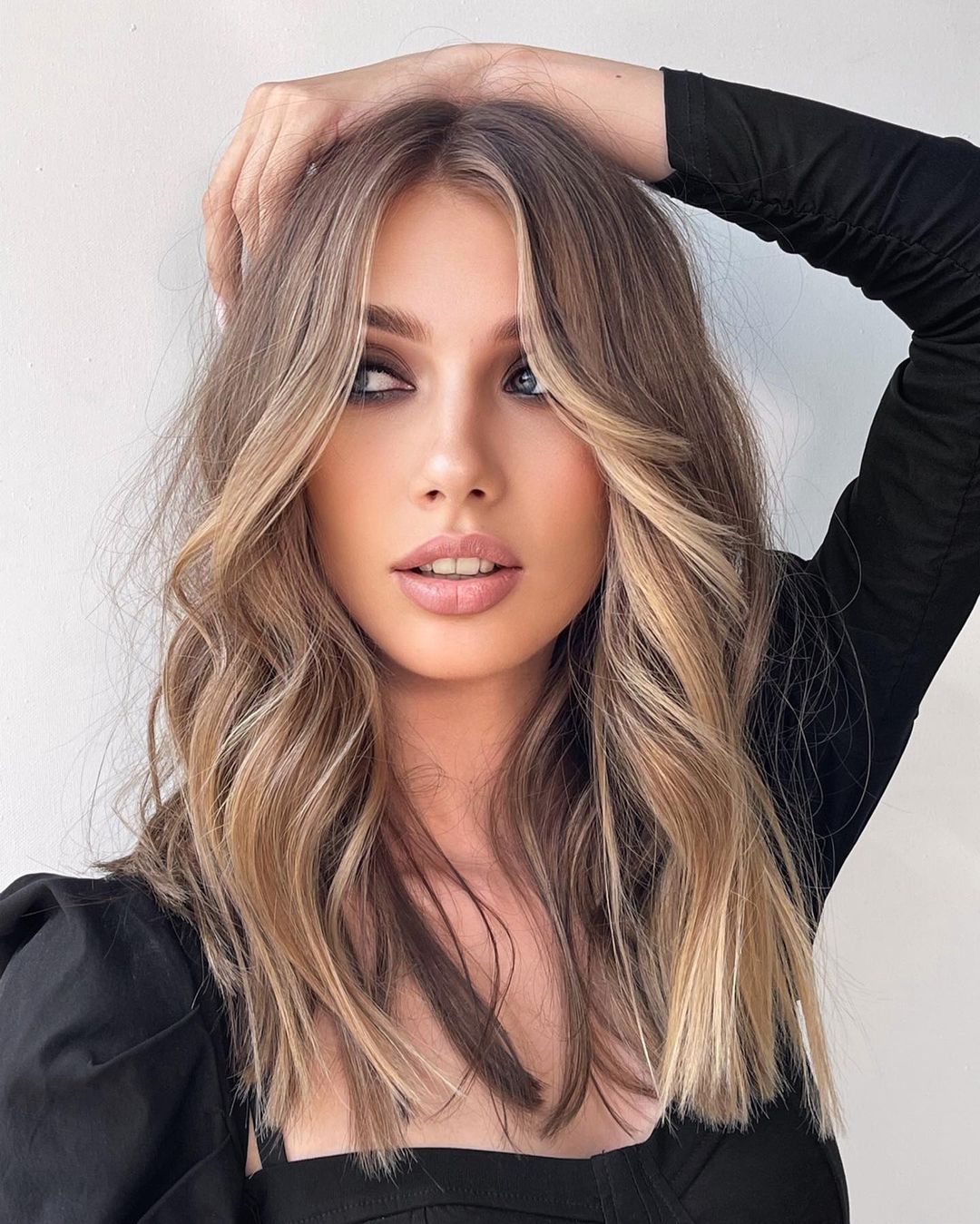
If you keep going back and forth between growing out your hair and chopping it to your shoulders, this collarbone length is the compromise that actually works. The dark blonde base with subtle blonde highlights keeps the color lively without a full bleach, and the curtain bangs soften the front. The wavy texture and face-framing layers give it a polished feel that looks deliberate.
This length suits thick, wavy hair best, since the layers need some body to hold their shape. Ask your colorist for: dark blonde hair with subtle blonde highlights and face-framing layers. The middle parting and curtain bangs work for oval or round face shapes, adding length and drawing the eye downward. A texturizing spray on dry hair enhances the waves and keeps the layers from falling flat by midday.
Dark Base With Honey Blonde Highlights
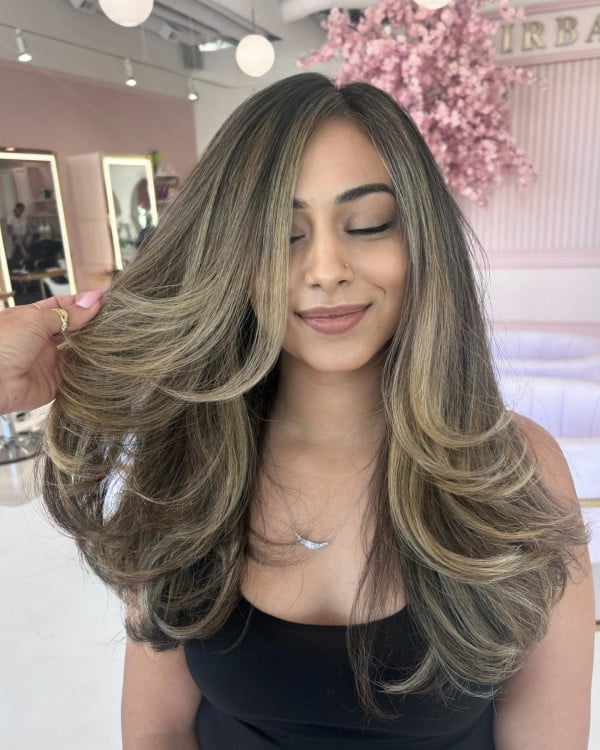
The contrast here is warm, not stark: a dark base with soft honey blonde highlights adds dimension without the brassiness that comes from a cooler blonde. The layered blowout gives the mid-back length plenty of movement, and the curtain bangs blend into the face-framing pieces so the color flows from root to tip.
Ask your colorist for: soft honey blonde highlights, mid-back length, curtain bangs. Specify that you want the honey tone woven through the mid-lengths and ends, not just painted on the top layer. This finish typically lasts two to three weeks on thick, wavy hair, where the warmth shows through the layers. A round brush during the blowout smooths the waves and reveals the color variation.
Dark Base With Face-Framing Layers, Mid-Back
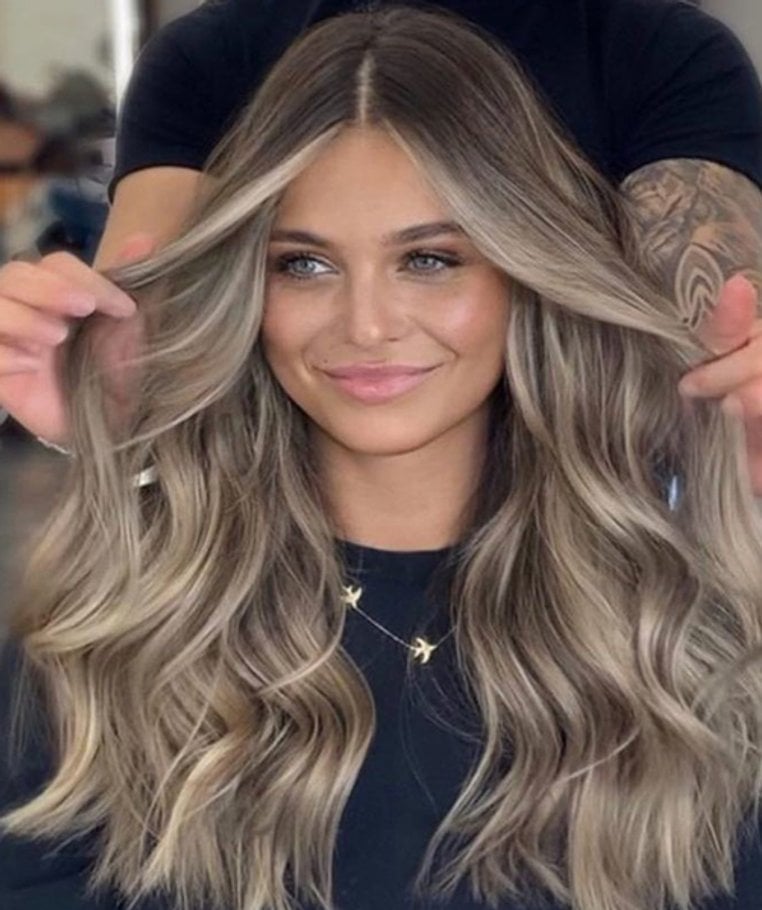
Wondering if you can get sun-kissed highlights without looking like you spent a week on the beach? This dark base with subtle blonde highlights does exactly that. The loose waves and prominent face-framing layers give the mid-back length a relaxed, vacation-ready feel, while the middle parting keeps it grounded.
This suits thick, wavy hair most, since the layers need density to move without getting stringy. Ask your colorist for: sun-kissed blonde highlights, face-framing layers, mid-back length. A light wave on dry hair enhances the sun-kissed effect without adding extra heat damage.
Dark Brown With Face-Framing Layers and Highlights and Curtain Bangs
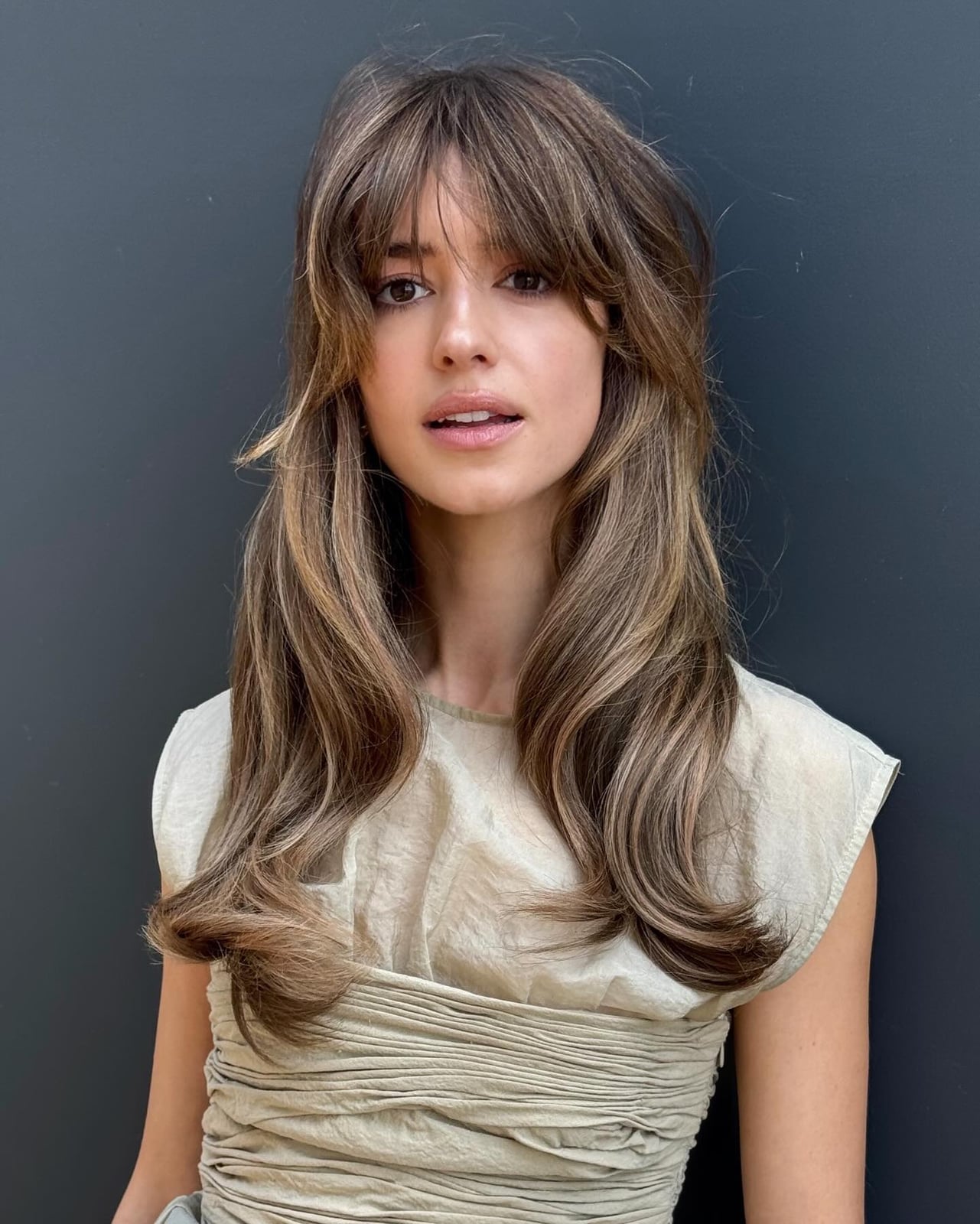
The technique here is all about placement: blonde highlights are concentrated around the face, then diffused through the rest of the dark brown base. The curtain bangs are cut to blend into the face-framing layers, so the color transition looks deliberate, not striped. The mid-back length and thick, wavy texture give the whole thing a soft, full shape.
Ask your colorist for: face-framing blonde highlights, curtain bangs, dark brown hair. The highlights should be woven finely at the root and widen toward the ends, which creates dimension without a harsh grow-out line. This look holds up best on thick hair, where the waves can carry the color through the layers. A smooth blowout keeps the face-framing pieces defined.
Dark Brown With Face-Framing Layers, Middle
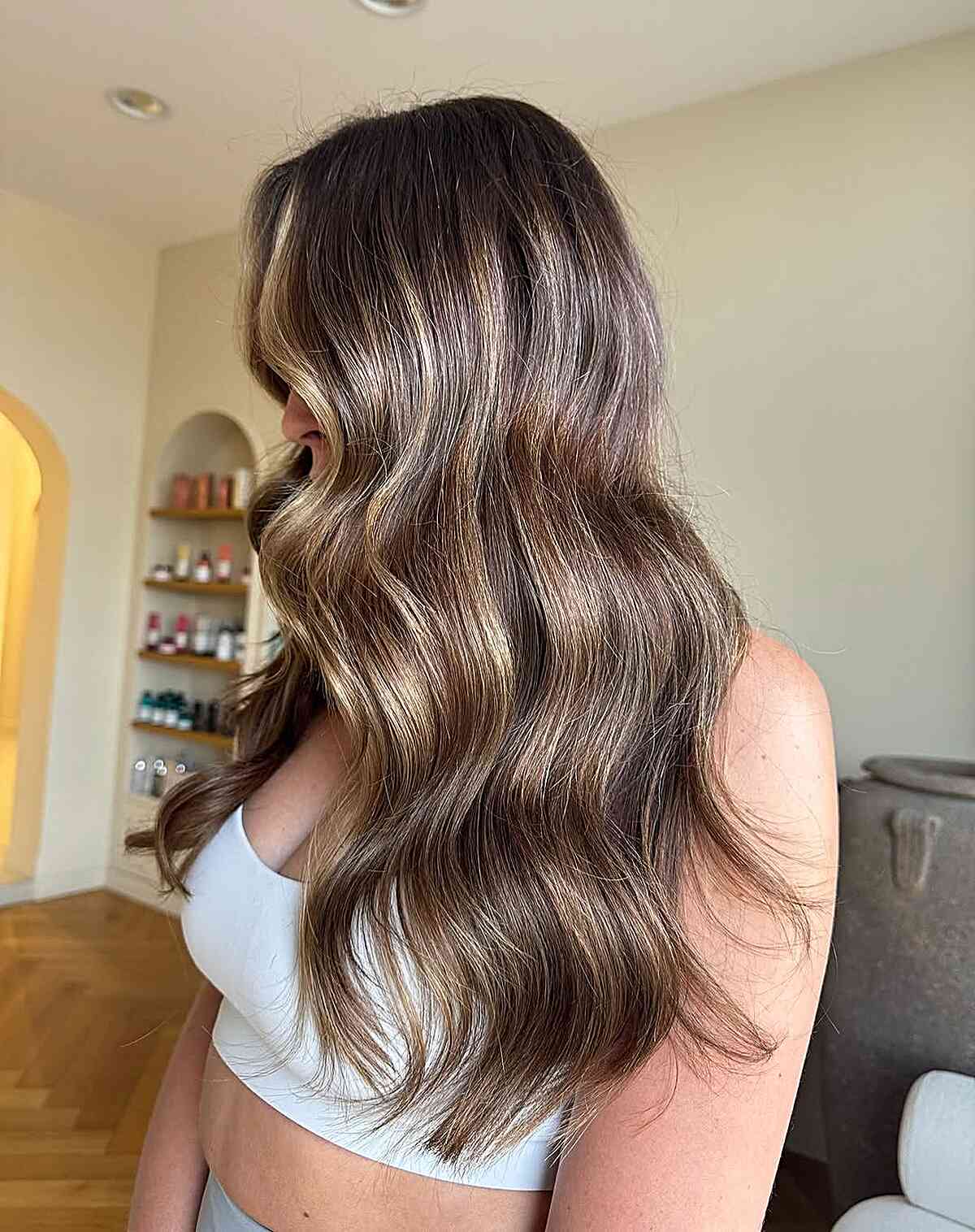
The reality of face-framing layers on dark brown hair is that they need a trim every six to eight weeks to keep their shape, but the payoff is a style that moves with you. The curtain bangs and middle parting here are cut to frame the face without requiring daily styling. The blonde highlights are finely woven through the thick, wavy mid-back length, so the grow-out is soft rather than obvious.
Ask your colorist for: dark brown hair with blonde highlights and curtain bangs. The wavy texture means you can skip the hot tools most days; a texturizing spray on damp hair and a quick diffuser dry is enough. The middle parting suits round or oval face shapes, and the layers add volume at the sides for longer faces.
Dark Brown With Sun-Kissed Highlights
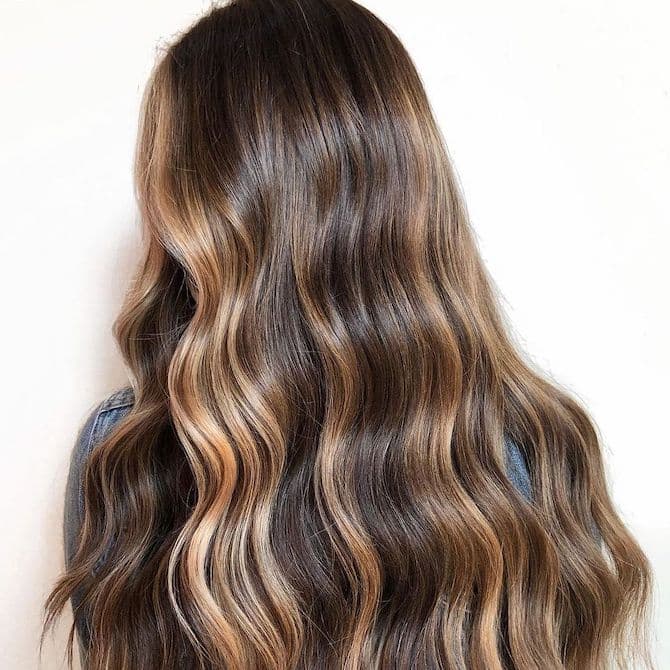
The placement works like a memory of summer: brighter strands catch the light around the face and drift down through the mid-back length, while the dark brown base keeps the whole effect grounded. These sun-kissed highlights on dark brown hair are a natural fit for thick, wavy textures, especially when soft curtain bangs frame the middle parting. Ask your colorist for: sun-kissed blonde highlights, curtain bangs. The style travels well from a beach vacation into casual fall weekends, wearing best with a slightly tousled finish that lets the waves move.
Dark Base With Honey Blonde Highlights, Shoulder
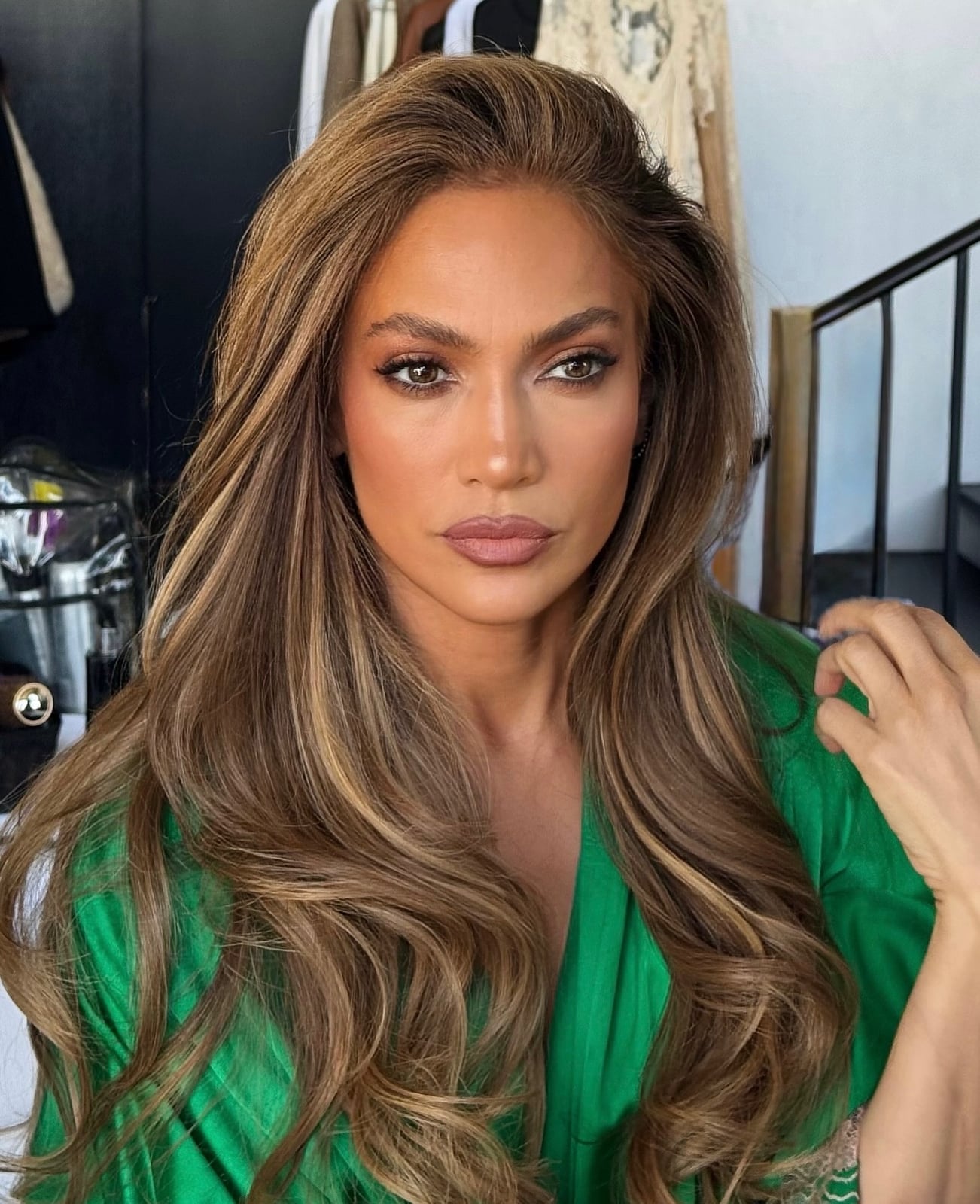
Wondering if honey blonde highlights on dark hair will read too warm? On a shoulder-length cut with a side parting, the dark brown base keeps the brightness in check, so the blonde adds dimension without turning brassy. The wavy, thick texture carries the blowout with natural volume, and the side parting gives the shape a little asymmetry. Ask your colorist for: soft honey blonde highlights, face-framing pieces. This one genuinely suits anyone who wants warm, dimensional color that still looks understated for everyday wear.
Dark Blonde With Golden Blonde Highlights
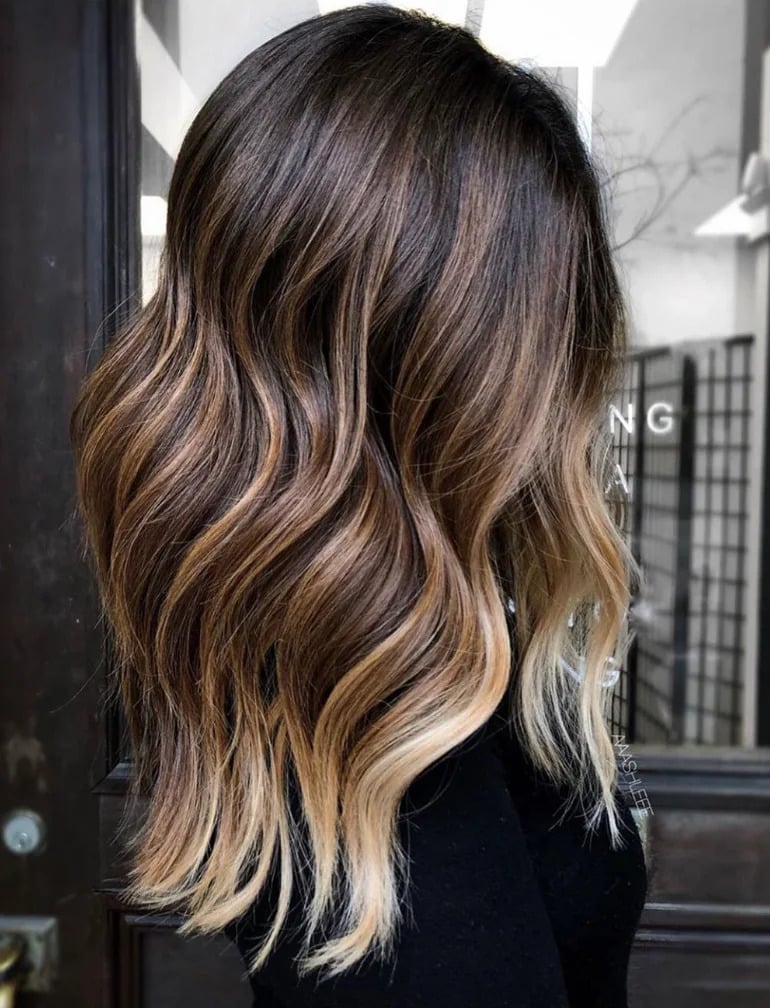
Set this against an ash blonde option and the difference is immediate: ash reads cooler and more reserved, while golden blonde highlights on a dark blonde base bring out a sun-warmed richness that flatters the thick, wavy texture. The mid-back length carries the color evenly, with the lighter strands concentrated toward the ends for a graduated effect. A middle parting keeps the symmetry clean, and the layered waves give the whole style movement.
Ask your colorist for: golden blonde highlights, dark blonde base. The blend is what sells it, since the fine weaving keeps the transition soft rather than striped. This is the choice for a polished, everyday finish that still shows off the contrast between the darker base and the lighter pieces.
Dark Brown With Finely Woven Blonde Highlights
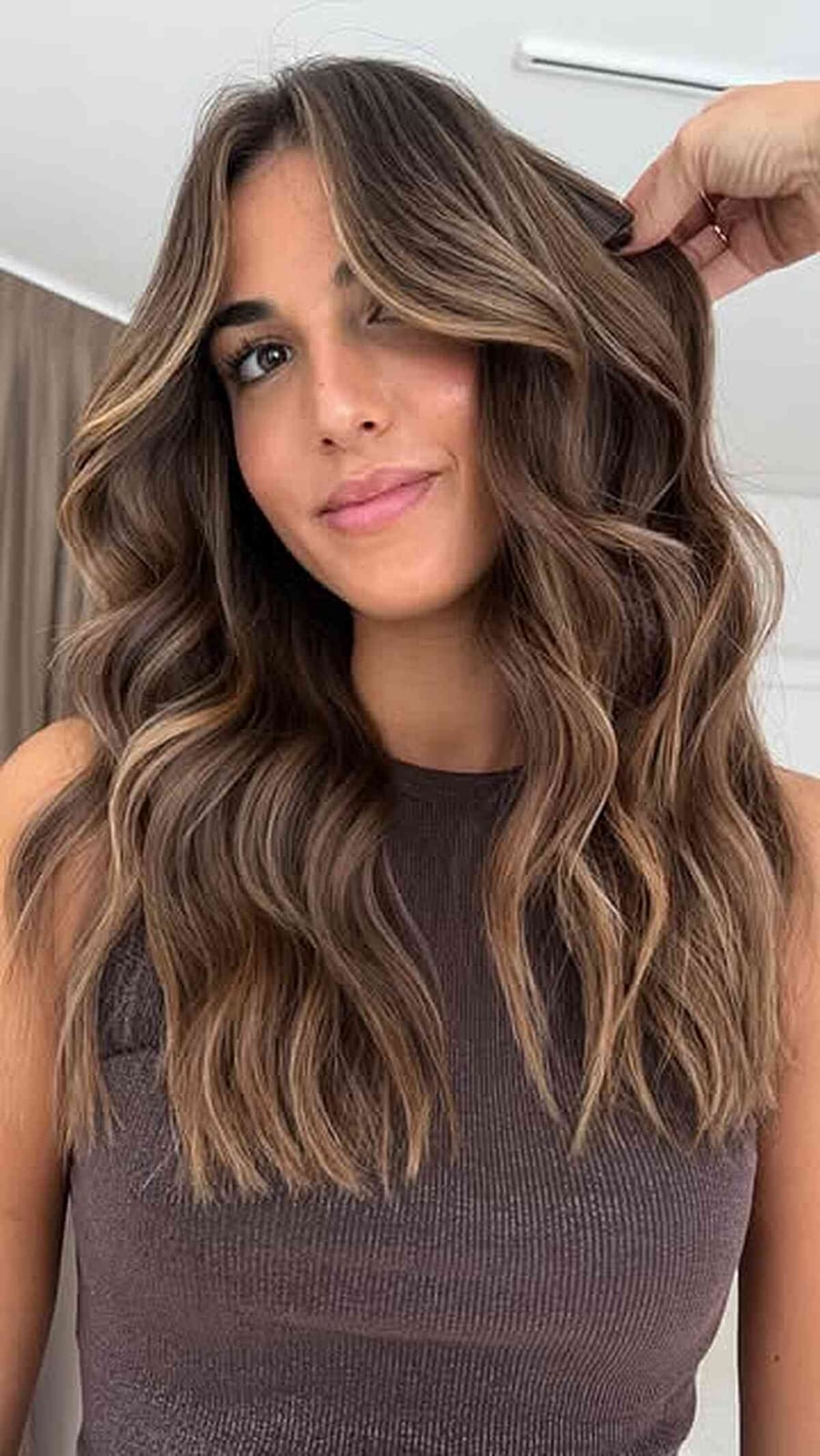
The technique is in the name: finely woven blonde highlights means the colorist takes thin sections and weaves them through the dark brown base, so the blonde reads as a natural shimmer instead of a bold stripe. On mid-back length hair with a middle parting, the effect is subtle dimension that catches the eye without shouting. The wavy blowout adds volume and helps the woven pieces blend together.
Ask your colorist for: finely woven blonde highlights on dark brown hair. This approach suits thick, wavy textures best, since the density gives the colorist enough hair to weave through. The result is a low-contrast look that grows out gracefully, making it a solid pick for anyone who wants brightness without the commitment of a full blonde.
Dark Brown With Distributed Blonde Highlights
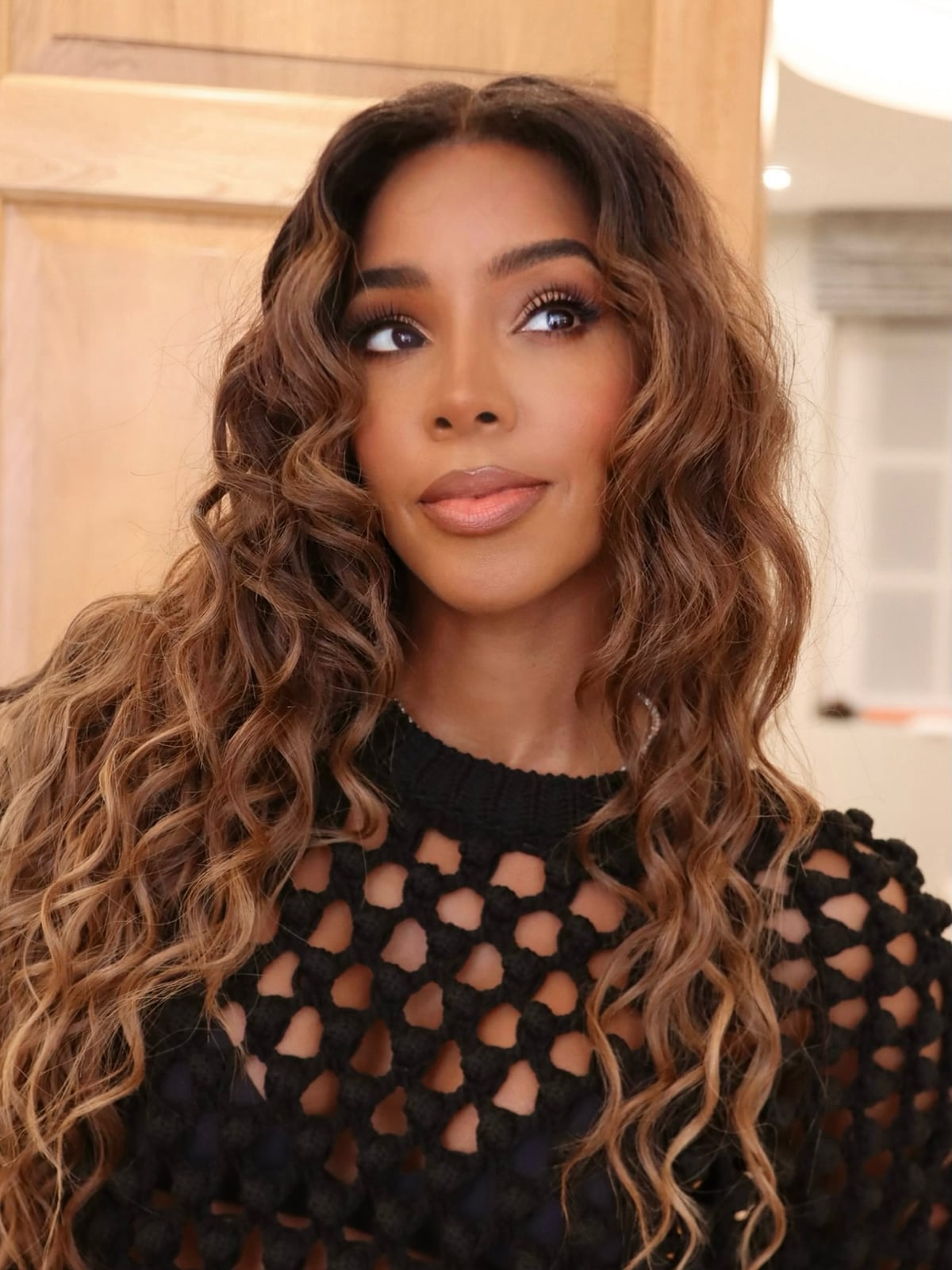
The highlights here are spread evenly from root to tip, so the dark brown base and the blonde strands work together to create all-over dimension rather than a single focal point. On mid-back length hair with a middle parting and loose waves, the distributed placement gives the style a textured, voluminous feel. Ask your colorist for: distributed blonde highlights on dark brown hair.
Upkeep is straightforward: because the highlights are woven throughout, the grow-out line stays soft, so you can stretch the time between color appointments. A quick tousle with your fingers after drying keeps the waves looking lived-in for a casual, everyday finish. This approach suits thick, wavy hair that can carry the brightness without looking weighed down.
Dark Brown With Glossy Blonde Highlights
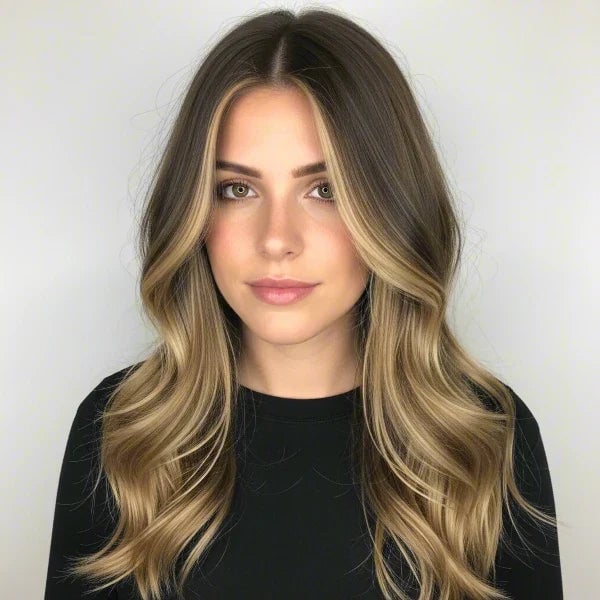
These glossy waves hit mid-back with a middle parting, the dark brown base catching light next to blonde highlights that read as polished rather than beachy. Thick, wavy hair takes this finish best, since the shine needs enough density to bounce light around. Ask your colorist for: glossy blonde highlights on dark brown hair, mid-back length. Request a high-shine gloss over the highlights during toning, then finish with a serum to keep the surface smooth and reflective.
Brown With Blonde Highlights
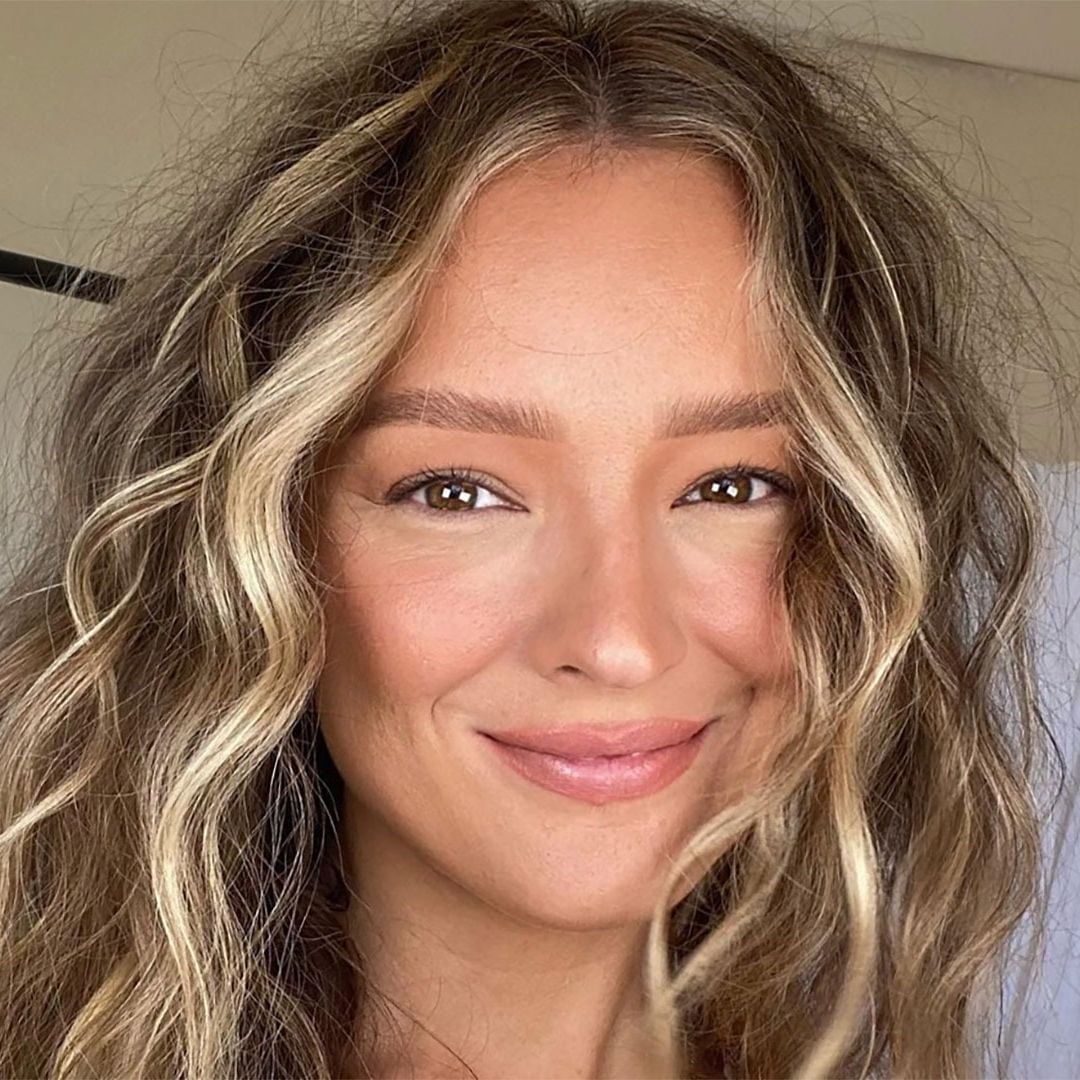
Can you get these blonde highlights on brown hair at home? Technically yes, but the back view tells the real story: the placement has to stay denser near the crown and lighter at the ends, which is hard to eyeball in a mirror. This mid-back length with soft waves and thick texture shows exactly why a salon chair beats a box dye. Ask your colorist for: striking blonde highlights, mid-back length waves. A colorist controls the bleach development so the contrast lands without brassiness. DIY kits tend to over-lighten the ends or miss the interior sections, leaving patchy dimension. If you want the depth and movement this look has, book the professional.
Rich Brown With Blonde Highlights, Collarbone
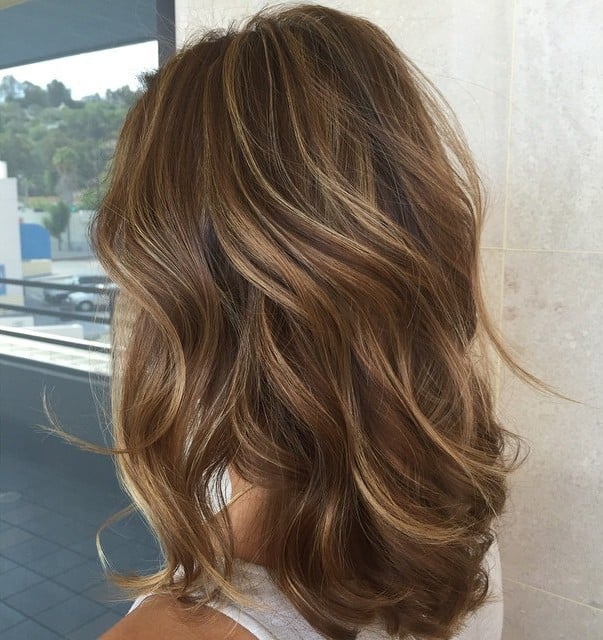
The side view of this collarbone cut shows the real skill in rich brown blonde highlights: the blonde pieces are woven so finely into the light brown base that they look like natural dimension, not painted stripes. Thick, wavy texture carries the loose blowout, and the layers give the waves room to move without losing shape. Ask your colorist for: blonde highlights on rich brown hair. The lighter strands will need a toning appointment every six to eight weeks to keep that warm, lived-in shade from drifting brassy.
Medium Brown With Dimensional Highlights
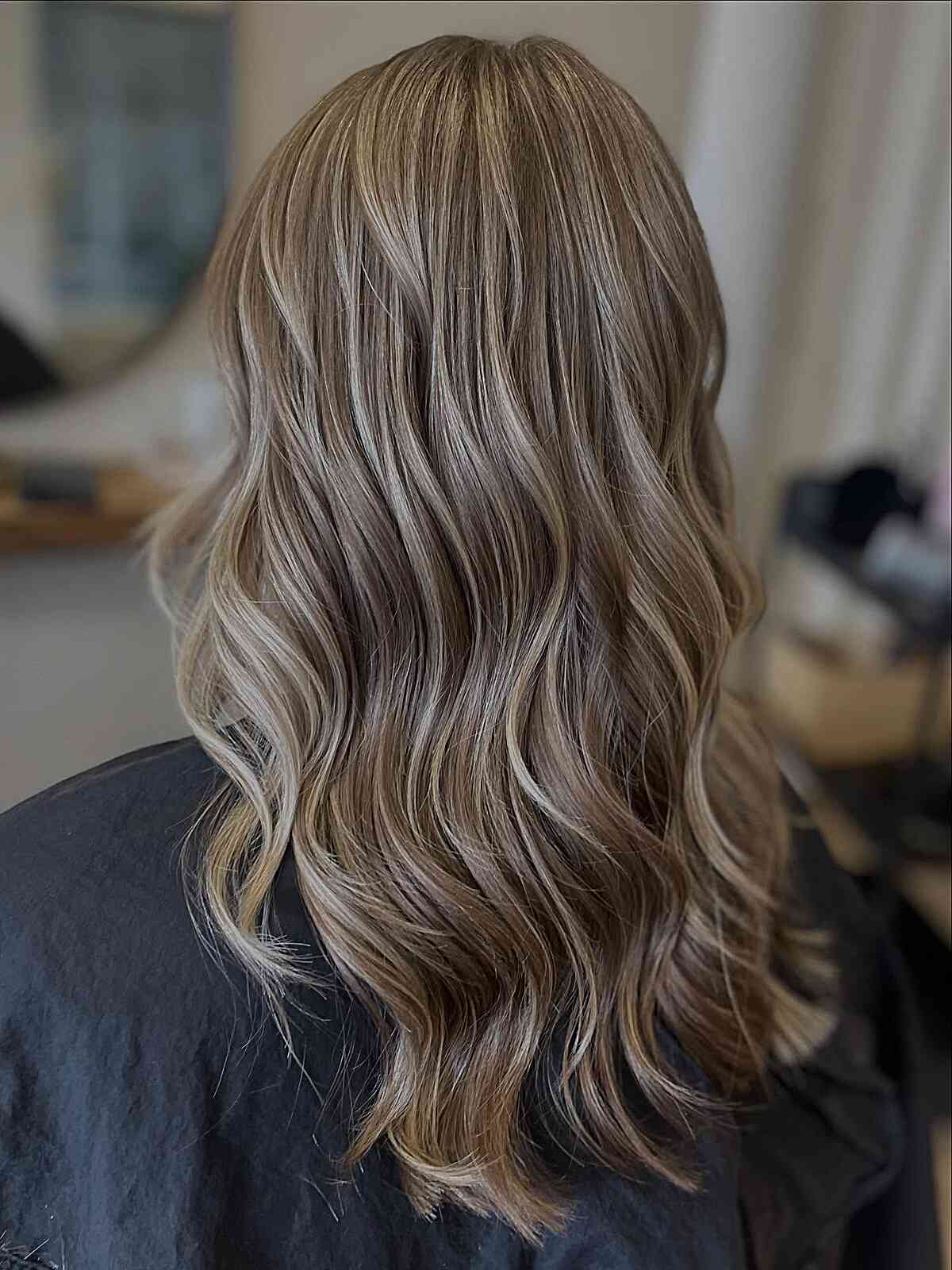
Back-view shots rarely lie, and this one shows why dimensional highlights on medium brown hair earn their keep: the blonde weaves through the mid-back waves in a way that adds depth without turning the whole head light. Thick, wavy texture is ideal here, since the waves catch each tone separately, making the dimension visible even when the hair is down. Ask your colorist for: dimensional blonde highlights on medium brown hair, mid-back length. The technique relies on a mix of fine and medium foils, so the highlights blend rather than stripe. This suits anyone who wants movement and shine from the color alone, no styling required. Straight, fine hair can still carry it, but the effect is less obvious without the wave pattern to separate the tones.
Brown With Dimensional Blonde Highlights
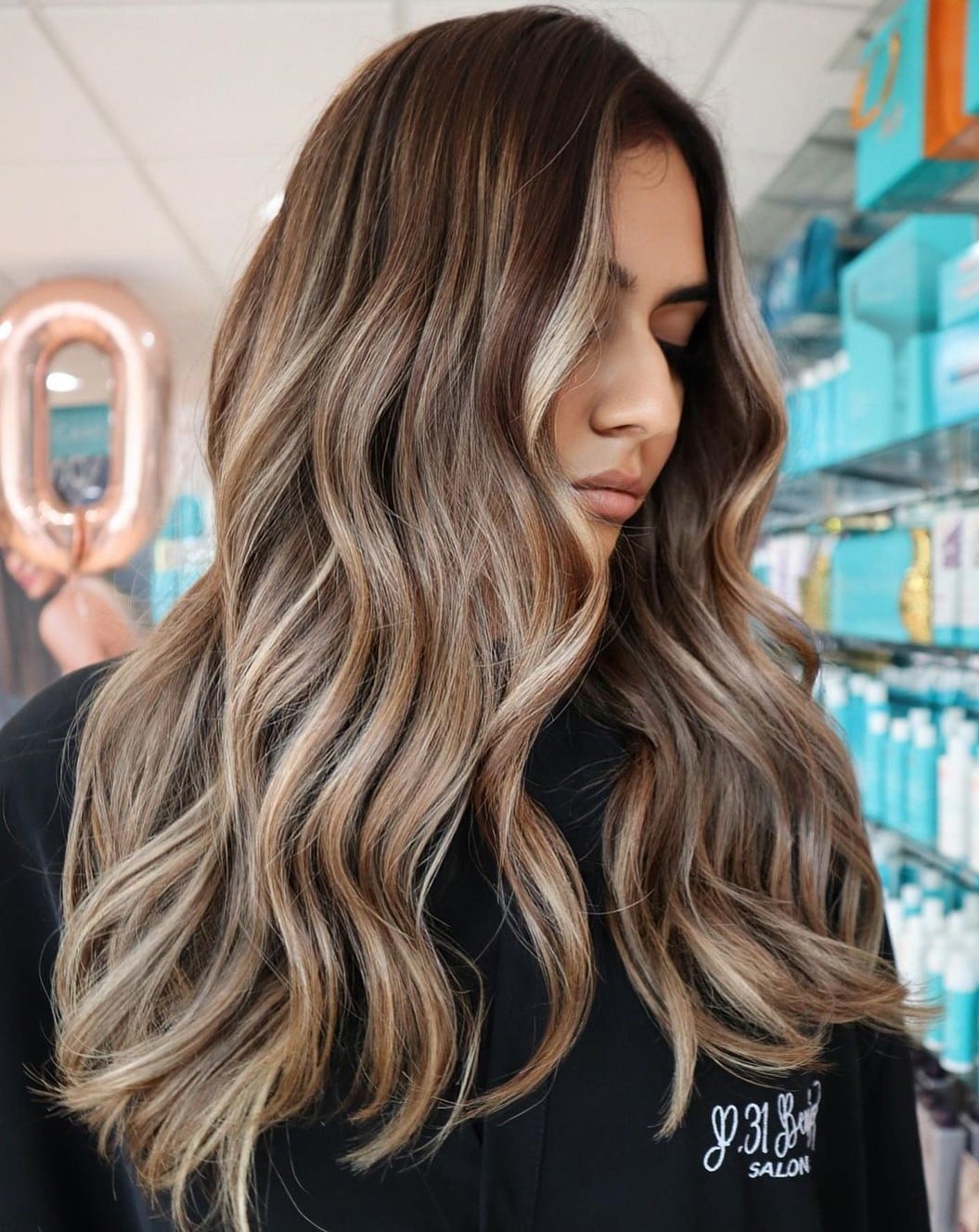
The technique here is a lived-in foil placement: the blonde sits heavier through the front sections and melts into the brown through the mid-back length, with a side part that lets the tones layer visibly. The wavy, thick texture helps the highlights look grown-out instead of painted on. Ask your colorist for: dimensional blonde highlights, lived-in look, mid-back length. The interplay of tones comes from leaving the roots a shade darker and spacing the foils unevenly, so the regrowth blends naturally. A gloss over the top ties the brown and blonde together, keeping the finish glossy instead of striped.
Brown With Lived-In Blonde Highlights
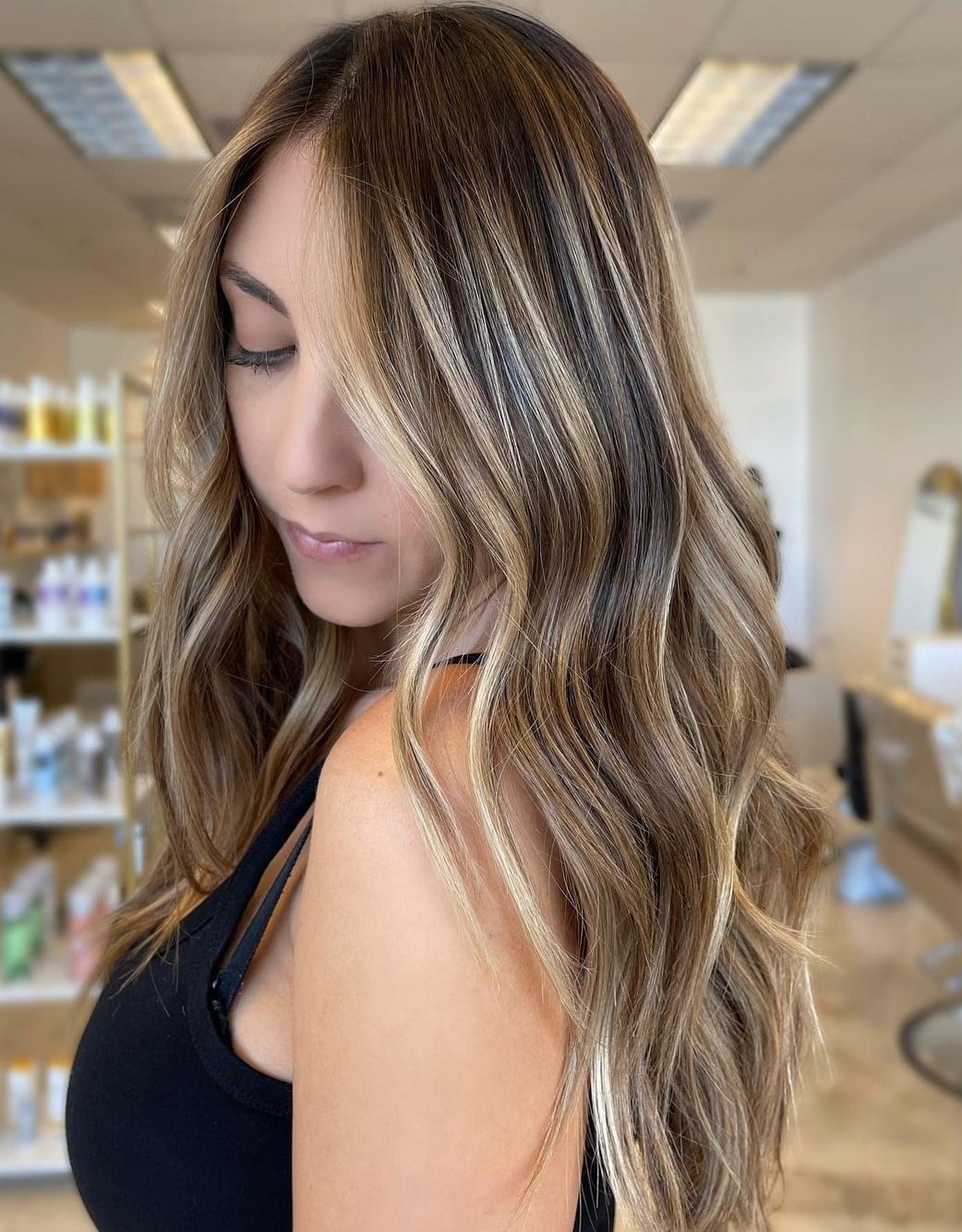
Dimensional blonde highlights on brown hair are built to look like they grew in that way, not like you scheduled them. The loose waves and side parting let the lighter pieces catch light at different angles, which is the whole point of a lived-in finish. This mid-back length suits thick, wavy hair that can carry the weight of multiple tones without looking busy. Ask your colorist for: dimensional blonde highlights, lived-in look, mid-back length. The grow-out is forgiving because the contrast between dark and light is soft, so roots read as part of the design for a while. A trim every eight to ten weeks keeps the ends from splitting, and a purple shampoo once a week keeps the blonde from turning brassy. The side parting is your friend here: it adds volume at the crown and shows off the placement.
Dark Brown With Natural Blonde Highlights
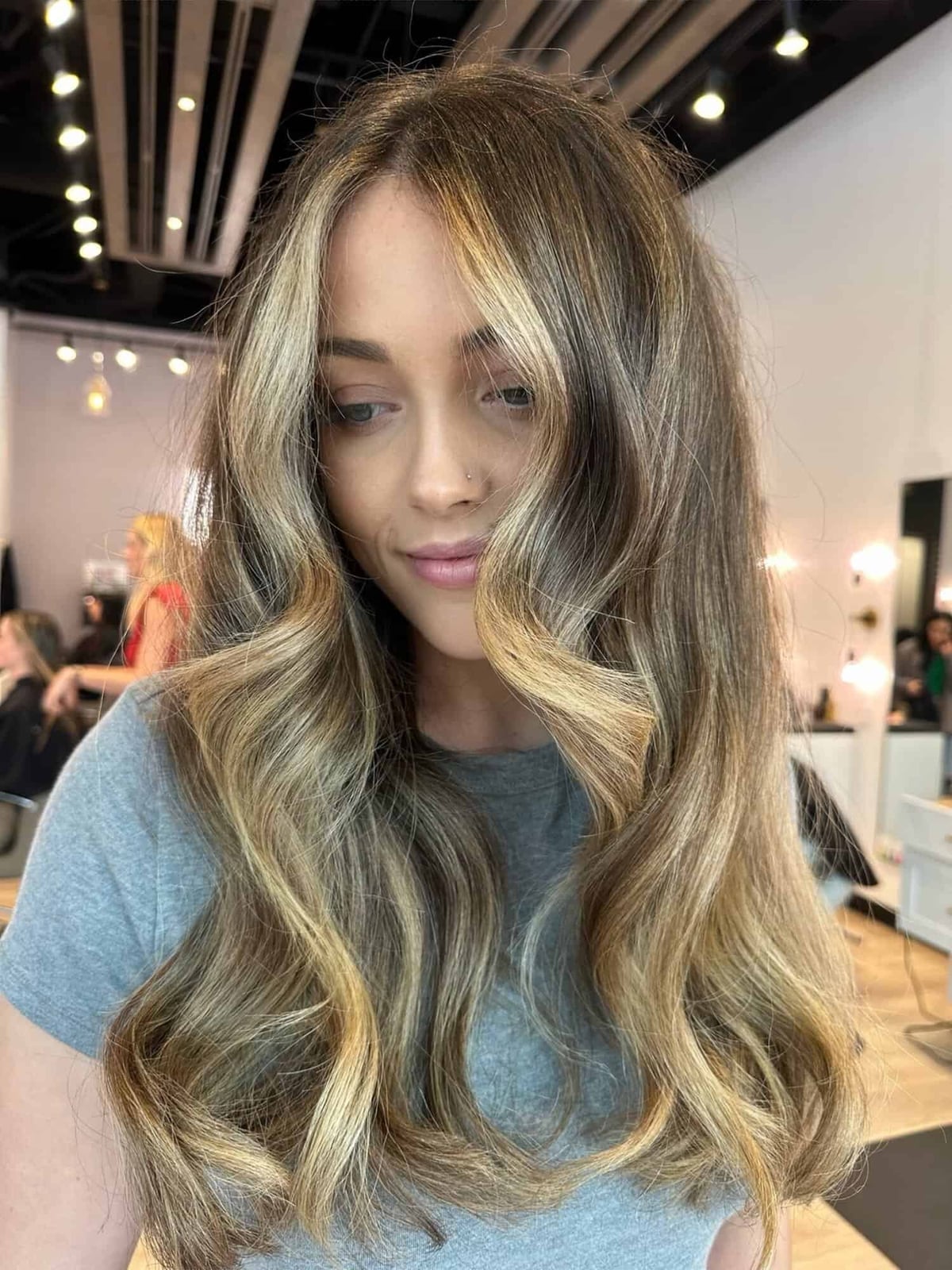
Dark brown hair with natural-looking blonde highlights is a versatile color that works from Memorial Day to Thanksgiving. Loose waves give it a sun-washed feel that suits summer, but the deep base keeps it grounded enough for fall. Thick, wavy hair at mid-back length carries the blend best, since the texture helps the highlights show movement instead of stripes. Ask your colorist for: natural-looking blonde highlights on dark brown hair, mid-back length. The key is keeping the blonde within a few shades of your base so it brightens without overpowering. Skip the heavy styling: a slightly undone texture makes the whole look appear naturally grown in.
Dark Brown With Voluminous Blonde Highlights
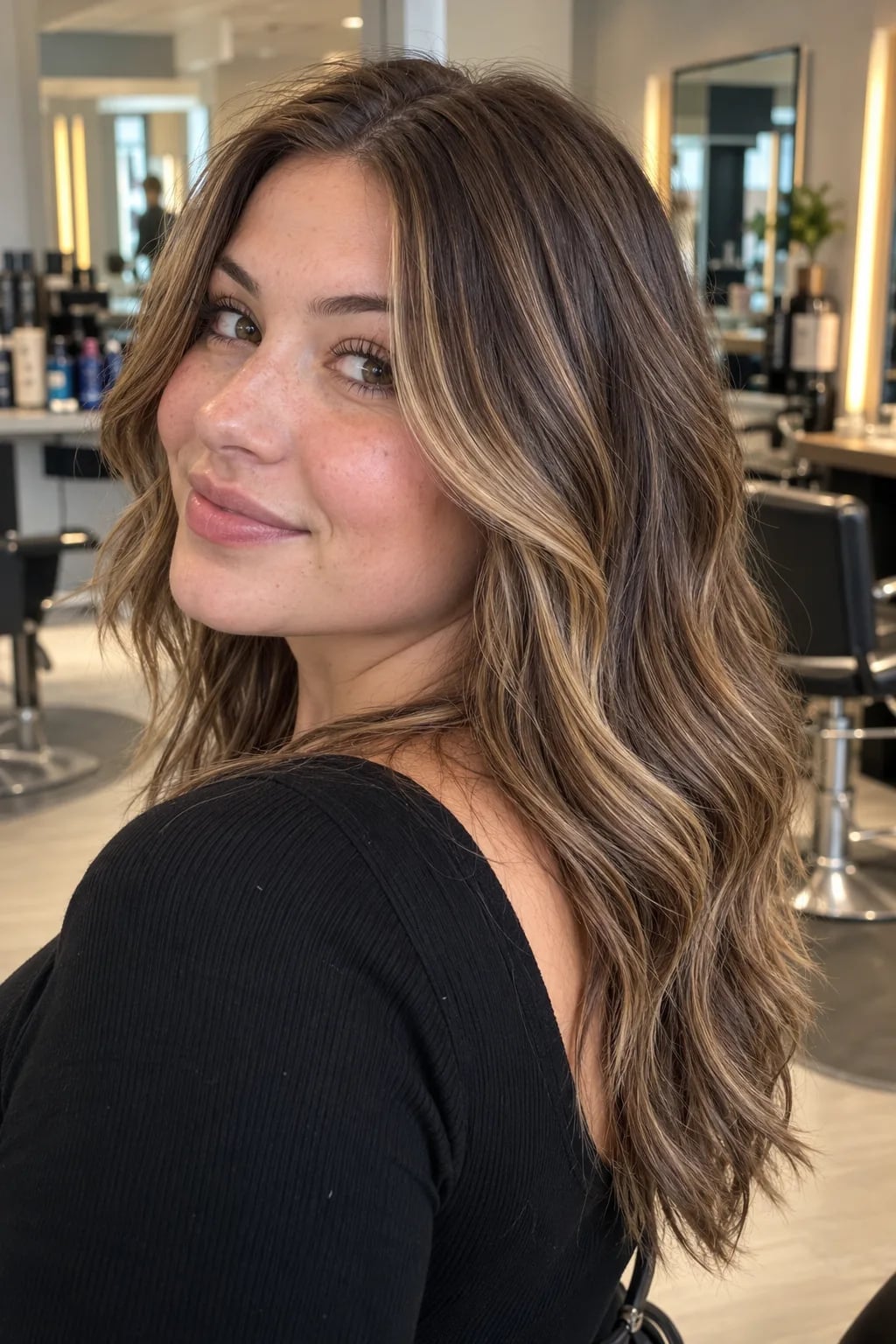
Wondering if voluminous blonde highlights are for you? Start with your hair’s density. This look leans on a thick, wavy texture at collarbone length, where the volume has enough weight to hold the shape. Medium-density hair can pull it off too, but you will need to commit to a blowout with a round brush to get the lift at the roots. Ask your colorist for: voluminous blonde highlights, shoulder length, side parting. The soft waves and side parting frame the face without needing bangs, making it a solid choice for oval and heart shapes. The blonde strands are placed throughout, so the color does the work of adding dimension. This is a salon-only job, given the number of foils involved, and the payoff is a head of hair that looks thick and polished.
Dark Blonde With Face-Framing Pieces
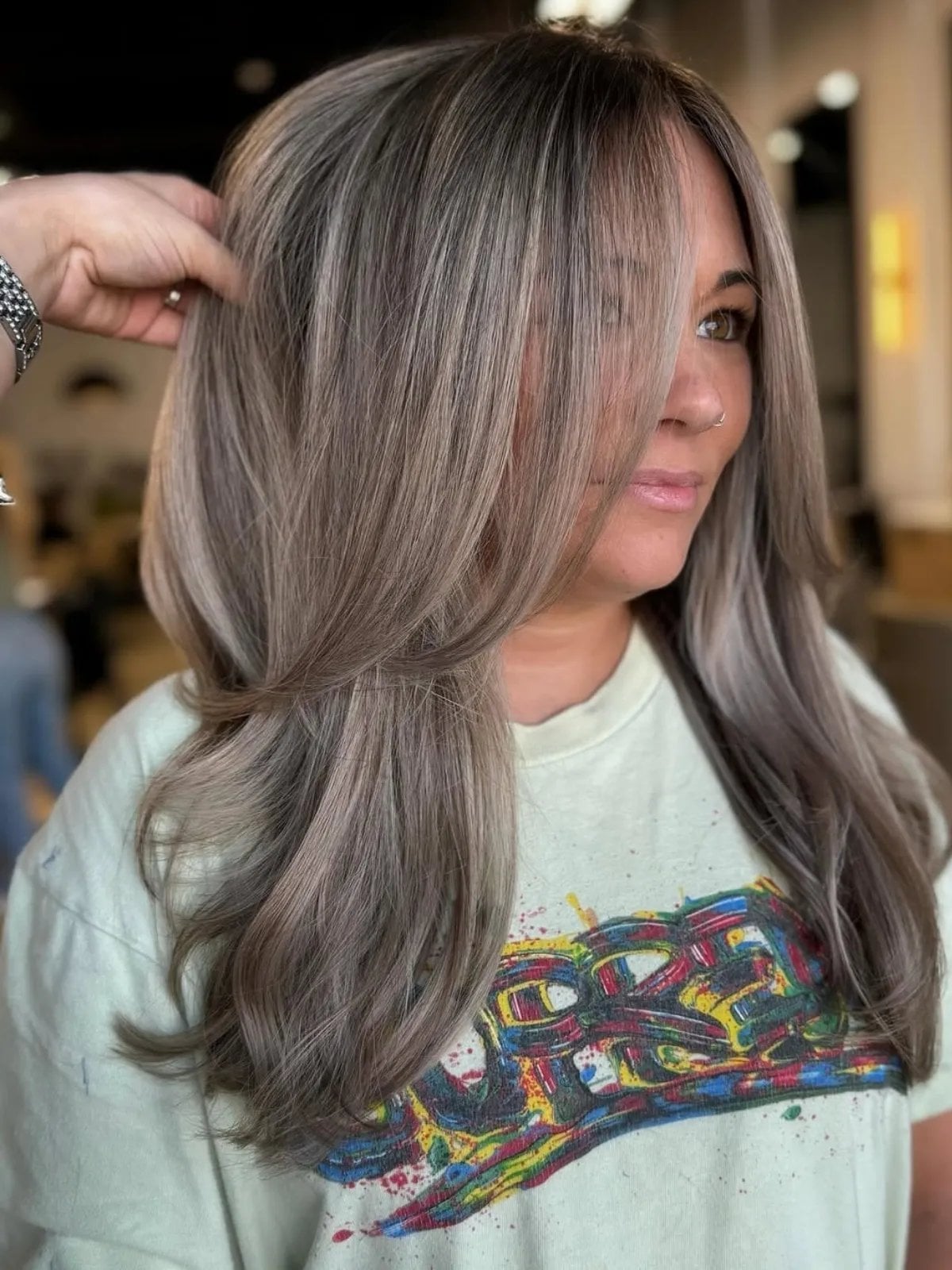
Face-framing pieces on a dark blonde base are a low-commitment way to test blonde highlights without going all in. The lighter strands are concentrated around the face, so the contrast lands exactly where you want it, while the rest of the shoulder-length hair stays close to your natural shade. Ask your colorist for: face-framing blonde highlights, shoulder length dark blonde. The side parting and soft waves give it a polished, everyday finish that works from the office to dinner. This suits medium-density, wavy hair best, since thinner hair might let the pieces blend in too much. The upkeep is manageable: the face-framing strands brighten the face, but because they sit at the front, they show regrowth sooner, so plan a touch-up every six to eight weeks.
Dark Brown With Dimensional Blonde Highlights, Shoulder
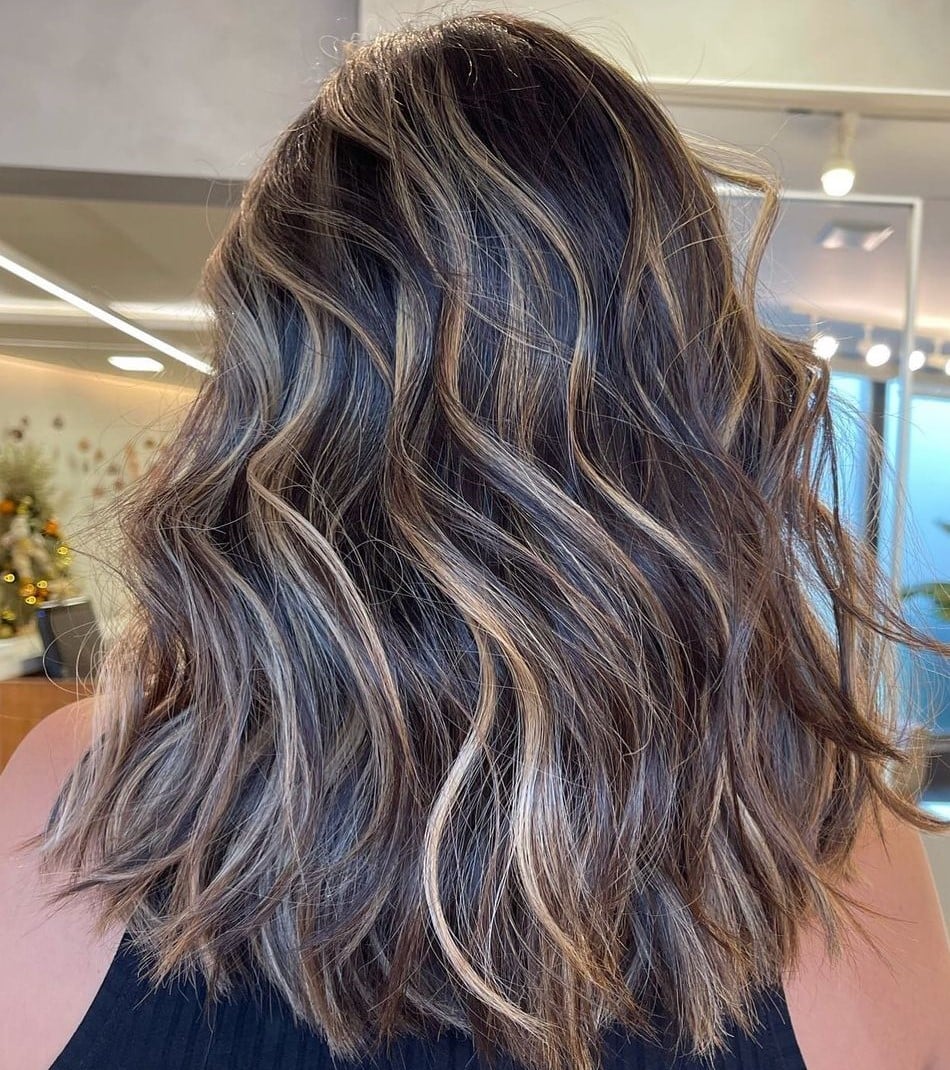
The back view of this shoulder-length cut shows what dimensional blonde highlights on dark brown hair are supposed to do: create contrast that looks like depth, not streaks. The technique involves weaving fine sections of blonde throughout the layers, so the color moves with the waves instead of sitting on top. Ask your colorist for: dimensional blonde highlights on dark brown shoulder length hair. This technique suits thick, wavy hair, where the loose waves show off the multiple tones. The blonde is bright enough to make a statement but placed close enough to the base to keep it wearable. A heat protectant before blow-drying is essential, since the lighter pieces are more porous and prone to dryness. Expect to refresh the toner every six to eight weeks to keep the blonde from going brassy.
Medium Brown With Natural Blonde Highlights
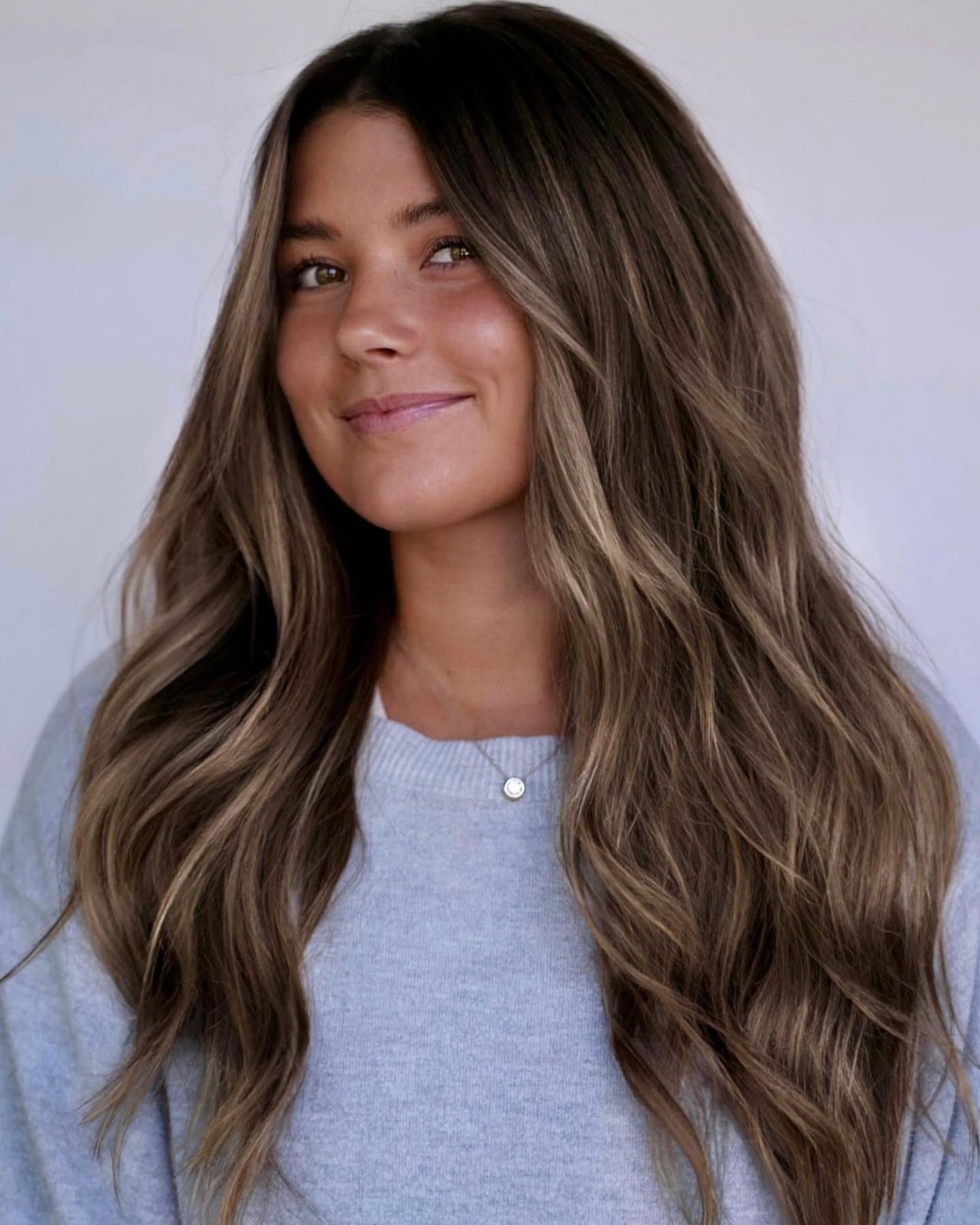
Natural-looking highlights rely on a tight blend rather than contrast, which is what makes this collarbone cut read as sun-kissed instead of salon-striped. The side parting and soft waves help the blonde pieces sit where they should, while the medium brown base keeps the grow-out honest. Ask your colorist for: natural-looking blonde highlights on medium brown collarbone length hair. Medium density wavy hair carries this finish best, since the movement lets the color shift as you turn your head. You will be back for a gloss every eight to ten weeks to keep the blonde from drifting brassy, and the root line stays forgiving because the blend was never stark to begin with.
Dark Brown With Natural Blonde Highlights, Chin
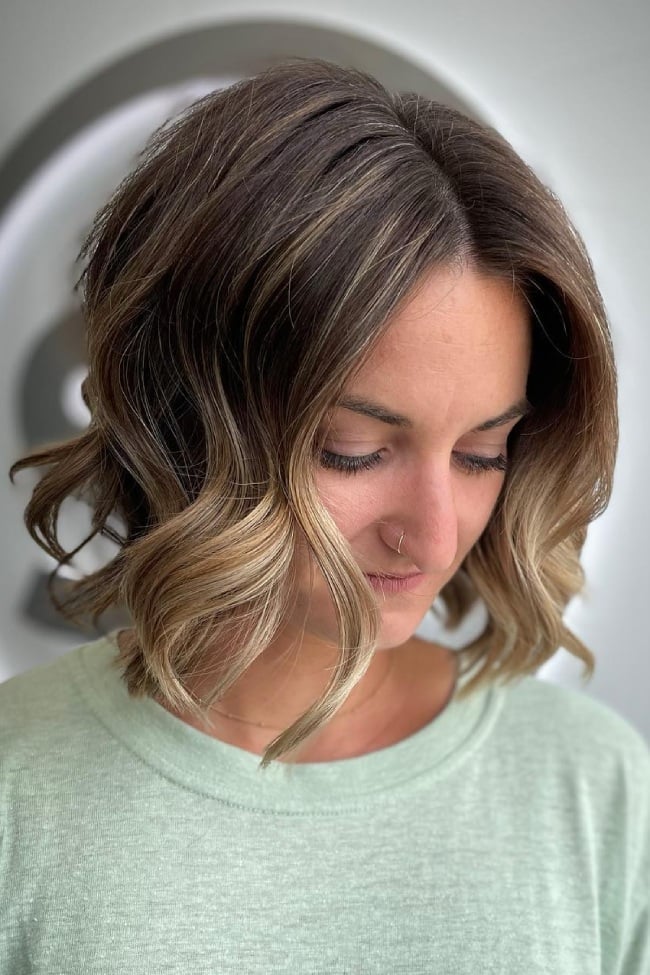
Concentrating the blonde toward the ends of a chin-length bob creates a subtle lift where the hair swings, not at the scalp where it would demand constant attention. Fine, wavy texture can struggle to hold the color visibly, since thin strands show less pigment saturation and the lightness can appear faded instead of deliberate. Ask your colorist for: blonde ends on a dark brown chin-length bob. If your hair is fine, keep the blonde pieces a shade or two softer than the contrast you see on thicker hair, otherwise the ends start to look disconnected from the base.
Light Brown With Subtle Blonde Highlights
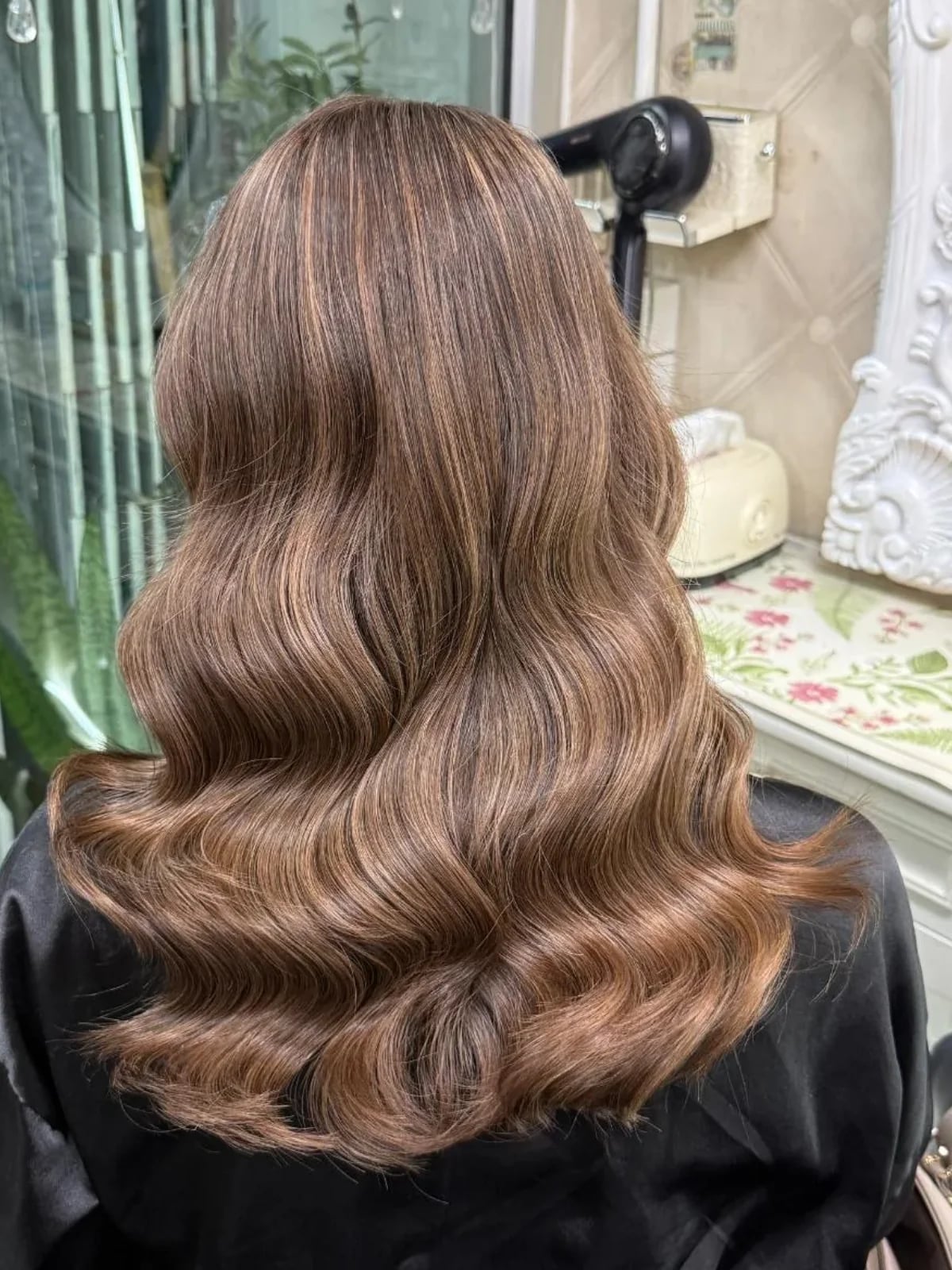
This is the quieter sibling of the bold highlight family, and it suits anyone who wants dimension without the announcement. Where chunky pieces carve obvious stripes through the hair, these subtle blonde highlights are woven thinly enough that the light brown base still leads the conversation, with the lighter strands adding depth on thick, wavy mid-back length hair.
Ask your colorist for: subtle blonde highlights on light brown mid-back length hair. The payoff is a lived-in look that grows out without a hard line, so you can stretch touch-ups to twelve weeks if you are patient. Thick texture is the advantage here: dense hair gives the fine highlight strands something to sit against, so the dimension reads clearly rather than getting swallowed by the base.
Dark Brown With Dimensional Highlights, Collarbone
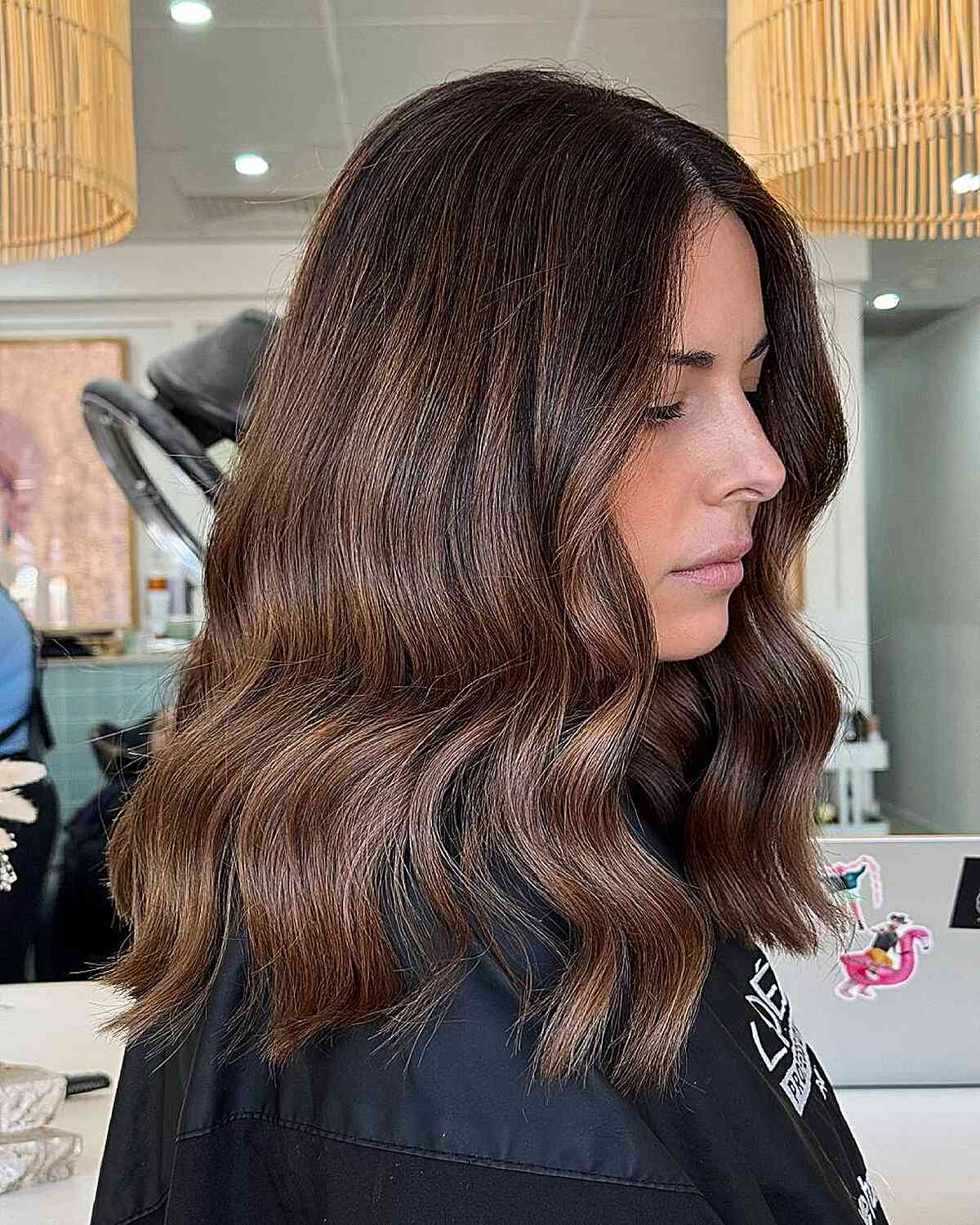
Dimensional highlights on a dark brown base work best on thick, wavy hair, where the movement lets the lighter pieces catch light from different angles at every turn of the head. The collarbone length and middle parting give the waves room to swing, and the blonde strands are spaced enough that the dark brown still anchors the overall tone. Ask your colorist for: dimensional blonde highlights on dark brown collarbone length hair. The result is a natural effect that does not flatten as the day goes on, since the texture and the color variation keep each other company. Square and round face shapes both handle this length well, as the soft layers around the jaw soften the line without shortening the face.
Dark Brown Bob With Blonde Ends
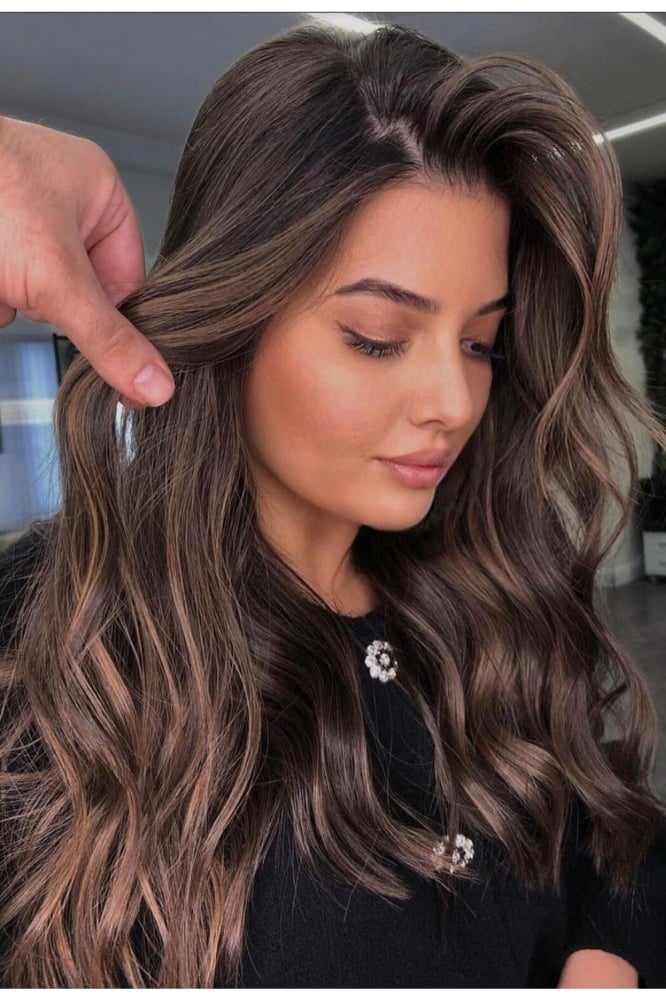
Caramel blonde highlights placed on the ends of a dark brown bob create a color melt that starts deep at the root and lightens as it travels down the mid-back length. The technique is a balayage-style sweep rather than foils from the scalp, which is why the transition looks graduated instead of striped. Ask your colorist for: caramel blonde ends on dark brown mid-back length hair. The wavy, thick texture is essential here, because straight hair would show the color shift as a hard line instead of a soft fade. This placement is high on payoff and low on maintenance, since the root stays dark and the grow-out just looks like the design continuing. A toner every ten weeks keeps the caramel from turning orange.
Dark Brown With Dimensional Highlights, Mid-Back
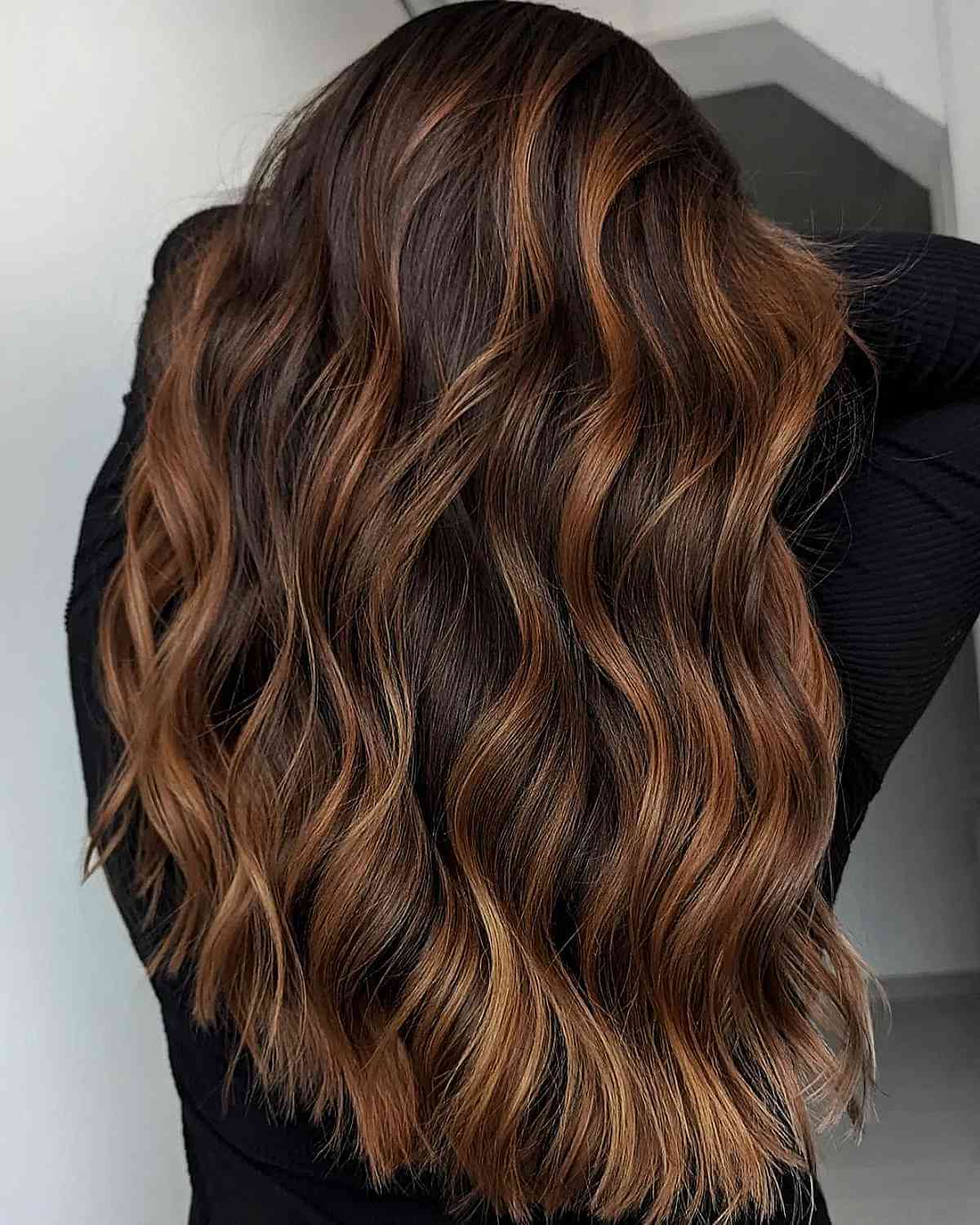
A back view tells you everything about how dimensional highlights on dark brown hair actually behave: the blonde strands catch light in a scattered rhythm, not a solid stripe, because the wavy texture breaks up the reflection. The mid-back length gives the waves enough room to travel, and the thick density means the highlights sit as accent pieces that do not take over the whole shape. Ask your colorist for: dimensional blonde highlights on dark brown hair, mid-back length.
The grow-out on this placement looks intentional for about eight weeks because the blonde is woven through, not painted on the surface. A blowout with a round brush at the ends adds the polished volume the back view needs. A toning appointment every ten weeks keeps the blonde from drifting warm against the dark brown base. The key is not to over-wash it: a dry shampoo stretch between shampoos preserves the contrast longer.
Dark Brown With Evenly Distributed Blonde Highlights
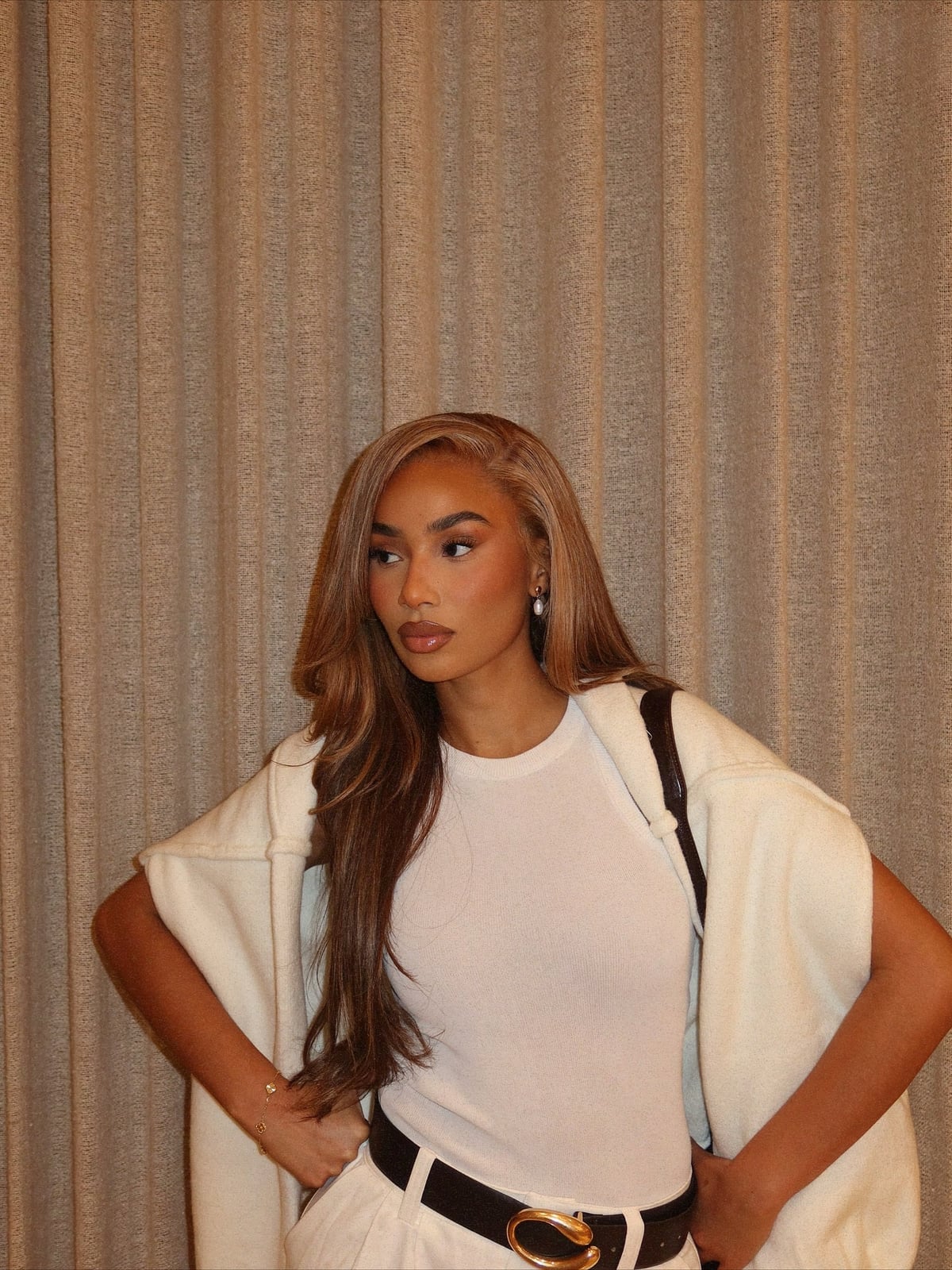
Can you get evenly distributed blonde highlights on dark brown hair at home? The short answer is no, because the back view reveals the real test: the blonde pieces need to land with the same density from crown to ends, and that requires foils placed by someone who can see the whole head at once. A salon can weave the highlights through the mid-back length in a way that reads as balanced dimension rather than random brightness. This is a two-and-a-half-hour chair commitment, and the payoff is a color that looks polished from every angle without you having to angle your head in the bathroom mirror to check the back.
Final Thoughts
For a bold contrast, ask for thicker, more prominent highlights. For a softer, blended look, opt for finely woven babylights or balayage techniques.
- Toning appointments are typically needed every 6-8 weeks to maintain cool blonde tones.
- Use color-safe shampoo and conditioner to preserve vibrancy and prevent brassiness.
- Deep conditioning treatments once a week will keep highlighted hair moisturized.
- Protect hair from heat styling with a thermal protectant spray.
Find your perfect blonde highlight on a dark base.
