

Beach waves have a way of making even a Tuesday feel like a vacation. For 2027, the look leans into lived-in color and soft face-framing layers, trading scrunched ends for a glossier, more natural finish.
This collection of 27 ideas covers the range from air-dried texture to a polished blowout, with lengths from chin to mid-back. Whether your hair is fine or thick, straight or wavy, there is a wave pattern and color placement here that works without a trip to the salon every two weeks. Fine hair that falls flat by noon? A root shadow and a few strategic layers fix that.
Mid-Back Length Lived-In Waves
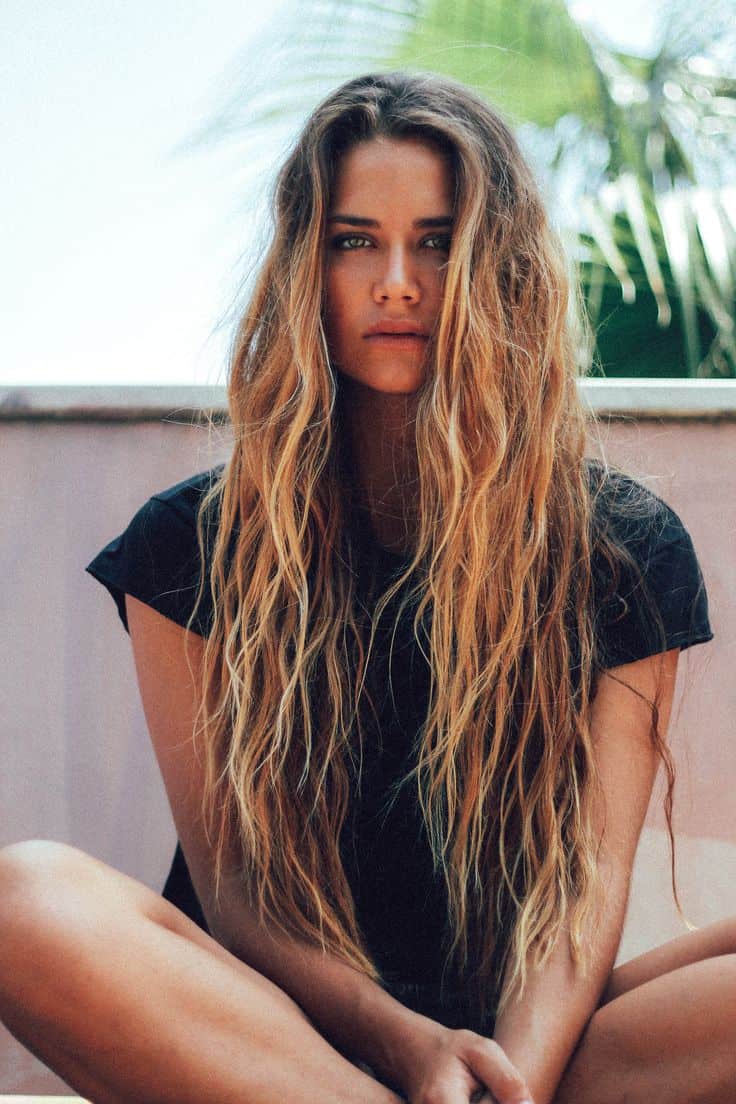
Thick, wavy hair gets the most out of this approach since the texture holds the shape without a curling iron. A middle part and face-framing layers suit most face shapes, keeping the weight off the jaw. Ask your stylist for: mid-back length lived-in waves, honey blonde highlights, face-framing layers. Air dry with a texturizing spray and scrunch to encourage the wave pattern; a trim every six to eight weeks keeps the layers from turning into a triangle.
Mid-Back Waves With Bold Balayage
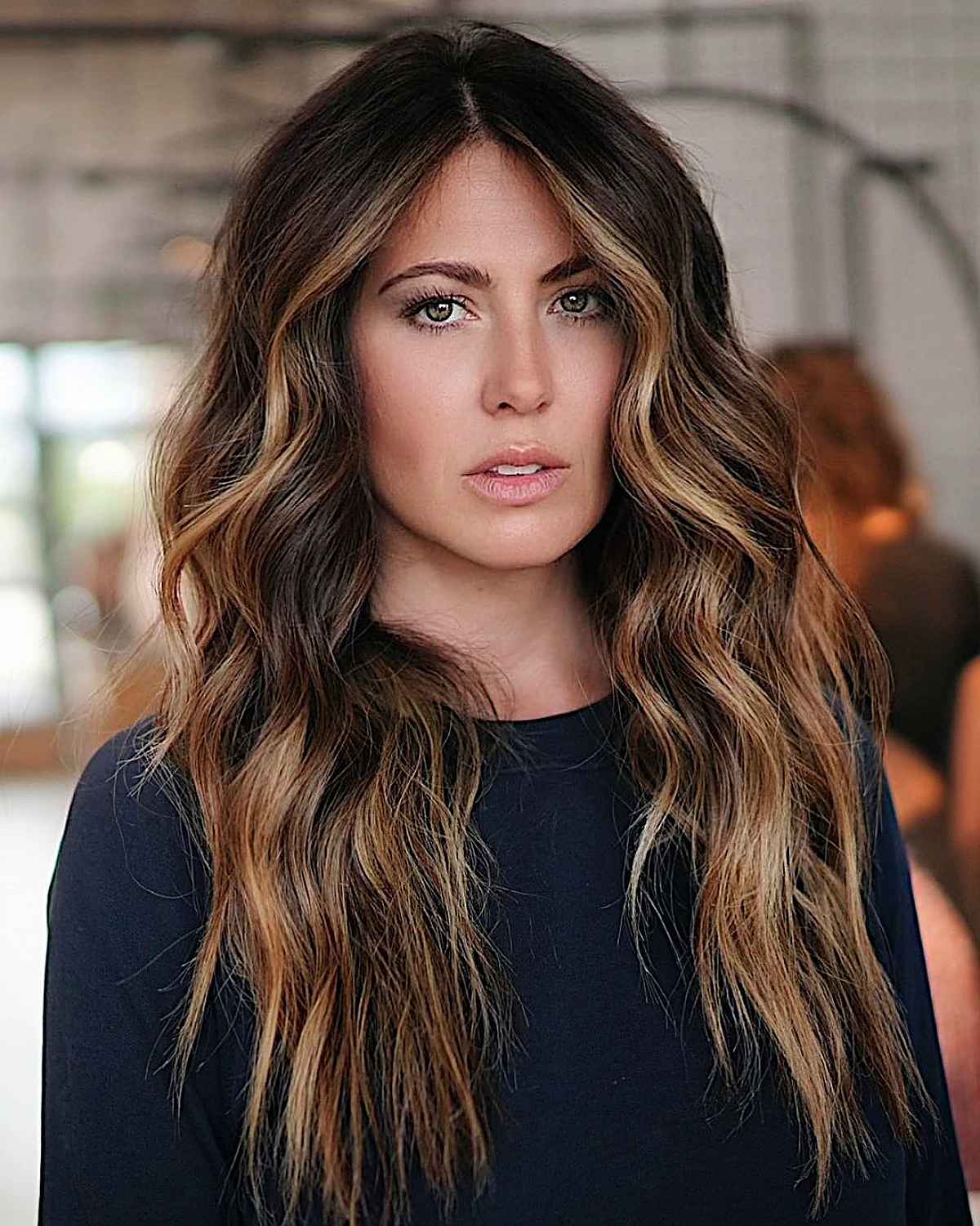
Where the air-dried version relies on texture alone, this one lets color create contrast. Long layers and curtain bangs frame the face, while a dark brown base with a striking blonde balayage adds dimension. Curtain bangs complement oval and long faces by shortening the visual length of the face. Ask your stylist for: mid-back length waves, dark brown with blonde balayage, curtain bangs. Use a large barrel curling iron to define the waves, since the color shows best when the bends are consistent. A trim every eight to ten weeks keeps the layers fresh.
Glossy Dark Brown Lob With Balayage
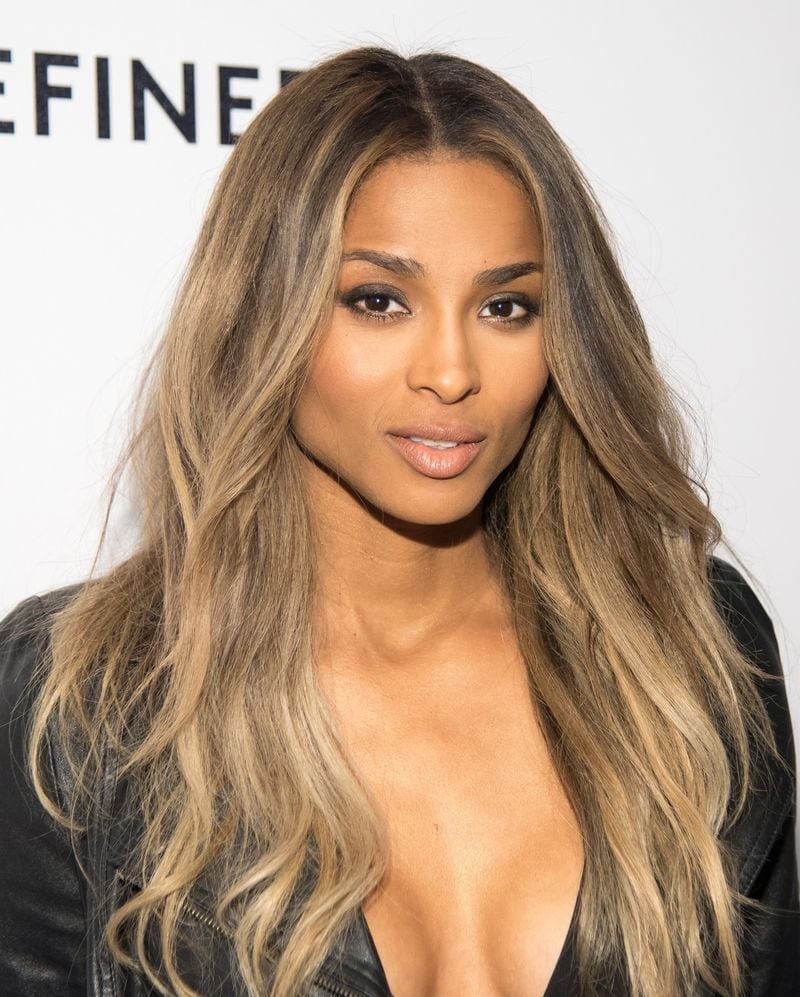
A blowout turns the same dark brown base and blonde balayage into something with a mirror finish. The mid-back length and long layers are styled with a middle part and a round brush, creating smooth bends that still read as beach waves. This approach works on thick, wavy hair that can hold the shape against gravity. Ask your stylist for: mid-back length wavy blowout, dark brown with blonde balayage. Apply a shine serum to the ends before styling to get that glossy surface; tone the blonde highlights every six to eight weeks to prevent the lighter pieces from pulling brassy against the dark base.
Mid-Back Dark Brown With Caramel Balayage
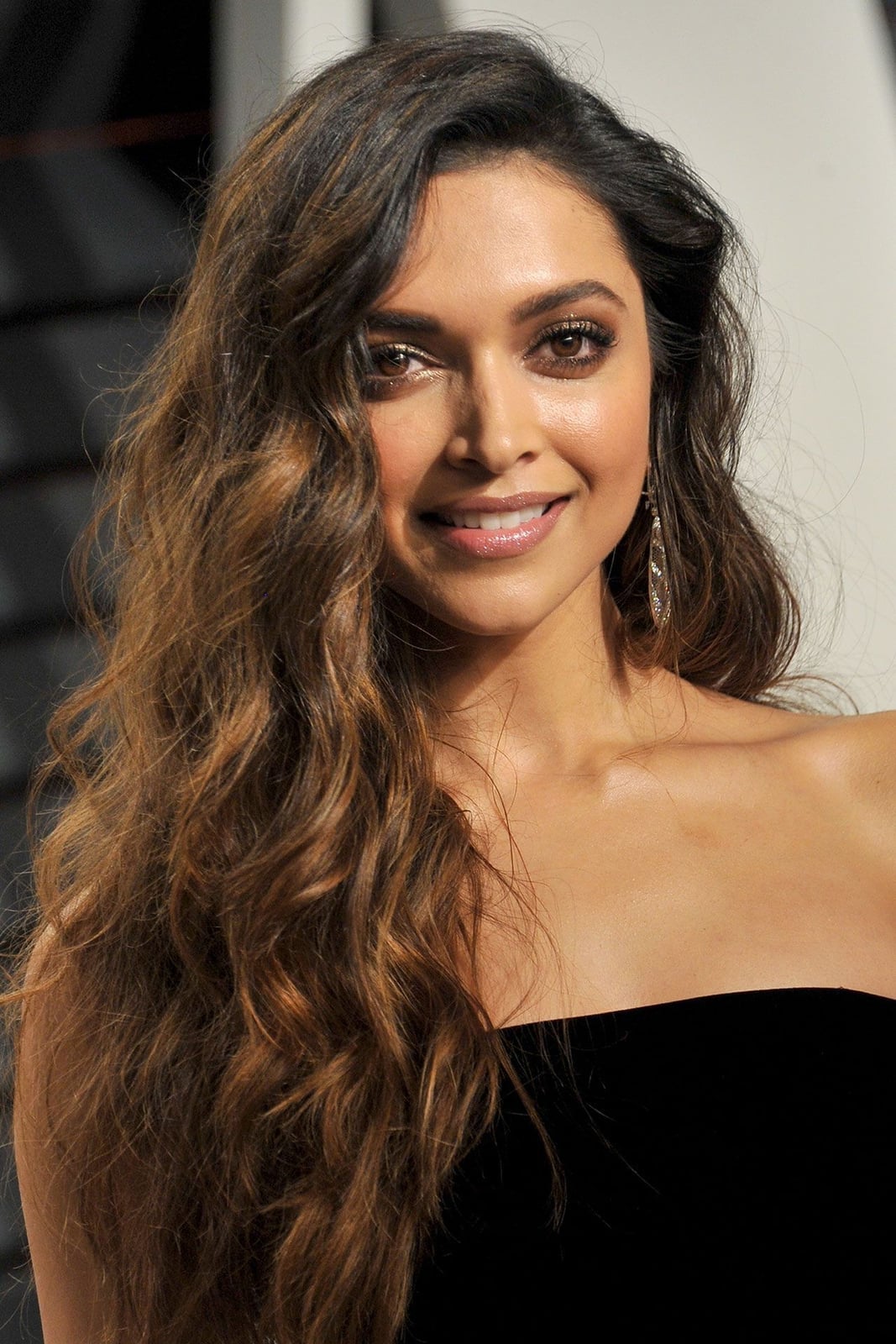
Wondering how to get that sun-baked effect without looking like you tried too hard? The answer is caramel balayage on a dark brown base. Loose waves and a side part add volume to the crown, while the layers create movement through the mid-back length. A side part can add volume to fine hair by redistributing the weight. Ask your colorist for: mid-back wavy hair with caramel balayage, side part. Use a texturizing spray on the ends for definition, and let the balayage grow out naturally for a lived-in effect that lasts months.
Collarbone Lob With Blonde Balayage
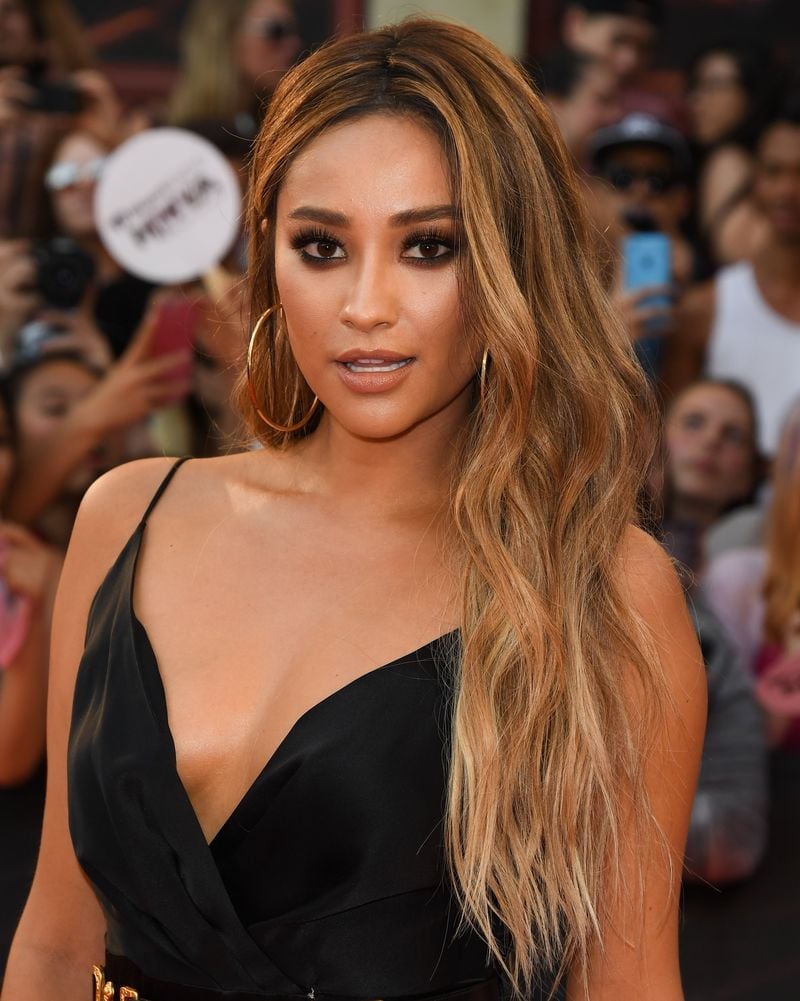
Collarbone length is the sweet spot where waves still have room to move but the style stays out of your way. This lob uses a side parting and side-swept bangs to soften the line, with a blonde balayage blended into a darker base for a grown-out effect that looks intentional. Side-swept bangs soften square and round faces by breaking up the horizontal line. Ask your colorist for: collarbone length wavy lob, blonde balayage, side-swept bangs.
Blow-dry the bangs with a round brush to keep them sweeping in the right direction. A trim every six to eight weeks maintains the collarbone length, and the balayage needs a toning session every eight weeks to keep the blonde from warming up against the darker base.
Shoulder Length Honey Blonde With Curtain Bangs, Office-Safe Version
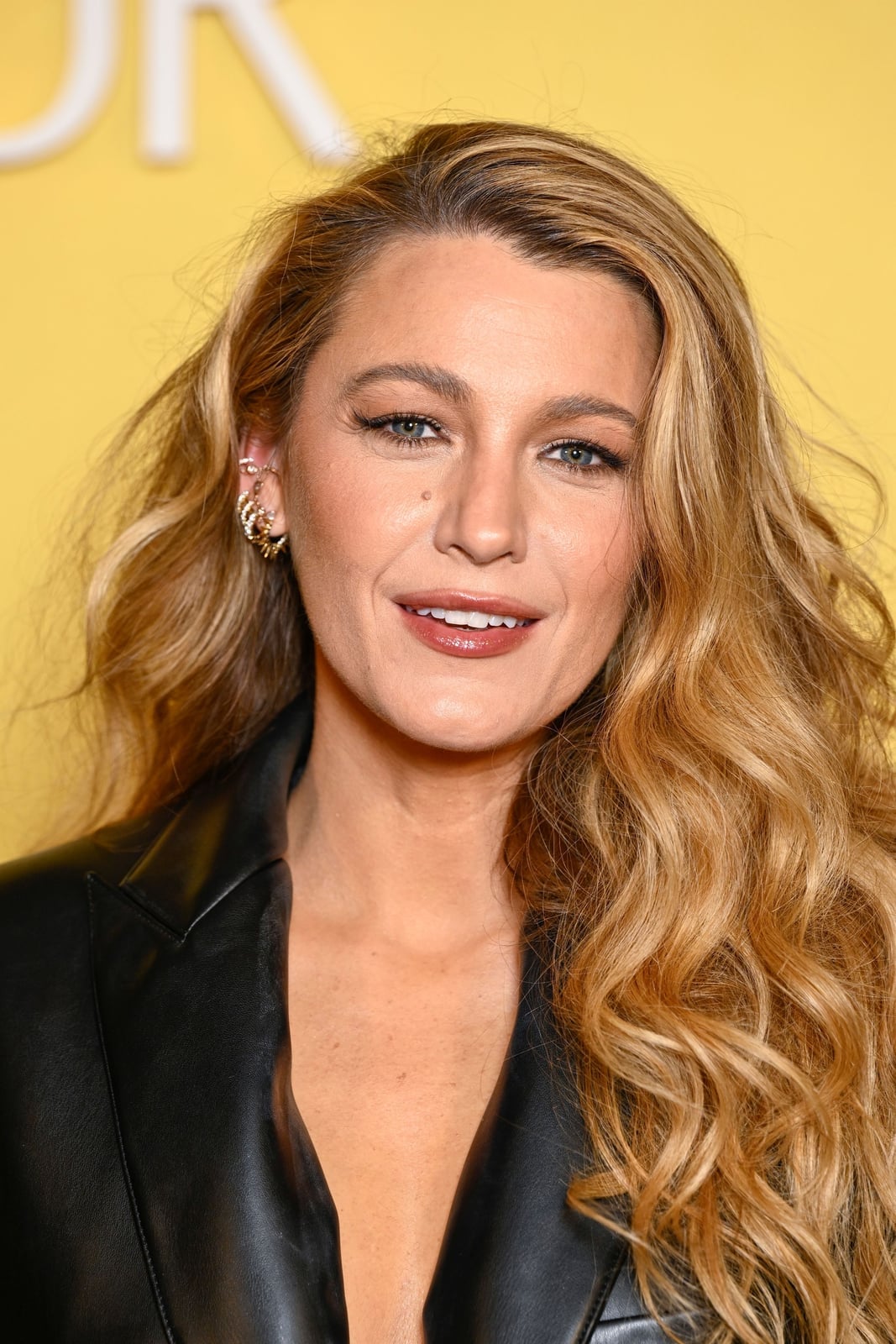
Honey blonde highlights are painted from mid-lengths to ends so the curtain bangs catch the light at cheekbone level. A middle part and a blowout with a round brush turn the thick, wavy texture into glossy bends that hold their shape through the day. Ask your stylist for: shoulder length wavy blonde, honey blonde highlights, curtain bangs. The curtain bangs need a trim every six to eight weeks to keep them grazing the cheekbones rather than drifting into the eyes.
Long Layered Hair With Natural Highlights

The layers are cut to move with the wave pattern, so the texture does the work. Ask your colorist for: long layered hair, natural blonde highlights, air-dried finish. To get close at home, start with damp hair, apply a leave-in conditioner, then let it dry without touching it. A texturizing spray on the ends breaks up any clumps. Air-dried waves on thick hair can look heavier on day two, so a quick refresh with water and a scrunch is the standard fix.
Mid-Back Wavy Hair With Subtle Highlights
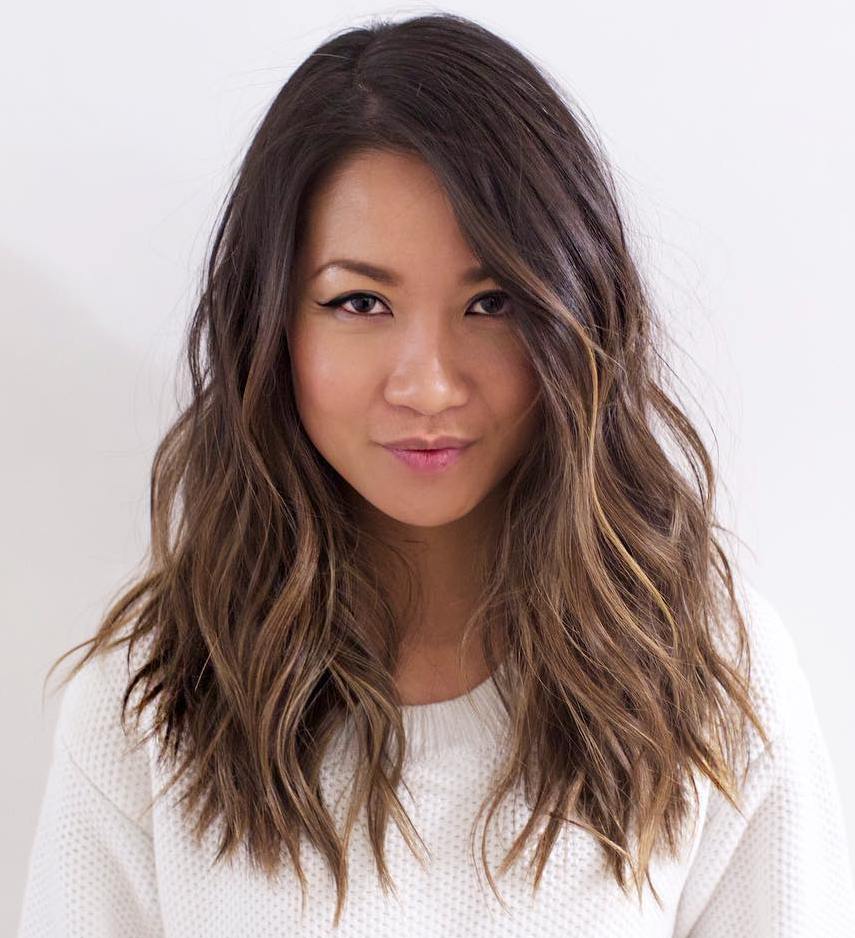
A dark brown base with subtle blonde highlights creates the lived-in color effect that keeps grow-out looking natural. The air-dried texture and middle part lean into the low-maintenance side of beach waves, but thick, wavy hair at mid-back length has a habit of swallowing fine highlights. Ask your colorist for: mid-back length wavy hair, dark brown with subtle blonde highlights. The highlights need to be placed where the wave bends, or they disappear into the base. Air-dried waves on thick hair can frizz at the crown, so a lightweight leave-in conditioner is the difference between polished and undone.
Long Blonde Hair With Classic Highlights
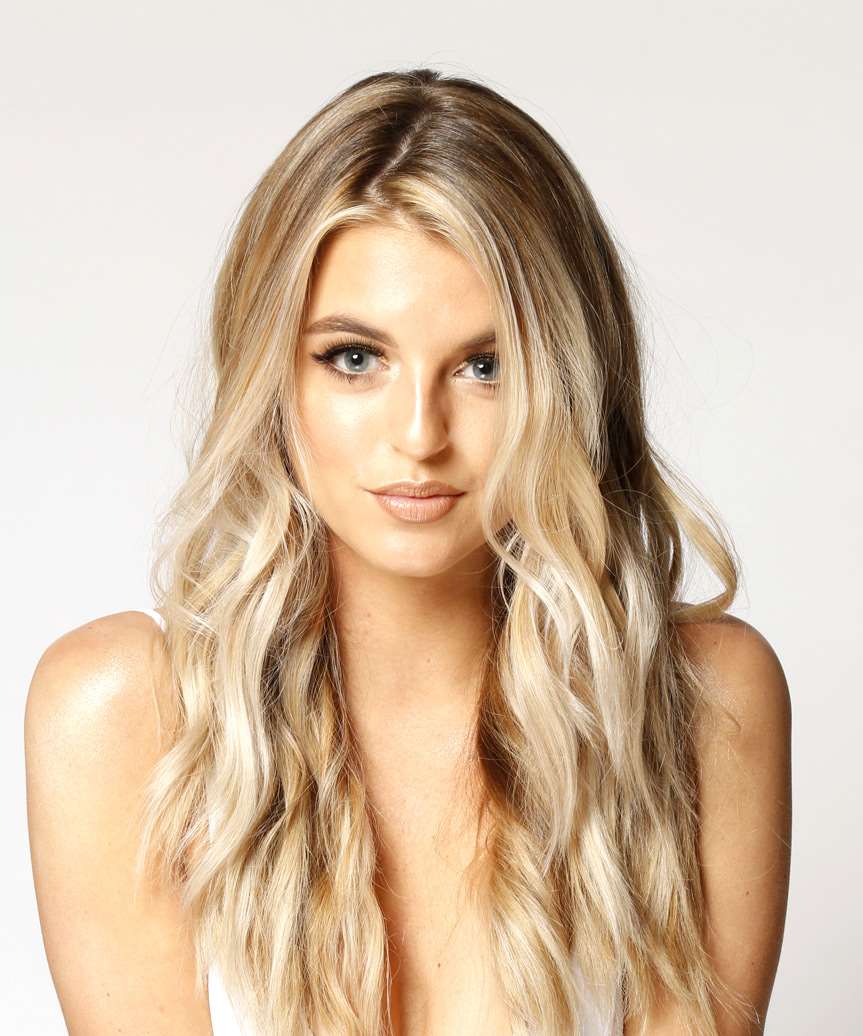
Does classic highlighting still work on long, thick hair? Yes, when the highlights are subtle enough to blend with the base and the wave pattern softens the regrowth line. The middle part and soft wavy texture give the color dimension without stripes. Ask your colorist for: long blonde hair, subtle highlights, loose beach waves. A large round brush sets the wave, and a toning appointment every six to eight weeks keeps the highlights from shifting too warm. Thick, wavy hair at mid-back length benefits from the layers, which prevents the ends from looking too dense.
Collarbone Waves With Blonde Balayage and Curtain Bangs
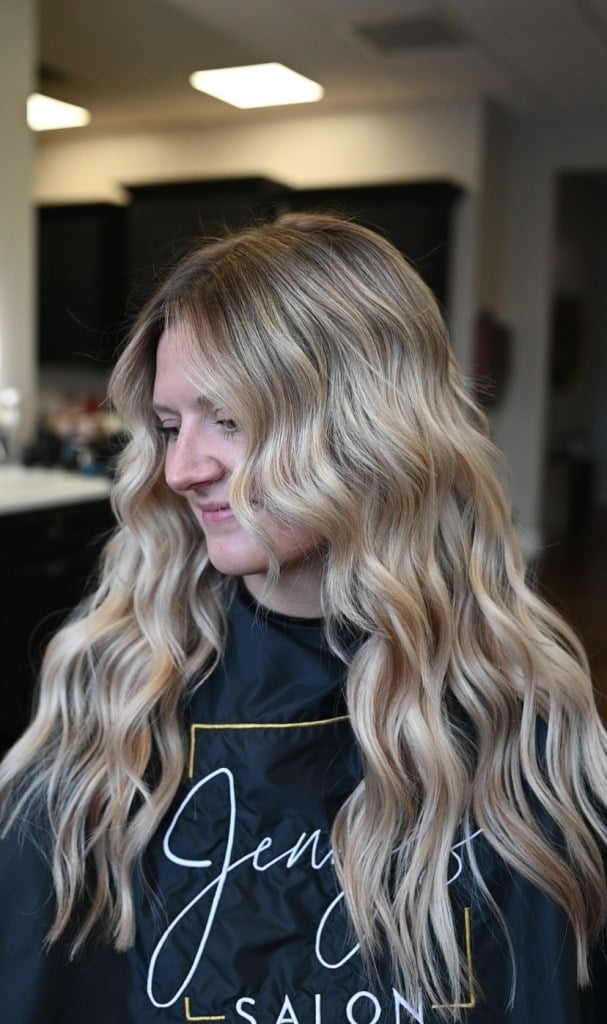
Collarbone-length waves with curtain bangs rely on layers to keep the shape from feeling blunt. The blonde balayage is painted onto the ends, so the color lightens toward the tips while the roots stay darker. Ask your stylist for: collarbone length waves, blonde balayage, curtain bangs. The layers should start below the chin and taper into the bangs for a seamless face frame. A round brush sets the wave, and the curtain bangs soften the transition from root to highlight. Thick, wavy hair at collarbone length holds the wave well, and a trim every six to eight weeks maintains the shape.
Mid-Back Blonde Balayage With Curtain Bangs

It’s not a blowout that fights your texture, it’s one that works with it. This mid-back length relies on a round brush and a medium heat setting to shape the curtain bangs forward while the rest of the hair dries into loose, glossy waves. Ask your stylist for: mid-back length blonde balayage, curtain bangs, glossy waves. The balayage starts a few inches from the roots, so the grow-out line stays soft for about eight weeks before a toning appointment is due. Thick, wavy hair at this length holds the bend without product, but a spritz of volumizing spray at the roots before drying gives the crown a little extra lift.
Collarbone Dark Brown With Blonde Highlights

The face-framing layers in this collarbone cut are what keep the blonde highlights from feeling like an afterthought. On thick, wavy hair, the lighter pieces land around the jaw and cheekbones, which softens a square or angular face shape without needing bangs. Ask your colorist for: dark brown with blonde highlights, wavy layers. A natural blowout with a middle part lets the dimension do the work. The collarbone length is forgiving for grow-out, but a trim every six to eight weeks keeps the layers from losing their shape.
Collarbone Light Brown With Blonde Balayage

The curtain bangs here are the part that needs the most attention. They frame the face at cheekbone level and, on medium-density wavy hair, they blend into the longer layers without a harsh line. Ask your stylist for: collarbone length wavy hair, light brown with blonde balayage, curtain bangs.
Blow-dry the bangs with a round brush and a shot of cool air to set the curve. The rest of the hair dries into loose waves with minimal effort. The light brown base means the balayage grows out gradually, so a toning appointment every ten weeks is usually enough to keep the blonde from going brassy. A trim every six to eight weeks maintains the collarbone length.
Collarbone Blonde Balayage With Soft Waves, Wavy
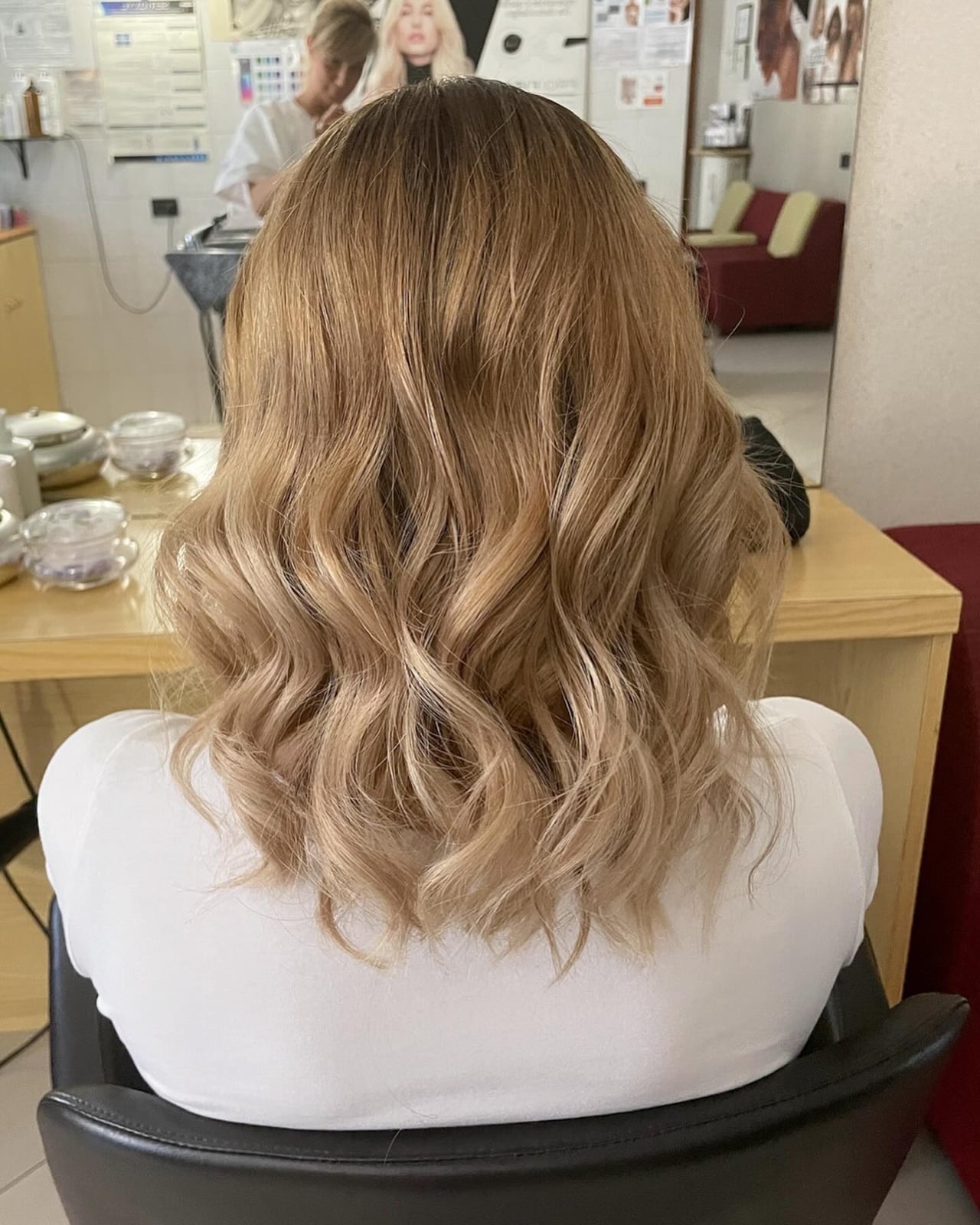
The result is soft, loose waves that fall in the same direction, not a random curl. Ask your stylist for: collarbone length wavy hair, blonde balayage, soft waves. The balayage is painted from mid-lengths to ends, so the root area stays a natural blonde and the lighter pieces become visible when the waves move. Thick, wavy hair holds this bend for most of the day.
Collarbone Ash Blonde With Textured Waves
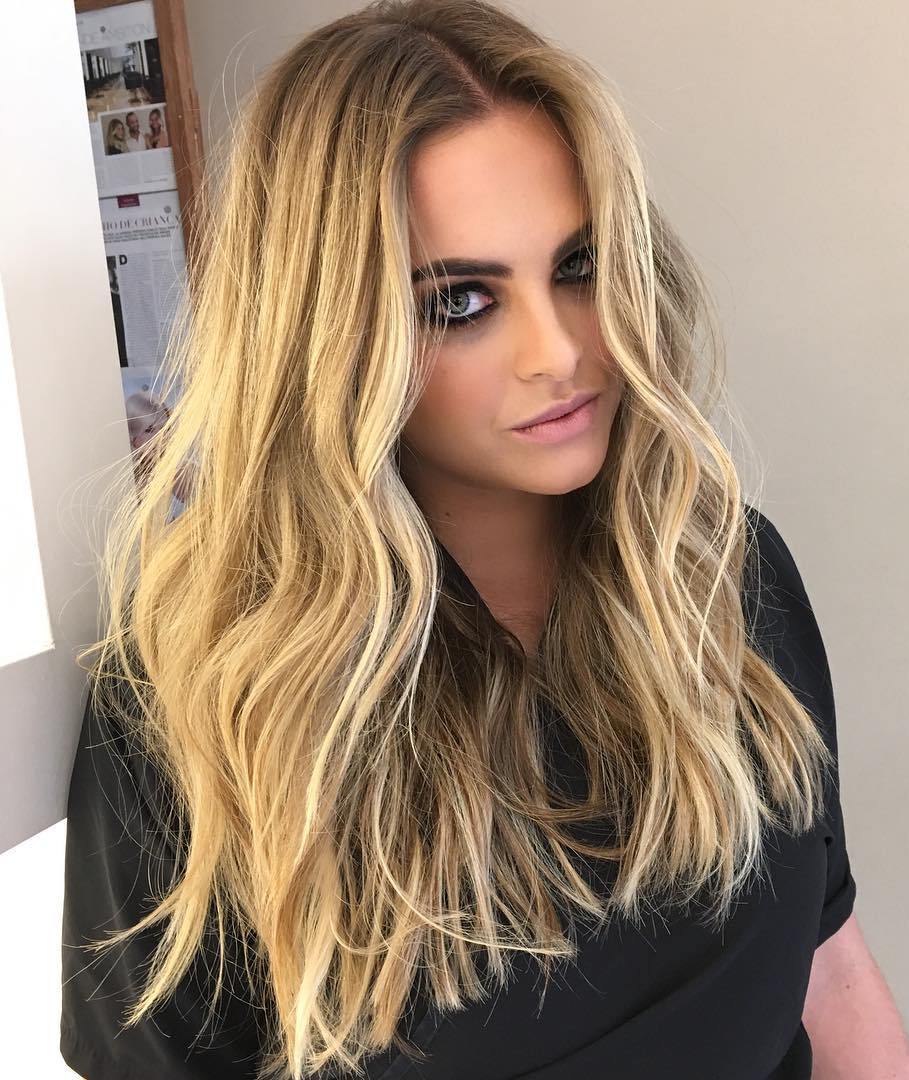
Does ash blonde ever stay ash without a fight? Not really, but a cool, lived-in tone is the result. This collarbone length uses subtle lighter highlights woven through the ends, so the wave pattern keeps the lighter pieces visible while the darker base stays present. Ask your colorist for: collarbone ash blonde waves, subtle highlights, textured blowout. The catch is toning every four to six weeks with a purple shampoo, because warm tones show up fast on medium-density hair. A texturizing spray on dry hair helps the waves hold their shape without looking stiff.
Collarbone Blonde Lob With Root Shadow
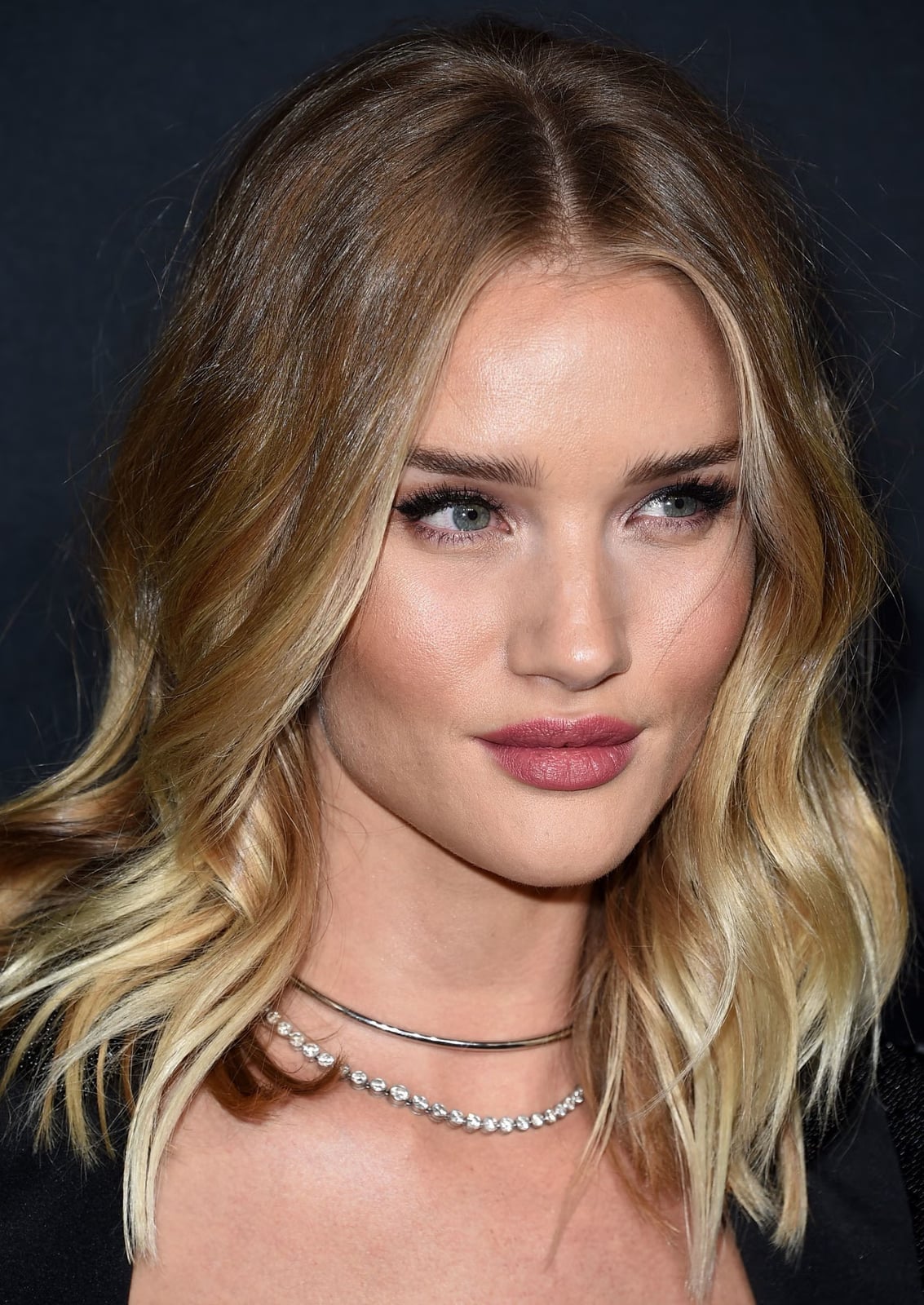
A collarbone-length lob in blonde with darker roots is the color equivalent of a well-worn pair of jeans: it looks better the longer it goes. The root shadow is the point, so you can skip the every-four-weeks touch-up panic. Ask your colorist for: collarbone length blonde lob, root shadow, soft waves. The middle part keeps the face open, and the wavy blowout gives it that “I woke up like this” energy, minus the actual waking up. For medium-density wavy hair, the hold is solid for a day or two before the waves soften. A dry shampoo at the roots revives the volume, and a trim every six to eight weeks keeps the lob from drifting into shag territory.
Collarbone Layered Waves With Lighter Highlights
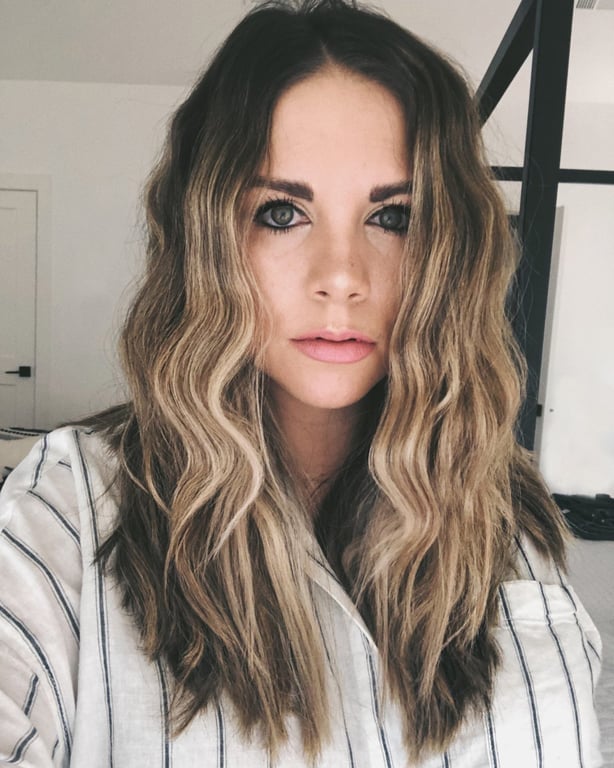
Layers at collarbone length give medium-density wavy hair room to move instead of sitting in a lump. The dark blonde base with lighter highlights adds sun-kissed dimension without looking stripey. Ask your colorist for: collarbone length wavy layers, dark blonde with lighter highlights. The middle part and wavy blowout keep the style relaxed, and the lived-in texture means you are not fighting your natural wave pattern. This cut softens the jaw without hiding it, which suits most face shapes. A dry texturizing spray will wake up the waves on day two, and a trim every six to eight weeks keeps the ends from looking ragged.
Shoulder Length Blonde With Curtain Bangs, Close-Up Take

Wondering how to ask for that curtain bang look without ending up with a blunt fringe? The trick is in the words. Ask your stylist for: shoulder length blonde hair, curtain bangs, soft beach waves. The bangs are cut to graze the cheekbones and part down the middle, blending into the layers so they never look chopped. On fine, wavy hair at collarbone length, they frame the face without weighing it down. The loose blowout keeps the texture soft, and the blonde stays bright with a toning appointment every six to eight weeks. A round brush on the bangs during blow-drying keeps them swooping the right way, and a trim every six to eight weeks keeps them from turning into an accidental bowl cut.
Collarbone Layers With Side-Swept Bangs
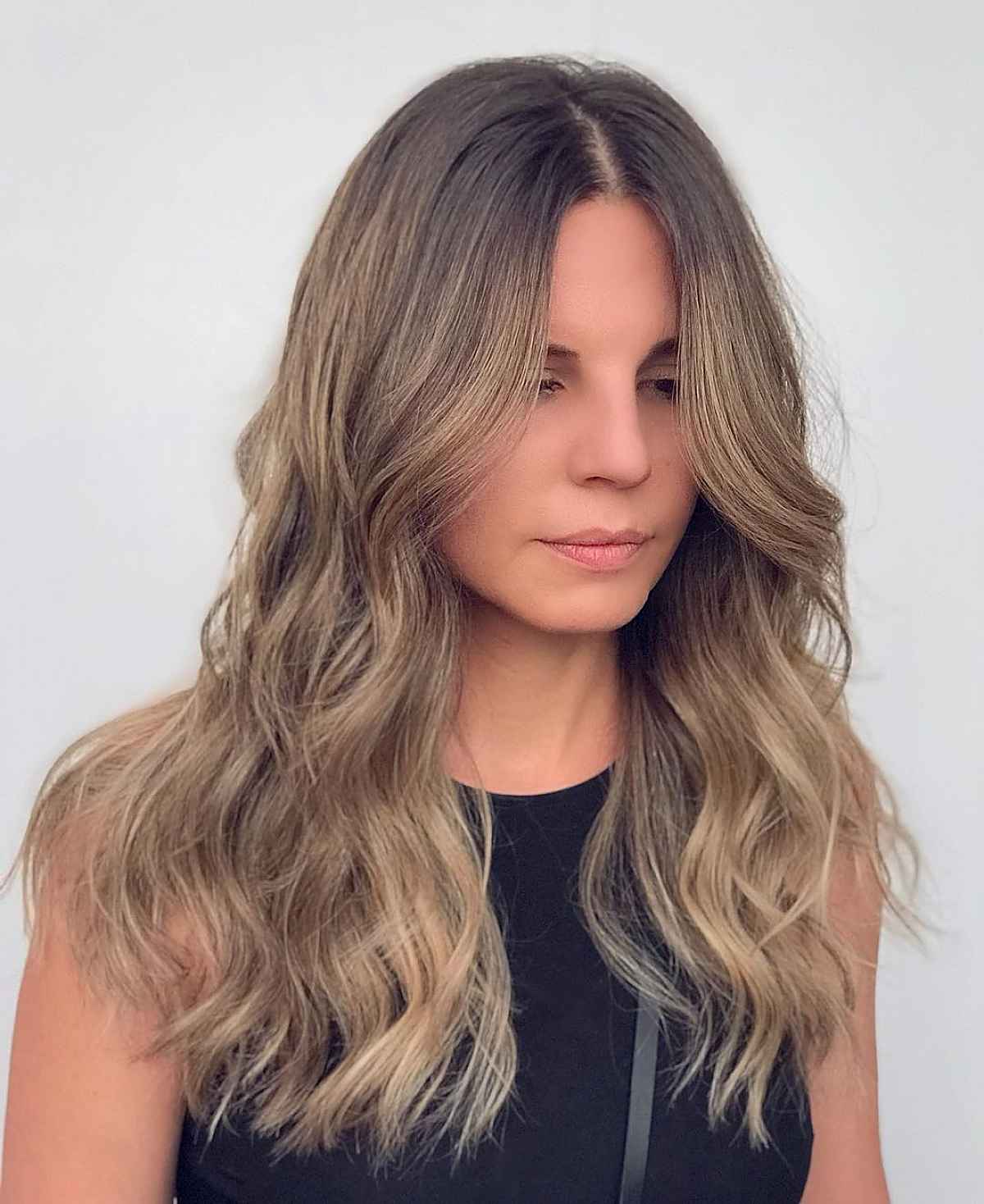
Side-swept bangs are the quiet workhorse of face-framing: they soften a square jaw and round out a long face without the commitment of a full fringe. On collarbone-length wavy layers, they sweep across the forehead and tuck behind the ear, blending into the rest of the cut. The dark blonde balayage does the color work, with lighter tones catching the ends so the waves have somewhere to go. Ask your stylist for: collarbone length wavy layers, blonde balayage, side-swept bangs. The technique is all in the cutting: the bangs are point-cut so they feather rather than sit heavy. Fine, wavy texture holds the sweep for a day, and a quick blow-dry with a round brush resets it each morning. A trim every six to eight weeks keeps the bangs from sliding into your eyes.
Shoulder Length Fine Hair With Balayage
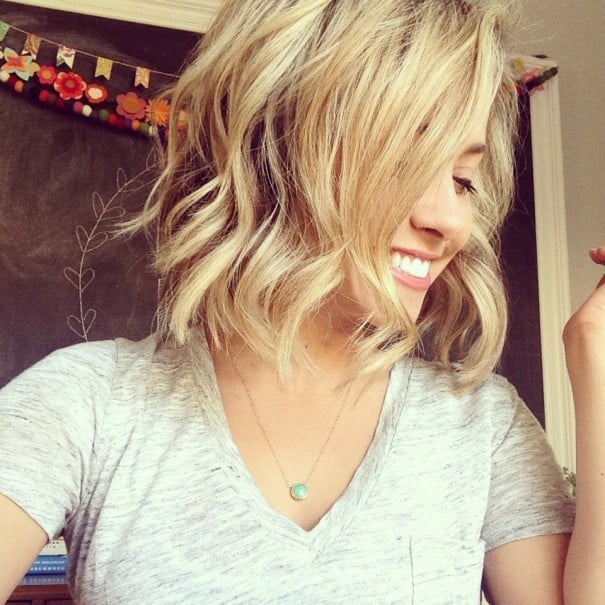
Fine, wavy hair at shoulder length does not need a lot of help, but it does need the right moves. The balayage here starts dark at the roots and lightens toward the ends, which fakes volume by giving the eye somewhere to land. Ask your colorist for: shoulder length fine wavy hair, dark root to blonde balayage, curtain bangs. To get the textured waves at home, start with a volumizing mousse at the roots, then blow-dry with a diffuser, scrunching as you go. Once dry, wrap sections around a curling wand for a few seconds each, then break up the curls with your fingers. The curtain bangs frame the face and dry quickly, which is a win on busy mornings. The balayage grows out soft, so you can stretch toning to every eight to ten weeks, but the ends will need a trim every six to eight weeks to keep the waves bouncy instead of stringy.
Mid-Back Copper With Blonde Highlights
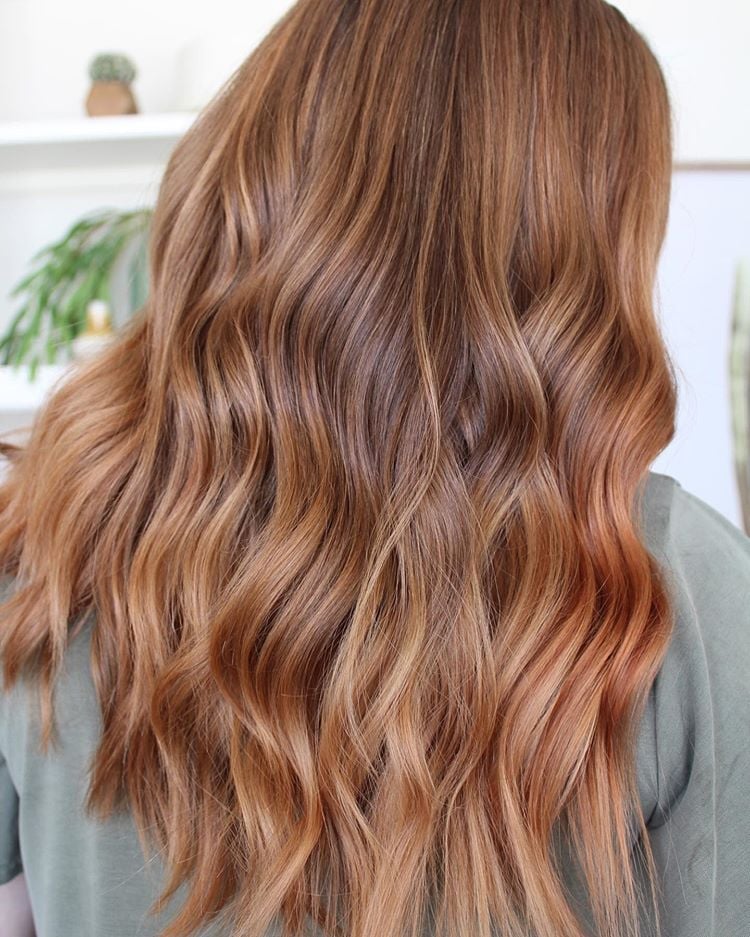
If solid copper feels like too much commitment, the blonde-highlighted version offers a way in. This mid-back length keeps the warmth of a rich copper base but lets blended blonde pieces carry some of the weight, so the color reads dimensional rather than uniform. Thick, wavy texture is the ideal partner here: the highlights catch on each wave and spread the copper around without looking stripey. Ask your colorist for: mid-back length wavy hair, copper base with blonde highlights. The middle part and loose wave pattern let the two tones do the talking. Expect to use color-safe shampoo to keep the copper from fading orange, and book a trim every eight to ten weeks to maintain the shape.
Mid-Back Rose Gold With Root Shadow
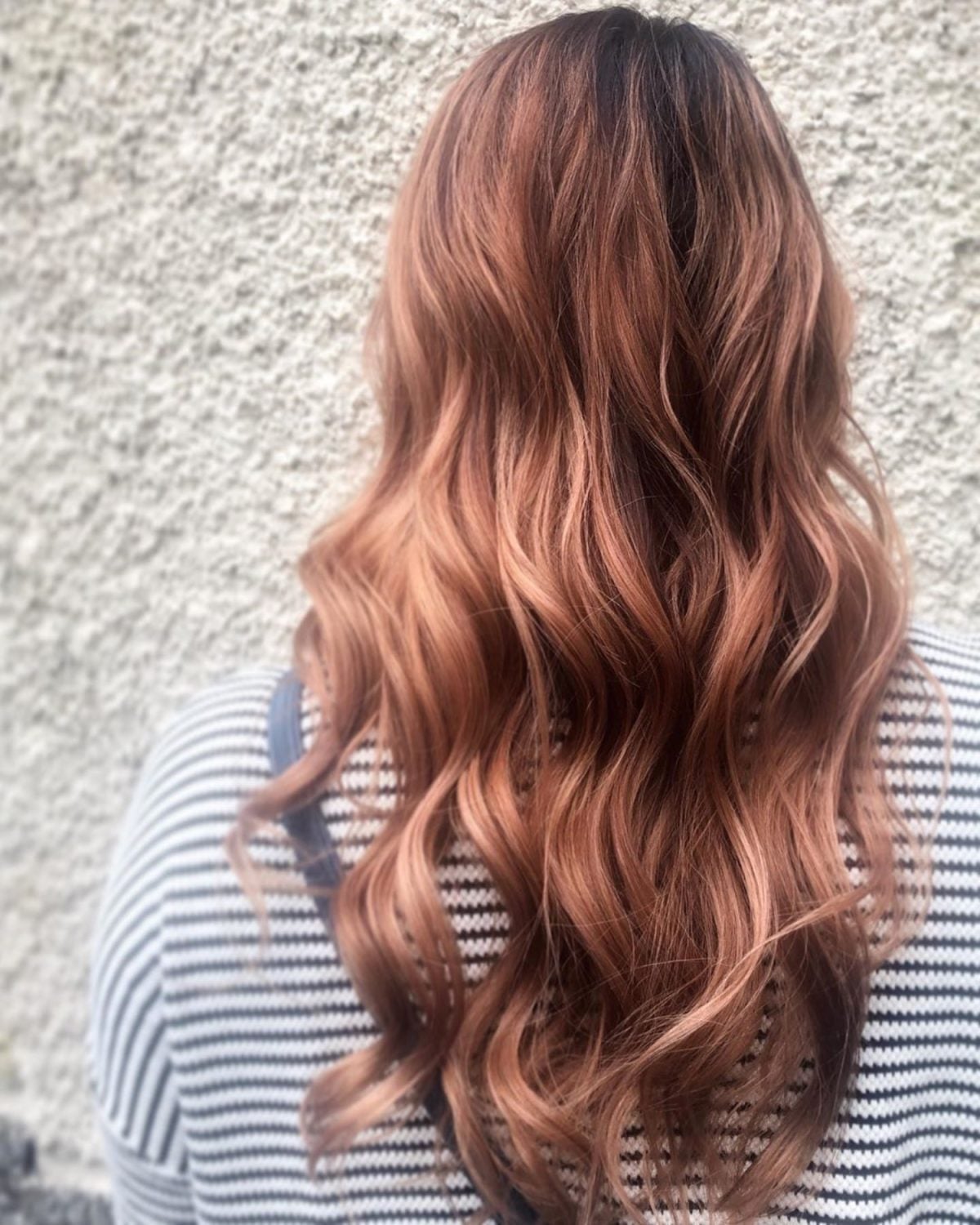
Rose gold on mid-back length hair is a two-step process: the base is lifted to a pale pinkish blonde, then a darker root shadow is painted on to keep the grow-out from looking harsh. The result here sits on thick, wavy texture, with the root shadow starting about an inch down and softening into the rose gold through the lengths. The middle part and loose waves let the gradient breathe. Ask your colorist for: mid-back length wavy hair, rose gold with root shadow. It works best on cool or neutral undertones, since the pink can pull too warm otherwise. A color-depositing conditioner every few washes helps the rose gold stay rosy rather than turning peachy.
Mid-Back Ash Blonde With Dark Roots
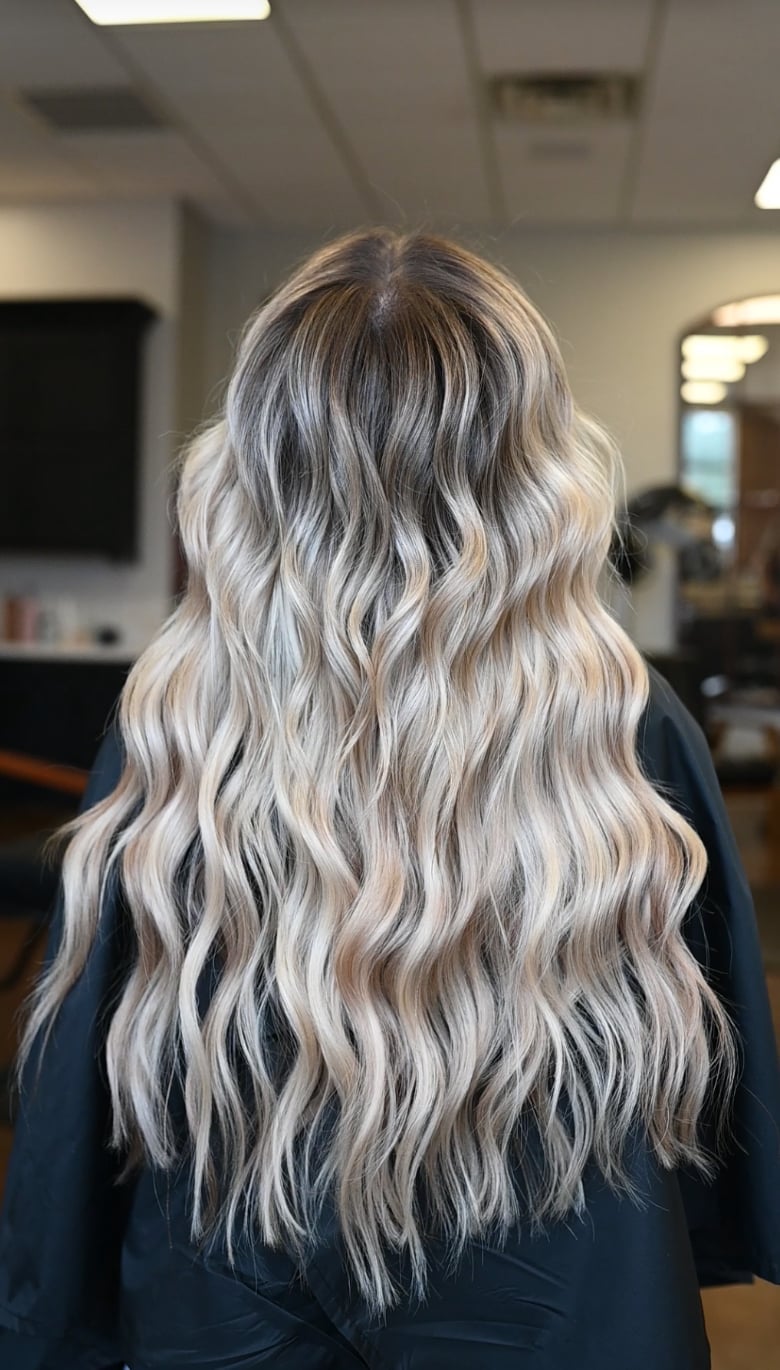
Ash blonde with dark roots and lighter highlights is designed for the person who does not want to visit the salon every six weeks. The darker roots are built in from the start, so the grow-out line is already there. On this mid-back length, the thick, wavy texture gives the ash tone enough surface area to stay cool and dimensional.
The lighter blonde highlights add dimension that ash alone can lack. Ask your colorist for: mid-back length wavy hair, ash blonde with dark roots and highlights. Use a purple shampoo to prevent the ash from turning greenish within a month. The loose waves and middle part keep the overall look relaxed. Trim every eight to ten weeks to keep the ends healthy enough to hold the wave pattern.
Mid-Back Blonde With Root Shadow Blowout
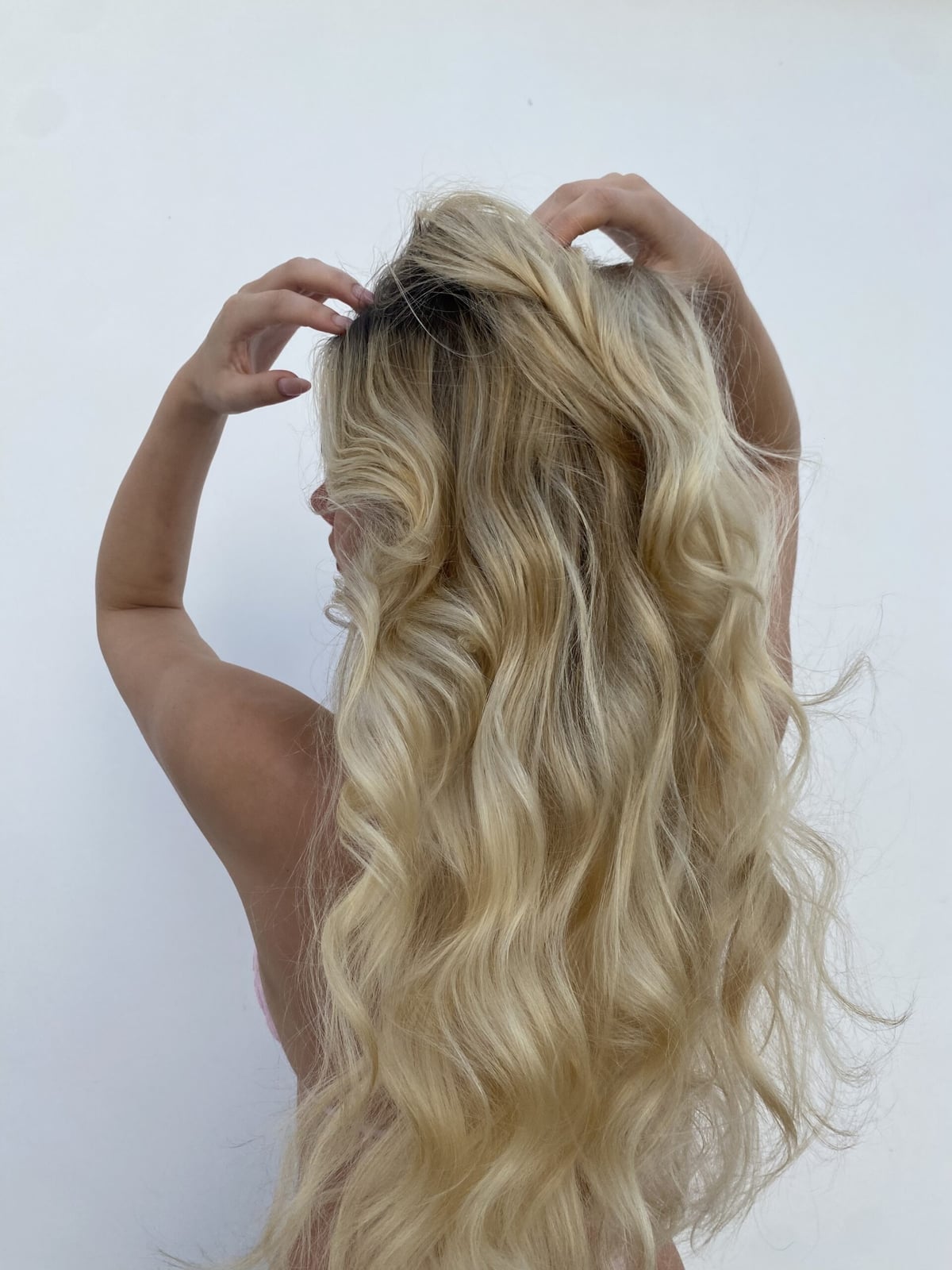
Does a blowout on mid-back length hair actually stay wavy past lunch? It can, provided the root shadow is doing its job. The darker roots add grip at the scalp, so the volume holds longer than it would on all-over blonde. This version uses a middle part and loose waves, with the root shadow starting just below the part line. The trade-off is styling time: a full blowout on thick, wavy hair at this length takes about 30 minutes with a round brush and a heat protectant. Ask your colorist for: mid-back length blonde hair, root shadow, loose waves. Anyone who prefers air-drying should probably skip this one. Trim every eight to ten weeks keeps the ends from fraying.
Mid-Back Blonde With Side-Swept Bangs
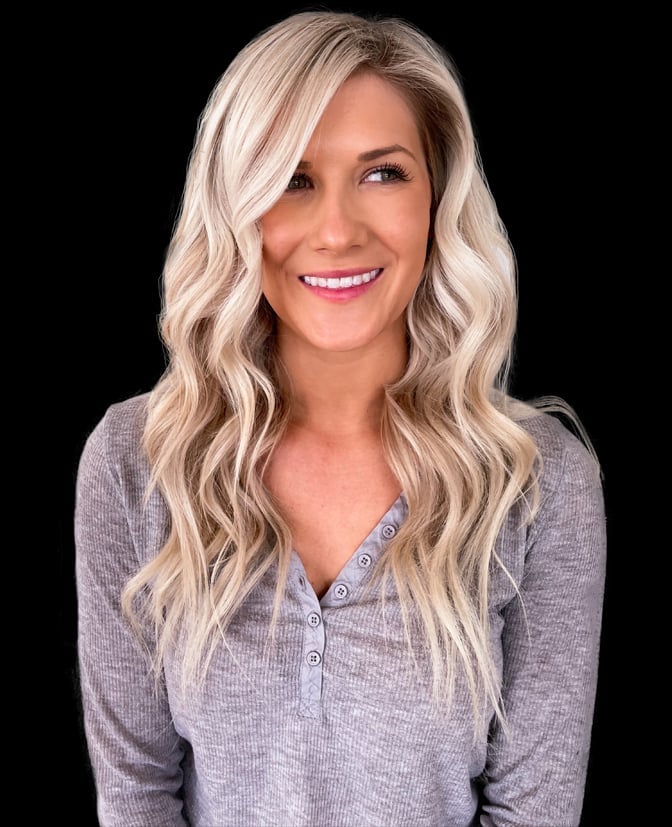
Side-swept bangs on mid-back length hair soften a strong jawline and balance a longer face shape. Here, the bangs are cut to sweep across the forehead and blend into the layers, while the hair stays thick and wavy with subtle blonde highlights. The side parting directs the wave pattern to fall away from the face, which keeps the bangs from looking disconnected. Ask your stylist for: mid-back length blonde hair, side-swept bangs, subtle highlights. The glossy finish comes from a round brush blowout, not from any product trick. Thick, wavy texture holds the shape well, though the bangs need a trim every six to eight weeks to stay out of your eyes.
Chin Length Ash Blonde Bob With Waves
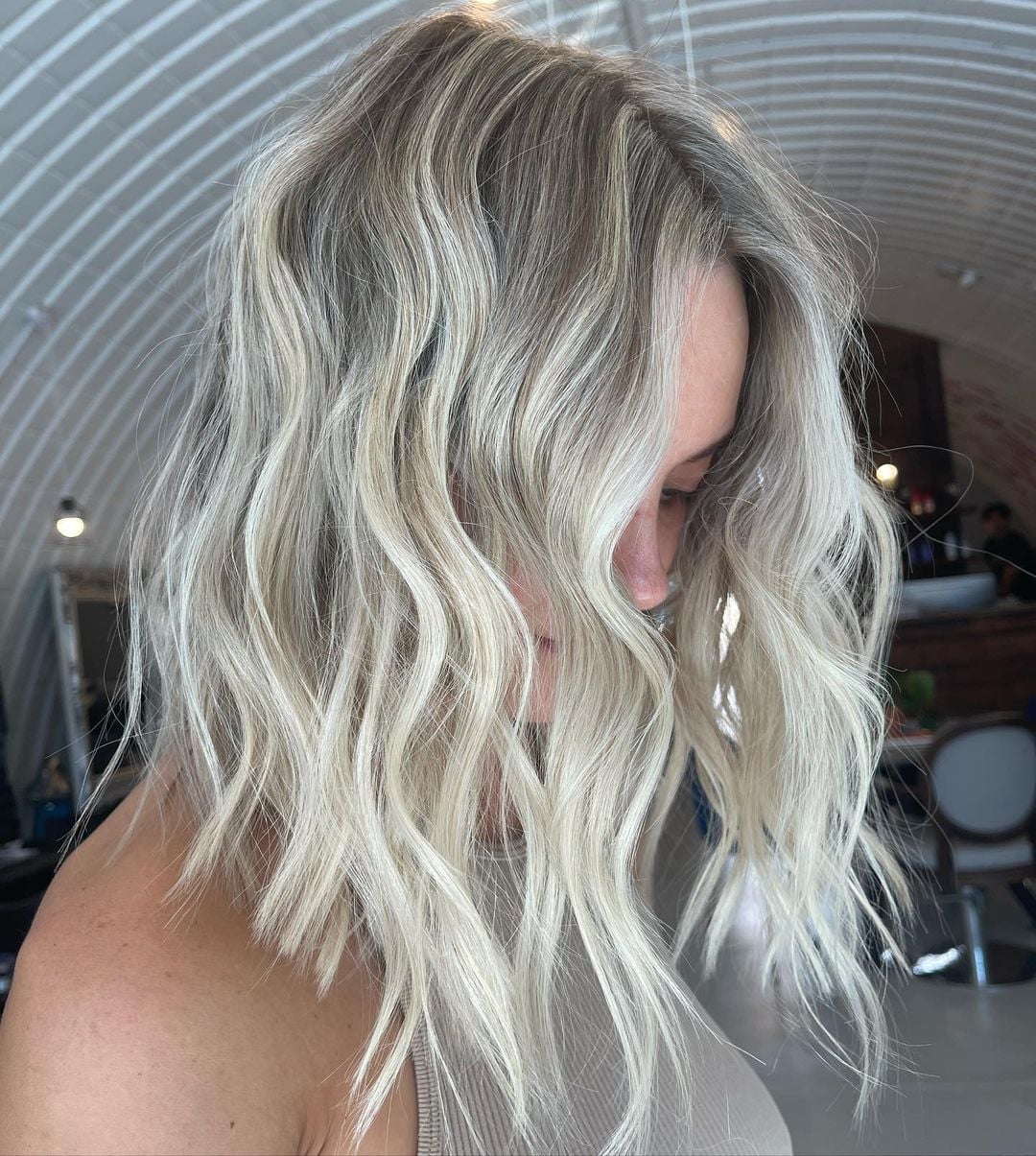
A chin-length bob in ash blonde with a side part is a clever way to get beach waves without the length. Ask your stylist for: chin length bob, ash blonde, textured waves, side part. The fine, wavy texture holds a blowout well, and a texturizing spray keeps the shape from falling flat. That root shadow buys you about six weeks before a toner refresh is needed.
Chin Length Honey Blonde Bob With Waves, Wavy
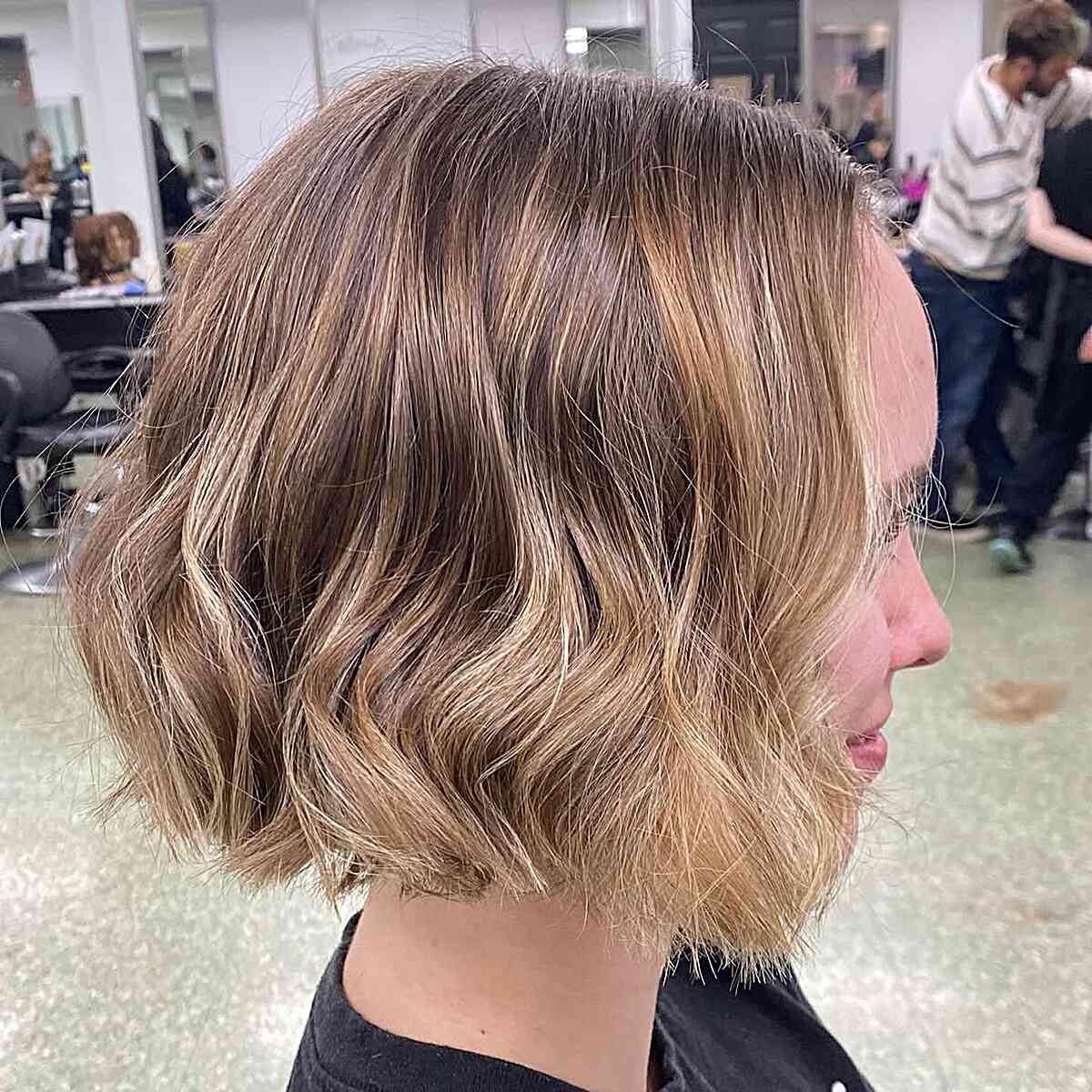
A chin-length bob in honey blonde with subtle lighter highlights relies on texture to keep it from looking too uniform. Ask your colorist for: chin length bob, honey blonde, textured waves, side part. The fine, wavy texture needs a trim every four to six weeks to keep the bob crisp, and the warm tone fades gradually rather than turning brassy overnight.
Final Thoughts
For a low-maintenance beach wave, let your hair air-dry with a texture spray and keep the base color close to your natural shade with subtle highlights. For a more polished version, invest in a blowout with face-framing layers and a blended balayage that softens the grow-out line.
- Refresh waves with a texturizing spray or sea salt spray, focusing on mid-lengths and ends.
- Maintain color depth with a color-depositing conditioner every 4-6 weeks, depending on shade.
- Trim layers and baseline every 8-12 weeks to keep shape and prevent split ends.
- Protect hair from heat with a spray before using styling tools, even on lower settings.
- Wash hair 2-3 times a week to preserve natural oils and wave definition.
Find your perfect wave and color combination.
