

Bandanas have moved from the summer festival circuit to year-round styling, and the haircut underneath matters more than the knot on top. The current shift favors soft face-framing layers, curtain bangs, and lived-in color that gives a glossy, natural texture.
These 34 Bandana Hair Ideas cover every length and texture, from intricate braided updos to quick five-minute ties. Whether your hair is fine and falls flat, you’re growing out a blunt fringe, or you just want a low-upkeep way to hide a visible grow-out line, there’s a style here that works with your cut, not against it.
Braided Ponytail with Loose Waves and Bandana Accent
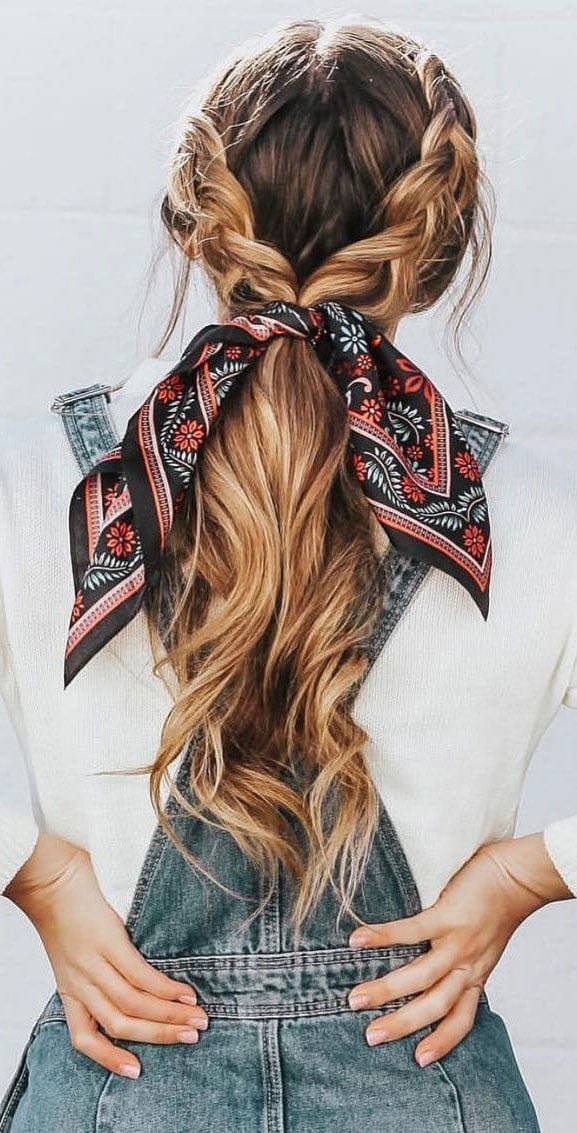
Start with a layered cut that gives the braid somewhere to grip. At mid-back length with soft waves and medium density, the hair holds shape without needing a can of product. The back view shows a middle part and loose waves feeding into the braid, with an ornate bandana wrapped at the base. Ask your stylist for: long layers, soft waves, braided ponytail. This is a salon-leaning request. The layers should be cut to support the braid structure, not fight it.
Red Wavy Hair with Bandana Woven Into Braid
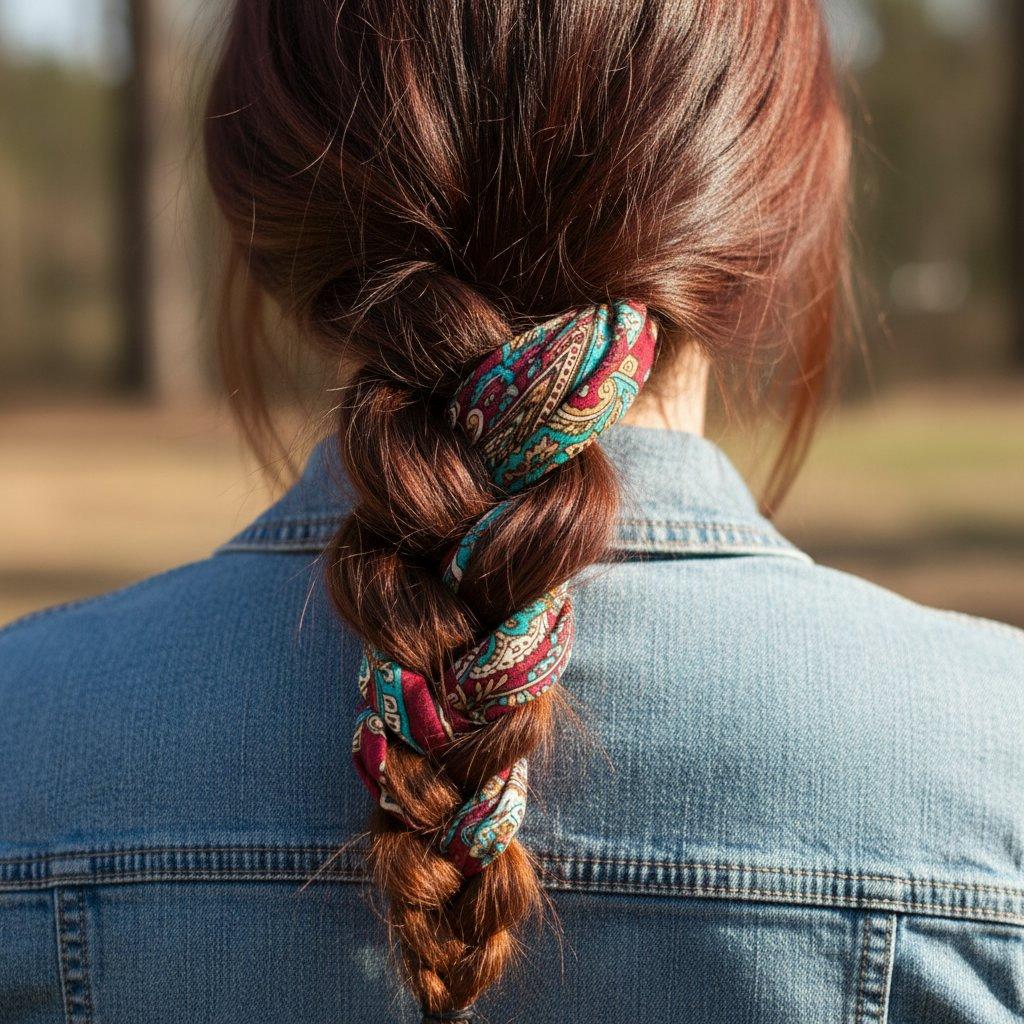
The bandana here isn’t tied at the end; it is woven through the entire braid, section by section. That changes the design from an accessory to a structural element. The thick, wavy red hair at mid-back has enough weight to keep the braid from pulling loose, and the middle part keeps the front clean. Ask your stylist for: a woven bandana braid. This is a salon technique, not a DIY quick fix. The braid needs even tension and the bandana needs to be folded narrow enough to thread through each section without bunching. For square or oval face shapes, the vertical line of the braid balances the jaw.
Black Coily Hair High Updo with Wide Headwrap
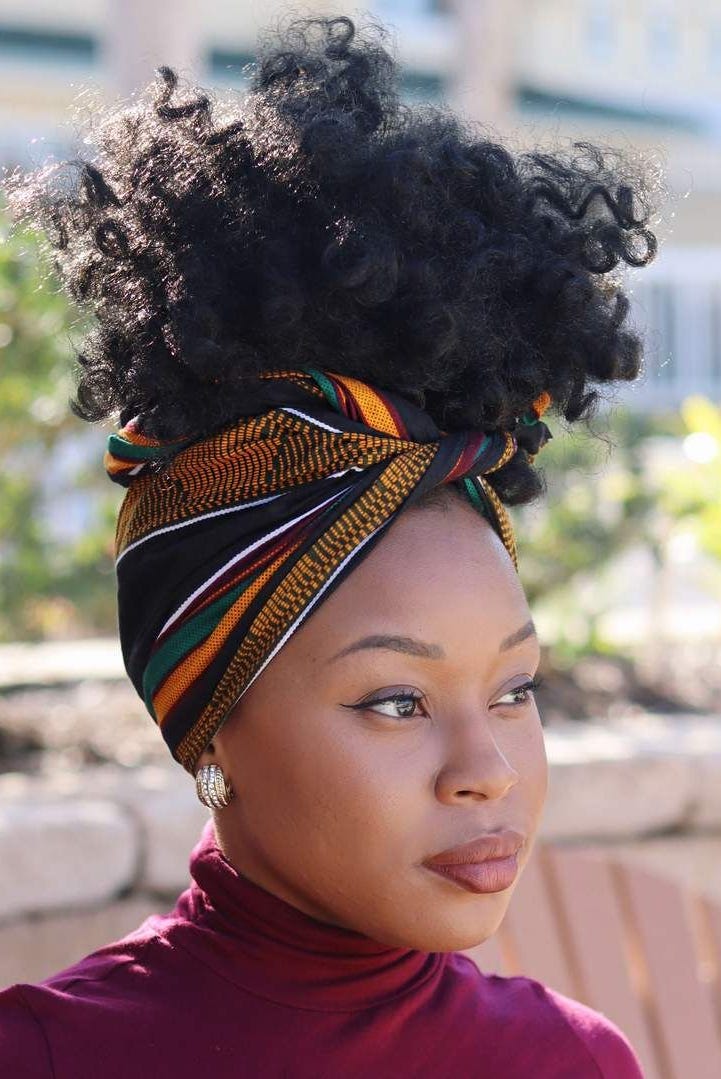
This high updo relies on the bandana as a headwrap, not a tie, which changes the visual weight entirely. The thick, coily black hair is slicked back into a smooth silhouette at mid-back height, and the wide patterned wrap covers the hairline completely. Ask your stylist for: a slicked high updo with wide headwrap. This works best for those with round faces, as the height elongates the face and the smooth sides add structure. Apply a smoothing serum to the hairline before styling, and secure the updo with strong-hold pins. A trim every ten weeks keeps the ends healthy, which matters when the shape is this clean.
Blonde Wavy Ponytail with Black and White Bandana
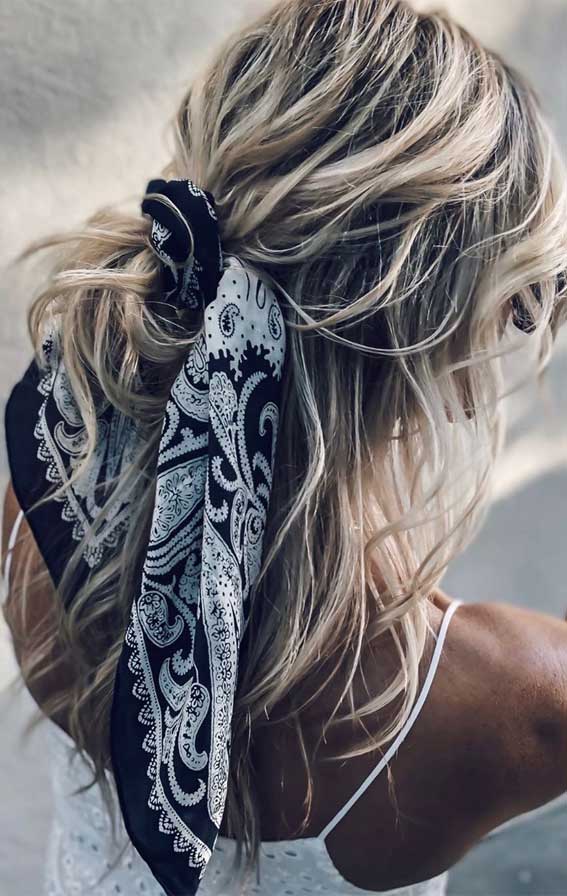
If a braided style feels like too much effort, a loose ponytail with a bandana tie is the shorter route to a similar effect. The thick, wavy blonde hair at mid-back is pulled into a low ponytail, and the black and white bandana is knotted around the base. This is a DIY-friendly look that takes about five minutes, versus the salon-leaning braided version. Ask your stylist for: a layered cut with loose waves. The layers give the ponytail movement, so the waves don’t fall flat. A middle part keeps the front simple. The bandana does the heavy lifting here, not the styling.
Messy Blonde Updo with Face-Framing Pieces and Bandana
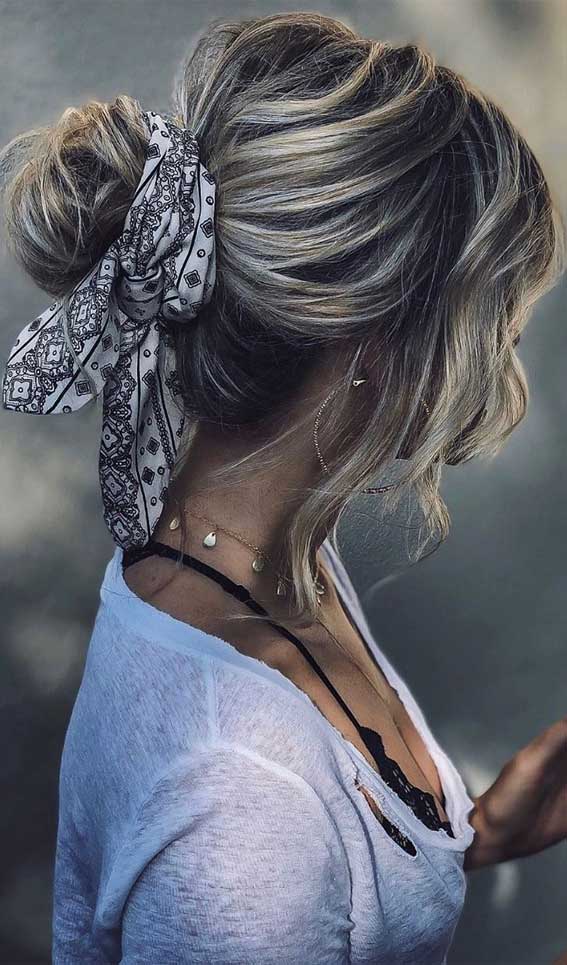
The messy updo is a reliable evening option, but the face-framing pieces are what keep it from reading as a bun you threw up in a hurry. The long, thick, wavy blonde hair is gathered into a loose updo at the back, with a black and white bandana tied around the base. Ask your stylist for: a messy updo with face-framing pieces. The pieces should be cut to hit around the cheekbone, which softens an angular jawline. The real drawback: those face-framing sections need a trim every six to eight weeks, or they slide past collarbone and lose their intended length. The season is flexible, but this works best for evening events where the undone finish reads as intentional.
Dark Brown Bob with Blue Paisley Bandana
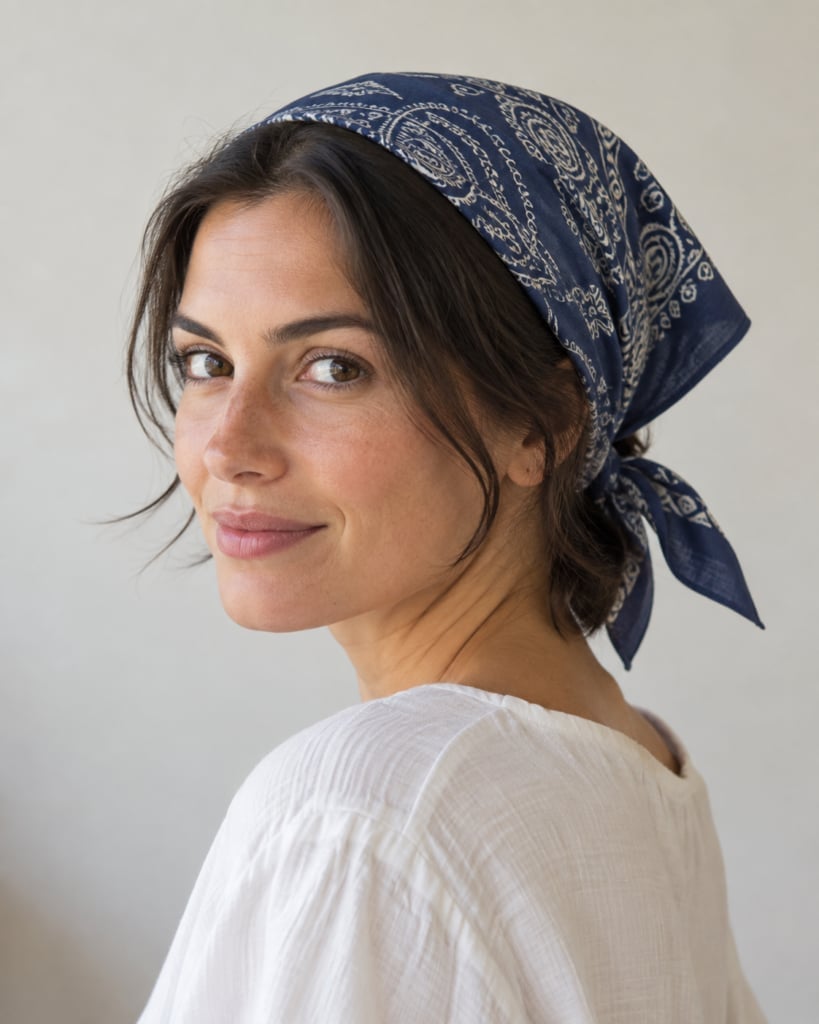
You want the bandana to read as an accessory, not a medical device, so the cut underneath has to hold its own shape. A chin-length bob with no bangs does exactly that, especially when the hair has medium wave to give the silhouette some body. If your face is round or oval, this length sits right where it should. Ask your stylist for: chin-length bob, blue bandana tied around head. The key is keeping the wave pattern loose, so the paisley print gets the attention, not the hairspray.
Messy Blonde Bun with Red Bandana
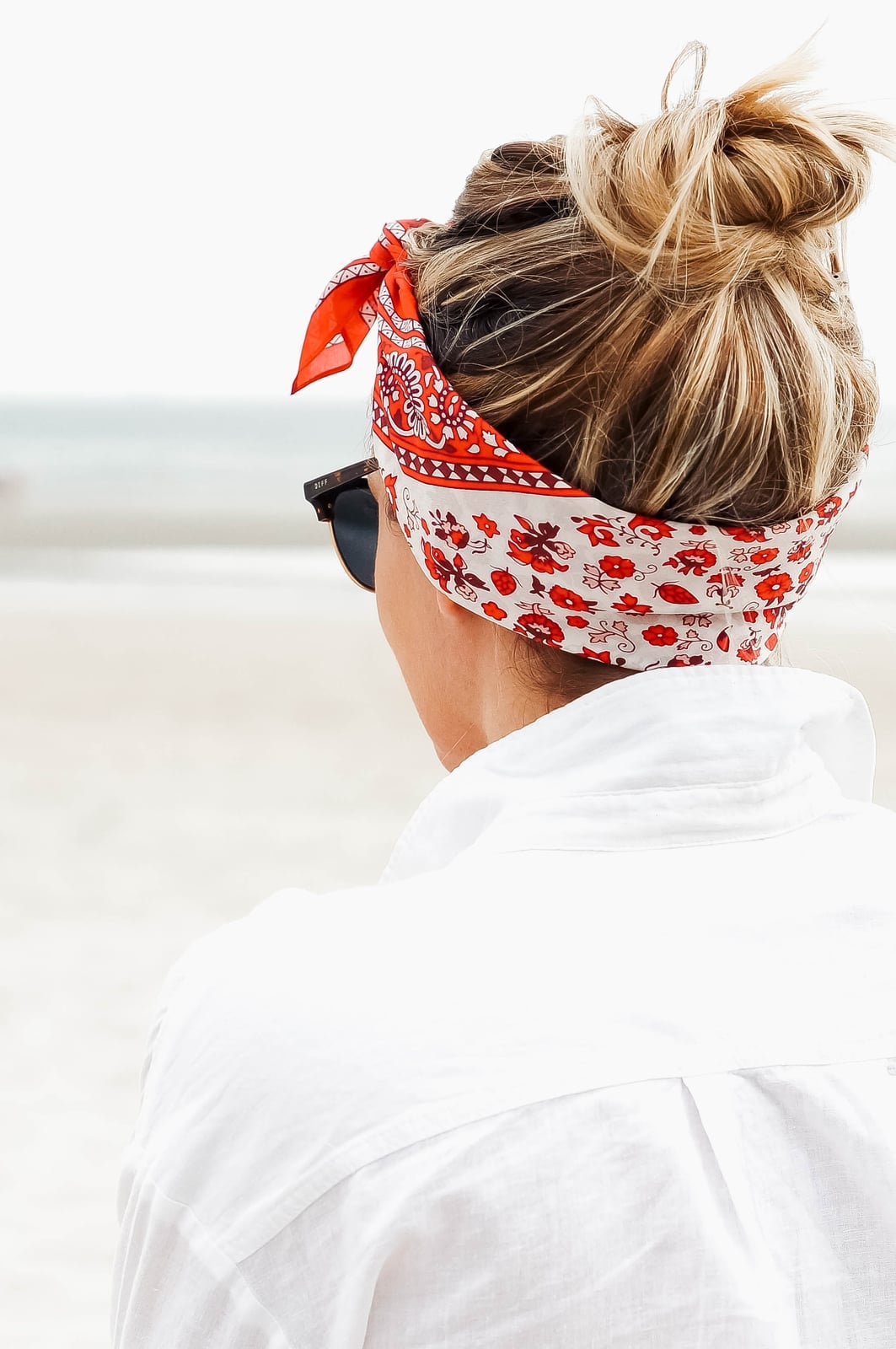
The back view is the focal point here, so the bun has to look good from behind before the bandana even enters the conversation. Fine, wavy blonde hair with highlights gives the updo natural dimension, and the red bandana tied at the back covers a multitude of sins. Start with a rough ponytail at the crown, twist the length into a loose coil, and pin it without overthinking. Pull a few strands free to soften the edges. The red and white pattern adds the contrast that fine hair often lacks. Ask your stylist for: messy bun, red bandana tied at back.
Side Ponytail with Blonde Waves and Bandana
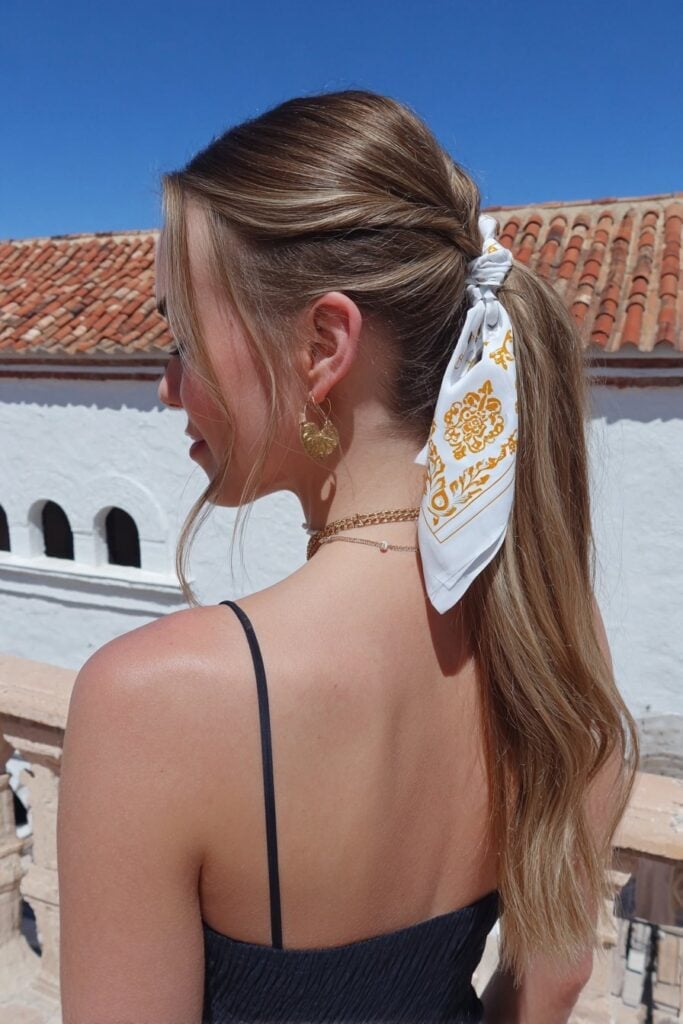
A side ponytail with a side parting does two things at once: it adds height at the crown and lets the length fall forward, which works well on long faces. The thick, wavy blonde texture gives the ponytail real presence, and the white and gold bandana tied at the base keeps the eye moving.
The side-swept bangs are the part that needs the most attention. They soften the forehead, and they need a trim every four to six weeks to hold their line. Curl the ponytail with a curling iron so the waves match the bangs, and the whole style takes about ten minutes to finish.
Straight Dark Brown Bob with Blunt Bangs and Bandana
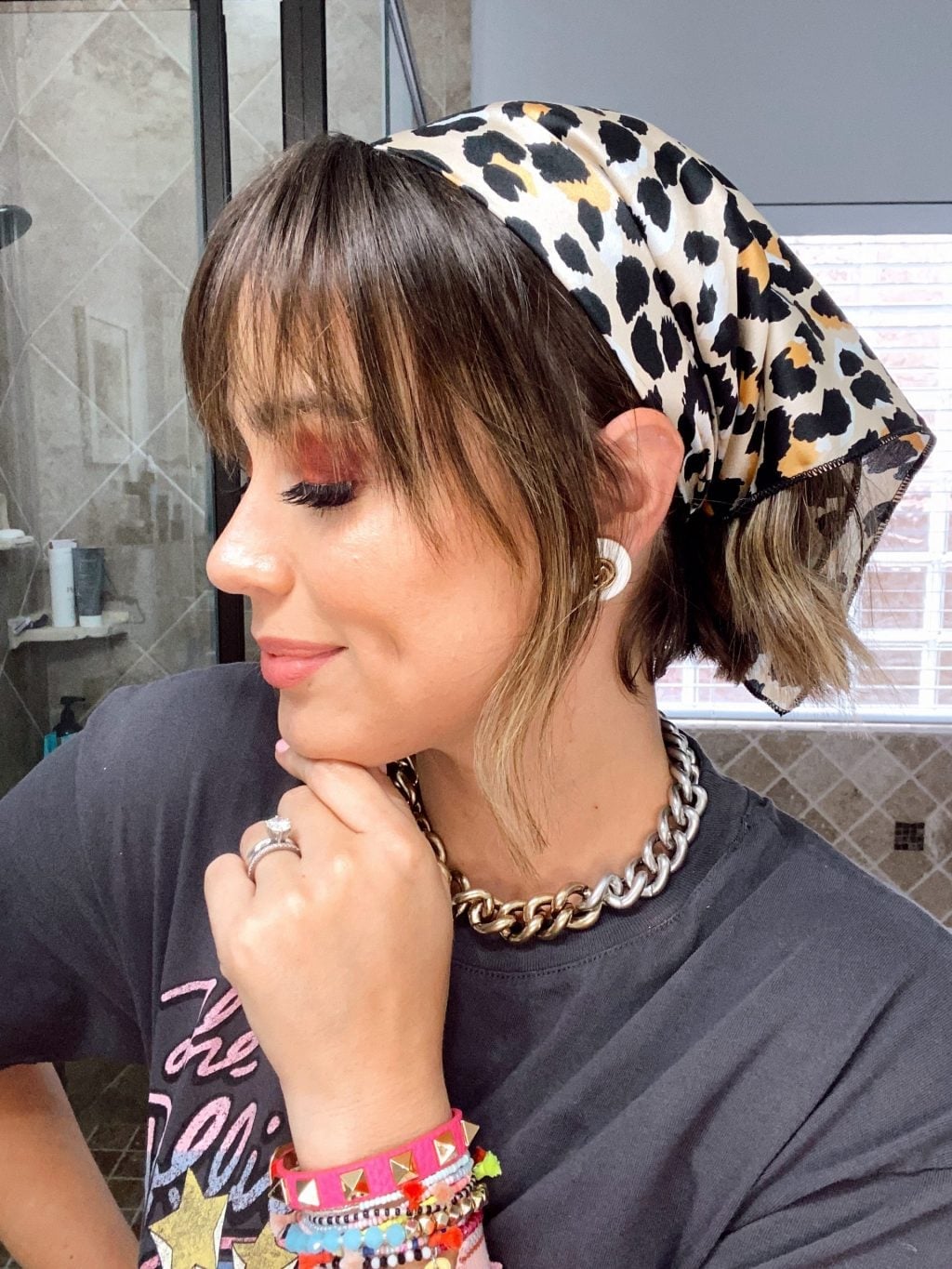
This is the sleek sister to the wavy bob, and it asks for more from your flat iron and your stylist. Fine, straight dark brown hair at chin length with blunt bangs has zero room for error, since any bend or kink shows immediately. The side parting adds a little movement to what is otherwise a very graphic line. You can get close at home, but the initial cut is a salon job, and the blunt bangs need a trim every four to six weeks to stay sharp. The leopard print bandana tied around the head does the talking, so the hair has to stay quiet. Ask your stylist for: chin-length bob, blunt bangs, leopard print bandana.
Messy Brown Bun with Face-Framing Pieces and Bandana
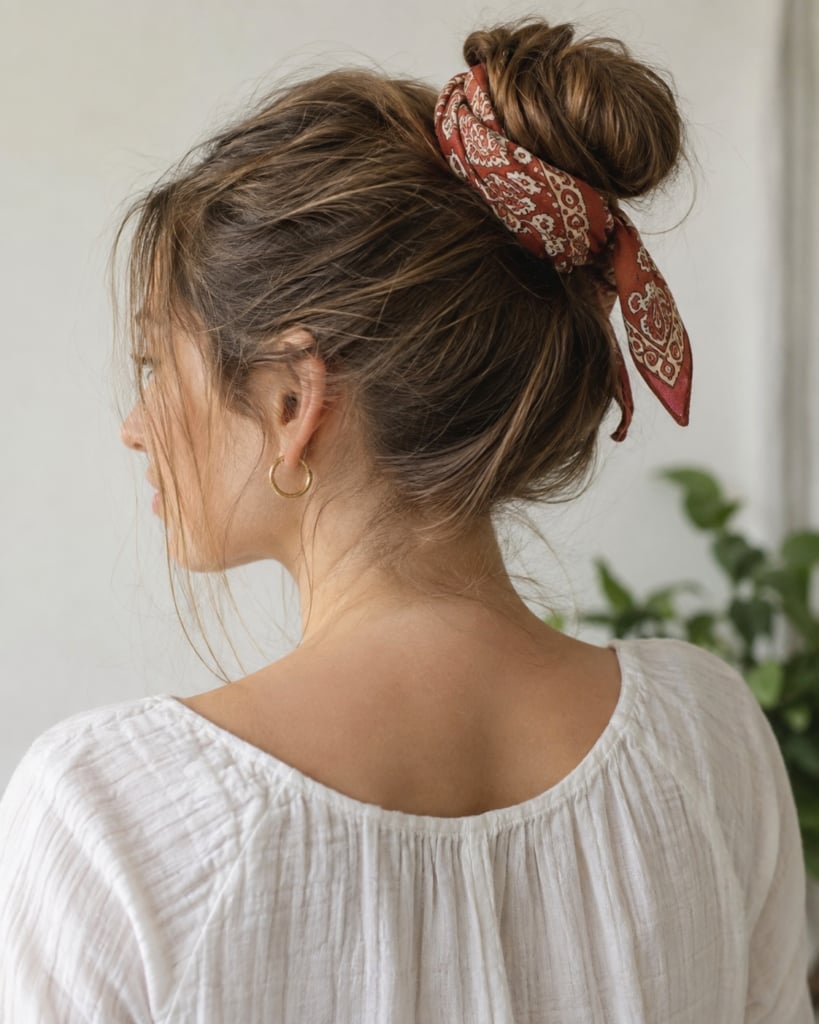
Will the face-framing pieces still be framing your face by hour three, or will they be stuck to your sunscreen? With thick, wavy brown hair, they usually hold their shape better than you expect, since the natural wave gives them grip. The messy bun itself sits at mid-back length, and the bandana tied around the bun adds a decorative layer without requiring any real skill. Loosely pull a few strands out around the ears and nape, and the whole thing looks deliberately undone. Ask your stylist for: messy bun, face-framing pieces, bandana accent. The pieces will soften a strong jawline, and the bun keeps the length off your neck.
Long Dark Brown Waves with Ornate Bandana Headwrap
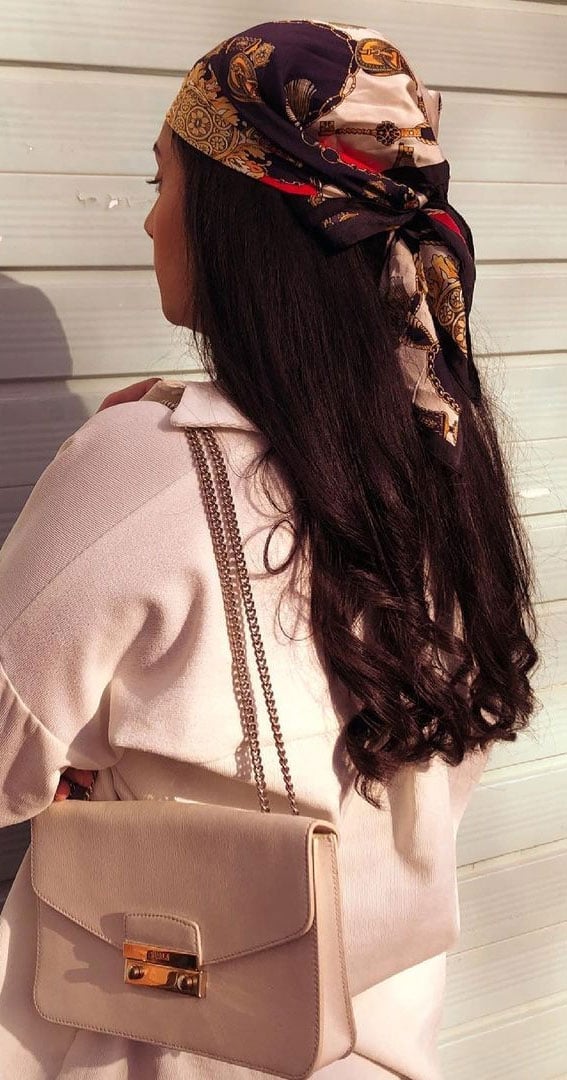
The bandana here does the architectural work, sitting high on the head while the hair falls free, which makes the whole design look deliberate. The loose waves on this mid-back length dark brown hair are set with a large-barrel iron, and the middle parting keeps the movement symmetrical on thick, wavy texture. Ask your stylist for long loose waves, ornate bandana headwrap. A smoothing serum brushed through the lengths controls frizz and adds shine without weighing the wave down, and a trim every ten to twelve weeks keeps the ends clean. It is a festival-ready look that also holds up for a summer wedding, since the headwrap stays put while the hair moves.
Messy Blonde Ponytail with Wispy Bangs and Polka Dot Bandana
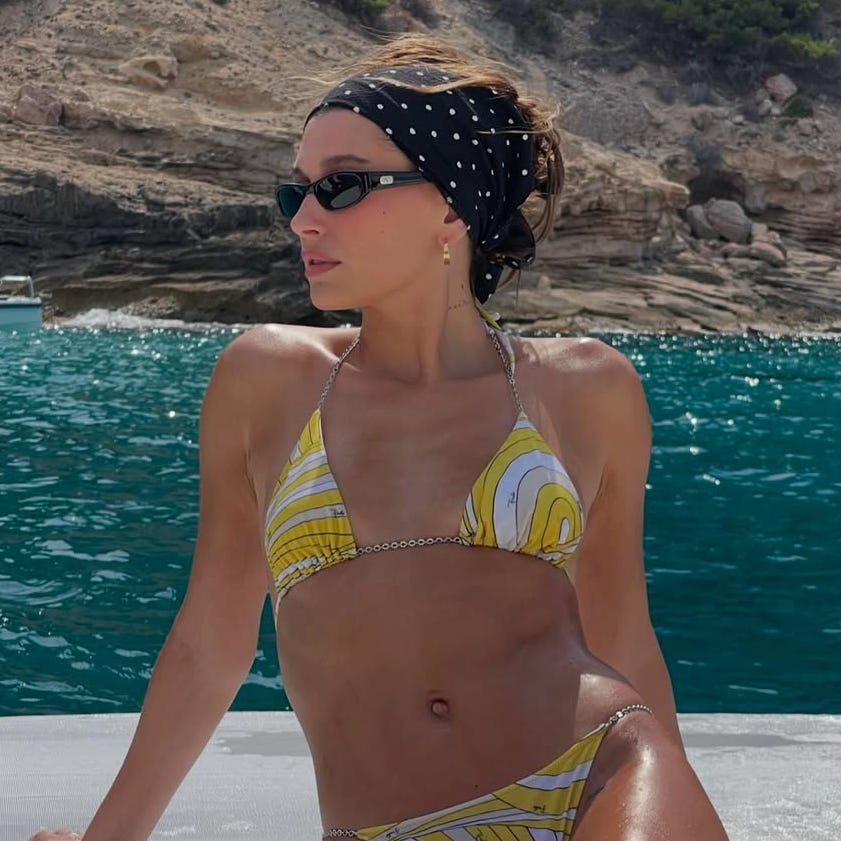
Wispy bangs can look like they happened by accident, not like you asked for them. The answer is in the words you use: ask your stylist for messy ponytail, wispy bangs, polka dot bandana. On shoulder-length wavy hair, the bangs are cut so they feather at the edges and sweep to one side, which softens round and square face shapes. The ponytail and the bangs get a piecey, undone finish, but wispy bangs need a trim every four to six weeks, or they start reading as just thin.
Air Dried Dark Brown Braids with Curtain Bangs and Bandana
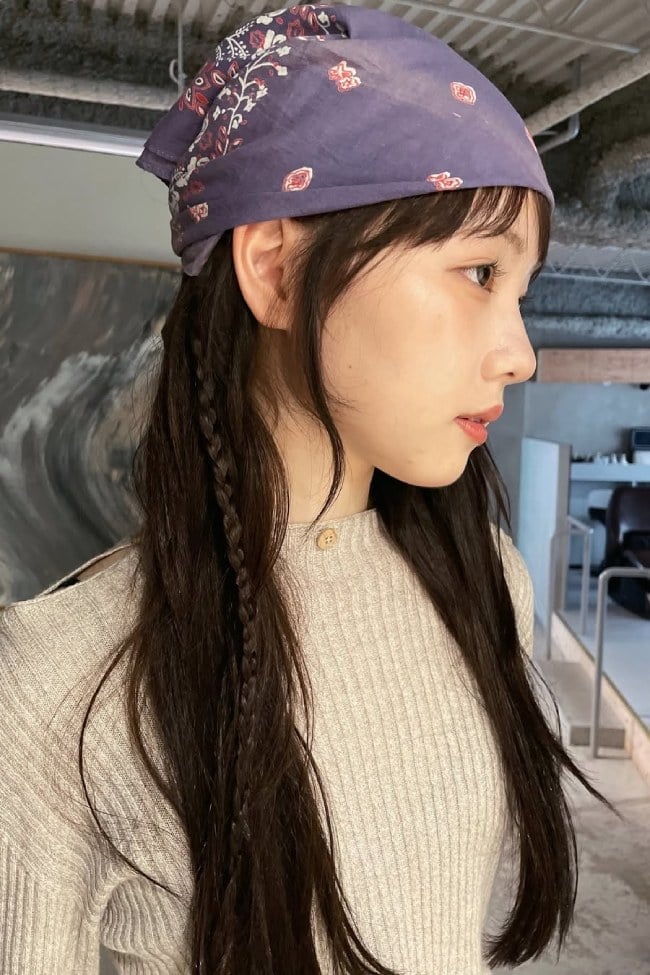
Loose braids let thick, wavy hair air dry without turning into a triangle. Start with damp, mid-back length hair worked through with product to keep frizz at bay, then split it down the middle and braid each side loosely. Curtain bangs dry faster than the rest, so clip them aside while the braids set. Weave the paisley bandana through the braids at the crown. Ask your stylist for loose braids, curtain bangs, paisley bandana. Trim the bangs every four to six weeks to keep the subtle lighter pieces visible.
Very Long Coily Braids with Floral Headwrap
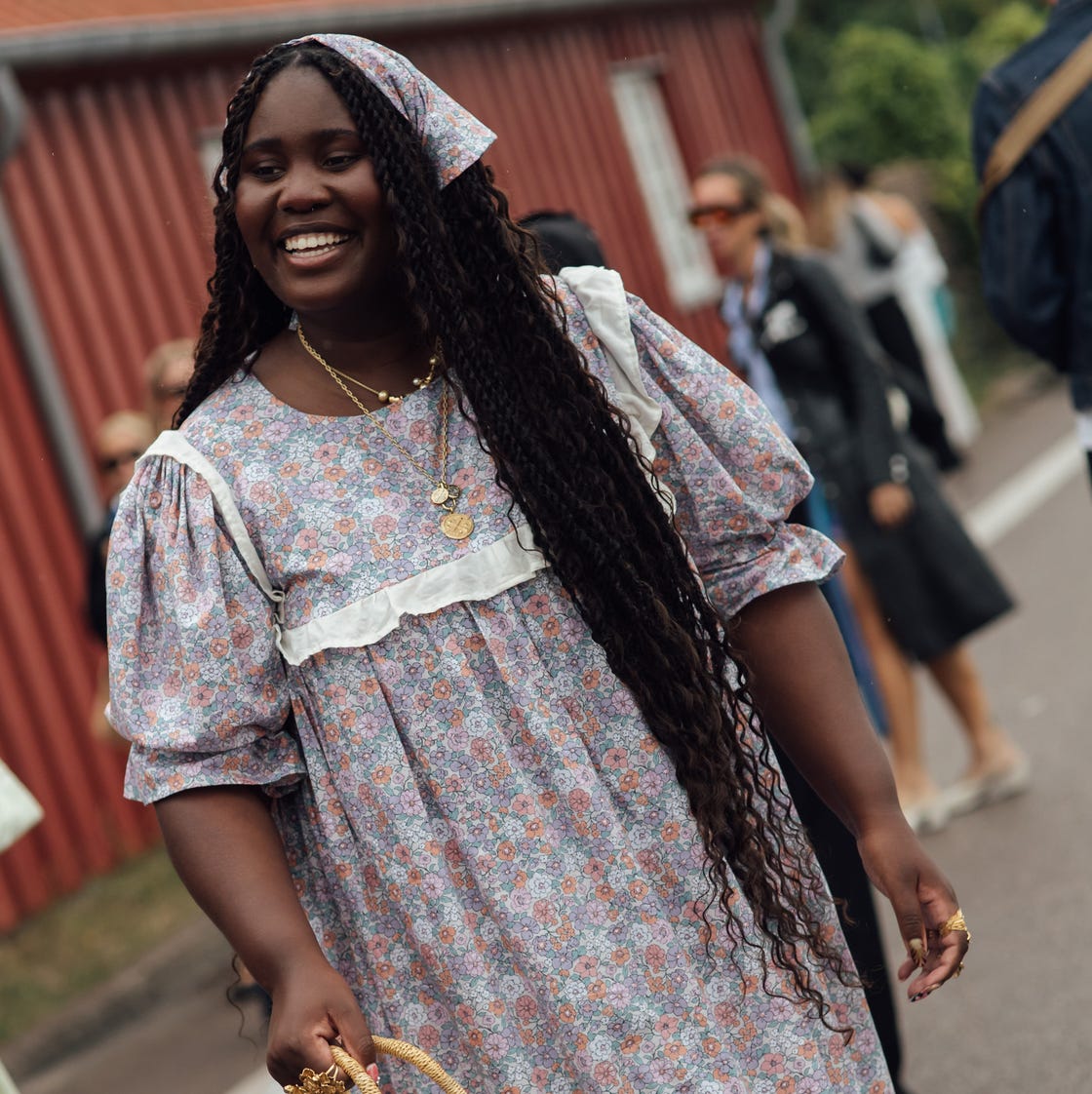
The floral headwrap tied low around the forehead is the centerpiece here, and it does double duty by keeping the very long braids off the face while adding a pop of pattern. This style genuinely suits thick, coily hair of any length, since the braids distribute the weight of the hair and the headwrap protects the hairline from friction. Ask your stylist for: very long braids, floral bandana headwrap. A moisturizing oil massaged into the scalp and along the braids keeps the hair from drying out, and the braids need to be redone every six to eight weeks to prevent frizz at the roots.
This protective style is a salon commitment, so plan for a few hours in the chair and a head that feels lighter than it has in months.
Messy Blonde Bun with Face-Framing Strands and Yellow Bandana
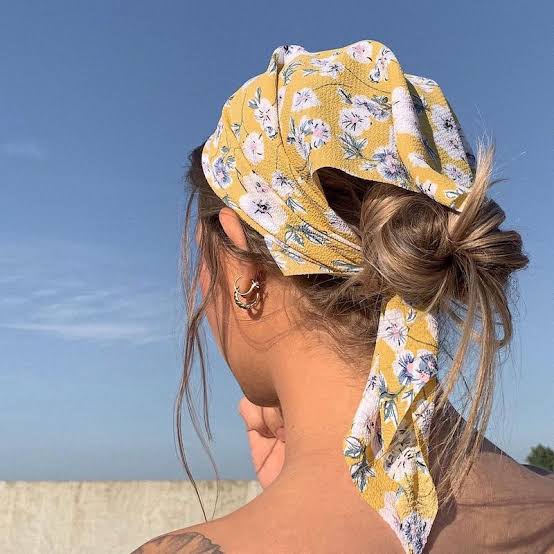
Will those loose strands stay put, or will they be in your face by noon? Mostly the second one, and that is the point. The messy bun on this thick, wavy shoulder-length blonde hair is pinned loosely at the crown, with strands pulled out around the temples and nape to soften the whole thing. The yellow floral bandana is tied around the bun with one end trailing down, which gives the updo a reason to exist. Ask your stylist for messy bun, loose face-framing strands, yellow bandana. The honest drawback is that face-framing pieces need a touch-up with a curling wand by mid-afternoon, so keep a few pins in your bag.
Wavy Brown Hair with Blonde Highlights and Silk Scarf
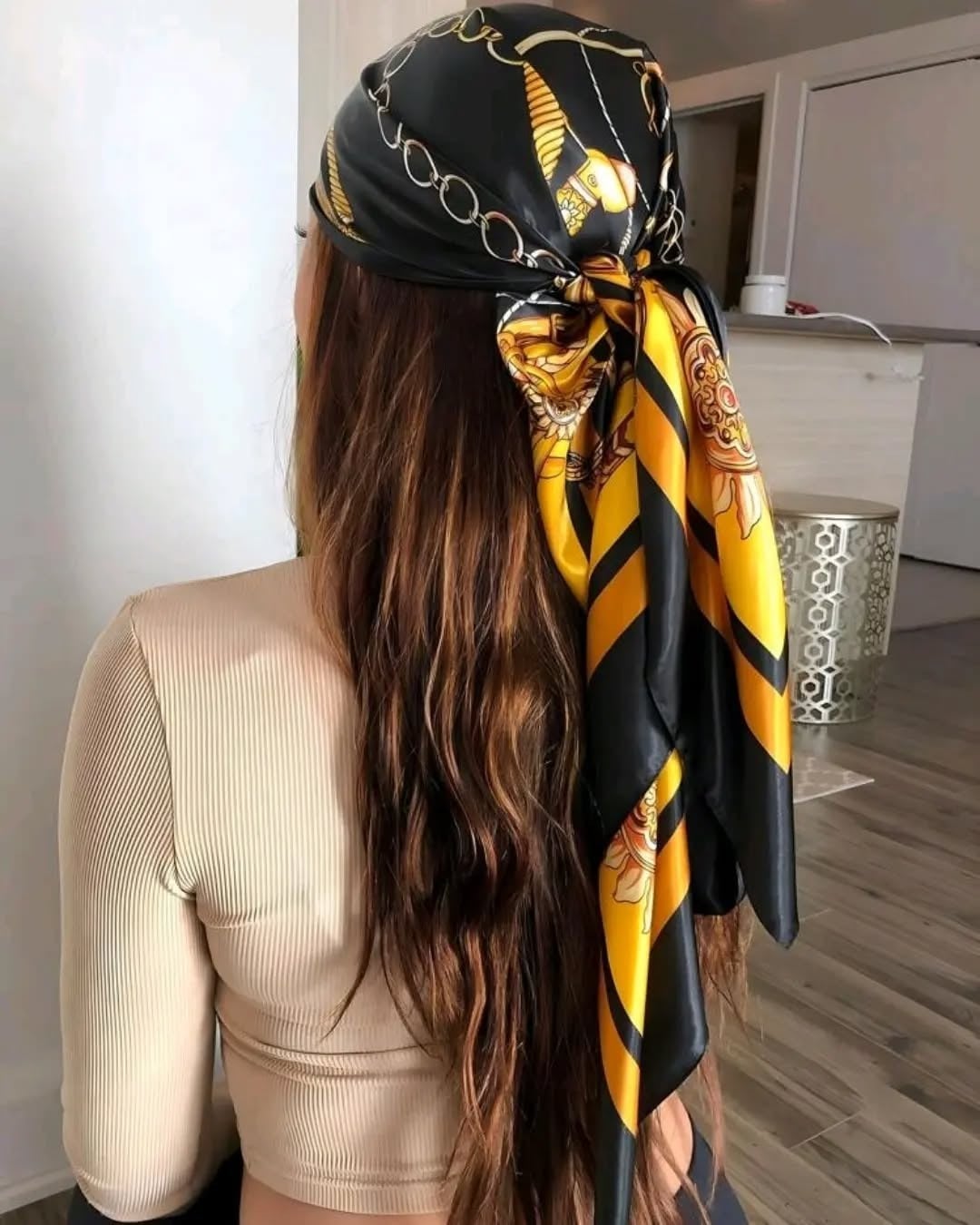
Back view or not, the mid-back length and the black and gold scarf tied at the crown make the case for highlights that read as dimensional rather than uniform. Brown with blonde highlights on thick, wavy hair gives the texture something to catch, and the scarf adds a visual anchor at the crown. Ask your colorist for: subtle blonde highlights on brown waves. The upkeep is where this gets real: highlights need a toner every six to eight weeks to keep the blonde from turning brassy, while the scarf can hide a growing root line for a couple of extra weeks. A salon gloss is the alternative if you want the same dimension without the commitment. Trim the long layers every ten to twelve weeks to keep the ends from splitting.
Medium Brown Curly Ponytail with Bandana
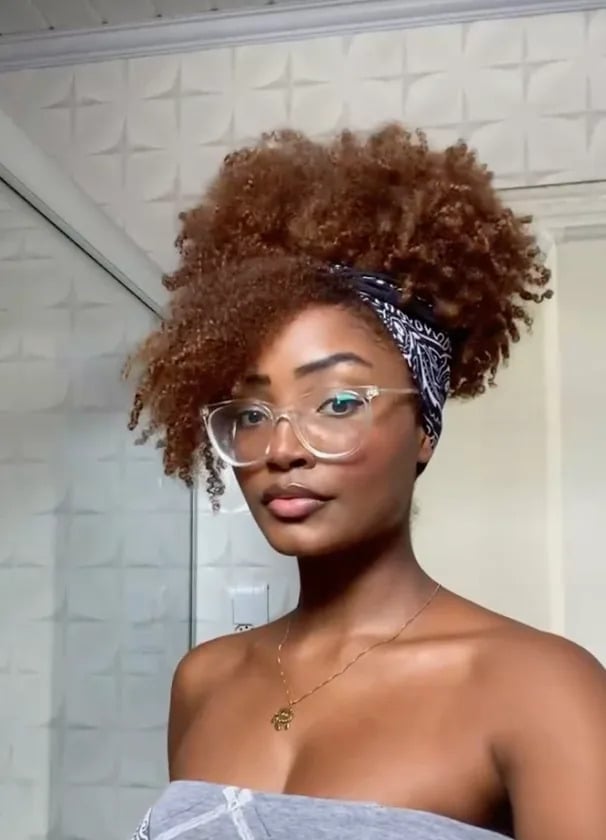
A high ponytail on thick, curly medium brown hair works because the weight of the curls pulls it down, and the black and white bandana tied at the base keeps the whole structure honest. Ask your stylist for: a high ponytail with a bandana tie. The technique is simple: gather the hair at the crown, secure with a satin scrunchie first, then wrap the bandana around the base to hide the elastic. Shoulder-length curls have enough heft to hold the ponytail up without slipping, and the high placement elongates a round face. Trim the ends every eight to ten weeks to prevent the curls from looking ragged.
Dark Wavy Hair with Crocheted Bandana Headband
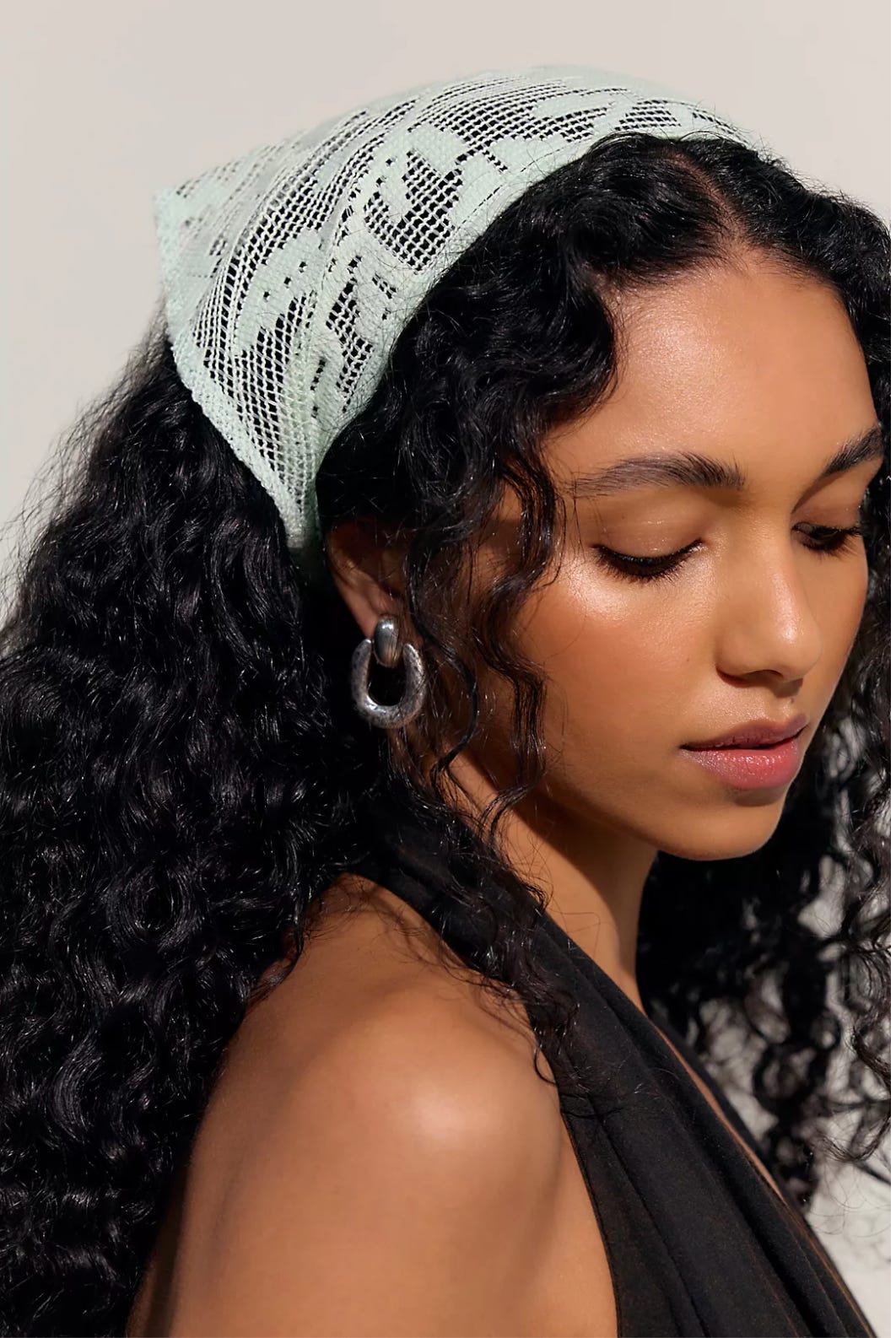
What do you actually ask for when you want loose curls that air-dry into something decent? Start with the cut: long layers throughout, no bangs, so the wave pattern stays intact. The light blue crocheted bandana tied as a headband adds a vintage note, but the real work is in the texture. Ask your stylist for: loose curls with a middle parting. A curl-defining cream applied to soaking wet hair, then left alone, gives the thick dark waves their shape without heat. The drawback is the grow-out: layers that start too high can make the ends look thin, so trim every ten to twelve weeks. The headband is the easy part, it hides a bad hair day entirely.
Long Dark Brown Waves with Subtle Highlights and Bandana
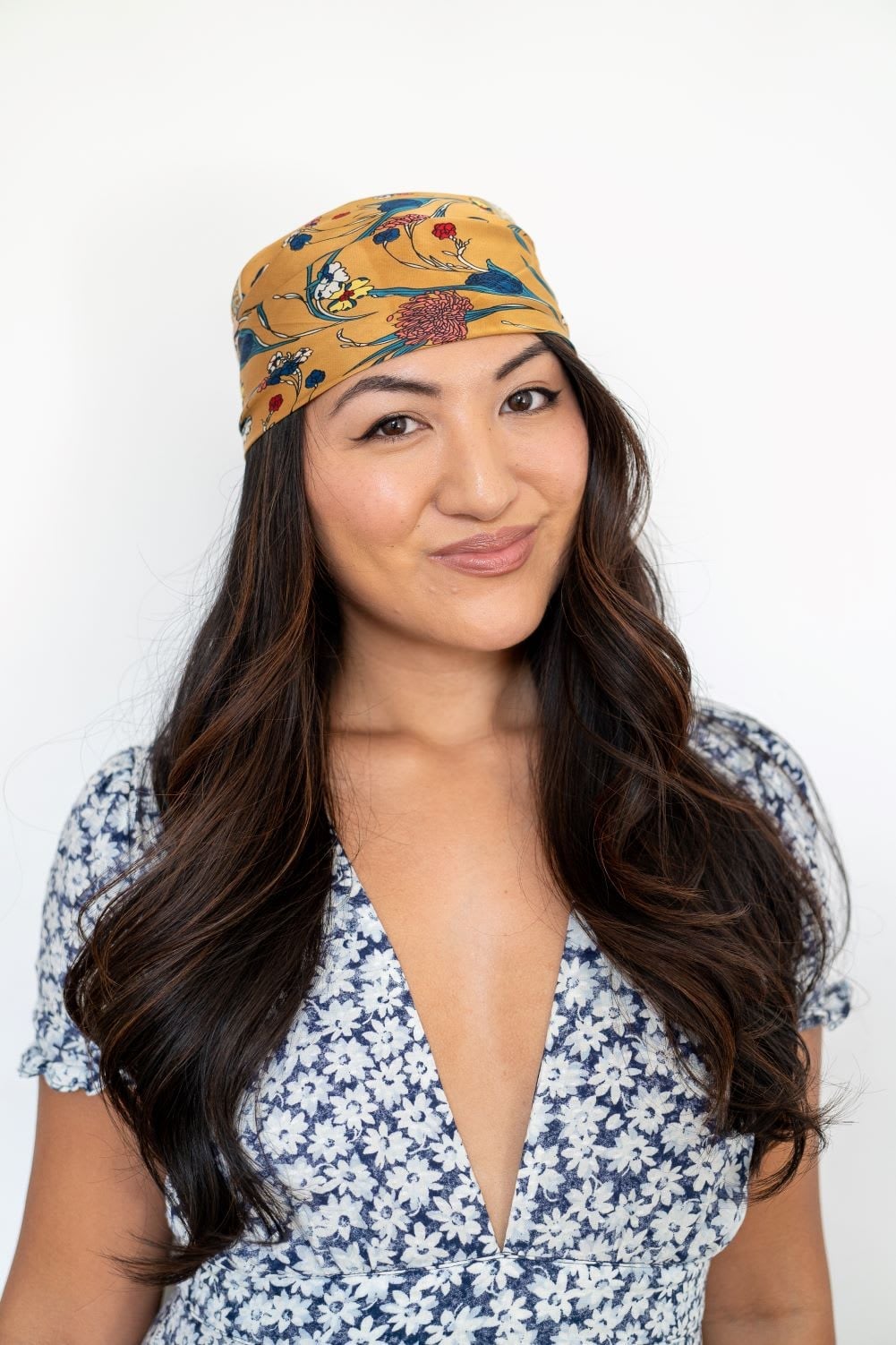
The loose waves on long, thick dark brown hair give the subtle lighter brown highlights room to move, and the patterned bandana worn on the head does double duty. Long layers keep the mid-back length from feeling heavy, but they also mean the grow-out is a slow burn. The highlights grow out as a soft line, which is the point. Ask your colorist for: subtle lighter brown highlights on dark waves. A smoothing balm on damp hair tames frizz and adds shine, and the bandana can mask the root line for about six weeks. Trim the layers every ten to twelve weeks to keep the shape from collapsing into a triangle.
Shoulder Length Dark Waves with Curtain Bangs and Bandana
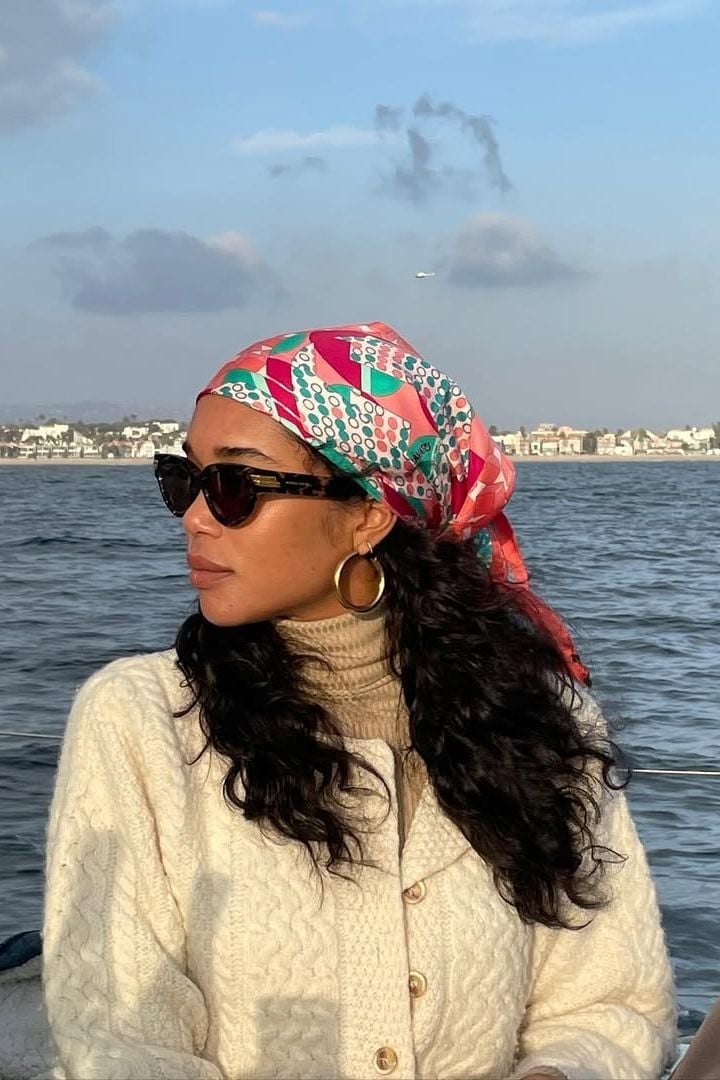
Curtain bangs are the gateway to softer features, and on shoulder-length dark brown waves they do the work of framing the face without committing to a full fringe. The loose curls add volume at the sides, which suits long faces, while the curtain bangs soften angular jawlines. Ask your stylist for: shoulder length loose curls with curtain bangs. The colorful bandana tied around the head keeps the style from reading as too polished, which is the point of a blowout that looks lived-in. Bangs need a trim every four to six weeks, and a volumizing spray at the roots with a round brush keeps the lift from falling flat by the afternoon. The layers underneath keep the ends from weighing the waves down.
Mid-Back Dark Brown Waves with Subtle Highlights and Bandana Headband
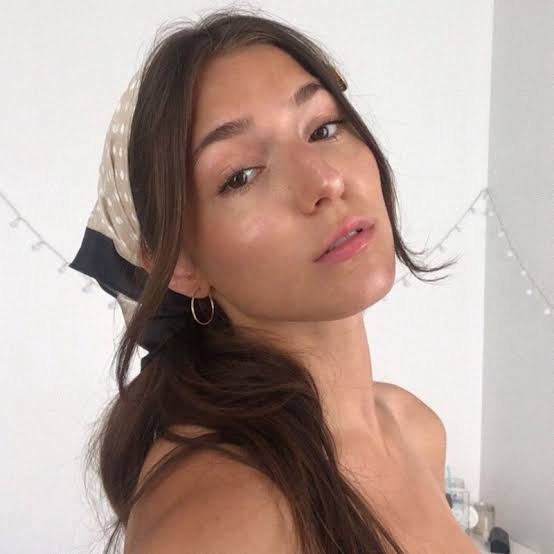
This style relies on the hair’s natural movement, with a polka dot bandana headband as the standout accessory. It works best on medium-density wavy hair that reaches mid-back, where the face-framing pieces can soften angular faces. Ask your stylist for air dried waves, face-framing pieces, bandana headband. To get there at home, apply a leave-in conditioner to damp hair, scrunch upward, and let it dry without touching it. A side parting keeps the face-framing pieces from becoming a curtain of frizz. If your natural texture is straighter, a quick pass with a curling wand on the ends helps the waves hold their shape. A trim every ten to twelve weeks keeps the ends from splitting and the layers from losing their movement.
Mid-Back Straight Ponytail with Patterned Bandana
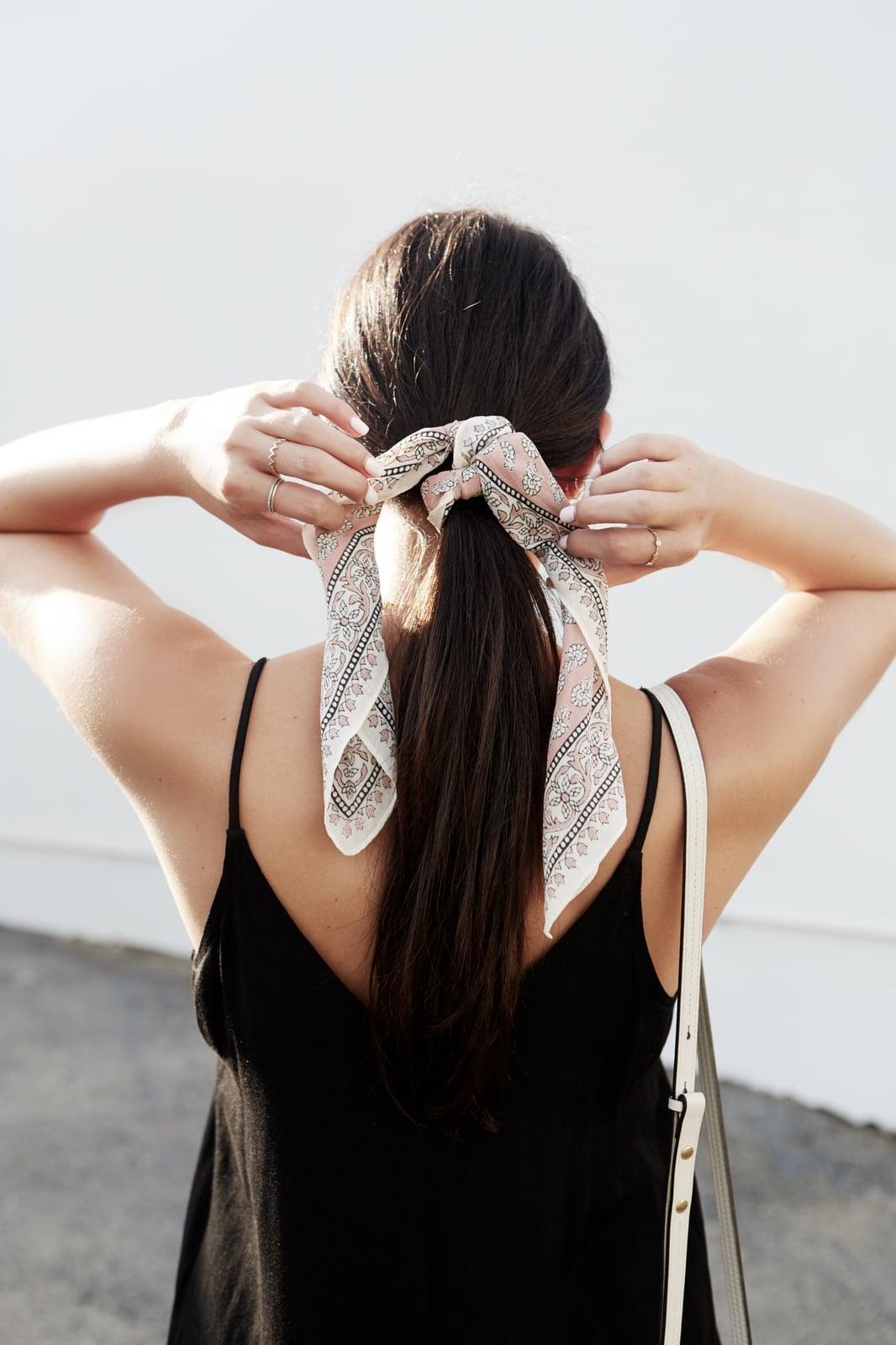
A ponytail this sleek and straight can look severe on very thick hair, especially when it hangs at mid-back. The patterned bandana tied around the base softens that severity, adding visual interest where the hair is otherwise uniform. It suits most face shapes, since the ponytail pulls everything back and the bandana adds width at the nape. Ask your stylist for straight ponytail, patterned bandana tie. Without any texture, the ponytail can look too polished, almost clinical, so a few loose strands around the face help. Smooth the ponytail with a brush and a light hairspray, and keep the ends blunt to maintain the clean line. Regular trims every ten to twelve weeks keep the length healthy and the ponytail weight manageable.
Ash Blonde Straight Hair with Satin Bandana
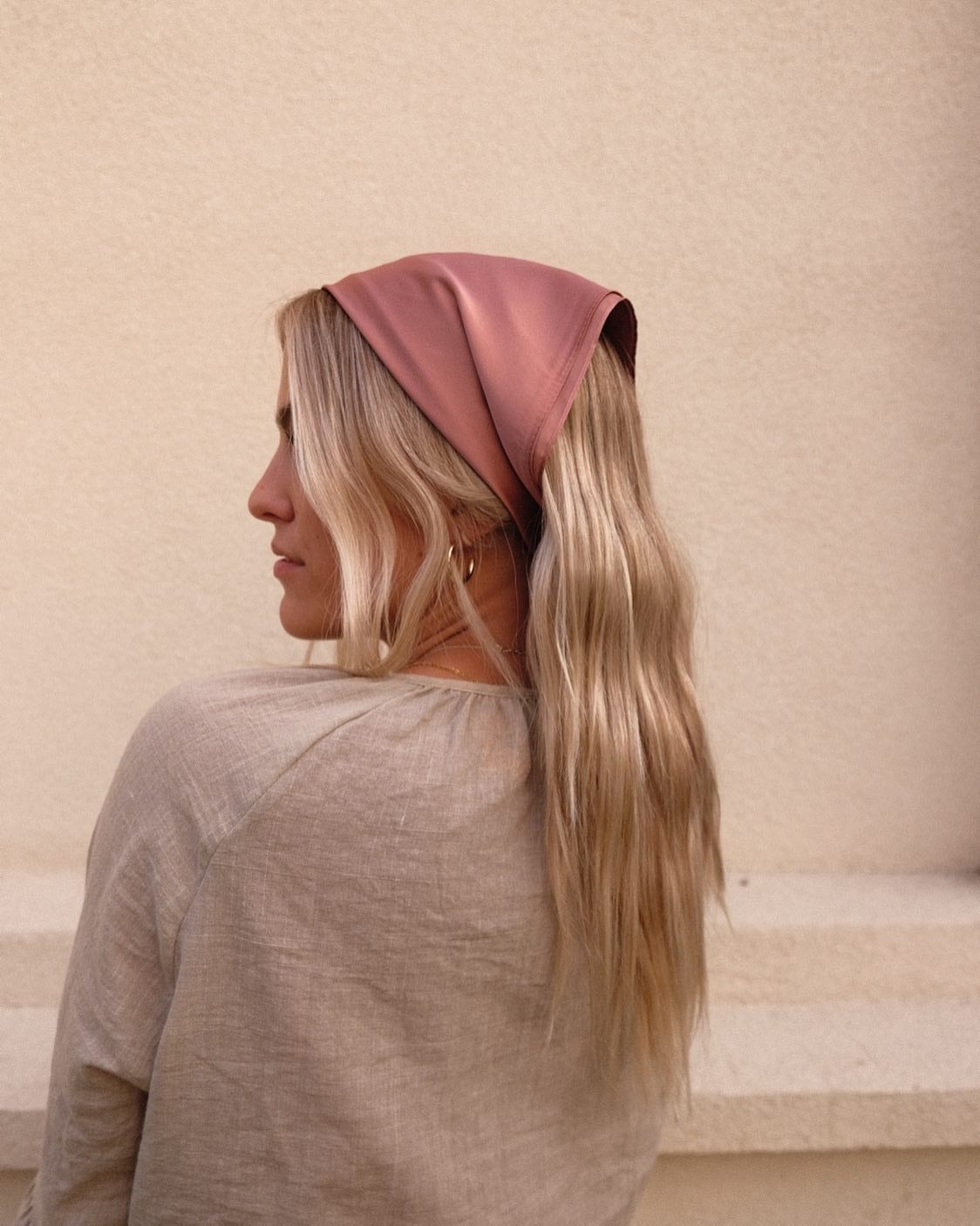
How does air dried straight hair actually hold up during the day, especially when you add a satin bandana? The key is that thick, straight hair holds its shape well without much help, so the middle parting stays put and the mid back length keeps its smooth, glossy finish. The dusty rose satin bandana folded across the top of the head adds a polished touch that keeps the look from feeling too bare. Ask your colorist for: ash blonde straight hair, satin bandana. To keep it sleek, apply a smoothing product to damp hair and let it air dry, then use a flat iron on any stubborn sections. The satin bandana also protects the hair from friction, which helps maintain the smooth texture. A trim every ten to twelve weeks keeps the ends from looking ragged, and a toning appointment every six to eight weeks keeps the ash tone from turning brassy.
Collarbone Lob with Dark Brown Straight Hair and Bandana
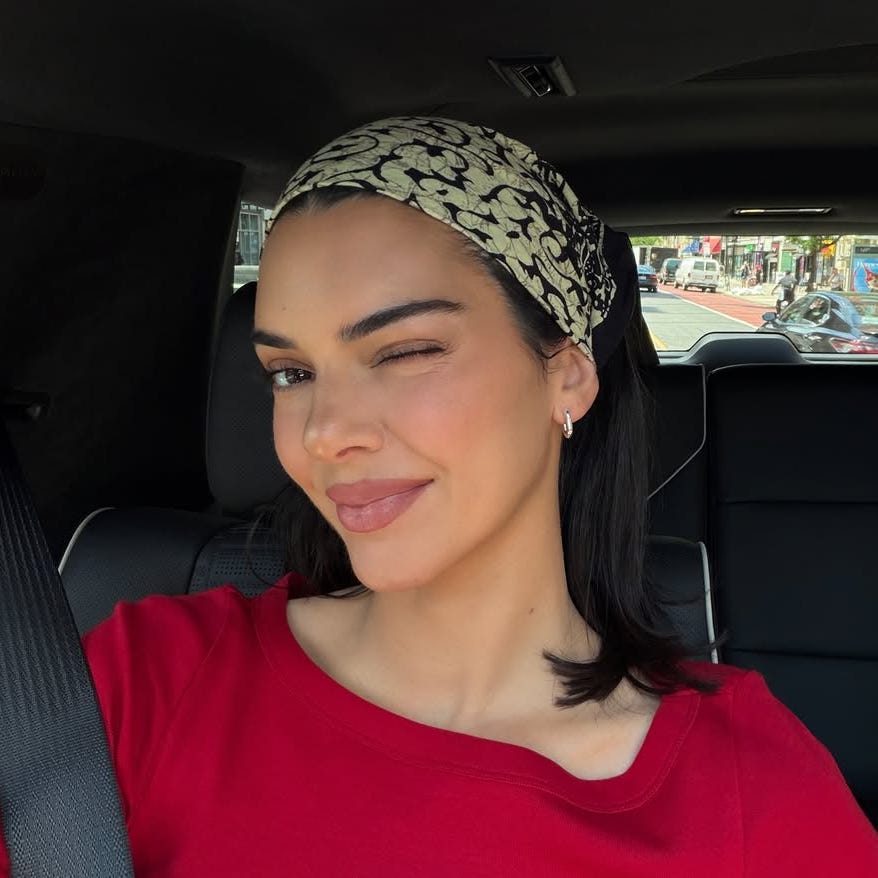
A collarbone-length lob is a workhorse cut: long enough to pull back, short enough to air dry quickly, and straight medium texture keeps it looking neat with minimal effort. The patterned bandana tied around the head adds a casual, everyday feel, and the middle parting keeps the style balanced. Ask your stylist for collarbone lob, patterned bandana. It suits most face shapes because the length lands at a flattering spot that doesn’t pull the face down. This is a DIY style if your hair is already lob-length, just tie the bandana and go, but getting the cut itself is a salon visit. Use a texturizing spray on the roots for a lived-in feel, and trim the lob every six to eight weeks to keep the shape from growing out into a shapeless mess.
Collarbone Layers with Brown Straight Hair and Leopard Bandana
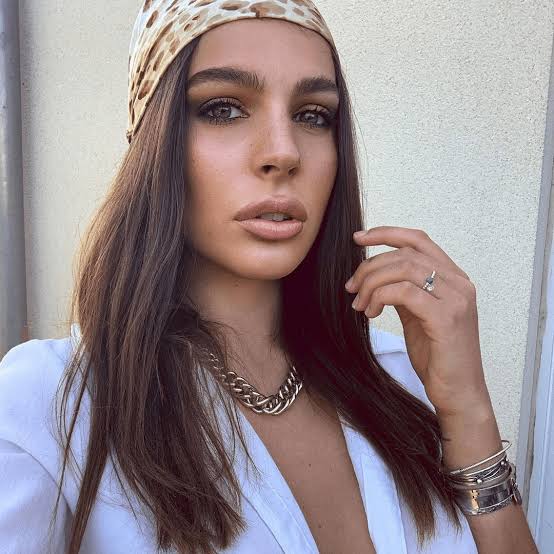
Subtle layers at collarbone length are the unsung heroes of thick, straight hair: they remove weight without sacrificing length, and they give the hair natural movement that air drying can’t replicate. The side parting and leopard print bandana headband add a playful touch that doesn’t require any extra styling. Ask your stylist for collarbone layers, leopard print bandana. The layers are cut so they blend seamlessly, no harsh steps, just a soft graduation that lets the hair fall naturally. This works best on thick hair that can handle the weight removal without looking thin. To keep the air-dried look, apply a leave-in conditioner to damp hair and let it dry without brushing. Trim the layers every eight to ten weeks to keep the shape from losing its movement.
Short Dark Brown Bob with Red Bandana
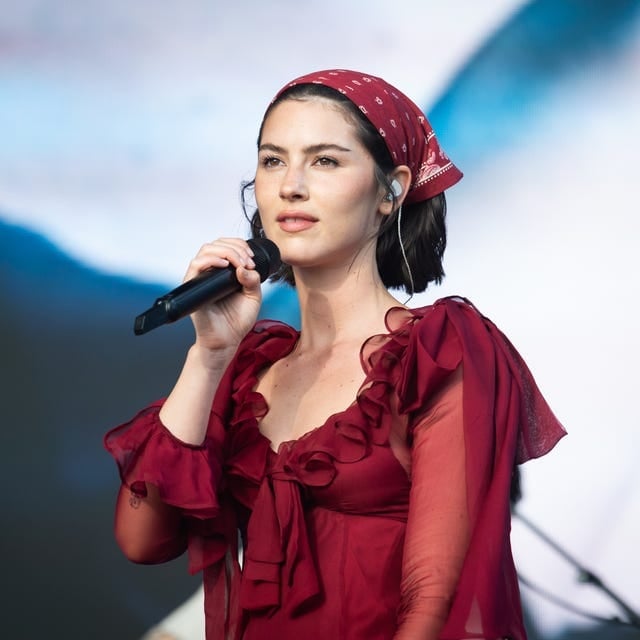
An ear-length bob leaves very little real estate for a bandana, which is exactly why this pairing works. The cut is a short, straight dark brown bob with no layers and no bangs, so the red bandana tied around the head becomes the whole point. Fine, straight hair at this length stays neat without effort, and a side part adds a bit of visual weight where the hair is thinnest. Ask your stylist for: short bob, red bandana tied around head.
This bob suits anyone who wants a low-maintenance shape that does not rely on volume. The bandana hides the fact that ear-length fine hair tends to look sparse at the crown. Use a dab of styling wax on the ends to keep them from fanning out, and book a trim every four to six weeks, because any split end on a blunt bob is immediately visible.
Short Black Bob with Bandana Tied at Nape
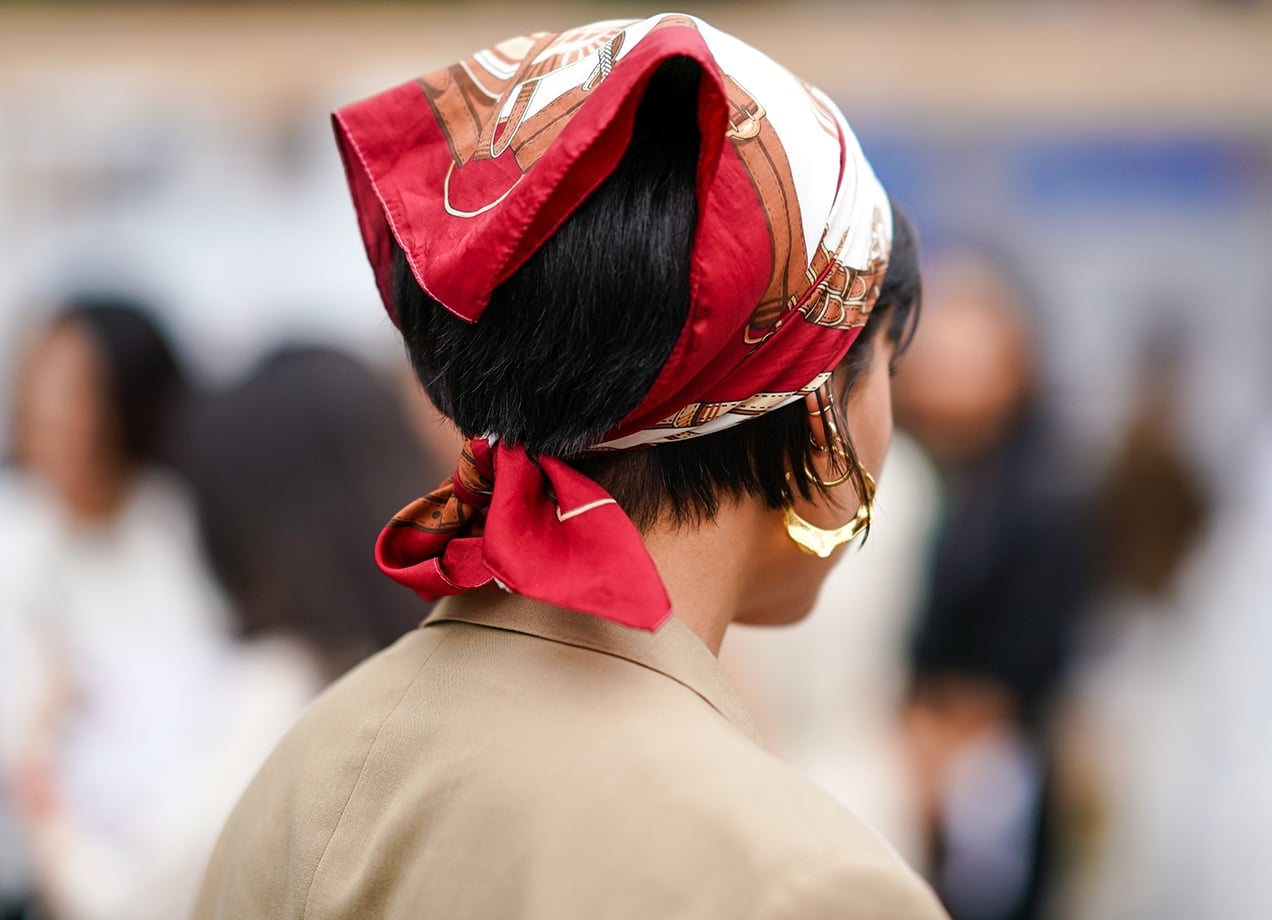
How do you add an accessory to a bob without it competing with the cut? Tie the bandana at the nape. The bob is short, straight, and black, with the hair tucked under the bandana so the patterned knot sits front and center. Ask your stylist for: short bob, bandana tied at nape. Start by flat-ironing the bob for a sleek finish, then fold the bandana into a strip and tie it low at the hairline. The real drawback: the knot can feel bulky against the neck if the bandana fabric is thick, so reach for a silk or cotton square instead.
Shoulder Length Bun with Face-Framing Strands and Bandana Headband
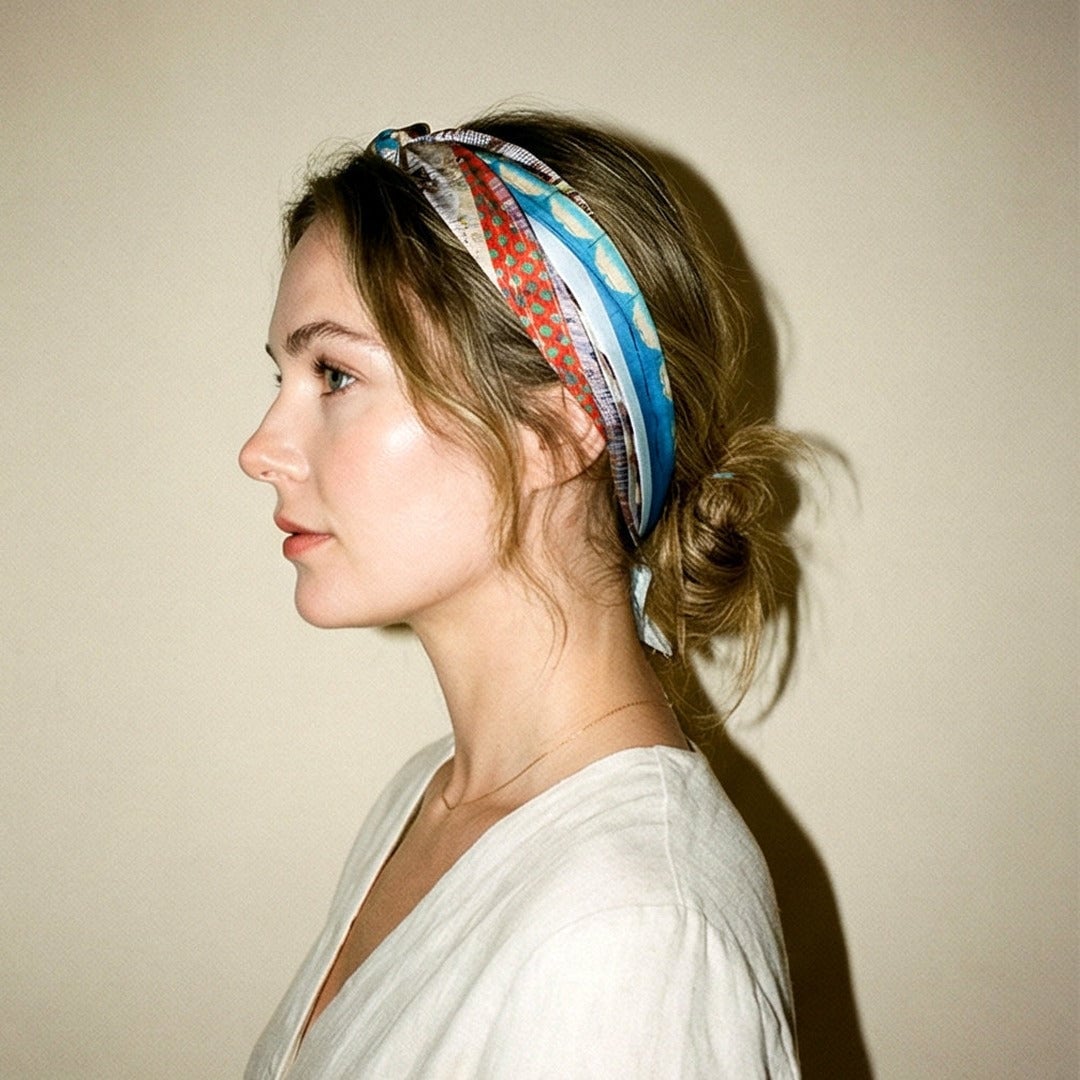
A loose bun at the nape with face-framing strands is the kind of style that looks accidental but took two tries. The hair is shoulder length, brown, fine, and wavy, with a colorful patterned bandana worn as a headband. The middle part and the pulled-out strands frame the face, which helps fine hair feel fuller than it is. Ask your stylist for: loose bun, face-framing strands, bandana headband. The wavy texture holds the strands in place better than straight hair would, but expect to readjust them after a few hours, fine waves lose grip.
Shoulder Length Updo with Dark Roots and Red Bandana Bow
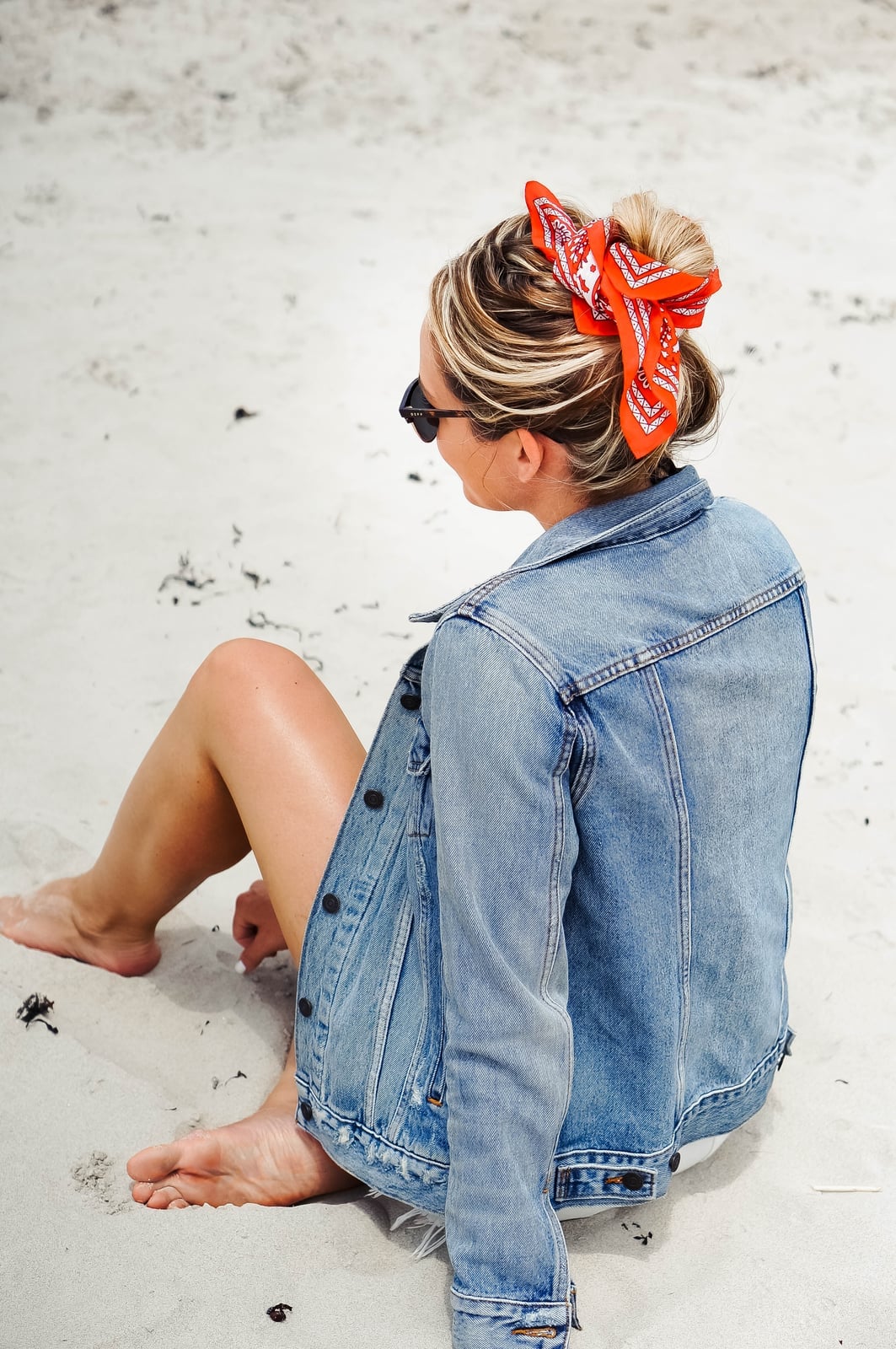
A slicked-back updo with a red bandana bow at the crown is polished enough for evening but built on a practical color choice. The hair is shoulder length, wavy, and blonde with noticeable dark roots, styled into a smooth updo with no bangs. The dark roots eliminate the need for a root touch-up every three weeks, which is the main headache of a single-process blonde. Ask your colorist for: blonde with dark roots, red bandana bow. This updo is achievable at home with a strong-hold gel and a boar bristle brush, but the slicked-back finish is easier to get right in a salon chair, one errant strand and the whole thing reads as rushed.
Compare this to a single-process blonde: that route demands a toner appointment every four weeks and a root retouch every six, not to mention the bandana does not help hide grow-out on a solid color. The dark-root approach lets you wear the same updo for eight weeks without the color feeling tired. Round and heart faces benefit from the slicked-back hairline, which opens up the face without adding width.
Shoulder Length Black Hair Styled with Headwrap
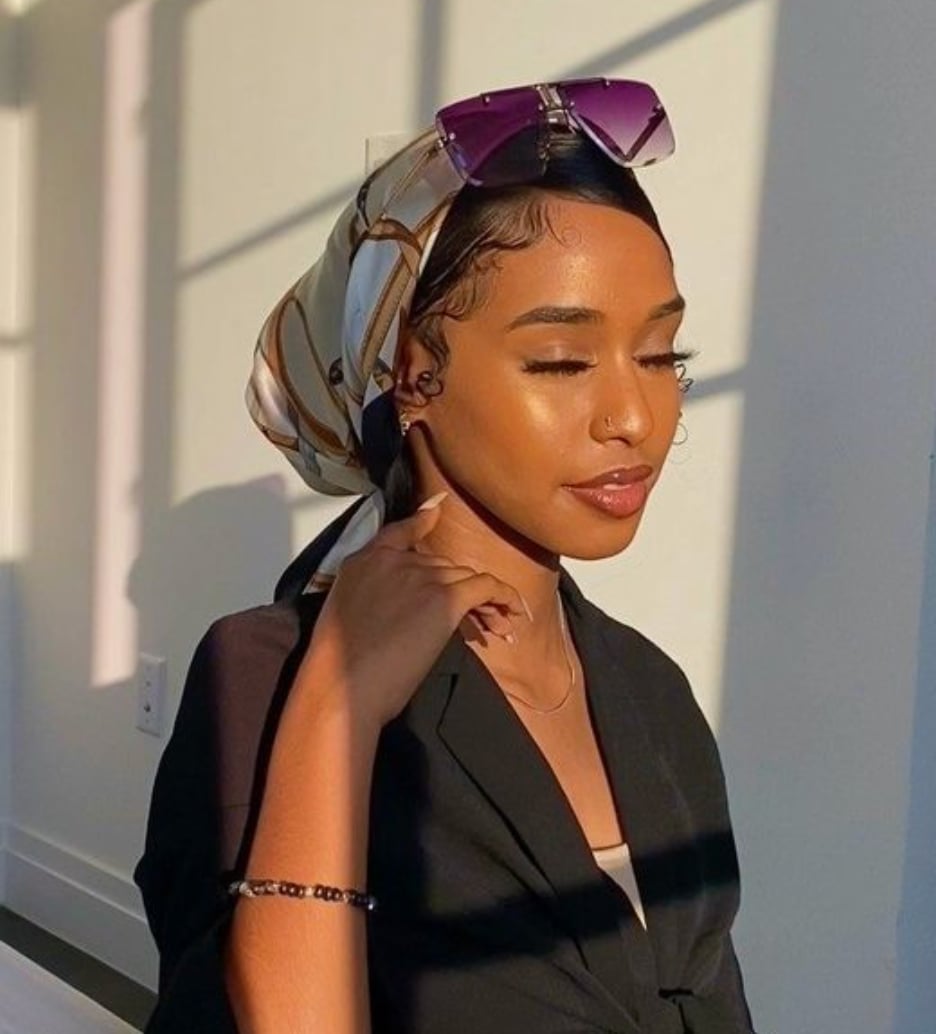
A patterned scarf tied as a headwrap covers most of the hair, so the cut matters less than the finish. The hair is shoulder length, thick, straight, and black, swept away from the face with the baby hairs deliberately styled. Ask your stylist for: slicked back style, baby hairs, patterned headwrap. The technique is straightforward: apply a smoothing serum to the baby hairs and shape them into curves with a small brush, then wrap the scarf tightly around the hairline and tie at the nape. Thick, straight hair holds the slicked-back base without pins, which is the whole point, no slipping, no adjusting.
Shoulder Length Curly Ponytail with Black Bandana
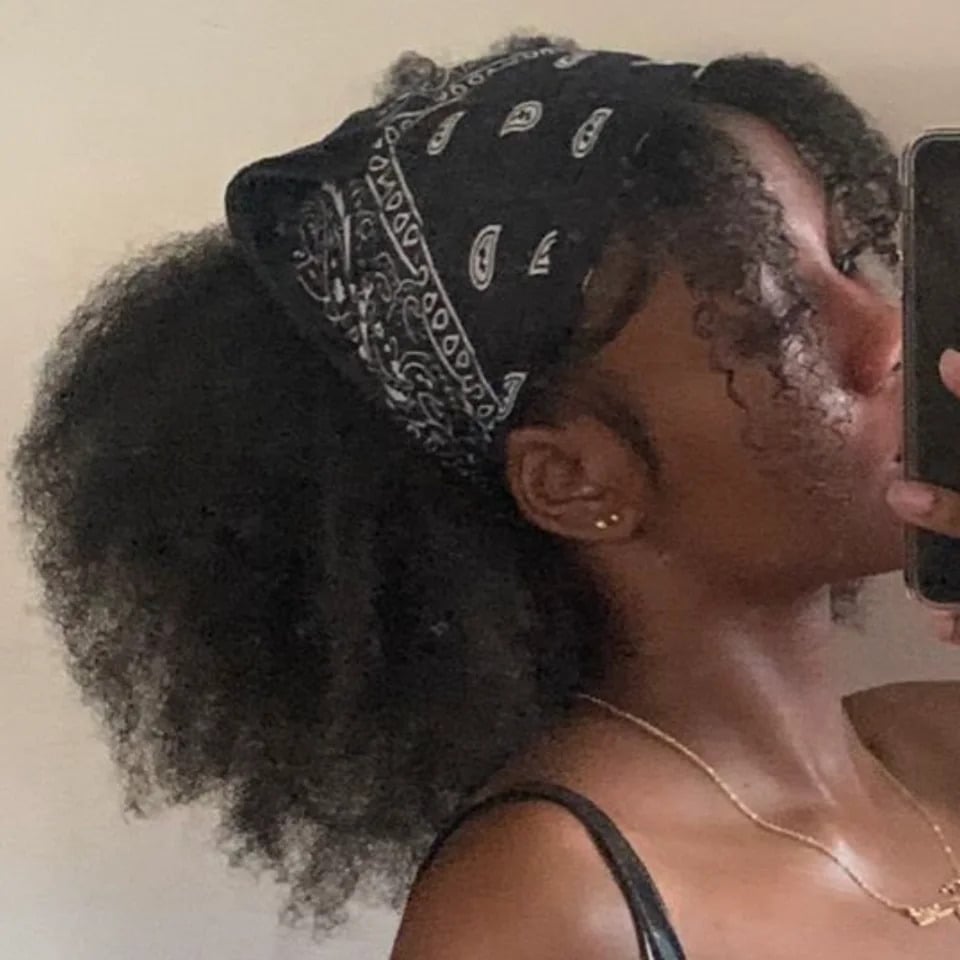
Why fight a high ponytail when your natural texture already does the heavy lifting? A black bandana tied around the base keeps thick, curly hair off your neck and lets defined baby hairs along the hairline soften the whole thing. Thick curls at shoulder length hold this shape well, and the height of the ponytail elongates rounder faces. Ask your stylist for: a natural afro cut, high ponytail, baby hairs. Work a curl-defining cream through damp hair to keep the texture springy, and plan on a trim every eight to ten weeks. The drawback: a high ponytail pulls at the edges, so give your hairline a break on off days.
Collarbone Updo with Blonde Waves and Black Bandana
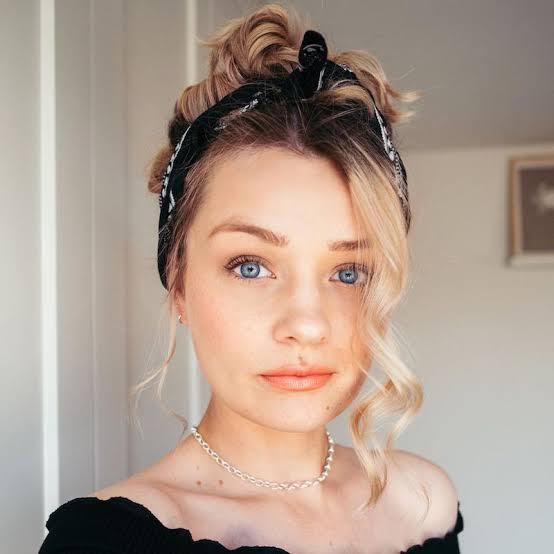
The bandana does double duty here, holding the bun and covering the elastic, which means you can skip the search for a matching scrunchie. Fine, wavy hair at collarbone length actually benefits from this style because the messy updo adds the volume that fine strands lack on their own. The face-framing pieces around the temples soften a square jaw without committing to full bangs. Ask your stylist for: layered collarbone cut, face-framing pieces. This is a genuinely good option for anyone with fine hair who wants an updo that looks fuller than it is.
Pull out a few extra strands around the face and at the nape for a looser finish, since the undone quality is what sells it. Keep the middle part, which works well with the face-framing pieces and suits oval and heart shapes. A trim every ten to twelve weeks keeps the layers from getting heavy and weighing down the waves. It is a five-minute styling job once you have the bandana tied, which makes it a solid everyday choice.
Intricate Braided Bun with Star Patterned Bandana
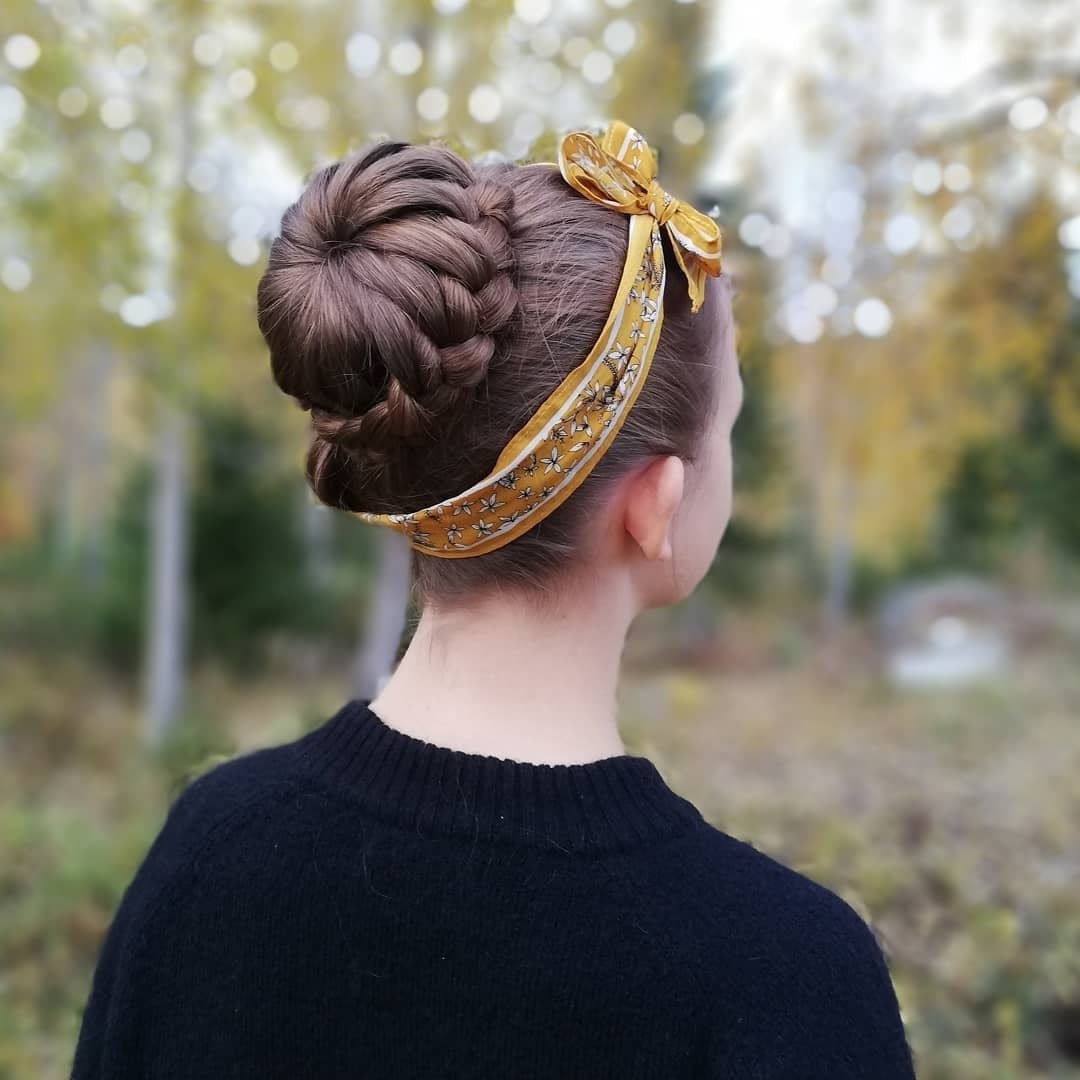
An intricate braided bun is not a five-minute morning decision, and the yellow star patterned bandana tied with a bow at the back only adds to the precision. Long, thick, straight brown hair is the ideal candidate, since the weight of the hair helps the braid hold its shape through the day. This one reads as formal, so it suits weddings, anniversary dinners, or any occasion where a regular bun feels underdressed. Ask your stylist for: a braided bun, yellow star bandana. The honest drawback is time: expect to set aside a solid block to get the braid even, and you will need bobby pins to keep every strand locked in place.
The middle part keeps the front clean, and with no bangs to fuss over, the focus stays on the braid work at the back. Because the style relies on tension to stay put, thicker hair holds it better than fine strands, which tend to slip. A trim every ten to twelve weeks keeps the ends neat so the braid finishes cleanly. Plan for this one when you have somewhere to go and nowhere to rush.
Textured Pixie Cut with Blunt Bangs and Blue Bandana
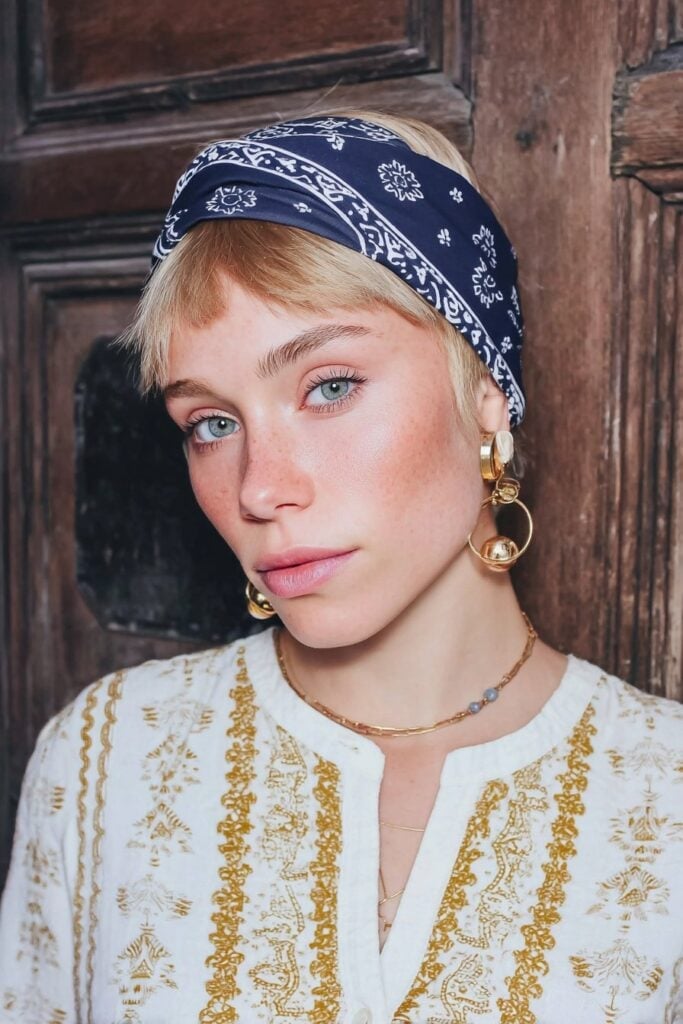
It is not a bob with a bandana holding it back, it is a true ear-length pixie where the blue bandana tied around the head becomes the main event. Fine, straight blonde hair at this length styles forward with blunt bangs, and the middle part keeps the look from feeling too severe. Oval and heart faces handle the cropped shape best, since it does not add width at the cheeks. Ask your stylist for: textured pixie cut, blunt bangs. You can do this yourself at home, but a texturizing paste is required to give fine strands any grip. The trade-off is the upkeep: a pixie needs a trim every four to six weeks, and a bandana can slide off fine hair by midday unless you tie it snugly.
Final Thoughts
For fine or thin hair, tie a bandana as a headband or around a ponytail to add visual bulk without weighing the roots down. For thick or coily hair, wrap it fully or weave it into braids for a secure hold that lasts all day.
- Hand wash silk or satin bandanas with mild detergent; air dry.
- Machine wash cotton bandanas on a gentle cycle with like colors.
- Make sure hair is fully dry before storing bandanas to prevent mildew.
- Check bandanas regularly for snags or loose threads.
A bandana is your secret weapon for instant style.
