

The curly shag is a layered cut built around volume and movement, and for 2027 it is leaning into softer face-framing layers, curtain bangs, and lived-in color that lets natural texture do the talking.
This collection of 36 Trendy Curly Shag ideas spans collarbone to mid-back lengths, air-dried to blowout styling, and low-maintenance roots to bold reds. It is for anyone with waves, curls, or coils who wants a cut that adds shape without daily fuss, and it solves the struggle of fine curls that fall flat or a fringe that refuses to cooperate.
Collarbone Curly Shag With Full Bangs
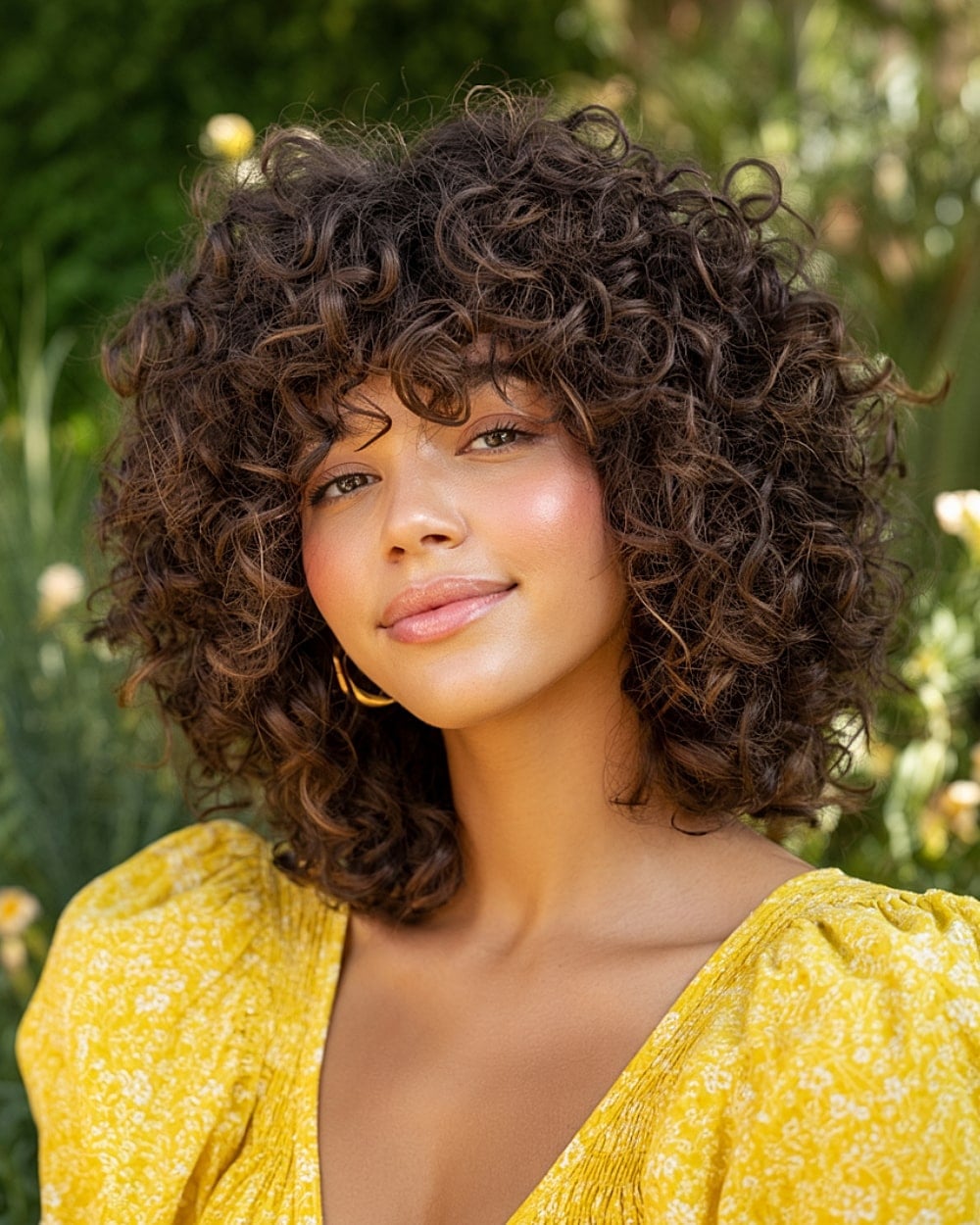
A collarbone shag with full bangs is a design that commits to the fringe. The thick, dark brown curls pile up around the face, and the bangs land somewhere between retro and entirely modern. This cut genuinely flatters oval and square face shapes, where the weight of the bangs balances a stronger jawline or a longer forehead. Ask your stylist for: a collarbone shag with thick curls and full bangs. Apply a curl cream to damp hair, then air-dry or use a low-heat diffuser. The baseline needs a trim every six to eight weeks to stop the shape from turning into a triangle.
Collarbone Shag With Caramel Highlights
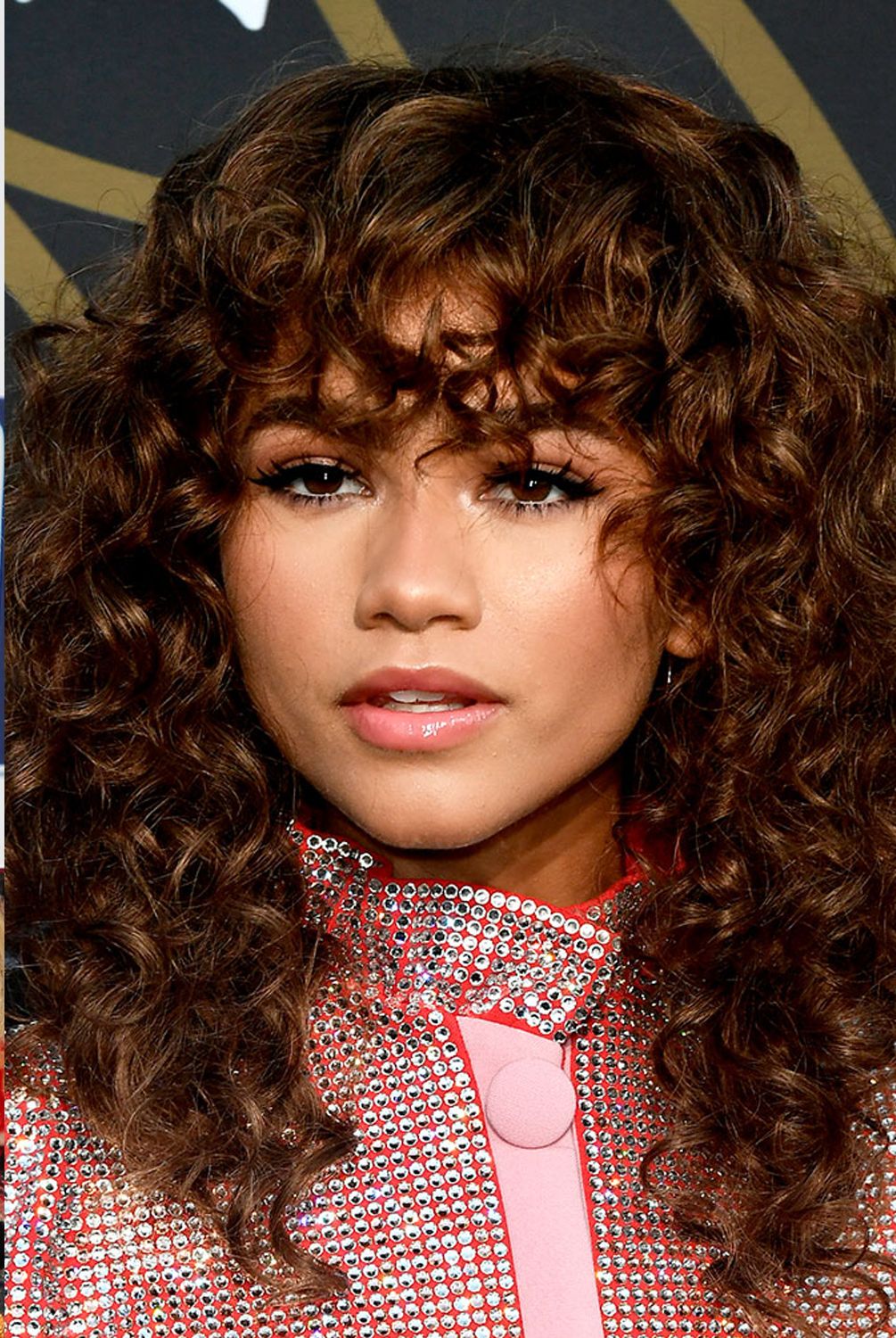
This version swaps the air-dried finish for a blowout, which changes the whole feel. The dark brown base gets lifted by subtle caramel highlights, and the curtain bangs frame the face without the commitment of a full fringe. Thick, naturally curly hair that reaches collarbone length will hold this volume best. Ask your stylist for: a collarbone shag with voluminous curls, curtain bangs and caramel highlights. The highlights sit where the layers fall, so the movement looks built in rather than painted on. Expect a refresh every ten to twelve weeks to keep the caramel from dulling.
Shoulder-Length Shag With Side Part
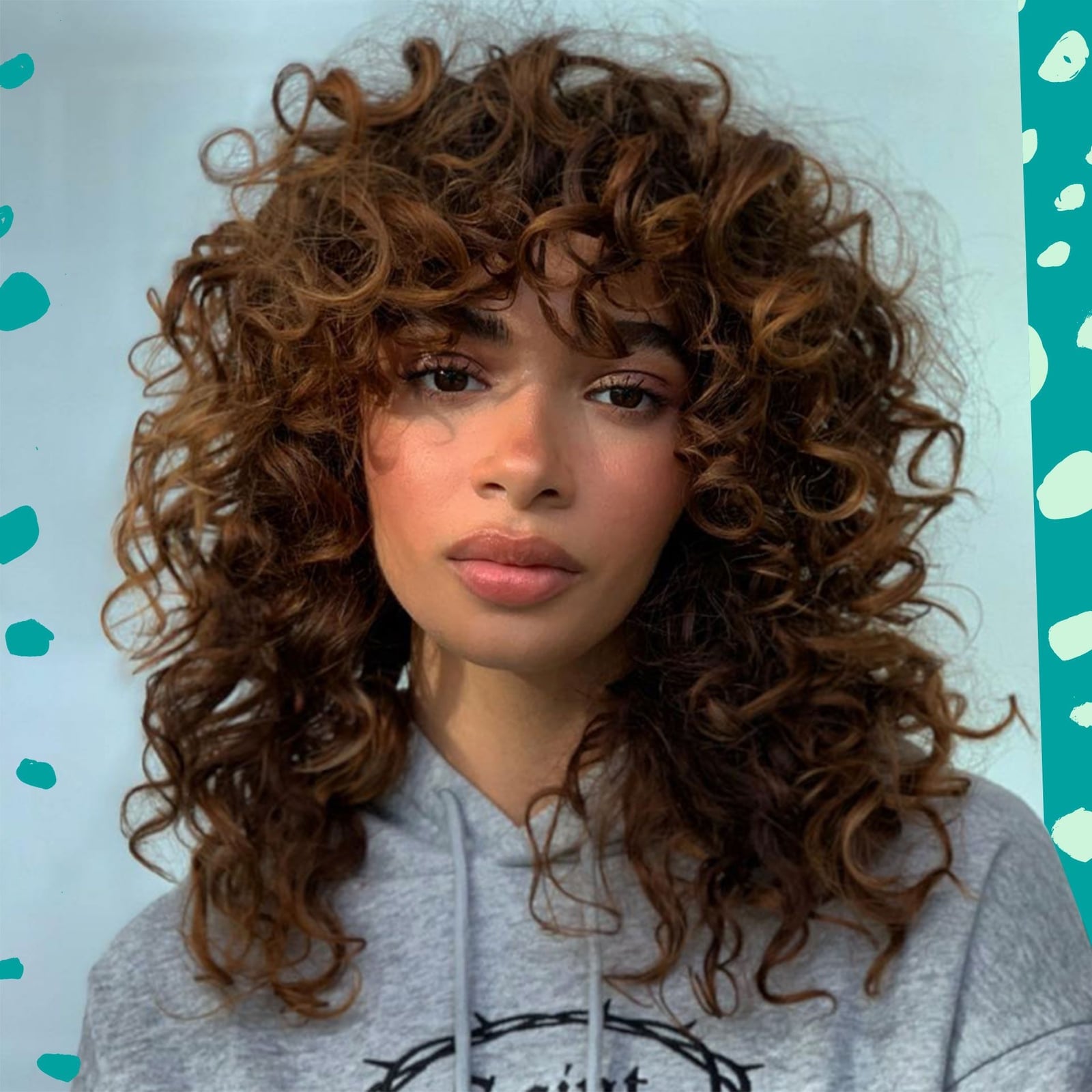
How do you ask for a shag that does not look like a costume from the seventies? Start with a side part and shaggy bangs that blend into the layers. This shoulder-length cut uses a medium brown base with caramel highlights, and the air-dried texture keeps it grounded. Medium-density curly hair handles this length without losing shape. Ask your stylist for: a shoulder-length shag with shaggy bangs, a side part and lived-in color. The highlights should land on the ends, not the roots, so the regrowth stays soft. A texturizing spray on damp curls will replicate the photo finish.
Shoulder Shag With Short Curly Bangs
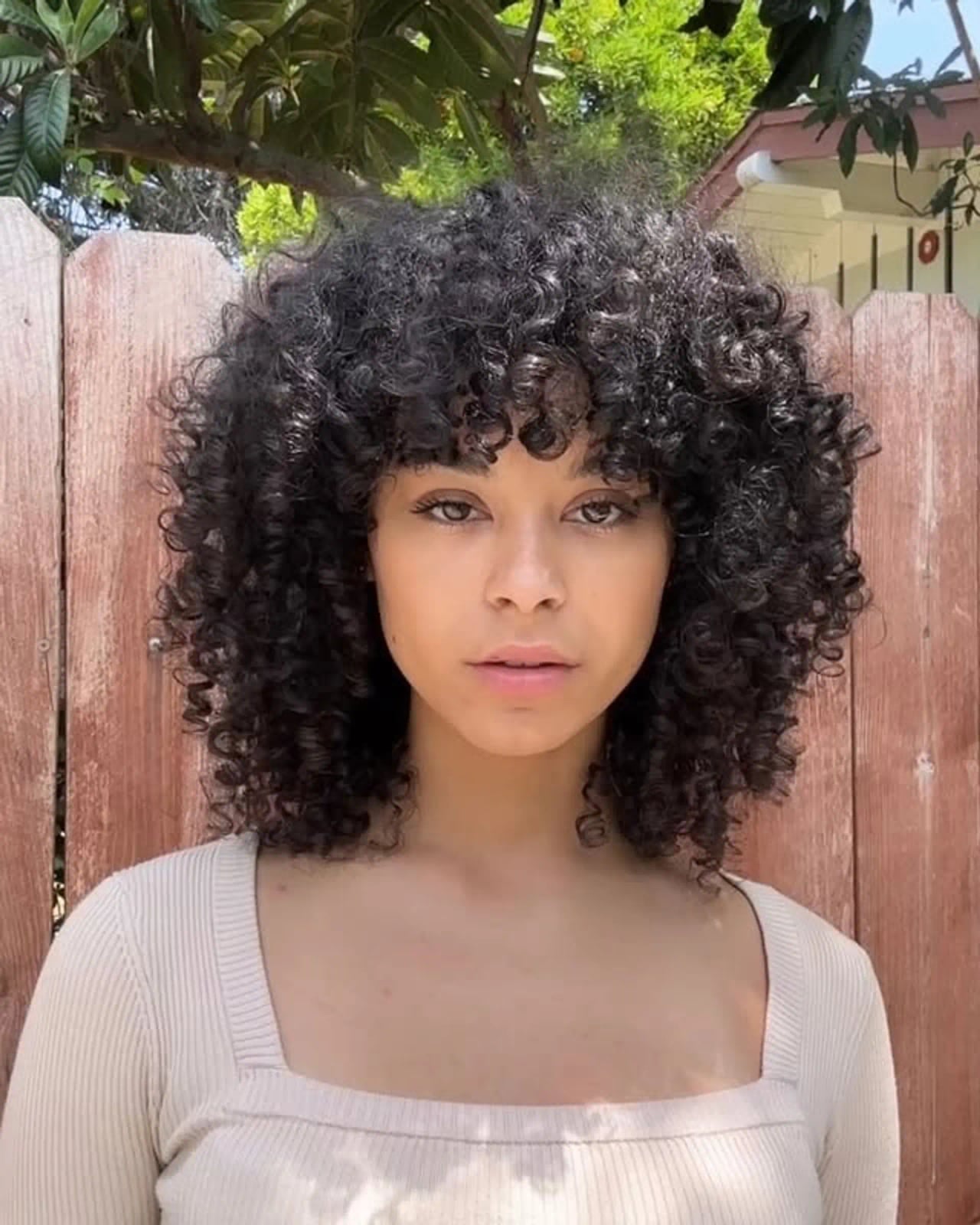
Short curly bangs on a shoulder-length shag are a high-upkeep detail that delivers every time. The dark brown, defined curls land just past the shoulders, and the middle parting lets the short fringe sit forward rather than spreading across the forehead. Oval and heart-shaped faces get the most from this proportion. Ask your stylist for: a shoulder-length shag with short curly bangs and defined curls. A diffuser on low heat is your main tool here. The bangs will need a trim every four to six weeks, or they start grazing the brows and lose their shape.
Collarbone Shag With Subtle Highlights
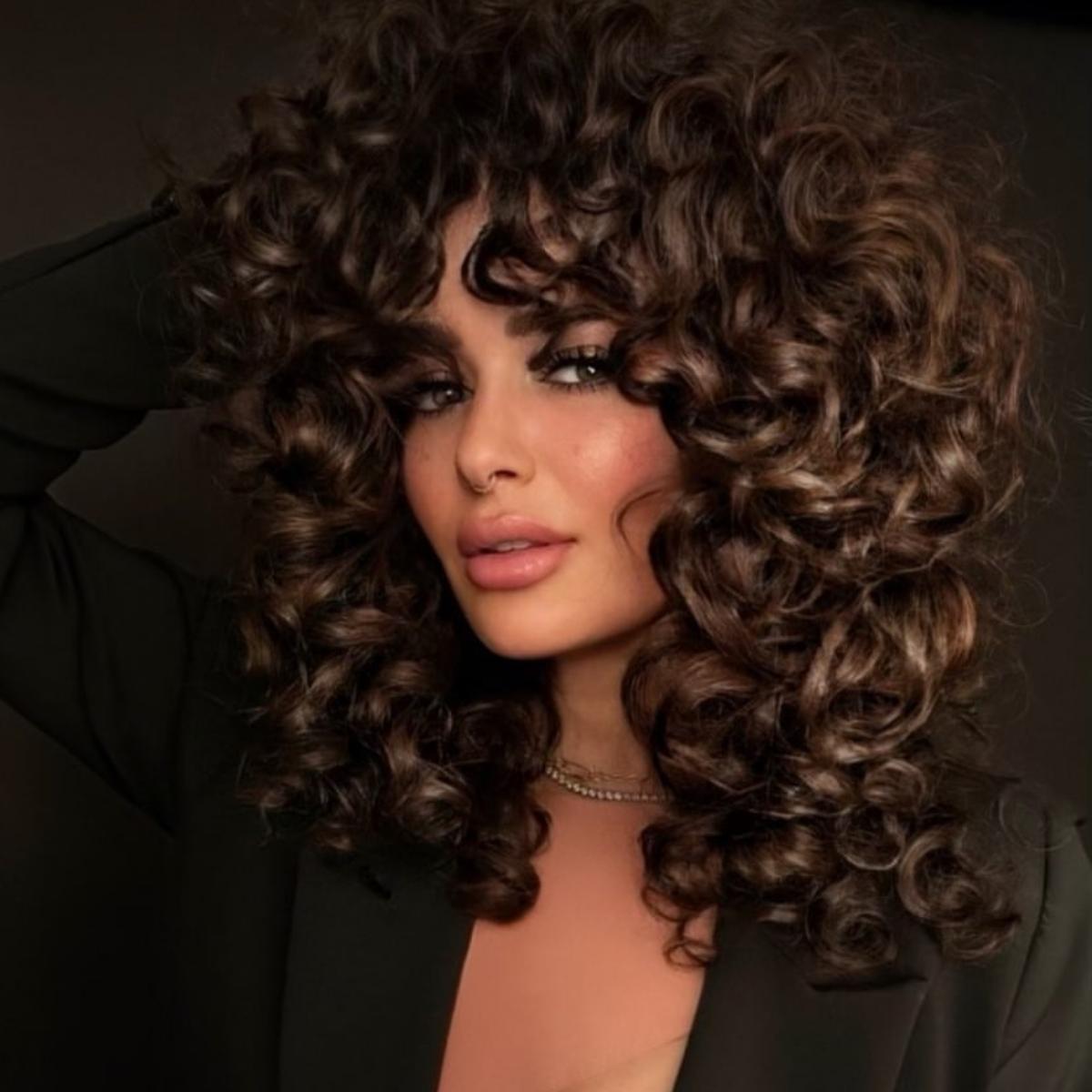
Subtle highlights on a collarbone shag read differently than their bolder counterparts. They add dimension without creating a stripe, which suits medium-density curly hair that might get overwhelmed by high-contrast color. The dark brown base stays dominant, and the curtain bangs soften the transition from face to length. Ask your stylist for: a collarbone shag with curtain bangs and subtle highlights. The highlights should be a half-step lighter than the base, not a full jump. A light serum on air-dried curls will pull the texture forward without weighing it down. Trim the shape every six to eight weeks to keep the ends from thinning out.
Ash Blonde Shoulder Shag
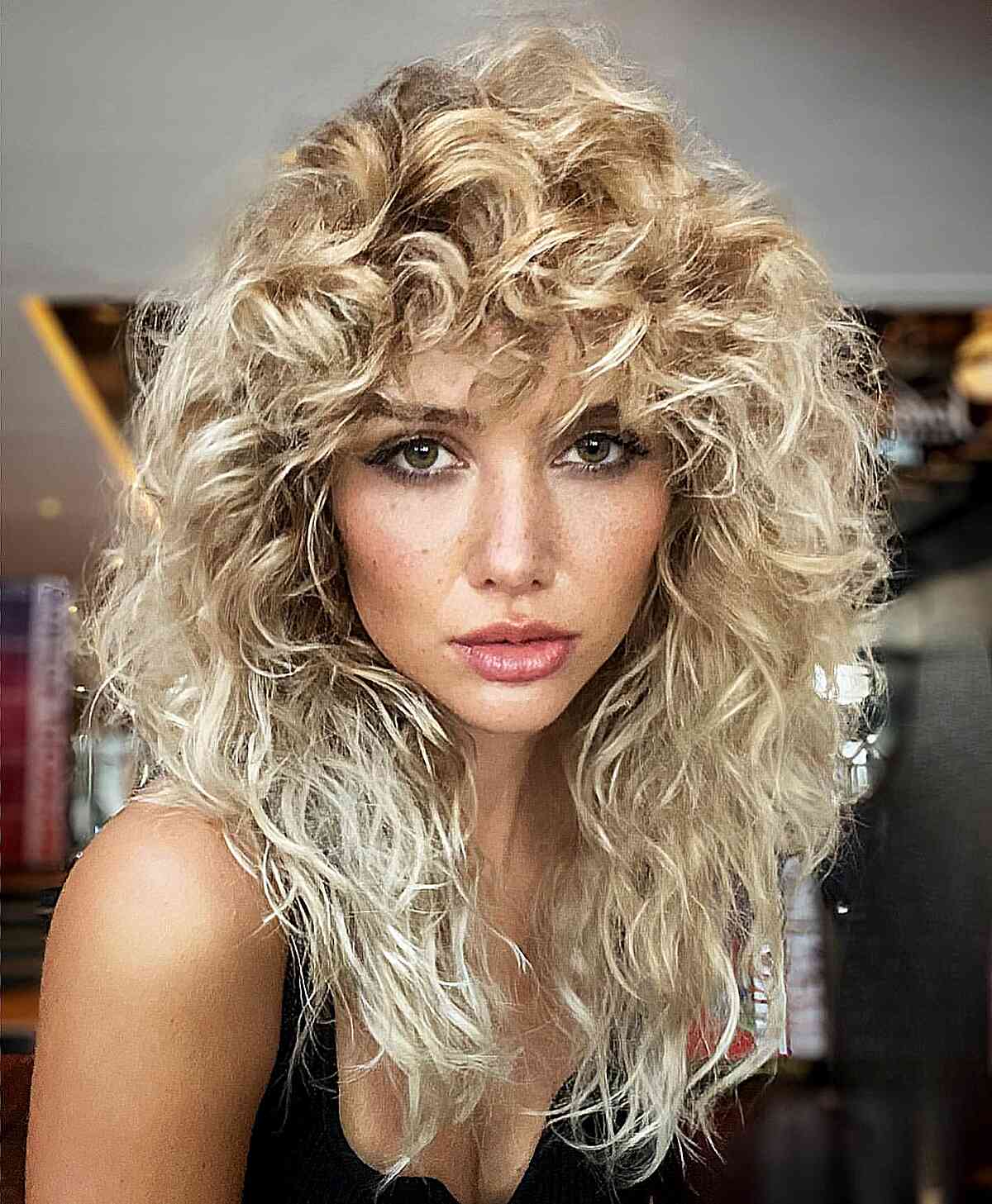
Can ash tones work with curly texture? They can, and this shoulder-length shag with a full fringe proves it. The cool blonde base with lighter highlights stops the curls from reading as muddy, while the middle part and voluminous shape keep the look modern rather than matronly. Ask your stylist for: shoulder length shag, ash blonde, full fringe. A purple shampoo used once a week maintains the ash tone; plan for a trim every 8 to 10 weeks.
Dark Brown Shag With Shaggy Bangs

The dark brown shag with shaggy bangs relies on precision layering to work. Those uneven, textured ends need a stylist who understands how curly hair bounces up after cutting, so this is not a kitchen-scissors moment. The side part and air-dried finish keep it casual, but the cut itself requires a professional hand to land the right balance of shape and movement. Ask your stylist for: shoulder length shag, shaggy bangs, side part.
Natural Gray Shag With White Highlights
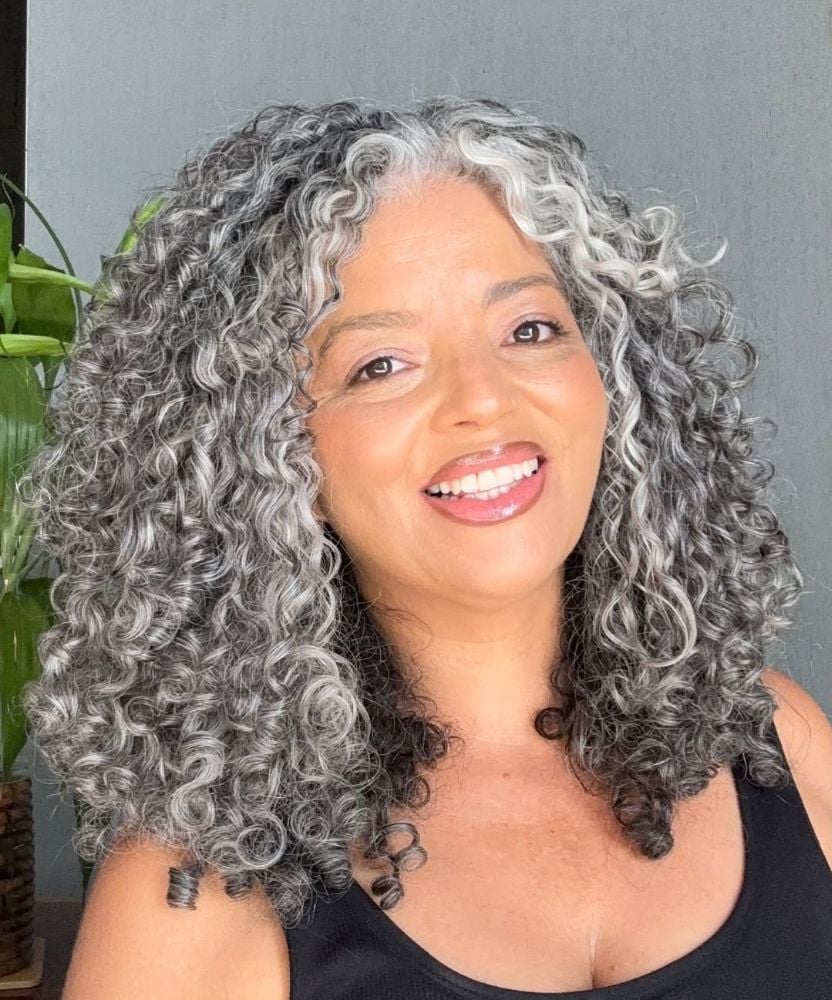
A shag without bangs is a quieter proposition, and that is the point here. The shoulder-length cut with a side part lets the thick, curly texture do the work, while the white highlights add dimension against the natural gray base without needing a full color overhaul. Because there are no bangs to trim every few weeks, the grow-out is unusually forgiving. Ask your stylist for: shoulder length shag, natural gray color, white highlights, no bangs.
Upkeep is straightforward: a color-safe shampoo preserves the cool tones, and a trim every 8 to 10 weeks keeps the layers defined. Air-drying is the default styling method, which saves time and heat exposure. The trade-off for skipping bangs is that the face-framing layers need to be cut precisely to soften the perimeter on their own.
Collarbone Shag With Wispy Bangs
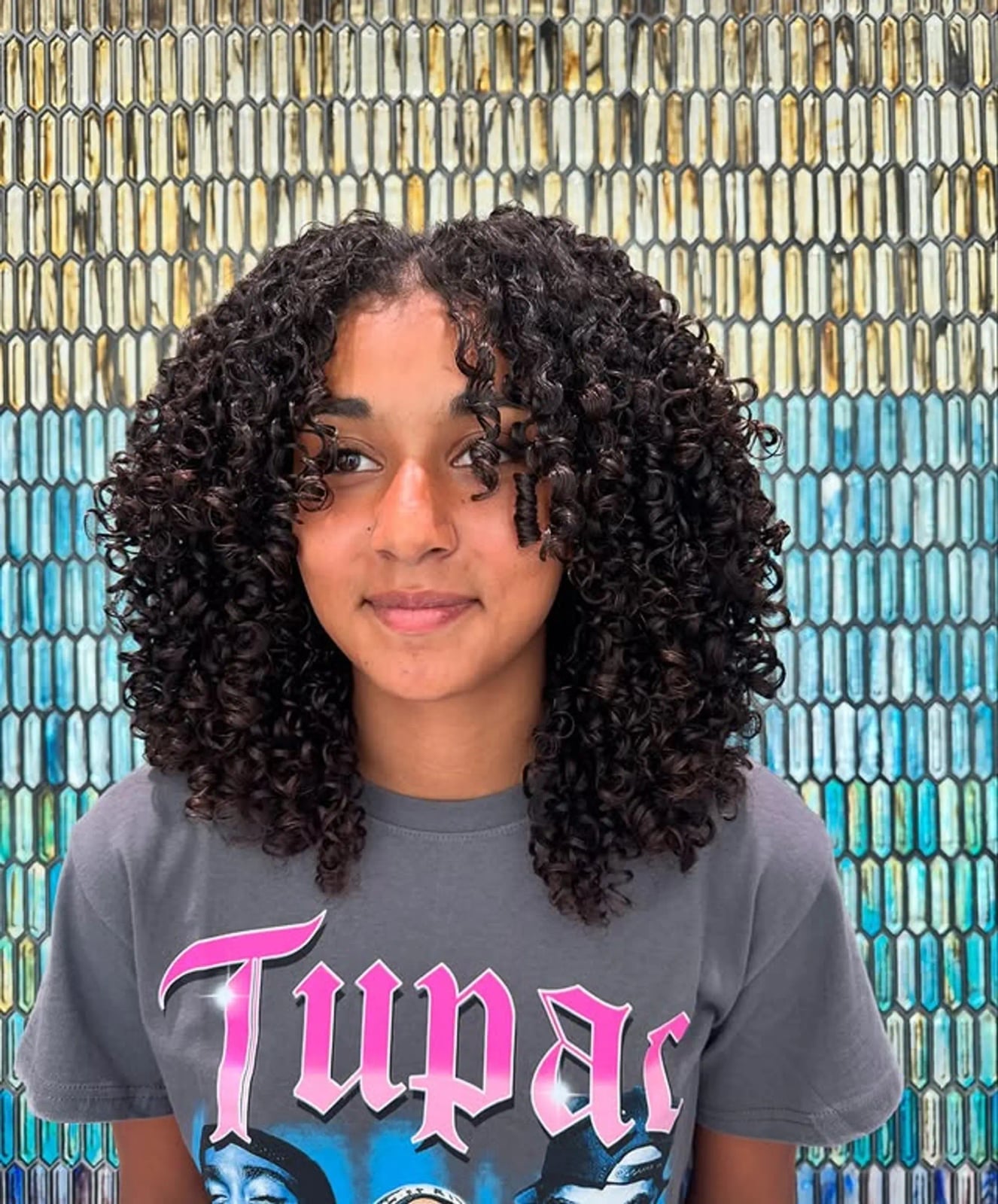
How do you ask for bangs that soften without taking over? The answer is wispy bangs cut to blend into the shag layers rather than sit as a separate statement. This collarbone-length version in medium brown uses a side part and air-dried medium density curls, so the bangs land as a light accent, not a heavy curtain. Ask your stylist for: collarbone shag, wispy bangs, side part. The softness works well for those with a strong jawline, as the feathery ends break up the line without adding bulk.
Fiery Red Mid-Back Shag
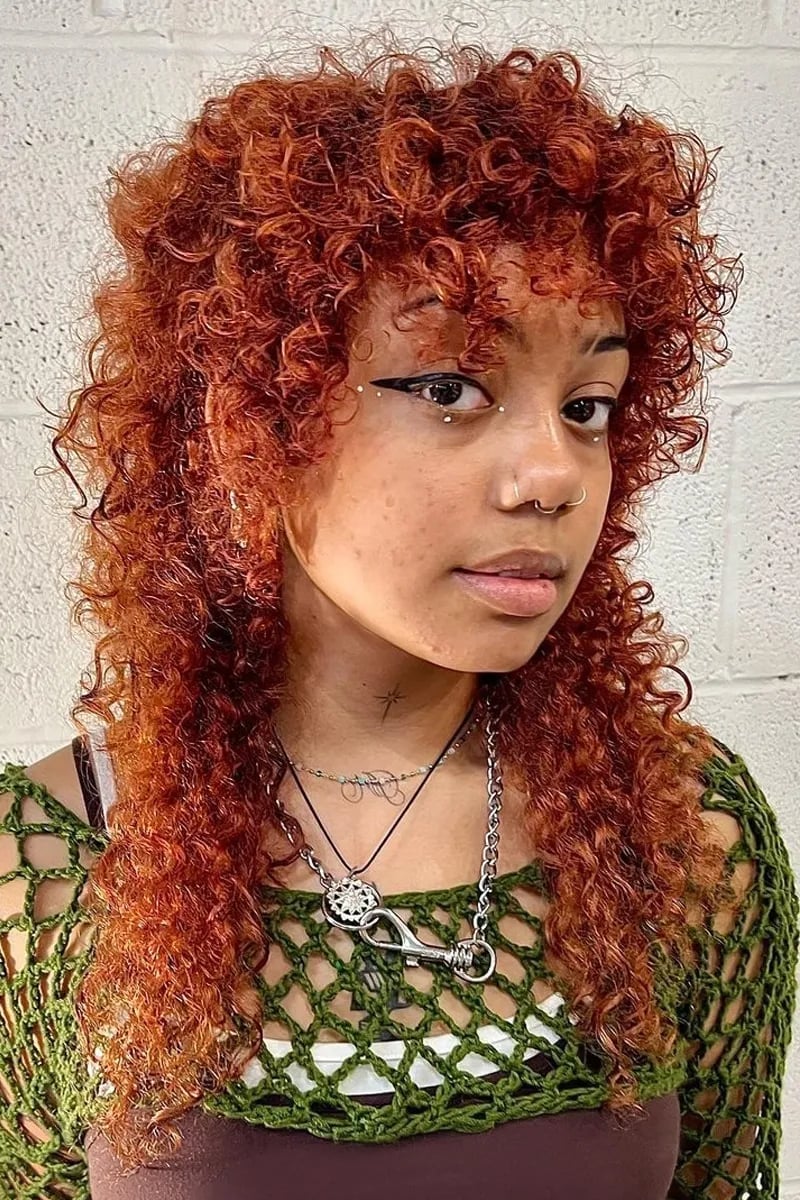
If a standard copper feels too safe, this mid-back shag in fiery red with lighter dimensional pieces takes the same instinct and turns up the volume. The curly bangs and middle parting give it a deliberate look, and the longer length keeps the vibrant color from feeling overdone. Autumn is the natural season for this shade, though it also works at summer festivals where brighter colors are the norm. Ask your stylist for: mid-back shag, fiery red color, curly bangs.
The lighter pieces add movement and prevent the solid red from looking flat, but they also mean the color requires a stylist who can place highlights that enhance the curl pattern and don’t fight it. Expect the red to fade faster than brown or black, so a color-protecting shampoo is not optional. This cut draws attention without needing elaborate styling.
Collarbone Shag With Loose Waves
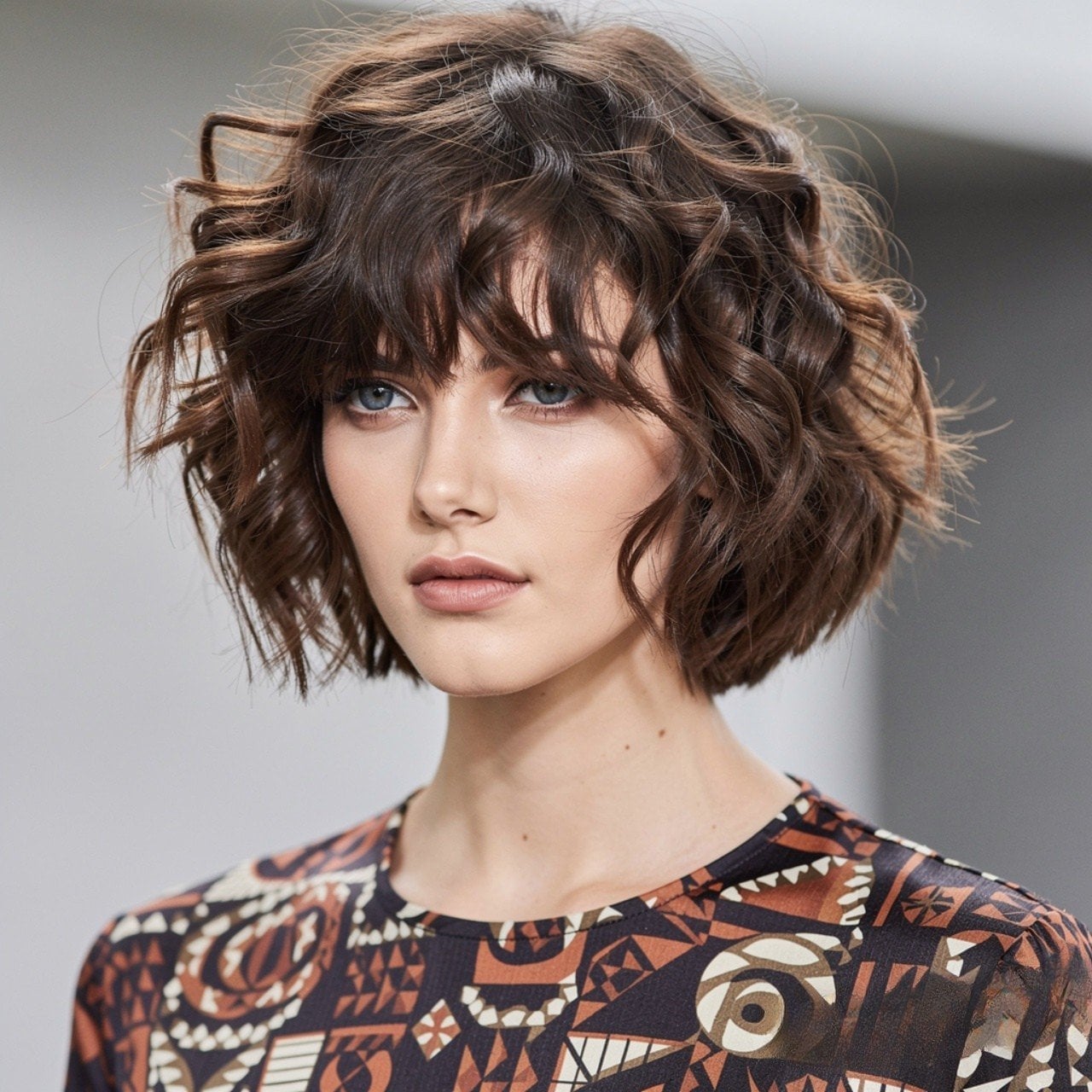
The design relies on a side part to direct the curtain bangs and loose waves in one deliberate sweep. A collarbone-length shag with a dark brown base and subtle highlights gets its polish from a blowout with a round brush, which smooths the cuticle and bends the ends into an S-shape rather than a curl. The blowout adds gloss and keeps the layers from looking disconnected. Ask your stylist for: collarbone shag, loose waves, curtain bangs, side part. Collarbone-length hair with natural wave takes this well, and the curtain bangs soften angular faces. The baseline needs a trim every six to eight weeks to keep the shape clean.
Thick Collarbone Shag With Curtain Bangs
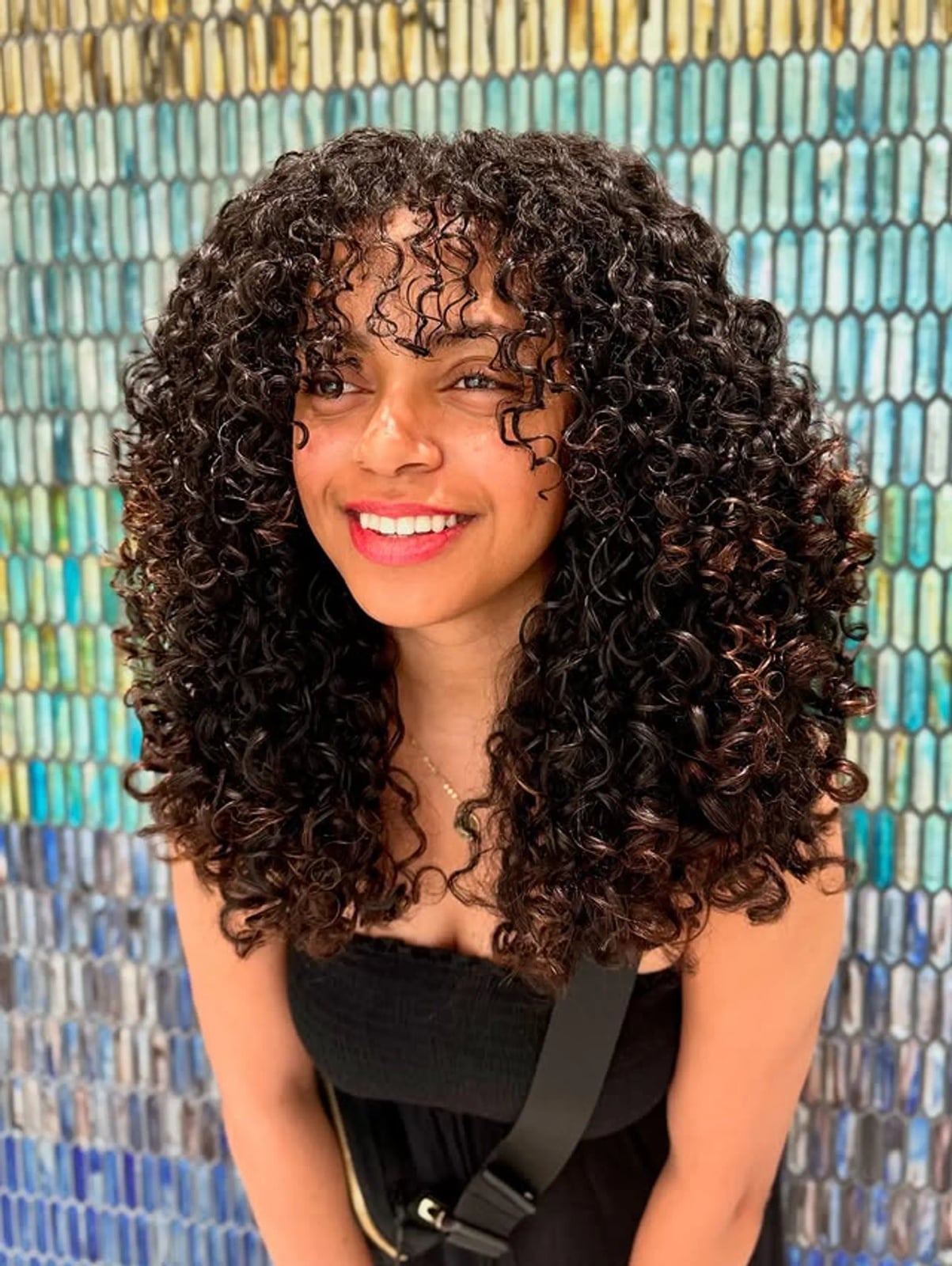
A collarbone-length shag with thick, voluminous curls and curtain bangs works because the layers remove enough interior density to stop the shape from turning into a triangle. The middle parting lets both sides of the curtain bangs fall evenly, framing the face without losing the shag’s signature disconnected ends. Ask your stylist for: collarbone shag, thick curls, curtain bangs. This cut genuinely flatters thick, curly hair at collarbone length, but fine or low-density textures will find the layers thin out too fast. A curl-defining cream and a scrunch are all the styling it needs.
Mid-Back Black Curly Shag
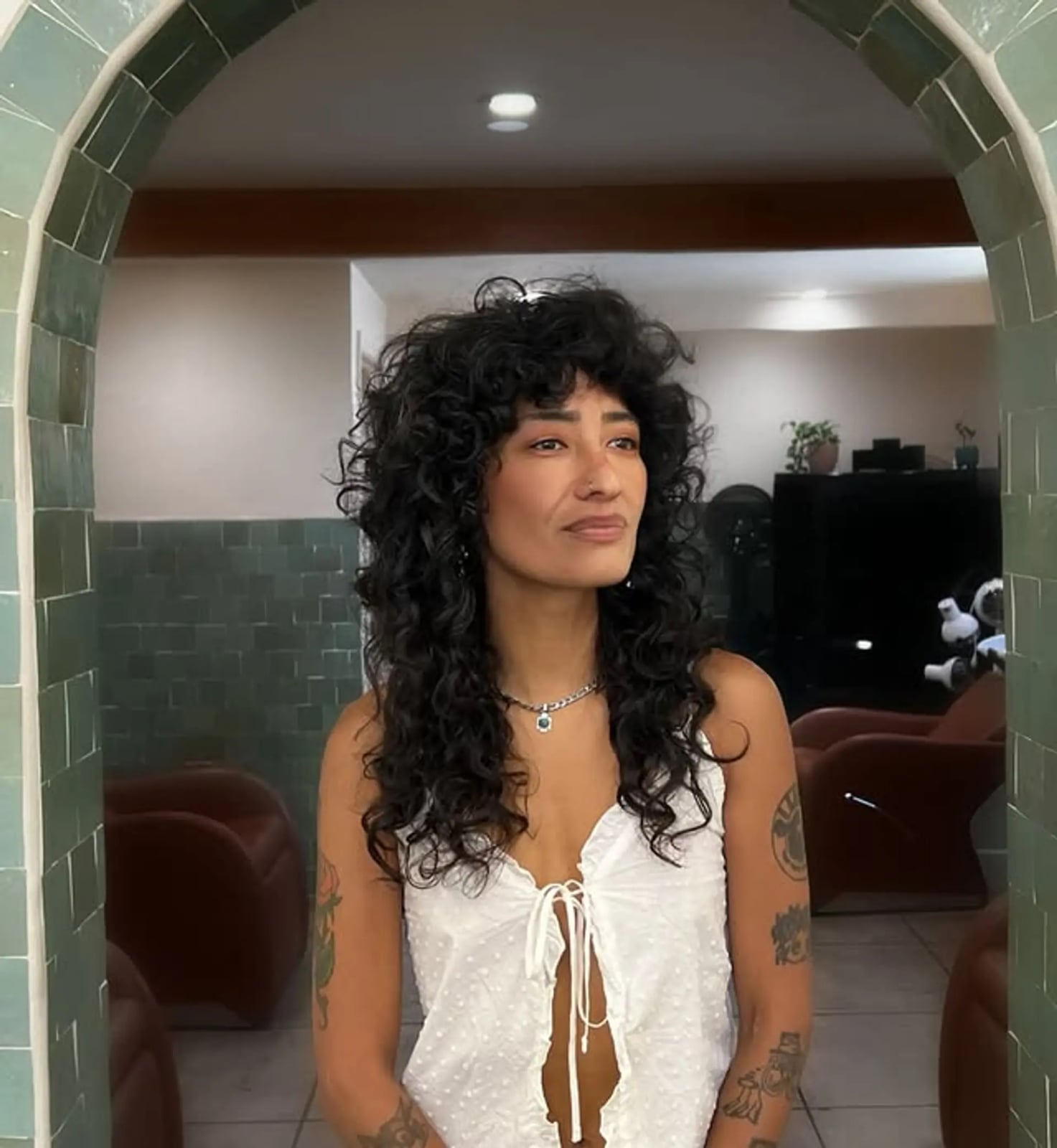
A mid-back shag with no bangs lets the layers do all the work, and on thick, black, voluminous curls the weight is both the point and the maintenance. The middle parting and air-dried finish keep the shape casual, but the real reality is detangling: expect to spend time sectioning in the shower to avoid matting at the nape. A silk pillowcase helps preserve the curl pattern overnight.
Ask your stylist for: mid-back shag, black, thick curls, no bangs. Thick, curly hair at this length needs the layers cut while dry so each one lands correctly. Trims land every eight to ten weeks to keep the hemline from growing heavy and the shag from losing its movement.
Honey Blonde Shoulder Shag
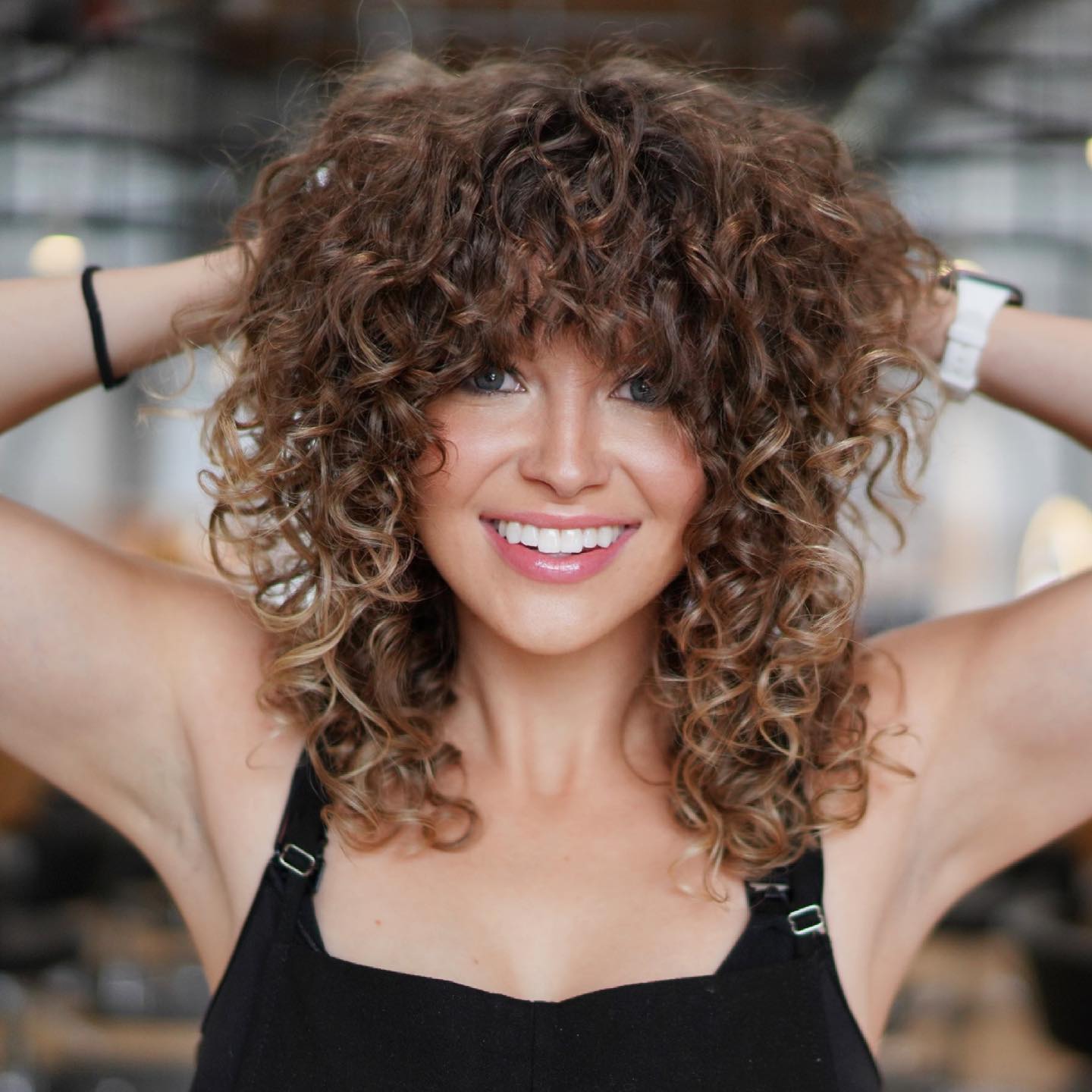
Want the shag texture without losing your bangs? Ask your stylist for: shoulder length shag, honey blonde highlights, curly bangs. The curly bangs mirror the tight, natural curl pattern of the hair, so the fringe reads as part of the cut. Honey blonde highlights on a shoulder-length shag add dimension without a high-contrast grow-out line. A side parting lets the bangs blend into the layers, and air-drying with a leave-in conditioner keeps the curl definition intact.
Collarbone Dark Brown Shag
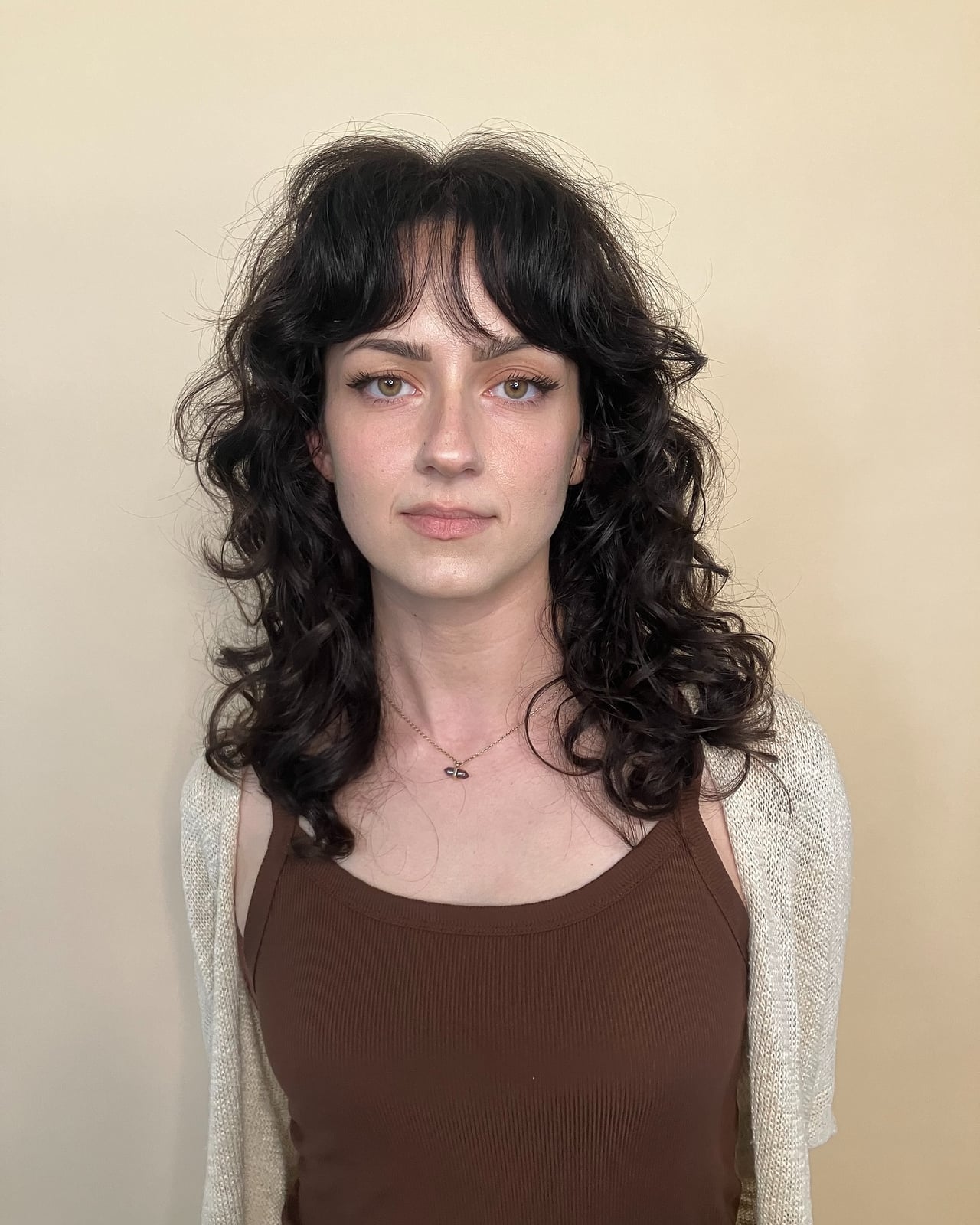
A full curtain fringe that grazes the cheekbones versus a set of face-framing layers that start higher: the former gives a stronger graphic line, the latter more movement. On this collarbone dark brown shag, the curtain bangs are cut to blend into the top layers, so they swing with the curl rather than sitting separately. A middle parting and air-dried texture keep the look low-effort.
Ask your stylist for: collarbone shag, dark brown, curtain bangs. Thick, curly hair at collarbone length holds the shape well because the natural volume fills out the layers. Diffusing encourages the curl pattern without frizz, and a trim every six to eight weeks prevents the bangs from outgrowing their intended length.
Collarbone Shag With Short Curly Bangs
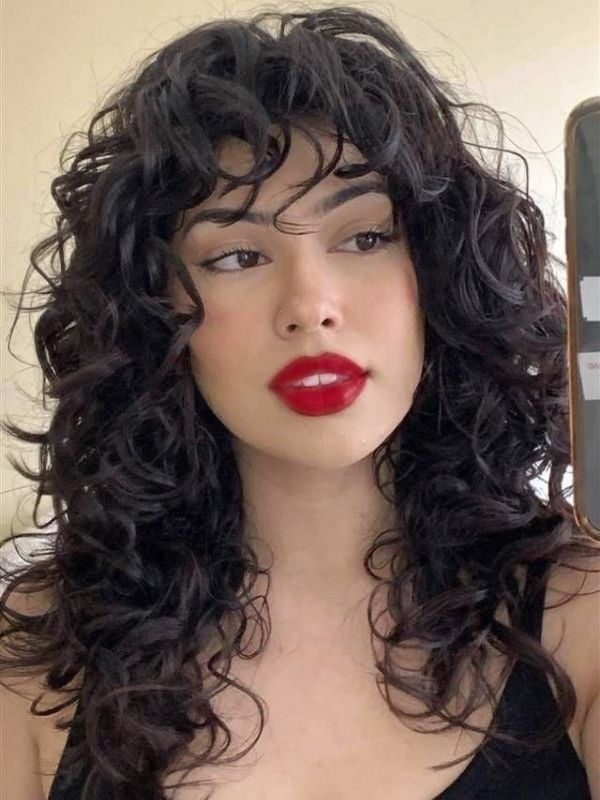
The short curly bangs are the first thing you notice, and they are also the part that decides whether this cut works. They sit well above the brow, which means the collarbone length behind them has to carry the shag’s shape, and the defined curls do exactly that. Ask your stylist for a collarbone shag, short curly bangs, and defined curls. The trade-off is daily: keeping that volume and curl pattern consistent takes more than a shake of the head, and the bangs will need a trim every four to six weeks to stay out of your eyes. Skip it if you want a wash-and-go morning, because this one asks for a little negotiation with your diffuser.
Shoulder Shag With Wispy Bangs
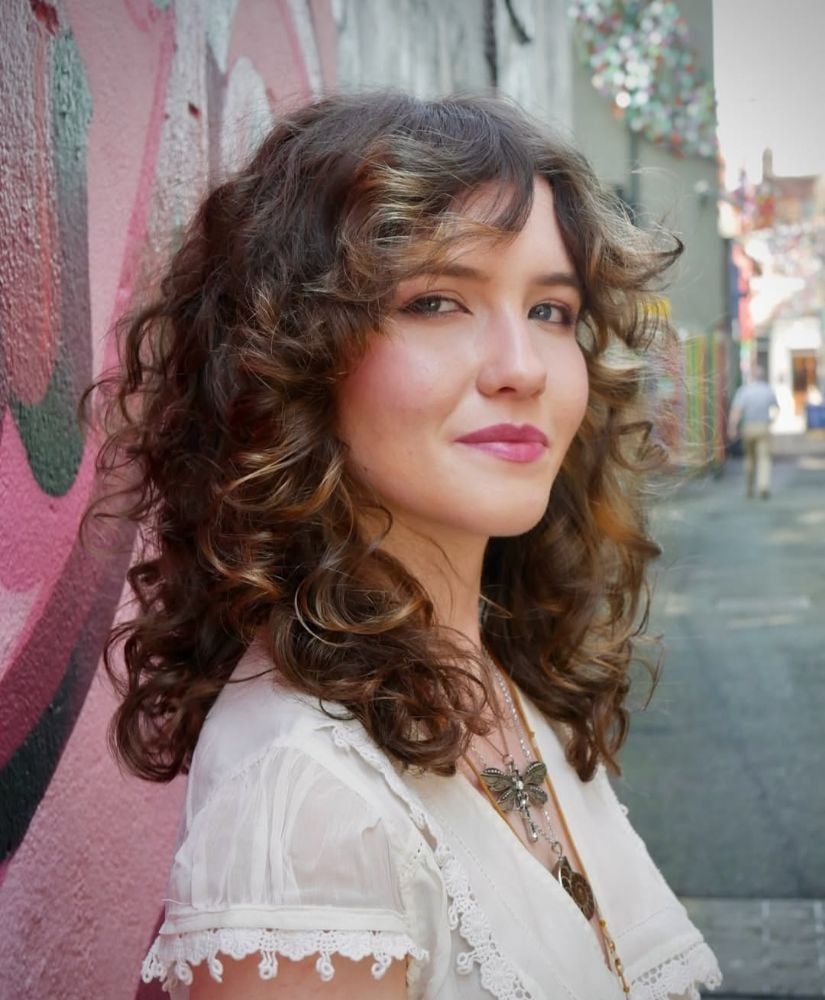
Wispy bangs on curly hair are built by point-cutting, not blunt snipping, which keeps the ends light enough to curl forward instead of sitting flat. The shoulder length gives the shag room to layer, and the balayage highlights in the medium brown base add depth that makes each curl read separately. Ask your stylist for a shoulder-length shag, wispy bangs, and balayage highlights. The middle part and air-dried finish keep it low-key, though a texturizing spray helps the definition last past noon. Plan a trim every eight to ten weeks so the wispy ends do not turn into a solid fringe.
Black Collarbone Shag With Curtain Bangs, Wavy Curly

Wondering if a shag will just turn into a frizzy mess on wavy curly hair? The trick is how the layers are cut: they are placed to follow the wave pattern, so the shape lands where the curl does, which keeps the collarbone length from looking puffy. The curtain bangs frame the face without committing to a full fringe, and the black color makes the texture the whole story. Ask your stylist for a collarbone shag, black, curtain bangs, and wavy curls. A smoothing serum tames the frizz at the crown, and a trim every six to eight weeks keeps the curtain bangs from growing past their job. This one suits wavy hair that wants shape without the fight.
Mid-Back Shag With Gray Streaks
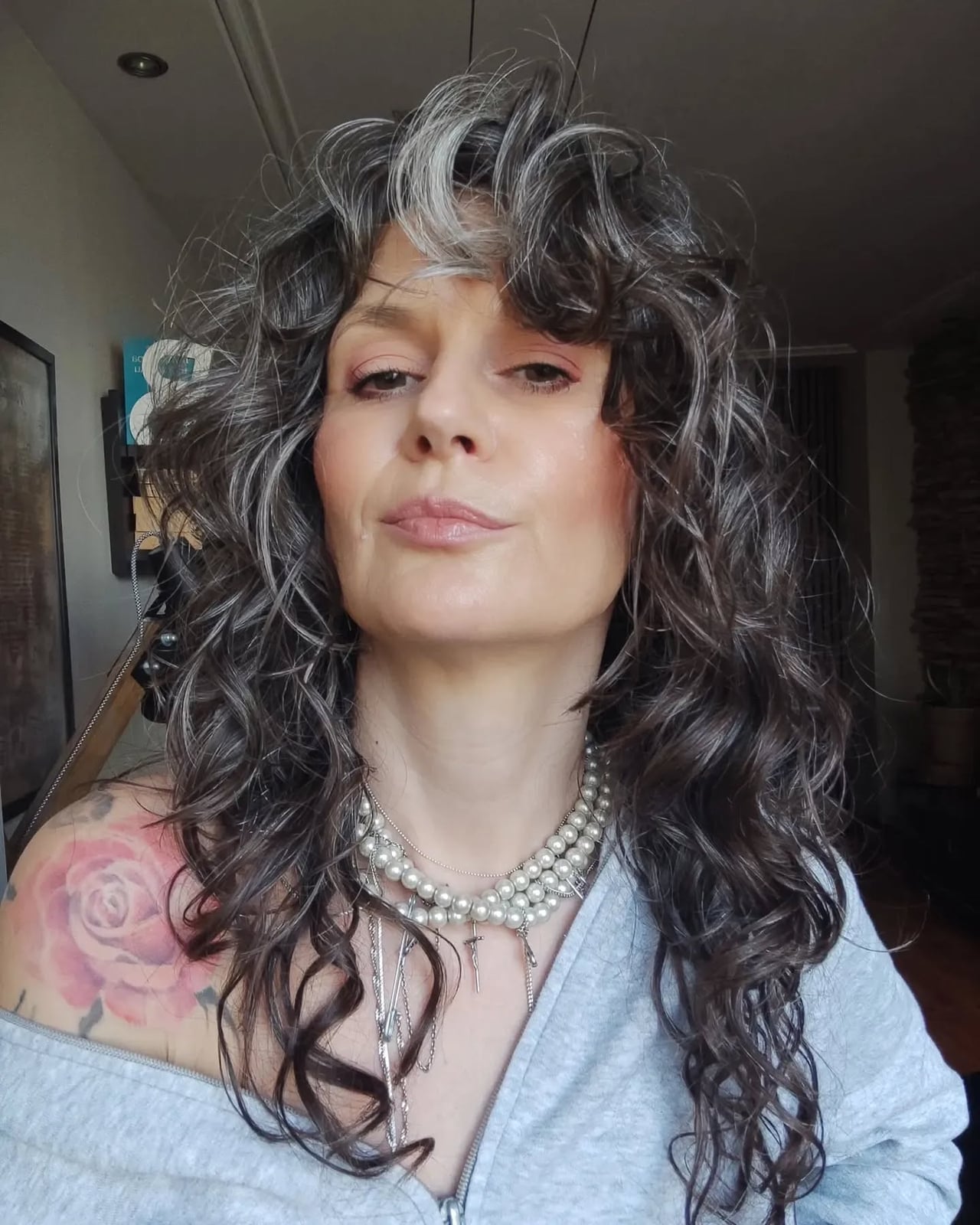
The gray streaks are woven through the dark brown base so they stand out around the face, which gives the face-framing bangs the brightest effect while the mid-back length stays grounded. Ask your stylist for a mid-back shag, dark brown with gray streaks, and face-framing bangs. Gray pieces fade faster than the base, so a toning appointment every six to eight weeks keeps them from going brassy, and a color-safe shampoo helps maintain the color. The curly texture at medium density holds the shape well, but the streaks need a gloss or refresh about every eight weeks to stay sharp.
With the air-dried finish, you are not spending mornings with a blow dryer, but the gray streaks demand more attention than a solid color. A trim every eight to ten weeks keeps the mid-back length from dragging the layers down.
Collarbone Shag With Subtle Highlights and Curtain Bangs
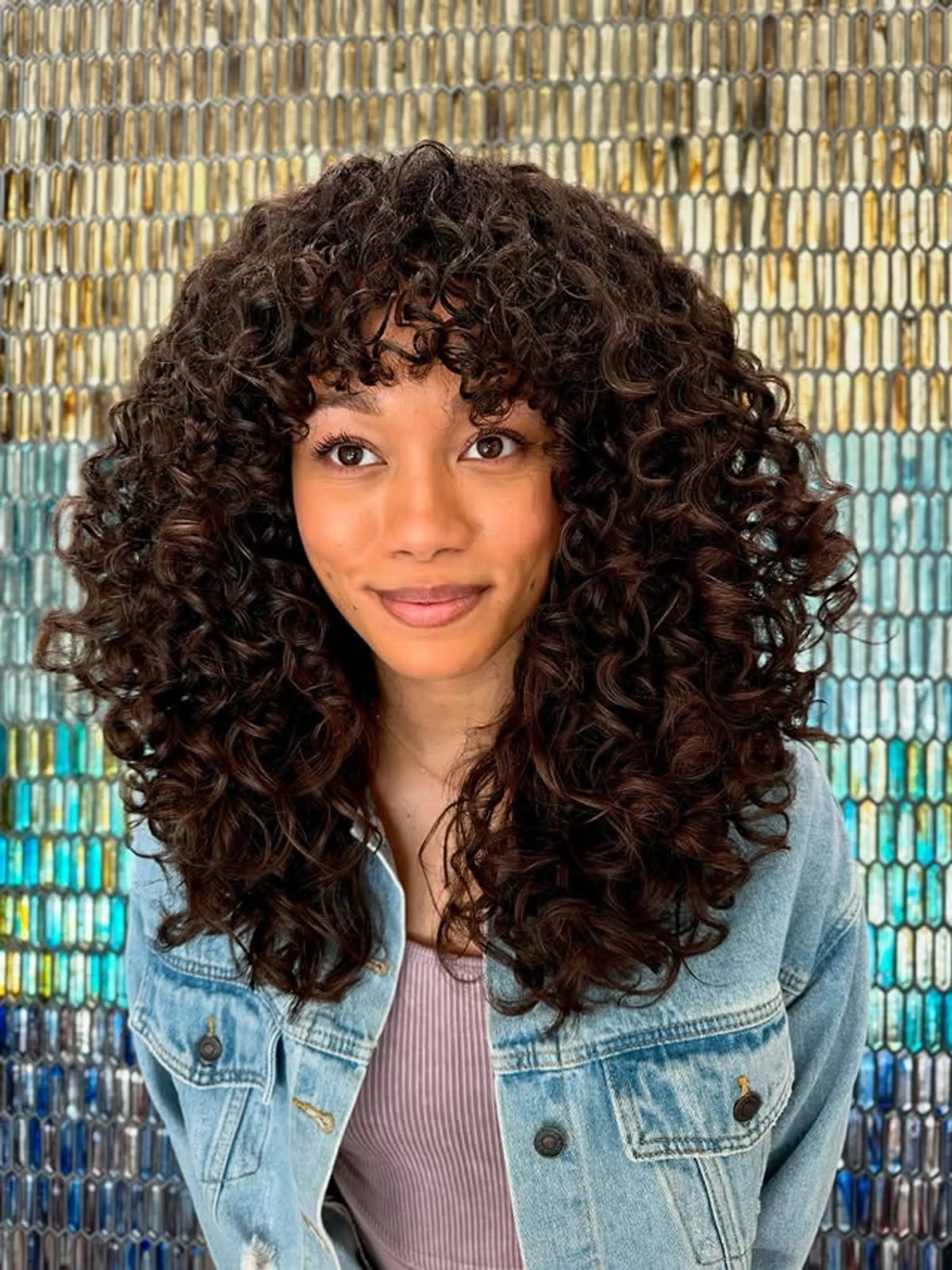
This shag has subtle highlights that lift the dark brown base just enough to give the thick curls dimension, while the curtain bangs frame the face without a full fringe. Ask your stylist for a collarbone shag, thick curls, curtain bangs, and subtle highlights. The cut moves from summer to autumn without a reset: the highlights grow out soft, so you are not chasing a root line. A curl-defining cream and a scrunch keep the volume where it should be, and a trim every six to eight weeks holds the shape. If you want a style that works for both a beach day and a work meeting, this one delivers.
Dark Brown Collarbone Shag With Air Dried
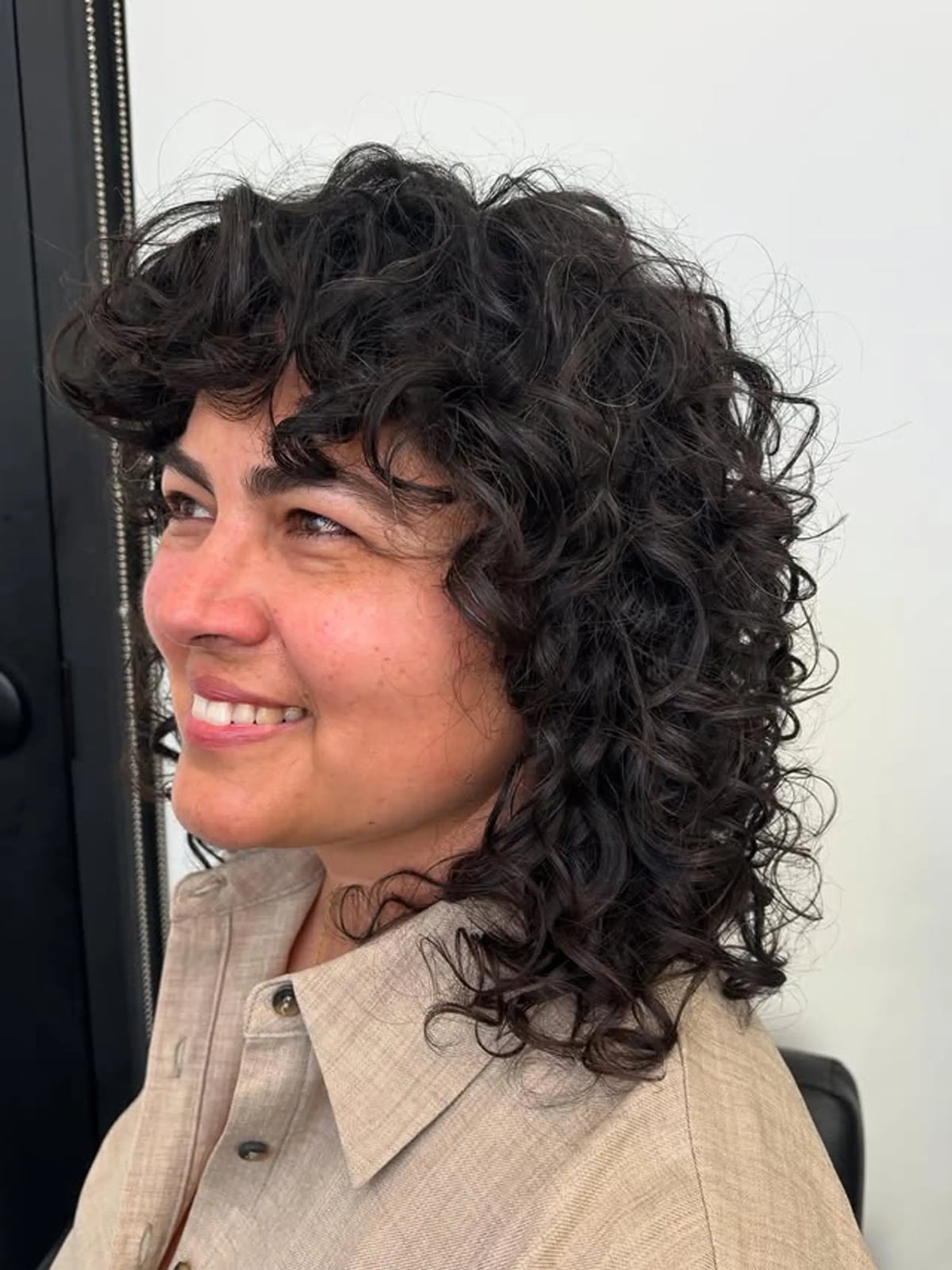
Getting defined curls on thick hair is largely a matter of how the layers are cut, and that part belongs in the salon. This collarbone-length shag with curly bangs relies on precise internal layering so the natural texture springs up evenly, which is hard to replicate with scissors at home. If you attempt a DIY trim, you risk removing density from the wrong spots and ending up with a triangle. Ask your stylist for: collarbone shag, thick defined curls, curly bangs. After the cut, a curl-enhancing gel worked through wet hair and a patient air-dry will give you the same shape. A trim every six to eight weeks keeps the layers defined.
Shoulder Shag With Choppy Bangs
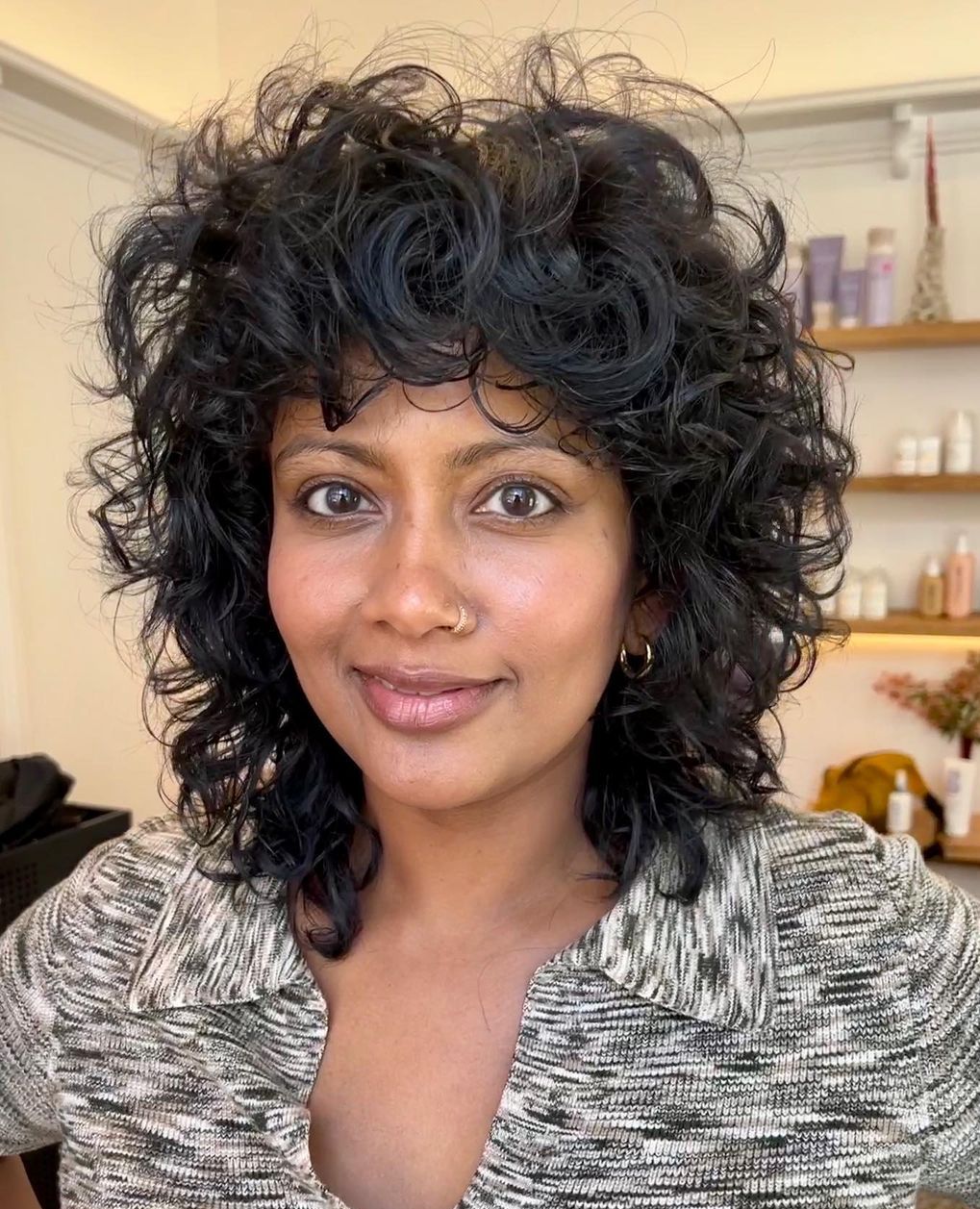
Wondering how to get short, choppy bangs without looking like you lost a fight with a weed whacker? The key is asking for bangs that are cut dry and piece-y, so they blend with the shag’s texture instead of sitting as a solid block. On a shoulder-length black shag with thick, defined curls and a middle parting, the bangs should land above the brow and taper into the sides. Ask your stylist for: shoulder length shag, short choppy bangs, thick curls. Keep the bangs separated with a texturizing paste and let them air-dry. A trim every eight to ten weeks maintains the choppy edge.
Collarbone Shag With Multi-Tonal Color
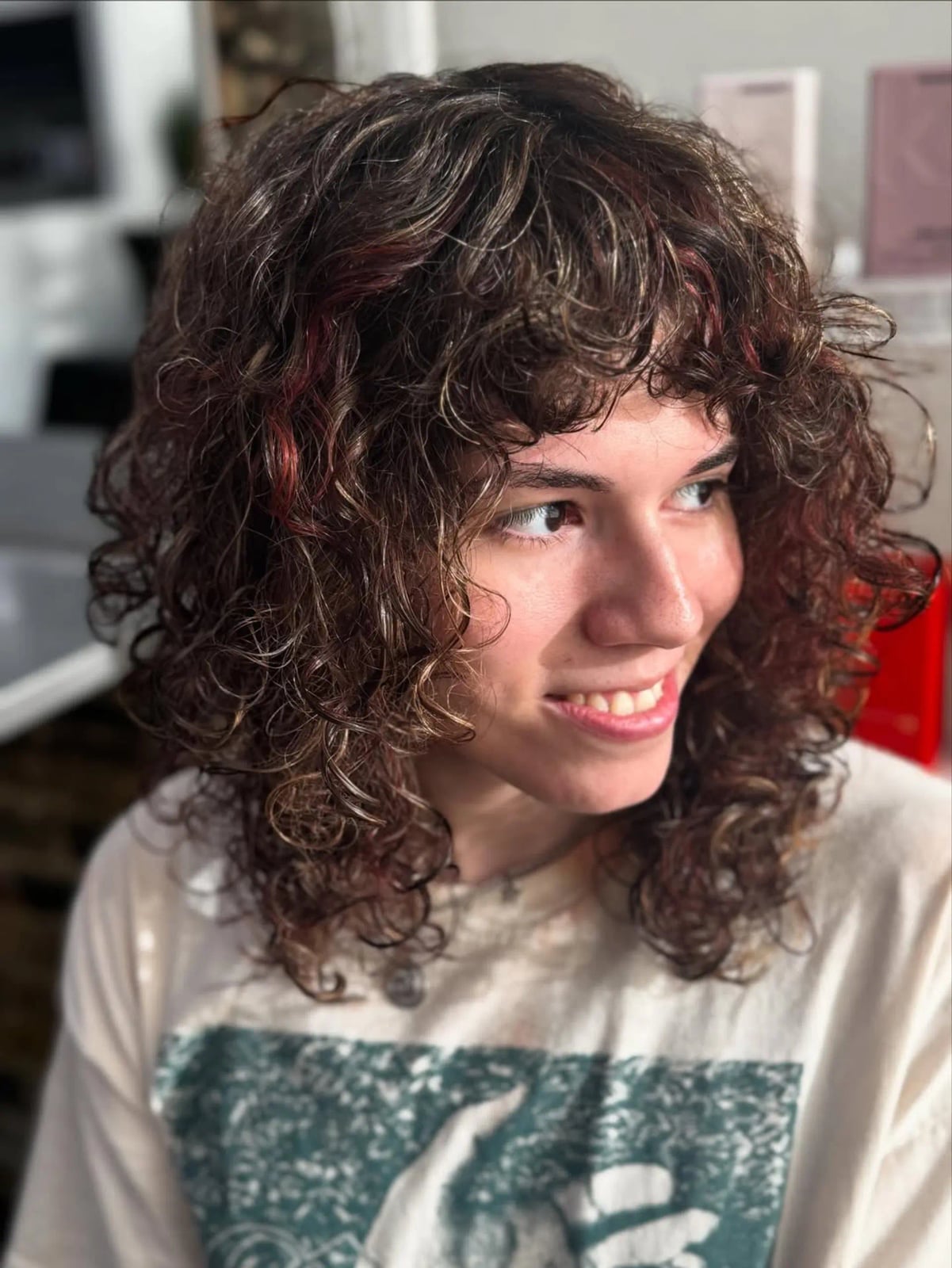
Multi-tonal color on curly hair works because the light catches each coil at a different angle, so the red and blonde highlights shift as you move. On this collarbone-length shag with curly bangs and a middle parting, the medium brown base anchors the brighter pieces, giving depth without a flat, all-over effect. The technique involves painting highlights in a sweeping motion, which suits the natural movement of curls better than foils. Ask your colorist for: collarbone shag, curly bangs, multi-tonal color. Use a color-safe shampoo and conditioner to keep the red from fading too fast. A trim every six to eight weeks keeps the shape fresh.
Collarbone Shag With Blonde Highlights
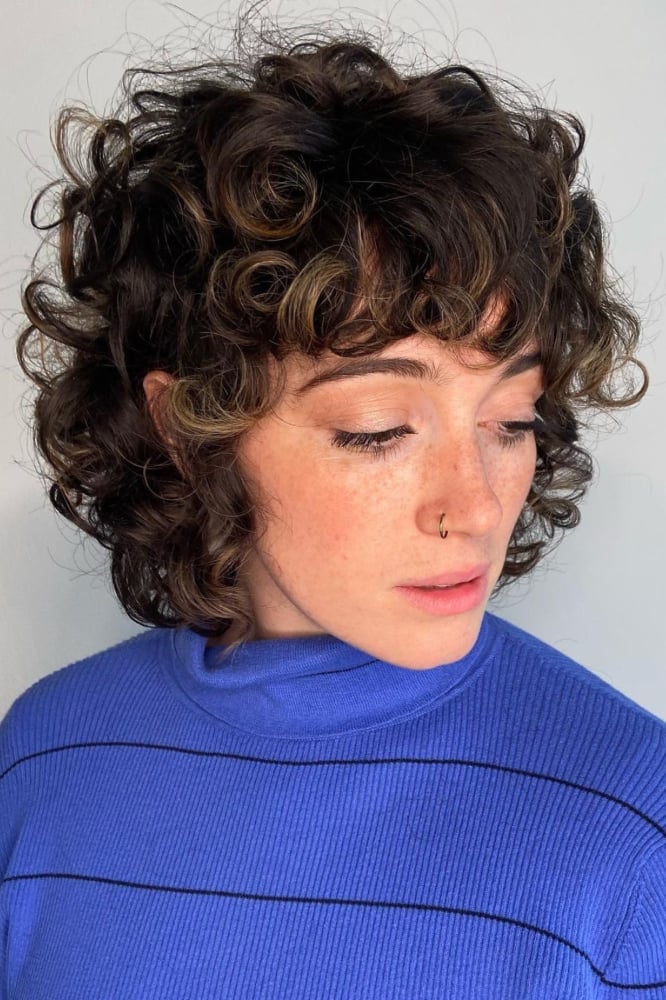
Curtain bangs on a curly shag are a practical choice because they frame the face while still tucking behind the ears when needed. This collarbone-length cut on thick, dark brown hair with subtle blonde highlights and a side parting gives you the best of both: the bangs soften the forehead, and the layers add movement through the ends. The highlights are sparse enough to mimic natural sun-kissed strands, not a deliberate stripe. Ask your stylist for: collarbone shag, dark brown, curtain bangs, blonde highlights. Moisture and definition between washes require regular conditioning. Plan a trim every six to eight weeks, and a toning appointment every few months keeps the blonde from going brassy.
Collarbone Shag With Blonde Balayage
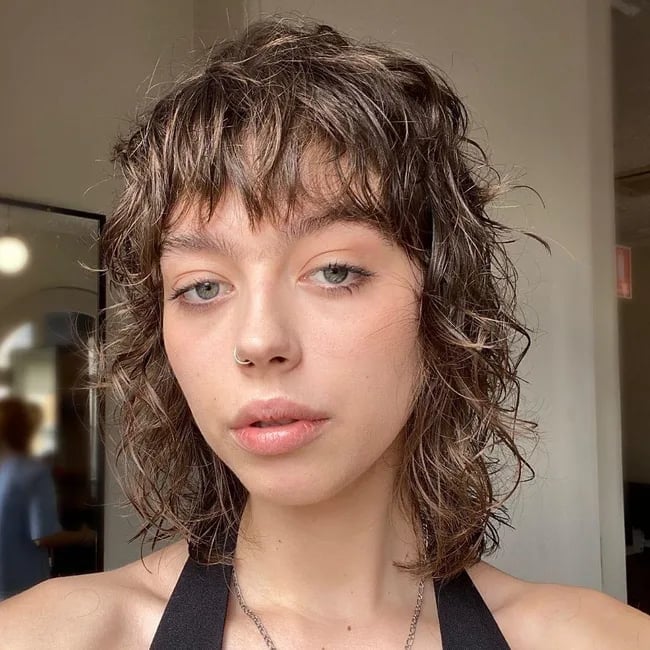
Textured layers in a shag have a reputation for growing out badly, but with the right shape they actually hold their form. This collarbone-length version with curtain bangs and medium brown hair lightened with blonde balayage keeps the layers stacked internally, so as the hair lengthens, the shortest pieces still give the cut its shape. The balayage is painted to follow the curl pattern, which means the grow-out line is soft instead of a hard band. Ask your colorist for: collarbone shag, curtain bangs, blonde balayage. Texturizing spray at the roots helps the layers stay visible as they grow. A trim every six to eight weeks keeps the silhouette from turning into a one-length blob.
Collarbone Shag With Face-Framing Bangs
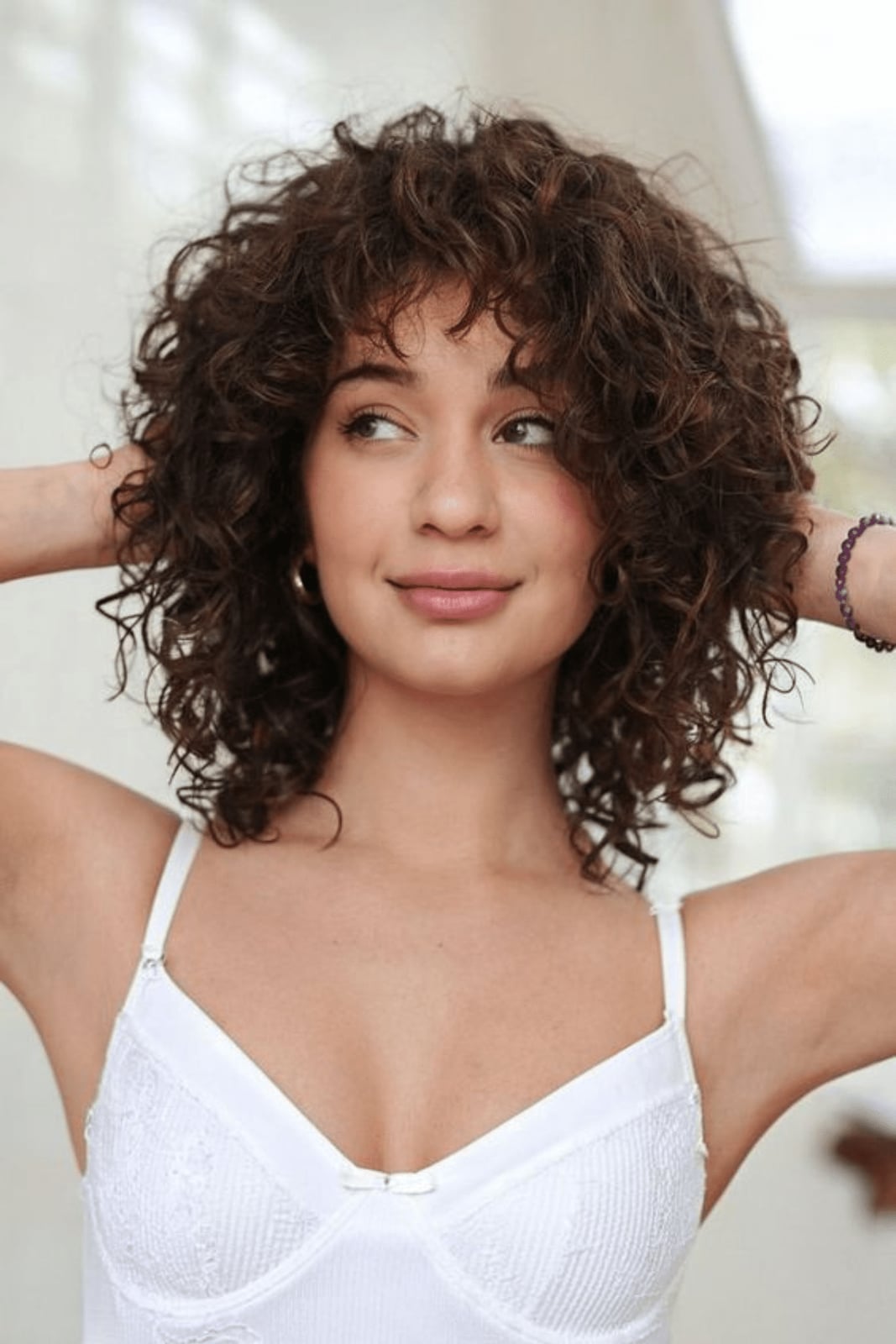
Face-framing bangs do the work of full bangs without the diva demands of a daily trim. The dark brown collarbone shag keeps its curly medium-density texture visible through soft layers that feather past the cheekbones. A side parting lets those front pieces fall where they will, which is exactly the point.
Ask your stylist for: collarbone shag, face-framing bangs. The cut suits most face shapes because the bangs can be tailored to soften a square jaw or shorten a longer oval. A light hold mousse encourages the natural curl pattern without crunch, and a trim every six to eight weeks keeps the shape defined.
Vibrant Red Shoulder Shag
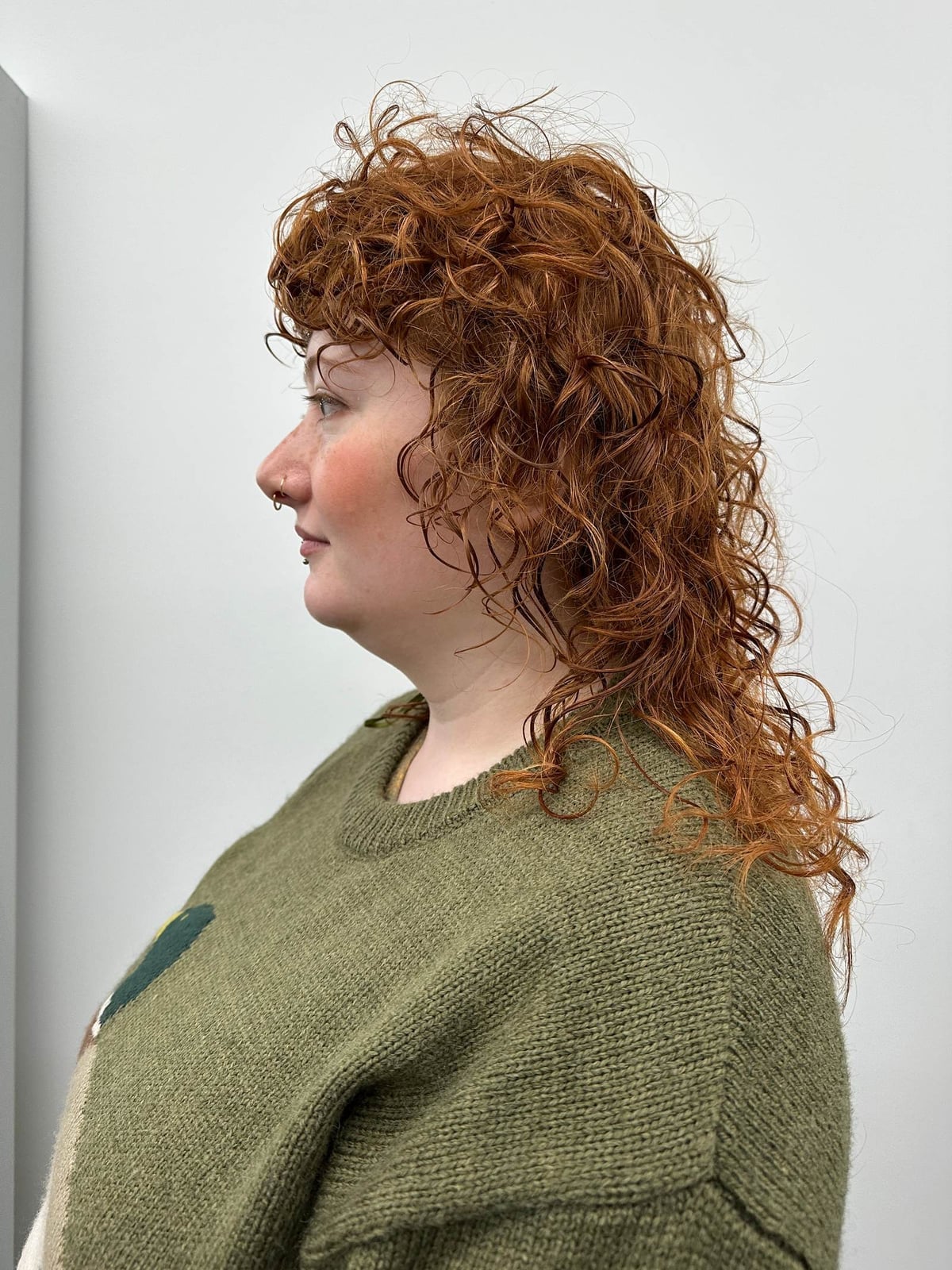
A shoulder-length shag in vibrant red with short choppy bangs is a statement that demands upkeep. The fine curly texture shows every shade shift, which means that fiery red will fade faster than it would on coarser hair. The side view reveals the shag’s layered shape working with the air-dried styling, but the color requires a toning appointment every four to six weeks to keep it from turning rusty. Ask your stylist for: shoulder shag, vibrant red, short choppy bangs. Skip this if you cannot commit to regular color refreshes.
Honey Blonde Mid-Back Shag
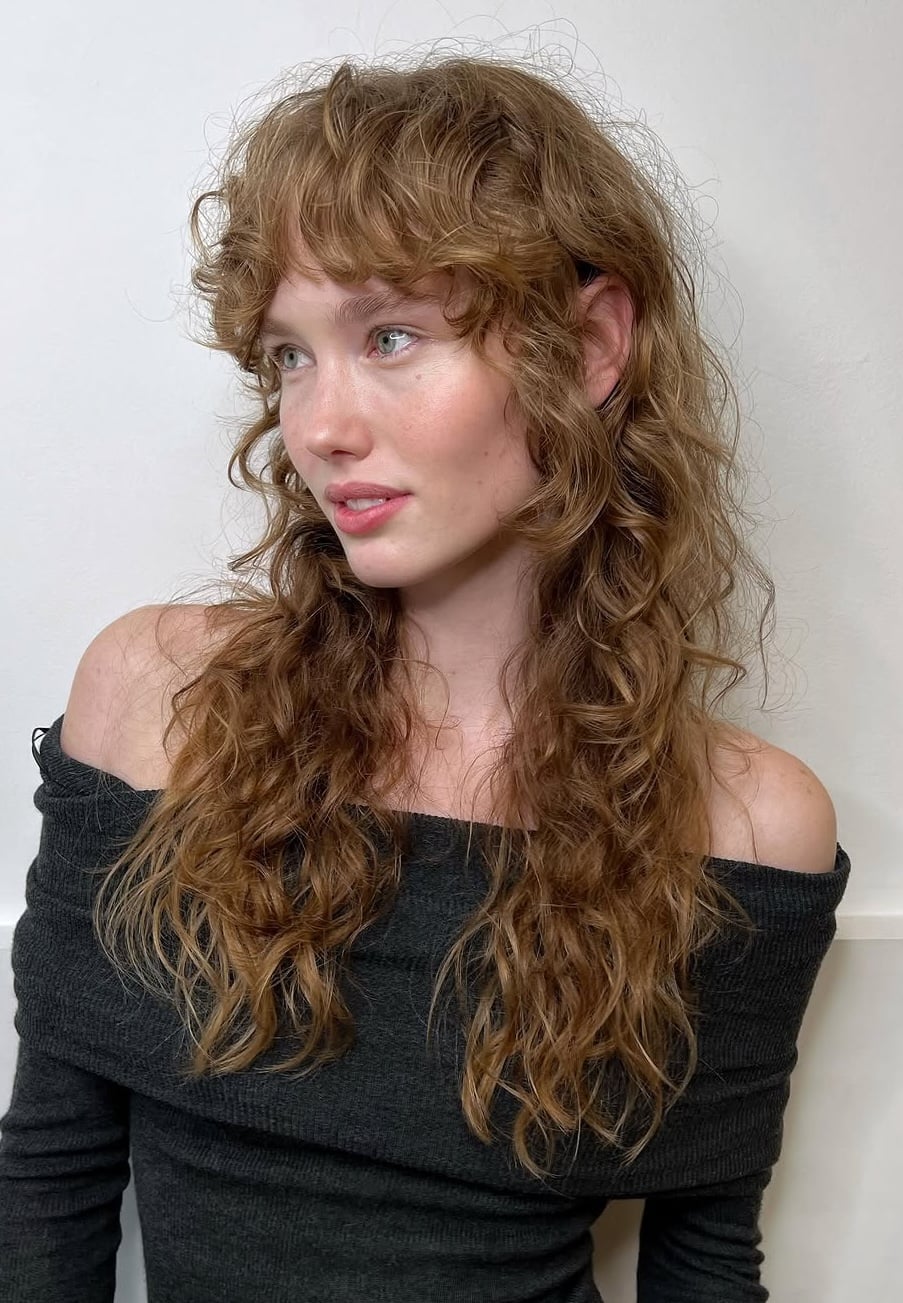
Long layers in a mid-back shag do not sacrifice the shape, they just spread it out. The honey blonde color appears warm and soft, making this a natural bridge from summer highlights into fall. Curtain bangs frame the face without a full fringe, and the middle part keeps the wavy-curly fine texture from getting lost in the length.
Ask your stylist for: mid-back shag, honey blonde, long layers, curtain bangs. This works well for daytime events where a romantic, soft silhouette fits better than a sharp crop. A light volumizing spray at the roots prevents the fine texture from falling flat by midday. A trim every eight to ten weeks keeps the long layers from tangling.
Medium Brown Shoulder Shag

How do you get texture without looking like you fought a lawnmower? The answer is the cutting technique behind a shoulder-length shag with medium brown base and blonde balayage. The stylist carves textured layers into the curly medium-density hair, letting each curl land where it wants rather than forcing a uniform shape. The shaggy bangs blend into the side part instead of sitting as a separate piece.
Ask your stylist for: shoulder shag, medium brown, blonde balayage, shaggy bangs. The lived-in color effect means the grow-out looks intentional rather than neglected. A texturizing spray enhances the air-dried finish, and a trim every eight to ten weeks maintains the layered movement.
Shoulder Shag With Short Bangs and Dark Brown With Subtle Highlights
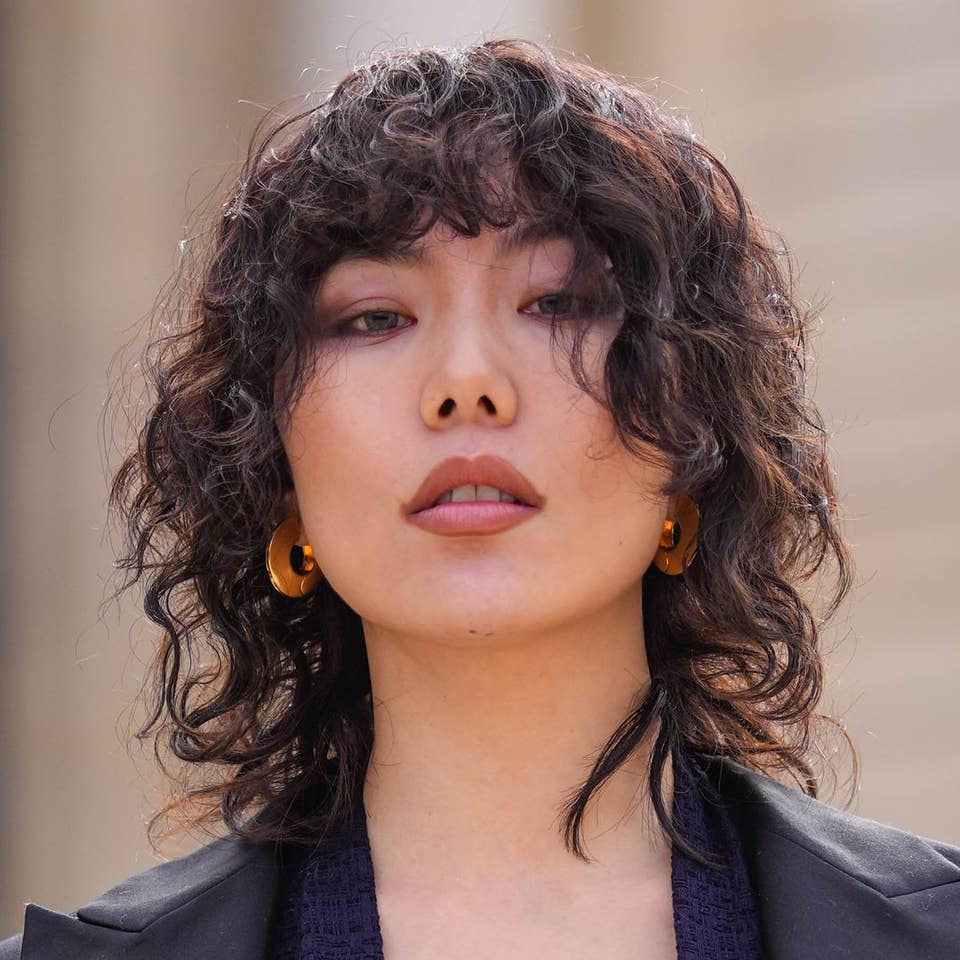
Thick curly hair needs a cut that manages volume without removing all the weight. The shoulder-length shag with short bangs and a middle parting does exactly that, using a blowout to add lift at the roots while the layers prevent the sides from ballooning. The dark brown base with subtle lighter highlights adds depth without screaming for attention.
Ask your stylist for: shoulder shag, dark brown, short bangs, thick curls. This genuinely flatters thick curly textures that can overwhelm a longer cut. A blow-dryer with a nozzle and round brush gives the polished finish shown here, but air-drying with a curl cream works for lower effort days. A trim every eight to ten weeks keeps the short bangs from grazing the eyes.
Collarbone Shag With Dark Blonde Highlights and Curtain Bangs

Curtain bangs and layered ends are the two parts of a shag that age the most gracefully, since they blend into the rest of the cut as they grow. On this collarbone-length version with a side part, the dark blonde base and lighter highlights keep the texture visible without demanding a strict root schedule. Ask your stylist for: collarbone shag, dark blonde, curtain bangs. A leave-in conditioner enhances the air-dried curl pattern, and a trim every six to eight weeks keeps the curtain shape from swallowing your face.
Shoulder Shag With Defined Curls
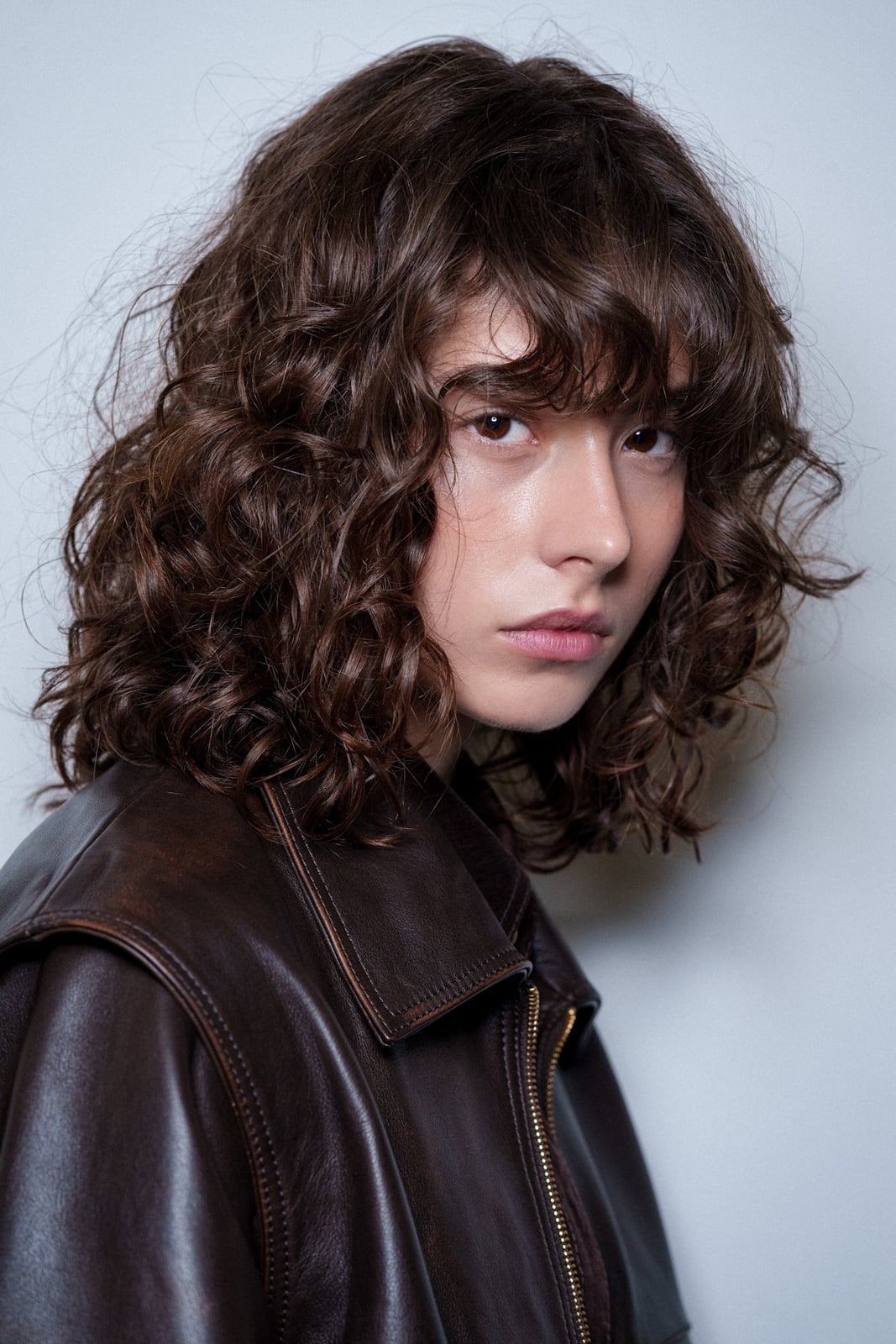
How do you get bouncy, defined curls from a shag without ending up with frizz? The answer is in how the layers are cut. Ask your stylist for: shoulder length shag, defined curls, full curly bangs. The dark brown color and side part let the natural curl pattern do the work, so the cut should be shaped to encourage each coil to spring rather than separate. Medium density hair at shoulder length holds this shape best, and the full curly bangs give the whole style its emphasis.
Chestnut Brown Shoulder Shag
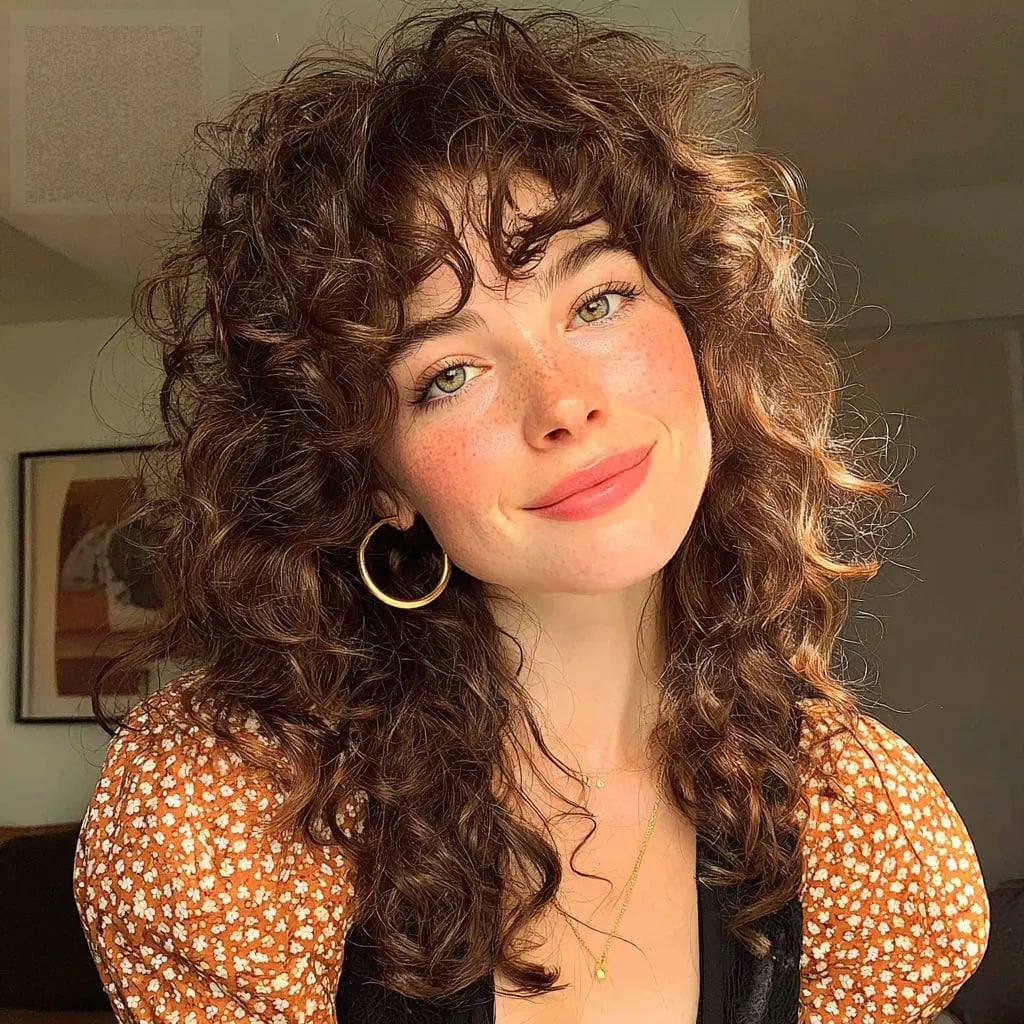
Full curly bangs make a shoulder-length shag feel immediate and playful, while shaggy bangs soften the same cut into something sleepier. This version leans into the former with prominent curly bangs and a side part that keeps the chestnut brown color from reading flat. Ask your stylist for: shoulder length shag, chestnut brown, curly bangs. The natural volume in the air-dried curls carries the shape, so the cut works best on hair that already has some body to it.
Shoulder Shag With Blowout
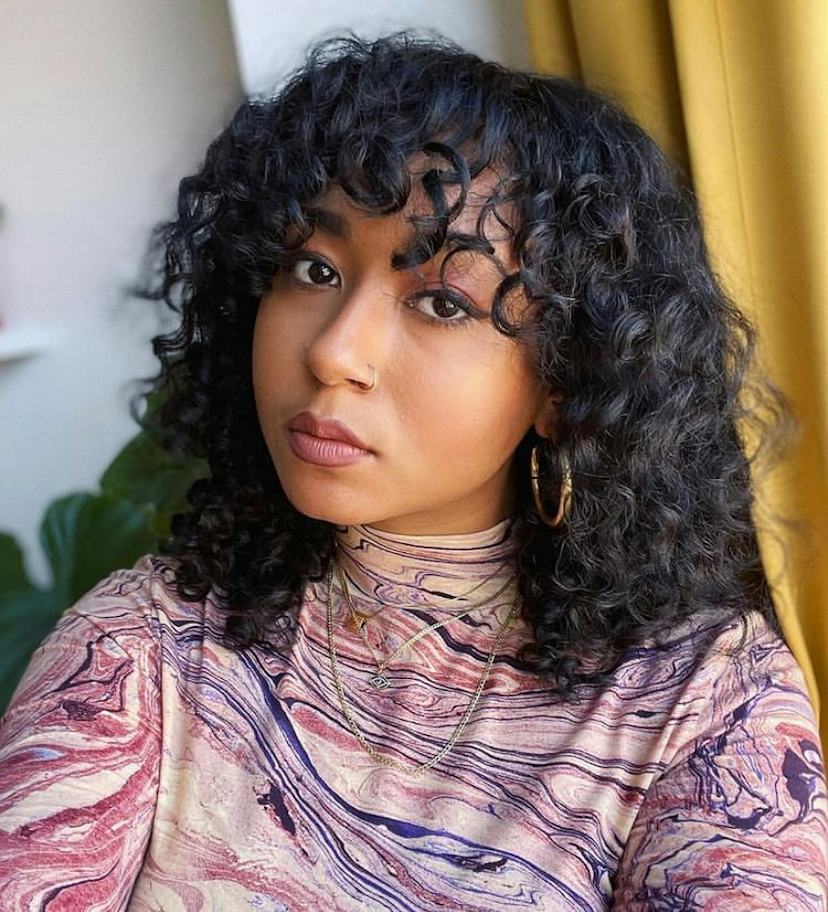
A blowout on wavy hair is a commitment, and this shoulder-length shag makes that trade-off obvious. The payoff is volume and movement in the choppy layers and prominent curtain bangs, but you will spend real time with a round brush and a heat protectant to get there. Ask your stylist for: shoulder length shag, curtain bangs, choppy layers. The medium brown base with blonde highlights adds dimension that shows best when the hair is smoothed, not scrunched. If air-drying is your routine, this one may sit in the chair more than you like.
Collarbone Shag With Choppy Layers

Choppy layers differ from blended ones in that they leave distinct, separated ends that catch light and create texture, whereas blended layers melt into each other for a smoother line. This collarbone shag goes the choppy route with curtain bangs and a middle part, the medium brown base carrying blonde highlights that emphasize each cut edge. Ask your stylist for: collarbone shag, choppy layers, curtain bangs. A blowout with a round brush lifts the roots, and a trim every six to eight weeks keeps the ends from softening into a blend you did not ask for.
Collarbone Shag With Defined Layers
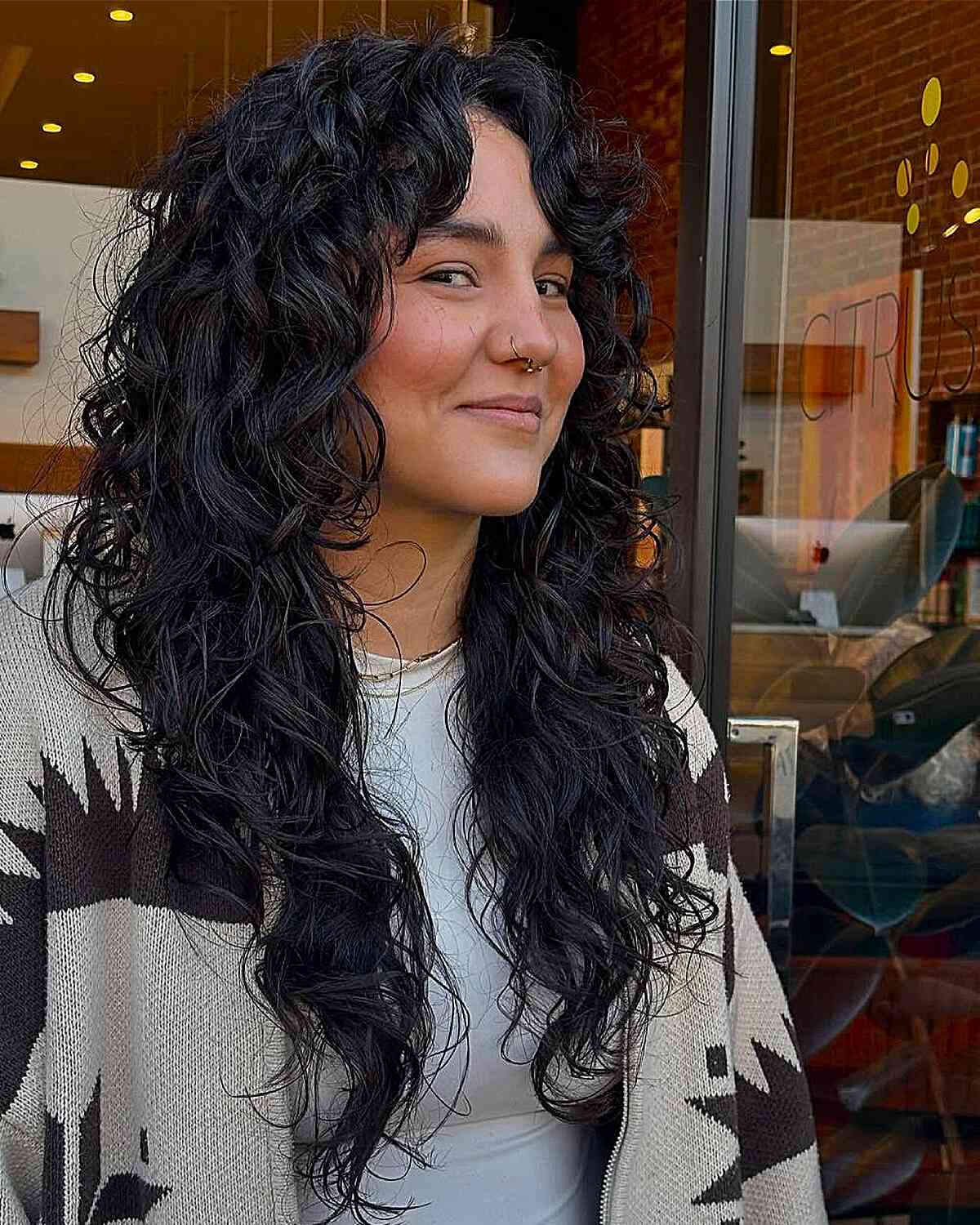
Defined layers in a shag are cut to keep their shape as the hair grows, which is why this collarbone length with thick curls and a middle part holds up so well. The curtain bangs frame the face, and the blowout adds a glossy finish that makes the subtle highlights in the dark brown base catch the light.
Ask your stylist for: collarbone shag, defined layers, curtain bangs. It suits thick, curly hair that can handle the internal layering without losing volume. Use a round brush to smooth the curls into place, and plan a trim every six to eight weeks to keep the defined ends from turning into one shapeless mass.
Final Thoughts
Choose a shag that matches how your hair behaves. Fine curls hold a shorter, heavily layered cut better, while thicker textures can carry a longer baseline without losing shape. If you air-dry most days, keep the layers textured and skip the blowout.
- Trim the baseline every 6-8 weeks to maintain the shag’s shape.
- Use curl-defining products and air-dry or diffuse for best texture.
- Toning for highlights can be refreshed every 8-12 weeks as needed.
- Protect curls from heat styling with a thermal spray.
Embrace your texture with a shag that makes styling simple and chic.
