

Children’s hairstyles these days are less about a single cut-and-run and more about a daily mood ring. Braids get beads, crops get geometric lines, and even a simple ponytail comes with a bubble or a bow.
This collection of 37 Trendy Children Hairstyles covers the spectrum from five-minute school-morning fixes to weekend-worthy updos that take a little more time. Whether your child has fine hair that needs a volume boost, coily hair that benefits from protective styling, or a short crop that demands a sharp fade, there is a look here that works with your routine and their personality.
Dark Brown Long Hair With Heart Braids
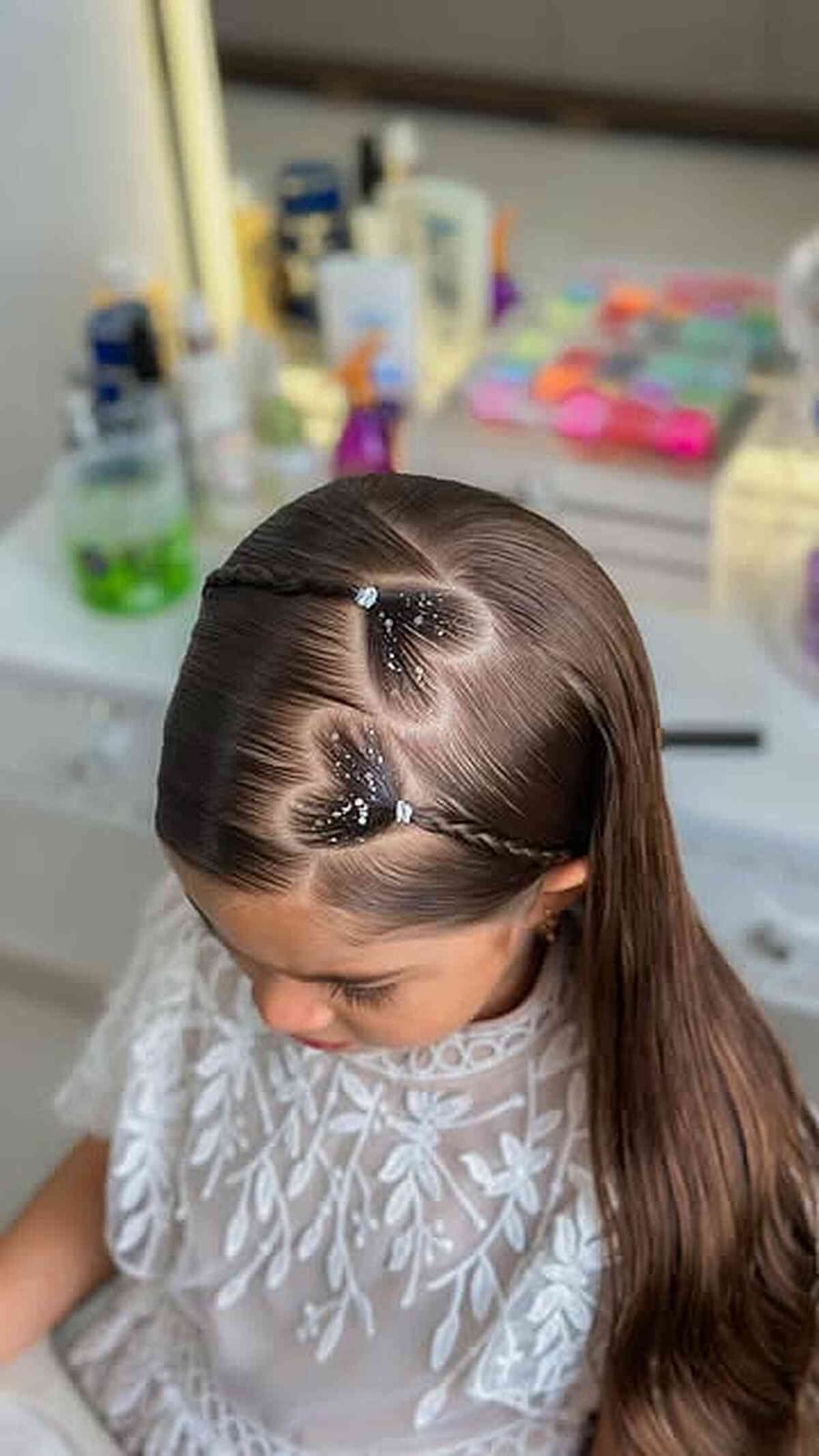
The heart shape here is built into the braid itself, which means it holds its form through a full day of running around. For that to work, the hair needs to be long, straight, and thick enough to show the clean lines of the design against the dark brown base with its subtle blonde highlights. A middle parting keeps the two hearts symmetrical, and the glitter accents add sparkle without needing a touch-up.
This style works well for children with dense, straight hair that can support the weight of the braids without the shape pulling loose. Ask your stylist for heart-shaped front braids with glitter. The hair stays down, so the style relies on the braids staying tight, which they will for a day or two. Plan for a salon visit to get the pattern right, and trim the ends every eight to ten weeks to keep the long lengths looking healthy.
Black Hair With Beaded Side Braid And High Bun
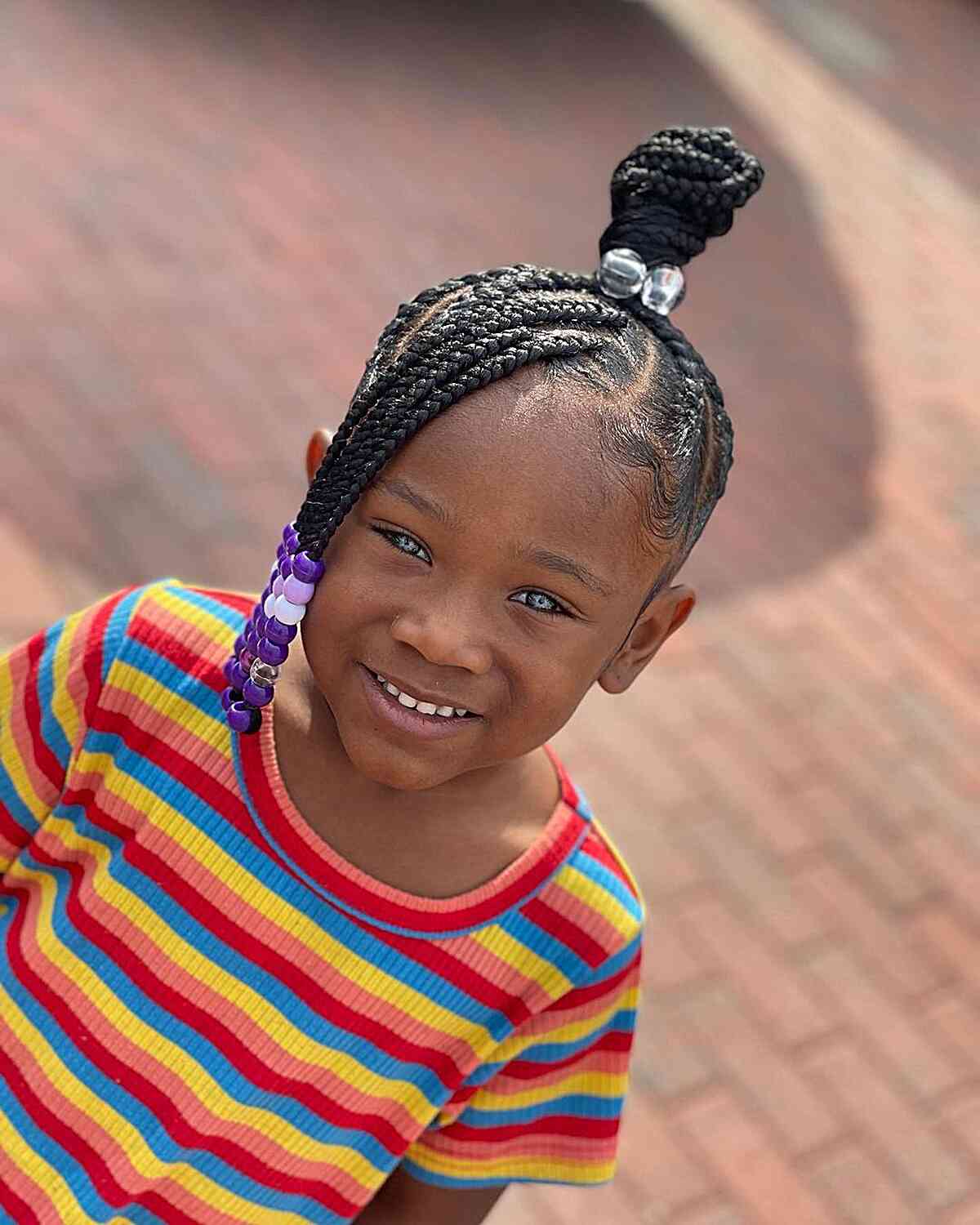
The beaded braid sweeps across the forehead and tucks into a high bun, which is a clever way to keep every strand off the neck while still showing off the coily, thick texture. The build starts with a middle parting, then the front section is braided to the side and secured before the rest of the hair is gathered up. Styling the baby hairs along the hairline with a bit of gel finishes the look and keeps it neat.
Ask your stylist for a beaded braid across the forehead with a high bun. The bun needs enough length to wrap around itself, so mid-back hair is the practical starting point. To recreate the style at home, section the front, braid it with beads, then pull the remaining hair into the bun and pin it securely. The beads add a little weight, which actually helps the braid stay in place against the forehead.
Strawberry Blonde Fishtail Braid Heart Detail
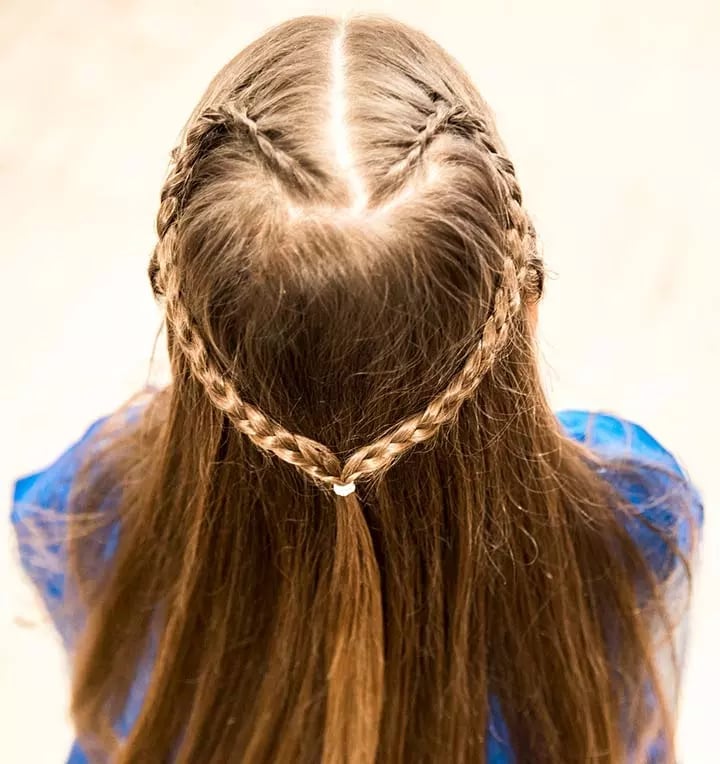
How do you get a heart shape to stay put in a braid? The trick is building the heart as part of the fishtail pattern itself, not adding it as a separate piece. Ask your stylist for a fishtail braid with a heart detail and accessories, and specify that you want the heart centered at the back so it reads clearly against the loose, wavy strawberry blonde lengths. The floral and ribbon accents woven in add texture and keep the design from looking too plain. This one is perfect for parties and family gatherings where the back of the head will actually be seen.
Dark Brown Hair Butterfly Braid Design
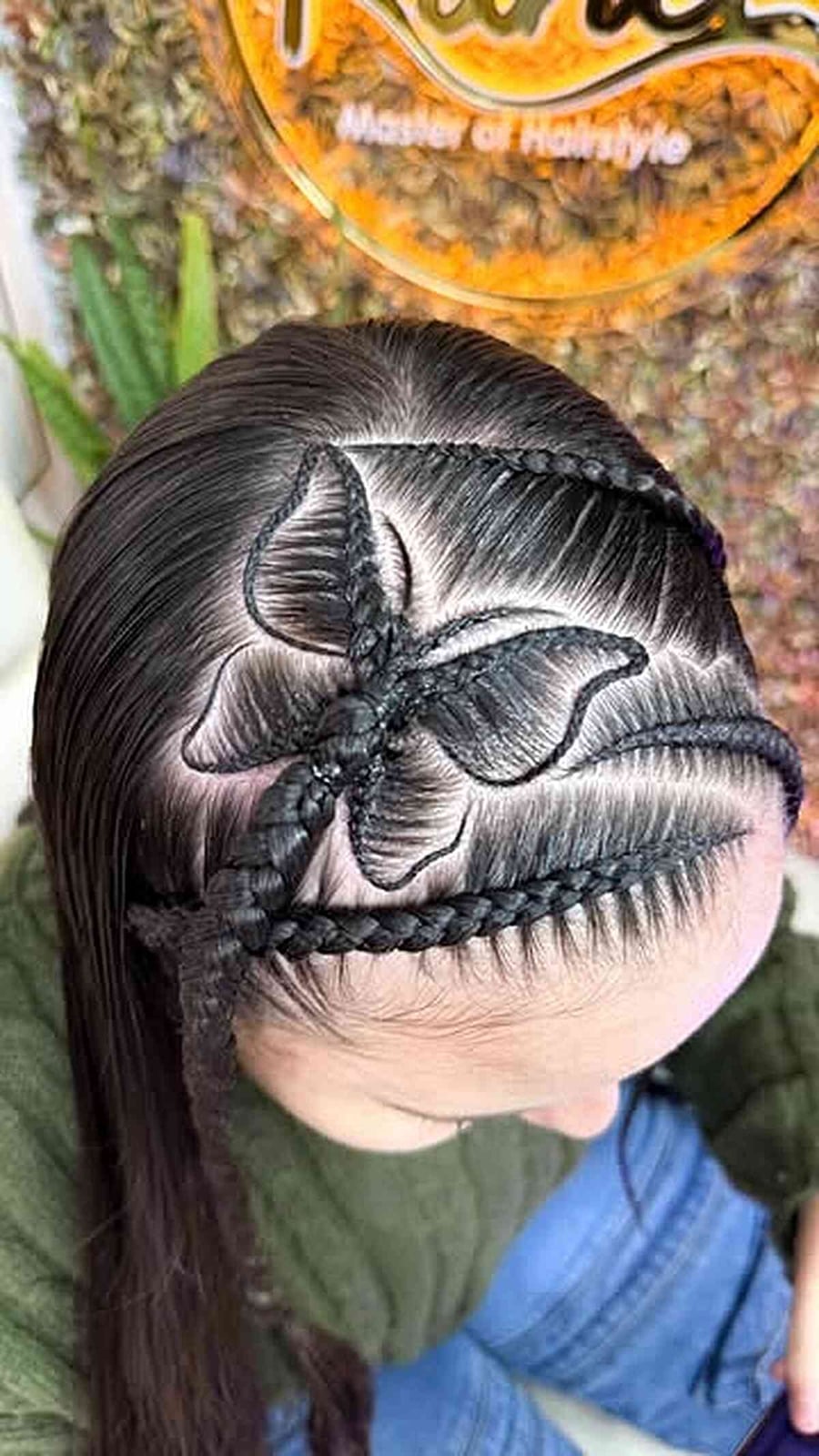
If you are weighing a butterfly braid against a simpler heart or star pattern, know that the butterfly is the more involved project. The wings require multiple braids that curve and meet at the crown, and the two face-framing sections extend down to mid-back to balance the design. On thick, straight dark brown hair, the lines stay crisp and the shape reads clearly from above, which is exactly where the detail is visible.
Ask your stylist for a butterfly braid design on the crown with face-framing braids. This is a salon project, not a quick morning style, so budget for a proper appointment. A simpler braid pattern is the better call if you need something that takes under fifteen minutes to put together. The butterfly holds well for a day, but the intricate parts can loosen with sleep, so plan to redo it for a second wear.
Coily Hair With Heart Shape Braids And Beads
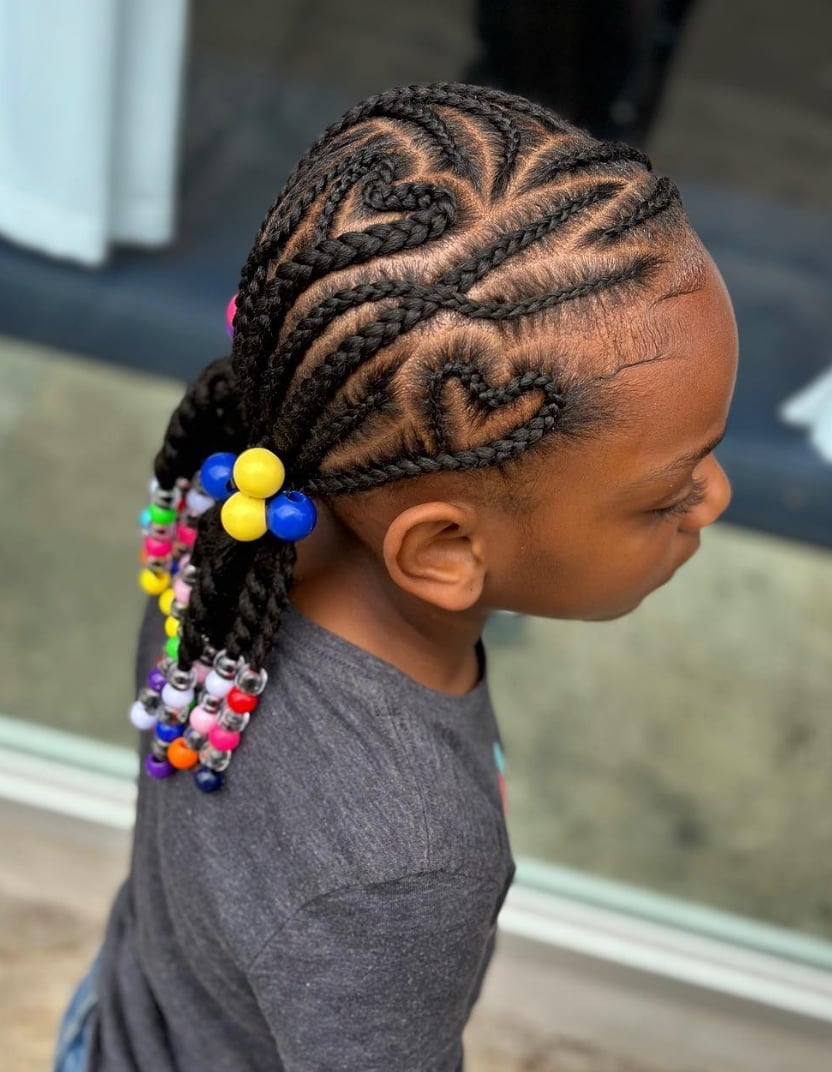
The heart shapes in these braids are drawn with the parting and the braid path, which means they stay put even when the child is active. On coily, thick hair, the braids grip well and the colorful beads add enough weight to keep everything hanging neatly at mid-back. A middle parting keeps the mirrored hearts even on both sides, and the side view shows the full depth of the pattern.
Ask your stylist for heart-shaped braids with colorful beads. This style wears well for a week or more, which is the real appeal for parents. To keep the braids and beads fresh, use a satin bonnet at night and refresh with a light spray in the morning. The beads can be swapped out as the child grows or when the colors no longer match the occasion.
Dark Brown Box Braids Diamond Parting
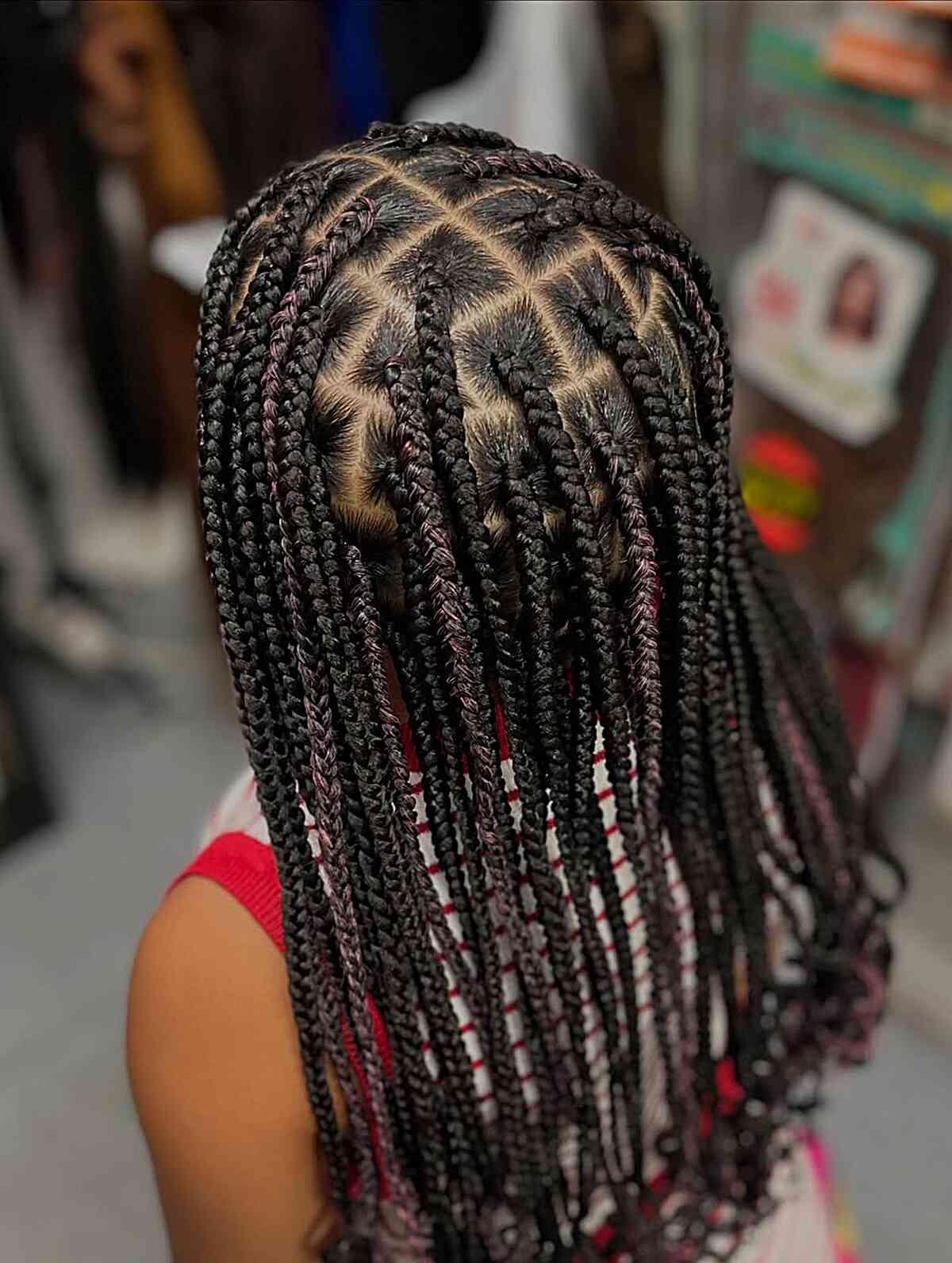
The diamond-shaped parting in these long box braids is a deliberate grid, not a happy accident. It works best on thick, straight hair that holds a clean part, since fine or slippery textures blur the pattern fast. Ask your stylist for: box braids with diamond pattern parting. The real drawback: taking out individual sections to redo a neat grid takes patience, and the scalp tension is higher around the points.
Black Coily Hair Top Knot With Beads
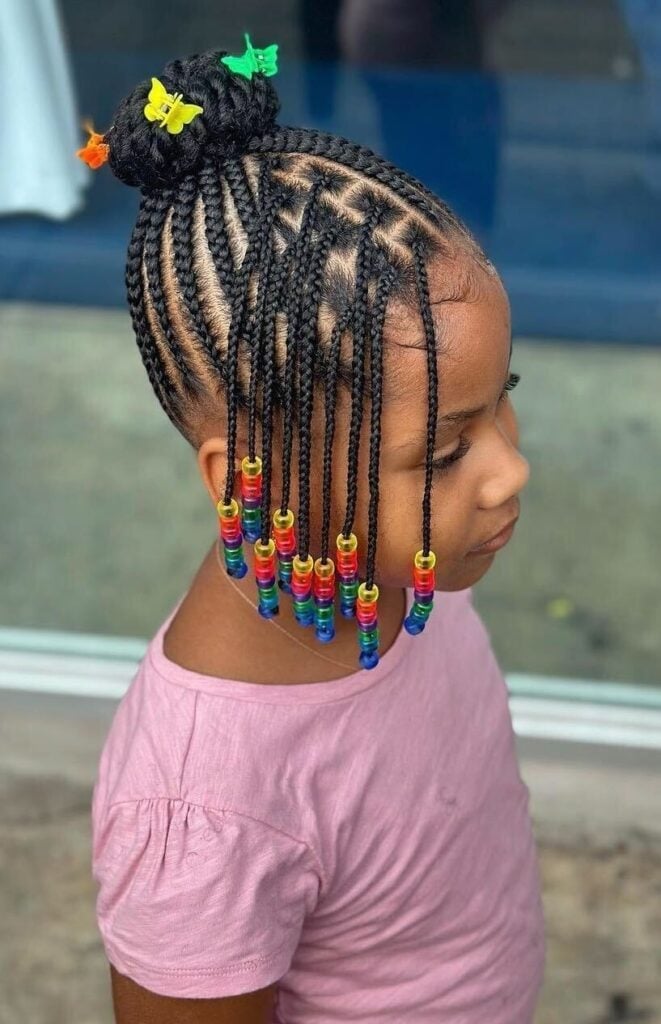
Does your child have thick, coily hair that needs to stay put through a party? The braided top knot with hanging braids and beads keeps the bulk off the neck while the colorful beads add movement below. Ask your stylist for: braided top knot with hanging braids and beads. A rounded face shape wears the height well, and the beads make the style feel more decorative than a plain bun.
Black Coily Braids And Pigtails With Beads
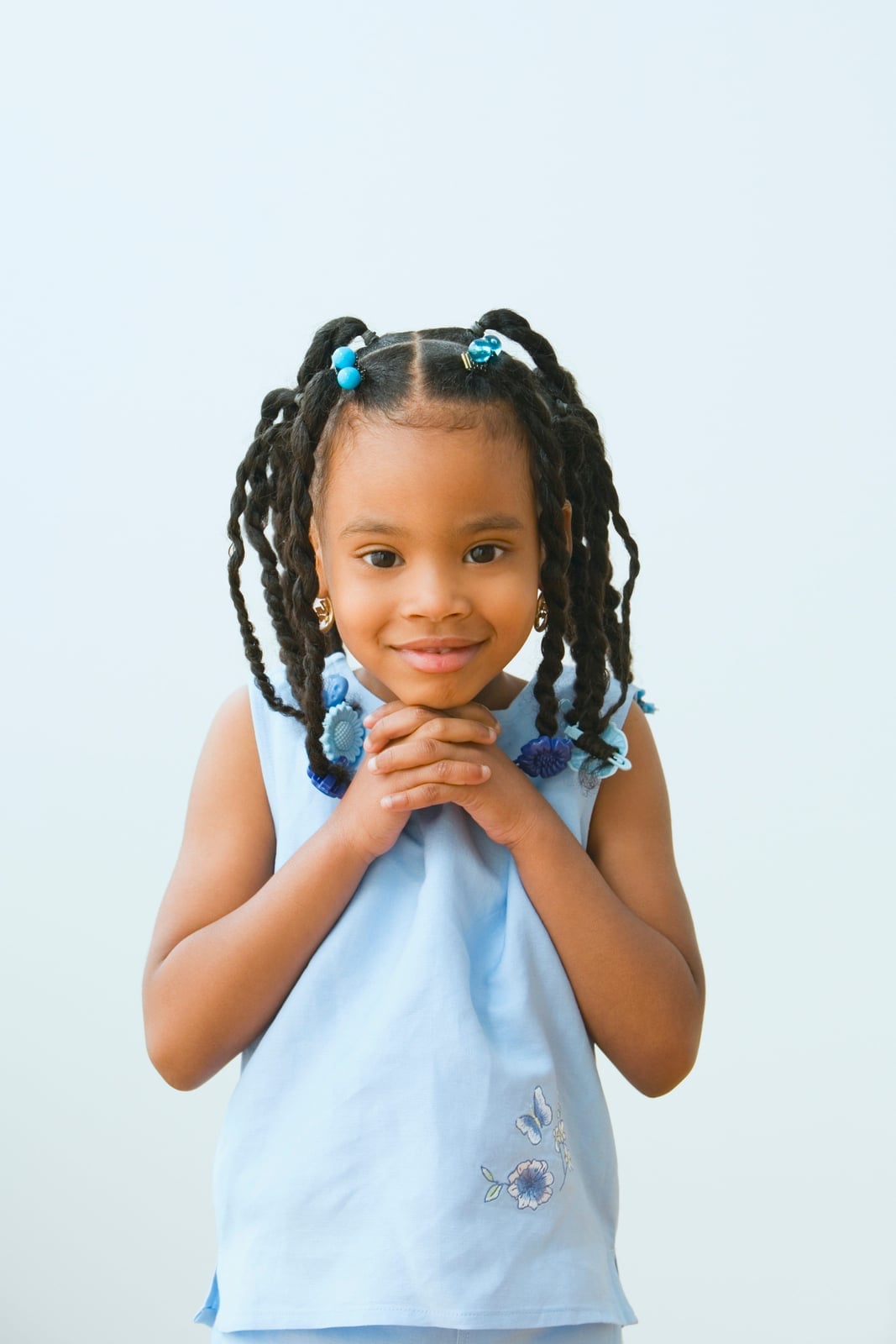
The blue beads in these pigtails are the focal point, but the real work is in the braiding itself. Multiple small braids on thick, coily hair hold their shape for days, and the middle parting keeps the pigtails symmetrical from the back.
Ask your stylist for: braided pigtails with beads. The beads add weight, so the braids swing rather than fly. Upkeep is straightforward: a satin pillowcase reduces friction, and the braids can stay in for up to two weeks if the edges are re-gelled every few days.
Black Box Braids With Colorful Beads
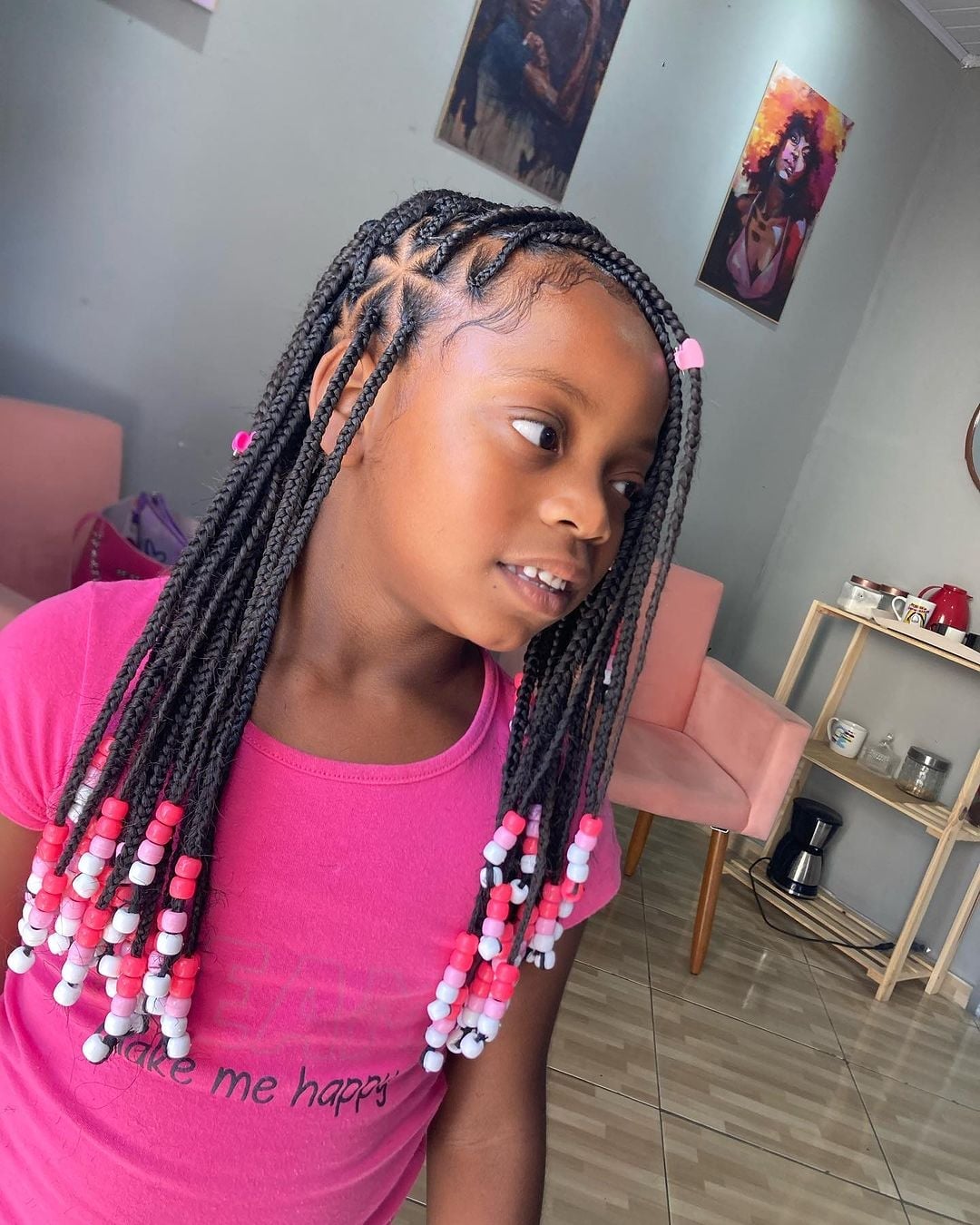
How do you get beads that stay put without sliding off the ends? The trick is a tight seal at the tips and a clear hairspray dab on each bead hole. These mid-back box braids use pink, white, and black beads on a straight black base, with gelled edges for a clean hairline.
Ask your stylist for: box braids with colorful beads and gelled edges. This is a salon-only style. The parting and bead placement take about three hours. DIY is possible on a simpler grid, but the even spacing of beads across multiple braids requires a steady hand and patience.
Black Box Braids High Bun
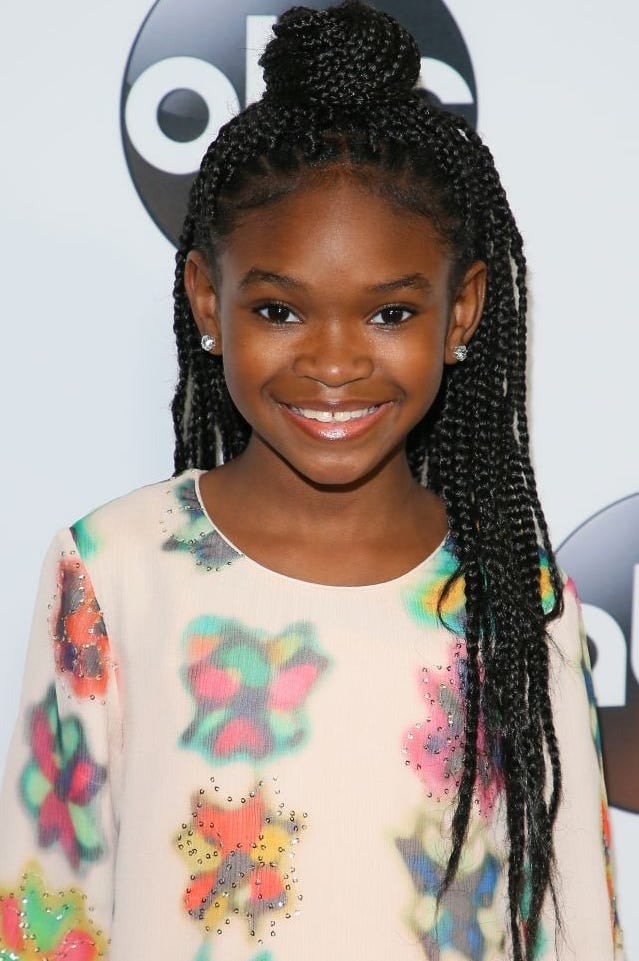
Compared to loose box braids, the high bun version trades some everyday ease for a cleaner silhouette. The braids are pulled upward and pinned into a rounded bun at the crown, which keeps them out of the way entirely. Ask your stylist for: box braids in a high bun. The drawback is that the bun can feel heavy by the end of the day on very thick hair, and the middle parting is less forgiving of uneven sections than a side part would be.
Dark Wavy Textured Crop With Line Detail
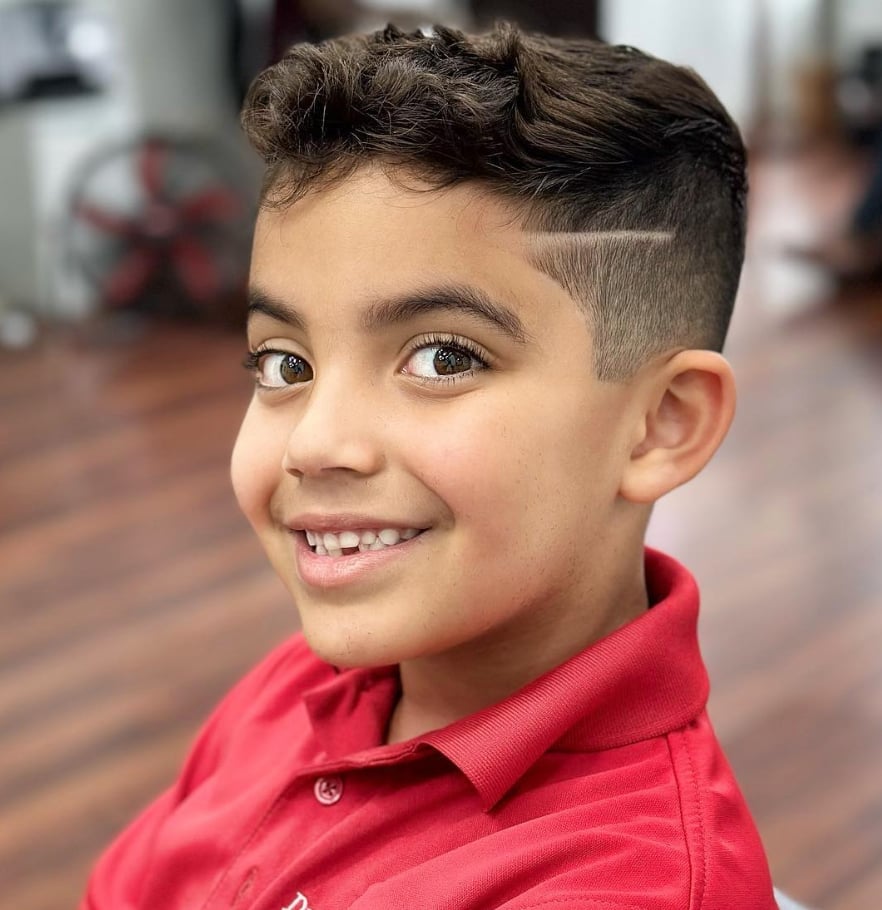
A sharp geometric line etched into the fade gives this textured crop its architectural edge. The wavy, thick hair on top is cut to chin length and styled forward with a defined fringe, while the sides step down smoothly. A middle part keeps the shape symmetrical. Ask your stylist for: textured crop with side line detail and short fringe. Children with thick, wavy hair get the most from this cut. The line detail needs a touch-up every two to three weeks to stay crisp; a matte paste keeps the fringe forward without shine.
Dark Textured Crop With Geometric Line
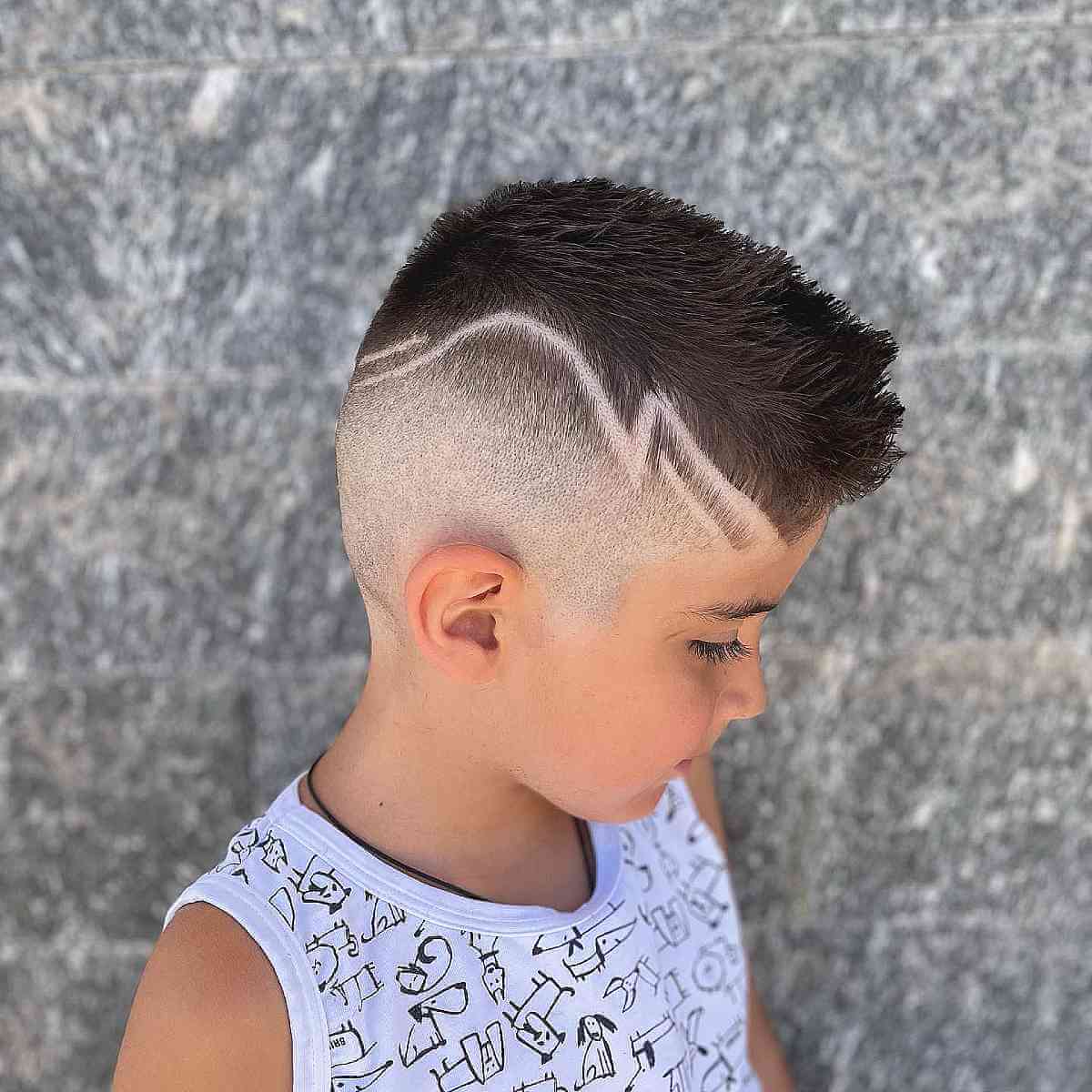
A distinct geometric line carved above the ear turns a standard fade into a deliberate design. The wavy, thick texture on top is swept forward, ending around chin length, while the sides and back are tapered clean. Ask your stylist for: textured crop with geometric line detail on fade. This cut works best on children with thick, wavy hair and a face shape that can handle a strong horizontal accent. The line detail is not subtle, so commit to regular trims or watch it blur into the fade.
Dark Brown Textured Crop With Fade
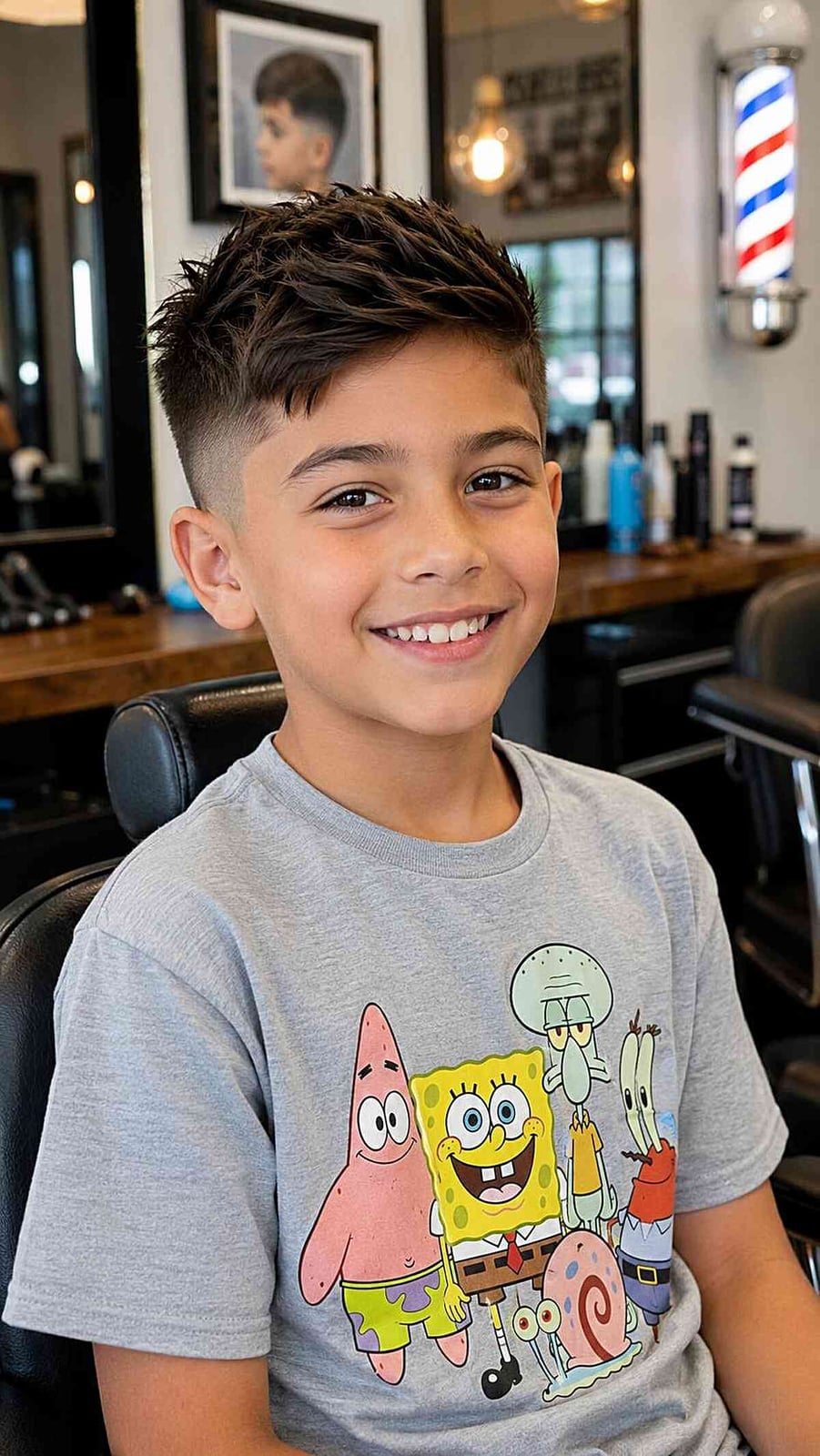
The top is styled upward with a slightly messy texture and a slicked-back parting, while the sides taper into a clean fade. This dark brown crop relies on daily product work to keep the lift. A strong-hold pomade or wax applied to damp hair, then blown upward, buys about ten minutes of settling before the texture drops. Ask your stylist for: textured crop with upward styled top and fade. The fade needs a trim every three to four weeks. Children with thick, straight hair will find this style easier to maintain than those with fine or slippery texture.
Dark Curly Chin Length Textured Crop
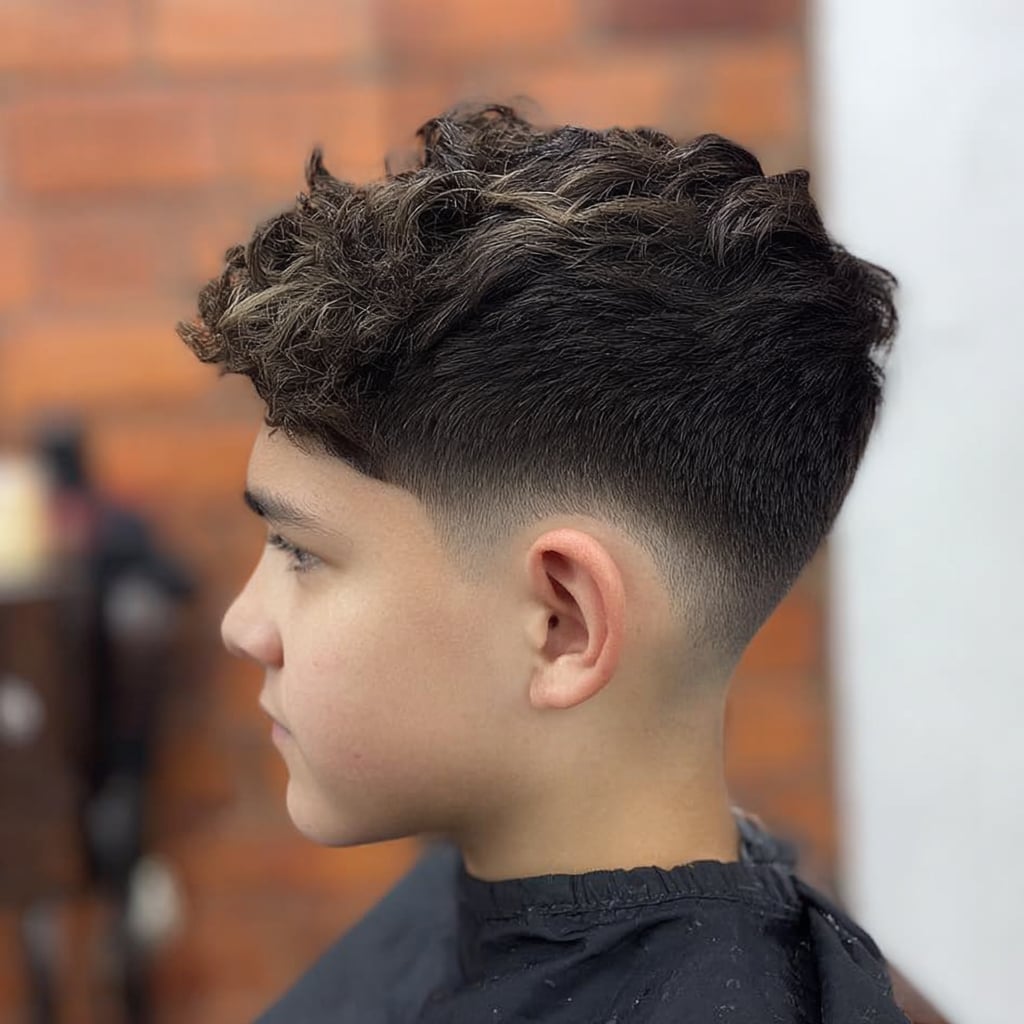
How do you ask for a shape that works with curls instead of fighting them? Start with chin length on top and a smooth fade at the nape and sides. The dark curly texture is cut so the shrinkage lands at chin level when dry, with subtle lighter highlights adding depth. Ask your stylist for: chin length curly textured crop with fade. This cut is a salon job. A curl-enhancing cream applied to damp hair defines the texture, and a wide-tooth comb keeps tangles out without breaking the coil pattern.
Short Layered Hair With Textured Top
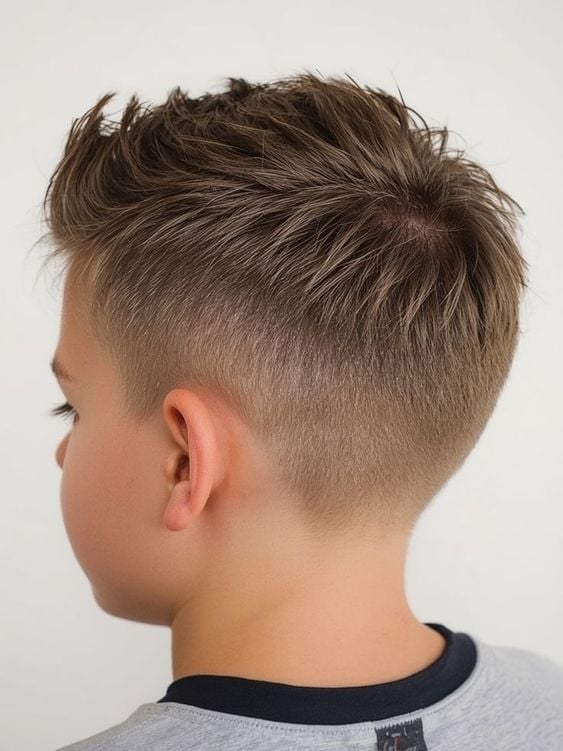
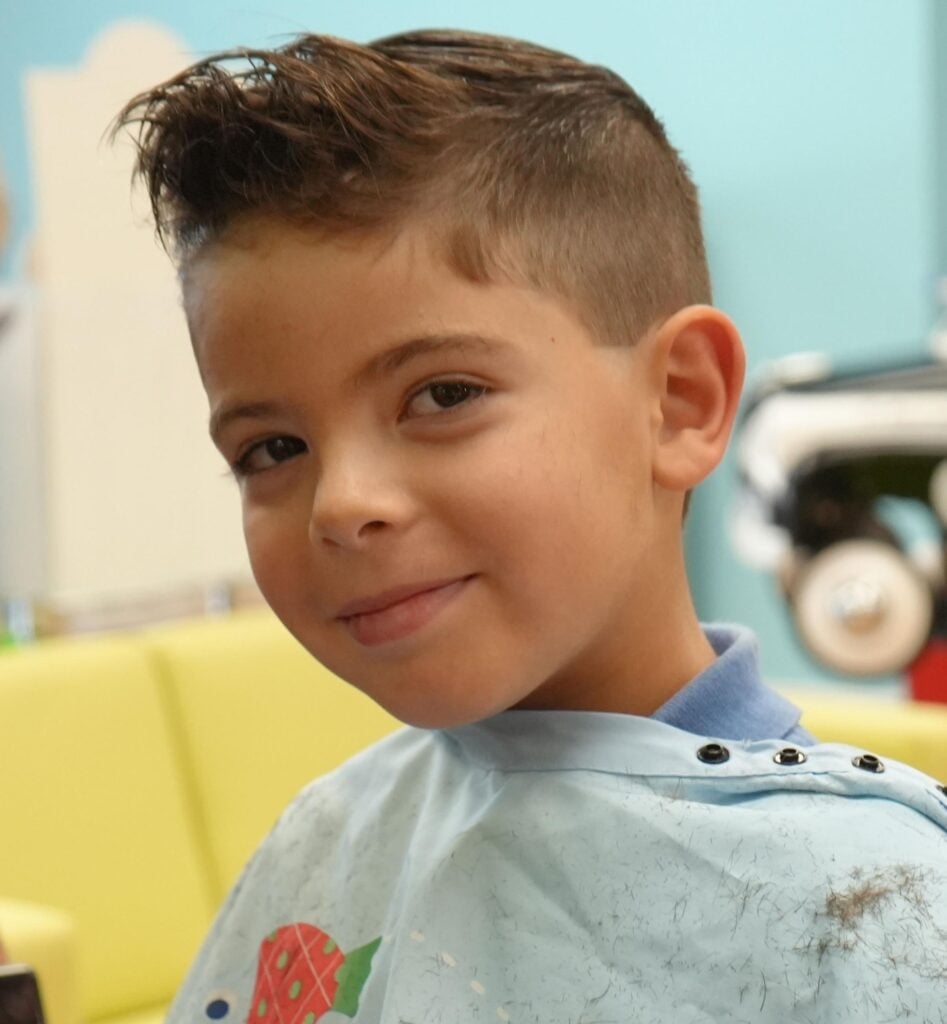
A close fade on the sides and back sets off the spiky, layered top. Compared to a completely slicked style, this cut demands less precision but more product. The dark brown, wavy texture is cut into short layers and styled upward and forward. Ask your stylist for: short layered cut with textured, spiky top. The tradeoff is that the spikes soften within an hour without a gel or wax reset. Children with thick, wavy hair get the best hold; fine hair will likely fall flat by mid-morning.
Short Crop With Textured Top And Fringe
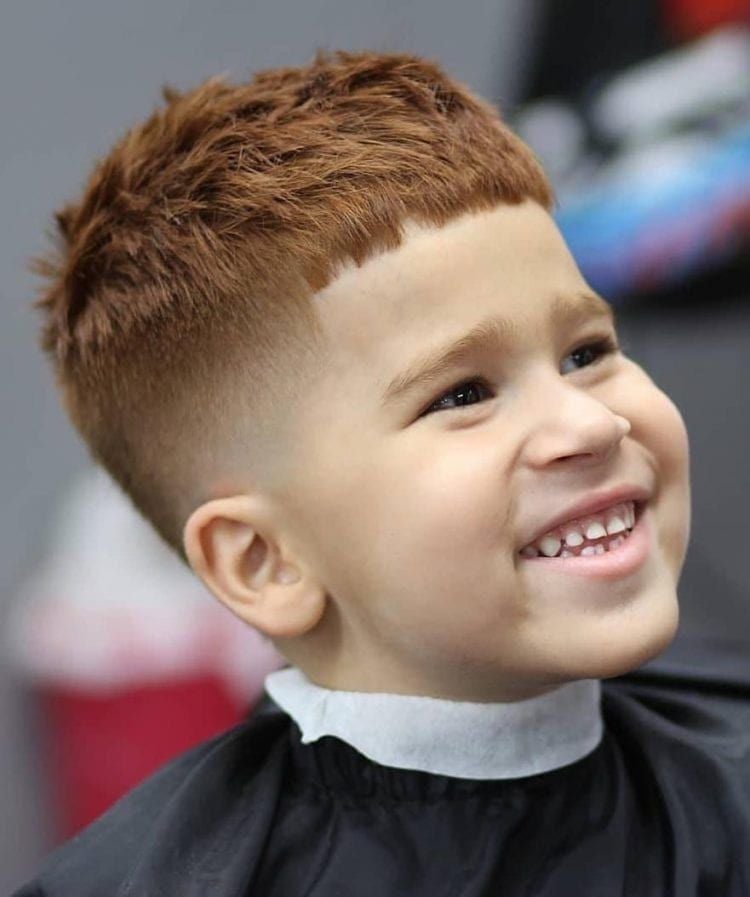
A short crop relies on disconnection: the top is cut with enough texture to stand up on its own, while the fade keeps the sides clean. The short fringe is styled forward with a bit of paste, and that is where the hold lives. The top holds shape, the fringe holds direction. This cut suits fine, straight hair that can take a little product without weighing down. Ask your stylist for: short crop with textured top and short fringe. A trim every four weeks keeps the fade crisp and the fringe out of the eyes.
Dark Textured Crop With Short Fringe, Ear
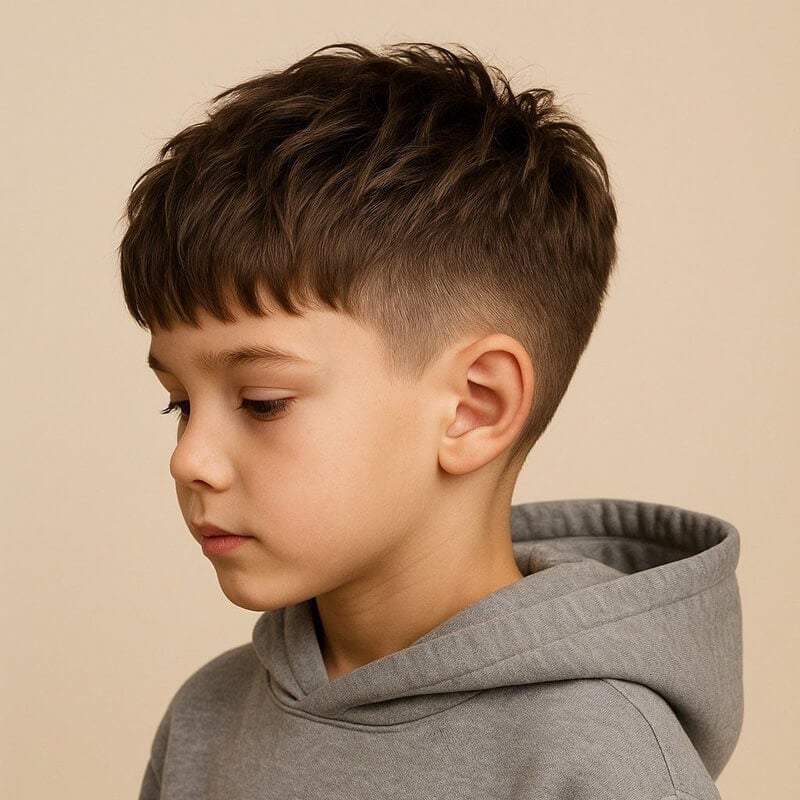
A short fringe on fine, straight hair can look sparse if the cut isn’t precise. This one uses choppy layers on top and a faded undercut, so the fringe has deliberate texture. The slight wave in the hair helps keep the fringe from falling flat. A round face softens nicely with this amount of volume on top. Ask your stylist for: textured crop with choppy layers and short fringe. A texturizing spray on the mid-lengths gives the layers more separation.
Short Undercut Swept To The Side
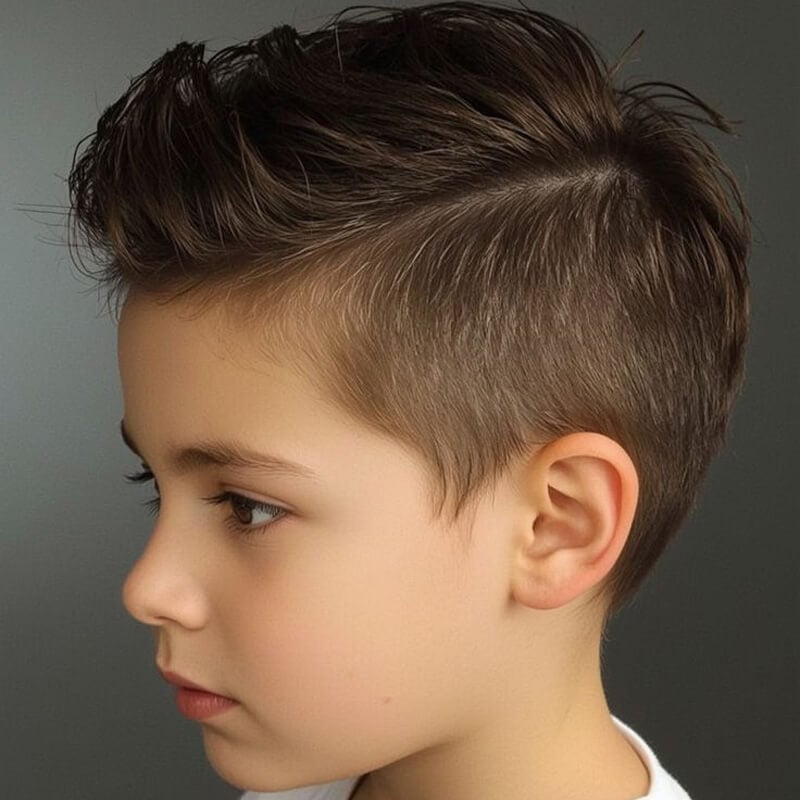
A clean undercut looks sharp for about three weeks, then the grow-out starts to blur the line. The top is swept to the side with a visible parting, so the contrast between the longer top and the bare sides is the whole point. Thick, straight hair holds that side sweep all day without constant fussing. Ask your stylist for: short undercut with top swept to the side. A light-hold pomade keeps the top in place; a trim every four to six weeks resets the undercut line.
Short Side Part With Slicked Back Top
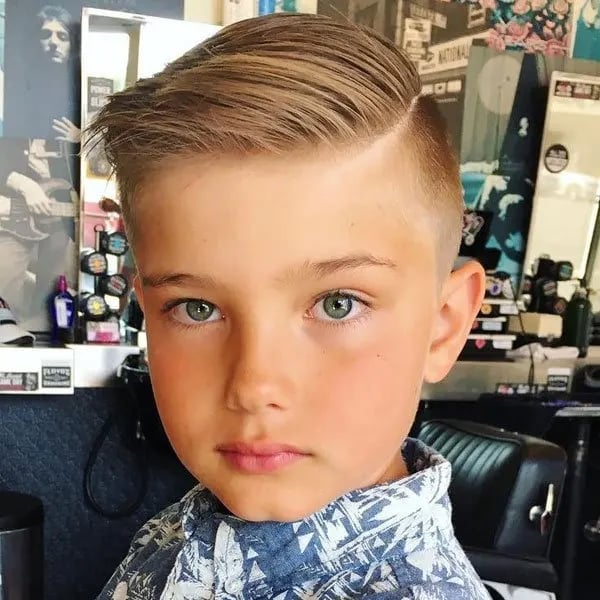
How do you get that sharp side part to stay put all day? Start with the right cut, a fade on the sides and enough length on top to lay flat when slicked back. The subtle highlights add dimension, but the real work is in the parting: comb it wet, then apply a light-hold gel and let it dry without touching it. Thick, straight hair takes this style easily. This is a salon cut, but the daily styling takes about two minutes. Ask your stylist for: short hair with side part and slicked back top.
Black Mullet With Textured Top And Fade
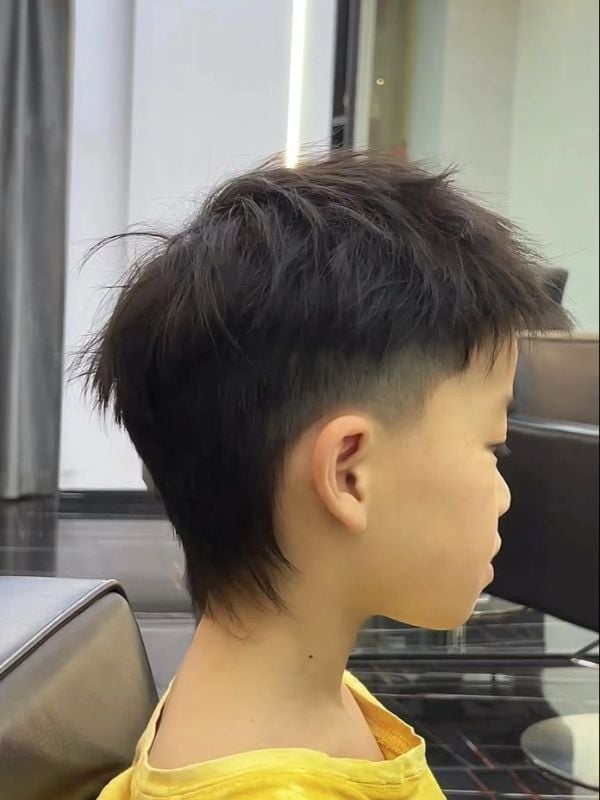
A mullet asks for commitment where a standard crop does not. The top is textured and the sides fade clean, but the back extends to the neck. That’s the part that needs regular trimming to stay sharp. Thick, straight black hair holds the mullet shape well because the weight keeps the back from puffing up. The short fringe adds a modern edge. Ask your stylist for: modern mullet with textured top and short fringe. The honest drawback: the grow-out phase is awkward for about six weeks.
Chin Length Bob With Braided Headband
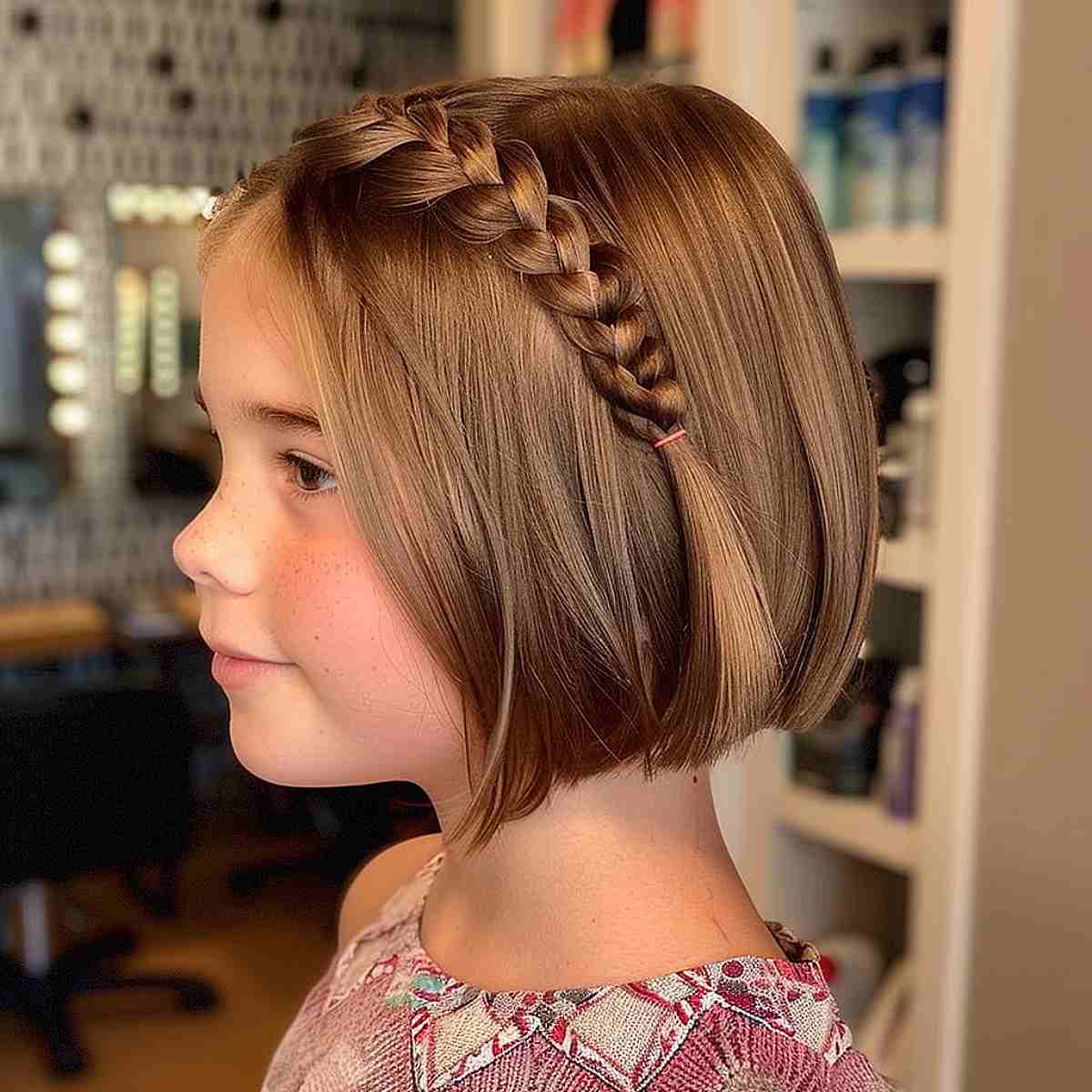
One braid does double duty here, crossing the top of a chin-length bob like a headband while the rest of the straight hair falls smooth and neat. A side part and a profile view let the braid stand out without competing with the bob’s clean lines. Ask your stylist for a chin-length bob with a braid across the top. This works best on straight hair where the braid stays tidy and the ends stay sharp. A trim every six weeks keeps the bob from losing its shape; a light-hold hairspray on the braid stops flyaways from sneaking in.
Blonde Wavy Collarbone Length With Small Braids
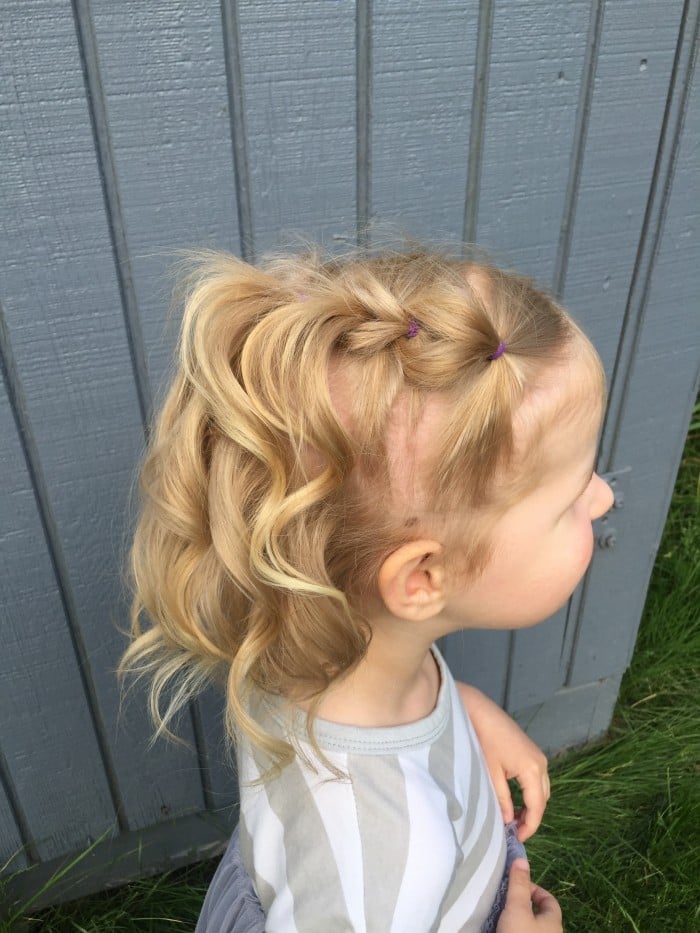
Loose waves and a few skinny braids along the hairline give a collarbone-length cut more going on than a basic blow-dry. The blonde base keeps things bright; the braids add a tactile detail that holds all day. Ask your colorist for a collarbone length with small front braids. This suits fine, wavy hair because the waves give the braids somewhere to land and the braids don’t pull the hair flat. A texturizing spray on damp hair before braiding keeps the waves from falling out by lunch, and a trim every eight weeks prevents the ends from looking straggly.
Straight Blonde Collarbone Length With Braid Bow
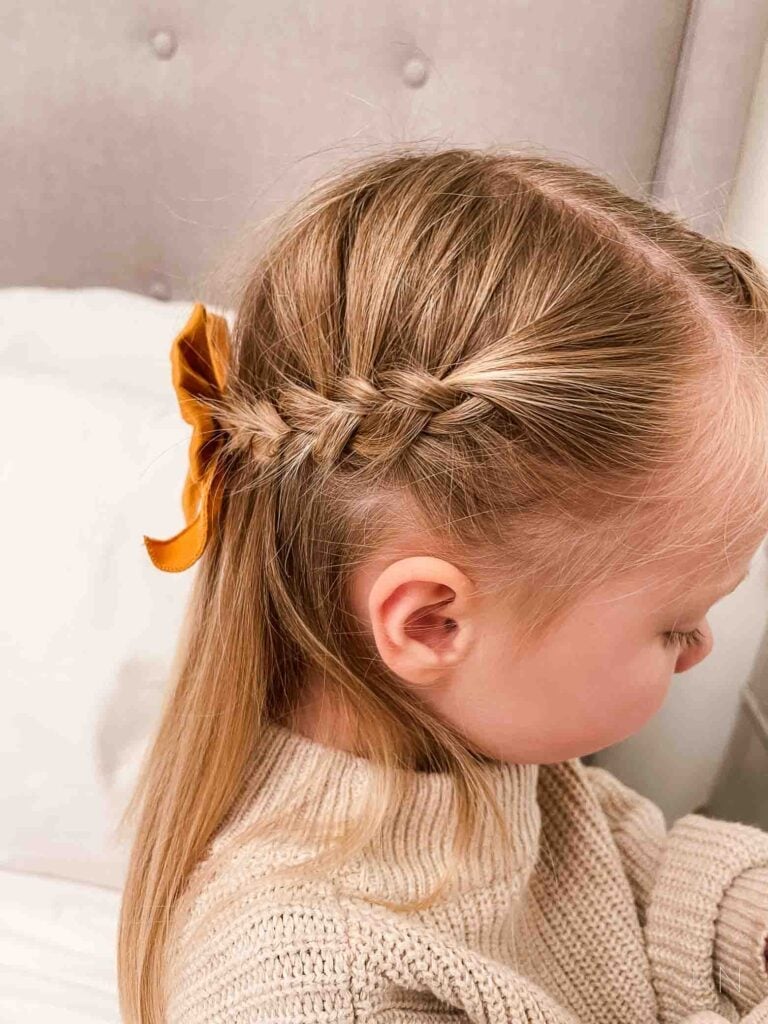
A small braid starts near the temple, sweeps back and stops short, secured with a mustard-colored velvet bow. The straight blonde hair hangs to the collarbone with a middle part, clean and simple. Ask your stylist for a collarbone length with a side braid and velvet bow. Once you get the braid tension right, the style holds through a full day of school or a party without needing a touch-up. A trim every six weeks keeps the blunt ends sharp so the braid does not get lost in split ends.
Brown Wavy Ponytail With Loose Curls
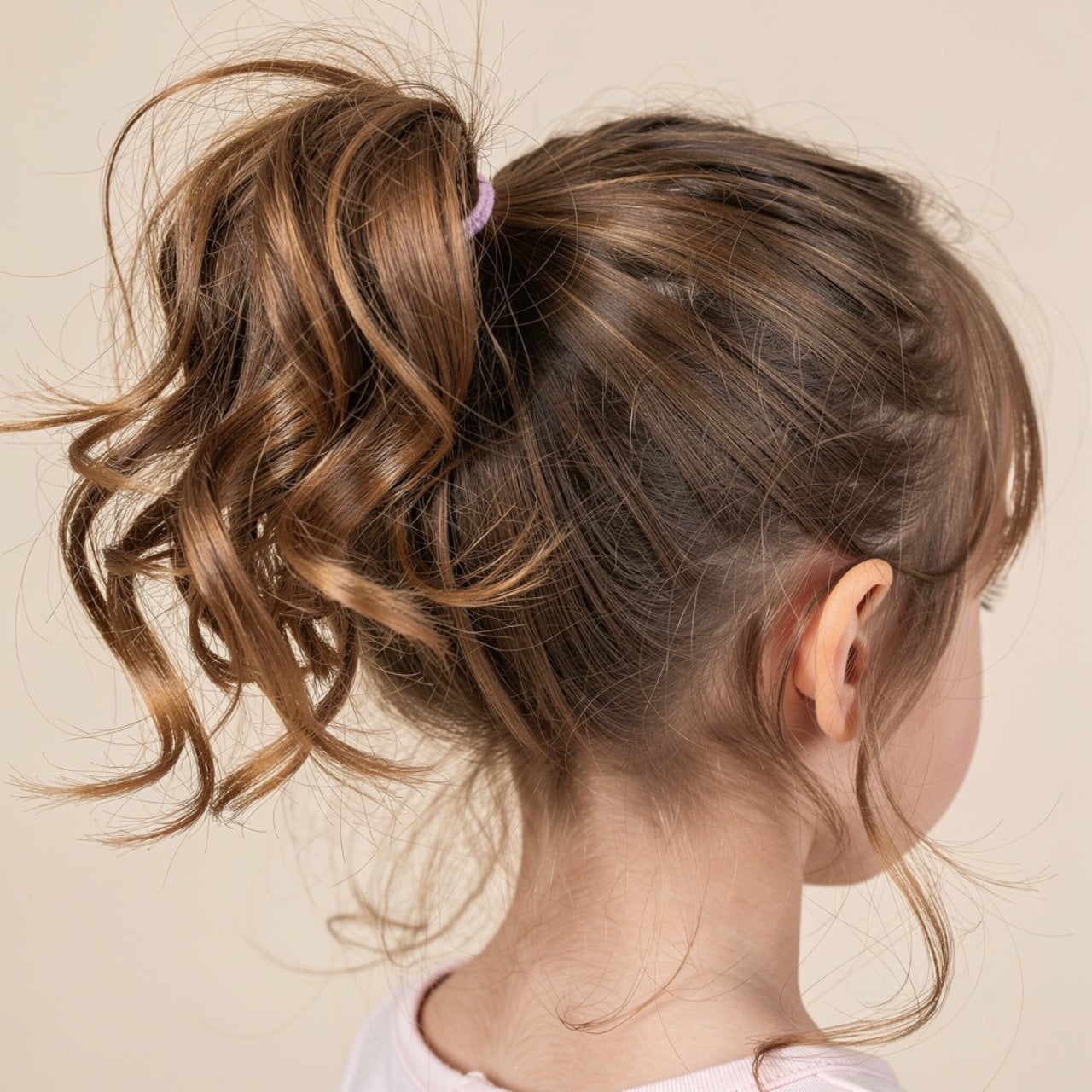
A ponytail that looks loose and messy on purpose starts with wavy brown hair, gathered high on the head, with a few curls falling around the face. The texture does the work, so teasing or spray is unnecessary. Ask your stylist for a loose wavy ponytail with framing curls. Shoulder-length hair gives enough weight to keep the ponytail from slipping, and a fabric hair tie prevents breakage. A trim every eight weeks keeps the ends from fraying into the loose curls.
Blonde Fine Hair Messy Bun With Bow
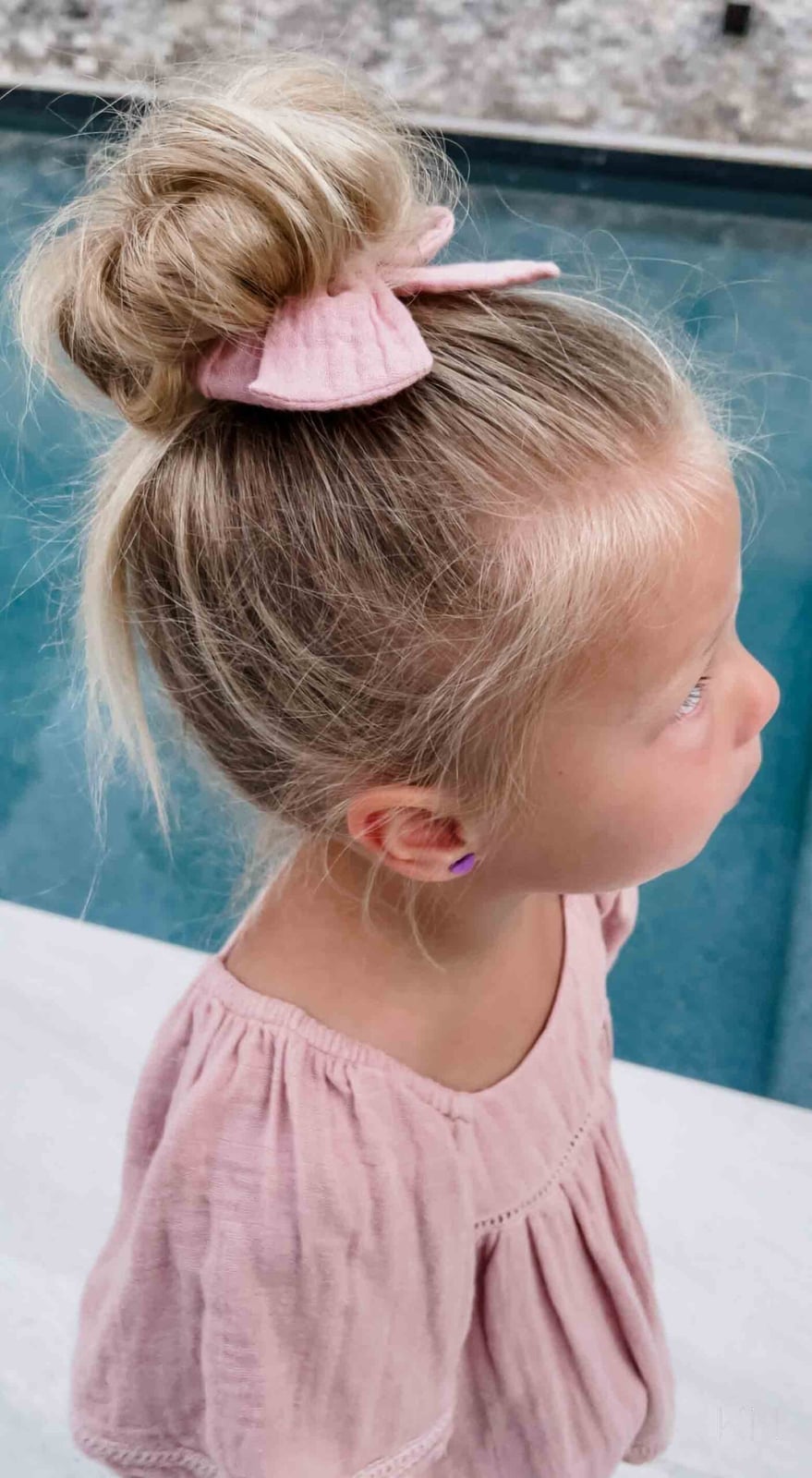
A messy bun on fine, straight hair can look like a sad knot. But a high messy bun with a pink fabric bow and a few wispy strands around the face looks put together, not desperate. The bow draws the eye, so the bun doesn’t have to be perfect. Ask your stylist for a messy bun with a bow. The drawback? Fine hair in a bun can slip out of a standard elastic within a few hours. A velvet or fabric tie with grip solves that. A side part adds volume at the crown, and a trim every eight weeks keeps the ends healthy enough to hold a twist without snapping.
Brown Wavy High Ponytail
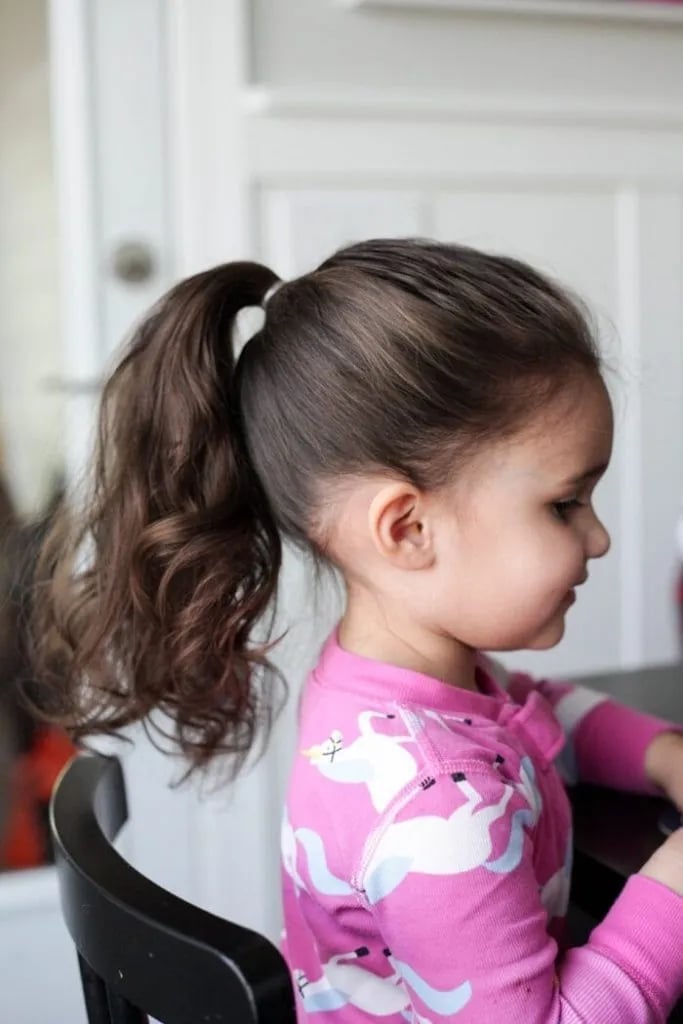
A high ponytail on wavy brown hair works because the weight of the mid-back length pulls the style into a clean, vertical line. The middle parting keeps the front sections smooth while the loose waves below carry the volume. Ask your stylist for: high ponytail with loose waves.
This suits children with wavy hair who have enough length to gather without the tail looking thin. Brush the front sections flat against the scalp before securing, then let the waves fall naturally. A strong elastic at the crown holds it through a school day, and a second wrap prevents the base from slipping. The style looks neat when the top is smooth and the tail stays loose.
Medium Brown Half-Up Half-Down Twisted
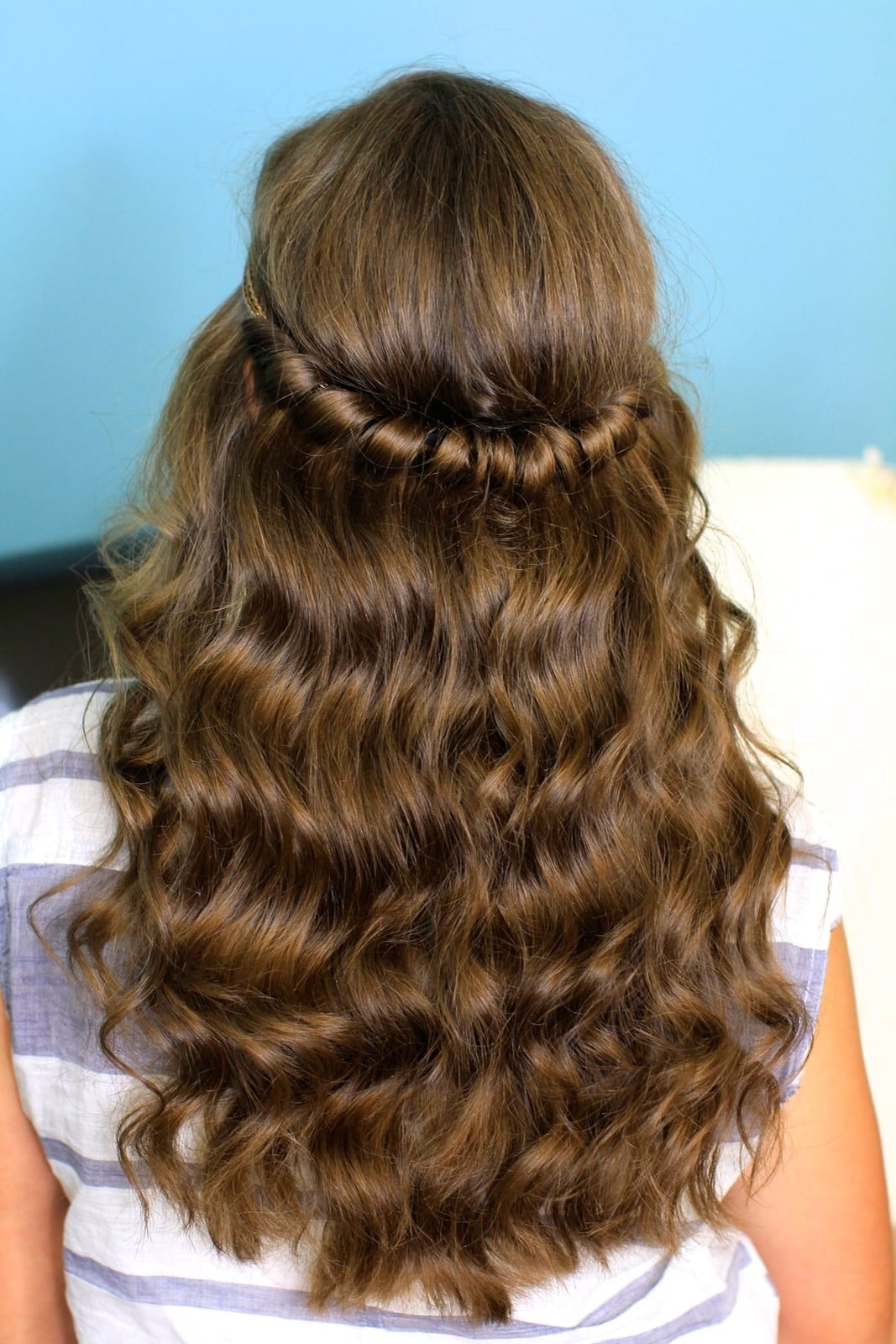
For children with thick, wavy mid-back hair, the twist holds better when each side is secured tightly with a bobby pin at the meeting point. The subtle golden accessory at the back catches the light without competing with the texture. This is a reliable everyday option, and the twisted detail stays put through recess, which is more than most styles can claim.
Brown Wavy Half-Up Half-Down Twisted Detail, Mid-Back
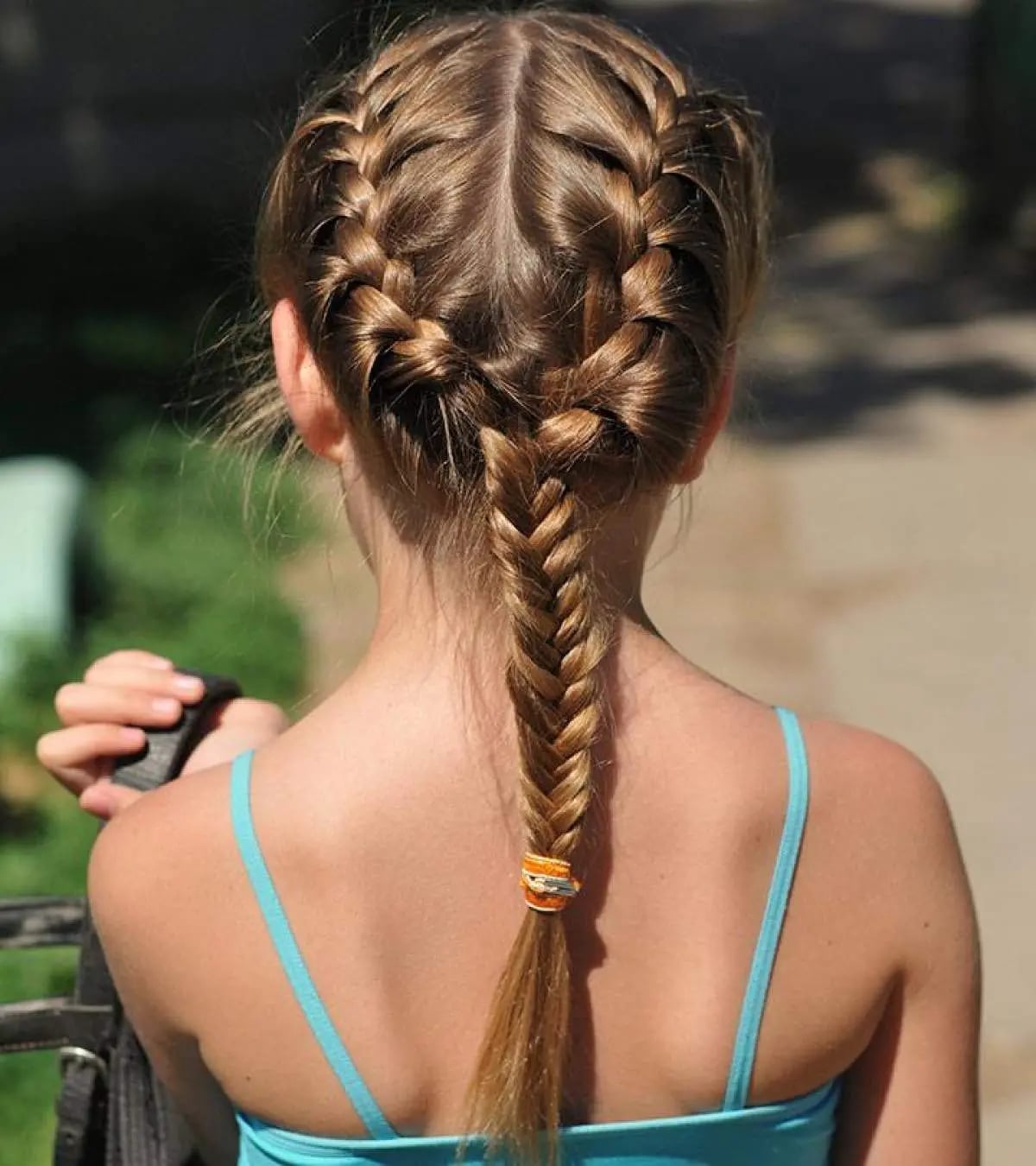
A twisted detail at the crown turns a plain half-up style into something that looks assembled, even when it took five minutes. The top section twists back once and sits at the crown, while the thick, wavy brown hair falls loose to mid-back. Ask your stylist for: half-up half-down with twisted detail.
On a wavy blowout, the twist holds its shape for most of the day, but the loose lower section can relax into softer waves by afternoon. A small clip at the back keeps the twist from unraveling, and the middle parting keeps the front sections even. This works best on children with thick, wavy hair, where the twist has enough substance to stay put. Fine hair would need a second twist or a bit of texture spray to hold the same shape.
Dark Blonde Half-Up Half-Down With Braids
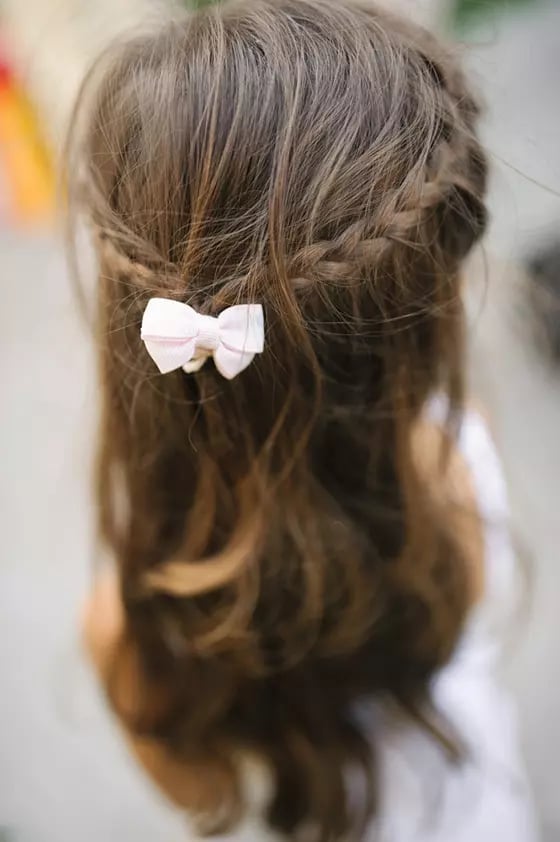
Two small braids along the hairline, meeting at the back with a small pink bow, make a half-up style feel special. The dark blonde, thick, wavy hair stays loose below, reaching mid-back, so the braids frame the face without competing with the length. Ask your stylist for: half-up half-down with face-framing braids and bow.
This is a party-ready look, but it also survives a school day if the braids are started close to the part. The bow placement at the back is the detail to confirm: it should sit where the braids meet, not lower, or it looks disconnected. For a DIY version, braid small sections along each side of the middle parting and secure them together with a small elastic, then clip the bow over the join. The wavy texture below needs no extra styling, which is a quiet advantage.
Dark Brown Bubble Ponytail
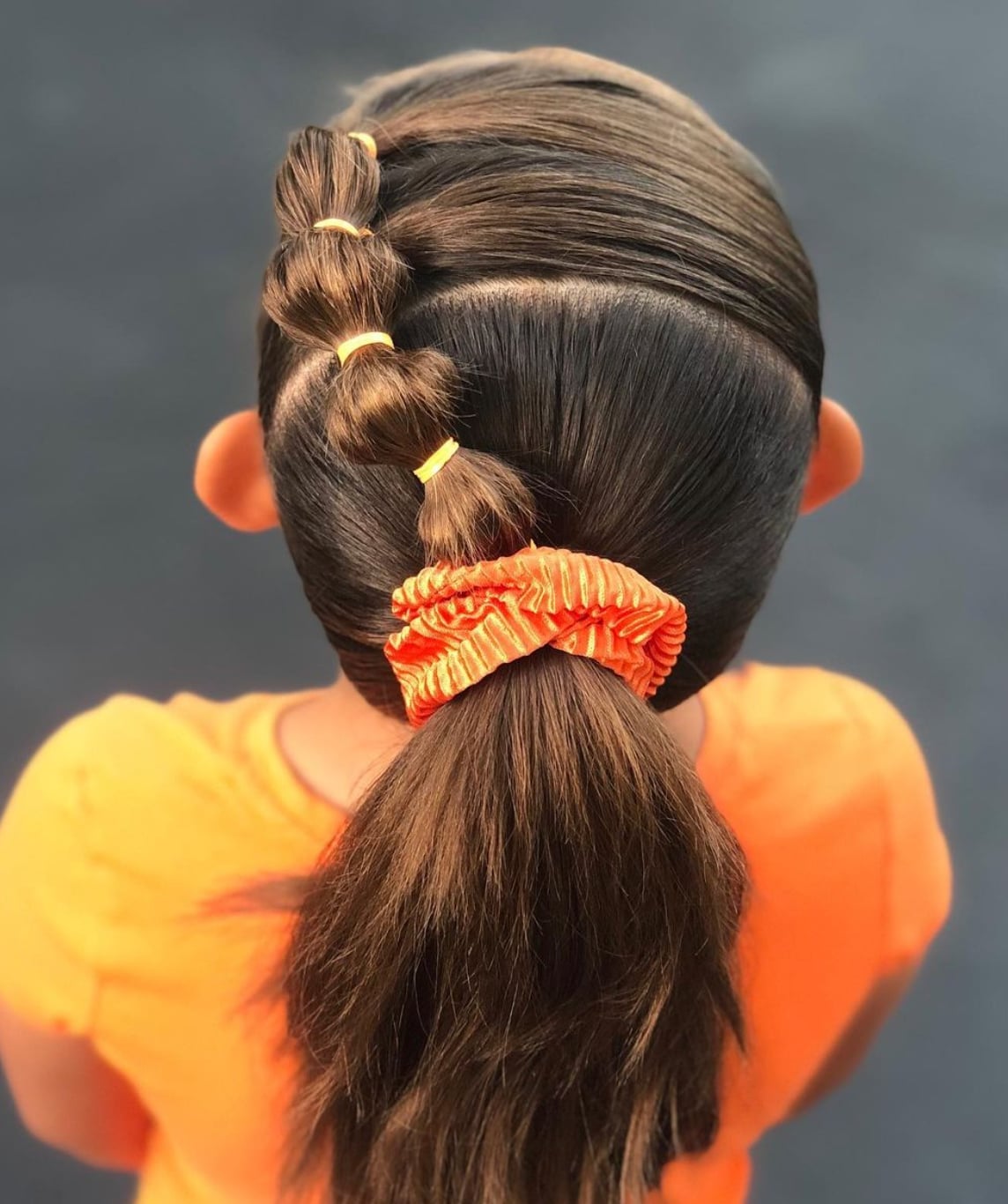
A bubble ponytail is what happens when a regular ponytail gets sectioned with elastics and gently pulled apart, and the result is far more interesting. On thick, straight, dark brown hair reaching mid-back, the bubbles hold their shape without extra product. Ask your stylist for: bubble ponytail with an orange scrunchie.
Compared to a standard ponytail, the bubble version takes more elastics to build and a bit of patience to fluff each section evenly. The orange scrunchie at the base adds a pop of color without needing any hair dye. The drawback is that the elastics can tug if the hair is pulled too tight, so keep each section snug but not strained. This suits children with thick, straight hair; fine or slippery textures tend to slide out of the bubbles by lunch.
Blonde Wavy Double Buns With Fringe
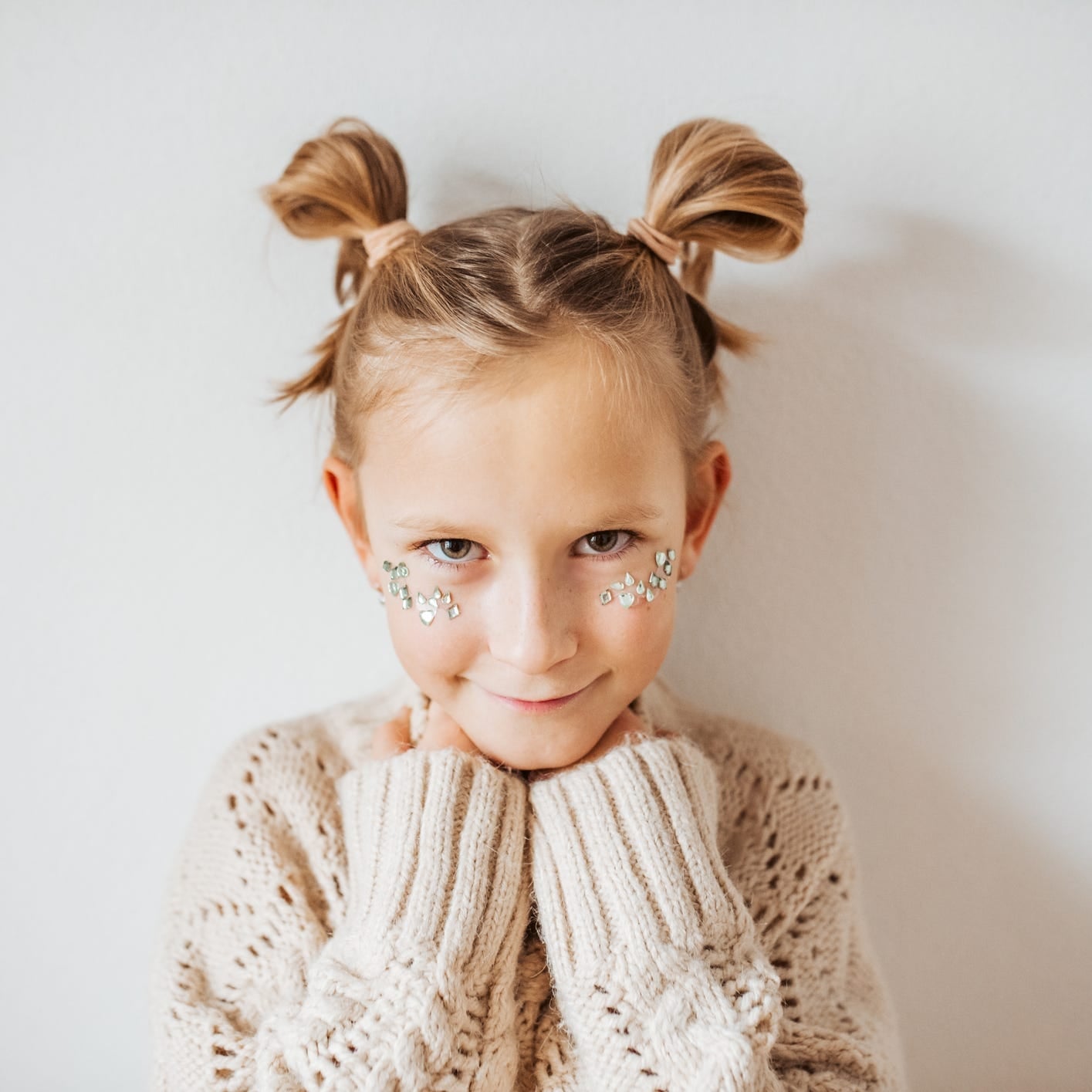
The design splits the hair into two equal sections, then twists each into a high bun secured near the crown. It works best on shoulder-length wavy hair with a natural medium texture. The wave gives the buns grip without teasing. Ask your stylist for: double buns with a short fringe. Section the hair from ear to ear, then divide the back into two halves; twist each section tightly and wrap it around its base, tucking the ends under. The short fringe is left loose and can be smoothed with a fine-tooth comb or left slightly piecey. A middle parting keeps the symmetry clean.
Black Coily Hair Updo With Pink Flowers
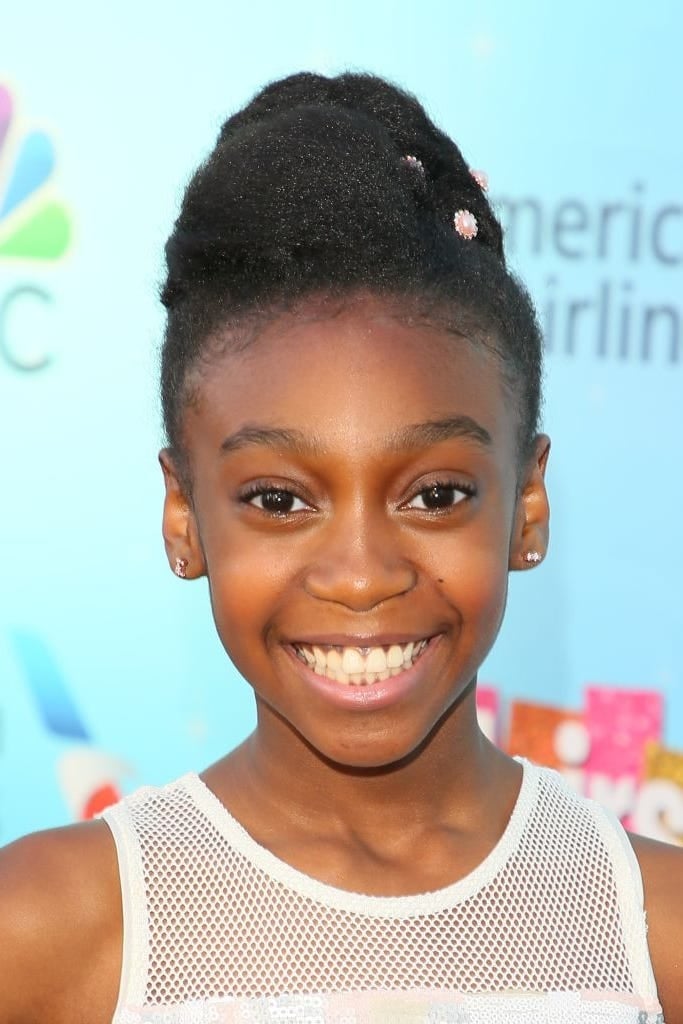
The hair is smoothed back into a single neat bun at the crown, then small pink flowers are tucked around the top edge. This updo works on coily hair that has enough grip to hold the bun without slipping, and it suits children who prefer hair off the face for parties or special events. Ask your stylist for: coily hair updo with decorative flowers. The finished style stays secure for a full day with a strong-hold gel on the edges and bobby pins anchoring the bun.
Black Coily Bantu Knots With Geometric Parting
The scalp is sectioned into sharp geometric shapes, triangles and diamonds, and each section is twisted into a small Bantu knot that sits flat against the head. This style holds well on thick coily hair cut to a short length, and the knots stay intact for about a week when wrapped at night. Ask your stylist for: Bantu knots with geometric parting. A moisturizing balm applied to the scalp before twisting prevents dryness, and the knots should not be pulled too tight around the edges.
Dark Brown Wavy Braided Updo
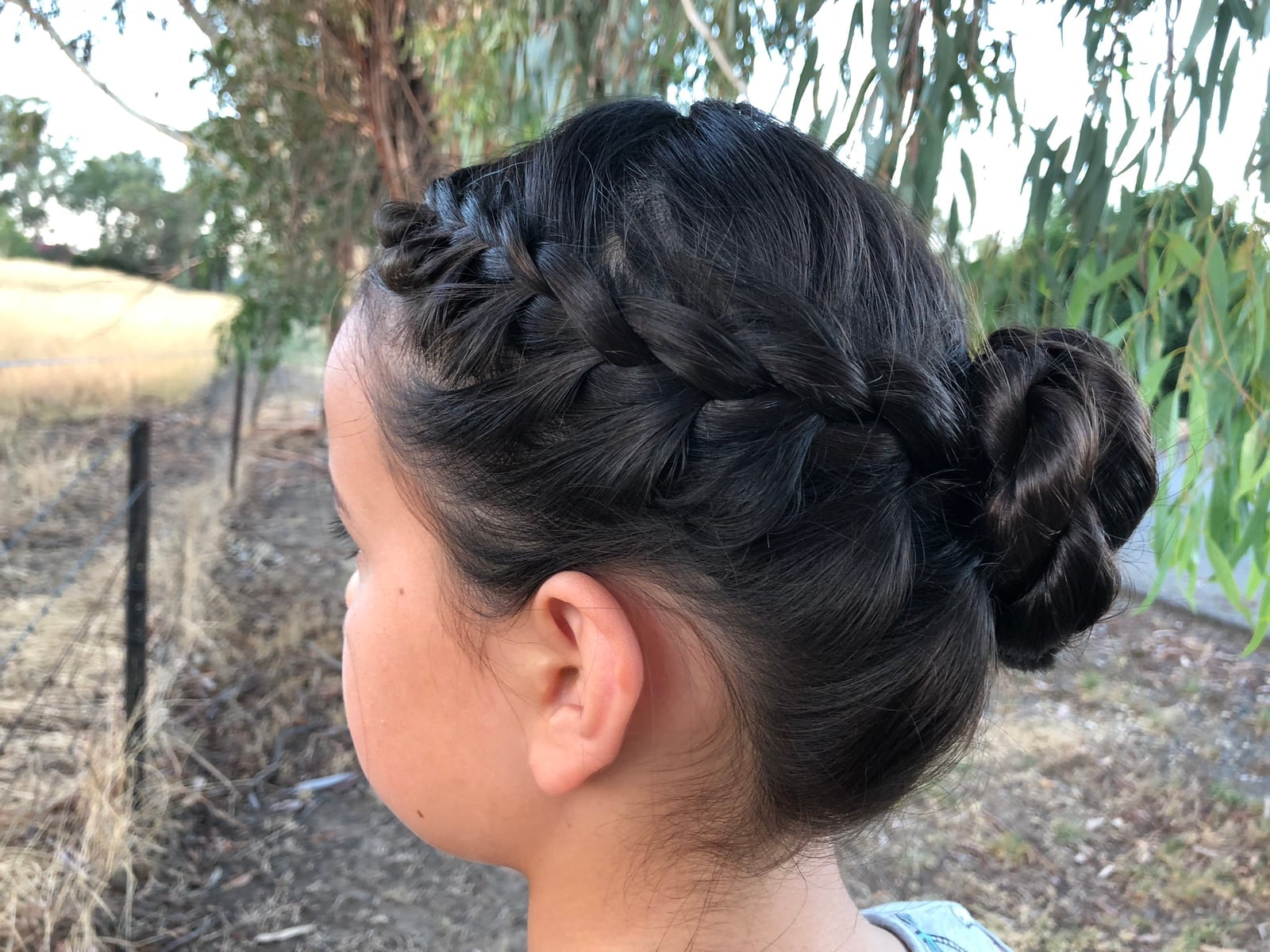
How do you describe a braided updo that has this much detail without sounding like you are reciting a recipe? Start with the French braid that runs along the hairline from temple to temple, then feeds into a twisted bun sitting low at the nape. The hair is dark brown with a thick wavy texture, and the length reaches mid-back, enough to wrap into a substantial bun. Ask your stylist for: French braid into a twisted bun updo. This is a salon job, not a DIY project, because the braid needs to stay even and the bun must be pinned securely from the inside out. Plan around an hour in the chair for the full installation.
Brown Wavy Braided Updo With Ribbons, Mid-Back
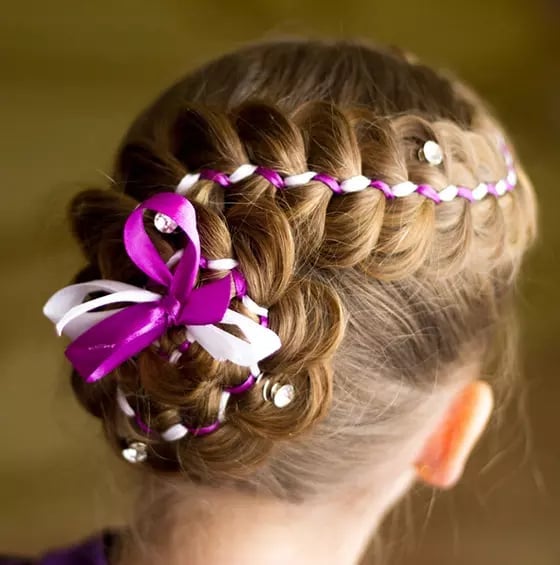
A simpler braided updo uses one or two Dutch braids that wrap into a low bun, and it takes about half the time to install. This version is the opposite: multiple smaller braids are woven together into an updo, with purple and white ribbons threaded through the sections and small sparkling pins added as accents. The hair is brown with a thick wavy texture at mid-back length. Ask your stylist for: intricate braided updo with ribbons and sparkle. The drawback is the removal. Each ribbon and pin has to be taken out carefully to avoid snagging, which adds time on the other end.
Blonde Fishtail Braid With Flower Headband
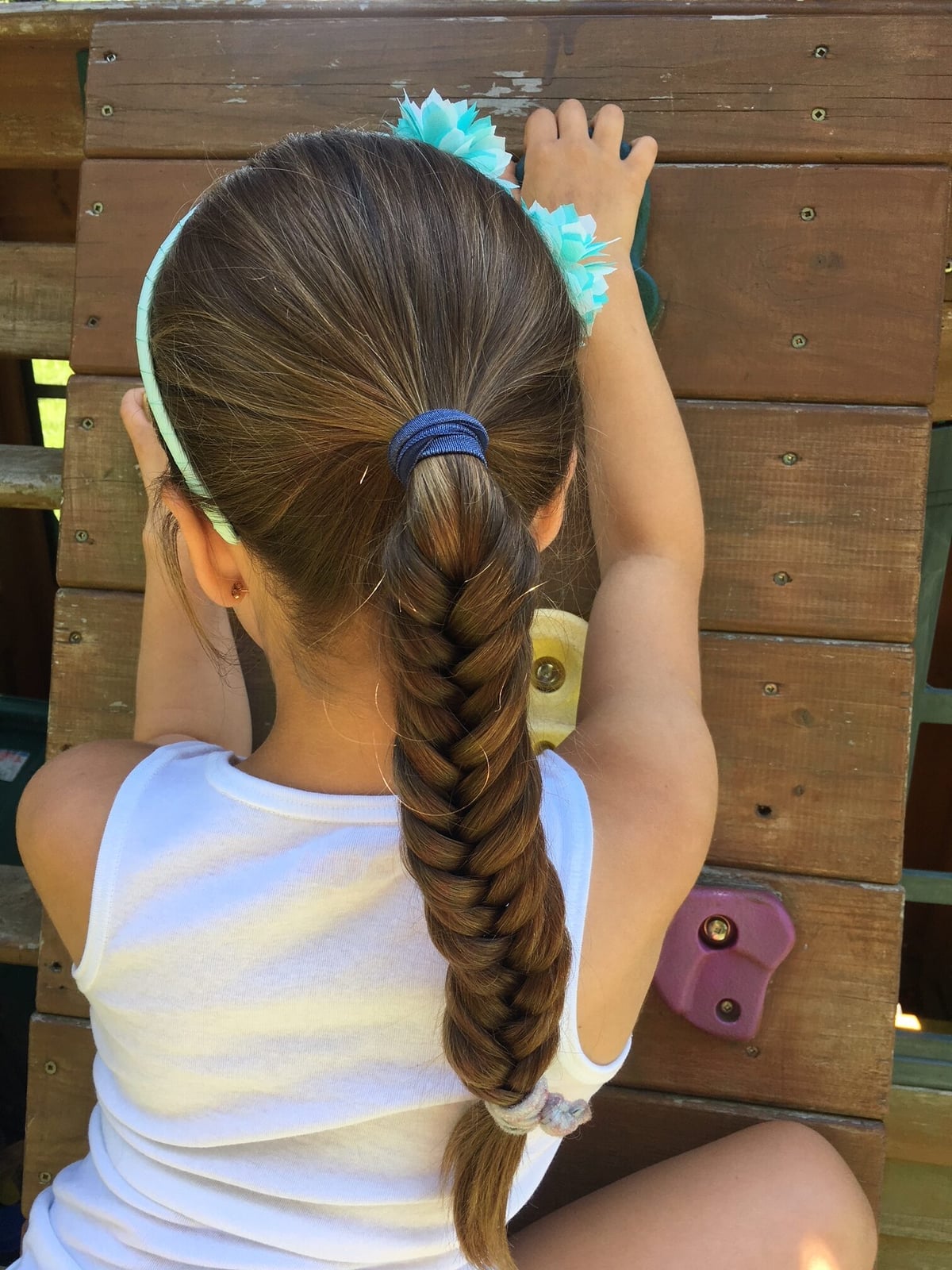
A fishtail braid starts with the hair split into two sections, not three, and each outer strand crosses to the opposite side, which creates that woven, herringbone look. On thick, wavy blonde hair with brown highlights, the pattern reads clearly from mid-back to the dark blue elastic at the end. The light blue fabric flower headband rests above the braid, following the middle parting, and adds a frame without interfering with the braid’s structure. Ask your stylist for: a fishtail braid with a flower headband. A texturizing spray before braiding gives the strands enough grip to hold the pattern all afternoon, even on wavy hair that tends to slip.
Thick Blonde Braid With White Bow
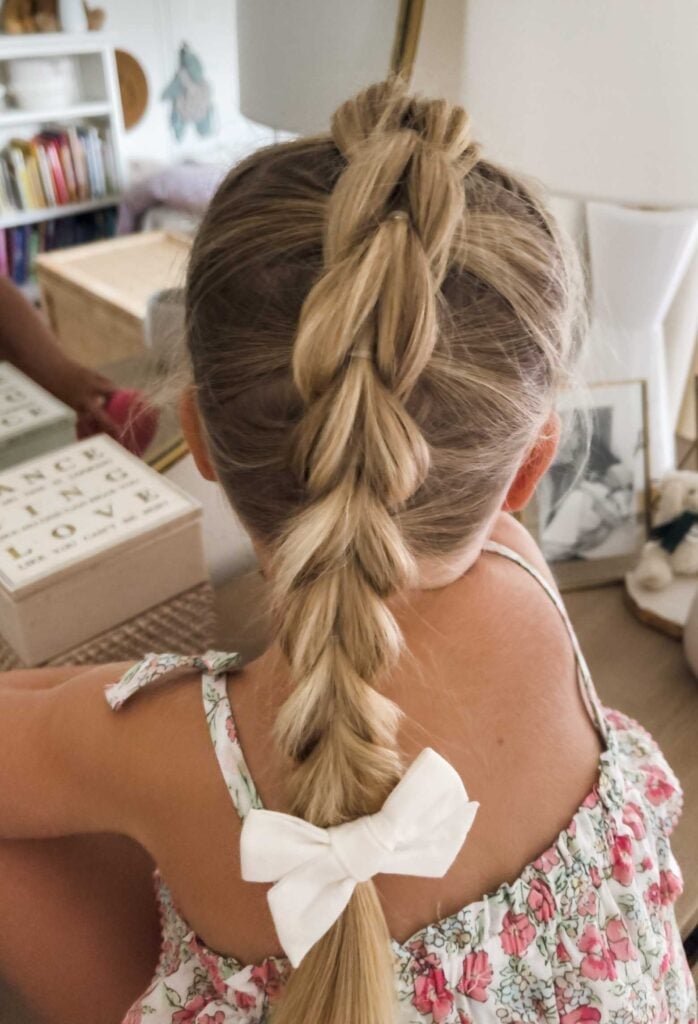
Not every braid works on fine hair, and that is the honest truth. This one needs thickness to fill out the pattern and straight texture to keep the sections defined from crown to end. The blonde hair is parted in the middle and braided from the nape into a single, intricate plait that reaches mid-back, then secured with a white bow at the tip. The bow sits at the end, not the base, which is unusual and draws the eye down the length of the braid.
Children with rounder face shapes benefit from the middle parting and the vertical line of the braid, which adds length. Those with very fine or thin hair will find the braid looks sparse no matter how tight the sections are pulled. Ask your stylist for: an intricate braid with a white bow. A trim every eight weeks keeps the ends blunt enough that the bow sits neatly without fraying.
Final Thoughts
For coily or thick hair, protective styles like braids and twists cut down on daily detangling and breakage. For fine or straight hair, cuts that add volume or styles that keep hair securely off the face are a smarter bet.
- Braids and twists: re-braid or re-twist every 6-8 weeks for protective styles.
- Buns and updos: refresh with styling products as needed; ensure no excessive tension.
- Fades and textured crops: maintain sharp lines with trims every 4-6 weeks.
- Wavy and curly styles: use curl-defining creams or mousses and air-dry or diffuse.
- General: apply heat protectant before any heat styling; use gentle hair ties.
Find the style that sparks joy and suits your child’s lifestyle.
