

Split dye hair divides the color field straight down the middle, one side against the other, no blending required. The trend is showing up on shorter cuts and softer fringes this year, moving past the long-and-straight default.
26 versions of split dye hair are collected here, from low-maintenance black-plus-bright to high-contrast blondes and vivid neons. The range covers short bobs to mid-back lengths and includes options for fine hair that needs volume, a fringe that refuses to lie flat, or a grow-out line you want to keep invisible. If you have a round face, a square jaw or a long oval, there is a split that works with your bone structure rather than against it.
Mid-Back Length Split Dye Black and Platinum Blonde
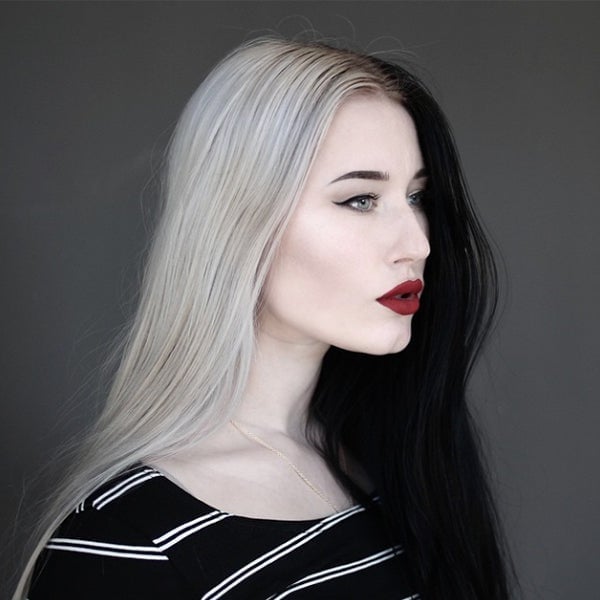
A stark vertical divide between jet black and platinum blonde on fine, straight mid-back length hair creates a graphic effect that reads as pure editorial. If you want the drama of two distinct colors without a full head of bleach, this split dye delivers the contrast while preserving half of your natural pigment. The middle part keeps the separation precise, and the lack of layers means the color blocks stay clean from root to end. Ask your colorist for: mid-back split dye, jet black one side, platinum blonde the other.
Fine, straight texture actually helps this style: the smoother the surface, the sharper the line. A flat iron keeps the sleekness intact, and the real trade-off is the upkeep. The platinum side demands a toning appointment every four to six weeks to prevent brassiness, and the black side needs a root touch-up on the same schedule if you want the line to stay crisp.
Chin Length Blunt Bob Black and Red Split
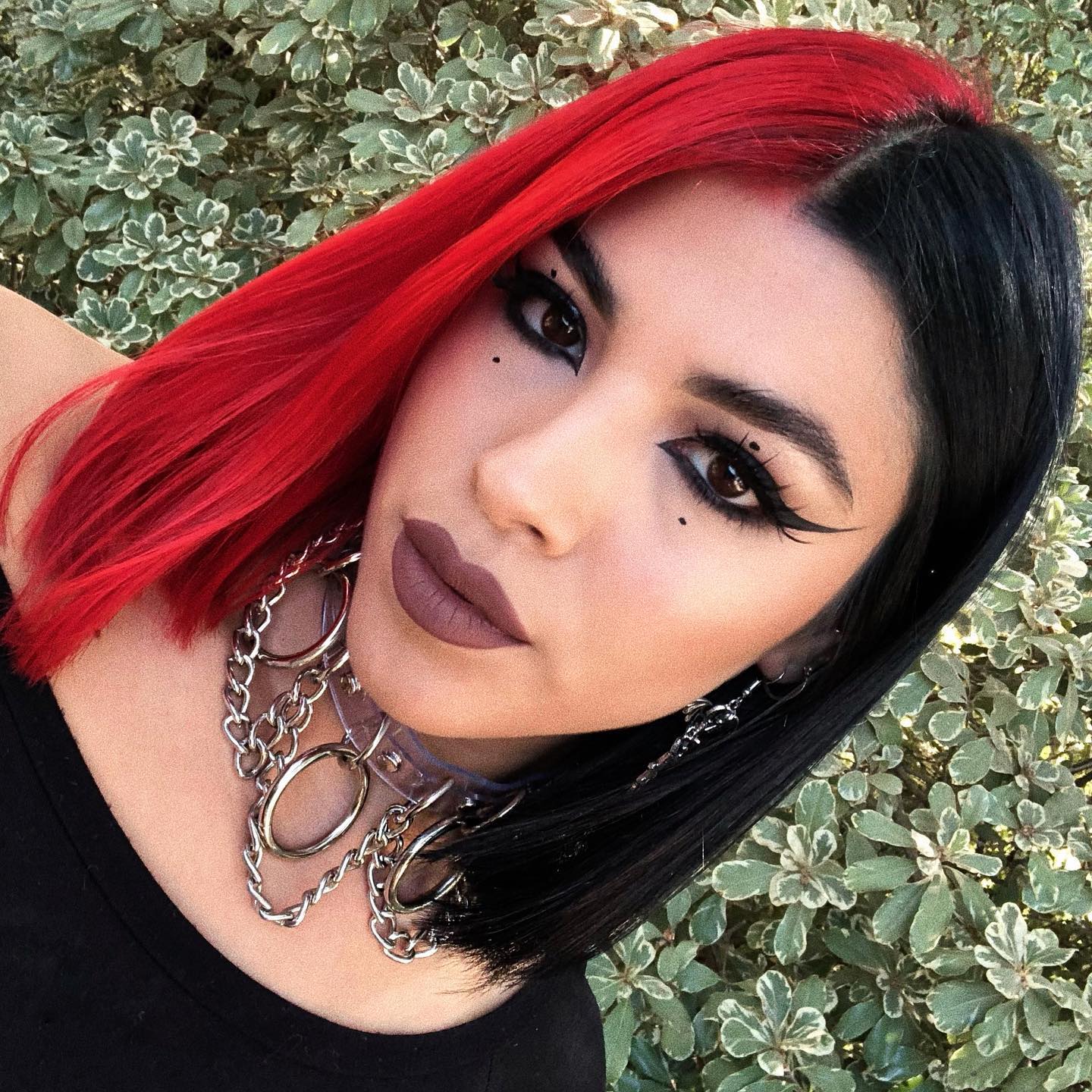
A chin length blunt bob with a side part splits into jet black on one side and a vibrant true red on the other. The side part shifts the visual weight so the color divide falls slightly off center, which creates an angled break. Ask your colorist for: chin length blunt bob, split dye black and vibrant red. This combination works best on thick straight hair because the blunt ends need density to hold their shape.
Collarbone Lob With Curtain Bangs Black and Yellow
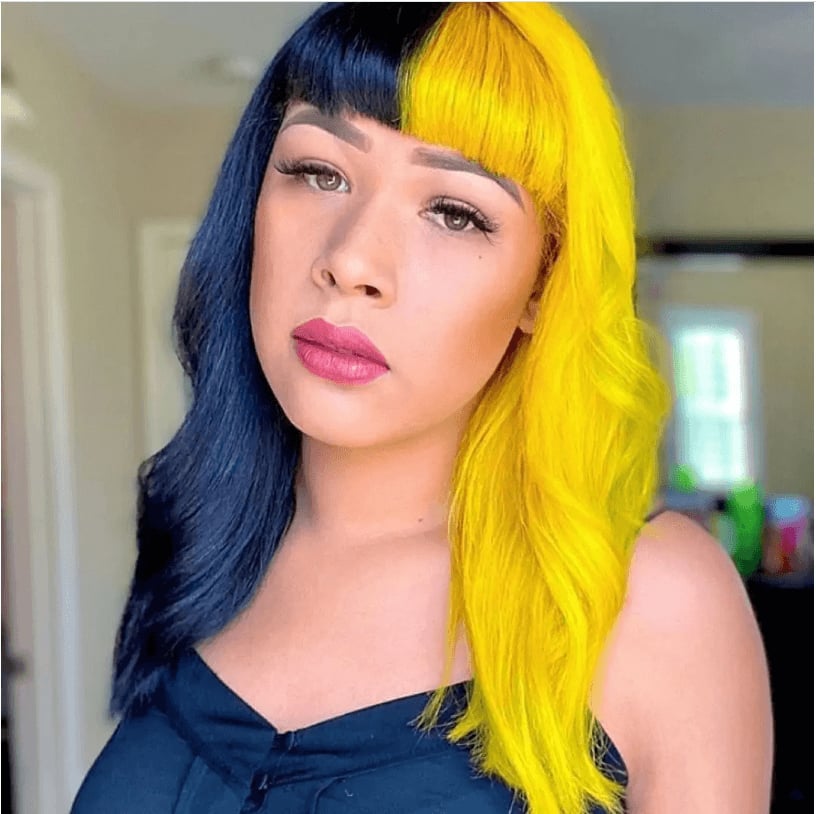
What makes this split dye work is the way the curtain bangs carry both colors. The lob falls at collarbone length, parted down the middle, with one side a deep black and the other a vibrant yellow. The loose waves soften the contrast, but the middle part still keeps the two halves distinct. Ask your colorist for: collarbone lob, curtain bangs, split dye black and vibrant yellow. The curtain bangs should be cut to graze the cheekbones; the stylist will apply the black and yellow on opposite sides of the parting before shaping the bangs so each side lands in its own color. Fine, straight texture holds the wave pattern without frizz, and the split works best on virgin or pre-lightened hair to keep the yellow from pulling green.
Chin Length Bob With Blunt Bangs Black and Red, Close-Up Take
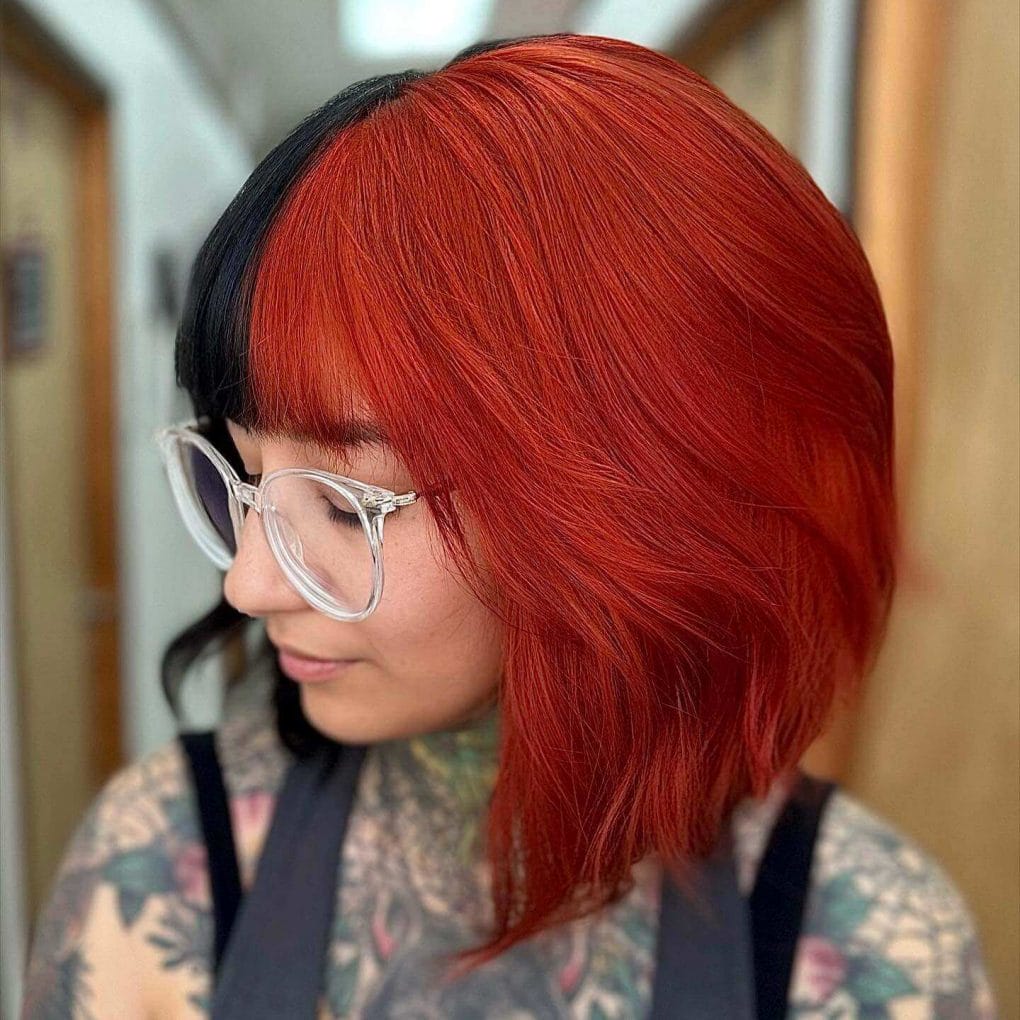
A chin-length bob with blunt bangs and a middle part splits cleanly into deep black and vibrant red. The blunt bangs carry the same divide, so the color line runs through the fringe without interruption. The sharp contrast shows every bump and flyaway, so a blow dryer with a concentrator nozzle and a smoothing brush are required to keep the surface polished. Ask your colorist for: chin length bob, blunt bangs, split dye black and vibrant red. Fine, straight texture helps the blowout hold, but anyone who prefers a two-minute air-dry routine should skip this one.
Ear Length Short Layers Black and Platinum Blonde
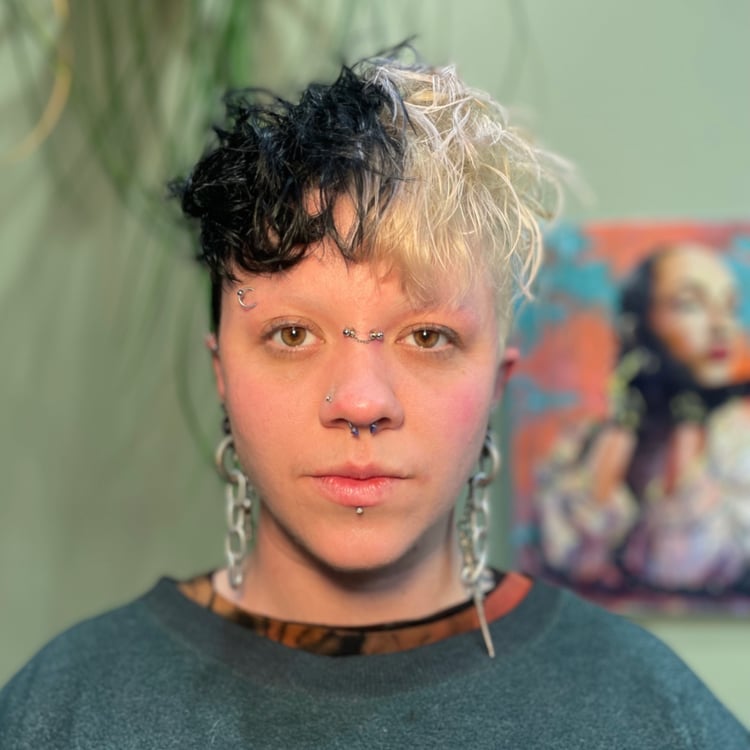
How do you make a split dye read on hair this short? The answer is texture and contrast. Ear-length short layers with choppy bangs are styled into a messy, textured finish, with black on one side and platinum blonde on the other. The wavy, fine texture softens the hard line between the two colors, so the split feels integrated rather than pasted on. Ask your colorist for: short layered cut, choppy bangs, split dye black and platinum blonde. A texturizing paste or wax defines the layers; the trim rhythm is every four to six weeks because short layers lose their shape fast.
Chin Length Wavy Bob Neon Green and Pink Split
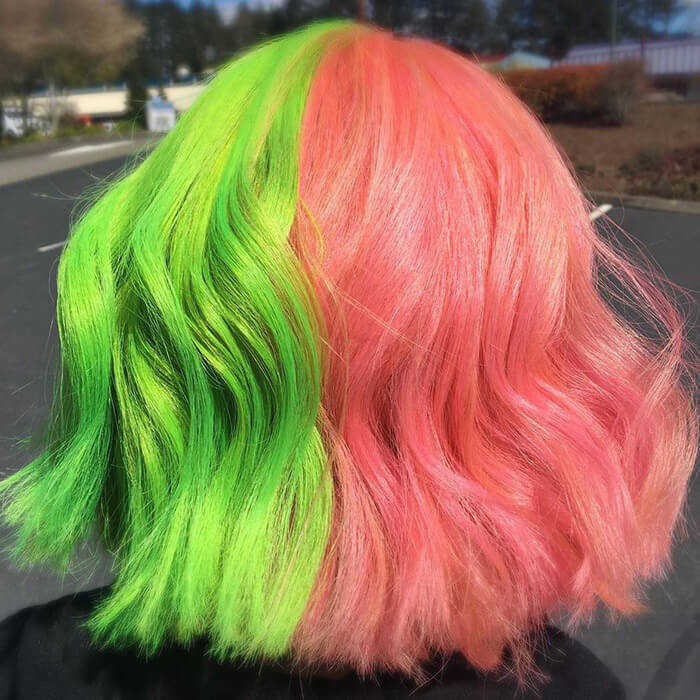
This split dye works because the middle part acts as a ruler-straight dividing line between neon green on one side and vibrant pink on the other. Medium density wavy hair cut into a chin-length bob holds that separation cleanly, no blending required. Ask your colorist for: wavy bob, chin length, split dye neon green and pink. The blunt baseline needs trims every six to eight weeks to keep the line sharp.
Collarbone Lob With Blunt Bangs Green and Black Split
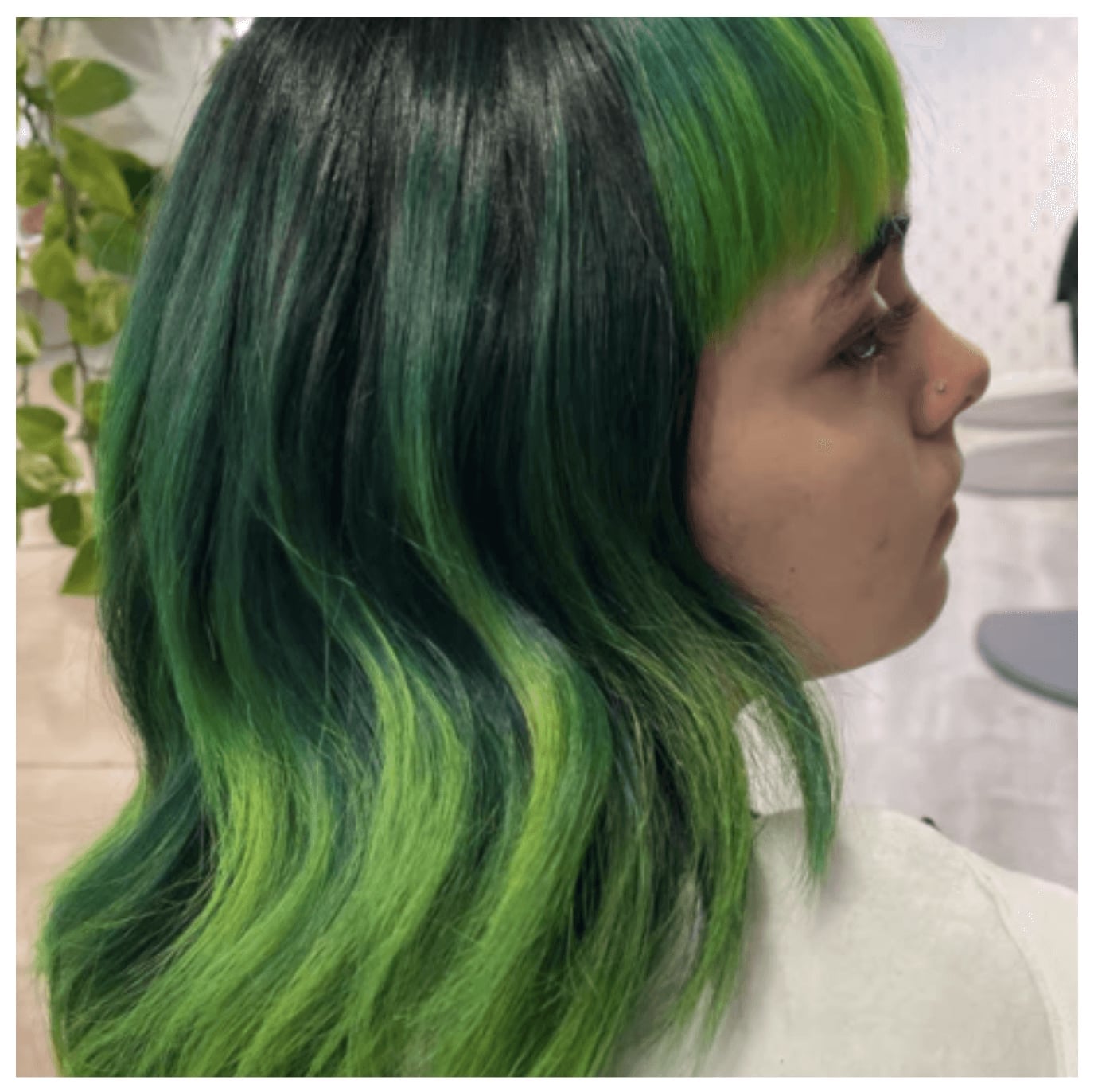
Set this against the standard blonde-and-black split and the difference is immediate. Deep black on one side and vibrant green on the other lands somewhere between a comic-book cover and a neon sign, which is exactly the point. Medium density wavy hair cut into a collarbone lob with blunt bangs carries the contrast without extra volume competing for attention. Ask your colorist for: collarbone lob, blunt bangs, split dye green and black. The blunt bangs need a trim every four to six weeks to stay heavy.
Collarbone Lob With Curtain Bangs Platinum Blonde and Pink
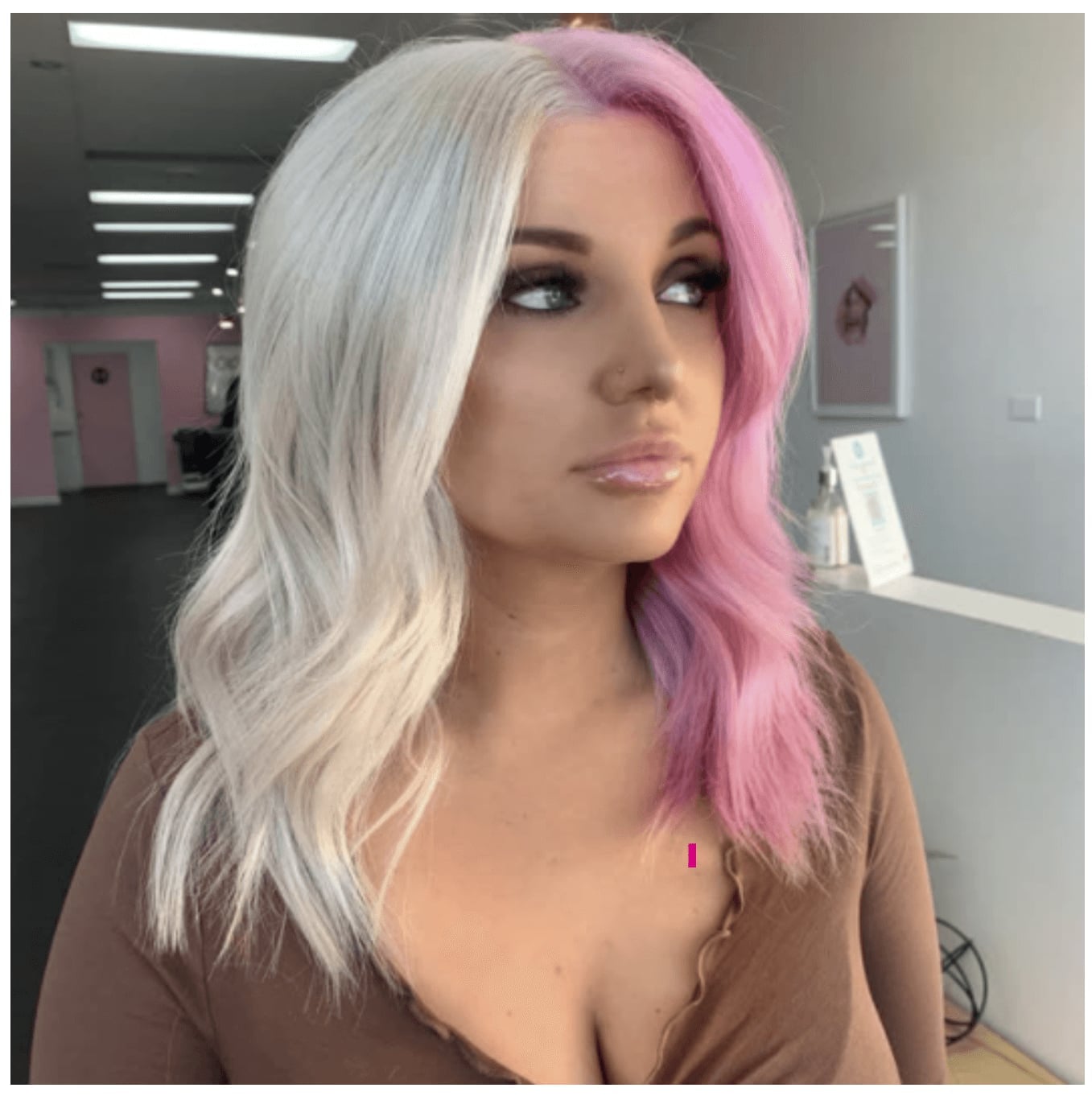
A split dye this pale demands precise sectioning. Platinum blonde on one side and pastel pink on the other means two separate lightening processes, and the curtain bangs must be divided exactly at the middle part so neither color strays. Medium density wavy hair cut into a collarbone lob gives enough length for the pastel tones to read clearly.
Ask your colorist for: collarbone lob, curtain bangs, split dye platinum blonde and pastel pink. This is a salon-only job. A home kit cannot isolate sections with the accuracy needed, and the pastel pink will pull muddy over any residual warmth in the hair.
Collarbone Lob With Curtain Bangs Red and Blonde Split and Long Bob
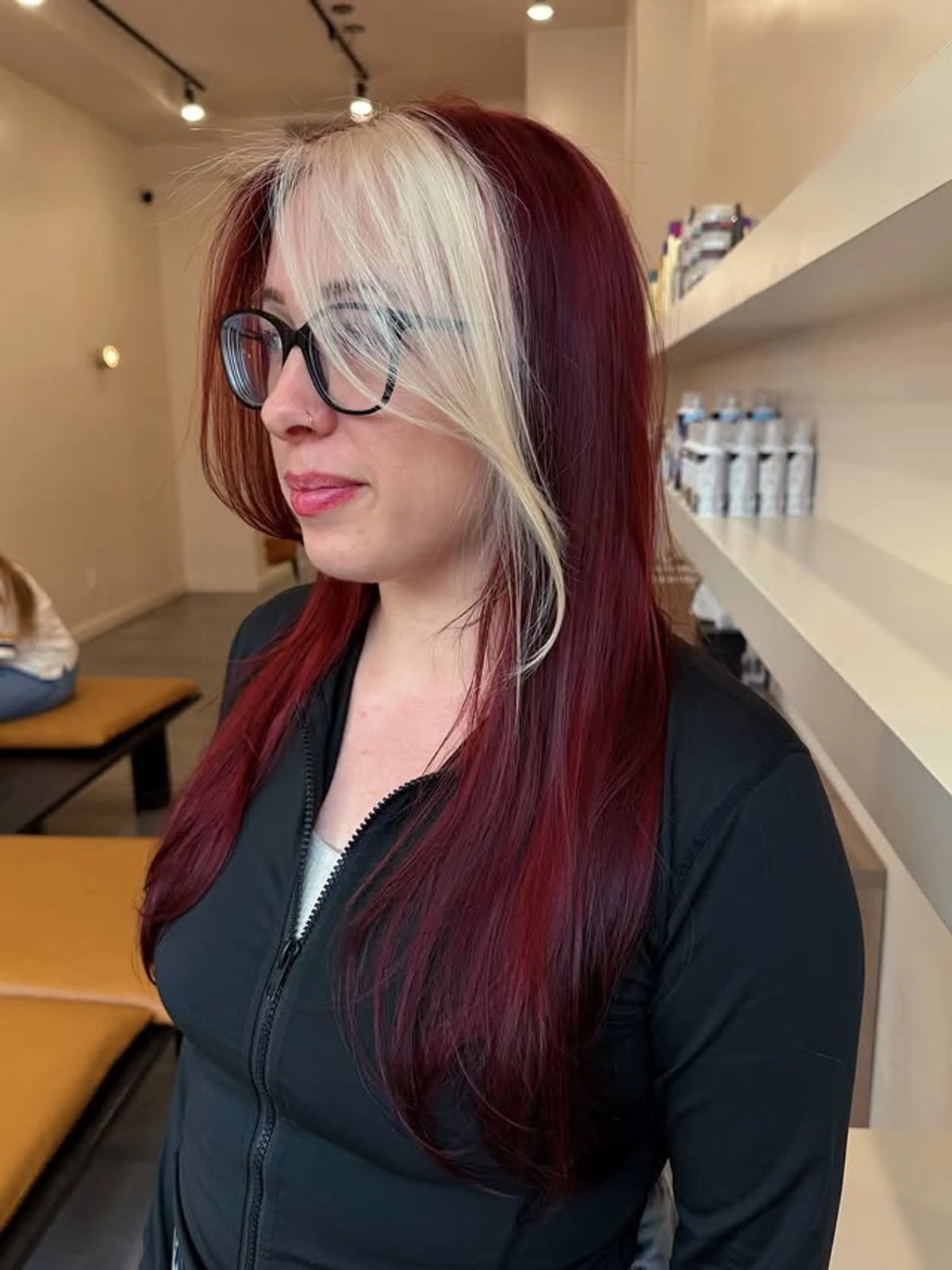
Is a red-and-blonde split easier to maintain than a pastel one? Yes, because the red side hides grow-out better than any light shade can. Fine straight hair cut into a collarbone long bob with curtain bangs shows the divide clearly, and the slight wave at the ends keeps the two colors from looking like two separate wigs. Ask your colorist for: collarbone long bob, curtain bangs, split dye red and blonde. A purple shampoo on the blonde side once a week stops it from warming into brass.
Collarbone Lob Side Part Pink and Red Split
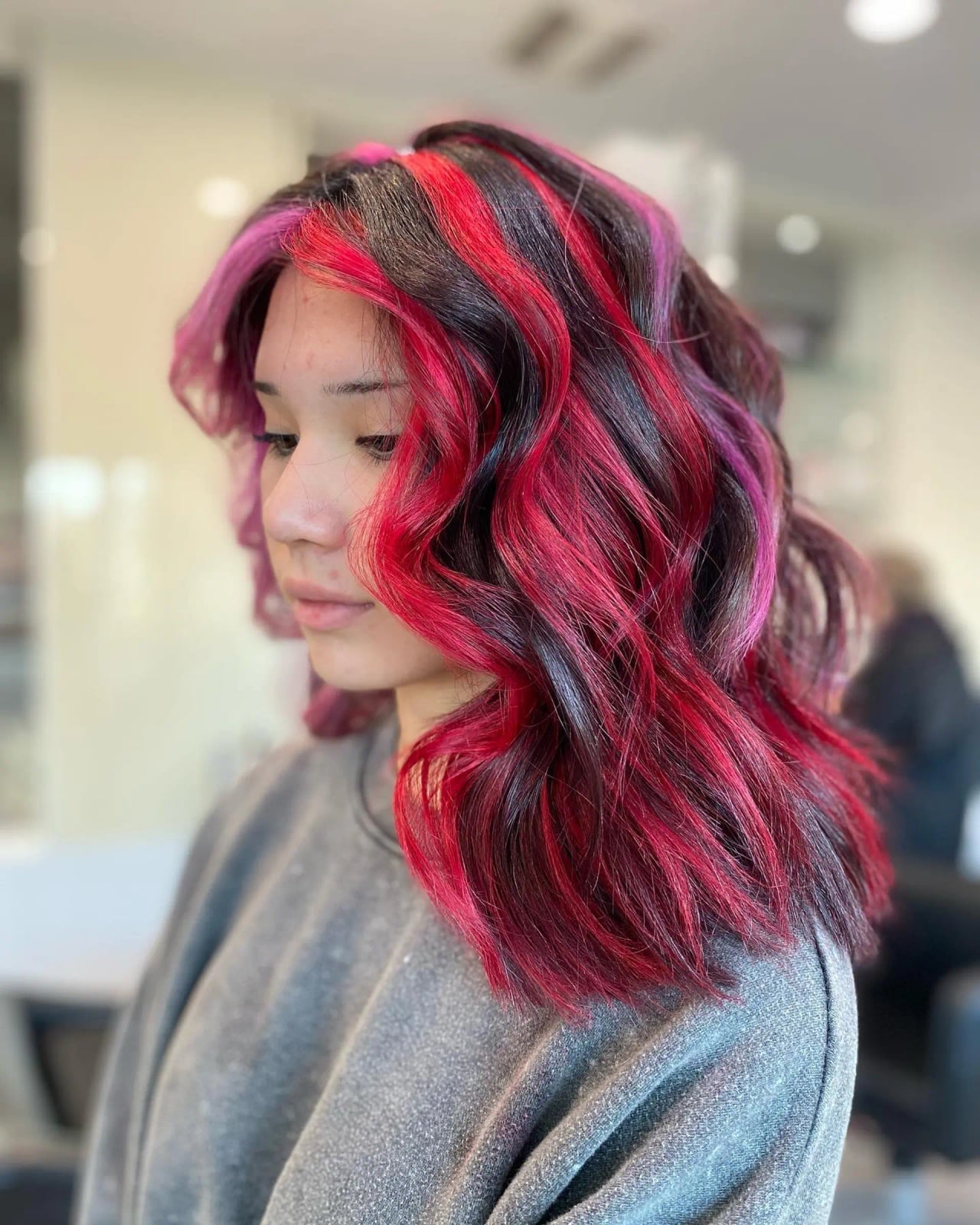
This split dye uses a side part instead of a center line, so one color takes up more visual real estate. Medium density wavy hair cut into a collarbone lob with side-swept bangs is the right canvas because the waves soften the shift between vibrant pink and vibrant red.
Ask your colorist for: collarbone lob, side part, side-swept bangs, split dye pink and red. The dark brown base at the roots makes regrowth look like shadow. Trim the ends every six to eight weeks to keep the bob shape and the color boundary clean.
Collarbone Lob Side Part Pink and Red Split, Close-Up Take
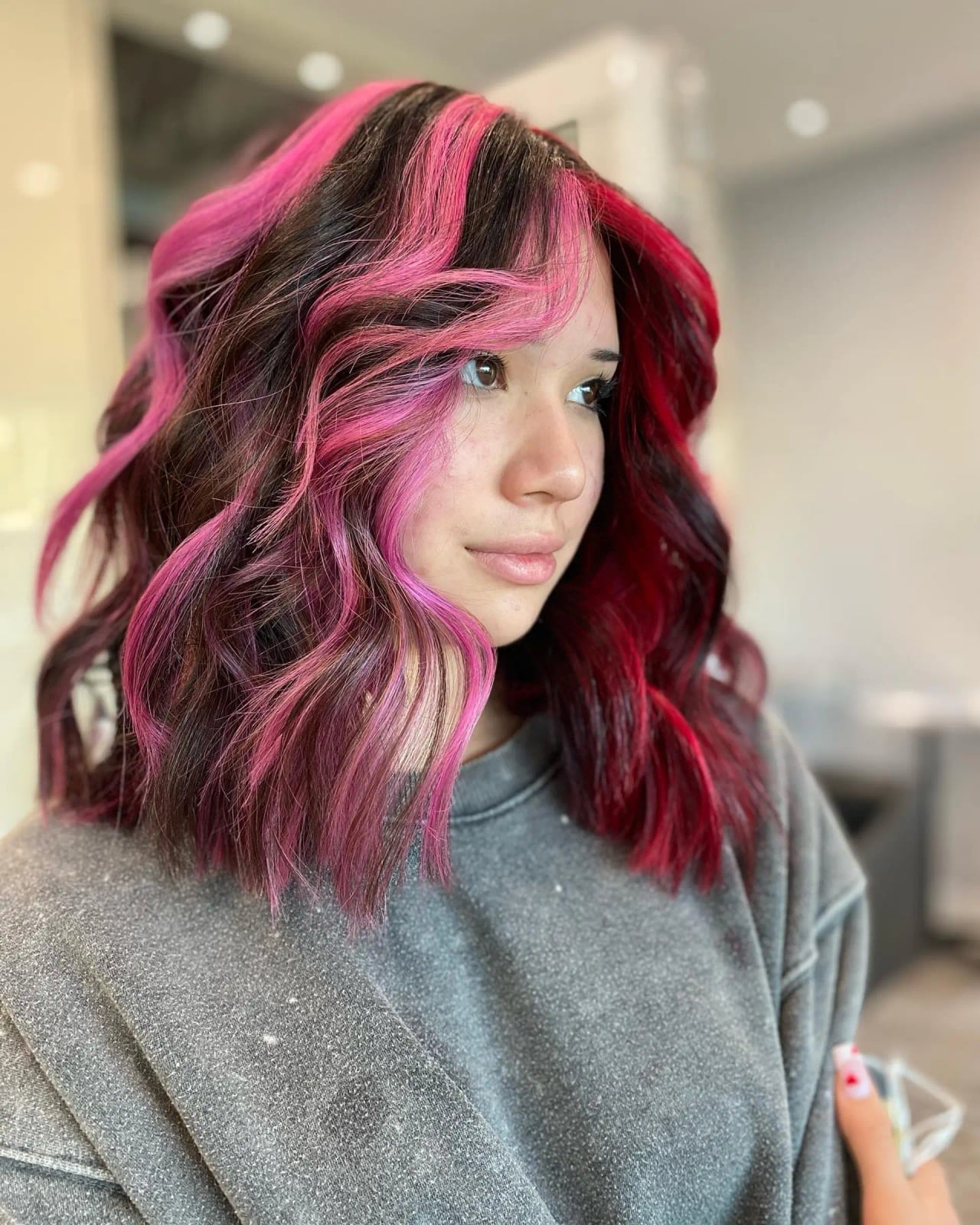
The side part lets the vibrant pink and red split dye each claim their own territory on a dark brown base. This collarbone lob uses side-swept bangs to soften the transition, keeping the wavy, medium-density texture from feeling like two separate hairstyles. Ask your colorist for: collarbone lob, side part, side-swept bangs, split dye pink and red. Bright red and pink tones fade fast, so a color-depositing conditioner every two weeks is your new reality.
Chin Length Bob Blue and Purple Split Dye
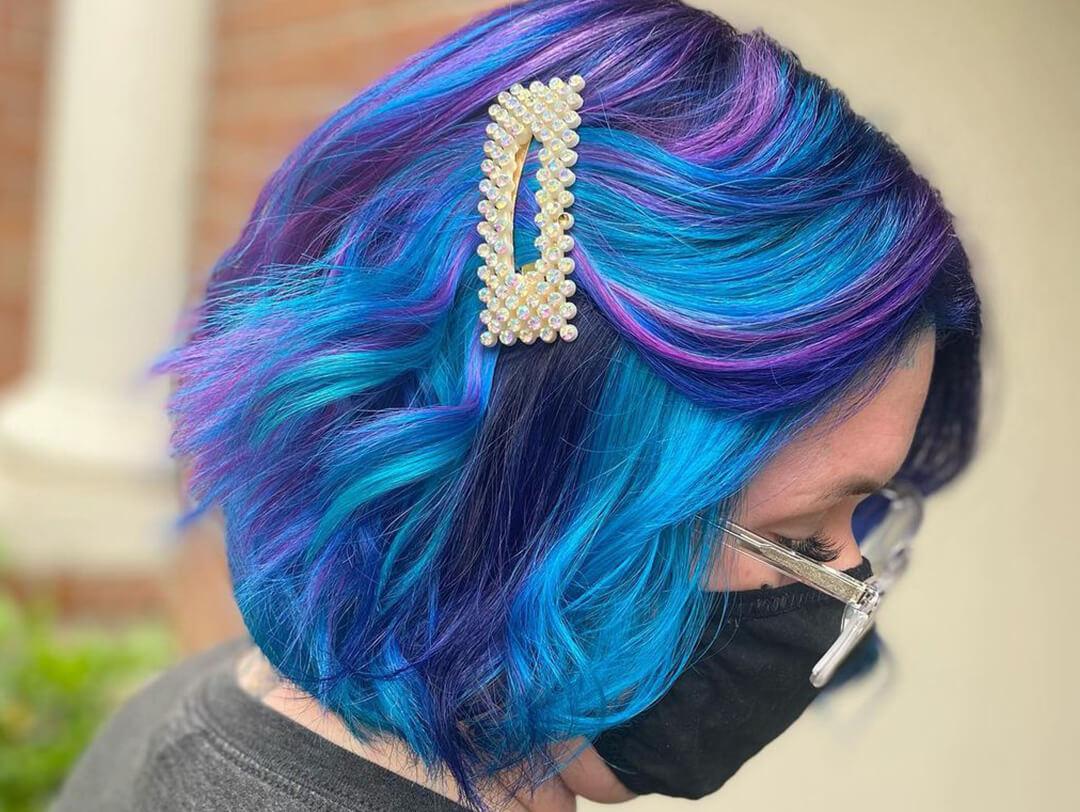
A chin length bob with wispy bangs and a side part lets electric blue and deep purple sit cleanly on each side, and the fine wavy texture keeps the line from feeling harsh. Ask your colorist for: chin length bob, wispy bangs, split dye blue and purple. They will section the hair vertically from the center part and apply each color only to its half.
Shoulder Length Wolf Cut Copper and Ash Gray Split
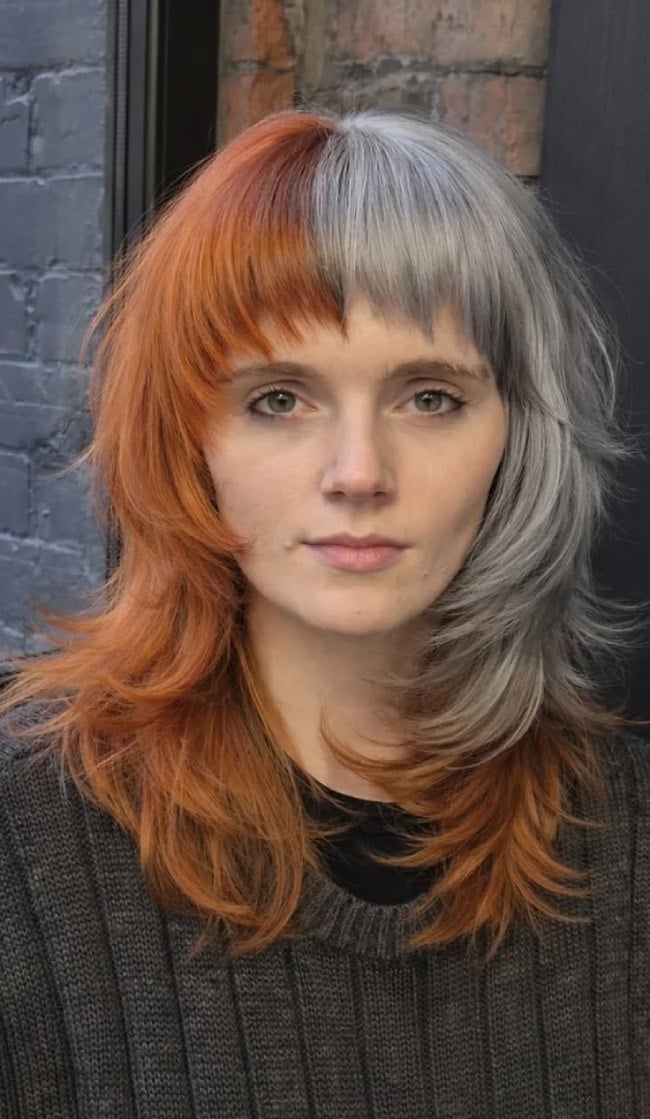
The wolf cut’s choppy layers create a natural blending zone for a split dye that would look rigid on a blunt cut. Here, vibrant copper sits on one side, cool ash gray on the other, with the middle parting holding the line straight down the center. The shoulder-length layers and curtain bangs soften the contrast.
Medium-density wavy texture catches both tones evenly, so neither side overpowers the other. Ask your colorist for: shoulder length wolf cut, curtain bangs, split dye copper and ash gray. The key is keeping each color section separate at the root while letting the layers mix the mid-lengths visually.
Shoulder Length Layers Black and Hot Pink Split
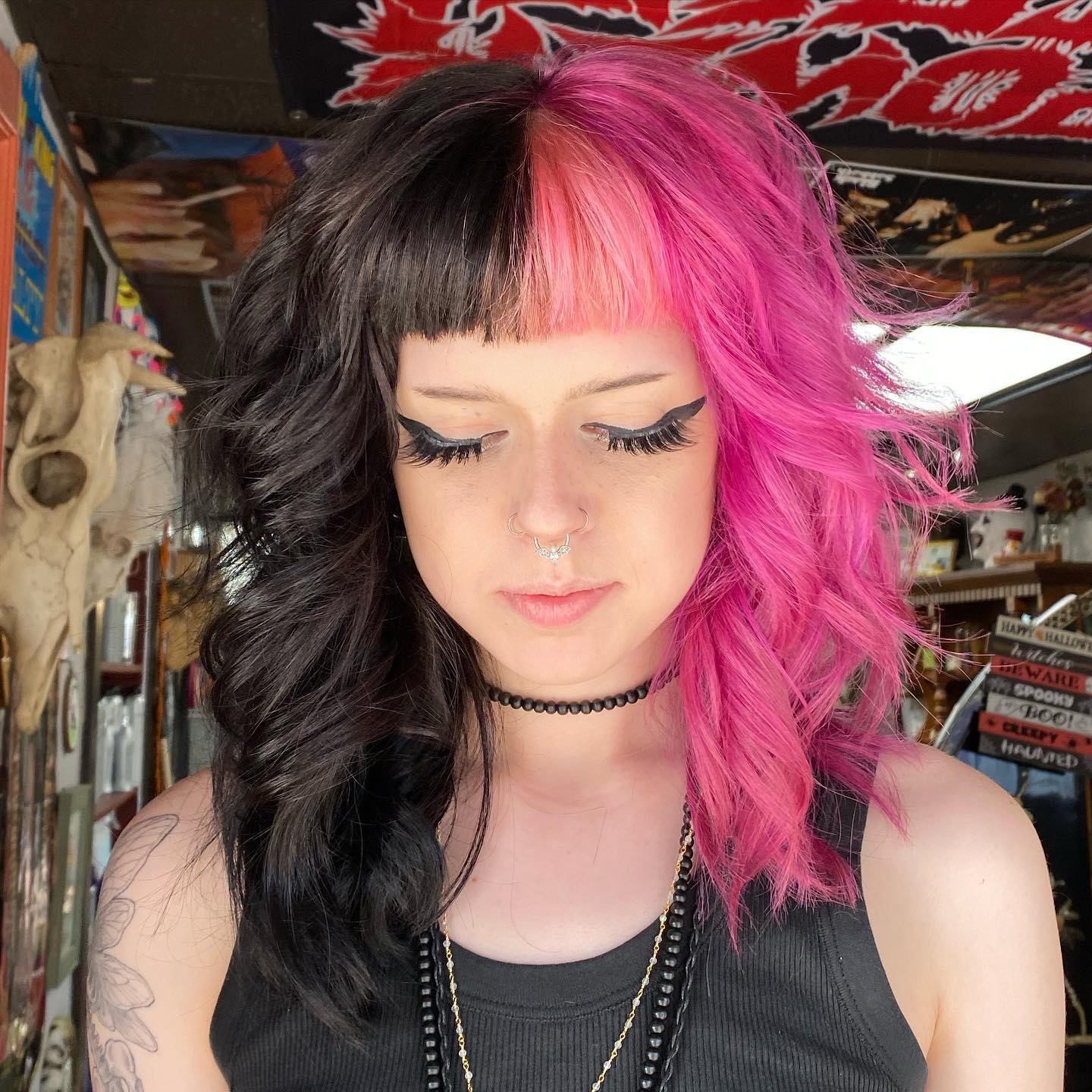
Black and hot pink could look seasonal, but the blunt bangs and middle part keep it wearable year round. This shoulder length cut with long layers gives the pink side enough movement to keep the color from feeling flat, while the deep black side anchors the whole thing. For summer, let the loose waves air dry for a softer effect. In winter, a quick flat iron through the pink side makes the contrast stand out. Ask your colorist for: shoulder length layered hair, blunt bangs, split dye black and hot pink.
Shoulder Length Wolf Cut Neon Orange and Yellow

Can a split dye this bright survive daily life? Yes, with a few ground rules. The shaggy layers and full bangs on this shoulder-length wolf cut create texture that masks regrowth, which buys you time between touch-ups. The wavy, medium-density hair holds the neon orange and neon yellow well, but both colors need a sulfate-free shampoo to stay vivid past three weeks. Ask your colorist for: shoulder length wolf cut, full bangs, split dye neon orange and neon yellow. The honest downside: these shades fade faster than any other tone, so expect a salon visit every four weeks.
Mid-Back Layers Purple and Lime Green Split Dye
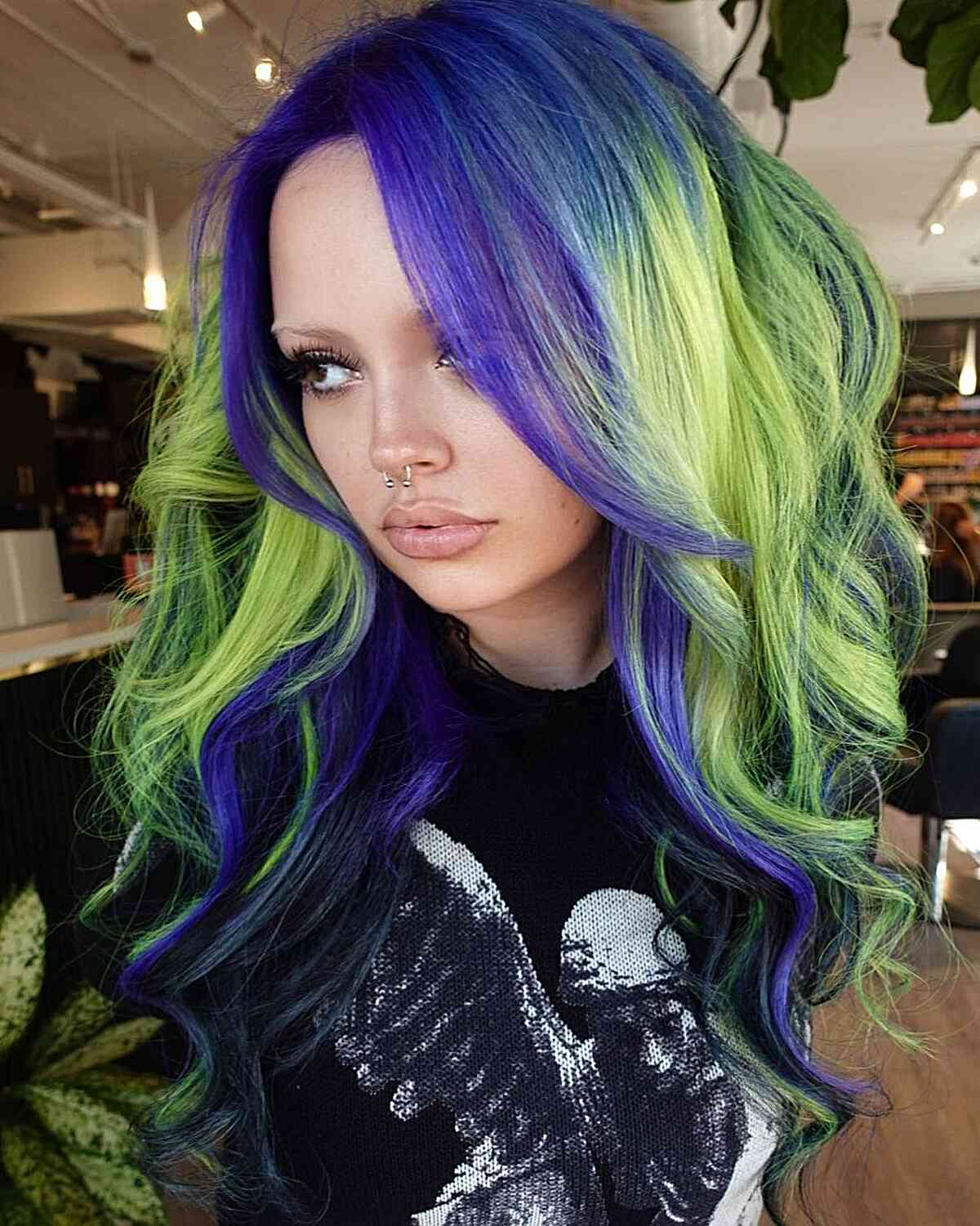
Purple and lime green sit on opposite sides of the color wheel, which is exactly why this split works. The contrast is high, the finish is glossy, and thick wavy hair gives each shade enough surface area to register as its own block instead of a muddy blend. Side-swept bangs break the strict vertical line, so the effect looks deliberate and not like a middle-part afterthought. Ask your colorist for: mid-back layers, side-swept bangs, split dye purple and lime green.
Compared to a pastel or muted pairing, these saturated tones hold their intensity longer before fading into a washed-out version of themselves. A smoothing serum on the waves keeps the shine even, and the side-swept bangs need a trim every four to six weeks to maintain the shape. If your texture is fine or your density is low, the weight of two vivid colors on long layers can feel like more maintenance than it is, thick hair carries the look without effort.
Collarbone Layers Pink and Blue Split Dye
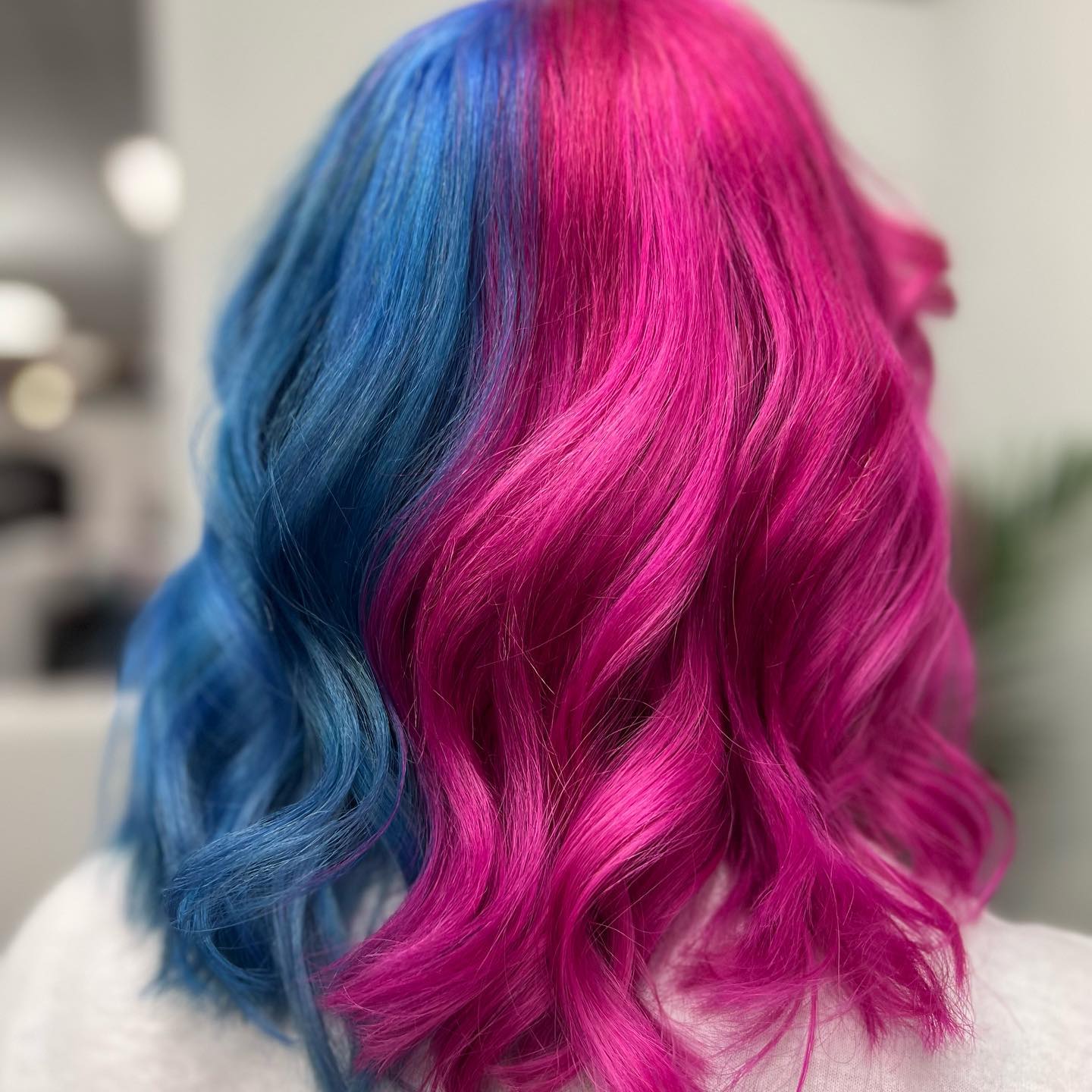
Pink on one side, blue on the other, and a middle part that lets neither color claim dominance. On collarbone-length layers with medium-density wavy texture, the split lands at a point where the hair has enough weight to hang cleanly but enough movement to show the shift when you turn your head. Ask your colorist for: collarbone layers, split dye pink and blue.
This combination works best on hair that holds a wave without product overload. The loose curl keeps the two tones from settling into flat, blocky strips. Anyone with a round face benefits from the vertical line the middle part creates, while those with a square jaw might find the horizontal emphasis of the collarbone length less forgiving. A texturizing spray adds definition without weighing down the medium texture.
Collarbone Lob Pink and Red Split Dye
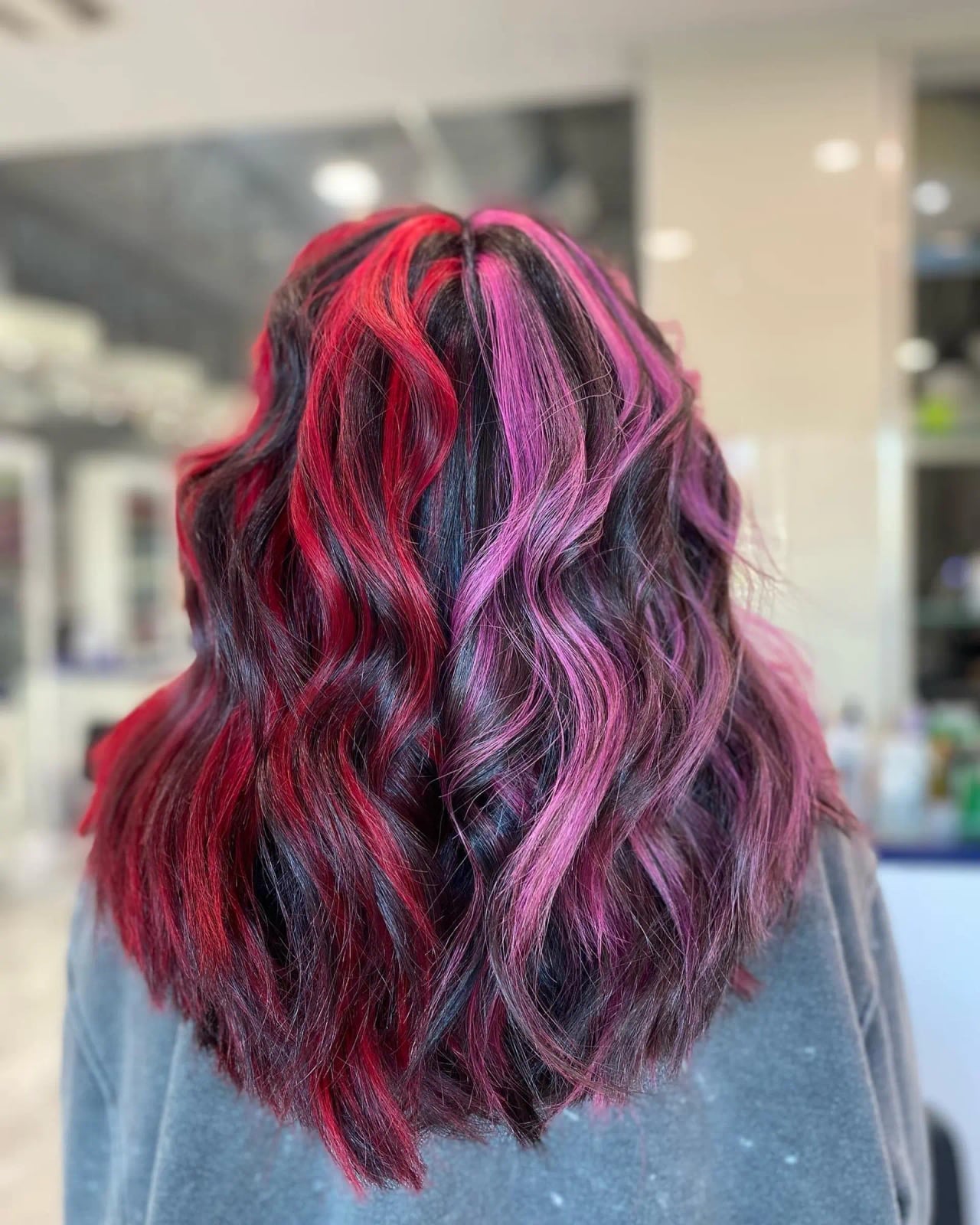
Can you do this at home? Technically yes, but the dark brown base makes it a gamble. Lifting that base enough for pink and red to stay vibrant requires bleach, and two distinct shades mean two separate sections of lightener. A salon handles the sectioning and the timing so the transition at the middle part stays sharp. Ask your colorist for: collarbone lob, split dye pink and red on dark brown. The lob length keeps the process manageable, less hair to process than mid-back layers, and the wavy texture helps camouflage any slight unevenness in the color application. Expect to sit for a couple of hours, and plan on a gloss treatment every six to eight weeks to keep the pink and red from turning brassy against the dark base.
Collarbone Wavy Bob Teal Streaks
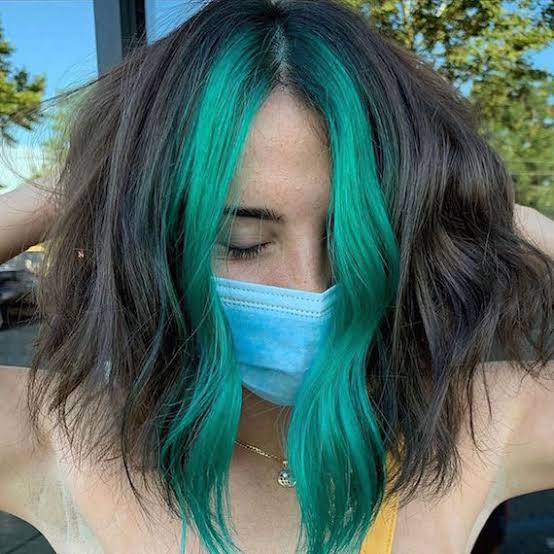
Teal streaks on a dark brown base are subtle from across the room and obvious up close, which is the entire appeal. The collarbone-length wavy bob with curtain bangs gives the color a frame: the streaks sit within the waves without taking over the whole silhouette. Ask your colorist for: collarbone wavy bob, curtain bangs, dark brown with teal streaks. Teal fades faster than most cool tones, especially on wavy hair where the cuticle is more open. A color-depositing conditioner every other wash extends the life of the streaks, and a trim every six to eight weeks keeps the bob shape tight enough that faded ends do not drag the whole look down. Skip this if you cannot commit to a toning routine. The teal will shift to a murky green within three weeks without it.
Mid-Back Layers Purple and Green Split Dye, Close-Up Take
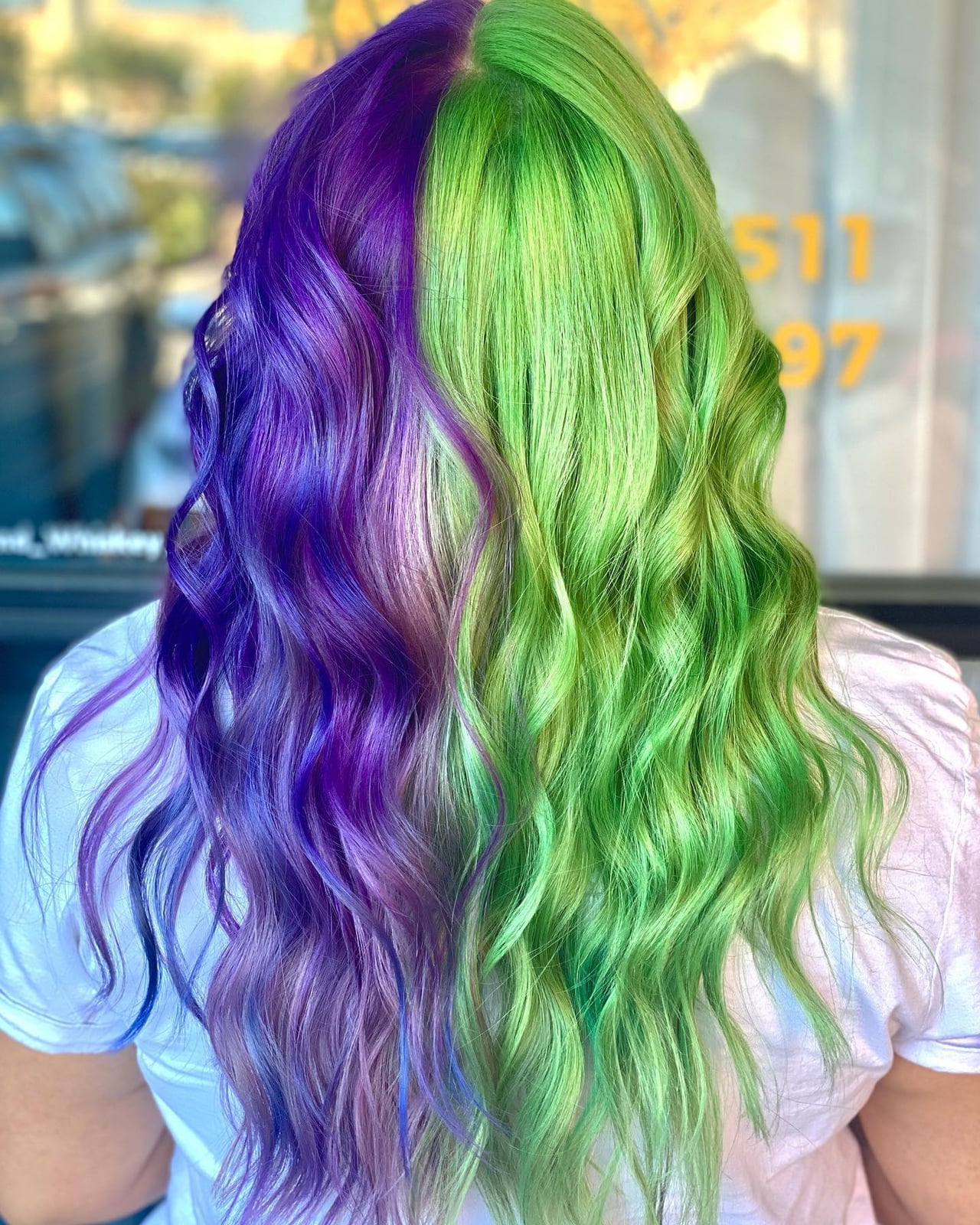
A middle part and loose waves are the low-effort styling formula for a split dye this long. On thick, wavy hair at mid-back length, the purple and green fall in separate sheets, so the color change is visible from any angle, not just when the hair is tucked behind an ear. Ask your colorist for: mid-back layers, split dye purple and green.
The layers keep the length from feeling heavy, and the wave pattern prevents the two colors from settling into a flat, two-dimensional stripe. A texture spray on damp hair enhances the natural wave without adding crunch, and the weight of the hair pulls the waves into a soft S-shape as it dries. A trim every eight to ten weeks keeps the ends healthy enough to reflect light evenly, which matters more with vivid colors than with natural shades. The thick texture also means the color lasts longer between touch-ups, since the cuticle is more resilient.
Mid-Back Layers Purple and Green Split Dye Braid, Everyday Version
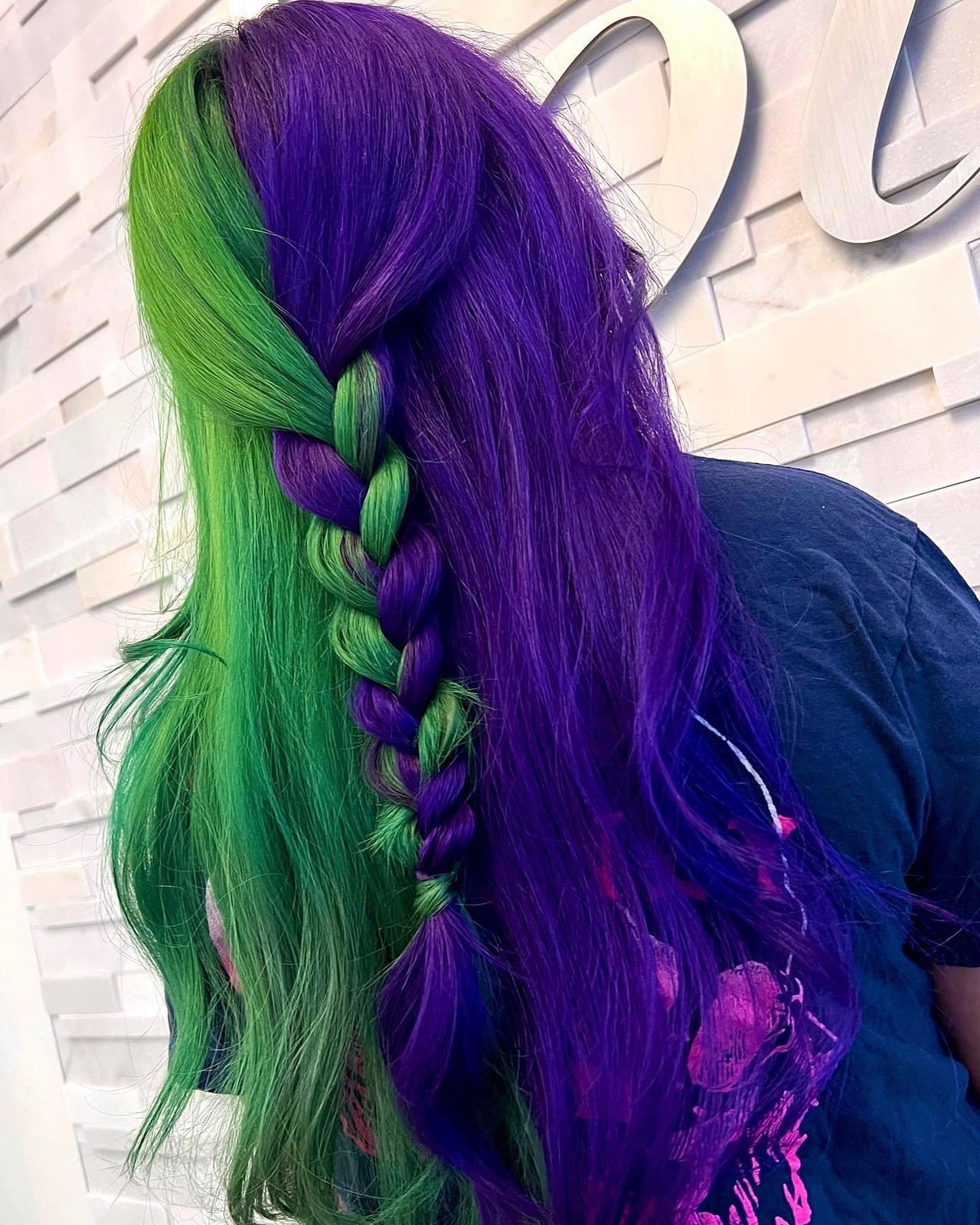
Wondering how to wear a split dye without hiding one side? Braid it down the center, letting both the vibrant purple and bright green sides fall into the weave. This look works best on thick, wavy hair with mid-back layers, since the braid needs enough weight and texture to hold its shape.
Ask your colorist for: mid-back layers, split dye purple and green with braid. To style, start with loose waves on the unbraided sections, then braid a thick section from the crown to the nape. Secure the end with a clear elastic, and pull a few face-framing pieces loose. A finishing spray keeps flyaways down and the braid tidy for the day.
Mid-Back Length Straight Hair Purple and Pink Split
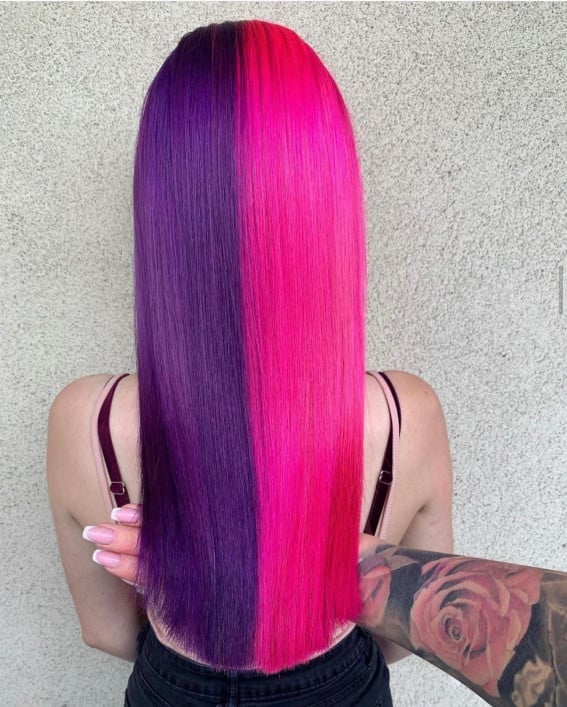
For a cleaner take on the trend, skip the waves and go poker straight. A sharp middle part divides vivid purple from bright hot pink, each half falling flat and sleek to mid-back. The technique relies on precise sectioning at the crown, so the color line stays razor-straight from root to tip.
Ask your colorist for: mid-back straight hair, split dye purple and hot pink. This suits thick, straight hair best, because the weight of the strands keeps the part from drifting. Use a flat iron to seal the sleekness, and plan on root touch-ups every four to six weeks to keep the split sharp.
Mid-Back Length Layers Orange, Yellow, and Brown Split
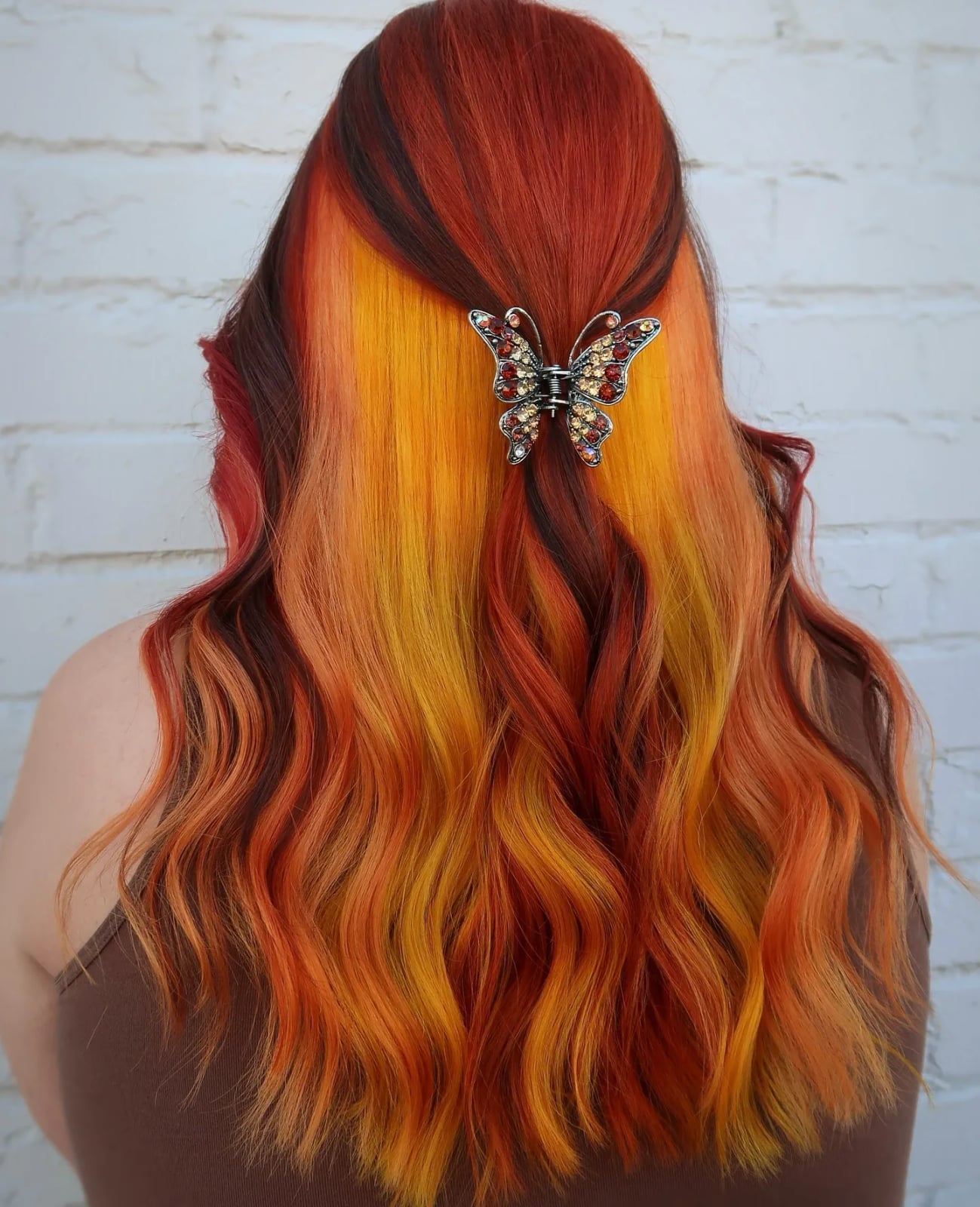
The fiery orange and yellow halves against dark brown read like autumn leaves, which makes this split dye a natural fit for fall. The loose waves add movement, so the color shifts as you turn your head, and the mid-back length keeps the drama going.
Ask your colorist for: mid-back layers, split dye orange, yellow, dark brown. Thick, wavy hair holds the waves well, and the layers let the bright sections catch light. For styling, a curl-defining cream on damp hair, then air-dry or diffuse to keep the wave pattern soft. Trim the layers every eight to ten weeks to maintain the shape.
Mid-Back Layers Black and Neon Green Split
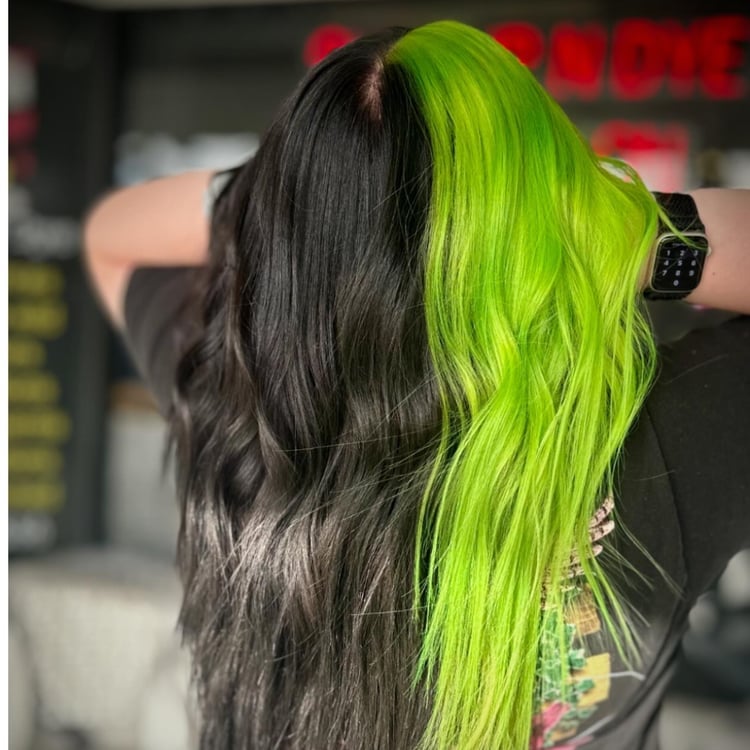
Neon green on black is high contrast, and the wavy, thick texture softens the shock. The curtain bangs frame the face while the long layers keep the split visible from the back. But neon green fades fast, especially on dark bases, so expect to refresh the color every few washes.
Ask your colorist for: mid-back long layers, curtain bangs, split dye black and neon green. Use a texturizing spray to define the waves without weighing them down. The bangs need a trim every four to six weeks, and the green will need a color-depositing conditioner to stay vibrant between salon visits.
Mid-Back Layers Red Base With Rainbow Streaks
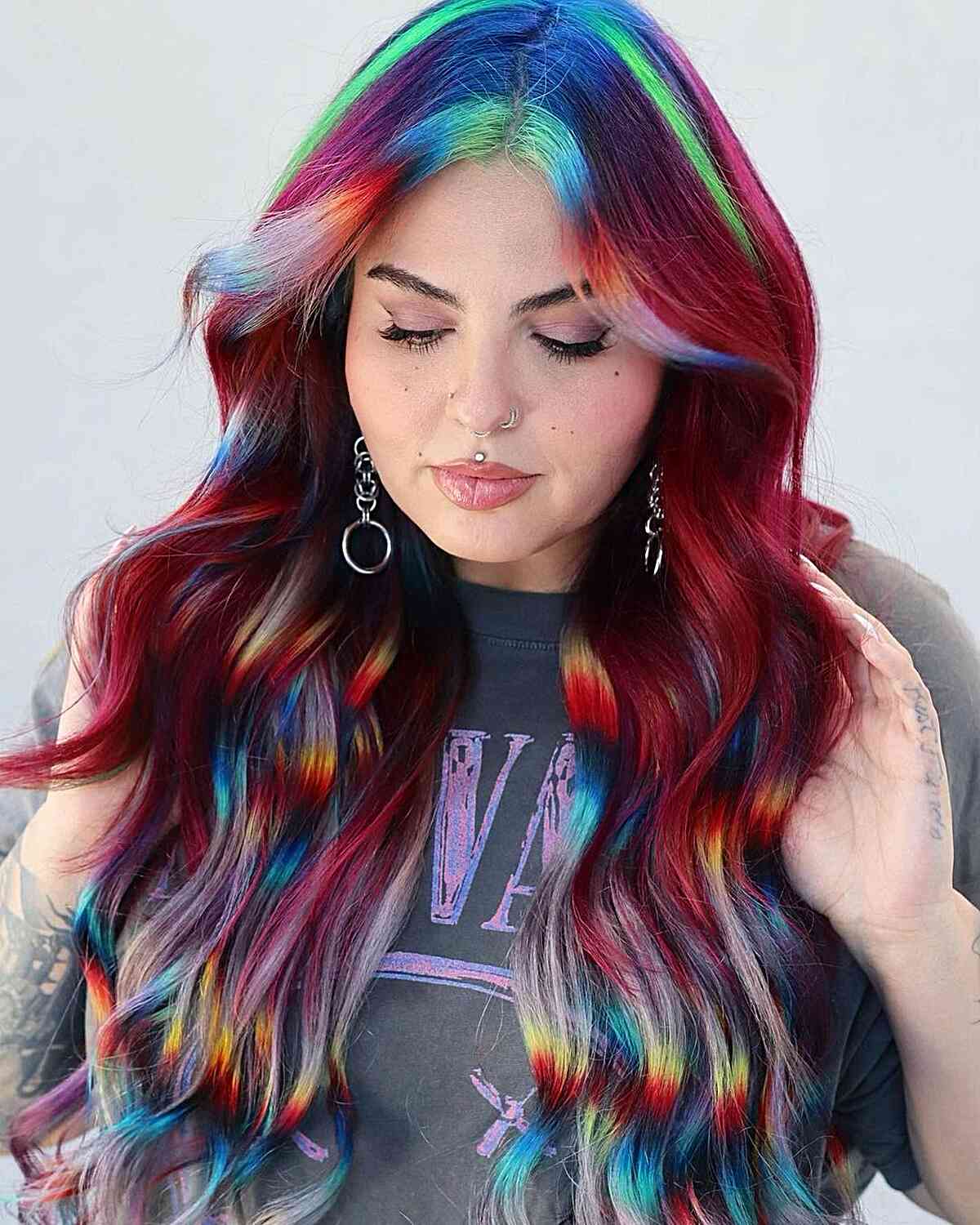
Want rainbow color without a full split? Ask for a deep red base with vibrant rainbow streaks woven through the mid-back layers. The curtain bangs and middle part let the streaks peek out around the face, while the wavy blowout adds volume and a glossy finish.
Ask your colorist for: mid-back layers, curtain bangs, red base with rainbow streaks. Specify that you want the streaks concentrated around the face and ends, with softer color toward the roots for a lived-in grow-out. Use a heat protectant before styling, and trim the bangs every four to six weeks to keep them soft.
Mid-Back Layers Side Part Purple, Pink, and Blue Streaks
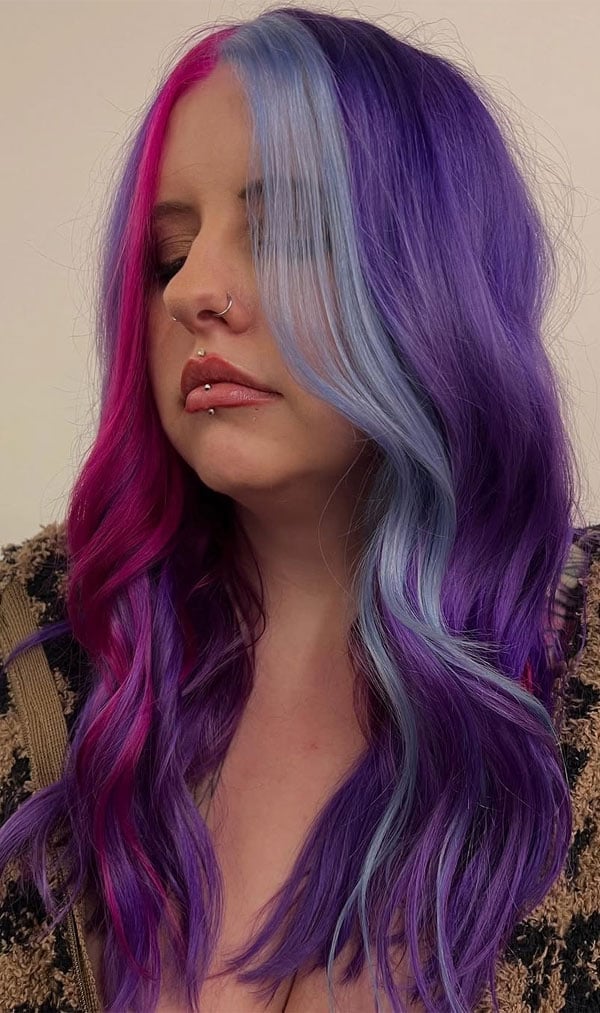
A single-color split dye is a commitment. This version takes the same side-part premise and runs it through three distinct streaks of purple, hot pink, and ice blue, all woven into mid-back layers with side-swept bangs. The soft wave pattern keeps the multi-tonal effect from reading as chaotic, while the side part lets each color land on its own section of the hairline.
The look suits medium-density wavy hair that already has some length to work with. Ask your colorist for: mid-back layers, side swept bangs, side part, split dye purple, pink, blue. A texturizing spray adds definition to the waves without flattening the color separation. Expect to trim the bangs every four to six weeks to keep the side sweep precise.
Final Thoughts
For a high-contrast split, ensure your stylist has experience with precise color blocking and color removal. For softer splits, discuss blending techniques like a root shadow or a few face-framing ribbons where the two colors meet.
- Maintain color vibrancy with sulfate-free shampoos and cool water rinses.
- Use color-depositing conditioners to refresh tones between salon visits.
- Deep condition weekly to combat dryness from bleaching.
- Schedule touch-ups every 6-8 weeks to keep the split crisp.
Embrace the duality of split dye for a truly unique look.
