

Game day hair needs to hold up through warm-ups, sprints, and the final whistle. The common thread in practical cuts right now is soft face-framing layers and curtain bangs that tuck behind the ears easily, paired with lived-in color that doesn’t show a harsh grow-out line at week six.
These 20 ideas for Soccer Hair range from a two-minute high ponytail to a chin-length bob that air-dries in the car. If your fine texture flattens under a hat or your fringe refuses to stay parted, this collection has a fix that doesn’t mean more time in front of the mirror.
Mid-Back Wavy Ponytail With Braid
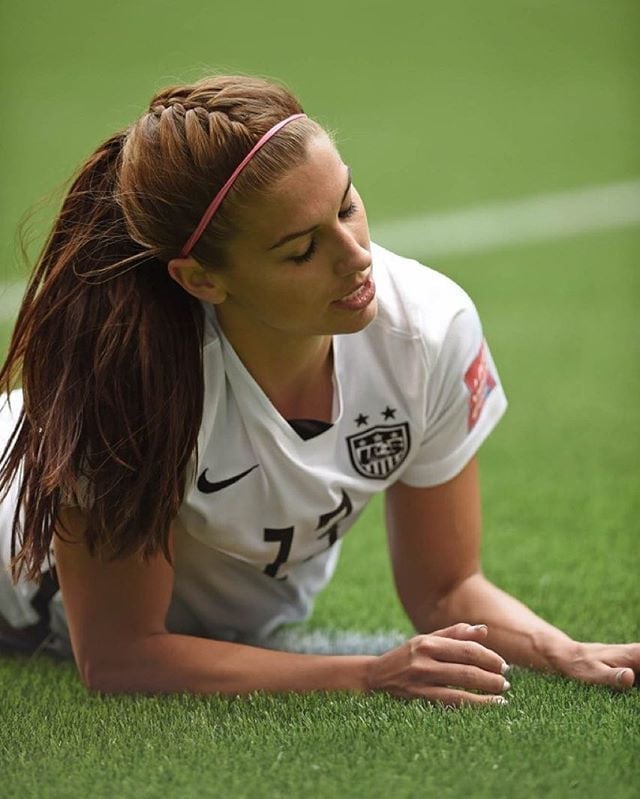
The braided ponytail is the soccer hair equivalent of a Swiss army knife: it keeps thick, wavy hair out of your face and adds a little visual interest while you’re at it. This version works best on hair that actually has some weight to it, since fine strands tend to slip out of the braid and leave you with a sad, straggly tail by halftime. Mid-back length gives the braid enough room to show off its weave, and a side part keeps the whole thing from feeling like a gym class flashback. Ask your stylist for: high ponytail with a braid, side part. To get the sleek base, brush thoroughly before pulling it up, and keep layers trimmed every eight weeks so the braid doesn’t develop a frayed end.
If your hair is wavy and thick, this is one of the most reliable ways to get it off your neck without resorting to a bun that gives you a headache by the second half. The pink headband does double duty, holding back the shorter pieces around your temples that are too short to reach the ponytail. It’s a style that looks intentional on the field and still reads as put-together when you’re grabbing coffee after the game.
Vibrant Pink Textured Pixie Cut
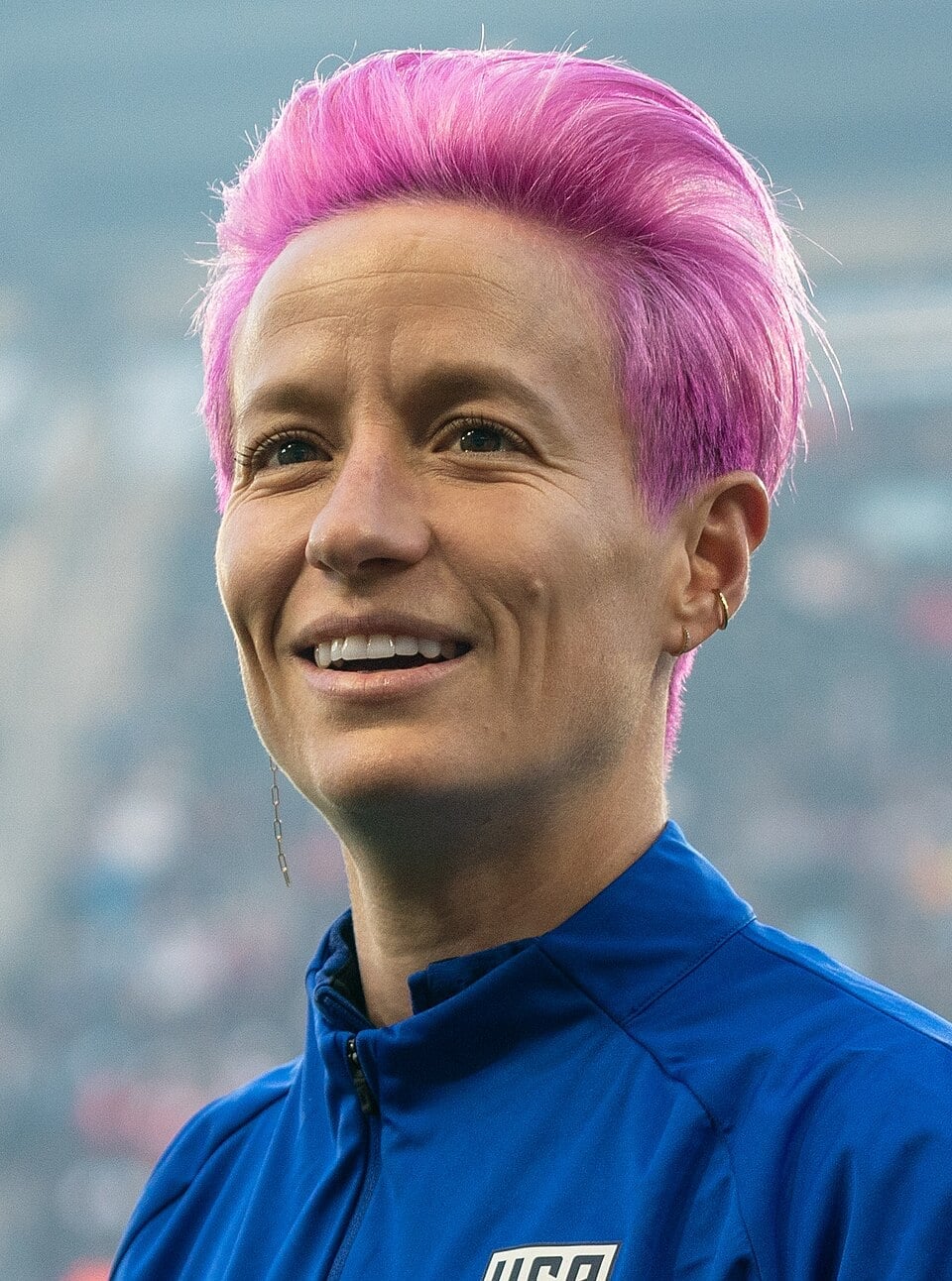
How does a vibrant pink pixie cut stay looking fresh instead of fading into a washed-out coral? It starts with a pre-lightener that lifts fine hair enough for the pink to read as vivid rather than muddy, then a direct dye that deposits color without opening the cuticle too much. The short pixie shape does most of the work: textured styling gives fine hair the illusion of density, and a short fringe swept to the side keeps the face clear for running without the constant tuck-and-resettle dance longer hair demands. Ask your stylist for: short pixie with textured fringe, vibrant pink color. The cut needs a salon visit every four to six weeks to hold its shape, and the pink will need a refresh at the same rhythm if you want it to stay loud instead of pastel.
Short Purple Textured Crop

The short purple crop is a bold move on fine, straight hair, and the trade-off is honest: the vibrant shade looks incredible when it’s fresh, but it fades faster than most colors on this texture, often showing a softer, chalkier tone within three weeks. The ear-length cut with short bangs styled forward keeps the style easy to manage, and the middle part gives it a modern, almost architectural shape. Ask your stylist for: short textured crop, short bangs forward, purple color. A texturizing spray helps define the crop’s shape without weighing down fine strands, and a trim every four to six weeks is required to avoid the grown-out mullet phase. It’s a practical choice for someone who wants to spend zero time on styling and a lot of time on the pitch.
Sleek Shoulder Length Ponytail
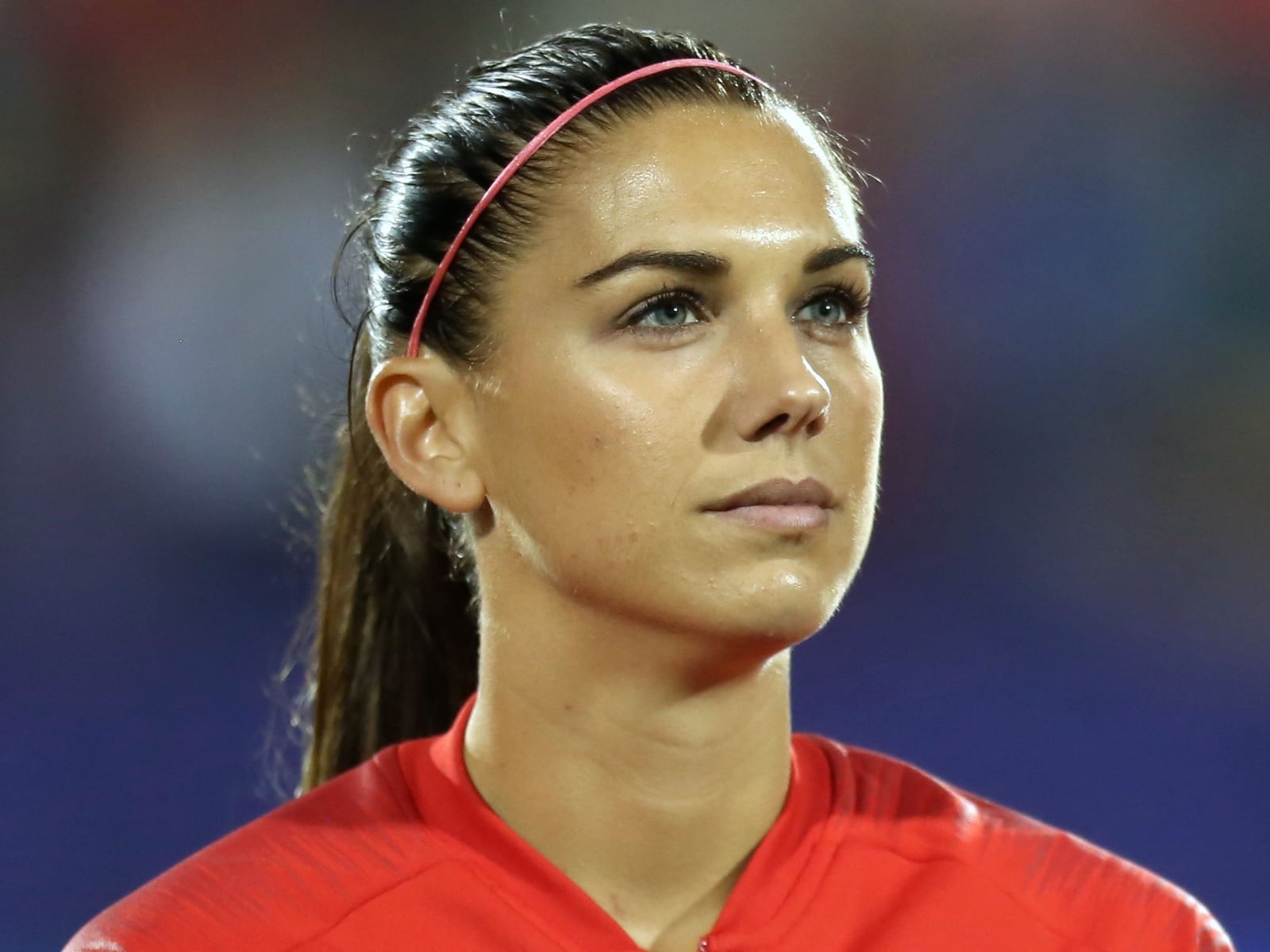
A sleek shoulder length ponytail looks like a twenty minute style, but the whole trick is a smoothing serum and a brush with firm bristles. Start with damp, straight hair, apply the serum from mid-length to ends, and pull it back into a low ponytail at the nape. A side part keeps the front from looking too severe, and the pink headband pins down any shorter pieces that want to escape. Ask your stylist for: sleek low ponytail, side part, pink headband. This style is genuinely DIY: it takes about five minutes once you have done it a few times, and it holds through a full match without needing a touch-up. A trim every six to eight weeks keeps the ends clean, since shoulder length tends to show split ends faster than longer styles.
Blonde Collarbone Lob With Face Framing Layers
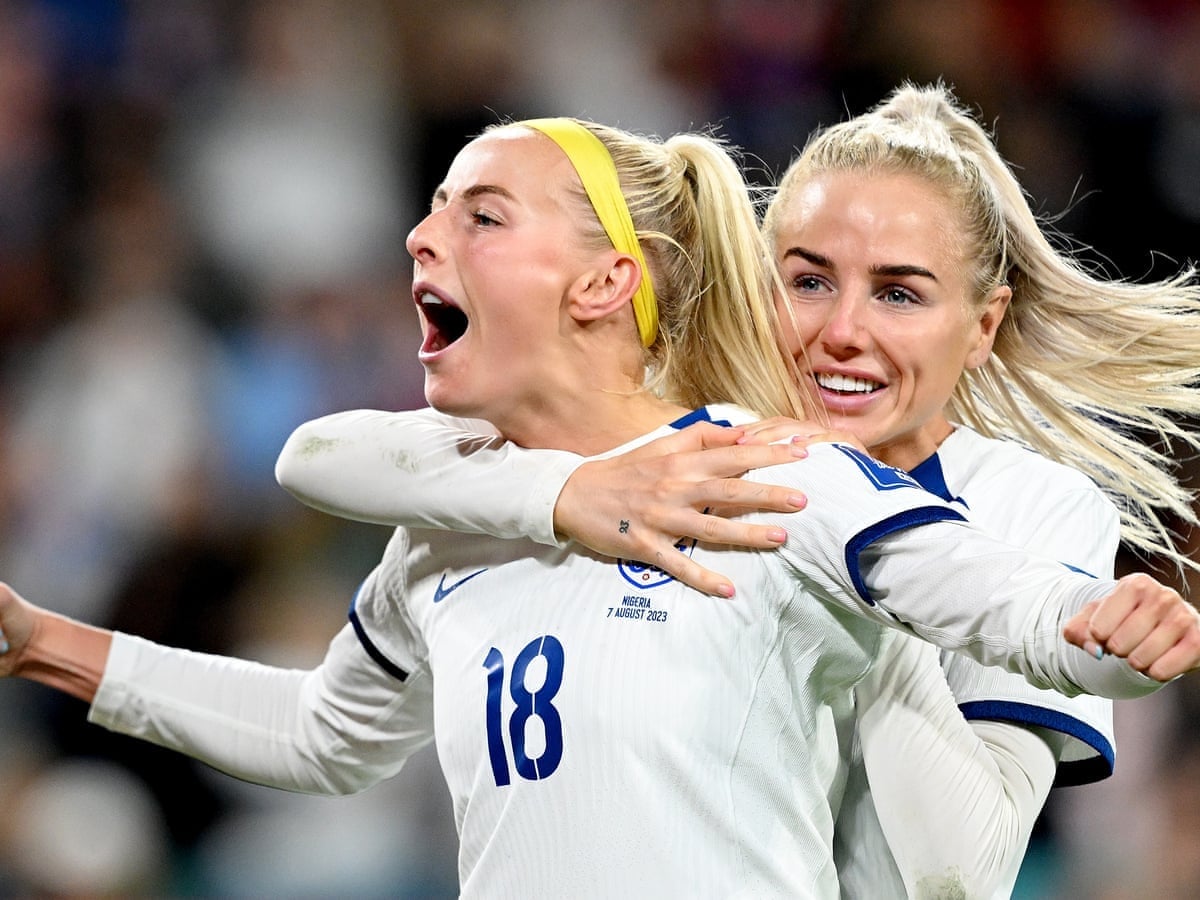
Compared to a blunt collarbone cut, the face-framing layers in this blonde lob are the difference between hair that sits like a curtain and hair that actually moves with you. The layers start around the cheekbone and soften the line, so the style reads as lighter on fine, wavy hair without sacrificing the collarbone length that makes it versatile. A side parting adds volume at the root, which is a small mercy when your texture is on the fine side. Ask your stylist for: collarbone length lob, soft face-framing layers, side part. The grow-out is friendlier than a blunt cut, since the layers blend into the length rather than creating a harsh line, but you’ll still want a trim every six to eight weeks to keep the shape from losing its bounce. A volumizing spray at the roots before blow-drying gives it the lift the photo shows, and it air-dries decently if you’re in a rush.
Mid-Back Blonde Braids With Pink Highlights
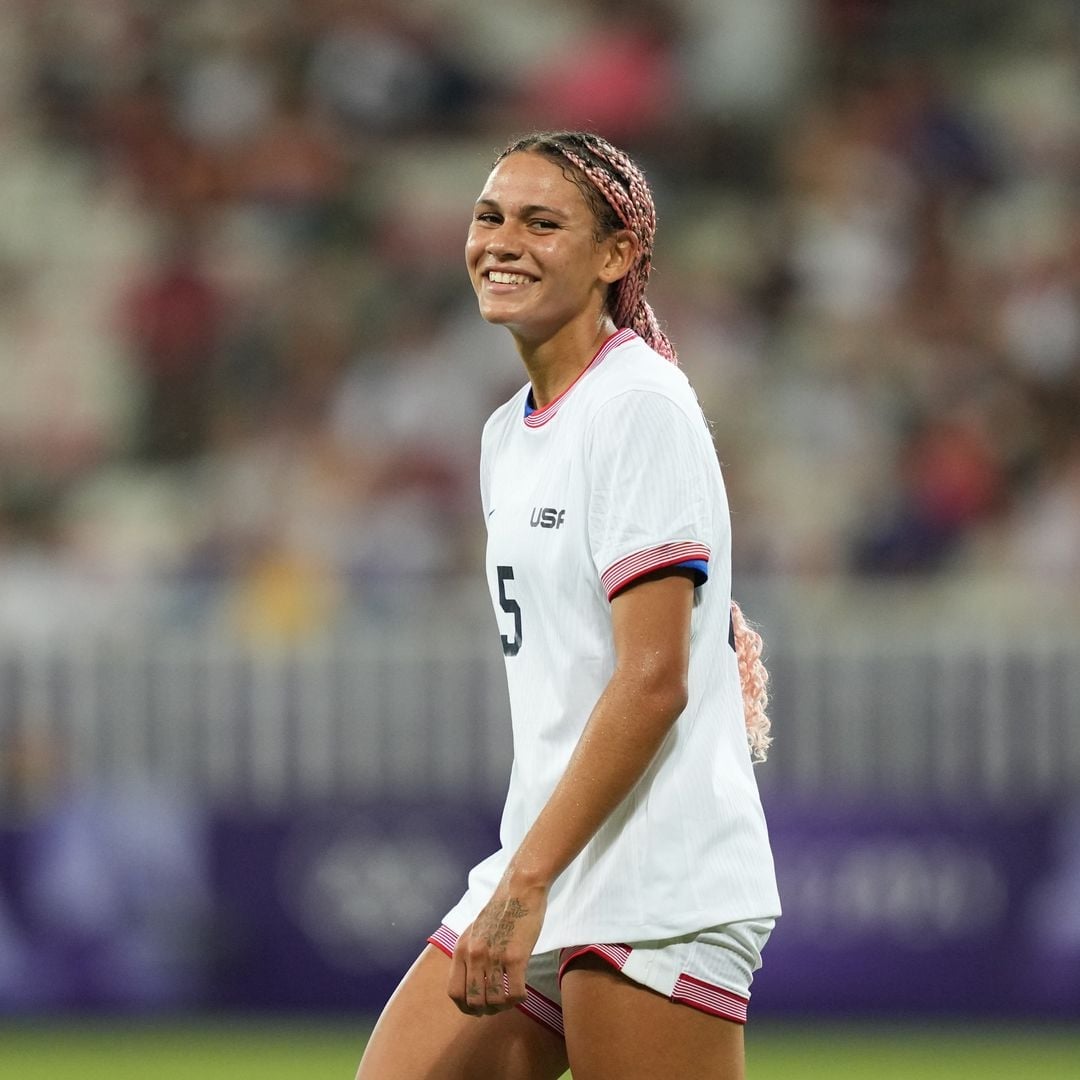
Wondering how to make a soccer season feel less like a grind and more like an event? Braiding thick, wavy blonde hair into mid-back plaits with subtle pink highlights turns warm-weather training into a festival of color that actually holds up. The side parting keeps the braids from pulling at the scalp, and the wavy texture gives the style natural volume instead of a flat, sleeker look. Ask your colorist for: mid-back braids, pink highlights, side part. The pink appears as a soft glow at the roots, not a neon stripe, which means it works for a casual brunch after a morning match just as well as it does on the pitch.
Blonde braids with pink highlights land best in late spring, when the lighter shade feels like a response to longer days. The style is a salon project, so budget a few hours for the braiding alone. It offers a low-maintenance week: no daily styling, no fussing with flyaways, just a quick re-braid at night to keep the parts clean. Touch up the pink every eight to ten weeks if you want the color to stay that fresh, or let it fade into a softer pastel as the season winds down.
Shoulder Length Thick Curly Hair
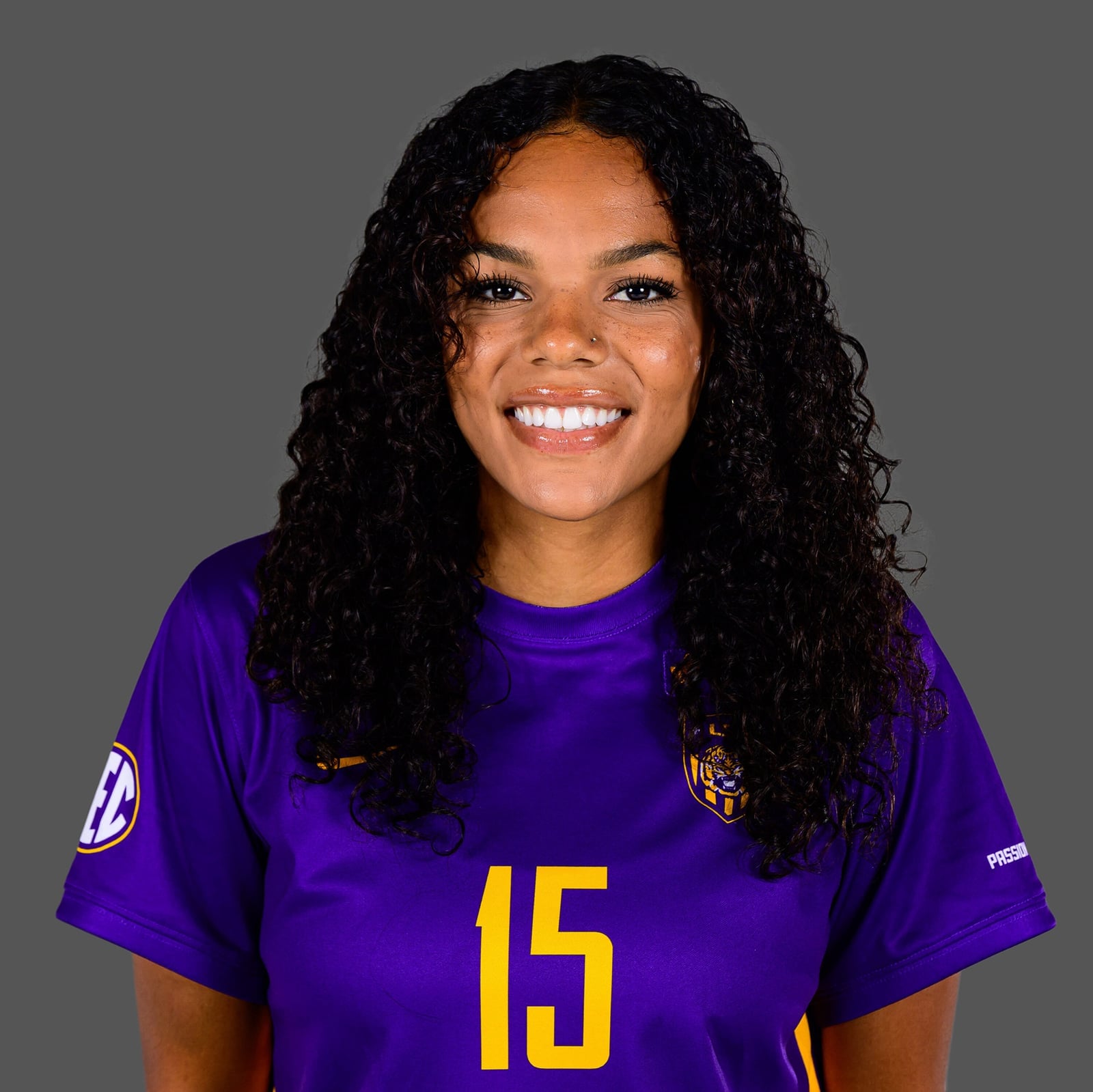
The genius of this cut is that it gives thick, curly hair a shape without fighting its natural impulse to expand. Long layers carved through shoulder-length dark brown strands let each curl settle where it wants, giving the style a deliberate look without bulk. The middle parting adds symmetry, which balances a round face by drawing the eye down the center. Ask your stylist for: shoulder length loose waves, long layers, middle part. A curl cream applied to damp hair, then air drying, is all it takes to get the texture to behave. A trim every eight to ten weeks keeps the layers from growing into a triangle, and the weight at the ends stops the curls from frizzing into a cloud.
Dark Brown Box Braids Top Knot
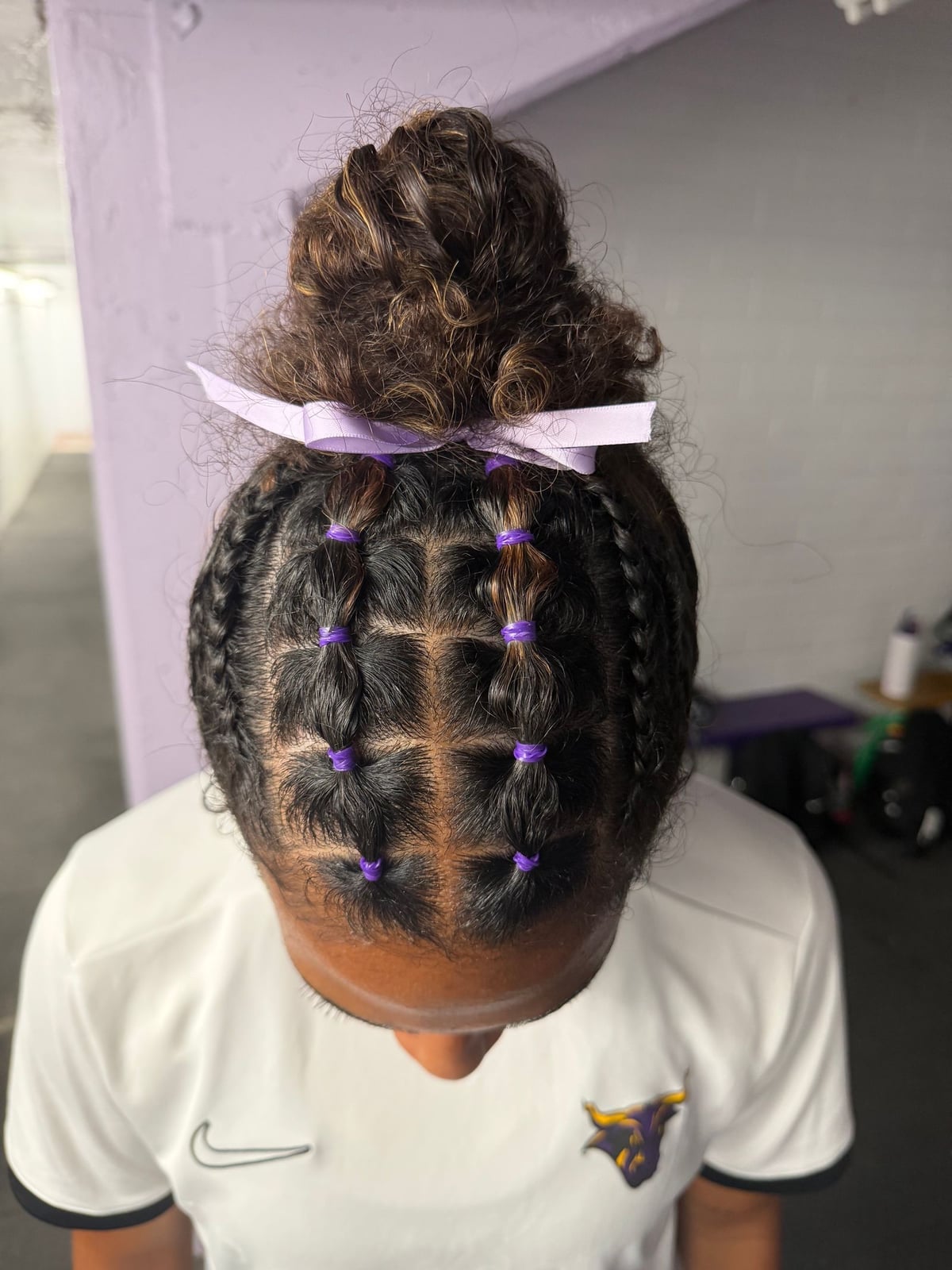
Box braids arranged in a geometric grid pattern are a feat of precision: each parting is a straight line, and the density of the dark brown strands makes the whole thing look like architecture. Gathering them into a high bun with small purple elastics and a lavender bow adds a playful note to what is otherwise a serious protective style. The mid-back length of the braids gives the bun real weight, so it sits high on the crown instead of sliding down. Ask your stylist for: high top knot bun with box braids. The grid pattern requires a steady hand and a good eye, which is why this is a salon job that takes several hours. Once it is done, the style holds its shape for weeks, and a silk scarf at night keeps the edges from frizzing. The braids themselves last six to eight weeks before they need a redo, and the bun means zero styling time on game days.
Medium Density Wavy Hair With Wispy Bangs
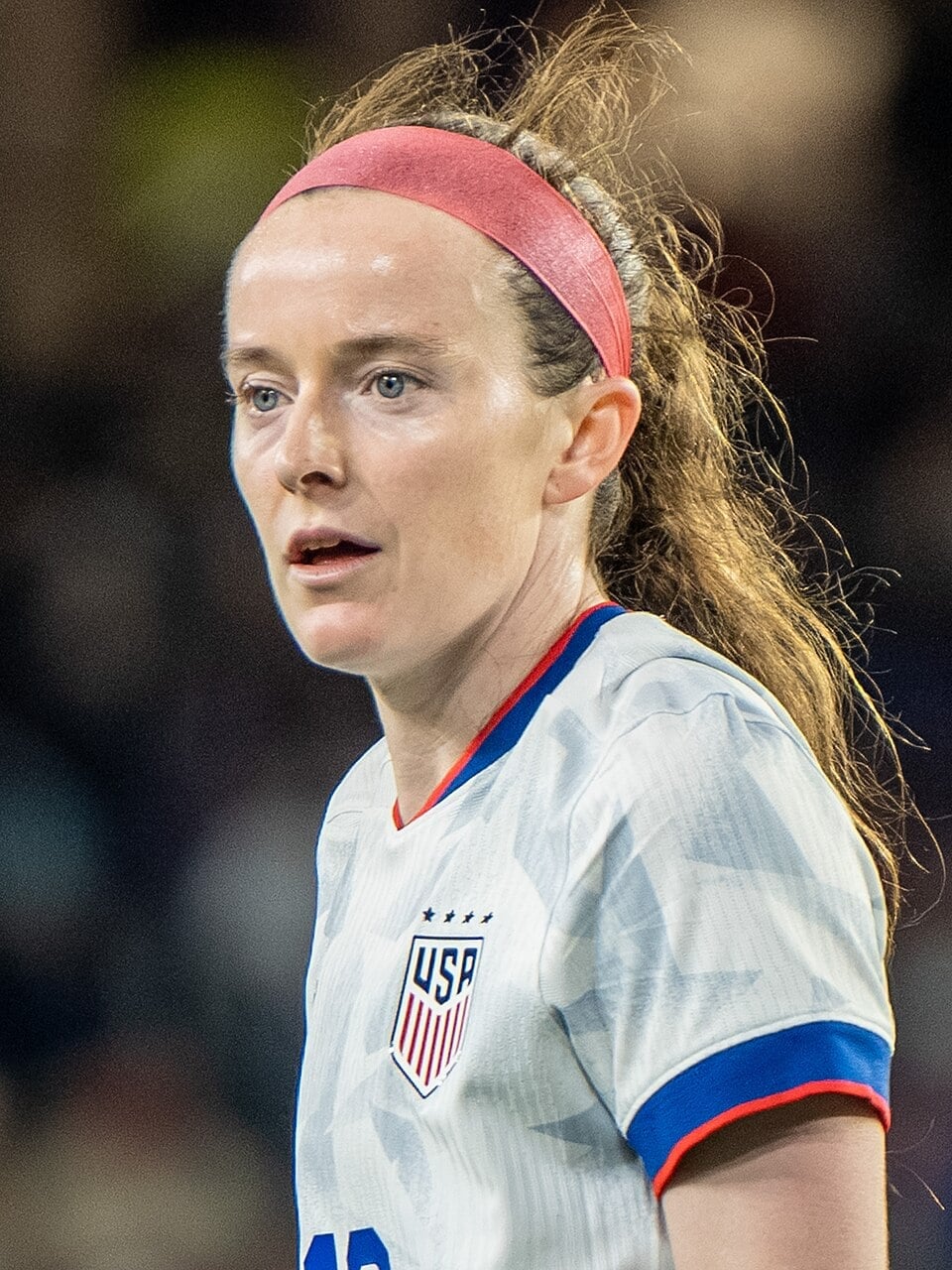
Can you get loose waves and wispy bangs without spending an hour with a curling iron? Start with medium density, wavy hair that already has long layers and a side parting, then work a texturizing spray through damp strands and scrunch. The blonde highlights give the waves dimension, so you do not need to curl every section. Wispy bangs are the low-commitment version of a fringe: they soften an angular jaw without the upkeep of a full bang. Ask your stylist for: mid-back loose waves, wispy bangs, side part. A pink headband keeps the bangs off the forehead during a warm-up, and a quick spritz of water reactivates the texture if it falls flat. This is a DIY-friendly cut, though the layers need a salon visit every six to eight weeks to keep the shape defined.
Mid-Back Fishtail Braid Ponytail, Dark Brown
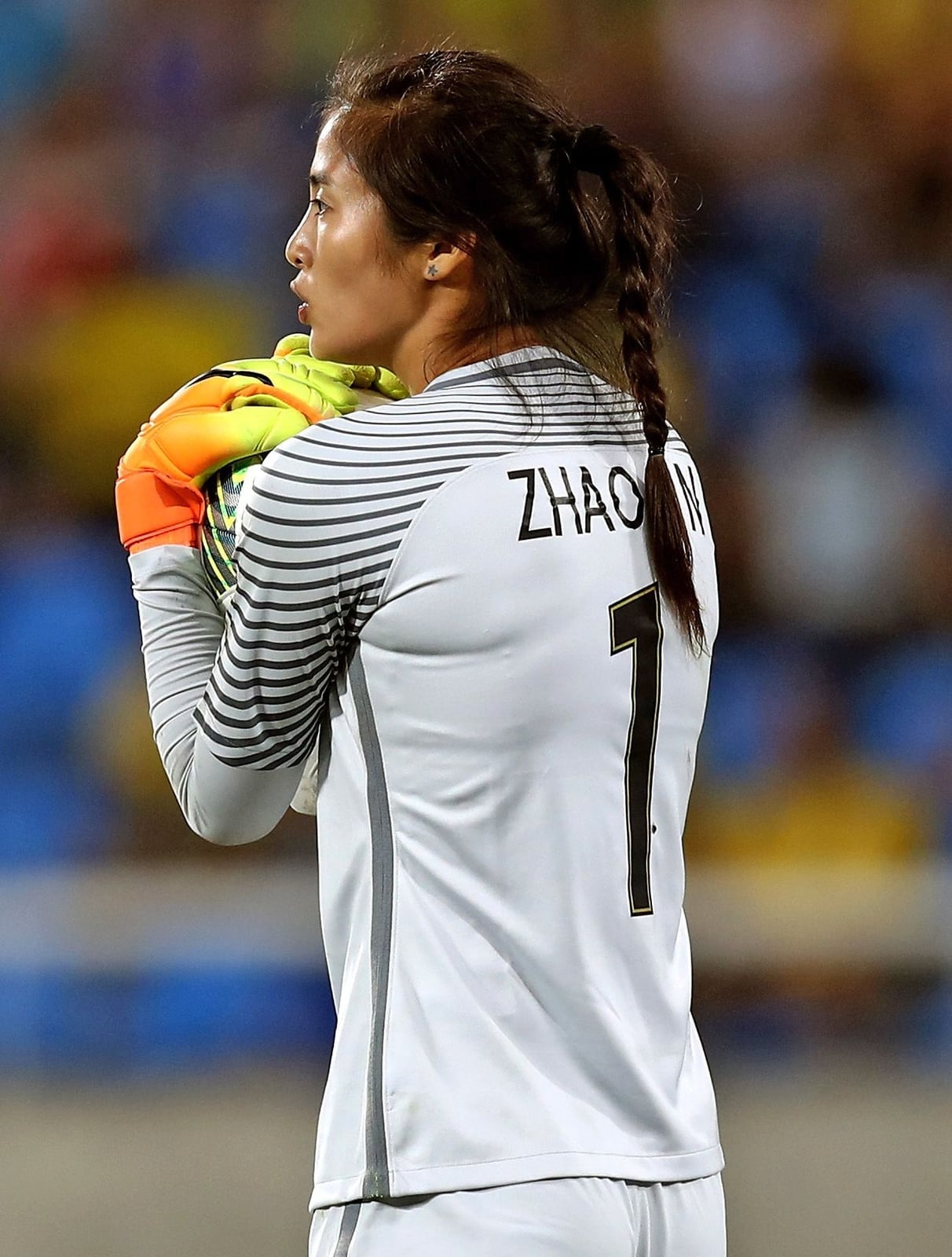
Secure the ponytail first, then braid, because trying to fishtail loose hair that reaches mid-back is how you end up with a tangled mess and a sore wrist. Thick, straight dark brown hair holds the braid’s structure well, and the high placement keeps it out of the way during headers and sprints. The side parting adds a touch of softness to what is otherwise a very athletic silhouette. Ask your stylist for: high ponytail with fishtail braid, side part. Clear elastics at the base and tip keep the braid looking clean without the visual bulk of colored bands. The fishtail is more forgiving than a classic three-strand braid because it does not require even tension, but it does take practice to get the alternating pieces right. A trim every six to eight weeks keeps the ends from splitting, which matters when the hair is this long.
Dark Brown Mid-Back Loose Waves
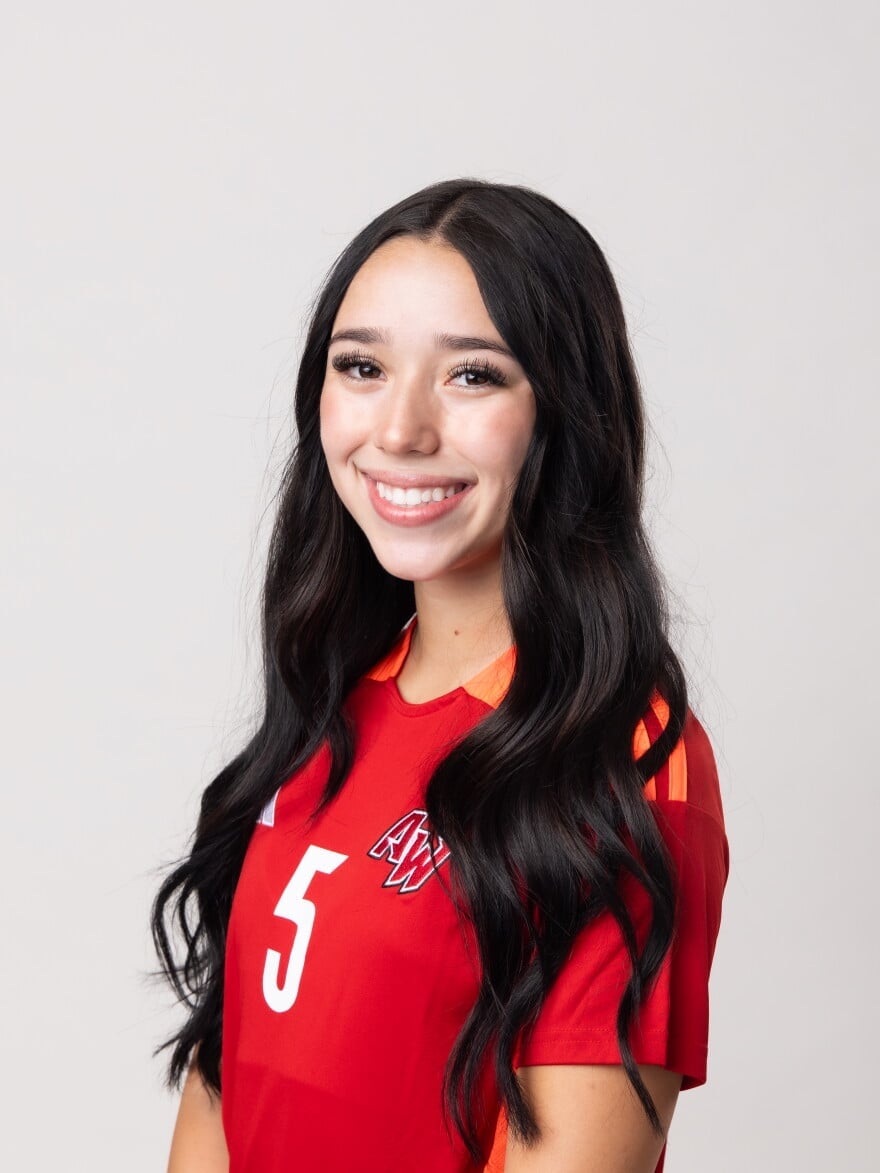
There is a clever bit of engineering hiding in this style: the long layers are cut to move with the wave pattern, so the dark brown mid-back length never collapses into a triangle. Thick, wavy hair is the ideal candidate here because it holds the loose shape without needing constant re-styling. The side-swept fringe does the real work, softening the face while keeping the rest of the hair out of it. Ask your stylist for: mid-back loose waves, side-swept fringe.
This cut suits thick, wavy textures that already have some natural movement, and it behaves best when the layers start around the collarbone. The side part gives the waves a direction to fall, which cuts down on the fluffing between halves. For soccer players, the length tucks into a low ponytail neatly, and the fringe pins back without leaving a dent. A trim every eight to ten weeks keeps the ends from splitting while the wave pattern stays intact.
Shoulder Length Ponytail With Blonde Highlights
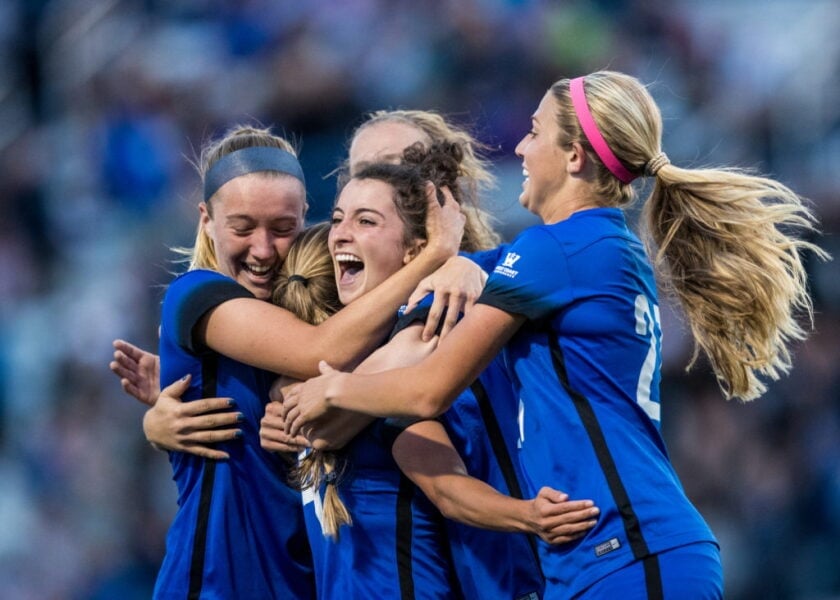
A high ponytail on shoulder-length wavy hair clears the neck fully, and the layers add volume at the crown for an energetic look. The blonde highlights are visible during movement, which matters when you are mid-celebration, but they also reveal every flyaway that escapes the elastic. Frequent motion works against the sleekness, so the shorter pieces around the ears will slip out by the second half. Ask your stylist for: high ponytail, blonde highlights, side part. The trade-off is that the wavy texture needs a texturizing spray to grip the tie, and the shoulder length requires a trim every six to eight weeks to keep the layers neat.
Collarbone Wavy Bob With Curtain Bangs
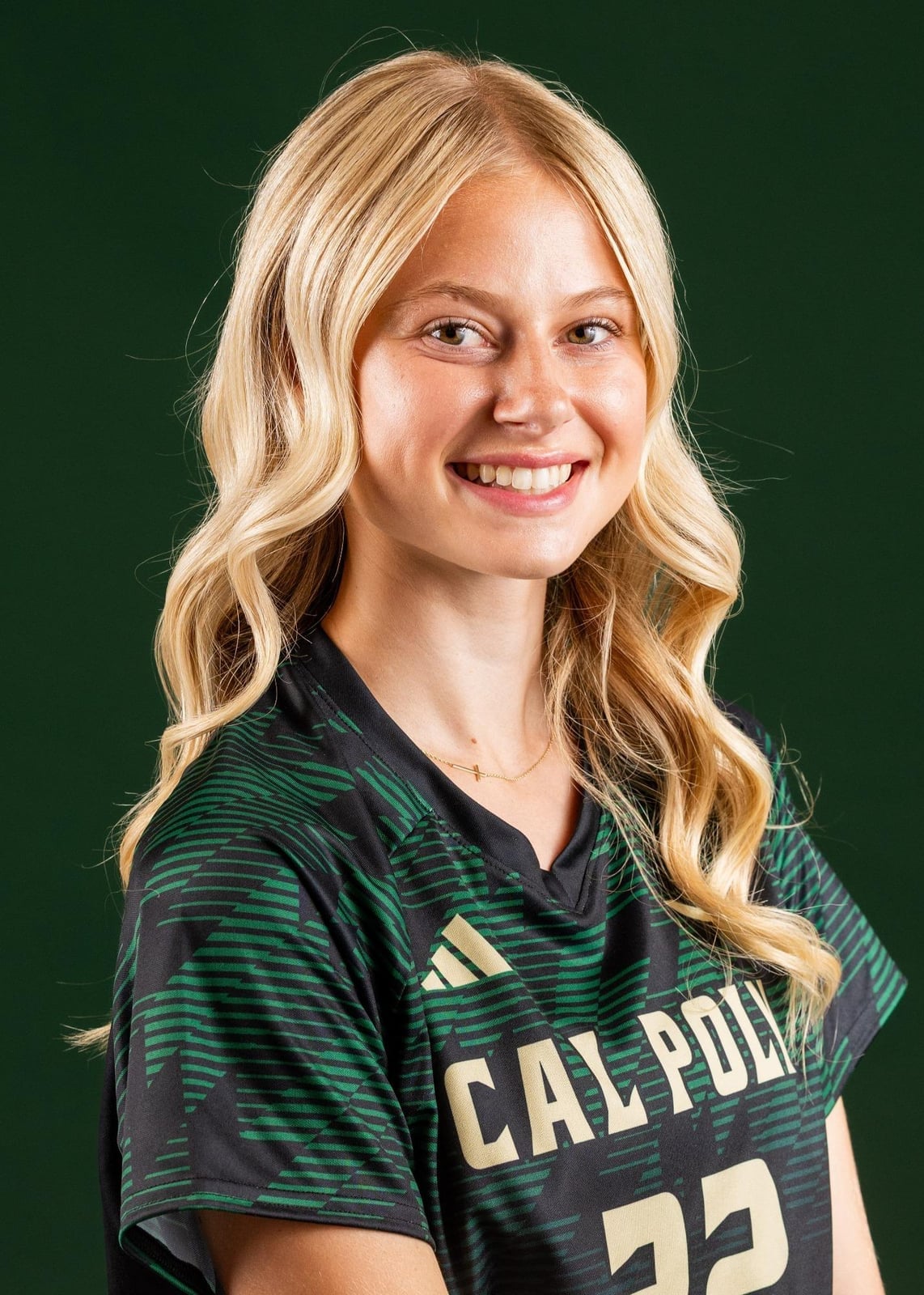
How does a stylist build soft waves into a collarbone bob without it turning into a poodle situation? The trick is cutting the layers on an angle so each wave has a landing spot, then leaving the curtain bangs longer so they sweep to the side instead of sticking straight out. The blonde base with lighter highlights adds dimension that makes the wave pattern visible from across the field. Ask your stylist for: collarbone wavy bob, curtain bangs, side part. The curtain bangs are cut to frame the face without committing to full fringe territory, which suits medium density hair that might otherwise look thin. A round brush blow-dry directs the bangs away from the face, and a trim every six to eight weeks keeps the collarbone length from creeping into a shag.
Chin Length Blonde Bob With Blunt Bangs
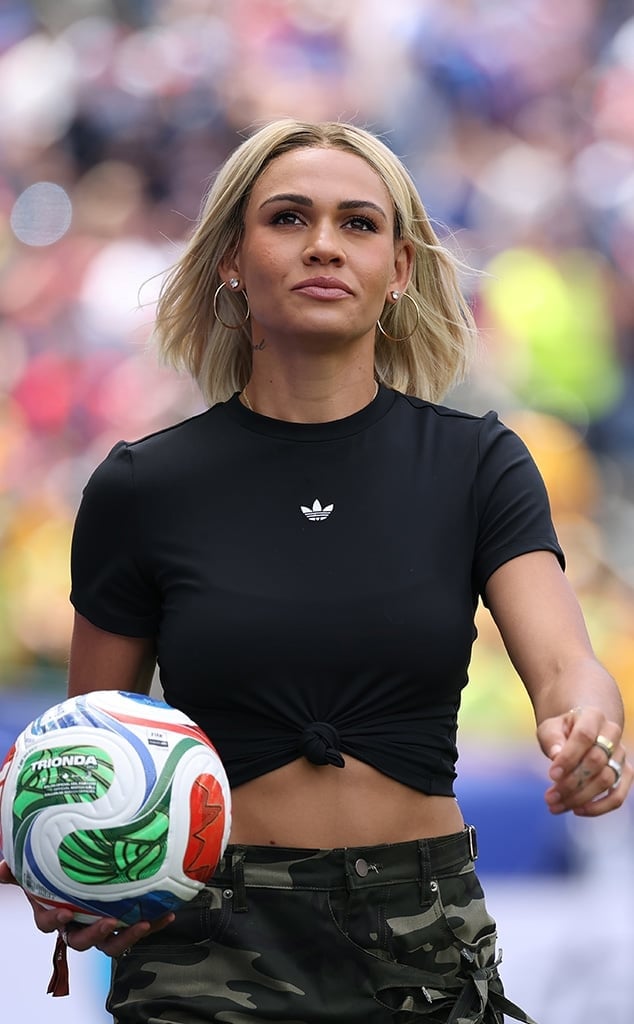
The blunt bob is a precision instrument: every line is cut to the same chin length, and the blunt bangs follow the same rule, so the whole shape depends on the cut being exact. Fine, straight hair is the best match because it holds the sharp edges without bulk pushing them off course. The middle parting keeps the geometry honest, which gives the cut a sporty finish. Ask your stylist for: chin length blunt bob, blunt bangs, middle part. This suits oval and heart face shapes best, as the straight lines echo the jaw without adding width. The upkeep is the catch: a flat iron delivers the sleek finish, and the blunt edges demand precise trims every four to six weeks or the entire shape softens into something unintended.
Mid-Back Wavy Hair With Curtain Bangs
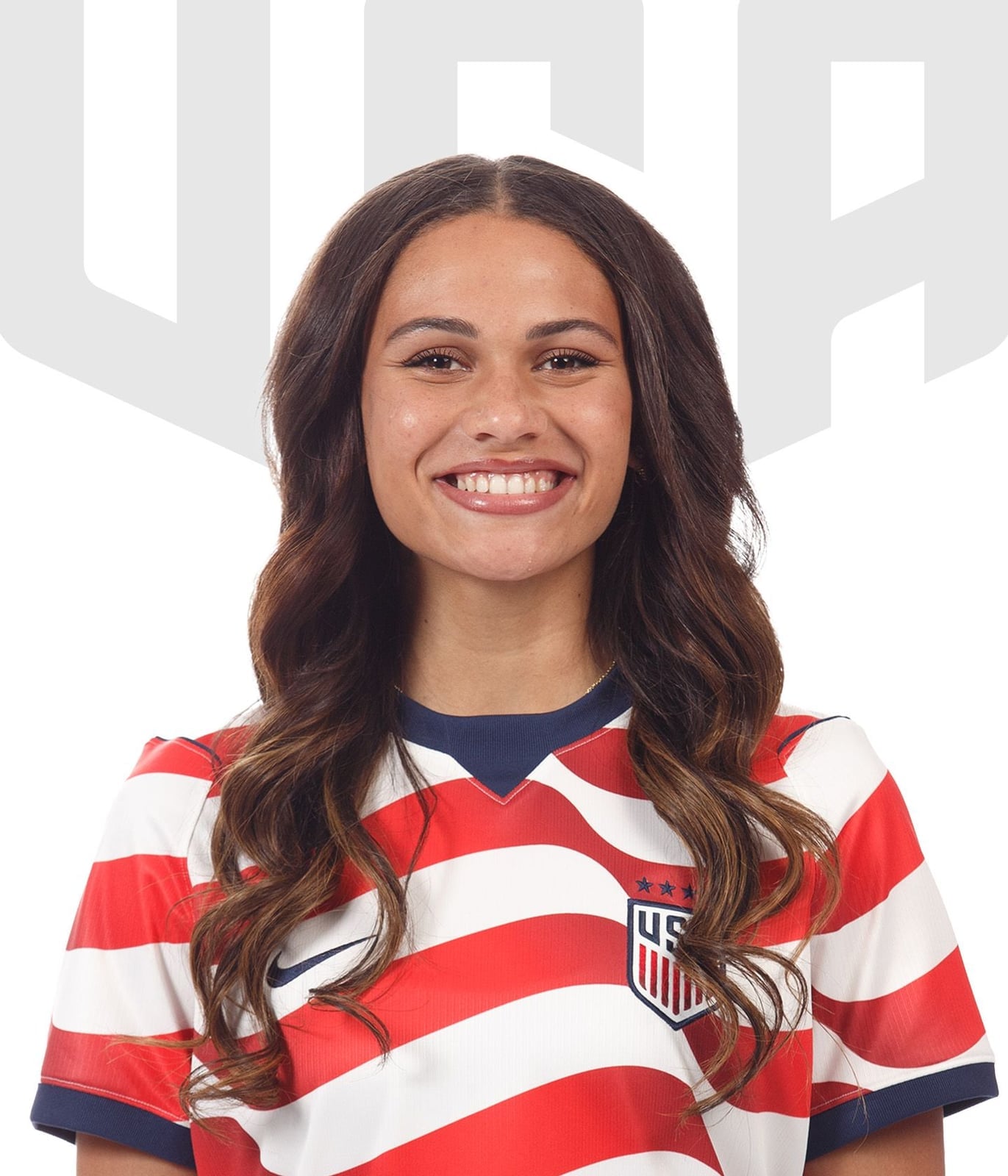
Set this against the same length with no bangs and the difference is immediate: the curtain bangs break up the vertical line of long, thick wavy hair, giving the face some context instead of a curtain of dark brown falling past the shoulders. The side part lets the bangs sweep outward, which softens square and round faces without hiding them. The subtle highlights add a bit of depth to the wave pattern, so the mid-back length does not appear as one solid block. Ask your stylist for: mid-back loose waves, curtain bangs, side part.
The trade-off between bangs and no bangs is the daily styling commitment. No bangs means wash, add product, and go, but curtain bangs need a round brush and a few minutes of blow-drying to land in the right place. They also grow out faster than the other layers, so expect to book a bang trim between the eight-week layer appointments. For thick, wavy hair, curtain bangs create a face-framing softness that a plain long cut cannot deliver.
Platinum Blonde Blunt Bob With Fringe
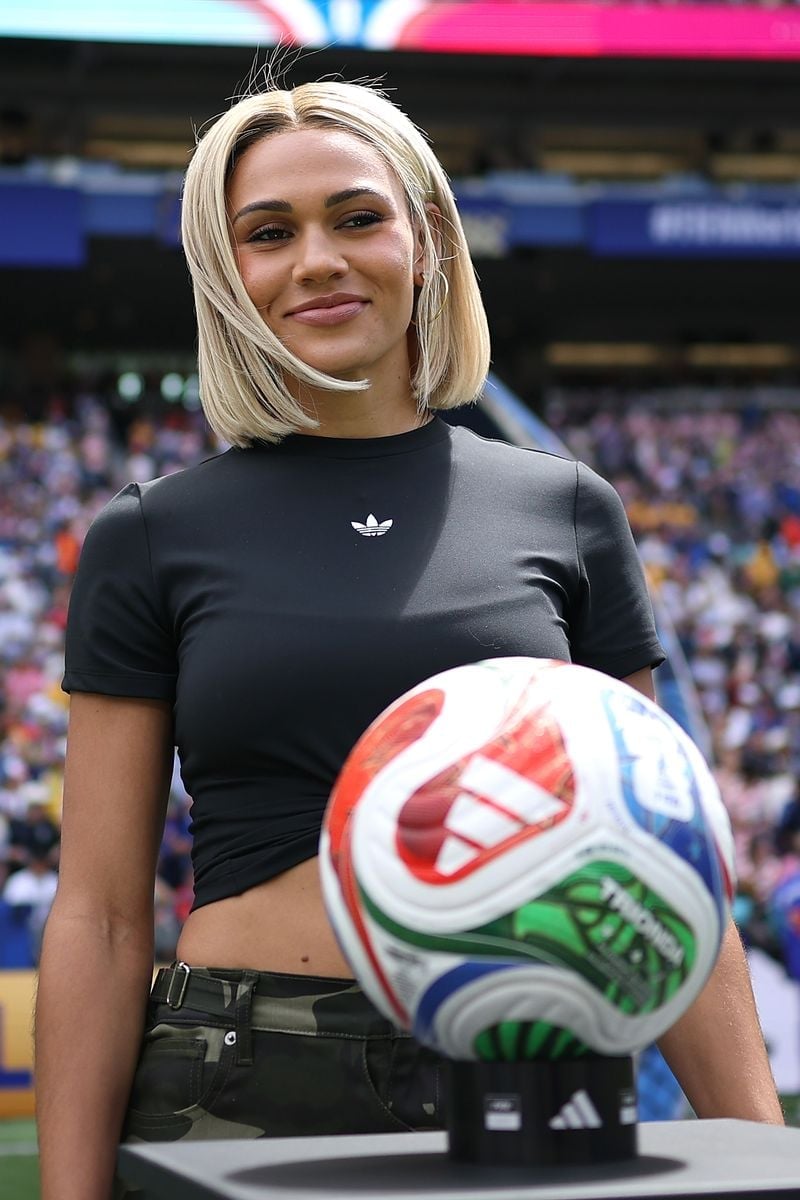
A chin-length blunt bob in platinum blonde with a matching blunt fringe is a statement that announces itself before you walk through the door. This cut works best on fine, straight hair that holds a sharp line without puffing up. Ask your stylist for: chin length blunt bob, blunt fringe, platinum blonde. The maintenance is the trade-off: that icy tone needs a purple shampoo every wash and a toning appointment every three to four weeks to stop it from reading as yellow. The blunt fringe also demands precise trims every four to six weeks to keep it out of your eyes.
High Sleek Bun For Thick Wavy Hair
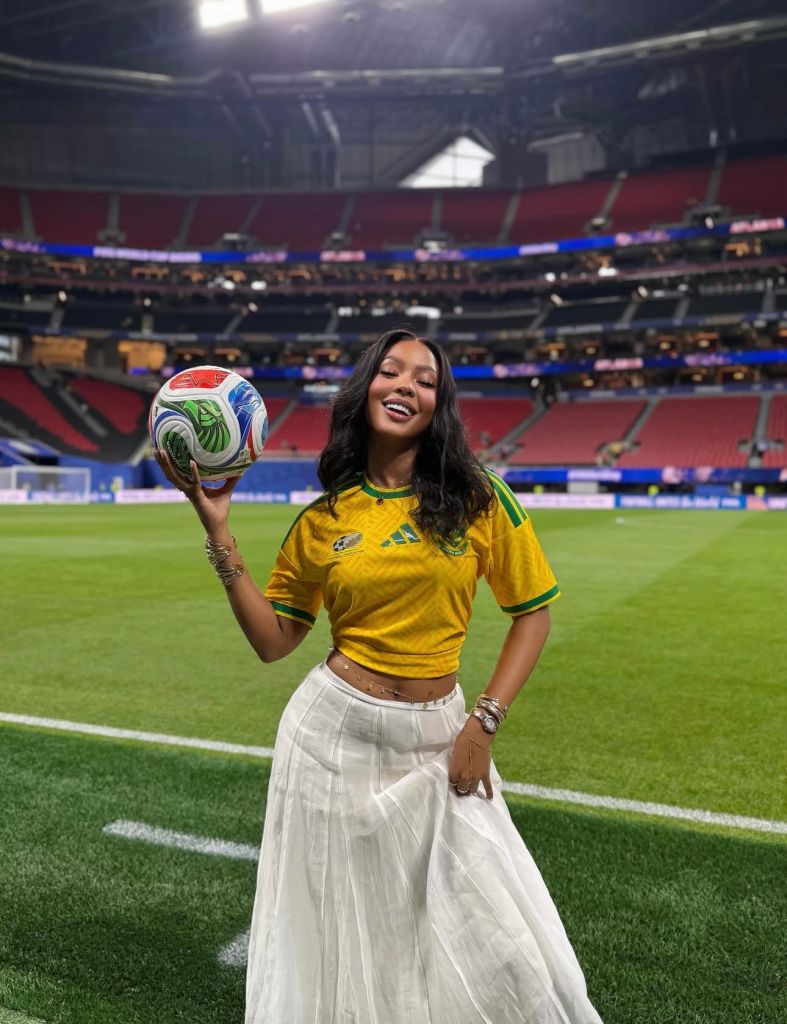
A high sleek bun on thick, wavy hair is one of those rare designs that looks polished and stays put through a full game. The key is starting with damp hair, not wet. Apply a smoothing cream from roots to ends, then use a boar bristle brush to pull everything back into a tight ponytail at the crown. Wrap the length around the base and secure with a strong elastic and a few pins. Finish with a generous layer of strong-hold hairspray. This is a DIY-friendly style that takes about ten minutes once you have the technique down. A salon can show you the exact placement once, then you are set for the season.
Mid-Back Wavy Braid, Close-Up Take

A mid-back braid on thick, wavy dark brown hair is built for motion without falling apart. The technique relies on a firm middle part and a smooth, even tension as you braid. A black headband sits at the hairline, catching any shorter pieces before they escape. The braid itself is a classic three-strand weave, pulled tight enough to stay secure but not so tight that it strains the scalp. This cut has no layers to interfere, so every strand travels neatly into the braid. A smoothing serum applied before braiding tames the wave and cuts down on flyaways.
Mid-Back Blonde High Ponytail Braid
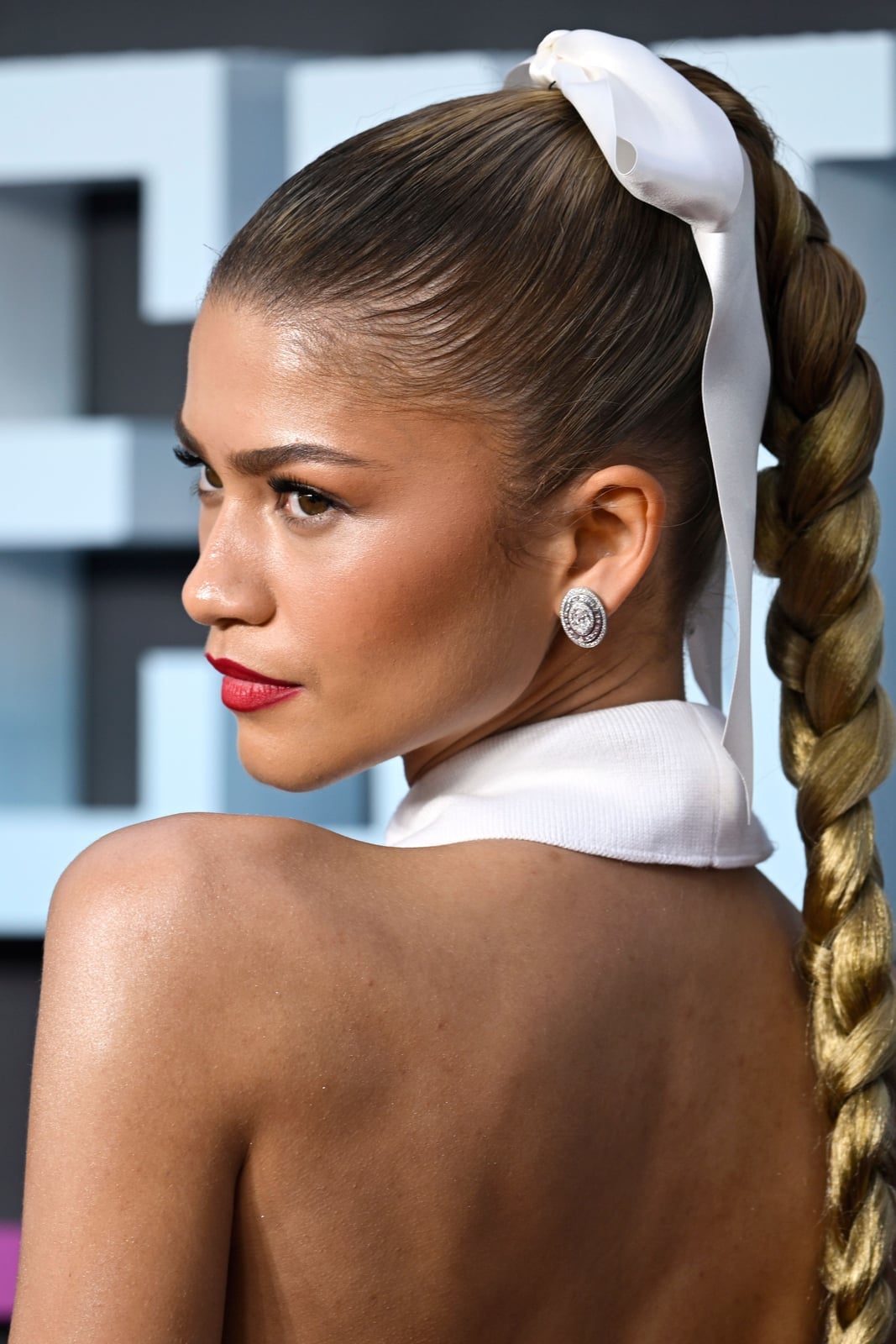
How do you keep thick, straight blonde hair from slipping out of a braid mid-match? Start with a middle part and pull everything into a high ponytail at the crown, securing it with a strong elastic. Then braid the length down the back, incorporating a white ribbon as you go for visual contrast and extra hold. The ribbon also adds weight, so the braid hangs straight rather than flipping. A texture spray on the root area before pulling back gives the hair enough grip to stay tight. This style holds through a full practice without needing a touch-up.
Collarbone Wavy Ponytail With Highlights
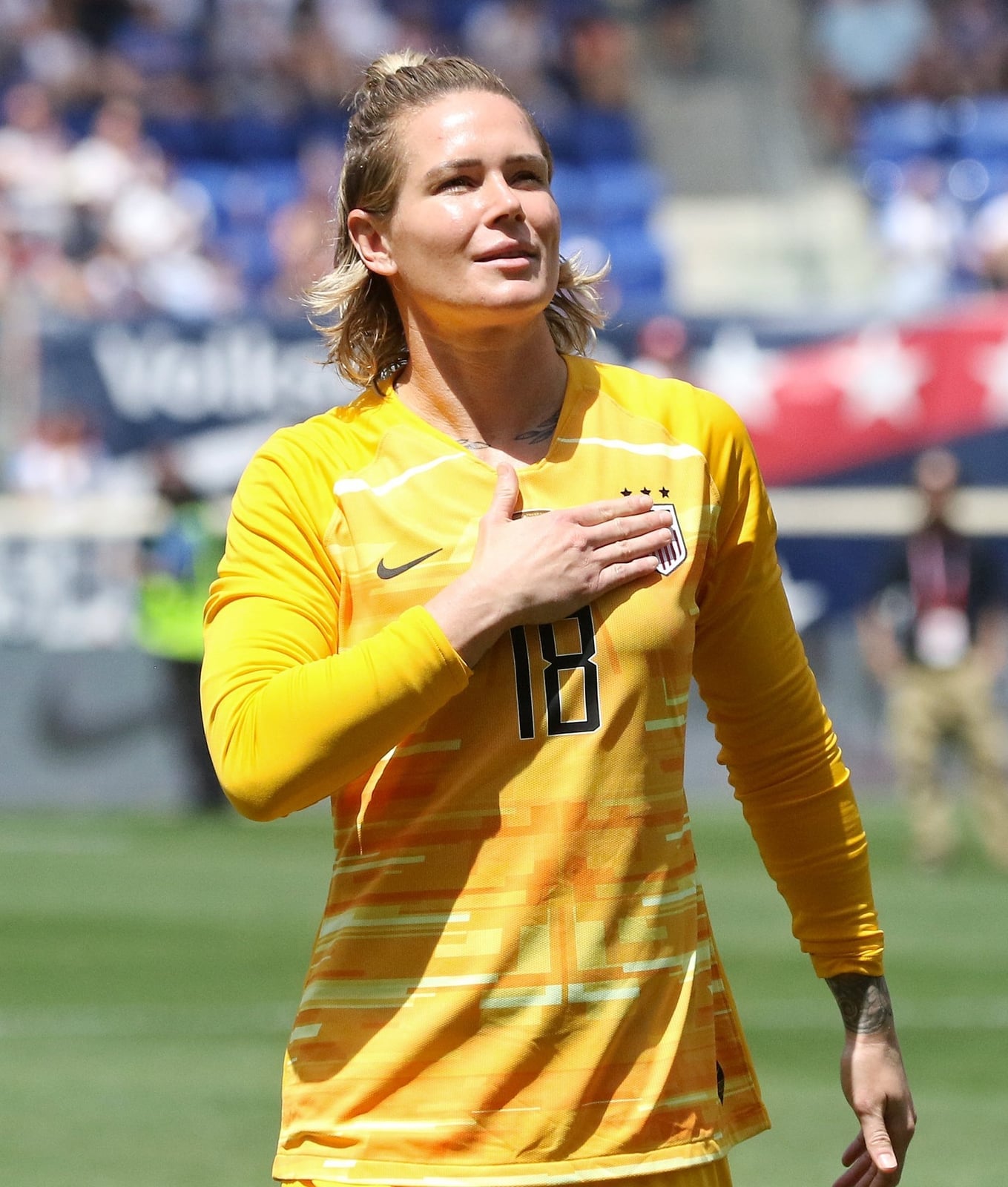
A collarbone-length ponytail with wavy texture and blonde highlights works from August through November. The highlights add dimension that catches the shifting autumn light, while the collarbone length keeps the ponytail from whipping across your face during a sprint. A middle part and a tight pull-back at the crown create a clean base. A texturizing spray on the length gives the waves enough grip to hold their shape without looking stiff. This cut sits short enough to cool down quickly after a game but long enough to pull back completely.
Final Thoughts
For active hair, prioritize styles that pull hair completely off the face and neck, like braids, high ponytails, or secure buns. A headband or wrap adds extra hold without a single bobby pin. Fine hair benefits from a blunt baseline with minimal layers to keep density at the ends.
- Trim split ends every 6-8 weeks to maintain hair health.
- Use a heat protectant spray before any blow-drying or heat styling.
- Deep condition hair weekly to combat dryness from sports and weather.
- Refresh colored hair with a color-depositing conditioner every 2-3 weeks.
Stay game-ready with styles that perform.
