

The shag haircut is a layered structure built for movement, not precision. Right now, the shift is toward softer face-framing pieces and curtain bangs that blend into the length instead of starting as a hard line.
Inside are 25 versions of the Shag Hair that actually work on real heads, from barely-there waves to tight curls and from mid-back to chin-grazing. Fine hair that goes flat by lunch, a visible grow-out line, bangs that refuse to sit right, every look here solves one of those three problems. Each one tells you the exact length, the layer pattern, the bang situation, and how often to get back in the chair.
Long Wavy Shag With Curtain Bangs
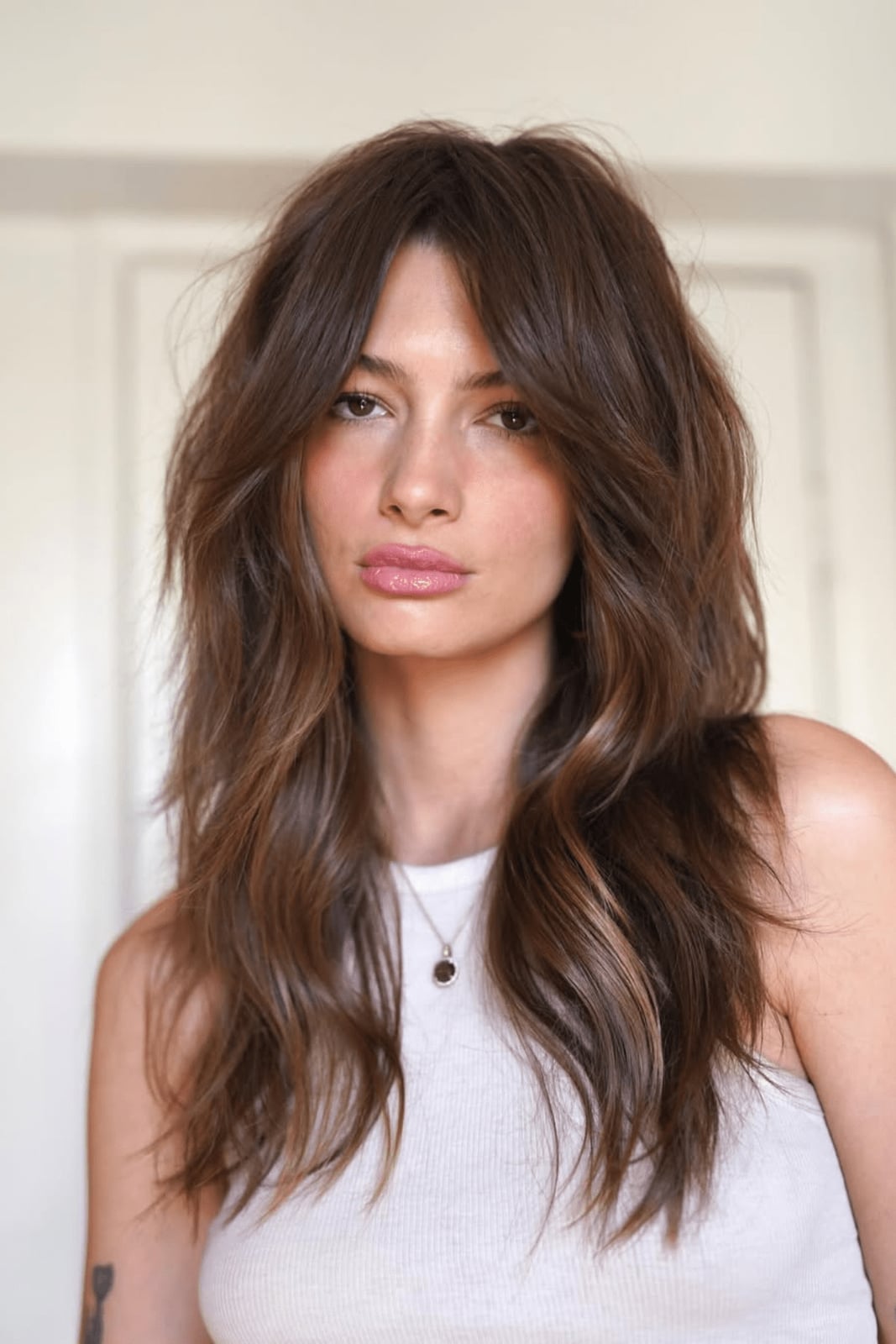
The shag haircut works its magic by cutting weight out of fine hair, and this collarbone-length version proves it. The dark blonde base with lighter highlights adds dimension without looking busy. Curtain bangs that fall to the collarbone soften round and heart faces, while the wavy texture gives the cut its easy movement. If your hair is fine to medium and starts at collarbone length, this long shag haircut with wavy texture finally gives it some body. Ask your stylist for: long shag with collarbone layers and curtain bangs. Apply a texturizing spray to damp hair and air dry for that natural, wavy finish. A trim every six to eight weeks keeps the layers from losing their shape.
Mid-Back Shag With Choppy Layers

The mid-back shag is built on choppy layers that remove bulk from thick, wavy hair. The ash blonde base with subtle balayage adds depth, while shaggy bangs frame the face without a heavy fringe. A middle parting keeps the focus on the cut’s movement. This shag haircut works well for thick hair types that need weight removed, and the mid-back length suits most face shapes. Ask your stylist for: mid-back shag with choppy layers and shaggy bangs. Style with a blowout for volume, then use a texturizing spray to enhance the layers. A trim every six to eight weeks maintains the choppy shape and prevents the ends from looking ragged.
Collarbone Shag With Root Shadow

How do you get that lived-in blonde without the constant upkeep? Ask for a collarbone shag with a root shadow. The blonde base with darker roots means the grow-out line is less obvious, so you can stretch the time between color appointments. Soft face-framing layers and curtain bangs work together to soften round and heart faces, and the middle parting keeps the style balanced. The slightly tousled texture gives it that modern, relaxed feel. Ask your stylist for: collarbone shag with face-framing layers and curtain bangs. Use a texturizing spray and tousle to get that lived-in look. Toning is needed every eight to ten weeks to keep the blonde from turning brassy.
Mid-Back Honey Blonde Shag

If you are torn between a sleek mid-back style and something with more personality, this honey blonde shag splits the difference. The long shag haircut reaches mid-back length, and the curtain bangs are the standout feature. The honey blonde color with lighter highlights woven throughout gives it dimension, and the wavy, thick texture means it air dries with a natural, textured finish. A middle parting keeps the face-framing layers on display. Ask your stylist for: mid-back shag with curtain bangs in honey blonde. Air dry with a texturizing product for that relaxed look, which works well for everyday wear and vacations alike. The highlights will need touch-ups every eight to ten weeks to keep the color fresh.
Collarbone Shag With Full Bangs

This is a cut that wears its edginess on its sleeve. Ask your stylist for: collarbone shag with full bangs and choppy layers. Air dry for that lived-in texture, but be aware that full bangs need a trim every four to six weeks to avoid obscuring the face. The rest of the cut stays fresh with a trim every six to eight weeks.
Mid-Back Curly Shag In Bright Copper
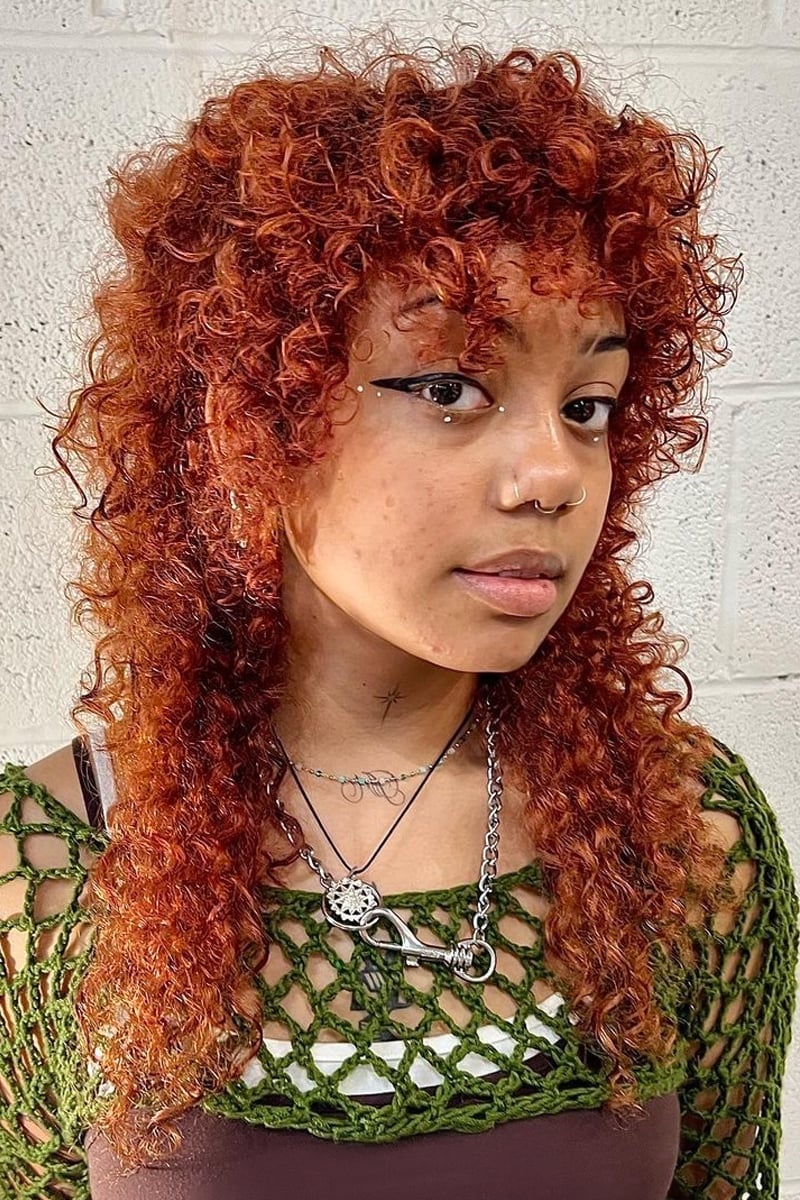
Can a shag handle both dense curls and a color that loud? This mid-back version proves yes, if you commit to both. The bright copper shade is a statement on its own, and the short choppy bangs keep the whole thing from reading as too precious. Ask your colorist for: mid-back curly shag with short choppy bangs in bright copper. This works for thick, naturally curly hair that already reaches mid-back; the short bangs add an edgy detail a traditional curl cut often skips. Use a curl cream to define texture, and plan a color refresh every six to eight weeks. It is a festival-ready look that also lands well in warm weather, when a heavy gloss coat feels wrong.
Collarbone Shag With Face-Framing Layers
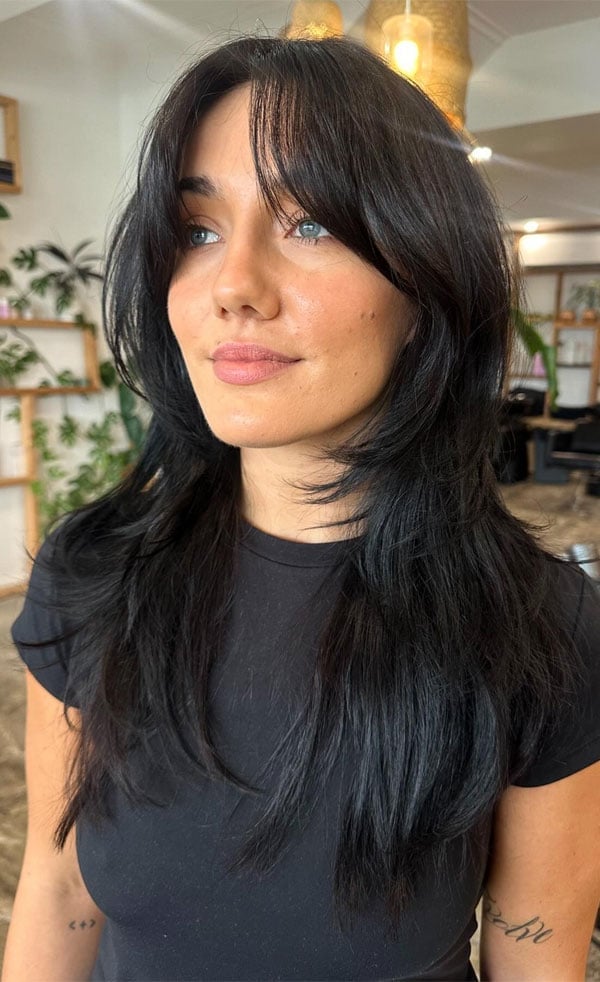
The dark brown base with subtle highlights helps fake lightness, and the curtain bangs keep the front from feeling heavy. Ask your stylist for: collarbone shag with face-framing layers, no bangs. The honest drawback is that the layers need precise carving each trim, so skipping the six-week appointment leaves you with bulk where you want loft. A blowout gives it polish; air drying gives it texture. Who should skip it: anyone who wants a wash-and-forget cut with zero shape maintenance.
Collarbone Shag With Textured Layers

A shag with collarbone-length choppy layers and curtain bangs in ash blonde with subtle highlights looks straightforward, but the texture is the trick. This is a salon-only proposition because the choppy layers need to be cut into dry hair piece by piece, not hacked into wet hair with thinning shears. Ask your stylist for: collarbone shag with choppy layers and curtain bangs. Fine wavy hair starting at collarbone length gets the most lift from this shape, and the curtain bangs soften round and heart faces. Air-dried hair with a texturizing spray gives the tousled finish the cut was built for. DIY will produce something that looks like a bad 80s revival, not a considered modern shag.
Collarbone Shag With Soft Curtain Bangs

The soft curtain bangs here do not fight the collar bone length; they land at the cheekbone and feather into the choppy layers beneath. That is the detail that makes this shag work for medium-density wavy hair. Ask your stylist for: collarbone shag with choppy layers and curtain bangs. The dark brown color with subtle lighter pieces adds dimension without a full highlight schedule. Curtain bangs complement most face shapes because they can be swept to either side. A textured blowout enhances the natural wave pattern, and a trim every six to eight weeks keeps the shape from turning into a blob. It is an everyday cut that reads as considered, not high-maintenance.
Collarbone Shag With Face-Framing Layers and Curtain Bangs

The build here is a question of how the curtain bangs integrate with the face-framing layers. They are cut as one continuous line from the brow to the collarbone, so there is no hard break where the bangs end and the layers start. Ask your stylist for: collarbone shag with face-framing layers and curtain bangs. Fine wavy hair starting at collarbone length benefits from the soft graduation, and the light ash blonde with subtle highlights keeps the fine texture from looking flat. Curtain bangs soften round and heart faces by drawing the eye outward rather than straight across. A texturizing spray helps achieve a natural finish, and this shape needs a trim every six to eight weeks to keep the line clean.
Collarbone Shag With Face-Framing Layers and Air Dried

This dark blonde shag with curtain bangs and lighter highlights lands somewhere between a wash-and-wear cut and one that needs a little help. The face-framing layers and side parting do the structural work, so the air-dried finish reads as a choice, not an accident. Fine, wavy hair starting at collarbone length is the natural candidate, though you will need a texturizing spray to keep the roots from lying flat. Ask your stylist for: collarbone shag with face-framing layers and curtain bangs. Plan on a trim every six to eight weeks to keep the shape honest.
Shoulder Length Shag Curly Hair

Wondering how to get a curly shag that does not turn into a triangle? The trick is asking for short, piecey bangs and defined texture, not just layers. On thick, curly hair starting at shoulder length, this cut builds volume at the crown while the middle parting keeps the weight distributed. Ask your stylist for: shoulder length curly shag with short piecey bangs. To style, scrunch a curl cream through damp hair, then air dry or diffuse with a bowl attachment. The subtle highlights in the dark brown base give each curl its own edge.
Collarbone Shag With Wispy Bangs
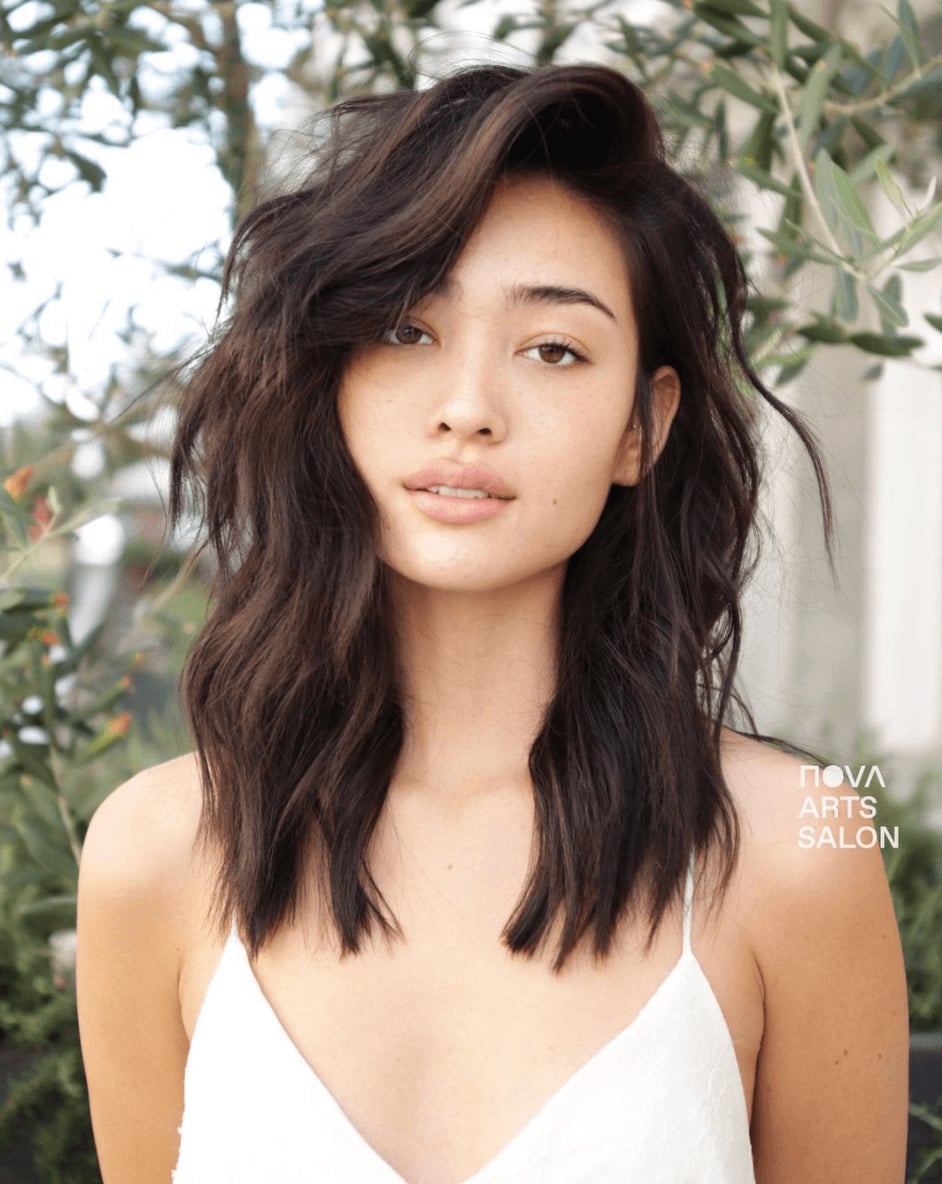
The wispy bangs here are the quiet detail that makes a collarbone shag feel lighter, which is exactly what you want when the weather turns and a heavy fringe starts to feel like a commitment. On fine, wavy hair with a side parting, these bangs frame without demanding constant attention, and the dark brown base with subtle lighter pieces keeps the texture from looking flat. Ask your stylist for: collarbone shag with wispy bangs. The air-dried finish means you can skip the hot tools most days, but bangs need a trim every four to six weeks to stay wispy rather than straggly.
Short Collarbone Shag With Choppy Bangs

A practical rule for choppy texture: it only looks edgy when the layers have enough density behind them. On fine hair, an aggressive cut can look sparse, so strategic layering is what keeps this ash blonde shag with root shadow full. The profile view shows how the choppy bangs and messy waves build movement from the crown down. Ask your stylist for: collarbone shag with choppy bangs and texture. Fine hair needs a texturizing paste and a tousle every morning to keep the shape, and a trim every six to eight weeks is required.
Collarbone Copper Shag With Curtain Bangs, Wavy
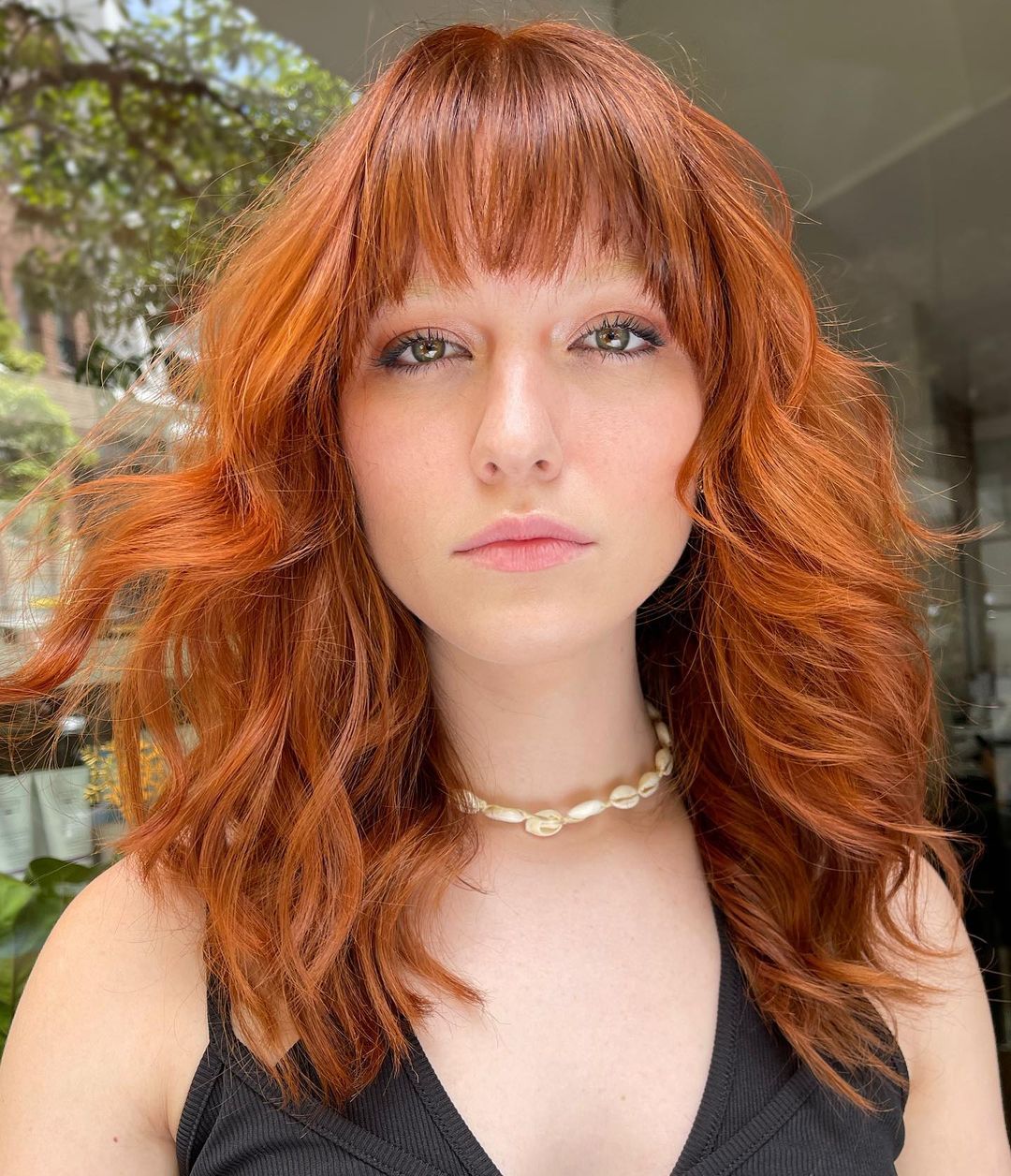
Vibrant copper red is not a shy color, which is exactly the point. Compared to a muted auburn, this shade reads louder and the subtle lighter highlights give the waves a dimensional glow that a single flat tone cannot match. On medium density hair starting at collarbone length, the middle parting and curtain bangs keep the cut balanced. Ask your colorist for: collarbone shag with curtain bangs in copper red. A blowout adds volume, but the color itself needs a refresh every six to eight weeks to keep the copper from dulling into rust.
Collarbone Ash Blonde Shag
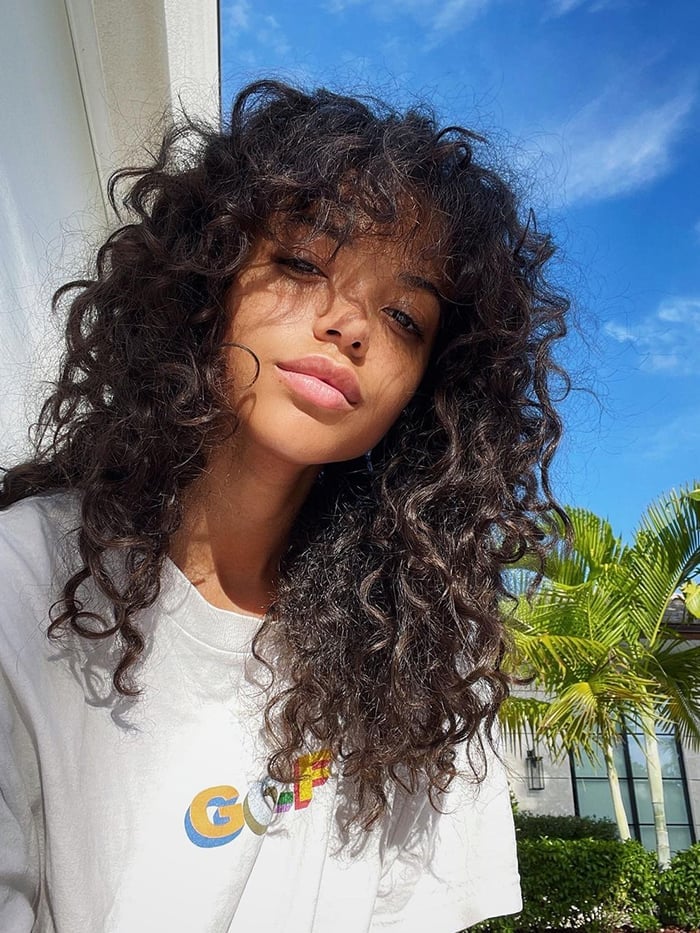
The collarbone ash blonde shag gets its drama from the contrast between the cool, highlighted base and the voluminous waves that the cut’s layers encourage. That volume is the architectural trick: it adds width at the sides, which balances oval and elongated face shapes by shortening their visual length. Curtain bangs soften round and heart faces, so this one covers a generous spread of face shapes. Ask your stylist for: collarbone shag with curtain bangs and volume. Thick, wavy hair starting at collarbone length gives the blowout the most to work with. A volumizing spray and a round brush build the lift; expect to redo the front pieces with a quick blast each morning. A trim every six to eight weeks keeps the layers sharp.
Chin Length Copper Shag

The chin length copper shag is built with point cutting, where the scissors snip into the ends at an angle to create those textured, feathered layers instead of a blunt line. The same technique thins the wispy bangs, so they taper softly rather than sit heavy on the forehead. That combination gives medium density hair movement without removing too much weight. The soft waves and side parting fall naturally from the cut, which is the point. Ask your stylist for: chin length shag with textured layers and wispy bangs. The copper tone with subtle highlights adds dimension that makes the shorter length feel intentional rather than severe.
Collarbone Platinum Shag With Root Shadow and Wispy Bangs

Can fine, wavy hair handle a platinum shag without looking flat? Yes, if the cut does the work. The collarbone length and textured layers build body into fine strands, and the wispy bangs keep the front light instead of heavy. The root shadow is the strategic part: it softens the grow-out line and buys you a few extra weeks between color appointments, which matters because platinum needs regular toning. Ask your colorist for: collarbone shag in platinum blonde with root shadow. The honest drawback is the upkeep. Toning every six to eight weeks is the rhythm, and a textured blowout is the styling move to keep the wave pattern alive. Skip the flat iron; it will erase the layering.
Collarbone Shag No Bangs

The collarbone shag without bangs relies entirely on its blended layers to carry the shape, which is why this cut is harder to pull off at home than it looks. With no fringe to distract, every uneven or blunt section is visible, especially in a side-swept style with a side parting. A professional stylist will cut the layers so they stack and soften toward the ends, giving wavy, medium density hair that polished yet relaxed blowout finish. Ask your stylist for: collarbone shag with blended layers, no bangs. The subtle highlights add dimension along the layers, and the lack of bangs elongates round faces. This is a salon job; the mirror-and-scissors approach tends to end in regret.
Collarbone Curly Shag With Caramel Highlights

The collarbone curly shag works with your natural curl pattern instead of against it. The cut is shaped so the defined, air-dried curls fall into place, with wispy bangs that frame without fighting the texture. Thick, curly hair holds this shape well, and the dark brown base with caramel highlights gives the curls depth that flat color lacks. Ask your stylist for: collarbone curly shag with wispy bangs. At home, a curl-defining cream on wet hair and a diffuser or air dry is all the styling it needs, which makes it a natural choice for autumn events where frizz is the enemy. The caramel pieces add dimension and keep the look from reading as one solid block.
Mid-Back Shag With Long Feathered Layers
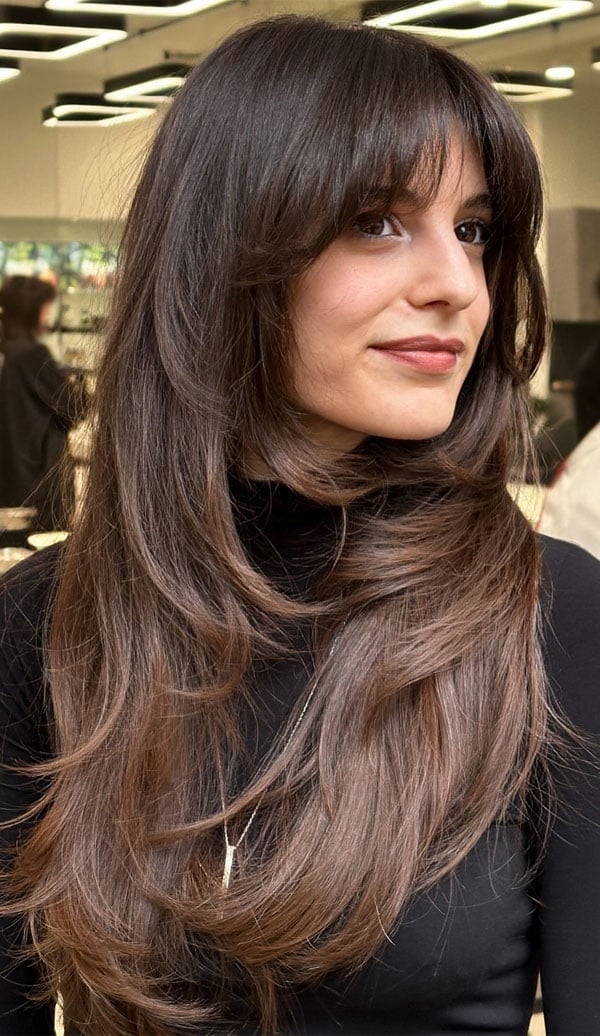
A long shag to mid-back with feathered layers and curtain bangs, the dark brown base lifted by subtle balayage, suits thick hair that can carry the weight. Starting at mid-back length gives the stylist room to cut long layers that move without sacrificing your length. Ask your stylist for: mid-back shag with long feathered layers and curtain bangs. Very fine hair can lose the layer definition, letting the cut fall flat. Style with loose waves, and the balayage will need refreshing every 10 to 12 weeks.
The side parting here lets the curtain bangs sweep outward, which softens a round face. If your hair is thick and wavy, the feathered layers keep the shape from turning into a triangle. But if your strands are fine and straight, the long layers may look like just a trim, so consider a shorter shag instead.
Shoulder Length Platinum Shag

Set against a flat, one-dimensional blonde, this shoulder-length shag with voluminous, textured layers and full curtain bangs gives fine hair the body it lacks. The platinum shade makes the choppy texture visible, while the middle parting keeps the volume balanced on both sides. Ask your stylist for: shoulder length shag with volume and curtain bangs. Fine hair starting at shoulder length gains lift from the layers, but the brightness demands a toning appointment every 4 to 6 weeks. A texturizing spray on the midlengths finishes the undone look.
Shoulder Length Shag With Choppy Layers

The short, choppy bangs and textured, tousled layers of this dark brown shag are cut to catch thick, wavy hair mid-swing. The middle parting lets the choppy layers frame the jaw, which suits oval and square face shapes by adding softness. Ask your stylist for: shoulder length shag with choppy bangs. A texturizing paste worked through damp hair, then tousled, defines the layers so they do not blend into one another. This cut needs a trim every 6 to 8 weeks, otherwise the choppy ends grow out into a shapeless wedge.
Shoulder Ash Blonde Shag With Full Fringe

Blending a full fringe into curtain bangs requires the stylist to cut the center shorter and let the sides feather longer, which this shoulder-length ash blonde shag shows with choppy layers underneath. The middle parting keeps the fringe from sitting heavy on fine to medium hair, while the ash tone with highlights adds depth. Ask your stylist for: shoulder length shag with choppy layers and full fringe. The full fringe gives the cut its edge, and the curtain sides keep it from feeling blunt. A textured, tousled finish is the way to wear it, but the fringe needs a trim every 4 to 6 weeks to hold its shape.
Shoulder Length Shag With Wispy Bangs
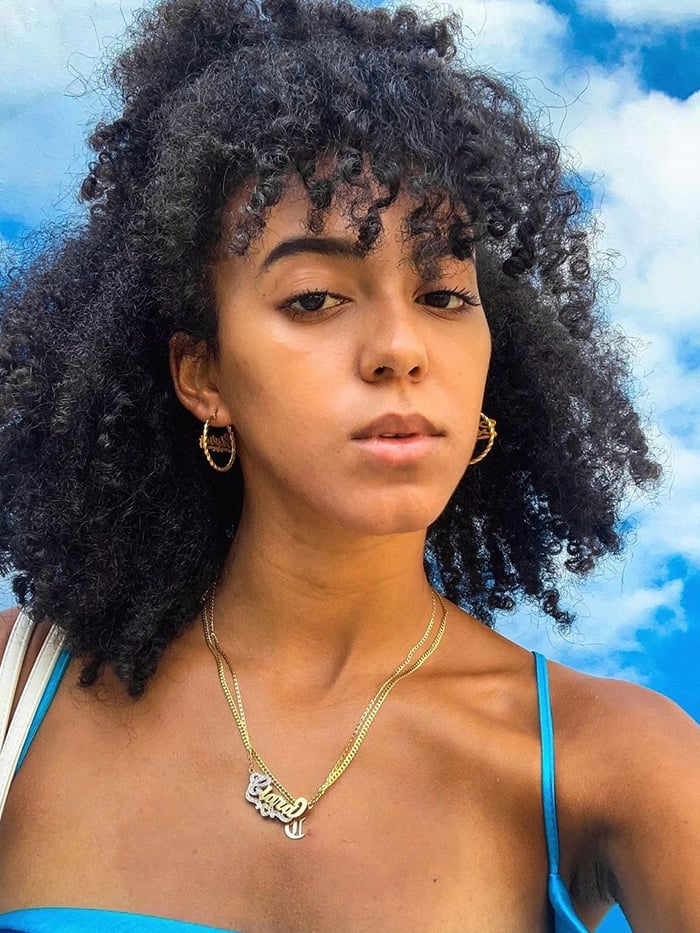
How much daily styling does a shag with wispy bangs actually need? More than the air-dried look suggests. This shoulder-length dark blonde shag with balayage relies on a textured blowout to keep the layers defined, so the wispy bangs stay soft instead of stringy. Ask your stylist for: shoulder length shag with wispy bangs and balayage. For thick, wavy hair, the blowout takes about 15 minutes with a round brush, then a dab of texture spray at the roots. The balayage hides grow-out for about three months, but the cut needs a trim every 6 to 8 weeks. The real drawback: skip the blowout and the layers vanish into your natural wave, leaving you with what looks like a one-length bob.
Final Thoughts
For fine hair, ask for blunt, choppy layers and a fuller bang to create the illusion of density. For thick or curly hair, focus on texturizing to remove weight and enhance natural movement. A shag works best when the cut and your texture agree with each other.
- Trim every 6-8 weeks to maintain layer shape.
- Use texturizing spray or sea salt spray for enhanced waves.
- Air dry or rough dry with a diffuser to preserve natural texture.
- Color refresh for highlights or root shadow every 8-10 weeks.
Embrace the shag’s lived-in texture and effortless cool.
