

Japanese hairstyles have a way of making precision look easy. What reads as a simple cut usually involves careful layering, a deliberate fringe and a finish that stays put.
This collection of 30 looks spans the range from a five-minute messy ponytail to an elaborate bridal updo that takes an hour in the chair. You will find short cuts for fine hair that needs volume, blunt shapes that hide a grow-out line, and traditional styles that rely on pins and practice. Japan Hairstyles covers both the modern and the traditional, so the only hard part is picking one.
Collarbone Shag With Choppy Bangs
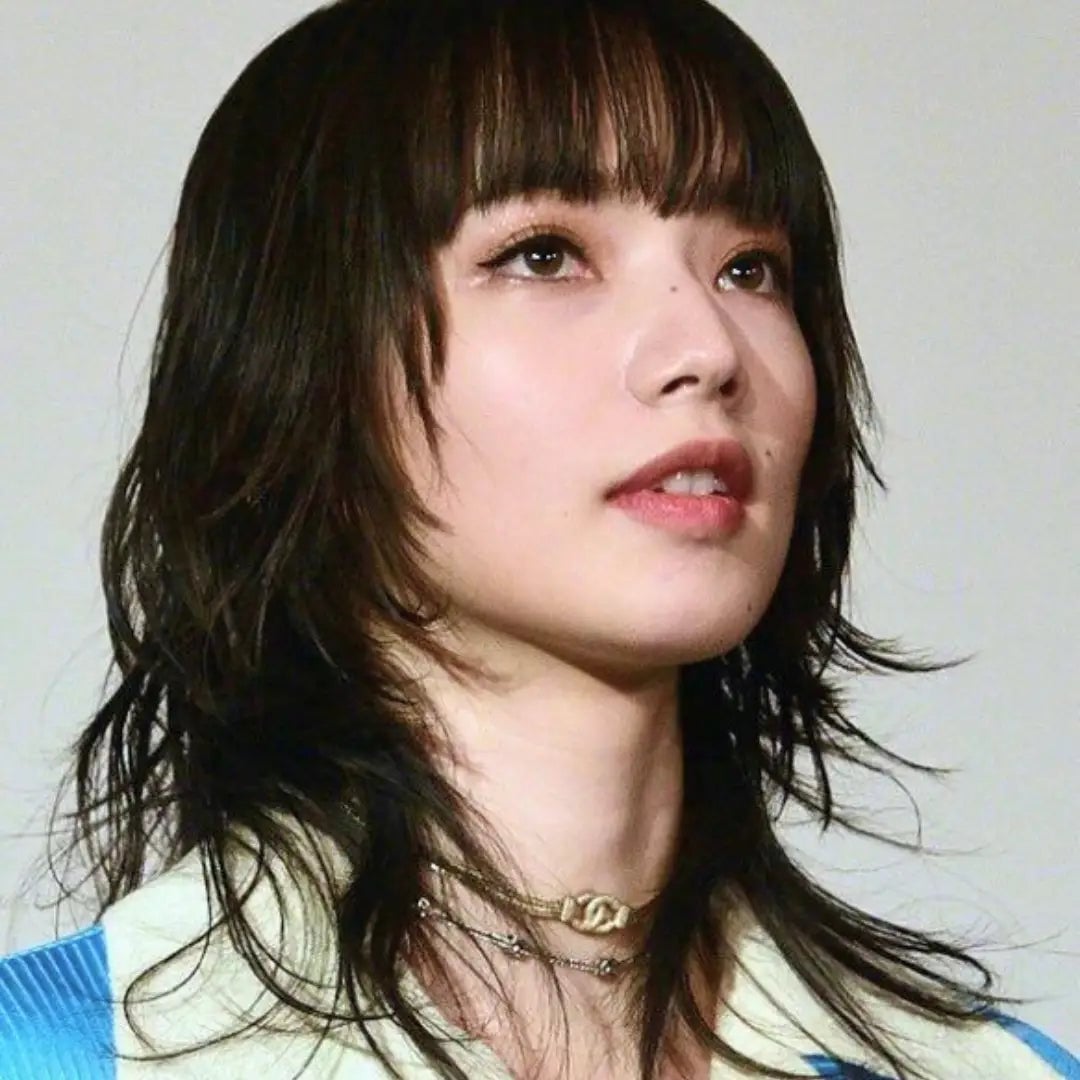
This shag uses layers that land at collarbone, with choppy bangs breaking across the forehead. Medium to thick hair with natural wave is the best starting point; straight hair tends to swallow the texture. Ask your stylist for: collarbone shag with choppy bangs. Damp strands air dried or diffused coax out the waves. The subtle lighter highlights make the layers read as intentional.
Edgy Short Pixie With Textured Fringe
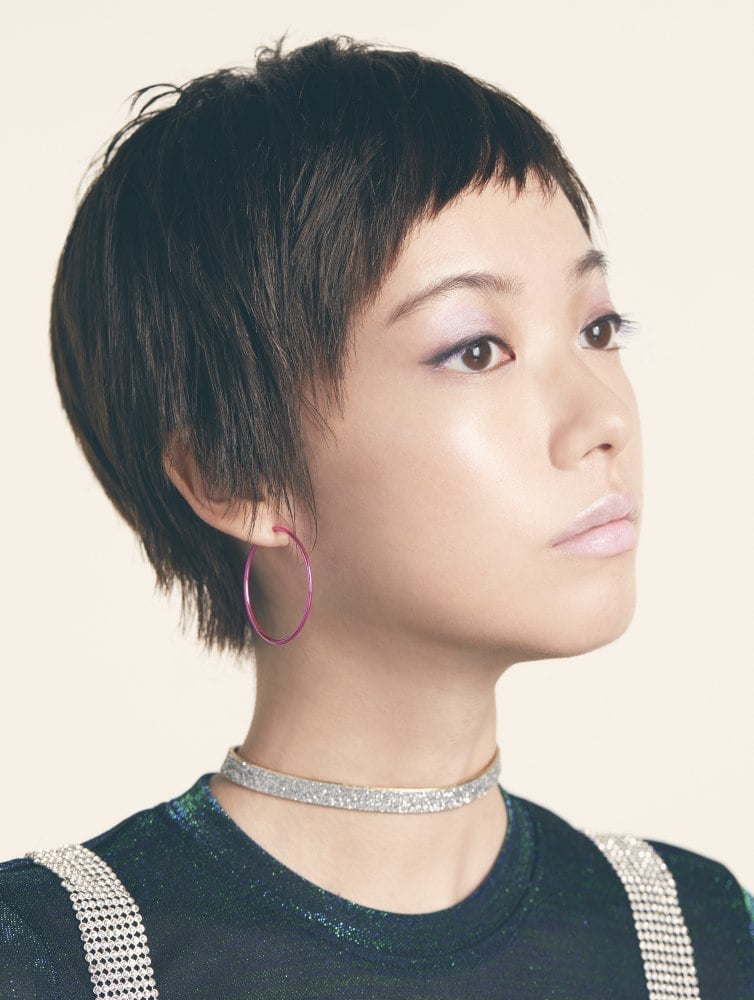
Where a classic pixie can look too tidy, this version uses a textured fringe and side parting to add an edge. Fine, straight hair can struggle to hold that texture without product. A matte wax or paste is the difference between sculpted and flat. Ask your stylist for: short, edgy pixie with a textured fringe. The real drawback is the grow-out: this cut needs a salon visit every four to six weeks, no negotiation.
Chin Length Black Blunt Bob
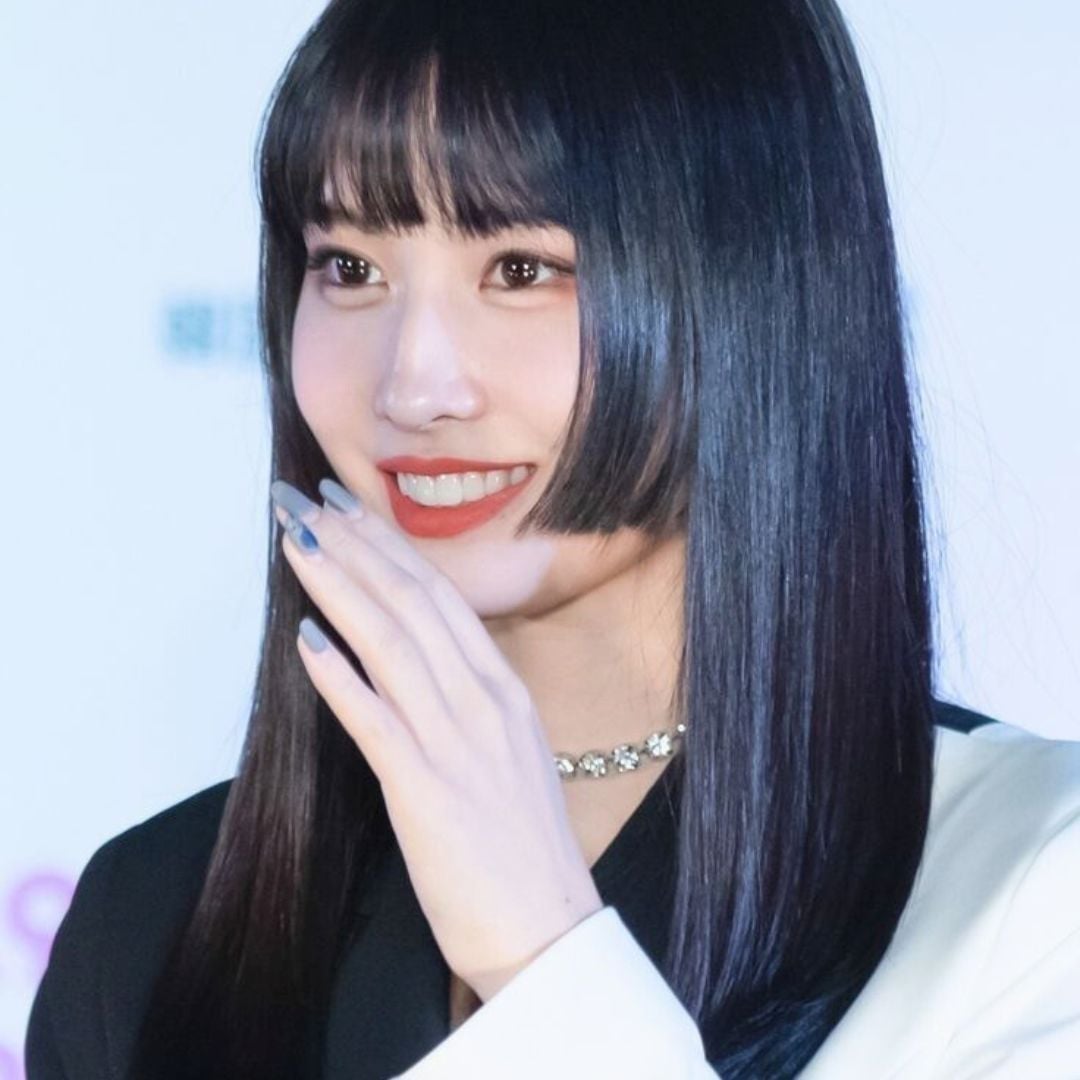
A blunt bob lives or dies by its baseline, and this one lands exactly at chin with a straight-across fringe to match. Thick, straight hair holds the sharp line best; fine hair can look wispy at the ends. Ask your stylist for: chin-length blunt black bob with blunt bangs. The contrast with a softer alternative like a layered lob comes down to maintenance. This cut demands a precise trim every six to eight weeks to keep the geometry intact.
Sleek Japanese Bob With Blunt Bangs
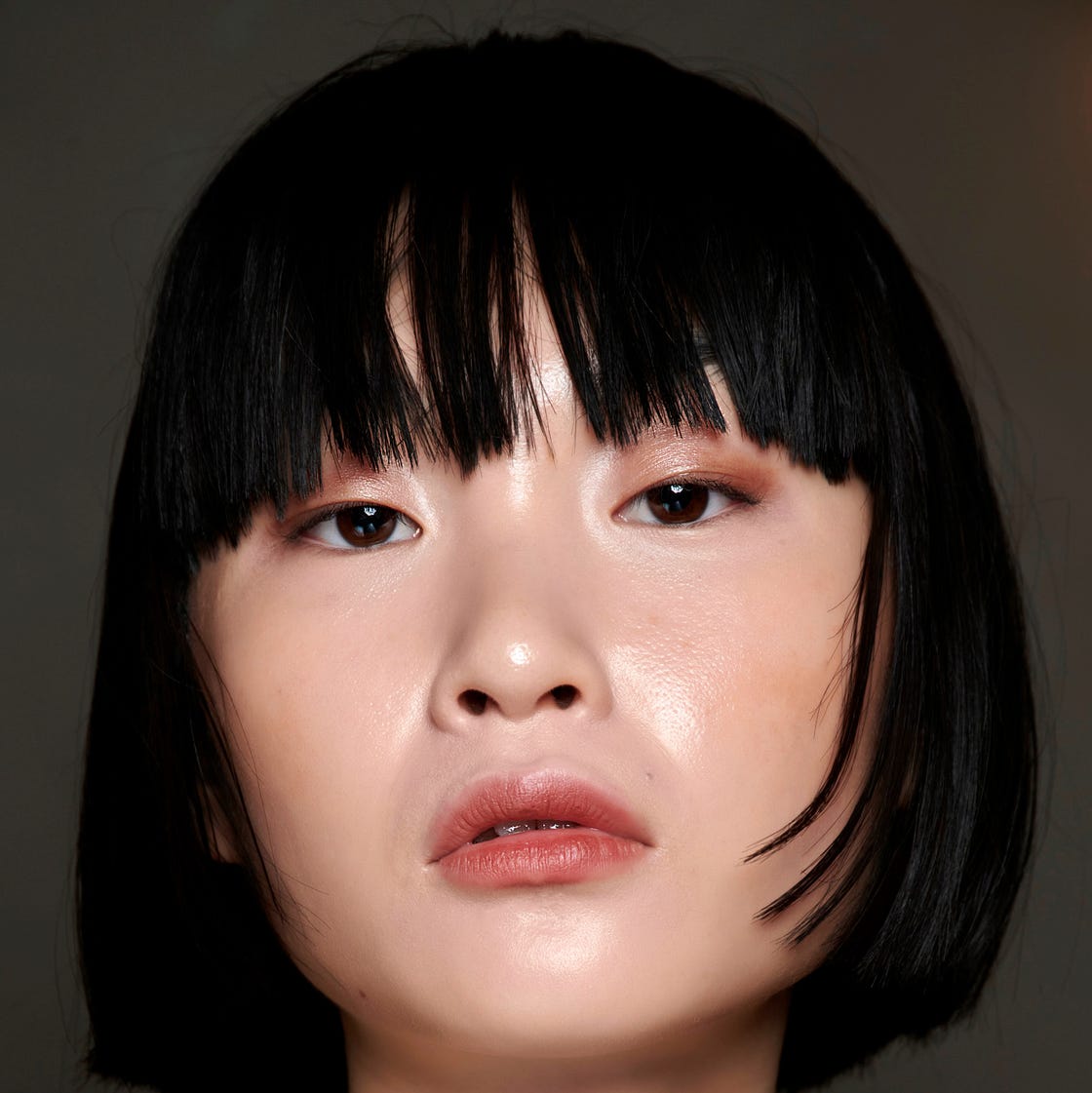
The design is deceptively simple: a chin-length bob with blunt bangs, all relying on a mirror-smooth finish. Fine, straight hair works best, as thickness can make the blunt fringe feel heavy. Ask your stylist for: sleek chin-length bob with blunt bangs. A flat iron and a smoothing serum deliver the gloss, but the cut itself is what keeps the line from reading as a home trim. A blunt fringe this precise needs a salon touch-up every six to eight weeks.
Textured Ear-Length Pixie With Highlights
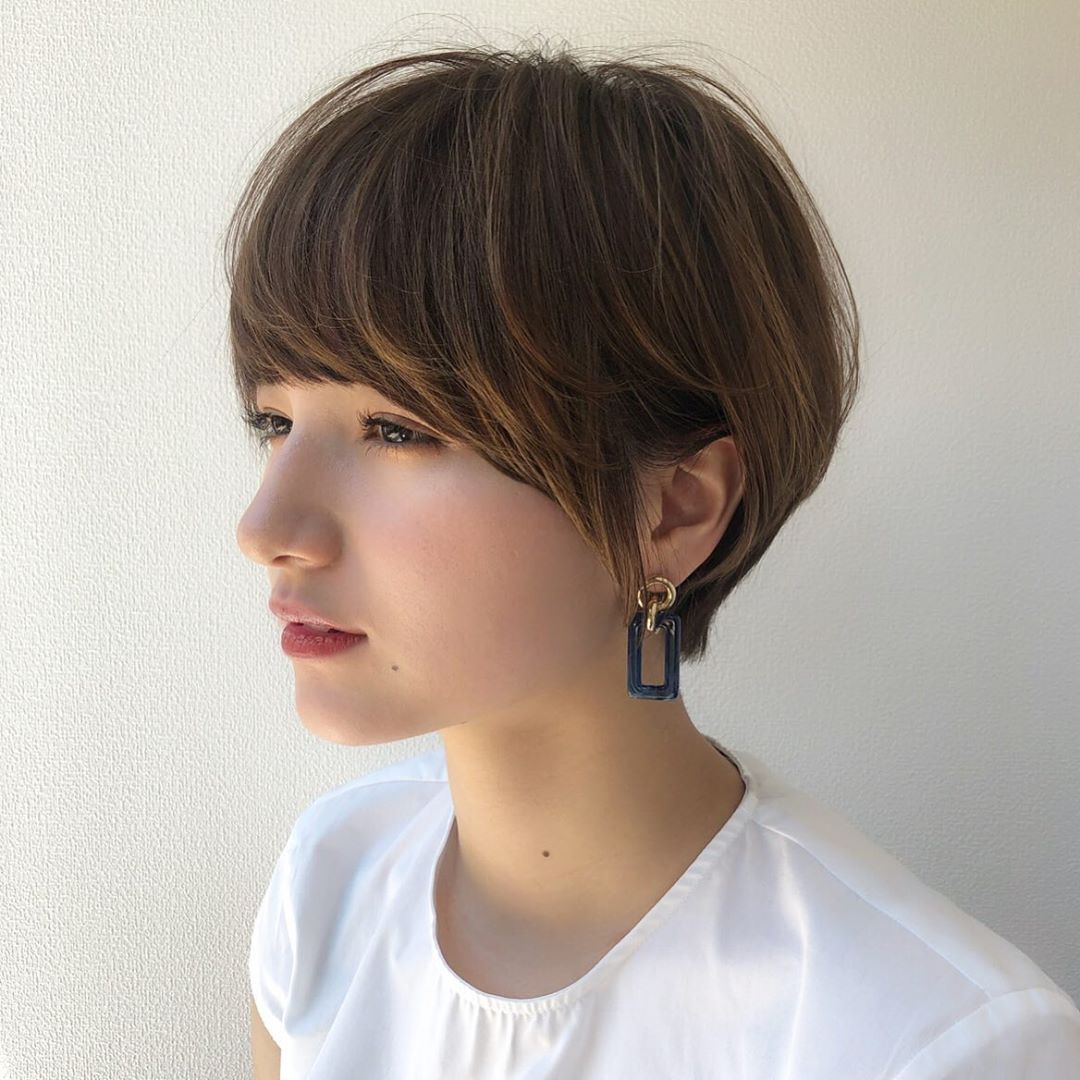
How does a short cut avoid looking flat? Texture layers and a side-swept fringe, plus subtle highlights that keep the shape from blending into one solid block. Fine, straight hair at ear length is the right starting point, longer strands lose the lift. Ask your stylist for: ear-length textured pixie with side-swept bangs and subtle highlights. This style does not hold itself; a texturizing paste worked through the layers each morning defines the sweep, and the shape demands a trim every four weeks.
Tousled Short Layered Hair With Highlights
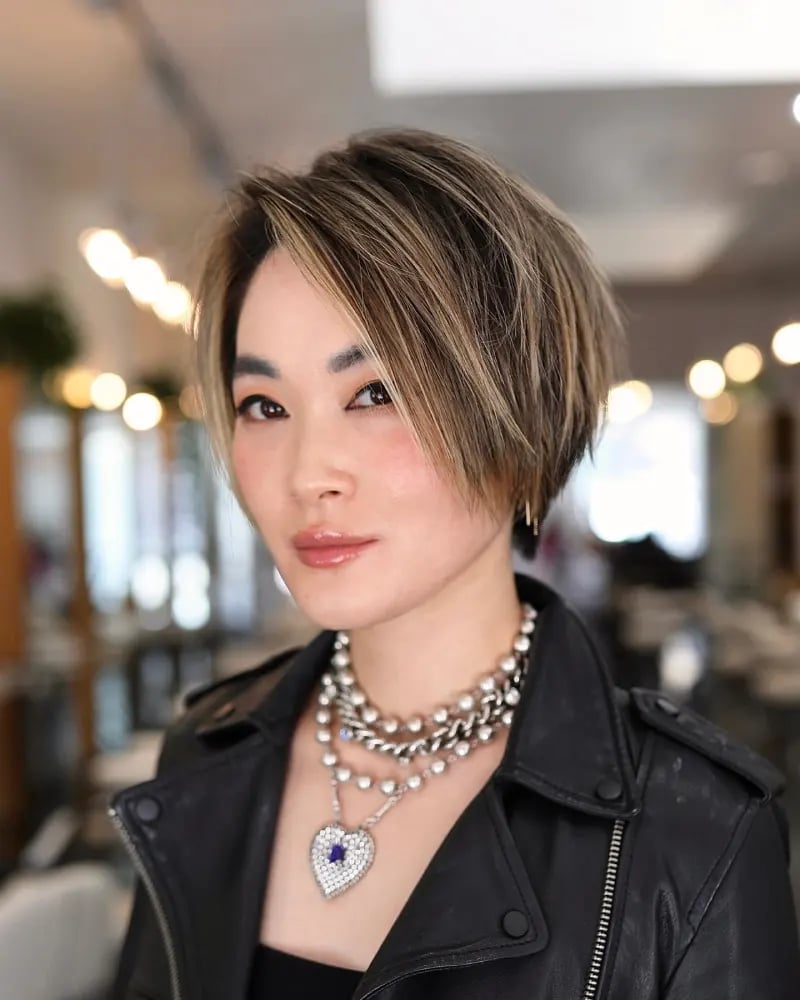
The highlights here do the heavy lifting, brightening a short, layered cut that otherwise stays understated. Dark brown base, blonde pieces woven through the top and sides, all of it styled into a deliberately undone texture. Fine, wavy hair gains visual thickness from the contrast. Ask your colorist for: short, layered, tousled hair with blonde highlights and side-swept bangs. A texturizing spray or dry shampoo keeps the mess in check. A trim every four to six weeks holds the shape through the warmer months.
Choppy Ear-Length Pixie With Tousled Bangs
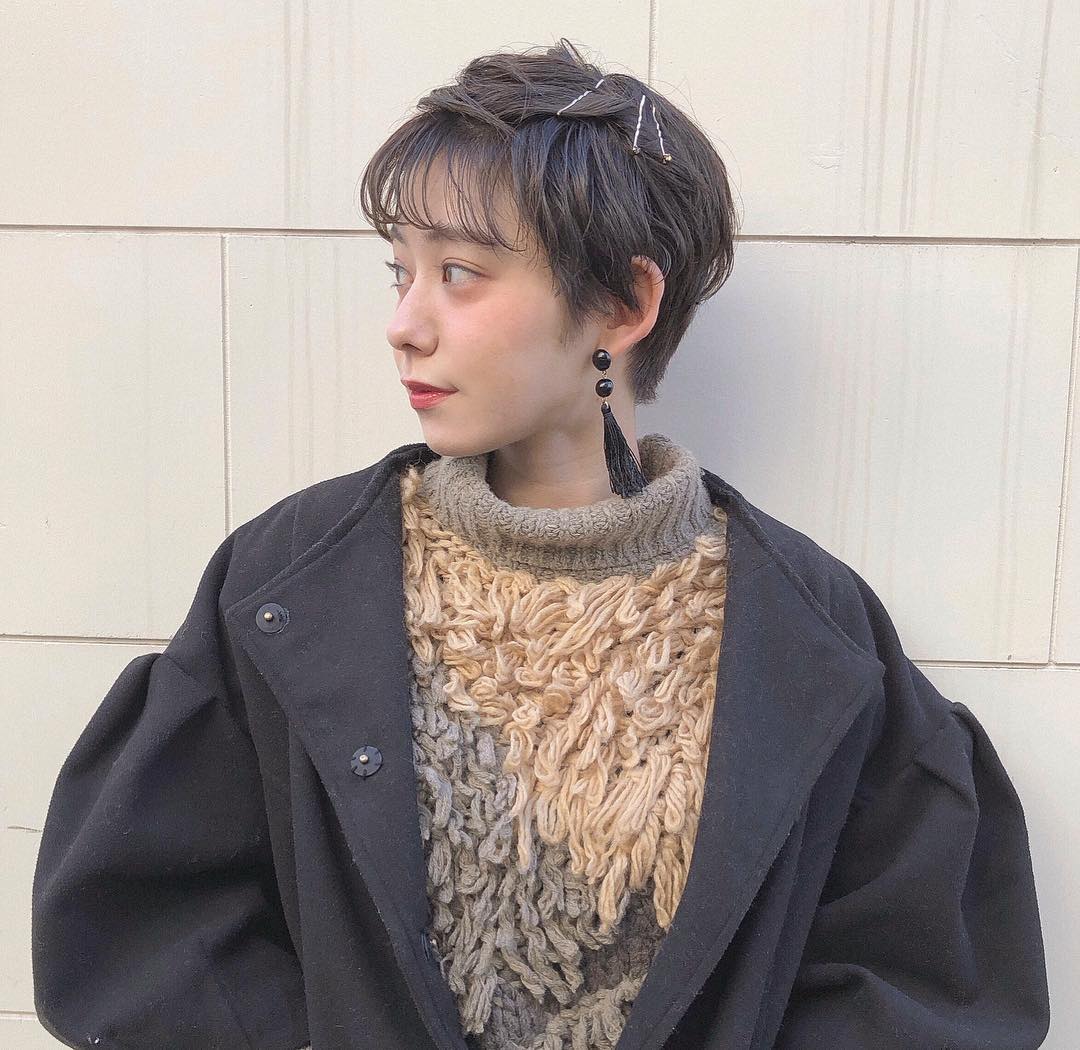
It looks messy on purpose, but the cut is precise. A short pixie, just past the ear, with cropped bangs that land somewhere between choppy and delicate. Fine, straight hair benefits from the texture: the jagged ends create volume that the cut alone would not hold. Ask your stylist for: short choppy pixie with tousled bangs. Recreate the finish at home with a dab of styling paste worked through dry hair. Finger-comb, do not brush. It takes about two minutes and requires a trim every three to four weeks to keep the choppiness clean.
Sleek Chin Length Ash Blonde Bob With Falling Sharply Around The Face
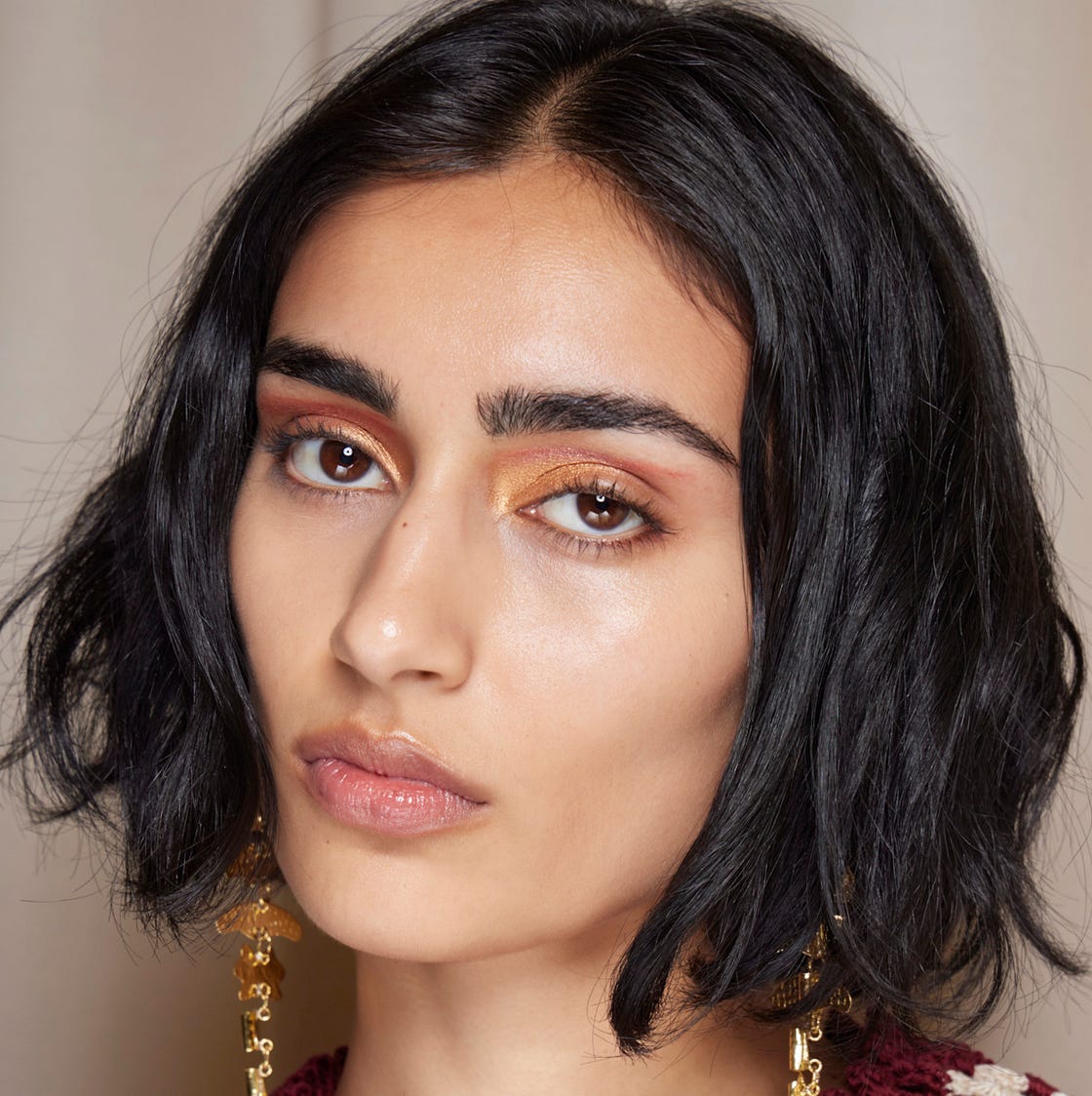
A chin-length bob with a middle part looks simple until you consider what it takes to keep that line sharp. Every strand must fall at the exact same angle, which means fine, straight hair is the ideal canvas: it holds the sleek shape without puffing up. Ash blonde reads as cool and modern, but the shade needs a toning shampoo every two to three weeks to stay that way. Ask your stylist for: sleek, chin-length ash blonde bob with a middle part. A flat iron and a shine serum deliver the glossy finish, and a trim every six to eight weeks is non-negotiable. The honest drawback is that the cut shows every single bend, so humidity and sleeping on wet hair will undo the look fast.
Wavy Chin Bob With Blunt Bangs
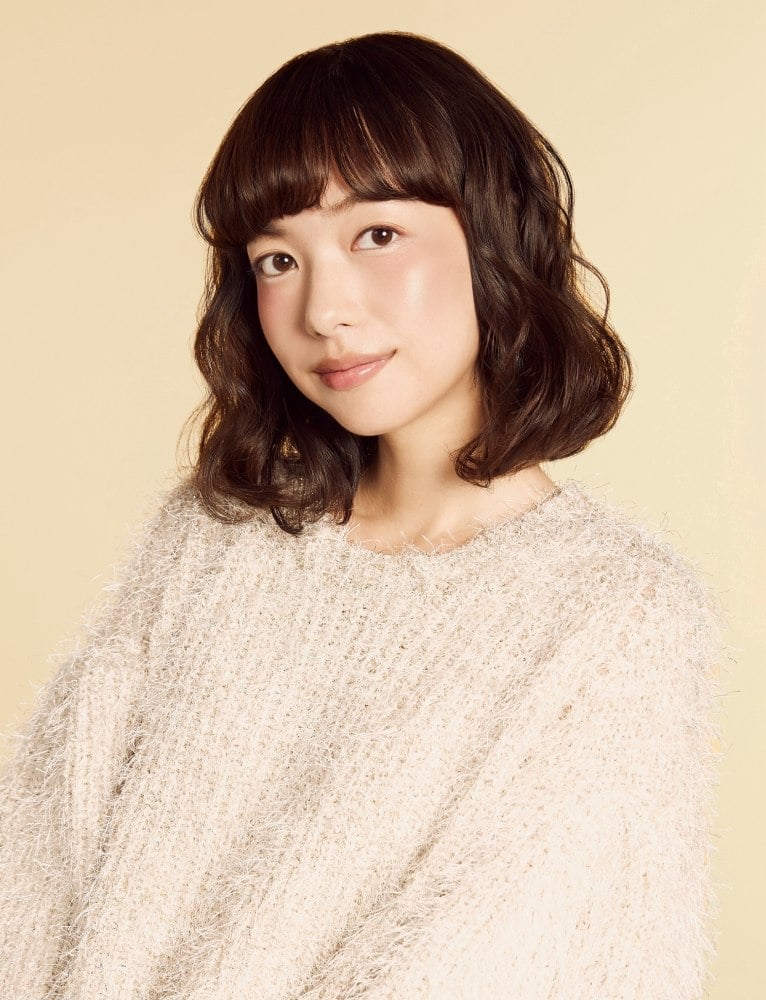
How does a bob with blunt bangs avoid looking severe? Soft waves. The chin-length dark brown cut lands just at the jaw, and the bangs are cut straight across, but the wave pattern breaks up the hard line. Medium-density, wavy hair holds the bend well without product. Ask your stylist for: chin-length wavy bob with blunt bangs. The bangs need a trim every three to four weeks to stay blunt; the length can go longer. A curling wand on low heat or a diffuser on medium speed sets the wave in under ten minutes.
Collarbone Layers With Blonde Ombré Ends
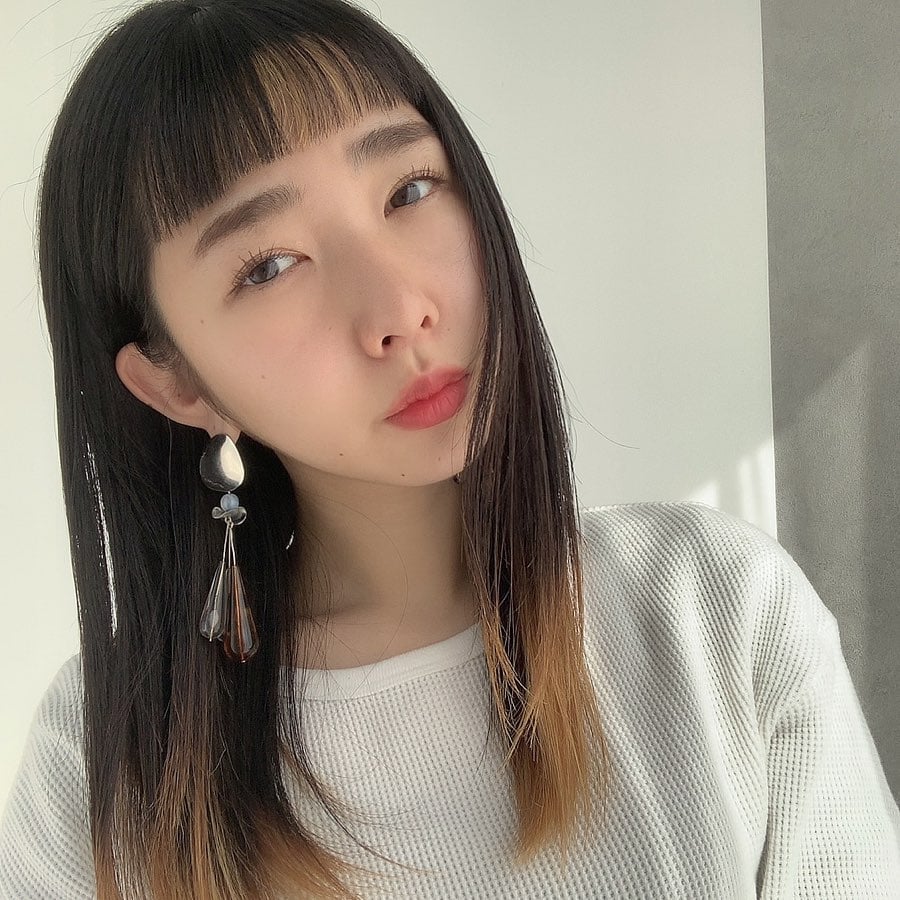
Blonde ombré on fine, straight hair usually reads as grown-out balayage. Here the transition sits at the collarbone, the dark brown base giving way to a lighter end that never touches the root. Blunt bangs and a middle parting keep the shape direct. Ask your colorist for: collarbone layers with blunt bangs and blonde ombré. Styling is minimal: air-dry with a leave-in conditioner for a natural finish, or hit the ends with a flat iron for a sleeker line. The ombré grows out softly, so a salon visit every ten to twelve weeks is enough.
Rose Gold Bob With Bun Accent
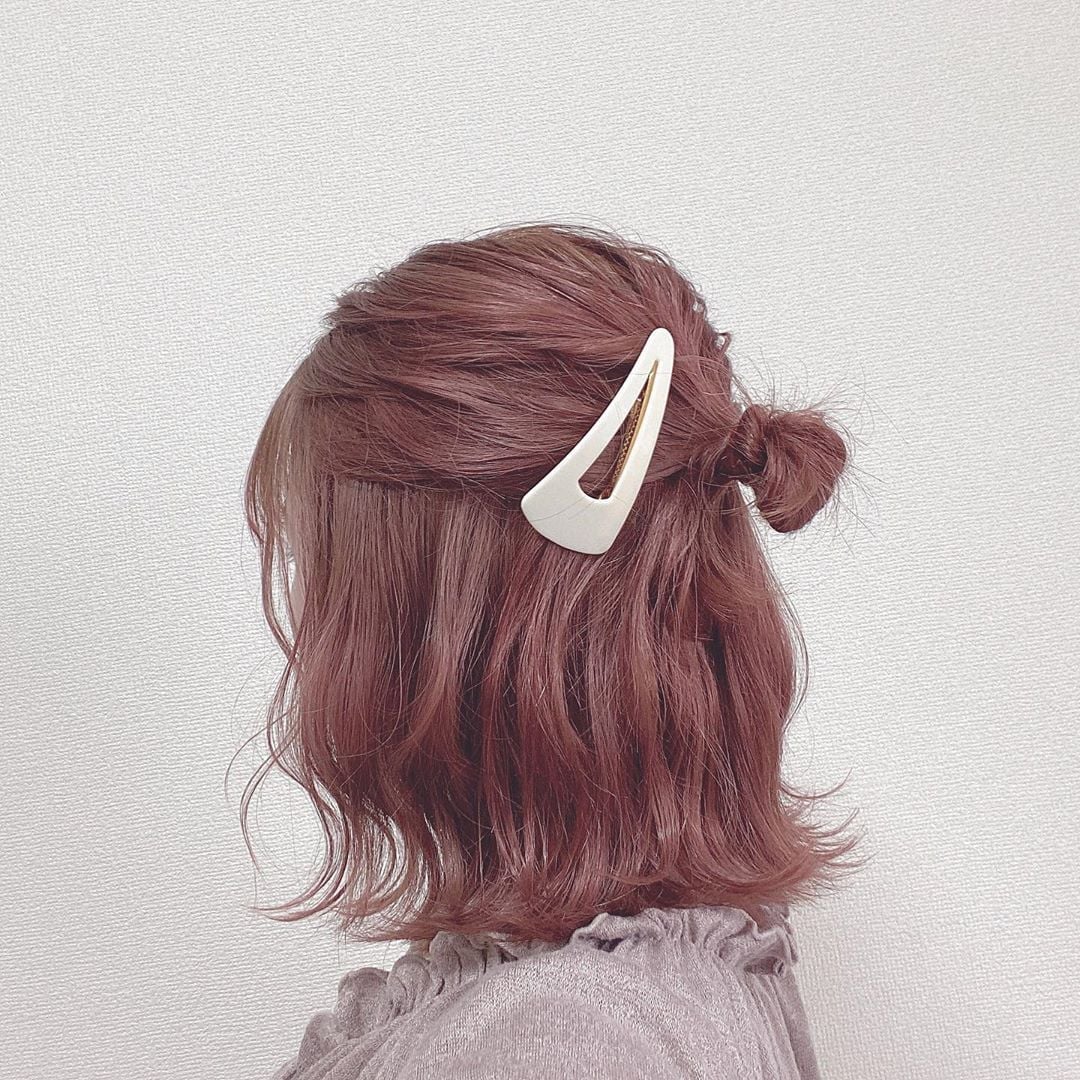
Think of this as the bob that refuses to be boring. A collarbone-length cut in rose gold gets styled into loose waves, then a small bun accent on one side, held by a white hair clip, adds the kind of detail that looks intentional rather than accidental. Ask your stylist for: collarbone bob with loose waves and a small bun accent. The bun works best on medium, wavy hair that holds shape without pins fighting you. Create it on dry hair after a quick spritz of texture spray. The color needs a toning appointment roughly every four to six weeks to keep the rose gold from drifting too warm.
Collarbone Waves With Curtain Bangs
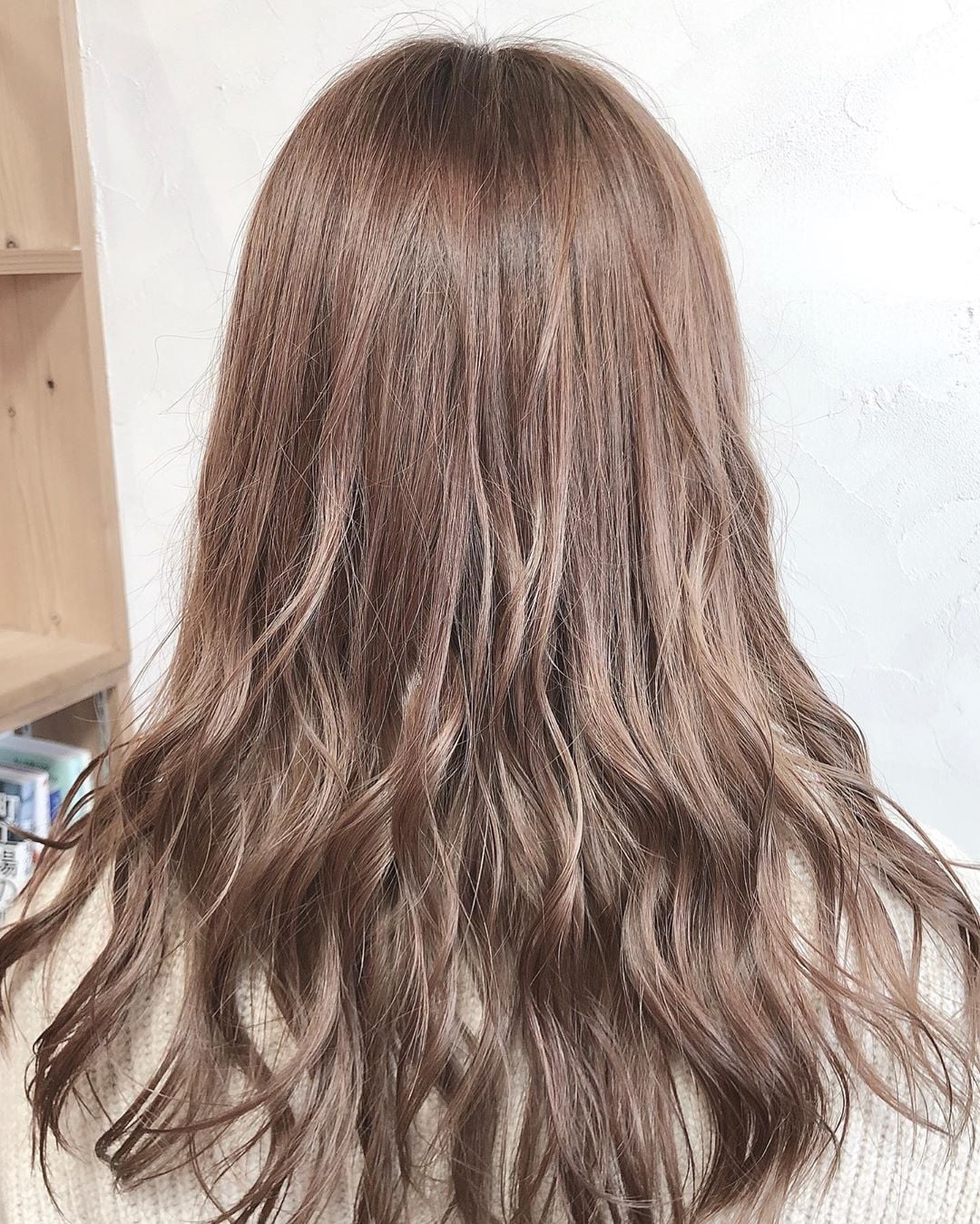
The design here is simple: collarbone-length waves with a middle part, and curtain bangs that do the heavy lifting. Medium brown hair with subtle lighter highlights keeps it from reading flat. Ask your stylist for: collarbone length loose waves with curtain bangs. The curtain bangs soften most face shapes, particularly round and square ones, because the length pulls forward rather than sitting wide. Medium density wavy hair takes this best, fine hair may need a little mousse at the roots to hold the wave pattern. A round brush and a dryer pointed away from the face are all the technique this requires.
Medium Brown Collarbone Lob With Curtain Bangs
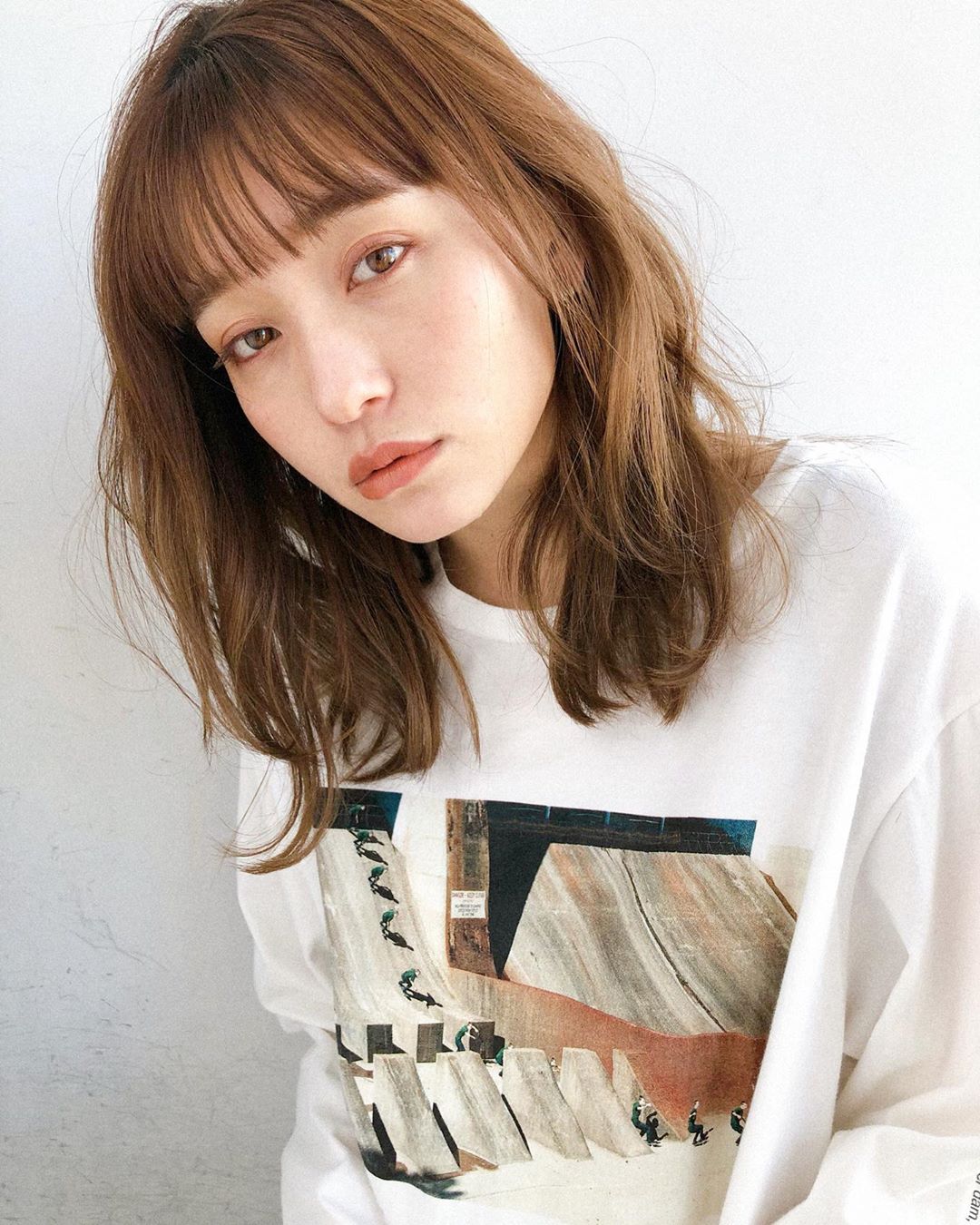
Wondering whether to go shorter or stay longer? A collarbone lob splits the difference. Medium brown hair with subtle highlights is cut in loose layers, then styled in soft waves with curtain bangs that hit right at the cheekbone. Ask your stylist for: collarbone lob with loose waves and curtain bangs. Unlike a chin-length bob, this length lets you pull it back or change your part without the cut fighting you. The curtain bangs soften round and square faces, and the wavy blowout adds volume where a straight lob might fall flat. A trim every six to eight weeks keeps the ends clean and the fringe from grazing your lashes.
Shoulder Length Messy Ponytail With Wispy Bangs
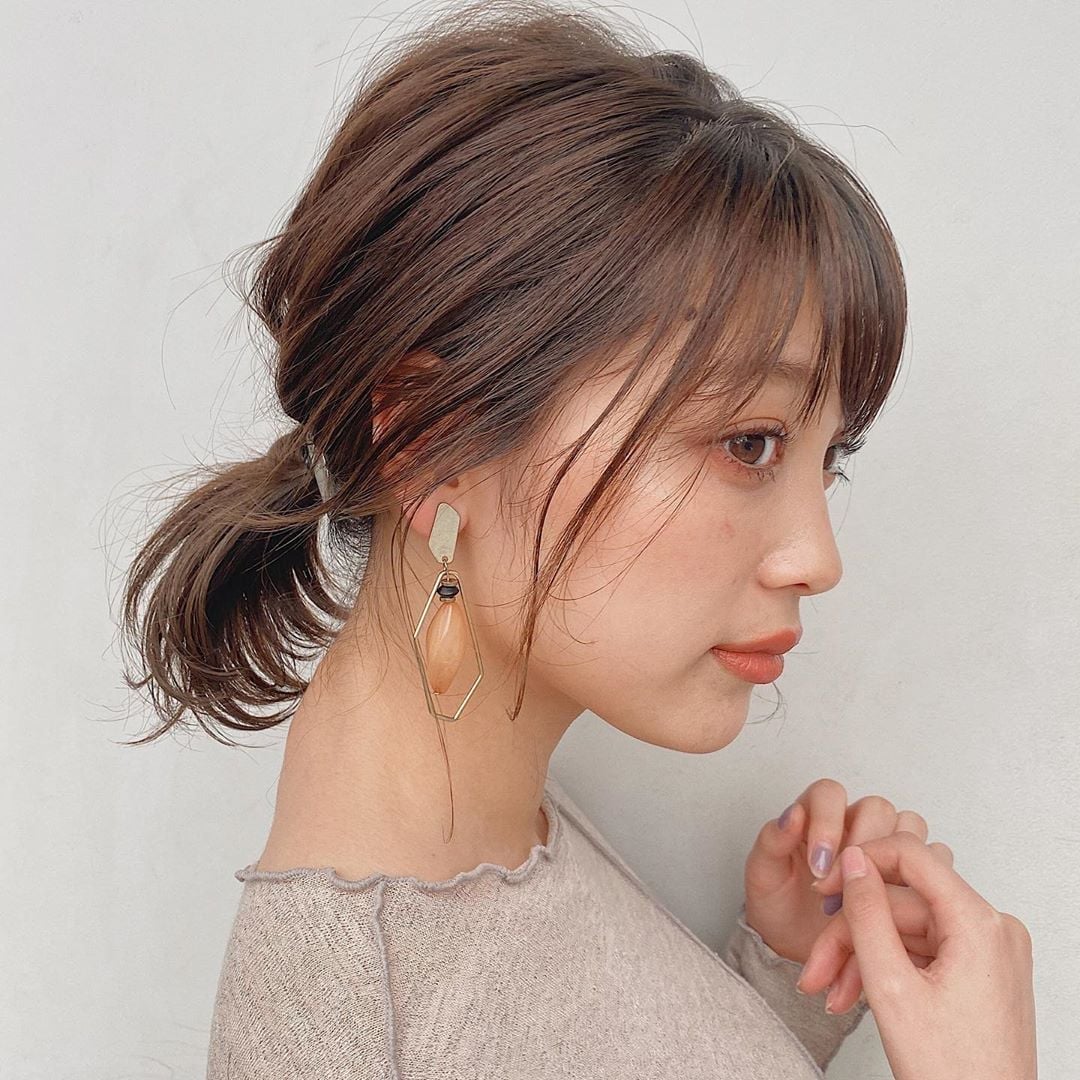
A messy ponytail that actually looks deliberate starts with the right foundation. Shoulder-length medium brown hair is pulled into a low ponytail with wispy bangs and loose tendrils at the temples. Ask your stylist for: messy shoulder-length ponytail with wispy bangs. To get this at home, gather the hair loosely at the nape, secure it, then pull a few strands out around the face. A texture spray on the lengths and a quick scrunch add the lived-in finish. The wispy bangs soften angular jawlines, and the side part keeps the ponytail from sitting too symmetrical. This is a ten-minute style that looks polished but not rushed.
Mid-Back Glossy Waves With Face-Framing Bangs
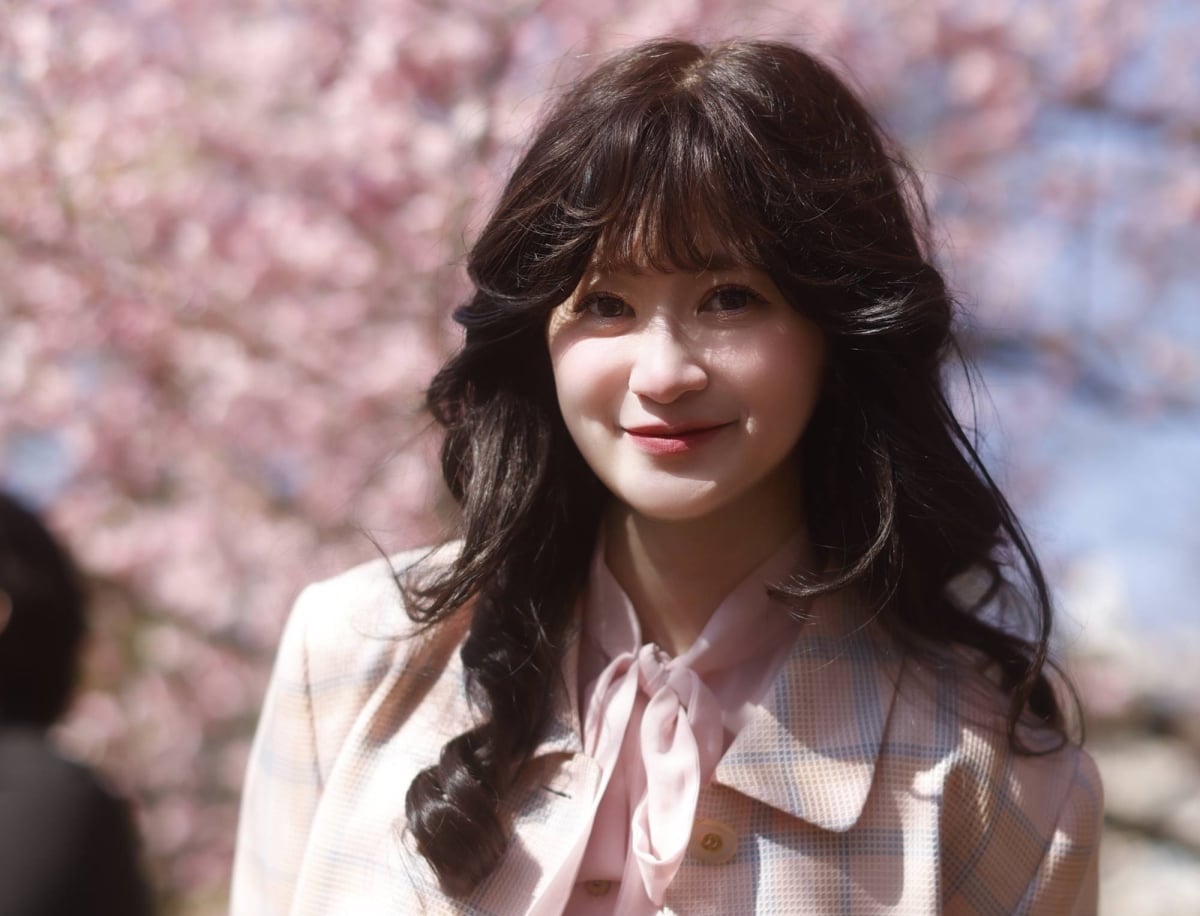
Glossy waves at mid-back length require a blowout that delivers both volume and polish. Thick, dark brown hair with subtle lighter pieces is parted in the middle, then styled in loose waves that catch the light. Face-framing bangs soften the front without shortening the overall length. Ask your stylist for: mid-back loose glossy waves with face-framing bangs. A large-barrel curling iron and a shine serum are the tools, and the hold is flexible. The waves stay defined for a full day without feeling stiff. This length suits thick hair best; fine hair may need a volumizing mousse at the roots to keep the wave pattern from collapsing.
Mid-Back Loose Curls With Side-Swept Bangs
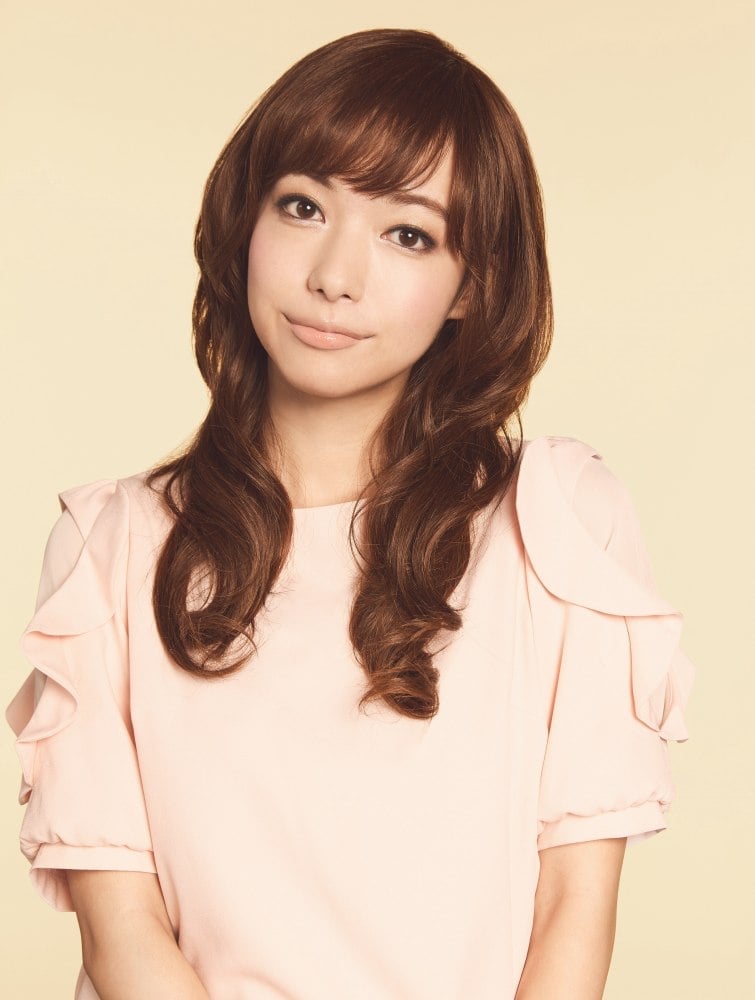
Loose curls that don’t sacrifice shape for softness are a rare balance, and this mid-back length style nails the ratio. The medium brown base lets the wavy texture read clearly, while the side-swept bangs cut across a side parting to soften the whole silhouette. Medium density hair holds these curls without going heavy, so the movement stays visible from root to end.
Ask your stylist for: mid-back loose curls with side-swept bangs. A diffuser on low heat coaxes the wave pattern without frizz, and the bangs need a trim every four weeks to keep that sweep precise. Straight hair won’t hold the curl as long, so a texture spray before heat helps.
Mid-Back Ponytail With Waves and Bow
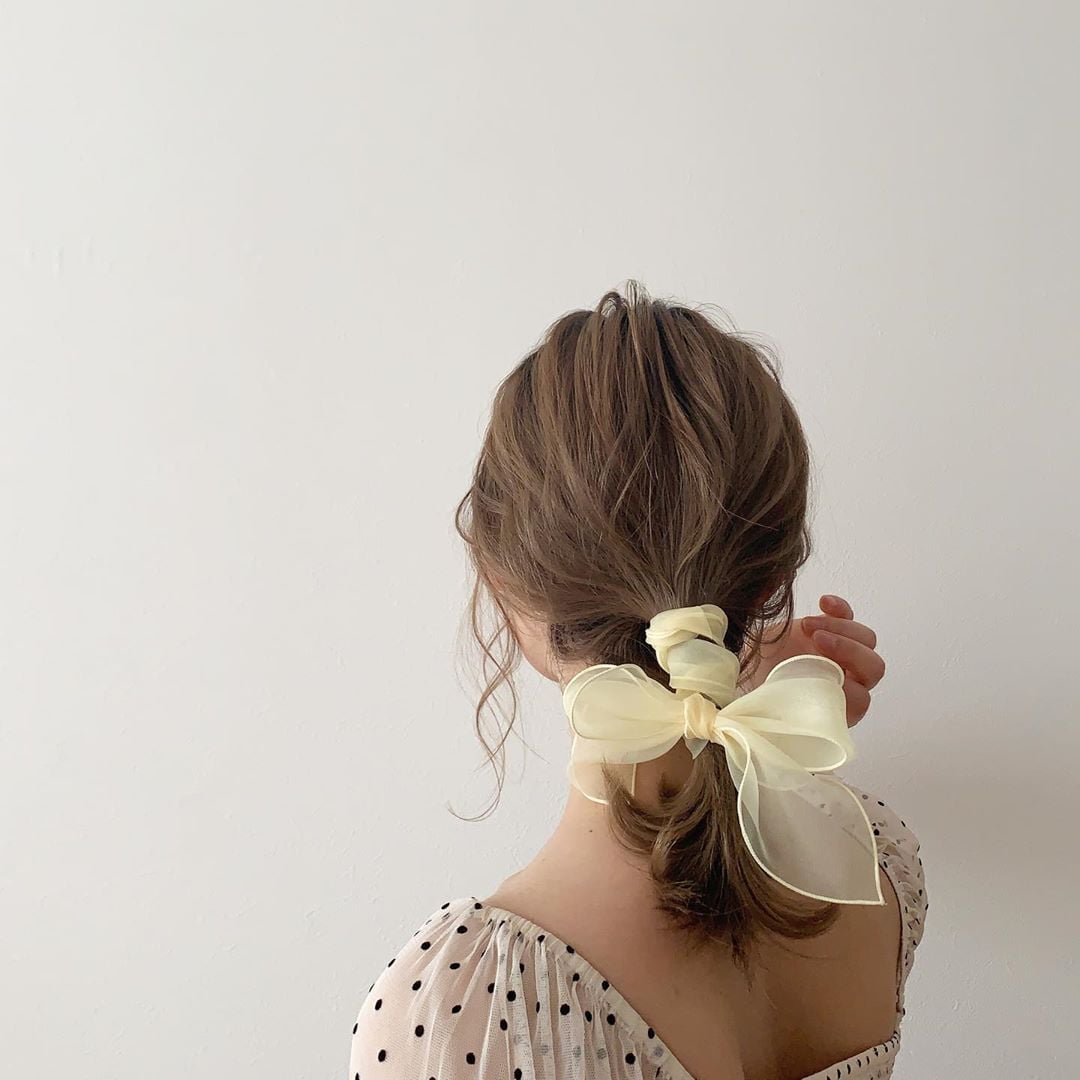
This is not your standard slicked-back ponytail. The low ponytail sits at the nape, with loose waves running through the mid-back length for a softer finish. The large sheer yellow bow is tied around the base, turning a simple gather into a deliberate accent. Light brown, medium-density wavy hair gives the texture enough grip to hold its shape without pin-straight sections fighting the curl.
Ask your stylist for: mid-back low ponytail with waves and a large bow. To recreate it at home, braid damp hair in two sections overnight, then gather into a low ponytail and add the bow. The waves should be fully dry before you tie the ponytail, or the band will create a dent. A salon does the same thing in less time, but the DIY version costs nothing extra.
Traditional Japanese Bridal Updo With Ornaments
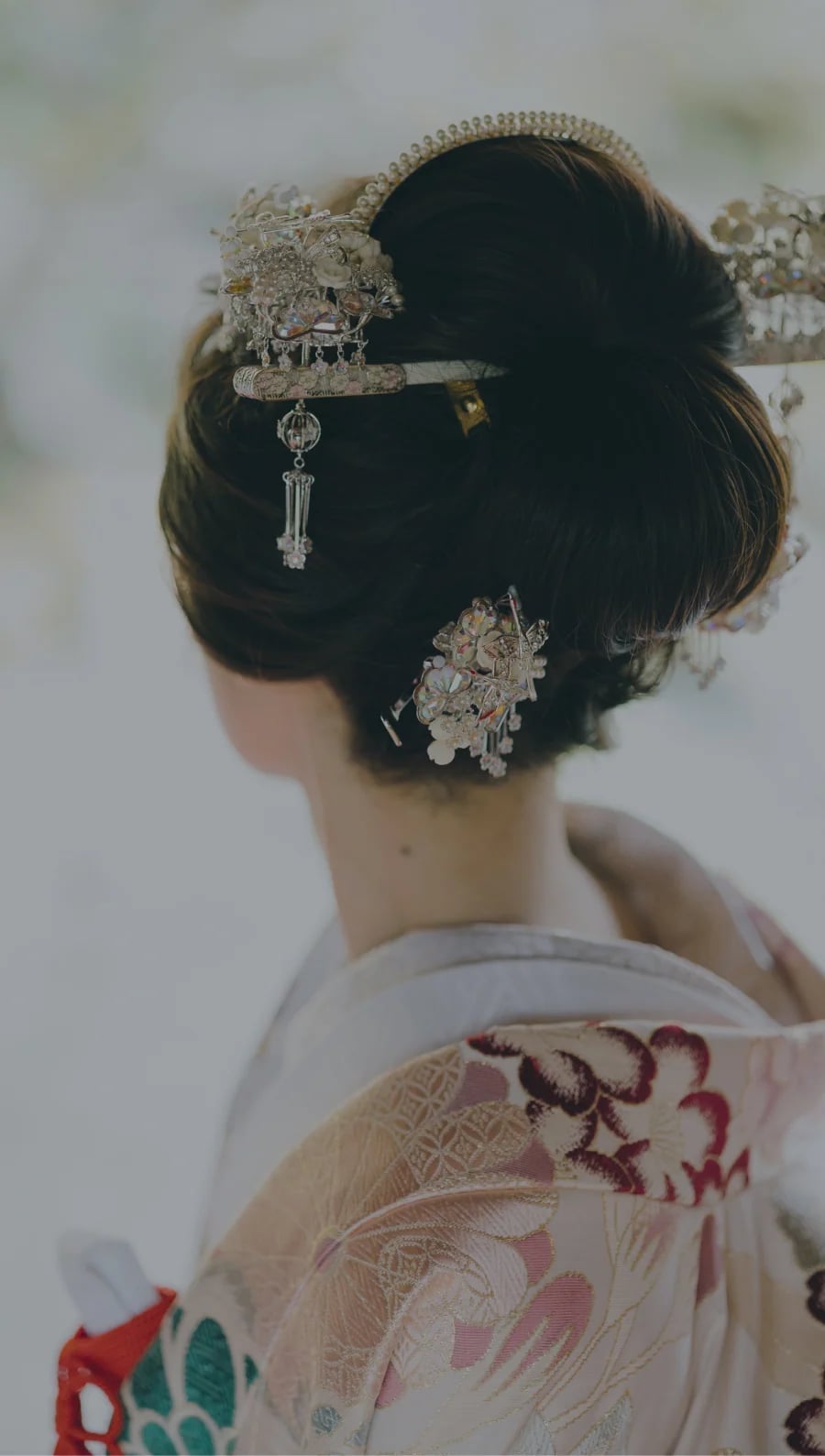
A traditional bridal updo relies on thick, straight dark hair that can hold an intricate structure without slipping. The back view shows the hair swept into a compact shape, with silver and floral ornaments woven through the mass. Every piece is pinned in a specific order, so the ornaments sit flush against the hair rather than floating on top. This is a wedding-only occasion, and it demands a stylist who knows the construction sequence. Ask your stylist for: traditional Japanese bridal updo with silver and floral ornaments. The hold comes from the pin placement, not from heavy product buildup.
Elegant Black Updo With Traditional Ornaments
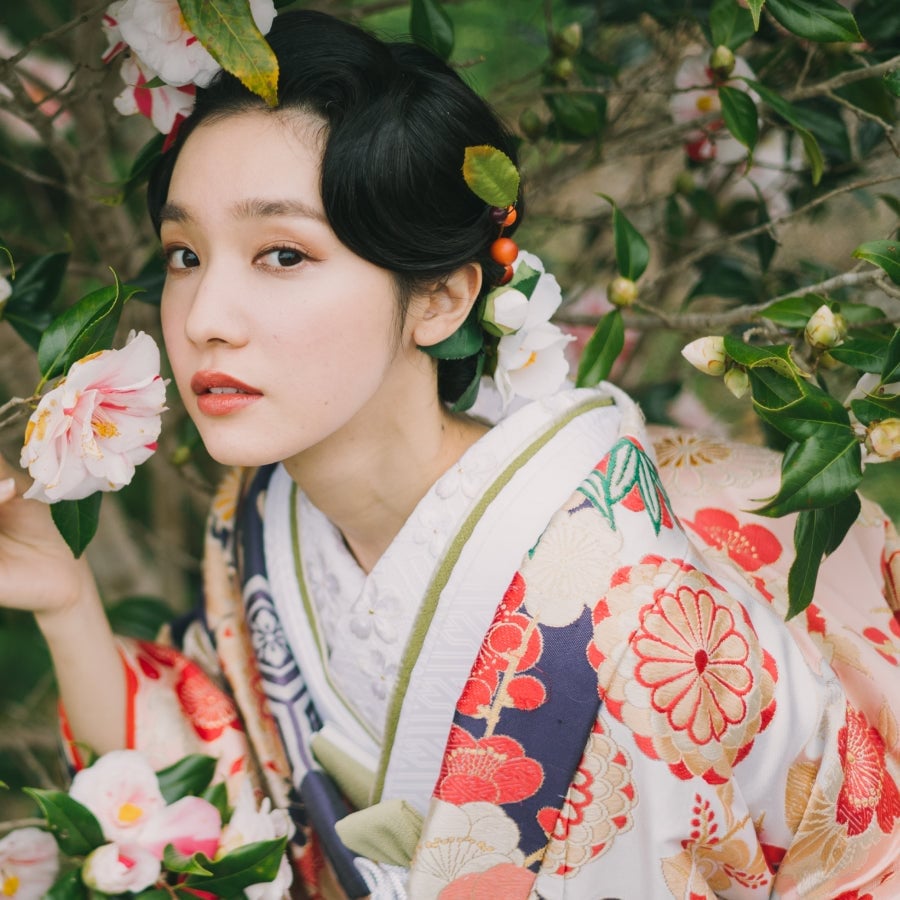
Black, thick, straight hair has a natural slickness that works for sleek silhouettes but fights against updos that need grip. This traditional bridal style counters that by using a middle parting and a dense arrangement of flowers and beads to anchor the structure. The hair is swept up from the nape and secured in a compact shape that keeps the ornaments visible from the front.
Ask your stylist for: elegant black updo with traditional flower and bead ornaments. The real drawback is the slip factor: without enough pins and a light holding spray, the weight of the ornaments can pull the style loose within a few hours. Clean, smooth hair is the best starting point, but a rough-texture finishing spray on the base sections gives the pins something to grab.
Shimada Hairstyle With Floral Wreath
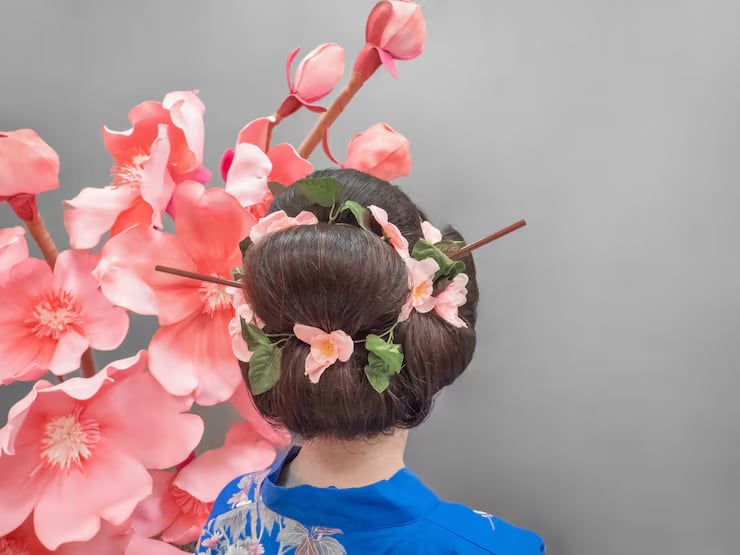
Where does a wreath of pink flowers and green leaves belong on a traditional bun? Exactly at the crown, circling the base of a neat Shimada shape. This back view shows dark brown, thick, straight hair gathered into a precise bun, with the floral accessory sitting as a ring rather than a single clip. The style is built for ceremony, not for casual wear, and the flowers signal a seasonal or celebrational occasion like a wedding or festival.
Ask your stylist for: traditional Shimada hairstyle with a floral wreath. The construction requires sectioning the hair into specific zones before the bun is formed, so the wreath sits evenly. The stylist needs to place each flower stem into the bun rather than pinning the whole piece on top, which keeps the arrangement stable for hours.
Elaborate Shimada Updo With Floral Adornments
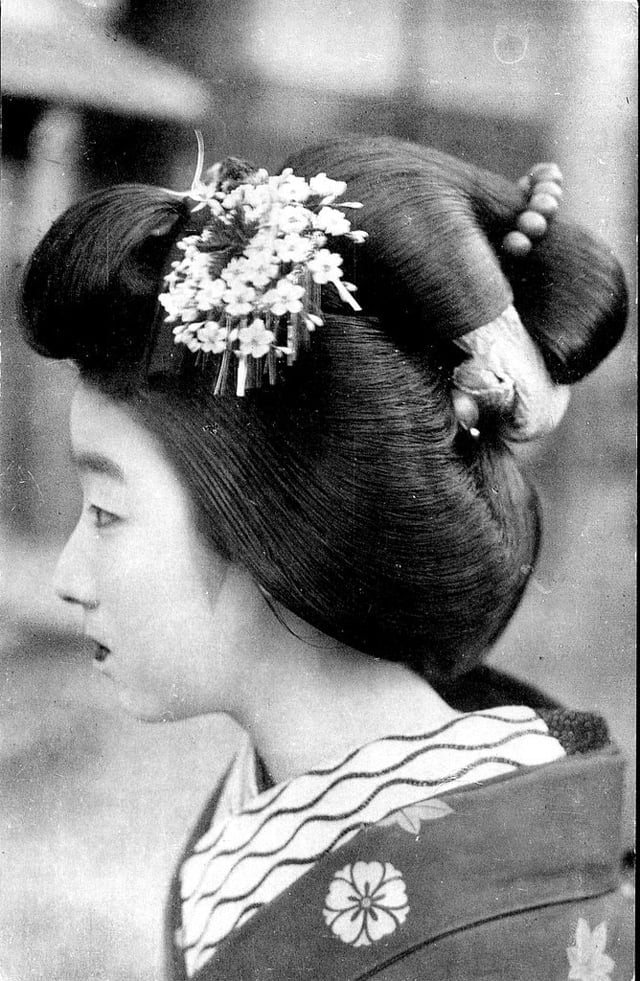
The Shimada updo is a study in engineered volume, with a prominent bun that sits high enough to change the whole silhouette. It leans on hair that is thick and straight, since the structure depends on weight and density to hold its shape without pins doing all the arguing. Mid-back length is the practical starting point, and the style keeps the nape clean while the floral adornments do the talking. Ask your stylist for: elaborate Shimada hairstyle with floral adornments. This is a salon-only construction, best attempted when your hair has been conditioned enough to cooperate.
Meticulously Styled Shimada Updo
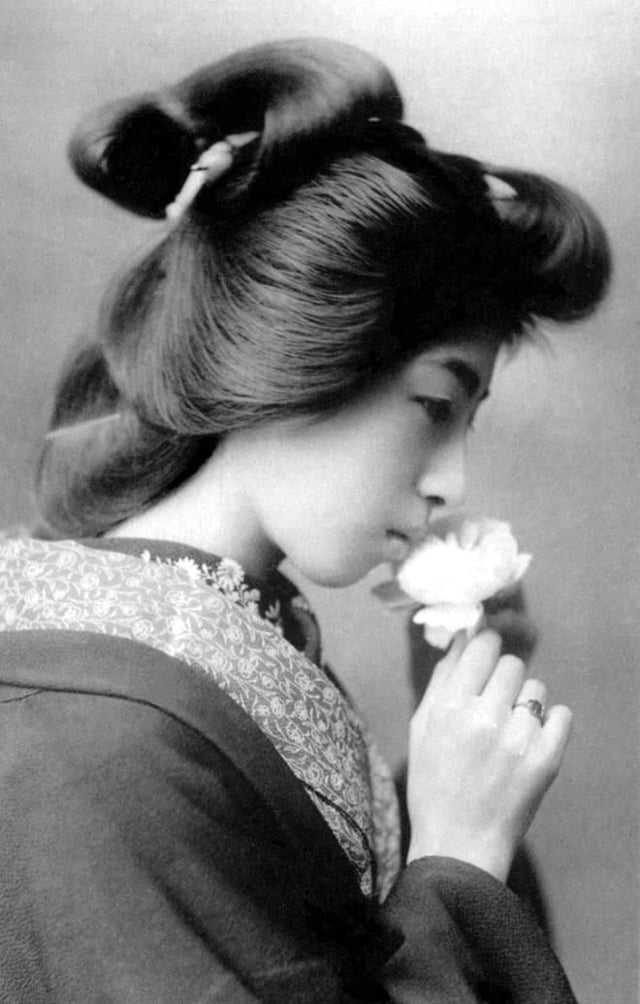
A meticulously styled Shimada updo holds its line because every section is pinned with intent, which is exactly why it does not survive a casual afternoon. The bun keeps its pronounced shape only while the pins stay put, and any vigorous head movement will start a slow rebellion. This is the trade-off: the look is immaculate, but it demands a professional hand and a willingness to sit still. The thick, straight texture of mid-back black hair gives the style its clean edges, and the absence of bangs keeps the focus on the architecture. Ask your stylist for: meticulously styled Shimada updo. Expect to book a salon slot and to treat the result as a special-occasion arrangement, not an everyday option.
Twisted Updo With Ornate Floral Accessory
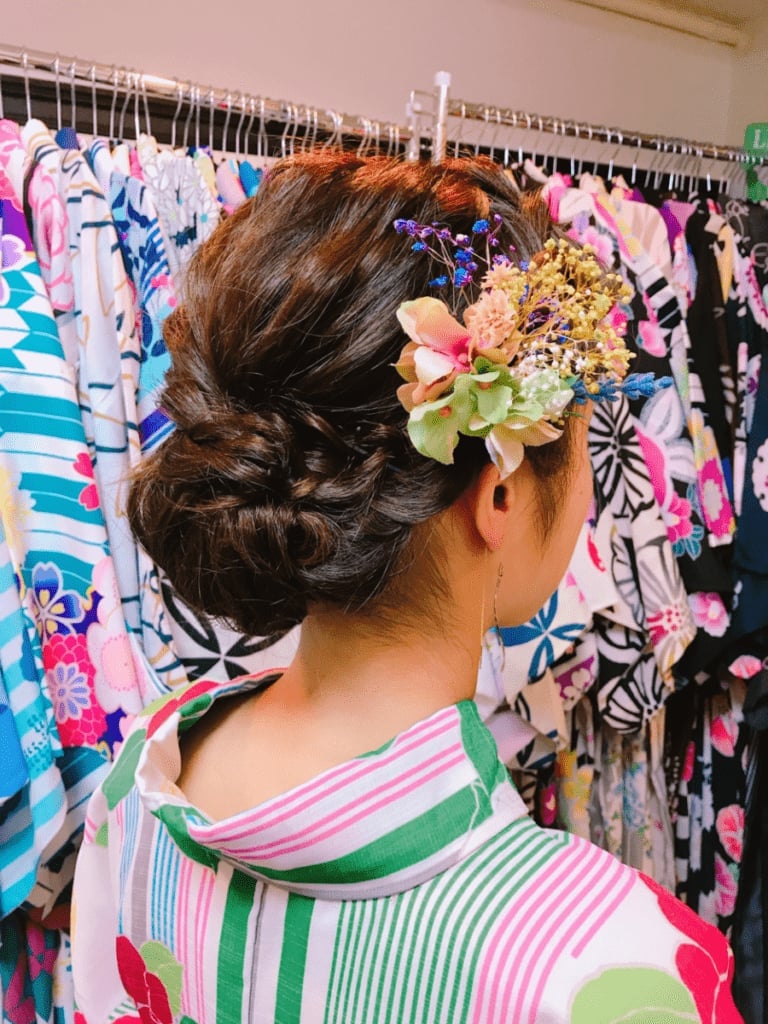
If you want the polish of a sleek chignon but with more going on, the twisted updo is the close alternative. It gathers dark brown hair into a smooth, thick twist at the nape, and the ornate floral accessory does the heavy lifting for personality. Long, thick, smooth hair is the honest requirement here, because fine or slippery strands will let the twist sag before the evening is over. The accessory should sit where it balances the style, not where it shouts. Ask your stylist for: elegant twisted updo with a large floral accessory. This is a formal look, and the construction is best left to someone who knows how to pin without leaving dents.
Updo With Curls and White Ribbon
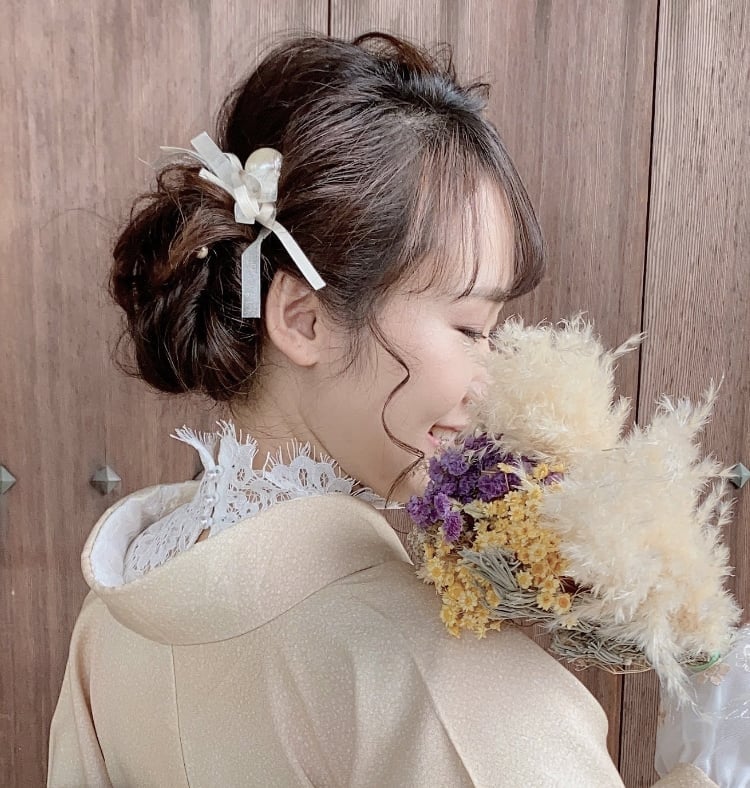
What do you wear when the dress code says formal but the mood says festive? This updo answers with loose curls that frame the face and a white ribbon that reads as playful rather than precious. The dark brown base keeps it grounded, while curtain bangs soften the hairline, so the whole thing lands somewhere between bridal and party-ready. Thick, wavy hair holds the curls and the accessories without turning into a pin cushion. Ask your stylist for: updo with loose curls, curtain bangs, and pearl and ribbon accessories. The ribbon and pearls need to be anchored into the updo, not clipped on as an afterthought.
Elegant Updo With Pearl and Floral Accessories
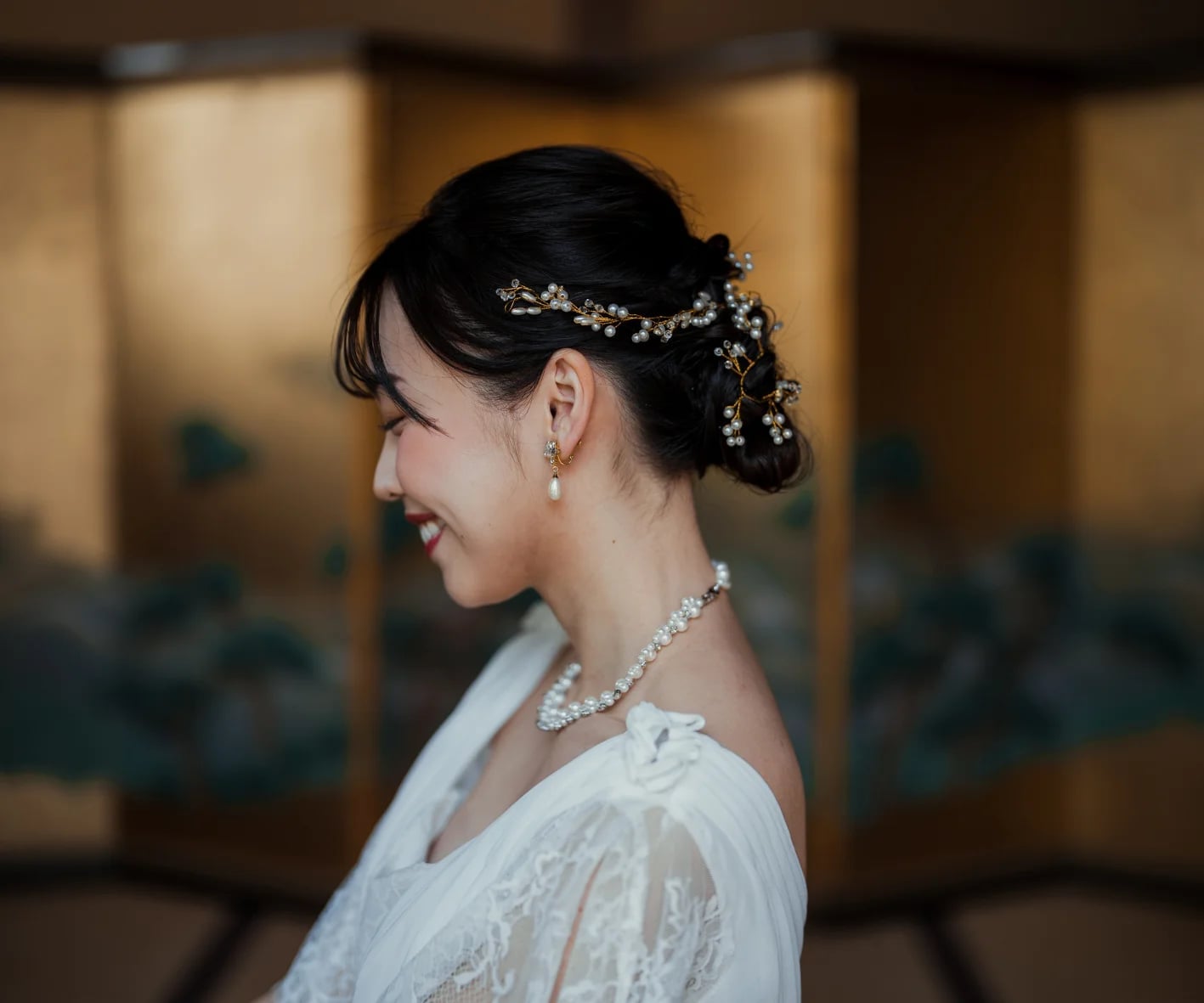
An elegant updo for a wedding or ceremony starts with black, thick, straight hair that is long enough to wrap into a smooth, structured shape. The wispy bangs are the softener here, breaking up what could otherwise be a severe line across the forehead. Pearl and floral accessories are placed to catch the eye without competing with the hair itself, which is the trick of a polished finish. Ask your stylist for: elegant black updo with wispy bangs and pearl floral accessories. The bangs will need a trim every four to six weeks to stay wispy, and the updo itself is a salon job, ideally booked for the day of the event.
Dark Brown Updo With Wispy Bangs
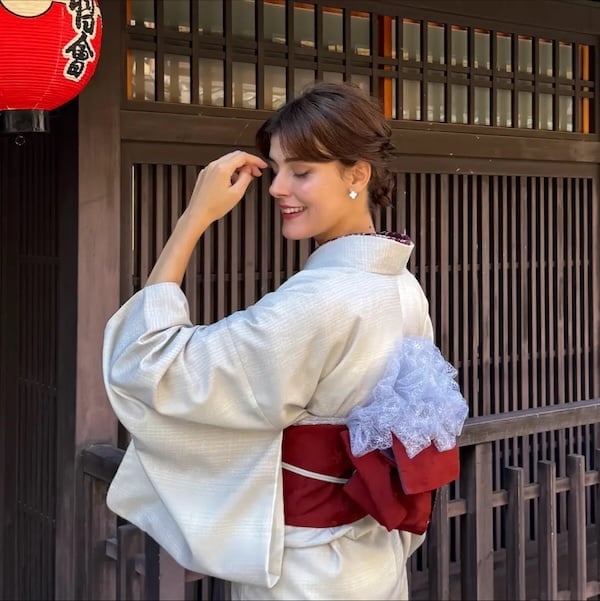
The dark brown updo pulls thick, wavy hair neatly back, with wispy bangs softening the hairline. This style pairs with a formal kimono and obi. Ask your stylist for: sophisticated dark brown updo with wispy bangs.
Thick, wavy hair can be difficult to tame into a neat pulled-up style without significant product. The bangs need definition, but the updo requires a strong hold to stay put through an event. This is a salon-only style, so plan for a professional to secure it properly. The result looks polished, but the styling time and product load are real. If your hair is fine or straight, the wispy bangs may not hold their shape as well, so consider a stronger hold spray.
Traditional Updo With Gold Floral Ornaments
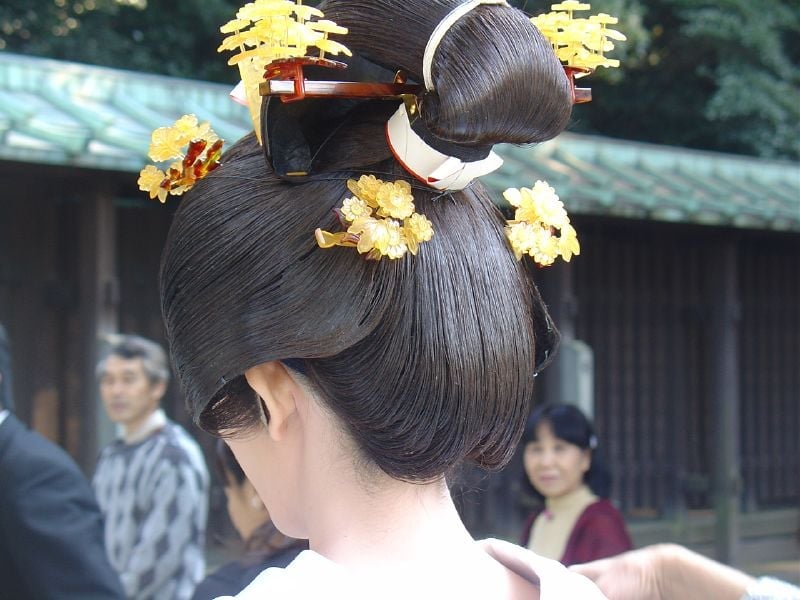
The traditional Japanese updo is a voluminous construction of black, thick, straight hair, decorated with gold and yellow floral ornaments and white accents. Achieving this level of structure takes professional skill, since the ornaments need to be secured without damaging the hair or letting the style shift. Ask your stylist for: traditional Japanese updo with gold and yellow floral ornaments. The hair is smooth with a healthy sheen, which comes from a careful blowout and a light finishing oil. For a wedding or formal occasion, this style holds well through hours of wear, but it is not a DIY project; the pins and combs require precise placement to stay put.
Elaborate Updo With Ornate Hairpins
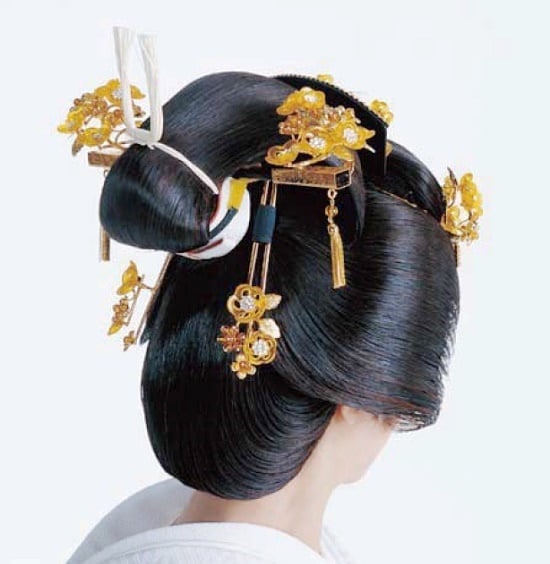
This elaborate updo builds a large bun at the nape, using the natural thickness of straight, black hair to create height and volume. Ornate gold and yellow floral hairpins and white ribbons add decoration, turning the bun into a focal point. Compared to a simpler low bun, this style demands more intricate techniques, so it is best left to a professional who can layer the hair and anchor the pins securely. Ask your stylist for: elaborate updo with ornate gold and yellow floral hairpins. The hair must be smooth and well-conditioned for the pins to slide in cleanly and for the bun to hold its shape. For ceremonial events, this style keeps its structure for hours, but the weight of the accessories means it is not a casual choice.
Classic Low Bun With Decorative Hair Stick
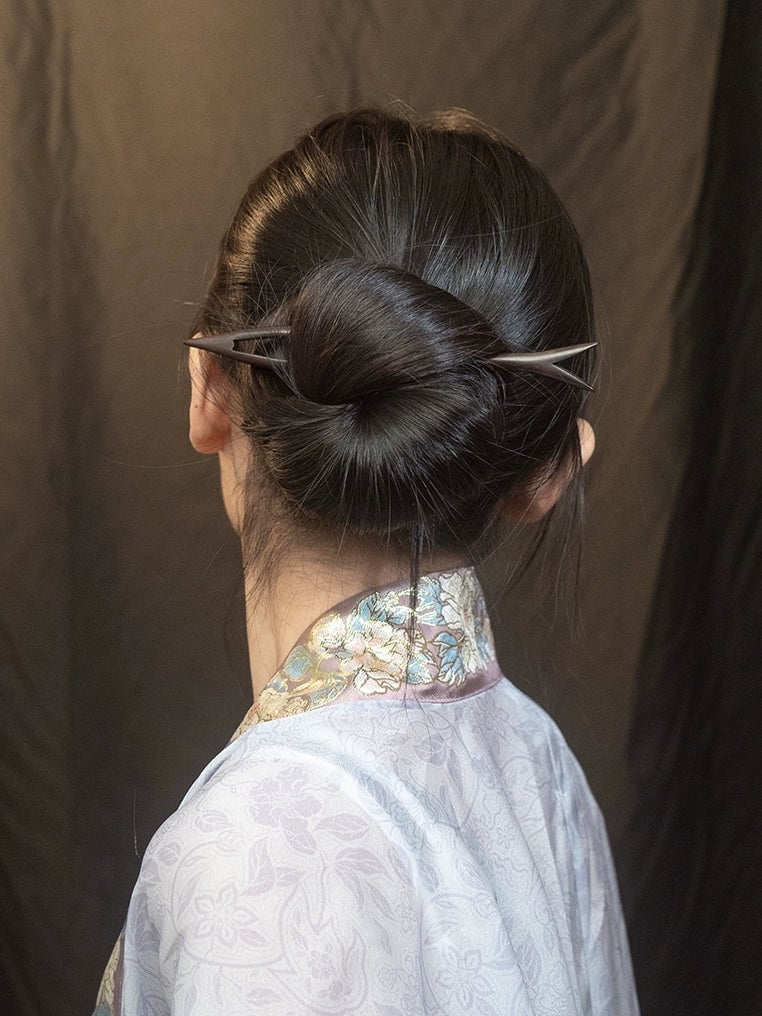
A decorative wooden hair stick is the key accessory, adding both style and stability. This is a DIY-friendly style: pull the hair back, twist it tightly, and wrap it into a coil, then push the stick through to hold it in place. Ask your stylist for: classic low bun with a decorative hair stick. The stick does the work of pins, so the hold depends on how firmly you twist. For everyday wear, this style stays put for hours, but the stick can loosen if the bun is too loose, so a few bobby pins underneath help. It is a simple, versatile look that works for casual or semi-formal settings.
Traditional Shimada Updos With Pins
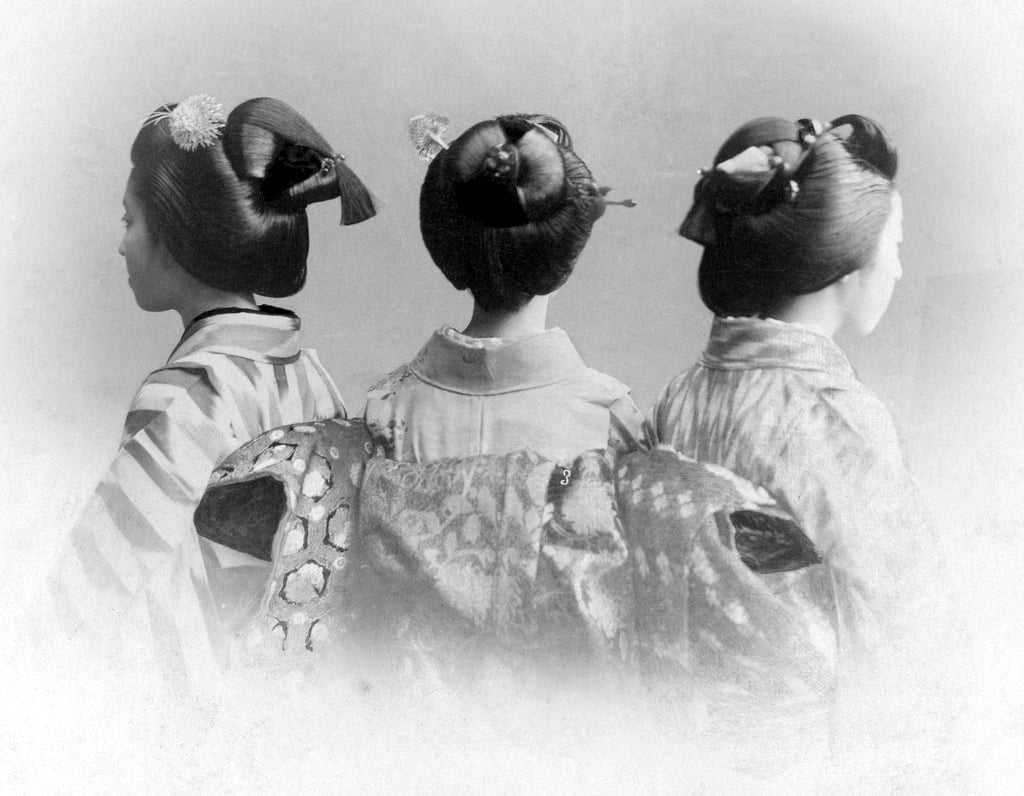
The Shimada is a traditional Japanese hairstyle that relies on the hair’s natural straightness and thickness for structure. Three variations here show the style from side and back views, with buns built high and adorned with decorative pins and combs. The technique involves sectioning the hair, teasing for volume, and smoothing the exterior before pinning everything into place. Ask your stylist for: traditional Shimada hairstyle with decorative pins. This is a salon-only look, as the intricate shapes need professional hands to hold. For formal events like weddings, the style holds well, but the pins and combs must be chosen to complement the outfit, and the hair needs to be long and thick to support the structure.
Final Thoughts
Your choice comes down to one question: how much time do you want to spend on it? A blunt bob or a textured pixie works with a quick blow-dry. A shimada updo or a twisted bridal style is an investment in salon time and skill.
- Trim blunt bobs and bangs every 4-6 weeks to maintain sharp lines.
- For layered cuts, refresh texture with texturizing spray or sea salt spray.
- Traditional updos require professional styling; care involves proper removal and overnight hydration.
- Maintain color dimension with color-depositing conditioners every 2-4 weeks.
- For heat-styled waves, use a heat protectant spray before styling.
Japanese hair artistry rewards the patient.
