

Feed-in braids are a protective style where extension hair is added gradually to small cornrows, creating a flat, neat base that looks like the braid grows from your own scalp. Lately, more women are asking for softer finishes, wavy or curly ends instead of blunt, straight tails.
This collection of 31 Feed In Braids Hairstyles covers everything from quick, shoulder-length styles you can do in an afternoon to intricate, salon-only geometric designs. If you have fine hair that struggles to hold a part or a round face that needs length below the chin, there is a braid map here that actually works.
Classic Mid-Back Feed In Braids, Dark Brown
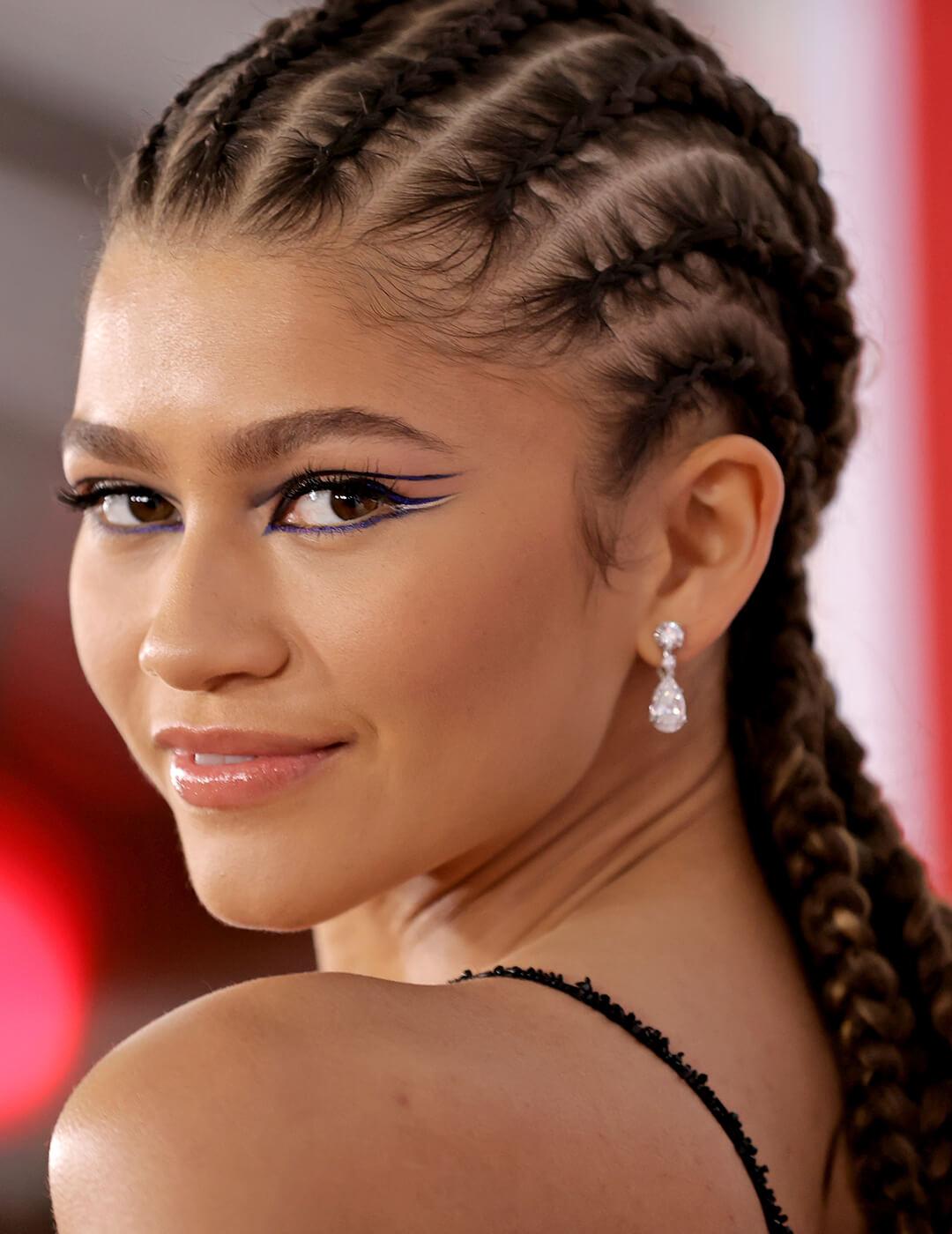
Uniform thickness from scalp to tip is the detail that separates a neat install from one that looks loose by week two. Each braid starts with a clean feed-in at the root, so there is no bump where new hair meets extension. Ask your stylist for: classic mid-back feed in braids, middle part. The dark brown color reads as a single solid shade, which makes the even spacing of the braids the main visual. Medium to thick hair gives these braids enough density to hang straight without looking stringy, and the mid-back length keeps them heavy enough to stay put. A light serum brushed over the finished style tames the flyaways that naturally surface after a few days.
Feed In Braids With Heart Design
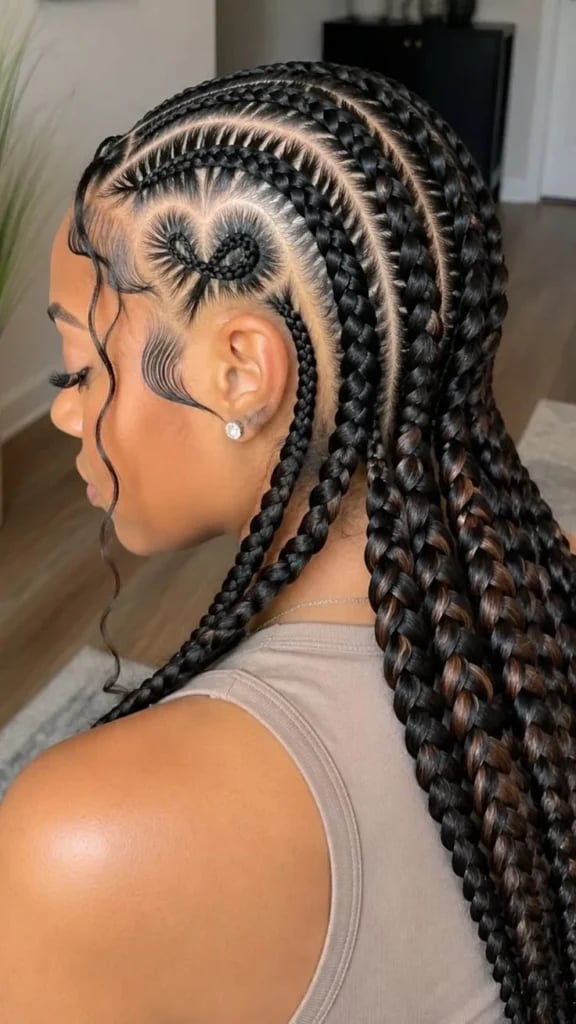
How do you explain a heart-shaped scalp pattern to a braider without pulling up a photo on your phone? Say the exact words: you want a central heart shape worked into the feed-in braids, with the rest falling straight to mid-back. The braids here are black with brown undertones, and the hairline is finished with defined wavy edges instead of a hard line. Ask your stylist for: feed in braids with a heart design. The pattern is built during the parting, so expect extra time in the chair for the mapping.
Geometric Ghana Braids
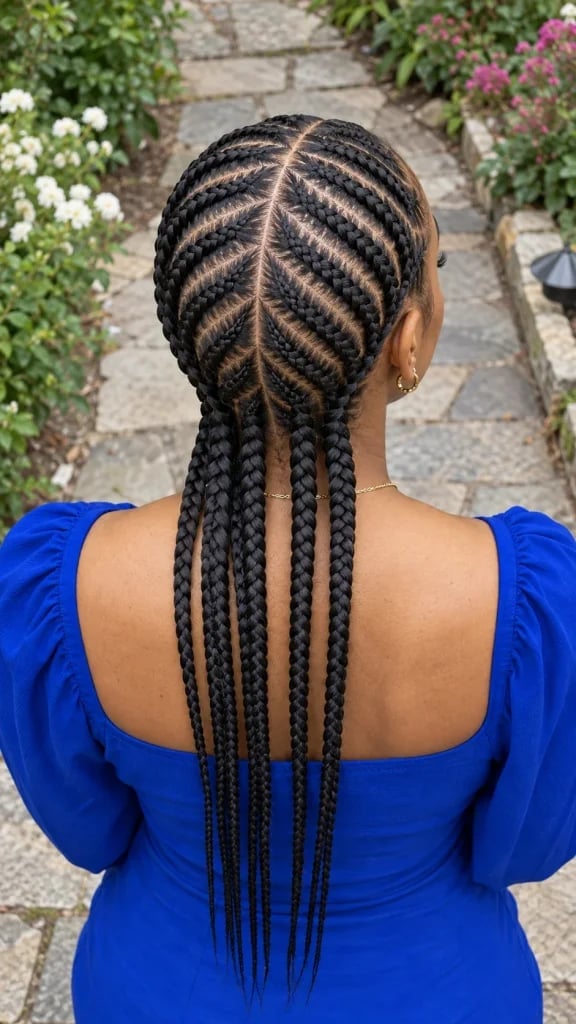
Standard feed-in braids follow the curve of your head. These Ghana braids do not. The parting is mapped into sharp angles and straight lines that run toward the crown, creating a geometric pattern that looks more architectural than organic. The black braids fall straight to mid-back with no added texture. Ask your stylist for: geometric Ghana braids, mid-back length. This variation needs a braider comfortable with precise sectioning, so check their portfolio for clean lines first.
Box Braids With Wavy Extensions
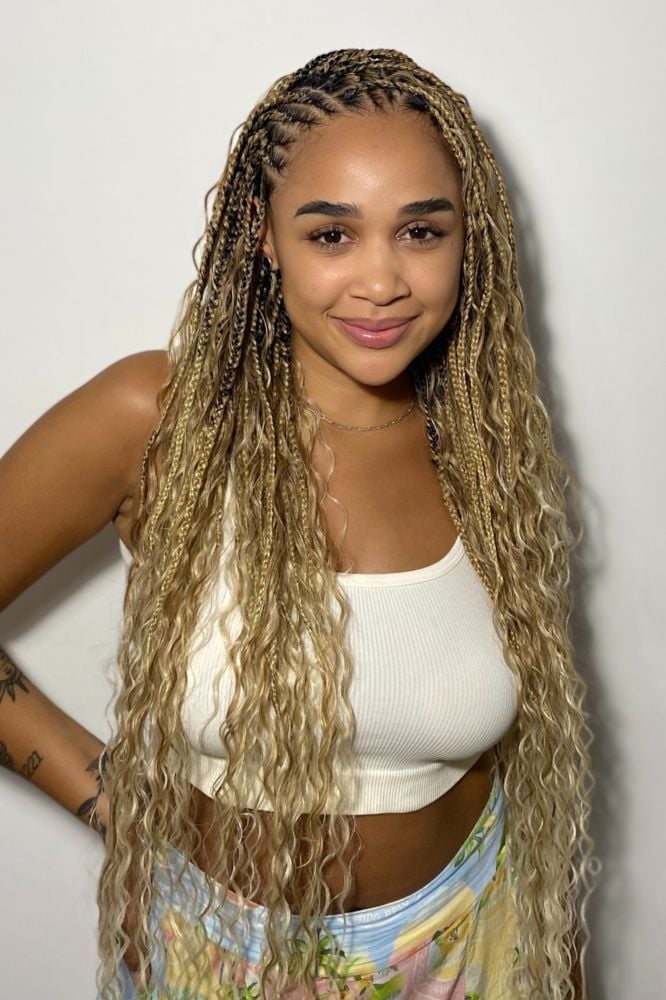
The braided section is neat and uniform, but the extensions are where this style changes direction. Loose wavy hair is added to the ends, creating a contrast between the structured top and the voluminous, textured bottom. The base here is a mix of blonde and brown highlights, so the waves reflect light differently than solid dark hair would. Ask your stylist for: box braids with wavy human hair extensions. A curl-defining cream on the wavy ends keeps them from frizzing out, and you will need to re-wet and re-scrunch them every few days to maintain the pattern.
Shoulder Length Cornrows Into Bun
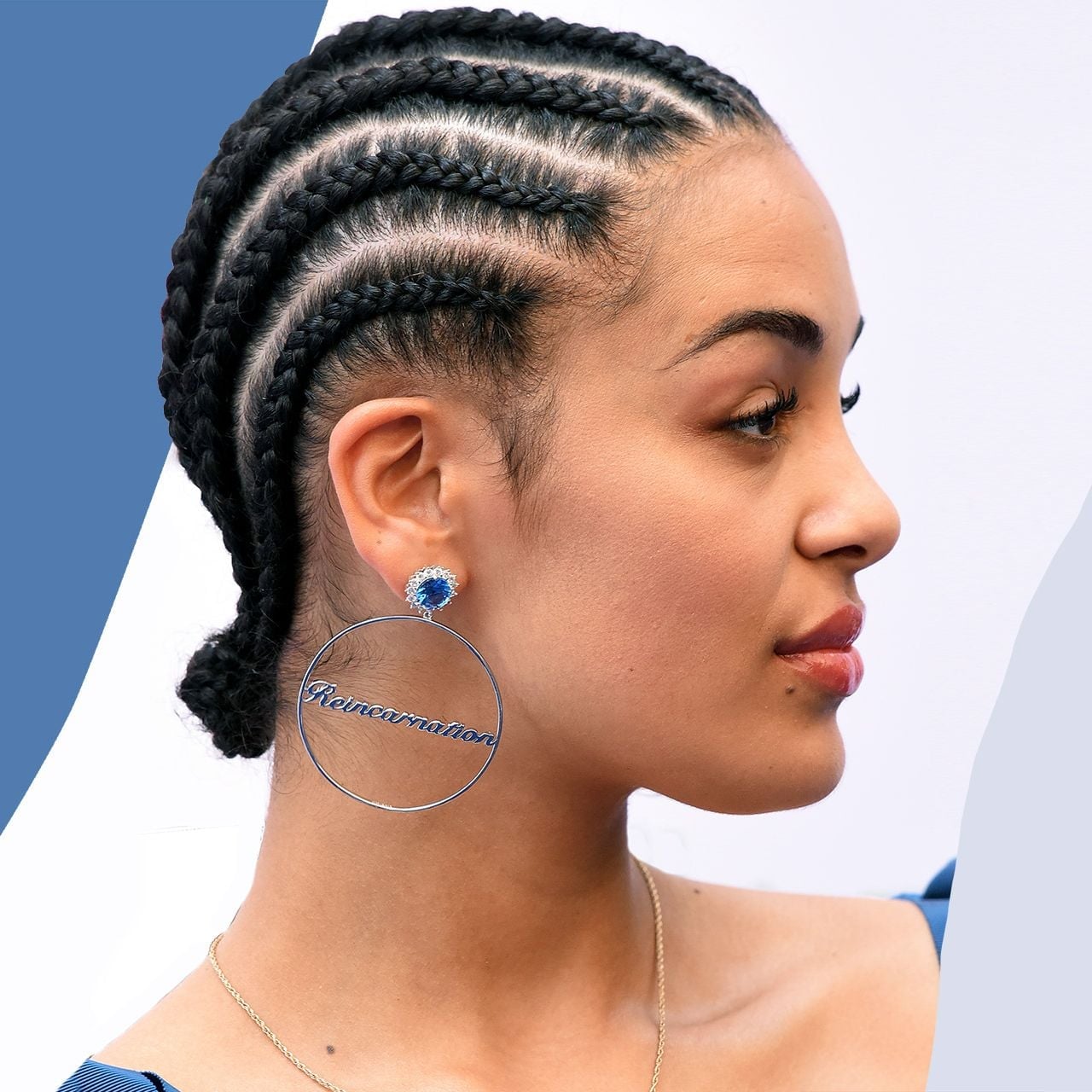
The cornrows start at the hairline and feed straight back into a low bun, with the braided sections stopping at shoulder length before they are gathered. This is a practical style: the bun keeps the hair off your neck, the cornrows lie flat for sleeping, and the shoulder length means the bun sits low rather than high and heavy. Ask your stylist for: shoulder length cornrows pulled into a bun. Bobby pins that match the black hair color secure the bun without slipping, and the style holds its shape through a workout or a full workday.
Sleek Mid-Back Feed In Braids
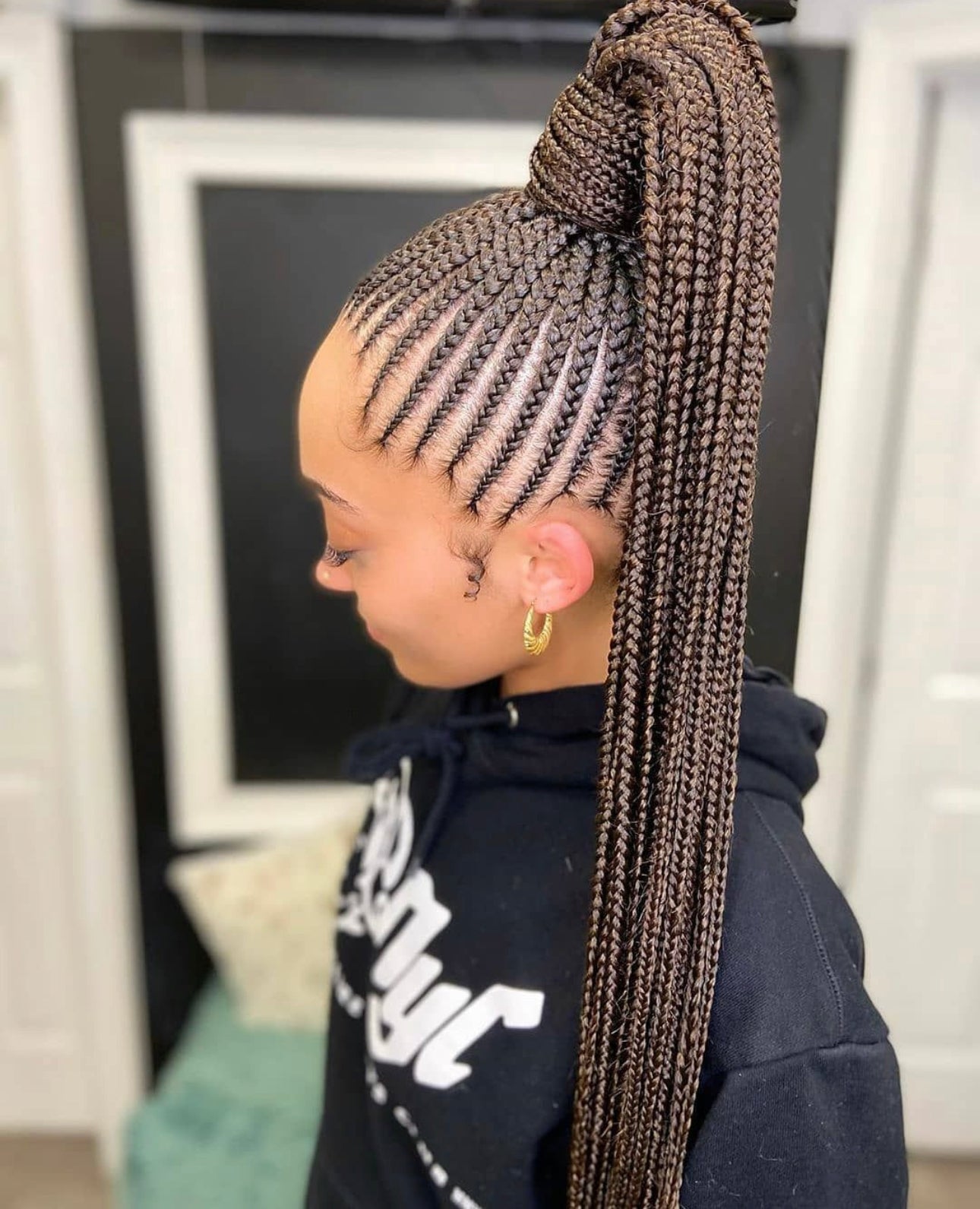
These dark brown feed-in braids are uniformly thick and perfectly straight, with a middle part that keeps the entire silhouette clean from root to tip. The side view confirms there is no bump or loose strand anywhere, which gives this technique its signature sleekness. Ask your stylist for: sleek, uniform mid-back feed in braids. The straight texture and polished finish mean this style holds its shape for weeks with minimal fuss. A light-hold hairspray brushed over the scalp helps maintain the neatness between washes without creating stiffness.
Cornrows With Loose Wavy Ends
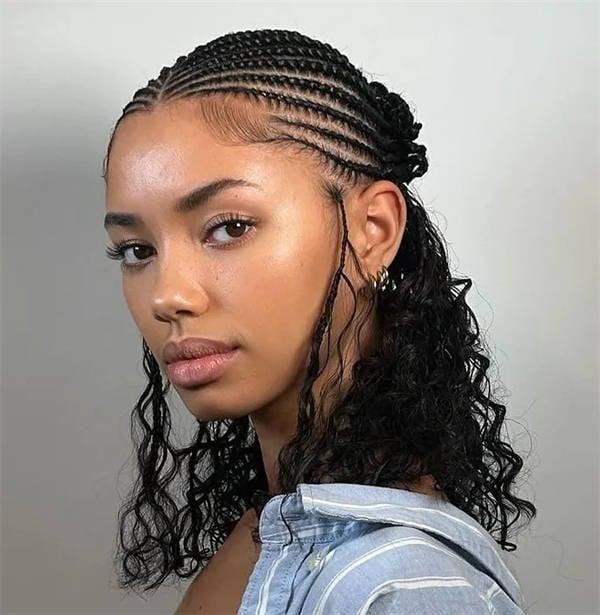
Can you have intricate scalp work and soft, textured ends in one style? Yes, but there is a real trade-off. Neat cornrows feed into shoulder-length loose braids, and that wavy, thick texture at the bottom will frizz and tangle faster than a fully braided style. Ask your stylist for: cornrows transitioning to loose wavy braids. Gently separate the wavy ends with your fingers to refresh their volume, but expect to retwist or trim any frayed pieces sooner than you would with a uniform braid.
Feed In Braids With Curly Ends
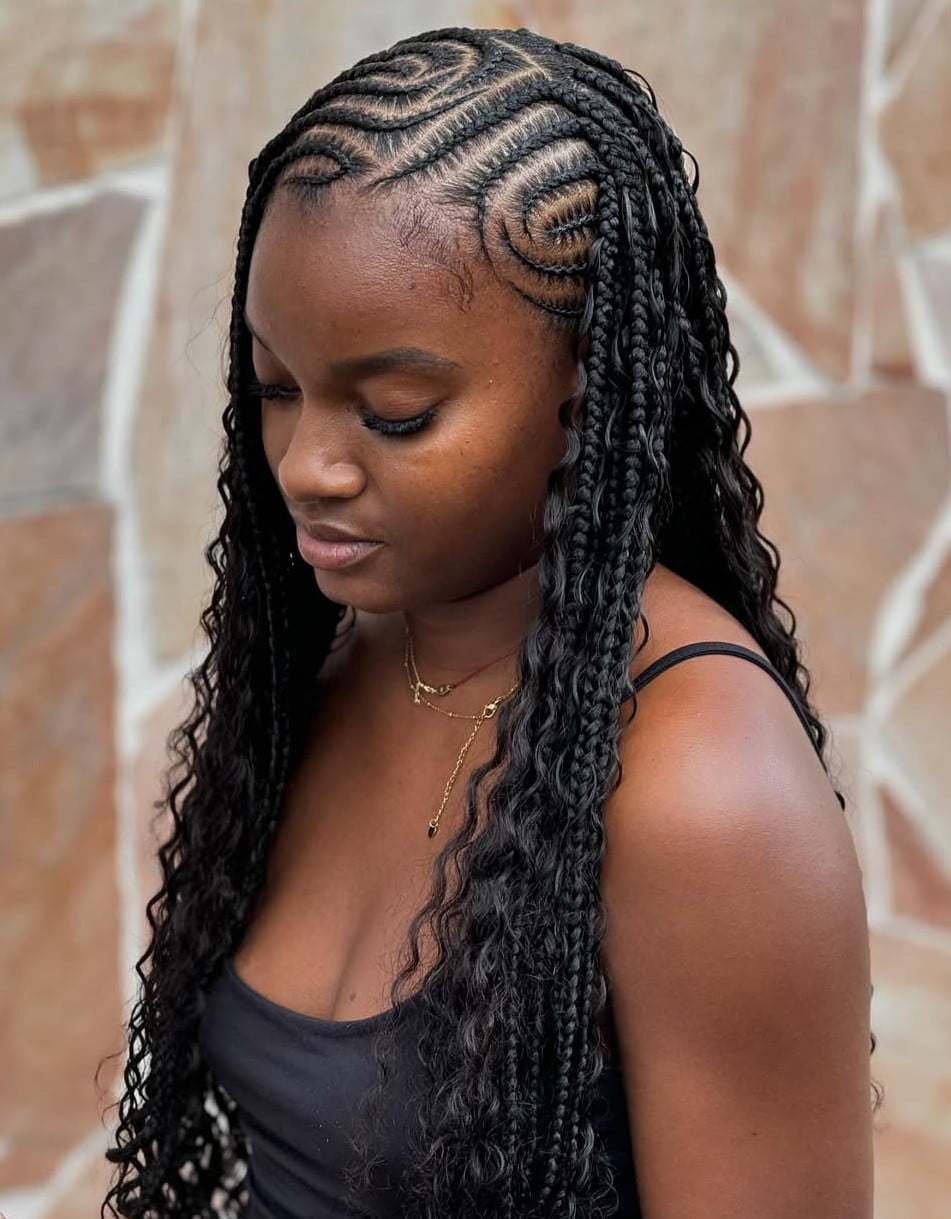
Mid-back feed-in braids with geometric scalp patterns stop halfway and let loose, wavy curls take over. This design works best on medium to thick hair because the transition from tight braid to soft curl needs enough weight to blend naturally. Ask your stylist for: feed in braids with curly ends, geometric scalp pattern. A water-based spray and a gentle scrunch reactivate the curls overnight, so you are not reaching for heat tools. The curly ends also hide any unevenness in the braid finish, which is a practical bonus.
Feed In Braids With Beads And Geometry
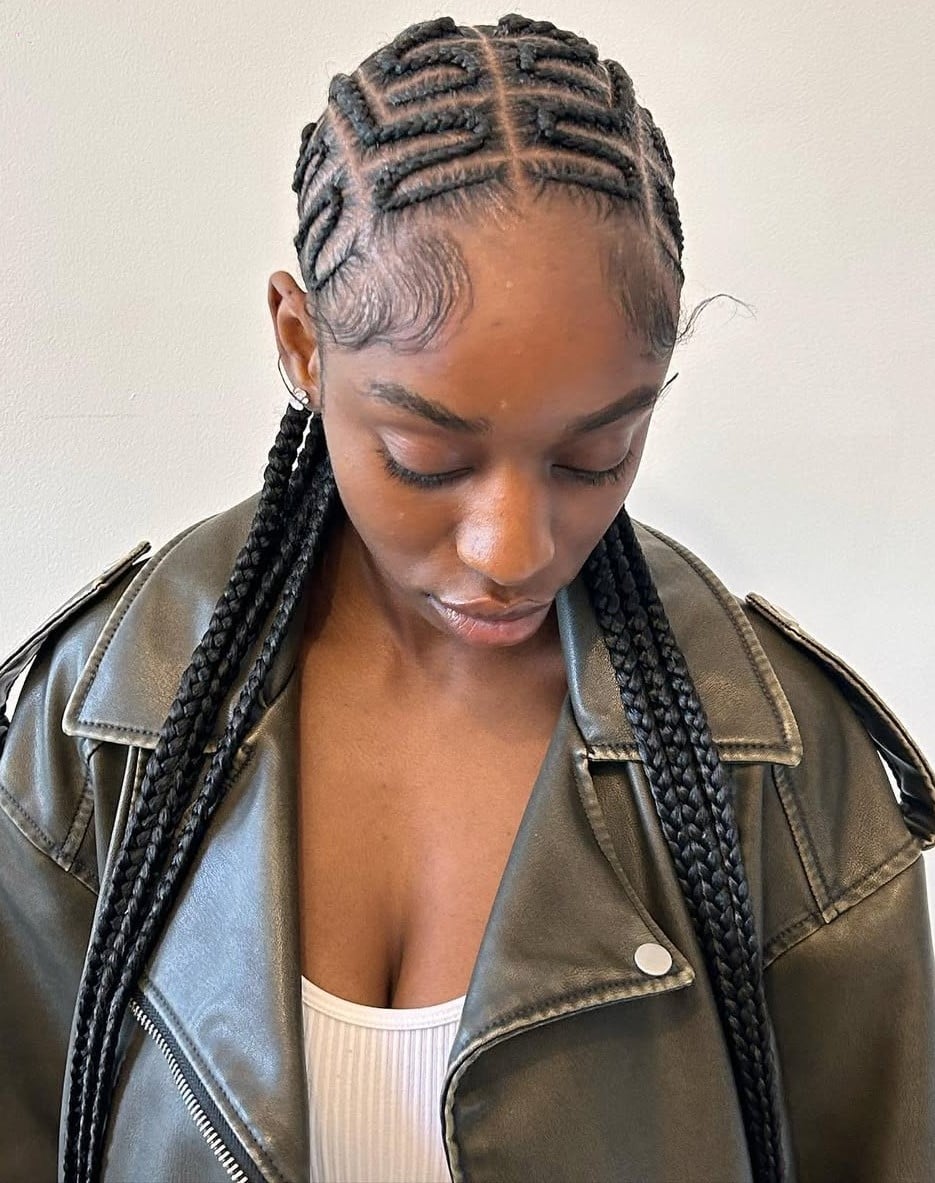
Long, straight black feed-in braids with a geometric scalp pattern are already a statement. Add decorative beads along the length, and the style belongs at a festival or a cultural celebration where the details deserve space. Ask your stylist for: long feed in braids with geometric pattern and beads. The beads add weight, so the braids swing differently than they would without them. This is a salon-only project, and the beads need to be crimped on securely to avoid losing them mid-event.
Thin Feed In Braids With Beads
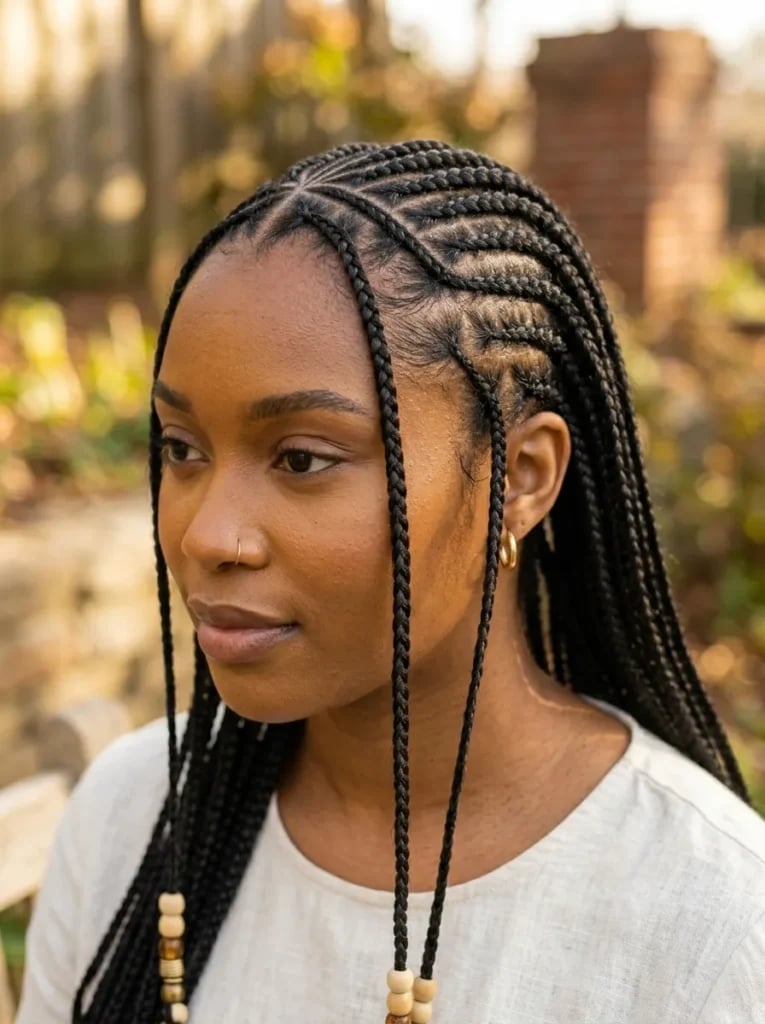
Can you do a precise middle parting with thin braids at home? Technically yes, but achieving the uniform width and clean scalp lines takes a stylist. These mid-back feed-in braids are fine and neat, with small wooden beads at the ends that give the look a subtle, grounded texture. Ask your stylist for: thin feed in braids with beads, mid-back length. A light oil on the braid ends stops the beads from snagging on clothing or each other, which matters more than you think.
Geometric Feed In Braids With Curly Ends
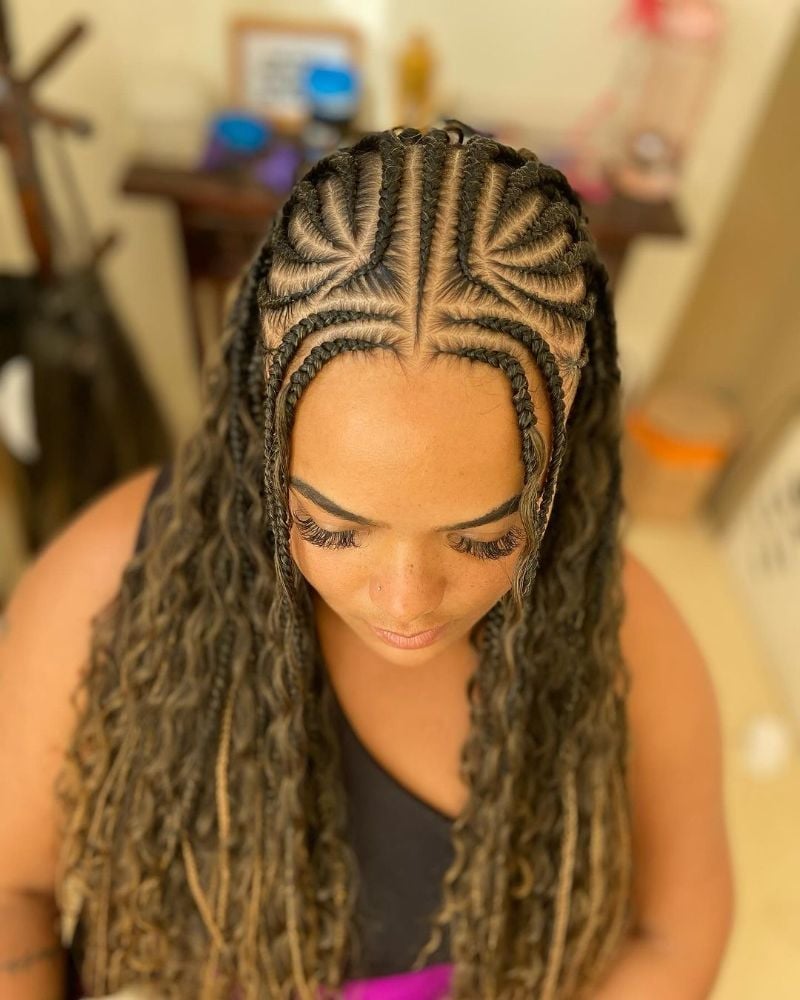
The scalp work here is the point: even rows that follow a strict geometric grid before each braid releases into springy, thick curls. The contrast is what sells this style, the sharp precision at the root softening into bouncy length that swings past the shoulders. Subtle highlights catch the curl bends so the pattern reads even from a distance.
This combination of structured roots and loose, curly texture suits medium to thick hair best. Thin hair tends to lose the geometric definition once the braids start. Ask your stylist for: geometric feed in braids with long curly extensions. The salon time is considerable, since the parting work alone demands patience, but the hold is strong for weeks. A lightweight oil on the curly ends keeps them from drying out between washes.
Detailed Scalp Braids With Wavy Curls
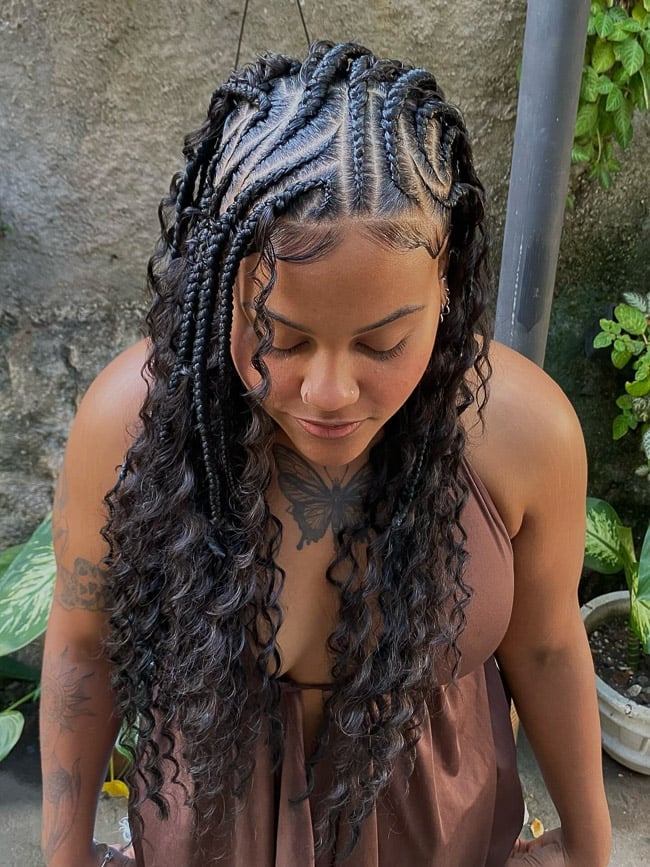
Up close, the scalp braiding here is intricate, with fine, precise lines that create texture before the hair even falls into loose waves. The pattern is visible from the front and completely different from the side, where the detailed braid work gives way to cascading, voluminous curls. The black color keeps the focus on the braid pattern itself.
This detailed scalp braids style works for medium to thick hair, since the root pattern needs density to show up properly. Ask your stylist for: detailed feed in braids with long wavy curls. The hold is excellent, but the upkeep is real: sleeping on a satin scarf keeps the waves from frizzing, and a diffuser on your blow dryer refreshes the ends without flattening the root pattern.
Bohemian Feed In Braids And Curls
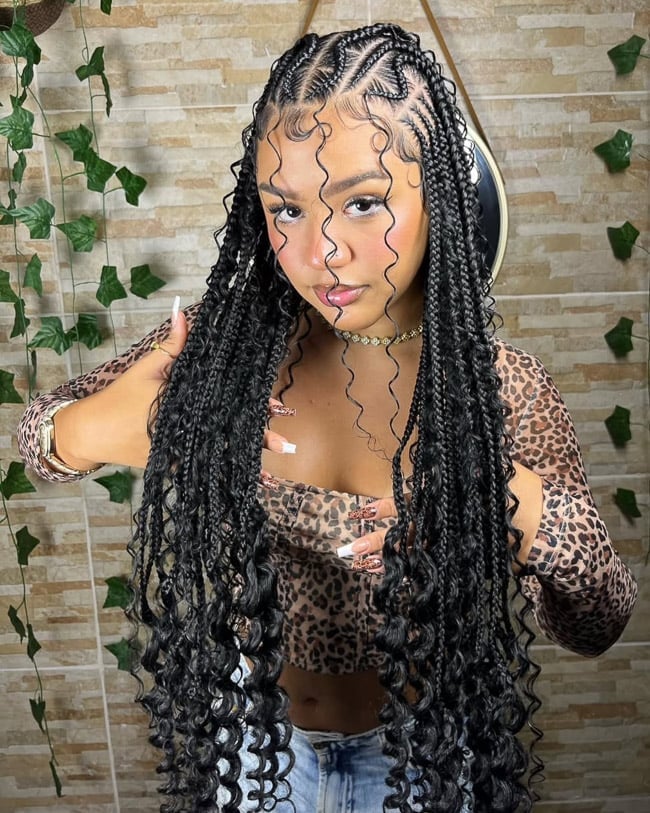
The difference between this and a uniform braid style is the mix: tight, neat feed in braids at the scalp that loosen into free, wavy curls instead of staying one consistent texture. A middle parting keeps the bohemian feel grounded, so it looks styled rather than messy. This variation suits anyone with medium to thick hair who wants braided structure without the rigid, uniform look of straight extensions. Ask your stylist for: feed in braids with bohemian wavy curls. The hold is forgiving, and the undone finish means a few flyaways work in your favor.
Feed In Braids With Side Swept Bang
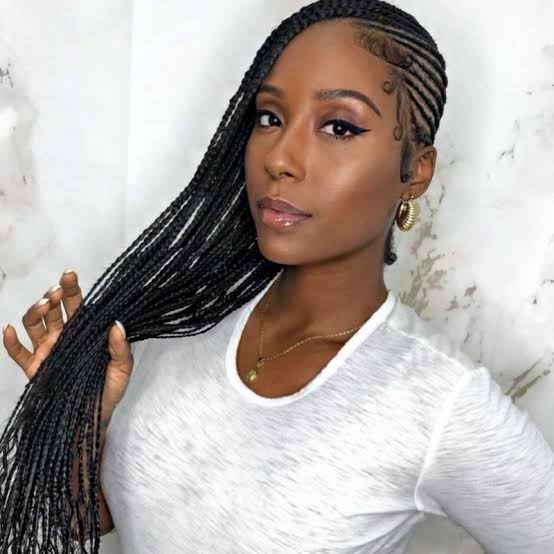
Face-framing pieces are possible when all hair is braided. A long, sweeping side bang braided into the style creates that effect. The side parting lets the bang fall across the forehead while thin, sleek braids hang straight to mid-back. This style suits medium to thick hair that can support the extra braid at the front without looking sparse. Ask your stylist for: feed in braids with a long side swept bang. The straight texture gives the polished finish, so a light serum keeps the bang lying flat and smooth between touch-ups.
Feed In Braids With Decorative Beads
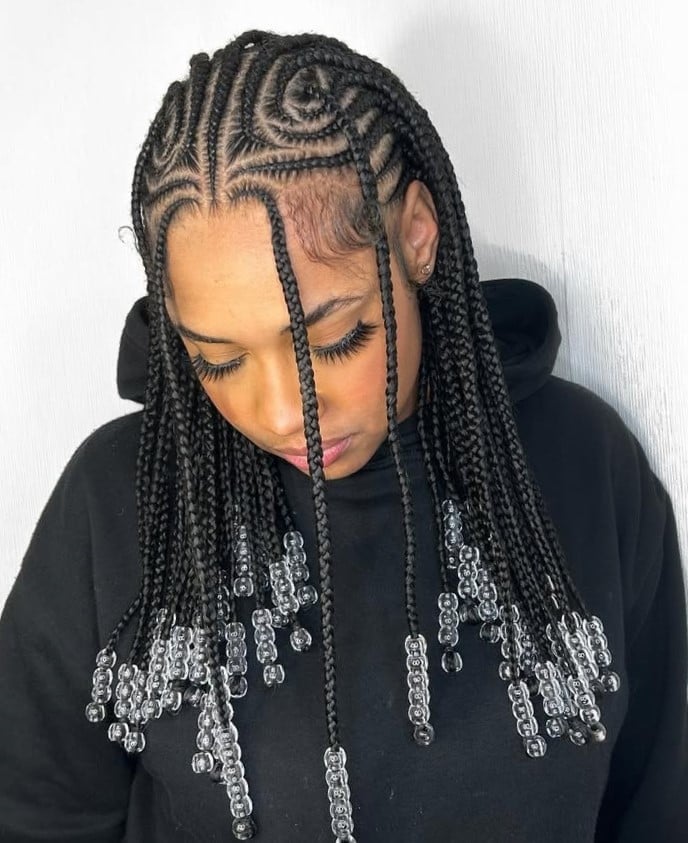
Clear decorative beads add the finishing touch to these thick, straight braids. The middle parting keeps the style symmetrical so the embellishments look like a deliberate design choice. This works best on medium to thick hair, since the beads need enough braid width to sit securely. Ask your stylist for: feed in braids with decorative beads. The beads are threaded on at the ends during installation, so the hold is solid, but check them occasionally to make sure none have loosened.
Neatly Defined Mid-Back Braids
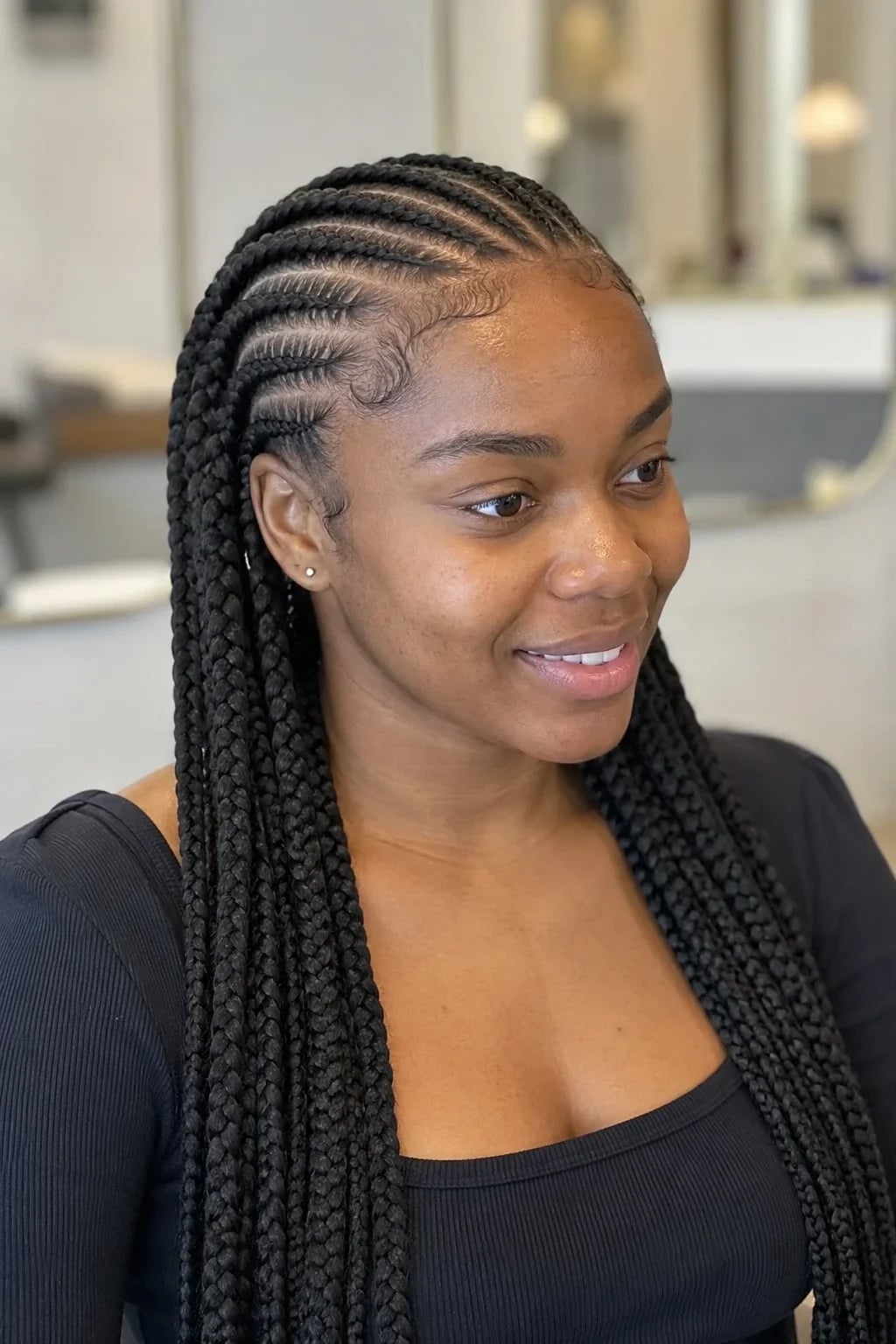
Neatly defined braids hold their shape longest when each part is uniform, and these mid-back feed-ins are as precise as it gets. The straight, black strands lay flat against the scalp, and the clean lines from the middle parting stay crisp for weeks if you protect them at night. Ask your stylist for: neatly defined mid-back feed in braids. Medium to thick hair carries this style best, since the braids need enough weight to hang straight without puffing up. A braid finishing spray smoothed over the surface keeps the sleekness intact and cuts down on frizz between appointments.
Mid-Back Braids With Beads And Edges
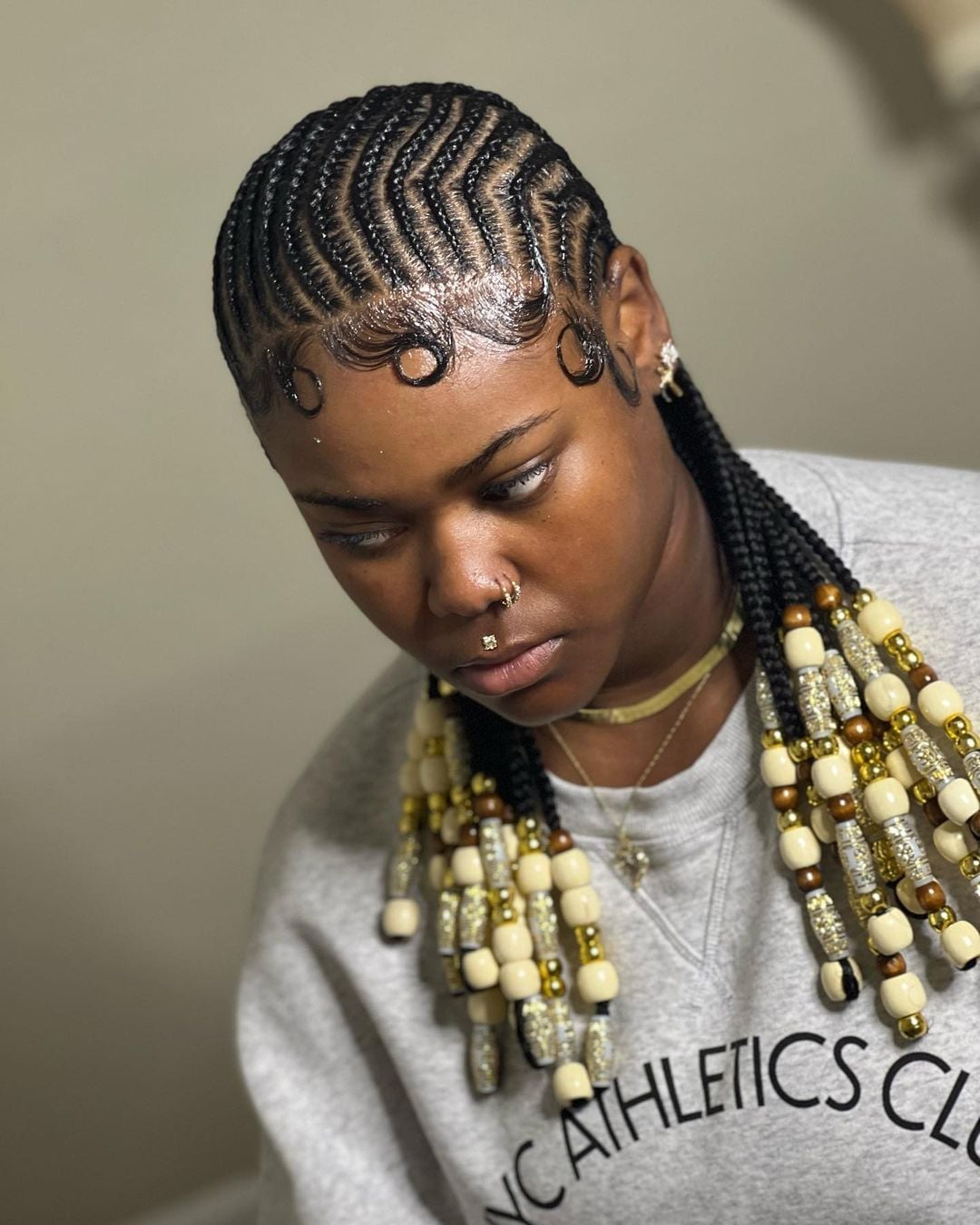
Beads add weight to the ends of these thick, straight black braids, which changes how the style moves and how long it holds its shape. The middle parting and laid baby hairs frame the hairline with a level of detail that reads as dressed-up even when you throw it into a ponytail. Ask your stylist for: mid-back feed in braids with beads and styled edges. This design suits medium to thick hair, because finer strands may struggle to support the extra metal at the tips. A toothbrush and edge control product keep the hairline precise, and you can refresh the edges daily without disturbing the braids themselves.
Two-Tone Braids With Curly Ends
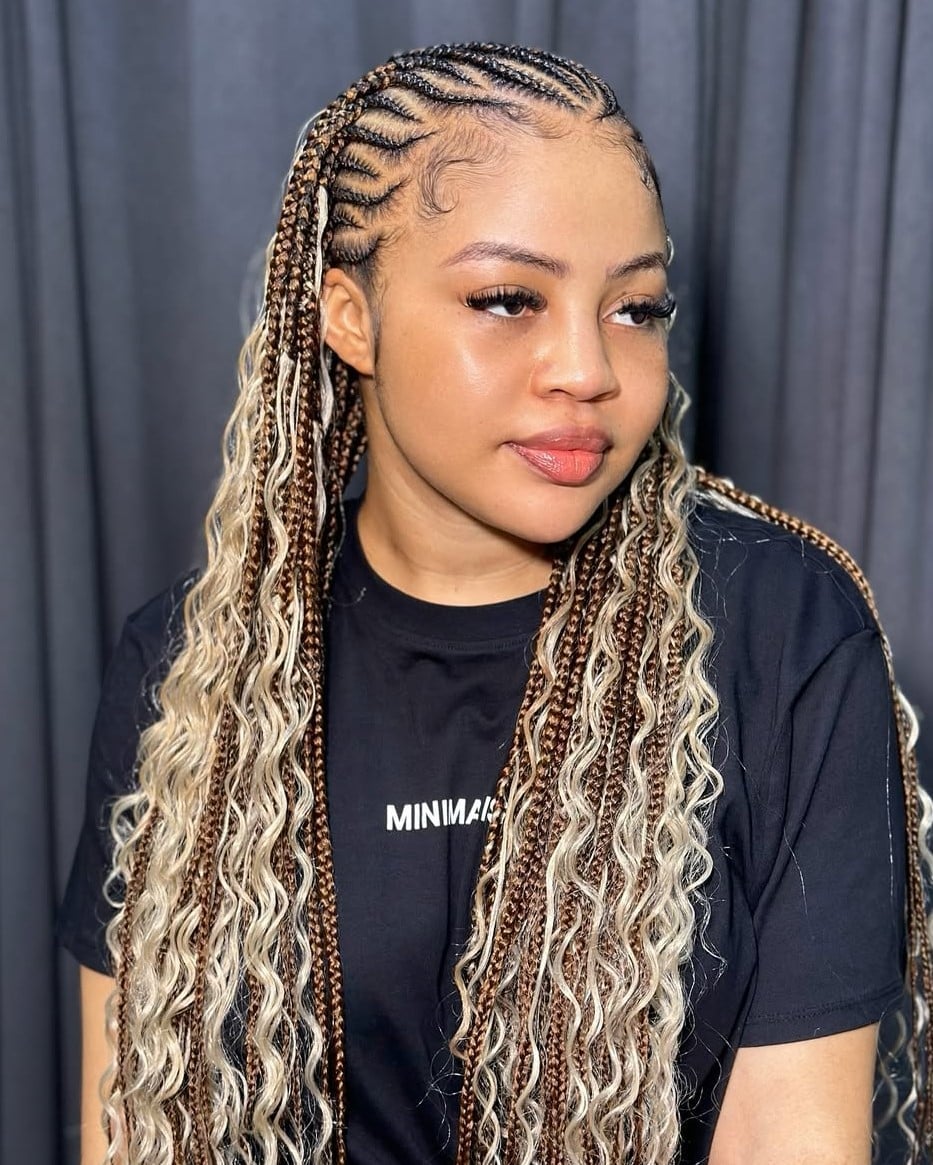
The two-tone effect here comes from feeding black extensions at the root, then switching to pre-dyed blonde and brown strands partway down, so the color transition lands right where the wavy, thick ends begin. Ask your colorist for: two-tone feed in braids with curly ends. This saves chair time compared to coloring your natural hair, because the dye lives on the extensions, not your scalp. The loose, wavy finish softens the mid-back length and keeps the style from feeling heavy. A color-safe conditioner on the curly ends preserves the brightness of the highlights while you wear them.
Mixed Texture Braids And Twists
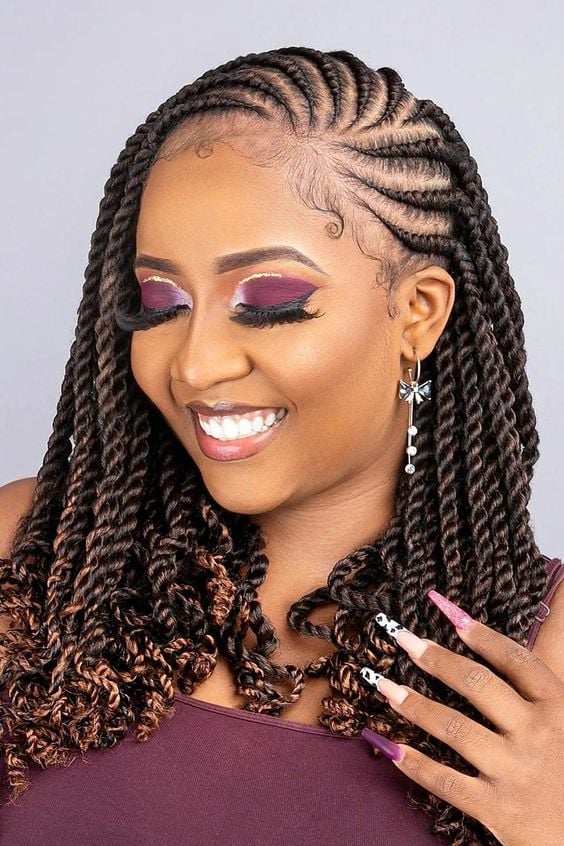
Unlike a style that is uniformly braided from root to tip, this one switches from feed-in braids at the scalp into twisted sections that unravel into wavy, curly ends. The dark brown base with lighter brown highlights adds dimension so the texture change does not read as a mistake. Ask your stylist for: feed in braids mixed with twists, wavy curly ends. Medium to thick hair suits this best, since the twisted parts need substance to hold their shape. The mixed texture gives you the neatness of a scalp braid up top with the movement of loose curls below, and a moisturizing spray keeps both sections from drying out.
Intricate Scalp Feed In Braids
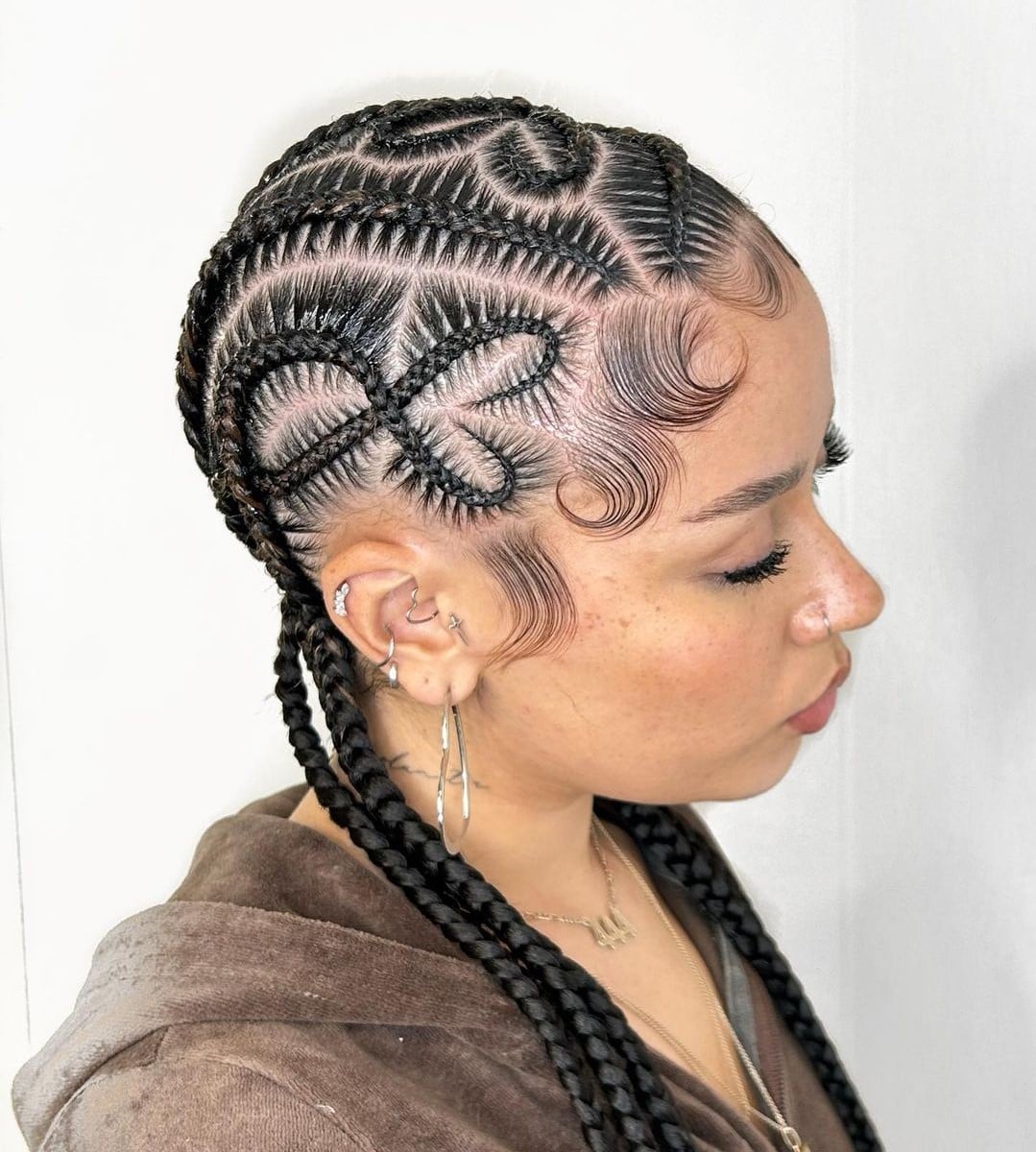
Geometric patterns worked into the scalp are the signature of this style, and they require a braider who maps out the design before the first braid goes in. The black, straight, thick strands fall to mid-back from a middle parting, but the real work is the neat, raised lines at the root. Ask your stylist for: feed in braids with intricate scalp patterns. Medium to thick hair gives the braids enough body to lie flat against the pattern. A small amount of hair oil on the scalp, applied with a cotton swab to avoid greasing the braids, keeps the skin nourished while you wear them.
Feed In Braids With Defined Edges
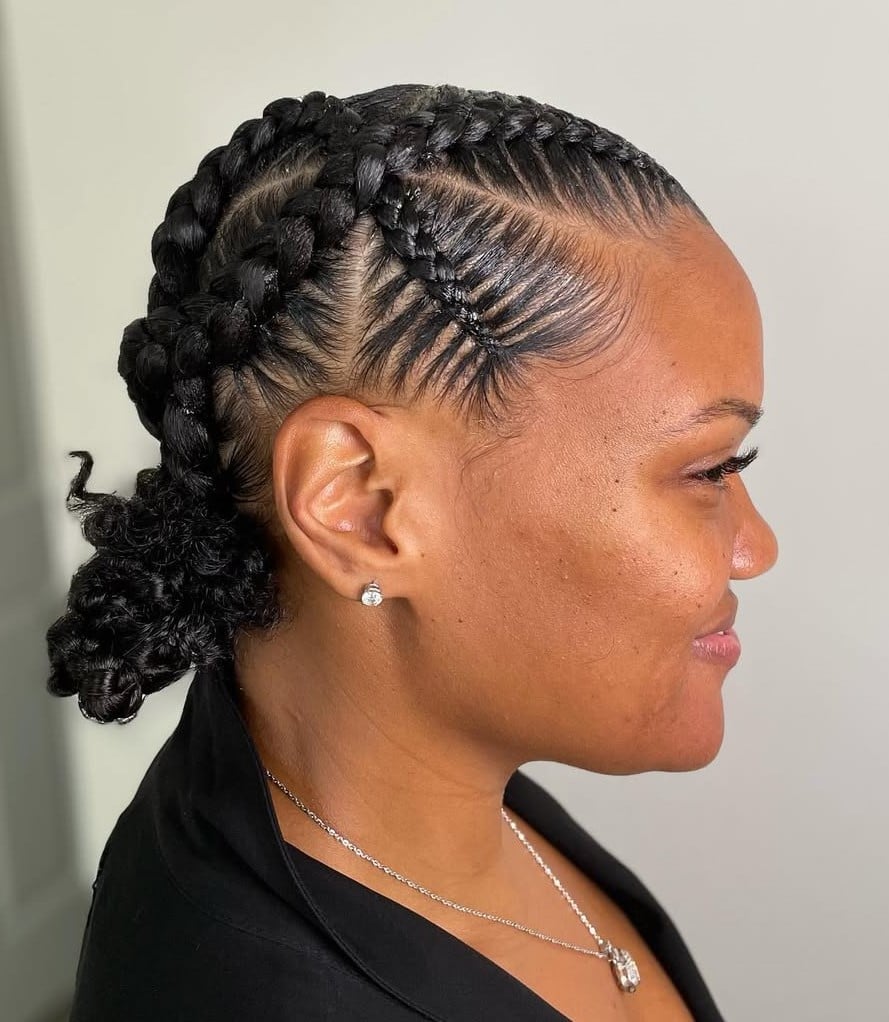
Sharp edges are the whole point here, and they require a little daily attention. Ask your stylist for: feed in braids with defined edges. The black mid-back feed in braids are straight and uniform, while the hairline is sculpted with an edge control product and a soft brush for a polished finish. A silk scarf at night keeps those edges from lifting, and a touch of product in the morning refreshes the hold.
Geometric Pattern Brown Feed In Braids
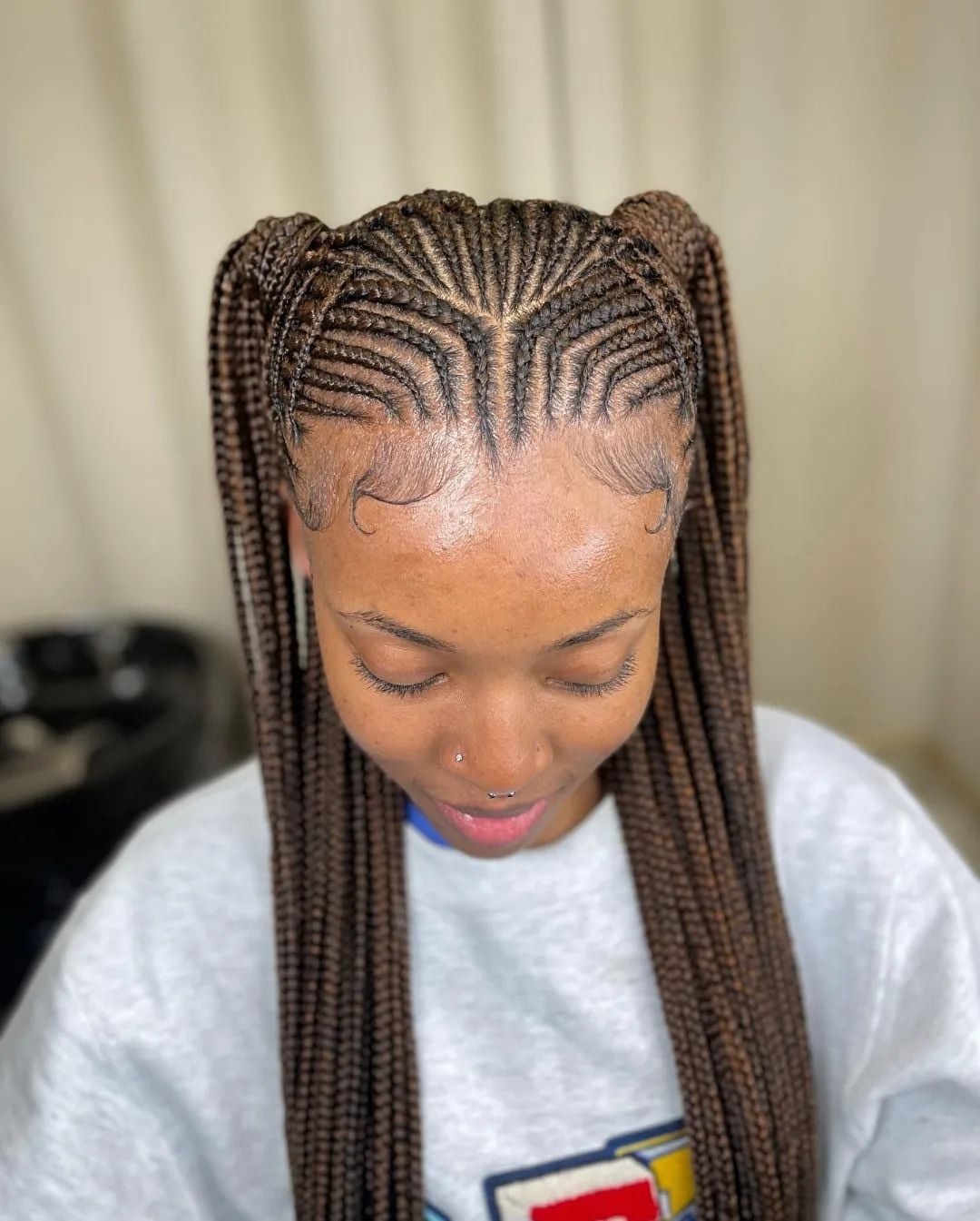
Wondering how to describe that precise scalp pattern? Ask your stylist for: geometric feed in braids, brown color. The uniform brown braids are parted in a distinct geometric pattern that starts at a clean middle part and extends to mid-back. The straight texture keeps the lines visible, so each section stays crisp. This is a design you discuss before the braiding starts, not something you hope for mid-way through.
Box Braids With Long Curly Ends
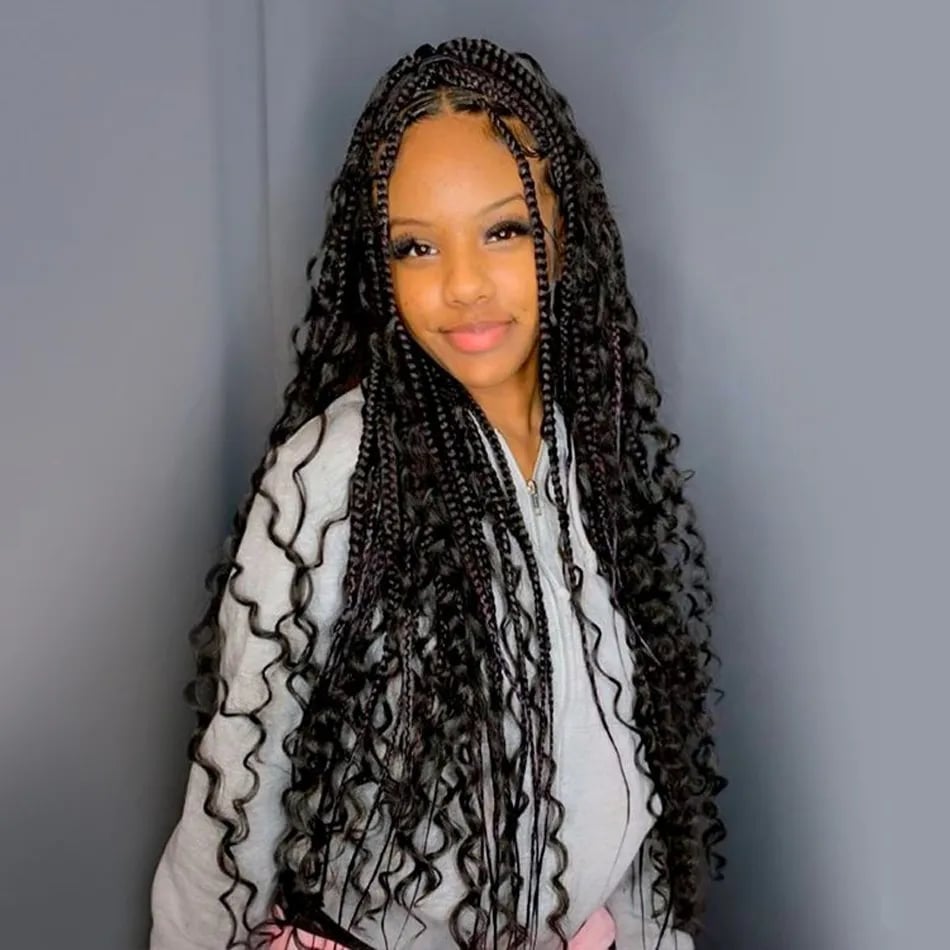
Black box braids to mid-back with loose, wavy curly ends give you structure and softness in one style. Ask your stylist for: box braids with long loose curly ends. This look suits medium to thick hair best, because the braids need enough weight to hang well while the curls add volume. The wavy ends can be gently shaken out for fullness, and the middle part keeps the overall shape balanced.
If your hair is on the finer side, the braids may feel heavy over time. The trade-off is a style that moves differently than straight braids, which some prefer for a more relaxed feel.
Zig-Zag Parting Braids With Wavy Extensions
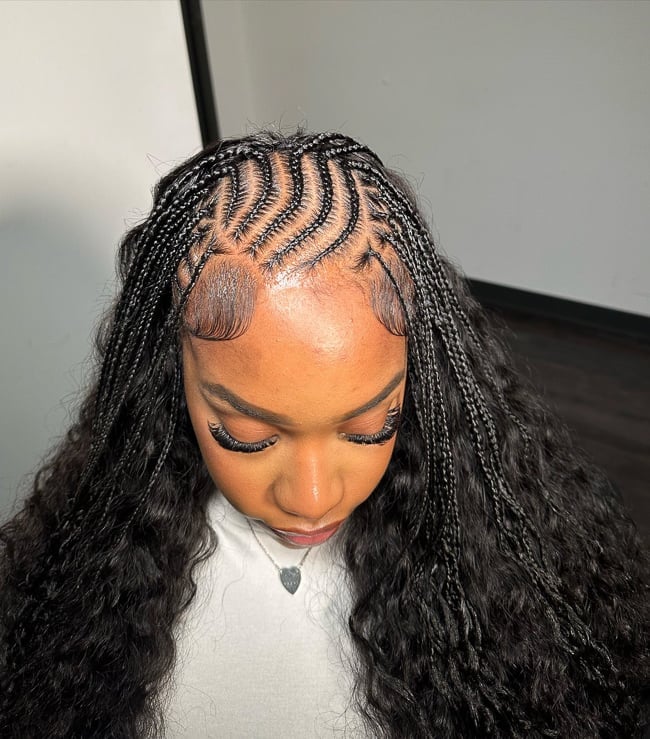
A zig-zag parting changes the whole geometry of feed in braids. Ask your stylist for: feed in braids with zig-zag part and wavy extensions. The black braids are sectioned in a sharp zig-zag pattern at the scalp before transitioning into loose wavy extensions that fall past the shoulders. The intricate parting takes extra time during installation, but the result is a design that stands out even from the back.
Geometric Scalp Braids To Shoulders
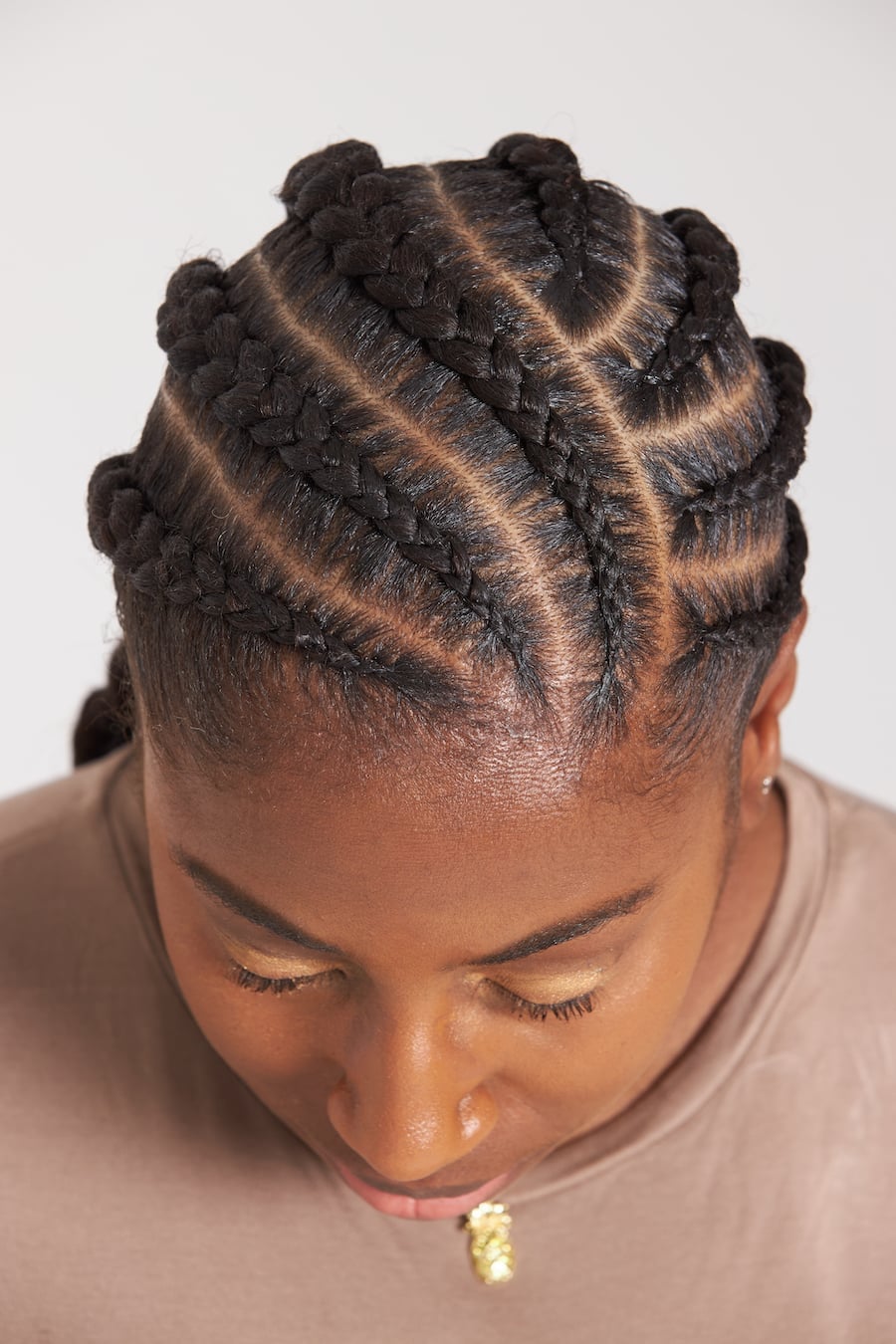
Shorter feed in braids to shoulder length with a geometric scalp pattern are surprisingly easy to maintain. Ask your stylist for: geometric feed in braids to shoulder length. The black wavy braids are sectioned in a clean geometric design, and the rounded ends hold their shape well with regular moisturizing. A leave-in conditioner spritzed every few days keeps the braids from looking dry. Expect a trim or takedown at around four to six weeks.
Natural Hair Braid Ideas
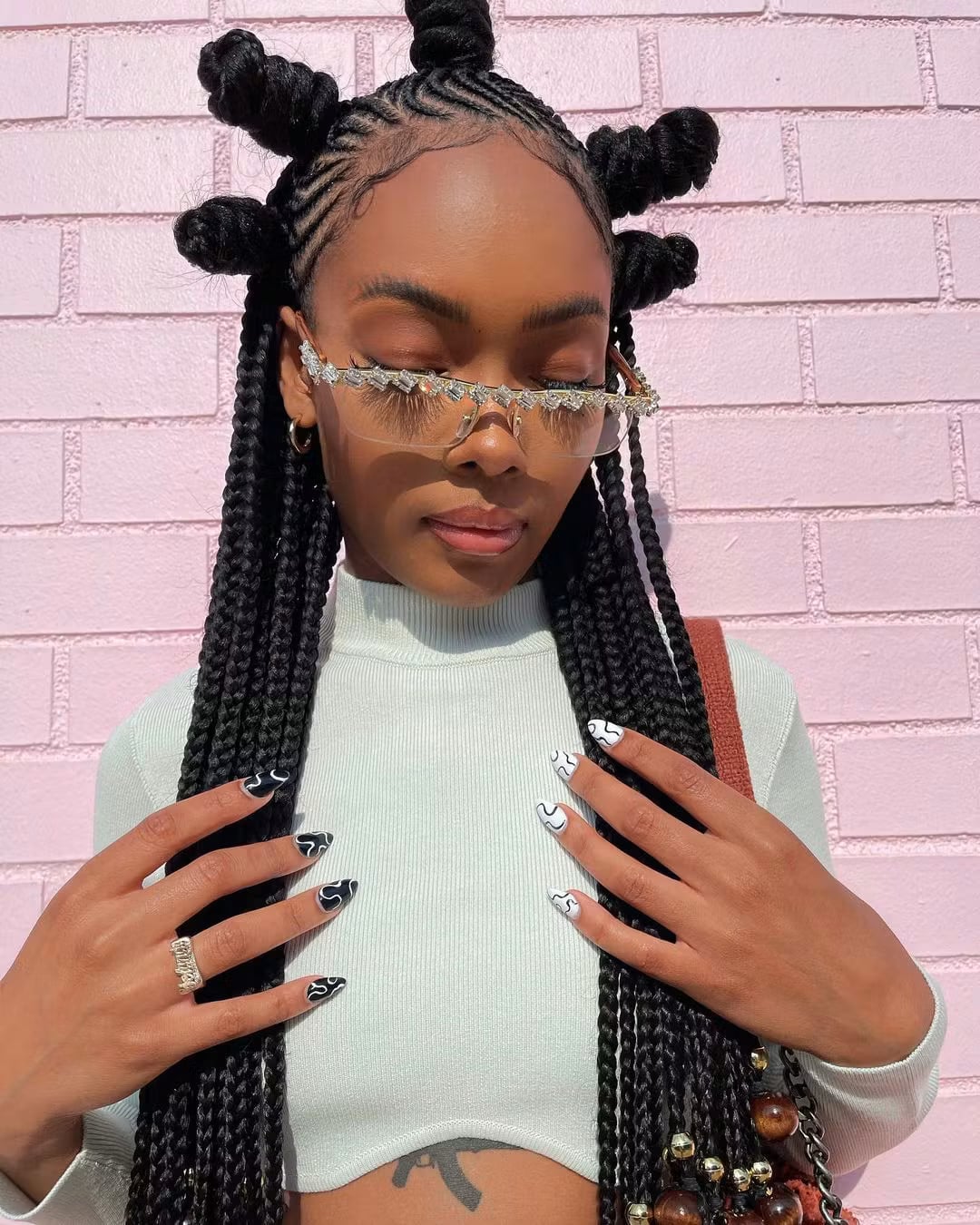
Can you wear feed-in braids on natural hair without heat-stretching or blowing it out first? You can, but the braids will grip tighter and the install takes longer because your stylist works with your raw texture rather than a smoothed base. This look pairs thick, coily braids with bantu knots at the crown, a combination that adds serious visual weight. Ask your stylist for a zig-zag parting with bantu knots and feed-in braids. The real drawback is the tension: your scalp will feel it the first few days, especially around the knots. Stick with styles like this for about three to four weeks before giving your edges a break.
Two-Tone Braids With Bold Color
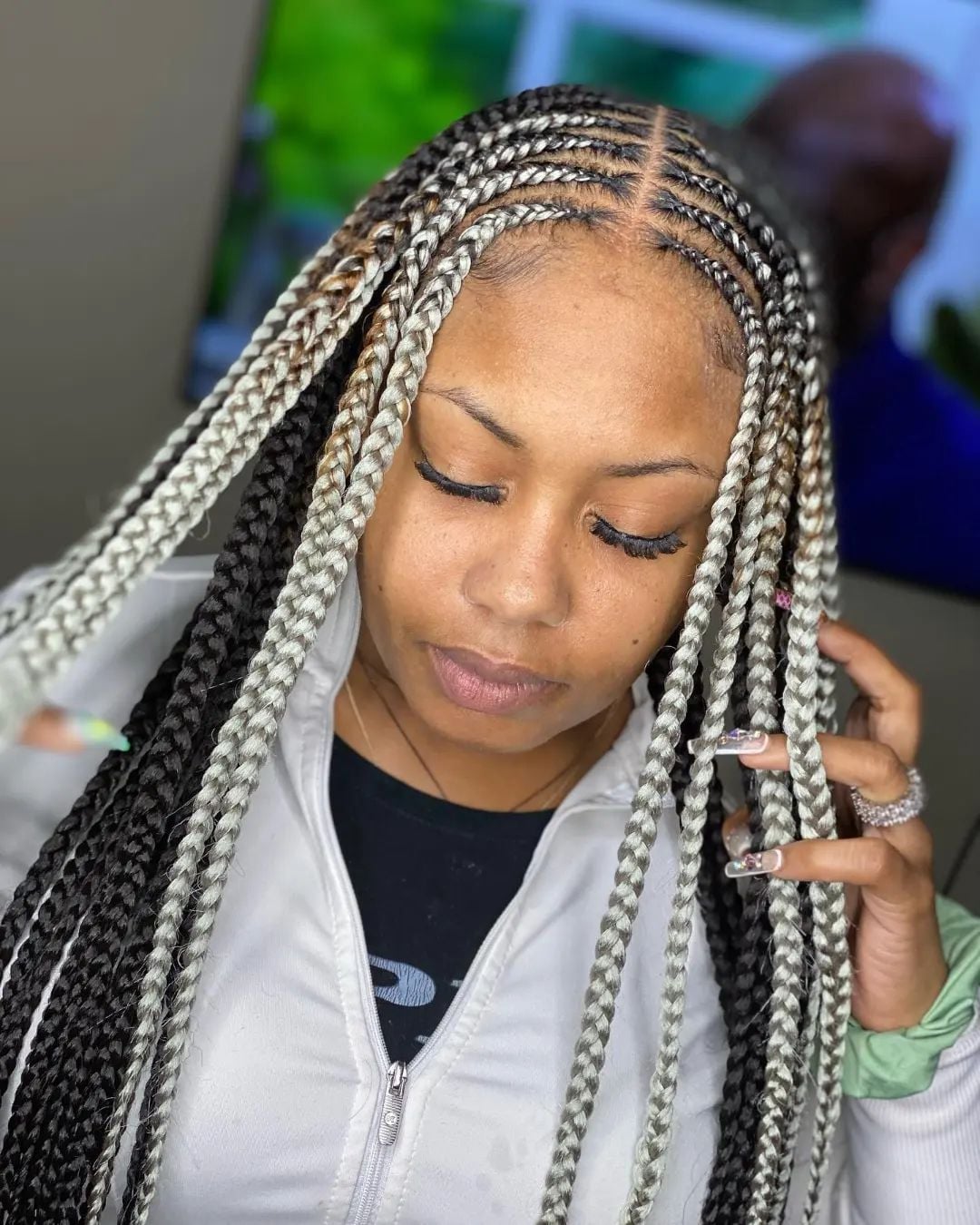
Two-tone braids in black and gray or blonde create a high contrast look. The darker base fades into the lighter shade at the ends, which keeps the grow-out line hidden for weeks. Ask your stylist for two-tone black and gray/blonde feed-in braids. This style suits medium to thick hair, since the color shift needs enough braid width to show both tones clearly. A middle parting keeps the symmetry clean, and the straight, smooth texture reflects light evenly. Skip this if your hair is very fine, because the lighter strand can look sparse next to the darker one.
Classic Mid-Back Black Braids, Straight
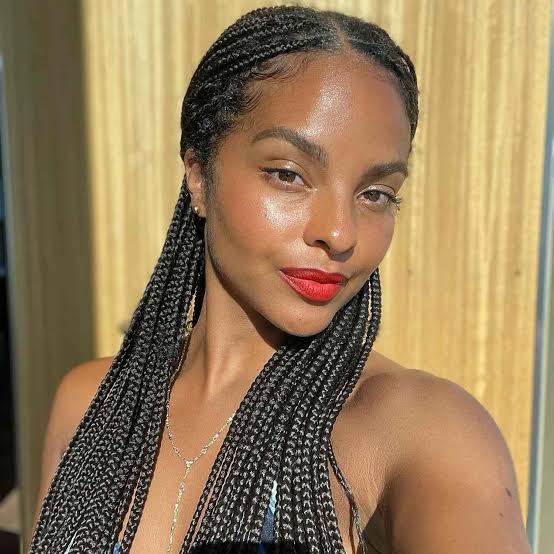
These classic mid-back black braids sit on the opposite end of the spectrum from styles with beads, curls or color work. Where those demand attention, this one just holds its shape and stays out of the way. Ask your stylist for classic mid-back feed in braids. The uniform thickness and straight texture mean every braid lands at the same length, which makes the style look almost architectural. A clear middle parting grounds the symmetry. Medium to thick hair carries this best, because thinner strands can make the parts look wide. No bangs, no added texture, just the most reliable protective style in the rotation.
Shoulder Length Braids With Curly Extensions
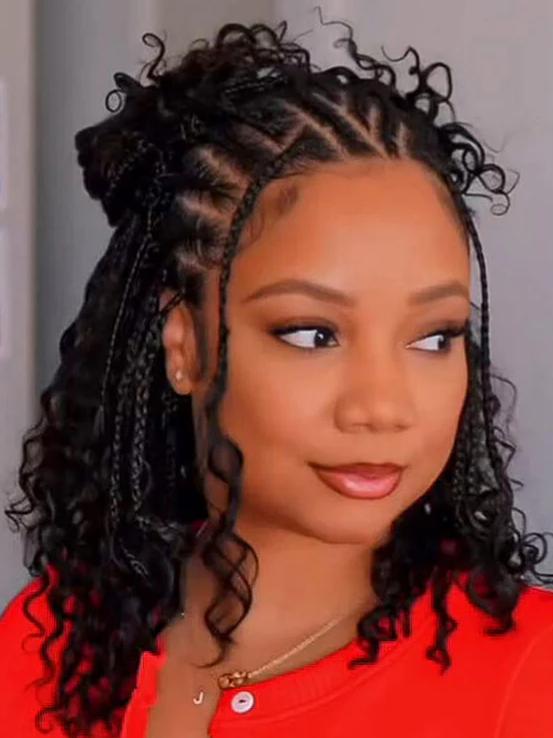
Straight braids that end in loose curls create a texture break that looks deliberate. The black base carries subtle brown highlights, so the curls show different tones depending on the angle. Ask your stylist for shoulder length braids with human hair loose curls. A middle parting keeps the look balanced, and the shoulder length means the braids clear your collarbone without feeling heavy. This suits medium to thick hair best, since the braids need enough width to support the curl volume at the ends. The curl section will need refreshing every few days with water and a styling product.
Braids Into Ponytail With Wavy Ends
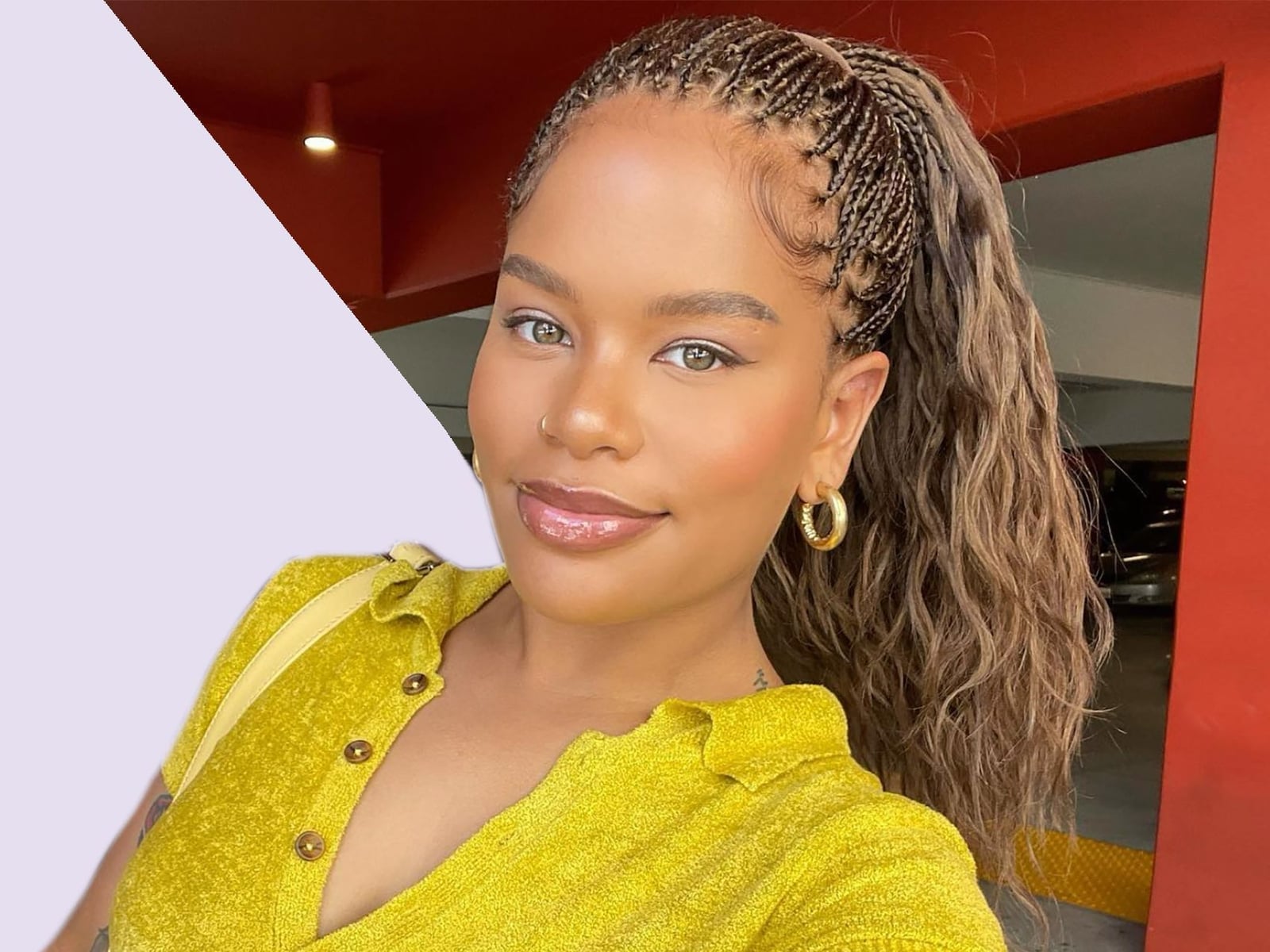
Pulling feed-in braids into a high ponytail changes how the style wears over time. The tension shifts from your scalp to the elastic band, which can ease pressure on your edges. Ask your stylist for feed-in braids into a high ponytail with wavy ends. The black base carries blonde highlights, so the wavy ends show the lighter color as they fan out. A firm elastic band is the difference between a ponytail that stays put for a week and one that slides down by day three. Medium to thick hair holds the ponytail shape better, and the wavy ends soften what would otherwise be a completely straight silhouette.
Mid-Back Box Braids With Beads, Black and Adding Decorative Detail

Can you add small clear beads to the ends of box braids at home? You can, but the salon version is faster and the beads stay tighter because the braider seals the ends before threading. These black box braids reach mid-back with uniform thickness and a clean middle part, and the beads catch light without adding so much weight that the braids sag. Ask your stylist for mid-back box braids with beads on the ends. The straight texture keeps the beads from tangling into each other, and the black color means the clear beads are the only visible detail beyond the braid pattern. A DIY bead session takes patience and a steady hand; the salon does it in the time it takes to finish the install.
Final Thoughts
For a polished finish, start with clean, stretched hair and focus on even tension at the scalp. If you want more personality, add beads, a bold two-tone color, or wavy ends, each change shifts the whole feel without extra braiding time.
- Keep scalp clean and moisturized with a light oil or spray.
- Sleep with a silk or satin bonnet to protect braids from frizz.
- Avoid excessive pulling or manipulation to prevent tension and breakage.
- Trim stray hairs at the ends as needed to maintain a neat appearance.
Feed-in braids offer a world of style possibilities.
